As the EU executive is adopting intermediate proposals in its international climate policy as outlined in the European Green Deal, this will have serious and multifaceted implications for Africa, according to a recent study by Eastern Africa Farmers Federation (EAFF).
The Green Deal provides a road map for a socioecological transition to a low-carbon future and the building blocks for a green economic growth strategy to address climate change, energy, and biodiversity.
According to Stephen Muchiri, CEO of the Nairobi-based EAFF, the stringent policies outlined in the Farm to Fork (F2F) and Chemical Sustainability Strategies will greatly affect global trade in agricultural inputs and outputs and, by extension, also the economies of African countries that greatly depend on agriculture. Muchiri also warns that the new additional requirements, as set by the European Commission, threaten the livelihoods of many small producers and may significantly reduce the export earnings of East African countries such as Uganda, which is the second largest horticulture exporter in the region.
Horticultural exports from East Africa to the European Union are valued at more than $2.3 billion, with smallholder farmers contributing up to 70% of the export volumes. The study revealed that farmers would be overburdened by the new regulations because substantial costs will be introduced with the new specifications on standards, certifications, logistics, and carbon border adjustment mechanisms (CBAM).
This prompts Muchiri to warn that the implementation of the Green Deal in its current form falls short in support of progressive and sustainable export-oriented farming for most East African smallholder farmers as it will introduce additional constraints that will impact the region’s competitiveness, sustainability, and livelihoods negatively, so whereas the EU will achieve its goals, the countries of export will be reeling from significant production and compliance challenges.
Please note: this article was pulled down offline from Forbes. I will let you draw your own conclusions as to why. Factually, there was no justification for it.
This list could be closer to 50 but let’s just stick to a handful of them. I literally live in this business every day, and I’m just so confused.
1. In a world that is apparently getting both warmer and colder because of global warming, how is it that we can increasingly rely on non-dispatchable (i.e., intermittent, usually unavailable), weather-dependent electricity from wind and solar plants to displace, not just supplement, dispatchable (i.e., baseload, almost always available) coal, gas, and nuclear power? In other words, if our weather is becoming less predictable, how is it that a consuming economy like ours can, or should even try, predictably rely on weather-dependent resources? ERCOT exemplifies this: the Texas grid operator has around 31,000 MW of wind capacity but goes into winter expecting only 6,000 MW (just 20%) of wind farms to be available to generate electricity. Again, in the marketplace, the “alternatives” you keep hearing about are proving to be far more supplemental than alternative.
Further, good wind and solar spots are finite, based on geography, so new builds, naturally, will be forced into areas that are less windy and less sunny, lowering their already very low 35% capacity factors. And because they devour immense swaths of land, interrupting a whole host of things, that Renewable Rejection Database is mounting very quickly. If wind, solar, and electric cars too are as effective and low-cost as so many keep promising us, there would obviously be no need for government subsidies for broad adoption. Yet, there is, gigantically so. Huge amounts of taxpayer money going into this, what I call “the holy climate panacea triad,” are vulnerable to changing politics and bound to become politically untenable at some point: “Ford Is Losing $66,446 On Every EV It Sells.” Our limited financial resources are obviously very precious, so these NEVER CONSIDERED and wasted opportunity costs forcing wind, solar, and electric cars into the energy complex are truly catastrophic. Schools investing in electric buses over STEM? The $200 Billion Electric School Bus Bust. How can any of this be justified? I’m so utterly confused.
2. Climate change is a global issue, so how is it that we can claim climate benefits for unilateral climate policy. For example, U.S. gasoline cars constitute just 3% of global CO2 emissions, so how will getting rid of them impact climate change? But this dose of real science doesn’t stop California leaders, a state responsible for just 1% of global CO2 emissions, from telling us that energy policy in the nine-county region of Northern California alone is “responsible for protecting air quality and the global climate in the nine-county Bay Area.” No wonder then that a Biden administration official was incoherent when asked how $50 trillion in climate spending in the U.S. will lower any global temperature rise. Indeed, despite the Sierra Club in 2014 promising us that “China’s Thirst for Coal Is Drying Up,” the Chinese Communist Party approved two coal plants a week in 2022. But, don’t worry guys, China promises to be net-zero by 2060. On climate, you don’t matter nearly as much as some want you to think.
So, it becomes very obvious very quickly that no energy policy in northern California has any relevance in terms of changing the climate. The region could literally disappear and there would be no discernable impact on climate change. Even our climate czar John Kerry, loving the CO2-devouring life in a private jet and $250 million, has been forced to admit that the U.S. could even go to zero emissions and it would make no material impact on climate change. Talk about all pain, no gain. The real science is that incremental global emissions are “not here but over there” U.S. CO2 emissions are in structural decline regardless of what policies we pass (save 2021 and the rebound from Covid-19’s devastation in 2020). So, where is the climate benefit for Americans when it comes to U.S. climate policy? Because we’re continuously told to “believe science,” any positive answer to that question can only be deemed as anti-science. In fact, common sense and science itself tell us that unilateral climate policy can actually be really bad for climate change because it encourages carbon leakage (e.g., climate policy in the U.S. increases costs and just pushes a manufacturing firm to re-locate to coal-devouring China).
3. Back to electric vehicles. Even green-tinted but surely practical Bloombergadmits that more than 85% of Americans can’t afford an electric car, since they are well more than double the price of oil-based cars. How can a product bring racial justice for Black Americans when the vast majority of them can’t afford it? Worse then, huge and growing subsidies for electric cars are a “reverse Robin Hood,” taking money from poor taxpayers to give to the rich ones that are, actually, in the market to buy an electric car. Forcing electric equipment over natural gas? Sorry but “gas is four to six times cheaper than electricity.” Battery costs might be much higher than expected: 1) rising global demand, 2) rising costs and unavailability of their raw materials, 3) mining complications and environmental damage, and 4) China flexing its muscles since it controls the supply chains and uses hoarding as political leverage (see Covid-19 and medical supplies). Reality check, unlike what we keep hearing about “green energy,” no technology continues to decline in cost in perpetuity: “EV battery costs could spike 22% by 2026 as raw material shortages drag on.”
And this one I’m really confused on. President Biden promotes his climate agenda as a way to create jobs. Besides lacking in economic literacy (i.e., jobs are costs not benefits), the truth is that electric cars, for instance, entail far less jobs because they, for one thing, have far less moving parts. And there’s all kinds of evidence that electric car life-cycle emissions could be way worse than advertised, mostly because of the massive amounts of mining required to make them. We all know about child labor and your electric car, but even pro-EV outlets are being forced to report on the mounting problems from mining, the latest on how bauxite for the aluminum needed is destroying the Amazon. And about our President’s we’ll need oil for “another decade” claim? The U.S. Department of Energy just modeled that our oil demand will actually slightly INCREASE, not decline, to over 21.1 million b/d by 2050. Reality check: planes, industry (petrochemicals), heavy trucking, and sheer Energy Inertia will have oil dominating way longer than you’re being told.
4. How on Earth could anybody expect those in Africa and the other horrifically poor nations to “get off fossil fuels” when the rich countries haven’t come close to doing it. Germany and California, the world’s two greenest governments, are still overwhelming fossil fuel-based and overwhelmingly dependent on imports (dangerously so in Germany’s case). This comes despite decades of huge subsidies, scores of mandates, deploying the best engineering expertise, and having low population growth and thus low incremental energy needs, all giving them a huge advantage in “going green.” The energy stat to remember most? No U.S. state will ever “try to go green” like California has over the past 20 years, yet oil and gas still supply 70% of the state’s energy, even above the national average of 65%.
Germany and California have shown us what these climate policies bring: Germany has the highest electricity prices in the world; and California’s are the highest in the continental U.S. and soaring out of control (Figure). How the heck can we push for “deep electrification” to fight climate change if we are going to follow policies that surge the price of electricity, while also lowering grid reliability? And rich Westerners, spare us the judgments, demands, and hypocrisy on climate change: Germany thrives on a GDP per capita per year of $51,200, compared to a horrifically sad $2,260 for India.
5. But, perhaps I’m most confused about the whole air quality thing. The obsession over it gets attached to all energy policies. But there’s clearly a strawman to the “we need cleaner air now” demand. First, the air quality conversation in the U.S. reminds me of Voltaire’s “the perfect is the enemy of good.” Americans seem completely unaware how drastically our air quality has improved. Check data from the U.S. Environmental Protection Agency (EPA), our criteria pollutants have been plummeting over the past many decades. The risks seem exaggerated. Let’s just take Los Angeles, which for a big city notoriously has the worst air quality in the country. Tell me, please, if air quality is such a problem and such a health concern for Americans, why is it that Angelinos have a life expectancy of 82 years, a hearty three years above the national average. Just think of all the coal that China has devoured since 2000 (I figure around 70 billion tonnes), yet the country’s life expectancy, apparently shockingly to so many, is up a very impressive six years to nearly 78 since then. Maybe it’s because Chinese GDP per capita per year has skyrocketed nearly 9-fold to over $18,500. Even for rising asthma rates in the U.S., smoking is way down, coal usage is way down, and criteria pollutants are way down. So what gives?
“Better air quality and environment” are not free, as attaining government standards cost businesses hundreds of billions of dollars per year. These costs are ultimately paid by Americans in the form of higher prices, lower wages, and less choices. And at some point, the cost of the regulation to achieve better air outweighs its benefit. We’ve won on water too: the water in your toilet is cleaner than what the vast majority of humans on Earth drink. For every time that we hear “environmental justice” we need to say “economic justice” 100 times. In this country for all Americans, Blacks and Hispanics/Latinos make 30% less money than Whites and Asians. Too many politicians focus on the endless pursuit of “better air quality” and other abstract, seemingly impossible to measure benefits because they have no clue on the real ways to help communities of color and other low-income Americans: help them get a better education, help them get a better job, and help them make more money. Career politicians love bottomless, money-devouring pits the most: “America’s $100 billion climate change flop.” And although its entire existence is based on never being able to declare victory (imagine a football game with no time and no keeping score), EPA should consider that it’s wealth that matters most for health equity.
As Europe appears to be falling apart. Germany is now officially in recession as de-industrialisation follows its green energy policies and the catastrophic damage to the Nord Stream pipelines. As Bloomberg put it last week: ‘Europe’s economic engine is breaking down’. France remains in uproar as protests continue nationwide. And any idea that that it is trying to free itself from the shackles of carbon neutrality is wishful thinking at best, naïve at worst. Dutch farmers are still under attack from their own government after the EU approved a farm buy-out plan to meet their climate goals.
Perhaps it is not surprising that the European Parliament hosted an event a couple of weeks ago titled ‘Beyond Growth‘, as that is the clear direction of travel for much of Europe.
What is surprising, however, is that this EU event in Brussels expressed so little concern about the impact on its citizens, let alone for the economic prospects of the Union. Bizarrely, the event even appeared to be celebrating the decline of European economies which had previously brought growth and prosperity to their citizens. It was as if the European Parliament has been captured by eco-terrorists who regard industrialisation as a cancer which requires removal. They seem to have all fallen under the spell of a doom cult which repeats the mantra that we live on a planet of finite resources, and so economic growth based on consumption is not only unethical but ultimately doomed.
The EU president and High Priestess of this cult, Ursula von der Leyen, reminded the EU conference of an earlier iteration of this mantra when in 1972 the Club of Rome published its ‘Limits to Growth’ report. What she failed to mention is that this belief in limited resources, which has been drip-fed into the minds of the masses for more than 50 years, is based on the erroneous assumptions of the Rev Malthus in the 18th century that population growth would inevitably outstrip food supply. But both the Club of Rome and Malthus have been proved wrong: the planet has shown that it is more than capable of feeding its current population of eight billion.
Yet the belief in overpopulation runs deep, with tragic consequences as a ghostly infanticide now infects the planet. A new documentary, Birthgap, reveals that because so many women have denied themselves children, at some point global population levels will collapse dramatically. Which means that those who have consciously chosen not to have children to ‘save the planet’ have made a pointless gesture. This is a message that eco-terrorists do not want to hear. Indeed, students in Cambridge recently tried to prevent the Birthgap documentary from being screened.
Whatever eco-terrorists might claim, the Earth has plenty of resources. Even oil isn’t running out any time soon. A problem for the West is that much of the raw materials on the planet (the oil, the rare earths etc etc) happens to be in the ‘wrong’ hands. It is not without irony that those countries which the West has shunned, banned and sanctioned are the ones with the raw materials.
There was another but much less reported European economic conference last week. It was held in Moscow and brought together the Eurasian economies. By contrast with the earlier Brussels event, this gathering will have taken growth as an a given, and therefore looked at ways to boost the prosperity of their populations. Amongst the topics considered were ensuring energy and food security, technological and financial independence, speeding up digital transformation, eliminating trade barriers, and transport infrastructure development. Furthermore, there will be a meeting of 81 nations in St Petersburg this month to discuss a gold-backed alternative to the dollar. All these countries can look forward to rising living standards, while we in the virtue-signalling West have a bleak future. Trapped in our 15-minute cities, if Just Stop Oil and the other eco-fascists have their way, we won’t even be allowed out to collect wood while it is more than probable that wood burners will be banned in urban areas – to save the planet, of course. ‘Beyond growth’ is not a welcome prospect if you want to stay alive on planet Earth.
There are signs, nevertheless, that a backlash in the West is beginning. In the last few weeks a group of state attorneys from 23 states in the US have threatened members of the UN’s Net Zero Insurance Alliance (NZIA) with legal action because they risk violating US anti-trust laws. As a consequence many high-profile members, including Lloyd’s of London, have pulled out of the alliance. Is common sense is beginning to return? We have to pray it is.
Lucy Wyatt is an author based in Somerset. Her book Approaching Chaos: Could an ancient archetype save C21st civilisation? is available on Amazon.
This makes it easy to overlook the fact that they are deeply embedded in the dense NGO climate-change network. Key activists receive salaries from a Berlin organisation called the Wandelbündnis (the ‘Alliance for Change’), which channels money from the Climate Emergency Fund. The latter, co-founded by American oil heiress Aileen Getty, funds similar activist organisations in other countries, like Renovate Switzerland and Just Stop Oil in the United Kingdom. It’s an international web of activist organisations funded from the very centre of empire – where, mysteriously, it seems that such protests rarely if ever occur.
It can’t be an accident that Letzte Generation have focused on blocking traffic in Berlin, precisely as Robert Habeck, the Green Minister for Economic Affairs, seeks to realise a series of long-planned and economically catastrophic energy transition measures for the Federal Republic. Their constant protests maintain an environment of disorder and hysteria in the German capital and ensure that climate change never leaves the headlines. It also can’t be an accident that the German state should work very hard to maintain a veneer of opposition to these obnoxious protesters, while never actually doing very much. Olaf Scholz used a public appearance to call the activists “crazy” and they responded by smearing Berlin SPD headquarters in orange paint. The most significant enforcement action to date unfolded several days later, as Munich prosecutors ordered broad-scale raids on the activists’ apartments, shut down their website and seized some of their assets. This provoked a bizarre condemnation from Amnesty International and even prompted the United Nations to demand the protection of climate activists. It did little stop Letzte Generation, however, who capitalised on the publicity and continued protesting as before.
In fact, as the Berliner Zeitung points out, the police and state prosecutors have adopted an overwhelmingly lenient approach to Letzte Generation, investigating and charging the traffic-blocking activists for the lesser offence of “coercion,” rather than the much more serious “deprivation of liberty,” which is what trapping thousands of motorists in their cars actually amounts to. And when they are tried even on these lesser offences, activists generally receive nothing but fines from a complicit judiciary and are rarely imprisoned. This is important, because there aren’t very many of them; if the state started systematically imprisoning Letzte Generation members, the traffic blocking would soon be over with.
Protests against authoritarian hygiene measures were systematically outlawed all across the West during the Corona pandemic. In Germany, protesters faced incredible police brutality and substantial sentences, and political police investigated their organisations as alleged “enemies of democracy.” While leftist protesters like Letzte Generation could far more easily be classified as anti-democratic, they’re not opponents of the state at all, but rather its loosely affiliated agents. Police and prosecutors could stop the blockades and the vandalism at any time, but they won’t. Letzte Generation and its sister organisations are actors in an elaborate charade, intended to lend a populist democratic aura to climate protection policies, which flow not from the people but from unaccountable out-of-sight think-tanks, NGOs and bureaucratic institutions. Their radical rhetoric also allows the truly crazy politicians managing the energy transition to appear reasonable and moderate. We’re seeing before us the emergence of a totally new kind of authoritarianism, one which clothes itself in the forms and orders of liberal democracy, while imposing top-down policies on a confused and disoriented citizenry. The authoritarianism of the DDR was far more direct and hence more easily opposed.
The Advisory Council on the Environment is a body of experts convened by the Federal Republic of Germany to advise the state on matters of environmental policy. I’m grateful to @tomdabassman on Twitter for drawing attention to their recent and deeply creepy 200-page report on “The obligation of policymakers: Facilitating environmentally friendly behaviour.” It abounds in remarkable and revealing statements, and I’ve spent a good part of the day studying it for a longer post that I hope to write in the coming weeks.
For now, I want to draw your attention to the introduction, which is bad enough. Its authors depart from the premise that the state currently lacks “policy measures … targeting environmentally relevant behaviour,” and join others in affirming that it is the job of the state to nudge individual decisions in the right direction. Tellingly, both the pandemic and the sanctions-induced European energy crisis play a very large role in their thinking:
Although the key environmental crises, such as loss of biodiversity and climate change, are less directly visible and tangible than the energy crisis and the pandemic, environmental policymakers can learn from the sometimes painful but also important experiences of recent years: Behavioural changes in the population can be a part of the solution to crises such as these, and it is possible to adopt and implement policies aimed at changing behaviours.
For example, Germany introduced a series of measures in mid-2022 to alleviate the energy crisis … These measures targeted the behaviour of citizens. In addition to general calls to save energy, building owners were obliged to optimise their heating systems, employees had to accept lower room temperatures at work and it was forbidden to heat private swimming pools …. Earlier, Germany imposed far-reaching pandemic measures to contain the spread of Corona. For example, since 2020, the stated adopted and imposed various lockdowns and social contact limitations. Both highlight the contribution of behavioural changes, whether in energy consumption or social behaviour, to the project of combating a collective problem …
The aforementioned measures doubtless demanded a lot from people and in the specifics of the necessary extent of the restrictions, they proved controversial, as also in their unequal impact on different social groups. Nevertheless, the two crises show that political measures to carefully restrict the behaviour of citizens are possible if the threat is correspondingly great and the importance of the protected good – in these examples, health and energy – is recognised. The state has succeeded (even if not in every individual case) in devising measures such that they achieve their goal while maintaining proportionality. It is also clearly possible for these policies to be designed and communicated in such a way that the majority support them.
Emphasis mine. All of this speaks for itself, and I don’t have much to add, except to observe that the only way for restrictions to be “communicated” such that “the majority support them,” is by renewed forays into state media-fuelled mass panic and hysteria. Corona has taught our rulers that a great deal more is possible than they ever imagined, and they will spend the coming years exploring the limits.
How many people, I wonder, have thought about the sheer quantity of raw material required to deliver Net Zero by the end of this century, let alone by 2050? How many are aware that Tesla alone may consume most of the associated raw materials in the world to make a few million electric vehicles (EVs)? Tesla are making around a million a year but more than 1,500million internal combustion engine (ICE) cars will need to be replaced in the great renewables utopia. Will there will be enough minerals and other raw materials to go round to allow ICE cars to be phased out by 2035 and for Net Nero to be delivered by 2050?
The key materials range from copper to rarer metals such as lithium, the refinement of which involves the release of CO2.
One specialist study reports that by 2050 Europe’s plans for producing clean energy technologies will require annually 4.5million tonnes of aluminium (an increase of 33 per cent on today’s use), 1.5million tonnes of copper (35 per cent), 800,000 tonnes of lithium (3,500 per cent), 400,000 tonnes of nickel (100 per cent), 300,000 tonnes of zinc (10 to 15 per cent), 200,000 tonnes of silicon (45 per cent), 60,000 tonnes of cobalt (330 per cent) and 3,000 tonnes of the rare earths metals neodymium, dysprosium and praseodymium (700-2,600 per cent). And currently the primary sources are in Russia and China.
Global copper production alone (unsurprisingly given the huge government subsidies behind renewable technology) has risen from around 16million tonnes in 2010 to more than 22million tonnes in 2022. Renewable energy plant requires on average eight to 12 times more copper than fossil-based power generation, and EVs three to four times more copper than ICE vehicles.
Perhaps the most challenging demand is for lithium, used to make batteries, including those in electric vehicles (EVs) which each take 63kg. So around 95million tonnes of lithium will be needed to make batteries for 1,500 million EVs globally. But only 130,000 tonnes came from mines in 2022, at which rate it would take more than 700 years to make enough batteries. If those EV batteries have to be replaced on average every ten years (assuming no increase in the number of EVs) the continuing demand will average around 9.5million tonnes pa, which is around 70 times the current rate of mining.
On that basis alone, the plan to replace ICE cars by 2035, 12 years hence, is pie in the sky.
The possible use of sodium-ion batteries is being explored but it is inconceivable that development will be complete or that sodium mines will be producing at the capacity needed by 2035.
Another alternative would be the use of hydrogen engines, which Toyota and others are pursuing, assuming that there will be enough H2 available. But the government plans to bring only 10,000MW of H2 production onstream during the 2030s, when the grid system alone will need several times that to keep the lights on when there is little sun or wind. A doubled maximum demand capacity will also be needed to carry the load of 300,000 new EV chargers in service stations on the strategic road network, plus 10million heat pumps.
If there are 30 petrol pumps per service station and it takes around ten times longer to charge an EV battery than to fill an ICE car, then 300 chargers (probably at 100kW each) would be needed per station. That would require a local grid substation capacity of 30MW, enough to supply a town of 30,000.
So the UK’s 2035 target for phasing out ICE cars looks unachievable because we will have neither the materials, the money nor the skilled resources needed to deliver Net Zero this century. Legislating to phase out ICE cars before affordable alternatives were available is not the way to run a country. Destruction of our ICE-making capacity will take us back to a pre-industrial era.
What prize might we miss out on by failing to eliminate the UK’s 0.00048 ppm contribution to current CO2 levels at a cost of over £5trillion, or over £200,000 per household? It would take 3,000 years for the UK to add 1.6ppm (the average annual rise over 60 years) to current CO2 levels. Bear in mind that the greenhouse gas impact of each ppm rise declines rapidly, and that the sun is the main driver of the 97 per cent of natural CO2 emissions.
Without a referendum, we are being subjected to taxation without representation. The government won’t risk giving us a choice and causing them to have to stand up against the UN, IEA and WEF. Sadly, none of the mainstream parties has the backbone to confront these issues.
All are happy, too, to accept the horrific exploitation and abuse of children in Congolese cobalt mines (and no doubt in other countries too), sacrificed to the ‘clean’ energy revolution.
Two University of Michigan professors insist we “must reduce the emission of greenhouse gases to zero” to stabilize the planet’s temperature. But because 80% of our energy use still comes from carbon-based sources today, “ending it will not be easy.” The death of all fossil fuel industry must be imposed, euthanasia-style.
It has now reached the point that academic elites are no longer concealing their real inclinations and intentions in massaged semantics or subtleties.
Two US business professors argue that the looming climate catastrophe (which they believe has been caused solely by human greenhouse gas emissions) necessitates that “the shape and structure of modern capitalism will have to be changed.”
No more roads. No more plastic or steel or electronic products. No more air travel. All the industries that use petroleum products of any kind, no matter how essential, must end this practice, effective immediately. Fossil fuel use must be 100% eliminated.
The cost to get to zero greenhouse gas emissions? Estimates range from $100 to $150 trillion over the next 30 years.
And putting a price on carbon use doesn’t nearly go far enough. It’s not possible to get to zero emissions just by making fossil fuel use more expensive. The entire fossil fuel industry – the producers as well as the recipients – must undergo, as the authors put it, “compassionate destruction.”
If there is any resistance to the total destruction of fossil fuel use, then euthanasia – “the act or practice of killing or permitting the death of hopelessly sick or injured individuals,” must be put into practice. Imposed. Forced.
“A future in which we address climate change may require that the entire sector be euthanized, imposing death ahead of its imminent arrival.”
It is not our job to question. The situation is so real, so dire, that our only job now is to “come to terms with the extreme decision that has to be made for the patient.”
I’ve been wondering for quite some time about whether we are in a War and the resolution of my thoughts on the subject has recently improved.
Oddly enough, I have some standing on the subject.
I lived in Iraq between 1981 to 1991, a period that covered almost all of the Iraq/Iran War and all of the Gulf War, the original, not the sequels.
It was an old school type of war, with two parties fighting over territory and trying to redraw a border. A lot of people died over 8 years and the border stayed the same. But weapons were sold, and internal power was consolidated.
That’s really what war is about, territory. You have something that I want, and I will fight you for it.
So, if this is a war, who are the warring parties and what is the fight over?
The war is between “the state” and “the citizen”. The latter is YOU and ME and it’s easy enough to understand (sort of), but THE STATE is not straightforward anymore and I’ll cover that later.
The border between these two parties is being redrawn. The relationship between the State and the Citizen is being RESET.
When you hear about The Great Reset, that is what “Reset” really means.
Think back to your life, last year in Feb 2020. Think back to how you thought, what you did, what degree of intrusion the State had in your life and what level of control you had over your life and choices.
In Feb 2020 there was a border, a fairly large circle that you stood in the centre of. Everything within that circle was your domain, your freedoms, and your sovereignty.
Now, reflect on your life today, but more importantly reflect on the size of that circle. It obviously is much, much smaller today. The border between you and the State has been Reset.
Within that circle is a second circle that is much smaller, and it surrounds you almost like a second skin. Within this second circle, you have what is your “bodily sovereignty”. What is within your body is YOURS and not the State’s.
If you have acquiesced to the State’s injection, you have surrendered your bodily autonomy to the State. There is no border anymore between you and the State. It’s a depressing conclusion but true.
Your rationalisation for taking it is irrelevant, you wouldn’t have taken it but for the State’s lies and threats. Unless you took the flu vaccine every year religiously, to “protect yourself and others”, you have surrendered to the State. You may have had no choice because you need to make a living and feed your family, so it was a calculated surrender, but a surrender, nevertheless.
But for almost everyone else, you surrendered your bodily autonomy (let alone your current and future health) so that you could go to the pub, go to the hairdresser, go to the gym, see your parents, travel, plus a laundry list of other reasons that the world has used to rationalise its surrender to the State.
It is worth noting, that if you have surrendered your bodily sovereignty to the State, and there is no longer a border between you and the State, what would you ever say no to in the future. If you were not prepared to stand up for your bodily sovereignty, what would you ever stand up for?
But as a friend of mine said the other day, people just don’t know. They haven’t spent the time (for some hundreds of hours) necessary to figure out what is true and what is a lie.
They think the jab is safe (without understanding the meaning of the word).
They think it is effective (that it will protect them from getting Covid or giving it to parents, grandparents and others).
They think the State is truthful (why would they lie?).
They think the disease is exceptionally deadly (because they were told it is).
They think that masks work (when hazmat suits are necessary to protect against respiratory viruses).
They think that lockdowns work and are worth the cost.
They think that social distancing works.
They think that healthy people can spread the deadly disease.
They think that test results are real.
They think that contact tracing works (so they keep checking in, even when nobody is watching or cares).
And they think many other things that all form the framework for the biggest lie ever told to the world.
You need a lot of time to dismantle each one of these falsehoods and unravel the matrix that has been built.
I now would add another leg to this line of thinking.
They think there is no war.
This is a vital point, and I draw on my time in Iraq to understand it.
We knew there was a war. We knew who the warring parties were. We knew there was a border being fought over. We knew that our wants and needs needed to recalibrate to the reality of the war we were in. I don’t remember anyone ever complaining about missing out on all of life’s “nice to haves”. Our wants had recalibrated very tightly around our needs, there wasn’t a gap really. If we and our loved ones were fed and safe for the night and we had a job in the morning that allowed us to be fed and safe for the night, then we were generally happy. To survive war, you need to recalibrate psychologically to it. Of all my friends during those years, I don’t remember any of them being depressed. They had psychologically adapted to the reality of war, and to a climate of having and doing less. Within that recalibration, we were content.
We bunkered down and got through it.
The Iraq-Iran War went on for 8 years. Early on people thought it would be over in a few months, that was just normal human optimism. But after a couple of years most understood that thinking in terms of timeframes just created false hope and wasn’t helpful to having a robust and resilient War mindset. So, we accepted that it would be a long war and stopped trying to guess it’s end. Basically, for our own psychological well-being we settled in for the long haul.
I recommend that you do the same here, start settling in for the long haul. This War is not ending any time soon.
Learn to live with less.
I wrote this short piece many years ago, mainly so that I wouldn’t forget the stories and that my kids would get a glimpse into their history. It was a time where we learned to live with less.
The Generator
The first thing the Americans did was take out most of the infrastructure. They took out the bridges, they took out the TV stations and they took out the power plants. We lost our electricity on the first night of bombing in January 1991.
The war lasted for about three months, 100 days to be precise, and then it took another three months before the lights came back on, so all in all about six months without electricity.
Six months!
I’ve heard it said that society falls apart and anarchy sets after a couple of weeks without electricity. Well, that didn’t happen. Maybe we had other things on our minds.
A lot of things changed quickly when the power went out on that first night of bombing. Sleep cycles for one, no more TV and some candle use initially but that quickly changed to mainly a kerosene gas lantern that we had. It looked something like this.
It had a pump that you would use to pressurise the tank, it would then spray a kerosene mist onto a ball shaped net that burned brightly. It made a sssshhh sound that I still remember. I don’t recall anyone else having one and I don’t remember how we got it but it was our main source of light in the living room during those dark months. It burned white and bright and had a constant, soothing pressured burning sound.
One day a friend and neighbour, Abu Bashar (Father of Bashar), managed to get his hands on an old broken down generator. He asked me if I wanted to have a look at it. Having never before seen a generator in my life, let alone fixed one, I announced my intention to resurrect the machine.
I was asked the question because over the years I had built up a reputation as a fixer, helper and general handyman. I had no idea how to “fix” a generator, especially seeing I didn’t know what was wrong with it. But I loved taking things apart, so I did just that.
It was about the size of a large esky and I spent most of the day dismembering the unfortunate machine. I carefully cleaned every piece and when there was nothing left to take apart, I started to put it all back together again. As evening fell the now cleaned generator was pieced together with only a small collection of “extra” bits and pieces left in my pocket.
It was evening by now, Abu Bashar, his family and the occasional neighbour had been casually keeping an eye on me all day. Anyway, the thing was back together by late evening, it was filled up with petrol and now the moment of truth had arrived. As I was about to pull the starter cable, I remember thinking I had no idea why I thought it might work. I knew that all I had done was take it apart, clean it and put it back together again. I hadn’t “fixed” anything. So, any hope that it might work was clearly without basis. Put simply, it was a Hail Mary.
So, I pulled that cable, hailing Mary… and that beautiful two stoke started first time!! The bloody thing was working! And it was loud. As loud as any two stroke, angry at being silent for years, making up for lost time.
It was late, around nine or ten pm and the whole neighbourhood could hear this monster roaring, but no one seemed to care. There was electricity in the street!
The first thing everyone wanted to do was watch a video of an old Egyptian movie. Anything to take their mind off the misery and drudgery that was their daily life. And so there we were, family, friends and neighbours crammed together in a small living room, watching an old favourite movie, barely hearing a word over the roar of the machine outside. But happy that a little bit of joy and normalcy had returned despite the contrived and temporarily nature of the whole affair.
If you don’t know that you are in a war, and “just want your old life back” then taking a “safe and effective vaccine” to “protect you and your loved ones” from a “deadly disease” seems entirely reasonable. But unfortunately, none of that is true, including the bit about getting “your old life back”.
So, to summarise.
Yes, there is a war.
It is being fought over the Territory and the Border between The State and YOU The Citizen. It’s a land grab.
The State has been winning since March 2020.
The injection is the final step in that War and dissolves the last Border surrounding our Bodily Sovereignty.
In War, a War Mindset is required to survive.
War is a battle between two parties over territory
The state is in open warfare to reset its relationship with its citizens. To move the border
Passports not only move the border but then permit the state to keep moving that border as they see fit
One year ago today: WHO officially declares COVID-19 a pandemic.
Director-General Dr. Tedros: “We’re deeply concerned both by the alarming levels of spread and severity, and by the alarming levels of inaction.” pic.twitter.com/D0k0wOuYa2
Now, watch this through the lens of War. This was a declaration of War on The Citizen.
It was not clear to most, certainly not to me, back then. It is as clear as daylight today.
What’s interesting about this War, is that REGULAR Compliance is the end game. Not just today’s compliance, but ONGOING Compliance.
Please understand, there is no such thing as “fully vaccinated”.
There is now only non compliant and temporarily compliant.
The unjabbed are the Resistance.
But, not getting the jab, is among other things just a proxy for non-compliance.
So, in truth the non-compliant are The Resistance.
And what’s interesting about that is that if you have surrendered to date, you can Un-surrender.
If you QR Code to check-in everywhere, you could stop doing that. You can deploy a range of evasion tactics.
If you have taken one dose, you can choose to not take the second.
If you have taken two doses, you can choose to not take the “booster”.
If you were “enjoying your freedoms” you can choose to adopt a War mindset.
You can choose at any moment to stop complying with The State and reclaim some of your lost territory.
And while we are on the subject of surrender; just as you can un-surrender at any time, you can also surrender at any time, so do you need to surrender today?
If you have not taken the jab so far, do you need to give in today?
Why not leave your surrender for another day or another week?
I have written extensively about my D.A.D Strategy and a Waiting for Novavax Strategy so why surrender today, wait until tomorrow and then ask yourself the same question. In War, taking things one day and one week at a time makes a lot of sense.
Stuart Lindsay, an Australian retired Federal Circuit Court Judge wrote this wonderful piece:
Strictly speaking, we fell in March 2020 when COVID arrived in earnest, but I date it from my acceptance that my fellow citizens would never stir. You cannot wake someone who is pretending to be asleep. The truth is that whether through cowardice or prolonged conditioning the vast majority of Australians, including many of my close friends and even family members, have manifested since then the absence of any kind of allegiance to their country or their heritage.
Most of those I live among have no desire at all to recover the freedom to speak or to assemble which has been taken from them. What would they have to say anyway? The only public utterances to which they now aspire are those to be roared as part of a crowd at the bread-and-circuses events, such as the football, which they are occasionally granted permission to attend. Then they replace their masks for the drive home past empty shops on patrolled and near-deserted streets.
Stuart has some wonderful turns of phrase, such as this one describing the acquiescing (surrendered) masses:
Netflix, full bellies and a warm place to defecate. That is all most want these days, is it not?
Stuart understands the mindset required for these times, and the years ahead:
I show you the times. Look out of your window if you need corroboration. I show you what you must do to get yourself in order if you want to be of any value in the fight to preserve what is left of your heritage. Here are some other ways to ready yourself for that fight.
Relinquish all of that unseemly longing for the return of unregulated visits to the theatre or the cinema and those beloved restaurants. Accept that never again will such things be free of petty invigilation and that on the worst case outcome they will only be possible if you keep having mRNA booster jabs — now the case in Israel, where three shots are now required even as officials moot lifting it four. If you are wary and reluctant to be inoculated with treatments whose long-term effects remain unknown, as am I, you need to accept that governments intend to make you a pariah for not having a “COVID passport” and be prepared to forfeit such pre-Fall pleasures as dining out. Keep your self-respect instead. Read that long-neglected Cervantes or C.S. Lewis on your bookshelf, help out at a refuge for the homeless or visit your sick grannie. Australia is teeming with sick grannies, so I’ve heard.
Here is a wonderful recent speech by Dr. Julie Ponesse.
She references War a few times, here are the War references:
But it is not only information that is being weaponized, in this WAR; it is a person’s right to think for herself.
… we are in a kind of moral WAR.
But the WARS of the past have had clear and distinct boundaries: the east and the west, patriots, and government.
The WAR we find ourselves in today is one of infiltration instead of invasion, intimidation instead of free choice, of psychological forces so insidious we come to believe the ideas are our own and that we are doing our part by giving up our rights.
As a wise colleague recently said “This is a WAR about the role of government. It is about our freedom to think and ask questions, and about whether individual autonomy can be downgraded to a conditional privilege or whether it remains a right. It is a WAR about whether you are to remain a citizen or become a subject. It is about who owns you, you or the state.”
As someone born in the 70s, I never thought THIS would be a WAR I would have to fight, that the right to bodily autonomy, to the free and transparent exchange of information would be at risk.
Ok, I think it’s time we talk about The State. What does that word mean?
Well, let’s start off by saying that it doesn’t mean what it used to mean, and it doesn’t mean what you think it means.
It used to mean that your government, acting independently of other governments, independently of business and independently of media would try to increase its territorial footprint while reducing the citizens territory. Sometimes they would win and sometimes they would lose and there were checks and balances within the system that worked to reduce the speed and scale of the government’s land grabs.
Well, does that sound like what it is going on today?
If all 200 countries around the world are pretty much all doing the same thing, do you think they are acting independently?
Do you think that business is acting with the government or with you? Do you think business is a check against the government or is business aiding and abetting The State?
Do you think that Media is acting as a check against the government, or is it helping the government disseminate its misinformation and disinformation?
Is the legal profession standing up for you or aligning itself with the government?
Is the medical establishment acting honestly to protect its patients or supporting the government in its campaign?
The State is now a NETWORK and it’s borderless. It’s a Global Network on a scale never seen nor imagined before.
Several months ago, I described it as The MGM Triad
I was saying to my wife last night that in the past the “collapse” of a society happened within contained borders. The institutions of that particular country decayed to the point of collapse and/or takeover by nefarious actors (those that want to dominate others, look after others, “fix” the world’s problems because they know best etc., it is a very real personality type and is always a percentage of the population and they climb the poles of business and government).
Because of the way the globe has been rewired over the last 50 years and especially the last 20 years with ever more powerful global institutions and a communication grid with central points of influence and control, the collapse we are witnessing at the moment is “post-national”, its far higher upstream, all the way at the source of the river, which is why it’s happening everywhere.
Today I can say that I was on the right track, but I don’t think The MGM Triad even does this Global Network justice. It’s a good introduction to the question of “Why is this happening?” to someone just waking up, but there are even more layers to understand.
You will need to use a web translator to read it from the Norwegian website.
Within the article you will find a link and reference to this 169 page document, that does a deep dive into this global network. The document:
… shows connections between the Gates Foundation, Wellcome Trust, WHO, GAVI and other NGOs and Big Pharma. It contains round about 6,500 objects including like Persons, NGOs, Companies, Documents, etc. It also includes more than 7,200 links between them.
A great passage in this essay highlights the immense power of these networks. They have shown that they are able to get the largest governments in the world to heel.
The incredible power of the networks
To give an example of how much power these NGIs and actors have, I would like to show a current example that has hardly been mentioned in the media (nor in the alternative media), but which Mr.X immediately noticed, as he keeps an eye on the “right” NGIs.
On August 3, 2021, an open letter to the Biden administration was published. In this letter, the important NGOs, who – after what we have concluded – have been planning a pandemic since 2017, demanded. We will now take a closer look at these requirements from 3 August 2021.
Global Summit on Vaccinations
In the open letter, for example, one could read the following requirements:
” to host a global presidential-level summit on vaccinations, before the UN General Assembly in September, bringing together leading forces from the public and private sectors from around the world (…) and commits to taking the necessary measures to close gaps in vaccine supply and correct deficiencies in funding and capacity in the distribution and distribution of vaccines, as well as to create demand.”
It took only six weeks for Biden to comply with the claim. In parallel with the United Nations General Assembly, President Biden is currently hosting a virtual summit with representatives from 100 countries, where the president announced just that. And he urged the other countries to follow the example of the United States, as reported by Die Tagesschau, for example.
Do you now understand the power of these actors, when all it takes is for them to write an open letter to the president, and he complies with their demands within six weeks?
Vaccinate 70% of the world’s population
Furthermore, in the open letter it was demanded:
“To get the heads of state and government in the world, before or during the summit, to commit to achieving the goal of vaccinating 70% of the world’s population by mid-2022.”
«As an organizational framework, Biden introduced a transatlantic vaccination partnership. ‘Today we are launching a partnership between the EU and the US for a global vaccination offensive,’ he said, in order to have closer cooperation. The goal is to have vaccinated 70% of the world’s population by September next year.”
Within six weeks, Biden (and also the European Union) pledged to fully comply with the requirements set out in the letter.
This is another good piece fleshing out the role of the WEF (World Economic Forum) network and the many people involved.
What a co-incidence, the World Economic Forum outlines a vision in 2018 for Digital Identity and in 2021 the Australian Government is about to finalise its laws making it a reality.
A wonderful Australian writer fighting the good fight is Alexandra Marshall.
Make no mistake, vaccine passports are a domestic Social Credit System created under the watch of the federal Liberal Party. It is a sprawling government entity that denies rights based upon compliance in the hope that you will obey rather than exercising your democratic right to resist.
Citizens accepted vaccine passports because the government made them a condition of release from unlawful detention. As a population, we have been emotionally damaged to the point that people cheer on the discrimination of their neighbours. Ethics have been replaced by the intense fear of being sent into lockdown.
We are not witnessing a casual overreach of power – vaccine passports and QR check-ins are a complete abandonment of the Western democratic system. They are a threat to the liberty of our children and the survival of Australia’s laid-back spirit.
CJ Hopkins is a wonderful writer; he has written eloquently about his new War.
He describes the core desire of Totalitarianism as wanting:
… to remake the world in its paranoid image; to replace reality with its own “reality”
He goes further:
We are right in the middle of this process currently, which is why everything feels so batshit crazy. The global capitalist ruling classes are implementing a new official ideology, in other words, a new “reality.” That’s what an official ideology is. It’s more than just a set of beliefs. Anyone can have any beliefs they want. Your personal beliefs do not constitute “reality.” In order to make your beliefs “reality,” you need to have the power to impose them on society. You need the power of the police, the military, the media, scientific “experts,” academia, the culture industry, the entire ideology-manufacturing machine.
What I call The State he calls here Supranational Global Capitalism:
And, yes, it is all one ideology, not “communism,” or “fascism,” or any other nostalgia, but the ideology of the system that actually rules us, supranational global capitalism. We’re living in the first truly global-hegemonic ideological system in human history. We have been for the last 30 years. If you are touchy about the term “global capitalism,” go ahead and call it “globalism,” or “crony capitalism,” or “corporatism,” or whatever other name you need to. Whatever you call it, it became the unrivalled globally-hegemonic ideological system when the Soviet Union collapsed in the 1990s. Yes, there are pockets of internal resistance, but it has no external adversaries, so its progression toward a more openly totalitarian structure is logical and entirely predictable.
Naturally, there would be one official reality that you would force everyone to rigidly conform to at any given moment in time, but you would change the official reality frequently, and force everyone to conform to the new one (and pretend that they had never conformed to the old one), and then, once they had settled into that one, you would change the official reality again, until people’s brains just shut down completely, and they gave up trying to make sense of anything, and just tried to figure out what you wanted them to believe on any given day.
He coins the term GloboCap, which is his version of my MGM Triad.
But the goal of GloboCap’s War on Reality isn’t simply to deceive the masses and divide them into opposing camps. Rulers have been deceiving the masses and dividing them into opposing camps since the dawn of human civilization. This time, it’s a bit more complicated than that.
And depressingly this paragraph:
You could experimentally “vaccinate” millions of people whose risk of becoming seriously ill or dying from your apocalyptic virus was minuscule or non-existent, and kill tens or hundreds of thousands in the process, and the people whose brains you had methodically broken would thank you for murdering their friends and neighbors, and then rush out to their local discount drugstore to experimentally “vaccinate” their own kids and post pictures of it on the Internet.
We have watched as the New Normal has done precisely what every totalitarian movement in history has done before it, right by the numbers. We pointed all this out, each step of the way. I’m not going to reiterate all that again.
I am, however, going to document where we are at the moment, and how we got here … for the record, so that the people who will tell you later that they “had no clue where the trains were going” will understand why we no longer trust them, and why we regard them as cowards and collaborators, or worse.
Yes, that’s harsh, but this is not a game. It isn’t a difference of opinion. The global-capitalist ruling establishment is implementing a new, more openly totalitarian structure of society and method of rule. They are revoking our constitutional and human rights, transferring power out of sovereign governments and democratic institutions into unaccountable global entities that have no allegiance to any nation or its people.
That is what is happening … right now. It isn’t a TV show. It’s actually happening.
Whereas 20th-Century totalitarianism (i.e., the form most people are generally familiar with) was more or less national and overtly political, New Normal totalitarianism is supranational, and its ideology is much more subtle. The New Normal is not Nazism or Stalinism. It is global-capitalist totalitarianism, and global capitalism doesn’t have an ideology, technically, or rather, its ideology is “reality” When you are an unrivalled global ideological hegemon, as global capitalism has been for the last 30 years or so, your ideology automatically becomes “reality,” because there are no competing ideologies. Actually, there is no ideology at all … there is only “reality” and “unreality,” “normality” and “deviations from the norm.”
Few others have written as well as CJ Hopkins on how to deal with this New Normal “Reality”.
So we need to adopt a different strategy. We need to make the monster show itself, not to those of us who can already see it, but to the New Normal masses, the Covidian cultists. We need to make Jim Jones drop the peace-and-love crap, move into the jungle, and break out the Kool-Aid. We need to make Charles Manson put down his guitar, cancel orgy-time, and go homicidal hippie. This is how you take down a cult from within. You do not try to thwart its progress; you push it toward its logical conclusion. You make it manifest its full expression, because that it when it implodes, and dies. You do not do that by being polite, conciliatory, or avoiding conflict. You do that by generating as much internal conflict within the cult as you can.
In other words, we need to make GloboCap (and its minions) go openly totalitarian … because it can’t. If it could, it would have done so already. Global capitalism cannot function that way. Going openly totalitarian will cause it to implode … no, not global capitalism itself, but this totalitarian version of it. In fact, this is starting to happen already. It needs the simulation of “reality,” and “democracy,” and “normality,” to keep the masses docile. So we need to attack that simulation. We need to hammer on it until it cracks, and the monster hiding within in appears.
That is the weakness of the system … the New Normal totalitarianism will not work if the masses perceive it as totalitarianism, as a political/ideological program, rather than as “a response to a deadly pandemic.” So we need to make it visible as totalitarianism. We need to force the New Normals to see it as what it is. I do not mean that we need to explain it to them. They are beyond the reach of explanations. I mean that we need to make them see it, feel it, tangibly, inescapably, until they recognize what they are collaborating with.
Here is a good example of the tools now available to assault reality and create a new “reality”.
The global assault on reality and the creation of a new “reality” has created a Mass Psychosis, described by Dr. Mattias Desmet as Mass Formation.
John Waters, writes beautifully about a recent Desmet interview.
You cannot extract the Mass Psychosis from the New Totalitarianism. They are two sides of the same coin. Here are some extracts that help explain the phenomenon:
Le Bon it was who observed that the consciousness bestowed by membership of a crowd can be transformative, possessing individual members with ‘a sort of collective mind which makes them feel, think and act in a manner quite differently from that in which each individual would feel, think and act were that person in a state of isolation.’ In such a ‘psychological crowd’, individual personality disappears, brain activity is replaced by reflex activity: a lowering of intelligence, provoking a complete transformation of sentiments, which collectively may manifest as better and worse than those of the crowd’s constituent members. A crowd may just as easily become heroic or criminal, but is generally disposed towards destruction.
‘The ascendancy of crowds,’ wrote Le Bon, ‘indicates the death throes of a civilisation.’ The upward climb to civilisation is an intellectual process driven by individuals; the descent is a herd in stampede. ‘Crowds are only useful for destruction.’
–
He says there are four conditions that need to be in place to enable mass formation to occur in a society. The first is the presence of large numbers of socially isolated, atomised, people. The social bonds between people need to have been weakened. This is the most important, and the other conditions follow from it. Secondly, there will be large numbers of people who experience lack of sense-making in their lives and work — people who feel that their jobs are senseless, meaningless. Thirdly, there requires to be ‘a lot of free-floating anxiety’ — i.e. anxiety that is not connected to a mental representation so that the sufferer doesn’t know why he is anxious and afraid. And fourthly, there needs to be a lot of ‘free-floating psychological discontent’ — anger and frustration at, again, apparently nothing in particular.
And you also need mass media — without which mass formation would be impossible. Desmet does not explicitly say so, but of course it is also essential that these media be biddable and readily prone to corruption.
These conditions, he says, existed in Western societies long before the Covid crisis. There was, he says, ‘an epidemic of burnout’. He says something between 40 and 70 per cent of people in modern societies experience their jobs as senseless. He points also to the escalating use of psycho-pharmaceutical medicines to treat anxiety and depression.
–
There are, in situations of mass formation, says Desmet, three distinct groups that manifest themselves. Only 30 per cent, he says, are really hypnotised, and cannot be reached in any way. In addition, however, there are about 40 per cent who usually follow the crowd, and from the outset go along with that 30 per cent of total believers. There is another cohort of about 30 per cent who are not hypnotised, who try to speak out and resist. This group, he says, is extremely heterogeneous and disunited. If these people could unite, he says, they could bring the whole thing quickly to an end, but this seldom proves possible.
–
Totalitarianism in its full-blown form, then, is something that comes after, but ‘after’ what? It comes after a lengthy ‘preparation’, not necessarily planned with malign intent, in which human beings become isolated, atomised, alienated and lonely — conditions for which the totalitarian has ready solutions in the promulgation of bogus community and imagined bonds of mutual hatreds. The negative undertones of these processes suggests some form of prior error, and this may well have been present, perhaps in the pursuit of greed or exploitation, but this is not any longer admissible. Totalitarianism is like a secondary condition that descends on a society that has first of all been subjected to certain processes of modernity: technologisation, industrialisation, individualisation, atomisation. It is, in a sense, like the lung cancer that ensues from a lifetime of smoking, or the type 2 diabetes that results from an excessively sweet tooth. But it is not ‘secondary’ in the sense suggesting ‘lesser’ or ‘minor’ or ‘subordinate’: When it arrives, totalitarianism announces itself as the actual purpose and destination-point of the entire historical process, the discovery of the actual meaning of history. It follows, but is not collateral to, the events which preceded it. Indeed, its arrival announces a coherence to those previous events that had not hitherto been perceived: It ‘makes sense’ of the drifts and apparent randomness of the past, and in doing so turns common sense on its head and compels man to admit his prior errors of understanding and accept that the true direction of history has now been revealed.
Paul Collits has done incredible work all throughout the scamdemic, and I was lucky enough to come across him early. Here he writes about August Landmesser (look him up):
Two excuses might be proffered for going along with tyranny – we didn’t know what was going on, and I thought I personally would be safe from the tyranny if I played along.
Take the first excuse. Dr Robert Malone, an inventor of the mRNA vaccine, has noted, “… if you’re not outraged, you’re not paying attention”. He was speaking of the hideous truths about the jab. Malone’s accusation implies the first excuse. We didn’t know. We perhaps suspected something, but we excused the political class for mere “mistakes”. We made a choice, not to think too deeply about the emerging “new normal”. We didn’t try very hard at all to comprehend what was going on. We found excuses to justify our own compliance. Going against the crowd is too much like hard work. People will think I am … an anti-vaxxer! Thinking hard about difficult issues will only give me the guilts, and make my life complicated, so I will park it.
Here he talks about “strategic obeyers” and how they sustain The State:
Some of this behaviour might be termed “strategic obeying”. This is self-regarding conduct whose aim is to protect the things that are important to us while ceding minor freedoms to the Covid State. Anyone who hates mask mandates but obeys them in order to get the shopping done, rather than risk a fine or risk getting spat at by angry CovidManiacs, is a strategic obeyer. A reluctant obeyer, perhaps, but an obeyer nonetheless. If I just do this, maybe they won’t come for me. If they come for the unvaccinated, maybe they won’t come for me. Strategic obeyers sustain the Covid State. They form a key part of the group that remains silent, and no doubt all the various Nudge Units will have figured this all out.
And:
Those who go along to get along enjoy what Levant terms “the peace of surrender”.
I retweeted this yesterday & now again, so nobody misses it. One of those speeches that might get recorded in history as an important event on its own, because it captured the exact inflection when things started to turn around. 🥊pic.twitter.com/ixtRWGpz0l
This article went viral recently, written anonymously by Spartacus. Personally, I think that Dr. David Martin wrote it as it covers a lot of ground that he is very familiar with. I recommend reading the whole thing as it is a great summary of the story to date.
What is the purpose of all of this? One can only speculate as to the perpetrators’ motives, however, we have some theories.
The Elites are trying to pull up the ladder, erase upward mobility for large segments of the population, cull political opponents and other “undesirables”, and put the remainder of humanity on a tight leash, rationing our access to certain goods and services that they have deemed “high-impact”, such as automobile use, tourism, meat consumption, and so on. Naturally, they will continue to have their own luxuries, as part of a strict caste system akin to feudalism.
Why are they doing this? Simple. The Elites are Neo-Malthusians and believe that we are overpopulated and that resource depletion will collapse civilization in a matter of a few short decades.
Head of the World Economic Forum Klaus Schwab wrote a Harvard Business Review piece titled, ‘Power and Policy: The New Economic World Order’ where he detailed his belief that the industrialised world has been going through an economic revolution. Keep in mind, the article is written in 1994. He correctly lusts after [he] points out the rise of Asia, commenting, “One consequence of the new parity is that the West can no longer hope to dictate the rules of the game.”
In this, he is only partially right. The circumstance he prophesied has only manifested because organisations like the World Economic Forum and the United Nations have trained Western leaders to be weak. It was not an inevitability of trade structures, but rather a matter of ideological infestation. The constant infiltration of socialist rhetoric into the once free world via endless champagne conferences has left it unable to work out what gender it is, let alone present a strong front against the rise of Asia.
By 2018, the World Economic Forum was publishing articles insisting that we must all work together to hasten the rise of Asia and teach ourselves to embrace the New World Order. The United Nations have a similar song sheet. Before Covid, they spoke of the New World Order in the context of a green revolution and the dismantling of old industrialised nations in favour of empowering the third world.
Most of the propaganda coming out of the United Nations these days talks about sustainability, mass-migration, climate goals, and Covid as a singular item – an omini-shambles apocalypse with only one solution: world socialism disguised as environmentalism.
And lastly here is Iain Davis writing about the “global commons”. It’s a good way of further understanding the “territory” this War is fighting over.
While we have been distracted and transitioned by the alleged global pandemic, or pseudopandemic, the Global Public Private Partnership (GPPP), who orchestrated the chaos, have been very busy. They have created the asset rating system that will afford them total, global economic control. This is based upon Sustainable Development Goals (SDGs) and utilises Stakeholder Capitalism Metrics (SCM).
This new global economic system is what the politicians mean by “build back better.” It is the essence of the World Economic Forum’s Great Reset.
–
Stakeholder Capitalism Metrics – SCM – were devised by the World Economic Forum, who describe themselves as the international organisation for public-private cooperation. When combined with the SDGs outlined in the UN Agenda 21 and 2030 frameworks, SCM enable the GPPP to seize the entire Earth, all its resources and everything on it, including us.
In order to control us we are being transitioned into a technocracy with the biosecurity state acting as the central control mechanism. Public health is the new focus for global security and centralised control of the entire system has been established during, and as a result of, the pseudopandemic.
–
Again we see the recurrent themes of the GPPP. The planet must be saved from us, we are a pestilence that must be controlled; Covid-19 is, as ever, an opportunity to transform the global economy; our survival and GPPP stewardship of the global commons are one and the same and everything must be transformed.
Put simply:
If the world is being destroyed by humans doing whatever they want (climate catastrophism)
And these humans are grouped together within pesky democracies and pesky borders
Then to save the world we need to build a system that keeps people from doing whatever they want
By changing the democracies and dissolving the borders
It has been a long term project that is coming to fruition today
The role of the CCP within this network is both very real and complex. I’m not going to spend time on it here, god knows this piece is long enough, but you could do worse than follow Michael Senger’s work on the subject.
I will say this though, as long the the Network is useful to the CCP, they will play along. If the Network helps to diminish and destabilise its strategic adversaries, then why not help it along. But if the Network stops being useful, the CCP will simply devour it.
All the players in this Network will one day be long gone, but the CCP will still be around. They are playing the longest game in town.
In yet another development that raises serious questions about the suppression of election candidates during a presidential campaign, presidential candidate Vivek Ramaswamy has announced he has been locked out of his LinkedIn account for his comments on climate change and President Biden’s relationship with China.
“I was a bit surprised to get an email noting that my LinkedIn account had been shut down,” Ramaswamy said in a video. “I wondered why, ‘cause actually a number of friends texted me saying they follow me on LinkedIn. That’s how they keep up. They weren’t able to find me anymore. And so when I had my team get in touch with LinkedIn, here’s the response that we got.”
Ramaswamy, went on to explain the excuse that LinkedIn gave: “Your account was restricted for sharing content that contains misleading or inaccurate information,” Ramaswamy said. “They said that it was one video, a video where in the video I said the CCP [Chinese Communist Party] is playing the Biden administration like a Chinese mandolin. China has weaponized the woke pandemic to stay one step ahead and it’s working.”
Ramaswamy said his second offense was saying, “if the climate religion was really about climate change, then they’d be worried about shifting oil production from the US to places like Russia and China. Yet the climate, religion and its apostles and the ESG movement have a very different objective.”
And Ramaswamy’s third offense on the Microsoft-owned platform was saying that, “the climate agenda is a lie. Fossil fuels are a requirement for human prosperity.”
Ramaswamy, a notable biotech entrepreneur turned political candidate, is no stranger to controversy and was little fazed by the censorship for himself. But he talked about how he’s more prominent and other people likely won’t be so lucky when they get censored by tech giants.
“Now, I gotta kick out of this, I’m gonna be honest. I’m sure that we’re gonna get this escalated because I’m a US presidential candidate,” he said. “We have the connectivity to the people that we need to talk to to be able to get my LinkedIn account back. But I’m not bringing this about because it’s about me. I’m bringing this up because if they can do it to me, they can really do it to anybody for making statements about the climate change movement and agenda in this country that are grounded in fact, and then express an opinion based on those facts to make a statement about Biden’s relationships with China and criticize his China policies as a result.”
Ramaswamy’s outspoken views on issues such as big tech, and identity politics have drawn both criticism and support. However, it’s his commentary on climate change that has landed him in hot water with LinkedIn, the world’s largest professional networking platform.
Microsoft is currently facing scrutiny for its lack of transparency with its partnership with the Global Disinformation Index, a controversial censorship network with state ties. Microsoft is dragging its feet regarding requests for transparency about how it operates its censorship practices and what ties it has to state-backed groups when doing so.
Ukraine will significantly raise transit fees for Russian oil running through the Druzhba pipeline on its territory to the EU on June 1, TASS reported on Tuesday, citing data from Russian oil and gas transport company Transneft.
It is expected that Kiev will increase tariffs for transporting crude to Hungary and Slovakia by €3.4 per ton to €17 ($18), bringing the total hike to 25%.
The planned increase in transit costs will be the second this year, after Kiev raised the tariff by 18.3% in January. Prior to that, the tariff was hiked twice last year.
Ukraine has cited the destruction of the country’s energy infrastructure which resulted in “a significant shortage of electricity, an increase in its costs, a shortage of fuel, and spare parts” as the main reason behind the decision.
Russian business daily Kommersant reported last month that Kiev was planning to hike transit fees for Moscow by over 50%. According to the outlet, Ukrainian pipeline operator UkrTransNafta had applied for a two-step increase in transit prices, by 25% from the current $14.6 per ton to $18.3 on June 1, and by an additional 23.5% to €21 ($22.6) on August 1.
Ukraine continues to collect payments for fuel flowing through pipelines in the country, while urging EU countries to stop purchasing Russian oil and gas.
Kiev is currently negotiating the hike directly with buyers in Slovakia, Hungary, and the Czech Republic, according to media reports.
Druzhba, one of the longest pipeline networks in the world, carries oil around 4,000km from Russia to refineries in the Czech Republic, Germany, Hungary, Poland, and Slovakia.
From his first days in office, President Biden has promised — threatened — to activate the administrative state at every level to address and solve the “climate crisis.” In the orthodoxy of the Biden/Democrat climate cult, this is to be accomplished by reducing U.S. carbon emissions into the atmosphere.
Now, even if you believe that a little more CO2 in the atmosphere is some kind of a problem (it isn’t), there is nothing that the United States can do to have any meaningful impact on that situation, given that countries with populations a large multiple of ours (China, India, Africa) are building coal-fired power plants as fast as they can. Even if we closed our economy entirely and reduced ourselves to eating grass and bugs, the effect on the climate would be zilch.
Meanwhile we have waited through the first two plus years of Bidenism to find out exactly what punishments the administrative state has in mind for us for our sins of prosperity and enjoyment of life. In the last few weeks, we have learned at least part of the answer, in the form of a series of gigantic new regulatory proposals emanating from EPA and other agencies. The answer is, the federal government will become a suicide bomber seeking to blow up and destroy the American economy and the well-being of the American people.
Here are three major regulatory initiatives from the past few weeks, each one supposedly somehow addressing this “climate crisis” thing:
I previously covered the new vehicle rule, really an EV mandate, in this post on May 5. True to form of regulators who treat their subjects with contempt, the rule never explicitly states that the cars we now use are henceforth to be banned. Rather, it is some 262 pages of impenetrable text, which has buried somewhere deep inside a formula (82 g/mile CO2 emissions) that only an industry professional would know effectively bans internal combustion vehicles. All manufacturers are to be forced to comply, irrespective of whether they can do so profitably.
What is the probability that the new EV mandate will put all large U.S. and European automakers out of business in favor of Chinese competitors who have an advantage in the EV segment? The regulators neither know nor care. From Engineering & Technology, May 9:
According to insurers Allianz Trade, China’s decision to invest heavily in EV production over the last 15 years has made it the global leader in this sector. . . . Chinese brands have seen their global market shares climb from less than 40 per cent in 2020 to close to 50 per cent in 2022. This is heavily bolstered by an 80 per cent market share in their densely-populated home country.
In the world of dishwashers, we already have dishwashers that don’t work very well. The reason is regulator-imposed restrictions on use of energy and water. Today, due to these restriction, dishwashers run for more than two hours, and still don’t get the dishes very clean unless you pre-wash them by hand. Well, with the new Energy Department rule, it’s about to get a lot worse. From the WSJ, May 12:
The proposal requires manufacturers to slash water use by a third, limiting machines to 3.2 gallons per cycle, down from the current federal limit of five gallons. New appliances must simultaneously cut estimated annual energy usage by nearly 30%.
And then there is the new power plant rule. This one is 682 pages. Again, it never explicitly says that fossil fuel power plants are banned; it’s just that the emissions standards that they set cannot be met by any fossil fuel plant. The WSJ on May 11 calls the rule a “death sentence” for fossil fuel power plants.
Supposedly the fossil fuel plants can continue to operate if they adopt some means to capture the carbon emissions from their exhaust. I have previously described this idea of carbon capture as a “war against the second law of thermodynamics.” Trying to capture CO2 from power plant emissions requires energy, and the higher the percentage of the emissions you want to capture, the more energy it takes. If you insist on capturing all of the emissions and somehow storing them permanently, it’s going to take more energy than the power plant produces. There has been endless talk about carbon capture for more than a decade, and there is almost nothing in the way of functional carbon capture systems, because as they capture enough carbon to be meaningful, their cost soars out of control.
Will there be any functional replacement for the fossil fuel plants by the time they are forced out of business? This rule doesn’t trouble itself with such matters. That’s for the low status people to figure out. Over here at EPA, we are much too important for that. Our job is to save the planet.
So the regulatory onslaught continues. We are told to expect yet more such regulations, notably in the area of home appliances, in the near future.
Put it all together, and the term “war against the economy” no longer does justice to what is going on. This is a full-blown attack by suicide bombers. They are so crazed with the righteousness of their cause that they couldn’t care less about the destruction and devastation they might cause to the innocent people around them, let alone even about their own death. Who ever thought our federal government would get into such a role?
Being the media darlings has not prevented the German Greens from collapsing in the public opinion polls. 40% of green voters have taken their approval away since it peaked in popularity at 23%.
A series of unpopular, draconian policy proposals along with cronyism scandals have resulted in a body blow for Green Party popularity in Germany.
Accusations of cronyism have surfaced after a top advisor of Green Economics Minister Robert Habeck awarded state contracts to family members and other close associates.
Secretary for Climate Affairs Dr. Patrick Graichen is accused of having awarded government contracts to a research institute run by multiple members of his family. He also appointed his best man to head the German Energy Agency.
The woes for Graichen may also be compounding as “a suspicion of violations of citation rules” regarding his doctoral thesis has surfaced.
“Thanks to the Graichen scandal and the dispute between the Socialist-Green government over the heat pump law, the party has recently plummeted in the polls to 14 percent, well behind the hard right AfD (17 percent) – ten months ago the Greens were still at 23 percent,” reports Pleiteticker. That means the party has lost 40% of its voter base.
This is the result of the most recent INSA survey by BILD am Sonntag.
“More than half of Germans (56 per cent) say Habeck is doing a bad job, only 25 per cent attest him good work – in June, 2022, 43 per cent of people still thought Habeck was a good minister. Forty-two per cent even think Habeck is damaging the reputation of the Greens, only 9 per cent think he is helping the party’s reputation,” comments Pleiteticker.
The future for the Greens will remain bleak, with no signs of a turnaround in sight. In fact chances are better than even that things are going to get a lot worse as the bills for energy and drastic green policies start coming due.
A detailed report published by the Guardian newspaper has shown how Britain is massively contributing to Saudi Arabia’s devastating war on Yemen as it suggests that London is not only supplying the bombs that fall on Yemenis, but it provides the personnel and expertise that keep the war going.
The comprehensive report by Arron Merat published on Tuesday showed that Britain was doing much of the killing in Yemen as the country continues to provide Saudi Arabia with everything it needs to turn its southern impoverished neighbor into a graveyard.
“Every day Yemen is hit by British bombs – dropped by British planes that are flown by British-trained pilots and maintained and prepared inside Saudi Arabia by thousands of British contractors,” said Merat in the report. … continue
This site is provided as a research and reference tool. Although we make every reasonable effort to ensure that the information and data provided at this site are useful, accurate, and current, we cannot guarantee that the information and data provided here will be error-free. By using this site, you assume all responsibility for and risk arising from your use of and reliance upon the contents of this site.
This site and the information available through it do not, and are not intended to constitute legal advice. Should you require legal advice, you should consult your own attorney.
Nothing within this site or linked to by this site constitutes investment advice or medical advice.
Materials accessible from or added to this site by third parties, such as comments posted, are strictly the responsibility of the third party who added such materials or made them accessible and we neither endorse nor undertake to control, monitor, edit or assume responsibility for any such third-party material.
The posting of stories, commentaries, reports, documents and links (embedded or otherwise) on this site does not in any way, shape or form, implied or otherwise, necessarily express or suggest endorsement or support of any of such posted material or parts therein.
The word “alleged” is deemed to occur before the word “fraud.” Since the rule of law still applies. To peasants, at least.
Fair Use
This site contains copyrighted material the use of which has not always been specifically authorized by the copyright owner. We are making such material available in our efforts to advance understanding of environmental, political, human rights, economic, democracy, scientific, and social justice issues, etc. We believe this constitutes a ‘fair use’ of any such copyrighted material as provided for in section 107 of the US Copyright Law. In accordance with Title 17 U.S.C. Section 107, the material on this site is distributed without profit to those who have expressed a prior interest in receiving the included information for research and educational purposes. For more info go to: http://www.law.cornell.edu/uscode/17/107.shtml. If you wish to use copyrighted material from this site for purposes of your own that go beyond ‘fair use’, you must obtain permission from the copyright owner.
DMCA Contact
This is information for anyone that wishes to challenge our “fair use” of copyrighted material.
If you are a legal copyright holder or a designated agent for such and you believe that content residing on or accessible through our website infringes a copyright and falls outside the boundaries of “Fair Use”, please send a notice of infringement by contacting atheonews@gmail.com.
We will respond and take necessary action immediately.
If notice is given of an alleged copyright violation we will act expeditiously to remove or disable access to the material(s) in question.
All 3rd party material posted on this website is copyright the respective owners / authors. Aletho News makes no claim of copyright on such material.

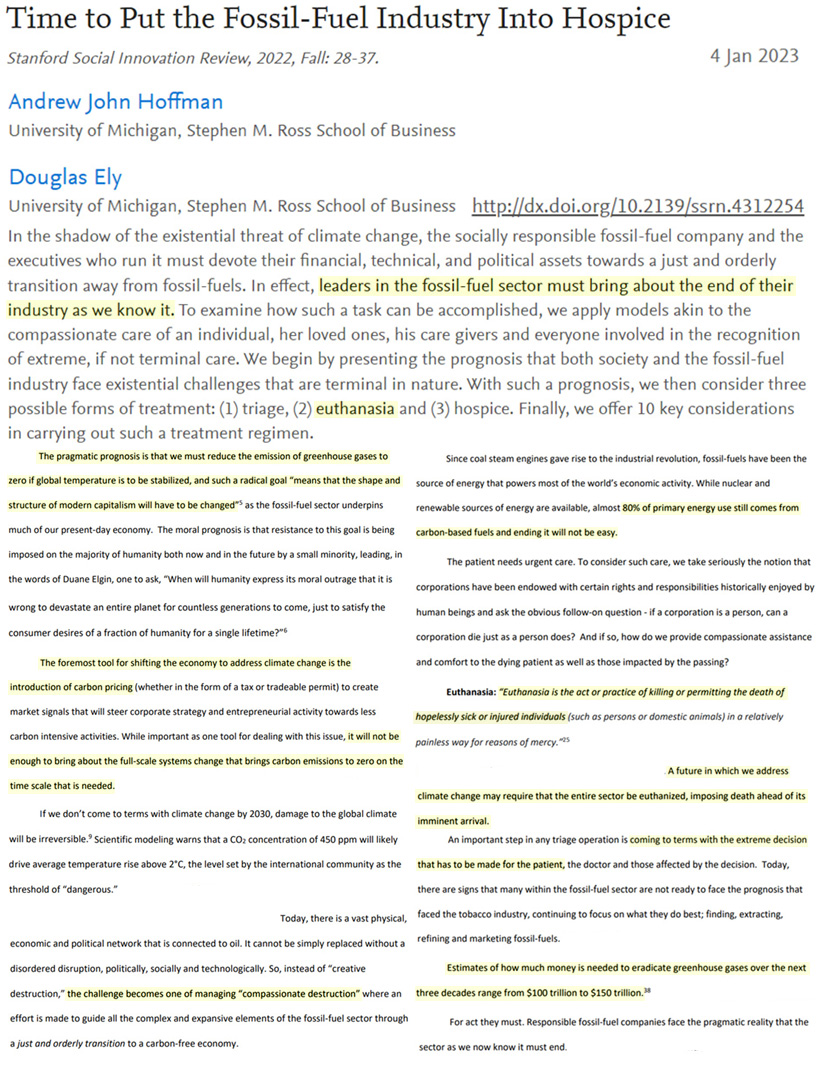

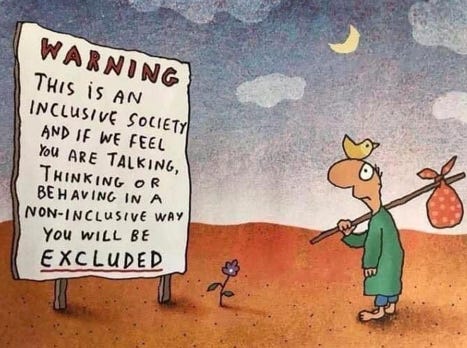
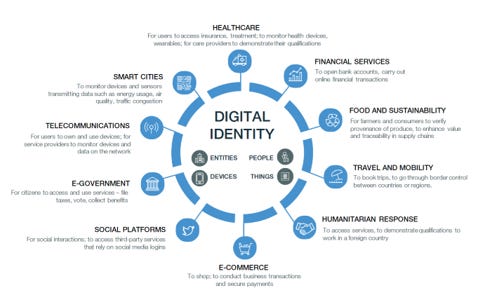
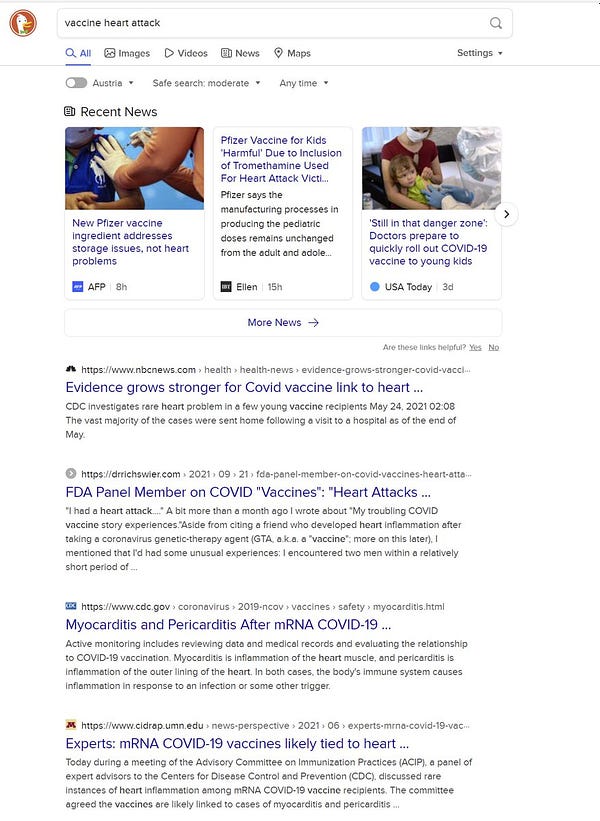
 The global assault on reality and the creation of a new “reality” has created a Mass Psychosis, described by Dr. Mattias Desmet as Mass Formation.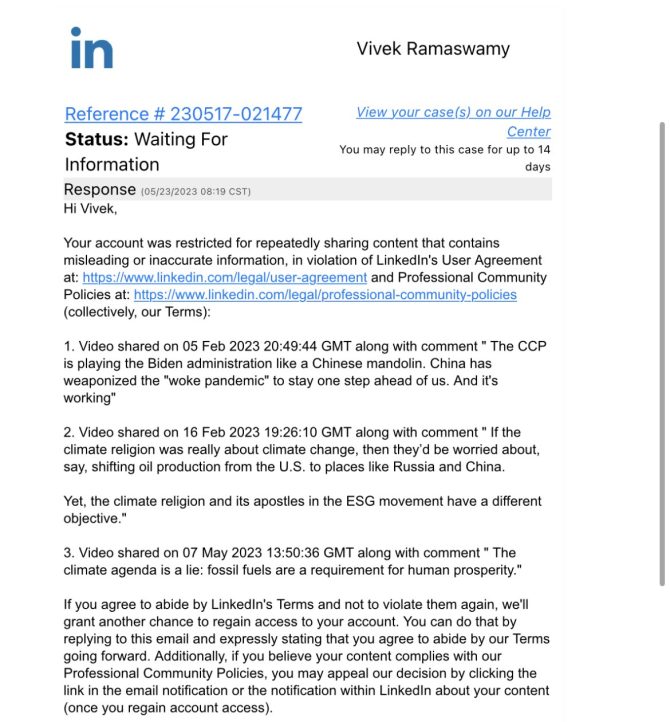
 Aletho News
