Ukraine turns off Europe-bound gas
Samizdat | May 10, 2022
Russian gas conglomerate Gazprom has received no confirmation of force majeure or any obstacles to continued transit of gas through a junction in Lugansk Region, the company said on Tuesday, after Ukraine’s operator OGTSU announced it would halt further deliveries starting May 11, due to the presence of “Russian occupiers.”
Gas Transit Services of Ukraine (OGTSU) declared force majeure on Tuesday, saying that it was impossible to continue the transit of gas through a connection point and compressor station located in the Lugansk area. As OGTSU personnel “cannot carry out operational and technological control” over the Sokhranovka connector point and Novopskov compressor station, the company cannot continue to fulfill its contract obligations, it said.
Gas from this connection will not be accepted into the transit system of Ukraine starting at 7 am on Wednesday, OGTSU said. Sokhrankovka accounts for almost a third of the Russian gas that transits through Ukraine to Europe – up to 32.6 million cubic meters per day – according to the operators.
Gazprom has received no confirmation of force majeure or disruption of operations at Sokhranovka or Novopskov, company spokesman Sergey Kupriyanov said on Tuesday. He added that Ukrainian specialists have had full access to both facilities all along, and there had been no complaints about it previously.
Kupriyanov also said that Gazprom has been notified by Ukraine’s gas company Naftogaz that if Russia continues to supply gas through Sokhranovka, Kiev will reduce the volume at the point of exit by the same amount, effectively confiscating the gas.
While OGTSU has proposed to reroute the gas to Sudzha, a connector located in the Sumy region and controlled by the Ukrainian government, Kupriyanov said this was “technologically impossible.”
“The distribution of volumes is clearly spelled out in the cooperation agreement dated December 30, 2019, and the Ukrainian side is well aware of this,” he said.
Gazprom is fulfilling all of its obligations to its European customers, with all the transit services in accordance with the terms of the contract and paid in full, Kupriyanov pointed out. Moscow has continued gas deliveries to Europe, including transit through Ukraine, regardless of the ongoing military operation and the embargoes against Russia imposed by the US and its allies in the EU.
German industry faces economic ruin with ‘highly dangerous’ gas ban
Free West Media | May 10, 2022
BERLIN – A study by the German Hans Böckler Foundation has now calculated that the gross domestic product (GDP) could collapse by up to twelve percent within the first year if Russian gas supplies were to end immediately. It is the latest doomsday prediction for Germany’s industry.
Industrial production would fall by 114 to 286 billion euros. This alone would lead to a GDP slump of three to eight percent, which would be increased by another two to four percent because the higher energy prices reduce the financial scope of consumers for other expenditures.
According to the study author Professor Tom Krebs from the University of Mannheim, a gas supply ban would only be manageable from 2025 onwards if other sources were available.
In addition, Krebs warned of so-called “cascade effects” that could also affect sectors that are less dependent on natural gas and threatened to “drastically” increase the economic damage. He also drew attention to the fact that the German economy is still under severe stress after the 2009 financial crisis, the 2020 Corona pandemic and due to self-inflicted climate change pressure. Since the expected price shocks for energy and food would have to be borne primarily by poorer households, “social tensions could intensify”.
The warnings of the study correspond exactly to what other experts have said: The former EON boss Johannes Teyssen had described a ban on Russian energy supplies as “highly dangerous” just last week.
Teyssen does not consider the suggestions of taking cold showers made by Economics Minister Robert Habeck and Federal Network Agency boss Klaus Müller to make any sense: “If it were about that and it could be regulated, then we would have done it a long time ago.”
In fact, it is “really about an extensive collapse of the basic industrial structure that needs natural gas and the entire value chain behind it”. One has to understand how it works. Supply bottlenecks would arise in other industries if large energy companies were no longer able to produce anything.
The general manager of the chemical industry association, Wolfgang Große Entrup, also issued almost identical warnings at the beginning of April. In the event of a short-term, unlimited stop in the supply of Russian gas, “a severe recession and a massive loss of jobs” must be expected. It is “frequently massively underestimated” that other branches of industry such as agriculture, construction, food, automobiles or electronics would then also be badly hit. For the loss of natural gas there is “no short-term replacement option”.
Yet these industry heavyweights are totally ignored by EU chief Ursula von der Leyen, and the irresponsible demands of the Ukrainian Ambassador Andriy Melnyk or “Fridays-for-Future” activist Luisa Neubauer, goading Germany into an economic catastrophe, the consequences of which must be shouldered by ordinary citizens – and not by the privileged, wealthy or state-appointed authors of the measures.
“You hear so little about Gretl, the little climate siren from Sweden. No screaming ‘how dare you’, no shouting on our streets, the blond braided one has dedicated herself to inner emigration. The Fridays for Future sect, the radical arm of the eco-socialists, plays the ostrich. The hip Greta has fallen silent in the face of the honorable rearmament of the Western arms industry,” noted Austrian politician Gerald Grosz.
“Yes, the good girl believes that the F16 flies on an e-battery on its way to the Ukraine. Or does she believe that the atomic bombs are powered by solar panels and that only ‘organic makes you beautiful’ soybeans grow after the impact. And the artillery pieces move on rapeseed oil?”
Germany warns of global famine
Samizdat | May 9, 2022
The world is about to face an acute food crisis due to skyrocketing food prices, German Economic Cooperation and Development Minister Svenja Schulze told the Bild newspaper on Saturday, warning about a looming famine not seen since World War II. The minister has named the Covid-19 pandemic and Russia’s ongoing military operation in Ukraine as its causes.
“The situation is highly dramatic,” the minister told the German tabloid in a late Saturday interview, adding that, according to the UN World Food Program, “more than 300 million people” are already suffering from acute hunger and the UN has to “constantly revise” this data upwards.
Food prices around the world have grown by a third and have reached “record levels,” Schulze has warned, adding that the “bitter message is that we are facing the worst famine since World War II,” which could see “millions” die.
In its May 6 statement, the World Food Program has warned that “44 million people around the world are marching towards starvation” because Ukrainian grain cannot reach them, and called for the Black Sea ports to be opened so that this grain could be delivered to the needy.
Minister Schulze was quick to blame Moscow for the development by accusing Russian President Vladimir Putin of “waging a war through hunger.” She claimed that Russia had “stolen grain from Ukraine” and is now taking advantage of nations depending on Russian and Ukrainian agricultural products by supposedly offering food only to those, who are “unequivocally pro-Russian.”
The minister has also claimed that the fact that 40 nations that are “home to half of the world’s population” did not condemn Russia’s actions in Ukraine was supposedly a result of their “vulnerability to food blackmail.” She didn’t offer any specific evidence to support this statement, though.
At the same time, she did admit that some nations’ focus on green energy has contributed to the food shortage as well. Germany in particular should stop using food as fuel, she has suggested. Up to 4% of the so-called biofuel in Germany is made from food and animal feed, she said, adding that “it needs to be reduced to zero, and not just in Germany but potentially internationally.”
Germany “pours 2.7 billion liters of fuel [made] from vegetable oils into car tanks every year,” she pointed out, adding that this alone amounts to “almost a half of Ukraine’s sunflower oil production.”
The ongoing conflict in Ukraine has prompted fears of global grain shortages as wheat prices soared to multiple-year highs in March. Both Russia and Ukraine are major wheat suppliers, accounting for some 30% of global exports.
In mid-April, however, German Agriculture Minister Cem Ozdemir insisted that supplying Kiev with “more effective” weaponry was precisely what would have helped the world to avoid the supposedly looming “global famine.” Ozdemir, a member of the strongly pro-US/NATO Alliance 90/The Greens party, also accused Moscow of “starvation strategy” at that time.
His position appears to be quite different from at least two groups of German public figures, politicians and celebrities, who have called on Chancellor Olaf Scholz to stop arms supplies to Ukraine and to focus on a speedy diplomatic solution instead.
Continued arms deliveries would only prolong the suffering of Ukrainians as well as risk potentially devastating consequences, ranging from a possible global war to a “catastrophic” impact on global health and climate change, the co-authors of two open letters have warned. Berlin has not reacted to any of the letters so far.
Sri Lanka’s Prime Minister Resigns Amid Anti-Government Protests
Samizdat – 09.05.2022
Sri Lanka has been rocked by mass protests for weeks, with people outraged over the government’s policies amid the country’s worst economic crisis in decades.
Sri Lanka’s Prime Minister Mahinda Rajapaksa has resigned, his spokesman Rohan Weliwita said.
The 76-year-old prime minister sent his letter of resignation to his younger brother, President Gotabaya Rajapaksa, clearing the way for a “new unity government”, the spokesman said, quoted by AFP.
Earlier, news about the prime minister’s resignation was broken by local media.
On Monday, the government imposed a nationwide curfew and deployed the army in the capital Colombo amid violent clashes between anti-government protesters and government supporters outside President Gotabaya Rajapaksa’s office. Dozens of people were injured in the clashes. Police used tear gas and water cannons to disperse the protesters.
Sri Lankans have been facing the worst economic crisis since gaining independence from British rule in 1948. People have been suffering amid acute shortages of food, fuel, and medicines, as well as months of power outages. The crisis broke out after Sri Lanka lost the vital income it had traditionally received from tourism and remittances. This happened due to the coronavirus pandemic and tough COVID-related restrictions that affected the entire region. As a result of this, Sri Lanka was no longer able to pay off its $51 billion foreign debt and banned the import of some goods.
Insights On Progressive Thinking From The Climate Action Council Public Hearing

By Francis Menton | Manhattan Contrarian | May 6, 2022
My previous post on Tuesday contained some highlights from the May 3 public hearing of New York’s Climate Action Council. The CAC is the body that is charged with devising a “Scoping Plan” to inform all us New Yorkers how we will achieve “zero carbon” electricity by 2030 and a “zero carbon” economy by 2050. I attended the hearing for about two and a half hours, during which about 60 people spoke.
Reflecting on the hearing a few days later, I think there are a few more highlights that would interest the readers, and will give some more insights into the nature of progressive thinking.
As stated in my prior post, of the 60 or so speakers, all but myself and four others were vigorous supporters of the critical necessity of achieving the stated zero carbon goals by the given dates as an urgent matter of saving our planet and our children. This was so despite what appeared to me to be manifestly huge issues of physical feasibility and cost that are almost certain to cause these grand “net zero” energy schemes to fail. The CAC’s draft “Scoping Plan,” as it currently exists for public comment, does not consider these feasibility or cost issues in any remotely adequate fashion, if at all. That fact did not appear to bother the overwhelming majority of the speakers.
So what are the things that do drive the thinking of these other 55 or so speakers, who apparently represent the large majority of New York City’s citizenry? The previous post mentioned fear as a common theme — fear that use of fossil fuels by us New Yorkers will bring on storms, floods and other disasters to threaten our lives and livelihoods. But what I failed to mention was another emotion that was even more prevalent in the comments — anger.
Anger at what, you might ask? Good question. I admit that this doesn’t make any sense, but here it is. The anger is directed at the fossil fuel producers and distributors who the commenters, with near unanimity, seemed to believe were hell-bent on destroying the planet. A substantial majority of the 60 or so comments that I listened to expressed this anger in one form or another, and it was an implicit undercurrent in most of the rest.
But, you might say, all of these people are in fact the users of the fossil fuels. Essentially all of them use electricity, which in New York currently comes about 60% from fossil fuels. The large majority of them drive cars, of which some 99% in New York use gasoline. Most of them heat their homes with natural gas, and cook with natural gas. Aren’t they themselves the ones who are responsible for the problem, if there is a problem? They use fossil-fuel-burning cars and furnaces and stoves because those vehicles and appliances are cheaper and/or work better than the alternatives. And yet, somehow these people have convinced themselves that they have no responsibility at all, and the use of gasoline and natural gas by them and others is a fault of evil producers and utilities.
On this theme, two commenters in particular stand out in my mind. First was a youngish (probably in her 30s) woman from Brooklyn who described herself as having a toddler in the apartment. After relating her fears for the toddler’s future in a world of changing climate, she got to the crux of her personal testimony, which was much more about anger than fear. The gas company was putting a dangerous substance into her stove, which when burned to cook gave off toxic substances and fumes that were putting the toddler’s health at risk. Her intense rage was palpable. She urged the CAC in the strongest terms to impose legal prohibitions that would prevent this kind of conduct going forward.
Put aside for the moment that this woman apparently had no idea that there is nothing toxic about the combustion products of natural gas, which are CO2 and water. But even more bizarre was that she apparently hadn’t figured out that if she is concerned about this subject, however irrationally, she can just go out and buy an electric stove tomorrow. And why hadn’t she done that? She didn’t say. The only reasons I can think of are that natural gas stoves work better than electric ones and are cheaper. Those are perfectly good reasons. But I wouldn’t recommend that you try to argue with this woman about why she has a gas stove. She is completely convinced that it has been foisted upon her by the evil gas companies who are intent on destroying the health of her toddler, let alone the planet. I doubt that any amount of logic or reason could talk her out of that belief.
And then there was the case of an equally irrational 60-something man, who said he was from Cedarhurst, Long Island. For those unfamiliar, Cedarhurst is a very wealthy suburb of large homes just outside the New York City limits. You may have seen Cedarhurst out the window of an airplane approaching JFK airport on a flight back from Europe. The guy in question styled his testimony as a confessional. He candidly admitted to his extreme climate guilt. But he claimed that he was unable to do anything about his large carbon footprint right now because the state had failed to compel the suppliers to provide him with zero emissions alternatives. He didn’t give us any details of what fuel he currently uses to heat his home, or to cook, but chose to focus on his driving. He stated that he wanted to buy an electric car, and was ready to do it, but was prevented from doing it. How was he prevented? Because there were no electric vehicle charging stations in his town! Needless to say, he was angry about that, and demanded that the state step up to order somebody to provide the charging stations, and provide funding to be sure that the charging stations got built.
Huh? Why didn’t this guy just get his own charging station at his own house? He didn’t mention that, so we are left to speculate. Again, the only thing I can think of is that he doesn’t want to spend his own money on this. Better to gin up some anger and demand that somebody else pay for it.
The thinking is that not only perfect fairness and justice, but also perfect climate, are easily within our reach if only our leaders summon the political will to order the evil people and companies to do the right thing, and perhaps provide some funding from the infinite free pile of government money. I guess, if you believe that, you are right to be angry that the leaders haven’t yet issued the necessary orders to get the job done. What’s wrong with them?
Climate Colonialists Disrupt African Pipeline, Perpetuate Poverty
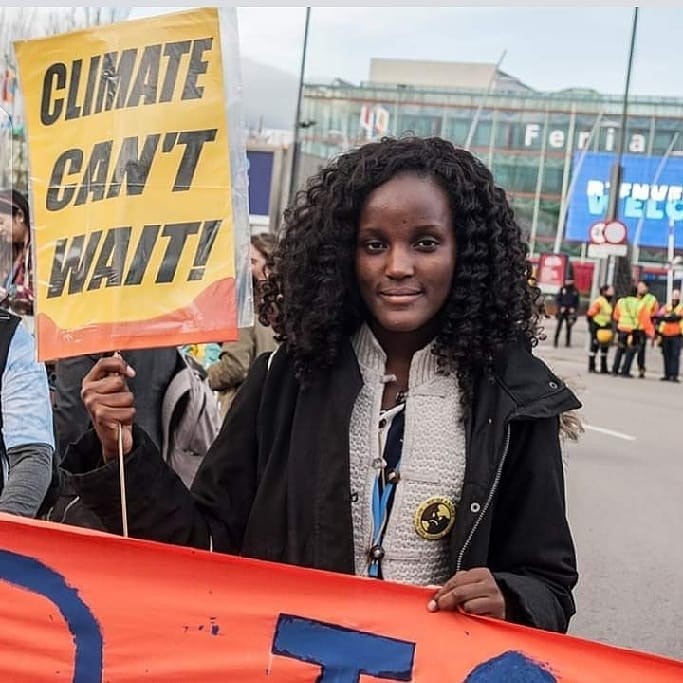
Vanessa Nakate
By Vijay Jayaraj | RealClear Energy | April 28, 2022
Climate activists’ ill-founded opposition to fossil fuels threatens to stop a major pipeline project in East Africa and stymie economic growth in Uganda and Tanzania — home to some of the world’s poorest people.
Uganda is betting big on its fossil fuel reserves. In February, China National Offshore Oil Corporation (CNOOC) and France’s TotalEnergies agreed to invest $10 billion to develop two Ugandan oil reserves. But the landlocked country needs the East African Crude Oil Pipeline project (EACOP) to transport its product to a port in Tanzania.
The 895-mile-long pipeline from Uganda’s Lake Alberta region to the seaport of Tanga will be the longest electrically heated crude oil pipeline in the world and will carry 216,000 barrels per day. The project received a green light for construction after the completion of an Environment and Social Impact Assessment.
The Africa Report says that the investment will be huge: “(A)bout $10 billion will be invested in the sector (oil and gas) before first oil is produced in 2025, mainly on the pipeline, refinery, and infrastructure. The government has been commissioning road construction in the region where oil will be produced, in Buliisa and Hoima districts, and an airport is also being constructed in the region.” The project is expected to generate around 10,000 jobs even after the construction phase.
The Government of Uganda expects massive employment of its citizens during construction: “This will be through direct employment of about 14,000 people by the companies, indirect employment of about 45,000 people by the contractors, and induced employment of about 105,000 people as a result of utilization of other services by the oil and gas sector. Of the direct employment, 57 percent are expected to be Ugandans, which is expected to result in an estimated $48.5 million annual payment to Ugandan employees.”
However, the global war against fossil fuel has now reached Ugandan soil and extremists are determined to stop this lifesaving, economically critical project.
Vanessa Nakate of StopEACOP rants against the pipeline in a recent column in the New York Times, saying the project would bring poverty and destruction to the people of Africa. She also references extreme weather in implying the pipeline will worsen the climate.
During a visit to the ultra-rich Vatican, Vanessa says: “It is evident that there is no future in the fossil fuel industry…. we know the impacts on our food. We know the impacts on our water. We know the impacts on our livelihood…… the climate crisis is already affecting so many people not only in Uganda, but the African continent.”
But her reasons for opposing the pipeline are scientifically inaccurate and logically senseless.
She points to a forecast by the Intergovernmental Panel on Climate Change (IPCC) that predicts African droughts. But IPCC, by its own admission, has indicated that extreme weather events have no significant correlation with rising global average temperatures. Neither has there been any significant increase in the frequency of extreme cyclones, droughts, rainfall, and fires. Even if droughts and cyclones were to increase, a better socio-economic condition would enable people to adapt more effectively.
Contrary to Vanessa’s hyperbole, the world is experiencing near optimum temperatures for global food production and the advancement of human society, much as it did 1,000 years ago during the Medieval Warm Period and 2,000 years ago during the Roman Warm Period. Globally, we now have better access to clean water, better access to nutritious food, people with higher income, and a very rapid increase in life expectancy rates. How are we in a crisis if climate is aiding the improvement of every metric used to measure the quality of people’s lives?
It is shocking how Vanessa ignores the plight of millions of her own people dwelling in persistent poverty and in need of affordable, dependable energy sources like coal, oil, and gas. It is less shocking if we understand the DNA of climate extremists, which has them deny the reality of energy needs and promote unreliable, primitive, and expensive wind turbines that even economic giants like Germany and the U.S. hesitate to adopt completely.
Climate extremists like Vanessa are fostering the continuation of abject poverty in Africa — a continent with the lowest level of electrification and highest rates of poverty in the world. Vanessa claims that the pipeline is another colonial project subjecting Africans to slavery. But, it is Vanessa and her ilk who are the colonialists and would-be slave masters.
Vijay Jayaraj is a Research Associate at the CO2 Coalition, Arlington, Va., and holds a Master’s degree in environmental sciences from the University of East Anglia, England. He resides in Bengaluru, India.
Life Expectancy Continues To Fall In The EU
By Tyler Durden | Zero Hedge | MAY 7, 2022
Life expectancy has taken a rare hit in the European Union during the Covid-19 pandemic.
As Statista’s Martin Armstrong shows in the infographic below (using Eurostat data), despite a blip in 2015, life expectancy in the EU had been growing every year since at least 2003.
In 2020, however, the average years of life somebody born in the 27 countries dropped from 81.3 to 80.4. In 2021, this fell again by another 0.3 years.
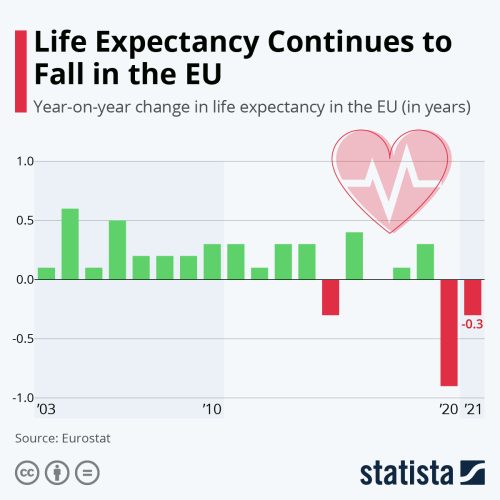
You will find more infographics at Statista
As reported by Eurostat,“life expectancy has risen, on average, by more than two years per decade since the 1960s. However, the latest available data suggest that life expectancy (has) stalled or even declined in several EU Member States.”adding:
“The Covid-19 pandemic has had a negative effect with life expectancy at birth declining in almost half the EU Member States in 2021. The largest decreases have been estimated in Slovakia and Bulgaria (-2.2 years compared with 2020), followed by Latvia (-2.1) and Estonia (-2.0). Compared with the pre-pandemic year of 2019, the overall effect on life expectancies is still negative in all EU Member States except Luxembourg (+0.1), Malta and Sweden (same level).”
African Governments to Western Eco-Imperialists Who Tell Them Not to Drill Their Own Oil and Gas – Get Lost
By Chris Morrison | The Daily Sceptic | May 5, 2022
It was never going to work. Telling African countries to stop developing their economies by banning cheap, reliable fossil fuel is little more than an eco-imperialist dream. Writing in Monday’s Daily Telegraph, Uganda President Yoweri Museveni lauded the discovery of oil in Lake Albert, but noted it was a battleground for the green NGOs and activists who claim that Armageddon is nigh at every opportunity.
“We are accustomed to these lectures, but we are tired of hearing them,” he added.
For the last decade, the West through the IMF and the World Bank has imposed a moratorium on support for African fossil fuel development – initially coal and more recently oil and gas as well. Museveni notes that in Africa the population is set to double by 2050, “and it is becoming increasingly clear that our energy needs cannot be met with a sudden shift to more expensive and less reliable solar and wind alone”.
Rich Western eco elites, of course, argue that the world must rid itself of fossil fuel as soon as possible. They believe the world is facing climate breakdown, although as articles in the Daily Sceptic show on a regular basis, that belief is backed by surprisingly few scientific facts. These Western elites effectively seek a command-and-control economy based on Net Zero, and a neo-pagan return to ancient Gaia goddess worship that elevates nature as sacred and denigrates humanity as destructive of it.
It might all play better in Africa if so-called global warming could be detected.
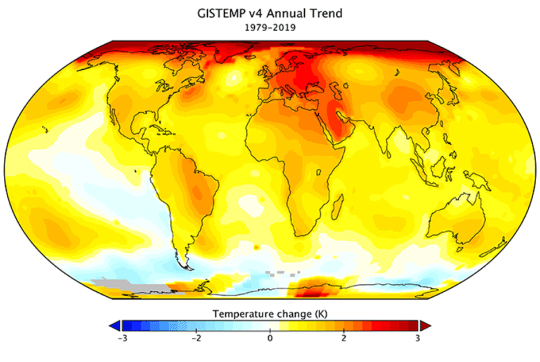
Atmospheric warming over the last 40 years has been more pronounced over the northern hemisphere, despite regular scare stories appearing about equatorial regions becoming uninhabitable. The GISS temperature database is run by NASA, and as with similar datasets it has been subject to considerable recent modifications, with the past cooled and later results warmed. Without these retrospective data adjustments, global recorded warming ran out of steam nearly two decades ago. Nevertheless, the contrast between the north, painted in fiery red, and most of Africa is clear from the GISS map (above).
The Lake Albert project is going ahead following a $10bn investment from the China National Offshore Oil Corporation and Total Energies of France. It includes the building of a 900 mile pipeline to the port of Tanga. According to Real Clear Energy, the project will provide $48.5m in annual payments to Ugandan employees living in one of the least developed countries in the world. But opposition is fierce. Writing in the New York Times the local green agitator Vanessa Nakate of StopEACOP said the project would bring “poverty and destruction to the people of Africa”. It is claimed by her activist group that building the East African crude oil pipeline would tip the world closer to “full blown climate catastrophe”.
It is comments such as these which mostly surface in mainstream media, rather than those of the President of Uganda. It might also be thought that most Africans are less impressed with other solutions advanced in the West to solve any problems caused by growing populations. Sir David Attenborough is on record as stating humans are a plague on the Earth, and it was “barmy” to send food to Ethiopia to solve the famine crisis. In Attenborough’s view, sending flour bags to under-developed countries was pointless.
In public in the West, many African politicians pay lip service to the aims of COP, not least because plenty of aid cash is on offer. Others take a more challenging and outspoken view. N.J. Ayuk is the Executive Chairman of the African Energy Chamber and he recently called the idea that you could develop Africa with handouts, “preposterous and sickening”.
He continued: “You cannot take people of any colour and exempt them from the requirements of civilisation – including work, free markets, behavioural standards, personal responsibility, fossil fuels, financial literacy and all the other basic things that the clever intelligentsia disdain – without ruinous consequences to them and society at large.”
In his view, no country has ever been developed by fancy wind and green hydrogen. Africans see oil and gas as a path to success and a solution to their problems. “The demonisation of oil and gas companies will not work,” he added.
Writing in 2015, the former Chancellor of the Exchequer Nigel Lawson commented that something deep inside the human psyche makes it receptive to apocalyptic warnings. By a cruel irony, he said, too many climate scientists and their hangers-on have become the high priests of a new age of unreason. Asking developing countries to abandon the cheapest available sources of energy is, at the very least, asking them to delay the conquest of malnutrition, to perpetuate the incidence of preventable diseases and to increase the number of premature deaths.
“Global warming orthodoxy is not merely irrational. It is wicked,” he concluded.
Klaus Schwab’s daughter wants governments to use COVID policies for climate change
By Keean Bexte | The Counter Signal | April 29, 2022
Nicole Schwab, the daughter of World Economic Forum founder Klaus Schwab and current WEF Co-Director of the Platform to Accelerate Nature-Based Solutions, wants governments to take advantage of COVID infrastructure and policies to fight climate change.
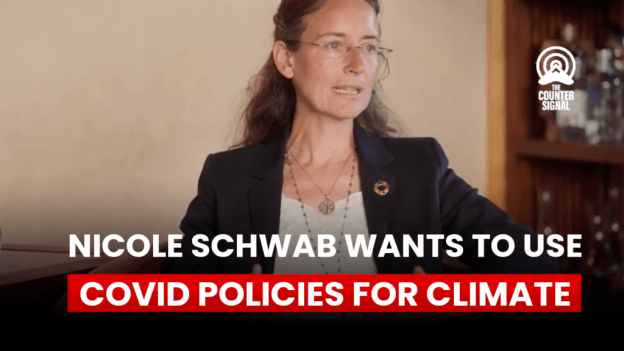
“Clearly, the system… is not sustainable,” began Nicole Schwab, speaking at an InTent roundtable. “So, I see it as a tremendous opportunity to really have this Great Reset and to use these huge flows of money, to use the increased levers that policymakers have today in a way that was not possible before to create a change that is not incremental, but that we can look back and we can say, ‘This is the moment where we really started to position nature at the core of the economy.’”
Schwab continues, saying that politicians and businesses have the opportunity to redesign the economies of the world with nature and “regenerative agriculture” in mind before pivoting into a discussion about “engaging youth” with climate change propaganda to create a “restoration generation” (i.e., indoctrinating an entire generation).
“And one of the key reflection points here is also around engaging youth,” Schwab continues. “And, for me, again, I come back to this shift in mindset of the restoration generation. Can we conceive of ourselves as humans — I mean, you talked about a new humanity… Can we conceive of ourselves as a restoration generation?”
“I think that’s where we need to go. I’m also hopeful that it’s possible, but I think it will take a lot of will, both political will but also in terms of the business actors, to break with business as usual… And this is about risk, and it’s about risk, and it’s about resilience because the shocks coming are going to be even worse if we don’t do it now. “
It appears the apple doesn’t fall far from the tree.
Nicole’s father, Klaus Schwab, has also spoken and written on redesigning society with climate policies at the fore.
In a WEF article entitled “Now is the time for a ‘great reset,’” Schwab senior lays out the three key components of the Great Reset, second of which is “equality and sustainability.”
“The second component of a Great Reset agenda would ensure that investments advance shared goals, such as equality and sustainability… Rather than using these funds… to fill cracks in the old system, we should use them to create a new one that is more resilient, equitable, and sustainable in the long run. This means, for example, building “green” urban infrastructure and creating incentives for industries to improve their track record on environmental, social, and governance (ESG) metrics,” writes Schwab.
The environmental, social, and governance (ESG) metrics that Schwab mentions sound benign but are truly radical.
As part of their ESG metrics and international dietary framework, the United Nations recommends that red meat consumption be reduced to 14 grams (one bite) per day per person in the name of sustainability and ‘saving the world.’
Climate change education, as mentioned by Nicole Schwab, is another crucial ESG metric in the overall agenda.
Another all-encompassing policy of the UN’s ESGs that’s become increasingly noticeable and disastrous in countries like Canada is a carbon tax on practically everything from food to gas to heating to private businesses that don’t conform to the new normal, which will lead to pricing the average person out of their ability to use private transportation and consumption of meat products.
If you want to read more on ESGs, digital IDs, and the Great Reset, you can do so by clicking here.
European Commission’s plan to ban Russian oil imports receives backlash
By Paul Antonopoulos | May 6, 2022
The European Union announced on May 4 their intention to ban Russian oil imports within six months and refined products by the end of the year as part of their latest round of economic sanctions against Moscow. According to Oil Price, a barrel surged to over $110 for Brent and $108 for West Texas Intermediate following the European Commission’s announcement. Therefore, banning Russian oil imports is not only a rather arduous task, but the cost of this decision will be high.
“In the short term it might leave Russian revenues high while implying negative consequences for the EU and the global economy in terms of higher prices – not to mention retaliation risks [by Russia] on natural gas supplies,” Brussels-based economic think tank Bruegel warned following the European Commission’s announcement. However, an EU diplomat told EURACTIV on condition of anonymity that “Politically, Europe cannot afford not adopting the sixth package [of economic sanctions].”
The EU will be once again be divided as its rare instance of geopolitical posturing is being challenged by the economic interests of individual member states. Hungary and Slovakia oppose the European Commission’s proposal despite being given until the end of 2023 to phase out Russian oil. At the same time, Bulgaria and Czechia have also asked to be given such an extension.
Sources have said Greece raised objections to another proposal to ban all shipping companies that are EU-owned or have European interests from transferring Russian oil into Europe or elsewhere, something of major importance since the Mediterranean country has the largest mercantile fleet in the world. Although Athens deeply supports all of the EU’s hostile actions against Russia, such as the expulsion of diplomats, imposition of sanctions and even the sending of weapons to Ukraine that could have ended up in the hands of the Azov Battalion that has persecuted the Greek minority, threatening the profits of Greek oligarchs provokes one of the rare instances of opposition from Greece’s ruling New Democracy party.
New Democracy is traditionally the pro-US/neo-liberal party of Greece that has served the interests of the country’s oligarchs, or softly known as magnates or tycoons, particularly the shipowners. Consider that 71% of Greeks in a poll said Greece’s position in the Ukraine War should be neutral, something that was categorically ignored by the Greek government as it strongly backed Ukraine instead. However, the moment that the profits of shipowners are threatened, and not over the past few months as citizens have dealt with rising energy and food costs, Athens voiced its first concern against the EU’s anti-Russia sanctions.
Theoretically, although Russian oil can be phased out of most of the EU within six months, it will none-the-less be a very difficult task, especially when taking into account the fact that there is currently an energy shortage. In addition, the imposition of such a policy could lead to a build-up of shocks in the EU economy.
The Russian economy will naturally be affected as it will be deprived of a major market. But of higher concern, for European citizens at least, is the realization of the effects that anti-Russia sanctions has even on their own daily lives. And whilst Europeans suffer from rising energy and food costs, Asia could very much become Gazprom’s main export market in five to seven years.
Although this does not offset the loss of the EU as an oil market, shifting most exports to much friendlier Asian markets will lessen the effects of Western sanctions, even if this shift could take several years. Although the problem is the supply price and the development of the corresponding gas transport infrastructure, including in countries like China, it is recalled that Russian President Vladimir Putin made a directive to the government to submit a plan by June 1 on how to build related infrastructure. The directive requested a proposal for a large-scale development of a gas pipeline system in Eastern Siberia, aimed at directing the flow of gas exports to the Chinese market.
China currently consumes about 350 billion cubic meters of gas per year, while the majority of the energy balance (about 70%) remains coal. Demand for gas in China is expected to grow to 450-480 billion cubic meters by 2025 and in the next 10 years, as coal is phased out, perhaps even nearly one trillion cubic meters of gas per year.
Currently, Russian gas supplies to China arrive through the “Power of Siberia” pipeline. Deliveries along this route began at the end of 2019 and in 2020 reached 4.1 billion cubic meters. It is expected that the annual supply volume will gradually increase until it reaches its capacity of 38 billion cubic meters in 2025. Taking into account the new agreement signed in February, the total gas capacity supplied to China via the Far Eastern pipeline could reach 48 billion cubic meters per year.
In this way, although Russia will be hurt in the short term by losing the European market for its oil, this action will only propel the flow of Russian energy eastward to an Asia that is continuously increasing its demand. Equally of interest is that Europe persistently promises that sanctions against Russia cannot hurt European citizens in equal measure, but weaning off Russian oil within a six-month period will only increase the likelihood of such an outcome.
Paul Antonopoulos is an independent geopolitical analyst.
Featured Video
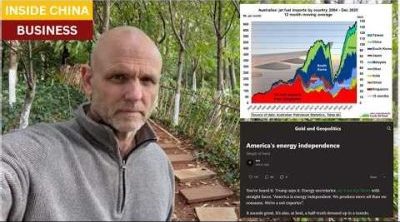
Chinese jet fuel and the myth of energy independence
or go to
Aletho News Archives – Video-Images
From the Archives
The Dirty Little Secret behind the “Global Terrorism Index”
The Omission of Israeli Terrorism in the Occupied Palestinian Territories
By Karin Brothers | Global Research | December 6, 2014
… The Israeli settlements — all of which are illegal – have been identified as a major impediment to peace. The refusal of a major “global” terrorism report to name the Israeli settlers as one of the groups most responsible for terrorism not only misrepresents a major source of regional violence but exposes the Global Terrorism Index as a propaganda tool that supports a U.S. agenda.
In recent years, governments have been attempting to thwart terrorism by blocking supportive fund-raising. When it comes to Israeli settlements, however, the US and Canada actually encourage fund-raising by giving organizations (such as Christian Friends of Israeli Communities (CFOIC) and the Jewish National Fund) financial support in the form of donor tax-deductions.
Charities which provide funds for the Israeli settlements should be regarded as terror-financing organizations. They should not only lose their tax-deductible status, but they should be banned because they support the violation of international humanitarian law. The terror-financing laws that are being strictly enforced for Muslim charities should be applied to Christian and Jewish charities as well. … Read full article
Blog Roll
 Aletho News
- Chinese jet fuel and the myth of energy independence
- Ukraine Sea Drone Fired From Libya Hit Russian Tanker in Mediterranean
- IRGC: Iranian forces launched no attacks during ceasefire hours
- Trump Administration Moves To Automate U.S. Military Draft Registration
- Spain orders reopening of Tehran embassy, condemns Israel’s carpet bombing of Lebanon
- Israel faces ‘unsustainable’ strategic crisis following 40-day war against Iran: Analyst
- Iran restricts Hormuz access to 15 vessels per day under ceasefire terms: Report
- The ‘Opposition Party’ Has Done Nothing to Stop the Iran War and Much to Goad Trump Into Continuing It
- Moscow backs Tehran on status of Lebanon in US-Iran deal
- How UK Regulator Ofcom Quietly Bypassed International Law to Police American Speech
- If Americans Knew
- Amnesty: Urgent – Protect Lebanese civilians from brutal escalation in Israeli attacks
- Is The War Against Iran Over?
- Inside the Israeli army’s propaganda wing
- Hundreds of Gaza Amputees Stranded in Legal Limbo
- The gallows law: Israel moves toward executing Palestinian children
- Tucker Carlson: The Path to Peace requires ending ‘special alliance’ with Israel
- This is ceasefire? Israel’s biggest massacre yet in Lebanon, another journalist killed in Gaza – Daily Update
- Tucker Carlson on Israel: This Is the Behavior of an Ally? Really?
- Gazans face a triple crisis: severe shortages of water and bread, healthcare in tatters
- NY Times reports how Netanyahu took the US into Iran War
- No Tricks Zone
- An Inconvenient Tree: Uncovered In Alps… Europe Much Warmer Than Today 6000 Years Ago
- New Study Reports A 60% Slowdown In Greenland’s Ice Loss Rate In The Last Decade
- Low Intensity Tornado Wrecks Major Solar Farm, Creating A Potential Toxic Dump
- New Study Finds Warming Saves Lives…Cold Temperatures 12 Times More Deadly Than Excess Heat
- German Science Blog Accuses PIK Climate Institute Of Hallucinating Climate Tipping Points
- Devastating Assessment Of Comirnaty Vaccine By Former Senior Pfizer Europe Toxicologist
- New Study: CO2 Is ‘Effectively Negligible’ As An Explanatory Climate Change Factor Since 2000
- Former Pfizer Toxicologist Dr. Helmut Sterz Tells Bundestag Hearing Pfizer Vaccine Should Have Never Been Approved
- Energy Expert: Germany’s Nuclear Phaseout Was A “500 Billion Euro Mistake”
- New Research: South Australia’s Mid-Holocene Sea Surface Temperatures Were 4°C Warmer Than Today
 Aletho News