Drone Attack on Putin’s Residence Could Have Triggered a Nuclear War: Here’s Why
Sputnik – 30.12.2025
The 91-drone attack on the presidential residence in Novgorod region was an extremely dangerous provocation. And one that “could not have been carried out without the participation of European hawks” because “Zelensky would not have dared to plan or carry out such an operation on his own,” military expert Alexey Leonkov told Sputnik.
Intricate planning was required, and the timing – while Zelensky was in the US for talks with Trump, was designed to give him an alibi, “which he is now using, claiming Ukraine had nothing to do with it,” Leonkov said.
The provocation “wasn’t simply an attack on the president,” the observer emphasized. “It was a strike on a nuclear weapons control center, as each such residence contains communications nodes through which the head of state can issue the command to use the country’s nuclear forces.”
“It was intended to provoke a conflict between the US and Russia,” Leonkov said. “This was precisely the calculation: at worst, provoking a global conflict; at a minimum, disrupting the negotiation process between the US and Russia. And it’s clear that European hawks favor only this scenario,” particularly Britain.
While he issues denials now, Zelensky essentially blabbed about the attack ahead of time twice in the past two weeks: a press conference on December 18, when he said “politicians change, somebody lives, somebody dies,” and on Christmas eve, when he openly called on Ukrainians to wish for Putin’s death.
“All this suggests Zelensky was aware of the impending attack, but was playing his assigned role – pretending he had nothing to do with it and ‘advocating for peace’,” Leonkov emphasized.
Analyzing Moscow’s public reaction carefully, Leonkov said two things are certain: first, Russia will respond appropriately, and the targets and time of the response have already been determined; second, the response will be carried out in such a way as not to affect the negotiation process between Russia and the US.
Attack on Putin’s residence could be anti-Zelensky plot in Kiev – ex-CIA analyst
RT | December 30, 2025
The Ukrainian drone attack on Russian President Vladimir Putin’s residence earlier this week may have been staged by elements of the government in Kiev to undermine Vladimir Zelensky, former CIA analyst Larry Johnson has told RT.
Moscow said the attempt to strike the state residence in Novgorod Region occurred overnight from Sunday to Monday, coinciding with Zelensky’s US visit to negotiate with President Donald Trump. Johnson called the timing suspicious.
“I don’t think he [Zelensky] is that stupid to launch that kind of attack while meeting with Trump,” he argued in an interview on Tuesday. Johnson said he would not be surprised if Ukrainian intelligence personnel, possibly acting on orders from Kirill Budanov, head of the military espionage agency HUR, were involved.
“To do something so outrageous and so blatant while you are sitting there with Trump and your entire delegation to talk peace… There are clear elements in Ukraine that do not want peace, that are profiting too much from this war, and that were trying to sabotage [American mediation],” he added.
Johnson suggested that if Zelensky were behind the raid, it would give Trump more reason to withdraw support permanently. He said a more likely scenario is that domestic political opponents staged the attack to pressure Zelensky out of power, potentially paving the way for former top general Valery Zaluzhny to take over.
Moscow described the incident as a failed attempt to derail peace talks by provoking a Russian overreaction. Kiev denied any attack on Putin’s residence, with Zelensky claiming Moscow was preparing to strike the government district in Kiev.
Zelensky holds presidential powers under martial law after his term expired last year. Opinion polls consistently show that in a hypothetical election, Zelensky would lose to Zaluzhny in a second round, or possibly to Budanov if Zaluzhny declined to run. Neither military official has publicly expressed presidential ambitions.
Ukraine Takes Part in NATO War Games, Further Integrating Into Collective Defense Architecture
By Kyle Anzalone | The Libertarian Institute | December 28, 2025
Ukrainian representatives participated in NATO war games simulating the alliance’s response to an attack.
According to a NATO press release, 1,500 soldiers and civilians from multiple European countries participated in the Loyal Dolos 2025 drills that were conducted at the beginning of the month.
On Sunday, the General Staff of the Armed Forces posted on Facebook that Ukrainian officials participated in Loyal Dolos. “Ukraine is becoming part of the collective defense architecture of NATO. Ukrainian JATEC experts have, for the first time, joined the work of the mechanisms of Article 5 of the NATO Treaty on the training LOYAL DOLOS 2025,” the post explained.
Senior National Representative of Ukraine in JATEC, director of Implementation of the programs of the Joint Center NATO-Ukraine Colonel Valery Vyshnivsky said, “The participation of Ukrainian JATEC experts in the LOYAL DOLOS 2025, which is one of the key elements of NATO’s preparation according to Article 5 of the North Atlantic Treaty, has strategic significance for us, as for the first time Ukrainian representatives have been involved in the work of the Alliance’s collective security mechanisms.”
Kiev’s military ties to NATO countries are one of the primary reasons Russian President Vladimir Putin ordered the invasion of Ukraine in 2022. The Kremlin has demanded that Kiev agree to neutrality as a condition for ending the war.
President Zelensky recently announced that Ukraine would agree to stop seeking formal membership in the North Atlantic Alliance if members of the bloc agreed to bilateral agreements with Kiev that are similar to NATO’s Article 5. Article 5 is considered the mutual defense pact in the NATO charter.
That Ukraine is continuing its integration into NATO suggests that Kiev is still seeking to become an informal member of the bloc.
Venezuela under siege: Why US escalation could destabilize an entire region
By Leila Nezirevic | Al Mayadeen | December 28, 2025
Washington’s confrontation with Venezuela has entered a dangerous new phase. What began years ago as sanctions aimed at pressuring President Nicolás Maduro’s government has now escalated into naval interdictions, oil tanker seizures, and open discussion of military action — a shift that risks destabilizing not only Venezuela but much of Latin America.
In recent weeks, the United States has intensified its campaign by intercepting Venezuelan oil shipments at sea, effectively enforcing what officials describe as a “blockade” of sanctioned vessels. Caracas has denounced the move as piracy and a violation of international law, while Washington frames it as a legitimate enforcement of sanctions and a counter-narcotics operation.
Yet behind the legal arguments and political messaging lies a deeper strategic shift, one that signals a return to a more coercive US posture in Latin America, with potentially profound consequences.
To understand the implications of this escalation, alngside current regional developments and historical precedents, this article draws on an in-depth interview with veteran journalist and leading Latin America expert Richard Lapper.
A sharp escalation at sea
The most visible sign of Washington’s new approach has been its actions in international waters. US naval forces have seized and disabled Venezuelan oil tankers accused of violating sanctions, while additional vessels remain under surveillance. These measures go beyond financial penalties and diplomatic pressure, marking one of the most forceful uses of maritime power against Venezuela in decades.
Caracas has condemned the seizures as an illegal blockade and accused Washington of weaponizing sanctions to strangle its economy. Venezuelan officials argue that the actions violate international maritime law and set a dangerous precedent for global trade.
Legal experts remain divided. While the US claims it is acting within the scope of sanctions enforcement, critics argue that interdicting vessels in international waters — especially without multilateral backing — risks undermining established norms of freedom of navigation.
Richard Lapper, also an author of several books, including Lula!: The Man, The Myth and a Dream of Latin America, is blunt in his assessment. “This is a breach of international law,” he says. “But I don’t think that really matters for the Trump administration. This is about exerting power.”
The return of the Monroe Doctrine
According to Lapper, Washington’s Venezuela policy reflects a broader reassertion of hemispheric dominance reminiscent of the Monroe Doctrine — the 19th-century principle that Latin America falls within the United States’ exclusive sphere of influence.
For decades, US policy toward the region oscillated between overt intervention and softer approaches centred on democracy promotion and economic reform. That balance now appears to be tilting decisively toward coercion.
“This is a fairly clear restatement of a traditional US approach,” Lapper explains. “It says: this is our region, and we are going to exert our power.”
He points to recent US involvement in Honduras as emblematic of this shift. Washington strongly backed political actors aligned with its interests, even when they carried significant legal and ethical baggage. In doing so, the US signalled that strategic loyalty now outweighs democratic credentials.
From sanctions to military pressure
For years, sanctions were Washington’s primary tool against Venezuela. Initially justified as a way to pressure the Maduro government toward democratic reforms, the measures expanded to target the country’s oil industry — the backbone of its economy.
While sanctions inflicted economic pain, they failed to dislodge Maduro. Instead, Venezuela’s political system hardened, opposition forces fragmented, and millions of citizens left the country.
Now, sanctions are being reinforced by overt military pressure.
Trump has publicly refused to rule out armed conflict with Venezuela. While a full-scale invasion remains unlikely, Lapper, warns that limited military escalation is a real possibility.
“I don’t think war in the sense of large ground troop deployments is likely,” he says. “But significant military escalation — including drone strikes or targeted attacks on government assets — could happen.”
Such an approach would mirror recent conflicts elsewhere, where technologically advanced militaries sought to degrade adversaries without committing troops on the ground.
Yet Venezuela is not a small or easily controlled state. It is geographically vast, with difficult terrain and powerful non-state actors operating in rural areas.
“Venezuela is a big country,” Lapper cautions. “It would be very difficult for any external power to secure control of the entire territory.”
Drugs, terror labels, and political framing
Washington has justified some of its actions by framing Venezuela as a major hub for drug trafficking, alleging links between senior officials and organized crime networks such as the so-called “Cartel of the Suns.”
There is little dispute that narcotics pass through Venezuela en route to North America. The question is whether this justifies the current escalation — or whether it serves as political cover.
“You have to take the drug stuff with a pinch of salt,” Lapper says. “A lot of drugs do go through Venezuela, but to what extent Maduro himself is at the centre of this is highly contested.”
He notes the inconsistency of US drug policy, pointing to cases where Washington has quietly abandoned its tough stance when political interests demanded it.
“It’s a convenient wrapper for the policy,” Lapper argues. “But the real objective is regional domination.”
A changing political landscape in Latin America
The escalation against Venezuela is unfolding amid a broader political realignment across Latin America. After the so-called “pink tide” of left-wing governments in the early 2000s, the region has swung sharply to the right.
Conservative and far-right leaders now dominate in countries such as Argentina, El Salvador, and Chile, while left-wing governments face mounting pressure elsewhere.
“These are the leaders setting the regional mood,” Lapper says, pointing to figures like Argentina’s Javier Milei and El Salvador’s Nayib Bukele. “Not the Lulas and Chavezes of the past.”
This shift has two implications. First, it reduces regional resistance to US pressure on Venezuela. Second, it creates an environment in which hardline security approaches are politically fashionable.
Ironically, however, overt US intervention can still backfire. In Brazil, for instance, perceived external interference has boosted nationalist sentiment and temporarily strengthened President Lula’s standing.
Venezuela’s economic collapse: Sanctions
One of the central debates surrounding Venezuela concerns responsibility for its economic collapse. Washington argues that sanctions are a response to authoritarianism and corruption. Caracas insists that sanctions themselves are the root cause of suffering.
“Sanctions make things worse, Venezuela was producing three million barrels a day in the late 1990s,” Lapper notes. “Now it produces around a million. It used to be a major force in OPEC. It isn’t anymore.”
However, he also pointed out that even without sanctions, Venezuela would face deep structural challenges. With sanctions, those challenges have become existential.
Humanitarian fallout and migration pressures
The human cost of Venezuela’s crisis is staggering. Roughly one-fifth of the population has left the country, creating one of the largest displacement crises in modern history.
Escalating sanctions and blockades are likely to worsen this trend.
Within Venezuela, reduced oil revenues mean fewer imports, higher inflation, and deeper reliance on informal and illicit economic activities. Outside the country, neighbouring states struggle to absorb waves of migrants.
Brazil, which shares a long land border with Venezuela, has a direct interest in preventing further destabilisation. It has attempted to mediate politically, but with little success.
“Brazil wants stability,” Lapper says. “But its soft diplomacy hasn’t been effective.”
As conditions deteriorate, migration pressures are likely to intensify — not only toward neighbouring countries, but eventually toward the United States itself.
International allies and a shrinking safety net
Venezuela is not entirely isolated. Cuba remains its most important security ally, receiving subsidized oil in exchange for intelligence and political support.
Russia and China provide diplomatic backing, but neither appears eager to dramatically escalate its involvement.
“I don’t see Russia or China rushing to Venezuela’s aid,” Lapper says.
If US pressure cuts off oil supplies to Cuba, the effects could be destabilizing across the Caribbean. Cuba is already facing severe economic strain, with blackouts and protests becoming more frequent.
The risk, analysts warn, is a cascading crisis affecting multiple states simultaneously.
Lessons from past US interventions
History offers sobering lessons. US military interventions in Latin America have had mixed results at best. While short operations in Panama and Grenada succeeded tactically, longer engagements — such as Haiti — produced prolonged instability.
Elsewhere, particularly in the Middle East, US interventions over the past three decades have often exacerbated conflict rather than resolving it.
“The US does not have the staying power,” Lapper says. “There isn’t domestic support for long, messy interventions.”
That reality limits Washington’s options.
Sanctions alone have failed. Full-scale invasion is politically untenable. High-tech, limited strikes remain a temptation — but one fraught with risk.
What lies ahead for Venezuela?
Looking toward 2026, Lapper sees no easy resolution.
“I don’t see the end of the Maduro regime at the moment,” he says. “Escalation would have to be quite significant for that to happen.”
The most likely scenario, he argues, is continued stalemate: a current government clinging to power, an economy under siege, and a population increasingly forced to flee.
“There’s a lot of explosive material piled up in Venezuela,” Lapper observes. “But right now, there’s nothing to blow it up.”
Whether Washington’s escalating pressure will eventually trigger change — or simply deepen chaos — remains an open and deeply consequential question.
US Arms Sales to Taiwan Push Region Toward Conflict – Chinese Embassy
Sputnik – 28.12.2025
WASHINGTON – The arms supply from the United States to Taiwan is pushing the region closer to conflict, the Chinese Embassy in Washington told RIA Novosti.
“Such moves will not reverse the inevitable failure of ‘Taiwan independence,’ and will only push the Taiwan Strait into the danger of military conflict at a faster pace,” Liu Pengyu, a spokesman for the Chinese Embassy in Washington, said, commenting on the Pentagon’s Defense Security Cooperation Agency announcement of $11.1 billion worth of weapons, equipment, and military services approved for sale to Taiwan.
Specifically, the US arms shipment includes Javelin systems, ALTIUS-700M and ALTIUS-600 unmanned aerial vehicles, spare parts for AH-1W SuperCobra helicopters, HIMARS multiple launch rocket systems, M107A7 self-propelled artillery units, and TOW anti-tank missile systems.
“For the US, assisting the ‘independence’ agenda by arming Taiwan will only backfire,” the spokesman added.
China has repeatedly called on the United States to stop selling arms to Taiwan and creating tension in the Taiwan Strait. The Chinese Foreign Ministry noted that military interaction between the United States and the island, as well as the US leadership’s arms sales to Taiwan, grossly violated the “one China” principle and the three joint Sino-American communiques, causing great harm to China’s sovereignty and security interests and threatening stability in the Taiwan Strait.
Official relations between the central government of the People’s Republic of China and its island province were severed in 1949 after the Kuomintang forces led by Chiang Kai-shek, defeated in the civil war with the Communist Party of China, relocated to Taiwan. Business and informal contacts between the island and mainland China resumed in the late 1980s. Since the early 1990s, the two sides have been in contact through non-governmental organizations.
Anti-Russia States Cannot Join Ukraine Peacekeeping – German Lawmaker
Sputnik – 28.12.2025
NATO and EU countries using anti-Russian propaganda cannot join any potential peacekeeping mission in Ukraine, while Germany’s direct military involvement risks dragging it into foreign conflict, Steffen Kotre, a Bundestag member of the Alternative for Germany party, told Sputnik.
On Friday, Manfred Weber, the leader of the European Parliament’s largest European People’s Party called for sending troops from EU countries to Ukraine. The politician added that he would like to see soldiers with the European flag on their uniforms in Ukraine.
“Such measures should be seen as part of militarization that contributes to prolonged confrontation with Russia. If we are talking about deploying contingents, they should be provided by neutral countries, not states with anti-Russian propaganda or NATO members,” Kotre said.
In addition, Kotre opposed further supplying Ukraine with weapons, as well as the EU countries’ intention to commit to permanently maintaining the Ukrainian armed forces at a high level of combat readiness.
“I fundamentally oppose sending multinational military forces to Ukraine – even if they are called ‘protection forces’ or ‘multinational forces.’ I consider German direct military involvement a mistake, as it could drag the country into someone else’s war and entail significant risks of escalation,” he said.
Since this spring France, as the co-chair of the so-called Coalition of the Willing, has been trying to broker a deployment of a multinational “deterrent” contingent to Ukraine. In September, French President Emmanuel Macron said that 26 countries committed to joining the deployment after a ceasefire is reached in Ukraine.
On December 15, German Chancellor Friedrich Merz said that the European Union and the United States had agreed to provide security guarantees to Ukraine, modeled on NATO’s Article 5. Russian Foreign Minister Sergey Lavrov said that Moscow and Washington had reached an understanding that Ukraine should return to being a non-aligned, neutral, non-nuclear state.
In 2024, the Russian Foreign Intelligence Service (SVR) said that the West planned to deploy the so-called peacekeeping contingent of about 100,000 in Ukraine to restore its combat capability. The SVR called this scenario a de facto occupation of Ukraine. Russian President Vladimir Putin has stated that there is no point in the presence of foreign military personnel in Ukraine after a possible sustainable peace agreement. The Russian leader also stressed that Russia would consider any troops on the territory of Ukraine to be legitimate targets.
Zelensky demands more money from Western backers
RT | December 28, 2025
The West is not providing Ukraine with sufficient financial and military support, Ukraine’s Vladimir Zelensky has complained, despite Kiev’s backers having already approved massive aid packages and loans.
In a post on Telegram on Friday, Zelensky lamented that “air defense is not enough now, weapons are not enough now,” adding that “frankly, there is a constant shortage of money, in particular, for the production of weapons and, most importantly, drones,” even despite a recent decision by the EU to provide Kiev with a huge loan.
“We need to be strong at the negotiating table. To be strong, we need the support of the world – Europe and the United States of America,” Zelensky added.
The appeal for additional funding comes as the EU approved this month a loan of €90 billion ($105 billion) to Kiev for 2026-2027, which will cost European taxpayers €3 billion ($3.5 billion) annually in borrowing costs. In addition, the bloc failed to agree on using frozen Russian assets to assist Ukraine due to staunch opposition over overwhelming legal risks from several EU members, most notably Belgium, which holds most of the funds.
The loan is aimed at propping up the struggling Ukrainian economy, with the International Monetary Fund estimating that Ukraine will need approximately $160 billion for 2026 and 2027 combined. For 2026 alone, Ukraine’s parliament adopted a budget with a deficit of around $45 billion, or 18.5% of GDP. The financial conundrum has also been exacerbated by Ukraine’s endemic corruption.
On top of that, Mikhail Podoliak, a senior adviser to Zelensky, said this week that Ukraine cannot finance potential elections due to the budget deficit, stressing that Kiev should prioritize “militarization” efforts instead. Earlier this month, he also indicated that a vote could only take place provided the West steps in to cover the costs.
Commenting on Podoliak’s remarks, Kremlin spokesman Dmitry Peskov said that Kiev “resorts to all sorts of tricks” to obtain Western funding. Moscow has also warned the EU that any assistance for Kiev would be essentially covered by ordinary taxpayers.
Head of EU Parliament’s biggest faction wants German soldiers in Ukraine
RT | December 27, 2025
 Berlin must send troops to Ukraine as part of a potential peace settlement, according to Manfred Weber, the leader of the European People’s Party (EPP) – a political group with the biggest faction in the EU Parliament. Brussels cannot rely on Washington to secure peace between Moscow and Kiev, the politician told Funke Media Group in an interview published this week.
Moscow has repeatedly rejected the idea of any NATO presence in Ukraine. It also named the US-led bloc’s expansion to the East one of the root causes of the conflict.
Kiev’s Western backers, including France and the UK have occasionally raised the issue of NATO troop deployment to Ukraine throughout the conflict. The plan was given another impetus earlier this month at the talks in Berlin, where US officials met with the Ukrainian delegation, the leaders of Germany, France, the UK, and eight other European countries.
”We cannot seriously expect Trump to secure a peace settlement solely with American troops. And when we talk about European troops, Germany cannot be left out,” Weber said. “After a ceasefire or a peace agreement, the European flag must fly along the [contact] line.”
He also claimed he did not “see” the Russian leadership “pursuing the path of peace” and called on Kiev’s European backers to demonstrate strength.
Moscow has repeatedly stated it is ready and willing to resolve the conflict peacefully as long as the other side demonstrates a similar commitment and the root causes of the crisis are addressed. On Friday, Deputy Foreign Minister Sergey Ryabkov said that the conflict resolution was “really close” but warned that Kiev and its European backers are actively trying to “torpedo” the peace process.
The Trump administration has not confirmed the extent of its support for the European plan. Weber also called on the EU to act independently from the US in security matters, prompting the NATO head, Mark Rutte, to warn that creating alternatives to the bloc would not benefit its European members.
Nigeria rebuffs Trump’s persecution narrative despite US coordination
Press TV – December 26, 2025
The United States has launched airstrikes in northwest Nigeria, with President Donald Trump casting the attack as a response to alleged anti-Christian violence—an assertion Nigerian authorities and analysts have long rejected as a misleading pretext for military action.
The strikes, which Trump announced late Thursday, were presented as a blow against an African branch of Daesh, which he said had carried out large-scale violence against Christians in Nigeria.
“Tonight, at my direction as Commander in Chief, the United States launched a powerful and deadly strike against ISIS terrorist scum in Northwest Nigeria, who have been targeting and viciously killing, primarily, innocent Christians, at levels not seen for many years, and even centuries!” Trump said on social media.
Nigeria’s Ministry of Foreign Affairs confirmed that the attacks targeted Sokoto State and were carried out in coordination with Nigerian authorities.
“This has led to precision hits on terrorist targets in Nigeria by airstrikes in the North West,” the ministry said in a post on X, while not confirming Washington’s claim of persecution of Christians.
Last month, Trump had spoken about his country’s intention to attack Nigeria, saying the US “may very well go into that now-disgraced country, ‘guns-a-blazing,’ to completely wipe out the Islamic terrorists who are committing these horrible atrocities” against his “cherished Christians!”
The cooperation comes despite repeated objections from Nigerian officials to framing the country’s security crisis as religious persecution.
Authorities have said armed groups target both Muslims and Christians and that US claims of systematic anti-Christian violence oversimplify a complex conflict driven by criminality, local grievances and long-standing instability.
Last month, Nigeria’s president, Bola Ahmed Tinubu, said the characterization of Nigeria as a religiously intolerant country did not reflect reality.
“The characterization of Nigeria as religiously intolerant does not reflect our national reality, nor does it take into consideration the consistent and sincere efforts of the government to safeguard freedom of religion and beliefs for all Nigerians,” he said.
Nigeria is roughly divided between a mostly Muslim north and a mostly Christian south. Analysts say Nigeria’s situation has long roots in the region’s history. In some parts of the country, Muslim herders and Christian farmers compete over land and water.
Another pretext for the US conducting strikes against Nigeria is the increasing kidnappings of priests and pastors for ransom. However, experts suggest this trend is motivated more by criminal gain than religious discrimination, as these religious leaders are seen as influential figures whose followers or organizations can quickly raise funds.
While human rights groups have urged the Nigerian government to do more to address unrest in the country, which has experienced deadly attacks by Boko Haram and other armed groups, experts say that claims of a “Christian genocide” are false and simplistic.
Trump, who positioned himself as the “candidate of peace” in 2024, campaigned on the promise of extraditing the US from decades of “endless wars”. However his first year back in the White House has been notable for the number of military interventions overseas, with strikes on Yemen, Iran, Syria and others, as well as a huge military buildup in the Caribbean targeting Venezuela.
Europe’s Panic Economy: Frozen Assets, Empty Arsenals, and the Quiet Admission of Defeat
By Gerry Nolan | Ron Paul Institute | December 24, 2025
When a prime minister tells her own staff to rest because next year will be much worse, it is not gallows humor. It is not exhaustion speaking. It is a slip of the mask, the kind of remark leaders make only when the internal forecasts no longer align with the public script.
Giorgia Meloni was not addressing voters. She was addressing the state itself — the bureaucratic core tasked with executing decisions whose consequences can no longer be disguised. Her words were not about a mundane increased workload. They were about constraint. About limits. About a Europe that has crossed from crisis management into managed decline, and knows that 2026 is when the accumulated costs finally collide.
What Meloni let slip is what Europe’s elites already understand: the Western project in Ukraine has run head-first into material reality. Not Russian propaganda. Not disinformation. Not populism. Steel, munitions, energy, labor, and time. And once material reality asserts itself, legitimacy begins to drain.
The War Europe Cannot Supply
Europe can posture for war. It cannot produce for war.
Four years into a high-intensity war of attrition, the United States and Europe are confronting a truth they spent decades unlearning: you do not sustain this kind of conflict with theatrical speeches, sanctions, or abandoning diplomacy. You sustain it with shells, missiles, trained crews, repair cycles, and production rates that exceed losses — month after month, without interruption.
By 2025, the gap is no longer theoretical.
Russia is now producing artillery ammunition at a scale that Western officials themselves concede outpaces the combined output of NATO. Russian industry has shifted to continuous near-wartime production (without even being fully mobilized), with centralized procurement, simplified supply chains, and state-directed throughput. Estimates place annual Russian artillery production at several million rounds — production already flowing, not promised.
Europe, by contrast, has spent 2025 celebrating targets it cannot ever materially meet. The European Union’s flagship pledge remains two million shells per year — a goal dependent on new facilities, new contracts, and new labor that will not fully materialize within the decisive window of the war, if ever. Even the dreamed target if reached, would not put it at parity with Russian output. The United States, after emergency expansion, is projecting roughly one million shells annually once and a big if, full ramp-up is achieved. Even combined on paper, Western production struggles to match Russian output already delivered. Talk about paper tiger.
This is not a gap. It is a major tempo mismatch. Russia is producing at scale now. Europe is dreaming of rebuilding the ability to produce at scale later.
And time is the one variable that cannot be sanctioned.
Nor can the United States simply compensate for Europe’s hollowed-out capacity. Washington faces its own industrial choke points. Production of Patriot air-defense interceptors runs in the low hundreds per year while demand now spans Ukraine, Israel, Taiwan, and US stockpile replenishment simultaneously — a mismatch senior Pentagon officials have acknowledged cannot be resolved quickly, if ever. US naval shipbuilding tells the same story: submarine and surface-combatant programs are years behind schedule, constrained by labor shortages, aging yards, and cost overruns that push meaningful expansion into the 2030s. The assumption that America can industrially backstop Europe no longer matches reality. This is not a European problem alone; it is a Western one.
War Footing Without Factories
European leaders speak of “war footing” as if it were a political posture. In reality, it is an industrial condition and Europe does not meet it.
New artillery production lines require years to reach stable throughput. Air-defense interceptor manufacturing runs in long cycles measured in batches, not surges. Even basic inputs such as explosives remain bottlenecks, with facilities shuttered decades ago only now being reopened, some not expected to reach capacity until the late 2020s.
That date alone is an admission.
Russia, meanwhile, is already operating inside wartime tempo. Its defense sector has delivered thousands of armored vehicles, hundreds of aircraft and helicopters, and vast quantities of drones annually.
Europe’s problem is not conceptual; it is institutional. Germany’s much-vaunted Zeitenwende exposed this brutally. Tens of billions were authorized, but procurement bottlenecks, fragmented contracting, and an atrophied supplier base meant delivery lagged years behind rhetoric. France, often cited as Europe’s most capable arms producer, can manufacture more sophisticated systems — but only in boutique quantities, measured in dozens where attritional war demands thousands. Even the EU’s own ammunition acceleration initiatives expanded capacity on paper while the front consumed shells in weeks. These are not ideological failures. They are administrative and industrial ones and they compound under pressure.
The difference is structural. Western industry was optimized for shareholder efficiency and peacetime margins. Russia’s has been reorganized for endurance under pressure. NATO announces packages. Russia counts deliveries.
The €210 Billion Fantasy
This industrial reality explains why the frozen-assets saga mattered so much, and why it failed.
Europe’s leadership did not pursue the seizure of Russian sovereign assets out of legal creativity or moral clarity. It pursued it because it needed time. Time to avoid admitting that the war could not be sustained on Western industrial terms. Time to substitute finance for production.
When the attempt to seize roughly €210 billion in Russian assets collapsed on December 20th, blocked by legal risk, market consequences, and resistance led by Belgium, with Italy, Malta, Slovakia and Hungary, aligned against outright confiscation, Europe settled for a degraded substitute: a €90 billion loan to Ukraine for 2026–27, serviced by 3B in annual interest, further mortgaging Europe’s future. This was not strategy. It was triage, and further divided, an already weakened Union.
Outright confiscation would have detonated Europe’s credibility as a financial custodian. Permanent immobilization avoids the blast — but creates a slow bleed. The assets remain frozen indefinitely, a standing act of economic warfare that signals to the world that reserves held in Europe are conditional and not worth the risk. Europe chose reputational erosion over legal rupture. That choice reveals fear, not strength.
Ukraine as a Balance-Sheet War
The deeper truth is that Ukraine is no longer primarily a battlefield problem. It is a solvency problem. Washington understands this. The United States can absorb embarrassment. It cannot absorb open-ended liabilities indefinitely. An offramp is being sought — quietly, unevenly, and with rhetorical cover.
Europe cannot admit it needs one. Europe framed the war as existential, civilizational, moral. It declared compromise appeasement and negotiation surrender. In doing so, it erased its own exit ramps.
Now the costs land where no narrative can deflect them: on European budgets, European energy bills, European industry, and European political cohesion. The €90 billion loan is not solidarity. It is securitization of decline — rolling obligations forward while the productive base required to justify them continues to erode.
Meloni knows this. That is why her tone was not defiant, but weary.
Censorship as Panic Management
As material limits harden, narrative control tightens. The aggressive enforcement of the EU’s Digital Services Act is not about safety. It is about containment, in its most Orwellian form — constructing an information perimeter around an elite consensus that can no longer withstand open accounting. When citizens begin asking calmly, and then not calmly, relentlessly, what was this for?, the illusion of legitimacy collapses quickly.
This is why regulatory pressure now reaches beyond Europe’s borders, provoking transatlantic friction over jurisdiction and speech. Confident systems do not fear conversation. Fragile ones do. Censorship here is not ideology. It is insurance.
Deindustrialization: The Unspoken Betrayal
Europe did not merely sanction Russia. It sanctioned its own industrial model.
By 2025, European industry continues to pay energy costs far above those of competitors in the United States or Russia. Germany, the engine, has seen sustained contraction in energy-intensive manufacturing. Chemical, steel, fertilizer, and glass production have either shut down or relocated. Small and medium enterprises across Italy and Central Europe are failing quietly, without headlines.
This is why Europe cannot scale ammunition the way it needs to. This is why rearmament remains a promise rather than a condition. Cheap energy was not a luxury. It was the foundation. Remove it via self-sabotage (Nordstream et. al), and the structure hollows out.
China, watching all of this, holds the other half of Europe’s nightmare. It commands the deepest manufacturing base on earth without having entered wartime footing. Russia does not need China’s breadth, only its strategic depth behind it in reserve. Europe has neither.
What Meloni Actually Fears
Not hard work. Not busy schedules. She fears a 2026 in which Europe’s elites lose control of three things at once.
Money — as Ukraine’s funding becomes an EU balance-sheet problem, replacing the fantasy that “Russia will pay.”
Narrative — as censorship tightens and still fails to suppress the question echoing across the continent: what was this all for?
Alliance discipline — as Washington maneuvers for exit while Europe absorbs the cost, the risk, and the humiliation.
That is the panic. Not losing the war overnight, but losing legitimacy slowly, as reality leaks out through energy bills, shuttered factories, empty arsenals, and mortgaged futures.
Humanity at the Abyss
This is not just Europe’s crisis. It is civilizational. A system that cannot produce, cannot replenish, cannot tell the truth, and cannot retreat without collapsing credibility has reached its limits. When leaders begin preparing their own institutions for worse years ahead, they are not forecasting inconvenience. They are conceding structure.
Meloni’s remark mattered because it pierced the performance. Empires announce triumph loudly. Systems in decline lower expectations quietly, or loudly in Meloni’s case.
Europe’s leadership is lowering expectations now because it knows what the warehouses contain, what the factories cannot yet deliver, what the debt curves look like — and what the public has already begun to understand.
For most Europeans, this reckoning will not arrive as an abstract debate about strategy or supply chains. It will arrive as a far simpler realization: this was never a war they consented to. It was not fought to defend their homes, their prosperity, or their future. It was fought for greed for Empire, and paid for with their living standards, their industry, and their children’s future.
They were told it was existential. They were told there was no alternative. They were told sacrifice was virtue.
Yet what Europeans want is not endless mobilization or permanent austerity. They want peace. They want stability. They want the quiet dignity of prosperity — affordable energy, functioning industry, and a future that is not mortgaged to conflicts they did not consent to.
And when that truth settles, when the fear recedes and the spell breaks, the question Europeans will ask will not be technical, ideological, or rhetorical.
It will be human. Why were we forced to sacrifice everything for a war we never agreed to and told there was no peace worth pursuing? And this is what keeps Meloni up at night.
Gerry Nolan is a political analyst, writer, and strategist focused on geopolitics, security affairs, and the structural dynamics of global power. He is the founder and editor of The Islander, an independent media platform examining war, diplomacy, economic statecraft, and the accelerating shift toward a multipolar world.
Israel’s diamond industry is going extinct. That’s a billion-dollar problem for the IDF.
Inside China Business | December 24, 2025
US Navy effectively becomes a tool of modern piracy
By Drago Bosnic | December 24, 2025
The political West has been conducting an unprovoked aggression against the entire world for at least half a millennium at this point. Whether through direct attacks and occupation or various forms of colonialism (that lasts to this day), the world’s most aggressive power pole has been a threat to every other country on this unfortunate planet. Although certainly not the only one, the primary tool of Western power projection have been navies, which is hardly surprising given the political West’s thalassocratic nature. Through naval supremacy, Western (primarily Anglo) powers have spread their colonial empires to virtually every corner of the world, exterminating the native populations along the way and settling in their lands.
Entire continents (such as North America and Australia) were secured through brutal genocide of the locals who now live in small, scattered communities (so-called “reservations/reserves”). The genocidal campaign continued throughout the Atlantic and Pacific, where numerous islands and maritime trade routes remain in Western hands to this very day. Controlling these areas is key to maintaining its stranglehold over global trade, as seen during the latest US attacks on inbound and outbound Venezuelan shipping. However, the Pentagon seems to be expanding this aggression to other countries trading with Caracas, including China, which is a major importer of Venezuelan commodities (particularly crude oil).
Namely, the US Navy and Coast Guard hijacked the “Centuries”, an oil tanker carrying up to two million barrels of Venezuelan crude to China. According to military sources, American forces, operating MH-60T helicopters and reportedly including a Maritime Security Response Team, led the raid. The oil belongs to the Chinese Satau Tijana Oil Trading company. In December alone, this is the third such incident where US naval assets effectively engaged in piracy, as these civilian ships were hijacked in international waters. The Chinese Foreign Ministry condemned the illegal raid, slamming it as a “serious violation of international maritime law and an illegal interference in legitimate global trade”.
This is an attempt to continue the policy of economic strangulation of Venezuela after the sanctions failed to produce the desired result (a color revolution that would bring a pro-American puppet regime to power). It comes less than a week after US President Donald Trump formally ordered the “total and complete blockade” of Venezuela, claiming that its government is now designated as a “foreign terrorist organization” (FTO). In his signature manner of communicating through the unchecked use of superlatives, Trump also bragged that the US Navy “completely surrounded” Venezuela with “the largest armada ever assembled in the history of South America”. Considering Caracas’ already difficult position, this is effectively a declaration of war.
Namely, Venezuela has a highly complex geographical and geopolitical position that makes lands routes largely unusable. Its coastline is the main lifeline that enables trade with the rest of the world, so Washington DC’s decision to engage in piracy against Caracas is a clear indicator that it doesn’t want to allow any sovereign nations to exist in the Western Hemisphere (especially now that the new US National Security Strategy and the restructuring of the Pentagon’s commands is putting an emphasis on the resurgent Monroe Doctrine). Venezuela is probably the most fiercely independent Latin American country, making it the No. 1 target for warmongers and war criminals in the monstrous American oligarchy.
What’s more, considering the fact that these pirates, thugs and goons in suits are terrified of China and its unprecedented development, they wouldn’t want to miss an opportunity to hurt Beijing’s interests. The Chinese economy, the world’s largest and most powerful since 2014, needs a constant supply of critical resources (particularly natural gas and oil). The US is unable to prevent Russia and other multipolar powers from trading with China, so it’s focused on disrupting this with other, more vulnerable countries, such as Venezuela. This is precisely why Beijing perceives the US, its vassals and satellite states as the primary threat to Chinese shipping and maritime trade (and naval security interests in general).
Obviously, the most glaring example of this is China’s breakaway island province of Taiwan, where a US puppet government is escalating tensions and jeopardizing Beijing’s basic national security interests. However, the Asian giant certainly understands that this is only one segment of the Western so-called “China containment” strategy that seeks to limit its ability to conduct unimpeded trade with the world. This is why China keeps building an ever stronger navy that can respond to such challenges. Namely, the US-led political West will undoubtedly continue to conduct its unprovoked aggression against the entire world unless prevented through the use of the only language it understands – force and violence.
It should be noted that this isn’t some spontaneous reaction to Beijing’s growth. And it’s certainly not limited only to the Trump administration. Namely, starting in the early 2010s, Barack Obama launched the so-called “Pivot to Asia” initiative to build up US/NATO presence in the Asia-Pacific. This continued during Trump’s first term, as well as the troubled Biden administration. In practice, this means that the warmongering American oligarchy pulls the strings regardless of who’s president. The Pentagon has increasingly stressed the need to launch “distant blockade operations”, the strategic goal of which is to cut off Chinese trade. This would give the US-led political West significant leverage over Beijing.
The same goes for Russia, whose shipping has been under attack for years, particularly when the Neo-Nazi junta is not doing so great on the battlefield in NATO-occupied Ukraine. Although the political West is attributing these attacks to the Kiev regime, it’s difficult to imagine the latter could conduct such operations thousands of kilometers away without ample Western support (if not direct orders and participation). This form of piracy gives the US, its vassals and satellite states perfect “plausible deniability”, meaning they can disrupt Moscow’s and Beijing’s economic interests without the need to engage Russian and Chinese militaries directly. This is precisely how piracy was used geopolitically until the early 18th century.
Drago Bosnic is an independent geopolitical and military analyst.
Featured Video
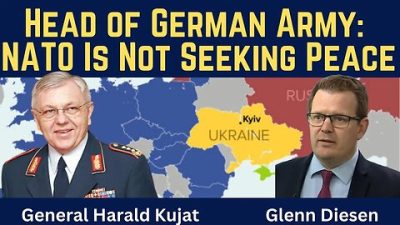
NATO’s Attempt to Defeat Russia Destroys Ukraine
or go to
Aletho News Archives – Video-Images
From the Archives
Chris Matthews got it: Neocons want to destroy the Middle East for Israel
By Jonas E. Alexis | Veterans Today | August 4, 2107
Chris Matthews attacked the Neocon project in 2015 by saying that the Neocons and warmongers in the United States aspire to create complete chaos in the Middle East, presumably for Israel. His words are worth quoting in full:
“Why were the people in the administration like [Paul] Wolfowitz and the others talking about going into Iraq from the very beginning, when they got into the white house long before there was a 911 long before there was WMD. It seemed like there was a deeper reason. I don’t get it. It seemed like WMD was a cover story.
“The reason I go back to that is there’s a consistent pattern: the people who wanted that war in the worst ways, neocons so called, Wolfowitz, certainly Cheney.. it’s the same crowd of people that want us to overthrow Bashar Assad, .. it’s the same group of people that don’t want to negotiate at all with the Iranians, don’t want any kind of rapprochement with the Iranians, they want to fight that war. They’re willing to go in there and bomb.
“They have a consistent impulsive desire to make war on Arab and Islamic states in a never-ending campaign, almost like an Orwellian campaign they will never outlive, that’s why I have a problem with that thinking. … we’ve got to get to the bottom of it. Why did they take us to Iraq, because that’s the same reason they want to take us into Damascus and why they want to have permanent war with Iran.”
Yours truly and many others have been saying the same thing for years. We would not have perpetual wars in the Middle East if the Neocons did not take their orders from Israel. Even George W. Bush implicitly admitted this.
George W. Bush once asked his father to define Neoconservatism. “‘What’s a neocon?’ ‘Do you want names, or a description?’ answered [the elder Bush]. ‘Description.’ ‘Well,’ said the former president of the United States, ‘I’ll give it to you in one word: Israel.’”[1] … continue
Blog Roll
Recent Comments
eddieb on I might get killed for posting… Bill Francis on I might get killed for posting… loongtip on Beijing cancels Panama deals a… loongtip on Showdown loongtip on New York Bans Israel-Linked Te… loongtip on Trump tells India to stop purc… eddieb on The Old Testament and the Geno… papasha408 on Trump’s war posturing against… Coronistan on This is How We Should Have Res… Coronistan on NO MANDATES, NO PROFITS: MODER… Lutz Barz on Russia Vows to Protect Its Oil… loongtip on Russia Vows to Protect Its Oil…


 Aletho News
- Bad Science, Big Consequences
- New Study Rebuts The Assumption That Anthropogenic CO2 Molecules Have ‘Special’ Properties
- Racketeering Scheme?: Vaccine Makers Profit Twice by Selling Drugs to Treat Vaccine Injuries
- When Threats Replace Evidence
- General Harald Kujat: NATO’s Attempt to Defeat Russia Destroys Ukraine
- Gab Refuses to Pay Germany’s Fine, Challenges Cross-Border Online Censorship
- The Guardian Wants Substack To Start Censoring Creators
- Ten elected West Bank lawmakers held in Israeli prisons
- The Gaza Ceasefire Has No Phase Two, Only a Permanent Limbo
- DOJ records show Jeffrey Epstein donated thousands to Israeli army, Jewish National Fund
- If Americans Knew
- In Gaza, marriage is a form of resistance – Not a ceasefire Day 121
- Israel returns bodies with evidence of organ theft and severe mutilation – Not a ceasefire Day 120
- AIPAC Coordinates Donors in Illinois House Primaries
- Geneva Academy warns Gaza death toll could top 200,000
- Media ignore allegations that Israel raped German journalist
- Former Israeli PM: Settlers are Aiding and Abetting Jewish Rioters in the West Bank
- Tucker Carlson sheds light on Christian-Muslim harmony in Palestine, Jordan
- Revealed: Private jet owned by Trump friend used by ICE to deport Palestinians to West Bank
- Bypassing Oversight to Rush Billions in Arms to Israel
- Aid trickles into Gaza, medical evacuations trickle out – Not a ceasefire Day 119
- No Tricks Zone
- Germany’s Natural Gas Storage Level Dwindles To Just 28%… Increasingly Critical
- New Study Rebuts The Assumption That Anthropogenic CO2 Molecules Have ‘Special’ Properties
- Climate Scientist Who Predicted End Of “Heavy Frost And Snow” Now Refuses Media Inquiries
- Polar Bear Numbers Rising And Health Improving In Areas With The Most Rapid Sea Ice Decline
- One Reason Only For Germany’s Heating Gas Crisis: Its Hardcore-Dumbass Energy Policy
- 130 Years Later: The CO2 Greenhouse Effect Is Still Only An Imaginary-World Thought Experiment
- New Study Affirms Rising CO2’s Greening Impact Across India – A Region With No Net Warming In 75 Years
- Germany’s Natural Gas Crisis Escalates … One Storage Site Near Empty …Government Silent
- Polar Colding…Antarctica Saw Its Coldest October In 44 Years!
- New Study: Sea Levels Rose 20 Times The Modern Rate During The Roman Warm Period
 Aletho News