Sweden calls on citizens for ‘war mode’
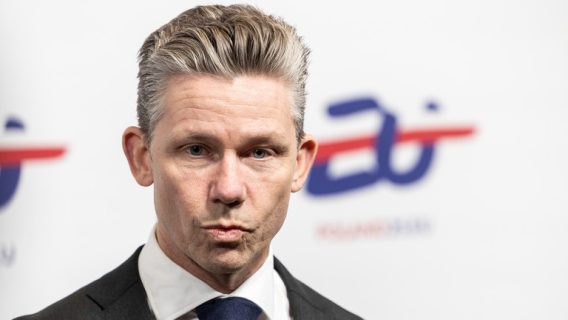
Swedish Defense Minister Pal Jonson, Warsaw, Poland, April 3, 2025. © Foto Olimpik / NurPhoto via Getty Images
RT | October 20, 2025
People living in European NATO member states must brace themselves for a possible war with Russia, Swedish Defense Minister Pal Jonson told RedaktionsNetzwerk Deutschland (RND) in an interview published on Sunday.
Jonson’s remarks come as the EU accelerates a broad militarization drive. Brussels has cast Russia as an imminent threat, a narrative Moscow has dismissed as a political distraction from Europe’s domestic crises.
“To preserve peace, we must prepare ourselves both mentally and militarily for the possibility of war,” the official said. “A change in mentality is necessary: We must switch to war mode to resolutely deter, defend, and preserve the peace.”
The push for greater defense spending aligns with calls from US President Donald Trump, who has demanded that European members buy more American weapons – including for Ukrainian use. Jonson justified such purchases, saying that Europe “simply doesn’t have or cannot yet produce” the necessary systems. “Ukraine needs these assets fast,” he said. “If Europe lacks them, it’s logical to procure them from the US.”
The European Commission last week unveiled a roadmap outlining its plans to expand joint arms procurement to at least 40% by 2027. The document emphasized the need to “invest more, invest together, and invest European,” citing global strategic shifts to other regions among “traditional allies.”
Moscow views the Ukraine conflict as a NATO proxy war aimed at undermining Russia’s security following decades of expansion. Sweden is the bloc’s newest member, while Ukraine was promised accession sometime in the future.
UK’s Covert Support for Ukraine’s Black Sea Strikes Exposed
Sputnik – 19.10.2025
Ukraine’s military has been spotted integrating satellite communications from the British company OneWeb to command and control its fleet of unmanned surface vehicles (USVs) in the Black Sea.
The Ukrainian military uses the UK company OneWeb’s satellite system to control USVs in the Black Sea, a source in Russian security services told Sputnik.
“OneWeb terminals have been integrated into the USVs’ control system. OneWeb is now used as a secondary channel alongside the main system —the US’ Starlink,” the source said, adding that one such vehicle has been captured by Russian forces.
He explained that unlike Starlink, which operates thousands of low-orbit satellites, OneWeb deploys its network in medium Earth orbit. This allows each satellite to provide broader coverage, but requires more complex and expensive user terminals.
In 2022, the Russian Federal Agency Roscosmos demanded that the UK provide guarantees that the OneWeb satellite network would not be used against Russia. The company did not comply, leading to the suspension of OneWeb satellite launches aboard Russian rockets.
Dmitry Polyanskiy: Tomahawks, Nuclear War & Failure of Diplomacy
Glenn Diesen | October 17, 2025
Dmitry Polyanskiy is the First Deputy Permanent Representative of the Russian Federation to the United Nations. Polyanskiy argues that the spirit of Alaska is not dead, and it is still a diplomatic path to peace. However, if Trump sends Tomahawk missiles, then it will be considered a direct US attack on Russia by the Trump administration. Furthermore, as the Tomahawk can carry a nuclear warhead, Russia will have to consider it a possible nuclear first strike.
Five years until war with Russia? The EU is already at war
Strategic Culture Foundation | October 17, 2025
The 27-nation European Union this week unveiled a five-year plan “to get ready for war” with Russia.
The so-called “Roadmap on European Defense Readiness 2030” sounds like a war manifesto and a self-fulfilling prophecy, putting the EU on a disastrous collision course with Russia.
It is incredible that such an ominous direction is being blatantly dictated by an unaccountable elite in Brussels. Eighty-five years ago, the Third Reich had a plan to rule over Europe by dominating the Soviet Union. The EU elite are carrying on the plan.
As for the “defense readiness” (that is, “war readiness”) roadmap, the future is already here, not in five years. The EU is presently on a disastrous collision course with Russia.
Like the United States, the European Union has been at war with Russia through its proxy regime in Ukraine since February 2022, and before that, going back to the 2014 coup in Kiev.
Over the past four years, the EU has supplied nearly €180 billion of taxpayer money to weaponize a NeoNazi regime in Kiev. As we noted in last week’s editorial, that vast allocation (and waste) of resources is far greater than the EU’s own member nations have received for developing their economies and societies. When has the European public had a chance to vote on that? Decisions are being made by an elite cabal.
Unlike the Trump administration, the European Union under the influence of arch-Russophobes like European Commission President Ursula von der Leyen and foreign affairs chief Kaja Kallas, has shown absolutely no will for finding a diplomatic resolution to the conflict in Ukraine. With honorable exceptions, most of the European governments are pushing the war hysteria. So, too, are the European media, as are the American mainstream media. Russia is the evil aggressor, no diplomacy, no dialogue with Moscow, no surrender, and so on. It’s war-on-autopilot.
The European bloc, at least at the official level, is completely dominated by NATO and intelligence agencies’ propaganda portraying Russia as the enemy. The CIA and Britain’s MI6 are no doubt pulling the strings and Europe is dancing like a pathetic puppet.
President Donald Trump held a two-hour phone call with Russian counterpart Vladimir Putin on Thursday during which the two leaders agreed to meet in Budapest in the next two weeks. The meeting is a follow-up to their summit in Anchorage on August 15, to try to end the hostilities in Ukraine.
The EU leadership is implacably opposed to any such diplomacy. They were disconcerted by the meeting in Alaska because Trump treated Putin with respectful diplomacy. The latest news about a summit in Budapest is also peeving EU leaders. They are clamoring for Trump to deliver Tomahawk cruise missiles to Ukraine, which they will pay for. This is aimed at ensuring that diplomacy gets blown up.
Since the Western-backed coup in Kiev in 2014, the European Union has undergone a retrograde transformation to become a militarized bloc defined by obsessive hostility towards Russia. The EU is increasingly a clone of the NATO military alliance. Historically, the European Union stood for peace through neighborly trade and commerce. It was intended to have evolved from the ashes of the Second World War, ensuring that war would never happen again on the continent. In 2012, the bloc was awarded the Nobel Peace Prize. Not that that award means much, but it serves to illustrate the absurdity.
Over recent months, the EU has become fixated on a feverish war mentality. The economies of the 27 nations are increasingly marshaled by military production and spending. The whole purpose of the bloc is being defined as an existential confrontation with Russia. It seems significant that Von der Leyen and German Chancellor Friedrich Merz have Nazi skeletons in their family wardrobes. The Baltic states, too, which have emerged as belligerent influences on EU policy, have nefarious links to the Nazi past.
The war mentality reached fever pitch in Von der Leyen’s State of the Union address on September 10. She opened by declaring that “Europe is in a fight” with Russia. She said it was a fight for “freedom and independence,” and she united the cause of the EU with Ukraine against Russia.
“Europe must fight… because Ukraine’s freedom is Europe’s freedom,” she claimed.
Von der Leyen, the former German military minister, and the European Union’s most senior official, who is unelected, was declaring that the bloc was at war. Now, not in five years.
In recent months with intensifying emphasis, the EU’s intelligence agencies (CIA, MI6 clones) have been warning of war with Russia as imminent, and there has been a suspicious surge in drone incursions in Poland, Estonia, Romania and Denmark, which have been blamed on Russia without any evidence.
All the while, European leaders and NATO chief Mark Rutte (a former Dutch prime minister, and an abject clone if ever there was one) have been calling for massive increases in military spending to “counter the Russia threat”. In March, Von der Leyen floated the figure at €800 billion for the bloc to spend on “defense”.
In 2014, the combined EU military spend was less than €200 billion. It now stands at €340 billion. That is an increase by 70 percent over a decade.
The roadmap unveiled this week sure enough delivers on Von der Leyen’s earlier astronomical figure. It is planning a total EU spend on military of €800 billion – more than double the current level and four times the level the EU spent 10 years ago.
This is insane and unsustainable. If it doesn’t escalate into an all-out war in Europe, the least damaging effect of such wanton militarism will destroy European nations from economic and political collapse.
It is clear that major decisions have been made behind closed doors to take the EU in a direction towards increased militarism where the civilian economies are transformed into war economies. That’s great news for military corporations and politicians who are sponsored (bribed) by lobbyists. European citizens are the losers and they are not being consulted about their fate. Their societies are being drained of vital resources, which are being sucked up by militarism and corporate investors.
To pull off this grand theft and deception, the EU relies on unelected bureaucrats like Von der Leyen, Kallas and Rutte to whip up Russophobia and “war fears”. The mainstream media plays its part by peddling intelligence propaganda to manufacture public acquiescence.
However, there is pushback to the craziness. The rise of populist (that is, more representative and democratic) parties is demonstrating contempt for the undemocratic EU ruling class. The protests in France throwing the government into chaos are motivated by disgust at the economic cutbacks for public services and workers’ rights while Paris throws billions of euros propping up the proxy war in Ukraine.
To their credit, governments in Hungary and Slovakia are speaking out against the warmongering of the EU towards Russia. Viktor Orbán and Robert Fico have criticized the militarization of Europe and are consistently calling for diplomacy with Moscow.
It is significant that Trump chose to meet Putin in the Hungarian capital for their next meeting, chaired by Orbán who described the event as “great news for people who want peace”.
The European-NATO leadership is displeased by the Budapest venue because it suggests following a diplomatic option instead of a policy of war-on-autopilot.
The Russophobic Euro elites are trying to railroad the continent to war. They can see no other way of doing international relations. They have committed the EU to war and dictatorial war spending that is criminal. They, therefore, cannot allow peace and diplomacy to succeed because that would be an admission of their criminal warmongering.
But their way is leading to the abyss.
Who’s Winning the Deep-Strike War?
RealReporter | October 17, 2025
The war between Russia and Ukraine has turned into a deep-strike duel targeting refineries, power grids, and logistics hubs. Together with Sergey – a Russian drone engineer and military analyst – we break down how both sides fight and adapt.
The Carnegie Politika piece – https://carnegieendowment.org/russia-…
Watch our viral drone warfare video (deleted from YT) on X – https://x.com/Real_ReporterX/status/1…
Subscribe to Sergei’s Telegram – https://t.me/UAVDEV
Follow me on:
Rumble – https://rumble.com/user/RealReporter
X – https://x.com/Real_ReporterX
Instagram – / konstantinreporter
Telegram – https://t.me/RealReporter_tg
TikTok – / konstantinreporter
If you’d like to support my project:
Patreon – / realreporter
PayPal – https://paypal.me/RealReporter
One million pounds and a war without end: Boris Johnson’s intervention in Kyiv changed Europe’s future
By Ricardo Martins – New Eastern Outlook – October 17, 2025
When history revisits the Ukraine conflict, one episode may stand out as a turning point: Boris Johnson’s sudden visit to Kyiv in April 2022, just after a tentative peace agreement had been initialed in Istanbul.
At that moment, a ceasefire was within reach. Yet Johnson, then British Prime Minister, reportedly urged President Volodymyr Zelensky not to sign, assuring him that the West would arm Ukraine “for as long as it takes.” That decision, now under renewed scrutiny following revelations by The Guardian, may have changed the course of the conflict—and Europe’s political destiny.
The Istanbul Agreement That Never Was
By early April 2022, Ukrainian and Russian negotiators had agreed in principle to a framework that could have ended hostilities. Ukraine would forgo NATO membership in exchange for security guarantees. But after Johnson’s unannounced visit to Kyiv, talks collapsed.
Following The Guardian investigation, David Arakhamia, a member of Zelenskyy’s own negotiating team in Istanbul, appeared to lend the idea credence. “When we returned from Istanbul, Boris Johnson came to Kyiv and said that we would not sign anything with them at all, and let’s just fight,” he said in a November 2023 interview.
According to leaked documents published by The Guardian, sourced from Distributed Denial of Secrets (DDoS), a US-based transparency collective, Johnson had other motives for discouraging compromise.
The investigation traces a £1 million payment from businessman Christopher Harborne, a major shareholder in a British drone manufacturer supplying the Ukrainian military, to a private company created by Johnson shortly after leaving office. Harborne also accompanied Johnson to Kyiv, raising questions about direct lobbying and influence-peddling at the highest level of government.
Following the Money
Harborne’s donation, ostensibly legitimate under UK law, takes on a darker significance in this context. As Johnson lobbied Zelensky to prolong the war, Harborne’s company stood to benefit from expanded arms contracts. The Guardian’s exposé describes this payment as “a reward for services rendered,” a euphemism for bribery in geopolitical disguise.
Johnson dismissed the report as “a pathetic Russian hack job,” yet neither he nor Downing Street has provided a transparent accounting of the donation or its timing. The optics are damning: a former prime minister allegedly persuading a wartime ally to reject peace while personally profiting through associates linked to the arms trade.
The Price of Prolongation
Since that fateful spring, the toll has been catastrophic. Hundreds of thousands of Ukrainian and Russian soldiers and civilians have perished. More than three trillion US dollars in Western aid and military spending have flowed into the conflict, much of it financed by debt and by diverting funds from social programmes.
European citizens are paying the price. Budgets once earmarked for welfare, healthcare, and pensions have been repurposed to sustain the war effort. Energy costs have soared, industrial competitivity has sunk, inflation has eroded savings, and social unrest has become regular across the continent.
The narrative of European solidarity has given way to anger and fatigue. Populist and far-right parties are sweeping across Europe. In this sense, Johnson’s intervention did not only prolong a war; it accelerated a social and political crisis within Europe itself.
From Peace Project to Proxy War
The European Union once prided itself on being a “peace project.” Yet its handling of the Ukraine conflict has projected a very different image: that of a continent complicit in militarisation and escalation. France and Germany, the supposed guardians of diplomatic balance, quietly aligned themselves with Washington’s maximalist stance.
No leader publicly questioned why the Istanbul Agreement was abandoned. No parliamentary inquiry has addressed whether Johnson’s visit influenced European policy and why European leaders did not censure Johnson.
In retrospect, Europe’s passivity reveals both dependency and cowardice. The EU’s foreign policy has become an echo of Washington’s strategic interests and those of arms manufacturers, such as Mr. Harborne, while dissenting voices were marginalised as “pro-Russian”. This reflex has stifled honest debate about the human and economic costs of the war and about who truly benefits from its continuation.
The Corruption Business
War has always been fertile ground for corruption, and Ukraine is no exception. From inflated procurement contracts to opaque aid transfers, vast sums have disappeared without audit. Johnson’s alleged bribe merely symbolises a broader pattern: the convergence of political ambition, corporate profit, and ideological fervour.
Bribery and influence-trading have evolved into sophisticated transnational systems cloaked in legality: foreign lobbying, consultancy fees, and donations to foundations. Such practices blur the line between governance and outright corruption. They ensure that conflicts endure not because peace is impossible, but because war remains profitable.
Europe’s Crisis of Leadership
The scandal surrounding Boris Johnson’s intervention in Ukraine exposes a deeper political and strategic crisis within Europe. The same continent that once championed diplomacy and human rights now finances a proxy war that has devastated a nation and destabilised an entire region.
European leaders invoke solidarity while diverting resources from welfare and pensions, tolerating rising inequality and industrial competitivity decline to sustain arms deliveries. The rhetoric of democracy has been replaced by the logic of deterrence.
Across the continent, disillusionment is fuelling the ascent of populist and far-right parties. Citizens who once viewed the EU as a guarantor of peace now perceive it as complicit in perpetual conflict. From Slovakia to the Netherlands, voters are turning against Brussels’ alignment with Washington, revealing a growing mistrust of supranational elites and foreign-driven policy agendas.
Johnson’s defenders claim his visit to Kyiv stemmed from moral conviction, not financial interest, but conviction cannot erase consequence. Had the Istanbul peace framework been pursued, thousands of lives and trillions in resources might have been spared. Instead, Johnson’s theatrics helped entrench a war whose primary beneficiaries are defence contractors and political opportunists.
That the European Union tolerated this manipulation without investigation or accountability reflects a failure of leadership, not merely a lapse of ethics. By outsourcing strategic direction to NATO and moral authority to Washington, Europe has strayed from its founding principles of peace and autonomy.
The result is a continent economically weakened, politically fragmented, and increasingly defined by the conflicts it once sought to prevent.
In sum, The Guardian investigation has done what official institutions would not: follow the money and expose the moral bankruptcy behind the rhetoric of freedom. Whether courts or parliaments act on these revelations remains uncertain. But the evidence is clear enough for history’s judgment.
Ricardo Martins, PhD in Sociology, specializing in International Relations and Geopolitics
Trump’s Strongman Persona Inevitably Results in Lies and War
By Prof. Glenn Diesen | October 17, 2025
Trump’s claim that Prime Minister Modi had promised to end the purchase of Russian oil was obviously false; in fact, there was apparently no phone call between the two leaders at all. Such fabrications, portraying world leaders as deferential to him and as praising his greatness, constitute a recurring pattern—one that parallels his militaristic approach to peace.
As the president of a declining hegemon, Trump is convinced that the weakness of his predecessors was the source of decline. Trump has therefore concluded that projecting strength can reverse the erosion of American power. In constructing himself as the ultimate strongman—allegedly respected by all—he positions himself as the sole saviour of the US. The image of a powerful, decisive and respected leader capable of restoring US dominance also functions domestically to consolidate political support and project stability during the country’s uneasy transition from a unipolar to a multipolar international order. The American public is seemingly prepared to look the other way or justify the dishonesty and moral disgressions as the price worth paying for a return to greatness.
The central problem with the strongman image is that it sustains unrealistic expectations of reviving US primacy rather than adapting to the realities of a multipolar world. The outcome is a pattern of deception and conflict that ultimately undermines, rather than strengthens, the United States.
When the strongman cannot coerce his counterparts into subservience, the only recourse is retreat into fantasy. In this imagined world, other leaders allegedly regret their decisions of not falling into line, tremble as Trump wags his finger, shower him with compliments, offer tribute to the United States, and in Trump’s own words, line up to “kiss my ass.” Within the Trumpian bubble of superpower cosplay, these scenes of deference are celebrated as signs of a return to greatness, yet in the real world, American credibility declines and decadence deepens. As the gap between fantasy and reality widens, Trump becomes increasingly reckless. Case in point, the threats against India to sever ties with Russia and India backfired spectacularly as Prime Minister Modi instead went to China to cement India’s relations with Russia, China and the SCO.
Great powers and independent states cannot simply fall in line, for doing so would predictably lead to their destruction or subjugation. The ultimate aim of an aspiring hegemon is not to reconcile differences in pursuit of peaceful coexistence, but to defeat rival powers and capture independent states. The objective of the economic confrontation with China is not to renegotiate trade agreements, but to undermine China’s technological capacity and contain it militarily to restore US primacy. The purpose of the proxy war against Russia is not peace in terms of finding a new peaceful status quo, rather it is to use Ukrainians and increasingly Europeans to bleed and weaken Russia until it can no longer sustain great-power status. Similarly, the goal of the confrontation with Iran is not to reach a new nuclear accord—Tehran has already accepted such terms in the past—but to achieve Iran’s capitulation and disarmament by linking the nuclear issue to restrictions on missiles and regional alliances. Any power that concedes even marginally to US pressure ultimately finds itself in a weaker and more vulnerable position—one that the aspiring hegemon will inevitably exploit. Any peace agreements are therefore temporary at best, as an opportunity to regroup.
India presents an intriguing case, as it is not an adversarial power. Its commitment to non-alignment makes strong relations with the United States desirable, yet the very same non-alignment necessitates strategic diversification to reduce excessive reliance on Washington. Should India be persuaded to sever ties with other major powers such as China and Russia, it risks becoming too dependent on the United States and absorbed into a bloc-based geopolitical system. Subordination to a declining empire would be perilous, as the United States would predictably use India as a frontline against China, and simultaneously demand economic tribute and cannibalise Indian industries in pursuit of renewed dominance. In essence, India must avoid becoming another Europe.
The strongman act is most effective with weaker and dependent states—such as those in Europe—that are willing to subordinate themselves entirely in order to preserve American commitment to the continent. European states lack the economic capacity, security autonomy, and political imagination to envision a multipolar world in which the United States wields less influence and holds other priorities than a close partnership with Europe. Consequently, European leaders appear willing to sacrifice core national interests to preserve the unity of the “Political West” for a little while longer. In private, they may express disdain for Trump; in public, they pay tribute to “daddy” and line up diligently in front of his desk to receive praise or ridicule. Yet this subservience is inherently temporary: leaders who disregard fundamental national interests are, in time, swept aside by the very forces they seek to suppress.
The strongman does not create any durable peace the underlying problems are never addressed. The mantra of “peace through strength” can be translated into peace through escalation, with the assumption that the opponent will come to the table and submit to US demands. However, rival great powers that have nowhere to retreat will respond to escalation with reciprocation. The delusions of the strongman in the declining hegemony will therefore inevitably trigger major wars.
Ukrainian soldiers busted over torture spree – police
RT | October 16, 2025
Ukrainian police have announced having dismantled a criminal gang of soldiers accused of abducting, torturing, and extorting civilians in western Ukraine. Media reports alleged the suspects were helping enforce mobilization and linked them to the Third Assault Brigade, a frontline unit notorious for its neo-Nazi roots.
In a statement on Wednesday, the National Police said it had arrested seven suspects who are allegedly implicated in a multitude of violent crimes. They were operating in Ternopol Region in Western Ukraine.
“The perpetrators took the victims out of the city, beat them and demanded money or valuable property,” police noted, adding that “the greatest cynicism was that the attackers mocked people who were seriously wounded in the war and were undergoing rehabilitation.”
In one case, the suspects allegedly stole a KIA car from a 27-year-old Ternopol resident and used it for their own purposes. Another victim was shot, abducted in broad daylight, and beaten while being held captive. The attackers demanded 50,000 hryvnia ($1,200) for his release, police said.
A third man was sprayed with tear gas, stripped naked, doused with gasoline, and forced to run in front of a car before being detained for three days “in inhumane conditions.”
Local activist Roman Dovbenko claimed the group had ties to the Third Assault Brigade, which he said had been assisting the local authorities with mobilization efforts. Ukrainian officials earlier confirmed they were bringing in “combat veterans” to help enforce the draft, a policy being touted as a way to “boost public trust” and ensure “lawfulness.”
Ukraine’s mobilization drive has long been marred by violent confrontations between recruitment officers and reluctant conscripts.
The Third Assault Brigade neither confirmed nor denied that its members were involved but said it was “aware” of the situation and “open to cooperation” with investigators, while condemning violence against civilians.
Formed in 2023, the brigade is a successor to the Azov Regiment, a far-right formation created in 2014 by nationalist figure Andrey Biletsky. The Azov movement has been accused by UN investigators and human rights groups of torture, war crimes and adopting symbols associated with the Waffen-SS.
Israel to resume Gaza onslaught once all captives repatriated, threatens war minister
Press TV – October 15, 2025
Israeli minister of military affairs Israel Katz has declared that the occupation army will resume its military onslaught on the besieged Gaza Strip once the remaining captives are returned, marking an open defiance of the newly agreed ceasefire agreement between the Hamas resistance movement and the Tel Aviv regime.
In a post on the social media platform X on Wednesday, Katz said that once the first phase of the deal is ended with the release of all captives, the Israeli military will resume its offensives to destroy Hamas.
“Israel’s great challenge after the phase of returning the captives will be the destruction of all of Hamas’s tunnels in Gaza, directly by the army and through the international mechanism to be established under the leadership and supervision of the United States,” he added.
“This is the primary significance of implementing the agreed-upon principle of demilitarizing Gaza and neutralizing Hamas of its weapons.
“I have instructed the Israeli army to prepare for carrying out the mission,” Katz said.
The remarks came less than a day after Israel and Hamas agreed to a ceasefire framework brokered by Qatar, Egypt and the United States, and intended to end Israel’s two-year-long genocide in Gaza.
Katz’s statement made it clear that Israel views the truce not as a step towards ending the military assault on the Gaza Strip, but rather as a temporary pause before re-launching its military offensive.
Israel killed at least nine Palestinians on Wednesday as the regime’s military warned Gaza residents to stay away from the areas it still occupies.
Additionally, Israeli tanks fired at Palestinians in the town of Bani Suheila and the Sheikh Nasser neighborhood, east of Khan Younis. There were no immediate reports of possible casualties and the extent of damage caused.
At least 67,913 Palestinians have been killed, mostly women and children, and another 170,134 individuals injured in the brutal Israeli onslaught on Gaza since October 7, 2023, according to the health ministry of Gaza.
NATO keeps massive forward military presence on Russia’s doorstep – defense minister
RT | October 15, 2025
NATO is keeping a large-scale military presence near Russia’s borders, Russian Defense Minister Andrey Belousov has said, pointing to what he called the bloc’s increased training and reconnaissance activities.
Belousov made his remarks at a joint session of the Russian and Belarusian defense ministries on Wednesday. Cooperation between Moscow and Minsk remains a key factor in maintaining regional stability in light of the “openly hostile actions” of the West, he stated.
“The Alliance maintains a massive forward military presence on its eastern flank,” Belousov said. “The total strength of NATO troops involved in the exercises held on its eastern flank amounted to roughly 60,000.”
This year alone, the US-led military bloc held almost a dozen drills in Scandinavia, Central and Eastern Europe as well as the Baltics and the Black Sea, which involved thousands of soldiers each.
Just one series of exercises, dubbed Defender 25, which was held throughout May and June, involved a total of 25,000 troops. The forces were deployed along the entire eastern border of the bloc, from Norway in the north to Bulgaria and Greece in the south, as part of the three-phase drill.
Other major NATO exercises included the 10,000-strong ‘Joint Viking 2025’ held in Norway in March, as well as the 16,000-strong ‘Hedgehog’ held in Estonia in May. The developments came amid increasingly belligerent statements from the European NATO members, which have repeatedly presented Russia as a threat since the escalation of the Ukraine conflict in February 2022.
Moscow has repeatedly stated that it has no intention to attack any NATO nations, calling such accusations unfounded.
It nonetheless warned that the bloc’s active involvement in the Ukraine conflict through weapons supplies and other assistance to Kiev risks a direct confrontation between Russia and NATO.
Last month, Politico reported that EU officials were increasingly worried about tensions with Moscow potentially spilling into a major conflict akin to World War I. Russia, in turn, expressed its concerns over the fact that World War III was seriously being discussed in the West as a potential scenario.
NATO must buy more US arms for Ukraine – Pentagon chief
RT | October 15, 2025
European NATO members should purchase more American-made weapons to sustain Ukraine’s war effort against Russia, US War Secretary Pete Hegseth said on Wednesday ahead of a meeting of the bloc’s defense ministers.
Moscow has repeatedly stated that Western arms shipments cannot change the balance of power on the battlefield, arguing that Ukraine’s chronic manpower shortage, fueled by mass draft avoidance and desertion, undermines any material advantage.
Speaking alongside NATO Secretary General Mark Rutte, Hegseth praised the Prioritized Ukraine Requirements List (PURL) initiative and said the European members must spend more funds through it.
“Our expectation today is that more countries donate even more, that they purchase even more to provide for Ukraine,” Hegseth said. Rutte noted there was “firepower coming out of our defense industry” to bolster Ukrainian forces.
US President Donald Trump recently claimed that with European funding for American weapons, Ukraine could still achieve its territorial goals – a reversal of his earlier assessment that the county had “no cards” to play. Trump is expected to soon announce whether the US will approve deliveries of long-range Tomahawk cruise missiles to Kiev, a move Moscow has warned would mark a serious escalation but would not significantly alter the frontline situation.
The Russian government has accused European backers of Kiev of prolonging the conflict at the expense of Ukrainian lives, arguing that the former are unwilling to admit the failure of their strategy.
Meanwhile, European NATO members continue to bear the economic fallout of their sanctions policy against Russia. Having rejected affordable Russian energy, many EU economies have faced surging production costs and widespread industrial bankruptcies, while the US has benefited from increased investment inflows and higher sales of liquefied natural gas to Europe.
Talk of Sending Tomahawk Missiles to Ukraine is Calculated Psy-Op to Pressure Russia
By Ekaterina Blinova – Sputnik – 14.10.2025
The US won’t allow strikes on Russian refineries, says Alexander Mikhailov, head of the Bureau of Military-Political Analysis.
Psy-op in the Making
“I don’t see any military prospects for using Tomahawks against Russia, except for attempts at informational blackmail and political pressure,” Mikhailov tells Sputnik.
No Tomahawks have been sent or launched, yet Western media frenzy suggests a pressure tactic.
It’s all connected:
- Washington raises the stakes by hinting at sending Tomahawks to Russia
- Western media, aligned with Washington, hype the story — discussing targets, launches, and control
- The impression is the missiles are already on their way
A Tomahawk launcher might even be rolled out at a test range somewhere simply for PR videos, Mikhailov suggests. But it would be similar to the Taurus missiles Germany promised: hyped by the media – yet still absent from Ukraine.
Washington Isn’t Suicidal
The Kremlin has repeatedly said Ukraine cannot launch Tomahawks on its own.
“Every Tomahawk fired at Russia from a US-made system by American crews would mark the start of a war between the US and Russia,” Mikhailov says.
- The idea of US-made Tomahawks striking energy infrastructure inside Russia is a fantasy
- Such an act would cross a red line that would trigger a response the US is 100% not ready for
- Russia’s updated nuclear doctrine explicitly states that a massive cruise missile attack (like a volley of Tomahawks) can be met with a NUCLEAR response
- Are the Americans ready to “collectively die” for this? The expert is clear: “I am absolutely sure, no.”
What Does the West Want?
The real target would be the “shadow fleet” moving Russian oil, according to the pundit. To that end, NATO holds provocative Baltic drills and tries to seize Russian ships.
The Nord Stream sabotage exemplifies economic attacks to choke Russia’s energy exports abroad.
Featured Video

or go to
Aletho News Archives – Video-Images
From the Archives
Israel Would Have No Qualms About USS Liberty-Style FALSE FLAG If Iran Campaign Falters – Analysts
By Ilya Tsukanov – Sputnik – 18.06.2025
Donald Trump is mulling whether or not to join Israel’s aggression against Iran as Tel Aviv faces problems sustaining its defenses against growing counterstrikes, and apparently lacks a realistic game plan for an end to hostilities after failing to achieve its goals. Analysts told Sputnik how the US could be ‘nudged’ into the conflict.
“The US is already assisting Israel with supplies, intel, refueling support, etc. One of the many US posts in the region could be attacked for a casus belli,” former Pentagon analyst Karen Kwiatkowski explained.
“If Trump doesn’t comply with Israel’s demand” and join its aggression voluntarily, “a false flag may be needed” to drag the US in, Kwiatkowski, retired US Air Force Lt. Col.-turned Iraq War whistleblower, fears.
Netanyahu has a diverse array of options at his disposal, according to the observer, including:
- a false flag against US assets abroad blamed on Iran or one of its Axis of Resistance allies, like the Houthis
- a US domestic attack or assassination blamed on Iran
- Iranian air defenses ‘accidentally’ hitting a civilian jetliner carrying Americans
- use of a dirty bomb or nuclear contamination somewhere in the region blamed on Iran
- even blackmailing by threatening to use nukes against Iran if the US doesn’t join the fight
Kwiatkowski estimates that Israel probably has “enough blackmail power” against President Trump and Congress to avoid the necessity of a false flag operation, but a “USS Liberty-style” attack, targeting the soon-to-be-retired USS Nimitz supercarrier that’s heading to the Middle East, for example, nevertheless cannot be ruled out entirely, she says. … continue
Blog Roll
 Aletho News
- Embarrassing Pivot: U.S. considers dropping Iran oil sanctions amid war
- US has 2 months of rare earths left to replenish weapons amid Iran war: Report
- Strait Of Hormuz closure brings Empire to brink
- Iran controls Strait of Hormuz, dictates terms of war and peace as US excursion backfires
- Outlasting the Superpower: The Reasons Why Iran is Beating uhe US and Israel
- Top PMU commander, over a dozen fighters killed in new US strikes on Iraq
- Is Netanyahu’s war gamble threatening the future of ‘Israel’?: FT
- Smotrich calls for annexation of South Lebanon to Litani River
- Echos of Gallipoli? Hormuz and the Geography of Hubris
- Pakistan PM backs Iran’s right to self-defense amid tensions
- If Americans Knew
- UN’s special rapporteur on human rights says Israel is systematically torturing Palestinians
- Trump White House plagiarized Iran war manifesto from Israel-aligned think tank
- Gaza says 6–10 patients die daily waiting for treatment abroad as Israel blocks medical evacuations
- ‘Substantial evidence’ of double-tap strike in killing of Gaza’s Hind Rajab
- ‘Do Not Want To Die For Israel’: Doubts About Trump’s Iran Strategy Spread Among Troops
- Instead of taking Joe Kent’s claims seriously, the media is disregarding him as an antisemite
- Joe Kent’s Explosive Interviews about his Resignation over the Iran War
- Israel poised to take over southern Lebanon; settlers wreak havoc in West Bank – Not a ceasefire Day 165
- From Sde Teiman, the truth about Israel’s military justice system has been set free
- Child denied life-saving bone marrow transplant by Israel ‘because he is from Gaza’
- No Tricks Zone
- Devastating Assessment Of Comirnaty Vaccine By Former Senior Pfizer Europe Toxicologist
- New Study: CO2 Is ‘Effectively Negligible’ As An Explanatory Climate Change Factor Since 2000
- Former Pfizer Toxicologist Dr. Helmut Sterz Tells Bundestag Hearing Pfizer Vaccine Should Have Never Been Approved
- Energy Expert: Germany’s Nuclear Phaseout Was A “500 Billion Euro Mistake”
- New Research: South Australia’s Mid-Holocene Sea Surface Temperatures Were 4°C Warmer Than Today
- Storing Green Energy To Last Germany 10 Days Would Require A 60-Million Tonne Battery
- New Studies: UK Sea Levels Were 4 Meters Higher Than Today During The Mid-Holocene
- Destructive Green New Deal: German Energy And Metal Group Warns Of Drastic Crisis
- New Study Documents A 20-Year Pause In Arctic Sea Ice Decline – Driven By Internal Variability
- Wake-up Call: Survey Shows Majority Of Germans Now Favor Postponing Climate Targets!
 Aletho News