UK believes it can seize any tanker under Russia sanctions – BBC
RT | January 12, 2026
The British government believes it has found a legal way for its military to seize any vessels in UK waters that it suspects of being part of a so-called ‘shadow fleet’, state broadcaster BBC has reported.
The move is expected to target Russia, Iran and Venezuela, all of whom the UK claims use third-party vessels to circumvent Western sanctions, according to the report.
Britain’s 2018 Sanctions and Money Laundering Act initially allowed London to impose sanctions in line with UN Security Council resolutions but was later expanded to allow entities London has accused of human rights violations to be targeted.
The law states that the government can detain “specified ships” in its territorial waters or prevent them from entering. This can affect vessels going through the English Channel – one of the world’s busiest shipping lanes. It also says that any ships can be targeted, except for those of the navies of foreign nations. The legislation does not explicitly mention the use of military force, though.
According to BBC, it is unclear when the UK could launch an operation targeting a foreign vessel. The British military have not boarded any vessels so far, the broadcaster said, adding that the UK did aid the US in seizing the ‘Marinera’ oil tanker last week.
The ship was intercepted in international waters northwest of Scotland. Moscow, which granted the tanker a temporary sailing permit, condemned the seizure as a gross violation of international rules.
Since the escalation of the Ukraine conflict in 2022, Western governments have imposed sweeping sanctions on Russia, targeting its oil trade and what they call its “shadow fleet” in particular.
According to BBC, London has imposed restrictions against more than 500 suspected “shadow fleet” vessels. The UK also imported oil products from refineries processing Russian crude worth £3 billion ($4.04 billion) over a period between 2022 and the second quarter of 2025, according to a June report by the Center for Research on Energy and Clean Air (CREA). That generated £510 million ($687 million) in revenue for Moscow.
Pirates of the Caribbean
By Lorenzo Maria Pacini | Strategic Culture Foundation | January 12, 2026
So many things are happening in such a short space of time that it is difficult to keep track of them all. Certainly, one of the most “entertaining” is the return of piracy, which the United States of America inaugurated at the beginning of 2026.
We are talking about a new and particularly controversial phase of their economic and strategic pressure policy: the direct seizure of oil tankers on the high seas, believed to be involved in the transport of crude oil on behalf of states subject to unilateral U.S. sanctions, in particular Russia, Venezuela, and Iran. This practice, which Washington presents as a legitimate enforcement activity against illegal trafficking, is raising profound questions about international maritime law and the balance between state sovereignty, freedom of navigation, and the use of force.
From the Caribbean to the icy North Seas, the most emblematic case is that of the oil tanker Mariner, seized a few days ago after a long chase in the North Atlantic by the U.S. Coast Guard, while the ship was being joined by Russian naval forces. According to U.S. authorities, the ship was part of the so-called shadow fleet, an informal network of oil tankers that operate through frequent changes of name, flag, and management company in order to evade sanctions regimes. This operation is accompanied by other significant seizures or interceptions, including the tankers Sophia, Skipper, and Centuries, stopped in various maritime areas on similar charges of sanctioned oil trafficking and fraudulent use of flags of convenience. In short, a cinematic-style raid. Donald “Sparrow” Trump has found a new hobby.
As for the Mariner, to be fair, it is a VLCC oil tanker built in 2002. Its gross tonnage is over 318,000 tons, making it one of the largest types of oil tankers used in the global crude oil trade. In terms of age and technical characteristics, it is an ordinary working ship, designed to operate for 25-30 years, provided it passes inspections. Since its construction, the ship has not had a stable “nationality.”
Over the course of more than twenty years, it has changed its name, flag, and owners several times, a practice typical of tankers operating in sanctioned and semi-sanctioned segments of the market. The ship was successively named Overseas Mulan, Seaways Mulan, Xiao Zhu Shan, Yannis, Neofit, Timimus, Bella 1, and finally Marinera. Each name change was accompanied by a change of jurisdiction or management company. The flags also changed regularly. The ship flew the flags of the Marshall Islands, Liberia, Palau, and Panama. According to international databases, there was a period when the ship flew the flag of Guyana, indicating an incorrect or unconfirmed registration. This episode was subsequently used as a formal pretext for intervention by the U.S. Coast Guard.
After the persecution began, the ship obtained temporary registration under the flag of the Russian Federation with Sochi as its port of registry, as recorded in official ship registers. The history of the ship’s ownership and management also indicates its commercial rather than state nature. Over the years, the ship has been managed by companies registered in Asia and offshore jurisdictions, including structures linked to Chinese and Singaporean operators. Between 2022 and 2023, the owner and manager of the ship was Neofit Shipping Ltd, then Louis Marine Shipholding ENT. Since the end of December 2025, the owner and commercial operator of the ship has been the Russian company Burevestmarin LLC. This is a private entity, not linked to state-owned oil companies and not part of any “state fleet.”
In recent years, the ship has been used in the classic sanctions evasion scheme linked to the Iran-Venezuela-China routes. A crucial turning point came in mid-December 2025, when the United States announced an effective maritime blockade of Venezuela. The tanker, then called Bella 1, had left the Iranian port in November and was approaching the Venezuelan coast just as these measures were introduced. The attempt to enter the port was interrupted by the U.S., after which the ship set course for the Atlantic Ocean. The composition of the crew also clearly shows the commercial nature of the ship. Most of the sailors on board are Ukrainian citizens, while there were also Georgian citizens and only two Russians on board. The Mariner proved to be a convenient demonstration target for the U.S. as part of its new strategy of forcibly disrupting Venezuelan oil routes.
The owner’s attempt to hide under the Russian flag was a logical commercial move, but it did not change the intentions of the U.S. Russia was formally involved in the situation as the flag state and because of the presence of Russian citizens in the crew. The ship was not of strategic value to Russia and was not part of its oil logistics. Any escalation around a private tanker, which had been operating for decades on gray routes, would have made no rational sense.
From Washington’s point of view, the legitimacy of such actions rests on two main pillars. The first is the extraterritorial application of U.S. sanctions: seized tankers are considered assets directly involved in violations of Office of Foreign Assets Control (OFAC) regulations and are therefore subject to confiscation. The second pillar is the doctrine of the stateless vessel, according to which a ship that cannot credibly prove its nationality—due to irregular registrations, false flags, or contradictory documentation—loses the legal protection guaranteed by the flag state and can be stopped by any other state on the high seas.
Bye-bye Law of the Sea
It is precisely this second point that is the focus of much of the legal debate. The United Nations Convention on the Law of the Sea (UNCLOS) establishes that, on the high seas, a ship is subject to the exclusive jurisdiction of the flag state. Exceptions to this principle are limited and strict: piracy, slave trade, unauthorized radio transmissions, absence of nationality, or express authorization from the UN Security Council. The extension of these exceptions to the application of unilateral sanctions, not approved by the United Nations, is a highly contested interpretation.
Russia and China have reacted harshly to the seizures, calling them a blatant violation of international law and, in some cases, an act comparable to state piracy. Moscow argues that the seized tankers were flying regular flags and that the use of force against commercial vessels in peacetime, outside a UN mandate, constitutes a breach of the maritime legal order. Beijing, for its part, has emphasized the illegitimate nature of unilateral sanctions and the risk that such practices create dangerous precedents, normalizing the armed interdiction of commercial shipping.
The implications of this new phase are significant. On the legal front, there is growing tension between a law of the sea based on the neutrality of routes and freedom of navigation, and a power practice that tends to transform economic sanctions into instruments of military coercion. On the geopolitical front, there is a risk of maritime escalation, with possible countermeasures by the affected states and a progressive militarization of global energy routes.
On the other hand, all this is consistent with what the U.S. administration is doing: creating rapid chaos that distracts the world, while surgically targeting certain elements within the American system and, on the other hand, applying the Donroe Doctrine and establishing control over the Western Hemisphere.
The seizure of oil tankers is not just an isolated episode of conflict between states, but a sign of a deeper transformation of the international order. The U.S. has set out with conviction and has no intention of stopping. If this practice were to become established, international maritime law would risk being very quickly stripped of its fundamental principles, leaving room for a logic of force in which naval supremacy replaces shared legality. The issue, therefore, is not only about the seized ships, but the entire future of global maritime governance.
The U.S. has said it: Venezuela is American property and from now on will be its new backyard. Greenland will be next.
Piracy elevated to the rank of military strategy and international relations.
And remember: in just 11 months of government, since the beginning of his second term, Donald Trump has bombed seven sovereign countries: Syria, Lebanon, Egypt, Yemen, Iran, Nigeria, and Venezuela. He has kidnapped one head of state (Maduro) and threatened to kill three others: Khamenei, Petro, and Rodriguez. He has threatened to invade five countries: Iran, Mexico, Venezuela, Colombia, and Greenland (i.e., Denmark). He has done everything in his power to prevent the international community from passing resolutions against Israel and its prime minister Netanyahu during and after the massacres in Gaza.
Anyone with a modicum of common sense, who is not misled by political preconceptions, can draw the most basic conclusions from these actions.
UK to Develop Nightfall Ballistic Missile With Over 300 Miles Range for Ukraine – Ministry
Sputnik – 12.01.2026
The United Kingdom will develop a new Nightfall ballistic missile with a range of over 500 kilometers (310.6 miles) for Ukraine, the UK Defense Ministry said on Sunday.
“The UK will develop new tactical ballistic missiles that boost Ukraine’s firepower … Under Project Nightfall, the UK has launched a competition to rapidly develop ground-launched ballistic missiles with a range of more than 500 kilometres and designed to operate in high-threat battlefields with heavy electromagnetic interference,” the ministry said in a statement.
Missile’s specifications:
- >500 km range
- 200 kg warhead
- $1 million per missile
- Production: < 10/month
Three industry teams will each receive $12 million to design and deliver three test missiles within 12 months, the statement said.
The West’s plan to further militarize Ukraine is far from a peaceful settlement and is rather aimed at escalating and spreading the conflict, Russian Foreign Ministry spokeswoman Maria Zakharova said earlier.
The Coalition of the Willing has achieved nothing
By Ian Proud | Strategic Culture Foundation | January 11, 2026
The war in Ukraine happened because western nations insisted that Ukraine be allowed to join NATO but were never willing to fight to guarantee that right.
That reality has never changed. This week’s latest Summit of the Coalition of the Willing has confirmed that it will not change any time soon.
The only countries that appear remotely willing to deploy troops to Ukraine in a vague and most certainly limited way are the British and French.
Both would need parliamentary approval which can’t be guaranteed. Reform Leader Nigel Farage has already come out to say that he wouldn’t back a vote to deploy British troops to Ukraine because we simply don’t have enough men or equipment. And even though Keir Starmer has the parliamentary numbers to pass any future vote on deploying British troops, it would almost certainly damage his already catastrophic polling numbers.
Macron is clinging on to his political life and would probably face a tougher tussle to get his parliament to approve the French sending their troops to Ukraine, potentially leaving the UK on its own.
In any case, it is completely obvious that Russia won’t agree to any deployment in Ukraine by NATO troops. This shows once again that western leaders have learned absolutely nothing over the past decade. It will never be possible to insist that Russia sues for peace under terms which is has long made clear are unacceptable at a time when it was winning on the battlefield, and European nations refuse to fight with their own troops.
Hawkish British journalist Edward Lucas, with whom I disagree on most things, summed it up well in an opinion in the Times newspaper when he said:
We are promising forces we do not have, to enforce a ceasefire that does not exist, under a plan that has yet to be drawn up, endorsed by a superpower (read the U.S.) that is no longer our ally, to deter an adversary that has far greater willpower than we do.
President Putin has shown an absolute determination not to back down until his core aims, namely to prevent NATO expansion, are achieved. And as I have said many times, the west can’t win a war by committee.
All of these pointless Coalition of the Willing meetings happen in circumstances where Europe refuses to talk to Russia upon whom an end to the war depends. Peace will only break out after Ukraine and Russia sign a deal, and the west appears deliberately to be doing everything possible to ensure that Russia never signs.
Instead, we entertain Zelensky with hugs and handshakes, reassuring him that we will do anything he wants for as long as he needs, only to offer insufficient help all of the time.
And, as Zelensky is in any case unelected, not likely to win elections in Ukraine as and when they happen, overseeing a corrupt regime that is adopting increasingly repressive tactics to keep a losing war going, it is not in his interest to see the war end anyway.
His calculus continues to be that, if he clings on for long enough, the west will finally be dragged into a direct war with Russia. So, he’s happy to drag out an endless cycle of death by committee in which European leaders never agree to give him exactly what he wants and he uses that as a pretext not to settle.
Zelensky went on from Paris to Cyprus where, among other things, he has been pushing for more sanctions against Russia. At no point since 2014 have sanctions looked remotely likely to work against Russia, for reasons I have outlined many times.
The European Commission is now planning its twentieth round of sanctions to coincide with the fourth anniversary of the war on 24 February 2026. So with peace talks ongoing, Ursula von der Leyen and Kaja Kallas as always are doing their bit to ensure that nothing gets agreed.
None of this brings the war any closer to an end nor does it provide any security guarantees to Ukraine. As always, the biggest security guarantee should be the offer by European allies to intervene militarily in Ukraine should Russia decide to reinvade after any future peace deal.
But that was not agreed in Paris. Instead, the Paris Declaration said, ‘we agreed to finalise binding commitments setting out our approach to support Ukraine in the case of a future armed attack by Russia. These may include, military capabilities, intelligence and so on.’
In diplomatic parlance, agreeing to ‘finalise commitments that may include’ basically means that nothing has been agreed.
The declaration also said:
We stand ready to commit to a system of politically and legally binding guarantees. However, the final communique gave individual countries opt outs from those guarantees by saying that any guarantees would be, ‘in accordance with our respective legal and constitutional arrangements’.
So, again, in diplomatic parlance, what this means is that some coalition members may be able to opt out of the security guarantees if they decide that their domestic framework does not allow for such an arrangement, thinking here in particular of Hungary, Italy and Spain, for example.
What the declaration does achieve is to commit European nations to paying Ukraine to maintain an army of 800,000 personnel after the war ends which, by the way, is significantly higher than the total number of armed forces personnel of Germany, France and Britain combined.
Even though these are Ukrainian troops, not European, Russia will undoubtedly see EU funding of a large Ukrainian army on its border as a form of NATO lite. Which, of course, Zelensky would welcome.
So the process of holding near weekly Coalition of the Willing summits is entirely pointless, though perhaps that is the point. Since 2022, western leaders have been completely unable to say no to Zelensky, either through guilt or stupidity, or both.
Yet at some point, if only for their own political survival, Starmer and others will have to politely decline to offer more support and make it clear to Zelensky that he has no choice but to sue for peace. To me, at least, the European offer to Zelensky follows these lines:
Ukraine cannot join NATO (sorry we lied to you about that) but you can join the European Union and we will help you make the reforms you need to do so.
You will get significant investment when the war ends that boosts your economy. As your people return home, we believe Ukraine has potential to grow quickly and reconstruct.
However, it may still be many years before you receive EU subsidies on the level of other European Members, and you possibly may not receive them at all.
And you will have to become financially sustainable, including meeting the EU’s fiscal deficit like other EU member states.
I’m afraid that means that you won’t be able to maintain an army of 800,000 people at Europe’s expense (sorry we reassured you that you could).
But, as a European Union member you would have a security guarantee by virtue of your membership of this community, even though only Macron’s France has said it would send you troops (je m’excuse).
You should also be aware that Europe sees benefit in a normalised economic relationship with Russia, that includes purchasing cheap Russian energy. We can’t go on buying massively expensive U.S. LNG just to avoid hurting your feelings.
Sanctions may have been a policy or war, but they won’t be a policy of peace, and you will need to accept that we will drop them too.
We have now reached the limit of the financial support that we can provide to you so we have reached the point of now or never in your signing a peace deal.
That requires you to make hard choices about de facto recognition of land on the lines of the peace deal that the U.S. is trying right now to finalise with Russia.
Without that, he will simply continue this charade of endless pointless Summits and the war will drag Europe even further into the mire.
That’s a lot to take in and we’ve already apologised enough as it is. Look, we lied to you okay, but everyone makes mistakes.
Somehow, though, I predict the Europeans will continue to drift in circles. I wonder where the next Coalition of the Willing Summit will be? I hope it’s soon, as Zelensky might actually have to spend some time inside of Ukraine if there’s a delay. And he likes it in Europe as it’s the only place where everyone seems to love him.
Britain and France want to ‘set Europe on fire’ – Hungarian FM
RT | January 11, 2026
Britain and France are risking dragging Europe into an all-out war with Russia, Hungarian Foreign Minister Peter Szijjarto has said, condemning plans to deploy Western troops in Ukraine.
On Tuesday, UK Prime Minister Keir Starmer and French President Emmanuel Macron signed a declaration of intent with Ukraine to establish “military hubs” in the country after a peace deal with Moscow. UK Defense Secretary John Healey later said during a visit to Kiev that London would spend $270 million on equipping units ready to become part of a “multinational force.”
Hungary has consistently opposed further escalation with Russia and has urged the EU to focus on diplomacy. Speaking at a congress of the ruling conservative Fidesz party on Saturday, Szijjarto said the “war fanaticism” of Western European leaders was “throwing Hungary into the greatest danger.”
“Last weekend, a statement was released in Paris announcing the two European nuclear powers’ decision to send their troops to Ukraine. Essentially, this means that the European nuclear powers are starting a war. Their goal, let us be clear, is to engulf all of Europe in flames,” the diplomat said.
Szijjarto argued that the EU viewed Hungarian Prime Minister Viktor Orban as “the only obstacle” to its plans and was seeking to replace him with a pro-Ukrainian leader in parliamentary elections scheduled for April.
“If we win the election, we will stay out of the war,” he said. “If we do not win, then the Brussels–Kiev plan will be implemented.”
Under the plan outlined in Paris, Britain and France would deploy troops to help build protected weapons facilities and take part in US-led truce monitoring. The US has ruled out sending its own soldiers to Ukraine.
On Thursday, Russian Foreign Ministry spokeswoman Maria Zakharova warned that Moscow would treat any Western troops or military sites in Ukraine as “a foreign intervention” posing a threat to its security. Russia has listed Ukrainian neutrality, including no foreign troops on the ground, as one of its key conditions for a lasting peace.
Larry Johnson: End of Negotiations & Launch of Oreshnik
Glenn Diesen | January 10, 2026
Larry Johnson is a former intelligence analyst at the CIA who also worked at the US State Department’s Office of Counterterrorism. Johnson discusses provocations, end of negotiations and launch of the Oreshnink.
Follow Prof. Glenn Diesen:
- Substack: https://glenndiesen.substack.com/
- X/Twitter: https://x.com/Glenn_Diesen
- Patreon: https://www.patreon.com/glenndiesen
Support the research by Prof. Glenn Diesen:
- PayPal: https://www.paypal.com/paypalme/glenndiesen
- Buy me a Coffee: buymeacoffee.com/gdieseng
- Go Fund Me: https://gofund.me/09ea012f
- Books by Prof. Glenn Diesen
Russia carries out three evacuation flights from Israel in under 24 hours
MEMO | January 9, 2026
Russian authorities have reportedly carried out three evacuation flights from Israel in less than 24 hours, transporting officials and their families to Russia, according to Hebrew and regional media.
Israel’s Channel 14 reported on Thursday that the flights were conducted without any official explanation from Moscow. Separate reports in Russian and Iranian media said the evacuations were carried out under what appeared to be an urgent mandate, involving officials and their families.
The reports suggested that the pace of the evacuations was faster than usual, fuelling speculation that Moscow may have received sensitive or significant information prompting the move. However, no details were provided regarding the nature of the alleged information or the identities of those evacuated.
The Kremlin has not issued any official statement clarifying the reasons behind the evacuation flights, and Russian authorities have so far declined to comment on the reports.
US hijacks fifth oil tanker in Caribbean waters as Washington tightens blockade on Venezuela
The Cradle | January 9, 2026
The Wall Street Journal reported on 9 January that US naval forces boarded and seized control of the oil tanker Olina, expanding Washington’s campaign against vessels linked to Venezuelan crude shipments.
The theft was carried out after a “prolonged pursuit” by the US Coast Guard, according to the report, citing unnamed US officials and data from the maritime tracking firm Vanguard.
The Olina was intercepted in the Caribbean Sea near Trinidad, after previously traveling from Venezuela and returning to the region.
US authorities describe the Olina as part of a so-called “shadow fleet,” a label used by Western governments to criminalize oil tankers that move crude outside US and EU control mechanisms.
The vessel was previously named Minerva M and has been embargoed by the US, EU, UK, and others for carrying Russian oil in breach of earlier restrictions.
The takeover of the Olina marks the fifth tanker stolen by the US in recent weeks, including the Marinera, formerly known as Bella 1, which was sailing under a Russian flag when it was taken.
Washington frames the move as part of a broader effort to control Venezuelan oil flows.
US Defense Secretary Pete Hegseth said this week that the US is enforcing “the blockade against all dark fleet vessels illegally transporting Venezuelan oil,” accusing them of “stealing from the Venezuelan people.”
The reported action comes amid rising tensions between Washington and Moscow, and as US President Donald Trump pushes for tighter enforcement of the Venezuelan oil trade.
Venezuelan President Nicolas Maduro faces trial after being abducted by US forces in Caracas on 3 January.
According to a recent report by AFP, three tankers chartered by Chevron were transporting Venezuelan oil to the US, as Washington’s blockade caused crude stocks inside Venezuela to swell.
The transfers followed comments by US President Donald Trump claiming Caracas would hand over tens of millions of barrels of embargoed crude, while analysts warned that rising onshore and offshore storage levels point to a growing export bottleneck driven by the blockade.
From Industrial Power to Military Keynesianism: Germany’s Engineered Collapse
By Gerry Nolan | Ron Paul Institute | January 8, 2026
German Chancellor Friedrich Merz now admits that “parts of Germany’s economy are in very critical condition” and that his government “hasn’t done enough.” That phrasing is an evasion. Germany did not drift into this collapse. The numbers were visible in real time. The warnings were explicit. And suicidal decisions were made anyway.
Start with energy, because everything downstream flows from it.
Before the 2022 launch of Russia’s special military operation (SMO), Germany’s industrial model rested on stable Russian pipeline gas priced roughly €15–25 per MWh. Wholesale electricity averaged €30–50 per MWh. That price stability, and not hysterical slogans, powered German competitiveness. It allowed long planning cycles, protected margins, and kept energy-intensive manufacturing viable. It also kept household bills manageable, wages meaningful, and social cohesion intact.
Post Russian SMO, that foundation was deliberately dismantled.
Gas prices predictably exploded, peaking above €300 per MWh in 2022 — a 12–20× increase at the height of the engineered crisis. Electricity followed. German wholesale power prices averaged ~€235 per MWh that year, with intraday spikes well north of €400 per MWh. Even after emergency subsidies, rationing, and accounting tricks, prices today still sit around €100–130 per MWh, approx three to four times the pre-SMO norm.
This cannot be blamed on volatility. This is permanent repricing of German industry — the direct result of Berlin going along with the Nord Stream sabotage, ending the era of cheap, reliable Russian energy without protest, without investigation, and without dignity.
That humiliation solely laid at the feet of supplicant German elite. It was downloaded directly onto German households via higher heating bills, higher electricity costs, higher food prices, shrinking real wages, all while being told this was the price of “standing with Ukraine.” Germans paid more to live worse, and were instructed to feel morally superior about it.
Berlin knew exactly what this would do.
Energy-intensive industrial output has fallen by 20% from pre-SMO levels. Chemical production shrank. Auto suppliers cut jobs at double-digit rates. BASF downsized at home and expanded abroad. New industrial investment increasingly flows to the United States and Asia, not Germany. The costs were socialized downward; the consequences localized.
Then came the autos, the core of the economy.
German carmakers have lost close to half of their China market position since 2020, with market share falling from the high-20s into the mid-teens. Porsche’s China sales are down ~25–30%. Volkswagen’s operating margins have collapsed toward 4%. Employment across the auto-supplier ecosystem has fallen by high single digits, with major firms cutting 10% or more of their workforce. These weren’t hidden trends. China was Germany’s largest trading partner. Berlin chose ideological obedience over industrial reality and paid the price.
And still, the policies continued. Why?
Because collapse below coincided with profit above.
While Germany’s civilian manufacturing base contracted, its military-industrial sector surged. Germany’s defense budget has ballooned as a share of federal outlays, with the Bundestag approving record arms contracts worth around €50–€52 billion in late-2025 alone, including 29 major procurement orders for vehicles, missiles, and satellites, one of the largest such spending decisions in the nation’s history.
At the center of that boom sits Rheinmetall, once a marginal player, now the engine of the continent’s rearmament. Its order backlog hit a new high of roughly €63 billion, with incoming framework agreements jumping 181 % year-on-year in early 2025, and sales surging 36 % in 2024 as defense demand exploded.
Rheinmetall’s stock performance answers the question of who profits. Its shares have more than doubled and at times tripled in value in recent years as markets priced in Europe’s structural defense spending shift, even as the broader economy languished.
Defense equities across the continent have followed suit. European defense indices returned well into the double digits in 2025, making military contractors some of the best-performing assets even as traditional industrial sectors faded.
Rearmament became the one form of “growth” Brussels would never question: losses socialized, gains concentrated. Civilian factories closed and exports faltered, but state-backed military contracts flowed like a firehose. De-industrialization for thee (Germans), weapons profits for me (Germany’s MIC).
Contrast this with Russia and China, and the comparison becomes merciless.
Russia ring-fenced energy, secured domestic supply, redirected trade flows east and south, and surged industrial output under sanctions designed to cripple it. China did the opposite of austerity theater by doubling down on production, scaled EVs, batteries, and supply chains, and absorbed global shocks without blowing up its own infrastructure or pricing its industry out of existence.
Neither country sacrificed its economic base to signal virtue and moralized itself into decline. But Germany did.
So when Merz says “we haven’t done enough,” the timeline exposes the lie. Enough for whom? The households rationing heat? German workers losing jobs? The firms closing plants? Or the protection racket (alliance) managers who demanded compliance regardless of cost?
Ask the question Berlin refuses to ask… If the energy calculus was known, if the China dependence was obvious, if the auto collapse was measurable in real time — at what point does failure become design?
Germany didn’t lose competitiveness by accident or incompetence alone. It surrendered it, to expensive LNG, to trade self-sabotage with China, to an EU architecture that rewards submission over outcomes and treats war as a military Keynesianism.
This was betrayal of the German people. An EU structure that treats Germans as an invoice, not a constituency. A population forced to absorb humiliation, higher bills, and industrial decay — while being told this sacrifice makes them morally superior.
But the bill has arrived. The damage is done.
And that is precisely why Merz and his fellow Eurocrats will cling to this war against Russia at all costs. Not because peace is dangerous, but because peace would bring a reckoning. Not from Moscow, but from German streets. From workers, households, and industries that would finally ask why their prosperity was sacrificed, who profited, and who signed the orders.
No letter to lawmakers, no partial confession, will erase who made these choices, or who paid for them.
Gerry Nolan is a political analyst, writer, and strategist focused on geopolitics, security affairs, and the structural dynamics of global power. He is the founder and editor of The Islander, an independent media platform examining war, diplomacy, economic statecraft, and the accelerating shift toward a multipolar world.
Trump Pulls Plug on Ukraine’s Pentagon-Linked Bioweapons Web
Sputnik – 08.01.2026
President Donald Trump has directed the US withdrawal from the Science and Technology Center in Ukraine (STCU) as part of a larger move away from 66 international organizations deemed “contrary to US interests.”
This move by the US President fits Donald Trump’s pattern of cutting Ukraine-related aid, including military suspensions earlier in 2025.
Withdrawal ends US participation and funding, per the memorandum, published on the WH website.
Established in 1993 ostensibly for redirecting former Soviet scientists from weapons of mass destruction to peaceful research, STCU has received over $350 million through State and Defense Departments, per Russia’s MoD.
Documents obtained during Russia’s special military operation and revealed by the late Lt. General Igor Kirillov, former head of Russia’s Chemical, Biological, and Nuclear Defense Troops, who was assassinated by Ukrainian neo-Nazi forces, have repeatedly exposed how the Pentagon funded bioweapons research in Ukraine.
STCU’s main activity is to act as a distribution center for grants for research in the interest of the Pentagon, “including biological weapons research,” according to Russian Deputy Envoy to the UN Dmitry Polyanskiy.
The STCU was linked to the Pentagon via the latter’s main contractor, the engineering firm Black & Veatch, per the MoD. Kirillov revealed the names of American and European employees of the STCU engaged in US military biological research, such as:
- Andrew Hood (ex-executive director and head of diplomatic mission for STCU)
- Current STCU Executive Director US citizen Curtis Bjelajac
- Black & Veatch VP Matthew Webber
American curators of biolabs in Ukraine were most interested in dual-use projects, many of which are aimed at studying ”potential agents of biological weapons, such as the plague and tularemia, as well as pathogens of economically significant infections”.
“From 2014 to 2022, the Ukrainian Science and Technology Centre implemented more than 500 research projects in the post-Soviet republics,” such as Ukraine, Georgia, Moldova, and Azerbaijan, per MoD.
President Trump’s Cross of Iron
By Adam Dick | Peace and Prosperity Blog | January 8, 2026
On Wednesday, United States President Donald Trump declared in a post at Truth Social that he has determined the military budget for the next fiscal year should be hiked to 1.5 trillion dollars.
A Thursday Reuters article by Costas Pitas and Andrea Shalal quantifies Trumps proposed spending increase as amounting to a 66 percent increase over what the US Congress approved for 2026. The Reuters article further relates that this proposed increase in spending is, historically speaking, very large. The article states:
Byron Callan, a defense analyst with Capital Alpha Partners, said Trump’s post raised questions about where the funds would be directed and whether they could even be absorbed by the defense sector.
He said the last time the U.S. Defense Department saw an increase higher than 50% was in 1951 during the Korean War, with even huge surges in military spending under former President Ronald Reagan in 1981 and 1982 amounting to 25% and 20%.
An analysis of the cost of this spending should go beyond dollars alone and consider as well what economists term the opportunity costs — what is foregone because of Trump’s proposed military buildup. President Dwight D. Eisenhower provided such an analysis in his April 16, 1953 “The Chance for Peace” speech. Summing up his tabulation of opportunity costs of military spending, Eisenhower in the speech related spending on the military to “humanity hanging from a cross of iron.” Eisenhower warned:
Every gun that is made, every warship launched, every rocket fired signifies, in the final sense, a theft from those who hunger and are not fed, those who are cold and are not clothed. This world in arms is not spending money alone.
It is spending the sweat of its laborers, the genius of its scientists, the hopes of its children.
The cost of one modern heavy bomber is this: a modern brick school in more than 30 cities.It is two electric power plants, each serving a town of 60,000 population.
It is two fine, fully equipped hospitals. It is some 50 miles of concrete highway.
We pay for a single fighter plane with a half million bushels of wheat.
We pay for a single destroyer with new homes that could have housed more than 8,000 people.
This, I repeat, is the best way of life to be found on the road. the world has been taking.
This is not a way of life at all, in any true sense. Under the cloud of threatening war, it is humanity hanging from a cross of iron.
Each Congress member would do well to read or listen to Eisenhower’s speech and give it thoughtful consideration before voting on Trump’s proposed military spending increase.
Kidnapped By the Washington Cartel
By Eric Striker • Unz Review • January 8, 2026
Washington’s snatching of Venezuelan president Nicolas Maduro and his visibly brutalized wife, Cilia, has been widely condemned as naked criminality. Supporters of US interventionism have taken to justifying the attack under the guise of the Monroe, or “Donroe,” Doctrine, while leaders of the American left such as Bernie Sanders have largely ignored the moral implications by fixating on the legalistic aspect of the spectacle.
Practically nothing substantial has been presented to the public justifying military intervention in Venezuela. US officials have made half-hearted attempts at blowing the cobwebs off the Reagan-era Cold War boogeyman trope, but the Venezuelan state of Maduro last year spent only 18% of its GDP on public expenditures, making the US (37%) twice as “communist.” It should also be noted that Venezuela’s Communist Party has long been part of the heterogenous US-backed anti-Maduro opposition and is perceived inside the country as a front for the CIA.
The next ginned up fable accuses Maduro, in a Brooklyn federal court case overseen by 92-year-old Zionist Jew Alvin Hellerstein, of being a global cocaine kingpin.
The original Department of Justice case was cobbled together during Trump’s first term but was pursued heavily by the successive Biden administration, which introduced a $25 million dollar bounty in hopes that someone inside the regime would capture Maduro for them. Critics have dismissed the charges as both baseless and hypocritical, pointing out that several current US-installed leaders in Latin America are running actual narco regimes. The well of irony goes deeper: the very Delta Force unit responsible for capturing Maduro is itself a violent cocaine trafficking ring, as journalists documenting JSOC operator’s use of military planes to import millions of dollars worth of cocaine from Colombia to Fort Bragg for both personal use and illicit profit have shown.
The last excuse, tossed to the nihilists in the MAGA base as red meat, is that America wants to steal the oil to make gas prices cheaper. During World War II, the United States strong-armed Venezuelan oil into the hands of American businesses to fuel the Allied war effort, but the 30 to 50 million barrels of oil Trump is demanding for America is only enough to last two months. Venezuela’s low-quality crude requires refining infrastructure that experts believe could cost 10s of billions of dollars in investment and potentially a decade to come to fruition, meaning that the US would have to pay a hefty price to produce the product in order to “steal” it.
Military action for oil makes no sense. For nearly a decade, Maduro’s government has been desperately reaching out to the US to negotiate an end to the devastating sanctions crippling the Venezuelan economy and bring back American oil companies, with extraordinary gestures such as a $500,000 donation to Trump’s 2017 inauguration festivities. These overtures were ignored.
Realist arguments for removing opponents of the American empire from the Western Hemisphere also seem inadequate. Many nations that have strong links to Russia and China, such as Hungary, also have close relations to the Trump administration. Neither Russia or China are interested in or able to meddle in the Western Hemisphere, as the May 2024 8,000 word Sino-Russian joint statement calling for non-interventionism reveals.
The remaining outstanding issue, what separates friend-to-all Hungary from Venezuela and is likely real cause of the conflict is Maduro’s militant anti-Zionism, which has been put into practice through Hugo Chavez-era infrastructure of sanctions-busting trade with Iran, who the Zionist hawks in Washington are trying to isolate further. Venezuela has become an outlier in Latin America, where regimes propped up by the US are rapidly embracing the pro-Israel Isaac’s Accords. What exactly the Israelis want in Latin America remains a matter of speculation, but this question is important enough to compel Venezuelan opposition leader Maria Corina Machado to repeatedly declare her devotion to the Jewish state and openly plan to make Israel a central focus of her potential future government.
The notion that Trump was settling accounts on behalf of Israel, rather than America, appears to be taken for granted by both Secretary of State Marco Rubio, who cited the security interests of Israel for cause, as well as Maduro’s successor Delcy Rodriguez, who has publicly declared that the president’s kidnapping has “Zionist undertones.”
It is not yet clear if the British and French educated lawyer Rodriguez, the daughter of a communist guerrilla tortured to death by the CIA, is herself an American asset tasked with gradually taking apart the Bolivarian revolution from within, but the decision to keep her in power was made by the same group that murdered her father. The new president was initially purged from Hugo Chavez’s political circle in 2006, only to be brought back by Maduro in 2013 for her magical ability to operate around American sanctions and defeat diplomatic onslaughts.
Delcy’s power within the Maduro government grew after she was able to single-handedly defeat an attempt by the Organization of American States to officially ostracize Venezuela in 2017. She has been able to broker large sanctions violating underground financial transactions on behalf of her country in Europe and, as head of Venezuela’s oil sector, has been actively lobbying the US to return to take it over. She has been criticized in socialist circles for her campaign re-dollarizing the Venezuelan economy, which has exacerbated poverty and inequality in the country. Her links to enemies of Venezuela are an open secret and include secret meetings with mercenary leader Erik Prince even as his outfit was actively trying to overthrow Maduro. Her years of unusual unofficial welcome in Washington and the wealth it has provided some corrupt elements in the world of Chavismo has allowed her to accumulate enough power domestically to, over the years, root out elements suspicious of her rise.
For now, Rodriguez is urging calm and the armed forces appear to be taking her at her word that she is a good faith pragmatist rather than a traitor. The next six months of her presidency will be crucial as a boots on the ground intervention by America continues to loom.
The flood of fake videos on social media of showing celebrations of Maduro’s removal do not reflect the reality on the ground. Approval for Trump’s actions is a minority opinion in both the United States and Venezuela. General sentiment is that the populations of both America and Venezuela will suffer the consequences of yet another Washington military adventure if the Trump administration goes any further.
Supporters of American imperialism — again, a minority opinion — have sought to distance themselves from the spoiled “neo-conservative” brand and argue that this new emphasis on Latin America will be different from the disastrous War On Terror. But interventions of the kind just witnessed with Maduro in the Western Hemisphere have historically fared no better than Iraq.
A case that comes to mind is the 2009 US overthrow of President Manuel Zelaya, who like Maduro, was abducted and taken to face trial in Costa Rica on flimsy drug charges. Successive American backed governments (including an actual cocaine trafficking president Trump recently pardoned) mismanaged Honduras to the point of making it the most violent country in the world. This situation provoked a massive exodus to the US, producing a large percentage of the hundreds of thousands of so-called Northern Triangle illegal immigrants, with Honduras regularly populating the bulk of the notorious migrant caravans. From 2010 and 2020, the Honduran population in the United States increased from 490,000 to at least 1.3 million, and this is only those we know of. More than 10% of Honduras’ population now lives in America, many of them illegally.
The removal of Maduro is a regime change campaign going back 20 years, with the blame for this latest conflict shared by Democrats and Republicans equally. The substance of Washington’s global terrorism is decided by permanent bureaucrats and high finance, with the president only serving to influence the style and execution.
Featured Video
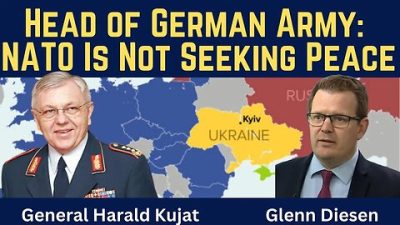
NATO’s Attempt to Defeat Russia Destroys Ukraine
or go to
Aletho News Archives – Video-Images
From the Archives
The Infrastructure of Impunity
Lies are Unbekoming | February 6, 2026
Jeffrey Epstein is back in the news. Names are circulating, documents are being released, and the public is once again asking questions that were never adequately answered. This essay exists because Whitney Webb already answered many of them—but her two-volume work One Nation Under Blackmail (Trine Day, 2022), totaling over 900 pages of densely documented investigation, is long enough that few will ever read it. What follows is intended as a surgical extraction of the essence of both volumes: the core argument, the key evidence, and the framework that makes sense of what would otherwise appear to be isolated scandals.
Webb’s research relies on court documents, congressional testimony, declassified files, and contemporaneous reporting from outlets including the New York Times, Washington Post, Washington Times, and Wall Street Journal. Readers seeking full documentation are directed to her work.
Webb does not identify a singular “they” controlling these operations. Her framework documents intersecting networks—intelligence agencies, organized crime syndicates, financial institutions, billionaire philanthropic circles—that converge around specific operations and individuals. The structure she describes is not a pyramid with a hidden apex but a web of mutual interests, where different nodes serve different functions and no single actor exercises total control. This analytical approach distinguishes her work from cruder conspiracy narratives that posit a unified secret group. The infrastructure persists not because someone commands it but because all participants benefit from its continuation.
This essay synthesizes her documented evidence into a narrative argument about sexual blackmail as a technology of political control—one that has operated continuously, adapted technologically, and survived repeated partial exposure. … continue
Blog Roll
Recent Comments
eddieb on I might get killed for posting… Bill Francis on I might get killed for posting… loongtip on Beijing cancels Panama deals a… loongtip on Showdown loongtip on New York Bans Israel-Linked Te… loongtip on Trump tells India to stop purc… eddieb on The Old Testament and the Geno… papasha408 on Trump’s war posturing against… Coronistan on This is How We Should Have Res… Coronistan on NO MANDATES, NO PROFITS: MODER… Lutz Barz on Russia Vows to Protect Its Oil… loongtip on Russia Vows to Protect Its Oil…


 Aletho News
- General Harald Kujat: NATO’s Attempt to Defeat Russia Destroys Ukraine
- Gab Refuses to Pay Germany’s Fine, Challenges Cross-Border Online Censorship
- The Guardian Wants Substack To Start Censoring Creators
- Ten elected West Bank lawmakers held in Israeli prisons
- The Gaza Ceasefire Has No Phase Two, Only a Permanent Limbo
- DOJ records show Jeffrey Epstein donated thousands to Israeli army, Jewish National Fund
- Is Canada Really Warming?
- Climate Scientist Who Predicted End Of “Heavy Frost And Snow” Now Refuses Media Inquiries
- The reality of Trump’s cartoonish $1.5 trillion DOD budget proposal
- NATO’s ‘Agent Rutte’ in blatant sabotage of Ukraine peace negotiations
- If Americans Knew
- Israel returns bodies with evidence of organ theft and severe mutilation – Not a ceasefire Day 120
- AIPAC Coordinates Donors in Illinois House Primaries
- Geneva Academy warns Gaza death toll could top 200,000
- Media ignore allegations that Israel raped German journalist
- Former Israeli PM: Settlers are Aiding and Abetting Jewish Rioters in the West Bank
- Tucker Carlson sheds light on Christian-Muslim harmony in Palestine, Jordan
- Revealed: Private jet owned by Trump friend used by ICE to deport Palestinians to West Bank
- Bypassing Oversight to Rush Billions in Arms to Israel
- Aid trickles into Gaza, medical evacuations trickle out – Not a ceasefire Day 119
- In Honor of My Friend, Mary Hughes Thompson
- No Tricks Zone
- Germany’s Natural Gas Storage Level Dwindles To Just 28%… Increasingly Critical
- New Study Rebuts The Assumption That Anthropogenic CO2 Molecules Have ‘Special’ Properties
- Climate Scientist Who Predicted End Of “Heavy Frost And Snow” Now Refuses Media Inquiries
- Polar Bear Numbers Rising And Health Improving In Areas With The Most Rapid Sea Ice Decline
- One Reason Only For Germany’s Heating Gas Crisis: Its Hardcore-Dumbass Energy Policy
- 130 Years Later: The CO2 Greenhouse Effect Is Still Only An Imaginary-World Thought Experiment
- New Study Affirms Rising CO2’s Greening Impact Across India – A Region With No Net Warming In 75 Years
- Germany’s Natural Gas Crisis Escalates … One Storage Site Near Empty …Government Silent
- Polar Colding…Antarctica Saw Its Coldest October In 44 Years!
- New Study: Sea Levels Rose 20 Times The Modern Rate During The Roman Warm Period
 Aletho News