What They’re Covering Up at Fukushima
By HIROSE TAKASHI | CounterPunch | March 22, 2011
Introduced by Douglas Lummis
Okinawa
Hirose Takashi has written a whole shelf full of books, mostly on the nuclear power industry and the military-industrial complex. Probably his best known book is Nuclear Power Plants for Tokyo in which he took the logic of the nuke promoters to its logical conclusion: if you are so sure that they’re safe, why not build them in the center of the city, instead of hundreds of miles away where you lose half the electricity in the wires?
He did the TV interview that is partly translated below somewhat against his present impulses. I talked to him on the telephone today (March 22 , 2011) and he told me that while it made sense to oppose nuclear power back then, now that the disaster has begun he would just as soon remain silent, but the lies they are telling on the radio and TV are so gross that he cannot remain silent.
I have translated only about the first third of the interview (you can see the whole thing in Japanese on you-tube), the part that pertains particularly to what is happening at the Fukushima plants. In the latter part he talked about how dangerous radiation is in general, and also about the continuing danger of earthquakes.
After reading his account, you will wonder, why do they keep on sprinkling water on the reactors, rather than accept the sarcophagus solution [ie., entombing the reactors in concrete. Editors.] I think there are a couple of answers. One, those reactors were expensive, and they just can’t bear the idea of that huge a financial loss. But more importantly, accepting the sarcophagus solution means admitting that they were wrong, and that they couldn’t fix the things. On the one hand that’s too much guilt for a human being to bear. On the other, it means the defeat of the nuclear energy idea, an idea they hold to with almost religious devotion. And it means not just the loss of those six (or ten) reactors, it means shutting down all the others as well, a financial catastrophe. If they can only get them cooled down and running again they can say, See, nuclear power isn’t so dangerous after all. Fukushima is a drama with the whole world watching, that can end in the defeat or (in their frail, I think groundless, hope) victory for the nuclear industry. Hirose’s account can help us to understand what the drama is about. Douglas Lummis
Hirose Takashi: The Fukushima Nuclear Power Plant Accident and the State of the Media
Broadcast by Asahi NewStar, 17 March, 20:00
Interviewers: Yo and Maeda Mari
Yo: Today many people saw water being sprayed on the reactors from the air and from the ground, but is this effective?
Hirose: . . . If you want to cool a reactor down with water, you have to circulate the water inside and carry the heat away, otherwise it has no meaning. So the only solution is to reconnect the electricity. Otherwise it’s like pouring water on lava.
Yo: Reconnect the electricity – that’s to restart the cooling system?
Hirose: Yes. The accident was caused by the fact that the tsunami flooded the emergency generators and carried away their fuel tanks. If that isn’t fixed, there’s no way to recover from this accident.
Yo: Tepco [Tokyo Electric Power Company, owner/operator of the nuclear plants] says they expect to bring in a high voltage line this evening.
Hirose: Yes, there’s a little bit of hope there. But what’s worrisome is that a nuclear reactor is not like what the schematic pictures show (shows a graphic picture of a reactor, like those used on TV). This is just a cartoon. Here’s what it looks like underneath a reactor container (shows a photograph). This is the butt end of the reactor. Take a look. It’s a forest of switch levers and wires and pipes. On television these pseudo-scholars come on and give us simple explanations, but they know nothing, those college professors. Only the engineers know. This is where water has been poured in. This maze of pipes is enough to make you dizzy. Its structure is too wildly complex for us to understand. For a week now they have been pouring water through there. And it’s salt water, right? You pour salt water on a hot kiln and what do you think happens? You get salt. The salt will get into all these valves and cause them to freeze. They won’t move. This will be happening everywhere. So I can’t believe that it’s just a simple matter of you reconnecting the electricity and the water will begin to circulate. I think any engineer with a little imagination can understand this. You take a system as unbelievably complex as this and then actually dump water on it from a helicopter – maybe they have some idea of how this could work, but I can’t understand it.
Yo: It will take 1300 tons of water to fill the pools that contain the spent fuel rods in reactors 3 and 4. This morning 30 tons. Then the Self Defense Forces are to hose in another 30 tons from five trucks. That’s nowhere near enough, they have to keep it up. Is this squirting of water from hoses going to change the situation?
Hirose: In principle, it can’t. Because even when a reactor is in good shape, it requires constant control to keep the temperature down to where it is barely safe. Now it’s a complete mess inside, and when I think of the 50 remaining operators, it brings tears to my eyes. I assume they have been exposed to very large amounts of radiation, and that they have accepted that they face death by staying there. And how long can they last? I mean, physically. That’s what the situation has come to now. When I see these accounts on television, I want to tell them, “If that’s what you say, then go there and do it yourself!” Really, they talk this nonsense, trying to reassure everyone, trying to avoid panic. What we need now is a proper panic. Because the situation has come to the point where the danger is real.
If I were Prime Minister Kan, I would order them to do what the Soviet Union did when the Chernobyl reactor blew up, the sarcophagus solution, bury the whole thing under cement, put every cement company in Japan to work, and dump cement over it from the sky. Because you have to assume the worst case. Why? Because in Fukushima there is the Daiichi Plant with six reactors and the Daini Plant with four for a total of ten reactors. If even one of them develops the worst case, then the workers there must either evacuate the site or stay on and collapse. So if, for example, one of the reactors at Daiichi goes down, the other five are only a matter of time. We can’t know in what order they will go, but certainly all of them will go. And if that happens, Daini isn’t so far away, so probably the reactors there will also go down. Because I assume that workers will not be able to stay there.
I’m speaking of the worst case, but the probability is not low. This is the danger that the world is watching. Only in Japan is it being hidden. As you know, of the six reactors at Daiichi, four are in a crisis state. So even if at one everything goes well and water circulation is restored, the other three could still go down. Four are in crisis, and for all four to be 100 per cent repaired, I hate to say it, but I am pessimistic. If so, then to save the people, we have to think about some way to reduce the radiation leakage to the lowest level possible. Not by spraying water from hoses, like sprinkling water on a desert. We have to think of all six going down, and the possibility of that happening is not low. Everyone knows how long it takes a typhoon to pass over Japan; it generally takes about a week. That is, with a wind speed of two meters per second, it could take about five days for all of Japan to be covered with radiation. We’re not talking about distances of 20 kilometers or 30 kilometers or 100 kilometers. It means of course Tokyo, Osaka. That’s how fast a radioactive cloud could spread. Of course it would depend on the weather; we can’t know in advance how the radiation would be distributed. It would be nice if the wind would blow toward the sea, but it doesn’t always do that. Two days ago, on the 15th, it was blowing toward Tokyo. That’s how it is. . . .
Yo: Every day the local government is measuring the radioactivity. All the television stations are saying that while radiation is rising, it is still not high enough to be a danger to health. They compare it to a stomach x-ray, or if it goes up, to a CT scan. What is the truth of the matter?
Hirose: For example, yesterday. Around Fukushima Daiichi Station they measured 400 millisieverts – that’s per hour. With this measurement (Chief Cabinet Secretary) Edano admitted for the first time that there was a danger to health, but he didn’t explain what this means. All of the information media are at fault here I think. They are saying stupid things like, why, we are exposed to radiation all the time in our daily life, we get radiation from outer space. But that’s one millisievert per year. A year has 365 days, a day has 24 hours; multiply 365 by 24, you get 8760. Multiply the 400 millisieverts by that, you get 3,500,000 the normal dose. You call that safe? And what media have reported this? None. They compare it to a CT scan, which is over in an instant; that has nothing to do with it. The reason radioactivity can be measured is that radioactive material is escaping. What is dangerous is when that material enters your body and irradiates it from inside. These industry-mouthpiece scholars come on TV and what to they say? They say as you move away the radiation is reduced in inverse ratio to the square of the distance. I want to say the reverse. Internal irradiation happens when radioactive material is ingested into the body. What happens? Say there is a nuclear particle one meter away from you. You breathe it in, it sticks inside your body; the distance between you and it is now at the micron level. One meter is 1000 millimeters, one micron is one thousandth of a millimeter. That’s a thousand times a thousand squared. That’s the real meaning of “inverse ratio of the square of the distance.” Radiation exposure is increased by a factor of a trillion. Inhaling even the tiniest particle, that’s the danger.
Yo: So making comparisons with X-rays and CT scans has no meaning. Because you can breathe in radioactive material.
Hirose: That’s right. When it enters your body, there’s no telling where it will go. The biggest danger is women, especially pregnant women, and little children. Now they’re talking about iodine and cesium, but that’s only part of it, they’re not using the proper detection instruments. What they call monitoring means only measuring the amount of radiation in the air. Their instruments don’t eat. What they measure has no connection with the amount of radioactive material. . . .
Yo: So damage from radioactive rays and damage from radioactive material are not the same.
Hirose: If you ask, are any radioactive rays from the Fukushima Nuclear Station here in this studio, the answer will be no. But radioactive particles are carried here by the air. When the core begins to melt down, elements inside like iodine turn to gas. It rises to the top, so if there is any crevice it escapes outside.
Yo: Is there any way to detect this?
Hirose: I was told by a newspaper reporter that now Tepco is not in shape even to do regular monitoring. They just take an occasional measurement, and that becomes the basis of Edano’s statements. You have to take constant measurements, but they are not able to do that. And you need to investigate just what is escaping, and how much. That requires very sophisticated measuring instruments. You can’t do it just by keeping a monitoring post. It’s no good just to measure the level of radiation in the air. Whiz in by car, take a measurement, it’s high, it’s low – that’s not the point. We need to know what kind of radioactive materials are escaping, and where they are going – they don’t have a system in place for doing that now.
Douglas Lummis is a political scientist living in Okinawa and the author of Radical Democracy. Lummis can be reached at ideaspeddler@gmail.com
Life, Death and Anxiety in the Fallout Zone
What is the Meaning of “Safe”?
By BARBARA ROSE JOHNSTON | CounterPunch | March 21, 2011
In a nuclear crisis, life becomes a nightmare for those people trying to make sense of the uncertainties. Imaginably, the questions are endless.
Radiation is invisible, how do you know when you are in danger? How long will this danger persist? How can you reduce the hazard to yourself and family? What level of exposure is safe? How do you get access to vital information in time to prevent or minimize exposure? What are the potential risks of acute and chronic exposures? What are the related consequential damages of exposure? Whose information do you trust? How do you rebuild a healthy way of life in the aftermath of nuclear disaster?
And the list of unknowns goes on.
These questions are difficult to answer in the chaos and context of an ongoing disaster, and they become even more complicated by the fact that governments and the nuclear industry maintain tight control of information, operations, scientific research, and the biomedical lessons that shape public-health response.
This regulation of information has been the case since the nuclear age began, and understanding this helps to illuminate why there is no clear consensus on what Japan’s nuclear disaster means in terms of local and global human health.
Nuclear secrecy in context. In the initial hours after the earthquake and tsunami, the Japanese government and Tokyo Electrical Power Company issued statements reporting minor damage at the Fukushima nuclear power plant. In the days that followed, government and industry officials reported the “venting of hydrogen gas”, but that there was “no threat to health.” This reassurance of health safety was echoed when hydrogen gas explosions occurred at the power plant.
In fact, the hydrogen released is tritium water vapor, a low-level emitter that can be absorbed in a human body through simply breathing, or by drinking contaminated water. Tritium decays by beta emission and has a radioactive half-life of about 12.3 years. As it undergoes radioactive decay, this isotope emits a very low-energy beta particle and transforms to stable, nonradioactive helium. Once tritium enters the body, it disperses quickly, is uniformly distributed, and is excreted through urine within a month or so after ingestion. It produces a low-level exposure and may result in toxic effects to the kidney. As with all ionizing radiation, exposure to tritium increases the risk of developing cancer.
So, then, why no mention of tritium in the government or industry statements? Relatively speaking, the health effects of a low-level emitter like tritium are minor when compared to the other radiogenic and toxic hazards in this nuclear catastrophe. Such omission is a standard industry practice, designed to reassure the public that the normal operating procedures of a nuclear power plant represent no significant threat to human health.
The assertion that low-level exposure to radiation represents no human threat is an artifact of Cold War-era science that was shaped to meet government and industry needs.
During the Cold War, scientific findings on health effects to nuclear fallout that contradicted the official narrative were typically censored. Scientists were not only punished for their work, they were also blacklisted — one example of this was American anthropologist Earle Reynolds whose work for the Atomic Bomb Casualty Commission was censored in 1953 by the US government. His research showed that Japanese children who were exposed to fallout were not only smaller than their counterparts, but had less resistance to disease in general and were more susceptible to cancer, especially leukemia. The consequences of this censored history was examined in 1994 by the US Advisory Commission on Human Radiation Experimentation, which concluded that the radiation health literature of the Cold War years was a heavily sanitized and scripted version meant to reassure and pacify public protests while achieving military and economic agendas.
Decades of such control reinforced, again and again, the core message: Humans have evolved in a world where background radiation is present and is natural and beneficial at some level; any adverse heath effect of radiation exposure is the occasional and accidental result of high levels of exposure.
Cold War classification and the close nature of government, military, and industry agendas made it difficult to challenge the assumptions that underlie the “trust us” narrative. For example, the assumption that radiogenic health effects must be demonstrated through direct causality (one isotope, one outcome) meant science on cumulative and synergistic effects was not pursued. Discounting or ignoring the toxic nature of varied radioisotopes meant health risks were assessed and regulations promulgated on the basis of acute exposures and outcomes (radiation poisoning and deadly cancer).
There are other sources of conclusive data that allow a very different interpretation of the health hazards posed by a nuclear disaster. Several of these sources document radiogenic health outcomes that sharply contrast mainstream reports: Declassified records of US human radiation experiments and similar Soviet records; Atomic Bomb Casualty Commission records; new research conducted by Japanese scientists; long-term research on Chernobyl survivors; and research done for the Marshall Islands Nuclear Claims Tribunal proceedings.
But what does this mean? From this record of studied and lived experience, there are a few things that we know. For example, fallout and the movement of radionuclides through marine and terrestrial environments ultimately get into the food chain and the human body. The toxicity of contaminants and radioactivity in fallout represent significant health risks. Acute exposures are further complicated when followed by chronic exposure, as such assaults have a cumulative and synergistic effect on health and well-being. Chronic exposure to fallout does more than increase the risk of developing cancers, it threatens the immune system, can exacerbate pre-existing conditions, affects fertility, increases rates of birth defects, and can retard physical and mental development, among other things. And we know the effects of such exposures can last for generations.
Japan’s nuclear disaster demonstrates in powerful and poignant terms the degree to which the state prioritizes security interests over the fundamental rights of people and their environment. Japan’s response to its nuclear disaster — similar to other government responses to catastrophic events like Katrina and Chernobyl — has struggled to control the content and flow of information to prevent wide panic (and the related loss of trust in government), reduce liability, and protect nuclear and other industry agendas.
There are many lessons to be learned here, not the least of which is how to respond, adjust, and adapt to the hazards and health risks associated with life in this nuclear world. These responses will most assuredly include a demand for transparency and accountability — that is, governance that truly secures the fundamental rights of its citizens to life and livelihood.
As the world’s nations reassess nuclear power operations and refine energy development plans, now — more than ever — we need to aggressively tackle this question: How do we define the word “safe”?
~
Barbara Rose Johnston is an anthropologist and senior research fellow at the Center for Political Ecology. She is the co-author of The Consequential Dangers of Nuclear War: the Rongelap Report. Look for her latest book from Left Coast Press, Life and Death Matters: Human Rights, Environment, and Social Justice, released in July 2009. She can be reached at: bjohnston@igc.org.
Uranium tumbles on Japan crisis
By Carolyn Cui | People’s Daily | 2011-3-20
The most volatile market since the Japanese earthquake isn’t Japanese or U.S. stocks. It is uranium, which until Friday was a little-noticed pocket of the commodities markets.
Trading in uranium is often sporadic, with just a few dozen transactions taking place each month, and trading on the spot market totaling about $2.5 billion last year.
But the earthquake and tsunami in Japan, which have crippled a key nuclear plant and raised questions about the future of the nuclear-power industry, has changed all that—at least for now. Trading has soared as some hedge funds and banks unload their positions, traders said.
Almost three million pounds of uranium have changed hands in the spot market for the metal so far this week, five times more than the average volume, brokers said.
The result is that after an 80% run-up over the past eight months, uranium prices have tumbled. They reached a three-year high of $73 a pound in February, but dropped $13 earlier this week and fell to $49.25 on Wednesday, according to Ux Consulting Co.
Michael Goldenberg, director of nuclear fuels at Evolution Markets, a commodity broker, said the past few days have been “the busiest days” he has had since he started brokering uranium trades three years ago.
The flurry of activity in the uranium market reflects the divided thinking among market participants toward the future of nuclear power. Explosions and radiation leaks in Japan have worried some traders, who are dumping their uranium holdings amid fears that the Japanese crisis could stall expansion of the world’s nuclear programs.
At the same time, some utilities and even producers have stepped in to buy the metal in the belief that the demand for more nuclear plants will remain. A total of 65 nuclear units are under construction, mostly in China and Russia, according to the Nuclear Energy Institute.
Utilities haven’t been among the big sellers in recent days, said Jeff Faul, chief executive of Nukem, Inc., a trader of physical uranium. Mr. Faul said Nukem, of Danbury, Conn., hasn’t made any changes to its positions.
Most of the uranium traded in the physical market is in the form of uranium oxide concentrate, which is several steps away from being used as nuclear fuel. It isn’t very radioactive and buyers often store it at one of the four major uranium-storage facilities around the world.
After utilities buy uranium on the spot market, these facilities convert the oxide into a gas form of pure uranium, called uranium hexafluoride.
The gas, which is radioactive, is then enriched to become nuclear fuel. It is then transported to fabrication centers to convert into a pellet, which is put into a fuel rod that goes into a nuclear reactor.
Robert Mitchell, who manages the $36 million Green Energy Metals Funds, says uranium represents “a big position” of the fund, which owns both physical uranium and uranium-related stocks.
Though it has been a “tough time,” Mr. Mitchell hasn’t sold any of his uranium holdings. “No one knows how this movie is going to play out in Japan, but I think eventually rational thought will prevail,” he said.
Despite the bearish news in recent days, traders note that more than 400 reactors are still operating, consuming about 180 million pounds of uranium a year. The Japanese crisis prompted a drop of about 3% of the total uranium consumption. Nuclear power accounts for 14% of global electricity output, the Nuclear Energy Institute said.
“The world is not going to stop burning uranium tomorrow,” said Kevin Smith, director of uranium trading at Traxys Group, a New York-based physical trader and market maker of uranium.
Uranium Participation Corp., a $680-million Canada-listed fund that is invested in physical uranium, has lost about 26% of its market capitalization in recent days.
“UPC will continue to hold,” said Ron Hochstein, president of Denison Mines Inc., which runs the fund.
“It’s just a short-term impact. The fundamentals for the market are still very strong,” he said.
The Danger of Spent Nuclear Fuel
By ROBERT ALVAREZ | CounterPunch | March 21, 2011
The spent fuel pools at Units 3 and 4 at the crippled Fukushima Dai-ichi nuclear complex are exposed to the open sky and might be draining. The radioactive dose rates coming off the pools appear to be life-threatening. Lead-shielded helicopters trying to dump water over the pools/reactors could not get close enough to make much difference because of the dangerous levels of radiation.
If the spent fuel is exposed, the zirconium cladding encasing the spent fuel can catch fire releasing potentially catastrophic amounts of radiation, particularly cesium-137 (Here’s an article I wrote in January 2002 in the Bulletin of Atomic Scientists about spent fuel pool dangers.)
In October 2002, Washington Gov. Christine Gregoire, serving at that time as her state’s attorney general, organized a group letter to Congress signed by her and 26 of her counterparts across the nation. In it, they requested greater safeguards for reactor spent-fuel pools. The letter urged “enhanced protections for one of the most vulnerable components of a nuclear power plant its spent fuel pools.” It was met with silence.
In January 2003, my colleagues and I warned that a drained spent fuel pool in the U.S. could lead to a catastrophic fire that would result in long-term land contamination substantially worse than what the Chernobyl accident unleashed. An area around the Chernobyl site roughly half the size of New Jersey continues to be considered uninhabitable.
The Nuclear Regulatory Commission (NRC) and the nuclear energy industry strongly disagreed. Congress then asked the National Academy of Sciences (NAS) to referee this dispute.
In 2004, after the NRC tried unsuccessfully to suppress its report, the NAS panel agreed with our findings. The Academy panel stated that a “partially or completely drained pool could lead to a propagating zirconium cladding fire and release large quantities of radioactive materials to the environment.”
Over the past 15 years, NRC has become too co-dependent on the industry it regulates. This has a lot to do with Congress, the nuclear industry lobby and its large amounts of money, which successfully rolled back the post Three Mile Island regulatory reforms of the early 1980s.. NRC is now much more dependent on industry self-reporting, much like what happened with the SEC and the banking industry before the economic collapse.
U.S. reactors are each holding at least four times as much spent fuel as the individual pools at the wrecked Daiichi nuclear complex in Fukushima. According to the Energy Department, about 63,000 metric tons of spent fuel has been generated as of this year, containing approximately 12.4 billion curies. These pools contain some of the largest concentrations of radioactivity on the planet. Merely 14 percent of U.S. spent fuel is in dry storage.
At this stage it’s critical that:
* The NRC hold off on renewing operating licenses for nuclear reactors, given our new found certainty that many sites in earthquake zones could experience greater destruction than previously assumed.
* The NRC promptly require reactor owners to end the dense compaction of spent fuel, and ensure that at least 75 percent of the spent fuel in pools operating above their capacity be removed and placed into dry, hardened storage containers on site, which are more likely to withstand earthquakes.
In our 2003 study, we estimated that it would take about 10 years to do this with existing technology, at an expense of $3.5 to $7 billion.
~
Robert Alvarez, an Institute for Policy Studies senior scholar, served as senior policy adviser to the Energy Department’s secretary from 1993 to 1999.
Chileans protest Obama visit, Nuke deal
Press TV – March 21, 2011
Chileans have held demonstrations to protest the upcoming visit of US President Barack Obama to the country following a recent nuclear deal between the two nations.
“This demonstration is to reject Barack Obama’s militaristic policies,” said a protest organizer.
The angry protesters organized two peaceful rallies on Sunday, complaining that the nuclear agreement was signed despite major nuclear crisis that developed in Japan following the huge earthquake and tsunami that struck the country on March 11, AFP reported Monday.
Chilean opposition lawmakers and environmentalists argue that the Friday agreement is too risky for their country, which lies on the Pacific Ring of Fire, and like Japan, is quite prone to devastating earthquakes.
The devastating 9-magnitude earthquake, followed by a monstrous tsunami that hit Japan earlier in March, caused radioactive leakage due to explosions in the nuclear power plants that resulted from malfunctioning cooling systems.
Chile experienced its own 8.8-magnitude earthquake just last year, which was also followed by a tsunami that claimed the lives of more than 500 people.
The Chilean demonstrators, numbering close to 2,000, held signs that read, “Nuclear energy is energy of death.”
Chilean President Sebastian Pinera and President Obama are set to meet Monday in the capital Santiago, where Obama is scheduled to deliver a speech on the Latin America.
Multiples Worse than Chernobyl
By Stephen Lendman | March 19, 2011

In Japan, cover-up and denial persist. In a March 18 press conference, Tokyo Electric’s (TEPCO) spokesman claimed water-dousing lowered radiation levels from 312 microsieverts per hour to 289. However, 48 hours earlier, chief cabinet secretary Yukido Edano said radioactivity levels were misreported in microsieverts instead of millisieverts – 1,000 times stronger.
Contrary to other reports, TEPCO’s spokesman also said water remains in Unit 4’s cooling pool. In fact, there’s none. Nothing the company says is credible.
In contrast, distinguished nuclear expert Helen Caldicott called Fukushima an unprecedented “absolute disaster,” multiples worse than Chernobyl. “The situation is very grim and not just for the Japanese people. If both reactors blow then the whole of the northern hemisphere may be affected. Only one (Chernobyl) reactor blew, and it was only three months old with relatively little radiation. (Fukushima’s) have been operating for 40 years, and would hold about 30 times more radiation than Chernobyl.”
It killed nearly one million people and counting, according to the New York Academy of Sciences (NYAS). Yet the official IAEA figure was 4,000. NYAS’ report said:
“This is a collection of papers translated from the Russian with some revised and updated contributions. Written by leading authorities from Eastern Europe, the volume outlines the history of the health and environmental consequences of the Chernobyl disaster. According to the authors, official discussions from the (IAEA) and associated (UN) agencies (e.g. the Chernobyl reports) have largely downplayed or ignored many of the findings reported in the Eastern European scientific literature and consequently have erred by not including these assessments.”
In fact, IAEA and UN agencies lied, what’s ongoing now on Fukushima to conceal the greatest ever environmental/human disaster by far. Calling it a “diabolical catastrophe,” Caldicott, in fact, believes “(i)t could be much, much worse than” 30 multiples of Chernobyl. “In the northern hemisphere, many millions could get cancer.” Large parts of Japan may be permanently contaminated, not safe to live in.
Adding a hopeful note, she also thinks “the nuclear industry is finished worldwide. I have said before, unfortunately, the only thing that is capable of stopping this wicked industry is a major catastrophe, and it now looks like this may be it.”
In a March 16 “Destroyer of Worlds” statement, she added:
“The world is now paying – and will pay however severe Fukushima turns out to be – a grave price for the nuclear industry’s hubris and the arrogance and greed that fueled their drive to build more and more reactors. What’s more, having bamboozled gullible politicians, the media, and much of the public into believing that it is a ‘clean and green’ solution to the problem of global warming, the nuclear industry has operated facilities improperly, with little or no regard for safety regulations, and they have often done this with the connivance of government authorities.”
In fact, nuclear power isn’t “clean and green,” nor is it safe or renewable. “It is instead ‘a destroyer of worlds.’ It is time the globally community repudiated it….There is no other choice for the sake of future generations” and planet earth. Humanity has a choice – nuclear power or life itself.
On March 17, New York Times writers Norimitsu Onishi, David Sanger and Matthew Walf headlined, “With Quest to Cool Fuel Rods Stumbling, US Sees ‘Weeks’ of Struggle,” saying:
America’s “top nuclear official followed up his (day before) bleak appraisal of the grave situation at the plant, (cautioning) it would “take some time, possibly weeks” to make headway.
On March 17, Times writers David Sanger and William Broad headlined, “Radiation Spread Seen; Frantic Repairs Go On,” saying:
“….frantic efforts to cool nuclear fuel in the troubled reactors and in the plant’s spent-fuel pools resulted in little or no progress, according to United States government officials.”
Officials are also trying to restore power with no assurance doing so can help. Explosions, fires, and extremely high heat destroyed most or all plant equipment, likely including water pumps.
An unnamed source said, “What you are seeing are desperate efforts – just throwing everything at it in hopes something will work. Right now this is more prayer than plan.”
More likely, however, it’s deception, trying to convince public opinion that anything can work when, in fact, it may already be too late.
On March 18, Times writers David Sanger and William Broad headlined, “Frantic Repairs Go On at Plant; Little Progress in Cooling Fuel,” saying:
Radioactive “(s)team was again rising over another part of the plant, this time billowing from Reactor No. 2” that exploded on Tuesday. No explanation why was given.
Helicopter water drops failed. On Friday, military officials halted them at least for a day. Nuclear experts think they’re futile. Video evidence showed most water missed its target or evaporated before reaching it. Osaka University’s Professor Akira Yamaguchi said:
“7.5 tons of water has been dumped. We do not know the size of the pool, but judging from other examples it probably holds 2,000 tons. It does not mean the pool needs to be completely full, but maybe a third of the tank’s capacity is needed.”
America believes TEPCO “consistently underestimated the risk and moved too slowly to contain the damage.”
On March 18, Al Jazeera headlined, “Japan raises nuclear alert level,” saying:
Its “nuclear safety agency raise(d the) severity rating of (the) accident at Fukushima plant, signifying higher risk of radiation.”
However, Al Jazeera’s equating its seriousness to Three Mile Island or Chernobyl is willful deception. Fukushima is unprecedented, in uncharted territory, perhaps unstoppable. Guenther Oettinger, EU energy chief, called the site “effectively out of control, (facing) apocalypse.”
Al Jazeera claimed “prevailing winds are likely to carry any contaminated smoke or steam away from the densely populated Tokyo area to dissipate over the Pacific Ocean.”
False! Radiation levels in Tokyo are dangerously high and rising. Moreover, a radiation cloud will reach California by weekend, then spread across most of North America. Downplaying the disaster’s severity is scandalous and criminal. Besides dead zones and permanent environmental contamination, millions of illnesses and deaths are likely, though years will pass before accurate information is known.
Make no mistake, Japan’s government/industry cabal bears full responsibility for the greatest ever environmental/human disaster, an indisputable crime. They have blood on their hands as does America, other governments, and “Destroyer of Worlds” officials that that proliferate this technology from hell. Nothing short of banning it is acceptable.
~
Stephen Lendman lives in Chicago and can be reached at lendmanstephen@sbcglobal.net. Also visit his blog site at sjlendman.blogspot.com
Full Core Meltdown in Japan?
By Stephen Lendman | March 18, 2011
Possibly it’s ongoing and concealed. All along, Japanese and Tokyo Electric (TEPCO) officials downplayed or lied about the severity of the crisis. Virtually nothing they say can be believed.
Nor from the Obama administration, budgeting loan guarantees for new reactor construction instead of decommissioning all 104 nuclear plants because operating them risks full core meltdowns.
Partial or full ones gravely harm earth, air, water and food. Three hazardous Fukushima radioactive isotopes are especially problematic. University of Rochester Professor Jacqueline Williams, a radiation expert, says ingesting radioactive iodine-131 causes thyroid and other cancers. So does hazardous beta and gamma radiation from Cesium-137. Released Strontium 90 also causes leukemia and other cancers. Large amounts of all three are spewing daily.
Under a worst case scenario, millions of Japanese, Pacific rim and northern hemisphere people will be harmed, many gravely. Millions of deaths may result. The dangers of nuclear power can’t be overstated. Potentially, all planetary life is threatened. What better reason to end all commercial and military use now.
Wikipedia calls a nuclear meltdown “an informal term for a severe nuclear reactor accident that results in core damage from overheating.” Partial or full meltdowns result, releasing toxic atmospheric radiation.
Through nuclear fission, reactors generate high heat to produce electricity – essentially boiling water to create steam, used to run turbines and generate power. Unless controlled, dangerously high heat results.
Core meltdowns occur when heat generated exceeds what cooling systems remove, causing uranium and plutonium fuel to melt. At fault may be coolant problems, including accidents, fires, loss of coolant pressure, low coolant flow, or none at all from high heat causing evaporation. In other words, insufficient cooling elevates temperatures high enough to trigger melting and toxic atmospheric radiation releases.
Measured in rems (roentgen equivalent in man or mammal), it represents the amount needed to damage living tissue. All radiation is harmful, cumulative, permanent, and unforgiving. The more gotten, the greater the danger, especially doses over 100 rems, producing radiation sickness, including nausea, vomiting, headaches, white blood cell loss, and susceptibility to infection.
Doses above 200 rems cause hair loss and other harm. Above 300, significant internal harm, including damaged nerve cells, others lining the digestive track, the reproductive system, DNA and RNA. Severe white blood cell loss also results, the body’s main defense against infection, causing vulnerability to cancer and other diseases.
Moreover, radiation reduces blood platelets production, making hemorrhaging more likely. Doses above 450 rems kill half of those exposed. Above 800 assures death in days, weeks, or longer-term after painful illnesses, including leukemia and other cancers.
High atmospheric radiation levels threaten life over the short or longer-term. The more ingested, absorbed or inhaled, the greater the risk. Fukushima is spreading large amounts. If unstoppable, all bets are off.
On March 17, New York Times writers Norimitsu Onishi, David Sanger and Matthew Wald headlined, “High Radiation Severely Hinders Emergency Work to Cool Japanese Plant,” saying:
“Amid widening (global alarm), military fire trucks began spraying cooling water on (Fukushima’s) spent fuel rods.” Earlier, high radiation levels forced back police water cannon trucks. Japan’s Self-Defense Forces dumped tons of seawater on Unit 3, saying later it was ineffective. Unknown is whether anything can work. In day six, everything tried failed, raising grave doubts, a frightening prospect if true.
Panic throughout Japan is increasing. Some Toyko residents are fleeing. Everyone is scared. Radiation levels are spreading and rising. People are jamming airports to leave. Some embassies and companies are evacuating their personnel. Inbound flights are being canceled.
An anonymous nuclear industry official told The Times of India that TEPCO management is “in a full-scale panic, (not) know(ing) what to do.” On March 16, European Union Energy Commissioner Guenther Oettinger told an EU parliamentary committee:
Fukushima “is effectively out of control. In the coming hours, there could be further catastrophic events, which could pose a threat to the lives of people on the island,” and beyond.
In fact, global contamination is threatened. Obama said radioactivity wouldn’t reach America. He lied. It will reach California by weekend and spread east across the entire country and North America. The industry-controlled World Nuclear News warned of a “dramatic escalation in Japan.”
Compounding the threat, around 600,000 exposed Fukushima spent fuel rods are stored unprotected near the top of reactors, making them extremely vulnerable to melting. Nuclear engineer Arnie Gundersen said if they catch fire, it “would be like Chernobyl on steroids.”
Several fires, in fact, erupted. Others could ignite any time. If one or more containment vessels ruptures, all bets are off. Fears are it already happened, making a bad situation far worse. Fukushima is an unprecedented disaster, in uncharted territory. Understating the potential catastrophic risk is irresponsible and criminal.
On Wednesday, US Nuclear Regulatory Commission (NRC) chairman, Gregory Jaczko, told a congressional committee that thousands of Unit 4 spent fuel rods have little or no protective water, meaning they’re exposed, melting, and spreading toxic atmospheric radiation. He added:
“We believe that radiation levels are extremely high, which could possibly impact the ability to take corrective measures.”
Fukushima has six reactors. All risk meltdown. Experts believe a full plant evacuation may be necessary, leaving reactor and spent fuel rods to melt down, a potential worst case unstoppable “China syndrome.”
Late Wednesday night, the US State Department announced a “voluntary” evacuation of government personnel dependents and other US citizens from northeastern Japan down to Tokyo and Yokohama. Charter flights will be provided. Numerous other nations are urging their nationals to leave.
Nuclear Power in America: How Safe?
On March 16, New York Times writer Matthew Wald headlined, “Nuclear Agency Tells a Concerned Congress That US Industry Remains Safe,” saying:
NRC chairman Jaczko “told two House Energy and Commerce subcommittees:
“We will continue to work to maintain (a high) level of protection.” Reactors are designed to withstand “the most severe natural phenomena historically reported,” perhaps forgetting his comments about Fukushima’s unprecedented disaster and its unpreparedness to cope.
Energy Secretary Steven Chu claimed:
“The American people should have full confidence that the United States has rigorous safety regulations in place to ensure that our nuclear power is generated safely and responsibly. The administration is committed to learning from Japan’s experience as we work to continue to strengthen America’s nuclear industry.”
Chu, in fact, is deeply compromised, a shill for nuclear interests since his days as director of the Lawrence Berkeley National Laboratory (LBNL), originally called the UC Radiation Lab. Today, the Energy Department runs it, continuing its radiation research, what it’s done since the 1940s with little regard for public safety or environmental concerns, as true under Chu. In fact, he was picked as Energy Secretary for his commitment to military and commercial nuclear power, mindless of the risks.
When asked in 2005 if fission-based plants should be part of the energy-producing portfolio, he responded:
“Absolutely,” displaying a cavalier attitude about its dangers in advocating for “recycling” waste, when independent experts say doing it spreads poisons causing cancer, genetic damage, and premature deaths.
Chu also has longstanding ties to BP and Big Oil that funded UC Berkeley’s Energy Biosciences Institute he founded a year before becoming Energy Secretary. On matters of oil, nuclear power, and other sources of energy, nothing Chu says is credible.
Obama also has longstanding nuclear industry ties, including with Chicago-based Exelon. On March 14, Bloomberg said it operates “17 reactors at 10 stations in Illinois, New Jersey and Pennsylvania, provid(ing) 20% of US nuclear capacity,” according to its web site. His former top political aide, David Axelrod, once lobbied for Exelon, and Rahm Emanuel, his former White House chief of staff, profited handsomely as an investment banker arranging mergers that created the company.
In his proposed budget, Obama includes $36 billion in industry loan guarantees for new facilities, free money. He’s committed to jump-start new construction, halted since Three Mile Island in 1979. Already takers are lining up, 20 or more applications pending before the NRC.
He and Chu downplay Fukushima, mindless of industry hazards, including 23 US nuclear plants at 16 locations using the same failed GE-designed Mark 1 containment vessels. Earlier the NRC called it susceptible to explosion and failure because of cost-cutting design failures. Its 1985 study warned that failure within the first few hours after a core meltdown was very likely. Its top safety official at the time said it had a 90% probability of failing if an accident caused overheating and melting. When reactor cooling is compromised, the containment vessel is the last line of defense. However, GE’s design is hazardous and unsafe.
No matter. In January 2011, Obama appointed Jeffrey Immelt, GE’s CEO, head of his outside panel of economic advisers, replacing Paul Volcker. He’ll also provide administration energy policy input. For him, Obama, Chu and other administration officials, public health, safety, and environmental protection are secondary to bottom line priorities. Unless popular outrage resists, America faces an inevitable nuclear nightmare, replicating or exceeding Fukushima.
~
Stephen Lendman lives in Chicago and can be reached at lendmanstephen@sbcglobal.net. Also visit his blog site at sjlendman.blogspot.com
Venezuela’s Chavez Halts Nuclear Energy Program following Japan Crisis
Mérida – Yesterday President Hugo Chávez put a freeze on Venezuela’s nascent nuclear energy program as a result of the crisis underway at Japan’s earthquake-stricken nuclear reactors.
In the aftermath of last Friday’s tragic earthquake, Chávez sent his condolences to the Japanese people and announced his decision to halt a bi-lateral nuclear development agreement signed between Venezuela and Russia in October of last year.
The announcement came just hours after new flames engulfed one of Japan’s damaged nuclear plants and forced authorities to evacuate the last remaining technicians.
“What has been taking place in the last few hours represents an enormous risk and threat to the entire world,” said Chávez late Tuesday evening.
“Even with all of the great technology and advances that the Japanese have…just look at what is happening with some of those nuclear reactors,” he said.
Chávez’s comments came after elevated radiation levels at Japan’s earthquake-stricken Fukushima Daiishi nuclear plant led authorities to suspend all efforts to prevent the plant’s reactors from melting down. Authorities ordered clean-up crews to leave the facilities and cancelled plans for the use of military helicopters to dump water on the plants in efforts to prevent temperatures from rising any further.
Chávez said Japan’s ongoing nuclear crisis would affect the development of nuclear energy programs worldwide. “There is no doubt whatsoever that this has altered, and will alter in a very strong way, all planning for nuclear energy across the globe,” he said.
“For the time being,” Chávez said, “I have ordered the Vice President [and Minister of Energy Rafael] Ramírez to put a freeze on the plans we have been advancing, the very preliminary studies related to Venezuela’s peaceful nuclear energy program.” … Full article
Radioactive Cloud/Fallout Over Europe From the Chernobyl Disaster
By Allen Roland:
Citations sourced from the Christian Science Monitor | March 16, 2011

Yesterday President Obama told KDKA-TV of Pittsburgh “that experts have assured him that a nuclear release from Japan will dissipate by the time it gets to Hawaii, much less the U.S. mainland” but I stopped believing Obama a long time ago and, besides, he lives on the East Coast ~ well out of harm’s way. By the way, General Electric CEO Jeff Immelt recently joined Obama’s team as a top economic advisor and GE designed the faulty nuclear containment systems that are now breaking down in Japan. So Obama is not about to say anything that could harm his more than cozy relationship with Wall Street and the financial elite ~ the public be damned.
The New York Times reports that GE marketed the Mark 1 boiling water reactors, used in TEPCO’s Fukushima Daiichi plant, “as cheaper to build than other reactors because they used a comparatively smaller and less expensive containment structure.” The same containment structures that are now breaking down ~ like BP, it’s all about greed, profit and lax oversight ~ and dam the safety concerns!
Contrary to Obama’s vacuous comments ~ “The worst case scenario is ~ the fuel rods fuse together, the temperatures get so hot that they melt together in a radioactive molten mass that bursts through the containment mechanisms,” said nuclear expert Joe Cirincione. “Some of the radioactivity could carry in the atmosphere to the West Coast of the US,” added Cirincione, head of anti-nuclear group Ploughshares Fund. He cited the 1986 Chernobyl nuclear disaster to underline how far radioactivity can travel. “The radioactivity spread around the entire northern hemisphere,” from the devastated Ukrainian plant, he said.
~
On April 26 1986 a terrible disaster happened in Chernobyl in Ukraine. This is a radioactive radar that can see how high the radioactivity was. The more red the more dangerous.
~
Stephen Lendman
Chernobyl in 1986 killed nearly one million people and counting. Wide areas are affected by permanent contamination. Clean-up workers still risk radiation poisoning. Earlier ones suffered dreadful illnesses or died, mostly from painful cancers. In contaminated areas, the continuing effects include:
— a 100-fold increase in aggressive thyroid tumors;
— a 50-fold increase in leukemia, bone, brain, and other tumors;
— a 30% increase in “malformations” caused genetic mutations and other pathologies affecting cardio-vascular function, skeleton, muscular systems and connective tissues, as well as nervous system diseases and psychic disorders; and
— a 20% increase in premature births, besides an unknown number of spontaneous abortions, miscarriages, and still-born births.
Moreover, radiation contamination remains hazardous for thousands of years.
Worse Than Chernobyl?
No Reactor is Safe
By RUSSELL D. HOFFMAN | CounterPunch | March 17, 2011
The latest news is that the Japanese military are dropping sea water on the reactors by helicopter.
That sounds very inefficient, very ineffective, and very dangerous.
I described this event to a loved one today as one of the worst catastrophes in the history of humanity. What will she tell her 13-year-old while he watches the news tonight? That Ace is STILL saying the worst may be yet to come? That we might have one spent fuel pool fire after another… and dry cask fires, too… and more reactor meltdowns, and more explosions?
That over the next 20 years there will probably be more than a million dead in Japan from this accident, and thousands dead here in America?
Do we tell them that? These are pretty hard things to have to try to explain to a child.
Do we tell them the poisons are particularly bad for youngsters, infants, and fetuses?
“If you don’t understand what’s happening, you’re probably so young that you REALLY need to know!! It will affect YOUR life most of all!”
There’s no way to explain that.
Of course, you can always listen to the pro-nukers tell you not to worry because it can’t happen “here”, wherever “here” is for you. They will tell you the radiation levels from the Fukushima-Daiichi catastrophe will be little more than background levels by the time they get to you, wherever you are. They’ll say background radiation is harmless and might even be good for you. They’ll say it’s just a dusting. That’s it’s all going to land in China. That the deaths from Chernobyl didn’t happen.
They’ll say it all.
Radiation sickness isn’t pretty. People in Japan will be coming down with it in droves. Workers undoubtedly already are being visited behind plastic screens for the last time by their loved ones who, if they live close to the Fukushima Dai-ichi nuclear power plant, were also irradiated, but not as badly.
I spoke at a hearing last night, near my local nuclear power plant. It was a common council hearing in San Clemente, the city nearest the reactor. I’ve posted a You-Tube video from the event.
The public speaking portion of the evening started with this author. The reactor company was allowed to speak last, for as long as they wanted. The representative explained that the reactor was built to withstand all foreseeable earthquakes in the area, and all tsunamis that they could foresee as well. And that was that. No talk of new studies, no talk of building the wall higher, nothing like that. Everything’s fine at San Onofre, according to them.
Lately at all the hearings for San Onofre, the activists have been overwhelmed by plant employees, some of whom always speak, such as the union duckie, and some of whom just clap for their team and leave when its the activists’ turn to talk.
There were NO employees making themselves obvious at this hearing, besides the one management representative. I did not see a single logoed shirt, patch, or San-Onofre beeper this time. … Full article
Red Alert in Japan: An Unfolding Nuclear Catastrophe
By Stephen Lendman | March 16, 2011
Since March 12, a potentially unprecedented catastrophe has been unfolding in Japan, despite official denials and corroborating media reports – managed, not real news. Believe none of them. Nonetheless, on March 15, Reuters suggested what’s ongoing, headlining: “Japan braces for potential radiation catastrophe,” saying:
“Japan faced potential catastrophe on Tuesday” after a fourth Fukushima reactor explosion, fire, and high-level radiation release, posing grave human health risks to an expanding area, including Toyko’s 20 million population 170 miles south.
France’s Nuclear Safety Authority rated the disaster a six on the international seven-point nuclear accident scale. Clearly, it’s the worst ever. Europe’s energy commissioner, Guenther Oettinger called it an “apocalypse,” telling the European Parliament that Toyko lost control of events.
Independent experts agree. It’s an unprecedented disaster spreading globally. All six Fukushima reactors are crippled, four of them spewing unknown amounts of radiation.
On March 15, city officials said levels were 20 times above normal, later stating they’d dropped, downplaying the risk. Government authorities also claimed Fukushima levels were falling. For residents throughout the country, believing them is hazardous to their health, given the gravity of the situation, likely deteriorating, not improving.
In Maebashi, 60 miles north of Tokyo and Chiba prefecture further south, Kyodo News reported radiation levels 10 times normal, perhaps downplaying much higher ones. Even Prime Minister Naoto Kan was alarmed, saying “(t)he possibility of further radioactive leakage is heightening,” meaning very likely it reached extremely hazardous levels. Earlier official reports downplayed the danger.
According to Hokkaido University Professor Koji Yamazaki, “Radioactive material will reach Tokyo but it is not harmful to human bodies because it will be dissipated by the time it gets” there.
False! Any amount of radiation is harmful. Moreover, it’s cumulative, causing cancer if one human gene is affected. Depending on the type and amount, it damages chromosomes and DNA. In her landmark book, “Nuclear Madness,” Helen Caldicott said:
“Lower doses of radiation can cause abnormalities of the immune system and can also cause leukemia five to ten years after exposure; (other) cancer(s), twelve to sixty years later; and genetic diseases and congenital anomalies in future generations.”
Moreover, “nuclear radiation is forever,” says Caldicott. It doesn’t dissipate or disappear. Downplaying its danger is hypocritical and outrageous. For a scientist like Yamazaki, it’s scandalous.
In 1953, Nobel laureate George Wald told students (including this writer) that “no amount of radiation is safe,” explaining that “Every dose is an overdose.”
Radiation is unforgiving. Exposure to elevated levels for short periods is harmful. If longer, cancer and other potentially fatal illnesses may develop. It’s why using nuclear reactors to generate power is irresponsible, in fact, crazy.
On March 15, New York Times writers Hiroko Tabuchi, David Sanger and Keith Bradsher headlined, “Fire and Damage at Japanese Plant Raise Risk of Nuclear Disaster,” saying:
Fukushima’s operator Toyko Electric Power (TEPCO), a notorious industry scofflaw, “expressed extreme concern that (they) were close to losing control over the fuel melting that has been ongoing in three (Daiichi) reactors….” After Unit 2 exploded, “pressure had dropped in the ‘suppression pool” – a section at the bottom of the reactor that converts steam to water and is part of the critical function of keeping the nuclear fuel protected.”
Afterward, radiation levels soared. According to Hiroaki Koide, senior reactor engineering specialist at Kyoto University’s Research Reactor Institute:
“We are on the brink. We are now facing the worst-case scenario. We can assume that the containment vessel at Reactor No. 2 is already breached. If there is heavy melting inside the reactor, large amounts of radiation will most definitely be released.”
Moreover, a plant official said breaching would make it hard to impossible to maintain emergency seawater cooling for an extended period, and if workers are evacuated, “nuclear fuel in all three reactors (will likely) melt down,” causing “wholesale releases of radioactive material….”
Further, already over 200 magnitude five or greater aftershocks have occurred, and authorities warned of a 70% chance of a magnitude seven or greater one in days, perhaps making a bad situation much worse. In addition, chief cabinet secretary Yukido Edano said previous radioactivity levels were misreported in microsieverts instead of millisieverts – 1,000 times stronger. Earlier he said the situation isn’t similar to Chernobyl. In fact, potentially it’s far graver, unprecedented.
Nuclear experts also explained that even without a full meltdown (perhaps ongoing), today’s emergency will last a year or longer because of problems cooling the affected cores. As a result, long-term evacuations will be necessary. Already, nearly 500,000 people are affected, a total likely to grow, besides vast destruction, spreading contamination, growing threat to human health, and tens of thousands still missing, by now presumed dead, though not reported.
“Red Alert: Radiation Rising and Heading South in Japan”
On March 15, Stratfor Global Intelligence headlined that danger, saying:
After more explosions and risk of one or more full meltdowns (perhaps ongoing though unreported), “(t)he nuclear reactor situation in Japan had deteriorated significantly.” Even Japan’s Nuclear Industrial Safety Agency (NISA) said Fukushima’s No. 2 reactor radiation level rose 163-fold in three hours. At No. 3, it was 400-fold.
Muted Japanese media report rising radiation levels south and southwest, already reaching Tokyo and numerous prefectures. “The government says radiation levels have reached levels hazardous to human health,” omitting that any level causes harm.
Reports “suggest a dramatic worsening as well as a wider spread than at any time since the emergency began.” All Japan and the Pacific rim are threatened. “The situation at the (affected) facility is uncertain, but clearly deteriorating.” How gravely, the fullness of time will determine.
A Final Comment
On March 12, nuclear expert Mark Grossman headlined, “Hydrogen, Zirconium, Flashbulbs – and Nuclear Craziness,” saying:
Coolant loss causes hydrogen gas eruptions “because of a highly volatile substance called zirconium,” chosen “in the 1940’s and 50’s” to build nuclear plants, “as the material (for) rods into which radioactive fuel would be loaded.”
Each plant has “30,000 to 40,000 rods – composed of twenty tones of zirconium.” It alone works well, allowing “neutrons from the fuel pellets in the rods to pass freely between the rods and thus a nuclear chain reaction to be sustained.”
But not without “a huge problem….” Zirconium “is highly volatile and when hot will explode spontaneously upon contact with air, water or steam.” With tons used in nuclear plants, in “a compound called ‘zircaloy,’ it “clads tens of thousands of fuel rods.”
Any interruption of coolant builds quickly. However, because of zirconium’s explosive power, the equivalent of nitroglycerine, it catches fire and explodes “at a temperature of 2,000 degrees Fahrenheit, well below the 5,000 degree temperature of a meltdown.”
Before it happens, it can cause hydrogen explosions “by drawing oxygen from water and steam letting it off,” what happened at Fukushima. They, in turn, create more heat, “bringing the zirconium itself closer and closer to its explosive level,” what may, in fact, have happened, perhaps bad enough to cause a full meltdown.
Using tons of explosive material like zirconium is “absolutely crazy.” Doing it makes every nuclear plant a ticking time bomb, vulnerable to explode, spewing lethal poisons into the atmosphere.
~
Stephen Lendman lives in Chicago and can be reached at lendmanstephen@sbcglobal.net. Also visit his blog site at sjlendman.blogspot.com
Japan’s Nuclear Armageddon and the Experts
By Mina Hamilton / Dissident Voice / March 16th, 2011
Tuesday, March 15. At 4:45 PM more grim news from Japan. Yet another fire breaks out at a Fukushima reactor. Searing flames shoot to the sky. Radiation levels are too high for workers to get close enough to put out the inferno. Even so, maybe, this fire will be doused. What’s next?
Coming hard on the heels of a monster earthquake and devastating tsunami, the nuclear disaster unfolding in Japan is more than heart-breaking. The magnitude of the tragedy is truly unfathomable.
Who has not groaned seeing pictures of the tsunami-claimed bodies? Who has not wept seeing thousands and thousands of Japanese mourning the loss of family, loved ones and homes? Who does not wince at the desperate refugees without water or food packed into freezing shelters?
Now add to the untold miseries multiple reactor core meltdowns? And a fuel pool meltdown? Plus, a radioactive plume heading out over the Pacific to deposit its toxic load in the ocean and its rich fisheries? Not to mention the threat of the wind shifting and carrying the radioactivity towards Tokyo? Korea?
It is understandable for those of us watching from a distance to feel hopeless. What can I do? Who doesn’t want to turn off the TV, climb under the covers – and leave the unfolding disaster in the hands of the experts?
If there’s one lesson this catastrophe should convey: don’t leave it to the experts.
These experts got us here in the first place. One example: what the industry and most media commentators refer to as “spent fuel.”
“Spent” fuel? What’s that?
“Spent” is an industry-euphemism. It implies something harmless, wasted or used up. Quite the opposite.
Spent fuel is irradiated fuel: fuel that has been irradiated inside a nuclear reactor’s core. After removal from the reactor, this fuel is massively contaminated with radioactive elements and must be stored in giant pools.
On March 15 the New York Times said these fuel pools “could pose an even greater danger” than the reactors melting down.
An even greater danger? Isn’t a core meltdown as bad as it gets?
Alas, a fuel pool meltdown could be worse than a reactor core meltdown. Much worse. This is because fuel pools contain far more radioactivity than that which is inside a reactor core. Unfortunately, at Fukushima we may get both types of meltdowns.
Robert Alvarez, formerly of the US Department of Energy and now at the Institute of Policy Studies, provided insight into this potential nuclear Armageddon. In a recent blog Alvarez states the fuel in each of the pools at the Fukushima complex has 5 to 10 times the radioactivity of the fuel inside one reactor core. And much of this radioactive material is the highly toxic and long-lived radionuclide, cesium-137. See.)
Another problem: Unlike the reactor cores, which have a hefty, six-inch thick steel containment vessel, the fuel pools at Fukushima are in unhardened and therefore highly vulnerable concrete structures. The roof of one of these structures has been completely demolished in at least one of the stricken reactors, Unit 4.
Why is irradiated fuel sitting in pools? (They’re sort of like swimming pools, though considerably deeper. About 40 feet long, 40 feet wide and 45 feet deep.)
After removal from the reactor core, the irradiated fuel is fiendishly hot. The fuel is so hot it will cause the water it is immersed in to boil – if the water is not cooled. What if fuel pool’s cooling systems fail? Disaster. If the water is not cooled for a certain number of days or weeks, the water will boil off. Next, the fuel can catch fire, releasing its toxic load to the environment.
Given the repeated explosions at the Fukushima reactors and the latest fire at Unit 4, this count-down to an irradiated fuel pool meltdown appears to be underway.
Pools of water hanging up in the air? With no back-up water circulation, no back-up generators? Pools not in hardened or sealed containments? Pools stuffed to the gills with extraordinarily toxic materials that are now threatening the health and safety of thousands of already suffering Japanese citizens?
Citizens have, over the last 30 years, repeatedly challenged the safety of irradiated fuel pools and repeatedly the nuclear industry and its experts have said, no problem.
Yes, right now, we all need to do whatever we can to assist the Japanese people.
For the longer term, however, let’s remember the nuclear industry and its “experts” got us to this extremely dangerous moment. An informed, organized and determined citizenry is the only way to free us of our dependency upon this exceedingly dangerous and unforgiving energy source.
~
Mina Hamilton is a writer based in New York City. Formerly she was the Co-founder and Director of the Radioactive Waste Campaign. She frequently writes about nuclear issues.
Featured Video

Seyed M. Marandi: U.S. Military DIVIDED? Iran’s Secret Defense EXPOSED
or go to
Aletho News Archives – Video-Images
From the Archives
‘Israel sees Iran as obstacle to its policies’
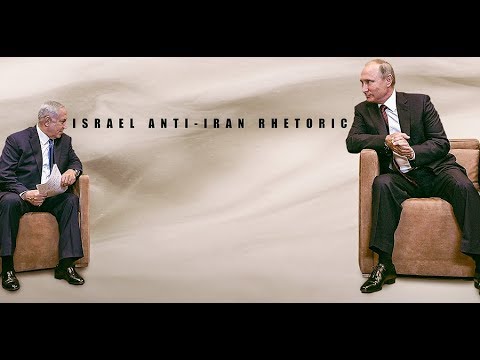
Press TV – August 25, 2017
Prime Minister Benjamin Netanyahu has said that Israel felt threatened by Iran’s growing influence in the Middle East. Netanyahu expressed his Iranophobic view in a meeting with Russian President Vladimir Putin in Russia’s Black Sea resort of Sochi on Wednesday. Press TV has asked Scott Rickard, former American intelligence linguist from Tampa, Florida, and Brent Budowsky, a columnist at The Hill from Washington, to give their thoughts on the issue.
Rickard said Tel Aviv is concerned about the fact that the regime could not carry out its old project to spread sectarian divisions and pave the way for dismemberment of the countries in the Middle East region because of the Iranian-led resistance against Israeli policies, not only in the occupied territories of Palestine but also in the whole region.
“Iran is not a threat to Israel whatsoever. The threat that Israel sees is the fact that their Oded Yinon Plan is being put to a hold by Iran,” the intelligence linguist said on Thursday night.
“They (the Israelis) look at Iran as a threat only because they have no influence on their governments and Iran is autonomous and is not under the Zionist influence,” he added.
Since the victory of the Islamic Republic of Iran in 1979, Tehran has been critical of Israel’s policies in the region, whereas “no leaders [of other states] even dared to speak out against Zionism,” Rickard argued. … continue
Blog Roll
 Aletho News
- Iran declares ‘historic victory’ over US, says enemy forced to accept its proposal
- Trump Claims Ceasefire, Reopening of Strait of Hormuz Agreement with Iran
- Israeli tank fire killed UN peacekeeper in Lebanon, UNIFIL investigation finds
- Russia, China block Bahrain-sponsored UN resolution on Strait of Hormuz
- The US-Israeli War on Science is an Assault on our Future
- Trump’s Promise to Bomb Iran ‘Like Never Before’ Faces Brutal Logistics — Expert
- Germany seeks to restrict stays abroad for men of fighting age – Berliner Zeitung
- Evidence points to Ukraine being behind TurkStream attempted sabotage, but that should come as no surprise
- Sri Lanka secures supplies of Russia oil – minister
- Nations across Asia strike direct deals with Iran for Hormuz passage
- If Americans Knew
- Thousands dead and neighborhoods razed to the ground: Aid agencies fear southern Lebanon is becoming the new Gaza
- The war the US is fighting for Israel could cost trillions
- ‘Cigarette Burns, Nail Wounds’: Toddler Tortured in Gaza to Coerce Father
- Trump Says US Sent ‘a Lot of Guns’ to Protesters in Iran
- Israeli forces destroy 17 UN peacekeeper cameras in south Lebanon
- US-Israeli strikes ‘completely destroy’ synagogue in Tehran
- Archbishop for US Military Says Iran War Is Unjust Under Catholic Teaching
- Iranian leaders’ Open Letters to the American People
- Trump says Iranians appreciate bombs, WHO warns of nuclear risks – Daily Update
- U.N. experts demand Israel release prominent Gaza doctor after reports of ‘severe torture’
- No Tricks Zone
- An Inconvenient Tree: Uncovered In Alps… Europe Much Warmer Than Today 6000 Years Ago
- New Study Reports A 60% Slowdown In Greenland’s Ice Loss Rate In The Last Decade
- Low Intensity Tornado Wrecks Major Solar Farm, Creating A Potential Toxic Dump
- New Study Finds Warming Saves Lives…Cold Temperatures 12 Times More Deadly Than Excess Heat
- German Science Blog Accuses PIK Climate Institute Of Hallucinating Climate Tipping Points
- Devastating Assessment Of Comirnaty Vaccine By Former Senior Pfizer Europe Toxicologist
- New Study: CO2 Is ‘Effectively Negligible’ As An Explanatory Climate Change Factor Since 2000
- Former Pfizer Toxicologist Dr. Helmut Sterz Tells Bundestag Hearing Pfizer Vaccine Should Have Never Been Approved
- Energy Expert: Germany’s Nuclear Phaseout Was A “500 Billion Euro Mistake”
- New Research: South Australia’s Mid-Holocene Sea Surface Temperatures Were 4°C Warmer Than Today
 Aletho News