When U.S. Attorney for Massachusetts Carmen M. Ortiz unsealed the indictment of a Chinese citizen in the UK for violating the embargo against Iran, she made what appeared to be a new U.S. accusation of an Iran nuclear weapons programme.
The press release on the indictment announced that between in November 2005 and 2012, Sihai Cheng had supplied parts that have nuclear applications, including U.S.-made goods, to an Iranian company, Eyvaz Technic Manufacturing, which it described as “involved in the development and procurement of parts for Iran’s nuclear weapons program.”
The text of the indictment reveals that the reference to a “nuclear weapons program” was yet another iteration of a rhetorical device used often in the past to portray Iran’s gas centrifuge enrichment programme as equivalent to the development of nuclear weapons.
Reuters, Bloomberg, the Boston Globe, the Chicago Tribune, and The Independent all reported that claim as fact. But the U.S. intelligence community, since its well-known November 2007 National Intelligence Estimate, has continued to be very clear on the pubic record about its conclusion that Iran has not had a nuclear weapons programme since 2003.
Something was clearly amiss with the Justice Department’s claim.
The indictment doesn’t actually refer to an Iranian nuclear weapons programme, as the Ortiz press release suggested. But it does say that the Iranian company in question, Eyvaz Tehnic Manufacturing, “has supplied parts for Iran’s development of nuclear weapons.”
The indictment claims that Eyvaz provided “vacuum equipment” to Iran’s two uranium enrichment facilities at Natanz and Fordow and “pressure transducers” to Kalaye Electric Company, which has worked on centrifuge research and development.
But even those claims are not supported by anything except a reference to a December 2, 2011 decision by the Council of the European Union that did not offer any information supporting that claim.
The credibility of the EU claim was weakened, moreover, by the fact that the document describes Eyvaz as a “producer of vacuum equipment.” The company’s website shows that it produces equipment for the oil, gas and petrochemical industries, including level controls and switches, control valves and steam traps.
Further revealing its political nature of indictment’s nuclear weapons claim, it cites two documents “designating” entities for their ties to the nuclear programme: the United Nations Security Council Resolution 1737 and a U.S. Treasury Department decision two months later.
Neither of those documents suggested any connection between Eyvaz and nuclear weapons. The UNSC Resolution, passed December 23, 2006, referred to Iran’s enrichment as “proliferation sensitive nuclear activities” in 11 different places in the brief text and listed Eyvaz as one of the Iranian entities to be sanctioned for its involvement in those activities.
And in February 2007 the Treasury Department designated Kalaye Electric Company as a “proliferator of Weapons of Mass Destruction” merely because of its “research and development efforts in support of Iran’s nuclear centrifuge program.”
The designation by Treasury was carried out under an Executive Order 13382, issued by President George W. Bush, which is called “Blocking Property of Weapons of Mass destruction Proliferators and Their Supporters.” That title conveyed the impression to the casual observer that the people on the list had been caught in actual WMD proliferation activities.
But the order allowed the U.S. government to sanction any foreign person merely because that person was determined to have engaged in activities that it argued “pose a risk of materially contributing” to “the proliferation of weapons of mass destruction or their means of delivery”.
The Obama administration’s brazen suggestion that it was indicting an individual for exporting U.S. products to a company that has been involved in Iran’s “nuclear weapons program” is simply a new version of the same linguistic trick used by the Bush administration.
The linguistic acrobatics began with the political position that Iran’s centrifuge programme posed a “risk” of WMD proliferation; that “risk” of proliferation was then conflated with nuclear proliferation activities, when than was transmuted into “development of nuclear weapons”.
The final linguistic shift was to convert “development of nuclear weapons” into a “nuclear weapons program”.
That kind of the deceptive rhetoric about the Iranian nuclear programme began with the Bill Clinton administration, which argued, in effect, that nuclear weapons development could be inferred from Iran’s enrichment programme.
Although Cheng and Jamili clearly violated U.S. statutes in purchasing and importing the pressure transducers from the United States and sending them to Eyvaz in Iran, a close reading of the indictment indicates that the evidence that Eyvaz provided the transducers to the Iranian nuclear programme is weak at best.
The indictment says Cheng began doing business with Jamili and his company Nicaro in November 2005, and that he sold thousands of Chinese parts “with nuclear applications” which had been requested by Eyvaz. But all the parts listed in the indictment are dual use items that Eyvaz could have ordered for production equipment for oil and gas industry customers.
The indictment insinuates that Eyvaz was ordering the parts to pass them on to Iran’s enrichment facility at Natanz, but provides no real evidence of that intent. It quotes Jamili as informing Cheng in 2007 that his unnamed customer needed the parts for “a very big project and a secret one”. In 2008, he told Cheng that the customer was “making a very dangerous system and gas leakage acts as a bomb!”
The authors do not connect either of those statements to Eyvaz, but they suggest that it was a reference to gas centrifuges and thus imply that it must have been Eyvaz. “During the enrichment of uranium using gas centrifuges,” the indictment explains, “extremely corrosive chemicals are produced that could cause fire and explosions.”
That statement is highly misleading, however. There is no real risk of gas leaks from centrifuges causing fires or explosions, as MIT nuclear expert Scott R. Kemp told IPS in an interview. “The only risk of a gas leak [in centrifuge enrichment] is to the centrifuge itself,” said Kemp, “because the gas could leak into the centrifuge and cause it to crash.”
On the other hand, substantial risk of explosion and fire from gas leaks exists in the natural gas industry. So even if the customer referred to in the quotes had been Eyvaz, they would have been consistent with that company’s sales to gas industry customers.
Pressure transducers are used to control risk in that industry, as Todd McPadden of Ashcroft Instruments in Stratford, Connecticut told IPS. The pressure transducer measures the gas pressure and responds to any indication of either loss of pressure from leaks or build up of excessive pressure, McPadden explained.
The indictment shows in detail that in 2009 Eyvaz ordered hundreds of pressure transducers, which came from the U.S. company MKS. But again the indictment cites no real evidence that Eyvaz was ordering them to supply Iran’s enrichment facilities.
It refers only to photographs showing that MKS parts ended up in the centrifuge cascades at Natanz, which does not constitute evidence that they came from Eyvaz.
Illegal US drone strikes continue(the Long War Journal says there have been 8 drones strikes in Yemen so far in 2014), but efforts to curb the use of killer drones have made remarkable headway this year.
While the faith-based community has taken far too long to address the moral issues posed by remote-controlled killing, on February 13, the World Council of Churches — the largest coalition of Christian churches — came out in opposition to the use of armed drones. The Council said that the use of armed drones poses a “serious threat to humanity” and condemned, in particular, US drone strikes in Pakistan. This is a breakthrough in the religious community, and should make it easier for individual denominations to make similar pronouncements, as the Church of the Brethren has.
There have also been major developments in the secular world. In February, the European Union, with an overwhelming vote of 534-49, passed a resolution calling on EU Member States to “oppose and ban the practice of extrajudicial targeted killings” and demanding that EU member states “do not perpetrate unlawful targeted killings or facilitate such killings by other states.” This resolution will pressure individual European nations to stop their own production and/or use of killer drones (especially the UK, Germany, Italy and France), and to stop their collaboration with the US drone program.
People on the receiving end of US drone strikes have also stepped up their opposition. On April 1, a group of friends and family of drone strike victims in Yemen came together to form the National Organization for Drone Victims. This is the first time anywhere that drone strike victims have created their own entity to support one another and seek redress. The organization plans to conduct its own investigations, focusing on the civilian impact of drone attacks. At the official launch, which was packed with press, the group said any government official supporting the US drones should be tried in a criminal court. “Today, we launch this new organization which will be the starting point for us to get justice and to take legal measures on a national and international scale against anyone who is aiding these crimes,” said the organization’s president Mohammad Ali al-Qawli, whose brother was killed in a drone strike.
The Pakistani government has taken its opposition to drone strikes directly to the UN Human Rights Council. Pakistan, with the co-sponsorship of Yemen, introduced a resolution calling for transparency in drone strikes and for setting up a committee of experts to address the legal issues. Despite the opposition of the United States, which boycotted the talks and lobbied to kill the resolution, it passed on March 24 by a vote of 27-6, with 14 abstentions. The panel of experts that will be convened is scheduled to present its findings at the UN Human Rights Council session in September 2014.
UN Special Rapporteur on Terrorism, Ben Emmerson, also used this session of the UN Human Rights Council to release a detailed report on the issue of drones. Emmerson examined 37 instances of drone strikes in which civilians were reportedly killed or injured and concluded that nations using drones must provide a “public explanation of the circumstances and a justification for the use of deadly force.” Emmerson said it was critical for the international community to reach a consensus on many issues presented by drones strikes, including state sovereignty and whether it is legal to target a hostile person in a non-belligerent state.
These new developments have come about due to increasing public scrutiny and protests against drone attacks, such as the ongoing protests at the Hancock, Beale, and Creech Air Force Bases, the headquarters of drone manufacturer General Atomics, the White House, CIA, Congress and the Pentagon. The entire month of April has been designated for Days of Action, with film showings, talks, die-ins, re-enactments of drone strikes and other creative actions happening throughout the country.
Activists opposing weaponized drones are pleased to finally see more movement at the international level, and hope this will result in heightened pressure on the Obama administration, both internationally and domestically, to stop its policy of targeted assassinations and instead adhere to the rule of law.
There exists, right now, a problem with one side’s obligations not being fulfilled as provided for under the preliminary agreement, known as the Joint Plan of Action, that Iran reached with the United States and its negotiating partners (the P5+1) last November. This lack of fulfillment endangers the process of negotiating a final agreement.
It is an understandable source of consternation to the other side, which will increasingly doubt the first side’s ability and willingness to make good on its commitments, including in any final deal. Hardliners on the second side will pounce on any non-fulfillment of the terms of the JPA as a reason to scuttle the whole process.
So is Iran not living up to its commitments under the JPA? Well, we do have hardliners on our own side eager to pounce. In fact, they are so eager that they are trying to pounce even though there isn’t anything to pounce on.
Senators Robert Menendez, D-New Jersey, and Mark Kirk, R-Illinois, who led the recent unsuccessful effort in Congress to impose additional deal-busting sanctions after conclusion of the JPA, have sent a letter to President Barack Obama that bemoans indications of some increased Iranian oil sales and says “If Iran moves forward with this effort to evade U.S. sanctions and violate the terms of oil sanctions relief provided for in the JPA” the United States should in effect renounce its obligation under the JPA to — this is the wording of the JPA — “pause efforts to further reduce Iran’s crude oil sales.”
The senators make it sound as if Iran has some obligation under the agreement to knuckle under to sanctions, don’t they? Otherwise how could Iran “violate” what they are talking about? But Iran has no such obligation.
All the obligations in the preliminary agreement concerning sanctions are obligations of the P5+1 (including that very mild “pause efforts” clause, which does not entail rolling back the existing oil sanctions). All of Iran’s obligations involve restrictions on its nuclear program. According to the International Atomic Energy Agency, Iran so far is in compliance with those obligations.
No, the current problem in implementing the agreement involves another part of the P5+1′s side of the deal, not Iran’s side. Specifically, it involves the unfreezing in installments of a small portion ($4.2 billion out of an estimated $100 billion) of the Iranian money that already was earned from prior oil sales and is sitting in non-Iranian banks.
Iran has been unable to withdraw much of the money that it was supposed to have gained access to by now. It appears the problem is not direct violation of the agreement by the U.S. Treasury or any of the other governments involved. Instead, the banks that are to handle the funds are so deathly afraid of running afoul, however inadvertently, of any continuing sanctions that Treasury is enforcing that they have not made the money move.
The fear is understandable, given how huge and complex the sanctions regime has become and also how huge have been fines that Treasury has levied on transgressors. The marvelous sanctions machine is so powerful that it continues to exude power and have effects even after a switch has been turned off. Treasury needs to do more than just saying “go,” and more than it has done so far to put banks into their comfort zone, for the JPA to be implemented the way it was supposed to be.
Iranian President Hassan Rouhani had a big enough challenge domestically as it was to sell a preliminary agreement that gave the P5+1 most of what it wanted in restricting the nuclear program while getting only modest sanctions relief in return. His selling task is made all the harder when even that modest relief is not properly implemented. And there certainly are hardliners on his side ready to pounce on any such developments.
This issue is a reminder of how an Iranian belief that the West and especially the United States will come through with positive action if Iran makes desired concessions is just as important as (and given how the issue has evolved, has become even more important than) an Iranian belief that it will be hit with still more negative consequences if it does not concede.
The current problem also underscores how much work — political, not just administrative — on the U.S. side remains to be done to prepare for the undoing of sanctions that will be part of any final agreement, and that necessarily will be substantially greater than the minor sanctions relief in the JPA.
Members of Congress are still talking about piling on more sanctions when they ought to be discussing how to take sanctions off the pile. We have already seen how hard it is to redirect the sanctions machine. Aircraft carriers do not turn around on a dime, and neither do sanctions, especially ones as complicated and extensive as the ones on the Iranian pile.
Even if the more optimistic projections of when a deal will be struck in Vienna do not prove true, it is not too soon for Congress and the administration to be working diligently on this and for it to be a subject of public discussion.
A brief news story posted by Reuters at 3pm on Friday afternoon reported that Sihai Cheng, a Chinese national is facing criminal charges brought by the U.S. government for allegedly having conspired to export “pressure transducers,” sensors that translate the application of pressure into electrical signals, to Iran in violation with sanctions that restrict trade of scientific equipment and technology to that country.
Cheng was arrested at Heathrow airport two months ago and the indictment was brought by Boston field offices of the FBI, Department of Homeland Security, Department of Commerce, and the Department of Justice’s Massachusetts District Attorney.
Following the publication of the Reuters report, the news traveled fast with outlets like Bloomberg News, AFP, Telegraph, and BBC all picking it up, and inevitably tying the news to the ongoing international nuclear negotiations taking place between six world powers and Iran.
Pressure transducers have myriad industrial and scientific uses; their use in the translating pressurized gas in centrifuges to an analog electrical signal is but one of these applications. A statement released by the U.S. Attorney’s office declares, “Pressure transducers can be used in gas centrifuges to enrich uranium and produce weapons-grade uranium.”
Unmentioned is the fact that, not only can transducers be used for thousands of other reasons, but also that Iran’s enrichment of uranium is legal, Iran’s enrichment facilities are under strict IAEA monitoring and inspection, and Iran has never even been accused of enriching uranium to weapons-grade levels. It’s like arresting someone over trading light bulbs, which can be used in automobiles, which can be used to run people over.
The prosecution of people accused of breaching the aggressive U.S.-led sanctions regime is nothing new; just last month, Mohammad Reza Nazemzadeh, a prolific and respected medical research scientist in Michigan was inexplicably indicted for trying to send a refurbished coil for an MRI machine to a hospital in Iran. However, certain language used in press reports to describe the indictment of Cheng – in bold below – is curious.
Reutersreported that Cheng had “supplied thousands of parts that have nuclear applications to Eyvaz, a company involved in Iran’s nuclear weapons program, in violation of U.S. sanctions on Iran, federal prosecutors said.”
From November 2005 to 2012, Cheng allegedly supplied thousands of parts that have nuclear applications to Eyvaz, an Iranian company involved in the development and procurement of parts for Iran’s nuclear weapons program.
“Iran’s nuclear weapons program.” Read that again. “Iran’s nuclear weapons program.” The ubiquity of this phrase in the press and political speechifying belies the fact that Iran does not actually have a nuclear weapons program and is thus, not only deliberately deceiving, but patently false.
It should now go without saying that, for years now, the UnitedStatesintelligencecommunity and its allies have longassessed that Iran is not and never has been in possession of nuclear weapons, is not building nuclear weapons, and its leadership has not made any decision to build nuclear weapons. Iran’s uranium enrichment program is fully safeguarded by the IAEA and no nuclear material has ever been diverted to a military program. Iranian officials have consistently maintained they will never pursue such weapons on religious, strategic, political, moral and legal grounds.
This assessment has been reaffirmed year after year by the U.S. Director of Intelligence James Clapper, most recently in mid-February before the Senate Armed Services Committee. The intelligence has maintained for nearly seven years a high level of confidence that Iran has no nuclear weapons program.
Nevertheless, this phraseology goes frequently unchallenged in the mainstream media – despite repeated appeals by ombudsmen and public editors for more careful and measured writing by their reporters.
The reports of the Cheng case, however, are a bit more revealing. The specific claim referencing an Iranian “nuclear weapons program” did not originate with the Reuters wire service or Bloomberg‘s own cribbed report. In fact, the phrase in its entirety came from the U.S. Attorney’s own press release about the indictment, which was posted Friday by the “Boston Press Release Service,” and has still (as of this writing) not appeared on the website for the U.S. Attorney for the District of Massachusetts.
That the offending phrase – “Iran’s nuclear weapons program” – was literally copied-and-pasted directly from a government statement by professional reporters for major news outlets, without a shred of skepticism, scrutiny or fact-checking, is sadly par for the course in a media landscape wherein the press simply parrot the government line as a matter of policy.
“The indictment alleges that between in or about November 2005 and 2012, Cheng supplied thousands of parts that have nuclear applications, including U.S. origin goods, to Eyvaz, an Iranian company involved in the development and procurement of parts for Iran’s nuclear weapons program,” the release reads.
In this indictment, Ortiz has thus made an assumption about Iranian actions and intentions that directly contradicts the consensus of 16 American intelligence agencies. Furthermore, the prosecution itself is part of the Obama administration’s own economic war on Iran.
Just two weeks after Iran and the P5+1 signed their Joint Plan of Action in late November 2013, the U.S. State and Treasury Departments specifically named Eyvaz Technic Manufacturing Company among companies targeted “for evading international sanctions against Iran and for providing support for Iran’s nuclear program.”
The recent indictment and accompanying press release present a clear indication that the decades-long disinformation campaign about Iran’s nuclear program is far more powerful and sustaining than facts and evidence. And that’s bad news when the propaganda comes straight from the Department of Justice.
A new investigation by the Associated Press into a U.S. Agency for International Development (USAID) project to create a Twitter-style social media network in Cuba has received a lot of attention this week, with the news trending on the actual Twitter for much of the day yesterday when the story broke, and eliciting comment from various members of Congress and other policy makers. The “ZunZuneo” project, which AP reports was “aimed at undermining Cuba’s communist government,” was overseen by USAID’s Office of Transition Initiatives (OTI). AP describes OTI as “a division that was created after the fall of the Soviet Union to promote U.S. interests in quickly changing political environments — without the usual red tape.” Its efforts to undermine the Cuban government are not unusual, however, considering the organization’s track record in other countries in the region.
As CEPR Co-Director Mark Weisbrot described in an interview with radio station KPFA’s “Letters and Politics” yesterday, USAID and OTI in particular have engaged in various efforts to undermine the democratically-elected governments of Venezuela, Bolivia, and Haiti, among others, and such “open societies” could be more likely to be impacted by such activities than Cuba. Declassified U.S. government documents show that USAID’s OTI in Venezuela played a central role in funding and working with groups and individuals following the short-lived 2002 coup d’etat against Hugo Chávez. A key contractor for USAID/OTI in that effort has been Development Alternatives, Inc. (DAI).
More recent State Department cables made public by Wikileaks reveal that USAID/OTI subversion in Venezuela extended into the Obama administration era (until 2010, when funded for OTI in Venezuela appears to have ended), and DAI continued to play an important role. A State Department cable from November 2006 explains the U.S. embassy’s strategy in Venezuela and how USAID/OTI “activities support [the] strategy”:
(S) In August of 2004, Ambassador outlined the country team’s 5 point strategy to guide embassy activities in Venezuela for the period 2004) 2006 (specifically, from the referendum to the 2006 presidential elections). The strategy’s focus is: 1) Strengthening Democratic Institutions, 2) Penetrating Chavez’ Political Base, 3) Dividing Chavismo, 4) Protecting Vital US business, and 5) Isolating Chavez internationally.
Among the ways in which USAID/OTI have supported the strategy is through the funding and training of protest groups. This August 2009 cable cites the head of USAID/OTI contractor DAI’s Venezuela office Eduardo Fernandez as saying, during 2009 protests, that all the protest organizers are DAI grantees:
¶5. (S) Fernandez told DCM Caulfield that he believed the [the Scientific, Penal and Criminal Investigations Corps’] dual objective is to obtain information regarding DAI’s grantees and to cut off their funding. Fernandez said that “the streets are hot,” referring to growing protests against Chavez’s efforts to consolidate power, and “all these people (organizing the protests) are our grantees.” Fernandez has been leading non-partisan training and grant programs since 2004 for DAI in Venezuela.”
The November 2006 cable describes an example of USAID/OTI partners in Venezuela “shut[ting] down [a] city”:
11. (S) CECAVID: This project supported an NGO working with women in the informal sectors of Barquisimeto, the 5th largest city in Venezuela. The training helped them negotiate with city government to provide better working conditions. After initially agreeing to the women’s conditions, the city government reneged and the women shut down the city for 2 days forcing the mayor to return to the bargaining table. This project is now being replicated in another area of Venezuela.
The implications for the current situation in Venezuela are obvious, unless we are to assume that such activities have ended despite the tens of millions of dollars in USAID funds designated for Venezuela, some of it going through organizations such as Freedom House, and the International Republican Institute, some of which also funded groups involved in the 2002 coup (which prominent IRI staff publicly applauded at the time).
The same November 2006 cable notes that one OTI program goal is to bolster international support for the opposition:
…DAI has brought dozens of international leaders to Venezuela, university professors, NGO members, and political leaders to participate in workshops and seminars, who then return to their countries with a better understanding of the Venezuelan reality and as stronger advocates for the Venezuelan opposition.
Many of the thousands of cables originating from the U.S. embassy in Caracas that have been made available by Wikileaks describe regular communication and coordination with prominent opposition leaders and groups. One particular favorite has been the NGO Súmate and its leader Maria Corina Machado, who has made headlines over the past two months for her role in the protest movement. The cables show that Machado historically has taken more extreme positions than some other opposition leaders, and the embassy has at least privately questioned Súmate’s strategy of discrediting Venezuela’s electoral system which in turn has contributed to opposition defeats at the polls (most notably in 2005 when an opposition boycott led to complete Chavista domination of the National Assembly). The current protests are no different; Machado and Leopoldo López launched “La Salida” campaign at the end of January with its stated goal of forcing president Nicolás Maduro from office, and vowing to “create chaos in the streets.”
USAID support for destabilization is no secret to the targeted governments. In September 2008, in the midst of a violent, racist and pro-secessionist campaign against the democratically-elected government of Evo Morales in Bolivia, Morales expelled the U.S. Ambassador, and Venezuela followed suit “in solidarity.” Bolivia would later end all USAID involvement in Bolivia after the agency refused to disclose whom it was funding in the country (Freedom of Information Act requests had been independently filed but were not answered). The U.S. embassy in Bolivia had previously been caught asking Peace Corps volunteers and Fulbright scholars in the country to engage in espionage.
Commenting on the failed USAID/OTI ZunZuneo program in Cuba, House Oversight and Government Reform Chairman Jason Chaffetz (R-UT) commented that, “That is not what USAID should be doing[.] USAID is flying the American flag and should be recognized around the globe as an honest broker of doing good. If they start participating in covert, subversive activities, the credibility of the United States is diminished.”
But USAID’s track record of engaging in subversive activities is a long one, and U.S. credibility as an “honest broker” was lost many years ago.
For two years, starting in 2010, the United States Agency for International Development ran a social networking service — similar to Twitter — for the Cuban people. Its long-term objective was to foment popular revolt against the government and destabilize the country.
They called it “ZunZuneo” (Cuban slang for a hummingbird’s “tweet”) and launched it under absolute secrecy about who was really running it. “There will be absolutely no mention of United States government involvement,” according to a 2010 memo from one of the companies supposedly running the service. “This is absolutely crucial for the long-term success of the service and to ensure the success of the mission.”
The “mission” was to reach a critical mass of Cuban users by offering tweets on sports, entertainment and light news over the service and signing recipients up through word of mouth — you call a phone number and your phone is hooked up. With that critical mass in place, the tweets would start getting more political: inspiring Cuban citizens to organize “smart mobs” — mass gatherings called at a moment’s notice to spark a kind of a “Cuban Spring” or, as one USAID document put it, “renegotiate the balance of power between the state and society.”
At one point there were 40,000 Cubans getting ZunZuneo tweets but the project was abandoned in 2012 when the initial funding ran out and the people who own the real Twitter refused to take it on.
The story, an investigative report by the Associated Press, is probably not surprising to most people in this country. After the NSA revelations, what could possibly surprise us? And besides, it would not be the first time that USAID was found doing the nefarious work of the CIA at undermining governments. But it is an embarrassing revelation about how our government is using the Internet and about how “hot” the Cold War remains.
There are also some serious legal issues.
One of the main organizers of the project — Joe McSpedon of the USAID — met with officials from a variety of fronting “sponsor companies” to launch the project in 2009-2010.
From the start, the program’s objective was clear: to de-stablize the government of Cuba, and destabilizing governments is something the United States is proficient at. There are few areas of the world whose history doesn’t include an attempt, often successful, by United States to overthrow a government. In fact, in Venezuela, Ukraine and various parts of Africa, South America and the “Middle East”, such efforts are currently ongoing. In most of these cases, the propaganda-preparing and deceit-dispensing USAID plays a central role.
But some U.S. Congressional officials seemed to think this went further. Vermont Democrat Senator Patrick Leahy, who chairs the Appropriations Committee’s State Department and Foreign Operations Subcommittee, called the program “dumb, dumb, dumb” today on MSNBC. He denied knowing anything of the program but said that, if he had, “I would have said, ‘What in heaven’s name are you thinking?’”
White House Press Secretary Jay Carney insisted that the government was only thinking of improving Cuban’s lives and had done everything “by the law”.
But that’s questionable. The program’s initial recruitment drive was based on a list of a half million Cuban cellphone users apparently stolen from Cuba’s most prominent cellphone company. An employee of that company apparently gave up the information to USAID. Those are stolen phone numbers and also involved an invasion of privacy, which is illegal under any law.
The USAID staffers also set up a series of “front” companies in Spain, Mexico and possibly other countries, to act as the new service’s sponsors. The service, with those companies displaying phony ads and messages on its website, then texted the half million stolen numbers with an offer to join up. That goes way beyond “false advertising” and is absolutely illegal in most countries, including the United States.
Finally, there is the intent of the program (the real reason that USAID wanted to hide its role). You can insult other leaders and even threaten them under international law, but you can not, ever, intervene to overthrow another country’s government. That the United States does this all the time only means that it’s breaking the law all the time.
The exposure of the Zunzuneo story is likely to lead to a new look at the role of USAID in other parts of the world where there are seemingly “popular” risings against elected governments, such as Ukraine and Venezuela.
The truth is that this Zunzuneo program actually addressed a real need, or at least took advantage of one. Cuban communications officials have been reluctant to open Internet access to the country. Then there are the problems of a still developing infrastructure (electricity and phone wires are still in scarce supply). Plus there is the lack of home computers, which only exacerbates the problem. With cell phones now available to many Cubans, the thirst for an information source over the Internet is increasingly being felt.
Which is one good reason many other Latin American leaders, some of them friends of Cuba, are advising the Cuban government to make connectivity a priority in their country. Without an on-line connection to the rest of the world, exploitative criminals like those at the USAID can make their moves.
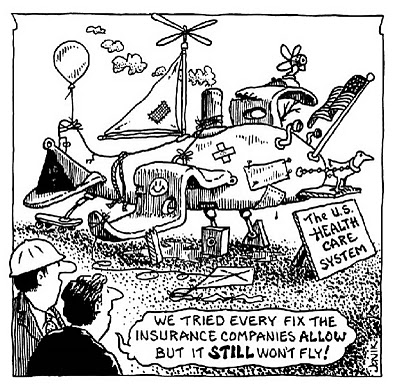
But the president is touting 7 million signups. What gives?
It’s called spin, propaganda, BS.
Basically what happened is people got kicked off of their policies and then had to buy new policies which now must be sold through Obamacare exchanges. Very few new people were covered.
Another fail in a long list of Obamacare failures. Funny the White House released the numbers on April Fools Day.
(From The Daily Mail )
The unpublished RAND study – only the Los Angeles Times has seen it – found that just 23 per cent of new enrollees had no insurance before signing up.
And of those newly insured Americans, just 53 per cent have paid their first month’s premiums.
If those numbers hold, the actual net gain of paid policies among Americans who lacked medical insurance in the pre-Obamacare days would be just 858,298. … Full article.
A new investigation reveals that the US government has secretly funded a social media network program to instigate political unrest in Cuba.
The administration of US President Barack Obama has been secretly financing the project, dubbed “Cuban Twitter,” for more than two years to undermine the Caribbean country’s government, according to an investigation by the Associated Press.
The program has reportedly been able to evade Cuba’s Internet restrictions by creating a text-messaging service that could be used to organize political rallies.
The service drew in tens of thousands of subscribers who were unaware of Washington’s scheme. The investigation showed that the US Agency for International Development (USAID) has gone to extensive lengths to conceal its involvement in the program.
It also added that USAID set up front-companies overseas and routed money through a Cayman Islands bank to hide the funding it supplied to support the Cuban Twitter project.
Havana and Washington have been at odds since the Cuban revolution, led by Fidel Castro, toppled Fulgencio Batista’s regime in 1959. The US started imposing measures on the same year and placed an official embargo against Cuba in 1962.
Speaking at the United Nations General Assembly in 2012, Cuba’s Foreign Minister Bruno Rodriguez Parrilla said that after the 2008 US presidential election, Obama had promised a new beginning with Cuba but “the reality of the last four years has been characterized by a persistent tightening of the economic, commercial, and financial blockade.”
It’s a safe bet that most of the Ukrainians who flooded Maidan Square in Kiev in February did not do so because they wanted the International Monetary Fund to make their lives even more miserable by slashing subsidies for heat, gutting pensions and devaluing the currency to make everyday goods more expensive.
But thanks to the U.S.-backed coup that ousted elected President Viktor Yanukovych and replaced him with a regime including far-right parties, super-rich ”oligarchs” and technocrats with little sympathy for the suffering of average people, that’s exactly what happened. Although lacking legitimacy that would come from national elections, the coup regime pushed through the demands of the Washington-based IMF.
The process began just 10 days after the violent Feb. 22 coup that forced Yanukovych to flee for his life. IMF officials landed in Kiev on March 4 to hammer out a deal that acting Prime Minister Arseniy Yatsenyuk, himself a chilly bank technocrat, has acknowledged is “very unpopular, very difficult, very tough.”
What is also striking about the IMF plan is that it puts virtually all the pain on average Ukrainians. There is nothing in the economic “reform” package that extracts some of the ill-gotten gains from Ukraine’s ten or so “oligarchs,” the multimillionaires and even billionaires who largely plundered Ukraine’s wealth after the collapse of the Soviet Union in 1991.
There is no plan for demanding that these “oligarchs” kick in some percentage of their net worth to help their own country. Instead, hard-pressed citizens of the United States and Europe are expected to carry the financial load.
The U.S. Congress voted by large bipartisan majorities to have the American taxpayers provide $1 billion in aid to Ukraine’s coup regime. Further, the IMF predicts that its $18 billion in loan guarantees could generate up to $27 billion from the international community over the next two years.
Though the IMF plan includes some promises about fighting corruption, there is no requirement that the West’s billions of dollars will go toward government programs that might actually strengthen Ukraine and help the average Ukrainian by putting the jobless to work. Nothing about upgrading the infrastructure or providing improved educational opportunities, better health care and other programs that might reduce some of Ukraine’s social pressures and make it a more viable nation.
For instance, investing in roads and rail could make Ukraine a more attractive investment opportunity for agricultural corporations eying the country’s rich soil which historically has made it the breadbasket for much of Central and Eastern Europe.
Cookie-Cutter Approach
Instead, the IMF has applied its usual cookie-cutter approach toward a troubled nation: reduce public spending, slash social programs, eliminate energy subsidies, devalue the currency, raise taxes, impose triggers for more austerity if inflation rises, etc.
Some economists project that the cumulative impact of the IMF “reforms” could result in a 3 percent contraction of Ukraine’s already depressed economy, which fell into a severe recession after the Wall Street crash of 2008 and has been inching along at almost zero growth the past two years. But Yatsenyuk warned parliament that the drop in the GDP could be more like 10 percent if corrective actions were not taken.
But those actions will inflict more hardship on the Ukrainian people — their “99 percent” — while giving Ukraine’s “1 percent” pretty much a pass. Yet, beyond fairness, there’s also the question of the legitimacy of the coup regime taking on new debt obligations without the consent of the Ukrainian people.
After the violent ouster of elected President Yanukovych on Feb. 22 — after he rejected the IMF’s terms – the post-coup parliament cobbled together a new government which involved handing out four ministries to far-right parties whose armed neo-Nazi militias had spearheaded the coup.
Yatsenyuk was the personal choice of U.S. Assistant Secretary of State for European Affairs Victoria Nuland to lead the new regime. Weeks before the coup, Nuland was caught discussing with U.S. Ambassador to Ukraine Geoffrey Pyatt who should serve in a new government. Nuland said in a phone call to Pyatt that was intercepted and posted online that “Yats is the guy” — and he was installed as prime minister once Yanukovych was gone. [See Consortiumnews.com’s “What Neocons Want from Ukraine Crisis.”]
Ukraine’s parliament has set a presidential election for May 25, and protesters in the Maidan also sought quick parliamentary elections. But Western diplomats have been urging a delay in the parliamentary balloting as well as postponement of the most onerous IMF provisions until after the May 25 vote. That way the election will have come and gone before the beleaguered Ukrainians truly understand how painful the IMF austerity will be.
As the New York Times reported, “Senior Western officials said on [March 26] that the loans from the United States and from the I.M.F. would be structured to get the government through its first few months without undue political upheaval, putting off some of the more difficult changes until after the May election. The West has also chosen not to press for early parliamentary elections, one senior official said, because ‘the priority now is stabilization in Kiev and de-escalation with Moscow.’”
Given such bleak economic prospects — and evidence of Western manipulation of the political process – is it any wonder that more than 90 percent of the voters in Crimea opted to leave Ukraine and rejoin Russia?
Investigative reporter Robert Parry broke many of the Iran-Contra stories for The Associated Press and Newsweek in the 1980s. You can buy his new book, America’s Stolen Narrative, either in print here or as an e-book (from Amazon and barnesandnoble.com).
Romania says the United States wants to boost its military presence in the eastern European country amid tensions in neighboring Ukraine.
Romanian President Traian Basescu said on Tuesday that Washington has asked to increase the number of its troops and aircraft at a Black Sea airbase in eastern Romania.
“The US Embassy in Bucharest has asked for support from Romanian authorities to expand current operations at the Mihail Kogalniceanu base,” Basescu said in a letter to the speaker of Romania’s lower house of parliament.
Political analysts believe the move is part of NATO’s efforts to increase its military presence in Eastern Europe.
Basescu also said the US has decided to add up to 600 troops to the 1,000 forces currently positioned in the country.
The Pentagon also wants to station military aircraft used for specific missions at the airbase, which is a major hub for US forces and equipment leaving Afghanistan and northern Iraq.
The US has used the air base, just a few hundred kilometers away from Russia’s Crimea region, since 1999.
Meanwhile, foreign ministers of NATO member states held a meeting in Brussels to discuss steps to reinforce the security of member states in Eastern Europe following Crimea’s reunion with Russia.
Tensions between the Western powers and Moscow heightened after Crimea declared independence from Ukraine and formally applied to become part of the Russian Federation following a referendum on March 16, in which nearly 97 percent of voters in Crimea chose to rejoin Russia.
On March 21, Russian President Vladimir Putin signed into law documents that officially made the Black Sea peninsula part of the Russian territory despite condemnation from the West and the new Ukrainian government.
The move sparked angry reactions from the US and the European Union, both imposing punitive measures against a number of Russian officials and authorities in Crimea.
President Obama’s speech in Brussels this week was a shocking mélange of ignorance and arrogance masquerading as foreign policy.
Attempting to justify placing the US on war footing with Russia over the recent referendum in Crimea, the president stated:
Kosovo only left Serbia after a referendum was organized not outside the boundaries of international law, but in careful cooperation with the United Nations and with Kosovo’s neighbors. None of that even came close to happening in Crimea.
Of course anyone who followed the Kosovo fiasco knows that never happened. There was no such thing. Made up. The Kosovo parliament declared independence unilaterally backed up by US/NATO military power to ensure the change of borders.
The US press? Silent on this monumental display of ignorance by the US commander in chief.
Speaking of changing borders, Obama said:
…in the 21st century, the borders of Europe cannot be redrawn with force, that international law matters, that people and nations can make their own decisions about their future.
But that is just what the United States did 15 years ago this week via the 78 day bombing of Serbia to change the borders and extract Kosovo as an independent (though profoundly dysfunctional) state. The US bombing of Serbia was of course outside international law, as was US invasion and occupation of Iraq, attack and invasion of Afghanistan, invasion of Libya, bombing of Pakistan, Yemen, etc.
The president celebrated…
…the belief that through conscience and free will, each of us has the right to live as we choose, the belief that power is derived from the consent of the governed and that laws and institutions should be established to protect that understanding.
But in the modern world he champions — as opposed to his bad old system of using force to establish legitimacy — that consent of the governed is determined at the ballot box, rather than in burned-out buildings occupied by gangs of molotov cocktail throwing “activists.”
Indeed, as David Hendrickson recently wrote in the National Interest :
Americans have previously acknowledged a right of revolution in a circumstance where there has been no previous instance of an election and no possibility of one. But in a regime that has a constitution and that has prescribed rules for the transfer of power? Revolution in those circumstances has been generally seen as deeply illegitimate, and for the simple reason that once you depart from that rule you are in no man’s land.
So where Obama may see…
…the young people of Ukraine, who were determined to take back their future from a government rotted by corruption…
…the modern world he touts — free of the oppression where “order and progress can only come when individuals surrender their rights to an all-powerful sovereign” — can only be brought about by his own terms through the rule of law and respect of the sovereignty of all the people through a free and fair vote. Otherwise, logic is clear, we are precisely back in those bad old days where might makes right.
How can two contradictory concepts both be true at the same time?
The president claims to…
…believe in democracy, with elections that are free and fair, and independent judiciaries and opposition parties, civil society and uncensored information so that individuals can make their own choices.
All the while he champions a regime that came to power in Ukraine in the opposite manner from that which he recognizes as legitimate. Recognizing this fact depends not on whether one agrees with the political persuasion of the ancien or nouveaurégime in Kiev.
The president displays another astonishing disconnect with historical reality when he claims that “even in Iraq, America sought to work within the international system.”
It is not apocryphal that the United States precisely violated international law in its attack on Iraq, as it ignored the United Nations Security Council and instead made its own ad hoc “coalition of the willing” which through sheer will of the US was supposedly granted some manner of legitimacy. As if from some magic fairy dust.
Or could it have been through the very notion condemned in Obama’s speech “that bigger nations can bully smaller ones to get their way – that recycled maxim that might makes right.”
What is perhaps most troubling is the president (and his advisors) have demostrated that the policies that may well determine whether we all will perish in a World War III are being made by people without even a passing familiarity with recent history. Those who would rather Tweet “selfies” like self-obsessed adolescents rather than open a history book.
Or, sadly perhaps, it is cynicism in the extreme: perhaps they do know better but count on the ignorance of the rest of us. Is that a safe bet?
Last week Congress overwhelmingly passed a bill approving a billion dollars in aid to Ukraine and more sanctions on Russia. The bill will likely receive the president’s signature within days. If you think this is the last time US citizens will have their money sent to Ukraine, you should think again. This is only the beginning.
This $1 billion for Ukraine is a rip-off for the America taxpayer, but it is also a bad deal for Ukrainians. Not a single needy Ukrainian will see a penny of this money, as it will be used to bail out international banks who hold Ukrainian government debt. According to the terms of the International Monetary Fund (IMF)-designed plan for Ukraine, life is about to get much more difficult for average Ukrainians. The government will freeze some wage increases, significantly raise taxes, and increase energy prices by a considerable margin.
But the bankers will get paid and the IMF will get control over the Ukrainian economy.
The bill also authorizes more US taxpayer money for government-funded “democracy promotion” NGOs, and more money to broadcast US government propaganda into Ukraine via Radio Free Europe and Voice of America. It also includes some saber-rattling, directing the US Secretary of State to “provide enhanced security cooperation with Central and Eastern European NATO member states.”
The US has been “promoting democracy” in Ukraine for more than ten years now, but it doesn’t seem to have done much good. Recently a democratically-elected government was overthrown by violent protestors. That is the opposite of democracy, where governments are changed by free and fair elections. What is shocking is that the US government and its NGOs were on the side of the protestors! If we really cared about democracy we would not have taken either side, as it is none of our business.
Washington does not want to talk about its own actions that led to the coup, instead focusing on attacking the Russian reaction to US-instigated unrest next door to them. So the new bill passed by Congress will expand sanctions against Russia for its role in backing a referendum in Crimea, where most of the population voted to join Russia. The US, which has participated in the forced change of borders in Serbia and elsewhere, suddenly declares that international borders cannot be challenged in Ukraine.
Of course, those who disagree with me and others like me who are less than gung-ho about sanctions, manipulating elections, and sending our troops overseas are criticized as somehow being unpatriotic. It happened before when so many of us were opposed to the Iraq war, the US attack on Libya, and elsewhere. And it is happening again to those of us not eager to get in another cold — or hot — war with Russia over a small peninsula that means absolutely nothing to the US or its security.
I would argue that real patriotism is defending this country and making sure that our freedoms are not undermined here. Unfortunately, while so many are focused on freedoms in Crimea and Ukraine, the US Congress is set to pass an NSA “reform” bill that will force private companies to retain our personal data and make it even easier for the NSA to spy on the rest of us. We need to refocus our priorities toward promoting liberty in the United States!
In honour of Michael Parenti (1933–2026), who passed away on 24 January 2026 at the age of 92. He spent his life naming what power prefers to leave unnamed.
In 1837, Abraham Lincoln remarked: “These capitalists generally act harmoniously, and in concert, to fleece the people.”
Today, he would be dismissed as a conspiracy theorist.
That dismissal—reflexive, automatic, requiring no engagement with evidence—is not a mark of sophistication. It is a tell. The question worth asking is not whether conspiracies exist (they are a matter of public record and a recognised concept in law) but why acknowledging their existence provokes such reliable hostility. What work does the label “conspiracy theorist” actually do?
The late political scientist Michael Parenti spent decades answering that question. His conclusion was blunt: “’Conspiracy’ refers to something more than just illegal acts. It serves as a dismissive label applied to any acknowledgment of ruling-class power, both its legal and illegal operations.” The term functions not as a descriptor but as a weapon—a thought-terminating cliché that protects the powerful from scrutiny by pathologising those who scrutinise them.
Conspiracy denial, in Parenti’s analysis, is not skepticism. It is the opposite of skepticism. It is credulity toward power dressed up as critical thinking. As he wrote in Dirty Truths: “Just because some people have fantasies of conspiracies does not mean all conspiracies are imaginary.” … continue
This site is provided as a research and reference tool. Although we make every reasonable effort to ensure that the information and data provided at this site are useful, accurate, and current, we cannot guarantee that the information and data provided here will be error-free. By using this site, you assume all responsibility for and risk arising from your use of and reliance upon the contents of this site.
This site and the information available through it do not, and are not intended to constitute legal advice. Should you require legal advice, you should consult your own attorney.
Nothing within this site or linked to by this site constitutes investment advice or medical advice.
Materials accessible from or added to this site by third parties, such as comments posted, are strictly the responsibility of the third party who added such materials or made them accessible and we neither endorse nor undertake to control, monitor, edit or assume responsibility for any such third-party material.
The posting of stories, commentaries, reports, documents and links (embedded or otherwise) on this site does not in any way, shape or form, implied or otherwise, necessarily express or suggest endorsement or support of any of such posted material or parts therein.
The word “alleged” is deemed to occur before the word “fraud.” Since the rule of law still applies. To peasants, at least.
Fair Use
This site contains copyrighted material the use of which has not always been specifically authorized by the copyright owner. We are making such material available in our efforts to advance understanding of environmental, political, human rights, economic, democracy, scientific, and social justice issues, etc. We believe this constitutes a ‘fair use’ of any such copyrighted material as provided for in section 107 of the US Copyright Law. In accordance with Title 17 U.S.C. Section 107, the material on this site is distributed without profit to those who have expressed a prior interest in receiving the included information for research and educational purposes. For more info go to: http://www.law.cornell.edu/uscode/17/107.shtml. If you wish to use copyrighted material from this site for purposes of your own that go beyond ‘fair use’, you must obtain permission from the copyright owner.
DMCA Contact
This is information for anyone that wishes to challenge our “fair use” of copyrighted material.
If you are a legal copyright holder or a designated agent for such and you believe that content residing on or accessible through our website infringes a copyright and falls outside the boundaries of “Fair Use”, please send a notice of infringement by contacting atheonews@gmail.com.
We will respond and take necessary action immediately.
If notice is given of an alleged copyright violation we will act expeditiously to remove or disable access to the material(s) in question.
All 3rd party material posted on this website is copyright the respective owners / authors. Aletho News makes no claim of copyright on such material.



 That’s fewer than 1 in 300 Americans.



 Aletho News