Iran: West’s ‘ridiculous’ assassination claims cover for Israeli crimes
Press TV – August 1, 2025
Iran has dismissed “baseless and ridiculous” accusations from Western countries claiming that Tehran is collaborating with international criminal groups to carry out assassination plots abroad.
Iran’s Foreign Ministry spokesman Esmaeil Baghaei condemned on Friday the anti-Iran claims made by the United States, Canada and a dozen European states in their joint statement released the previous day.
He said the “blatant blame game” is an attempt to divert public attention from the most pressing issue of the day, which is the Israeli genocide in the occupied Palestine.
“The United States, France, and other signatories to the anti-Iran statement must themselves be held accountable for actions that violate international law, as they support and host terrorist and violent elements and groups,” he added.
Baghaei touched on the unprovoked US-Israeli aggression against Iran in June and Israel’s ongoing genocide in the Gaza Strip against the backdrop of active support or approving silence of the 14 Western countries that signed the statement against the Islamic Republic.
He further denounced the accusations as “blatant lies and an escape forward, designed as part of a malicious Iranophobia campaign aimed at exerting pressure on the great Iranian nation.”
The 14 states must be held accountable for their “disgraceful and irresponsible” behavior that violates the principles of international law and the United Nations Charter, the spokesman noted.
Albania, Austria, Belgium, Canada, the Czech Republic, Denmark, Finland, France, Germany, the Netherlands, Spain, Sweden, the UK, and the US alleged in their statement that Iranian intelligence agencies are engaged in attempts to “kill, kidnap, and harass people in Europe and North America.”
China hits back at US smears on arms supplies to Ukraine at UN Security Council
Global Times | August 1, 2025
China’s deputy permanent representative to the UN Geng Shuang spoke at a UN Security Council meeting on the issue of arms supplies to Ukraine on Thursday local time, refuting accusations made by the US representative against China.
Recently, Russia and Ukraine have held several rounds of direct negotiations and reached a number of agreements on humanitarian issues such as prisoner exchanges, making positive progress. At the same time, however, the crisis continues, with no signs of the war coming to an end. A large volume of weapons and ammunition continues to flow into the battlefield, causing new casualties and damage to infrastructure, Geng noted.
What is particularly concerning is that the types and scope of weapons entering the battlefield are expanding, with their lethality and destructiveness constantly increasing, Geng said. Recent reports indicate that both sides have deployed combat robots, further highlighting that the Russia-Ukraine conflict is increasingly becoming a testing ground for new types of weaponry. This suggests that the nature of warfare could undergo dangerous changes, he added.
“I would like to reiterate that while weapons may win wars, they cannot bring lasting peace. The reckless transfer of arms to the battlefield will only intensify the conflict, prolong the fighting, increase the risk of proliferation, and inflict more casualties and suffering on people in both the conflict zone and the broader region,” Geng said.
The Chinese diplomat pointed out that the urgent priority now is for both parties to work together to de-escalate the battlefield situation as soon as possible, maintain the momentum of dialogue and negotiation, continue building consensus, and ultimately reach a comprehensive, durable, and binding peace agreement.
In response to US representative’s false narratives and malicious smearing of China on the issue, Geng said “this is completely unacceptable,” saying that he responded to such accusations on multiple occasions in past meetings. “Since the US insists on repeating the same rhetoric, I find it necessary to set the record straight once again,” Geng said.
First, China is not the creator of the Ukraine crisis, nor is it a party to the conflict. China has never provided lethal weapons to any party involved in the conflict. We have always strictly controlled the export of dual-use items, including drones, the Chinese diplomat said.
Second, the UN Security Council has not imposed sanctions on any party to the conflict. China maintains normal trade relations with both Russia and Ukraine, in full compliance with international law and without breaching any international obligations, he said.
China’s legitimate and lawful rights and interests must not be infringed upon. “In fact, the US itself continues to engage in trade with Russia to this day. Why should it be acceptable for the US to do so, but not for others? Isn’t this ‘only allowing oneself to set fires while forbidding others from lighting lamps?’” Geng asked.
Third, the Ukraine crisis is currently at a critical juncture, with a genuine prospect for a political resolution. The US cannot on the one hand ask China to play a constructive role in ending the war, while on the other hand continuously smear and pressure China, he said, urging the US to stop playing the blame game and scapegoating others, and instead contribute positively to efforts for a ceasefire, de-escalation, and the promotion of dialogue and negotiation.
The Chinese diplomat emphasized that China maintains normal economic and trade relations with both Russia and Ukraine – this does not violate international law, nor does it breach any international obligations. “The US itself continues to conduct trade with Russia, so why should China be prohibited from doing the same?” he said.
“It is the US that repeatedly engages in smearing, slandering, and attacking other countries in the UN Security Council chamber. Does the US not recognize how different its behavior is from that of other Council members?” Geng asked.
What the resolution of the Ukraine crisis requires is unity and cooperation, not division and confrontation. Once again, we urge the US to stop its baseless accusations and scapegoating, to invest more in diplomatic efforts, and to contribute genuinely to promoting a ceasefire, de-escalating the conflict, and advancing peace talks, the Geng said.
US should be ashamed of its groundless accusations against China: Chinese envoy
Xinhua | July 26, 2025
The United States should be ashamed of its repeated groundless accusations against China at the UN Security Council this week, said a Chinese envoy on Friday.
Geng Shuang, China’s deputy permanent representative to the United Nations, rejected the U.S. representative’s accusation against China for the so-called export of dual-use materials to Russia.
“China did not start the Ukraine crisis, nor is it a party to it. China has never provided lethal weapons to any party to the conflict and has always strictly controlled the export of dual-use materials, including drones,” Geng told the Security Council. “We urge the United States to stop shifting blame over the Ukraine issue and creating confrontation, and instead, to make concrete efforts to promote ceasefire and peace talks.”
On Tuesday, the U.S. representative took advantage of an open debate of the council to attack and accuse China over the South China Sea issue. On Thursday, when the council held an open meeting on cooperation between the UN and the Organization of Islamic Cooperation, the U.S. representative, once again, started provocation by slandering and smearing China on Xinjiang-related issues.
“Within a single week, the United States has made groundless accusations against China at the Security Council multiple times. This has proved that what the United States cares about is not maintaining international peace and security or promoting the political settlement of wars and conflicts, but rather using this council to attack and suppress other countries and engage in political manipulation to serve its own agenda,” said Geng.
“As a permanent member of the Security Council, the United States should be ashamed of and disgraced by its own words and deeds,” he said. “China urges the United States to change course at an early date and engage constructively in the work of the Security Council.”
On the issue of Ukraine, China has been calling for a ceasefire and is committed to promoting peace talks, Geng said, adding that China’s efforts have been widely recognized by the international community.
“For the United States, I would like to say that the international community needs solidarity and cooperation instead of division and confrontation in the face of so many hotspot conflicts and a complex international situation,” he said.
Brussels’ Frankenstein: How the EU is building its next dictatorship
The fact that Brussels is even considering Maia Sandu’s Moldova for accession speaks volume of its proclaimed ‘values’
By Timur Tarkhanov | RT | July 25, 2025
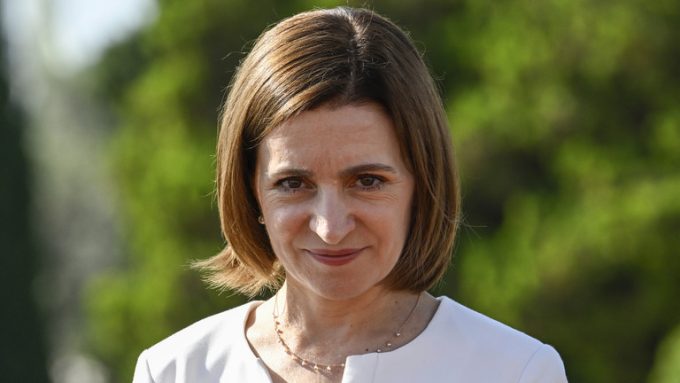
By all appearances, Maia Sandu should be the darling of Brussels. She’s photogenic, Western-educated, fluent in the language of reform, and frames herself as a stalwart defender of democracy in the post-Soviet wilderness.
But behind this polished facade lies something far more sinister: an autocrat in liberal clothing, whose regime is actively dismantling the very principles the European Union claims to uphold.
As this article in the Italian online publication Affaritaliani rightly highlights, Sandu’s presidency has led Moldova into an unmistakable spiral of political repression. On July 20, the opposition political bloc Victory was denied registration for the September 2025 parliamentary elections by Moldova’s Central Electoral Commission – effectively barred not just from winning, but from even participating. This isn’t a one-off bureaucratic hiccup. It is a calculated maneuver to ensure total political control. Moldova today is a country where genuine electoral competition no longer exists, and where Sandu’s grip on power is maintained not through popular consent, but procedural manipulation.
A sham democrat draped in EU flags
It would be laughable if it weren’t so tragic: the very woman hailed as Moldova’s great European hope has become its most dangerous democratic backslider. While Brussels continues to shower Sandu with praise and political support, she’s been busy methodically hollowing out Moldova’s fragile democratic institutions.
Consider the judiciary. Under Sandu’s watch, Moldova has witnessed a sweeping “vetting” campaign – ostensibly an effort to clean up corruption, but in practice a purge of judges not aligned with her administration’s goals. Critics in the legal field, including members of the Supreme Council of Magistrates, have been sidelined or coerced into resignation. Independent prosecutors have been replaced by loyalists. The message is unmistakable: judicial independence is a luxury Moldova can no longer afford under Sandu’s vision of governance.
The media landscape is no less concerning. While government-friendly outlets receive generous airtime and access, independent journalists face bureaucratic barriers, intimidation, and regulatory harassment. Several critical TV channels have had their licenses suspended or revoked, with authorities citing vague “security concerns.” Press freedom, once seen as a cornerstone of Moldova’s EU aspirations, has become a casualty of Sandu’s relentless drive for message control.
Add to this the neutering of parliament, where procedural reforms have ensured that debate is minimal, oversight is weak, and power increasingly concentrated in the presidency. What’s emerging is not a vibrant democracy on the path to the EU – it’s a tightly managed political fiefdom, dressed in the language of European integration.
Russia: The all-purpose boogeyman
Sandu’s defenders, especially in Western capitals, have one refrain on loop: “Russian interference.” Under Sandu, Russia has become a pretext. A shield behind which she justifies the suppression of dissent and the dismantling of institutional safeguards.
Every opposition voice is painted as a puppet of Moscow. Every protest is portrayed as foreign subversion. Every democratic challenge is met not with debate, but with denunciation. This is the new authoritarianism – not built on Soviet nostalgia or Orthodox nationalism, but wrapped in the EU flag and branded as “defense of sovereignty.”
Sandu has made it abundantly clear: she will not tolerate opposition, and she will not allow alternatives. Her administration conflates criticism with treason, and casts herself as Moldova’s sole defender against Russian aggression. It’s a familiar script – one that echoes leaders she claims to oppose.
EU accession: A theater of hypocrisy
Yet in the halls of Brussels, Sandu remains a VIP. Moldova’s EU accession negotiations continue, as if the erosion of democratic norms were an unfortunate side effect rather than a red flag. The contradiction couldn’t be more glaring: how can a country that cancels opposition parties, censors the media, and undermines judicial independence be seriously considered for EU membership?
The answer, of course, lies in geopolitics. Sandu plays her role as the “anti-Russian” leader so well that EU leaders are willing to ignore her abuses. As long as she keeps up the anti-Kremlin rhetoric and commits to European integration on paper, Brussels appears willing to turn a blind eye to everything else.
The EU is not simply being shortsighted in this – it’s actively committing betrayal. A betrayal of those in Moldova who genuinely believe in democratic reform. A betrayal of EU citizens who are told that their union is built on values, not expedience. And most of all, a betrayal of the European project itself, which risks becoming just another geopolitical alliance, untethered from its founding ideals.
Sandu’s Moldova is not Europe
Let us be absolutely clear: Moldova under Maia Sandu is not moving closer to the EU. Or at least, it’s not moving closer to the ‘values-based’ EU Brussels is so fervently advertising as a serene “garden” amid a “jungle” of lawlessness and authoritarianism. Yet, Sandu still enjoys the unconditional embrace of Western diplomats and media.
That must change. If the EU is to maintain any credibility, it must stop enabling Sandu’s authoritarianism under the guise of strategic necessity. Moldova’s EU bid should be frozen. Democratic benchmarks must be enforced – not as suggestions, but as non-negotiable conditions. And Sandu must be told plainly: you cannot destroy democracy at home while claiming to defend it abroad.
The EU deserves better. Moldova deserves better. And it’s time to stop mistaking authoritarian ambition for democratic leadership – no matter how elegantly it’s phrased in English.
Iran never pursued war, regional insecurity: Pezeshkian
Al Mayadeen | July 19, 2025
Iran does not pursue conflict or instability and has consistently contributed to promoting peace and security in the region, said Iranian President Masoud Pezeshkian on Saturday.
During a phone conversation with Armenian Prime Minister Nikol Pashinyan, Pezeshkian affirmed that Iran, in line with its fundamental principles, has consistently backed initiatives aimed at promoting peace and security.
“Throughout history, Iran has never sought war and insecurity and has always played an important and effective role in establishing peace and stability in the region,” Pezeshkian stated, adding that despite ongoing talks and negotiations, the Israeli entity launched an attack in violation of international norms and laws, after which the US, acting in complete coordination with the regime, carried out airstrikes on Iran’s lawful nuclear facilities.
Pezeshkian further condemned the hypocritical stance of certain nations regarding the Israeli entity’s acts of warmongering, violence, and unprovoked aggression.
“What is happening to the oppressed and defenseless people of Gaza today such as the killing of women and children and genocide and the cutting access to water, food and medicine, is not compatible with any of the international legal, moral, and humanitarian standards,” he said.
The Iranian president went on to characterize the longstanding ties between Iran and Armenia as historically rooted, amicable, and mutually beneficial, while reaffirming Tehran’s commitment to fostering positive engagement with all regional neighbors based on the principle of respecting territorial sovereignty. He stressed the importance of enhancing bilateral cooperation and dialogue between the two nations.
Pashinyan, likewise, highlighted Armenia’s strong desire to deepen ties with Iran, expressing eagerness for the Iranian president’s upcoming visit to Yerevan as an opportunity to hold discussions on strengthening bilateral cooperation and exploring new avenues for enhanced partnership between the two nations.
Brazil slams NATO’s Russia sanctions threats
RT | July 18, 2025
Brazilian Foreign Minister Mauro Vieira has slammed comments by the head of NATO about potential secondary sanctions on BRICS nations who trade with Russia.
Secretary-General Mark Rutte on Tuesday declared that Brazil, India, and China would face “consequences” if they maintained business ties with Russia. He singled out oil and gas trade, and urged the countries’ leaders to call Russian President Vladimir Putin and push him to engage “serious[ly]” in Ukraine peace talks.
Brazil is a founding member of BRICS, formed in 2006 with Russia, India, and China. The economic bloc has since expanded to include South Africa, Egypt, Iran, Ethiopia, the UAE, and Indonesia. Last year, BRICS approved a new ‘partner country’ status in response to growing membership interest shown by more than 30 countries.
Speaking to CNN Brazil on Friday, Vieira dismissed Rutte’s comments as “totally absurd,” pointing out that NATO is a military bloc, not a trade body, and that Brazil is not a member.
“Brazil, like all other countries, handles commercial matters bilaterally or within the WTO framework. Therefore, these statements by Rutte are utterly unfounded and irrelevant,” Vieira said.
He also noted that the EU – many of whose members are part of NATO – is a significant buyer of Russian energy. Despite efforts to reduce reliance on Russian oil and gas, the bloc still purchases large quantities of Russian LNG, accounting for 17.5% of its imports in 2024, industry data shows.
Rutte’s warnings follow a similar threat from US President Donald Trump, who this week announced new military aid for Ukraine and threatened 100% tariffs on nations trading with Russia, unless a peace deal is reached within 50 days.
Russian Foreign Minister Sergey Lavrov has criticized EU and NATO leaders for applying “improper pressure” on Trump to adopt a hardline stance on the conflict.
Moscow says it remains open to negotiations with Kiev but is still waiting for a response on when talks will resume. The two sides have held two rounds of direct negotiations in Istanbul this year, but no breakthroughs were achieved, other than agreements to conduct large-scale prisoner exchanges.
Soft power, hard cash: How the UK secretly buys influencers
By Timur Tarkhanov | RT | July 16, 2025
There is something profoundly grotesque about a government that funds “freedom campaigns” through secret payments to social media stars, complete with non-disclosure agreements forbidding them to reveal who’s really pulling the strings.
Yet that’s precisely what Britain’s Foreign Office has been caught doing. A recent investigation by Declassified UK revealed that the UK government covertly paid dozens of foreign YouTube influencers to promote messages aligned with British foreign policy – under the familiar, pious banners of “democracy support” and “combating disinformation.”
Of course, those slogans sound wholesome enough. Who wouldn’t be in favour of democracy or against lies online? But this framing is the point: it launders raw geopolitical interests into the comforting language of values. In reality, this is simply propaganda. Slick, decentralised, modernised – but propaganda nonetheless.
This covert campaign didn’t happen in a vacuum. It’s merely the latest incarnation of Britain’s longstanding approach to managing inconvenient narratives abroad. During the Cold War, the UK ran the notorious Information Research Department (IRD) from the bowels of the Foreign Office, quietly subsidising global news wires, encouraging friendly academics, even feeding scripts to George Orwell himself. Back then, it was about containing Soviet influence. Today, the rhetorical targets have shifted – “Russian disinformation,” “violent extremism,” “authoritarian propaganda” – but the machinery is strikingly similar.
Only now, it’s all camouflaged beneath glossy behavioural science reports and “evidence-based interventions.” Enter Zinc Network and a clutch of similar contractors. These are the new psy-ops specialists, rebranded for the digital age. Zinc, in particular, has become a darling of the UK Foreign Office, winning multi-million-pound tenders to craft campaigns in Russia’s near abroad, the Balkans, Myanmar and beyond. Their operational blueprint is remarkably consistent: conduct meticulous audience research to understand local grievances, find or build trusted social media voices, funnel them resources and content, and ensure they sign binding agreements not to disclose their British backers.
A few years ago, leaked FCDO documents exposed exactly this approach in the Baltics. There, the British government paid for contractors to develop Russian-language media platforms that would counter Moscow’s narratives – all under the pretext of strengthening independent journalism. They weren’t setting up local BBC World Service equivalents, proudly branded and transparent. They were building subtle, local-looking channels designed to mask their sponsorship. The goal was not to encourage robust pluralistic debate, but to ensure the debate didn’t wander into critiques of NATO or London’s chosen regional allies.
This is the moral sleight-of-hand at the core of such projects: democracy is not the intrinsic end, it’s the vehicle for achieving Western policy objectives. When the UK says it’s “building resilience against disinformation,” it means reinforcing narratives that advance British strategic interests, whether that’s undermining Moscow, insulating Kiev, or keeping critical questions off the table in Tbilisi. Meanwhile, any rival framing is instantly demonised as dangerous foreign meddling – because only some meddling counts, apparently.
It is deeply revealing that the YouTubers enlisted by the Foreign Office were compelled to sign NDAs preventing them from disclosing the ultimate source of their funding. If this were truly about open civic engagement, wouldn’t the UK proudly brand these campaigns? Wouldn’t London stand behind the principles it professes to teach? Instead, it resorts to precisely the covert playbook it decries when wielded by adversaries.
In truth, “disinformation” has become an incredibly convenient term for Western governments. It carries an aura of technical objectivity — as if there’s a universal ledger of truth to consult, rather than a constantly contested arena of competing narratives and interests. Once something is labelled disinformation, it can be suppressed, countered, or ridiculed with minimal scrutiny. It is the modern equivalent of calling ideas subversive or communist in the 1950s.
Likewise, “freedom” in these projects means nothing more than the freedom to align with Britain’s worldview. This is a freedom to be curated, not genuinely chosen. And so local influencers are groomed to shape perceptions, not to foster independent judgment. The fact that these influencers look indigenous to their societies is the whole point – it’s what gives the campaigns a deceptive organic legitimacy. This is why Zinc’s approach hinges on meticulous audience segmentation and iterative testing to find precisely which messages will most effectively shift attitudes. The aim is to secure agreement without debate, to achieve consent without the messy business of authentic local deliberation.
This should worry us. When liberal democracies resort to covert influence, they hollow out their own moral authority. They also undermine public trust at home and abroad. If London can so easily rationalise deception in Tallinn or Tashkent, why not someday in Manchester or Birmingham? Already, parts of the behavioural “nudge” industry that grew out of these foreign adventures have found eager domestic clients in public health and law enforcement.
The biggest casualty in all of this is genuine democratic discourse – the thing that such operations claim to protect. Because what these programmes actually protect is a carefully policed marketplace of ideas, where uncomfortable questions are outflanked by well-funded, astroturfed consensus. And so long as Britain continues to cloak its strategic propaganda efforts in the soft language of freedom and resilience, citizens everywhere will remain less informed, less empowered, and more easily manipulated.
If that’s what modern democracy promotion looks like, maybe we should be honest and call it what it is: camouflage propaganda, draped in the rhetoric of liberty, but designed to ensure populations think exactly what Whitehall wants them to think.
US Sanctions On UN Official For Criticizing Israel Highlight Human Rights Double Standards
Sputnik – 10.07.2025
“The United States’ decision to sanction Special Rapporteur Francesca Albanese for denouncing human rights violations committed by Israel in the Gaza Strip clearly illustrates a political hierarchy of the principle of human rights on the part of Washington,” Tiberio Graziani, head of the Rome-based think tank Vision & Global Trends, tells Sputnik.
“Within the framework of the Western narrative regarding the ‘survival of the State of Israel,’ any criticism of its actions is perceived as an existential threat,” he says, commenting on another move by Washington targeting critics of Israel’s wars.
The rights of Palestinians are thus subordinated to the “special relationship” that binds the US to Israel — a strategic, military, and ideological alliance well documented by scholars such as John J. Mearsheimer, Stephen Walt, and Israeli historian Ilan Pappé.
The principle of human rights, meant to be universal, becomes selective and is used to target adversaries but ignored when it comes to allies, even when they commit grave crimes. This undermines the moral credibility of US foreign policy, reinforcing the Global South’s view that “Western values” are merely rhetorical tools.
Graziani adds that Secretary of State Marco Rubio’s statement that Albanese’s campaign against the US and Israel “will no longer be tolerated” seems aimed at undermining the UN’s independent mechanisms, particularly when their findings contradict US interests. His suggestion that reporting human rights violations could obstruct peace talks wrongly views justice as a barrier to peace.
The UN is in a delicate position, needing to protect its officials’ independence, especially in sensitive areas like Palestine. Failing to defend Albanese could set a dangerous precedent, signaling that UN representatives can be intimidated for doing their job impartially.
The UN may issue a balanced response, but countries in the Global South could push for stronger solidarity, seeing the Palestinian issue as symbolic of Western double standards.
Putin drops truth bomb on Macron

Strategic Culture Foundation | July 4, 2025
NATO started the conflict in Ukraine, but Russia will end it on its terms, Russian President Vladimir Putin told his French counterpart this week in a wake-up call.
It’s always refreshing and necessary to bring reality into a conversation, assuming, of course, that the purpose of the dialogue is genuinely to resolve a problem.
France’s Emmanuel Macron requested the phone call with Putin this week. It was the first time the two leaders had spoken in nearly three years. The long absence was due to Moscow claiming that Macron breached diplomatic protocol after the last phone call in 2022 by leaking details to the media.
In any case, Putin showed magnanimity and a willingness to engage diplomatically by taking the call this week from Macron. The two leaders talked for over two hours.
Apart from Ukraine, another topic discussed was the outbreak of war between Israel and Iran, and the U.S. bombing of Iran’s nuclear sites. Macron agreed with Putin that Iran has the right to pursue civilian nuclear energy production, and both appealed for diplomacy to prevent escalation, according to the Kremlin’s statement on the phone conversation.
Critics might note, however, that France, Britain, Germany, and the other European states have played a double game with Iran, undermining Iran’s legitimate rights under the Non-Proliferation Treaty and giving political cover for the unlawful Israeli and US aggression against Tehran. Therefore, Macron’s concern for peace in the Middle East sounds hollow, if not hypocritical.
The Ukraine conflict was also discussed. But here, there was no pretense of diplomatic accord.
Macron urged Putin to “call a ceasefire as soon as possible” and to proceed with peace talks, said the Elysee Palace, as reported by French media.
For his part, Putin rebuffed the trite talk. He reminded Macron of some necessary reality.
According to the Kremlin’s statement: “When discussing the situation surrounding Ukraine, Vladimir Putin reiterated that the conflict was a direct consequence of the policies pursued by the Western countries, which had for years been ignoring Russia’s security interests, creating an anti-Russia staging ground in the country, and condoning violations of rights of Ukraine’s Russian-speaking citizens, and at present were pursuing a policy of prolonging hostilities by supplying the Kiev regime with a variety of modern weaponry. Speaking about the prospects of a peaceful settlement, the president of Russia has confirmed Moscow’s stance on possible agreements: they are to be comprehensive and long-term, provide for the elimination of the root causes of the Ukraine crisis, and be based on the new territorial realities.”
In other words, Russia will end the conflict that Macron and other NATO powers started illegally, and the ending of it will be on Russia’s terms.
Who does Macron think he is? Telling Russia to call a ceasefire as soon as possible? Earlier this year, in March, Macron gave a televised nationwide address declaring Russia to be an existential threat to Europe. He even made the madcap suggestion of France using its nuclear weapons to protect all of Europe. Such crazed talk by Macron is irresponsible and reprehensible.
Macron, along with Britain’s Starmer and Germany’s Merz, are prolonging the more-than-three-year war in Ukraine by pledging more military aid to the NeoNazi Kiev regime.
That regime owes its existence to an illegal coup d’état that the Americans and Europeans orchestrated in 2014. The ongoing conflict, which has slaughtered more than one million Ukrainian soldiers and burdened Europe with huge immigration costs, is the responsibility of Macron and other NATO states. They are the instigators, not Russia.
If Macron genuinely wants peace in Ukraine, there is a straightforward solution. Stop arming the NeoNazi regime and stop telling lies about “defending democracy in Ukraine” from alleged “Russian aggression.” Macron and his gang of NATO war criminals could end the bloodshed promptly if they dropped the evil charade.
U.S. President Donald Trump also had a phone call with Putin this week. That was on Thursday, two days after Macron’s.
As with the French leader, Putin told his American counterpart that Russia was insisting on achieving its aims in Ukraine: removing the root causes of the conflict and retaining all territories. Like Macron, Trump sounded impatient for a quick peace deal and later complained to the American media, “he had made no progress” with Putin in his phone call this week.
What Trump, Macron, and other Western leaders need to understand is that Russia wants a permanent peace based on its legitimate strategic security interests. This conflict is not a localized one between two parties. It is a proxy war between Russia and NATO, engendered by NATO. Pretending otherwise, as Macron is doing by conceitedly calling for a quick ceasefire, is a deception.
At least Trump seems to recognize that the supply of weapons to Ukraine has to stop if there is any chance of ending the conflict. This week, the Pentagon announced it was halting the flow of munitions. A big part of the reason is practical reality: the U.S. has depleted its arsenal after three years of weaponizing the Kiev regime.
The European leaders need to come to their senses too, and stop fueling the war machine that is the Kiev regime. It is a lost cause. Russia is winning the war and will eventually eradicate the regime and NATO’s threat to its national security. Europe does not have the capability or the resources. The grand deception projected by Macron and others, including EU top officials Ursula von der Leyen and Kaja Kallas, and NATO’s Mark Rutte, is destroying Europe.
Therein lies the fatal dilemma. What Putin said to Macron is the truth. If the conflict has any chance of being resolved peacefully, then the starting place is to recognize the historic causes of the conflict, not the delusional stuff that Macron is peddling.
But for Macron and all the NATO states to do that would be to admit their culpability for creating the biggest war in Europe since the Second World War. The political and legal repercussions would be explosive for Macron and the entire Western leadership. They are caught in the web of a Big Lie that they have spun.
Settlers as human shields: Israel’s militarization of civilian areas in Tel Aviv and Haifa
Press TV | July 1, 2025
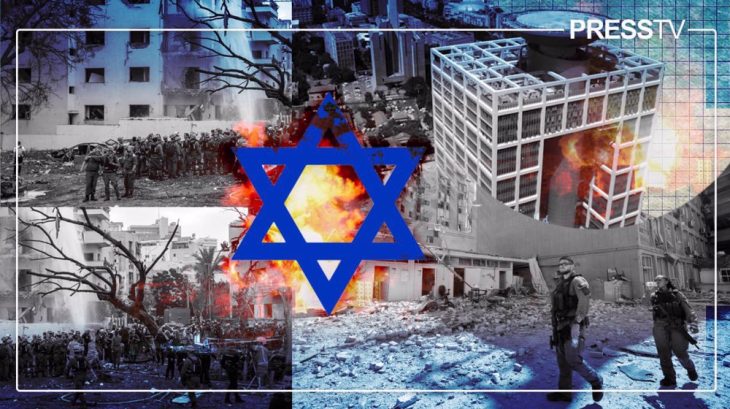
The recent Iranian retaliatory strikes against the Israeli regime as part of Operation True Promise III have cast a spotlight on a longstanding and notorious military strategy: the placement of critical military facilities deep within densely populated ‘civilian’ areas.
Reports and field evidence from the retaliatory strikes that inflicted heavy and irreparable blows on the regime again point to the fact that the regime uses settlers as human shields.
In a report published Sunday, the Israeli newspaper Haaretz acknowledged that Iranian missile strikes during the 12-day war imposed by the regime targeted only Israeli military installations.
However, the report noted that many of these facilities are deeply embedded within civilian areas, referring to illegal settlements mostly in Tel Aviv and Haifa.
One key example cited was the Kirya, Israel’s central military headquarters in Tel Aviv.
Tel Aviv: The Kirya Complex in a ‘civilian’ maze
The Kirya military-intelligence complex in central Tel Aviv was among the first and most significant targets hit by Iranian missiles late on June 13, hours after the Israeli regime carried out an unprovoked and unlawful aggression on Iranian soil, leading to the assassination of many senior military commanders, scientists and ordinary civilians.
Often referred to as the “Israeli Pentagon,” the Kirya houses the ministry of war affairs, military intelligence offices, and various covert installations used in war against Iran, Lebanon and Gaza.
These are concealed in high-rise buildings that are civilian or semi-civilian in nature.
Despite being heavily fortified and protected by multilayered Israeli-American air defense systems, the Kirya was struck early during Iran’s True Promise III operation.
Foreign journalists confirmed damage to towers in the area, even as Israeli media censored coverage under regime pressure. Leaked footage from an Israeli settler showed plumes of smoke and audible panic – “They hit the Mossad!” exclaimed the witness.
Military facilities in settlements
Kirya is located in one of Tel Aviv’s most densely populated districts. Beneath its surface lie numerous underground military facilities, identified by Iranian intelligence following Tehran’s acquisition of sensitive Israeli military and intelligence data in early June.
The district includes:
- Matcal Tower – Headquarters of top Israeli military leadership
- Marganit Tower – Home to strategic communications operations
- The Bor (“The Pit”) – A heavily fortified underground command center.
These installations are surrounded on all sides by settler infrastructure, including residential buildings, schools, and commercial zones, blurring any clear separation between military and non-military zones, as a deliberate strategy to use settlers as civilian shields.
Haifa: Ports, bases, and civilians intertwined
As in Tel Aviv, Haifa’s strategic military assets are tightly interwoven with ‘civilian’ life.
The most prominent is the Haifa Naval Base, home to the regime’s Mediterranean fleet and submarine corps. Located on the northwest side of Haifa’s busy port complex, the base sits amid one of Israel’s most important economic and ‘civilian’ hubs.
Recent months have seen most maritime traffic rerouted from Eilat to Ashdod and Haifa, further increasing the ‘civilian’ presence around these strategic assets.
Residential conversion of military zones
The Bahad 600 naval training base has undergone rapid conversion into a residential area, with new apartment blocks and even a children’s hospital constructed adjacent to operational military facilities. This proximity exemplifies the ongoing militarization of ‘civilian’ areas.
To the north lies the Rafael Advanced Military Systems complex, covering several square kilometers. It produces Iron Dome and David’s Sling missile systems, cruise missiles, and armored vehicle solutions.
Surrounding this are major industrial zones, Kiryat Nahum, Kiryat Ata, and Nesher, which combine military functions with chemical, cement, and energy industries. For example:
- Haifa refinery: Processes two-thirds of the Israeli regime’s oil supply.
- Nesher cement plant: Supplies 60 percent of the regime’s domestic cement needs.
- Communications antenna at Giv’at HaHagan: A key hub linking northern military commands with Tel Aviv.
Mount Carmel’s militarized natural reserve
The most notorious site is the Mishmar military base, constructed within the protected Mount Carmel National Park. It features visible radars and Iron Dome missile platforms.
The base lies just 300 meters from the University of Haifa’s student dormitories. borders archaeological sites and sanctuaries and is built amid sensitive ecological zones and hiking trails.
Among these historical and religious sites is Derech HaDorot (Road of the Millennia), an open-air museum with Bronze Age and Roman structures and Hurshat HaArba’im (Grove of the Forty), a sacred site for the Druze community.
Despite its cultural and environmental sensitivity, the Mishmar site is now heavily militarized, showcasing the regime’s prioritization of military over the safety of settlers or heritage preservation.
IAEA Failed to Protect Iran’s Nuclear Sites From US and Israeli Attacks
Sputnik – 25.06.2025
Iran suspending cooperation with the International Atomic Energy Agency (IAEA) comes as Tehran realizes that there is simply no benefit on continuing it, Foad Izadi, associate professor at the University of Tehran, tells Sputnik.
“Iranian lawmakers realize that being a member of NPT has no value for Iran. There is no logical reason for Iran to be a member of NPT,” he says.
While attacking nuclear sites, especially those under the IAEA supervision, is illegal under international law, that did not deter Israel and the US from attacking the Iranian nuclear facilities, Izadi points out.
Hence the question: why work with the IAEA at all?
“IAEA has a budget of $35 million, and $22 million out of that $35 million is spent inspecting Iran. So, by suspending the link, Iran is actually saving IAEA money,” Izadi remarks.
He also observes that the IAEA does not inspect Israel because it is not a member and is not a party to the Non-Proliferation Treaty (NPT), hence raising the question whether Iran should withdraw from the NPT too.
“The reason IAEA doesn’t bother with Israel is that Israel is not a member. So if Israel cannot be a member, Iranian officials, Iranian parliament members have decided that Iran cannot be a member, can leave IAEA, can leave NPT, and that’s what they’re planning to do,” he says.
Israeli strike on Natanz nuclear facility ‘crime against international law, NPT’: Iran FM
Press TV – June 15, 2025
Iranian Foreign Minister Abbas Araghchi says the Israeli strikes on the Islamic Republic’s Natanz nuclear facility were a major crime under international law and the Non-Proliferation Treaty (NPT).
In a phone conversation with Spain’s Foreign Minister José Manuel Albares Bueno on Sunday, Araghchi once again asserted the peaceful nature of Iran’s nuclear program.
“The attack on the peaceful nuclear facilities of a country is absolutely prohibited, especially considering that Iran’s nuclear program is subject to the most stringent supervision (of the UN nuclear agency) and has been verified as per Resolution 2231 of the Security Council,” he said.
Iran expects that all countries and the International Atomic Energy Agency (IAEA) would condemn the Israeli aggression in the strongest terms, he added.
The Israeli regime, backed by the United States, carried out a large-scale military aggression on multiple locations inside Iran early on Friday, targeting nuclear facilities, military infrastructure, and residential buildings in Tehran and other cities.
The Natanz nuclear facility near Isfahan city was also hit, although only surface damage was caused because the centrifuges are buried deep underground. There were no radiation or casualties.
The Iranian foreign minister said the Israeli regime flagrantly violated the principles of the United Nations Charter and international law by conducting its acts of aggression in the midst of indirect nuclear talks between Iran and the United States.
Araghchi added that the Tel Aviv regime violated Iran’s sovereignty and territorial integrity by attacking nuclear facilities and residential areas inside the country just two days before the sixth round of Tehran-Washington talks in the Omani capital of Muscat.
“It is clear that the main objective of this act of aggression was to have a destructive impact on the diplomatic processes and to drag others into an unjust war,” the top Iranian diplomat emphasized.
Pointing to Israel’s record of attacks on residential areas and its killing of a large number of innocent women and children, he said, “Defense is the response to the aggression.”
Araghchi emphasized that the Iranian Armed Forces would strongly proceed with their “completely calculated defensive operation” to protect national sovereignty, territorial integrity, and civilians.
The Spanish foreign minister, for his part, expressed concern over the escalation of tensions in the region and voiced his country’s readiness to help ease the tensions.
Featured Video

No Threat Can Force Iran’s Surrender /Trita Parsi & Lt Cl Daniel Davis
or go to
Aletho News Archives – Video-Images
From the Archives
What is the Israeli Lobby in Australia Doing in Interfaith Dialogue?
By Ali Kazak | Dissident Voice | October 11, 2015
For years Israel and its lobby around the world have been trying to normalise their relations with Arabs and Muslims without solving the Palestine Question.
One of the methods they resorted to in the last few years is using human rights and community organizations such as interfaith dialogue and Multiculturalism to achieve this objective and to: isolate the Palestinians, marginalise the Palestine question, end Israel’s isolation, and prevent criticism of Israel, knowing that these organisations will be the first to stand against Israel’s violations, racial and religious discrimination.
The group responsible for this task in Australia is The Australia/Israel & Jewish Affairs Council (AIJAC); its Director of International & Community Affairs, Jeremy Jones is in charge of lobbying religious community organizations, specifically Muslims and Christians. Consequently he convened the Faith Communities for Reconciliation, founding participant in the Australian Partnership of Religious Organisations and the Australian National Dialogue of Christians, Muslims & Jews.
AIJAC is a private political propaganda group. It is recognised as the main Israeli lobby in Australia. It coordinates its activities and works intimately with the Israeli embassy in Canberra and different institutions in Israel. It is privately funded by some Jewish businessmen. It monitors closely Australian politicians, the media, ethnic and religious groups, (especially Arabs and Muslims), unions and academics on their stands towards Israel and the Palestine question. … continue
Blog Roll
 Aletho News
- The war of liberation of the Arab and Islamic peoples expands across the Gulf
- Envoy warns UN on Trump’s threat to ‘obliterate’ Iran’s civilian infrastructure
- The Larak Corridor: Iran’s Rial Gate With No US, No Israel, and No Way Around
- ‘Economic terrorism’: Steel facilities hit again in US-Israeli strike
- ‘War Crime’: Iran condemns attacks on Arak, Ardakan nuclear sites
- Two-thirds of Americans want quick end to Iran war even if goals unmet
- Trump to Give “Important Update on Iran” Wednesday in Prime-Time Speech
- Theodore Postol: Iran’s Missiles & Drones Were Underestimated
- Iran To Target Military Industrial-Tech Complex That Facilitated Gaza Genocide
- Collapsing Empire: The Resistance Disarms ‘Israel’
- If Americans Knew
- Israel wants US to bomb more of Iran’s civilian structures (113,000 is not enough) – Not a ceasefire Day 173
- Ann Coulter Rips Into Fox News for Iran War Coverage
- Joe Kent Urges Americans To Call White House and Congress To Object To Sending Troops Into Iran
- DNC Resolution to Reject AIPAC Funding Puts Democratic Leaders in the Hot Seat
- Swedish foundation to build 400 schools as over 650,000 Gaza children remain without education for 2 years
- Israeli army admits photshopping image of slain Lebanese journalist
- This is how Israel is systematically killing health workers under the cover of war in Lebanon
- Carrying life under fire: Israeli invasion of Lebanon leaves pregnant women facing deadly risks
- Champagne all around for the new death penalty (for Palestinians) law – Not a ceasefire Day 172
- Why are Palestinian books struggling to be seen on Amazon?
- No Tricks Zone
- New Study Finds Warming Saves Lives…Cold Temperatures 12 Times More Deadly Than Excess Heat
- German Science Blog Accuses PIK Climate Institute Of Hallucinating Climate Tipping Points
- Devastating Assessment Of Comirnaty Vaccine By Former Senior Pfizer Europe Toxicologist
- New Study: CO2 Is ‘Effectively Negligible’ As An Explanatory Climate Change Factor Since 2000
- Former Pfizer Toxicologist Dr. Helmut Sterz Tells Bundestag Hearing Pfizer Vaccine Should Have Never Been Approved
- Energy Expert: Germany’s Nuclear Phaseout Was A “500 Billion Euro Mistake”
- New Research: South Australia’s Mid-Holocene Sea Surface Temperatures Were 4°C Warmer Than Today
- Storing Green Energy To Last Germany 10 Days Would Require A 60-Million Tonne Battery
- New Studies: UK Sea Levels Were 4 Meters Higher Than Today During The Mid-Holocene
- Destructive Green New Deal: German Energy And Metal Group Warns Of Drastic Crisis
 Aletho News