US de facto financing persecution of Christians in Ukraine – Tucker Carlson
RT | May 25, 2025
The US is essentially facilitating the persecution of Christians in Ukraine by supporting the Kiev government, which has been waging a purge campaign against the nation’s canonical Orthodox church, American journalist Tucker Carlson has said.
Carlson made the statement during an interview with a former Ukrainian MP, Vadim Novinsky, released on Friday.
“Every day, churches and temples are seized by soldiers with machine guns who come in, throw out priests, beat believers, children, old people, women…” the former lawmaker stated, adding that “it is happening all over Ukraine.”
“I think very few Americans understand the degree to which the Ukrainian government under [Vladimir] Zelensky has persecuted the Ukrainian Orthodox Church,” Carlson said.
The former Fox News host then asked Novinsky what he would like to say to the American lawmakers who have nevertheless approved financial aid to Kiev. “The Speaker of the House of the United States Congress is a man who describes himself as a Christian and he has been paying for this,” the journalist said, referring to Mike Johnson, a Louisiana Republican.
The former Ukrainian MP replied that he would like to see the US aid going directly to ordinary Ukrainians and not the authorities, who “live in parallel realities.”
US government agencies appropriated a total of $182.8 billion on various forms of assistance to Kiev between 2022 and the end of 2024, according to Ukraine Oversight, an official portal that tracks such expenditures.
Last week, US President Donald Trump stated he was concerned that billions of dollars were being wasted on aid to Ukraine. He said Congress was “very upset about it” and that lawmakers were asking where all the money was going.
Kiev has accused the Ukrainian Orthodox Church (UOC) of maintaining ties to Russia even though it declared independence from the Moscow Patriarchate in May 2022. The crackdown has included numerous arrests of clergymen and church raids, one of the most notorious of which took place in the catacombs of the Kiev-Pechersk Lavra, where holy relics are kept.
Last year, Zelensky signed legislation allowing the state to ban religious organizations affiliated with governments that Kiev deems “aggressors,” effectively targeting the UOC.
Earlier this week, Russian Foreign Minister Sergey Lavrov said that Moscow would not abandon the Orthodox believers in Ukraine and vowed to make sure that “their lawful rights are respected.”
China urges US to stop space threat rhetoric
Al Mayadeen | May 22, 2025
China’s Foreign Ministry has strongly condemned recent accusations by the United States that Beijing and Moscow pose a growing threat to American space operations.
In a press briefing on Wednesday, Foreign Ministry Spokesperson Mao Ning urged Washington to “stop irresponsible rhetoric” and abandon its pursuit of military dominance in space.
“China has always insisted on the peaceful use of outer space, and opposed the weaponization of and arms race in space,” Mao said, responding to US claims that Russian and Chinese technology now poses the ‘greatest threat’ to the United States in space defense.
The renewed US accusations were made by General Chance Saltzman, Chief of Space Operations at the US Space Force, who alleged that both China and Russia possess anti-satellite capabilities that endanger US interests.
Rejecting these allegations, Mao stated that Beijing has no interest in entering a space race, nor in pursuing “space supremacy.”
Instead, she emphasized that it is the US that has designated outer space as a military battlefield, a move that threatens global security.
“The US continues to build up its space forces, form a military alliance in outer space, and contribute to its weaponization, posing a serious threat to universal development and security interests,” she warned.
Mao urged the US to halt its space militarization agenda and work toward “lasting peace and security” in orbit, reiterating China’s long-held position that space should remain a zone of peaceful exploration and cooperation.
Washington accused of militarizing orbital space
Beijing’s remarks come amid rising global concern over the militarization of space, with the US leading efforts to formalize space as a new warfighting domain.
The creation of the US Space Force, coupled with expanded joint military drills and new orbital systems, has drawn criticism from both Russia and China. Both countries have long supported a legally binding treaty to prevent the deployment of weapons in outer space, an initiative that Washington has consistently blocked.
China’s response shows repeated warnings that the US approach to space risks triggering a destabilizing arms race. “We urge the US to stop expanding its military presence in outer space under the guise of national security,” Mao concluded.
Exposing Hypocrisy: Palestine, the ICJ, and the Collapse of Liberal Legitimacy
By Taut Bataut – New Eastern Outlook – May 20, 2025
ICJ has recently postponed the hearing of South Africa’s case against Israeli war crimes to January 12, 2026, providing it more time to annihilate Gaza. This marks the collapse and failure of the international system.
The Ongoing Humanitarian Crisis in Gaza
Since October 7, 2023, the Palestinians have been facing one of the worst genocidal operations in the world. More than 50000 Palestinian civilians, mostly women and children, have been intentionally killed by the Israeli Defense Forces (IDF) under the pretense of eliminating Hamas. However, this war has exposed the self-proclaimed champions of human rights and liberalism. The United States and the European Union have constantly been providing military, diplomatic, and financial aid to Israel.
The latter has emerged as the largest recipient of the US aid since its illegitimate inception. Moreover, the US government has vetoed multiple United Nations resolutions seeking to establish humanitarian peace in the region. U.S. President Donald Trump also reiterated his country’s support for Israel after his re-election. He also proposed a plan to relocate the native people of Gaza to the neighboring countries and occupy the region for the long term.
The Zionist state has intentionally targeted aid workers, mosques, churches, hospitals, schools, and other civilian infrastructure in violation of international law. In an unprecedented move, the Netanyahu administration is using starvation and hunger as a weapon of war against the innocent civilians of the Gaza Strip. Several heart-wrenching images of starved children from Gaza have emerged on social media during all this time. Amnesty International and the different international humanitarian agencies have condemned these Israeli policies and declared them a war crime.
Global Legal Responses and the Case at the ICJ
While most of the Muslim nations hesitated even to utter a single sentence against the ongoing Israeli war crimes and genocide in Israel, South Africa filed a case against the Zionist state in the International Court of Justice (ICJ) in December 2023 under the 1948 Genocide Convention. This Convention, established to halt the recurrence of Holocaust like events, defines genocide as “acts committed with intent to destroy, in whole or in part, a national, ethnical, racial or religious group.” More than 10 countries, including Turkey, Ireland, Egypt, the Maldives, Chile, Belgium, and Mexico, have joined the case against Israel.
The petition demanded urgent actions to prevent further Israeli war crimes in Gaza. However, despite the presence of numerous evidence and reports by international human rights organizations, the ICJ failed to halt the genocide of innocent civilians of the Gaza Strip. The court was also commissioned to determine whether the Israeli Defense Forces were committing genocide in Gaza. Since 2023, the court has made no considerable decision against the Israeli war crimes.
Exposing Hypocrisy and Seeking Alternatives to Western Hegemony
The world, especially the Gazans, is waiting for the international community to stand against the atrocities and the war crimes of the IDF and the Netanyahu government. However, the Western world and its puppet Arab nations are constantly ignoring the plight of the innocent Palestinians. This has exposed the international organizations, the OIC, and the Western liberal values. The ICJ’s recent decision to postpone the hearing till January 2026 demonstrates its apathy towards the citizens of Gaza in particular and towards the citizens of Third World countries in particular.
Israeli war crimes and apartheid in Palestine date back to the former’s inception in 1948. Since then, the Zionist groups in Palestine have been occupying the properties of the native peoples. Israel’s history is replete with rapes, torture, and killing of innocent children and women in Palestinian territory. The Zionist leaders have always supported sexual assault by the Israeli Defense Forces.
However, the international community remains indifferent to the plight of the Palestinians. The ICJ’s postponement of the hearing till next year demonstrates its commitment to justice and peace in the world. This move has once again revealed that the US-backed unipolar liberal world order has failed. It has also exposed the reality of the so-called champions of human rights. The United States and other Western nations have always echoed their concerns about the Ukrainian people. However, their nonchalance to the plight of the Palestinians exposes their hypocrisy.
Although the Palestinians and their supporters around the world were hopeful about the ICJ, this is the time to realize that all the international institutions were made merely to prolong the US hegemony and serve the Western interests. It is improbable that the ICJ would declare Israeli operations as genocide. However, even if it does so, it would be too late, as hundreds more Palestinians would have been killed by then. Nonetheless, South Africa’s case against the ICJ has further exposed the Western world order and its institutions. It is the right time for third-world countries to look for an inclusive and egalitarian world order. BRICS provides the best alternative to the developing countries pursuing their ambition of following independent foreign policies and mutual development.
Russia bans Amnesty International
RT | May 19, 2025
The Office of the Russian Prosecutor General has banned Amnesty International, the London-based non-governmental organization (NGO), accusing it of Russophobia and support for the Ukrainian military.
An official statement on Monday said that while the “organization positions itself as an active champion of human rights throughout the world,” its headquarters in the British capital have turned into a “center for preparing global Russophobic projects, paid for by accomplices of the Kiev regime.”
“Members of the organization support extremist organizations and finance foreign agents’ activities,” the Prosecutor General’s Office claimed.
Amnesty has been actively working toward “increasing military confrontation” since the escalation of the Ukraine conflict in February 2022. Russian prosecutors have accused the NGO of whitewashing Ukrainian war crimes, calling for more financial support for Kiev and the economic isolation of Moscow.
Last month, Moscow banned US-based NGO Hope Harbor Society for providing financial support for the Ukrainian military as well as the coordination of anti-Russian protests in the US and other countries.
In early April, the Elton John AIDS Foundation was designated as ‘undesirable’ in Russia after being accused of promoting pro-LGBTQ agenda in the country.
Organizations with such a designation are banned from operating in Russia, and residents or companies may face legal penalties for providing financial or other forms of support to them.
The Russian Justice Ministry currently lists more than 200 such entities, including major Western influence groups such as George Soros’ Open Society Foundations, the US-based German Marshall Fund, and the pro-NATO Atlantic Council.
Western European Country Asks Telegram to ‘Silence’ Conservatives in Romania
Sputnik – 18.05.2025
A Western European country [Durov did not actually name the country responsible for the request directly but posted an emoji of a baguette, a thinly veiled reference to France] has asked Telegram to “silence” conservatives in Romania ahead of the presidential election run-off, Telegram founder Pavel Durov said on Sunday.
“A Western European government approached Telegram, asking us to silence conservative voices in Romania ahead of today’s presidential elections. I flatly refused,” Durov wrote on his Telegram channel.
He added that Telegram would not limit the freedom of Romanian users or block their political channels.
“You cannot ‘defend democracy’ by destroying democracy. You cannot ‘fight election interference’ by interfering with elections. You either have freedom of speech and fair elections — or you do not. And the Romanian people deserve both,” Durov said.
The presidential election run-off is taking place in Romania on Sunday. The leader of the opposition hard-right Alliance for the Union of Romanians, George Simion, who won the first round with 41% of the vote, is facing Bucharest Mayor Nicusor Dan, an independent candidate who came in second with 21%.
EU queen Ursula preached transparency – then did backdoor deals with Big Pharma
By Rachel Marsden | RT | May 16, 2025
Well, this is awkward. How many times has Ursula von der Leyen, European Commission president and unelected de facto ruler of the EU, delivered sermons about transparency like she’s the high priestess of some kind of parallel Brussels Vatican? And now the EU’s own top court has called her out in a ruling for neglecting to practice what she preaches.
Back in 2023, during her State of the European Union address, doing her finest impression of someone elected by the actual public, von der Leyen declared the need to douse any and all sketchiness in sunlight in order to “not allow any autocracy’s Trojan horses to attack our democracies from within.”
“Transparency should characterize the work of all the members of the Commission and of their cabinets,” she said as far back as 2019. “I have asked commissioners…to engage more and be more transparent,” she proclaimed in a speech to EU parliamentarians last year. Transparency and accountability also figured prominently in her bid for reappointment by the EU’s ruling elites last year.
Great news! She can now finally embark on this noble mission, and begin her journey with little more than a simple glance in the mirror. Because the European Court of Justice – the body that rules on whether EU institutions have actually crossed into illegality, not just occupying their usual territory of elite-grade idiocy – has just decided that Queen Ursula’s Commission can’t just wave away a pile of her own Covid-era text messages by going, “Whoops! They disappeared. Oh well, what do you do?” Which is basically what the Commission’s response was to the New York Times when it asked to see those messages.
And how did the Times know that these texts even existed? Because Ursula literally told them, bragging in an interview about how she scored so many vaxxes because she’s super tight with Pfizer CEO Albert Bourla. All this was for a piece spotlighting her Covid efforts, published in April 2021: “How Europe sealed a Pfizer vaccine deal with texts and calls.”
The article featured the same kind of glamour photography reminiscent of the good ol’ days when Ursula was Germany’s defense minister from 2013 to 2019, under former Chancellor Angela Merkel, and doing photo shoots in front of military hardware while accusations swirled that she had bungled the budget with shady defense contracts, even as the Bundeswehr was stuck using brooms for guns during a NATO exercise, as the Atlantic Council reported in 2015.
“For a month, Ms von der Leyen had been exchanging texts and calls with Bourla, the chief executive of Pfizer… Pfizer might have more doses it could offer the bloc – many more,” the NYT piece reads, referring to the “personal diplomacy” that “played a big role in a deal” for 1.8 billion Pfizer anti-Covid doses.
So the Times hears about these text messages and was like, “Oh, cool. Let’s see!”
Suddenly Queen Ursula became a lot less chatty. So the Times took the matter to the EU’s own top court to get the disclosure. And now this court has said, in legal terms, that Ursula can’t just ghost the Times – and the public by extension – without giving a real reason. That there has to be a “plausible explanation to justify the non possession” of the texts. And also, the court says that “the Commission has failed to explain in a plausible manner” why it thought that these messages were so trivial that they could be vaporized like they were just her Eurovision contest text voting and not a matter of public record which, by definition, should be maintained.
Out of these little chats came €71 billion in Covid jab contracts with Big Pharma’s Pfizer and AstraZeneca – 11 of them to be precise, totaling 4.6 billion doses, paid for with cash taken straight from EU taxpayers. Enough for ten doses for every EU citizen.
Turns out that freewheeling it may have resulted in some consequences that could have been avoided had a diverse group of minds been engaged on the issue, as protocol normally dictates, and not just Ursula’s. It’s not like there hasn’t been a costly fallout from all this. A big chunk of the EU, including Germany, Poland, Bulgaria, Hungary, Lithuania, Estonia, Slovakia, and the Czech Republic, is shouting about surplus doses for which they’re on the hook, urging Brussels to renegotiate the contractual terms with Big Pharma. Germany alone has reportedly trashed 200 million of them. Tricky to negotiate, though, when no one’s even sure what the terms were, as the second-highest European court pointed out last year. “The Commission did not give the public sufficiently wide access to the purchase agreements for COVID-19 vaccines… The Commission did not demonstrate that wider access to those clauses would actually undermine the commercial interests of those undertakings,” it ruled.
The details of these contracts – how they were made, what they say, and how anyone’s supposed to back out of them if citizens politely decline to max out their ten-jab punch card – remain a mystery.
Back in 2024, Brussels more or less shrugged and suggested that it could really only be as transparent as the courts forced it to be. So hey, what can you do? “In general, the Commission grants the widest possible public access to documents, in line with the principles of openness and transparency,” the EU said, underscoring that the lower court ruling “confirmed that the Commission was entitled to provide only partial access.”
Well, good news, guys! Your very own top court just ruled that you can now be a lot more transparent! So go crazy. Be the change that you keep saying you want to be in the world. Nothing is holding you back now. If transparency were a vaccine, this court just gave Ursula a booster. So we’ll see if it takes. I won’t hold my breath.
Another Report on Israel’s Genocide. More Silence & Complicity From The Liberal West
By John J. Mearsheimer | May 11, 2025
The UN Human Rights Council has issued a lengthy report titled “Anatomy of a Genocide.” As the title indicates, it describes in detail the ongoing Israeli Genocide in Gaza.
Despite the abundance of evidence regarding Israel’s savagery, the liberal West not only does virtually nothing to stop it, but is actually complicit in the genocide.
Where are all those liberal academics, activists, journalists, and policymakers who have spent much of their adult life preaching about human rights and the virtues of the liberal international order? They are AWOL in the face of one of the great crimes of modern times.
Alex Lo, the distinguished columnist for The South China Morning Post, hits the nail on the head in his recent column, which is titled: “The Western World Has Already Dug Its Own Grave in Gaza War.”
He goes on to say: “By enabling Israel to unleash its genocidal impulse, most leaders of developed nations have crossed a moral red line that cannot be undone.”
The following three paragraphs from Lo are especially worth considering:
The most extraordinary censorship is being exercised across many Western countries, but especially in the United States and Germany, to silence anyone who tries to speak out what everyone already knows is going on in Palestine. It is no accident that the two countries that make the most of the Holocaust as universal civic education are the two countries that most actively enable a real-time genocide being committed and shown live on our computer screens and social media pages.
Silencing the victims’ cries so the killers can continue with the butchery, and criticism is considered racial hate speech against the killers and their apologists. Who does that?
The West cares more about the feelings of the butchers than the lives and limbs of victims. Western ‘civilisation’ now sounds like a contradiction in terms.
FM: Raising concerns about Iran’s peaceful nuclear work while ignoring Israel’s nukes ‘unacceptable’
Press TV | May 10, 2025
Iran has called attention to the double standards of the international community regarding nuclear weapons, calling it “unacceptable” for Western powers to raise alleged concerns over the country’s peaceful nuclear energy program while overlooking the Israeli regime’s extensive nuclear arsenal.
Foreign Minister Abbas Araghchi made the remarks during an extended address during the Fourth Round of Iranian-Arab Dialogues conference in the Qatari capital Doha on Saturday.
The top diplomat reminded that the Islamic Republic’s nuclear energy activities were a peaceful and legitimate pursuit in contrast to the nuclear weapons possessed by the Israeli regime.
He reaffirmed that Iran did not seek nuclear weapons and that weapons of mass destruction had no place in the country’s security doctrine.
The foreign minister pointed out that the country was one of the initiators of a nuclear-weapon-free zone concept in Asia and called on Western countries to abandon their double standards regarding nuclear proliferation.
“Iran is committed to the international non-proliferation regime,” Araghchi explained, denouncing Western countries’ and their allies’ decades-old way of raising uncalled-for alarm about the nation’s peaceful nuclear energy program while turning a blind eye to the Israeli regime’s nuclear arsenal.
For decades, the United States, its European allies, and Washington’s allied parties elsewhere across the globe have been using allegations of Iran’s pursuing non-conventional arms to either enact or agitate anti-Iranian policies, including sanctions, and anti-Iranian discourse.
This is while Iran’s leadership has categorically ruled out such endeavor in line with moral and religious imperatives.
The Islamic Republic’s refusal to either pursue, develop or stockpiles such weaponry has also been unexceptionally proven during the International Atomic Energy Agency (IAEA)’s inspections, making the country the most-verified member of the United Nations nuclear watchdog.
‘Israel greatest threat to regional peace’
Pointing again to the Israeli regime’s nuclear weapons program and arsenal and instances of its deadly adventurism and expansionism across the West Asia region, the official said, “The existence of the Zionist regime remains the single greatest threat to peace in the region.”
He condemned the United States for supporting the regime unwaveringly and exponentially, calling Washington an accomplice in the regime’s atrocities, including its acts of violence and injustice targeting Palestinians.
The foreign minister described the regime’s ongoing genocidal and other aggressive measures as a direct attempt to erase the Palestinian nation.
Such prospect, he said, would amount to complete colonial erasure of the Palestinian nation through the most horrific forms of violence and forced displacement.
He identified the so-called “two-state solution” as a myth used to delay the realization of Palestinian rights for decades, and reminded that the regime, itself, had ruled out even that prospect.
Iran-US talks: A clarification on nuclear rights
As the fourth round of indirect talks between Iran and the United States was set to begin the following day, Araghchi said, “We will continue our discussions with the United States — and concurrently with Europe, Russia, and China — in good faith.”
However, he made it clear that if the goal of these discussions was to ensure that Iran was not pursuing nuclear weapons, that objective had already been achieved.
The official also firmly stated that if the aim was to deny Iran its legitimate nuclear rights and impose unrealistic demands, the Islamic Republic would not yield. “The Islamic Republic of Iran will never, under any circumstances, surrender any of the legitimate rights of the proud Iranian nation.”
In the same context, he underscored that Iran’s right to peaceful nuclear energy, including enrichment, was non-negotiable.
On regional cooperation, the path forward
Araghchi stressed the importance of regional convergence as the path forward for Western Asian nations.
He called for deeper trust-building and mutual understanding, advocating for cooperative initiatives in areas like cultural exchange, trade, and tourism.
According to Araghchi, prosperity in the region depends not on the rise of dominant nations, but on the success of a strong region as a whole.
Why Could The UK and France Recognize Palestine? Spoiler – It’s Not About Sympathy
Sputnik – May 1, 2025
There’s a bigger game at play, geopolitical analyst Mehmet Rakipoglu tells Sputnik.
- Strategic autonomy: Recognizing Palestine may not yield immediate political gain – but it could be a move to challenge US hegemony, noted the researcher at UK-based Dimensions for Strategic Studies think tank. It could send a message that London and Paris are not pawns of the US and Israel or fully aligned with Donald Trump policies, he added.
- Public pressure: The British and French governments are not suddenly sympathetic to the Palestinian cause – domestic protests and global outrage over Israel’s genocidal actions in Gaza have forced their hand, argues the pundit. Anti-Zionist sentiment is surging in all Western capitals, with silence no longer an option for British and French leaders.
- ️Ethical crossroads: If the UK and France claim to uphold Western values, staying silent on Israel’s war in Gaza creates a moral dilemma, noted the analyst, since you cannot preach human rights and ignore genocide.
Iran: French threat to reimpose sanctions is ‘economic blackmail’
Press TV – April 30, 2025
Iran’s ambassador to the UN has lambasted the French foreign minister’s open threat to reimpose sanctions lifted under a 2015 deal on Tehran’s nuclear program.
“Resorting to threats and economic blackmail is entirely unacceptable and represents a clear breach of the principles enshrined in the UN Charter,” Amir Saeid Iravani wrote in letters to UN chief General Antonio Guterres and Security Council head Jérôme Bonnafont.
French Foreign Minister Jean-Noel Barrot said on Monday that his government along with Germany and Britain “will not hesitate for a single second to reapply all the sanctions” lifted a decade ago if European security is threatened by Iran’s nuclear activities.
Iravani said France’s threat to trigger the so-called snapback mechanism despite its own failure to honor its commitments contradicts the fundamental principles of international law that preclude a party from claiming rights under an agreement while simultaneously failing to fulfill its obligations.
“Such an action is legally and procedurally flawed, unacceptable, and invalid, and would undermine the credibility of the Security Council,” he added.
The snapback mechanism is triggered simply by the assertion of significant non-compliance on the part of a participating state, a prerogative the West might abuse based on its accusations.
Iravani further reaffirmed Iran’s commitment to diplomacy and constructive engagement, but “genuine diplomacy cannot be conducted under threats or pressure”.
“If France and its partners are truly interested in a diplomatic resolution, they must abandon coercion and respect the sovereign rights of States under international law.”
Iravani said France’s credibility on non-proliferation is fundamentally undermined by its own record as it continues to modernize and expand its nuclear arsenal, remains silent about, and is complicit in the Israeli regime’s undeclared nuclear weapons program.
France has also yet to fulfill its disarmament obligations under Article VI of the Treaty on the Non-Proliferation of Nuclear Weapons (NPT), he added.
The ambassador rejected the French foreign minister’s accusations that Iran sought to acquire nuclear weapons,
“Allegations that Iran is ‘on the cusp’ of developing nuclear weapons are entirely unfounded and politically irresponsible. The Islamic Republic of Iran has never pursued nuclear weapons, and its defensive doctrine has not been changed,” Iravani said.
“Iran unequivocally rejects all weapons of mass destruction (WMDs), including nuclear arms,” he said. “As a founding member of the Treaty on the Non-Proliferation of Nuclear Weapons (NPT), Iran remains fully committed to its obligations under the treaty.”
The International Atomic Energy Agency (IAEA), he said, “continues to monitor and verify the peaceful nature of Iran’s nuclear program. Its reports have consistently verified that there has been no diversion of nuclear material for non-peaceful purposes.”
Barrot’s allegations about Tehran’s peaceful nuclear program reflect either a fundamental misunderstanding or deliberate distortion of Iran’s legal rights under international law, Iravani said.
The claims also demonstrate a selective interpretation of facts and exemplifies a persistent pattern of double standards by a country that bears specific responsibilities as a permanent member of the Security Council, he added.
Dutch commentator slams double standards as government caters for refugees while EU migrant workers are exploited
Remix News | April 25, 2025
Dutch Minister of Asylum and Migration of the Netherlands Marjolein Faber was given a few billion euros extra in the Spring Memorandum to house asylum seekers. Some 10,000 asylum seekers now “endlessly vacation” in what Marianne Zwagerman in De Telegraaf calls “extremely expensive” hotel rooms.
According to Zwagerman, over 100 hotels benefiting from this scheme “are laughing their heads off” as the government currently pays far more than an average Booking.com user, with rates breaching €300 per night.
The bill for catering for asylum seekers staying in other places is also getting completely out of hand.
Citing one hotel in Rijswijk, she says that while it was once bustling with businessmen, it is “now full of asylum seekers.” She also takes a jab at the EU’s Green deal: “Formerly full of Shell employees who flew in from all over the world to be retrained on the production of oil and gas. But yes, a country that drives away businesses, bans fossil energy, and opens its borders to everyone ends up with hotels full of asylum seekers instead of businessmen.”
“It is a nice place. Our beds are washed for us, we get food, and we get help with everything we need to arrange,” says Ukrainian Yevheniia, who has been living in the Rijswijk hotel for three years with her husband and children. Zwagerman notes that she hopes to stay in the Netherlands even after the war.
Sadly, migrant workers from within the EU are treated drastically differently, in what Zwagerman calls a “modern slave industry run by rock-hard temp agencies.” Low wages, hard work, no guarantees, and no future.
A 42-year-old female Polish migrant worker, Julia, whose story Zwagerman notes was told by RTV Utrecht, sleeps in a homeless shelter, “scared and lonely, with a drunk neighbor next door.” She had moved to the Netherlands for more opportunities, but got picked up by one of the agencies that eagerly recruit Eastern Europeans looking for a better life and in need of a job.
Despite working in the Netherlands for 12 years, she had no permanent contract and no savings. Then she lost her warehouse job for being too slow. Returning to Poland is not an option either. Her family there does not have the means to accommodate her.
“No work means no shelter. Sick for a week? F**k off. Ten others are waiting for your job.” Julia was apparently “lucky,” as many migrant workers sleep outdoors in tents. Zwagerman says an update from RTV Utrecht indicated that Julia found new work. One may ask how many haven’t.
Meanwhile, the Dutch government is busy prepping for war. Mark Rutte, former Dutch PM and current NATO secretary general, is prepping for the NATO summit in The Hague and rallying members to spend hundreds of millions more on war. Of course, all this only means more migrants fleeing and in need of work.
More Julias, scared, hungry, and maybe too slow.
Carnegie Endowment cancels Iran FM’s speech under ‘orchestrated pressure’ from Israel lobby: Report
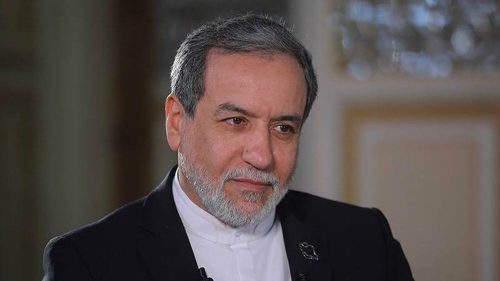
Iranian Foreign Minister Abbas Araghchi
Press TV – April 21, 2025
The Carnegie Endowment for International Peace (CEIP) cancels Iranian Foreign Minister Abbas Araghchi’s keynote address at its 2025 Nuclear Policy Conference.
Citing sources familiar with the matter, Iran Nuances reported that the cancellation on Monday followed an “orchestrated pressure” campaign from “Israeli-affiliated hawkish elements” and officials of former US presidents Joe Biden and Barack Obama.
Araghchi was scheduled to deliver a virtual address at the conference, which will bring together politicians, diplomats, and nuclear experts from around the world to discuss critical challenges in nuclear nonproliferation, arms control, disarmament, deterrence, energy, and security.
Iran’s Permanent Mission to the United Nations confirmed in a statement that Araghchi’s speech has been canceled.
According to the mission, the cancellation occurred after the conference organizers decided to change the format of the Iranian foreign minister’s speech to a debate.
Expressing regret over the matter, the mission said that the full text of the now-canceled speech will be made available to the news media.
Featured Video
Theodore Postol: Iran’s Missiles & Drones Were Underestimated
or go to
Aletho News Archives – Video-Images
From the Archives
What is the Israeli Lobby in Australia Doing in Interfaith Dialogue?
By Ali Kazak | Dissident Voice | October 11, 2015
For years Israel and its lobby around the world have been trying to normalise their relations with Arabs and Muslims without solving the Palestine Question.
One of the methods they resorted to in the last few years is using human rights and community organizations such as interfaith dialogue and Multiculturalism to achieve this objective and to: isolate the Palestinians, marginalise the Palestine question, end Israel’s isolation, and prevent criticism of Israel, knowing that these organisations will be the first to stand against Israel’s violations, racial and religious discrimination.
The group responsible for this task in Australia is The Australia/Israel & Jewish Affairs Council (AIJAC); its Director of International & Community Affairs, Jeremy Jones is in charge of lobbying religious community organizations, specifically Muslims and Christians. Consequently he convened the Faith Communities for Reconciliation, founding participant in the Australian Partnership of Religious Organisations and the Australian National Dialogue of Christians, Muslims & Jews.
AIJAC is a private political propaganda group. It is recognised as the main Israeli lobby in Australia. It coordinates its activities and works intimately with the Israeli embassy in Canberra and different institutions in Israel. It is privately funded by some Jewish businessmen. It monitors closely Australian politicians, the media, ethnic and religious groups, (especially Arabs and Muslims), unions and academics on their stands towards Israel and the Palestine question. … continue
Blog Roll
 Aletho News
- The killing of three Indonesian soldiers in Lebanon should remind Jakarta that Israel does not want peace
- Defeated and delusional: Netanyahu’s remarks reveal $80bn war failure, says analyst
- Iran’s friends are about to make life much more difficult for Israel and the US
- The war of liberation of the Arab and Islamic peoples expands across the Gulf
- Envoy warns UN on Trump’s threat to ‘obliterate’ Iran’s civilian infrastructure
- The Larak Corridor: Iran’s Rial Gate With No US, No Israel, and No Way Around
- ‘Economic terrorism’: Steel facilities hit again in US-Israeli strike
- ‘War Crime’: Iran condemns attacks on Arak, Ardakan nuclear sites
- Two-thirds of Americans want quick end to Iran war even if goals unmet
- Trump to Give “Important Update on Iran” Wednesday in Prime-Time Speech
- If Americans Knew
- Israel wants US to bomb more of Iran’s civilian structures (113,000 is not enough) – Not a ceasefire Day 173
- Ann Coulter Rips Into Fox News for Iran War Coverage
- Joe Kent Urges Americans To Call White House and Congress To Object To Sending Troops Into Iran
- DNC Resolution to Reject AIPAC Funding Puts Democratic Leaders in the Hot Seat
- Swedish foundation to build 400 schools as over 650,000 Gaza children remain without education for 2 years
- Israeli army admits photshopping image of slain Lebanese journalist
- This is how Israel is systematically killing health workers under the cover of war in Lebanon
- Carrying life under fire: Israeli invasion of Lebanon leaves pregnant women facing deadly risks
- Champagne all around for the new death penalty (for Palestinians) law – Not a ceasefire Day 172
- Why are Palestinian books struggling to be seen on Amazon?
- No Tricks Zone
- New Study Finds Warming Saves Lives…Cold Temperatures 12 Times More Deadly Than Excess Heat
- German Science Blog Accuses PIK Climate Institute Of Hallucinating Climate Tipping Points
- Devastating Assessment Of Comirnaty Vaccine By Former Senior Pfizer Europe Toxicologist
- New Study: CO2 Is ‘Effectively Negligible’ As An Explanatory Climate Change Factor Since 2000
- Former Pfizer Toxicologist Dr. Helmut Sterz Tells Bundestag Hearing Pfizer Vaccine Should Have Never Been Approved
- Energy Expert: Germany’s Nuclear Phaseout Was A “500 Billion Euro Mistake”
- New Research: South Australia’s Mid-Holocene Sea Surface Temperatures Were 4°C Warmer Than Today
- Storing Green Energy To Last Germany 10 Days Would Require A 60-Million Tonne Battery
- New Studies: UK Sea Levels Were 4 Meters Higher Than Today During The Mid-Holocene
- Destructive Green New Deal: German Energy And Metal Group Warns Of Drastic Crisis
 Aletho News