US-Russia tensions flare up on multiple fronts
By M. K. BHADRAKUMAR | Indian Punchline | September 2, 2020
Amidst the escalating tensions with China, the United States should have kept the troubled relationship with Russia on an even keel. But the opposite is happening. For the first time since the presidential election in Belarus on August 9, Washington has openly sided with the protests in Minsk and dared Russia to intervene.
Berlin has simultaneously announced that the Russian opposition leader Alexei Navalny was poisoned by Novichok nerve agent. Curiously, Germans went public with the explosive information without even notifying Moscow first. Presumably, the US was in the loop, given Navalny’s standing in Russian politics.
Most certainly, Washington and Berlin have moved in tandem over Belarus and Navalny respectively. A major confrontation is brewing. The warning over Belarus came at the level of the US Deputy Secretary of State Stephen Biegun who conveyed a harsh message to the Kremlin via the cold war era megaphone Radio Liberty:
“The last four years has been very challenging for U.S.-Russian relations, but it is possible that it could be worse. And one of the things that would limit the ability of any president, regardless of the outcome of [the U.S. presidential election in November], in developing a more cooperative relationship with Russia, in any sphere, would be direct Russian intervention in Belarus.”
Within hours, Secretary of State Mike Pompeo stepped in “demanding an immediate end” to the Belarus government’s moves to curb the protests and warning of “significant targeted sanctions” in consultation with Washington’s transatlantic partners.
This is a direct challenge to President Vladimir Putin who had stated last week that Russia is obliged to intervene in Belarus under the Russia-Belarus Unity Pact of 1998 and the Collective Security Treaty. (See my blog Anatomy of coup attempt in Belarus, August 30, 2020)
The US intention is to put Russia on the dock with the simultaneous diplomatic offensives on two fronts. The Russian ambassador to Germany was summoned to the foreign ministry in Berlin a few hours ago; meanwhile, the protests in Minsk are enjoying a fresh lease of life.
The Russian Foreign Minister Sergey Lavrov today condemned the “attempts made by several foreign states” to fuel the protests in Minsk and noted “a rise in NATO activity near Belarusian borders.” The Russian and Belarusian intelligence agencies are in touch.
The Belarus foreign minister Vladimir Makei visited Moscow today for talks with Lavrov. The chiefs of the General Staffs of Russia and Belarus discussed on the phone today “the state and the prospects of bilateral military cooperation and also the pace of preparations for the Slavic Brotherhood joint drills.” A visit by Belarus President Alexander Lukashenko to Moscow is expected shortly.
While the Navalny affair is more of the stuff of propaganda to smear Russia’s reputation in the western opinion, Moscow will focus on the Belarus situation. Putin underscored last week that amongst the former Soviet republics, Belarus “perhaps is the closest, both in terms of ethnic proximity, the language, the culture, the spiritual as well as other aspects. We have dozens or probably hundreds of thousands, if not millions, of direct family ties with Belarus and close industrial cooperation.”
Lavrov didn’t mince words when he hit back today, “Moscow will provide an adequate and firm response based on facts to those who are trying to derail the situation in Belarus… (and) to turn the republic away from Russia and undermine the foundations of the Union State.”
What is Washington’s game plan? Indeed, it suits President Trump’s campaign if his administration is seen as hanging tough on Russia. In substantive terms, Washington probably chose to go on the offensive considering that Russian intelligence has zeroed in on the CIA blueprint to stage a colour revolution in Belarus.
In fact, there has been a dizzying array of standoffs involving Russia in the most recent days. The US and Russian military clashed six days ago when a vehicle forming part of a Russian convoy in north-eastern Syria rammed an American armoured vehicle injuring 4 US soldiers, prompting Biden to taunt Trump, “Did you hear the president say a single word? Did he lift one finger? Never before has an American president played such a subservient role to a Russian leader.”
On August 31, the US military announced that over the next 10 days it will be conducting live-fire exercises just 70 miles from Russian border. On August 28, the US flew six nuclear-capable B-52 bombers over 30 NATO countries in a major show of force. Two of them flew over the Black Sea and were intercepted by two Russian fighter jets, which crossed within 100 feet of the nose of one of the bombers, reportedly disrupting its ability to maintain its bearing.
On August 27, the Russian guided missile submarine Omsk surfaced off the coast of Alaska and participated in live-fire exercises in the Bering Sea. Also on August 27, NORAD sent two F-22 jets to intercept three groups of Russian military maritime patrol aircraft off the Alaskan coast.
With growing signs of Russia digging in, the Plan B over Belarus is surfacing. Both Belarus and Navalny are noble causes that come handy for Washington to rally Europe and re-establish its transatlantic leadership, which has been in tatters lately with the EU, France, Germany and UK joining Russia and China to block the Trump administration’s attempt to impose “snapback” sanctions against Iran.
Above all, Washington feels frustrated that its clumsy attempts to create daylight between Russia and China have floundered. China has voiced support for Lukashenko; the Sino-Russian juggernaut is puncturing holes from all sides in Trump’s maximum pressure strategy against Iran,
In a feature article entitled China, Russia Deepen Their Ties Amid Pandemic, Conflict with the West, Radio Liberty recently listed several new Russia-China economic projects in the pipeline to boost the relations further.
These include one of the world’s largest polymer plants that Russia is building in Amur, near the Chinese border costing $11 billion in collaboration with China’s giant Sinopec Group; commencement of natural gas supply to China through the 2,900-kilometer Power Of Siberia pipeline; plan to start work on a second pipeline, Power Of Siberia 2; plans to more than triple Russian gas deliveries to China; new scientific cooperation testing vaccines for COVID-19; concerted “de-dollarisation” plan aimed at limiting the use of dollar in bilateral transactions and so on.
Israel’s Friends at the RNC: ‘Christian Zionists’ Dictate the Agenda of the Republican Party
By Ramzy Baroud | Palestine Chronicle | September 2, 2020
It is difficult – and futile – to argue which American president has historically been more pro-Israel. While former President Barack Obama, for example, has pledged more money to Israel than any other US administration in history, Donald Trump has provided Israel with a blank check of seemingly endless political concessions.
Certainly, the unconditional backing and love declared for Israel is common among all US administrations. What they may differ on, however, is their overall motive, primarily their target audience during election time.
Both Republicans and Democrats head to the November elections with strong pro-Israel sentiments and outright support, completely ignoring the plight of occupied and oppressed Palestinians.
To win the support of the pro-Israeli constituencies, but especially the favor of the Israel lobby in Washington DC, Democratic presidential nominee, Joe Biden, and his running mate, Kamala Harris, have deviated even further from the low standards set by the Democratic Obama administration. Despite his generous financial support for Israel and full political backing, especially during Israel’s wars on the Gaza Strip, Obama dared, at times, to censure Israel over the expansion of its illegal Jewish settlements.
The Biden-Harris ticket, however, is offering Israel unconditional support.
“Joe Biden has made it clear,” Harris was quoted as saying in a telephone call on August 26, “he will not tie US security assistance to Israel to political decisions Israel makes, and I couldn’t agree more.” The call was made to what the Israeli newspaper, Haaretz, termed as “Jewish supporters.” The Jerusalem Post and the Times of Israel referred to this crucial constituency as “Jewish donors.”
The references above are sufficient to delineate the nature of the Democratic Party establishment’s current support for Israel. Although the view of the party’s rank and file has significantly shifted against Israel in recent years, the Democratic upper echelon still caters to the Israel lobby and their rich backers, even if this means molding US foreign policy in the entire Middle East region to serve Israeli interests.
For Republicans, however, it is a different story. The party’s establishment and the rank and file are united in their love and support for Israel. Though the Israel lobby plays an important role in harnessing and channeling this support, Republicans are not entirely motivated by pleasing the pro-Israel lobbyists in Washington DC.
The speeches made by Republican leaders at the Republican National Convention (RNC), held in Charlotte, North Carolina, between August 24-27 were all aimed at reassuring Christian Evangelicals – often referred to as ‘Christian Zionists’- who represent the most powerful pro-Israel constituency in the United States.
The once relatively marginal impact of Christian Zionists in directly shaping US foreign policy, has morphed over the years – particularly during the Trump presidency – to define the core values of the Republican Party.
“This is apocalyptic foreign policy in a nutshell,” tweeted Israeli commentator, Gershom Gorenberg, on August 24. In Republican thinking, “Israel is not as a real country but a fantasyland, backdrop for Christian myth.”
Gorenberg’s comments were tweeted hours before the controversial speech made by US Secretary of State, Mike Pompeo, America’s top diplomat, who delivered his brief notes from “beautiful Jerusalem, looking out over the old city.” The location, and the reference to it, were clear messages regarding the religious centrality of Israel to US foreign policy, and the unmistakable target audience.
Trump was even more obvious during an August 17 speech in Oshkosh, Wisconsin. “We moved the capital of Israel to Jerusalem,” Trump announced to a cheering crowd, “and so the Evangelicals – you know, it’s amazing with that – the Evangelicals are more excited about that than Jewish people … It’s really, it’s incredible.”
Unsurprisingly, 22 percent of Wisconsin residents identify as “Evangelical Protestants.”
This was not the first time that Trump has derided US Jews for not being as supportive of him as they are of his Democrat rivals. A year ago, Trump called Jewish Democrats “disloyal” to Israel. “I think any Jewish people that vote for a Democrat, I think it shows either a total lack of knowledge or great disloyalty,” he said in August 2019.
This was not a simple case of Trump’s typical political insensitivity but, rather, the cognizance that the real Republican prize in the coming elections is not the Jewish vote but the Christian Zionists.
In his speech before the RNC on August 27, Trump recounted to this same audience his pro-Israeli accomplishments, including the relocation of the US embassy from Tel Aviv to Jerusalem in May 2018. “Unlike many presidents before me, I kept my promise, recognized Israel’s true capital and moved our embassy to Jerusalem,” Trump proclaimed.
The moving of the embassy, always a great opportunity to repeat the word “Jerusalem” before a jubilant crowd, was the buzzword at the RNC, repeated by all top Republicans, including former US Ambassador to the UN, Nikki Haley. “President Trump moved our embassy to Jerusalem — and when the UN tried to condemn us, I was proud to cast the American veto,” Haley announced proudly, which generated an approving cheer.
In all of their references to Israel at the RNC, Republican leaders adhered to specific talking points: Iran, the US embassy move, the recognition of the Occupied Golan Heights as Israeli territories, the fight against anti-Semitism (silencing any criticism of Israel), and so on.
However, the Republican discourse seems to be detached from the traditional US foreign policy view that US support for Israel serves the geopolitical and geostrategic interests of Washington. This view, predominant among Democrats, seems to be almost entirely forsaken by Republicans, whose love for Israel is now dedicated to a purely religious mission.
In June 2015, when he was still a Congressman from Kansas, Secretary Pompeo once declared before a packed megachurch in Wichita, that the “battles” against evil are a “never-ending struggle,” one that will continue “until the Rapture,” a reference to what some Christians believe to be a sign of the end of times.
Addressing the RNC from Jerusalem on August 25, Pompeo must have felt that part of his spiritual mission has already been fulfilled.
Ramzy Baroud is a journalist and the Editor of The Palestine Chronicle. He is the author of five books. His latest is “These Chains Will Be Broken: Palestinian Stories of Struggle and Defiance in Israeli Prisons” (Clarity Press, Atlanta). Dr. Baroud is a Non-resident Senior Research Fellow at the Center for Islam and Global Affairs (CIGA), Istanbul Zaim University (IZU). His website is www.ramzybaroud.net.
German Chancellor Merkel Claims Navalny Case is ‘Attempted Murder With Use of Nerve Agent’
Sputnik – 02.09.2020
Germany is treating the Navalny case as an “attempted murder by poisoning,” and is waiting for Russia to explain its position and provide answers, Chancellor Angela Merkel announced Wednesday.
Speaking to reporters shortly after Berlin’s announcement that a toxicology test had shown ‘undeniably’ that Navalny had been poisoned by “a chemical nerve agent of the Novichok group,” Merkel said that there are now “very serious questions that only the Russian government can answer and must answer.”Merkel confirmed that the Russian ambassador to Germany had been informed about the test results, and said that “we now expect that the Russian government will make a declaration on this incident.”
Calling the information about Navalny’s alleged poisoning “depressing,” Merkel added that her government would consult with its NATO allies and Germany’s European Union partners on how to respond.
“We will inform our partners in the EU and NATO on the results of the test. We will have a joint discussion… and make a decision on a proportionate [response] in a joint statement,” the chancellor said.
Russia Responds
Kremlin spokesman Dmitry Peskov responded to the German government’s new allegations later Wednesday, saying that no traces of any poisonous substances were found in Navalny’s system before his transfer to Germany.
The Russian Foreign Ministry issued a separate statement, saying its diplomatic mission in Berlin hadn’t received any information or documents regarding Navalny, and accused Germany of making ‘loud statements’ without any evidence to back them up.
The ministry added that it made sense for Germany to appeal to the EU and NATO if its main goal was to substitute “some pre-prepared ‘response measures'” for normal cooperation.
Navalny’s Treatment in Germany
Navalny was flown to Germany from a hospital in Omsk, Russia, where he was hospitalized on August 20 after falling into a coma during a Moscow-bound flight from Tomsk. The politician and blogger, arguably the best-known Russian opposition figure in the West, was transfered to Berlin aboard a chartered jet on August 22 for further treatment, and granted the status of ‘chancellor’s guest’ by Merkel, ostensibly ‘for protection’.
Navalny’s spokesperson began speculating that he may have been poisoned almost immediately after he fell ill. However, doctors in Omsk said no traces of poison were present in the blood and urine samples they had taken. Later, doctors postulated that Navalny may have a metabolic condition which caused a severe drop in his blood sugar levels and led him to lose consciousness and go into a coma. Navalny reportedly didn’t eat or drink before boarding the flight or on the plane, apart from tea purchased for him at the cafe in Tomsk’s airport.
Novichok
The so-called ‘Novichok’ group of binary chemical weapons was developed in the USSR between the 1970s and early 1990s in an effort to maintain parity with the US chemical weapons programme. The agents were never called ‘Novichok’ by Soviet or Russian biowarfare specialists, and were given their names by Western experts after the USSR’s collapse.
‘Novichok’ made international headlines in March 2018, after former GRU officer Sergei Skripal and his daughter Yulia were found unconscious on a park bench in Salisbury, southern England. The UK almost immediately blamed the Russian government of ‘poisoning’ the Skripals, and announced that ‘Novichok’ had been used in the attack. Moscow, categorically denied the allegations, asked for access to the investigation, and pointed out that it had destroyed the last of its Soviet-era chemical weapons stockpiles in 2017 under the supervision of the Organization for the Prohibition of Chemical Weapons. Russian officials and media also pointed out that the US and its allies, including Britain, have had access to ‘Novichok’s’ formulas since the late 1990s. Nevertheless, London and its allies responded to the alleged attack with new sanctions and expulsions of Russian diplomats, prompting Moscow to respond in a tit-for-tat fashion. The Skripals have since disappeared from public view, with UK media reporting that they may have fled to New Zealand. Viktoria Skripal, Sergei Skripal’s niece, said she had no information to corroborate these reports and has repeatedly asked to be allowed to contact her family members.
Russiagate without end: US appeals court REVERSES earlier decision to end Flynn criminal case
RT | August 31, 2020
A full-bench US federal appeals court has reversed an earlier decision to dismiss the ‘Russiagate’ case against former National Security Advisor Michael Flynn, returning it to the judge who refused to let the charges be dropped.
In a 8-2 ruling on Monday, the DC Circuit Court of Appeals sided with Judge Emmet Sullivan, and sent the case back to him for review. Sullivan had been ordered by a three-judge panel in June to drop the case against Flynn immediately, but hired an attorney and asked for an en banc hearing instead.
Flynn’s attorney Sidney Powell said the split was “as expected” based on the tone of the oral arguments, pointing to a partisan divide on the bench, and added it was a “disturbing blow to the rule of law.”
The former top lawyer for the Barack Obama administration, Neal Katyal, hailed the decision as “an important step in defending the rule of law” and argued the case should not be dismissed because Flynn had pleaded guilty.
Flynn had indeed pleaded guilty to one charge of lying to the FBI, but Powell moved to dismiss the charges due to the failure of his previous attorneys – a law firm with ties to the Democrats – and the government to disclose evidence that could set him free. After producing documents revealing that the FBI set out to entrap Flynn, had no valid cause to interview him in the first place, and the prosecutors improperly extorted him into a plea by threatening to charge his son, the Justice Department moved to drop all charges.
Sullivan had other ideas, however. In a highly unusual move, he appointed a retired judge – who had just written a diatribe about the case in the Washington Post – to be amicus curiae and argue the case should not be dropped. It was at this point that Powell took the case to the appeals court, citing Fokker, a recent Supreme Court precedent that Sullivan was violating.
Ignoring the fact that Sullivan had appointed the amicus and sought to prolong the case after the DOJ and the appeals court both told him to drop it, the en banc panel argued the proper procedure means he needs to make the decision before it can be appealed.
One of the judges, Thomas Griffith, actually argued in a concurring opinion that it would be “highly unusual” for Sullivan not to dismiss the charges, given the executive branch’s constitutional prerogatives and his “limited discretion” when it came to the relevant federal procedure, but said that an order to drop the case is not “appropriate in this case at this time” because it’s up to Sullivan to make the call first.
The court likewise rejected Powell’s motion to reassign a case to a different judge.
Conservatives frustrated by the neverending legal saga have blasted the appeals court’s decision as disgraceful. “The Mike Flynn case is an embarrassing stain on this country and its ‘judges’,”tweeted TV commentator Dan Bongino. “We don’t have judges anymore, only corrupted politicians in black robes.”
While Flynn was not the first Trump adviser to be charged by special counsel Robert Mueller’s ‘Russiagate’ probe, he was the first White House official pressured to resign over it, less than two weeks into the job.
With Mueller failing to find any evidence of “collusion” between President Donald Trump’s campaign and Russia, Democrats have latched onto Flynn’s case as proof of their ‘Russiagate’ conspiracy theory. The latest argument is that the effort to drop the charges against Flynn is politically motivated and proof of Attorney General Bill Barr’s “corruption.”
Barr is currently overseeing a probe by US attorney John Durham into the FBI’s handling of the investigation against Trump during and after the 2016 election, with the evidence disclosed during the Flynn proceedings strongly implicating not just the senior FBI leadership but senior Obama administration figures as well.
Russia now also to blame for US protests & Covid-19 disinformation: former intel head turned CNN analyst
RT | August 31, 2020
Former Director of National Intelligence James Clapper went on CNN to accuse Russia of interfering in US affairs including the Covid-19 pandemic, Portland and Kenosha protests, and election meddling while giving no real evidence.
Clapper, who has previously said Russians are “typically, almost genetically driven to co-opt, penetrate, gain favor, whatever,” was more than happy to push more xenophobic Russia conspiracy theories during a Monday CNN interview when prompted by anchor Alisyn Camerota.
After bringing up violent protests in cities like Portland, Oregon, and Kenosha, Wisconsin – both of which have seen shooting deaths occur during demonstrations and riots – Camerota asked Clapper if he sees “evidence as we saw in 2016 that some of this unrest, some of this online ginning up of discord, you see Russian fingerprints?”
“Absolutely,” Clapper replied without hesitation, before also blaming Russians for spreading “disinformation” in regards to the Covid-19 pandemic, including how it “disproportionately” affects minorities.
Though conspiracy theories about the Russian government interfering in the 2016 presidential election have been backed up by no real evidence, but rather only second and third-hand information, Clapper used 2016 as his only evidence of this new conspiracy theory.
“There’s no question the Russians are exploiting this. Why shouldn’t they? They had huge success in 2016. Why not do it again in 2020?” he said.
Rep. Adam Schiff (D-California) was similarly asked on Monday during a CNN interview whether Russia was at all to blame for making race relations worse in the US, to which Schiff also replied yes and claimed they “are once again doing their best in social media, in the overt media and other means to grow this division again.”
Besides consistent history of xenophobic remarks toward Russians, James Clapper has also been accused of lying under oath. Some politicians, including Sen. Rand Paul, have said the former director of national intelligence should be prosecuted for denying his knowledge of the existence of the NSA’s warrantless spying program.
If Navalny was poisoned, unlikely it was by Putin: Italian professor tears down ‘state-sponsored assassination’ theory
RT | August 30, 2020
Western media wasted no time in accusing the Russian government of attempting to kill protest leader Alexey Navalny with poison, but basic common sense points against the conspiracy theory, an Italian professor has argued.
Navalny fell ill last week during a commercial flight and was rushed to a hospital after his plane made an emergency landing in the Siberian city of Omsk. Days later, he was flown to Germany to be treated at the Charite University Hospital in Berlin. Doctors there said his symptoms indicate poisoning with a cholinesterase inhibitor – a type of chemical encountered in certain medicines, insecticides, and nerve agents.
Since the first day of Navalny’s ordeal, his inner circle has been accusing President Vladimir Putin and the Russian government of trying to assassinate the activist and of running a cover-up operation after the attempt failed. This narrative was swiftly adopted by mainstream media in the West. Some Western governments threatened to impose a new round of sanctions against Russia over the case.
Yet even if criminal intent is proven in the case, basic common sense undermines the ever-popular formula of ‘poisoning + Russia = Putin’, according to an article published by the Italian magazine Formiche on Saturday. The piece was penned by Igor Pellicciari, Professor of History of International Relations at the University of Urbino, who also teaches at MGIMO University, Moscow’s top school for career diplomats.
The ‘state-sponsored poisoning’ theory has several weaknesses, Pellicciari wrote, starting with the political cost that Navalny’s demise under suspicious circumstances would entail for Moscow. The death of an opposition figure would inevitably be pinned on the Kremlin, prompting sanctions, and further tarnishing its already damaged reputation. It would also fuel domestic discontent, which would be untimely, given that Russia, like many other nations, is currently having to deal with both an economic slowdown and public fatigue with the social distancing measures prompted by the Covid-19 pandemic.
The benefits for removing Navalny from the picture are dubious at best. He may be hailed as the Russian opposition leader by the Western press, but, in reality, he leads a relatively small faction of fractured anti-government forces in Russia. His corruption investigations and organization of protests make him a thorn in the side of the Kremlin, but not a realistic threat to the powers that be, Pellicciari said.
However, while the motive for a state assassination of Navalny is questionable, the capability of carrying one out is not, which doesn’t sit well with what has actually happened, the professor argued.
Navalny was taken to a hospital in Omsk with all due haste, remaining in Russian doctors’ care for 44 hours and treated with evident success. On arrival, he was given a shot of atropine – a drug that’s effective against certain types of toxins – and reacted so well that the German doctors continued the same treatment after the patient was transferred to their care.
The Russian state had many opportunities to ensure Navalny’s death, if such was its intent, Pellicciari suggested. It could orchestrate a less timely hospitalization or send an assassin to finish the job at the Omsk clinic. It could provide the hitman with a more effective poison from or simply stage an accident rather than use a poison and risk an ugly exposure.
So far Russia resisted foreign pressure to launch a criminal probe into the situation. Pellicciari believes Navalny may have been a victim of a crime, but if that is the case it is not likely that the hit was ordered from the top echelons of the Russian government. Navalny is a divisive figure and has plenty of lower-caliber enemies, both Russian officials and private citizens, Pellicciari said.
A state assassination would look more like the mysterious plane crash that killed Italian politician Enrico Mattei in 1962, he added.
Meet the IDF-Linked Cybersecurity Group “Protecting” US Hospitals ‘Pro Bono’

By Whitney Webb –
UNLIMITED HANGOUT– August 27, 2020
Since the Coronavirus crisis began in earnest earlier this year, the strain on hospitals in the US and around the world has been the subject of a considerable number of media reports. However, hardly any media attention has been given to the dramatic and unsettling changes that have been made to hospital and healthcare information technology (IT) systems and infrastructure under the guise of helping the US healthcare system “cope” with the surge in data as well as an unsettling uptick in cyberattacks.
Over the past several months, 80% of healthcare institutions in the US have reported being targeted by some sort of cyberattack, ranging from minor to severe, with an uptick in phishing attempts and spam specifically. Most of these attempts have been aimed at illegally acquiring troves of patient data, including the recent hacks of hospitals in Chicago and Utah. About 20% of the hacks and cyberattacks reported by hospitals and medical facilities since March directly affected the facilities’ capacity to function optimally, with a much smaller percentage of those including ransomware attacks.
One of the reasons for the increase in the success of these attacks has been the fact that more healthcare IT workers are working remotely as well as the fact that many IT staffers have been laid off or let go completely. In several recent instances, the removal of entire hospital system IT staffs have been tied to a larger effort by the Department of Health and Human Services (HHS) to consolidate control over patient data, including Coronavirus-related data, with the assistance of secretive government contractors with longstanding ties to HHS.
The surge of cyberattacks combined with major budget cuts has made hospitals even more vulnerable as many are compelled to do more with less. As a result, there has been a renewed push for the improvement of cybersecurity at hospitals, clinics and other healthcare institutions throughout the country over the course of the Coronavirus (Covid-19) crisis.
Amid this backdrop, an odd group of “cyber threat intelligence” analysts with ties to the US government, Israeli intelligence and tech giant Microsoft have “volunteered” to protect US healthcare institutions for free and have even directly partnered with US federal agencies to do so. They have also recently expanded to offer their services to governments and social media platforms to target, analyze and “neutralize” alleged “disinformation campaigns” related to the Coronavirus crisis.
While these analysts have claimed to have altruistic motives, its members who have identified themselves publicly have notably dedicated much of their private sector careers to blaming nation states, namely Iran but also China, for hacking and, most recently, for cyberattacks related to the Coronavirus crisis, as well as the 2020 presidential campaign. These individuals and their employers rarely, if ever, make their reasons for assigning blame to state actors available to public scrutiny and also have close ties to the very governments, namely the US and Israel, that have been attempting to gin up hostilities with those countries in recent years, particularly Iran, suggesting a potential conflict of interest.
The Cyber Justice League?
Calling themselves the cyber version of “Justice League,” the Covid-19 Cyber Threat Intelligence (CTI) League was created earlier this year in March and has described itself as “the first Global Volunteer Emergency Response Community, defending and neutralizing cybersecurity threats and vulnerabilities to the life-saving sectors related to the current Covid-19 pandemic.” They now claim to have over 1,400 members hailing from 76 different countries.
According to their website, they seek “to protect medical organizations, public healthcare facilities, and emergency organizations from threats from the cyber domain” and offer their services “pro-bono” to major hospitals, healthcare and pharmaceutical companies as well as U.S. law enforcement and federal agencies. Upon their creation, they sent an “open letter to the healthcare community,” offering to volunteer “their time and efforts to mitigate [cyber] threats and protect our healthcare system.”
However, since its creation, the CTI League has offered its services to sectors entirely unrelated to healthcare systems, companies and institutions. For instance, they now offer their services to critical infrastructure systems throughout the US, including dams, nuclear reactors, chemical plants and others, according to their inaugural report and their contact form. This is particularly concerning given that there is no oversight regarding who can become a member of the League, as one must merely be approved for entrance or “vetted” by the league’s four founding members, whose conflicts of interests and ties to the US and Israeli national security states are detailed later on in this report.
In addition, the league’s team of “expert” volunteers also tackle alleged disinformation campaigns related to Covid-19. Some examples of the “disinformation” campaigns the CTI league has been investigating on behalf of its private sector and federal partners include those that “associate Covid-19 spread with the distribution of 5G equipment,” “encourage citizens to break quarantine”, and one that “incited” a “1st and 2nd amendment rally” in Texas.
Regarding their disinformation “workstream,” the CTI league states the following:
“The CTI League neutralizes any threat in the cyber domain regarding the current pandemic, including disinformation. The mission of this effort is to find, analyze, and coordinate responses to the current pandemic disinformation incidents as they happen, and where our specialist skills and connections are most useful.”
The CTI League has offered its services “pro bono” to a variety of groups in the private and public sector, which has allowed the League’s members access to the critical systems of each. For instance, they work closely with the Health Information Sharing and Analysis Center (H-ISAC), whose members include Johnson & Johnson, Pfizer, Merck, Amgen, Blue Cross Blue Shield and Athenahealth, among others. H-ISAC’s president, Denise Anderson, works closely with the National Cybersecurity and Communications Integration Center, part of the Department of Homeland Security (DHS). According to H-ISAC’s Chief Security Officer (CSO), Errol Weiss, the organization has been partnered with the CTI League since “very early on” in the Coronavirus crisis.
The CTI League also works with unspecified law enforcement partners in the US and works particularly closely with the US Cybersecurity and Infrastructure Security Agency (CISA), an independent federal agency overseen by DHS. The current CISA director, Christopher Krebs – who was previously the Director of Cybersecurity for Microsoft, told CSO Online in April that “CISA is working around the clock with our public and private sector partners to combat this threat. This includes longstanding partnerships, as well as new ones that have formed as a direct result of Covid-19, including the Covid-19 Cyber Threat Intelligence (CTI) League.”
Since they began “working with US authorities,” the CTI League has increasingly taken to assigning blame to nation states, specifically Russia, China and Iran, for various cyber-intrusions just as the US federal authorities began to do the same. In late April, for instance, the Justice Department began claiming Chinese hackers planned to target “US hospitals and labs to steal research related to coronavirus” and anonymous US officials blamed China for a hack of the Department of Health and Human Services (HHS) and COVID-19 research. Yet, no evidence tying China to the hacks was provided and only anonymous government officials were willing to imply blame in statements given to the press, suggesting that there was not enough evidence to justify going public with the accusation or to even open an official investigation against specific foreign entities.
Notably, that same week in April, CTI League’s founder Ohad Zaidenberg claimed that China, Iran and Russia “are trying to steal everything,” telling CBS News that they “can steal information regarding the coronavirus information that they don’t have, (if) they believe someone is creating a vaccine and they want to steal information about it. Or they can use the pandemic as leverage so they (can) to steal any other type of information.”
Yet, upon looking more closely at the CTI league’s membership and co-founders, particularly Mr. Zaidenberg, much of the league’s leadership has a rather dubious track record regarding past claims linking state actors to cyberattacks. In addition, they also possess rather glaring conflicts of interests that undermine the CTI League’s professed desire to protect critical health and other infrastructure “free of charge” as well as ties to foreign governments with a history of espionage targeting the United States.
ClearSky and the manufactured Iranian threat
The public face of the CTI League and its original founder is a young Israeli named Ohad Zaidenberg, who was previously an “award-winning” commander in Israeli military intelligence’s Unit 8200, a key component of Israel’s military intelligence apparatus that is often compared to the U.S.’ National Security Agency (NSA). While serving in Unit 8200, Zaidenberg specialized in acts of cyberwarfare targeting the Iranian state, serving first as a Persian analyst in the Unit before becoming commander. His current biography states that he continues to remain “focused on Iran as a strategic intelligence target” and describes him as “an authority in the operations of key Iranian APTs [Advanced Persistent Threats].”
In addition to his leading role at the CTI League, Zaidenberg is also the lead cyber intelligence researcher at ClearSky Cybersecurity, an Israeli company directly partnered with the Unit 8200-linked Checkpoint and Verint Inc., formerly known as Comverse Infosys – a company with a long history of fraud and espionage targeting the US federal government. ClearSky also collaborates “daily” with Elta Systems, an Israeli state-owned subsidiary of Israel Aerospace Industries (IAI), and was founded by Boaz Dolev, the former head of the Israeli government’s “e-Government” platform.
Aside from his work at CTI League and ClearSky, Zaidenberg is also a researcher for Tel Aviv University’s Institute for National Security Studies (INSS). Zaidenberg is specifically affiliated with the INSS’ Lipkin-Shahak Program, which is named after the former head of Israeli military intelligence and which focuses on “national security and democracy in an era of Post-Truth and Fake News.” According to the INSS website, the program works directly with the Israeli government and the IDF and is currently headed by Brigadier General (Ret.) Itai Brun, the former head of the Israel Defense Intelligence (IDI) Analysis Division.
Prior to the creation of CTI League, ClearSky – and Zaidenberg, specifically – were often cited by US mainstream media outlets as the sole source for dubious claims that “Iranian hackers” were responsible for a series of high-profile hacks and “disinformation” campaigns. In every mainstream media report that has covered ClearSky’s and Zaidenberg’s claims regarding “Iranian hackers” to date, their connections to the Israeli government and Israeli intelligence services have been left unmentioned. Also unmentioned was the fact that the only state actor that ClearSky has ever blamed for hacks or other online attacks has been Iran, suggesting that the government-linked cybersecurity firm has a rather myopic focus on the Islamic Republic.
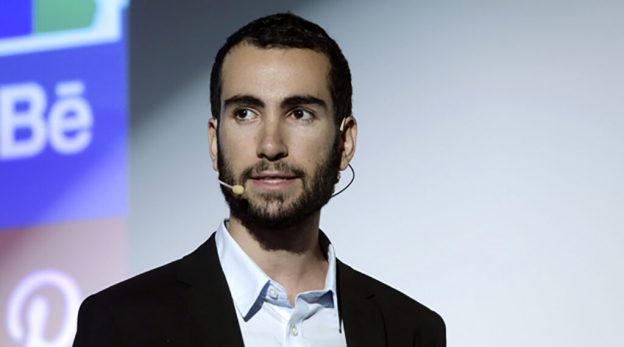
Ohad Zaidenberg
For instance, in February 2018, Forbes reported on ClearSky’s claim, citing only Zaidenberg by name, that an individual linked to Iran’s government had been responsible for an “Iranian propaganda machine” producing “fake news” and attempting to imitate BBC Persian. Zaidenberg claimed that the individual behind the three “fake news” websites, which largely published criticisms of the BBC as opposed to false news stories, is “believed to have worked for [Iran’s] National Ministry of Communications.” Based merely on the Iranian national’s “believed” (i.e. unconfirmed) work history, Zaidenberg then asserts with “medium-high certainty that the operation was funded by the Iranian government.” Zaidenberg’s history as a commander in Unit 8200 targeting Iran and his continued, self-admitted work in pursuing Iran as a “strategic intelligence target” while working at the Israeli government-affiliated ClearSky are left unmentioned by Forbes.
More recently, right before the founding of the CTI League, Zaidenberg and ClearSky were the sole source of claims that “Iranian hackers” were “exploiting VPN servers to plan backdoors” in companies around the world as well as targeting the networks of certain governments, mainly in the U.S. and Israel. ClearSky’s assertion that the hackers in question were tied to Iran’s government was solely based on their finding of “medium-high probability” that the hackers’ activities overlapped with the past “activity of an [unspecified] Iranian offensive group.” They declined to specify what the nature of the overlap was or its extent.
A clear conflict of interest
Notably, ClearSky’s February report on “Iranian hackers” targeting governments and major international companies in the US and elsewhere came right on the heels of speculation that Iran would target the US with a cyberattack following the US’ January assassination of Iranian general Qassem Soleimani, an act that was greatly influenced and allegedly prompted by Israeli intelligence. In the aftermath of the Soleimani assassination, mainstream media outlets in the US had heavily promoted the claim that Iran’s government would soon respond with a “cyberattack” as retaliation and that “financial institutions and major American corporations may be in the crosshairs.”
President Trump and Secretary of State Mike Pompeo had both threatened, at the time, to dramatically respond to any Iran-launched attack, including one launched in the cyber domain, presumably with military force. While Iran’s much-hyped “cyber retaliation” failed to materialize, ClearSky, with its dubious claims that “Iranian hackers” were targeting major corporations and governments, created the impression that Iran’s government was involved in cyberattacks against U.S. interests at this sensitive time.
ClearSky and Zaidenberg’s claims regarding Iran only intensified after the CTI League was founded, with ClearSky and Zaidenberg being the only source for the claim made earlier this year in May that Iran had been responsible for the hacking of US biopharmaceutical company Gilead (a company which boasts close links to the Pentagon). The hack itself, which was widely reported by US media, is said to have consisted of a Gilead executive receiving a single “fake email login page designed to steal passwords” and it is unknown if the attack was even successful, per Reuters, which first broke the story in May. ClearSky subsequently claimed to have single-handedly “foiled” the Gilead hack. Notably, Gilead is part of H-ISAC, which had been partnered with Zaidenberg’s CTI League weeks prior to the alleged hack.
The alleged Iranian-led hack received considerable media attention as the cyberattack was said to have targeted Gilead’s antiviral medication remdesivir, which had received a Covid-19-related emergency use authorization from the U.S. Food and Drug Administration (FDA) just a week before the hack allegedly took place. Only Zaidenberg is cited by name in the report on Iran’s alleged links to the Gilead hack, with Reuters citing two other, yet anonymous, cybersecurity researchers who told the outlet that they concurred with Zaidenberg’s assertion “that the web domains and hosting servers used in the hacking attempts were linked to Iran.”
Then, earlier this month, the FBI sent out a security alert claiming that Iranian government-aligned hackers were targeting F5 networking devices in the US public and private sector, with some media outlets citing anonymous sources tying the hackers in question to those previously identified by ClearSky. The FBI alert was issued right after an alert from CISA (which works directly with the CTI League and Zaidenberg) regarding vulnerabilities in F5 devices that did not mention the involvement of any state actors. Just a few days before the FBI alert, the director of the US intelligence community’s National Counterintelligence and Security Center, William Evanina, had alleged that Iran was “likely” to use online tactics to “discredit U.S. institutions” and “to stir up U.S. voters’ discontent.”
Aside from citing only ClearSky and Zaidenberg for claims linking Iran’s government to cyberattacks, it is also worth noting that the media reports that accused Iranian government-linked groups of committing those attacks declined to even mention the extreme extent to which Iran itself has been the subject of cyberattacks over the course of 2020. For instance, in February, a cyberattack took down an estimated 25% of Iran’s internet, with some alleging US involvement in a similar attack that had targeted Iran just months prior. More recently, a series of several mysterious fires and other acts of industrial sabotage across Iran over the past few months have been linked to Israeli intelligence operations. In some cases, Israeli officials have acknowledged the Zionist state’s role in these events.
In addition, there is the fact that top Israeli intelligence officials have attempted for years to goad the US into making the “first move” against Iran, both covertly and overtly. Indeed, for much of the last twenty years, Mossad has had access to “virtually unlimited funds and powers” for a “five-front strategy,” involving “political pressure, covert measures, proliferation, sanctions and regime change” in order to target Iran. Some Mossad officials have openly stated that part of this “five-front” strategy involves directly influencing the US’ Iran policy, including lobbying the U.S. to conduct a military strike on Iran. For instance, former Mossad director Meir Dagan, who pushed the US State Department to pursue “covert measures” and “urged more attention on regime change” in Iran while head of Mossad, is on record in 2012 stating that, in his view, the US needs to strike Iran first so Israel doesn’t have to.
Currently, Israeli officials have been relatively candid about their role in several of the recent cyberattacks that have befallen Iran as well as the fact that powerful elements of the Israeli state are trying to get the US to join a conflict against Iran before the 2020 presidential election while Trump remains in power. The effort has reportedly led to concern among EU officials that Israel’s government may be seeking to provoke an event whereby the US would engage Iran militarily.
This context highlights why solely citing a firm like ClearSky and an individual like Ohad Zaidenberg in linking a cyber attack to the Iranian government is dangerous, given that ClearSky and Zaidenberg’s ties to the Israeli national security state presents a conflict of interest. This is especially true given that Zaidenberg’s old unit in Unit 8200 is directly involved in conducting cyber attacks on Iran, like those that have been recently taking place as part of the strategy to provoke a military engagement between the US and Iran prior to the November elections.
While Iran’s government could have been involved in recent cyberattacks, especially considering the extent to which Iran has been recently targeted by cyberwarfare, using a firm tied to the very government and military intelligence apparatus actively seeking to embroil the US in a war with Iran as the sole source linking Iran to a cyberattack is not only ill advised, but dangerous and reckless.
Furthermore, given Zaidenberg’s key role in the CTI League, allowing faceless “volunteers” vetted by Zaidenberg and the league’s three other founding members (whose affiliations are discussed below) onto critical private and public networks under the guise of “aiding” their security amid the Covid-19 crisis is similarly reckless.
CTI, Microsoft & 2020
While Zaidenberg has made himself the public face and spokesperson of the CTI League, it is worth examining the other three individuals that are listed as founding members on the League’s website, if only because only these four individuals “vet” those who join the CTI League.
One of these other founding members is Marc Rogers, who began his career as a hacker and later “hacktivist” before deciding that “ethical hacking” was “more likely to have a positive outcome.” For Rogers, “ethical hacking” meant pursuing a cybersecurity career with multi-national corporations like Vodafone and Cloudfare as well as asset management firms like Asian Investment & Asset Management (AIAM).
Rogers is currently the Vice President of Cybersecurity Strategy at Okta, an enterprise identity solution platform, co-founded by former Salesforce executives and largely funded by venture capital firm Andreessen Horowitz. Andreessen Horowitz is advised by former Secretary of the Treasury and Jeffery Epstein friend Larry Summers and is also a major investor in Toka, a company closely tied to Israel’s military intelligence apparatus and led by former Israeli Prime Minister (and a close friend of Epstein’s), Ehud Barak.
Aside from Rogers and Zaidenberg, the other founding members of the CTI League are Nate Warfield and Chris Mills. Warfield is a former self-described “Grey Hat” hacker (defined as “a hacker or cybersecurity professional who violates laws or common ethical standards but without malicious intent”) who now works as a senior program manager for the Microsoft Security Response Center (MSRC). Mills also currently works for the MSRC as a senior program manager and he previously created the US Navy Computer Forensics Lab while serving in the Navy’s Cyber Defense Operations Command.
The MSRC “proactively builds a collective defense working with industry and government security organizations to fend off cyberattacks” and works within the Cyber Defense Operations Center and Microsoft’s other cybersecurity teams, including that previously overseen by Chris Krebs when he was in charge of “Microsoft’s US policy work on cybersecurity and technology issues.” Krebs, as previously mentioned, is now the head of the federal agency CISA, which oversees the protection of critical electronic infrastructure in the US, including the voting system. In addition to the above, MSRC is heavily focused on pursuing the cybersecurity needs of Microsoft customers, which includes the US government, specifically the US Department of Defense.
It is worth noting that the MSRC is also directly affiliated with Microsoft’s ElectionGuard, a voting machine software program that was developed by companies closely tied to the Pentagon’s infamous research branch DARPA and Israeli military intelligence Unit 8200 and creates several risks to voting security despite claiming to make it “safer.” The push for the adoption of ElectionGuard software in the US has been largely spearheaded by the Chris Krebs-led CISA.
Perhaps more telling, however, is that Microsoft and the MSRC have been at the center, alongside ClearSky, of claims linking Iran’s government to recent hacking events and assertions that Iranian government-linked hackers will soon target the US power grid and other critical infrastructure with cyberattacks. For instance, last year, Microsoft penned a blog post about a “threat group” it named Phosphorus, sometimes also called APT35 or “Charming Kitten”, and Microsoft claimed that they “believe [the group] originates from Iran and is linked to the Iranian government.” Microsoft did not provide more details as to why they hold that “belief,” despite the implications of the claim.
Microsoft went on to assert that the “Iranian” Phosphorus group attempted to target a US presidential campaign, which subsequent media reports revealed was President Trump’s re-election campaign. Microsoft concluded that the attempt was “not technically sophisticated” and was ultimately unsuccessful, but the company felt compelled, not only to disclose the event, but to attempt to link it to Iran’s government. Notably, the Trump campaign was later identified as the only major presidential campaign using Microsoft’s “AccountGuard” software, part of its suspect “Defending Democracy” program that also spawned NewsGuard and ElectionGuard. AccountGuard claims to protect campaign-linked emails and data from hackers.
Though it provided no evidence for the hack or its reasons for “believing” that the attack originated from Iran, media reports treated Microsoft’s declaration as proof that Iran had begun actively meddling in the US’ 2020 presidential election. Headlines such as “Iranian Hackers Target Trump Campaign as 2020 Threats Mount,” “Iran-linked Hackers Target Trump 2020 Campaign, Microsoft says”, “Microsoft: Iran government-linked hacker targeted 2020 presidential campaign” and “Microsoft Says Iranians Tried To Hack U.S. Presidential Campaign,” were commonplace following Microsoft’s statements. None of those reports scrutinized Microsoft’s claims or noted the clear conflict of interest Microsoft had in making such claims due to its efforts to see its own ElectionGuard Software adopted nationwide or the fact that the company has close ties to Israel’s Unit 8200 and 8200-linked Israeli tech start-ups.
Coincidentally, Phosphorus, as Microsoft calls them, is also the group at the center of the “Iranian hacker” allegations promoted by ClearSky and Zaidenberg, which refers to this same group by the name “Charming Kitten.” The overlap is not very surprising given Microsoft’s long-standing ties to Israel’s Unit 8200 as well as the fact that Microsoft as a company and its two co-founders, Paul Allen and Bill Gates, personally ensured the success of an Israeli intelligence-linked tech company then-led by Isabel Maxwell, Ghislaine Maxwell’s sister who boasts close ties to Israel’s national security state. It is certainly interesting that the four founding members of CTI League share ties to the same military intelligence agencies and associated corporations as well as an interest in the same group of alleged “Iranian hackers.”
While CTI League only publicly identifies the names of its four founding members, further investigation reveals that another member of the league is its program lead for combating Covid-19-related “disinformation” — Sara-Jayne Terp. Terp is a former computer scientist for the UK military and the United Nations and, in addition to her role at the CTI League, she currently co-leads the “misinfosec” (i.e. a combination of misinformation analysis and information security) working group for an organization known as the Credibility Coalition.
The Credibility Coalition describes itself as an effort to “address online misinformation by defining factors that communicate information reliability to readers” and is backed by Google’s News Lab, Facebook’s Journalism Project as well as Craig Newmark Philanthropies and the Knight Foundation. The latter two organizations also back the Orwellian anti-“fake news” initiatives called the Trust Project and the Microsoft-affiliated Newsguard, respectively.
Questionable access granted
Through claims of altruism and partnerships with powerful corporations and government agencies, the CTI League has been able to position itself within the critical infrastructure of hospitals and the U.S. healthcare system as well as attempting to expand into other key networks, such as those tied to dams and even nuclear reactors. It is truly stunning that a group whose unnamed members are “vetted” only by Zaidenberg, Warfield, Mills and Rogers, has been cleared to access critical private and public networks all because of the pandemonium caused by the Coronavirus crisis and the league’s offering of their services “pro bono.”
Notably, a considerable part of the strain that led hospitals and healthcare institutions to request the league’s services, such as budget cuts or the firings of IT staffers, were actually the result of government policy, either due to state or federal budget cuts for healthcare systems or HHS’ efforts to consolidate control over patient data flows into the hands of a few. In other words, these government policies directly led to a situation where hospitals and healthcare institutions would, out of desperation, be more likely to accept the “pro bono” offer of the CTI League than they otherwise would have been under more “normal” conditions.
Another critical fact worth pointing out is that the U.S. and Israeli intelligence communities have been seeding the narrative for over a year regarding the upcoming hacks of critical U.S. infrastructure on or around the US 2020 election, scheduled for November 3rd, by groups affiliated with the governments of Iran, Russia and/or China. As described above, many of the same groups and individuals behind the CTI League have played key roles in seeding aspects of that narrative.
Despite its massive conflict of interest, this opaque group is now nestled within much of the US’ critical infrastructure enjoying little, if any, oversight – ostensibly justified by the league’s “altruism.” As a consequence, the group’s opaqueness could easily lend itself to be used as the springboard for a “false flag” cyberattack to fit the very narrative pushed by Zaidenberg and his affiliates. From a national security perspective, allowing CTI League to operate in this capacity would normally be unthinkable. Yet, instead, this suspect organization is openly partnered with the US government and US law enforcement.
With US intelligence already having conducted such “false flag” cyberattacks through its UMBRAGE program, which allows them to place the “fingerprints” of Chinese, Russian and Iranian-affiliated hackers on cyberattacks that the U.S. actually conducts, any forthcoming cyberattack should be thoroughly investigated before blame is assigned to any state actor. Any such investigation would do well to first look at whether the CTI League was given access to the targets.
I was set up by ‘MAFIA’ & media served up misleading tapes: Austria’s Russiagate victim, ex-vice-chancellor Strache
RT | August 28, 2020
It took one “leaked” tape of a right-wing politician’s meeting with a fake Russian oligarch’s niece to topple the Austrian government in 2019. Ex-vice-chancellor Heinz-Christian Strache now says it was a “criminal network” plot.
Austria’s right-wing government imploded in spectacular fashion last summer, after two German newspapers, Der Spiegel and the Suddeutsche Zeitung, published excerpts from a videotape of Vice-Chancellor Strache negotiating a ‘quid pro quo’ deal with the supposed “niece of a Russian oligarch” in Ibiza.
The woman was later revealed to be a Bosnian student, posing as a Russian femme fatale, and the tapes turned out to be from 2017, but that didn’t save Austria’s ruling coalition.
Strache resigned and snap elections were called. His ex-coalition partner, Chancellor Sebastian Kurz, eventually regained power, but this time partnered with the environmentalist Green Party, and not the right-wing Freedom Party (FPO).
Strache has been fighting a court battle against the media to clear his name, and his lawyers have apparently obtained the full contents of the tape. He now says the unabridged transcripts – partly published in the media this week – prove that he’s been framed and misrepresented in the “leaks.”
“It was a manipulative extermination campaign that was launched on several levels,” Strache told RT Deutsch in an interview.
Indeed, much of the so-called “Ibiza affair” is still shrouded in mystery. Strache initially accused unnamed “intelligence agencies” of orchestrating the recording, while Kurz pointed the finger at an Israeli spin doctor, Tal Silberstein. A newspaper report last May blamed an Iranian-born lawyer, Ramin Mirfakhrai, who admitted his involvement but described the sting as a “civil society” project.
“This group of perpetrators is likely to be a very large one; one could perhaps also speak of a criminal network,” Strache told RT. He then claimed that a member of his own security team was apparently working with this “mafia” for nearly a decade and that the male escort of the ‘oligarch’s niece’ was allegedly working with Strache’s companion on the night – FPO deputy leader Johann Gudenus – to entrap him.
Strache also alleges that he was drunk – or maybe even “drugged” – during the “illegal” recording.
It is not clear if Strache’s assessment matches that of the committee of inquiry, which has been investigating the affair since June. Strache has little confidence in the inquiry, though, and told RT that he expects it to be derailed by “political tactics.” However, prosecutors in Austria are currently investigating the woman’s male companion – identified as “private investigator” Julian H. – for entrapment, while the newly-surfaced tapes appear to paint a different picture of the night in Ibiza.
In these, Strache can be heard rejecting some of the corrupt offers from the “Russian oligarch’s niece.” When she lays out the deal – favorable press coverage in a newspaper owned by her family in exchange for lucrative construction contracts – Strache responds: “No way, I won’t do it.”
“I don’t want to be vulnerable,” he says. “I want to sleep peacefully. I want to get up in the morning and say: I’m clean.”
While some of these lines were mentioned during the 2019 coverage, they did not appear in the “leaked” video – and Strache suspects this is no coincidence. He claims the additional footage now proves he is “neither corrupt nor for sale,” even despite the fact that he was plied with alcohol. He said he’s unsure whether to blame the two German newspapers for airing the original, selectively-edited footage, or the masterminds of the sting operation who sold them this footage.
Some of the German-language media that previously reported on the “Ibiza affair” have been left unimpressed by the new transcripts, and it remains to be seen whether the investigation sides with the so-called “civil society” project or condemns what Strache likes to call the “Stasi methods,” in reference to the infamous East German secret police. But given the alleged scope of the operation, Strache says he’s happy that at least he got out of it alive.
“I’m glad I’m alive,” he told RT. “I have the opportunity every day to experience the sun rising again, and also to defend myself and to fight such mechanisms. Because I say that such methods have no place in political debate.”
Let’s Talk U.S. Foreign Policy: It Is the Root Cause of Many Evils
By Philip Giraldi | Strategic Culture Foundation | August 27, 2020
As the United States sinks deeper into a multi-faceted global crisis that no politician seems able or even willing to address, one hears more and more often demands for radical change in who runs the country and to what end. Of course, Donald J. Trump offered such a dramatic shift in priorities four years ago, but he has been unable to deliver due to his own inability to execute and the ill-conceived machinations of those whom he has chosen as advisers. The Democrats for their part are offering little beyond a repeat of their 2016 pander to grievance groups in an effort to cobble together an unassailable majority based on buying off the party’s various constituencies.
But there is one area where change could come dramatically if either party were actually motivated to do something that would truly benefit the American people, and that is in the area of foreign and national security policy where the president has considerable power to set priorities and redirect both the State and Defense Departments. Unfortunately, foreign and national security policy is almost never discussed during the presidential campaigns and this time would already appear to be no exception. That means that the one thing that is a constant amidst all the smoke and mirrors is the continued bellicosity of both parties on the world stage.
The Republicans are apparently eager to “democratize” Latin America while the Democrats in particular are wedded to the “foreign interference” angle to explain their loss in 2016, with Hillary Clinton predictably advising in her Democratic National Convention speech that the public should “Vote to make sure we — not a foreign adversary — choose our president.” Indeed, the tendency to create and then demonize “foreign conspiracies” is generally supported by the establishment and its parasitical media, since it enables the billionaire oligarchs who really run the country to grow fatter while also avoiding any blame for the declining fortunes of most of the American people.
The Democrats are currently taking pains to recall the so-called “Russian interference” in 2016, and are expecting or possibly even hoping for more of the same this year. Tying Trump to Russian President Vladimir Putin is obviously perceived as a game winner, even though the just-completed investigations into the events of 2016 are at best ambiguous. Early prognostications by journalist-pundits in the foreign interference sweepstakes indicate that both China and Iran will be supporting Joe Biden while Russia wants to continue with Trump. No one bothers to explain how those countries will express their preferences or what kind of impact they could possibly have.
One thing that is certain is that both parties will continue their deference to Israel which in turn means hostility towards Iran and its few friends worldwide. The U.S. media has not reported the almost daily bombings of Syria and Gaza by Israel and even largely failed to cover how two weeks ago the United States Navy seized four Greek flagged oil tankers transporting more than a million gallons of fuel to economic basket case Venezuela, a country which is in its sad condition due to sanctions and other “maximum pressure” at the hands of Washington. The fuel was seized based on unilaterally imposed U.S. sanctions on Iranian sale or export of its own petroleum products, a move intended to strangle the Iranian economy and bring about an uprising of the Iranian people. Such a move used to be called piracy.
To be sure, the Democrats have indicated that they will rejoin the Joint Comprehensive Plan of Action (JCPOA), which Trump withdrew from under orders from top donor Sheldon Adelson in 2017, one of his first acts in office. The JCPOA is intended to monitor and restrain any possible efforts by Iran to enrich uranium to develop a nuclear weapon, which one might assume is in the U.S. interest, but one should make no mistake in thinking that re-entering the agreement signifies any softening towards Iran. Joe Biden and Kamala Harris are owned lock, stock and barrel by the Israel Lobby, which is pretty much true of most politicians from both major parties in Washington. Iran is Israel’s target and even lacking any threat to the U.S. so it will remain the American enemy of choice.
America’s efforts to demonize and punish Iran, ineptly stage managed by Secretary of State Mike Pompeo, frequently lead into the Twilight Zone. On August 17th, the United States suffered what has to be described as a humiliating defeat in the United Nations Security Council. As the Washington Post reported it, “The United States asked the council to approve an extension of the 13-year-old embargo on arms trade with Iran — something that matters greatly to Israel and U.S. Arab allies, and which most of the democratic world favors. Yet only one member of the 15-member council, the Dominican Republic, sided with Washington. Russia and China opposed the motion, while 11 countries — including Britain, France and Germany — abstained. The vote could open the way for Iran to obtain Chinese and Russian arms — for example, missiles it could employ against Israel, the UAE or U.S. ships in the Persian Gulf.”
Note particularly the reliably Zionist Post’s “newspeak” version in describing both the issue and the vote. It states that “most of the democratic world favors” an embargo on selling arms to Iran but then describes how “11 countries – including Britain, France and Germany – abstained.” And, of course, the potential threat to Israel is front and center as the reason for the embargo, an apartheid state that has nuclear weapons developed in secret after stealing both the uranium and triggers from the United States. One might also note that Iran is a signatory to the Nuclear Non-Proliferation Treaty (NPT), which Israel is not, and its nuclear related research facilities are fully open to inspection by the International Atomic Energy Agency (IAEA).
After the rebuff, Trump subsequently moved on to phase two in its attack on Iran by invoking a so-called “snap-back” provision of the JCPOA that empowers any of the signatories to the agreement to unilaterally call for renewal of the international sanctions that isolated Iran prior to 2015, when the plan of action was signed by the U.S., Britain, China, France, Germany and Russia, along with the European Union. The U.S. claimed that Iran has been cheating on its enrichment program and also that the accord’s authority is rooted in an accompanying Security Council resolution, which means that Washington can at will address the issue before that body.
Bear in mind that the U.S., though an original signatory, withdrew from the agreement, and any attempt to restore U.N. sanctions through an admittedly sleazy maneuver would be resisted by nearly all the other members of the Security Council, which is precisely what did take place last Thursday, with the Europeans producing a joint letter emphasizing that Washington has no standing on the issue as it is no longer party to the arrangement. Pompeo responded by saying that the Europeans “chose to side with the ayatollahs.”
Secretary of State Mike Pompeo, presumably supported by the president, has been angered by the Security Council’s failure to support him on either extending the arms embargo or re-imposing general sanctions, though he is probably eternally grateful for the fortitude demonstrated by the plucky little Dominican Republic. On both meetings with the Security Council Pompeo complained, using his standard line, saying that “We can’t allow the world’s biggest state sponsor of terrorism to buy and sell weapons. I mean, that’s just nuts.”
The next step by the White House was a unilateral proposal submitted in writing by the U.S. to reimpose a full range of economic sanctions on Iran in thirty days. That can only be blocked by a Security Council resolution which Washington can veto, meaning that America will again be going it alone in its not-so-secret war against Iran, further isolating the U.S. in world fora and again demonstrating that the Trump Administration has few friends anywhere in this fight but Israel and its newfound Arab associates in the Gulf. It also means that the re-imposed sanctions are unlikely to be actively enforced by anyone that matters, further suggesting that the U.S. might resort to secondary sanctions, as it has done in the past, on those who do not comply, a formula for chaos.
Well, it should seem obvious that we Americans can’t afford a foreign and national security policy that pits the United States against the rest of the world in situations where the U.S. is not actually directly threatened and does not even have a vital interest. Over the next two months, perhaps we will see some serious discussion of America’s place in the world or perhaps not. If 2016 is anything to go by, we are more likely to see a number of bromides tossed out without any real meaning behind them. We are still waiting for troops reductions and the ending of useless wars promised by Trump. We are still waiting for Hillary to concede that Russia didn’t defeat her. She did it all by herself.
US Sanctions Russian Defence Ministry Research Institute That Worked on COVID-19 Vaccine
Sputnik – 26.08.2020
The United States has added five Russian research institutes to its sanctions lists, including the Defence Ministry’s Research Institute, which was involved in work on the COVID-19 vaccine, the United States Department of Commerce statement says.
The US has gone as far as to claim that the listed institutions are working on chemical and biological weapons.
Listing by the US Department of Commerce means that the US authorities impose restrictions on the export, re-export and transfer of goods in accordance with the existing regulations to individuals and organisations that are deemed to pose risks to US national security and foreign policy interests.
Besides the 48th Central Scientific Research Institute, the US has sanctioned the Russian Defence Ministry’s 33rd Central Research and Testing Institute and the State Research Institute of Organic Chemistry and Technology.
According to official information, the 33rd Central Research and Testing Institute is a leading institution in the field of radiation, chemical and biological protection.
The Russian COVID-19 vaccine, dubbed Sputnik V, was developed by the Moscow-based Gamaleya Research Institute and the Russian Defence Ministry and officially registered by the Russian government on 11 August.
The Russian Ministry of Health said that Sputnik V had undergone all the necessary checks and had been proven to be capable of building immunity against the virus.
Despite the fact that the Russian Ministry of Health claimed that Sputnik V had undergone all the necessary checks and had been proven to be capable of building immunity against the virus, Western countries and mainstream media rushed to claim that the vaccine was unsafe and ineffective.
Russian Health Minister Mikhail Murashko stated that all the foreign criticism was provoked by the fear of fair competition and slammed the accusations as unfounded.
Last week, the Gamaleya Institute and the Russian Direct Investment Fund (RDIF), which has donated over $54 million towards coronavirus research, released information about the methodology of the vaccine. The data includes scientific publications on the history of vaccines based on the approach used in Sputnik V, clinical trials, the technological platform and the proven safety of this method.
Poisoning protest leader Navalny ‘would not benefit’ Moscow, says Russian Foreign Ministry, labels Western allegations ‘offensive’
RT | August 25, 2020
Moscow does not stand to benefit from the alleged poisoning of anti-corruption activist Alexey Navalny, the Russian Foreign Ministry has said, noting the haste with which Western media and governments made the insinuation.
The ministry issued a statement on Tuesday evening, following a meeting between Russian Foreign Minister Sergey Lavrov and US Deputy Secretary of State Stephen Biegun, during which the subject of Navalny was raised, among other issues.
Lavrov pointed out the “suspicious haste” with which the narrative about Navalny’s alleged poisoning was picked up in Washington and Brussels and instantly compared to the “poisonings” of Alexander Litvinenko and the Skripals – which were blamed on Moscow before any investigations happened.
“The question inevitably arises – who benefits from it? The Russian leadership clearly does not.”
The ministry added that accusations of a ‘cover-up’ made against the Russian doctors who first treated Navalny were untrue.
“We consider deeply offensive the accusations of ‘covering up the truth’, directed from some Western capitals to the doctors in Omsk, who immediately rendered highly professional aid” to Navalny, the ministry said.
“They gave the patient’s complete medical history to the team of German doctors,” the statement continued. “We hope that the German doctors will show the same professional approach and will not allow the results of their laboratory tests to be used for politicized purposes.”
Navalny fell ill during a flight from Tomsk to Moscow on Thursday, and was taken to a hospital in the Siberian city of Omsk, where his condition was stabilized. He was airlifted to Germany on Saturday for further treatment, at the request of his wife and associates.
On Monday, German doctors said Navalny was poisoned by a substance from the group of cholinesterase inhibitors, but were unable to say which. However, the Omsk hospital unit chief Dr. Alexander Sabayev told reporters the same day that the activist tested negative for any drugs, including cholinesterase inhibitors.
The European Union has already called for a “comprehensive investigation” of Navalny’s alleged poisoning. US Secretary of State Mike Pompeo seconded that on Tuesday, saying that “Navalny’s family and the Russian people deserve to see a full and transparent investigation carried out, and for those involved to be held accountable.”
Dmitry Peskov, spokesman for Russian President Vladimir Putin, told reporters the German doctors were “rushing” to use the term poisoning, and that an investigation was premature.
“There must be a reason for an investigation. At the moment, all you and I see is that the patient is in a coma,” Peskov told reporters. He added that any suggestions Putin was involved in Navalny’s condition were “hot air” and the Kremlin would not take them seriously.
Meanwhile, the security committee of the Russian parliament has begun an investigation into whether foreign governments were involved in harming Navalny’s health “in order to create tension within Russia, as well as formulate new accusations against our country,” according to its Speaker Vyacheslav Volodin.
Featured Video

HE SAVED LIVES. NOW HE FACES PRISON.
or go to
Aletho News Archives – Video-Images
From the Archives
NATO Sanctions and the Coming Global Diesel Fuel Disaster
By F. William Engdahl – New Eastern Outlook – 11.04.2022
Amid the ongoing global inflation crisis, NATO heads of state and mainstream media repeat a mantra that high energy prices are a direct result of Putin’s actions in Ukraine since end of February. The reality is that it is the western sanctions that are responsible. Those sanctions including cutting SWIFT interbank access for key Russian banks and some of the most severe sanctions ever imposed, are hardly having an impact on the military actions in Ukraine. What many overlook is the fact that they are increasingly impacting the economies of the West, especially the EU and USA. A closer look at the state of the global supply of diesel fuel is alarming. But Western sanctions planners at the US Treasury and the EU know fully well what they are doing. And it bodes ill for the world economy.
While most of us rarely think about diesel fuel as anything other than a pollutant, in fact it is essential to the entire world economy in a way few energy sources are. The director general of Fuels Europe, part of the European Petroleum Refiners Association, stated recently, “… there is a clear link between diesel and GDP, because almost everything that goes into and out of a factory goes using diesel.” … continue
Blog Roll
 Aletho News
- Trita Parsi: Middle East Unraveling — Are We on the Path to World War?
- Iran FM meets with US envoy on UN meeting’s sidelines at American side’s insistence: Report
- Qatar PM calls for Gulf security framework with Iran, says war must be ‘wake-up call’
- China condemns US extortion of Iranian airlines, rejects Washington’s ‘illegal’ sanctions threats
- Italy to move military personnel from Taif base after missile strike
- Finland’s Stubb tells European leaders to calm down
- Defeating Russia on battlefield impossible – Fico
- Finland’s Gender Clinic Reversal
- Massachusetts Wants Mental Health Visits, Why Does Government Use ‘Health’ to Enter Our Homes & Families?
- US lawmaker admits American people footing bill for Trump’s failed aggression against Iran
- If Americans Knew
- Sanctions are collective punishment: immoral and self-defeating
- Phosphorus Munitions Fired by Israel Burn Groves, Orchards in Southern Lebanon
- Israel Carries Out New Ceasefire Violations Across Gaza
- AI – Emphasis on the ‘I’: Israel Is Funding AI Chatbot Propaganda
- Israel Blocking Hundreds of Wheelchairs for Injured Children From Entering Gaza
- Israel Is Expanding and Upgrading Compounds for Palestinian Militias in Gaza
- The Palestinian-American Residents of This West Bank Town Are Wondering: Where Is Trump?
- Gaza desperately needs tents, wheelchairs, fuel… and everything else (Israel blocks it all) – Daily Update
- Israeli Attacks in Gaza Kill at Least Seven Palestinians Over Three Days, including Woman and Child
- Trump’s militarization of Washington DC as he pursues Israel’s war against Iran
- No Tricks Zone
- 2025 Nature Paper Claiming Worsening Global Drought Gets RETRACTED …Heavily Flawed
- New Study: ‘Global Drought Shows No Detectable Recent Acceleration Under Climate Warming’
- Economic Masterminds: German Socialists Suggest Taxing Productivity Gains Stemming From Using AI
- The South China Sea Has Not Been Cooperating With The Climate Change Narrative
- Energy Crisis: Germany Enters Heating Season With Historically Low Gas Reserve Fill Levels
- New Study: The Antarctic Ice Sheet Gained Mass From 2020-2024 Due To Staggering Snow And Ice Accumulation
- Study: Ocean Heating Rates From Thousands Of Years Ago ‘Dwarf’ Modern Ocean Heating Rates
- Climate Extremists Target, Attack Large-Scale Power Grid Infrastructure In Germany!
- New Study: Antarctic Ice Melt Has Contributed Less Than 1 Centimeter To Sea Level Rise In The Last 30 Years
- Fear Of Debate: Alarmist German Climate Scientist Calls On Mainstream Media To Discredit Skeptic Voices

