Ukraine takes new step towards banning its largest Christian church
RT | August 29, 2025
Kiev has taken another step toward banning the Ukrainian Orthodox Church (UOC) by officially declaring it linked to Russia. The ruling paves the way for a full ban on the country’s largest religious institution through the courts.
Vladimir Zelensky’s government has been increasingly taking aim at the UOC in recent years, a policy that has hardened in light of the conflict with Russia. Several of its churches have been seized, and criminal cases have been opened against clerics.
This week, Ukraine’s State Service for Ethnopolitics and Freedom of Conscience posted a statement on its website saying that the UOC had been found to be associated with “a foreign religious organization whose activities are banned in Ukraine.”
A law enacted last year allows religious organizations affiliated with governments Kiev deems “aggressors” to be banned. Zelensky has defended the measures as necessary to protect the country’s “spiritual independence.”
The UOC has been de facto independent from the Russian Orthodox Church (ROC) since the 1990s, but maintained the canonical connection.
The UOC, which says it is being persecuted by the government, rejects the decision, a church representative told local media, adding that it has appealed it in court.
UOC Metropolitan Onufry, whose Ukrainian citizenship was revoked last month by Zelensky, has refused to comply with the government’s order to “correct violations,” the state agency claimed.
The ROC has maintained that banning the UOC would be a violation of religious rights. The UN and international human rights organizations have also accused Kiev of overreach and interference with the freedom of religion.
The Ukrainian government officially supports the Orthodox Church of Ukraine, which was founded in 2018 but which the Russian Patriarchate considers schismatic.
The proposal Russia made to Ukraine this past June to settle the conflict included a clause calling for restrictions on the UOC to be lifted.
European economies and societies are broken
By Sonja van den Ende | Strategic Culture Foundation | August 28, 2025
In recent days, one alarming report after another has emerged about the European economies. The political elites and their mouthpieces, the mainstream media, can no longer ignore it. Things are not going well—and that is putting it mildly. The situation is bad and will get worse. This is something some of us had anticipated for quite some time, and alert economists have been saying and warning about.
Let’s start with one of the richest countries in Europe: the Netherlands. Although small in size, the wealth enjoyed by elites and, to some extent, citizens some twenty years ago was enormous. I would even venture to say that, in some respects, the Netherlands was richer than Switzerland.
But due to many factors—bad politics, and the emergence of countries like China and, to a certain extent, India and Russia, whose economies have become stronger and their citizens richer—the Netherlands is now on the verge of collapse, like almost all wealthy EU countries, or rather, Western countries.
Dutch politics has been unstable for years. There are simply too many parties, too many opinions, and too much division. While the older, established parties remain strong in terms of seat count, they cannot truly govern. Moreover, there is the “manufactured” housing crisis caused by the insane nitrogen policy, the refugee crisis that causes daily street violence and the murder of women and children, and then there are the agendas of the WEF and the UN that have to be pushed through due to the advancing artificial intelligence (AI) frenzy. It is a cocktail of unrest and division. Also, let us not forget the increasing criminality of the Moroccan mafia: the underworld has now penetrated into the upper world.
The new elections (the last one was in 2023) and the government, which did not take office until 2024, have been ineffective. The population is being misled and distracted by the supposed war Russia is planning to start. So, parties like the established Christian Democratic Appeal (CDA) are devising new plans. This party, which is well in the lead, wants to introduce a “freedom tax” to increase the defense budget so they can wage “war” or defend themselves against the greatest threat: Russia.
Then we come to the worst, “sickest” kid in the class: Germany. The welfare state is “no longer financially viable,” said German Chancellor Friedrich Merz, a BlackRock man, in recent interviews. Of course, it is no longer financially viable—one does not have to be an economic whiz kid to see that, with so many migrants contributing little to nothing but receiving money from the state.
The country has been slowly spiraling toward the abyss since 2015, a process that can no longer be stopped; politicians and elites do not want to stop it. They talk a lot but essentially do nothing. The famous German car industry is ruined, the chemical industry is ruined, and with it, many suppliers.
The most foolish thing Germany could do economically was to stop buying Russian gas. Now they have a major problem: like the rest of Europe, they have to buy expensive LNG from the U.S. The costs are skyrocketing, to put it mildly.
Recently, after all the government’s lies and manipulation, the truth about how Germany, or rather its citizens, should survive the winter came to light. Many gas storage facilities in Germany are currently significantly emptier than in previous years. The Greens, who want to gradually phase out gas, are warning in the Bundestag about the consequences of a cold winter. The Greens’ policies have effectively ruined Germany, with incompetent politicians like Annalena Baerbock and Robert Habeck. Both have resigned and emigrated abroad, leaving behind a political and economic disaster in Germany.
That other major country in Europe, France, with a president (Macron) who thinks that France is still a great power like it was in the time of the Sun King—Louis XIV or Napoleon—is doing just as badly. According to media reports there, the economy is also struggling. At the end of the first quarter of 2025, French public debt stood at €3,345.4 billion, or 113.9% of GDP.
That the French are arrogant (not all of them, of course) is a well-known fact in Europe and perhaps beyond. But Macron is taking it too far. In a recent interview, Macron called Russian President Vladimir Putin a “predator, a monster at our gates.”
This comes after the disgusting display in Paris at the Olympic Games (in 2024), where satanic rituals mixed with religion were on display, which many countries and citizens expressed their horror about. Now he has the arrogance to make these public statements. If you thought Zelensky was stupid with his statements, Macron is his equal in this.
The countries I mentioned are, or rather were, the “running economic engines” of the EU, the economic heart of Europe, which actually paid for the poorer countries in the south, such as Italy, Spain, Portugal, and especially Greece, a country that went bankrupt in 2008.
Europeans all witnessed the misery in Greece: pensioners eating from garbage bins, entire shopping streets closed, poverty everywhere. Now we see it happening in the heart of the EU economy. Germany has become almost unlivable, especially in the major cities.
The same street scene: retirees who should actually be enjoying a well-earned rest collect plastic bottles for the deposit money, and now, if the government has its way, they will have to do a year of compulsory military service. Imagine this—you just do not want to imagine it…
Europe has lost its prosperity; its culture is being swallowed up by the many migrants who bring their own, and instead of assimilation, these cultures foreign to Europe now predominate. In their foolish attitude and, above all, the indoctrination of many years, politicians now believe they live in a “multicultural” entity. But this is not the case; integration has failed, and European citizens are paying the price for their inaction and for allowing this situation to escalate.
Politicians across Europe, especially in the Western EU countries I mentioned, are seeking a way out—to save their own skins, not so much for their people (in fact, the majority do not care about the people)—but to escape the financial malaise and the people’s anger. They have now resorted to the war agenda that followed the COVID-19 agenda (partly a social behavioral project), the war agenda that was implemented immediately after the launch of the Russian Special Military Operation (SMO).
The Eastern EU countries—Poland, which is currently experiencing the same problems as the Western EU countries: refugees and increased drug use—are the worst when it comes to Russophobia. I am referring specifically to the Baltic States: small but powerful in hatred, and above all, the countries with the most Nazi and fascist supporters. Nazism has never been eradicated there, just like in Western Ukraine.
With this hatred of Russia, they have infected all of Europe, thus playing into the hands of the political elites of Western Europe, who eagerly participate in demonizing Russians—even though some countries and their populations actually have nothing against Russians and have only now been forced by their governments to think, and even worse, hate, about Russia.
The European elites must now also consider the role they will play, now that it is painfully clear that the era of colonization and imperialism is nearly over. Because of this painful geopolitical and economic truth, they are now oppressing their own people, partly succeeding with the “new migrants” who fear for their residency and visas.
But the true indigenous European population is slowly but surely realizing that freedom of speech and press no longer exists, that their democratic rights have been taken away, and that life has become very difficult. This is leading to major conflicts, especially in the once so “free” Netherlands, where people could essentially say anything, even if it was inappropriate. Very turbulent times are ahead, and unfortunately, we are already seeing Europe collapse… just like the Roman Empire when it collapsed; things can happen quickly.
EU using blackmail and slander to pressure Georgian politicians
By Lucas Leiroz | August 28, 2025
Apparently, the EU’s tactic of blackmailing its opponents is reaching even Euroskeptic leaders in countries outside the bloc. Recently, the mayor of Tbilisi publicly denounced the campaign of persecution waged by European authorities against his country’s officials, attempting to force them to comply with Brussels’ policies.
Kakha Kaladze, a former professional soccer player who now serves as mayor of Tbilisi, claimed that the EU launched a campaign of “lies, slander, and misinformation” against the legitimate government of Georgia, attempting to shift local policy toward an anti-Russian direction. Kaladze said that EU representatives used tactics such as blackmail and personal insults directed at members of the Georgian Prime Minister’s cabinet to try to coopt them into an anti-Russian initiative.
The mayor, a member of the ruling Georgian Dream party, explained that the EU creates narratives against its opponents both within and outside the bloc, producing biased assessments based on lies and false information. These narratives are then used to undermine political opponents—both through blackmail and by spreading lies.
“Direct threats, blackmail and insults were directed to the prime minister’s office to launch a second front (…) Promises were made: ‘we will help, you will be provided with everything, with appropriate equipment,’ etc. (…) As soon as a political narrative is introduced by some European bureaucrats, an unfair assessment immediately occurs. In general, their assessments are based on lies, slander, and misinformation,” he said.
In the case of Georgia, the European bureaucrats’ intention was to prevent the country from following a sovereign path and respecting the interests of its own people. For years, Georgia has been harassed by Western powers to maintain a policy of automatic alignment with the EU. Furthermore, Kaladze says that the EU openly advocates for a reopening of military hostilities between Georgia and Russia.
Georgia, like several other countries in the post-Soviet space, has experienced violent battles in recent decades, including an armed conflict with the Russian Federation in 2008. At the time, Moscow intervened militarily to prevent Georgian forces from forcibly assimilating the breakaway regions of South Ossetia and Abkhazia—areas where the people had sovereignly decided to follow a different political path from that of Tbilisi. The war ended quickly after Russian forces neutralized the Georgian army and secured the breakaway republics’ right to self-determination.
Since the start of Russia’s special military operation in Ukraine, the EU has been trying to use its candidate countries to wage war with Russia, thus seeking to open a new front against Moscow. Just as Georgia is being harassed to resume hostilities against Russia, Moldova, another country seeking accession to the European bloc, is being induced to attack the separatist region of Transnistria, which also has a substantial pro-Russian population. Kaladze revealed that, in private conversations with Georgian politicians, European bureaucrats implied support for a possible reviving of the war against Russia.
Furthermore, the mayor explains that the EU accuses Georgia of renouncing so-called “democratic reforms.” Indeed, the country is no longer concerned with following European demands, but this doesn’t mean that some kind of authoritarianism is growing in Georgia, but rather that EU standards no longer matter to the local authorities and people. Since the approval of the Foreign Agents Law, which requires foreign NGOs to register in a special way and report to the Georgian government, the EU has simply lost control over its puppet institutions in the country, which is causing fury among Brussels bureaucrats.
Indeed, it’s not surprising that the EU is using these tactics against its adversaries in Georgian politics. Coopting Tbilisi into the Western anti-Russian coalition has become an obsession of European leaders. Fortunately, however, most of the Georgian parliament appears committed to defending national interests, resisting both international pressure and domestic sabotage agents.
As the EU fails to protect its interests abroad, the truth about European practices is beginning to emerge. Despite the EU’s propaganda as an organization defending democracy, human rights, and liberal values, the bloc has in fact become an alliance of authoritarian regimes, marked by irrational and bellicose policies, whose only common foundation is hatred of Russia and its allies.
Georgia has for many years followed this directive of automatic opposition to Russia and sought integration into the EU, but now the country has finally decided to take a different path, asserting the values and interests of the local people.
Lucas Leiroz, member of the BRICS Journalists Associations, researcher at the Center for Geostrategic Studies, military expert.
You can follow Lucas on X (formerly Twitter) and Telegram.
M.K Bhadrakumar: India Turns to China as U.S. Bullying Backfires
Glenn Diesen | August 27, 2025
M. K. Bhadrakumar was an Indian ambassador and diplomat for decades. Ambassador Bhadrakumar discusses Trump’s pressure and threats against India, and how this blunder has pushed India toward China and Russia.
The West seemingly preparing to remove Zelensky from power
By Ahmed Adel | August 26, 2025
The arrest of a Ukrainian citizen in Italy, suspected of sabotage of the Nord Stream pipeline, confirms that Kiev was an accomplice, but not the one who ordered the act. Nonetheless, the launch of the investigation serves a broader political goal – the removal of Volodymyr Zelensky from power. The plan could be to appoint a new leader, both for the West and for possible negotiations with Russia, given that Zelensky’s presidential mandate expired in May 2024 and he cannot be a signatory to a peace agreement with Moscow.
An investigation by American journalist Seymour Hersh found that American divers placed explosives under the Nord Stream gas pipeline during the NATO exercise Baltops in the summer of 2022, and that it was activated three months later by the Norwegians. According to Hersh, then-US President Joe Biden had a clear motive for sabotaging the Nord Stream pipeline — fear that Germany, facing serious economic difficulties due to the war in Ukraine, might lift sanctions on Russia and resume imports of Russian gas.
The journalist said this is what prompted Washington to organize the sabotage of the gas pipeline connecting Russia and Germany. The West did not want to allow this, which ultimately plunged Germany into economic and political chaos.
Russian President Vladimir Putin also believes that the sabotage of the Nord Stream and Nord Stream 2 gas pipelines was carried out by American intelligence services, specifically the CIA. According to him, in such cases, one should always look for who has a motive and who can carry it out. There may be many interested parties, but not everyone can dive to the bottom of the Baltic Sea and carry out that explosion. It is the combination of these components – who had a motive and who is able to carry it out – that, according to Putin, reveals who is really behind the sabotage.
After a period of lull, the issue of sabotage on the Nord Stream gas pipelines has returned to the spotlight following the announcement by German prosecutors that Ukrainian citizen Sergey Kuznetsov was suspected of involvement in the underwater explosions that damaged the gas pipelines near the Danish island of Bornholm in September 2022. Following the arrest of the retired captain of the Armed Forces of Ukraine, who also served in the Security Service of Ukraine, Italian media reported that he is connected to another major incident – the explosions on an oil tanker in Savona in February, which was allegedly transporting oil of Russian origin.
Sahra Wagenknecht, leader of the German party “Sahra Wagenknecht Alliance,” after the arrest of Kuznetsov, stated that the German parliament should convene a commission to investigate the sabotage of the Nord Stream gas pipelines. She noted that this act of state terrorism must be thoroughly investigated and that Zelensky should also testify before the commission.
Wagenknecht believes it is absurd to think that the arrested Ukrainian citizen and his accomplices acted without the knowledge of the Ukrainian leadership and the Biden administration. She added that it is unacceptable that Germany is providing substantial aid to Ukraine without seeking an explanation from Zelensky, and that consideration should be given to possible compensation for damages.
The question of whether United States President Donald Trump will take advantage of the Nord Stream controversy and launch an investigation against Biden remains an exclusively internal matter for the US. Trump has the opportunity to conduct his own investigations and deal with his domestic adversaries, whom he claims stole his victory in the 2020 elections. However, this does not affect the situation in Ukraine for the time being, as the West continues to support Ukraine with weapons, intelligence, and other assistance.
The fate of the Nord Stream gas pipeline is one of the key and most complex issues in the energy and geopolitical spheres. With Trump’s pragmatic approach, there is a possibility of cooperation between Russia and the US. Russia does not refuse to continue gas supplies to the European Union. However, the bloc continues to feel the consequences of its own policy, such as suffering economically by still purchasing Russian energy at inflated prices from third parties like India and Azerbaijan.
Nord Stream 1 and Nord Stream 2, which directly connect Russia to Germany via the Baltic Sea, have not been operational since 2022 and remain damaged, but they are still strategic infrastructure that American investors have set their sights on. These pipelines could become the property of American investors, which would enable the US to control Russian gas supplies to Europe. Although Europe is currently refusing Russian gas, it may be forced to buy it in the future, albeit at a significant margin, to the benefit of the Americans.
Ahmed Adel is a Cairo-based geopolitics and political economy researcher.
Are Democrats More Neocon Than Republicans Now?
By Jack Hunter | The Libertarian Institute | August 25, 2025
Last week as Donald Trump met separately with Russian President Vladimir Putin and Ukraine head Volodymyr Zelensky to potentially seek an end to the years long war between their countries, Democrats have been very upset.
That peace might happen. They are worried Ukraine might have to make concessions to Russia to reach an agreement, including land.
Never mind that it is Ukrainians who are dying. Never mind that most Ukrainians themselves want to end this war. According to a recent Gallup poll, 69% of Ukrainian respondents want a negotiated end to the war as soon as possible, while only 24% said they still want to fight “until victory.”
Democratic voters sitting in the United States, with no imminent bombs or bullets to worry about, insist that this war go on for as long as it takes, and are being loud about it. Senator Lindsey Graham (R-SC) agrees with them. This doesn’t seem to faze Democrats.
This opposition to Trump’s diplomacy seems to be the consensus of many Democrats, shown in spades all over media this week.
This is a position shared by Senator Mitch McConnell (R-KY). This is the position of Bill Kristol. This is the position of virtually every neoconservative hawk in either major party and has been since this conflict started, that Ukraine must “win” at all costs.
Even at the cost of more Ukrainian lives.
Let me be clear about the definition of “neoconservative” I’m using here. I’m not just talking about the narrow and few band of post war, ex-Trotskyites of the Irving Kristol and Norman Podhoretz variety who stood for a number of things, including the pursuit of a hyper aggressive American foreign policy. I’m talking about Senator Graham, Kristol, the late John McCain, talk host Mark Levin and any other figure on the right who has been rabidly pro-war and hateful toward Ron Paul, Pat Buchanan, and any other prominent antiwar Republican leader of the last thirty years.
I’m talking about the Republicans who use “isolationist” as a pejorative slur for non-interventionism.
I tend to “neoconservative” as carefully here as those people use “isolationist.”
There have always been neocons in both major parties. But this week it has seemed Democrats have outweighed Republicans on this front. There is no poll on this. There is no hard data. I’m just observing.
President Trump has said he wants the killing to end between Ukraine and Russia. Cheering him on in this effort is Congresswoman and MAGA booster Marjorie Taylor Greene (R-GA) and many other GOP members. Also, pundit Tucker Carlson and former Trump aide and talk host Steve Bannon, whose audiences are large and full of MAGA supporters who also endorse Trump’s pledge to end America’s “endless wars.”
There are still plenty of GOP neocon members of Congress and voters within the base, but Trump’s Republican party is a very different one than George W. Bush’s when it comes to hawkish foreign policy.
On the other side, there are progressives like Ro Khanna (D-CA) who have expressed in the past wanting to see Trump help achieve some kind of diplomatic peace.
This week, Khanna has been silent on this, and who could blame him? Because Democrats by and large seem upset that Trump could achieve some sort of deal. They even got mad when Trump shook Putin’s hand during the summit.
Embracing war by avoiding diplomacy is key to neoconservatism. It’s why hawks got so mad in the mid-1980s when President Ronald Reagan met with Soviet Union President Mikhail Gorbachev. It’s why neocons were absolutely irate when Trump met with not only Putin but North Korea’s Kim Jong Un and even Hungary’s Viktor Orban.
2024 Democratic nominee Kamala Harris campaigned with Liz Cheney, got her and her father Dick Cheney’s endorsement and slammed Trump for “bowing down” to dictators, sending a signal to her neocon friends that she would not be engaging in that kind of diplomacy.
Now the people who voted for Harris are reflecting the same sentiment. Trump’s diplomatic efforts have them fuming.
During the 2012 presidential election, Republican nominee Mitt Romney said that Russia was the United States “No. 1 political foe.” President Barack Obama mocked Romney at the time, saying in a debate, “The 1980s are now calling to ask for their foreign policy back, because the Cold War’s been over for twenty years.”
Romney was clearly representing the neoconservative Bush-Cheney foreign policy legacy that still resonated with so many Republicans at the time, and Obama, the anti-Bush message that had delivered him the White House in 2008. Obama did not remotely live up to that promise, but this was roughly the dynamic in the 2012 election.
Politics change and history happens, but it is feasible today that there are more Republicans, in Congress and in the base, who think constant U.S. hyperventilating about Russia, even now, is overblown and Americans should be more concerned about their own country first.
It’s also feasible that there are more Democrats, in Congress and in the base, for whom Trump and Putin are considered one in the same and those folks are more laser focused on hating both men than any other concern, including the health and security of their own country or any other (Ukraine).
When Barack Obama was a rockstar in 2008, Democrats prided themselves on being the complete opposite of Bush-Cheney neoconservative Republicans. In 2025, it appears that more Democrats than not now staunchly side with Bush-Cheney neoconservatives regarding the Russia-Ukraine conflict.
What changed? That might be a longer discussion. But it wasn’t neoconservatives.
The End of the Conflict in Ukraine at Sight?
Zelensky and the Europeans in Washington in Search of Saving Face
By Ricardo Martins – New Eastern Outlook – August 25, 2025
Seven European leaders rushed to Washington under the official banner of solidarity with Volodymyr Zelensky. Yet, the real motive was less about unshakable support for Ukraine and more about damage control.
Zelensky and the Europeans in Washington in Search of Saving Face
With negotiations advancing — and with Ukraine’s loss of territories and NATO membership already ruled out by Donald Trump — Europe’s leaders were scrambling to craft a narrative to their domestic audience that could justify defeat without admitting failure.
The Struggle to Save Face
For three years, the European mantra has been that “Russia cannot win.” Yet on the battlefield, it is Moscow that has the upper hand. The tactic, therefore, was to insist that Russia, as the supposed aggressor, must accept the obligations of the loser. But the reality is moving in the opposite direction: Europe now seeks symbolic concessions to sell to its public.
One of these face-saving gestures is the return of “kidnapped” Ukrainian children, based on contested numbers but useful as a talking point. Another is security guarantees for Ukraine — not NATO membership, but something that can be framed as protection. Zelensky, keen to please Trump, asked for $100 billion in arms, to be funded by Europeans but manufactured in the U.S. NATO’s Secretary-General eagerly echoed this line, presenting himself as a loyal messenger to “Daddy” Trump at Europe’s expense.
Meanwhile, territorial concessions remain taboo in European discourse. To admit them would be to acknowledge Putin’s victory, a political sin for leaders who have invested heavily in a narrative of inevitable Ukrainian triumph.
The Casting: Putin Absent, Yet Present
The most striking absence in Washington was also the most palpable presence. Putin was not in the room, but Trump invoked his name repeatedly, even phoning him for 40 minutes while Europe’s leaders waited. Each mention of Putin’s name drew visible discomfort across European faces, an unmistakable reminder of their diplomatic impotence.
As Djoomart Otorbaev, former Prime Minister of Kyrgyzstan, put it: “Here’s the uncomfortable truth: Putin didn’t earn Trump’s respect through backroom schemes. He earned it on the battlefield and at the negotiating table. And that reality says more about today’s shifting world order than any rumour.”
Trump’s deference to Putin was not ideological; it was grounded in recognition of Russia’s gains. Western efforts to reverse the war’s trajectory have not succeeded, despite supplying Ukraine with advanced weaponry.
Europe’s Century of Humiliation Has Started
Europe’s frantic arrival in Washington — “like the Middle Ages, to homage their master” — symbolised a humiliating dependency: the continent’s leaders reduced to courtiers around a U.S. president already imagining his Nobel Peace Prize.
The delegation was a tableau of weakness. Ursula von der Leyen, in the name of the European Commission, reconfirmed the one-sided trade arrangements: 15% tariffs on European goods entering the U.S., zero tariffs on U.S. exports to Europe, $750 billion in energy and arms purchases, $600 billion in European investments in the U.S., and €150 billion earmarked for EU rearmament. A transfer of wealth and sovereignty dressed up as transatlantic unity.
The body language told its own story. Giorgia Meloni’s irritation was poorly disguised; Friedrich Merz remained wooden; Emmanuel Macron projected disdain; Keir Starmer hid behind note-taking. Von der Leyen managed only a strained smile, Mark Rutte melted into insignificance, and Zelensky — who should have been the central figure — appeared isolated at the margin, dignified but sidelined. Putin, a former KGB officer, and Trump, a former reality TV star and a real estate millionaire, both despised by the Europeans, loomed as the peace brokers. As put by a French analyst: “Quel cirque”.
The Security Guarantees Conundrum
The question of security guarantees has become the crux of European debate. Openly, leaders say territorial concessions are for Ukrainians to decide. Privately, they know the map is already shifting. What remains is an attempt to provide Ukraine with protections that appear credible, but that does not include NATO membership.
POLITICO reported that the Pentagon’s top policy official made clear the U.S. intends to play only a minimal role in guarantees. “There’s the dawning reality that this will be Europe making this happen on the ground,” admitted a NATO diplomat. In other words, Europe is on its own.
European capitals, however, still plead for U.S. assets: fighter jets stationed in Romania, access to American satellites for GPS and reconnaissance. Russia, through its envoy Mikhail Ulyanov, flatly rejected any foreign troops in Ukraine, while Sergey Lavrov dismissed Western security schemes without Moscow and Beijing as “a road to nowhere.”
Ukraine itself is unimpressed. Ten nations, including France and the U.K., have floated the idea of deploying troops, but Kiev sees such proposals as vague, amorphous, and unlikely to provide real guarantees. Former foreign minister Dmytro Kuleba captured the mood: “The so-called security guarantees are so amorphous. The only news is that the U.S. is willing to take part.”
Europe’s Internal Fractures
Even as leaders paraded unity in Washington, Europe’s internal divisions deepened. The European Parliament announced it would sue the Council over being excluded from negotiations on the €150 billion SAFE defence loan scheme.
In a telling sign of institutional fragility, Parliament was sidelined by Ursula von der Leyen’s Commission in the rush to fund rearmament. As Euractiv reported, 18 member states have already expressed interest in loans totalling €127 billion, but without parliamentary oversight, Europe’s democratic deficit widens.
In sum, the “road to nowhere” that Lavrov mocked may yet prove prophetic, not only for Ukraine’s elusive guarantees but for Europe’s strategic autonomy itself.
Ricardo Martins, PhD in Sociology, specializing in International Relations and Geopolitics
Indian FM pushes back on US pressure, stands by Russian oil imports
Press TV – August 24, 2025
Indian Foreign Minister has defended New Delhi’s continued imports of Russian oil despite US tariffs on Indian goods, saying that if others “don’t like it, don’t buy it.”
Speaking at the Economic Times World Leaders Forum (ET WLF) on Saturday, Subrahmanyam Jaishankar said there are some “red lines” in the India-US trade deal negotiations.
He underscored that amid strained relations with the US over several aspects in bilateral trade, India refuses any concession to US President Donald Trump.
“It is funny to have people who work for a pro-business American administration accusing other people of doing business,” he said.
“If you have a problem buying oil or refined products from India, do not buy it. Nobody forces you to buy it. Europe buys, America buys, so you do not like it, do not buy it,” he added.
He asserted that India’s purchase of Russian oil serves both its national interest and contributes to global market stability.
He reiterated that New Delhi would continue to make decisions independently.
The US imposed punitive tariffs on India after Trump claimed that the country’s purchase of Russian crude indirectly funded the Russia-Ukraine conflict.
Tensions in US-India trade relations extend beyond energy, with multiple rounds of negotiations for an interim trade agreement failing to produce a breakthrough.
“Where we are concerned, the red lines are primarily the interests of our farmers and, to some extent, of our small producers,” Jaishankar said.
The United States has pressed India to open its markets to American dairy, poultry, and agricultural products such as corn, soybeans, wheat, ethanol, fruits, and nuts.
But India, an agrarian economy, has resisted, particularly on genetically modified (GM) crops, which it considers harmful to human health and the environment.
Dairy remains a particularly sensitive issue as well, as millions of small and landless farmers depend on the sector for survival, especially during poor monsoons or agricultural downturns.
In a clear message to Trump, Prime Minister Narendra Modi has publicly declared that India will not compromise on the interests of farmers.
“Modi is standing like a wall against any harmful policy related to farmers, fishermen, and cattle rearers of India,” he said in his Independence Day speech.
Top CIA analyst behind Russiagate loses her job – Economist
RT | August 22, 2025
One of the CIA’s most senior Russia analysts has lost her job during President Donald Trump’s campaign to depoliticize the intelligence services, The Economist reported on Thursday.
The officer, whose identity was not disclosed, oversaw the drafting of a report accusing Russia of interfering in the 2016 US presidential election in favor of Trump.
The Economist described her as “the country’s top intelligence officer for Russia and Eurasia,” who coordinated operations related to the former Soviet Union. According to the outlet, her security clearance was revoked on August 19, along with those of 36 other current and former officials.
The Kremlin denied the allegations of election meddling, while Trump and the Republicans denounced them as a “hoax” by former President Barack Obama and the Democrats to delegitimize Trump’s first election victory and undermine his presidency.
Since mid-July, Director of National Intelligence Tulsi Gabbard has released multiple documents that she claims expose a coordinated effort by senior Obama-era officials to falsely accuse Trump of colluding with Russia.
Earlier this week, Gabbard announced that the Office of the Director of National Intelligence, which oversees 18 agencies, will be reduced by nearly 50%. The US intelligence community has become “plagued with unauthorized intelligence leaks, politicization, and weaponization of intelligence,” she said.
Gabbard also said the Foreign Malign Influence Center (FMIC), created by Congress in the wake of the Russiagate allegations, will be significantly scaled back and stripped of some of its core functions.
End of the Line for Diplomacy with Ukraine – John Mearsheimer, Alexander Mercouris & Glenn Diesen
The Duran | August 21, 2025
‘Killing Russians’ a reason to join NATO – Ukrainian diplomat
By Lucas Leiroz | August 21, 2025
Apparently, the Ukrainian army’s only “ability” is to “kill,” without any relevant tactical or strategic planning. In a recent statement, the Ukrainian ambassador to Poland, Vasily Bodnar, stated that Kiev should be granted NATO access due to its alleged capability to eliminate Russians, which shows how desperate Ukrainian authorities are and how they lack any convincing arguments to justify NATO access.
Bodnar stated during an interview with local media in Poland that Ukraine’s ability to “kill Russians” should be considered enough to give the country the right to join NATO. He believes that if the Atlantic alliance eventually goes to war with Russia in the near future, it will need Ukraine’s killing ability to protect itself from Moscow’s forces.
More than that, the ambassador made it clear that Ukraine has greater military capability than all NATO countries when it comes to fighting Russian troops. He believes that his country’s experience would be crucial in providing NATO with the combat know-how necessary to prevent defeat, which also demonstrates, in addition to strategic military ignorance, the arrogance of the Ukrainian authorities.
“If Russia attacks NATO countries tomorrow without Ukraine on NATO’s side, it would be much more difficult than with Ukraine. That’s why Ukraine should be seen as an added value to NATO: it is fighting and knows how to kill Russians, whereas you do not yet,” he said.
The Ukrainian ambassador’s attitude reveals true desperation. He is using completely unfounded arguments to advocate for his country’s entry into the Western alliance. Talking about simply “killing” is pointless from a military perspective. Fighting a war involves factors far more complex than simply physically eliminating opposing soldiers—and the reality of the battlefield shows that perhaps the Ukrainians don’t have much to teach NATO.
“Killing” is not a specific military skill. Obviously, in the context of tactical moves on the battlefield, it is necessary to use available military means to physically eliminate opposing soldiers, thus allowing the advance of troops and territorial control. However, this is not a major military issue. The quality of a country’s armed forces is assessed according to their ability to carry out concrete military actions, not simply by the elimination of enemy soldiers—which is a basic skill that every army is supposed to be capable of.
However, even considering only the isolated number of battlefield deaths, Ukraine doesn’t seem to be in a position to teach anything. In the current conflict with Russia, Ukrainian casualties are reaching high, concerning levels. Recently leaked data shows that the country already has around 1.7 million casualties, including dead, disappeared and seriously wounded. In recent exchanges of bodies, the numbers show a ratio of a few dozen Russian soldiers to every thousand Ukrainian soldiers. In practice, Ukrainians are dying more than they are killing in the current war.
It seems that Ukrainian authorities no longer know what to do to make the country appear “interesting” to NATO partners. With an almost completely destroyed army, an infrastructure worn down by three years of war, and exhausted industrial and economic capabilities, Ukraine definitely doesn’t sound like an interesting candidate for the Atlantic alliance. This is combined with the fact that the country is already at war, which in itself makes joining the military bloc impossible, as it would automatically force all other members to go to war with Russia.
In all recent meetings of Western leaders, including the summit between Trump, Zelensky, and European leaders in Washington, it has been made clear that Ukrainian NATO membership is not a viable issue. There is simply no place for Ukraine in any Western-led military alliance.
Thus, with no arguments left to try to convince their Western partners, Ukrainian officials have resorted to pointless and desperate arguments, such as this one about “killing Russians.” Instead, the right thing to do would be to stop the anti-Russian warmongering rhetoric and try to reverse the regime’s previous mistake of agreeing to serve as a NATO proxy. Unable to join the bloc, the regime now has the opportunity to decide to no longer follow the alliance’s guidelines against Russia, which would allow for a quick capitulation and the achievement of peace.
Unfortunately, the Ukrainian ambassador’s words reflect the mentality of the regime’s authorities, who are not interested in peace, but in continuing to serve the interests of an alliance that is not even willing to accept Ukraine as a member.
Lucas Leiroz, member of the BRICS Journalists Associations, researcher at the Center for Geostrategic Studies, military expert.
You can follow Lucas on X (formerly Twitter) and Telegram.
Jurij Kofner: Europe Enters Century of Humiliation?
Glenn Diesen | August 20, 2025
Jurij Kofner is an economist and an economic policy advisor to AfD. Kofner discusses the de-industrialisation and economic decline in Germany, and the wider socio-economic and political challenges that continue to threaten the relevance of Europe.
Featured Video
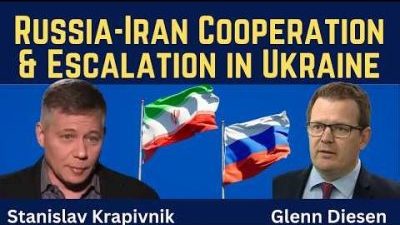
Stanislav Krapivnik: Russia-Iran Cooperation & Escalation in Ukraine
or go to
Aletho News Archives – Video-Images
Frlom the Archives
A dark page from the CIA’s history: What was Project Artichoke, launched 74 years ago?
By Erkin Oncan | Strategic Culture Foundation | August 22, 2025
One of the most useful instruments hidden behind the U.S. empire’s rhetoric of “freedom and democracy” was the Central Intelligence Agency, founded on September 18, 1947, as the successor of the Office of Strategic Services (OSS).
Since its creation, the CIA has carried out countless inhumane operations: assassinations, coups, drug trafficking, support for terrorism, conspiracies. The list of its crimes is endless. But among the darkest and most inhumane chapters of its record lie the notorious “mind control” experiments. … continue
Blog Roll
 Aletho News
- Are the Jews indigenous to Palestine?
- Stanislav Krapivnik: Russia-Iran Cooperation & Escalation in Ukraine
- Indonesia suspends participation in Board of Peace following attack on Iran
- ‘Operation Epic Fury’ burns an estimated $5.82 billion in just 100 hours
- Zionism’s grip over the world: From Epstein to Greater Israel
- How Israel and the FBI manipulated assassination plots to goad Trump into Iran war
- Iranian Strikes Dispel the Illusion of US Security Umbrella
- US Boasts of Destroyed Iranian Launchers Lack Credibility – Ex-DoD Official
- Europe not in position to cooperate with US and Israel against Iran
- Iran Has ‘Broken the Myth’ of Israeli Military Power: Former Pakistani Envoy
- If Americans Knew
- US troops were told war on Iran was ‘all part of God’s divine plan’, watchdog alleges
- Trump wants to run the show in Iran, but doesn’t know what he’s doing – Not a ceasefire Day 147
- ‘Dirty Work’ :The truth about how Israel was founded
- Mass Expulsion in Lebanon as Israel Expands War: “We Don’t Know Where to Go”
- Lies, distortions, and propaganda: how the U.S. mainstream media coverage on Iran hides the truth
- Palestinians in Gaza fear famine returning as Israel cuts off food amid Iran war
- AIPAC, other pro-Israel groups enter midterms with $100 million to spend
- Iranian girls killed by ‘double-tap’ strikes on Minab school
- Bari Weiss Is Going Full ‘Propaganda-Palooza’ With the Iran War
- Inside the Pro-Israel Campaign to Stop ‘The Voice of Hind Rajab’ From Winning an Oscar
- No Tricks Zone
- Televised! Leading German Political Candidate Tells Schoolchildren CO2 Makes Sun Hotter!
- New Study: A Century Warming Of 1.1°C Is ‘Commonplace’ And ‘Not Unusual’ During This Interglacial
- New Study: ‘Internal Noise’ And Volcanic Forcing Can Trigger 10-15°C Warming Within Decades
- Glaciers Worldwide Are Suddendly Surging, Experts Blame Warming!
- Surprising Discovery: Sahara Is Greening…Billions Of Trees Where Once Thought To Be Barren
- New Research Reaffirms Clouds, Aerosols, And Surface Solar Radiation Are ‘Driving The Climate System’
- Germany: Electric Car Catches Fire At Charging Station, Sets Off Local “Inferno”, Widespread Damage
- New Study: Canada’s New Brunswick Was 1°C Warmer Than Today During The Medieval Warm Period
- Coal Power Back In Trend As Globe Tries To Keep Pace With Growing Demand For Power
- New Study: A 4°C Warmer Beaufort Sea Had ‘No Sea Ice’ 11,700 – 8200 Years Ago
 Aletho News