Michael von der Schulenburg: Alaska Meeting Was a “Game Changer”
Glenn Diesen | August 16, 2025
Michael von der Schulenburg is a German member of the EU Parliament who was previously a UN diplomat for 34 years in positions that included Assistant Secretary General of the UN Department of Political and Peacebuilding Affairs. Schulenburg explains why he thinks the Alaska meeting was a game changer.
Ridiculous Europe
By Ted Snider | The Libertarian Institute | August 18, 2025
By President Donald Trump’s transactional criterion, NATO has been a costly failure that needs fixing or needs to be cut lose. Europe has failed to pay the price and has left the United States with the financial and military burden of defending Europe. The war in Ukraine has proven the point.
But that was never the point of NATO. The point of NATO was never economic nor transactional. The point of NATO was, in large part, to keep Europe militarily coordinated with, dependent on and subordinate to the United States. The point wasn’t to extricate the U.S. from Europe, it was, as Lord Ismay, the first Secretary General of NATO explained, precisely “to keep the Americans in Europe,” while keeping the Russians out.” By that criterion, NATO has been a massive success. The Ukraine war has proven that point too.
While it continues, with a loud voice, to make demands regarding the defense of Ukraine and the terms for ending the war, Europe has revealed to the world that it is unable to mount that defense without the U.S. and that it has been sidelined in the negotiations, leaving decisions about Europe to the Americans.
Europe is unable to supply Ukraine with the weapons it requires and that Europe insists Ukraine must receive. The United States has reiterated that it will no longer be the font from which Ukraine’s weapons flow. On August 10, Vice President J.D. Vance said clearly again that the U.S. is “done with the funding of the Ukraine war business.” Europe does not have the stockpile to spare nor the capacity to manufacture a fraction of the weapons Ukraine needs. And though Europe has, by necessity, accepted the American plan that Europe can send U.S. weapons to Ukraine if they pay for them, that will not provide Ukraine with even close to the amount of weapons the U.S. was supplying. And even that was not enough.
Not only can Europe not supply the weapons, they cannot supply the troops. Europe has, to its embarrassment, publicly conceded that it cannot mount the number of troops needed to send to Ukraine as peacekeepers after a ceasefire.
The war in Ukraine has exposed Europe’s dependence on the United States. Europe can neither provide the weapons nor the troops to defend itself. Europe has been revealed as dependent on, and subordinate to, the United States.
Ukraine is now facing a crisis on the battlefield. Russia’s military efforts were long dismissed as not rapidly gaining ground. But keeping the media focus on that criterion kept the public in the dark about the real criterion. Russia’s war of attrition was devouring and exhausting Ukraine’s weapons and, more importantly, manpower. The shrinking Ukrainian armed forces is running out of weapons to defend itself against the massive and still growing Russian army. There are not enough soldiers to fill the front line. That leaves gaps in the line. As Ukraine moves troops from other places to fill those gaps, it leaves even bigger gaps in those places. Russia’s war of attrition was setting up this moment. And now, Russian troops are breaking through those gaps in the lines.
For the first time in the war, the Russian armed forces have broken through key defensive lines and their rapid move west is now measured in miles and not inches. Logistical hubs critical for the Ukrainian armed forces to supply their troops in the east have been partially infiltrated and surrounded. Russian positions are being consolidated and roads that are lifelines to Ukrainian soldiers have been partially cut. There is also reliable reporting from both Russian and Ukrainian sources that the rapid advance has brought the Russian army all the way to the heavily fortified second Donbas fortification line, which they have now breached. Beyond that defensive line is largely open fields with no organized line of defense. The Russian armed forces may then be free to rapidly advance, making the Russian goal of control of the entire Donbas a real possibility. For the first time in the war, the Ukrainian armed forces face the very real possibility of collapse.
Geoffrey Robers, professor emeritus of history at University College Cork, told me, “All the signs point to a significant Russian breakthrough north of Pokrovsk. The Ukrainians may be able to stem the Russian advance but I doubt they will be able to throw it back, at least not without fatally weakening their already crumbling defensive lines in other sectors of the front.” Alexander Hill, professor of military history at the University of Calgary, told me that “regardless of how one might categorise this most recent Russian breakthrough, the reality is quite clearly that the rate of Russian advance has sped up recently and Ukrainian forces are having increasing difficulty in plugging gaps in their line.” Roberts says that “if Putin doesn’t obtain the rest of the Donbass through a deal with Trump, he will certainly secure it by military means, in months, if not weeks.”
But, despite this threatening reality, Europe is pleading for the war to go on. While Trump pushes for a diplomatic end to the war, Europe continues to push for an unreachable dream of a military solution. They insist on supporting Ukraine in its aspiration of goals that were already unrealistic over a decade ago. They continue to push for an open door to Ukrainian NATO membership even though Russian President Vladimir Putin went to war to prevent that—and will not stop the war without preventing that—Trump has vetoed it and even Europe has been reluctant to grant it. Putin made it clear on the threshold of the war, that that is what he went to war to prevent. Even NATO has acknowledged that. That goal was unrealist before the war, and it is even more out of reach with Russia winning the war.
The goal of reincorporating Crimea has been unaligned with reality, since 2014, when a referendum and the reincorporating of Crimea into Russia was already a reality. The idea of a Donbas that is at least semiautonomous has been unrealistic since the conception of the Minsk Accords. That idea became more unrealistic with the mounting assaults on Donbas prior to the war and the attacks on the rights of ethnic Russians in Donbas that began in 2014 and have grown worse since the start of the war.
As the Ukrainian armed forces face collapse and defeat, Europe continues to push for a continuation of the war that they cannot help. The War in Ukraine has exposed, not only Europe’s helplessness and dependence, it has revealed its ridiculousness.
Trump’s make or break moment after the Alaska summit
By Salman Rafi Sheikh – New Eastern Outlook – August 18, 2025
While Western media fixated on optics and diplomatic jabs, the Alaska summit quietly marked a turning point that shifted the conversation from temporary ceasefires to the possibility of lasting peace.
This moment demands clarity from Donald Trump: will he commit to a peace-first strategy or allow his European allies to drag the US deeper into costly, unwinnable conflicts?
The Summit
In the lead-up to the Alaska summit, Washington’s playbook was predictable: press Moscow for a ceasefire. President Donald Trump echoed what had become NATO’s default position. In a videoconference just 48 hours before the summit, European leaders and Ukrainian President Volodymyr Zelensky aligned on ceasefire being the top priority.
But ceasefires are rarely solutions. They’re political sedatives—short-term fixes that freeze conflicts without resolving them. Therefore, at the Alaska summit, Russia’s Vladimir Putin flipped the script. Rather than another temporary pause, he proposed a permanent peace framework that could involve a security pact involving mutual guarantees from the US and Russia, limits on NATO expansion, and a demilitarized buffer that includes Ukraine. It was the clearest signal yet that Moscow wasn’t angling for a breather; it wanted a structural reset.
Most importantly, the US President was able to see merit in this framework. In social media post, Trump said,
“A great and very successful day in Alaska! The meeting with President Vladimir Putin of Russia went very well, as did a late-night phone call with [Ukrainian] President Zelensky of Ukraine, and various European Leaders, including the highly respected Secretary General of NATO. It was determined by all that the best way [was] to go directly to a peace agreement … and not a mere ceasefire agreement, which often does not hold up.”
For the Europeans, this is not only a shocking development but also a glaring indication that they do not and cannot control the peace process in the sense that they can unilaterally dictate its terms. Therefore, they are already raising so-called “questions” about whether even the peace agreement will hold or not, or whether Russia can be trusted or not, or whether they can normalize their ties with Russia or not, or whether it is serious about peace. These questions are little more than attempts to throw wrenches into what probably is the best opportunity to bring peace to Europe.
Donald Trump faces a choice
Though he publicly aligned with Vladimir Putin on the need for a permanent peace agreement, President Donald Trump now faces intense resistance from a familiar front: hawkish European leaders who would rather prolong the war—and pull Washington deeper into it—than confront the core issue driving the conflict.
The choice before Trump is stark. He can either listen to Europe’s war camp or to Moscow’s push for a comprehensive peace deal. If he sticks with the narrow, short-term goal of a ceasefire while ignoring Russia’s central demand—ending NATO’s eastward expansion—he risks dragging the US into a grinding geopolitical entanglement. Worse, he’ll be walking away from one of his signature campaign promises: to end America’s endless wars and ‘Make America Great Again’.
Rejecting Russia’s terms outright won’t come without consequences. It would require doubling down on the existing strategy: ramping up sanctions, sending more weapons to Ukraine, and locking the US into a long-term conflict with no clear off-ramp. Such a move would not only escalate tensions with Moscow but also push Russia and its allies, such as China, to further reinforce the politics of creating a new, alternative global order. The idea of a parallel world order—already gathering momentum—would gain new political urgency and legitimacy. Trump has already clashed with BRICS members like India through trade wars and punitive rhetoric. A wider conflict could force him into even more confrontations on multiple fronts.
But there is another path—one that reverses the pressure. Instead of bowing to European hawks, Trump could put the heat on them. If Europe refuses to address the root causes of the war, the US could begin scaling back military support for NATO and Ukraine. Let Brussels handle the fallout. Such a move would send a clear message: if Europe wants perpetual conflict, it can fight it alone. (In fact, Donald Trump did give such statements during his election campaign.) And European leaders would know the likely outcome, that is, without US backing, Ukraine risks losing even more territory to Russia, with little chance of recovery.
As such, this is Trump’s moment of reckoning. He can choose to steer the US toward a long-overdue peace, or sleepwalk into another forever war, one that reshapes the global order and leaves America footing the bill.
Salman Rafi Sheikh is a research analyst of International Relations and Pakistan’s foreign and domestic affairs.
Declassified emails show Clapper pushed 2017 Russia report unity
Al Mayadeen | August 14, 2025
Newly declassified emails show that former US Director of National Intelligence (DNI) James Clapper pressed senior intelligence officials in late 2016 to align behind the Obama administration’s narrative of alleged Russian “collusion” with Donald Trump’s campaign.
The revelations come from a top-secret email released by current DNI chief Tulsi Gabbard, sent by Clapper on December 22, 2016, to then-NSA Director Mike Rogers, CIA Director John Brennan, and FBI Director James Comey.
Concerns over rushed intelligence assessment
The exchange focused on the January 2017 Intelligence Community Assessment (ICA) ordered by then-President Barack Obama. Rogers expressed concern that the report was being rushed:
“I’m concerned that, given the expedited nature of this activity, my folks aren’t fully comfortable saying that they have had enough time to review all of the intelligence to be absolutely confident in their assessments,” Rogers wrote.
Clapper responded by saying it was “essential that we (CIA/NSA/FBI/ODNI) be on the same page, and are all supportive of the report – in the highest tradition of ‘that’s OUR story, and we’re sticking to it’… This is one project that has to be a team sport.”
Report allegedly based on false and biased information
Gabbard also released an unclassified House Intelligence Committee report from 2020, which concluded that the Obama administration fabricated the case of Russian interference in the 2016 election despite intelligence reports to the contrary.
The committee found that the January 2017 ICA relied on “biased” and “implausible” claims — including the now-discredited Steele Dossier — to suggest Moscow favored Trump over Hillary Clinton. The report described the dossier and related intelligence as part of a smear campaign that fueled politicized investigations, arrests, and heightened US-Russia tensions.
Russia has consistently denied US allegations of election interference. Kremlin spokesman Dmitry Peskov has called the accusations “absolutely unsubstantiated,” while Russian Foreign Minister Sergey Lavrov has stated there is no credible evidence to support claims of Moscow meddling in elections abroad.
Coalition of Willing Opposes Any Restrictions on Ukrainian Army as Part of Ukraine Deal
Sputnik – 14.08.2025
The so-called “coalition of the willing” has opposed any restrictions on the Ukrainian armed forces as part of the deal on settling the Ukraine conflict ahead of the meeting between Russian President Vladimir Putin and US President Donald Trump, a joint statement read.
“Ukraine must have robust and credible security guarantees to effectively defend its sovereignty and territorial integrity. The Coalition of the Willing is ready to play an active role, including through plans by those willing to deploy a reassurance force once hostilities have ceased. No limitations should be placed on Ukraine’s armed forces or on its cooperation with third countries. Russia could not have a veto against Ukraine‘s pathway to EU and NATO,” the coalition said in a joint statement published by the office of UK Prime Minister Keir Starmer on Wednesday.
The coalition also believes that constructive negotiations can only take place “in the context of a ceasefire.”
The meeting between US President Donald Trump and Russian President Vladimir Putin is scheduled for this Friday in Anchorage, Alaska. The leaders are expected to discuss ways to resolve the Ukrainian conflict as well as other issues of mutual interest.
Ditching Gazprom Costs Moldova $1.16Bln Annually – Shoigu
Sputnik – 11.08.2025
In his article Moldova at a Crossroads for Sputnik, Russian Security Council Secretary Sergei Shoigu called Chisinau’s refusal to buy gas directly from Gazprom “a shot in the foot”, since the Moldovan budget loses more than 1 billion euros ($1.16 billion) a year from this.
“The refusal of the ‘yellow’ government to buy natural gas directly from Gazprom (although the republic still receives the same Russian gas from Europe) can hardly be called anything other than a shot in the foot. As a result, Moldova is forced to buy energy resources on the European market at inflated prices, which makes the budget annually lose more than 1 billion euros,” Shoigu said.
Since 2021, Moldova has had a government formed by the Party of Action and Solidarity (PAS), created by the incumbent president of the country, Maia Sandu. Next parliamentary elections in Moldova are scheduled for September 28, 2025.
The National Agency for Energy Regulation of Moldova previously reported that it had revoked Moldovagaz’s license to supply gas to local consumers. These rights will be transferred to the state-owned company Energocom by September 1. The decision was made in connection with Chisinau’s obligations to the EU to separate the gas infrastructure as part of the implementation of the Third Energy Package. The deprivation of Moldovagaz’s license to supply gas cannot be considered otherwise than the final stage of depriving Gazprom of its investment target; the Russian company will continue to protect its legal rights and interests by all available means, Gazprom said in turn. The Russian company owns 50% of Moldovagaz.
Europe’s Sad Trajectory: From Peace and Welfare to War and Scarcity
By Ricardo Martins – New Eastern Outlook – August 11, 2025
Once a beacon of peace and prosperity, the European Union is now marching into a new era of militarization and scarcity. Behind the rhetoric of security lies a project increasingly shaped by U.S. pressure, defense spending, and a quiet betrayal of its citizens.
For seven decades, the European project was presented as a beacon of peace, prosperity, and social welfare. Conceived in the ashes of the Second World War, the European Union (EU) emerged as a mechanism to bind former enemies through trade, shared institutions, and the promise that economic interdependence would prevent future wars. For much of its history, this narrative held true: the EU embodied the idea that Europe could reinvent itself as a moral community, anchored in social rights and collective security.
Today, that image is eroded. Europe is rearming at a scale unseen since the Cold War. The EU’s once-proud welfare model is being quietly sacrificed on the altar of militarization, as member states contemplate devoting up to 5% of GDP to defense spending. This transformation is not being driven by a sovereign European strategic vision, but rather by external pressure, primarily from the United States, whose military-industrial complex stands to benefit most.
From Peace Project to War Economy
The metamorphosis of the EU into what critics call a “war and scarcity” project is evident in both policy and rhetoric. European leaders, rather than articulating an independent security doctrine, appear increasingly subordinated to Washington’s priorities. The newly appointed NATO Secretary General and former Dutch Prime Minister, Mark Rutte, has become the face of this transformation.
During the so-called “Trump Summit” in The Hague, Rutte orchestrated an event less about strategy and more about appeasing U.S. President Donald Trump. Red carpets and ceremonial dinners replaced substantive debate. The summit, critics note, projected unity only by avoiding difficult questions, such as the long-term consequences of escalating the conflict in Ukraine or the feasibility of a 5% defense spending target.
Rutte even echoed unverified intelligence claims that Russia might attack a NATO member, offering no evidence, an act that some European observers described as “dangerous theatre.”
When NATO’s chief becomes a conduit for speculative threats to spread fear and make the militarization project palatable to the population, the alliance risks losing credibility and reinforcing the perception that Europe is less a sovereign actor and more a vassal of U.S. power.
The Costs of Militarization
The push toward 5% GDP in defense spending has profound implications for European societies. Bulgarian member of the European Parliament Petar Volgin, in an interview, warned that such a policy would neither enhance security nor foster stability. History shows that the accumulation of weapons often escalates risk rather than prevents conflict. Volgin invoked Anton Chekhov’s famous maxim: if a pistol hangs on the wall in the first act, it will inevitably be fired by the final one.
Beyond strategic risks, the economic trade-offs are stark. Channeling public resources into armaments will drain investments from social sectors like health, education, and welfare, which are the very foundations of the European social model. “This will turn Europe into a militarized monster devoid of social compassion,” Volgin warned.
Citizens, facing cuts in services and rising costs, will pay the price for a strategy that ultimately benefits the U.S. arms industry far more than European security, following Trump’s ruling.
Russophobia and the War Logic
Underlying this shift is what can be described as institutionalized Russophobia. Russophobia has become not just public opinion but a structured ideology shaping policy, media narratives, and diplomatic strategies.
While the focus is on Russian military action in Ukraine, the EU’s strategic response is viewed through the lens of historical Russophobia, which often replaces pragmatism with emotion and prejudice.
For centuries, Russia has been both part of and apart from Europe, contributing profoundly to its literature, music, and intellectual heritage, yet frequently treated as an alien civilization.
The military conflict in Ukraine provided an opportunistic moment for European elites to turn latent Russophobia into policy. Rather than pursuing a balanced security framework that might eventually integrate Russia into a stable European order, the EU doubled down on confrontation, sanctions, and militarization.
This approach carries a profound irony: a union born from the determination to overcome the hatreds of the past is now entrenching new fault lines on the continent. Calls for diplomacy, dialogue, or a broader European peace project, one that is social and moral, not merely military, have been marginalized or dismissed as naïve.
Democratic Disconnection and Strategic Drift
Perhaps the most troubling aspect of Europe’s new trajectory is the widening gap between its political class and its citizens. Surveys conducted in the first year of the Ukraine war showed that over 70% of Europeans preferred a negotiated peace to the indefinite prolongation of conflict. Yet, in the European Parliament, 80% of MEPs rejected amendments calling for diplomacy and only 5% voted in favor.
This dissonance reflects a structural malaise: the EU’s foreign and security policy is increasingly shaped not by democratic debate, but by lobbyists, bureaucratic inertia, and transatlantic pressures.
The shift from a welfare-oriented project to a war-driven agenda has happened without meaningful public consent. As Clare Daly and Mick Wallace, former Irish MEPs, have argued, the EU’s “liberal mask has slipped,” revealing a political architecture that prioritizes geopolitics over people.
War and Scarcity: A Vicious Cycle
The economic consequences of this transformation are already visible. Sanctions on Russia, while politically symbolic, have contributed to energy crises, inflation, and industrial slowdown, particularly in countries like Germany and Italy. Simultaneously, EU states are paying far higher prices for American LNG and U.S.-manufactured weapons, effectively transferring wealth across the Atlantic while their own populations face rising costs and stagnating wages.
This is the essence of Europe’s scarcity turn: by embracing a war economy, the EU sacrifices its social welfare model, undermines economic resilience, and fuels domestic discontent and the far-right parties. Instead of projecting stability, it imports volatility: economic, political, and social.
The Question of Purpose
The European Union now stands at a decisive moment in its evolution. If its purpose is to be a subordinate military bloc within a U.S.-led “Greater West,” it may achieve that at the cost of its original identity as a peace and welfare project.
However, if it seeks to reclaim strategic autonomy and moral credibility – deteriorated by its failure to condemn the genocide in Gaza -, it must confront uncomfortable questions: Can Europe imagine security beyond the logic of militarization and vassalage? Is Europe merely buying time, waiting for a non‑Trump administration, while reinforcing its subservience? Will it rebuild a peace project that addresses social justice and democratic legitimacy, not only deterrence? And can it rediscover the moral ambition that once made it a beacon for a conflict‑scarred world?
For now, the EU’s sad trajectory seems clear: a union that once promised prosperity and peace is becoming a fortress of fear and social uncertainty, defined by war spending, scarcity, and subservience. Its citizens were promised a shared future. What they are receiving instead is a militarized present, and an uncertain tomorrow.
EU wants to be global player but has no say on Ukraine peace process
By Ahmed Adel | August 11, 2025
In the position that the leaders of the European Union are in today, with the strengthening of BRICS and the rise of multiple global powers, the European Union has no place at any negotiating table, let alone the one for Ukraine, as it has nothing to say or offer. The EU is a group of ideologically insane politicians who are making disastrous moves in the service of their ideology, reducing the bloc from one of the most powerful and important economies to one of stagnation and recession threats.
Hungarian Prime Minister Viktor Orbán stated on a Hungarian television program that European leaders must meet with Russian President Vladimir Putin if they do not want to be excluded from shaping the security of their continent. According to him, Europe is currently “asleep” and not taking the necessary steps.
“The EU should not sit at home like an offended child,” and “if there is a problem, you have to negotiate,” Orbán said.
He also added that a Russian-European summit should be held urgently, preferably before the Russian-American summit.
The Hungarian Prime Minister emphasized that Europe must engage in negotiations with Moscow if it does not want to be excluded from all relevant geopolitical discussions, a stance he has consistently reiterated.
When Washington instigates issues with other great powers, such as China and Russia, it benefits by forcing Western partners to renounce their financial, trade, and other interests with these countries and direct them towards the US, which, incidentally, sells them weapons and imposes tariffs. In contrast, the EU should take the lead in normalizing relations with all countries worldwide, starting with Russia, and then improve ties with China and others, rather than following American policy.
Instead, Europe insists on the same policy of globalist hegemony that prevailed during the Biden administration, and they want nothing more than the defeat of Russia. Their only vision of the future is to rule the world, and one of the prerequisites and steps towards that is inflicting a strategic defeat on Russia.
They believe that by increasing pressure, a Russian strategic defeat can be achieved, unaware that this is complete nonsense. This delusional belief has meant that the EU remains on the margins in relation to historical trends and real movements, and at the same time, it lacks both economic and political stability, as well as military strength.
The main prerequisite for concluding peace or a ceasefire is that Ukraine, or at least what remains of it, can never again pose a threat to Russia. This means that Ukraine can never and under no circumstances become part of NATO, nor can it have foreign troops deployed in its country or any offensive assets. Only the US can guarantee and provide such conditions.
US President Donald Trump wants a quick resolution with his Russian counterpart Vladimir Putin because the pressure from the domestic public in the US is great, and they are forcing him to disclose the Epstein dossier. This pressure is so great that Trump is seeking an event that will divert the public’s attention from that topic and shift it to another one.
In addition to the internal panic that forces him to shift his focus elsewhere, Trump is also adopting a more realistic approach to the Ukraine problem than the EU. He is not approaching it from an ideological position, but rather by looking at things somewhat more realistically. This is, of course, not even close to a fundamentally realistic view, but it is still more realistic than the prevailing view in Brussels.
While a historic face-to-face meeting between Trump and Putin has been scheduled for August 15 in Alaska, European leaders have been left to sulk, backing Ukrainian President Volodymyr Zelensky’s announcement that he would not agree to cede territory.
Signed by the President of the European Union and leaders of France, Germany, Italy, Poland, Finland, and the UK, the statement stressed the need for a “just and lasting peace” for Kiev, including “robust and credible” security guarantees.
“Ukraine has the freedom of choice over its own destiny. Meaningful negotiations can only take place in the context of a ceasefire or reduction of hostilities,” the statement said. “The path to peace in Ukraine cannot be decided without Ukraine. We remain committed to the principle that international borders must not be changed by force.”
Although Zelensky may very well be invited to Alaska, it will not be because of the Europeans, but rather because Trump and Putin permitted it. The EU has been proven to be an economic, military, and diplomatic dwarf in the 2020s, and it is difficult to see how it will regain the position of power it enjoyed in previous decades, especially with the rise of alternative powers.
Ahmed Adel, Cairo-based geopolitics and political economy researcher.
Moldovan region rejects ruling against local Euroskeptic leader
RT | August 8, 2025
The parliament of Gagauzia, an autonomous, predominantly Russian-speaking region in Moldova, has rejected the sentencing of a local Euroskeptic leader to seven years in prison, calling it illegal and politically driven.
Gutsul, who was elected in 2023 and has consistently advocated for close ties with Russia, was found guilty of channeling illegal funds from an organized criminal group to the banned Euroskeptic SOR party and of financing protests against the Moldovan government.
Gutsul denied the charges, calling the process a “political execution” conducted “on orders from above.” The ruling triggered protests outside the courthouse against Moldova’s pro-Western government.
The Gagauzian parliament rallied behind Gutsul. In a resolution issued Thursday by Gagauzia’s People’s Assembly and Executive Committee, MPs said they “categorically reject and do not recognize the verdict” of the Moldovan court.
The document described the ruling as a “politically motivated” attempt “to eliminate the legally elected head of the autonomous region.”
“We consider this verdict a political reprisal, planned and executed from above,” the resolution said, adding that the ruling was “an act of political vengeance” that “undermines the autonomous region’s legal status.”
The Gagauzian authorities said Moldova’s government bears “full responsibility for the destabilization” of the situation in the region, while suggesting that the crackdown seeks to tip the scales ahead of the nationwide parliamentary elections slated for late September.
Moscow criticized the verdict as an attack on democracy. Russian Foreign Ministry spokeswoman Maria Zakharova said the ruling was labeled in both Moldova and Gagauzia as “an act of revenge” and “a fabricated case” without credible evidence. “It became the culmination of repression by the Chisinau regime against the entire Gagauz autonomy,” she added.
Exiled Moldovan opposition head decries police crackdown
RT | August 7, 2025
Moldova’s police action targeting alleged electoral corruption amounts to political persecution of the opponents of the government, according to exiled opposition politician Ilan Shor.
The authorities in Moldova said on Thursday they are conducting 78 search warrants across the country targeting individuals described as “members and sympathizers of a criminal organization.”
Ilan Shor, who leads the opposition Victory political bloc from abroad, claimed that the actions are directed at silencing his movement. The bloc is trying to overturn its ban from taking part in the upcoming parliamentary election against the ruling Party of Action and Solidarity.
“Law enforcement is turning offices and homes upside down solely under this demented suspicion of interference in the 2025 election, which hasn’t even taken place,” Shor said. “These searches are just more political repression and intimidation of anyone who refuses to support those scoundrels.”
Last week, President Maia Sandu, who Shor branded a “microdictator,” accused the Russian government of planning to covertly funnel more than €100 million ($115 million) to her political opponents ahead of Moldova’s parliamentary vote scheduled for September. The Kremlin rejected the claim, calling it another attempt by Chisinau to deflect attention from what it described as the government’s erosion of democratic norms.
Sandu has defended her administration’s crackdown on what she claims are pro-Russian criminal networks, saying these actions are critical to keeping Moldova on the path to EU membership.
Shor, who now resides in Russia, is the founder of the SOR party, which was outlawed by the Moldovan authorities in 2023 after its candidate, Evgenia Gutsul, won a regional election in the autonomous Gagauzia region.
Gutsul, now a leading figure in the Victory bloc, which was formed in 2024 by Euroskeptic politicians, including former SOR members, was sentenced this week to seven years in prison over alleged financial crimes. She denied any wrongdoing and called the verdict an attempt at political assassination.
Trump hits India with additional tariffs as Modi prepares to visit China for first time in seven years
The Cradle | August 6, 2025
US President Donald Trump signed an executive order imposing an additional 25 percent tariff on India over its purchase of Russian energy, the White House said on 6 August.
The additional tariffs will stack on top of 25 percent country-specific tariffs due to take effect overnight, and will come into force within 21 days, according to the executive order signed by Trump.
“They’re fueling the war machine. And if they’re going to do that, then I’m not going to be happy,” Trump said Tuesday in an interview with CNBC.
Despite a warm public reception during Indian Prime Minister Narendra Modi’s White House visit in February, Indian diplomats were “stunned” by what one journalist briefed on the meeting described as a “lack of respect” shown to the prime minister behind closed doors.
Amid these economic tensions, Prime Minister Modi is scheduled to travel to China on 31 August to attend the Shanghai Cooperation Organisation (SCO) summit in Tianjin.
The visit will mark his first to China since the 2020 Galwan Valley clash, and is being widely seen by Indian media as a step toward repairing ties with Beijing amid growing economic strain from the US.
Modi’s last visit to China was in June 2018, also for a summit of SCO leaders in Qingdao.
That was followed by Chinese President Xi Jinping traveling to India in October 2019, just months before the Chinese army’s incursions in eastern Ladakh.
Indian officials have linked the Tianjin summit to earlier visits by India’s External Affairs Minister S. Jaishankar and Defense Minister Rajnath Singh, describing them as part of a slow move to reset ties with Beijing.
Separately, the Times of India reported that Indian National Security Advisor Ajit Doval is expected in Moscow this week for talks on defense cooperation, including a possible expansion of India’s S-400 missile system deal.
Doval’s trip, while previously planned, has reportedly gained renewed importance in light of US pressure over India’s energy relationship with Moscow.
Hungary’s Top Diplomat Hits Out at EU Colleagues ‘Big Lie’ Narrative on Ukraine Aid
Sputnik – 06.08.2025
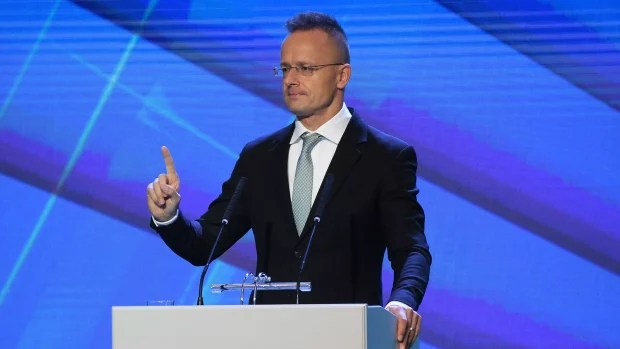
Hungarian Foreign Minister Peter Szijjarto on Wednesday called out the “big lie” of fellow top diplomats of EU member states when they are trying to portray the assistance to Ukraine as a moral obligation, claiming that Kiev is allegedly defending their countries from Russia.
“We have been hearing for three and a half years that Ukrainians are defending Europe, but this is a big lie. Ukrainians do not defend us because no one attacked us … They [EU foreign ministers] are trying to create a sense of guilt, in which we are supposed to perceive the need to support Ukraine as some kind of our spiritual duty. But this is not true, Ukraine does not defend us,” Szijjarto told Hungarian podcast Harcosok Oraja (Warriors’ Hour).
Every meeting of EU foreign ministers starts with a speech by the top Ukrainian diplomat, who lists his demands and complains that European supplies of money and weapons are insufficient and too slow, Szijjarto said.
“And then there is a self-condemnation match. My EU colleagues say that we are doing too little and must do more, that we are slow, we are weak, we are bad, because we must provide a much more active support for Ukraine,” the minister said.
Szijjarto added that he personally, at such moments, mentally calculated how many hundreds of billions of euros in money, weapons and “who knows what else” has Brussels already sent to Ukraine, and how they had destroyed the European economy and competitiveness, but even that does not seem to be enough.
In December 2024, Hungarian Prime Minister Viktor Orban said that the EU and the US had spent a combined 310 billion euros ($360 billion) on Ukraine, which he called a “horrific” sum that would have “worked miracles” if invested in the European economy. Instead, the money “went down the drain,” he said, warning the West that it is making a grave mistake in Ukraine that will come at a high price.
Featured Video
Laith Marouf: Hezbollah’s position on US-Iran ceasefire
or go to
Aletho News Archives – Video-Images
From the Archives
The Dirty Little Secret behind the “Global Terrorism Index”
The Omission of Israeli Terrorism in the Occupied Palestinian Territories
By Karin Brothers | Global Research | December 6, 2014
… The Israeli settlements — all of which are illegal – have been identified as a major impediment to peace. The refusal of a major “global” terrorism report to name the Israeli settlers as one of the groups most responsible for terrorism not only misrepresents a major source of regional violence but exposes the Global Terrorism Index as a propaganda tool that supports a U.S. agenda.
In recent years, governments have been attempting to thwart terrorism by blocking supportive fund-raising. When it comes to Israeli settlements, however, the US and Canada actually encourage fund-raising by giving organizations (such as Christian Friends of Israeli Communities (CFOIC) and the Jewish National Fund) financial support in the form of donor tax-deductions.
Charities which provide funds for the Israeli settlements should be regarded as terror-financing organizations. They should not only lose their tax-deductible status, but they should be banned because they support the violation of international humanitarian law. The terror-financing laws that are being strictly enforced for Muslim charities should be applied to Christian and Jewish charities as well. … Read full article
Blog Roll
 Aletho News
- The ‘Opposition Party’ Has Done Nothing to Stop the Iran War and Much to Goad Trump Into Continuing It
- Moscow backs Tehran on status of Lebanon in US-Iran deal
- How UK Regulator Ofcom Quietly Bypassed International Law to Police American Speech
- The Black Cube Files: How Former Mossad Operatives Flipped a Nation
- Laith Marouf: Hezbollah’s position on US-Iran ceasefire: What you’re not being told
- Israel’s priority lies in destroying chances of peace between Iran, US: Ex-UN nuclear chief
- Ceasefire for all or for none: Iran shuts Hormuz over Lebanon attacks
- Strait of Hormuz is Iran’s ‘nuclear weapon’ that forced US retreat: Medvedev
- Energy crisis will last for months – Kremlin envoy
- Europe’s quiet role in the war on Iran
- If Americans Knew
- This is ceasefire? Israel’s biggest massacre yet in Lebanon, another journalist killed in Gaza – Daily Update
- Tucker Carlson on Israel: This Is the Behavior of an Ally? Really?
- Gazans face a triple crisis: severe shortages of water and bread, healthcare in tatters
- NY Times reports how Netanyahu took the US into Iran War
- A sigh of relief over Iran, but Gaza and Lebanon in dire straits – Daily Update
- Thousands dead and neighborhoods razed to the ground: Aid agencies fear southern Lebanon is becoming the new Gaza
- The war the US is fighting for Israel could cost trillions
- ‘Cigarette Burns, Nail Wounds’: Toddler Tortured in Gaza to Coerce Father
- Trump Says US Sent ‘a Lot of Guns’ to Protesters in Iran
- Israeli forces destroy 17 UN peacekeeper cameras in south Lebanon
- No Tricks Zone
- An Inconvenient Tree: Uncovered In Alps… Europe Much Warmer Than Today 6000 Years Ago
- New Study Reports A 60% Slowdown In Greenland’s Ice Loss Rate In The Last Decade
- Low Intensity Tornado Wrecks Major Solar Farm, Creating A Potential Toxic Dump
- New Study Finds Warming Saves Lives…Cold Temperatures 12 Times More Deadly Than Excess Heat
- German Science Blog Accuses PIK Climate Institute Of Hallucinating Climate Tipping Points
- Devastating Assessment Of Comirnaty Vaccine By Former Senior Pfizer Europe Toxicologist
- New Study: CO2 Is ‘Effectively Negligible’ As An Explanatory Climate Change Factor Since 2000
- Former Pfizer Toxicologist Dr. Helmut Sterz Tells Bundestag Hearing Pfizer Vaccine Should Have Never Been Approved
- Energy Expert: Germany’s Nuclear Phaseout Was A “500 Billion Euro Mistake”
- New Research: South Australia’s Mid-Holocene Sea Surface Temperatures Were 4°C Warmer Than Today
 Aletho News