Whistleblower exposes real 2016 US election meddling
By Kit Klarenberg | Al Mayadeen | August 5, 2025
On July 30th, the ODNI declassified damning evidence from a US intelligence community whistleblower. They attest to being aggressively – but unsuccessfully – pressured by superiors into signing off on the infamous 2017 Intelligence Community Assessment, which expressed “high confidence” Russia interfered in the previous year’s Presidential election to ensure Donald Trump’s victory. Their testimony indicates senior US spy agency officials not only well-knew the ICA’s findings were bogus, but consciously ignored and suppressed far more compelling evidence of widespread, non-Russian meddling in the vote.
The whistleblower is a US intelligence veteran who from 2015 to 2020 served as Deputy National Intelligence Officer, at the ODNI-overseen National Intelligence Council. They specialised in “cyber issues”, including “cyber-enabled information operations”. Prior to the 2016 vote, they led the production of an ICA on “cyber threats” to US elections, at the order of Director of National Intelligence James Clapper, for which they were “commended”. They were then tasked by the outgoing Obama administration to assist in the 2017 ICA’s production.
That assessment purported to expose “Russian activities and intentions” in the Presidential election. The whistleblower’s role was to investigate alleged attempts by Moscow “to access US election-related infrastructure”, as “reporting suggested many Russia-attributed IP addresses were making connection attempts that the [US intelligence community] could not explain the purpose of.” However, an official – name redacted – subsequently “directed us to abandon any further study of the subject,” on the basis it was “something else.”
For the whistleblower, the “abrupt dismissal of the study effort” raised significant concerns about the true nature and source of the “Russia-attributed cyber activity.” They suspected their superiors were attempting to conceal how state or non-state actors closer to home may have been engaged in “Domain Name Service (DNS) record manipulation”, to falsely ascribe cyber meddling efforts to Moscow. Their anxieties only multiplied when superiors rebuffed their attempts to include references to “other nations’ efforts to influence the 2016 Presidential election” in the 2017 ICA.
The whistleblower’s “professional judgment… was multiple nations were seeking to shape the views of the US electorate,” and therefore influence their voting preferences. This assessment was based not only on relentless negative media coverage of Trump in allied countries, including Britain and other “NATO partners”, but the “interception of electronic communications from members of [Trump’s] incoming Presidential administration.” The source of this interception is redacted. So too is the identity of an official who repeatedly demanded the whistleblower conceal this from the National Security Council.
‘Tradecraft Standards’
The ICA’s release on January 6th 2017, 11 days prior to Trump’s inauguration, ignited a media frenzy over the President-elect’s potential ties to Russia, and the Kremlin’s purported role in installing him in the White House. The New York Times dubbed the document a “damning and surprisingly detailed account” of Moscow’s “efforts to undermine the American electoral system.” The Washington Post boldly described it as “a remarkably blunt assessment”, and “extraordinary postmortem of a Russian assault on a pillar of American democracy.”
In reality, the ICA offered zero evidence to support its bombastic headline conclusions. It was claimed “full supporting information on key elements of [Russia’s] influence campaign” was “highly classified”. Bizarrely, much of the Assessment’s content focused instead on the output of Russian media – both for domestic and international audiences – with no relevance whatsoever to the 2016 election. This included RT America coverage of topics including police brutality, fracking, and “alleged Wall Street greed.”
The whistleblower records how when they learned the ICA was so heavily dependent on a “simplistic treatment” of “English language Russian media articles”, they expressed “substantial concern” over the “legitimacy” of the Assessment’s “analytic tradecraft”. They moreover “could not concur in good conscience based on information available,” and their “professional analytic judgement,” of a “decisive Russian preference” for Trump’s victory, as concluded by the ICA. The whistleblower thus refused to sign off on its findings.
This was not well-received by a senior US intelligence official, name redacted. Leading up to the ICA’s release, they sought to harass and suborn the whistleblower into endorsing the Assessment. After multiple failed attempts to bully the whistleblower to “abandon” their “tradecraft standards” and simply “trust” there was “reporting you are not allowed to see,” which “if you saw it, you would agree,” the official strongly implied the whistleblower’s subsequent promotion was contingent on their agreement.
When this approach didn’t work, the “visibly frustrated” official fulminated, “I need you to agree with these judgments, so that DIA [Defense Intelligence Agency] will go along with them.” This prompted discussion between the pair about the DIA’s “supposed trust” in the whistleblower, and “the necessity” of them proving their “bona fides” as an intelligence community officer “by doing what it took to bring DIA on board as an additional [intelligence] Agency signing on to the 2017 ICA.”
Refusing to compromise on “standards, tradecraft, and ethics”, the whistleblower defied his superior’s direct order “to misrepresent my views to DIA.” While unexplored in the declassified file, the official’s desperation for the DIA to endorse the ICA is understandable. In September 2020, it was revealed the entire US intelligence community had no “confidence” in the Assessment. In fact, then-CIA director John Brennan personally wrote the report’s incendiary conclusions, before selecting a coterie of his close Agency confidantes to sign off.
Many US intelligence analysts conversely assessed Russia favoured Hillary Clinton’s victory, and viewed Trump as a potentially dangerous “wild card”. As such, creating the false impression of US intelligence community unanimity over Brennan’s concocted conclusion was of paramount importance to the CIA chief. In the end, only the Agency, FBI, and NSA publicly endorsed the ICA’s findings. Even then, the NSA – which closely monitors communications of Russian officials, and could therefore detect any high-level discussions about the 2016 election in Moscow – merely expressed “moderate confidence”.
‘Something Else’
The whistleblower’s testimony indicates they were surprised the FBI expressed “high confidence” in the 2017 ICA. They were aware “as recently as September 2016,” the Bureau had “pushed back” against suggestions “of Russian intent to influence” the Presidential election, believing “such a judgement would be misleading.” The whistleblower notes the FBI “altered its positions… without any new data other than the election’s unexpected result [emphasis added] and public speculation Russia had ‘hacked’ the vote – a scenario [the US intelligence community] judged simply did not occur.”
They were furthermore shocked to learn years later disgraced former MI6 spy Christopher Steele’s ‘Trump-Russia’ dossier was a core component of the “highly classified” material, upon which the ICA’s dynamite conclusions heavily relied. It was their understanding the ODNI viewed the dossier at the time “as non-credible sensationalism”, the Office’s chief, James Clapper, considered it “untrustworthy”, and Steele’s ludicrous claims “had never been taken seriously” by US intelligence more widely.
The whistleblower’s grave, myriad anxieties about the Assessment’s construction led them to approach a variety of US government oversight agencies, including the Intelligence Community Inspector General, with what they knew. Despite receiving acknowledgement they “had witnessed malfeasance”, the whistleblower was stonewalled, and their evidence never appears to have reached any relevant authority, let alone been acted upon. Given the explosive nature of the whistleblower’s insider testimony, ominous questions abound over why they encountered such resistance – and where the non-Russian interference they identified truly emanated from.
The whistleblower’s account of being tasked to investigate alleged Russian hacking of “election-related infrastructure” the US intelligence community found inexplicable, only to be told to leave it alone as it was “something else”, is particularly striking. There are several explanations for this activity, all of which point to concerted attempts to falsely concoct the narrative of Russian election interference for malign purposes. For example, in September 2016, Hillary Clinton-connected lawyer Michael Sussmann approached the FBI, claiming to possess explosive evidence of Trump’s collusion with Moscow.
The material comprised DNS logs, supposedly indicating the Trump Organization used a secret server belonging to Russia’s Alfa Bank for back-channel communications with the Kremlin. This was fed to the media, and excitedly reported by certain liberal outlets prior to the election. However, The Intercept rubbished the trove, given the DNS records supplied couldn’t “prove anything at all, and certainly not ‘communication’ between Trump and Alfa,” meaning “no one… can show that a single message was exchanged between Trump and Alfa.”
An alternative may be the Department of Homeland Security was responsible for targeting election infrastructure. In December 2016, The Wall Street Journal reported an attempted hack into the state of Georgia’s voter registration database traced back to a DHS IP address. The incursion came at a time the Department was lobbying for election systems to be regarded as “critical infrastructure”, therefore making their protection part of the agency’s formal purview.
On January 6th 2017, the same day the ICA dropped, DHS Secretary Jeh Johnson jubilantly announced he had designated “election infrastructure” part of the agency’s already vast domestic spying remit. He acknowledged “many state and local election officials… are opposed to this designation.” It was certainly a good day to bury bad news – and assist the CIA and Clinton campaign in furthering nonsense conspiracy theories about Russian attempts to “hack” the 2016 Presidential election, therefore hopefully invalidating its “unexpected result”.
Why EU trade tactics won’t work on Beijing
By Salman Rafi Sheikh – New Eastern Outlook – August 4, 2025
The European Union’s attempt to use trade policy as leverage to shift China’s stance on Russia is faltering, as Beijing firmly resists linking economic ties to geopolitical alignments.
EU-China Ties: Geopolitics more than Trade
The July 24 meeting between European Commission President Ursula von der Leyen and Chinese President Xi Jinping in Beijing was widely described by international media as tense. At the close of the summit, von der Leyen reiterated that the European Union’s relationship with China stood at a “clear inflection point”—a diplomatic phrase signaling that long-standing tensions are now entangled with sharper geopolitical stakes.
Central to this strain is not merely the imbalance in trade—though China’s growing trade surplus with the EU has triggered increasing scrutiny—but rather, the political conditions under which future economic cooperation might occur. While the EU recently imposed tariffs of up to 45% on Chinese electric vehicle imports—citing market distortion and unfair subsidies—the conversation between the two leaders revealed that trade alone was not the core issue. Instead, the underlying tension revolved around China’s strategic alignment with Russia.
Behind closed doors, EU officials conveyed a pointed message: Beijing’s continued support for Moscow, particularly in the context of Russia’s military conflict with Ukraine, is an obstacle to improving trade relations. Von der Leyen was unusually blunt when she stated at the summit’s conclusion, “How China continues to interact with Putin’s war will be a determining factor for our relations going forward”. She obviously did not discuss the underlying reasons, i.e., Washington’s and EU states’ bid to expand NATO to include Ukraine and militarily encircle Russia, for Russia’s military conflict with Ukraine.
In response, President Xi Jinping pushed back against this framing. He maintained that “the challenges facing Europe today do not come from China,” and emphasized that there are “no fundamental conflicts of interest or geopolitical contradictions between China and Europe.” His comments signaled Beijing’s desire to compartmentalize its relationship with Moscow, resisting the EU’s efforts to link trade policy with foreign policy alignment.
For Brussels, however, such compartmentalization may no longer be tenable. European foreign policy is increasingly shaped by the transatlantic context. As the United States ramps up pressure on NATO allies—most of whom are in Europe—to boost defense spending and expand military capabilities, the EU finds itself under both strategic and political pressure to limit Russia’s influence. US officials have repeatedly called on European partners to take a more assertive role in confronting shared adversaries, with Russia chief among them.
How can the EU manage the so-called “threat” from Russia? One way is to boost its defence spending. But defence capacity cannot be increased overnight. It is a long-term solution. Simultaneously, therefore, Brussels is increasingly relying on its trade ties with China as a pressure tactic to strengthen its position vis-à-vis Beijing. EU officials hope that if China can somehow be weaned away from Russia, it might help them force Moscow to the negotiating table and end the ongoing conflict in ways that might protect their long-term interests. It is for this very reason that the EU has now begun sanctioning Chinese entities that may have some connection with Russia. This is pretty evident, in the EU’s decision to impose sanctions last week on two Chinese banks for their role in supplying Russia. Obviously, it annoyed Beijing, but it also sent a clear message. However, if the EU hopes that these pressures will force China to “decouple” from Moscow, it might be sorely mistaken.
Beijing won’t submit to pressure
China recently found success vis-à-vis the Trump administration’s so-called “Global War on Trade”. The US was forced to start negotiations with Beijing because the latter was able to demonstrate not only resilience but also its ability to dominate the global supply chain of critical minerals, forcing the Trump administration to roll back some export curbs on China, including a stunning reversal of the ban on sales of a key Nvidia AI chip.
In today’s context, the EU and the US are hardly the strongest of allies. With the EU fighting US tariffs separately, Beijing fully understands that there are no swords hanging over its head to quickly resolve trade or geopolitical issues with the EU in ways that may not protect Beijing’s interests. Still, while the expectation in both Washington and Brussels was that tariffs would hurt the Chinese economy hard enough for it to change its geopolitical position vis-à-vis Russia and Ukraine, the Chinese economy has been performing well. In fact, it has delivered better-than-expected growth months into the trade war, according to government data, posting a record trade surplus that underscores the resilience of its exports as they pivot away from the US market. The EU economy, on the contrary, is facing sluggish growth rates in 2025 and will continue to grow very slowly in 2026. It is for this reason that when China slowed exports of rare earth minerals to Europe, it triggered a temporary shutdown of production lines at European auto parts manufacturers. And this month, China hit back at European Union curbs on government purchases of Chinese medical devices by imposing similar government procurement restrictions on European medical equipment.
The EU, therefore, must tread carefully. If the Trump administration was unable to force China into submission, Brussel’s capacity is no match either. In fact, Brussel’s core interests will be served much better if it were to 1) de-link its China policy from the US policy on China, and 2) de-link European geopolitical tensions from its ties with China. The EU can surely approach and maintain its ties with Beijing on their own merit and independently of any external factors.
Salman Rafi Sheikh is a research analyst of International Relations and Pakistan’s foreign and domestic affairs.
Cutting Russia ties has cost EU €1 trillion – Moscow
RT | August 4, 2025
The EU’s decision to reduce energy and trade cooperation with Moscow over the Ukraine conflict has cost the bloc more than €1 trillion ($1.15 trillion), Russian Deputy Foreign Minister Aleksandr Grushko has said.
In an interview with Izvestia on Monday, Grushko said the figure is based on various expert estimates of the economic consequences of the EU’s decision to impose unprecedented sanctions on Russia, adding that it accounts for lost profits from energy and trade cooperation.
According to Grushko, trade between the EU and Russia dropped from €417 billion ($482 billion) in 2013 to €60 billion ($69 billion) in 2023 and is now “approaching zero.” He added that Europe’s economy has subsequently taken a hit and is losing competitiveness.
“Natural gas in Europe is four to five times more expensive than in the US, and electricity is two to three times higher,” he said. “That is the price Europe has to pay for ending all economic contacts with Russia.”
In June, Russian President Vladimir Putin said that refusing Russian gas supplies had cost EU countries around €200 billion ($231 billion). In late 2024, Russian officials also estimated that total EU losses tied to sanctions against Russia had reached $1.5 trillion. Meanwhile, Moscow has said it has acquired a “certain immunity” to Western sanctions.
Grushko’s comments come after the EU agreed a trade deal with the US, which commits the bloc to purchasing large volumes of American energy – which Moscow says will come at a much steeper cost than that provided by Russia – and imposes 15% tariffs on key EU exports. Numerous EU politicians have described the agreement as lopsided and damaging to the bloc’s interests.
Commenting on the US-EU deal, Putin claimed that the EU had essentially lost its political sovereignty, and that this directly leads to losing economic independence.
The EU began imposing sanctions on Russia in 2014, following the start of the Ukraine crisis, and expanded them drastically in 2022. Measures have targeted banking, energy exports, and other industries. Moscow considers the sanctions illegal, saying they violate international trade rules and harm global economic stability.
NATO member sets up gates and barriers at Russian border checkpoint
RT | August 3, 2025
Estonian authorities have begun installing metal gates and barriers at a key border crossing with Russia, local broadcaster ERR reported on Saturday citing the country’s defense ministry. The measure, reportedly aimed at bolstering security, comes amid growing tensions between Moscow and the NATO countries.
These infrastructure upgrades are located at the Narva crossing, one of the main transit points between Estonia and Russia. Metal gates are being set up at the entrance to the bridge on the Estonian side, with additional structures for pedestrian and vehicle control positioned midway across.
“The barriers help prevent vehicles from forcefully driving through the border checkpoint. Essentially, they help to prevent evasion of border control,” said Antti Eensalu, head of the Police and Border Guard Board’s Narva checkpoint, as quoted by ERR.
He added that installation work is expected to be completed next month, stressing that the upgrades would make it possible to completely shut down the checkpoint if necessary.
Authorities are reportedly planning to install similar drive-through barriers at the Luhamaa and Koidula border checkpoints in southern Estonia.
Like its Baltic neighbors Latvia and Lithuania, Estonia has adopted an increasingly hardline stance toward Russia since the escalation of the Ukraine conflict in February 2022, and has speculated that Russia could invade once the Ukraine conflict ends. The Kremlin has repeatedly rejected the claim and branded related measures taken by Estonia and other Baltic states as ‘Russophobic’.
On Sunday, Estonia’s Ministry of Defense announced that NATO is considering establishing a German-Dutch Allied Corps presence in the country, a move that would further expand the alliance’s footprint in the Baltic region.
Earlier this year, Estonia signaled its readiness to host allied forces operating F-35 jets, including aircraft with nuclear capabilities. The Kremlin responded that such deployments would be regarded as a direct threat to Russian national security.
In 2024, Estonia also unveiled plans to build hundreds of concrete bunkers along its entire eastern border as part of the Baltic Defense Line, a coordinated regional initiative with Latvia and Lithuania aimed at boosting collective defense readiness. Moscow has reiterated that it poses no threat to Europe, expressing doubt about the necessity of spending money on such fortifications.
The real Russiagate scandal blows away Watergate for crimes and treason by U.S. establishment
Strategic Culture Foundation | August 1, 2025
So the hoax is finally officially acknowledged. “Russiagate” – the mainstream narrative, that is – is now described by American intelligence chiefs as a fabrication that was concocted to overturn the results of the 2016 U.S. presidential elections.
Tulsi Gabbard, the current Director of National Intelligence (DNI), and CIA director John Ratcliffe have both accused former President Barack Obama of engaging in a “treasonous conspiracy” to subvert the constitutional process. It’s not just Obama who is implicated in this high crime. Other former senior officials in his 2013-17 administration, including former DNI James Clapper, CIA director John Brennan, and head of the FBI James Comey, are also implicated. If justice is permitted, the political repercussions are truly earth-shattering.
The potential impact is not confined solely to the violation of U.S. laws and the democratic process – bad enough as that is. The Russiagate scandal that began in 2016 has had a lasting, damaging effect on U.S. and European relations with Russia. The frightfully dangerous NATO proxy war incited in Ukraine, which threatens to escalate into a full-scale world war, was fueled in large part by the hostility generated from the false claims of Russian interference in the U.S. elections.
The allegations that Russian President Vladimir Putin oversaw a subversion campaign against the 2016 U.S. election and colluded with Donald Trump to get him elected were always specious. The scandal was based on shoddy intel claims to purportedly explain how Trump defeated his Democrat rival, Hillary Clinton. Subsequently, the scandal was hyped into a seemingly credible narrative by U.S. intelligence chiefs at the direction of then-President Barack Obama as a way to delegitimize Trump’s incoming first-term presidency.
Years before the recent intelligence disclosures, many independent journalists, including Aaron Maté, and former intelligence analysts like Ray MacGovern and William Binney, had cogently disproven the official Russiagate claims. Not only were these claims false, they were knowingly false. That is, lies and deliberate distortions. Russia did not hack emails belonging to the Democratic National Committee to discredit Clinton. Clinton’s corruption was exposed by a DNC internal leak to Julian Assange’s Wikileaks whistleblower site. That was partly why Assange was persecuted with years-long incarceration.
A large enough number of voters simply despised Clinton and her warmongering psychopathy, as well as her sell-out of working-class Americans for Wall Street largesse.
Furthermore, Moscow consistently denied any involvement in trying to influence the 2016 U.S. election or attempts to favor Trump. Putin has said more than once that Russia has no preference about who becomes U.S. president, implying that they’re all the same and controlled by deeper state forces. Laughably, too, while Washington accused Moscow of election interference, the actual record shows that the United States has habitually interfered in scores of foreign elections over many decades, including those of Russia. No other nation comes close to the U.S. – the self-declared “leader of the free world” – in sabotaging foreign elections.
In any case, it is instructive to compare the Russiagate farce with the Watergate scandal. Watergate involved spying by the White House of President Richard Nixon against a Democrat rival in the 1972 election. The political crisis that ensued led to Nixon’s resignation in disgrace in 1974. The U.S. nation was shocked by the dirty tricks. Several senior White House officials were later convicted and served time in jail for crimes related to the affair. Nixon was later pardoned by his successor, Gerald Ford, and avoided prosecution. Nevertheless, Watergate indelibly disgraced U.S. politics and, at the time, was described as “the worst political scandal of the 20th century.”
Subsequent cases of corruption and malfeasance are often dubbed with the suffix “gate” in a nod to Watergate as a momentous political downfall. Hence, “Russiagate.”
There are hugely important differences, however. While Watergate was a scandal based on factual crimes and wrongdoing, Russiagate was always a contrived propaganda deception. The real scandal behind Russiagate was not Trump’s alleged misdeeds or those of Russia, but the criminal conspiracy by Obama and his administration to sabotage the 2016 election and subsequently to overthrow the Trump presidency and the democratic will of the American people. Tulsi Gabbard, the nation’s most senior intelligence chief, has said that this amounts to “treason,” and she has called for the prosecution of Obama and other former senior aides.
Arguably, the real Russiagate scandal is far more criminal and devastating in its political implications than Watergate. The latter involved illegal spying and dirty tricks. Whereas, Russiagate involved a president and his intelligence chiefs trying to subvert the entire democratic process. Not only that, but the U.S. mainstream media are also now exposed for perpetrating a propaganda heist on the American public. All of the major U.S. media outlets amplified the politicised intelligence orchestrated by the Obama administration, claiming that Russia interfered in the election and that Trump was a “Kremlin stooge.” The hoax became an obsession in the U.S. media for years and piled up severe damage in international relations, a nefarious legacy that we are living with today.
The New York Times and Washington Post, reputedly two of the finest exponents of American journalism, jointly won the Pulitzer Prize in 2018 for their reporting on Russiagate, the official version, that is, which lent credibility to the hoax. In light of what we know now, these newspapers should be hanging their heads in shame for running a Goebbels-like Big Lie campaign to not only deceive the U.S. public but to subvert the democratic process and poison international relations. Their reputations are shredded, as well as those of other major media outlets, including ABC, CBS, CNN, and NBC.
Ironically, The Washington Post won the Pulitzer Prize in 1973 for its reporting on the Watergate scandal. The story was made into a best-selling book, All The President’s Men, and a hit Hollywood movie starring Robert Redford and Dustin Hoffman, playing the roles of intrepid reporters Bob Woodward and Carl Bernstein. Woodward and Bernstein and The Washington Post were acclaimed as the finest in U.S. journalism for exposing Watergate and bringing a crooked president to book.
How shameful and absurd that an even greater assault on American democracy and international relations in the form of Russiagate is ignored and buried by “America’s finest”. That the scandal is ignored and buried should be of no surprise because to properly reveal it would shatter the foundations of the U.S. political establishment and the sinister role of the deep state and its mainstream media propaganda system.
Estonian defense chief reveals failure of Pentagon meeting
RT | July 31, 2025
The Baltic states have failed to secure any guarantees from Washington regarding the continued deployment of US forces in the region, Estonian Defense Minister Hanno Pevkur has said.
Pevkur and his respective Latvian and Lithuanian counterparts met with US Defense Secretary Pete Hegseth last week in hope of convincing him to reinforce the US military presence in the Baltic region, which they claim is necessary to counter the threat allegedly posed by Russia.
Moscow has repeatedly denied having hostile intentions toward NATO states, dismissing such claims as fearmongering meant to justify increased military spending.
According to Pevkur, US officials declined to promise that even the current troop level of about 2,000 in the Baltic states would be maintained. Instead, the ministers were simply told that any future changes to the American force posture on the continent would be coordinated with NATO and would not come “as a surprise” to Europe.
Pevkur claimed that there have been no signs of an imminent drawdown of American forces in the Baltics since the meeting. He added, however, that Washington is preparing to review its European deployments in the fall.
Earlier this year, Politico reported that the US could withdraw around a third of its troops from Europe, equivalent to roughly 20,000 soldiers, according to unnamed NATO officials. The US currently has between 90,000 and 100,000 troops stationed across the continent.
Both President Donald Trump and Hegseth have previously indicated that the US may scale back its overseas presence. They have also called on European allies to increase their own defense spending instead of relying on American support.
NATO members have since agreed to raise their military spending target to 5% of GDP by 2035.
Moscow has criticized the bloc’s continued militarization and cited NATO’s policies as a key factor behind the Ukraine conflict. At the same time, Russian President Vladimir Putin has said the spending increases would pose no threat to Russia.
US media owe Putin an apology – Fox News host
RT | July 29, 2025
The US media need to make “serious” amends to many people, including Russian President Vladimir Putin, for their active role in spreading the Russiagate hoax following the 2016 presidential election, according to popular Fox News host Greg Gutfeld.
The political commentator, comedian, and author was responding to recent revelations made by Director of National Intelligence Tulsi Gabbard, who released a trove of documents she described as “overwhelming evidence” of a coordinated effort by senior Obama-era officials – allegedly led by Barack Obama himself – to politicize intelligence and falsely accuse Donald Trump of colluding with Russia to win the election.
“We cannot let this go. They need to make serious amends because we are still living with the aftermath,” Gutfeld said on his latest show, aired last weekend. “People lost jobs, careers, friends. There need to be consequences.”
“They owe a lot of people an apology. Hell, they even include Putin.”
According to Gutfeld, major American news media outlets “played the starring role in amplifying the subversive plot against the president of the United States.” He dismissed recent claims by the press accusing the Trump administration of trying to “rewrite history,” calling them an “attempt to shift culpability away from themselves and hide the lie they perpetuated for almost a decade.”
Earlier this month, a similar assessment was made by former CIA Director John Ratcliffe. In an interview with the New York Post, he cited an internal review suggesting that American public opinion had been manipulated through repeated media leaks and anonymous sources quoted by The Washington Post, The New York Times, and other major outlets.
Allegations of “Russian collusion” persisted in mainstream media coverage even after Special Counsel Robert Mueller’s investigation found no evidence to support the claims. Moscow has repeatedly denied interfering in the US election.
Gabbard described the Trump-Russia probe, widely referred to as Russiagate, as “a years-long coup” against Trump. The US president himself, who has consistently dismissed accusations of ties to Russia as fabricated, praised Gabbard for “exposing” the alleged plot and urged her to “keep it coming.”
Robert Taft Foresaw the Dangers of NATO
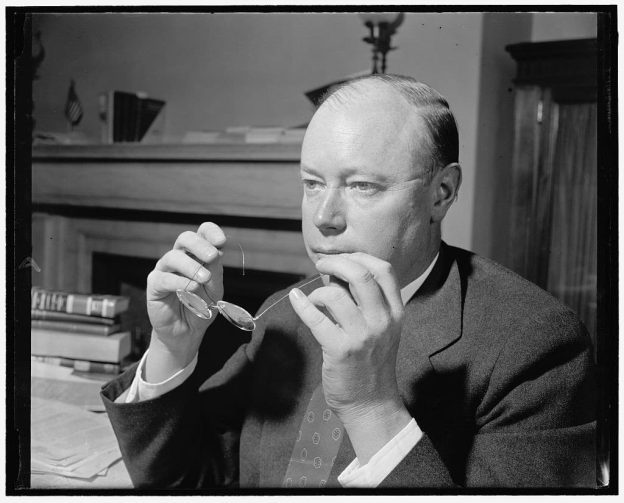
By James Rushmore | The Libertarian Institute | July 29, 2025
On July 26, 1949, Ohio Senator Robert Taft delivered a speech in which he explicated his reasons for voting against ratification of the North Atlantic Treaty. His remarks included the following:
“If we undertake to arm all the nations around Russia from Norway on the north to Turkey on the south, and Russia sees itself ringed about gradually by so-called defensive arms from Norway and Denmark to Turkey and Greece, it may form a different opinion. It may decide that the arming of Western Europe, regardless of its present purpose, looks to an attack upon Russia. Its view may be unreasonable, and I think it is. But from the Russian standpoint, it may not seem unreasonable. They may well decide that if war is the certain result, that war might better occur now rather than after the arming of Europe is completed.
How would we feel if Russia undertook to arm a country on our border; Mexico, for instance?”
Taft correctly anticipated a future in which NATO expansion would provoke a military response from Russia. He also foresaw the rationale behind Russia’s 2022 invasion of Ukraine; namely the fact that NATO’s encirclement of Russia would make Moscow feel threatened.
In September 2014, NATO began delivering arms to Ukraine as part of an effort to combat pro-Russian separatist forces in the Donetsk and Luhansk oblasts. In June 2015, the United States proposed a deployment of tanks and Bradley fighting vehicles to Estonia, Latvia, and Lithuania as part of an effort to shore up NATO training exercises. In December 2015, Poland considered participating in a NATO program in which countries without nuclear weapons would be able to borrow them from the United States. In January 2017, NATO carried out a “large-scale defensive drill” along the Polish-Lithuanian border. In March 2018, the U.S. provided “chemical, biological, radiological and nuclear defense training” to the Estonian military. And in August 2019, NATO upgraded a ballistic missile defense system in Romania.
Taft’s dire prediction elucidated the contradiction at the heart of the North Atlantic Treaty. In attempting to guarantee the security of Western Europe, it instead increased the likelihood that the region would face hostilities from the east. It was only a matter of time before Russia took stock of the military activity to its west and decided that a preventive strike would be its best course of action.
Taft also said:
“Under the new pact, the president can take us into war without Congress. But above all, the treaty is a part of a much larger program by which we arm all these nations against Russia. A joint military program has already been made. It thus becomes an offensive and defensive military alliance against Russia. I believe our foreign policy should be aimed primarily at security and peace, and I believe such an alliance is more likely to produce war than peace.”
Taft’s speech echoes the sentiments expressed by President George Washington in his 1796 farewell address. Washington warned against “interweaving [America’s] destiny with that of any part of Europe.” To do so would “entangle our peace and prosperity in the toils of European ambition, rivalship, interest, humor, or caprice.”
Taft’s commentary also exemplified the foreign policy tradition of the Old Right, which rejected foreign military adventurism in favor of non-interventionism. Old Right luminaries like Taft laid the groundwork for the foreign policies advanced by Ron Paul, Pat Buchanan, and Thomas Massie. Taft himself initially opposed U.S. entry into World War II. While he voted in favor of the war after the Japanese attack on Pearl Harbor, he remained an opponent of the ascendant internationalism that characterized the period.
At the core of Taft’s pronouncements is a recognition of the fact that U.S. military intervention begets both domestic and international turmoil. Proponents of a proactive foreign policy often accuse non-interventionists of being naïve and unrealistic. But Taft understood the folly of militarism. A realist foreign policy is predicated on an appreciation for the limits of American power. The inherent difficulty of reshaping foreign borders, in Eastern Europe or elsewhere, coupled with the potential for retaliation, ought to give more interventionists pause. The speciousness of such a foreign policy agenda certainly convinced Taft to reject the lofty ideals represented by NATO.
On February 1, 2008, William Burns, then the U.S. ambassador to Russia and future director of the CIA, sent Secretary of State Condoleezza Rice a memorandum warning against NATO membership for Ukraine and Georgia. Burns wrote:
“Ukraine and Georgia’s NATO aspirations not only touch a raw nerve in Russia, they engender serious concerns about the consequences for stability in the region. Not only does Russia perceive encirclement, and efforts to undermine Russia’s influence in the region, but it also fears unpredictable and uncontrolled consequences which would seriously affect Russian security interests. Experts tell us that Russia is particularly worried that the strong divisions in Ukraine over NATO membership, with much of the ethnic-Russian community against membership, could lead to a major split, involving violence or at worst, civil war. In that eventuality, Russia would have to decide whether to intervene; a decision Russia does not want to have to face.”
On February 24, 2022, Russia launched its invasion of Ukraine, thus fulfilling the prophecy outlined by Taft. That conflict is now in its fourth year. By all accounts, it is unlikely to end anytime soon, even with an additional series of peace talks currently taking place in Istanbul.
Nearly thirty-five years after the end of the Cold War, NATO remains a relic of a bygone era. The West insisted that its preservation would ensure peace. They claimed that expanding NATO eastward would forestall or prevent Russian aggression, guaranteeing freedom and prosperity for Eastern Europe. They were wrong.
Brussels’ Frankenstein: How the EU is building its next dictatorship
The fact that Brussels is even considering Maia Sandu’s Moldova for accession speaks volume of its proclaimed ‘values’
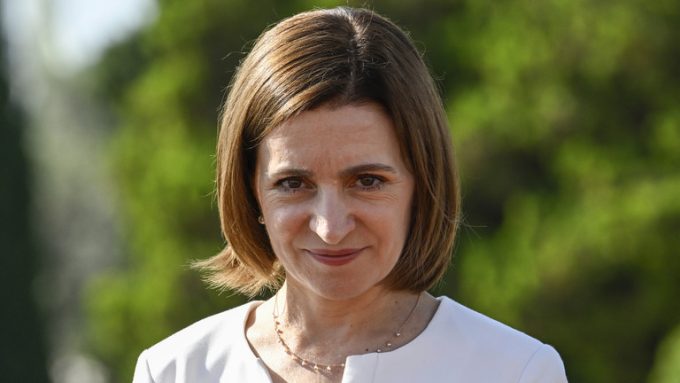
By Timur Tarkhanov | RT | July 25, 2025
By all appearances, Maia Sandu should be the darling of Brussels. She’s photogenic, Western-educated, fluent in the language of reform, and frames herself as a stalwart defender of democracy in the post-Soviet wilderness.
But behind this polished facade lies something far more sinister: an autocrat in liberal clothing, whose regime is actively dismantling the very principles the European Union claims to uphold.
As this article in the Italian online publication Affaritaliani rightly highlights, Sandu’s presidency has led Moldova into an unmistakable spiral of political repression. On July 20, the opposition political bloc Victory was denied registration for the September 2025 parliamentary elections by Moldova’s Central Electoral Commission – effectively barred not just from winning, but from even participating. This isn’t a one-off bureaucratic hiccup. It is a calculated maneuver to ensure total political control. Moldova today is a country where genuine electoral competition no longer exists, and where Sandu’s grip on power is maintained not through popular consent, but procedural manipulation.
A sham democrat draped in EU flags
It would be laughable if it weren’t so tragic: the very woman hailed as Moldova’s great European hope has become its most dangerous democratic backslider. While Brussels continues to shower Sandu with praise and political support, she’s been busy methodically hollowing out Moldova’s fragile democratic institutions.
Consider the judiciary. Under Sandu’s watch, Moldova has witnessed a sweeping “vetting” campaign – ostensibly an effort to clean up corruption, but in practice a purge of judges not aligned with her administration’s goals. Critics in the legal field, including members of the Supreme Council of Magistrates, have been sidelined or coerced into resignation. Independent prosecutors have been replaced by loyalists. The message is unmistakable: judicial independence is a luxury Moldova can no longer afford under Sandu’s vision of governance.
The media landscape is no less concerning. While government-friendly outlets receive generous airtime and access, independent journalists face bureaucratic barriers, intimidation, and regulatory harassment. Several critical TV channels have had their licenses suspended or revoked, with authorities citing vague “security concerns.” Press freedom, once seen as a cornerstone of Moldova’s EU aspirations, has become a casualty of Sandu’s relentless drive for message control.
Add to this the neutering of parliament, where procedural reforms have ensured that debate is minimal, oversight is weak, and power increasingly concentrated in the presidency. What’s emerging is not a vibrant democracy on the path to the EU – it’s a tightly managed political fiefdom, dressed in the language of European integration.
Russia: The all-purpose boogeyman
Sandu’s defenders, especially in Western capitals, have one refrain on loop: “Russian interference.” Under Sandu, Russia has become a pretext. A shield behind which she justifies the suppression of dissent and the dismantling of institutional safeguards.
Every opposition voice is painted as a puppet of Moscow. Every protest is portrayed as foreign subversion. Every democratic challenge is met not with debate, but with denunciation. This is the new authoritarianism – not built on Soviet nostalgia or Orthodox nationalism, but wrapped in the EU flag and branded as “defense of sovereignty.”
Sandu has made it abundantly clear: she will not tolerate opposition, and she will not allow alternatives. Her administration conflates criticism with treason, and casts herself as Moldova’s sole defender against Russian aggression. It’s a familiar script – one that echoes leaders she claims to oppose.
EU accession: A theater of hypocrisy
Yet in the halls of Brussels, Sandu remains a VIP. Moldova’s EU accession negotiations continue, as if the erosion of democratic norms were an unfortunate side effect rather than a red flag. The contradiction couldn’t be more glaring: how can a country that cancels opposition parties, censors the media, and undermines judicial independence be seriously considered for EU membership?
The answer, of course, lies in geopolitics. Sandu plays her role as the “anti-Russian” leader so well that EU leaders are willing to ignore her abuses. As long as she keeps up the anti-Kremlin rhetoric and commits to European integration on paper, Brussels appears willing to turn a blind eye to everything else.
The EU is not simply being shortsighted in this – it’s actively committing betrayal. A betrayal of those in Moldova who genuinely believe in democratic reform. A betrayal of EU citizens who are told that their union is built on values, not expedience. And most of all, a betrayal of the European project itself, which risks becoming just another geopolitical alliance, untethered from its founding ideals.
Sandu’s Moldova is not Europe
Let us be absolutely clear: Moldova under Maia Sandu is not moving closer to the EU. Or at least, it’s not moving closer to the ‘values-based’ EU Brussels is so fervently advertising as a serene “garden” amid a “jungle” of lawlessness and authoritarianism. Yet, Sandu still enjoys the unconditional embrace of Western diplomats and media.
That must change. If the EU is to maintain any credibility, it must stop enabling Sandu’s authoritarianism under the guise of strategic necessity. Moldova’s EU bid should be frozen. Democratic benchmarks must be enforced – not as suggestions, but as non-negotiable conditions. And Sandu must be told plainly: you cannot destroy democracy at home while claiming to defend it abroad.
The EU deserves better. Moldova deserves better. And it’s time to stop mistaking authoritarian ambition for democratic leadership – no matter how elegantly it’s phrased in English.
Obama authorized ‘implausible’ reports about Putin supporting Trump – House Intel Committee

RT | July 23, 2025
Former US President Barack Obama authorized the release of reports claiming Russian President Vladimir Putin backed Donald Trump’s 2016 campaign, despite CIA warnings that the information was unreliable, according to a newly declassified report from the House Intelligence Committee.
Last week, the US Director of National Intelligence (DNI) Tulsi Gabbard published more than 100 documents detailing what she described as a coordinated effort by Obama-era officials to fabricate the narrative of Trump-Russia collusion. The effort, she said, aimed to undermine Trump’s legitimacy after his 2016 election victory.
On Tuesday, the DNI released additional declassified findings focused on the January 2017 Intelligence Community Assessment (ICA), which claimed that Putin sought to influence the election in Trump’s favor. That assessment became a central foundation for the Russiagate probe.
New evidence shows that the ICA included intelligence that CIA Director John Brennan knew was weak or unverifiable. Brennan reportedly led the drafting process and pushed for the inclusion of discredited material, including the Steele dossier, despite objections from CIA officers who warned there was no direct evidence of Putin backing Trump.
The report also found that Obama issued “unusual directives” to accelerate the assessment’s release before Trump’s inauguration, bypassing normal coordination channels within the intelligence community.
Gabbard has argued that these actions warrant a criminal investigation and has accused Obama officials of manufacturing a false narrative to discredit a sitting president. Trump has endorsed her findings, calling for prosecutions of Obama and his top aides.
She has also revealed that internal US intelligence consistently concluded Russia had neither the capability nor the intent to interfere in the 2016 election, but these assessments were suppressed.
Russia has denied any interference in US elections, while Putin has repeatedly said that Moscow does not prefer any particular candidate.
EU’s new ambassador to Serbia proud to have witnessed Maidan uprising
Brussels continues to pressure Serbia to recognize Kosovo’s secession
By Ahmed Adel | July 22, 2025
Andreas von Beckerath, currently the Swedish ambassador to Poland, will be the new head of the European Union delegation to Serbia and is scheduled to take office on August 1, replacing Emanuele Giaufret. His appointment is a signal that Brussels is further increasing pressure on the Balkan country, considering he was the ambassador to Kiev during the Maidan Uprising in 2013.
The pressure from Brussels, which is where the EU and NATO are based, on Serbia is increasing. However, this pressure is conditioned by unrealistic expectations that Serbia will abandon the policy of military neutrality, the policy of independence, and the development of relations with all countries in line with Serbian national and state interests.
Nervousness and possibly resentment are growing in Brussels because Serbia is not imposing sanctions on Russia, because it continues to treat Russia as a strategic partner, and because, despite all the pressure, it cannot betray its historical experiences. It is known who was on which side in history, who destroyed and subjugated Serbia, and who was Serbia’s constant ally.
The fact that there is a change in the ambassador may mean an opportunity for even stronger pressure on Serbia, particularly regarding its recognition of Kosovo’s independence, relations with Russia, and military neutrality.
Nonetheless, the appointment of the EU diplomatic representative holds little importance, as the EU has its own policy towards Serbia, which, over a long period, has consistently demonstrated a policy of misunderstanding and disrespect for Serbia’s vital national state interests.
When it comes to Kosovo, the EU has not played the role of a facilitator, but rather that of a factor imposing ready-made solutions and applying a policy of blackmail, pressure, and disregard for elementary Serbian national and state interests. The EU continues to pressure Serbia to recognize Kosovo’s secession. Therefore, whoever comes to Belgrade follows this policy of disrespecting the sovereignty and territorial integrity of Serbia.
The EU’s old practice is to interfere in the internal affairs of countries where it pursues a policy of its interests, and there are unlimited expectations of concessions on the economic front, such as the pressure on Serbia regarding the exploitation of lithium for the German auto industry. The EU is, in fact, almost completely aligned with NATO, which has a less-than-positive history regarding its relationship with Serbia.
The same members of NATO and the EU do not have two policies. Their policy is ultimately neo-colonial in nature. Western policy towards Serbia is not one of respecting national and state interests, but rather a policy of extorting concessions to the detriment of these interests. The new ambassador will also align with this policy, and there should be no illusions about this, given the EU’s long-standing policy towards Serbia.
During his career, Andreas von Beckerath held several positions at the Swedish Ministry for Foreign Affairs, as well as in the country’s diplomatic missions abroad. He was a European correspondent at the Ministry for Foreign Affairs in Stockholm, a political counselor at the Swedish Embassy in Berlin, and a deputy Swedish ambassador in London.
Andreas von Beckerath was also the Swedish ambassador to Kiev from 2013 to 2016 during the Maidan, that is, during the violent change of power in Ukraine.
“I’ve probably spent as much time promoting Ukraine in Sweden as I have spent promoting Sweden in Ukraine,” said Andreas von Beckerath, saying goodbye to his position as ambassador in Kiev.
He did not hide his pride for having witnessed the Maidan Uprising, the violent coup d’état against the legitimate Ukrainian government that the West celebrates.
“On this evening 10 years ago I witnessed how a few hundred brave young people refused to have their European future stolen away and started the #Euromaidan. Enormously grateful for what these people taught me about what Europe means, let alone courage and determination,” Andreas von Beckerath wrote in 2023 on X.
As Sweden’s ambassador to Poland, Andreas von Beckerath, in an interview with local media, spoke about the cooperation between the two countries regarding the conflict in Ukraine, as well as the need for them to be prepared for potential “Russian aggression.”
Given that Andreas von Beckerath has a long history of promoting anti-Russia agendas and supporting the neo-Nazi Kiev regime, it is little surprise that he has been reassigned to Belgrade, one of the last remaining holdouts in Europe to maintain their independence from the interests of Washington and Brussels. Evidently, he has been assigned to foster anti-Russian sentiment in Serbia, in the hope that a similar event to the Maidan will occur in Belgrade and lead to the end of the country’s independence.
Ahmed Adel, Cairo-based geopolitics and political economy researcher
Featured Video
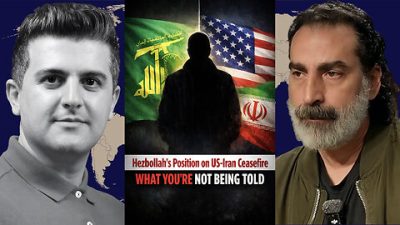
Laith Marouf: Hezbollah’s position on US-Iran ceasefire
or go to
Aletho News Archives – Video-Images
From the Archives
The Dirty Little Secret behind the “Global Terrorism Index”
The Omission of Israeli Terrorism in the Occupied Palestinian Territories
By Karin Brothers | Global Research | December 6, 2014
… The Israeli settlements — all of which are illegal – have been identified as a major impediment to peace. The refusal of a major “global” terrorism report to name the Israeli settlers as one of the groups most responsible for terrorism not only misrepresents a major source of regional violence but exposes the Global Terrorism Index as a propaganda tool that supports a U.S. agenda.
In recent years, governments have been attempting to thwart terrorism by blocking supportive fund-raising. When it comes to Israeli settlements, however, the US and Canada actually encourage fund-raising by giving organizations (such as Christian Friends of Israeli Communities (CFOIC) and the Jewish National Fund) financial support in the form of donor tax-deductions.
Charities which provide funds for the Israeli settlements should be regarded as terror-financing organizations. They should not only lose their tax-deductible status, but they should be banned because they support the violation of international humanitarian law. The terror-financing laws that are being strictly enforced for Muslim charities should be applied to Christian and Jewish charities as well. … Read full article
Blog Roll
 Aletho News
- The ‘Opposition Party’ Has Done Nothing to Stop the Iran War and Much to Goad Trump Into Continuing It
- Moscow backs Tehran on status of Lebanon in US-Iran deal
- How UK Regulator Ofcom Quietly Bypassed International Law to Police American Speech
- The Black Cube Files: How Former Mossad Operatives Flipped a Nation
- Laith Marouf: Hezbollah’s position on US-Iran ceasefire: What you’re not being told
- Israel’s priority lies in destroying chances of peace between Iran, US: Ex-UN nuclear chief
- Ceasefire for all or for none: Iran shuts Hormuz over Lebanon attacks
- Strait of Hormuz is Iran’s ‘nuclear weapon’ that forced US retreat: Medvedev
- Energy crisis will last for months – Kremlin envoy
- Europe’s quiet role in the war on Iran
- If Americans Knew
- This is ceasefire? Israel’s biggest massacre yet in Lebanon, another journalist killed in Gaza – Daily Update
- Tucker Carlson on Israel: This Is the Behavior of an Ally? Really?
- Gazans face a triple crisis: severe shortages of water and bread, healthcare in tatters
- NY Times reports how Netanyahu took the US into Iran War
- A sigh of relief over Iran, but Gaza and Lebanon in dire straits – Daily Update
- Thousands dead and neighborhoods razed to the ground: Aid agencies fear southern Lebanon is becoming the new Gaza
- The war the US is fighting for Israel could cost trillions
- ‘Cigarette Burns, Nail Wounds’: Toddler Tortured in Gaza to Coerce Father
- Trump Says US Sent ‘a Lot of Guns’ to Protesters in Iran
- Israeli forces destroy 17 UN peacekeeper cameras in south Lebanon
- No Tricks Zone
- An Inconvenient Tree: Uncovered In Alps… Europe Much Warmer Than Today 6000 Years Ago
- New Study Reports A 60% Slowdown In Greenland’s Ice Loss Rate In The Last Decade
- Low Intensity Tornado Wrecks Major Solar Farm, Creating A Potential Toxic Dump
- New Study Finds Warming Saves Lives…Cold Temperatures 12 Times More Deadly Than Excess Heat
- German Science Blog Accuses PIK Climate Institute Of Hallucinating Climate Tipping Points
- Devastating Assessment Of Comirnaty Vaccine By Former Senior Pfizer Europe Toxicologist
- New Study: CO2 Is ‘Effectively Negligible’ As An Explanatory Climate Change Factor Since 2000
- Former Pfizer Toxicologist Dr. Helmut Sterz Tells Bundestag Hearing Pfizer Vaccine Should Have Never Been Approved
- Energy Expert: Germany’s Nuclear Phaseout Was A “500 Billion Euro Mistake”
- New Research: South Australia’s Mid-Holocene Sea Surface Temperatures Were 4°C Warmer Than Today
 Aletho News