New calls for inquiry into Climate Change Committee
Net Zero Watch | March 11, 2024
Campaign group Net Zero Watch is again calling for an inquiry into the Climate Change Committee (CCC), the Government’s official advisers on decarbonisation. The move follows revelations at the weekend that the organisation’s chief executive, Chris Stark, had tried to use obfuscation to “kill” questions over the adequacy of its energy system model, rather than addressing them directly. This behaviour put Stark in direct breach of the Nolan standards for public officeholders.
The scandal, published in the Sunday Telegraph, is just the latest of a series of controversies that have dogged the CCC since its inception.
-
In 2013, it was revealed that CCC chairman Lord Deben had a conflict of interest, retaining his position as chairman of a company involved in windfarm installations after his appointment. He had told the House of Commons Energy and Climate Change Committee that he would divest himself of all such interests if appointed.
-
In 2019, it was revealed that Lord Deben’s family company was still taking large sums of money from businesses working in the environmental sphere.
-
In 2023, it was revealed that those payments to Lord Deben’s company were not properly disclosed in the Register of Interests.
-
In 2021, it was revealed that the CCC had used spurious weather data in their modelling, thus enabling them to reduce the capacity of electricity generation and storage equipment apparently required.
-
It was also revealed that the CCC used spurious figures for the cost of electric vehicles, thus reducing the apparent costs.
-
The CCC tried to hide its model from public scrutiny, spending tens of thousands of pounds of taxpayer’s money fighting a lawful Freedom of Information request.
-
More recently, the CCC admitted that its electricity system modelling is inadequate. The resulting understatement of costs is as much as tens of billions of pounds per year.
-
It has also been revealed that the CCC “waves away” most of the cost problem, simply by assuming extraordinary cost reductions in future. With current technology, the cost of Net Zero will be hundreds of billions of pounds higher.
Net Zero Watch director Andrew Montford said:
The list of scandals at the Climate Change Committee seems to be endless, but Parliamentarians seem to want to let them get away with it. If the House of Commons Energy Security and Net Zero Committee again fails to launch an inquiry into the governance of the CCC, and in particular Chris Stark’s management and the adequacy of the modelling that underpinned the 2019 Net Zero report, it will look very bad.
Trump Makes a Statement on COVID Vaccines, Brags About Nine Month Approval Time
Are you Tired of Winning Yet?
BY IGOR CHUDOV | MARCH 8, 2024
Trump released the following statement on Truth Social, responding to Joe Biden’s State of the Union:

In the TruthSocial post above, Trump mentioned his nine-month approval time for Covid vaccines.
I am frankly shocked by the stupidity of both statements.
The vaccines did not “save us from the pandemic” – they made the pandemic worse. And being proud that such vaccines were pushed through in just nine months is perhaps a bit misguided.
Leaked files from transgender ‘experts’ show callous disregard for medical ethics
By Michael Cook | BioEdge | March 7, 2024
Newly leaked files from within the leading global transgender healthcare body have revealed that the clinicians who shape how “gender medicine” is regulated and practiced around the world consistently violate medical ethics and informed consent.
The leaked files from the internal messaging forum of the World Professional Association for Transgender Health (WPATH) were published this week by the US-based think tank Environmental Progress.
WPATH is considered the leading global scientific and medical authority on “gender medicine,” and in recent decades, its “standards of care” have guided the policies and practices of governments, medical associations, public health systems and private clinics across the world.
However, Environmental Progress claims that leaked files reveal that WPATH does not meet the standards of evidence-based medicine, and members frequently discuss improvising treatments as they go along. Members are fully aware that children and adolescents cannot comprehend the lifelong consequences of “gender-affirming care,” and in some cases, due to poor health literacy, neither can their parents.
“The WPATH Files show that what is called ‘gender medicine’ is neither science nor medicine,” said Michael Shellenberger, founder of Environmental Progress. “The experiments are not randomized, double-blind, or controlled. It’s not medicine since the first rule is to do no harm. And that requires informed consent.”
Some of the discussion appears very disturbing. Members appear to ignore long-term patient outcomes despite being aware of the debilitating and potentially fatal side effects of cross-sex hormones and other treatments. Messages in the files show that patients with severe mental health issues, such as schizophrenia and dissociative identity disorder, and other vulnerabilities such as homelessness, are being allowed to consent to hormonal and surgical interventions.
Members dismiss concerns about these patients and characterize efforts to protect them as unnecessary “gatekeeping.”
The leaked files provide clear evidence that doctors and therapists are aware they are offering minors life-changing treatments they cannot fully understand. WPATH members know that puberty blockers, hormones, and surgeries will cause infertility and other complications, including cancer and pelvic floor dysfunction. Yet they consider life-altering medical interventions for young patients, including vaginoplasty for a 14-year-old and hormones for a developmentally delayed 13-year-old.
The WPATH Files also show how far medical experiments in gender medicine have gone, with discussions about surgeons performing “nullification” and other extreme body modification procedures to create body types that do not exist in nature.
A growing number of medical and psychiatric professionals say the promotion of pseudoscientific surgical and hormonal experiments is a global medical scandal that compares to major incidents of medical malpractice in history, such as lobotomies and ovariotomies.
A section in the report on medical ethics is particularly damning about the notion of autonomy. “In the past, the emphasis on autonomy in medical ethics was meant to act as a shield: there were things a doctor could not do to you without your consent,” says the report. “Nowadays, and especially in gender medicine, autonomy acts as a sword: in its name, there is nothing a doctor may deny you.”
The ”Trans Leaks” have not been reported yet by any major newspapers apart from The Telegraph (London) and Canada’s National Post. Dr Marci Bowers, the president of WPATH, issued a statement in which she contended that trans medicine is scientific and that sceptics aren’t:
“WPATH is and has always been a science- and evidence-based organization whose recommendations are widely endorsed by major medical organizations around the world. We are the professionals who best know the medical needs of trans and gender diverse individuals-and stand opposed to individuals who misrepresent and de-legitimize the diverse identities and complex needs of this population through scare tactics.”
The raw files have been published in a report called The WPATH Files: Pseudoscientific surgical and hormonal experiments on children, adolescents, and vulnerable adults. Journalist Mia Hughes puts the WPATH Files in the context of the best available science on gender distress.
A Third of U.K. Met Office Temperature Stations May Be Wrong by Up to 5°C, FOI Reveals
BY CHRIS MORRISON | THE DAILY SCEPTIC | MARCH 1, 2024
Nearly one in three (29.2%) U.K. Met Office temperature measuring stations have an internationally-defined margin of error of up to 5°C. Another 48.7% of the total 380 stations could produce errors up to 2°C, meaning nearly eight out of ten stations (77.9%) are producing ‘junk’ or ‘near junk’ readings of surface air temperatures. Arguably, on no scientific basis should these figures be used for the Met Office’s constant promotion of the collectivist Net Zero project. Nevertheless, the state-funded operation frequently uses them to report and often catastrophise rises in temperature of as little as 0.01°C.
Under a freedom of information request, the Daily Sceptic has obtained a full list of the Met Office’s U.K. weather stations, along with an individual class rating defined by the World Meteorological Office. These CIMO ratings range from pristine class 1 and near pristine class 2, to an ‘anything goes’ or ‘junk’ class 5. The CIMO ratings penalise sites that are near any artificial heat sources such as buildings and concrete surfaces. According to the WMO, a class 5 site is one where nearby obstacles “create an inappropriate environment for a meteorological measurement that is intended to be representative of a wide area”. Even the Met Office refers to sites next to buildings and vegetation as “undesirable”. It seems class 5 sites can be placed anywhere, and they come with a WMO warning of “additional estimated uncertainties added by siting up to 5°C”; class 4 notes “uncertainties” up to 2°C, while class 3 states 1°C. Only 13.7%, or 52 of the Met Office’s temperature and humidity stations come with no such ‘uncertainty’ warnings attached.

The above graph shows the percentage totals of each class. Class 1 and 2, identified in green, account for just 6.3% and 7.4% of the total respectively. Class 3 identified as orange comes in at 8.4%. The graph shows the huge majorities enjoyed by the darkening shades of red showing classes 4 and 5. It is possible that the margins of error identified for classes 3, 4 and 5 could be a minus amount – if for instance the measuring device was sited in a frost hollow – but the vast majority are certain to be pushed upwards by heat corruptions.
Last year, the investigative journalist Paul Homewood sought FOI information from the Met Office about the Welsh weather station Porthmadog, which often appears in ‘hottest of the day’ listings. He was informed that the site was listed as class 4 and “this is an acceptable rating for a temperature sensor”. Hence, continued the Met Office, “we will continue to quote from this site”. In short, observes Homewood, the Met Office is happy to use a class 4 site for climatological purposes, “even though that class is next to junk status”. It is bad enough that the Met Office is using this site, but it is even worse that they know about the issues but still plan to carry on doing so, Homewood continued. “How many other weather stations are of such poor quality?” he asked.
Now we know.
Using these figures with a precision to one hundredth of a degree centigrade, the Met Office declared that 2023 was the second hottest in the U.K., coming in just 0.06°C lower than the all-time record. Cue, of course, all the Thermogeddon headlines in mainstream media. In 2022, the Met Office said that five sites in the U.K. on July 19th went past 40°C, with a record of 40.3°C at RAF Coningsby. Kew Gardens is termed a class 2 site, although it is very close to one of the largest tropical glasshouses in the world. St James’s Park and Northolt airport are class 5 sites, Heathrow is class 4, while RAF Coningsby is class 3. At the time, the Met Office declared that the records set a “milestone in U.K. climate history”. A national record was also set on July 18th at Hawarden Airport in Wales (class 4) and on July 19th at Charterhall in Scotland (class 4).
Always alive to a popular headline catastrophising the weather, the Met Office declared a warmest St. Valentine’s night English record this year of 11.5°C at class 4-rated St. Mary’s airport on the Isles of Scilly. Earlier in the year, the Met Office declared the highest January temperature in Scotland at 19.6°C at Kinlochewe, a class 4 site. Interestingly the previous, much promoted, U.K. record was set on July 31th 2019 at the Cambridge Botanic Gardens, a class 5 site. Even more interesting is that in the Homewood FOI disclosures, the Met Office stated that class 5 data “will be flagged and not quoted in national records”.
The Met Office is between a rock and a hard place with these surface temperature measurements. Many of its long-standing stations have been encroached by urbanisation and corruptions seem to have become endemic across the entire system. In the past, this didn’t matter as much since margin of error allowances could be accepted along with less accurate local and national weather forecasting. Measuring surface temperatures across countries and then the planet is always going to be difficult, but a more accurate reading would be obtained by only using data from WMO classes 1 and 2. However, national and global temperatures have become politicised by the global warming scare and the proposed Net Zero solution. Alarmists often state that climate ‘tipping’ points will be reached with very small increases in temperature measured in tenths of a degree.
Using data from just classes 1 and 2 would likely crash the claimed rises in national and global temperatures. Something similar would likely occur if the Met Office moved the majority of its stations to more suitable spots. A number of scientists have tried to measure the urban heat bias in temperature records with estimates suggesting a general problem of warming corruption around the 20-30% mark. Last October, two scientists working out of the University of Alabama in Huntsville (UAH), produced a paper noting: “The bottom line is that an estimated 22% of the U.S. warming trend, 1895 to 2023, is due to localised UHI [urban heat island] effects.”
Under our FOI request, it can now be seen that the problems with corrupted U.K. weather stations are similar to those discovered in the United States by meteorologist Anthony Watts. In work compiled over a decade, Watts found that 96% of temperature stations used by the U.S. weather service NOAA were “corrupted” by the localised effects of urbanisation. Sites in close proximity to asphalt, machinery and other heat-producing or heat-accentuating objects, “violates NOAA’s own published standards, and strongly undermines the legitimacy and magnitude of the official consensus on long-term climate warming trends in the United States”, he observed.
Both the U.K. and U.S. temperature datasets are important constituents of global totals compiled by a number of weather operations including the Met Office and NASA. The Met Office runs HadCRUT, where over the last 10 years two retrospective revisions have added about 30% extra warming to recent global temperatures. This had the effect of removing all traces of a pause around 2000-2014. Meanwhile, Professor Ole Humlum has noted that the GISS database run by NASA increased its surface air temperature between 1910 to 2000 from 0.47°C to 0.67°C, a boost of 49% over this period. “Frequent and large corrections in a database unavoidably signal a fundamental uncertainty about the correct values,” commented Humlum.
Pristine temperature data is available. In 2005, NOAA set up a 114 nationwide network of stations called the U.S. Climate Reference Network (USCRN). It was designed to remove all urban heat distortions, aiming for “superior accuracy and continuity in places that land use will not likely impact during the next five decades”.

The graph above shows nothing more than very minor, gentle warming since 2005, slight warming that might be expected in the small and continuing natural rebound from the depths of the pre-industrial Little Ice Age. A reliable source of global data is to be found in the UAH satellite record, which shows less overall warming since 1979 than the surface datasets. Both these datasets are rarely mentioned. In fact one of the compilers of the satellite data, along with the UAH paper on urban heat, is Dr. Roy Spencer. In 2022 he was kicked off Google AdSense for publishing “unreliable and harmful claims”. The move demonetised Dr. Spencer’s widely consulted monthly satellite temperature update page by removing all Google-supplied advertising. Google is on record as stating that it will ban all sites that are sceptical of “well established scientific consensus”.
Chris Morrison is the Daily Sceptic’s Environment Editor.
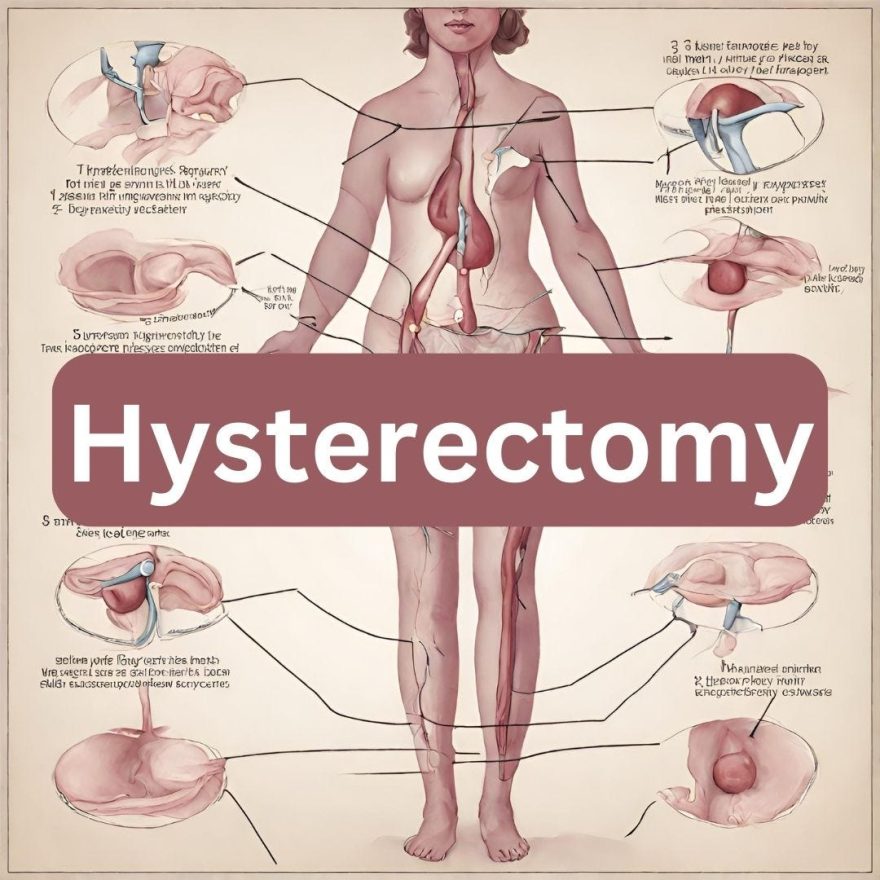
Hysterectomy – On Stealing Womanhood
Lies are Unbekoming | February 25, 2024
This all started from one line in the interview I did with Carol Peterson.
Hormones – Lies are Unbekoming (substack.com)
“Most reasons for hysterectomies can be tied to progesterone deficiencies and most could be avoided with rational supplementation.”
I realised I didn’t know anything about hysterectomies, but I knew it was a major surgery, and here was Carol saying that most could be avoided.
I followed my curiosity and here we are with this article.
I cannot believe what I have discovered. It’s actually hard to put into words.
I think I will do more than just this article on the subject.
How is it possible that cutting out a woman’s uterus is the second most common surgery in the US?
About 600,000 women a year undergo hysterectomies in the U.S., the second most common surgery, surpassed only by cesareans. – Wittelsey 2011
Surely, they are all necessary:
Over 5,000 women whose doctors have recommended hysterectomy have received the names of second opinion physicians from the HERS Foundation, says Coffey. Only 2% of the 5,000 have gone on to have the surgery. – HERS
Surely, they wouldn’t do it for the money, would they?
“Some of us aren’t making a living, so out comes a uterus or two each month to pay for the rent,” admitted a Baltimore specialist in a 1975 New York Times interview.
How did Big Medicine reach the conclusion that a woman doesn’t need her uterus?
“Your uterus is nothing but a big, unresponsive blob.” — The Woman Doctor’s Medical Guide for Women by Barbara Edelstein, MD (1982)
The structural problem seems to be one of lying to women about the risks and aftermath:
According to Nora Coffey, founder and President of the non-profit HERS Foundation in Philadelphia, PA, too many doctors perform unnecessary hysterectomies, too many fail to tell women that there can be devastating after-effects from removal of the uterus or ovaries, and too many don’t offer alternative treatment for the problems that are, seemingly, so quickly solved with the knife.
One of the most significant points that jumped at me from the page was “loss of maternal feeling”:
Coffey says that HERS has also counseled over 9,000 hysterectomized women who are experiencing symptoms such as loss of maternal feeling, bone and joint pain, chronic fatigue, hot flashes, insomnia, loss of short-term memory, diminished emotional responses, loss of sexual desire and a host of other hysterectomy-related symptoms.
Of the millions of women that have had this done to them, how many have lost their maternal feeling towards their children. Women carry that maternal feeling into the world too. What happens to the world when maternal feeling is vanquished?
I now wonder how many women in power have had a hysterectomy. Is it more than the wider population? What are the consequences of this? Does it help with climbing the ladder? Does it impact empathy?
I think these are all fair questions because of the sheer scale of the issue.
At the end of each day of counseling, I knew there were a few more women out there who would avoid unnecessary surgeries because they received information from HERS. It was too little too late, however, for 621,000 other women in this country each year—more than 22 million hysterectomized women alive in America today? – The H Word (2008)
They remove the ovaries also about half the time by scaring woman with ovarian cancer:
In this country, half of the women who undergo a hysterectomy also have their ovaries removed. The reasoning given is to “save” the woman from the remote possibility of ovarian cancer.
However, Dr. Lauersen issues this warning to women concerning prophylactic excision of the ovaries: “Usually it is not necessary to remove the ovaries of a menstruating woman during hysterectomy. A doctor may say that he wants to remove the ovaries to prevent ovarian cancer, an insidious disease that does not have obvious symptoms. However, studies have indicated that it would take 7,500 oophorectomies (excision of the ovaries) in order to prevent one death from ovarian cancer. Ovarian cancer, which only accounts for 4% of all cancers in women, is more frequently discovered after menopause in women between 55 and 64 years old.”
Because fibroid growths are often called “tumors”, the lay patient may immediately fear that she has cancer. However, according to Dr. Lauersen, fewer than one half of one percent ever proceed to that stage.
The removal of ovaries is castration.
Castrated men were called Eunuchs.
We don’t have a word for castrated women. I think they, the butchers, prefer it that way.
I really don’t have words to describe this butchery.
We live in three dimensions. The physical, the mental and the spiritual.
We have been trained to diminish the spiritual, to our own detriment.
Somewhere deep in the bowels of Big Medicine, there is a spirit, and that spirit hates humanity, and very specifically it hates women.
There is no other conclusion I can reach anymore.
After reading this long stack, if you reach a different conclusion, let me know in the comments.
Carol Peterson pointed me to HERS to further my education, and it was there that I discovered Nora Coffey and her great book The H Word, that I’m reading now, co-authored with Rick Schweikert. I can definitely recommend it.
It turns out that Rick wrote a play…you will never guess what he called it…
What are the odds!!
The following statistics and Q&As are drawn from these three sources:
HYSTERECTOMY: THE SHOCKING TRUTH by Lee Rothberg (whale.to)
The Hysterectomy Epidemic: Where’s the Outrage? – Ms. Magazine (msmagazine.com)
Female Anatomy: The Functions of the Female Organs – HERS Foundation
Let these numbers wash over you as you start coming to terms with the scale of what has been done to women.
- About 600,000 women a year undergo hysterectomies in the U.S. This makes it the second most common surgery among women in the country, surpassed only by cesarean sections.
- 90 percent of hysterectomies are avoidable, according to Dr. Mitchell Levine, suggesting that the majority of these procedures could be managed with alternative treatments.
- 70 to 76 percent of hysterectomies do not meet the recommended criteria for necessity according to an expert panel and the American Congress of Obstetricians and Gynecologists (ACOG), indicating a high rate of potentially unnecessary surgeries.
- 210,000 women could avoid losing their ovaries annually if alternative treatments were pursued instead of hysterectomies, based on the 70 percent estimate of avoidable procedures.
- 15 to 30 percent of women who conserve their ovaries during hysterectomy lose ovarian function anyway, highlighting the risk of menopausal symptoms and hormonal imbalance even when ovaries are not removed.
- Women who have their ovaries removed face a higher risk of early death from any cause, primarily from heart disease and lung cancer, as found in a study of almost 30,000 women followed for 24 years.
- For every 24 women having bilateral oophorectomy, at least one will die prematurely as a result of the procedure, emphasizing the significant risk associated with the removal of both ovaries.
- Women who undergo hysterectomy report a range of adverse effects in significant percentages, including 79.6% experiencing loss of sexual desire and profound fatigue, and 79.1% noting personality changes.
- The HERS Foundation’s ongoing study reveals that 72.8% of respondents report loss of stamina post-hysterectomy, indicating the extensive impact on women’s overall well-being and quality of life.
- 35-40% of women whose ovaries are not removed during hysterectomy experience a loss of ovarian function, which equates to a form of castration and results in the cessation of hormone production critical to various aspects of health.
- Only about 10 percent of hysterectomies are performed for cancer, indicating that the vast majority are for benign conditions that might be managed with less invasive options.
- An expert panel found that up to 70% of hysterectomies recommended were inappropriate based on developed criteria, highlighting a substantial issue with surgical decision-making.
- 512,000 women undergoing hysterectomy last year had their ovaries removed during the surgery, whether the ovaries were healthy or not, potentially subjecting these women to unnecessary risks.
- Women who had their ovaries removed had a seven-times greater incidence of heart disease, showing the critical role of ovarian hormones in cardiovascular health.
- The HERS Foundation has counseled over 5,000 women whose doctors recommended hysterectomy, with only 2% going on to have the surgery after receiving second opinions or learning about alternatives.
- Women report a total loss of sexual feeling after hysterectomy in a significant number of cases, affecting their quality of life and personal relationships.
- Hysterectomized women have protruding bellies and little or no waist due to the unnatural shifting of bones and organs inside the pelvis after the surgery.
- Over 9,000 hysterectomized women report experiencing symptoms such as loss of maternal feeling and personality change, as documented by the HERS Foundation.
- Women who undergo hysterectomy are at risk for urinary incontinence and chronic constipation due to weakening of the pelvic floor and loss of feeling from the severing of pelvic nerves.
- A landmark Nurses Health Study concluded that women who had their ovaries removed faced a higher risk of early death, primarily from heart disease and lung cancer, compared to those who did not.
Next, I have created 30 Q&As that again take us from beginner to advanced on the subject, but I have also taken chapter 4 of The H Word and spliced it throughout the Q&A. It’s a very important chapter and you will see why shortly.
- What is a hysterectomy? A hysterectomy is a surgical procedure that involves the removal of the uterus. This operation can be performed for various medical reasons, including but not limited to uterine fibroids, endometriosis, uterine prolapse, chronic pelvic pain, abnormal bleeding, or cancer. The procedure effectively ends menstruation and the ability to become pregnant.
- What is an oophorectomy? An oophorectomy is the surgical removal of one or both ovaries. When both ovaries are removed, it’s called bilateral oophorectomy. This procedure can lead to immediate menopause if both ovaries are removed before a woman naturally enters menopause, significantly impacting her hormonal balance and potentially increasing her risk for certain health issues, such as osteoporosis and cardiovascular disease.
- Why are hysterectomies performed? Hysterectomies are performed for various reasons, often as a last resort for conditions that have not responded to other treatments. Common reasons include uterine fibroids that cause pain or bleeding, uterine prolapse, cancer of the uterus, cervix, or ovaries, endometriosis, abnormal vaginal bleeding, chronic pelvic pain, and adenomyosis. Each condition affects the quality of life and may necessitate the removal of the uterus for relief or cure.
- What are the potential risks associated with hysterectomy? The risks associated with hysterectomy include those common to major surgeries, such as infection, blood clots, hemorrhage, and adverse reactions to anesthesia. Specific to hysterectomy, risks can include damage to surrounding organs, chronic pain, hormonal imbalances when the ovaries are removed, and long-term effects such as increased risk of cardiovascular diseases and osteoporosis. Emotional and psychological effects, including depression and a sense of loss, may also occur.
- How does the removal of ovaries (oophorectomy) affect a woman’s body? The removal of ovaries leads to a sudden drop in the production of hormones such as estrogen and progesterone, leading to what is known as surgical menopause. This abrupt change can cause severe menopausal symptoms, including hot flashes, mood swings, vaginal dryness, decreased libido, and increased risk for osteoporosis and heart disease due to the loss of estrogen’s protective effects.
- What emotional or psychological effects can result from a hysterectomy? Beyond the physical impact, a hysterectomy can have significant emotional and psychological effects. Many women report feelings of loss or sadness after the procedure, particularly if they had not completed their families or if the surgery was done as part of cancer treatment. There may also be changes in self-image and sexual identity, as well as anxiety and depression due to hormonal changes, especially if the ovaries are removed.
- How can a hysterectomy impact a woman’s sexual function and libido? A hysterectomy can impact sexual function and libido in several ways. The removal of the uterus may change the nature of orgasm due to the absence of uterine contractions. If the ovaries are removed, the resulting drop in hormones can lead to decreased libido, vaginal dryness, and discomfort during sex. However, for some women, relief from chronic pain or heavy bleeding after hysterectomy improves their sexual health and quality of life.
- What is estrogen replacement therapy (ERT), and why might it be used after a hysterectomy? Estrogen Replacement Therapy (ERT) is a treatment used to alleviate menopausal symptoms by replacing estrogen, which is no longer produced by the ovaries after oophorectomy or natural menopause. After a hysterectomy, particularly when the ovaries are removed, ERT can help manage symptoms such as hot flashes, vaginal dryness, mood swings, and prevent osteoporosis by compensating for the loss of natural estrogen.
- Can you explain the role of testosterone in women’s health post-hysterectomy? Testosterone plays a crucial role in women’s health, contributing to muscle strength, bone density, and sexual desire. After a hysterectomy, especially with oophorectomy, women may experience a drop in testosterone levels, leading to decreased libido, fatigue, and loss of muscle mass. Testosterone therapy, albeit less common than estrogen therapy, may be considered for some women to address these issues.
- What are some alternative treatments to hysterectomy for conditions like fibroids and endometriosis? Alternative treatments to hysterectomy for managing conditions like fibroids and endometriosis include medication to manage symptoms, hormone therapy to shrink fibroids or control endometriosis, minimally invasive procedures like uterine artery embolization for fibroids, and laparoscopic surgery to remove endometriosis lesions or fibroids while preserving the uterus.
Nurses and doctors’ wives. Seattle, Washington—Rick Schweikert
When Nora told me that women sometimes send HERS photos of themselves before and after hysterectomy, I didn’t think too much about it. Until, at the premiere of un becoming in New York, a woman with tears in her eyes thanked me, saying, “You’re probably going to think I’m crazy, but can I show you a picture of me before the surgery?” And then after the next show it happened again. A woman who was married to a doctor said, “This is me before the surgery.” We spoke with women all over the country who carry around photos to remind themselves of who they were before a doctor removed their female organs.
The biggest difference I notice in the photos is their eyes.
As one woman explained, she showed me her photo to prove that before the surgery she was strong, vibrant, healthy, and happy,
“When I still had that glint in my eyes.”
The main protagonist in un becoming is an artist named Emma Douglas. She’s a painter who refers to her work as her life’s breath. She’s married to an anesthesiologist named Sam Morgan.
Sam’s best friend happens to be Dr. James Ridge, the gynecologist who recommends “exploratory” surgery to Emma. Halley Ridge, Dr. Ridge’s wife, was hysterectomized by her husband’s colleague, but the audience doesn’t discover that until the end of the play. In the end, Halley helps Emma avoid the surgery.
un becoming places accountability for hysterectomy on the shoulders of those who are most responsible. The villain of the play is a gynecologist, and the hero is a hysterectomized woman his wife. This scenario had never been portrayed in any stage pr duction before. When actors first picked up the script, they some times found the story hard to believe, as was the case with one u the members of the Seattle cast. But it’s unfortunately a common story.
What follows is an excerpt from one of the thousands of emails we’ve received from women whose lives mirror the story of un becoming:
Hi there,
My name is… I am from… My doctor who I loved and never questioned, suggested a hysterectomy. He didn’t think me being only 30 years old was an issue since I was married and had…children. He explained that I would take an estrogen pill each day, and basically I would be good as gold. ( Not his words) that is how he made it seem. NO SIDE AFFECTS WERE EVER MENTIONED! I was told it would be no different than my c section surgeries as far as the pain was concerned. My mother had a hysterectomy…..and told me that it would take a year before I felt better, however she had no idea what she would live the rest of her life like either. I…am having joint pain in my hands, knees, elbows and back. Before the hysterectomy I was fine, due to the pain I can no longer roller skate with my children, dance around the house and I fear that I am going to have to close my business. The list of side effects since the hysterectomy is too long…to put in this e-mail.
This morning out of desperation…I found your site. I am beside myself thinking I am only going to get worse. I am an artist and yesterday I couldn’t hold the paint brush to paint at my easel, typing this e-mail is painful. What can I do? Do you have any info that might help me?
Is there anyone else going through this?
Thank you for your time.
Sincerely;
(name and other identities omitted for confidentiality)
There have been a few books, such as Mary Daly’s GYN/ ECOLOGY, that accurately portray the life-altering effects of hysterectomy. But most books on the subject ultimately twist the truth around to benefit the self-serving interests of its author, the publisher, or the university or pharmaceutical company that sponsored the author’s research. un becoming is the story of hysterectomy told through the eyes of women—not the medical industrial establishment that targets them. The story is fictional, but two of the women who joined the protest in Seattle reminded us that the imaginary plot and characters are based on common experiences.
- How does the HERS Foundation assist women considering or affected by hysterectomy? The HERS Foundation provides education, advocacy, and support to women facing hysterectomy. They offer comprehensive information on the effects of hysterectomy, alternative treatments, and the importance of informed consent. By empowering women with knowledge, HERS aims to help them make informed decisions about their health care and advocate for less invasive treatments when appropriate.
- What long-term health risks are associated with hysterectomy and oophorectomy? Long-term health risks associated with hysterectomy and oophorectomy include an increased risk of cardiovascular disease, osteoporosis, hormonal imbalance, and early menopause symptoms if the ovaries are removed. There’s also a potential risk for urinary incontinence, bowel dysfunction, and changes in sexual function.
- How does a hysterectomy affect a woman’s cardiovascular health? A hysterectomy, especially when accompanied by oophorectomy, can affect a woman’s cardiovascular health by increasing the risk of heart disease. Estrogen has a protective effect on heart health, and its sudden decrease can lead to higher cholesterol levels, increased blood pressure, and a greater risk of developing cardiovascular diseases.
- What are the uterine functions beyond childbearing? Beyond childbearing, the uterus plays a role in sexual health and pleasure, with uterine contractions contributing to orgasmic experiences for some women. It also supports pelvic anatomy, maintaining the proper position of surrounding organs and structures. Additionally, the uterus is involved in hormonal regulation and may have protective effects against certain diseases.
- What common misconceptions exist about the effects of hysterectomy on women’s health? Common misconceptions include the belief that the uterus is only necessary for childbearing and that its removal doesn’t impact hormonal balance or sexual function. Many are unaware of the potential for long-term health consequences, such as increased risk of cardiovascular disease and osteoporosis, as well as the emotional and psychological impact.
- How do societal views on female reproductive organs influence decisions about hysterectomy? Societal views often reduce female reproductive organs to their roles in childbearing, overlooking their importance to overall health, hormonal balance, and sexual function. This can contribute to a cavalier attitude towards hysterectomy and oophorectomy, underestimating the procedures’ impacts on women’s lives and health.
- What legal and ethical concerns arise from the high rate of unnecessary hysterectomies? The high rate of unnecessary hysterectomies raises legal and ethical concerns about informed consent, the adequacy of patient education regarding alternatives, and potential financial incentives driving surgical recommendations. It also highlights the need for greater advocacy and protection for patients’ rights to understand and choose less invasive options.
- How might the rate of hysterectomy surgeries be affected by the availability of alternative therapies? The availability of alternative therapies could significantly reduce the rate of hysterectomy surgeries by offering less invasive options for conditions traditionally treated with hysterectomy. Increased awareness and accessibility to treatments like hormone therapy, myomectomy, and endometrial ablation could empower women to choose alternatives that preserve their reproductive organs and minimize long-term risks.
- What advancements have been made in treatments for conditions like endometriosis without resorting to hysterectomy? Advances in the treatment of endometriosis include laparoscopic surgery to remove endometrial tissue while preserving the uterus, improved hormonal treatments to manage symptoms, and new medications targeting endometriosis’ pathophysiology. Research into non-hormonal treatments and immunotherapy offers hope for less invasive, more effective management strategies.
- How could patient education and advocacy change the future of gynecological health care? Patient education and advocacy can significantly impact gynecological health care by demanding a higher standard for informed consent, promoting awareness of less invasive treatments, and challenging the normalization of radical surgeries like hysterectomy. Empowered patients are more likely to seek second opinions, choose alternatives, and advocate for research into new treatments, leading to a shift towards more patient-centered care.
During the protests and talkbacks after the play, we met hundreds of hysterectomized women who were either nurses or the wives of doctors. And if that woman herself was an attorney or a nurse, audiences were shocked to hear that even that wasn’t enough to protect them. Nora often says, “The greatest number of hysterectomy scars are worn by the wives of doctors. Second is nurses.”
One of the women who joined us in Seattle was a writer who wrote a book about the before-and-after of hysterectomy. Her friend Fran (name changed for confidentiality) told her the story of how she ended up on an operating table. Fran was a registered nurse whose husband was a doctor: The surgeon who performed the “exploratory surgery” on her was the father of her daughter, close friend. All were in agreement that no organs were to be removed. She previously had one of her ovaries removed for an ordinary cyst, and she and her husband specifically made it clear that under no circumstances were the uterus or the remaining ovary to be removed. After the operation the surgeon emerged from the operating room, announcing that he had “excised the problem.” Fran’s husband, waiting for news about the surgery, was relieved…until the surgeon informed him that although he didn’t remove her uterus he did remove her remaining ovary, against their expressed wishes.
As medical professionals, Fran and her husband knew that ovarian function is critical to health and wellbeing. Uterine function and viability depends on ovarian function. By removing Fran’s remaining ovary, they knew that her hormone-responsive uterus would atrophy.
In order to keep her uterus viable, Fran was prescribed high levels of exogenous hormones—that is, hormones produced outside of her body. But while the endogenous hormones (produced naturally within her body) were beneficial to her, the exogenous hormones came with a host of dangers. The increased risk of cancer (breast, ovarian, uterine, and others), stroke, heart disease, dementia, and so on have been well-documented in studies and in literature. Because of the adverse effects of high doses of hormones, coupled with the devastating physical loss of ovarian function (the predictable aftereffects of castration), Fran was now unable to control her emotions. So she was prescribed potent anti- depressants and other anxiety-controlling drugs with unknown potential interactions.
The betrayal of trust by her profession filled her with rage and despair. Nora says the angriest women who contact HERS are nurses and the wives of doctors. She was both. Her rage consumed her.
When she and her husband attended a HERS conference in Dallas a few years later, she said her medical records showed there was nothing of significance wrong with the first ovary the doctor had removed, and the remaining ovary was also healthy when he removed it.
In the end, the couple sued the doctor. It was a fairly blatant case of a high-handed doctor mutilating a woman against her expressed wishes. But she lost the lawsuit. The jury favored the doctor’s word over hers and determined that the mutilating surgery had met the current “accepted standard of care.” As the surgeon’s defense attorney put it, her husband was a doctor and she was a nurse, so they should’ve known better.
Once the doctor became focused on Fran’s benign ovarian cyst—a natural variation that required no treatment—a cascade of devastating decisions and actions ensued. Menstruating women produce an ovarian cyst every month. It’s normal for the ovaries to develop physiologic (or functional) cysts when they ovulate mid-cycle, which wax and wane larger before menstruation and smaller after menstruation-usually a functional cyst develops on the right ovary one month, and on the left ovary the next month.
Other common, benign, ovarian cysts include dermoid, endometrioma (also called “chocolate” cysts), borderline, and teratoma. Dermoid cysts are rarely a cause for concern. They’re primordial cysts that usually contain hair, teeth, and often fat. Like endometrioma, dermoid cysts tend to grow bilaterally (on bot) ovaries), but they can also develop on only one ovary. They can occur on the outside of the ovary on a stalk that extends from the ovary (its blood supply), or they can occur inside the ovary, encapsulated. Women are often told that the ovary with the cyst must be removed, but this begins with the faulty premise that the development of these cysts requires action. In fact, except for borderline cysts, which have a small incidence of becoming cancerous, these cysts are benign-they don’t become malignant. Although they can become quite large, they may never cause a symptom. If they don’t bother you, there’s no reason to do anything about them.
The worst-case scenario is they can rupture, but cysts don’t rupture spontaneously—usually only through some kind of trauma to the abdomen, such as a forceful blow to the pelvis. If they do rupture, surgery is performed to irrigate the pelvis, which removes the contents of the cyst.
If the cyst is causing problems you can’t live with, a cystectomy (surgical removal of the cyst) can usually be performed without removing the ovary-if the surgeon has the skill to do so.
Ovaries are very resilient. They can be cut into pieces (called a wedge resection), the cyst removed, the pieces of the ovary sutured back together, and the ovary usually functions normally again.
If a cyst grows very large, some women feel pelvic pressure internally or they might experience urinary frequency. But usually they present no symptoms and are detected incidentally during a pelvic exam. Some women are especially prone to developing dermoid or endometrioma cysts, and after they’re removed they may develop them over and over again. This is a time when they’re especially vulnerable to hysterectomy, which is one reason to not go down the surgical path to begin with.
A Pap smear performed during a so-called well-woman visit is all too often an invitation to unnecessary treatment. The incidence of cancer in the female and the male sex organs is nearly identical, but men don’t have their sex organs routinely inspected.
And if doctors are hysterectomizing and castrating more than half a million healthy women each year, clearly the safe thing to do is to stay away from doctors and hospitals…even if you’re a nurse and your husband is a doctor.
- What role do the ovaries play in a woman’s body after menopause? After menopause, the ovaries continue to produce hormones, albeit at lower levels, including testosterone and a small amount of estrogen. These hormones play crucial roles in maintaining bone density, sexual desire, and overall well-being. The loss of ovarian function due to oophorectomy can therefore have significant health implications.
- What are the implications of “surgical menopause”? “Surgical menopause” refers to the abrupt onset of menopause symptoms following the removal of the ovaries. This sudden hormonal shift can lead to severe menopausal symptoms, increased risk for cardiovascular disease, osteoporosis, and a decline in sexual function. Unlike natural menopause, the transition is immediate, and symptoms can be more intense.
- How does the removal of the uterus and ovaries relate to increased risks of diseases such as osteoporosis and heart disease? The removal of the uterus and especially the ovaries disrupts the body’s hormonal balance, leading to a decrease in estrogen levels. Estrogen plays a protective role in heart health and bone density; its loss accelerates the risk of cardiovascular disease and osteoporosis. The abrupt change due to surgery amplifies these risks compared to the gradual transition of natural menopause.
- What is the significance of informed consent in the context of hysterectomy? Informed consent is crucial in ensuring that women are fully aware of the potential risks, benefits, and long-term implications of a hysterectomy, as well as alternative treatments. It represents an ethical obligation for healthcare providers to ensure patients make truly informed decisions about their care, acknowledging the profound impact on their health and quality of life.
- How can the structural changes post-hysterectomy affect the pelvic anatomy and function? Post-hysterectomy structural changes can include pelvic organ prolapse, where the bladder, bowel, and vagina may shift or descend due to the loss of uterine support. This can lead to urinary incontinence, bowel dysfunction, and changes in sexual function. The severing of nerves and ligaments during surgery can also result in chronic pain and a decrease in sexual sensation.
- What impact does hysterectomy have on the skeletal structure, specifically the spine and rib cage? The removal of the uterus can lead to a shift in the pelvic bones and a change in the structural alignment of the spine and rib cage. As the pelvic support structure is altered, it can result in a compressed spine, decreased height, and a protruding abdomen. This skeletal impact can lead to chronic back pain and alterations in physical appearance.
- What are the common physical sensations lost or altered after hysterectomy? Women may experience a loss of sensation in the pelvic area, diminished sexual response, and changes in orgasmic capability following hysterectomy. The severing of nerves during the procedure can lead to numbness, tingling, or pain in the pelvic region, affecting sexual health and overall quality of life.
- How does hysterectomy affect a woman’s hormonal balance and overall endocrine function? Hysterectomy, especially with the removal of the ovaries, drastically affects a woman’s hormonal balance by eliminating the primary sources of estrogen and progesterone. This can lead to immediate menopause, with symptoms like hot flashes, mood swings, and increased risk for conditions related to hormonal deficiency, such as osteoporosis and heart disease.
- Discuss the relationship between hysterectomy and increased risks of mental health issues. The hormonal changes and physical alterations following hysterectomy can contribute to mental health challenges, including depression, anxiety, and a sense of loss or grief. The impact on sexual function and self-identity can further exacerbate these issues, highlighting the need for comprehensive pre- and post-operative counseling and support.
- What future research directions are suggested by current findings on the effects of hysterectomy and oophorectomy? Future research should focus on long-term outcomes of hysterectomy and oophorectomy, exploring alternative treatments that preserve the uterus and ovaries, and the development of targeted therapies to manage conditions like endometriosis and fibroids without radical surgery. Studies on the psychosocial impacts of these surgeries and the efficacy of hormone replacement therapy in mitigating long-term risks are also needed to guide patient-centered care.
Hospitals are dangerous places. We’re certainly not the first ones to say so. Nor was Robert S. Mendelsohn, an M.D. who was the President of the National Health Federation, the director of a hospital in Chicago, and a medical school professor:
I have always told my patients that they should avoid hospitals as they would avoid a war. Do your utmost to stay out of them and, if you find yourself in one, do everything possible to get out as soon as you can. After working in hospitals for most of my life, I can assure you that they are the dirtiest and most deadly places in town.
It would be ideal if we were all informed of these basic facts. But informing women about the irreversible aftermath of hysterectomy is bad for business, so we can’t wait for doctors to do it. Women don’t know better because doctors neglect to inform them. The vast majority of the women who call HERS cancel their surgeries after they learn about female anatomy and the function, of the female organs.
“My doctor told me I was endangering my children by not having a hysterectomy,” a woman told us during a talkback. “If I didn’t have the surgery, he said, I was going to die and I wouldn’t’ see my children grow up.”
“So what did you do?” I asked.
“Nora knows,” she said, “because she looked at my medical records with me, and there wasn’t anything wrong with me.”
“How long ago was that?”
“Fourteen years ago. My kids are in college, and I’m the picture of health.”
If we heard it once we heard it a thousand times – “I canceled my surgery,” women tell us, “and now I’m the picture of health. So why did my doctor tell me I needed a hysterectomy?”
The most frightening lines in un becoming found their way into the play because they’re the things women tell us over and over again about what their doctors told them. They’re repeated from coast-to-coast, from border-to-border, to women born a hundred years apart. While I was working on the first draft of un becoming, my friend’s mother yelled to him while he was on the phone with me, saying, “Tell Rick to put in his play what my doctor told me! Tell him my doctor said, ‘Don’t worry, I’m just taking out the crib, but I’m leaving the playpen.’
In other words, women aren’t able to bear children after hysterectomy, but their sexual partners will still have a vaginal pocket for intercourse, even though a loss of sexual feeling is an anatomical fact for hysterectomized women. So I did put it into the play…but only after I heard that same line a dozen or more times. We continue to hear it from women all over the country, including right there in the state of Washington. These one-liners from gynecologists trivialize women’s concerns about their sex organs as they sit half-naked on examination tables.
Women are told to eat nothing after midnight the night before the surgery and to get their things in order because they’ll be out of commission for a while as they “recover.” But recovery presumes they’ll be the same person after the surgery as they were before, which isn’t possible. What they’re not told is far more important than what they are told. It’s what isn’t being said that’s really at issue here.
One of the protestors who joined us in Seattle was an attorney. Her expertise was drafting language that could be defended in court. She was diagnosed with uterine cancer and consented to a hysterectomy, but not castration. It might seem foolish for a doctor to castrate a bright attorney, who not only modified the hospital’s consent form to reflect her wishes prior to the hysterectomy but also included specific language expressly stating that under no circumstances were her ovaries to be removed. And yet, like the nurse mentioned above, against her wishes a doctor removed her ovaries anyway.
She wanted to sue, but no attorney would take the case because most states have a “reasonable person” or “a reasonable physician” standard. The lawyers advised her that the courts would assume that once she entered the hospital, any reasonable physician would’ve chosen to castrate her while hysterectomizing her-even if it was contrary to her written wishes. If you enter a hospital in a reasonable-physician statute state, your wishes may mean nothing.
The courts will very likely support whatever the doctor deems reasonable.
The issue boils down to whether a woman has the right decide what will be done to her body. The Constitution of the United States guarantees personal sovereignty, and our government exists to protect it. When informed consent is missing from the decision making process, personal sovereignty is denied to women. Decisions about what women will and won’t allow to be done to their bodies should never be taken away from them, under any circumstances.
On the first day of the Seattle protest we turned our signs toward the Swedish Medical Center instead of the traffic, so the doctors and patients inside the building could see them. Massive cranes loomed overhead, a sign that business was booming.
That evening a reading of un becoming was hosted by the Women’s Studies Department at the University of Washington in a lecture hall on campus. Like the cast, a few people in the talk. back had a difficult time accepting that doctors knowingly harm women. It’s an unattractive side of human nature that most people are unwilling to attribute to doctors.
“So who’s to blame?” I asked them. As with most audiences, someone said, “I think women need to educate themselves.” But what does that have to do with whether or not doctors knowingly harm women? And who could possibly be more educated on these issues than a nurse and a doctor? A medical education didn’t save her. Isn’t that what we pay doctors for, to advise us on issues we don’t have time to go to medical school to learn?
Although it’s rare for a doctor to be prosecuted in a criminal court for harming patients, the Seattle Times reported the case of a King County gynecologist convicted of two counts of rape and two counts of “indecent liberties” against four Seattle women who testified against him. The last lines of the Times article read, “Momah remains charged with three counts of health-care fraud, which will be tried later. In addition, he faces civil suits from dozens of women who say he sexually abused them or botched surgeries.” Such cases are common, and for everyone we do hear about, how many more are there that we don’t hear about? Insurance fraud is a criminal offense that is punishable by imprisonment. The unconsented removal of women’s sex organs, though, is a civil offense that usually goes unpunished even in the most blatant cases. To find out why, follow the money. What’s a uterus worth? Not much. But what’s hysterectomy—the 20-30 minute surgery to remove the uterus—worth to hospitals and doctors?
Tens of billions of dollars each year. And what are the male sex organs worth? It’s worth searching for a man’s penis in the dirt and spending nine hours in the operating room reattaching it, as was the case when Lorena Bobbit severed John Wayne Bobbit’s penis after he raped her in 1993.19 Another woman who attended the protest and the play with her husband said they were both grateful to HERS for helping her remain intact. A doctor tried to badger her into letting him hysterectomize her. She sought other opinions, but one doctor after another supported the first doctor’s recommendation, until she found HERS.
Nora was interviewed by a local television station in Seattle, but the hospital administrators at Swedish were smarter than some hospitals we’d been to. They didn’t call the police, so we didn’t’ have flashing lights to draw attention to our protest.
We spoke with a woman who said she was afraid because she couldn’t keep up with the minimum payments she was required to make to Swedish to pay down the debt incurred when she was hysterectomized there without health insurance. Meanwhile, the Swedish website says not only can you make a donation to Swedish, “If you would prefer to pledge a fixed amount on a regular basis, call us and we can help you set up an automatic contribution plan.”
It’s an ugly game of round robin. Surgeons’ wives are hysterectomized, as well as the nurses who assist them in surgery. Indigent women are put on payment plans to pay for unnecessary hysterectomies, or taxpayers are sent the bill via Medicaid and Medicare. The public is encouraged to set up automatic contribution plans to pad the medical industry’s bottom line and help pay surgeons exorbitant payoffs for doing this grisly work. And then the courts protect the doctors and hospital administrators when suits are brought against them, because unwarranted surgery has become the standard of care. Health and wellbeing has almost nothing to do with it.
After All the Media Hype, Wildfires Across Southern Europe Were Completely Normal in 2023
BY CHRIS MORRISON | THE DAILY SCEPTIC | FEBRUARY 25, 2024
Writing in the Daily Telegraph last July, Suzanne Moore reported that the “world is on fire – and we can’t ignore it any longer”. She was noting the usual outbreaks of summer wildfires in southern Europe and suggested a retreat by cautious holiday makers in Rhodes away from one conflagration was “what climate refugees look like”. The Guardian was in similar hysterical mode observing that the lesson from Greece was “the climate crisis is coming for us all”. Such was the level of Thermogeddon interest last summer it is curious that final figures for areas burnt during the year are missing from mainstream media. In the five largest southern European countries for which the EU provides separate data – Portugal, Spain, France, Italy and Greece – 2023 was only the 20th highest in the modern satellite burnt acreage record going back to 1980.
This is perhaps not surprising. Fire ‘weather’ is a potent tool in stoking up general climate anxiety and helps promote the need for a collectivist Net Zero political solution. The Guardian used video footage of tourists moving away from one wildfire last year to claim “survival mode” could easily pass for a “TV climate crisis awareness raising campaign”. An Agence France-Presse report in the Guardian quoted EU spokesman Balazs Ujvari as stating that fires are getting more severe. “If you look at the figures every year in the past years, we are seeing trends which are not necessarily favourable.”
Let us look at some of the figures, starting first with the graph below compiled by the investigative climate writer Paul Homewood.

As noted, the five major countries of southern Europe show many years since 1980 when wildfires consumed more hectares of land. Last year was an average period, easily beaten by 2017 and dwarfed by 1985. In fact the graph above from EU data shows that wildfire acreage over these countries has actually declined over the last 43 years.
Economic damage can be considerable, although the trend on this front shows little overall change over the last two decades across the EU.
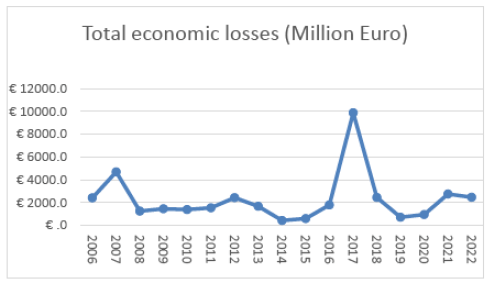
Like many natural events, wildfires cause lives to be lost. Using this tragic loss of life to whip up climate fear is deplorable, not least since many wildfires are deliberately or accidentally started by humans. Greece had a bad wildfire season last year with the BBC reporting that 79 arrests had been made for arson. The BBC accepts that wildfires are common in Greece but “scientists say” there is a link between extreme weather events and climate change. Stefan Doerr of the Centre for Wildlife Research at Swansea University notes that arson “can more easily turn into fast-moving wildfires”. Arsonists, it seems, just love climate change.
Last year, the climate scientist Patrick Brown admitted that he had written a paper published in Nature that focused exclusively on how climate change had affected extreme wildfire behaviour and ignored other key factors. In particular he downplayed the information that 80% of wildfires are lit by humans. He laid out his whistle-blowing claims in an article titled: ‘I Left Out the Full Truth to Get My Climate Change Paper Published’. He knew not to try to quantify key aspects other than climate change because it would dilute the message journals like Nature want to tell, he observed, adding: “To put it bluntly, climate science has become less about understanding the complexities of the world and more about serving as a kind of Cassandra, urgently warning the public about the dangers of climate change.”
Wildfires are an easy propaganda win for climate alarmists. People die, property is destroyed and the published images are spectacular. But fires are a vital part of nature, always have been. They help clear away the debris that accumulates naturally in forests and scrub land and provide a path for regenerative growth. There is little evidence that natural trends are on the increase around the world, and none to suggest that humans play a part in natural ignition by burning hydrocarbons and releasing carbon dioxide into the atmosphere. In its sixth assessment report, the Intergovernmental Panel on Climate Change (IPCC) specifically ruled out human involvement in ‘fire weather’, both in the past and going forward to the turn of this century.
Chris Morrison is the Daily Sceptic’s Environment Editor.
FRENCH BILL SEEKS TO CRIMINALIZE MEDICAL “MISINFORMATION”
The Highwire with Del Bigtree | February 22, 2024
Press and medical journalists appear to be the target of a new bill proposed in France that may seek to criminalize criticism of therapeutic and prophylactic remedies that have been deemed safe by the medical community.
Featured Video
More Iran War fallout: Maritime insurance industry shifts from London to China
or go to
Aletho News Archives – Video-Images
From the Archives
Allies Don’t Need Lobbies
By Jay Knott | Dissident Voice | September 24, 2013
In a recent article on Counterpunch, Rob Urie defended the traditional Marxist analysis of US policy in the Middle East. He argues that support for Israel is driven primarily by economic interest, not the Jewish lobby.
He starts by paying tribute to the idea that Western societies are uniquely racist. He says that the “Western narrative” claims there is an “Arab character”, and that this is “antique racist blather”. He gives no definition of these terms. Further, he establishes his credentials as part of the dominant current in the American left by claiming that “over a million people in Iraq died so ‘we’ in the West can drive SUVs.”1
When he tries to criticize bourgeois economics, he makes it clear he doesn’t understand the developments it has made since Marx’s day, using the mathematical discipline known as “game theory”. He dismisses the basic abstraction of economic theory, the idea of the rational individual, on the grounds that it is “devoid of history, culture and political context”. But abstractions are always devoid of something.
He defends a more concrete economic theory, mostly Marxist, with some input from another theorist of capitalist crisis, Hyman Minsky. This concrete theory leads him to the view that US activity in the Middle East is primarily driven by rational capitalist motives, the need to secure a supply of oil.
“Taking the totality of circumstance — former oil company executives launching war on an oil rich nation on a pretext they publicly proclaimed they didn’t believe shortly before taking office — and that upon launching their war proved to be non-existent, requires a willingness to overlook the obvious — that the war on Iraq was for oil, that is difficult to support.”1
Perhaps I’ve misunderstood him, but based on what he says in the rest of the article, this convoluted sentence seems to argue that, because president Bush and vice-president Cheney attacked Iraq on false premises, and they also said it was all about oil, and they are former oil executives, and Iraq has a lot of oil, it’s difficult to deny US attacks on Iraq are all about oil.
In fact, it’s not hard at all. As Urie points out, at times Bush and co. said that attacking Iraq was “protecting the world’s supply of oil.”1 But, as he also points out, they are congenital liars. Why should we believe them when they say they are trying to “protect” the oil supply? Protect it against what? When politicians “admit” attacks on Middle Eastern countries are wars for oil, they are parroting the neo-con party line, feeding the public, both left and right, with a plausible-sounding pretext. For right-wingers, “it’s a war for oil” is a reason to support war, and for leftists, it’s a way to feel better by complaining impotently about corporate greed. Both approaches help the war drive. … continue
Blog Roll
 Aletho News
- More Iran War fallout: Maritime insurance industry shifts from London to China
- US-Israeli aggression on Iran triggers review of GCC countries’ investment pledges to Washington
- Russia slams UK plan to seize tankers suspected of carrying its oil
- Pakistan ramps up food exports to Persian Gulf nations as war deepens food insecurity
- Iran submits response to US plan, sets terms for war’s end: Tasnim
- US vs Iran: Kharg Island Talk — Bluff or Escalation? Ex-Military Officer Weighs In
- Zelensky unnecessarily involves Ukraine in the Middle East crisis
- Turkish tanker blacklisted by Ukraine hit in drone attack – media
- Canada, the U.S., and NATO: the inescapable trap
- Villains of Judea: Leonid Radvinsky
- If Americans Knew
- ‘No Innocent Children’: Far-right Israeli Lawmaker Defends Killing of Palestinian Family
- Mossad’s promises helped Netanyahu convince Trump that Iran could be toppled
- US Arms Control Official Refuses To Comment When Asked If Israel Has Nuclear Weapons
- Veterans warn US landing could be ‘more Gallipoli than Vietnam’
- Israel may be committing war crimes in Lebanon – Not a ceasefire Day 167
- In the West Bank, life is a constant battle – 3 articles
- Jacob Reses, one of the most powerful pro-Israel operatives in Trump’s Washington
- Israeli-US assaults kill or injure 87 children a day – Not a ceasefire Day 166
- ‘Forever live by the sword’: Understanding Israelis’ massive support for Iran war
- UN’s special rapporteur on human rights says Israel is systematically torturing Palestinians
- No Tricks Zone
- Devastating Assessment Of Comirnaty Vaccine By Former Senior Pfizer Europe Toxicologist
- New Study: CO2 Is ‘Effectively Negligible’ As An Explanatory Climate Change Factor Since 2000
- Former Pfizer Toxicologist Dr. Helmut Sterz Tells Bundestag Hearing Pfizer Vaccine Should Have Never Been Approved
- Energy Expert: Germany’s Nuclear Phaseout Was A “500 Billion Euro Mistake”
- New Research: South Australia’s Mid-Holocene Sea Surface Temperatures Were 4°C Warmer Than Today
- Storing Green Energy To Last Germany 10 Days Would Require A 60-Million Tonne Battery
- New Studies: UK Sea Levels Were 4 Meters Higher Than Today During The Mid-Holocene
- Destructive Green New Deal: German Energy And Metal Group Warns Of Drastic Crisis
- New Study Documents A 20-Year Pause In Arctic Sea Ice Decline – Driven By Internal Variability
- Wake-up Call: Survey Shows Majority Of Germans Now Favor Postponing Climate Targets!
 Aletho News