Scientists warn against ‘miracle’ Alzheimer’s drugs
RT | February 20, 2024
Drugs hailed as game-changers in the treatment of Alzheimer’s disease, a type of dementia, carry risks that may outweigh any benefit, scientists warned UK media on Sunday.
UK regulators are expected to decide next week on whether or not to approve the drug lecanemab, which was greenlit by US regulators last year, and donanemab, which is currently awaiting approval.
However, the drugs, which manufacturers say slow cognitive decline by clearing out amyloid protein in patients’ gray matter, are also known to shrink patients’ brains, and as many as a third of those who receive them also experience side effects classified as “amyloid-related imaging abnormalities” (ARIA) – a catch-all term that includes the swelling and bleeding of the brain.
About 1% of patients have side effects so severe they are fatal or require hospitalization, and the US Food and Drug Administration has required lecanemab’s manufacturer Esai to include a “black-box warning” on its label signaling the possibility of serious adverse events.
“When I look at an MRI scan that shows ARIA, it reminds me of looking at MRI scans of patients who’ve had strokes or some sort of traumatic brain injury,” University College of London Institute of Mental Health Professor Rob Howard told reporters, adding that imaging data shows patients receiving the drugs “are actually losing probably slightly more than a teaspoon full of brain.” According to Dr. Madhav Thambisetty, a senior clinical investigator at the US National Institute on Aging, patients receiving the largest dose have lost up to three teaspoons of brain volume.
While the drugs’ manufacturers hail their supposed potential to slow cognitive decline in Alzheimer’s patients by 27% (lecanemab) and 35% (donanemab) compared to a placebo, this translated to just a 0.45 point improvement on the 18-point Alzheimer’s symptom assessment scale – where improvements under one point are unlikely to be felt by either doctor or patient, according to Thambisetty. Even the drugs’ own publicity materials acknowledge they cannot restore memory or cognitive function that has been lost already.
Meanwhile, brain shrinkage is considered an indicator of Alzheimer’s itself, raising questions about the utility of a “treatment” that may worsen the underlying pathology. Some patients with ARIA have experienced deteriorations in cognitive ability five times that of an unmedicated Alzheimer’s patient, according to clinical trial data, and one woman in the Lecanemab trial died in hospital with a 7cm brain hemorrhage.
A similar drug also hailed as a miracle treatment for Alzheimer’s when it was approved in 2021, aducanumab, is set to be discontinued by its manufacturer this year. A review of the clinical data showed patients receiving the drug in high doses were more than 15 times as likely as those receiving a placebo to experience brain swelling and almost three times as likely to experience brain bleeding.
Role of COVID-19 Vaccine Adjuvants in Cardiotoxicity
Causes of Heart Damage May Go Beyond mRNA and Spike Protein
By Peter A. McCullough, MD, MPH | Courageous Discourse | February 22, 2024
I have been impressed with the broad array of cardiovascular syndromes arising after COVID-19 vaccination including acute cardiogenic shock, myopericarditis, dilated cardiomyopathy, heart block, atrial fibrillation, primary ventricular arrhythmias, acute hypertension, vascular dissection, aneurysmal rupture, dysautonomia, and nonspecific chest pain.
Kanuri and Sirrkay raise the possibility of many mechanisms explaining the broad array of cardiac complications and the varying times from injection to presentation. They consider genetic (mRNA adenoviral DNA), antigen, and killed virus vaccines. These are in addition to proven cardiotoxicity and myocarditis demonstrated with mRNA and Spike protein. While exhaustive ingredient lists have not been disclosed by the vaccine manufacturers, the authors speculate that adjuvants and their known mechanisms of cardiotoxicity may be at work:
“Types of vaccine adjuvants [possibly] used in COVID-19 vaccines. The adjuvants used in COVID-19 vaccines can be categorized into five classes namely Aluminum salt-based, Emulsion-based, TLR agonists, Metabolic, Cell death, and Epigenetic. 15,22 Each of these adjuvants instigate different mechanisms that are ultimately responsible for onset of spectrum of cardiovascular diseases seen in COVID-19 patients and those receiving vaccination (Figure 1). This review provides a brief overview of different mechanisms that can be arising out of these adjuvants, and each might be contributing at least partially to instigate cardiomyocyte damage.”

Kanuri SH, Sirrkay PJ. Adjuvants in COVID-19 vaccines: innocent bystanders or culpable abettors for stirring up COVID-heart syndrome. Therapeutic Advances in Vaccines and Immunotherapy. 2024;12. doi:10.1177/25151355241228439
Thus the authors give us additional mechanisms to ponder as more patients come into clinics and hospitals with “COVID-19 vaccine heart syndrome” and the medical community comes to the unfortunate recognition that mass vaccination has created a whole new large population of cardiology patients.
Met Office Fails to Retract False Claim of “More Intense” Storms Due to Climate Change
BY CHRIS MORRISON | THE DAILY SCEPTIC | FEBRUARY 22, 2024
The Met Office is refusing to retract a claim made by a senior meteorologist on BBC Radio 5 Live that storms in the U.K. are becoming “more intense” due to climate change. This is despite admitting in Freedom of Information (FOI) documents that it had no evidence to back up the claim. The Global Warming Policy Foundation (GWPF) noted the “false” claim seriously misled the public and demanded a retraction. The Daily Sceptic covered the story last Thursday and has since contacted the Met Office on three occasions seeking a response. “False information of this kind does much to induce climate anxiety in the population and I am sure you would agree such errors should be corrected by any reputable organisation,” it was noted. No reply was received – no retraction has been forthcoming.
The storm claim was made by Met Office spokesman Clare Nasir on January 22nd and led to an FOI request for an explanation by the investigative journalist Paul Homewood. The Met Office replied that it was unable to answer the request due to the fact that the information “is not held”. Interestingly, the Met Office’s own 2022 climate report noted that the last two decades have seen fewer occurrences of maximum wind speeds in the 40, 50, 60 knot bands than previous decades. The Daily Sceptic report went viral on social media with almost 3,000 retweets on X, while GWPF’s demand for retraction was covered by the Scottish Daily Express.
The lack of action by the state-funded Met Office is very interesting. Extreme weather is now the major go-to explanation for the opinion that humans largely control the climate, despite a general lack of scientific evidence. Backing away from this ‘settled’ narrative risks damaging a potent tool nudging populations across the world towards the collectivist Net Zero political project. Mainstream media usually take care to fudge their reporting of any direct link, using phrases such as ‘scientists say’ and sprinkling words ‘could’ and ‘might’ in the copy. The mistake Nasir made was to forget this basic requirement of broadcast fearmongering.
There appears to be an arrogance around the Met Office, an arrogance it shares with many other organisations and scientists promoting Net Zero. At the heart of this assumed superiority is the ludicrous claim that the science around human-caused climate change is ‘settled’. As a result of this, it seems many have lost the ability to debate their work with anyone taking an inquiring position. The scientific process has largely broken down in the climate science world. Secure in the knowledge that it will not be challenged, almost anything can be said on legacy media from a ‘consensus’ narrative point of view to promote the supra-national aims of Net Zero. On the legal front, this arrogance was in evidence in the summing up in the recent Mann v Steyn defamation trial in Washington D.C. The jury should award punitive damages to Michael Mann, inventor of the temperature ‘hockey stick’ graph, “so that in future no one will dare engage in climate denialism”, said Mann’s defending lawyer.
It is possible that if the Met Office is obliged to explain or retract what was after all just a routine scare broadcast on a tame state-reliant media outlet, it might be forced into more substantial scientific debate. How it abolished the global temperature pause from 2000-2014 by adding 30% extra warming on a retrospective basis to its HadCRUT5 record, and why it insists on promoting temperature records from busy U.K. airbases, are two subjects that spring immediately to mind.
Ineffable superiority was certainly on display when the Daily Sceptic recently reported that the Met Office was considered ditching the measurement of changes in temperature using data from the past 30 years in favour of a measurement compiled with 10 years’ past data and 10 years’ future modelled estimates. This was designed to promote a possible earlier breach of the political 1.5°C threshold. Lead author Professor Richard Betts, Head of Climate Impacts at the Met Office, tweeted a ‘rebuttal’ on X, noting we had taken three weeks to review the paper. “Or are they just very slow readers? I suppose our paper does use big words like ‘temperature’ so maybe they had to get grown-ups to help,” he added.
Why is the Met Office struggling to come up with any evidence to back up its claim that bad weather is caused by climate change? Because there is precious little of it. “People are going absolutely nuts these days about extreme weather,” writes the distinguished academic and science writer Roger Pielke Jr. “Every event, anywhere, is now readily associated with climate change and a portent of a climate out of control, apocalyptic even. I’ve long given up hope that the actual science of climate and extreme weather will be fairly reported or discussed in policy – nowadays, climate change is just too seductive and politically expedient,” he notes.
In its latest ‘Sixth Assessment Report‘, the Intergovernmental Panel on Climate Change (IPCC) reports that attempts to discern human involvement in severe storms outside natural variation remain of “low confidence”. In fact, it is unable to find human involvement in a wide range of weather-related events, not just in the past but out to the turn of this century.
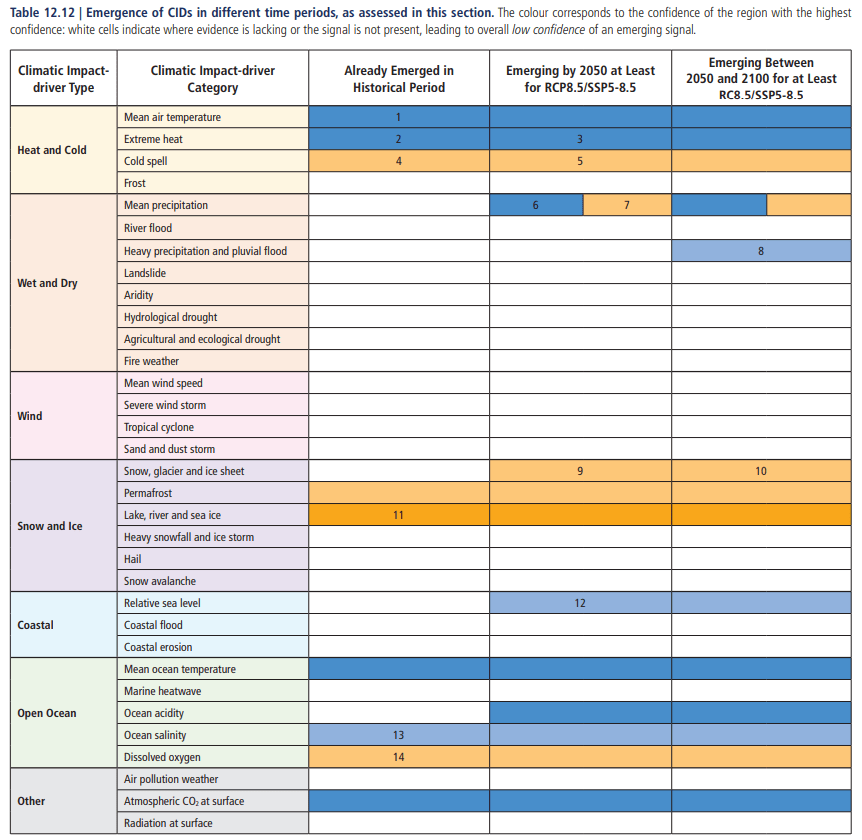
Beyond natural variability, the IPCC, much to the disappointment of alarmists, has concluded there is little or no evidence that the following events (table above) are or will be affected by human-caused climate change: river floods, heavy rain and pluvial floods, landslides, drought (all types), fire ‘weather’, severe wind storms (Met Office please note), tropical cyclones, sand and dust storms, heavy snowfall and ice storms, hail, snow avalanche, coastal flooding and erosion, and marine heatwaves.
Perhaps the Met Office doesn’t want to apologise for misleading the public over winter storms – it might put down an unwelcome marker for mea culpas becoming general across the entire media and climate front.
Chris Morrison is the Daily Sceptic’s Environment Editor.
Superstition and taboo: Germany retreats into the Middle Ages as its economy declines

By Henry Johnston | RT | February 20, 2024
Bloomberg recently foretold the end of Germany’s days as an industrial power in an article that begins with a depiction of the closing of a factory in Dusseldorf. Stone-faced workers preside with funereal solemnity over the final act – the fashioning of a steel pipe at a rolling mill – at the century-old plant. The“flickering of flares and torches” and “somber tones of a lone horn player” lend the scene a decidedly medieval atmosphere.
Intentional or not in their inclusion of such evocative detail, the Bloomberg writers offer potent imagery for Germany – not only because the country is regressing economically but because its elites are increasingly guided by an atavistic force: the abandonment of reason.
As hard economic realities lay bare the futility of its utopian energy plan and the consequences of numerous terrible decisions mount, Germany is experiencing what Swedish essayist Malcom Kyeyune calls “narrative collapse.” The peculiar offspring of this, Kyeyune argues, is a turn toward ritual, superstition, and taboo. It is a malaise afflicting the entire West, but Germany is suffering a particularly acute case.
Kyeyune defines this as an occurrence “when social and political circumstances change too rapidly for people to keep up, the result tends to be collective manias, social panics, and pseudo-religious revivalist millenarianism.”
The abandonment of reason can be conceived of in various ways. Quite a lot of ink has already been spilled about the irrationality behind Germany’s fantastically improbable climate policy. Indeed, the quasi-religious verve with which this program has been rolled out speaks to something of a loosening of the country’s moorings. But as we will see shortly, the problem goes far beyond an attachment to unattainable policy goals.
Prominent German business executive Wolfgang Reitzle argued that for the government to deliver on its climate and energy policy, capacities for wind and solar power would have to be more than quadrupled, while storage and back-up capacities would have to be massively increased. Such a plan is “neither technically feasible nor affordable for a country like Germany,” Reitzle argues. What it is then, he concludes, “is simply insanity.”
Michael Shellenberger, in a piece for Forbes magazine in 2019, points out that the initial impetus for seeking to transition to renewables emerged from the idea that human civilization should be scaled back to sustainable levels. He cites German philosopher Martin Heidegger’s 1954 landmark essay ‘The Question Concerning of Technology’ and subsequent work by the likes of Barry Commoner and Murray Bookchin as espousing what emerged in the 1960s as a much more austere vision for the future of civilization.
Shellenberger concludes that the reason why “renewables can’t power modern civilization is because they were never meant to. One interesting question is why anybody ever thought they could.”
The cohort who suddenly began thinking they could is the German political and intellectual elite in the early 2000s. Gone was the bucolic environmentalism of the 1960s and in its place came an aggressive and utterly detached-from-reality agenda that was imposed with millenarian fervor.
Before circling back to the idea put forth by Kyeyune – that the German elite is now mired in superstition due to the onset of narrative collapse – we must back up for a moment and examine what animated Germany prior to Bloomberg’s flickering flares and melancholy horn.
Modern Germany has long been an object of admiration for the West’s liberal elite, upheld as the ideal incarnation of the post-Fukuyama ‘history-has-ended’ world where liberal democracy triumphed and ideological conflict is a thing of the past. Germany, a nation with a penchant for militarism and authoritarianism, had expurgated its past sins and humbly assumed its place in the grand liberal order, magnanimously refusing to translate its economic prowess into bullying of others.
The country’s status was enhanced even further when the US and UK went off the rails, as the elite saw it, with the populist rebellions of Donald Trump and Brexit. Germany, with its staid, consensus-driven, common-sense politics, was the ‘adult in the room’, in stark contrast to the Anglosphere.
Meanwhile, its economy was humming. The hyper-globalization of the 2000s played right into Germany’s hands. It was a confluence of propitious global circumstances. China was growing at astronomical rates and needed cars and machines – Germany provided both. The expansion of the EU into Eastern Europe opened up new markets for German exports. Germany was prospering and its success was an important driver of economic development across Europe.
All of this helped foster what was perhaps the primary trait of the German elite during this time: a supreme confidence. It was this confidence that led Angela Merkel to famously assert “wir schaffen das” (“we can do this”) when confronted with the task of assimilating over a million migrants. It was the same confidence that led to the idea of jettisoning both nuclear power and coal at essentially the same time, an announcement that was met with a certain disbelief but also awe. “If anyone can do it, it’s the Germans,” was a commonly heard response.
However, the last few years have witnessed a shaking of that assuredness and unraveling of the prevailing narratives as Germany’s vaunted stability and prosperity have been challenged and the benevolent globalized world that nurtured it began fading. But narrative collapse, like many other forms of collapse, at first happens slowly and at the margins before being catapulted forward by some trigger into its more rapid terminal phase.
What was happening at the margins was that the economic model that sustained Germany over the past two decades came under increasing strain as China moved up the value chain and began importing less of Germany’s manufacturing output; it had also become a competitor in the automobile market. Meanwhile, Germany’s economy largely failed to diversify and has been slow to embrace innovation.
Likewise, doubts about the prospects for the energy transition had begun creeping in, again at the margins, long before the events of 2022. Germany has made little progress toward its 2030 emissions target, and it is laughably far behind in its aim of putting 15 million electric vehicles on the road by 2030. It has had to delay plans for the phase-out of coal, and in fact even as of 2021 coal still accounted for a quarter of electricity output. In other words, rather than effecting an actual transition, Germany had merely set up a clean energy system that ran parallel to the dirty one. The clean one spoke to the narrative while the dirty one still powered much of the country. This could not help but plant the seed of the cognitive dissonance that would later assume such bewildering proportions.
Nevertheless, it was undoubtedly the start of the Ukraine conflict in February 2022 that has precipitated the cascade of failure we see now. Certainly, Germany has made many poor decisions during this time, not the least of which was its headlong plunge into supporting the US-led proxy war against Russia. Relatedly, watching Russia’s sanctions-ridden economy rebound and return to growth – while their own economy struggled – defied everything the German elites would have imagined. That in itself is a narrative-shaking development.
But perhaps more important than the particular economic and political setbacks has been a sense that the benevolent, familiar world of recent decades is receding ever faster and in its place is coming something ominous, as if from a strange and turbulent dream.
To quote Kyeyune again, it’s as if “the future that they were promised – and that they promised the rest of us – was one of continued Western progress, prosperity, and geopolitical dominance. But that’s looking less and less plausible, and they neither like nor understand the future that is coming into view.”
For the elites, the world is crumbling around them and nothing is playing out as they had desired, which has deeply shaken their confidence.
The quotes from public officials and business leaders offered in the Bloomberg piece are bleak and a far cry from the “wir schaffen das” confidence of a few years back.
Stefan Klebert, the CEO of a company that has been supplying manufacturing machinery since the late 19th century, said: “To be honest, there is not much hope. I’m not really sure if we can stop this trend. Many things have to change quickly.”
Finance Minister Christian Lindner told a Bloomberg event earlier in February: “We are no longer competitive. We are getting poorer and poorer because we are not growing. We are falling behind.”
Volker Treier, foreign trade chief at Germany’s Chambers of Commerce and Industry, remarked: “You don’t have to be a pessimist to say that what we’re doing at the moment won’t be enough. The speed of structural change is dizzying.”
The last quote, a lament about the speed of structural change, is particularly telling and makes us recall Kyeyune’s assertion that when social and political circumstances change too rapidly for people to keep up, strange flora can sprout.
This sense of no longer being able to control events and the fear this has engendered have bred a sense of impotence among the European elites – a sort of ‘deer frozen in the headlights’ paralysis – with Germany at the vanguard of this. No longer confident that their actions can produce certain desirable outcomes, the elites have shed their sophisticated modern veneer and technocratic sensibility and retreated into symbolism and superstition.
In a way this should come as no surprise. It is an age-old human response to the lack of control – think about rain dances instead of irrigation – that once again confirms the words of George Bernard Shaw that “the period of time covered by history is far too short to allow of any perceptible progress in the popular sense of evolution of the human species. The notion that there has been any such progress since Caesar’s time is too absurd for discussion. All the savagery, barbarism, dark ages and the rest of it of which we have any record as existing in the past, exists at the present moment.”
As a result of this, actions, emptied of their utilitarian contents, come to be seen as inherently meaningful only if they conform to the prevailing superstitions and carry the necessary symbolism. The policies being pursued are thus detached from reason in the sense that they are no longer evaluated or even undertaken with an expectation of a particular outcome – in fact, the outcomes are often quite the opposite of the presumed intention, leading to all manner of absurdities.
The EU’s rush to approve an absolutely token package of sanctions by February 24 – the anniversary of the beginning of Russia’s military operation in Ukraine – is not being carried out with the slightest expectation that a motley assortment of obscure companies and third-tier public officials coming under EU sanctions will achieve any policy aims. The entire value of the endeavor is in its symbolism. Because the symbolism is ‘correct’ the action becomes important.
Germany’s Green Party, a leading voice both in the fanatical climate program and the anti-Russia camp, has in the last two years promoted policies that have directly led to an increase in the burning of coal in the country. This is certainly not an outcome the party would have ever lobbied for. But its actions no longer have anything to do with specific desired outcomes; rather they exist entirely in the mist-filled world of symbolism and, in the logic of this new age of superstition, are to be evaluated only in relation to their symbolic potency.
Kyeyune gives what may be the most vivid example of this principle at work. “Germany still has one functioning pipeline through the Baltic Sea but refuses to use it,” he correctly notes, referring to one line of Nord Stream 2 that was not damaged in the sabotage attack carried out in September 2022. “The problem is that the alternative approach to meeting its energy needs means buying liquefied natural gas… and some of this gas comes from Russia. In other words, Germany still buys natural gas from Russia, less efficiently and at a higher cost, in order to maintain a quasi-ritualistic prohibition against use of the pipeline.”
Meanwhile, he continues, a similar operation takes place with Russian oil, which is now sent to India or China to be refined before being imported by Europe. It is “as if the act of mixing it with other oil in a foreign refinery removes the evil spirits contained in it.” In other words, Russian oil must undergo some sort of purification process before it can enter the EU garden. European refiners, meanwhile, suffer, while all sorts of middlemen are enriched along the way, and consumers are left paying higher prices. There is not an ounce of economic logic to it – but we have now passed into a realm beyond economic logic.
Policies governing energy, the lifeblood of industrial civilization, are now subject to the tyranny of ritual, taboo, and superstition. Such is the predicament of the German elite as it seeks to navigate the country through a turbulent period of epochal transition. The abandonment of reason is quite a handicap in carrying out that job.
Trans ‘milk’ as good as the real thing – NHS
RT | February 18, 2024
The drug-induced nipple secretions of trans women are as good as mothers’ breast milk for babies, the University of Sussex Hospitals NHS Trust claimed in a letter to campaigners made public in a report by British think tank the Policy Exchange on Sunday.
The healthcare trust’s medical director, Rachel James, argued that the off-label prescription drug cocktail men transitioning to female take in order to produce milk was “similar to the natural hormones which encourage lactation to develop when the baby is newly born.”
“The evidence which is available demonstrates that the milk is comparable to that produced following the birth of a baby,” James wrote in the letter, sent to Children of Transitioners last August.
Biological men who wish to lactate must first take hormones to grow milk glands and then take high doses of either domperidone or metoclopramide to stimulate milk production. Neither drug is approved for this use, though they are occasionally prescribed off-label to biological women who have trouble lactating.
However, domperidone’s own manufacturer, Janssen, warns patients the drug “may cause unwanted side effects affecting the heart in a breastfed baby” and “should be used during breastfeeding only if your physician considers this clearly necessary.”
USHT doubled down on its claims that chest “milk” was just as good as breast milk on Sunday. “We stand by the facts of the letter and the cited evidence supporting them,” it said in a statement.
That evidence reportedly included a handful of decades-old articles comparing milk produced by induced lactation with postpartum mother’s milk – apparently not distinguishing between milk produced by biological women and that produced by biological men – and the World Health Organization’s recommendation of breastmilk (which the trust called “human milk”) over infant formula.
The trust also cited a 2022 study that found there were “no observable infant side effects” in the babies of lactating trans women. However, critics pointed out that the study lasted just five months and included no long-term follow-up. Most writings on the subject “have not looked at what’s in the milk itself,” one medical expert told the Daily Mail.
The group admitted its policy was based on advice from “external organizations,” though it did not name them. USHT was reportedly the first UK health trust to adopt the term “birthing people” as part of its inclusivity efforts.
Denouncing the NHS trust’s claims as “unbalanced and naive,” Policy Exchange Head of Equality and Identity Lottie Moore slammed the organization for “compromising women’s rights and child safeguarding” by encouraging unsafe practices.
“A child’s welfare must always take precedence over identity politics and contested belief systems that are not evidence-based,” she told the Mail.
Dr Peter McCullough joins Dr Trozzi Regarding All Things Covid

Dr Trozzi | February 17, 2024
A fast paced deep dive into the virus, the “vaccines”, the injuries, the treatments, plus the crimes, arch-criminals, and the WHO.
- Dr McCullough’s Base Spike Detoxification Protocol
- Nattokinase 2000 FU (100) mg orally twice a day without food
- Bromelain 500 mg orally once a day without food
- Curcumin 500 mg orally twice a day (nano, liposomal, or with piperine additive suggested)
- Dr McCullough’s Website
- Dr McCullough on Substack
- Dr Peter McCullough Foundation donate
- The Wellness Company
- The Rational Theorist
- More from Dr Peter McCullough material on my Website
Why Mental Health Education & Prevention is Harmful
The paradoxical effect of screening and prevention programs

BY DR. ROGER MCFILLIN | RADICALLY GENUINE | NOVEMBER 23, 2023
There is a concerted effort to drive a growing number of individuals, particularly the younger demographic, toward mental health screenings and interventions.
Schools across the United States are implementing mental health programs to tackle the ongoing mental health crisis. The underlying concept is well-intentioned, drawing parallels between mental health prevention and physical health education. This entails raising awareness of behaviors promoting mental well-being and encouraging active engagement in such behaviors.
However, what if the notion of “prioritizing mental health” is inadvertently causing harm? In a New York Times opinion essay titled “This is Not the Way to Help Depressed Teenagers,” Darby Saxbe, a clinical psychologist and professor at the University of Southern California, argued that certain programs aimed at addressing mental health issues in young people not only fell short in providing help but actually exacerbated their problems.
Enter WISE Teens, a school program focused on “social-emotional skills training,” spearheaded by clinical psychologists in training. This innovative initiative comprises eight weekly hour-long classroom sessions designed to equip students with tools and principles derived from both cognitive behavior therapy and Zen Buddhism. The goal? To empower students in managing their emotions effectively.
In a recent study published in the journal Behavior Research and Therapy (read here), researchers examined the experiences of 1,071 Australian teenagers over the span of 2017 to 2018. The participants were divided into two groups: one engaged in the WISE Teens program, while the other followed a standard health-class curriculum. Surprisingly, the findings revealed that compared to those receiving standard education, students in WISE Teens reported higher levels of depression, increased anxiety, greater difficulty managing their emotions, and strained relationships with their parents. Astonishingly, one out of every eight participants in WISE Teens showed signs of clinical depression post-program, as opposed to one out of every 13 participants in the regular health classes.
This was an educational program and NOT Dialectical Behavior Therapy (DBT), despite some academic enthusiasts wrongly claiming that DBT for Adolescents is ineffective. DBT for Adolescents is a comprehensive psychotherapy involving specialized individual therapy, skills coaching for both parents and children, and coaching consultations. It’s specifically designed to help teenagers facing severe emotion dysregulation, including issues like suicidality and self-injury. What we’re discussing here, however, is not that. It’s an attempt to build skills in a non-clinical population.
The question arises: should our school personnel be getting involved in mental health matters? How about pediatricians and primary care doctors? Could this be contributing to the problem rather than solving it?
The irony is hard to ignore: school decisions made during the pandemic played a direct role in the rise of mental health issues among children. It’s widely known that kids flourish through social interaction, in-person learning, and engaging activities that aid their development. Yet, what actually unfolded was the opposite – they were pulled out of schools, exposed to prolonged screen time, and had their extracurriculars taken away. Not surprisingly, the increase in screen time and social media usage went hand in hand with a decline in mental health. Indeed, there’s a paradox in expecting the same authorities to screen, oversee, and intervene in mental health problems. So what happens when these concepts are taught to impressionable kids?
Psychiatric Ideology is Harmful
When kids are doing well, they’re focused outward – active, engaged, and fully living life. But turning that focus inward and exposing them to psychiatric labels and ideas? That’s just plain foolish. Kids are at a stage where they’re figuring out who they are, and throwing around these labels is confusing. It’s risky business, especially when these labels start defining their inner world and capabilities.
When introducing concepts around mental health problems kids are prone to speaking about normal life struggles in terms of symptoms and diagnoses. This approach instills a sense of pathology or abnormality in children’s everyday struggles, potentially leading to heightened anxiety or self-stigmatization.
The psychiatric industry suggests that DSM diagnoses are legitimate disease constructs, akin to physical illnesses. However, they’re merely crude labels slapped onto a spectrum of emotional and behavioral manifestations. Major Depressive Disorder isn’t a tangible ailment like strep throat or a tumor. ADHD isn’t an innate disease. These labels lack explanatory value.
One’s struggle with depression may stem from valid reasons such as life setbacks, loss, loneliness, financial woes, or other health issues – not because you have Major Depressive Disorder. Kids often miss this nuance, making them susceptible to labeling themselves: “I can’t do this due to my anxiety,” or “My ADHD is hindering my homework.” Such labels, instead of clarifying, can breed a sense of hopelessness about the future.
Chemical Imbalance Lies have Harmed Generations
During the 1990s and 2000s, the pharmaceutical industry teamed up with academic psychiatry to brand mental health conditions as brain disorders. The government poured billions into hunting for some biological or genetic root, presenting psychiatry with the chance to solidify its standing as legitimate doctors. By attributing depression, anxiety, ADHD, and other “mood disorders” to a biological origin, they could conveniently fit them into the allopathic model—essentially, the solution became prescribing a drug. This alliance shaped not just the narrative around mental health but also the lucrative industry that emerged from it.
“I spent 13 years at NIMH really pushing on the neuroscience and genetics of mental disorders, and when I look back on that I realize that while I think I succeeded at getting lots of really cool papers published by cool scientists at fairly large costs—I think $20 billion—I don’t think we moved the needle in reducing suicide, reducing hospitalizations, improving recovery for the tens of millions of people who have mental illness.” – Thomas Insel, MD
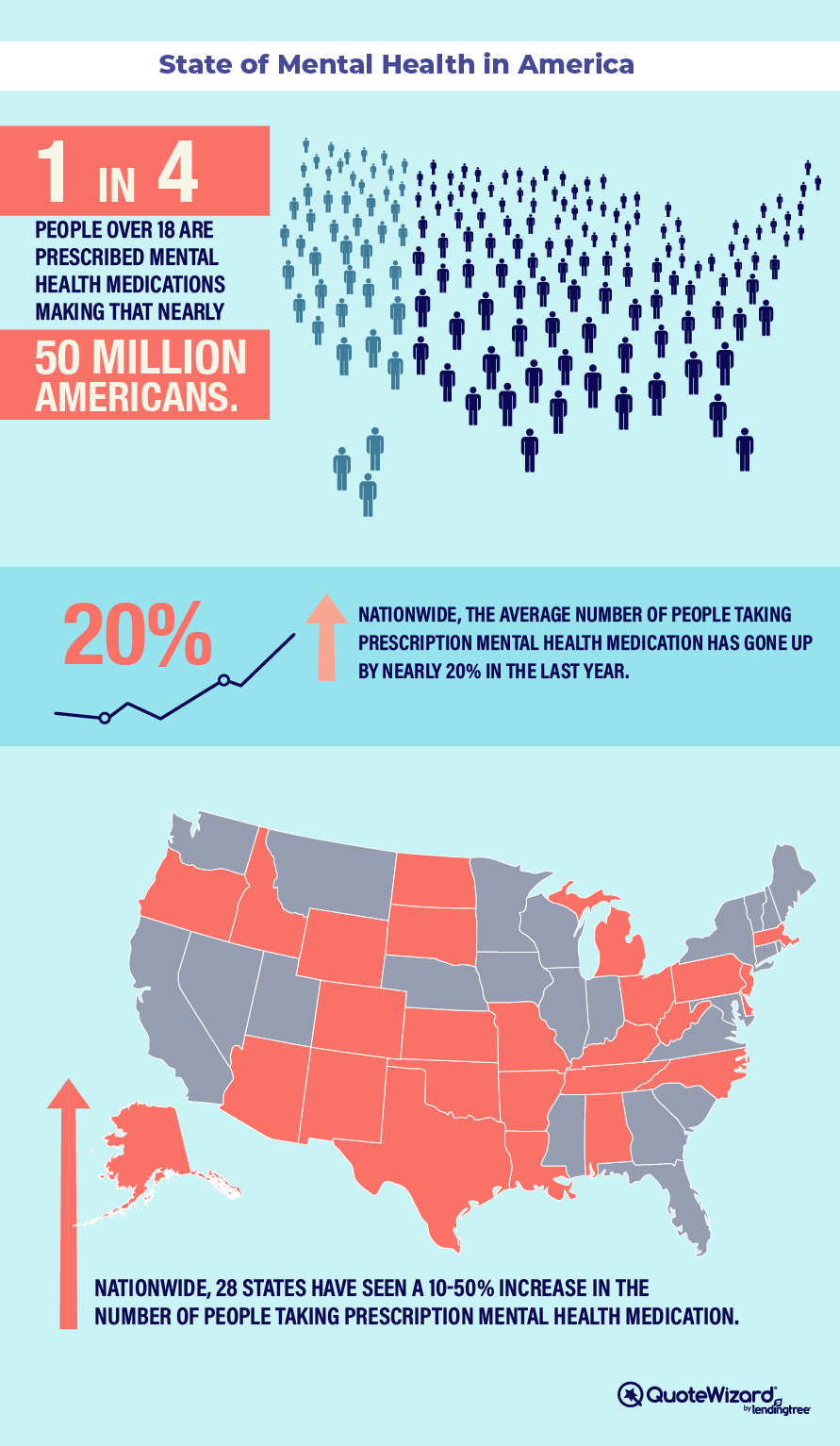
Despite the lack of an identified biological basis for these conditions, the pharmaceutical industry and academic psychiatry propagated the myth of chemical imbalances, resulting in the emergence of a multi-billion dollar psychiatric drug industry. During this period, psychiatric diagnoses skyrocketed, with near 25% adults relying on at least one psychiatric drug. Astonishingly, all available statistics point to a deterioration in mental health. This should come as no surprise. When individuals are taught that their emotions are beyond their control and framed as symptoms of a physical illness, they are effectively conditioned to seek relief through medication rather than understanding their emotions in context and leveraging them to confront challenges and solve problems.
It’s important to notice that many teachers and school staff are exposed to the same ideologies that contribute to the issues affecting our culture. Schools can become breeding grounds for the perpetuation of concepts like chemical imbalances, victimization culture, and other fringe ideologies. The cycle continues as those who have been influenced by these ideas become the educators, passing on harmful ideas.
Public Schools are a Breeding Ground for Indoctrination

Teachers, school counselors, administrators, and school psychologists often lack the comprehensive knowledge, training, and expertise required to navigate the complexities of emotional and behavioral issues. Their roles were not originally designed to involve the identification or intervention of emotional problems, nor should they be.
Regrettably, public schools have become battlegrounds for fringe ideologies and cultural Marxism, transforming the educational system into an extension of an expanding nanny state that encroaches on the individual rights of families.
Initiatives such as social and emotional learning, gender ideology, and mental health screening have positioned school personnel as gatekeepers for broader societal movements. Non-experts in the field may incorrectly inform parents that their children have conditions like “ADHD” and discuss fringe ideas without scientific legitimacy, significantly influencing how parents perceive their children’s development.
In this climate, normal developmental challenges are pathologized within a culture fueled by fear. Teachers, conditioned to identify early signs of potential academic or emotional issues, become hyper-vigilant to any cues that might suggest a child is at risk of becoming a school shooter, facing suicide, or dropping out of high school.
Tragically, educators have been misled into thinking they can pinpoint these so-called “disorders,” often oversimplifying complex issues and resorting to problematic “early interventions”, at times pushing drugs. This unintended consequence creates a system where educators feel compelled to categorize and refer for medication. Paradoxically, assigning labels to children and administering mind & mood-altering drugs significantly heighten the risk of the very feared consequences they sought to prevent.
Don’t Accept “Depression Screening” Measures
Mental Health Screening* is based on the subjective and unscientific diagnostic system developed by mental health professionals, many with financial ties to the pharmaceutical industry.
The American Academy of Pediatrics has brazenly recommended an audacious strategy: subjecting adolescents aged 12 years and older to annual screenings for depression, using formal self-report tools on paper or electronically. These guidelines, undoubtedly, serve one sinister purpose: to inflate the number of children diagnosed with depression. It is a well-known fact that screening measures are notorious for producing false positives. This means that a substantial percentage of individuals identified through these screenings do not actually suffer from the supposed problem being screened.
According to psychologist Chuck Ruby, as stated in his book “Smoke and Mirrors,” with approximately 74 million children under the age of 18 residing in the United States, subjecting them all to an 80% accurate screening tool would result in millions being falsely labeled. These guidelines not only perpetuate a dangerous cycle of overdiagnosis but also push countless innocent young individuals into unnecessary treatment-psychiatric drugs.
Dr. David Shaffer of Columbia University, the psychiatrist who invented one screening program, “TeenScreen,” admits it has a potential 84 percent chance of wrongly identifying teens to be at risk of suicide. He has long-term ties to drug companies and is a consultant for Hoffman La Roche, Wyeth and GlaxoSmithKline.
The ease with which normal developmental behaviors can be misdiagnosed as symptoms of clinical depression is a concerning issue. The primary screening measure utilized for assessing adolescent depression is the PHQ-9 for Adolescents, a self-report questionnaire comprising of nine questions that focus on supposed “depressive symptoms”. What is particularly noteworthy is the origin of this questionnaire—it was developed by none other than… Pfizer!
This phenomenon isn’t exclusive to a particular psychiatric disorder; it’s a pervasive issue across various mental health conditions. A widely recognized pharmaceutical marketing strategy involves expanding the diagnostic criteria for a disorder, essentially broadening the definition to encompass aspects within the spectrum of normal human experiences. By doing so, the pharmaceutical industry can effectively create a market for their products, as more individuals are diagnosed and deemed potential consumers.
Reclaiming our Communities
The key to effective mental health prevention lies in common sense. It begins with cultivating a nurturing and loving home environment that prioritizes the well-being of children. Provide structure and a sense of predictability. Reduce screen time, provide nutrient-dense meals, avoid processed and chemically laden junk, ensure adequate sleep, and embrace community and faith-based traditions. Throw in some exercise, extra-curricular activities, and social gatherings for good measure. While emphasizing the importance of academic achievement, fostering a love for learning, discipline, and resilience, it may be opportune to empower our school teachers to thrive in their specialties—math, science, English, and history—leaving the framework for mental well-being in the capable hands of families and those they trust.
*In a previous post I wrote about the dangers of screening measures in pediatrics and primary care (Read here)
New Study Destroys SSRI Antidepressant Scam
By Ben Bartee | Armageddon Prose | February 16, 2024
The last couple of years have been hell for the SSRI hustle.
First, in 2022, landmark research shot a God-sized hole in the “low serotonin causes depression” biochemical voodoo narrative, previously accepted uncritically as Gospel and which has sustained the multi-billion-dollar SSRI racket for decades.
Via Molecular Psychiatry :
“Our comprehensive review of the major strands of research on serotonin shows there is no convincing evidence that depression is associated with, or caused by, lower serotonin concentrations or activity. Most studies found no evidence of reduced serotonin activity in people with depression compared to people without, and methods to reduce serotonin availability using tryptophan depletion do not consistently lower mood in volunteers. High quality, well-powered genetic studies effectively exclude an association between genotypes related to the serotonin system and depression, including a proposed interaction with stress. Weak evidence from some studies of serotonin 5-HT1A receptors and levels of SERT points towards a possible association between increased serotonin activity and depression. However, these results are likely to be influenced by prior use of antidepressants and its effects on the serotonin system. The effects of tryptophan depletion in some cross-over studies involving people with depression may also be mediated by antidepressants, although these are not consistently found.”
Bet you didn’t see that report on Fox News or MSNBC!
Unvarnished veritas: the reason you tune into independent media like Armageddon Prose.
Legacy media producers/executives/news actors know how their bread gets buttered, and it’s not by informing their audience; it’s by selling (patented) erectile dysfunction and depression drugs wall-to-wall on every commercial break and keeping their mouths shut about the industry’s lies and abuses in between said commercial breaks.
Now, in research published late last year, we learn that psychotherapy alone not only beats antidepressants alone for combatting depression, but that it beats the combination of both!
In other words, antidepressants are worse than useless for treating depression in tandem with psychotherapy.
Via Frontiers in Psychiatry :
“The results showed that antidepressant exposure significantly increased the risk of suicide and suicide attempt when compared with no antidepressant usage among children and adolescents…
Among the antidepressants, SSRI use was associated with an increased risk of suicide and suicide attempt…
Clinicians should evaluate carefully their patients and be cautious with patients at risk to have treatment emergence or worsening of suicidal ideation (TESI/TWOSI) when prescribing antidepressants to children and young patients.
Thirty-four relevant RCTs were included. Psychotherapy-only was stronger than combined treatment (1.9% v. 3.7%; OR 1.96 [1.20–3.20], p = 0.012) and ADM-only (3.0% v. 5.6%; OR 0.45 [0.30–0.67], p = 0.001) in decreasing the likelihood of [severe adverse events] in the primary and trim-and-fill sensitivity analyses. Combined treatment was better than ADM-only in reducing the probability of SAEs (6.0% v. 8.7%; OR 0.74 [0.56–0.96], p = 0.029), but this comparative efficacy finding was non-significant in the sensitivity analyses. Subgroup analyses revealed the advantage of psychotherapy-only over combined treatment and ADM-only for reducing SAE risk among children and adolescents and the benefit of combined treatment over ADM-only among adults. Overall, psychotherapy and combined treatment outperformed ADM-only in reducing the likelihood of SAEs, perhaps by conferring strategies to enhance reasons for living. Plausibly, psychotherapy should be prioritized for high-risk youths and combined treatment for high-risk adults with MDD.”
As Pfizer exhorted the peasants at this year’s Super Bowl commercial pageantry, “Here’s to Science™”! (Except when it runs counter to financial interests; then it gets defunded and shelved and its practitioners run out of the field and any professional licenses confiscated by the state.)
Ben Bartee, author of Broken English Teacher: Notes From Exile, is an independent Bangkok-based American journalist with opposable thumbs.
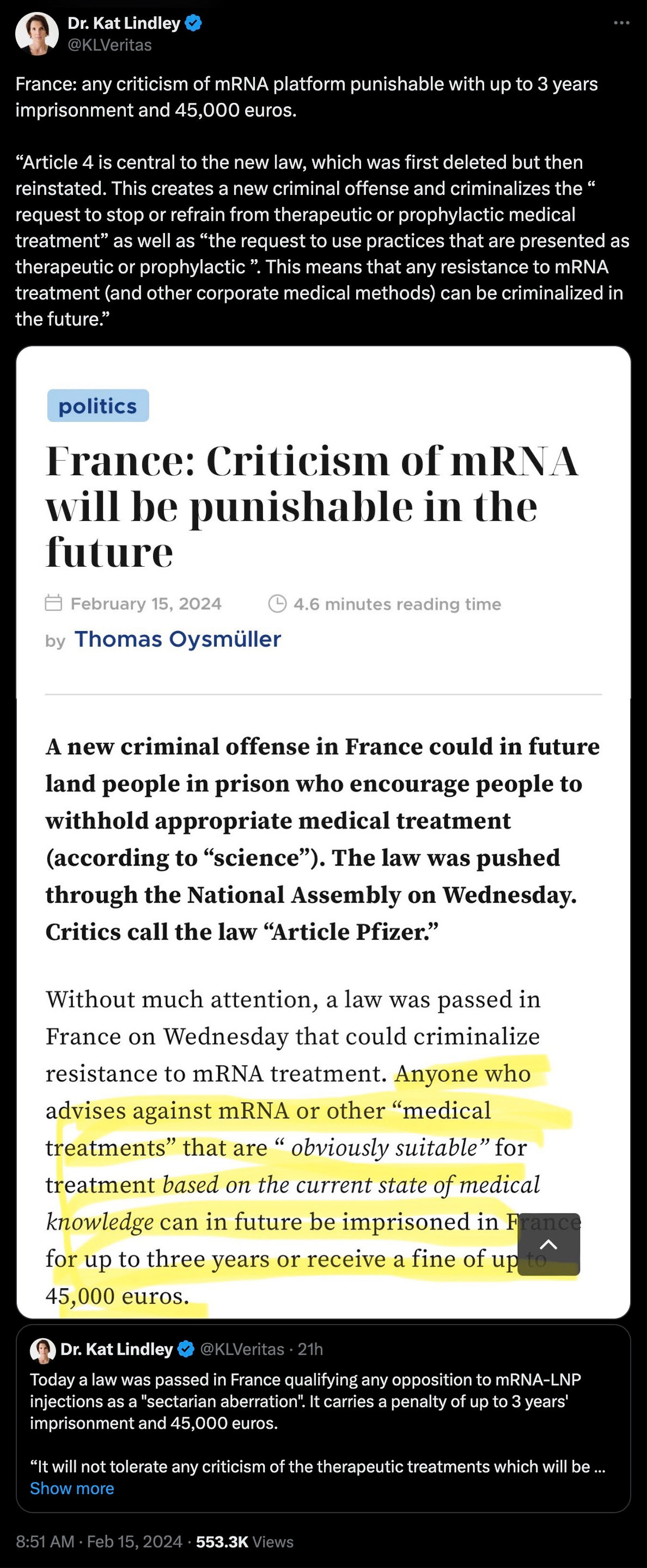
France: ANY Criticism Of The mRNA DEATHVAX™ Platform Punishable Up To 3 Years Imprisonment And 45,000 Euros
2nd Smartest Guy in the World | February 15, 2024
The WEF-captured government of France has pushed through a draconian new law entitled Article 4. This Orwellian and unconstitutional color of law power grab is a purposely poor attempt at obscuring the irrefutable slow kill bioweapon death and destruction data.
What makes Article 4 particularly incendiary is that the majority of the French population has been outright refusing all “vaccinations.” Throttling their free speech as it pertains to gene modifying poisons will only increase the already heightened tensions between the criminal Macron administration and the awakening French populace, by design.
Between WEF puppet Trudeau in Canada and WEF puppet Macron in France, there is now a race to create the most totalitarian technocommunist nation in the West, with France now taking a slight lead; to wit:

These policies and “laws” are nothing more than an extension of the ongoing democide, and the associated iatrocide.
Meanwhile, back in the USSA, the Center for Disease Crimes (CDC) is still at it with their “Trust the Science” mendacity and murder:

Readers of this Substack fully appreciate the myocarditis and turbo cancer epidemics currently underway — not to mention soaring excess non-PSYOP-19 mortality — since the rollout of the “vaccines:”
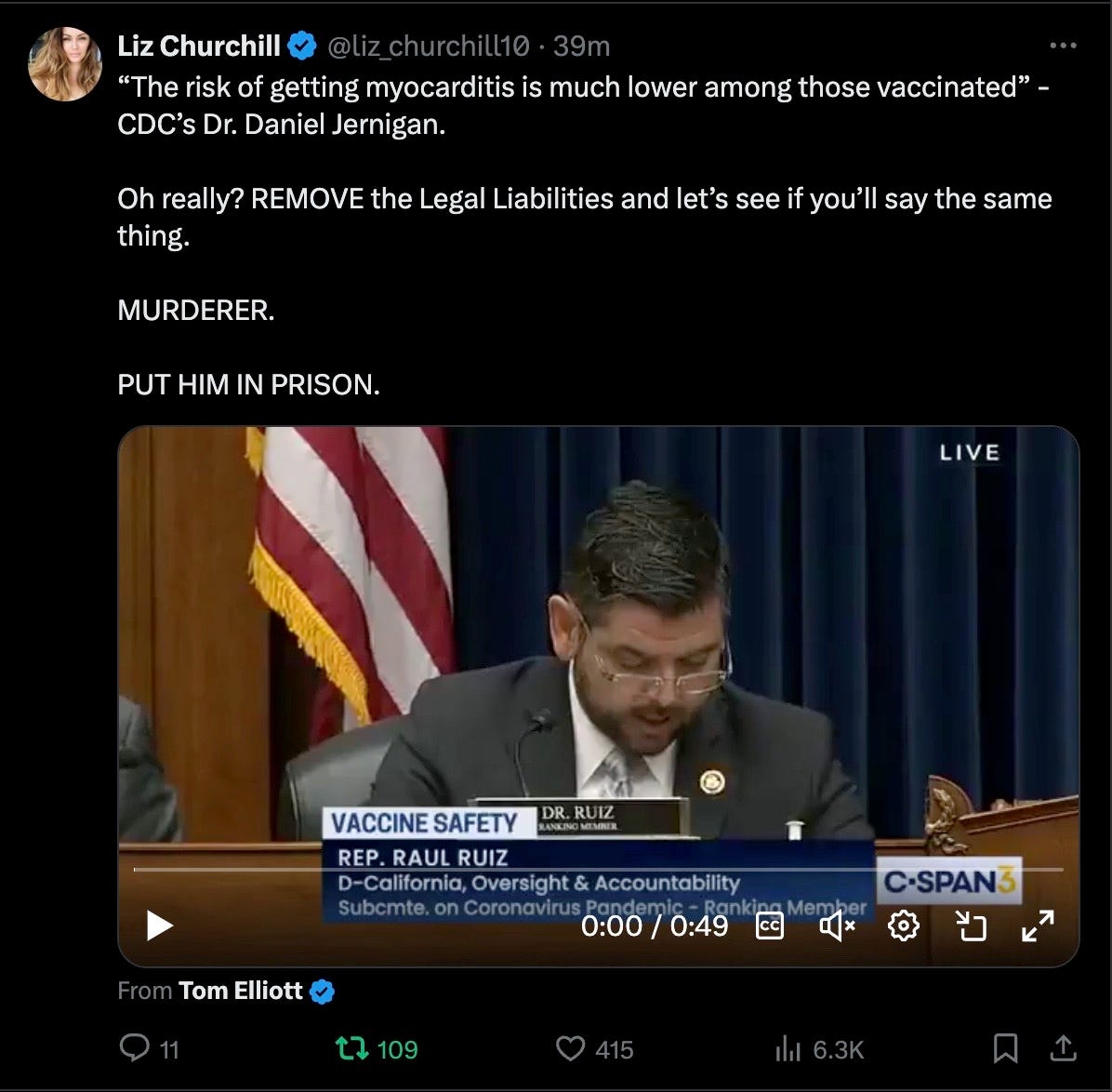
Removing all BigPharma legal liabilities and prosecuting the various “health” agencies like the FDA, CDC, NIH, et al. has never been more urgent.
France’s Article 4 is just a hint at what is to come, especially if the WHO’s Pandemic Treaty scam ever passes in the various nations that they are attempting to further hijack.
They want you dead.
Do NOT comply.
Rational Policy Over Panic
An Awkward Problem
BY REPPARE | BROWNSTONE INSTITUTE | FEBRUARY 15, 2024
The world of international public health is in a precarious position. Current policy, resources, personal careers, and the very credibility of major organizations are aligned with the recent statement from the World Health Organization (WHO) that:
Epidemics and pandemics of infectious diseases are occurring more often, and spreading faster and further than ever, in many different regions of the world.
Focus has shifted from the highest burden diseases, and the community-based empowerment required to tackle them, to preventing, identifying, and mitigating diseases that are rare and/or of relatively low burden, or even hypothetical. Namely, a new focus on sudden outbreaks of infectious disease or, in their more spectacular rendering, ‘pandemics.’
The challenge with this approach is that a thorough review of the evidence base underpinning the WHO’s agenda, and that of partners including the World Bank and G20, demonstrates that the above statement is inconsistent with available data. The largest database on which these agencies rely, the GIDEON database, actually shows quite a contrary trajectory. The burden of outbreaks, and therefore risk, is shown to be reducing. By implication, the largest investments in the history of international public health appear to be based on misunderstandings, misinterpretations, and misrepresentation of key evidence.
Weighing Truth and Opportunity
Public health policy must always address threats in context. Every intervention involves a trade-off in terms of financial, social, and clinical risk. The WHO defines health in terms of physical, mental, and social well-being, and an intervention in one of these areas can impact all three. This is why public health agencies must consider all aspects of direct cost, opportunity cost, and risk when formulating policy. It is why communities and individuals must have adequate information to make decisions in their own cultural, social, and ecological context.
To make sure policy assumptions and evidence is sufficient, it is therefore imperative to include broad information from multiple sources. Reliance on epithets, dogma, deplatforming, and censorship are therefore intrinsically dangerous. This is all, of course, meant to be coded into the normative principles of decolonization, human rights, and equity on which the WHO’s constitution is based.
So, back to the precarious position in which the WHO and the international public health community find themselves. They have staked their reputation and political standing on being the center of a centralized approach to save the global populace from urgent, impending, and recurrent emergencies; an existential threat to humanity as the G20 tells us. An objective analysis reveals that these emergencies are rarely likely to reach a level that justifies the diversion of serious resources from endemic and chronic diseases that do actually maim and kill at scale (see chart below).
Admitting such a reality, after touting the inevitability of disaster so loudly, would risk career prospects, derision, and diminished ability to monetize the post-Covid moment. Yet, to ignore wider considerations in global public health and the evidence that informs those considerations would require abandonment of basic principles and ethics. A dilemma that calls for honesty, introspection, and strength.
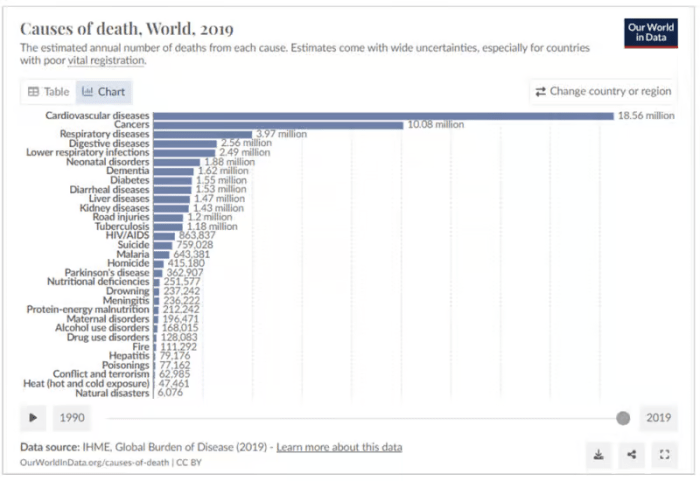
Major causes of death by disease globally, in 2019. Global Burden of Disease data, presented at https://ourworldindata.org/.
What the Data Actually Shows
REPPARE’s analysis of the evidence behind the WHO, World Bank, and G20 documents promoting the pandemic preparedness agenda show that recorded outbreaks, both arising within human populations and as ‘spillover’ of pathogens from animals, have increased in the decades before the year 2000, with burden now declining (graphic below).
However, it is inevitable that reporting of such outbreaks will be influenced by changes in both the capacity and incentive to report. These include the development of, and increasing access to, major diagnostic platforms including PCR and point-of-care antigen and serology tests, as well as improvements in communication infrastructure. Fifty years ago, many pathogens now readily identifiable could simply not be detected, or the diseases they cause be distinguished from clinically similar conditions. It is remarkable that this would be overlooked or downplayed by major health agencies, but this is, unexpectedly, the case.
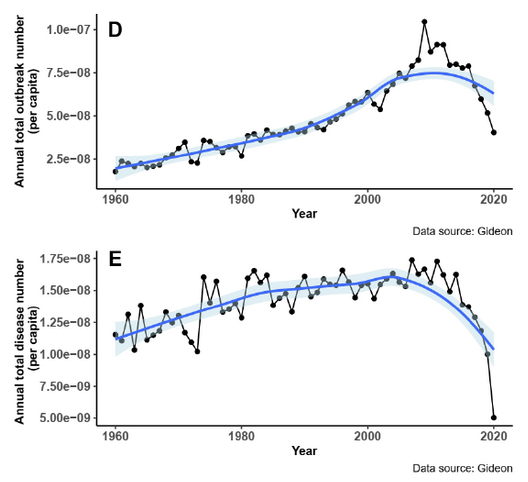
Extract from Fig. 2 of Morand and Walther (2020-23), showing marked recent reductions in outbreak and disease numbers in GIDEON database.
The development of improved diagnostic technologies not only impacts reporting rates but has obvious implications for understanding the term ‘emerging infectious disease’ (EID). This frequently used term suggests that new threats are constantly emerging, such as the Nipah virus outbreaks of the past 25 years. However, while some pathogens have newly entered human populations, such as new influenza variants, HIV and the SARS-1 virus, others such as Nipah virus were simply not detectable without recent technological advances as they cause non-specific illnesses. We are now better at finding them, which puts us immediately in a better, safer position.
Crucially, actual mortality from these acute outbreaks has remained low for a century in contrast to other current health burdens. The much-quoted analysis of Bernstein et al. (2022) suggesting millions of outbreak deaths per year includes pre-antibiotic era Spanish flu and the multi-decade HIV event, averaging it across today’s population size.
However, as their own dataset shows, nothing like the Spanish flu has occurred in terms of mortality in the past century. As most Spanish flu deaths were due to secondary infection, and we now have modern antibiotics, it also provides a poor model for future outbreaks. With HIV and influenza excluded, pre-Covid acute outbreak mortality underlying current pandemic messaging is under 30 thousand people, globally, over the past couple of decades. Tuberculosis alone kills over 3,500 per day.
Covid-19 has, of course, intervened. It fits with difficulty into the main pandemic narrative for a number of reasons. First, its origin remains controversial, but appears likely to involve non-natural influences. While laboratory escapes can and (inevitably) will occur, the surveillance and response being proposed here is targeted at outbreaks of natural origin. Second, Covid-19 mortality occurred mainly in the elderly with significant comorbidities, meaning actual impact on overall life expectancy was far less than the raw reported mortality figures suggest (this also complicates attribution). If considered of natural origin, it appears as an outlier rather than part of a trend in the datasets on which the WHO, the World Bank, and G20 rely.
Time to Pause, Think, and Employ Common Sense
The evidence, assessed objectively, paints a picture of an increasing ability to identify and report outbreaks up to the decade 2000 to 2010 (which explains increases in frequency), followed by a reduction in burden consistent with an increasing ability to successfully address these relatively low-burden events through current public health mechanisms (which explains a lowering trajectory in mortality). This fits well with what one would intuitively expect. Namely, modern technologies and improving health systems, medicines, and economies have improved pathogen detection and reduced illness. There is much to suggest that this trend will continue.
In this context, the analyses of the WHO, the World Bank, and the G20 are disappointing in terms of scholarship and balance. A critic could reasonably suggest that a desire to address a perceived threat is driving a particularly gloomy analysis, rather than analysis objectively aiming to determine the extent of the threat. Such an approach seems unlikely to address the needs of public health.
To be clear, disease outbreaks harm people and shorten lives and must be addressed. And there are of course improvements that should and could be made to address this risk appropriately. In common with most aspects of medicine and science, this is best achieved on the basis of well-compiled evidence and scholarly analysis rather than allowing predetermined assumptions to drive outcomes.
By making claims contrary to the data, international health agencies are misleading governments of Member States down an unevidenced path with correspondingly high estimated cost and diverted political capital. This currently stands at $31.1 billion annually not including One Health measures and surge funding and at least 5 new global instruments; or about 10 times the WHO’s current annual budget. The urgency involved in the pandemic preparedness agenda is either contrary to evidence or poorly supported by it.
In view of their influence, international health agencies have a particular responsibility to ensure their policies are well-grounded in data and objective analysis. Moreover, governments have a responsibility to take the time, and effort, to ensure that their populations are well-served. It is hoped that the evaluation in the REPPARE report Rational Policy Over Panic will contribute to this effort.
REPPARE
Garrett W. Brown
David Bell
Featured Video

More Iran War fallout: Maritime insurance industry shifts from London to China
or go to
Aletho News Archives – Video-Images
From the Archives
Allies Don’t Need Lobbies
By Jay Knott | Dissident Voice | September 24, 2013
In a recent article on Counterpunch, Rob Urie defended the traditional Marxist analysis of US policy in the Middle East. He argues that support for Israel is driven primarily by economic interest, not the Jewish lobby.
He starts by paying tribute to the idea that Western societies are uniquely racist. He says that the “Western narrative” claims there is an “Arab character”, and that this is “antique racist blather”. He gives no definition of these terms. Further, he establishes his credentials as part of the dominant current in the American left by claiming that “over a million people in Iraq died so ‘we’ in the West can drive SUVs.”1
When he tries to criticize bourgeois economics, he makes it clear he doesn’t understand the developments it has made since Marx’s day, using the mathematical discipline known as “game theory”. He dismisses the basic abstraction of economic theory, the idea of the rational individual, on the grounds that it is “devoid of history, culture and political context”. But abstractions are always devoid of something.
He defends a more concrete economic theory, mostly Marxist, with some input from another theorist of capitalist crisis, Hyman Minsky. This concrete theory leads him to the view that US activity in the Middle East is primarily driven by rational capitalist motives, the need to secure a supply of oil.
“Taking the totality of circumstance — former oil company executives launching war on an oil rich nation on a pretext they publicly proclaimed they didn’t believe shortly before taking office — and that upon launching their war proved to be non-existent, requires a willingness to overlook the obvious — that the war on Iraq was for oil, that is difficult to support.”1
Perhaps I’ve misunderstood him, but based on what he says in the rest of the article, this convoluted sentence seems to argue that, because president Bush and vice-president Cheney attacked Iraq on false premises, and they also said it was all about oil, and they are former oil executives, and Iraq has a lot of oil, it’s difficult to deny US attacks on Iraq are all about oil.
In fact, it’s not hard at all. As Urie points out, at times Bush and co. said that attacking Iraq was “protecting the world’s supply of oil.”1 But, as he also points out, they are congenital liars. Why should we believe them when they say they are trying to “protect” the oil supply? Protect it against what? When politicians “admit” attacks on Middle Eastern countries are wars for oil, they are parroting the neo-con party line, feeding the public, both left and right, with a plausible-sounding pretext. For right-wingers, “it’s a war for oil” is a reason to support war, and for leftists, it’s a way to feel better by complaining impotently about corporate greed. Both approaches help the war drive. … continue
Blog Roll
 Aletho News
- More Iran War fallout: Maritime insurance industry shifts from London to China
- US-Israeli aggression on Iran triggers review of GCC countries’ investment pledges to Washington
- Russia slams UK plan to seize tankers suspected of carrying its oil
- Pakistan ramps up food exports to Persian Gulf nations as war deepens food insecurity
- Iran submits response to US plan, sets terms for war’s end: Tasnim
- US vs Iran: Kharg Island Talk — Bluff or Escalation? Ex-Military Officer Weighs In
- Zelensky unnecessarily involves Ukraine in the Middle East crisis
- Turkish tanker blacklisted by Ukraine hit in drone attack – media
- Canada, the U.S., and NATO: the inescapable trap
- Villains of Judea: Leonid Radvinsky
- If Americans Knew
- ‘No Innocent Children’: Far-right Israeli Lawmaker Defends Killing of Palestinian Family
- Mossad’s promises helped Netanyahu convince Trump that Iran could be toppled
- US Arms Control Official Refuses To Comment When Asked If Israel Has Nuclear Weapons
- Veterans warn US landing could be ‘more Gallipoli than Vietnam’
- Israel may be committing war crimes in Lebanon – Not a ceasefire Day 167
- In the West Bank, life is a constant battle – 3 articles
- Jacob Reses, one of the most powerful pro-Israel operatives in Trump’s Washington
- Israeli-US assaults kill or injure 87 children a day – Not a ceasefire Day 166
- ‘Forever live by the sword’: Understanding Israelis’ massive support for Iran war
- UN’s special rapporteur on human rights says Israel is systematically torturing Palestinians
- No Tricks Zone
- Devastating Assessment Of Comirnaty Vaccine By Former Senior Pfizer Europe Toxicologist
- New Study: CO2 Is ‘Effectively Negligible’ As An Explanatory Climate Change Factor Since 2000
- Former Pfizer Toxicologist Dr. Helmut Sterz Tells Bundestag Hearing Pfizer Vaccine Should Have Never Been Approved
- Energy Expert: Germany’s Nuclear Phaseout Was A “500 Billion Euro Mistake”
- New Research: South Australia’s Mid-Holocene Sea Surface Temperatures Were 4°C Warmer Than Today
- Storing Green Energy To Last Germany 10 Days Would Require A 60-Million Tonne Battery
- New Studies: UK Sea Levels Were 4 Meters Higher Than Today During The Mid-Holocene
- Destructive Green New Deal: German Energy And Metal Group Warns Of Drastic Crisis
- New Study Documents A 20-Year Pause In Arctic Sea Ice Decline – Driven By Internal Variability
- Wake-up Call: Survey Shows Majority Of Germans Now Favor Postponing Climate Targets!
 Aletho News