Harvard psychiatrist: Americans should be able to walk into a pharmacy & buy antidepressants over the counter
Maryanne Demasi, reports | April 15, 2024
In a recent STAT article, Roy Perlis, a professor of psychiatry at Harvard Medical School, argued that antidepressants, known as selective serotonin reuptake inhibitors (SSRIs), should be made available at US pharmacies without a prescription.
Perlis called on the drug manufacturers to “engage with the FDA and invest the necessary resources” to make it possible because SSRIs have “repeatedly been shown to be safe and effective for treating major depression and anxiety disorders.”
It comes off the back of a recent FDA ruling that allows the purchase of the oral contraceptive Opill (norgestrel) over-the-counter, without a prescription at drug stores, convenience stores and grocery stores, as well as online.

Roy Perlis, Department of Psychiatry at Massachusetts General Hospital in Boston, and a professor of psychiatry at Harvard Medical School.
Perlis, who treats patients at Massachusetts General Hospital, failed to declare his ties to the pharmaceutical industry in the article, sparking anger among academics online.
While his concerns about patients’ limited access to doctors and treatment services are valid, doing “everything possible” to make antidepressants more easily available is not the answer.
Antidepressants are among the most prescribed treatments in the world. In fact, many experts have argued they are over-prescribed.
In February 2024, the journal Pediatrics published new research that revealed monthly antidepressant prescriptions to adolescents and young adults jumped more than 66% between January 2016 and December 2022.
And following pandemic lockdowns in March 2020, prescriptions rose 63% faster due to soaring rates of depression, anxiety, trauma, and suicidality – so limited access to antidepressants is not the problem.
Perlis acknowledges that antidepressants can increase the risk of suicide in people under the age of 25, but he also claims there’s “clear evidence” the risk of suicidality is reduced in older people.
However, SSRI-induced suicidality is not limited to young people. In 2007 the FDA updated the black box label on SSRI packaging, warning doctors to monitor suicidality in patients of all ages after commencing the medications:
All patients being treated with antidepressants for any indication should be monitored appropriately and observed closely for clinical worsening, suicidality, and unusual changes in behavior, especially during the initial few months of a course of drug therapy, or at times of dose changes, either increases or decreases.
Large trials are rare in the field of antidepressant research. Most of them have been industry funded and the few that exist are short term, typically 4-6 weeks, and inadequate for assessing suicidality and clinically meaningful outcomes.
In some instances, when researchers have gained access to regulatory documents, they’ve found that vital data on suicides were excluded from the journal publications.
In the two major Prozac trials in children, for example, Gøtzsche and Healy analysed clinical study reports and found the authors made numerous data errors, including omitting two suicide attempts from the journal publication. The journal editors have refused to retract or correct the studies.
Perlis also says there is low potential for misuse and abuse of antidepressants, but he overlooks the fact that SSRIs can lead to dependency. People often experience ‘discontinuation syndrome’ upon ceasing SSRIs because they are habit-forming and can cause abstinence symptoms.
In fact, about half of people on SSRIs have difficulty stopping them, and in rare cases, their withdrawal symptoms can lead to suicide, violence, and homicide – some patients report that withdrawal is worse than their original depression.
Many doctors still mistake the symptoms of antidepressant withdrawal for a relapse of depression, which conceals the scale of the problem.
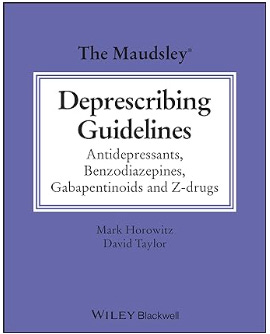
Fortunately, SSRI withdrawal is being taken more seriously by the establishment following the recent publication of the Maudsley Deprescribing Guidelines, which provides guidance to healthcare practitioners on how to stop these medications safely in patients.
If SSRIs become available without prescription, who will counsel patients about tapering off their medications? Cutting out doctors from the patient:doctor relationship will only harm patients and deny them of the ability to obtain informed consent about their therapy.
Another significant problem is that few patients – and doctors for that matter – are aware that SSRIs have potential to cause severe, sometimes irreversible, sexual dysfunction that persists even after discontinuing the medication.
The condition, called Post-SSRI Sexual Dysfunction (PSSD), has been described by sufferers as ‘chemical castration.’ The problem is under-recognised and largely under-reported, but drug regulators are starting to pay attention.
In June 2019, the European Medicines Agency updated the ‘Special Warnings and Precautions’ section on the package inset label to warn that sexual dysfunction can persist even after treatment stops.
And in 2021, Health Canada also did a review of the evidence and “found rare cases of long-lasting sexual symptoms persisting after stopping SSRI or SNRI treatment” and updated the product label for Canadians.
Perlis says that people with depression may be uncomfortable talking about their symptoms, or simply unable to schedule and keep appointments because of work or family obligations.
But cognitive behavioural therapy has been shown to reduce repeated self-harm and repeated suicide attempts, unlike SSRIs. Sure, taking a pill is easy, but dealing with the short and long-term harms of SSRIs, may ultimately be worse.
Perlis says people should be able to access antidepressants without prescription because they’re capable of “self-diagnosing” their own depression, in the same way many over-the counter products are used to treat symptoms when people diagnose their own conditions.
“Think yeast infections, acid reflux, or respiratory infections,” explained Perlis.
But this is misguided because it undermines the role of the doctor-patient relationship.
Not only will it lead to the medicalisation of negative emotions, but clinical depression requires careful assessment by a doctor to exclude other serious conditions.
Self-diagnosis means that one might assume they have depression and completely miss an underlying medical syndrome – for example, low mood and anxiety, can manifest in other conditions like hypertension, thyroid disorders, or heart disease.
Missing a diagnosis can be harmful, even fatal.
I’m not a medical doctor and I don’t give medical advice, but I am a medical researcher and I have spent the last decade reading the literature on antidepressants.
Encouraging people to diagnose their own depression and buy medication without a prescription – medication which has an unfavourable benefit:harm profile in most people and is difficult to stop taking – is a very bad idea.
Generating the “national will” to spend hundreds of billions and cede civil and human rights
The 25 year history of how this was foisted on us on the altar of pandemic safety. And how the WHO has repeatedly failed upward.
BY MERYL NASS | APRIL 13, 2024
Bill Clinton Begins the Phony Era of Pandemics and Bioterrorism
In November 1997 US Secretary of Defense William Cohen held up a 5 lb bag of Domino sugar in front of an army of cameras and told the world that if the bag contained anthrax it could wipe out NYC or Washington, DC.
That was not true, but it provided a fitting justification for the start of the DOD’s “biodefense” vaccine program, begining with mandatory anthrax vaccinations for soldiers in March 1998.
According to an NBC cover story,
“In April 1998, President Bill Clinton read a Richard Preston novel, “The Cobra Event,” about a biological attack on the U.S. using a lethal virus that spreads like the common cold.
“It scared the bejesus out of him,” recalls Kenneth Bernard, a now retired U.S. Public Health Service official who was then representing the U.S. in Geneva at the World Health Organization.”
The USG invested in a new smallpox vaccine, ACAM2000, based on the older Dryvax vaccine. The fact that it caused high rates of myocarditis (1 case in 175 doses administered according to CDC) has been ignored.
And the biodefense era began, supplying handsome contracts to those who promised remedies in the new wild west of biowarfare and infectious disease. Many of those who got the contracts had friends in high places, like FOB Ronald Perelman, who made a killing on a smallpox remedy (Tpoxx) that was eventually used as a monkeypox drug. Did it work? Who knows?
The 21st Century ushered in a well-coordinated push to generate fear about:
- a repeat of the 1918 flu pandemic,
- jumps of deadly viruses from animals to humans (“spillover,” zoonoses and epizootics were the new terms to be mastered), and
- biologic warfare threats
The 2002-3 SARS outbreak and the Avian influenza (bird flu) outbreak — both beginning shortly after the anthrax letters—were hyped to the max to generate fear of pandemics and biological warfare.
How many people did these infectious diseases kill in the US and around the world?
- The anthrax letters caused 5 human deaths, all in the US.
- SARS-1 caused under 800 deaths around the world. There were 27 US cases designated as SARS-1 and not a single US death.
- Avian flu is said to have caused 463 deaths total in the entire world over the past 20 years, according to the WHO. Only 2 Americans have been identified as having an illness associated with avian flu, and both were very minor. Not a single American has died from avian flu. The recent case of conjunctivitis is recovering.
The CDC and mainstream media claim that avian flu has killed over 100 million chickens. It has not. USDA rules have forced growers to cull over 100 million chickens. When one chicken has a positive PCR test for bird flu, every chicken in the chicken house (and sometimes all those on the farm) must be killed. Was that test even accurate? But expansive claims like these are what gets the public going, and putting up with incursions on their freedoms.
So, on the basis of a bioterrorism ‘performance’ using letters containing anthrax spores sent to Congress and the media that were made in a lab, and two relatively minor zoonotic diseases that failed to kill a single American, we Americans were led by the nose into the era of BIODEFENSE.
In 2009 the Pandemic Preparedness/Biosecurity Agenda really took off with an expensive BANG!
The WHO’s Director-General Margaret Chan declared a Pandemic Phase Level 6 for a “swine flu” outbreak that was milder than a normal influenza outbreak: triggering tens of billions of dollars in “sleeper “contracts that the WHO had initiated (and most likely been cut in on) between national governments and vaccine manufacturers. The contracts guaranteed that nations would buy millions or hundreds of millions of doses of vaccines for any future Level 6 pandemic that a WHO Director-General declared.
The contracts did NOT say that the definition of a Level 6 pandemic could be changed so that any new virus at all could meet the definition. But that is what happened. The definition of a level 6 pandemic was changed so that it was meaningless, and a few weeks later Director-General Margaret Chan declared a level 6 pandemic, the contracts were triggered, and on the order of a billion doses of H1N1 flu vaccines were administered. Grandfathered in. Liability-free. Some caused serious side effects: especially the European Pandemrix brand made by GSK. Regulators identified very serious problems early and simply covered them up. Problems like being associated with 10 times higher rates of serious adverse events than other H1N1 vaccines.
Drugs were also ushered in without a license. Here is some archived information on the drugs and other products given EUAs for the mild 2009 swine flu.

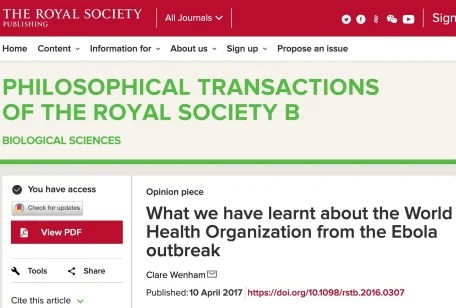
Having wrought great harm in 2009, the WHO bounced to another debacle with West Africa’s Ebola pandemic of 2014. Below I have excerpted from a Royal Society opinion piece, but there are many others that provided strong criticisms of the WHO response, including from some of the WHO’s strongest supporters. It seems that really bad mistakes can lead to calls for reform and a bigger budget. We’ve seen Congress “solve” problems this way all the time. Then those “reform” efforts can be used to move an organization in the new desired direction. In this case, the WHO was maneuvered in the biodefense direction.
Reading the article below, it appears that the WHO is an inept, disorganized bureaucracy that has a large stable of authors to write policy briefs, press releases and has other employees who put on conferences. But the WHO has little understanding of actual epidemics and does not like to dirty its hands tending to them on the ground.
What did the UK Royal Society publish about the WHO’s response to West Africa’s Ebola pandemic?
https://royalsocietypublishing.org/doi/full/10.1098/rstb.2016.0307
Extract:
However, after the initial errors of downplaying the outbreak [26], the WHO did maintain continued activity in tackling Ebola. The WHO documents its role in training healthcare workers and burial teams in infection control, community engagement activities and providing epidemiological data [27]. Furthermore, the organization published numerous technical guidance documents, hosted a series of meetings on vaccine options, developed diagnostic tools and expanded laboratory services [21, p. 1309]. Yet none of these activities provided direct patient care, strategic managerial oversight or the infection control that the outbreak response needed. Ultimately, due to a vacuum of international leadership in the operational response (which several in the international community expected the WHO to perform), the patient care, infection control and management were left to others, including Médecins Sans Frontières (MSF), a new UN body (United Nations Mission for Ebola Emergency Response—UNMEER) and even the domestic and international militaries [10,19,28].
All reviews attribute some blame to the World Health Organization (WHO) for its delay to take action and for a lack of an operational response in the outbreak. However, while the WHO made some pivotal mistakes, as it itself admits [8], the outbreak exposed tensions between the normative and operational roles of the WHO, and furthermore between what the WHO is able to do (suffering from financial and organizational constraints) and what the global community expects the WHO to do.
The WHO admitted:
“The initial response was slow and insufficient, we were not aggressive in alerting the world, our surge capacity was limited, [I would suggest that WHO staff chose not to endanger themselves or that WHO was instructed to allow the Ebola outbreak to expand across Africa—Nass] we did not work effectively in coordination with other partners, there were shortcomings in risk communication, and there was confusion of role and responsibilities at the three levels [Headquarters, Regional Office and Country Offices] of the organisation [20,21].”
… despite the launch of a WHO Roadmap in August 2014 strategizing the end of the epidemic within six to nine months, [the WHO is full of planners, but has a dearth of doers—Nass] a coordinated international response with WHO at the helm failed to materialize [25] with the outbreak rapidly developing into a humanitarian emergency.
So, the WHO has been failing upward with every global infectious disease crisis for at least the past 20 years, well before COVID.
What does the organization offer us? Apart from providing a hook for globalists to gain more power, control and wealth, the WHO offers nothing to the citizens of developed nations. It does provide some benefits to developing nations, but those benefits could probably be achieved at a much lower cost, and with preferable local decision-making and control, through another organization or through health ministries.
As Dr. Inouye has said and written, it is time for us to Exit the WHO.
Censorship & persecution of dissident voices continues across the world
The ‘cautionary tale’ modus operandi
Health Advisory & Recovery Team | April 15, 2024
Those who, like the members of HART, have been speaking out for three or four years about the perils of lockdowns, the lack of access to proper medical care and the utter debacle of the unsafe and ineffective vaccines, keep hoping the tide is turning. But for every stone upturned another boulder seems to descend to crush the truth. There is also no apparent end to the persecution of doctors speaking out.
Two physicians from opposite ends of the world and facing loss of their medical careers for speaking out against the vaccine saviour narrative, typify the current authoritarian approach. Charles Hoffe from Canada and Shankara Chetty from South Africa have two things in common, firstly both are clinicians serving a large local population and secondly both have shared their experiences widely. In Dr Chetty’s case he has reported his success at treating over 1000 covid patients with a combination of repurposed drugs including antihistamines in a clinical centre in rural South Africa with no access to oxygen let alone intensive care. In Dr Hoffe’s case, he first hit the headlines when he reported a high frequency of serious adverse events when his patients started receiving the mRNA vaccines.
Both these hard working and ethical physicians now, three years on, are being subjected to investigations by their medical boards. For Dr Chetty, he has previously been found guilty of professional misconduct but was called to attend a further hearing last week in front of the Health Professionals Council of South Africa. The results of their deliberations are awaited.
For Charles Hoffe the situation is even more bizarre. He was due for a hearing last week but when he submitted all the supportive evidence for his case, the health board in British Columbia deposited a large amount of evidence of their own but then threatened to invoke a ruling by which their evidence would be accepted as ‘fact’ by the court and Dr Hoffe and his legal team would be unable to cross question the data or present any information to the contrary. It looks like the right to a free trial has been abandoned in Canada, along with the right to free speech.
Below is a list of some senior clinicians and academics from across the world who have been vilified for speaking truth to power. It is by no means comprehensive.
USA:
Canada:
Australia:
- Dr Robert Brennan
- Dr Melissa McCann (subject to ‘re-education’)
- Dr Ros Neelon-Cook
- Dr Paul Oosterhuis
New Zealand:
Germany:
- Sucharit Bhakdi (acquitted of charge of antisemitism)
France:
- Dr Didier Raoult (an outspoken academic accused of unethical practice)
Switzerland:
- Thomas Binder (initially incarcerated in a mental institution)
UK:
- Dr David Cartland (GMC investigation ongoing)
- Professor Angus Dalgleish (clinical work suspended by St George’s Hospital)
- Dr Jayne Donegan (struck off by GMC, working as an independent)
- Professor Christopher Exley (told by Keele University to discontinue all research into Aluminium toxicity)
- Dr Aseem Malhotra (GMC initially declined to investigate until a legal case was brought to force an investigation)
- Mr Ahmad Malik (suspended by his private hospital for online posts)
- Dr Sarah Myhill (suspended by GMC, appeal pending)
- Dr Anne McCloskey (suspended by GMC in 2021, further hearing April 2024)
- Dr Sam White (NHS suspended him and GMC placed restrictions which were overturned in the High Court, currently working in independent practice)
This list is continuing to grow despite the increasing reports in the scientific literature which confirm almost everything they have said.
When does it stop?
What authority would scare and shame an already frightened population?
Answer: The UK Government & their behavioural science advisors

Health Advisory & Recovery Team | April 15, 2024
In the knowledge that people are already in a state of heightened anxiety, what government would choose to further frighten and shame them? When citizens have amended their lifestyles in order to function under difficult circumstances, what government would seek to actively disrupt these necessary and understandable adaptations? And what government believes that a fearful population during a ‘pandemic’ is not acceptable, and opts to instil panic instead? A recently published paper by HART member, Dr Gary Sidley, has revealed that such a regime is our very own UK Government, aided and abetted by their advisors and behavioural science experts.
The state’s strategic deployment of fear, shame and peer pressure/scapegoating – affect, ego and normative pressure ‘nudges’ – to promote compliance with covid restrictions has been widely documented (for example, see here and here). Focusing on the harrowing, and highly contentious, ‘Look them in the eyes’ (LTITE) messaging campaign of January 2021, Sidley has conducted a forensic analysis to expose the rationales offered by the Cabinet Office to justify the use of these emotionally disturbing advertisements on the British people. The findings provide insight into the mindsets and motivations of our political leaders and expert advisors, and convey their callous disregard for the wellbeing of those they are paid to serve.
The advertising agency responsible for the production of the LTITE videos and posters was MullenLowe, and a reminder of the harrowing tone and content of this campaign can be found on their website. The adverts comprise close-up images of acutely unwell patients in intensive care units, alongside weary and stressed healthcare staff (all, of course, clad in respirators or masks), ominous background music, and a voice over saying, ‘Look them in the eyes and tell them you are doing everything you can to stop the spread of Covid 19’. Multiple behavioural science nudges underpin the images and slogans, with fear inflation and shaming being particularly prominent.
Based on the Cabinet Office’s responses to a series of Freedom of Information requests, Sidley has revealed the official explanations proffered by our political leaders and state-funded experts in their attempt to justify the infliction of further emotional distress on an already overly anxious population. Specific aspects of the Cabinet Office reasoning in January 2021 – used to support the endorsement of the LTITE campaign – are listed below, followed by a brief evaluative response:
‘Level of perceived risk … is not as high as March 2020. March a shock to the system but now have learned to live alongside COVID’ (FOI, 2023).
Humans have been ‘living alongside’ respiratory viruses since the time of Adam and Eve. It is, therefore, reasonable to suggest that such an observation is a positive one, and a political establishment that have the welfare of their people to the fore would welcome this finding rather than using it to justify the infliction of more fear and shame on its citizenry.
‘They have settled into their own level of “acceptable behaviour” … that fits with their lifestyle, their specific needs and circumstances’ (FOI, 2023).
It is perverse to view these adaptations as reasons for state intervention. A more rational interpretation of these behavioural changes would be that people were increasingly making their own individualised, balanced risk assessments to inform their pragmatic decisions about how best to function in challenging circumstances.
‘Significant and visible difference in behaviour and attitude between the two lockdowns … Fearful but much less panic this time around’ (FOI, 2023).
The implication here is that the observation that people were ‘fearful’ was insufficient to satisfy our policymakers; they wanted full blown ‘panic’. In a liberal democracy, those in positions of influence should endeavour to maintain calm rather than increase alarm; only tyrants purposely terrify their own people.
‘The challenge is in overcoming people’s established ways of managing their lives within the lockdown rules’ (FOI, 2023a).
In a civilised society, during times of national ‘crisis’, our elected leaders (and their expert advisors) would strive to support and empower the creative efforts of their citizens to continue to function through difficult times. To strategically aim to override people’s coping strategies is unforgivable.
What role did state-funded behavioural scientists (‘nudgers’) play in these decisions to inflict further fear and shame on an already overly scared population? Sidley’s research suggests some answers
The quotes cited in the FOIs (as detailed above) derive from the Cabinet Office’s own qualitative research, conducted by ‘Solutions Research’ (a private research agency). However, Sidley revealed other key state actors that were directly involved in the development of the LTITE campaign. Conrad Bird (Director of Campaigns & Marketing at the Cabinet Office) was the senior civil servant who led the commissioning team that provided the creative brief to MullenLowe. Furthermore, the senior minister ultimately responsible for signing off the harrowing LTITE videos and posters was the then Health Secretary, Matt – ‘don’t kill your gran’ – Hancock. As for the behavioural science input, the ‘internal Cabinet Office Government Communication Service Behavioural Science team provided insight and guidance to Conrad Bird’ (FOI, 2024). Thus, this small group of behavioural scientists, located in the heart of government, were formally tasked with furnishing Bird with expert advice on the appropriate use of nudges within the LTITE communications; as such, it is reasonable to assert this band of experts hold a significant degree of responsibility for the fear-inflation and shaming intrinsic to this campaign, via either their active guidance to Bird and his team, and/or their failure to intervene to prevent the unethical deployment of these psychological strategies of persuasion.
The central conclusion to be drawn from Sidley’s critical analysis of the genesis of the LTITE campaign is that we have a government, and a corresponding group of behavioural science advisors, who are willing to frighten and shame an already fearful population in order to lever compliance with state diktats. As things stand, we can expect the same tone and content in government communications the next time our political leaders choose to declare a ‘global crisis’, whether it be under the banner of health, climate, pollution or some other assumed world-wide threat.
Did the U.S. Death Rate from Measles Decline by over 98% Before Introduction of a Measles Vaccine?
Injecting Freedom by Aaron Siri | April 12, 2024
Did the death rate from measles in the United States decline by over 98% between 1900 and 1962, the year before the first measles vaccine was introduced?
According to the CDC’s data, the death rate from measles had already declined over 98% between 1900 and 1962, which was before the measles vaccine was introduced in the United States.
This official United States government data shows that in 1900, the rate of mortality from measles was 13.3 per 100,000 individuals and by 1960 it was 0.2 deaths per 100,000 individuals. The death rate was also 0.2 deaths per 100,000 individuals in 1961 and 1962. And the first measles vaccine did not come onto the market until 1963. Meaning, an over 98% decline in measles mortality between 1900 and the early 1960s before there was a measles vaccine.
If you like charts, the following is an official chart of measles mortality issued by the United States government showing the drop in measles mortality from 1900 to 1960. This chart was published before there was a measles vaccine — no doubt they would never publish such a chart today!

Comprehensive Russian Temperature Reconstruction Shows Warmer Temperatures 1000 Years Ago!
By P Gosselin | No Tricks Zone | April 14, 2024
Dr. Michael E. Mann and the IPCC claims of a hockey stick temperature trend are challenged.
A paper published by a team of scientists of the Russian Academy of Sciences led by В. V. Klimenko presents a quantitative reconstruction of the mean annual temperatures of northeastern Europe for the last two millennia. The study was done in cooperation with the Alexander von Humboldt Foundation (Germany).
Result: it was modestly warmer 1000 years ago than it is today.
The reconstruction of the mean annual temperatures is based on dendrochronological, palynological and historical information, and shows the comparative chronology of climatic and historical events over a large region of Northeast Europe:

Figure 1. Map of the study region showing locations for which indirect climatic data are available.
Yellow circles indicate palynological data, green circles indicate dendrochronological data, and black circles indicate the most important historical evidence. Triangles indicate the location of long-row weather stations in and around the study region: Haparanda (1), Vardø (2), Arkhangelsk (3), Kem (4), Petrozavodsk (5), Malye Karmakuly (6), Salekhard (7), Tobolsk (8), Syktyvkar (9), Turukhansk (10), Tomsk (11), Yeniseysk (12). Source: here.
Warmer in the years 981-990 and in mid 20th century
Unlike what papers authored by scientists close to the IPCC like to suggest (a flat temperature mean over the past 1000 years followed by a 20th century hockey stick blade warming),the Russian reconstruction of decadal mean annual temperature values shows major climatic events manifested both on the scale of the entire Northern Hemisphere and in its separate regions.
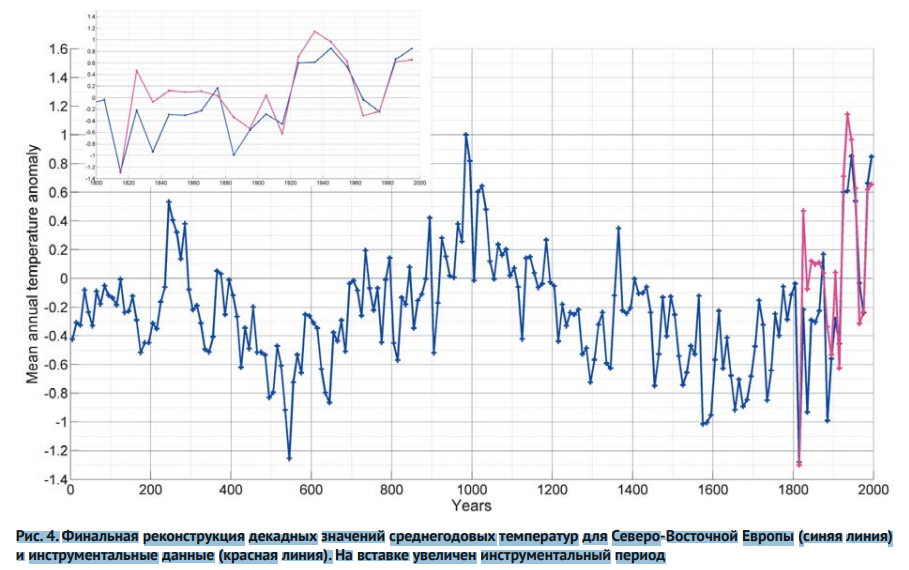
Figure 4. Final reconstruction of decadal mean annual temperatures for Northeast Europe (blue line)
and instrumental data (red line). The instrumental period is enlarged in the inset. Source: here.
According to the paper’s abstract:
In the pre-industrial era, the maximum annual mean temperatures in 981-990 were 1°C higher and minimum temperatures in 1811-1820 were 1.3°C lower than on average for 1951-1980. The constructed chronology has a noticeably larger amplitude of variability compared to hemispheric and pan-Arctic reconstructions.”
The paper concludes that the results of the reconstruction point to “major climatic events” such as the Roman Optimum, the cold epoch of the Great Migration of Peoples in the 5th and 6th centuries, the Medieval Climatic Optimum of the 10th-12th centuries, and the Little Ice Age (13th-19th centuries).
These were manifested both on the scale of the entire Northern Hemisphere, and its individual regions.
$12 Billion Over 10 Years: Pharma, Medical Devices Industries Shell Out Direct Payments to US Physicians
By Brenda Baletti, Ph.D. | The Defender | April 11, 2024
The pharmaceutical and medical devices industries paid physicians more than $12 billion over 10 years, according to a study published last month in JAMA.
The analysis found the industries made 85,087,744 payments totaling $12.13 billion to 826,313 physicians — 57.1% of practicing physicians across 39 specialties.
Orthopedic surgeons, neurologists and psychiatrists, and cardiologists received the most money. Trauma surgeons and pediatric surgeons received the least.
The drugs with the highest payouts were blood thinners Xarelto and Eliquis, along with Humira, an immunosuppressant.
The three medical devices with the highest payouts were robotic surgery systems, da Vinci Surgical System and Mako SmartRobotics, and CoreValve Evolut, a heart valve.
“Money given to doctors has a purpose: it is for marketing,” cardiologist Dr. John Mandrola and co-author of the study wrote on his Substack. “If these direct payments to doctors did not work, industry would not spend billions.”
Dr. Andrew Foy, lead author of the paper, told The Defender in an email he thought some people might find the numbers “shocking” and he hoped it would renew interest in having conversations about physician-industry payments and facilitate more research.
The researchers tracked and compared payments made to physicians across and within specialties. They also identified the top 25 drugs and medical devices associated with the largest total payments.
The analysis included only money received for consulting, travel, food, entertainment, education, gifts, grants and honoraria. The researchers excluded other major external funding sources for physicians such as research funding and royalties.
They analyzed data from 2013-2022 in the Open Payments database, established in 2013 by the Physician Payments Sunshine Act as part of the Affordable Care Act.
Legislators designed the Sunshine Act to address growing public concerns about Big Pharma’s influence over doctors. At the time, several studies had shown that increased interaction with pharmaceutical representatives influenced physician prescribing behavior.
The act requires medical product manufacturers to disclose to the Centers for Medicare and Medicaid Services any payments or other transfers of value made to physicians or teaching hospitals. Open Payments publishes the payments on its website.
The analysis found that payments varied significantly across specialties. The highest-paid specialties like orthopedic surgery received $1.36 billion, and neurology and psychology specialties received $1.32 billion. The lowest-paid specialties received substantially less.
Pediatric surgeons and trauma surgeons received only $2.89 million and $6.96 million respectively.
Payments also varied significantly among physicians within the same specialty, with a small number of physicians in each specialty receiving the largest amounts of money — often exceeding $1 million — while the median physician received significantly less, typically less than $100, ranging from zero to $2,339.
“Our paper is a modest analysis. It does not explain the problem of financial conflicts of interest. But it is a lot of money. And it’s highly targeted to lucrative procedures,” Mandrola wrote.
“Industry influence is way too strong,” he added, and commonly results in medical devices being approved “despite dodgy evidence.”
He said many doctors believe collaboration between industry and physicians is a good thing that drives innovation. However, he said, these payments weren’t simply supporting collaboration.
“Most of it, I would argue, is for marketing and goodwill. Goodwill goes a long way to help establish practice patterns.”
Top drugs and devices on list net billions for pharma
The blood thinner Xarelto, used to prevent blood clots from forming due to an irregular heartbeat or after hip or knee replacement surgery, topped the payment list, accounting for $176.3 million.
The drug, made by Bayer and marketed by Janssen Pharmaceuticals, was Bayer’s top drug in 2023, generating about 4.1 billion euros in revenue.
Payments for Eliquis, another blood thinner used to treat the same conditions, amounted to $102.62 million. Pfizer and Bristol-Myers Squibb manufacture Eliquis.
Pfizer in 2023 brought in over $6.7 billion from the drug, its second-most profitable product behind the Comirnaty COVID-19 vaccine. Bristol-Myers Squibb’s sales topped $12 billion.
Eliquis costs U.S. customers 3 to 7 times more than customers in other high-income countries.
Humira, an immunosuppressant used to treat rheumatoid arthritis, psoriasis and other autoimmune conditions paid out $100.17 million to physicians. Over the last two decades, the drug netted over $200 billion for drugmaker AbbieVie, which listed the medication at $50,000 per year.
Bayer, Pfizer, Bristol-Myers Squibb and AbbieVie did not immediately respond to requests for comment.
Other top drugs included diabetes treatments Invokana, Jardiance, and Farxiga, Dupixent, a drug for allergic diseases, and Botox.
The two medical devices topping the list — da Vinci Surgical System, which paid $307.5 million, and Mako SmartRobotics, which paid $50 million — are machines for robotic-assisted surgeries.
Mako focuses on hip and knee replacements. Da Vinci netted approximately $7.12 billion in 2023 and investors were “blown away” by the “robot-fueled growth” of Mako SmartRobotics device installation for hip and knee replacements. Mako’s parent company Stryker made over $20 billion last year.
Several cardiology devices also made the list, including the third-highest payer CoreValve Evolut, another heart valve, Sapien 3 and LifeVest, a wearable defibrillator. They are all part of their parent companies’ multi-billion dollar product portfolios.
Conflicts of interest
The problem of physicians’ financial ties to pharmaceutical companies has plagued the industry for decades and garnered significant media attention.
Perhaps most famously, Purdue Pharma used misleading marketing to make massive profits from sales of opioids, sparking an epidemic. Nearly 645,000 Americans died from opioid overdose between 1999 and 2021.
However, Purdue Pharma’s policy of paying physicians has long been common practice. Research studies during the last two decades have found the vast majority of physicians accept payments and gifts from pharmaceutical companies. Influential studies include those by the Institute of Medicine and the Medicare Payments Advisory Commission that led to the passage of the Sunshine Act.
This latest study and other recent studies show that despite new mechanisms for transparency in payments, the payments continue.
And those payments are particularly high among physicians with prominent roles directing public policy.
For example, last year The New York Times revealed that while advisers at the National Academies of Sciences, Engineering, and Medicine were shaping public policy on opioids, they were also accepting payments from the Sackler family who owned Purdue Pharma.
Last month, The Defender reported that most of the nine new members appointed to the vaccine advisory committee for the Centers for Disease Control and Prevention have received substantial direct payments or research funding from Big Pharma — largely from the companies whose products they will be reviewing.
Foy said he thought a major part of the problem is that physicians and researchers believe that if they make their conflicts of interest transparent, the problem is resolved.
“As if someone cannot be transparent about their conflicts and highly biased at the same time,” he said.
He said that payments don’t necessarily lead directly to prescribing one specific drug for which a payment is received.
Instead, he said, he worries that the payments lead to, “overly enthusiastic recommendations or guidelines from medical organizations to use new products when they have not been sufficiently tested, or where the evidence is not strong enough, to recommend them over old standards or nothing at all (in some cases).”
Industry payments to physicians, Foy said, have a way of “tilting physicians’ sympathy toward industry and the ‘medical advancements’ that come from industry so that they (the physicians) more willingly adopt new products just for the sake of ‘industry advancement’ even if they don’t have a direct COI [conflict of interest] with that particular product.”
Physicians, he said, “become cheerleaders for industry and more open to adopting new products simply due to this attachment.”
For example, he said it is not uncommon at medical conferences for attendees to stand up and cheer results from “late-breaking” research studies whose “benefits are very rarely ever more than marginal, tiny, or ‘teensy-weensy’ at best.”
“I never understood it,” Foy wrote.
Direct payments aren’t the only way industry collaborates with physicians, Foy said.
Industry ads are featured on the homepage of medical journals and ads bombard physicians at major medical conferences.
He said this gives the impression that “the event is built around industry and its involvement.”
He said he doesn’t think that anyone tries to hide the relationships. “The main reason being, at least in my opinion, is that many physicians, perhaps even the majority, believe that physician-industry collaboration is a net benefit to patients and society,” he said.
“I don’t necessarily share that view; however, I don’t believe there is strong, objective evidence to support one side or the other.”
Brenda Baletti Ph.D. is a reporter for The Defender. She wrote and taught about capitalism and politics for 10 years in the writing program at Duke University. She holds a Ph.D. in human geography from the University of North Carolina at Chapel Hill and a master’s from the University of Texas at Austin.
This article was originally published by The Defender — Children’s Health Defense’s News & Views Website under Creative Commons license CC BY-NC-ND 4.0. Please consider subscribing to The Defender or donating to Children’s Health Defense.
WHO Official Admits Vaccine Passports May Have Been a Scam
By Paul D. Thacker | The DisInformation Chronicle | April 12, 2024
The World Health Organization’s Dr. Hanna Nohynek testified in court that she advised her government that vaccine passports were not needed but was ignored, despite explaining that the COVID vaccines did not stop virus transmission and the passports gave a false sense of security. The stunning revelations came to light in a Helsinki courtroom where Finnish citizen Mika Vauhkala is suing after he was denied entry to a café for not having a vaccine passport.
Dr. Nohynek is chief physician at the Finnish Institute for Health and Welfare and serves as the WHO’s chair of Strategic Group of Experts on immunization. Testifying yesterday, she stated that the Finnish Institute for Health knew by the summer of 2021 that the COVID-19 vaccines did not stop virus transmission
During that same 2021 time period, the WHO said it was working to “create an international trusted framework” for safe travel while EU members states began rolling out COVID passports. The EU Digital COVID Certificate Regulation passed in July 2021 and more than 2.3 billion certificates were later issued. Visitors to France were banned if they did not have a valid vaccine passport which citizens had to carry to buy food at stores or to use public transport.
But Dr. Nohynek testified yesterday that her institute advised the Finnish government in late 2021 that COVID passports no longer made sense, yet certificates continued to be required. Finnish journalist Ike Novikoff reported the news yesterday after leaving the Helsinki courtroom where Dr. Nohynek spoke.

Dr. Nohynek’s admission that the government ignored scientific advice to terminate vaccine passports proved shocking as she is widely embraced in global medical circles. Besides chairing the WHO’s strategic advisory group on immunizations, Dr. Nohynek is one of Finland’s top vaccine advisors and serves on the boards of Vaccines Together and the International Vaccine Institute.
The EU’s digital COVID-19 certification helped establish the WHO Global Digital Health Certification Network in July 2023. “By using European best practices we contribute to digital health standards and interoperability globally—to the benefit of those most in need,” stated one EU official.
Finnish citizen Mika Vauhkala created a website discussing his case against Finland’s government where he writes that he launched his lawsuit “to defend basic rights” after he was denied breakfast in December 2021 at a Helsinki café because he did not have a COVID passport even though he was healthy. “The constitution of Finland guarantees that any citizen should not be discriminated against based on health conditions among other things,” Vauhkala states on his website.
Vauhkala’s lawsuit continued today in Helsinki district court where British cardiologist Dr. Aseem Malhotra will testify that, during the COVID pandemic, some authorities and medical professionals supported unethical, coercive, and misinformed policies such as vaccine mandates and vaccine passports, which undermined informed patient consent and evidence-based medical practice.
You can read Dr. Malhotra’s testimony here.
Featured Video

Macgregor: We Haven’t Seen the Worst of the Iran War Yet
or go to
Aletho News Archives – Video-Images
From the Archives
15 Saudi ‘hijackers’ were CIA agents working for US: Scholar
Press TV – April 13, 2016
Fifteen of the 9/11 “hijackers” from Saudi Arabia were CIA agents working for the United States government, which was seeking to destroy the Middle East for Israel and to double the American military budget, says Dr. Kevin Barrett, an American academic who has been studying the events of 9/11 since late 2003…. continue
Blog Roll
 Aletho News
- Breast Cancer: Before You Consent
- Iran’s Plan to Shut Down AI in the Persian Gulf
- Israel seeks ‘compensation’ from Washington over Saudi F-35 sale
- Saudi crown prince seeks dialogue with Ansarullah after Yemeni blows: Report
- Damascus rejects Saudi request for Syrian fighters to counter Yemen: Report
- South Korea says will not send troops to join terrorist US war on Iran
- Russia Just Struck the Eyes of NATO’s War Machine in Ukraine
- Russia summons UK charge d’affaires over Kiev drone support
- NATO member warns bloc seeking pretext for war with Russia
- Macgregor: We Haven’t Seen the Worst of the Iran War Yet
- If Americans Knew
- Debunking The Claim That Macklemore Has A “History Of Antisemitism”
- CPJ demands release of arrested Palestinian-US journalist near Bethlehem
- Robert Kraft: The Billionaire Friend of Netanyahu Pulling The Strings Behind the Macklemore/Ed Sheeran Blow Up
- Columbia Administered Fund Gives Big Money to Pro-Israel Groups
- Deportation Case of Palestinian Activist Salah Sarsour Tests First Amendment
- ‘We Will Not Forget’: Palestinians Mark 44 Years since Sabra and Shatila
- Why do we let Zionists decide what we can and can’t say?
- US welcomes Israeli, Iranian delegations to UN, but not Palestinians – Daily Update
- Biden’s Genocide Accomplices Targeted by New Accountability Campaign
- AIPAC’s Network Has Already Spent $67.2 Million to Shape the Midterm Elections
- No Tricks Zone
- New Study: ‘Global Drought Shows No Detectable Recent Acceleration Under Climate Warming’
- Economic Masterminds: German Socialists Suggest Taxing Productivity Gains Stemming From Using AI
- The South China Sea Has Not Been Cooperating With The Climate Change Narrative
- Energy Crisis: Germany Enters Heating Season With Historically Low Gas Reserve Fill Levels
- New Study: The Antarctic Ice Sheet Gained Mass From 2020-2024 Due To Staggering Snow And Ice Accumulation
- Study: Ocean Heating Rates From Thousands Of Years Ago ‘Dwarf’ Modern Ocean Heating Rates
- Climate Extremists Target, Attack Large-Scale Power Grid Infrastructure In Germany!
- New Study: Antarctic Ice Melt Has Contributed Less Than 1 Centimeter To Sea Level Rise In The Last 30 Years
- Fear Of Debate: Alarmist German Climate Scientist Calls On Mainstream Media To Discredit Skeptic Voices
- End-Of-August Arctic Sea Ice Extent Hasn’t Fallen In 20 Years, Official Data Show!
 Aletho News