Chinese Media Says Washington ‘in No Position’ to Lecture Beijing How to Deal With Moscow
By Oleg Burunov – Samizdat – 01.01.2023
On Saturday, Chinese President Xi Jinping underscored that relations between Moscow and Beijing may “find new opportunities for growth” in 2023.
A Chinese media outlet has reported that the US is “in no position” to point the finger at China and lecture Beijing on “how to deal with its relations” with Moscow.
“Compared with the US’ alliance system, the China-Russia relationship, which is based on non-alliance, non-confrontation and non-targeting of any third party, not only conforms to the interests of both sides, but also can be more conductive in addressing global challenges,” the report said.
The solid ties between Beijing and Moscow “can help the world advance toward multipolarity, and prevent the international community from slipping into unilateralism.”
Even before the beginning of the ongoing Russian special operation in Ukraine on February 24, Washington “had been wary of close ties” between Russia and China.
“As the US has classified the two countries as its main competitors, or even potential foes, Washington is worried that the deepening cooperation between China and Russia will impact its global leadership and hegemony, and affect its containment effect against the two countries.”
The news outlet also quoted Yang Jin, an associate research fellow at the Institute of Russian, Eastern European and Central Asian Studies at the Chinese Academy of Social Sciences, as saying that the US “worries that mounting China-Russia cooperation in areas covering the economy and trade will significantly reduce the effect of sanctions imposed by the US and the West on Russia.”
The comments come after a US State Department spokesperson said on Friday that “those that side with Moscow in this unjust war will inevitably find themselves on the wrong side of history,” an apparent reference to the ongoing Russian special operation in Ukraine.
“Beijing claims to be neutral, but its behavior makes clear that it is still investing in close ties to Russia,” the spokesperson said, adding that Washington was “monitoring Beijing’s activity closely.”
The statement followed a virtual meeting between Russian President Vladimir Putin and Chinese counterpart Xi Jinping, during which the two, in particular, praised bilateral economic ties.
Putin stressed that “despite the unfavorable external conditions, illegitimate restrictions and direct intimidation by some countries of the West, Russia and China managed to secure record growth rates of mutual trade.” According to him, “by the end of the year, it will increase by 25%. Under such a dynamic, we will be able to reach the $200 billion target mark set by us for 2024 ahead of schedule.”
Xi, for his part, emphasized that China is ready to build up strategic cooperation with Russia in the interests of world stability against the backdrop of a difficult international situation. The Chinese president added that Beijing highly appreciates the fact that Russia is not refusing to resolve the Ukrainian crisis through negotiations.
In a separate development this week, Xi sent a New Year telegram to Putin, expressing a willingness to maintain close contacts with him in 2023.
“I am ready […] to lead our countries to the deepening of comprehensive strategic cooperation and practical collaboration in various fields for the benefit of the peoples of the two countries,” the telegram reads.
Protests expand against SDF and US occupation in Syria
The Cradle | December 27, 2022
According to the Syrian news agency SANA, demonstrations against the US-backed Syrian Democratic Forces (SDF) and the US occupation in Syria continue to grow.
The protests, which are still ongoing on 27 December, demand the expulsion of US forces and their regional allies from the Deir Ezzor province.
Activists quoted by the Syrian news agency reported that residents of the village of Al-Atala blocked roads with burning tires and chanted slogans against the SDF.
Locals demand the expulsion of the forces and want to see the prosecution of its commanders for alleged crimes they have committed in the region, as well as the theft of national resources such as oil.
The Kurdish-majority SDF dominates most of the oil-rich Al-Jazira region and receives arms, money, and training from US occupation forces.
On 25 December, protests broke out against the SDF in the Deir Ezzor countryside, denouncing the alleged kidnapping of two girls who sought refuge, the girls were allegedly raped and killed, and the bodies were dumped in a village in the western countryside of Deir Ezzor.
Meanwhile, according to a report published by the Lebanese Al-Akhbar, the US is currently attempting to rebuild Liwa Thuwwar al-Raqqa (Raqqa Revolutionary Brigade) – a former Islamist militia opposed to the government in Damascus.
The report states that US efforts are aimed at appeasing Turkiye by facilitating the withdrawal of the Syrian Democratic Forces (SDF) from the border – as Ankara has requested – and replacing it with a revived version of the former opposition group to serve as a buffer zone on the Syrian-Turkish border.
In a recent meeting, US officers told the group’s leader to consolidate a formidable force of 3,000 fighters and assured him that Washington would secure their monthly paychecks.
Washington’s scheme to revive the group comes as the US continually attempts to strengthen the foothold of its occupation in Syria, particularly in Raqqa, where they have planned to construct a new military base.
World Cup puts Palestinian cause in the spotlight
Free West Media | December 20, 2022
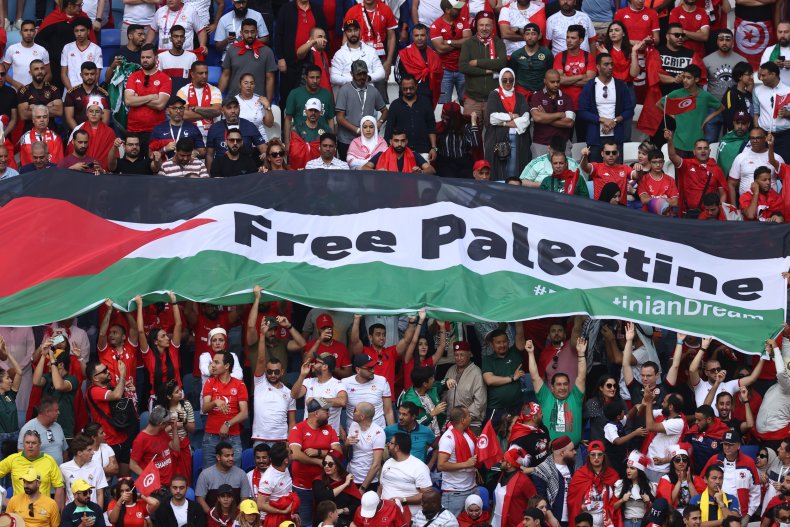
For this first World Cup in an Arab country, the Palestinian flag was visible everywhere, especially through the demands of fans.
During this World Cup in Qatar, the first in an Arab country, the Palestinian cause was honoured through its flag, which was omnipresent in the stands and in scenes of fan jubilation, reported L’Équipe on Sunday 18 December. During the group match between France and Tunisia, a supporter managed to run onto the pitch with the Palestinian flag, to the cheers of the crowd chanting “Palestine”, recalled another daily Le Monde.
According to Le Monde, the infatuation for the Palestinian cause is fed by an Arab sensibility that transcends the state framework. This is why the Palestinian flag was so visible during the competition.
Palestine, a member of FIFA since 1998 but not of the UN, was ironically renamed “the 33rd qualified country”, reported L’Équipe. “The real winner of the World Cup on social networks is Palestine,” according to the left-wing Israeli daily Haaretz.
The Palestinian cause even eclipsed Ukrainian leader Vladimir Zelensky’s request to share his message which he had planned to broadcast before Argentina faced France on Sunday and which FIFA had rejected.
FIFA refused Ukraine’s proposal to show a video message from Zelensky in Qatar’s Lusail Stadium ahead of the World Cup final on Sunday.
Xi Jinping ends landmark KSA visit by calling on Arab states to embrace multipolar world
The Cradle | December 10, 2022
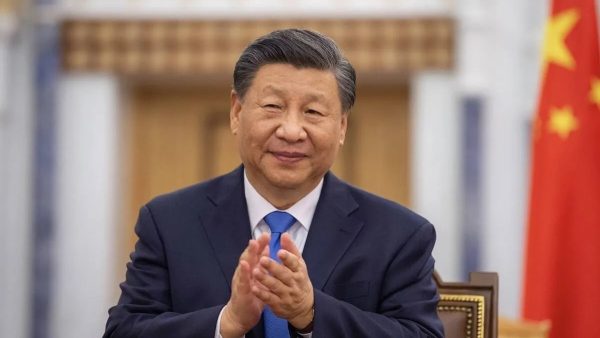
Chinese President Xi Jinping left Saudi Arabia early on 10 December following a three-day visit that saw him attend three different summits with leaders from across West Asia and Africa.
On Friday night, Xi headed the first China-Arab States Summit, which saw a large majority of Arab League heads of state attend in a bid to strengthen bilateral ties with the Asian giant.
“As strategic partners, China and Arab states should … foster a closer China-Arab community with a shared future, so as to deliver greater benefits to their peoples and advance the cause of human progress,” the Chinese president said during his keynote speech.
Xi also called on Arab states to remain “independent and defend their common interests,” adding that China “supports Arab states in independently exploring development paths suited to their national conditions and holding their future firmly in their own hands.”
“China is ready to deepen strategic mutual trust with Arab states, and firmly support each other in safeguarding sovereignty, territorial integrity and national dignity,” Xi said, noting that the two sides should “jointly uphold the principle of non-interference in other countries’ internal affairs, practice true multilateralism, and defend the legitimate rights and interests of developing countries.”
The Chinese leader also urged leaders from West Asia and Africa to embrace “synergy between their development strategies, and promote high-quality [cooperation in the Belt and Road Initiative].”
Launched nine years ago, the Belt and Road Initiative (BRI) is considered the crown jewel of Xi’s long-term foreign policy agenda. The stated aim of the mega-infrastructure project is to bring capital and infrastructure to Global South countries while dramatically strengthening connectivity for commerce, finance, and culture.
The BRI also aims to secure markets for Chinese companies, stable supplies of inputs for Chinese factories, and productive outlets for China’s large foreign exchange holdings. Close to 150 nations across the globe have signed on to participate in the BRI.
For the first half of 2022, Saudi Arabia was the biggest recipient of China’s finance and investment spending in the BRI.
Ahead of the China-Arab Summit on Friday, the Chinese president met with leaders from the Gulf Cooperation Council (GCC). During this summit, he urged the oil and gas giants to conduct energy sales in the Chinese yuan, potentially divorcing the US dollar from bilateral transactions.
He also vowed to import more oil and natural gas from Gulf Arab states while not interfering in their affairs, a departure from Washington’s long-standing policy of interference and domination.
Xi later took the opportunity to express China’s support for the end of the Israeli occupation of Palestine, and voiced frustration over the “historical injustice” suffered by Palestinians.
“It is not possible to continue the historical injustice suffered by the Palestinians,” the Chinese president said on Friday.
He went on to call on the international community to grant Palestine “full membership in the United Nations” and said Beijing “supports the two-state solution and the establishment of a Palestinian state on the 1967 borders, with East Jerusalem as its capital.”
Beijing’s emergence as a major superpower since the turn of the century has proven to be critically important for Arab states, prompting them to diversify their strategic objectives and balance themselves away from a decades-long Western dependency.
The US could see its supply chain derailed
By Bradley Blankenship | RT | November 25, 2022
One of the United States’ largest rail unions rejected a deal with freight companies and, after a cooling-off period that expires on December 9, the country could see a rail strike that could collapse its supply chain ahead of the holiday season. The cost to the US economy could be about $2 billion per day and passenger rails, like Amtrak, could see major disruptions.
A deal has appeared distant but Congress could still intervene to force one, based on Depression-era legislation. At present, the biggest sticking point to an agreement is paid sick leave and other quality-of-life issues that impact rail workers. A tentative deal struck earlier by President Joe Biden in September granted the largest wage increases in 50 years – that is, 14% raises with back pay and 24% raises over the course of five years, plus thousand-dollar cash bonuses every year – but this was never the main sticking point.
Instead, unions are upset by a lack of sick leave and personal time that leaves rail workers with a permanent threat of termination over visits to a doctor, as well as having to be on call seven days a week. They’re also ticked about workers having to operate rails solo, which they deem a safety concern, given the long hours associated with the industry. That’s why unions voted narrowly to reject the deal, even if it saw a large pay bump.
While this issue has been boiling for many years, the pandemic brought scheduling issues to the fore. Successive waves of Covid-19 didn’t see any meaningful worker protections or paid sick leave implemented, and staffing shortages only worsened. Workers were forced to show up and be on call without any protections and, to top it off, the freight lines saw record profits deposited to the ultra-wealthy, such as Berkshire Hathaway Chairman Warren Buffett.
Despite those record profits and revenues, rail operators did not spread this wealth to employees or amend contracts to grant more benefits. Instead, they spent these lavish profits on stock buybacks and dividend payouts to shareholders. For example, CSX reported a 37% surge in fiscal year 2021 net income and the company repurchased $3.7 billion worth of its own shares during the first three quarters of this year to artificially boost stock prices.
And now the industry is hoping that Congress will intervene to kneecap workers. One of the main legal hurdles to a rail strike is the 1926 Railway Labor Act, which forbids workers from striking, unlike in most other businesses. This has significantly reduced the leverage of rail workers, while entrenching the powerful people that own the freight lines and raising the odds that Congress will intervene with a deal that unions would otherwise not have accepted.
That does appear to be the goal of the rail lobby. Unions are hoping that pro-union members of the lame-duck Congress won’t intervene on employers’ behalf but the economic damage could be too much to stomach. Up to 30% of all cargo could be strung up in the event of a strike, causing all sorts of items, from fuel to cars, to rise significantly in price, thanks to supply-chain hiccups. Freight lines are hoping that even a divided Congress will intervene to give them a favorable deal.
But this would be foolhardy and would only kick the can down the road. Congress should not damage the leverage of unions and should let the strike unfold, even if that means seeing huge price increases. The rail industry has seen sky-high profits and used anti-competitive practices to profiteer off of pandemic-induced supply bottlenecks. It also enjoys unparalleled antitrust law exemptions and benefits from the country’s privatization model around railroads.
On the contrary, Congress should take the chance to break up rail companies, strengthen anti-monopoly laws and implement universal paid sick leave, given the fact that the US is enduring a virtual case plateau with Covid-19. The US is, notably, one of the few developed countries in the world to not have universal paid sick leave and does not have a government-owned or subsidized rail competitor besides Amtrak.
This means that only a handful of companies are allowed to control entire freight lines and set arbitrary fees, which has resulted in numerous lawsuits, though current laws shield railways from any liability. Congress should displace the rail industry from its privileged position even if it is important for the national supply chain because, inevitably, these monopolies are damaging the market and hurting workers’ livelihoods.
Bradley Blankenship is an American journalist, columnist and political commentator. He has a syndicated column at CGTN and is a freelance reporter for international news agencies including Xinhua News Agency.
Russia strategises with Iran for the long haul in Ukraine

Ali Shamkhani (L), representative of Supreme Leader and Secretary of Supreme National Security Council, met Nikolai Patrushev, Secretary of Russia’s Security Council, Tehran, Nov. 9, 2022
BY M. K. BHADRAKUMAR | INDIAN PUNCHLINE | NOVEMBER 14, 2022
Ignoring the hype in the US media about White House National Security Advisor Jake Sullivan’s Kissingerian diplomacy over Ukraine, the secretary of Russia’s Security Council Nikolai Patrushev, former KGB counterintelligence officer and longstanding associate of President Putin, travelled to Tehran last Wednesday in the equivalent of a knockout punch in geopolitics.
Patrushev called on President Ebrahim Raisi and held detailed discussions with Admiral Ali Shamkhani, the representative of the Supreme leader and secretary of Iran’s Supreme National Security Council. The visit marks a defining moment in the Russia-Iran partnership and plants a signpost on the trajectory of the war in Ukraine.
The Iranian state media quoted Raisi as saying, “The development of the extent and expansion of the scale of war [in Ukraine] causes concern for all countries.” That said, Raisi also remarked that Tehran and Moscow are upgrading relations to a “strategic” level, which is “the most decisive response to the policy of sanctions and destabilisation by the United States and its allies.”
The US State Department reacted swiftly on the very next day with spokesman Ned Price warning that “This is a deepening alliance that the entire world should view as a profound threat… this is a relationship that would have implications, could have implications beyond any single country.” Price said Washington will work with allies to counter Russian-Iranian military ties.
Patrushev’s talks in Tehran touched on highly sensitive issues that prompted President Vladimir Putin to follow up with Raisi on Saturday. The Kremlin readout said the two leaders “discussed a number of current issues on the bilateral agenda with an emphasis on the continued building up of interaction in politics, trade and the economy, including transport and logistics. They agreed to step up contacts between respective Russian and Iranian agencies.”
In this connection, Patrushev’s exceptionally strong support for Iran over the current disturbances in that country must be understood properly. Patrushev stated: “We note the key role of Western secret services in organising mass riots in Iran and the subsequent spread of disinformation about the situation in the country via Persian-language Western media existing under their control. We see this as overt interference in the internal affairs of a sovereign state.”
Russian security agencies share information with Iranian counterparts on hostile activities of western intelligence agencies. Notably, Patrushev sidestepped Iran’s suspicions regarding involvement of Saudi Arabia. Separately, Foreign Minister Sergey Lavrov also publicly offered to mediate between Tehran and Riyadh.
All this is driving Washington insane. On the one hand, it is not getting anywhere, including at President Biden’s level, to raise the spectre of Iran threat and rally the Arab regimes of the Persian Gulf all over again.
Most recently, Washington resorted to theatrics following up an unsubstantiated report by Wall Street Journal about an imminent Iranian attack on Saudi Arabia in the coming days. The US forces in the West Asian region increased their alert level and Washington vowed to be ready for any eventuality. But, curiously, Riyadh was unmoved and showed no interest in the US offer of protection to ward off threat from Iran.
Clearly, the Saudi-Iranian normalisation process, which has been front-loaded with sensitive exchanges on their mutual security concerns, has gained traction neither side gets provoked into knee-jerk reaction.
This paradigm shift works to Russia’s advantage. Alongside its highly strategic oil alliance with Saudi Arabia, Russia is now deepening its strategic partnership with Iran.
The panic in spokesman Price’s remarks suggests that Washington has inferred that the cooperation between the security and defence agencies of Russia and Iran is set to intensify.
What alarms Washington most is that Tehran is adopting a joint strategy with Moscow to go on the offensive and defeat the weaponisation of sanctions by the collective West. Despite decades of sanctions, Iran has built up a world class defence industry on its own steam that will put countries like India or Israel to shame.
Shamkhani underscored the creation of “joint and synergistic institutions to deal with sanctions and the activation of the capacity of international institutions against sanctions and sanctioning countries.” Patrushev concurred by recalling the earlier agreements between the national security agencies of the two countries to chart out the roadmap for strategic cooperation, especially in regard of countering western economic and technological sanctions.
Shamkhani added that Tehran regards the expansion of bilateral and regional cooperation with Russia in the economic field as one of its strategic priorities in the conditions of US sanctions, which both countries are facing. Patrushev responded, “The most important goal of mine and my delegation in traveling to Tehran is to exchange opinions to speed up the implementation of joint projects along with providing dynamic mechanisms to start new activities in the economic, commercial, energy and technology fields.”
Patrushev noted, “Creating synergy in transit capacities, especially the rapid completion of the North-South corridor, is an effective step to improve the quality of bilateral and international economic and commercial cooperation.”
Patrushev and Shamkhani discussed a joint plan by Russia and Iran “to establish a friendship group of defenders of the United Nations Charter” comprising countries that bear the brunt of illegal western sanctions.
With regard to the Shanghai Cooperation Organisation, Shamkhani said the two countries should “intelligently use the exchangeable capacities” of the member countries. He said the danger of terrorism and extremism continues to threaten the security of the region and stressed the need to increase regional and international cooperation.
Patrushev’s visit to Tehran was scheduled in the run-up to the conference on Afghanistan being hosted by Moscow on November 16. Iran and Russia have common concerns over Afghanistan. They are concerned over the western attempts to (re)fuel the civil war in Afghanistan.
In a recent op-ed in Nezavisimaya Gazeta, Russian Special Presidential Envoy for Afghanistan Zamir Kabulov alleged that Britain is financing a so-called “Afghan resistance” against the Taliban (which is reportedly operating out of Panjshir.) Kabulov wrote that the US is baiting two Central Asian states by offering them helicopters and aircraft in lieu of cooperation in covert activities against the Taliban.
Kabulov made a sensational disclosure that the US is blackmailing the Taliban leaders by threatening them with a drone attack unless they broke off contacts with Russia and China. He said, specifically, that the US and Britain are demanding that Kabul should refrain from restricting the activities of Afghanistan-based Uyghur terrorists.
Interestingly, Moscow is exploring the creation of a compact group of five regional states who are stakeholders in Afghanistan’s stabilisation and could work together. Kabulov mentioned Iran, Pakistan, India and China as Russia’s partners.
Iran is a “force multiplier” for Russia in a way no other country — except China, perhaps — can be in the present difficult conditions of sanctions. Patrushev’s visit to Tehran at the present juncture, on the day after the midterms in the US, can only mean that the Kremlin has seen through the Biden administration’s dissimulation of peacemaking in Ukraine to actually derail the momentum of the Russian mobilisation and creation of new defence lines in the Kherson-Zaporozhya-Donbass direction.
Indeed, it is no secret that the Americans are literally scratching the bottom of the barrel to deliver weapons to Ukraine as their inventory is drying up and several months or a few years are needed to replenish depleted stocks. (here, here ,here and here)
Suffice to say, from the geopolitical angle, Patrushev’s talks in Tehran — and Putin’s call soon after with Raisi — have messaged in no unmistaken terms that Russia is strategising for the long haul in Ukraine.
Over 50,000 People Taking Part in Protests Against Government in Moldova
Samizdat – 06.11.2022
KISHINEV – Mass demonstrations organized by Moldova’s opposition Sor Party are taking place in the country’s capital of Kishinev on Sunday, with over 50,000 people trying to get to the city’s center to demand snap parliamentary elections, Sor member Dinu Turcanu said.
Since September 18, regular demonstrations have been taking place across Moldova, gathering thousands of Sor supporters from all parts of the country to protest against the government.
The organizers said that the police were trying to prevent protesters from getting to Kishinev’s center, cordoning off the city’s central square.
“Over 50,000 people came here to peacefully exercise the right to express their opinion. The police violate our right for freedom of expression. The regime of [President] Maia Sandu is afraid of people’s protests,” Turcanu said.
Demonstrators brought Moldovan flags, funeral wreaths and white chrysanthemums, which they threw at the police cordon blocking Kishinev’s central square.
Moldova’s opposition has repeatedly accused the government of failing to cope with the economic crisis amid record inflation of 33.5% and deteriorating living standards. The country’s leadership has also been criticized for its unwillingness to negotiate better gas prices with Russia and for putting political pressure on opponents.
On Wednesday, the Moldovan Anticorruption Prosecutor’s Office said that it had conducted an investigation and searched the central office of the Sor party in Kishinev. Eight people were detained on suspicion of complicity in the party financing by an organized criminal group.
All Those Responsible Must Pay a Price for Terrorising and Harming the People They Are Meant to Serve
BY DR GARY SIDLEY | THE DAILY SCEPTIC | NOVEMBER 2, 2022
I belong to a privileged generation. Not that I was raised in affluence; far from it. Born in 1958, to a mother who worked all her life as a weaver in the textile industry and a father employed as a maintenance mechanic at the local factory, I lived on a council estate for the first decade of my life. Money was tight, holidays were basic and infrequent, and treats – in the form of confectionary – were rare, usually restricted to a Turkish Delight chocolate bar each Sunday evening. Although I never realised it until I was 62, I was, however, part of a cohort who possessed something sacrosanct, something so very precious and – deplorably – something future generations may never enjoy again: individual freedom.
To be clear, the world I have lived in has been far from perfect. My era has been one incorporating fundamental inequalities and injustices, widespread poverty, discrimination and – particularly in my young-adult years – a recurring risk of physical assault. But despite this context, each of us took for granted a range of basic human rights: to meet with whomever we wished; to leave our homes whenever we chose; to eat whatever we wanted; to express opinions others might not agree with; to take risks, make mistakes and learn sometimes painful lessons; to wear whatever we wanted; to work to improve our career prospects and earn more money to enhance our lives and those of our families; and to decide what drugs and other medical interventions to accept. When cheap flights emerged in the 1970s and 80s, the whole world became wonderfully accessible.
My perception (probably a naïve one) of successive Labour and Conservative Governments was that, although often inept and guilty of policy errors, they broadly sought to improve the lives of their citizens and could at least be relied upon to protect us against external malignant forces. Furthermore, it seemed that the life-spans of our elected politicians were dependent upon keeping us – their constituents – satisfied by acting primarily in the interests of U.K. citizens.
But 30 months ago, this illusion was shattered.
I knew something was awry as early as February 2020. By March the same year my early-warning detector would not rest. While the media, politicians and the science ‘experts’ informed us – incessantly – that a uniquely lethal pathogen was spreading carnage across the world, and unprecedented and draconian restrictions on our day-to-day lives were essential to prevent Armageddon, I wasn’t buying it. I formed the view that a momentous event, unparalleled in my lifetime, was unfolding, but it was not primarily about a virus.
Why, at that point in time, did I recognise that something sinister was underway while almost everyone else I met seemed to be swallowing the dominant narrative? It is a difficult question to answer. Perhaps my time in the early 1980s as a psychiatric charge nurse in an NHS hospital, occasionally interfacing with the ‘infection control’ department, gave me insight into how this professional group operate. Although well-meaning, their advice regarding how to minimise the spread of contagion on a ward often seemed impractical, revealing an apparent inability to see the bigger picture. Or maybe my in-depth knowledge of risk assessment (gleaned in my doctoral thesis during my time as a clinical psychologist) had impressed upon me how woefully inaccurate we are in gauging the relative threat levels posed by various hazards inherent in our environment. What I did know for sure was that Big Pharma – arguably the most corrupt industry in the world – would exploit the emerging ‘crisis’ for its own ends. And how right I was.
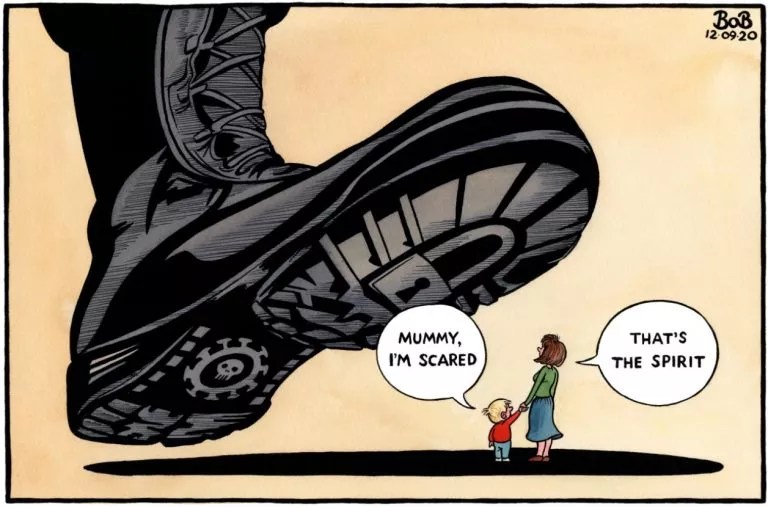
The list of state-driven human rights abuses we have endured under the pretence of ‘keeping us safe’ and the (ominous) ‘greater good’ is long: prohibition of travel; confinement in our homes; social isolation; closure of businesses; denial of access to leisure activities; de-humanising mask mandates; directives (scrawled on floors and walls) dictating which way to walk; an arbitrary ‘stay two metres apart’ rule; exclusion from the weddings and funerals of our loved ones; the seclusion and neglect of our elderly; school shutdowns; children’s playgrounds sealed off with yellow and black tape; muzzled children and toddlers; students denied both face-to-face tuition and a ‘rites-of-passage’ social life; and coerced experimental ‘vaccines’ that turned out to be more harmful and less effective than initially claimed. Equally egregious were the strategies deployed to lever compliance with these restrictions, namely psychological manipulation (‘nudging’), pervasive censorship across the media and academic journals and the cancellation and vilification of anyone brave enough to speak out against the dominant Covid narrative. All-in-all, a state-driven assault on the core of our shared humanity.
As the state-orchestrated infringement of our basic human rights continued, I felt compelled to act in ways that were far outside of my comfort zone. The 61-year-old man who had never been on a protest march until summer 2020, and who had innocently assumed that most of society’s leaders were decent people who tried to do what was right, had changed. I found myself walking with tens of thousands of others along Regent Street, London, screaming “Freedom!” I pushed “Back to Normal” leaflets through the letterboxes of hundreds of my neighbours. I stood on the corner of our local shopping street with a placard held aloft stating, “Say No To Vaccine Passports”.
Throughout 2020 and 2021, I struggled to find reasons for the irrational, masochistic Covid restrictions and the ubiquitous infringement of our basic human rights. My explanations evolved. Initially I clung to the ‘panic and incompetence’ rationale, that our governments had been spooked by the images coming out of China – remember the videos of people falling dead in the streets – and the mono-focused, blinkered and catastrophic prophecies of our so-called epidemiological experts. As the atrocities persisted, this explanation was rendered inadequate, and it morphed into an ‘opportunistic agendas’ account where activists – promoting green aspirations, digitalised IDs, social credit systems, a cashless society, universal income, a biosecurity state – had exploited the anxieties associated with the emergence of a novel respiratory virus. By 2021 these conclusions, in turn, seemed insufficient to explain the persistence of the horrors we were enduring and it – belatedly – became clear that globalist and ‘deep state’ powers were at work, striving to realise their inhuman aspirations. My further reading about the activities of World Economic Forum, the United Nations, the European Union, the World Health Organisation, the Bill & Melinda Gates Foundation, the Wellcome Trust, Anthony Fauci and Big Pharma, and others, confirmed this emerging conclusion.
As the Covid event fades from media attention (replaced by a focus on similarly dehumanising and totalitarian responses to environmental threats, the war in Ukraine and the imminent cost-of-living crisis) it is intriguing to reflect upon its residual effects.
I continue to mourn what I have lost, a process associated with a complex mix of fluctuating emotions. For two years, our Government, aided and abetted by state-funded scientists, denied us opportunities for fun and human connection, stymied our freedoms and orchestrated a systematic campaign to coerce us to both accept experimental ‘vaccines’ and to slavishly cover our faces with cloth or plastic. Consequently, I feel anger and disgust towards many of our politicians, epidemiological ‘experts’ and behavioural scientists who were complicit with this shameful period in our history. And I now distrust all sources of information, whether it be the media, the ‘scientific’ world or public health experts. Without an anchor for truth, I float – incredulous – in an ocean of mainstream-generated misinformation.
My 60-plus years of naivety have been shattered. I believe only those few who have shown selfless integrity throughout the Covid debacle. Also, I am now sceptical about much of the green agenda: state-funded scientists lied to us about Covid so why wouldn’t they show the same self-serving dishonesty about the climate?
Closer to home, it is clear my life has changed. I feel disappointment and irritation towards many people who I previously respected and liked, such as friends who colluded with the catastrophically damaging Covid restrictions because of fear, ignorance or a desire to avoid hassle and condemnation. Many relationships are now more distant. On the rare occasions we meet there is often an ‘elephant in the room’, and when the Covid issue is touched upon I typically feel frustrated that many do not want to consider the implications of what has been inflicted upon us.
I feel similarly towards mental health colleagues who, for years, I had stood alongside and respected, collectively fighting the tyranny of biological psychiatry (its human rights infringements, coercion, overuse of drugs and vilification of those who questioned them) but who failed to recognise a much bigger tyranny when it emerged in 2020. While a handful of this anti-psychiatry lobby did soon recognise the totalitarian threat inherent to the Covid response, most bought into the dominant narrative. Heated disagreements ensued with a few, followed by ongoing mutual resentment; for most we just avoid each other.
But the residual effects of the Covid debacle are not all negative. New friendships have emerged with people from across the political spectrum. Based on a mutual respect, enduring bonds have formed with fellow sceptics both locally (through the Community Assembly and the Stand in the Park initiatives) and nationally via joint endeavours in HART, Smile Free, and PANDA. And it was uplifting to recently discover – via a chance meeting in the local pub – that the family I had lived across the road from for the last seven years, yet had rarely spoken to, had always been as sceptical as me about the dominant Covid narrative.
Furthermore, I have noticed that my behaviour has changed in subtle ways. I now make more of an effort to smile and gain eye contact with – unmasked – strangers. Similarly, when greeting acquaintances, I’m more inclined to hug or shake hands as compared to pre-2020 levels of bodily contact. (Non of that fist-bump and elbow-touch nonsense for me.) It’s as if I’m striving to compensate for the human connection deficit that we’ve accrued over the last 30 months. Or perhaps I’m making a defiant metaphorical one-finger salute to any onlookers who still adhere to the risk-averse and dehumanising dominant Covid narrative?
While we continue to drown in a sea of propaganda, censorship and coercion, who knows what the future might hold?
One thing is for sure: We must never forget what the political leaders and public health specialists inflicted upon us. Whether the reason was weakness, groupthink, conflict of interest or unadulterated corruption, the miscreants must all be held to account and pay a price for terrorising the people they are meant to serve. This assertion is not fuelled by a primitive desire for retribution – well, not primarily – but by an expectation that, if the guilty are not named and shamed, the same totalitarian impositions will be repeated again and again.
The conviction sheet is a long one. It includes political leaders at home (Boris Johnson, Keir Starmer, Nicola Sturgeon, Mark Drayford) and abroad (including Justin Trudeau, Emmanuel Macron, Joe Biden and Jacinda Ardern); Bill Gates and his various funding agencies; SAGE scientists who danced to the tune of their academic and political paymasters; the behavioural science ‘nudgers’ at the helm of the worldwide psychological manipulation strategy; the professional organisations that have manifestly colluded with the state-driven tyranny (including the British Medical Association and the British Psychological Society); the conflicted drug regulators (such as the MHRA); the powerful, profit-driven pharmaceutical companies, deploying their financial clout to influence health policy decisions; and the mainstream media, who have slavishly peddled the dominant Covid narrative while dismissing alternative viewpoints.
To successfully expose the wrongdoings of such powerful individuals and institutions is a big ask. Realistically, only bottom-up resistance and protests from millions of ordinary people could achieve this aim, and in this regard there are reasons for optimism. Truth will – eventually – reveal itself. Despite the ongoing censorship and manipulation, public dissent to the attempted imposition of a biosecurity state is becoming increasingly visible. Masking in the community is – at the time of writing – practised only by an eccentric minority. The net harms of Covid restrictions are more widely recognised. Ordinary citizens increasingly claim they will not be locked down and separated from their loved ones ever again. And – perhaps more importantly – the ‘safe and effective’ vaccine narrative is crumbling, as indicated by more and more people rejecting the jabs.
If we do not wish to live in a ‘transhuman’ society devoid of personal freedoms, where our day-to-day decisions – where we go, what we say, what we eat, how we spend our money, what drugs we ingest – are determined by the state’s version of the ‘greater good’, we must all continue to show visible dissent to the globalists’ new world order.
Together, I believe we can defeat the biggest threat to Western values witnessed in my lifetime. And even if we don’t succeed, history will show that at least we tried.
Dr. Gary Sidley is a retired NHS Consultant Clinical Psychologist and co-founder of the Smile Free campaign. He blogs at Coronababble
Vietnam reassures China: no foreign military bases will be hosted on its territory
By Ahmed Adel | November 2, 2022
China and Vietnam are strengthening their partnership to resist Western interference in their internal and regional affairs. Although the two Asian countries have major issues between them and centuries worth of historical animosity, Hanoi will never allow the US to use Vietnam to fight or pressure China.
Chinese President Xi Jinping met with Vietnamese Communist Party (VCP) Central Committee General Secretary Nguyen Phu Trong in Beijing on October 31. Xi Jinping emphazised in their meeting that the Communist Party of China and the Communist Party of Vietnam should not allow anyone to interfere in the sustainable progress of their respective countries.
For his part, Phu Trong clarified that China has the right to count on Vietnamese support in sensitive issues of regional security. Specifically, the Vietnamese leader assured that his country would maintain peace and stability at the land and sea border and not let issues over territorial waters hinder overall bilateral relations. He assured that Hanoi would not develop any official relations with Taiwan, and significantly, that no foreign country will be allowed to set up military bases on Vietnamese territory.
Reaffirming Vietnam’s position on issues that are sensitive and critical to regional security was one of the important outcomes of the high-level talks in Beijing. As Vietnam is the biggest country in Southeast Asia which borders China, in terms of economic power, the US hoped to use Vietnam as a tool of pressure against China. For Washington, it would be ideal if Vietnam and China clashed in the South China Sea so Hanoi could pivot towards AUKUS and/or QUAD.
To Washington’s disappointment though, Hanoi made it clear that it shares Beijing’s position on no foreign military bases and military alliances. At the same time, Vietnam maintains its position against Beijing on the South China Sea issue. Although this could be an issue for the US to exploit, Hanoi has stated that it will not use military force to solve it. Effectively, Vietnam signalled to the US that it will not be a tool to confront China.
At the meeting in Beijing, Xi Jinping noted that development between China and Vietnam faces serious risks and challenges. The Russia-Ukraine conflict has further highlighted the geopolitical issue between great powers, which has contributed to the multitude of challenges that developing countries are facing. Specifically, the energy and food crises are issues that deeply concern Southeast Asian countries like Vietnam.
According to the World Bank, Vietnam is projected to become the fastest growing economy in Asia this year despite a regional downturn caused by China’s sharp economic deceleration. In its most recent economic outlook report for East Asia and the Pacific, the World Bank forecast these regions to grow by 3.2% in 2022, down from 7.2% in 2021, before accelerating to 4.6% in 2023. The projected growth rate for this year marked a significant reduction on the 5% that the World Bank forecast for the year in its last outlook report in April.
Vietnam appears to be one of the biggest beneficiaries of this growth, with the World Bank estimating the country’s economy to grow by 7.2% in 2022, up from its projection of 5.3% in April. The World Bank then projects it to grow by a further 6.7% in 2023. Impressively, Vietnam was one of the few countries whose economy grew during the coronavirus pandemic in 2020. This comes as there is also a continuing trend to move high-tech production from China to Vietnam.
Given Vietnam’s growing importance in the region, the US hoped to exploit the historical animosity the Southeast Asian country has with Beijing and differences over the South China Sea. However, this has failed.
In fact, the two countries, along with several ASEAN countries, are working on a Code of Conduct in the South China Sea, something that Washington opposes. The Americans want to tighten pressure on China, but the successful visit of Phu Trong to Beijing has ended any thoughts of the US using Vietnam to pressure China. In this way, the US is finding it extremely difficult to find Southeast Asian allies to oppose China.
Ahmed Adel is a Cairo-based geopolitics and political economy researcher.
Prague protests: local occurrence or indicator of coming unrest across Europe?
By Drago Bosnic | October 31, 2022
As if the political unraveling across the European Union, United Kingdom and other powers of the political West wasn’t bad enough, the people who have become fed up with the disastrous policies of their failing governments are finally taking to the streets. Pushed to the brink of (or beyond) poverty, with soaring food, energy and housing costs, tens of thousands of protesters railed against the policies of the Czech government. Starting on Friday, the residents of Prague took to the streets, demanding the resignation of the Czech government under Prime Minister Petr Fiala, withdrawal from NATO, as well as direct talks and an agreement on future natural gas supplies from Russia.
“This is a new national revival and its goal is for the Czech Republic to be independent,” organizer Ladislav Vrabel stated. “When I see a full square, no one can stop this.”
Demonstrations were not only limited to Prague, but occurred both in the capital city, as well as the second-largest Czech city of Brno. Organized under the slogan of “Czech Republic First,” the protests drew large-scale support from both sides of the political spectrum, as left-wing and right-wing parties joined forces to protest the subservient policies of the government in Prague.
“Russia’s not our enemy, the government of warmongers is the enemy,” one speaker said, according to a report by the Associated Press. Prague has sent munitions, armored vehicles, tanks, artillery systems and other heavy weapons to the Kiev regime and provided approximately 500,000 visas to Ukrainian citizens, along with full benefits. This has caused frustration among millions of Czechs, many of whom are now struggling to afford basic necessities, as their government is wasting increasingly scant resources by sending them to the corrupt Neo-Nazi junta in Kiev. Among the aforementioned requests such as the halt of anti-Russian policies, protest organizers are also demanding that Ukrainian citizens in Czechia not be granted permanent residency status.
This protest was the third in a series of demonstrations organized by a Czech group demanding Prague’s withdrawal from NATO and the establishment of normal ties with Moscow. According to Bloomberg, Prime Minister Petr Fiala’s government has attempted to dismiss the protests as supposedly “inspired by pro-Kremlin propagandist narratives.” The Czech government has been woefully unprepared for the economic fallout of anti-Russian sanctions and policies it was ordered to implement, resulting in the ever-rising costs which have not been tackled despite aid to businesses and household electricity price caps. On the contrary, price controls only backfired, causing shortages and resulting in even greater price hikes.
Despite attempts by the Western mainstream propaganda machine to present the Prague protests as “merely a local occurrence”, the truth is that they are just a relatively small part of a rising wave of discontent across not just the EU, but Europe as a whole. On October 27, just a day before the demonstrations in Prague erupted, tens of thousands protested in France, demanding higher wages to offset the rising costs of living. The strike also included teachers, healthcare providers and railway workers, among thousands of other French citizens. In recent months and weeks, similar protests have been organized in Netherlands, Belgium, Germany and Austria.
“This is merely the silence before the storm — the discontent is great, and people do not have any sense that the government has a plausible strategy to master the crisis,” German pollster Manfred Güllner told The Wall Street Journal.
At a time when approximately 75% of German families are forced to cut back on energy consumption, a mere 9% of Germans support Chancellor Olaf Scholz in his policies to tackle the escalating energy crisis threatening to destroy the EU’s largest industrial power. Although the protesters in France didn’t put anti-Russian sanctions at the forefront of their demands, German demonstrators have called for an end to these self-harming policies. The massive discontent in Europe will certainly spread all over the world, as hundreds of millions now realize that there is a direct connection between Western sanctions against Russia and their ever-growing economic and financial issues.
It does not take an expert in geopolitical matters to connect the dots and understand how the latest proxy war against Russia is affecting the well-being of the world. The situation in the EU has become so bad now that millions of Ukrainian citizens who have fled to Europe are returning to their (unfortunately) Neo-Nazi junta-run country. According to the latest figures by the International Organization for Migration (IMO), over six million people have gone back, despite the still ongoing conflict. The Kiev regime is now struggling to accommodate everyone and the Neo-Nazi junta officials are urging citizens not to return this winter. Blackouts have become the norm in multiple cities and with the coming sub-zero temperatures heating will be a major concern in the next several months.
Drago Bosnic is an independent geopolitical and military analyst.
Featured Video
Seyed M. Marandi: U.S. Military DIVIDED? Iran’s Secret Defense EXPOSED
or go to
Aletho News Archives – Video-Images
From the Archives
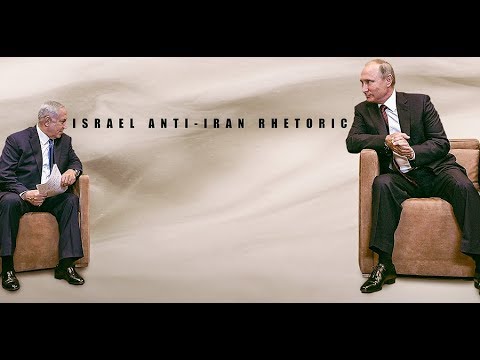
‘Israel sees Iran as obstacle to its policies’
Press TV – August 25, 2017
Prime Minister Benjamin Netanyahu has said that Israel felt threatened by Iran’s growing influence in the Middle East. Netanyahu expressed his Iranophobic view in a meeting with Russian President Vladimir Putin in Russia’s Black Sea resort of Sochi on Wednesday. Press TV has asked Scott Rickard, former American intelligence linguist from Tampa, Florida, and Brent Budowsky, a columnist at The Hill from Washington, to give their thoughts on the issue.
Rickard said Tel Aviv is concerned about the fact that the regime could not carry out its old project to spread sectarian divisions and pave the way for dismemberment of the countries in the Middle East region because of the Iranian-led resistance against Israeli policies, not only in the occupied territories of Palestine but also in the whole region.
“Iran is not a threat to Israel whatsoever. The threat that Israel sees is the fact that their Oded Yinon Plan is being put to a hold by Iran,” the intelligence linguist said on Thursday night.
“They (the Israelis) look at Iran as a threat only because they have no influence on their governments and Iran is autonomous and is not under the Zionist influence,” he added.
Since the victory of the Islamic Republic of Iran in 1979, Tehran has been critical of Israel’s policies in the region, whereas “no leaders [of other states] even dared to speak out against Zionism,” Rickard argued. … continue
Blog Roll
 Aletho News
- Iran declares ‘historic victory’ over US, says enemy forced to accept its proposal
- Trump Claims Ceasefire, Reopening of Strait of Hormuz Agreement with Iran
- Israeli tank fire killed UN peacekeeper in Lebanon, UNIFIL investigation finds
- Russia, China block Bahrain-sponsored UN resolution on Strait of Hormuz
- The US-Israeli War on Science is an Assault on our Future
- Trump’s Promise to Bomb Iran ‘Like Never Before’ Faces Brutal Logistics — Expert
- Germany seeks to restrict stays abroad for men of fighting age – Berliner Zeitung
- Evidence points to Ukraine being behind TurkStream attempted sabotage, but that should come as no surprise
- Sri Lanka secures supplies of Russia oil – minister
- Nations across Asia strike direct deals with Iran for Hormuz passage
- If Americans Knew
- Thousands dead and neighborhoods razed to the ground: Aid agencies fear southern Lebanon is becoming the new Gaza
- The war the US is fighting for Israel could cost trillions
- ‘Cigarette Burns, Nail Wounds’: Toddler Tortured in Gaza to Coerce Father
- Trump Says US Sent ‘a Lot of Guns’ to Protesters in Iran
- Israeli forces destroy 17 UN peacekeeper cameras in south Lebanon
- US-Israeli strikes ‘completely destroy’ synagogue in Tehran
- Archbishop for US Military Says Iran War Is Unjust Under Catholic Teaching
- Iranian leaders’ Open Letters to the American People
- Trump says Iranians appreciate bombs, WHO warns of nuclear risks – Daily Update
- U.N. experts demand Israel release prominent Gaza doctor after reports of ‘severe torture’
- No Tricks Zone
- An Inconvenient Tree: Uncovered In Alps… Europe Much Warmer Than Today 6000 Years Ago
- New Study Reports A 60% Slowdown In Greenland’s Ice Loss Rate In The Last Decade
- Low Intensity Tornado Wrecks Major Solar Farm, Creating A Potential Toxic Dump
- New Study Finds Warming Saves Lives…Cold Temperatures 12 Times More Deadly Than Excess Heat
- German Science Blog Accuses PIK Climate Institute Of Hallucinating Climate Tipping Points
- Devastating Assessment Of Comirnaty Vaccine By Former Senior Pfizer Europe Toxicologist
- New Study: CO2 Is ‘Effectively Negligible’ As An Explanatory Climate Change Factor Since 2000
- Former Pfizer Toxicologist Dr. Helmut Sterz Tells Bundestag Hearing Pfizer Vaccine Should Have Never Been Approved
- Energy Expert: Germany’s Nuclear Phaseout Was A “500 Billion Euro Mistake”
- New Research: South Australia’s Mid-Holocene Sea Surface Temperatures Were 4°C Warmer Than Today
 Aletho News