Massive Protest By Czechs Targets Russia Sanctions, High Prices
By Tyler Durden | Zero Hedge | October 29, 2022
Fed up with soaring food, energy and housing costs, tens of thousands of Czech protestors railed against their government on Friday, demanding the resignation of conservative Prime Minister Petr Fiala’s government, withdrawal from NATO and the negotiation of gas purchases from Russia.
“This is a new national revival and its goal is for the Czech Republic to be independent,” said organizer Ladislav Vrabel. “When I see a full square, no one can stop this.”
The protests occurred both in the capital city of Prague as well as the second-largest Czech city of Brno. Organized under the slogan of “Czech Republic First,” the demonstrations drew their strength from both the left and right wings of Czech politics.
“Russia’s not our enemy, the government of warmongers is the enemy,” one speaker said, according to the Associated Press. Czechia has donated tanks and other heavy weapons to Ukraine, and provided nearly a half million visas to Ukrainian refugees, along with benefits. Protest organizers are also demanding that the refugees not be granted permanent residency.
https://www.bitchute.com/video/BWh1rYqHPGcl/
The protest was the third in a series organized by a group demanding Czechia’s withdrawal from NATO and better relations with Russia. As observed in the United States, the Czech government has attempted to marginalize them by calling them “pro-Kremlin propagandist narratives.”
The Czech government has tried to battle the rising prices with aid to businesses and household electricity price caps.
Friday’s protests were part of a rising wave of discontent throughout Europe. On Thursday, thousands protested in France, demanding higher wages to offset the rising cost of living — among them, striking teachers, healthcare providers and railway workers. Recent weeks have seen similar protests in Germany, Austria and Belgium too.
“This is merely the silence before the storm—the discontent is great, and people do not have any sense that the government has a plausible strategy to master the crisis,” German pollster Manfred Güllner tells The Wall Street Journal.
At a time when three quarters of German households are cutting back on energy consumption, just 9% say Chancellor Olaf Scholz has a sound strategy for surmounting the energy crisis. While the French protests didn’t target the Western sanctions regime against Russia, German protestors have called for an end to them.
The discontent is certain to rise all over the world, as more people connect the dots between Western sanctions and their personal misery… all for the latest proxy war over strategically irrelevant territory.
Difficult months ahead: Why Israel is afraid of the Lions’ Den
By Ramzy Baroud | MEMO | October 18, 2022
This headline in the Israeli newspaper, the Jerusalem Post, only tells part of the story: “The Lions’ Den, Other Palestinian Groups are Endless Headache for Israel, PA.”
It is true that both the Israeli government and the Palestinian Authority are equally worried about the prospect of a widespread armed revolt in the Occupied West Bank, and that the newly formed Nablus-based brigade, the Lions’ Den, is the epicentre of this youth-led movement.
However, the growing armed resistance in the West Bank is causing more than a mere ‘headache’ for Tel Aviv and Ramallah. If this phenomenon continues to grow, it could threaten the very existence of the PA, while placing Israel before its most difficult choice since the invasion of major Palestinian West Bank cities in 2002.
Though Israeli military commanders continue to undermine the power of the newly formed group, they seem to have no clear idea regarding its roots, influence and future impact.
In a recent interview with the Israeli newspaper Yedioth Ahronoth, Israeli Defence Minister, Benny Gantz, claimed that the Lions’ Den is a “group of 30 members”, who will eventually be reached and eliminated. “We will lay our hands on the terrorists,” he declared.
The Lions’ Den, however, is not an isolated case, but part of a larger phenomenon that includes the Nablus Brigades, the Jenin Brigades and other groups, which are located mostly in the northern West Bank.
The group, along with other armed Palestinian military units, has been active in responding to the killing of Palestinians, including children, elders, and, on October 14, even a Palestinian doctor, Abdullah Abu Al-Teen, who succumbed to his wounds in Jenin. According to the Palestinian Ministry of Health, over 170 Palestinians were killed in the West Bank and Gaza, since the beginning of the year.
The Palestinian response included the killing of two Israeli soldiers, one in Shuafat on 8 October, and the other near Nablus on 11 October.
Following the Shuafat attack, Israel completely sealed the Shuafat refugee camp as a form of collective punishment, similar to recent sieges on Jenin and other Palestinian towns.
Citing Israel’s Hebrew media, the Palestinian Arabic daily, Al Quds, reported that the Israeli military will focus its operations in the coming weeks on targeting the Lions’ Den. Thousands more Israeli occupation soldiers are likely to be deployed in the West Bank for the upcoming battle.
It is difficult to imagine that Israel would mobilise much of its army to fight 30 Palestinian fighters in Nablus. But not only Israel, the PA, too, is terribly concerned.
The Authority has tried but failed to entice the fighters by offering them a surrender ‘deal’, where they give up their arms and join the PA forces. Such deals were offered in the past to fighters belonging to Fatah’s Al Aqsa Martyrs Brigades, with mixed degrees of success.
This time around, the strategy did not work. The group rejected the PA’s overtures, compelling the Fatah-affiliated governor of Nablus, Ibrahim Ramadan, to attack the mothers of the fighters by calling them ‘deviant’ for “sending their sons to commit suicide”. Ramadan’s language, which is similar to language used by Israeli and pro-Israel individuals in their depiction of Palestinian society, highlights the massive schisms between the PA’s political discourse and those of ordinary Palestinians.
Not only is the PA losing its grasp of the narrative, but it is also losing whatever vestiges of control it has left in the West Bank, especially in Nablus and Jenin.
A senior Palestinian official told the Media Line that the Palestinian “street does not trust us any more”, as they “view us as an extension of Israel”. True, but this lack of trust has been in the making for years.
The ‘Unity Intifada‘ of May 2021, however, served as a major turning point in the relationship between the PA and Palestinians. The rise of the Lions’ Den and other Palestinian armed groups are but a few manifestations of the dramatic changes underway in the West Bank.
Indeed, the West Bank is changing. A new generation that has little or no memory of the Second Intifada (2000-2005), had not experienced the Israeli invasion then but grew up under occupation and apartheid, feeding on the memories of the resistance in Jenin, Nablus and Hebron.
Judging by their political discourse, chants and symbols, this generation is fed up with the crippling and often superficial divisions of Palestinians among factions, ideologies and regions. In fact, the newly established brigades, including the Lions’ Den, are believed to be multi-factional groups bringing, for the first time, fighters from Hamas, Fatah and others into a single platform. This explains the popular enthusiasm and lack of suspicion among ordinary Palestinians of the new fighters.
For example, Saed Al-Kuni, a Palestinian fighter who was recently killed by Israeli soldiers in an ambush on the outskirts of Nablus, was a member of the Lions’ Den. Some have claimed that Al-Kuni was a leading member of Fatah’s Brigades, and others say he was a well-known Hamas fighter.
This lack of certainty regarding the political identity of killed fighters is fairly unique to Palestinian society, at least since the establishment of the PA in 1994.
Expectedly, Israel will do what it always does: amassing more occupation troops, attacking, assassinating, crushing protests and laying sieges on rebellious towns and refugee camps. What they fail to understand, at least for now, is that the growing rebellion in the West Bank is not generated by a few fighters in Nablus and a few more in Jenin, but is the outcome of a truly popular sentiment.
In an interview with Yedioth Ahronoth, translated by Al-Quds, an Israeli commander described what he has witnessed in Jenin during a raid:
“When we enter (Jenin), armed fighters and stone throwers wait for us in every corner. Everyone takes part. You look at an old man … and you wonder, will he throw stones? And he does. Once, I saw a person who had nothing to throw (on us). He rushed to his car, grabbed a milk carton and he threw it on us.”
Palestinians are simply fed up with the Israeli occupation and with their collaborating leadership. They are ready to put it all on the line; in fact, in Jenin and Nablus, they already have. The coming weeks and months are critical for the future of the West Bank and, in fact, for all Palestinians.
Submission to Canada’s Public Order Emergency Commission
Fearless Canada | October 16, 2022
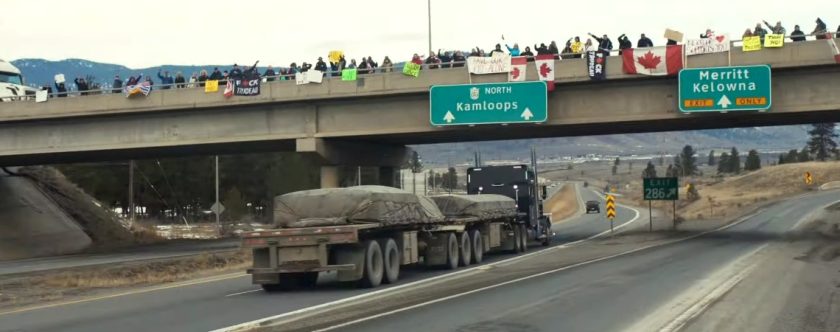
As a non-partisan, volunteer activist group, Fearless Canada was present at the beginning and on several other occasions during the Freedom Convoy protest in Ottawa. As such, many of our members witnessed first-hand what the situation looked like on the ground and how it all began. We took extensive video footage of the events during the first weekend from the moment when truckers were being directed toward Parliament by Ottawa police. We have decided to submit our evaluation of the events as well as our strongly held view that the invocation of the Emergency Measures Act (hereafter referred to as “EMA”) by the Trudeau government was not only inappropriate, but also unlawful and unconstitutional.
We must first unequivocally state that, in our view, the Trudeau government’s decision to invoke the EMA in no way met the legal threshold to do so. The usage of the EMA is reserved for exceptional circumstances in which a serious foreign or existential threat imperils the security of the nation. Such security threats would be typically related to war, as the older, subsequently replaced War Measures Act aimed to address. In no conceivable way could the temporary discomfort or inconvenience borne by Ottawa citizens or businesses justify the use of an Act that is meant to aid the government in protecting the nation against threats of an incalculably larger scale. As such, the purpose of the Commission is not to determine whether the invocation of the EMA served the Trudeau government in its objective to deescalate the so-called “occupation” of Ottawa’s downtown core, but rather to assess whether the legal threshold for its invocation was met.
The Early Days in Ottawa
Our group arrived in Ottawa in the early afternoon of January 28, 2022. The first thing we noticed was Ottawa police directing truckers and their rigs onto Wellington Street towards Parliament. The atmosphere was festive and light despite the frigid weather. As more protesters arrived in Ottawa over the course of the weekend, we would quickly observe that the crowds were both peaceful and diverse. Men, women, and children from all different backgrounds and walks of life gathered in the capital with a common goal. They demanded that the Trudeau government lift measures that, in their view, were both unjustified and discriminatory in nature. As a result of those measures, the majority of protesters in Ottawa were themselves directly impacted in profound and often irreversible ways.
In talking with dozens of truckers and protesters, we learned that many had lost their jobs, connections to loved ones, access to essential services, and much more. While speaking with police officers, we learned that many felt they were unlawfully coerced into taking a COVID vaccine in order to keep their jobs. Our impression on the ground was that the majority of police officers were in fact aligned with the goals of the protest. They, too, wanted to see an immediate end to damaging and ineffective policies that divided our nation along medical lines previously acknowledged as a matter of private and personal concern.
Legacy Media and the Trudeau Government’s Portrayal of the Freedom Convoy
While in Ottawa, our group kept an eye on the news coming out of legacy media outlets such as the CBC, CTV News, and Global News. It became impossible not to notice that a concerted narrative had quickly taken shape to misrepresent the situation and characterize protesters as far-right extremists, racists, antisemites, and more. The unjustified slander of protesters directly conflicted with our experience on the ground. What we saw was a festive and peaceful rally, replete with volunteers offering food and shelter from the cold, routinely cleaning streets and sidewalks, and organizing fun activities for the kids. At no time did we spot a single racist or Nazi in the vast crowds, as was incessantly suggested by both the Liberal government and the mainstream media. From what we could tell, these characterizations were fabricated in order to serve a narrative that aimed to discredit the legitimacy and lawfulness of the protest.
As time went on, the media’s portrayal of the situation continued to unhinge itself from reality. The press published stories about imminent violence, a van loaded with illegal firearms, and more. None of these allegations turned out to be true. Yet, the misrepresentation of the situation had already reached the eyes and ears of Canadians from coast to coast, very few of which witnessed the event themselves. But by then, the damage had already been done, just as it seemed to have been intended.
The Invocation of the EMA
At the moment the Trudeau government invoked the EMA, it must be noted that the protest in Ottawa was already in the process of de-escalation. The protest organizers and their lawyers had already brokered a dismantlement deal with the Ottawa mayor and police services. Truckers were already on their way out of the downtown core and the blockades at two Canadian points of entry had already long-since been dismantled. Yet rather than follow an organized de-escalation plan agreed to by all factions, Ottawa police and the Trudeau government instead opted to escalate the situation by using violence and propaganda against Canadian citizens. The impacts of the invocation of the EMA were profound and unwarranted.
Immediately ensuing the invocation of the EMA, police and governmental authorities froze protesters’ bank accounts and deployed violent anti-riot squads all over the downtown core of Ottawa. Several protesters were injured as police again escalated tensions using all manner of crowd dispersal techniques. In the days following the invocation of the EMA, Finance Minister Chrystia Freeland wasted no time in announcing that certain aspects of the EMA would be written into law, granting broad and unconstitutional powers to government without the requisite EMA enacted. It had become clear that the Trudeau government had a predetermined objective in enacting the EMA, one that would grant greater leverage over political dissidents and, more broadly, Canadians that disagreed with its ideology. This in itself represents an egregious misuse of the EMA in order to further a political agenda.
Conclusion
The volunteer activists at Fearless Canada include Canadian scholars, lawyers, professors, small business owners, and artists. We unanimously and unequivocally feel that the Trudeau government’s invocation of the EMA as a response to ongoing protests in Ottawa was both unlawful and unconstitutional. We submit that the government manipulated public opinion by fabricating evidence of unlawful activity in Ottawa and invoked the EMA under false pretenses in order to abet their predetermined agenda. We believe that the evidence overwhelmingly supports our position, and we look forward to seeing all of it brought to light during the Commission’s discovery process.
This statement was authored by the executive of Fearless Canada and endorsed by members.
The statement has been submitted to the Public Order Emergency Commission of Canada, which began public hearings on Thursday, October 13, which will run every weekday until November 25. Live hearings can be viewed here, and True North Centre publishes a recap for each day.
French Trade Unions Announce Massive Strike on October 18
Samizdat – 13.10.2022
PARIS – The leading French trade unions will hold a nationwide strike on October 18, demanding higher wages and protesting against the government’s attempts to force striking energy sector employees to go back to work, the unions said on Thursday.
“We call on employees to demonstrate for higher wages and protection of the right to organize strikes,” the unions said in a statement, aired by the Franceinfo broadcaster.
According to the statement, the planned strike is a response to government interference in the social movement of oil sector employees and encroachment on the right to strike.
The strike will be held at the call of the General Confederation of Labor, Force Ouvriere, the Federation Syndicale Unitaire and the Solidaires labor union. French transport unions, including national rail operator SNCF and youth organizations will also join.
The industrial action by energy sector employees has been ongoing in France since September 21, when ExxonMobil employees went on strike. They were joined on September 27 by workers of French energy company TotalEnergies. Last Tuesday, trade unions announced a three-day protest demanding a 10% pay increase as well as the indexation of 2022 wages to match the current record-breaking inflation. The strike led to a shortage of fuel at every third gas station in the country. The government forcibly returned the personnel of oil storage facilities to work in the city of Dunkirk and in a commune of Port-Jerome-sur-Seine in northern France.
West might try to damage Russian-Chinese relations using Aigun Treaty issue
By Uriel Araujo | September 22, 2022
Some analysts have been claiming that Beijing is “breaking” with Moscow over the issue of Ukraine. In June this year the Chinese government conducted military drills in its northeastern border with Russia, while Moscow was mostly preoccupied with its own military operations in Ukraine. This event led some Western observers to speculate, albeit there is no evidence, that this could be a sign China has unfinished business in that border area.
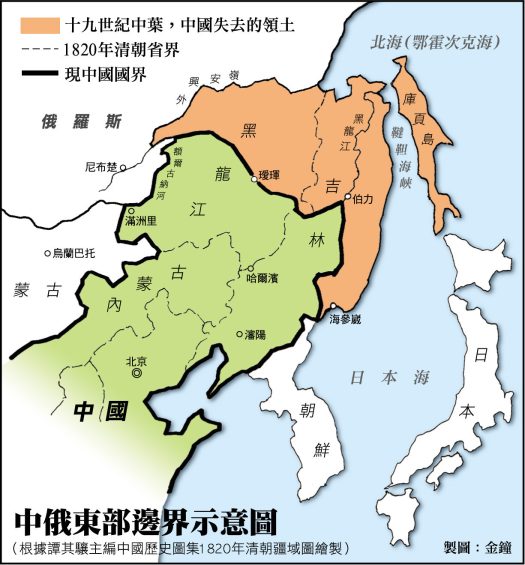
The 1858 Treaty of Aigun established much of the modern border between Manchuria (Northeast China) and the Russian Far East. From a Chinese Perspective, especially since the rise of Chinese nationalism in the 1920, it was an “unequal treaty”, having been signed, as it was, when the Chinese Empire was in a weakened state: it gave the neighboring Russian Empire over 600,000 square km from Manchuria.
As a legacy of the 19th and the 20th century, the Eurasian great powers often have border disagreements. Japan historically has variances with Russia over the Kuril islands, for example, as it has with its other “neighbors” China and South Korea as well. India and China notoriously have theirs too, which, by the way, has not stopped both of them from cooperating with one another, as is exemplified by the fact that they have recently withdrawn their troops from the disputed Ladakh region’s border area, thus moving one step towards the Asian century.
Indian-Chinese cooperation in fact is particularly remarkable, considering the former’s position within the QUAD, which is seen by many as a Western anti-Chinese “new NATO”. Yet even amid serious bilateral disagreements, Eurasian states have shown that there is plenty of room for cooperation on a number of levels, and, in the same way, New Delhi has also maintained close ties with Moscow, while getting closer to Washington. The same logic must apply to Sino-Russian cooperation, notwithstanding their differences over the Northeast China-Russian Far East border region.
In 1969, in this very region, near the Amur river, there was a seven-month undeclared military conflict between China and the Soviet Union, shortly after the so-called Sino-Soviet split. After the conflict, the United States sought to strengthen ties with Beijing by secretly sending Henry Kissinger to China for his now famous 1971 meeting with Zhou Enlai, which in turn paved the way for then US President Richard Nixon visiting China and meeting with Mao Zedong the next year. And yet even with the Sino-Soviet split, the two states managed to stabilize their relations in the late seventies.
In the more recent past, on 21 July 2008, then Chinese Foreign Minister Yang Jiechi and his Russian counterpart, Sergei Lavrov, signed in Beijing an additional Sino-Russian Border Line Agreement, thus marking the acceptance of the eastern portion of the Chinese-Russian border’s demarcation.
On February 4, in Beijing, a joint statement by Russian President Vladimir Putin and his Chinese counterpart Xi Jinping famously declared that the friendship between the two states “has no limits”. Such a statement, somewhat hyperbolic as it may be, in any case, from an American perspective, is quite terrifying as it poses a direct challenge to Washington’s ambitions of maintaining unipolarity.
No friendship is really absolute, but the truth is that Chinese-Russian relations have entered a new era, and Beijing’s trade and investment in the Russian Far East, such as in the Vladivostok Port – Trans-Siberian Railway, must also be seen in this context, as the Belt and Road Initiative investments into the Russian Federation go on. Chris Devonshire-Ellis, publisher of Asia Briefing, writes that both powers view the Heihe-Blagoveshchensk border cities (which sit opposite each other on the Amur River opposing banks) as key strategic development hubs in an access point to the Trans-Siberian railway. That being so, maintaining peace at the border is in the best interests of both Moscow and Beijing, contrary to the wishful thinking of some Western analysts.
In any case, much has been done, in the US-led West, in terms of PR and diplomacy to try to “counter” the “no-limits” friendship concept, and to promote and explore Russian-Chinese points of contention. Thus, in the same way Washington inflates Indian Prime Minister Narendra Modi’s comments to Putin on Ukraine, it tries to do the same pertaining to Moscow and Beijing and it will certainly try to explore the issue of Manchuria.
Although, under American influence, Japan has changed its stance on Russia partly over the aforementioned Kuril islands, this of course does not in any way mean that China would behave similarly. Chinese-Russian Eurasian strategic interests converge very deeply and both states have sophisticated diplomacy apparatuses to bilaterally pursue collaboration, bilateral disputes apart, while also employing the framework of forums such as the SCO and the BRICS group to coordinate their perspectives together so as to maximize benefits for all.
Uriel Araujo is a researcher with a focus on international and ethnic conflicts.
Massive rally in Brussels over cost of living
Samizdat | September 21, 2022
Thousands of demonstrators took to the streets of Brussels on Wednesday for a “national day of action” to demand higher wages and lower energy prices. According to police, over 10,000 people descended on the Belgian capital as it was revealed that some 64% of the country’s citizens are afraid they may not be able to pay their bills.
The demonstrations were organized by Belgian trade unions, who claim that the average energy bill for families in the country has already increased threefold to more than €700 ($691) a month.
“It’s not that we don’t want to pay, but we can’t pay,” said Thierry Bodson, chairman of the General Labor Federation of Belgium, while speaking to thousands of union activists at the Place de la Monnaie. While the average Belgian family only makes €2,500 ($2,468) a month, Bodson pointed out that it’s “absolutely impossible” for someone below that line to pay their bills.
Addressing the government’s recommendation for citizens to use less energy, Bodson said this was “pointless,” as most Belgians have already taken all possible measures to lower their energy consumption but it was still not enough.
Placards seen in the crowds shared Bodson’s sentiments with some reading “Freeze prices, not people,” and “Everything is going up except our wages.”
The protesters are demanding that Belgian authorities do more to combat skyrocketing prices, and claim they should draw additional resources from energy companies that have reported record profits this year and made billions while the standard of living for average people has plummeted.
Last month, Belgium’s Statbel statistics agency reported that inflation in the country had jumped to 9.94% amid a surge in energy prices, almost reaching a record set in 1976.
Meanwhile, Belgian Prime Minister Alexander de Croo has warned that “the next five to ten winters will be difficult” due to record gas prices, but stated that Belgium would endure the crisis “if we support each other in these difficult times.”
Austrian citizens dissatisfied with anti-Russian measures
Protests against sanctions and gas prices are likely to increase in the entire European continent
By Lucas Leiroz | September 19, 2022
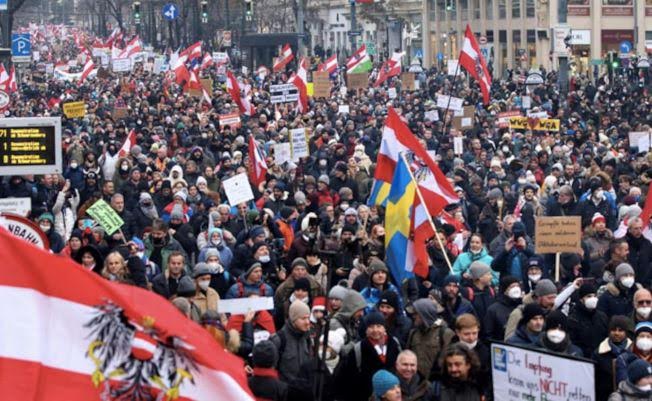
Protests against gas prices are rising in Europe. European citizens are increasingly dissatisfied with the directions taken by their countries and organize demonstrations to express their opinions against the EU and its sanctions. In Austria, tens of thousands of people took to the streets to demand political changes. However, the western media continues to ignore the protests.
On September 17th, the streets of Vienna and eight other major Austrian cities were taken over by tens of thousands of protesters furious at the uncontrolled rise in gas prices and living costs. Although local police declined to reveal their official estimates, sources claim that around 20,000 people attended the protests in Vienna, with around 10,000 others in the cities of Linz, Bruck an der Mur, Salzburg, Innsbruck, Klagenfurt St. Polten, Eisenstadt and Bregenz.
The protests were organized by several different political groups, but the biggest one was the trade union federation OeGB. As seen recently in other parts of Europe, individuals of different political ideologies came together for a common cause: the improvement of people’s living conditions and the end of the disastrous economic policy that is currently being conducted. Austrian political leaders reported that the main objective of the protests is to put pressure on the governing alliance – formed by a conservative-green coalition -, which the OeGB considers guilty of “watching idly as life becomes unaffordable”.
In Vienna, where the protests were concentrated, a large rally was held by trade unionists. Many criticisms against the government, big companies, and the EU were made during the speeches. Such was the popular mobilization that the Austrian president himself expressed solidarity with the situation and communicated with his voters through his social networks in order to ease popular anger. He stated that he is in solidarity with the people at this time of economic difficulty but was not able to promise any real solution to the problem.
“This solidarity should not only be felt in the heart but, above all, in the wallet of those who are wondering how to pay for their shopping at the end of the month”, Alexander Van der Bellen emphasized when commenting on the protests in a social media publication.
Other local officials also made statements in the face of the protests. The mayor of Vienna, Michael Ludwig, for example, said that the recent growth in prices is a real challenge for a large part of the population and declared support for the demand of trade unionists for changes in economic policy and salary rises. However, like the president, Ludwig failed to criticize the real root of the problem, which is the adhesion of the European bloc to anti-Russian sanctions, which are generating the current energy crisis.
Most of the western media simply ignored the protests, refusing to report on the events. Another portion, however, reported it “softly”, declining to show the real demands of the Austrian workers. This has been a recurrent tactic on the part of the Western media when reporting the protests against anti-Russian sanctions in Europe: to show that workers are asking for a drop in gas prices, but avoid mentioning that they are aware that this increase is related to the irresponsible European policy of implementing coercive measures against Moscow.
A few days before the protests, in a survey carried out by the Austrian sociological institute Institut fur Demoskopie und Datenanalyse (IFDD) it was revealed that almost 80% of Austrian citizens feel affected by the sanctions on Russia. In the survey, 78% of the interviewees said they had suffered side effects from the sanctions. More than that, 31% of respondents even said they believe that the measures were actually directed against Austria itself rather than Russia, given the impact the country is suffering. In some recent surveys in other European countries, it is also possible to see that local citizens are seeing the sanctions in a similar way, believing that their countries are the real targets of the measures – which reveals how much the European population feels harmed by the attitudes of their own rulers.
Indeed, European citizens are not wrong in their perception. Sanctions in fact affect Europe much more than Russia itself. More than that, they benefit the US, which has finally managed to destroy Russian-European energy cooperation. It is not by chance that it is Washington that plans and proposes such sanctions, which European leaders have subserviently adhered to, affecting their own interests. So, indeed, these sanctions are designed against Europe. And, knowing this, European governments need to immediately reverse these measures before winter comes and the crisis becomes a real social catastrophe.
Lucas Leiroz is a researcher in Social Sciences at the Rural Federal University of Rio de Janeiro, geopolitical consultant.
Anti-NATO protests in Europe likely to increase
By Lucas Leiroz | September 5, 2022
The consequences of the anti-Russian sanctions are causing revolt and indignation among European citizens. In recent days, thousands of protesters have taken to the streets of Prague demanding an end to the coercive measures against Russia. Similar situations have been also seen in other important cities of Europe. Intelligence agencies already predict that the situation will worsen in the near future, with serious risks of an escalation in internal tensions in European countries. Indeed, these facts make it clear that the European people absolutely reject the interventionist ambitions of the EU and NATO.
On the 3rd of September, one of the biggest mass protests in recent years was seen in the streets of Prague. Current problems such as rising gas prices and security crises have taken thousands of Czech citizens to the streets in protests against the EU and NATO. Official Czech government sources claim 70,000 people attended the demonstrations, but protest organizers say the actual number of participants exceeded 100,000.
Members of different political ideologies and different social movements participated in the event. Nationalists, conservatives, social reformers, leftists, and moderate liberals have united in the common cause of combating negative foreign influence on the Czech government, which is leading the country to adopt an anti-Russian international policy that greatly harms the interests of the population. Not by chance, the slogan of the protesters was “Czech Republic First”, which succinctly expresses the popular and patriotic urges of the activists.
As expected, the main demand was that the Prime Minister Petr Fiala coalition impose limits on the price of gas as a way of controlling the worsening of the energy crisis. Some groups involved have openly called for a circumvention of EU policies, so that Prague could negotiate directly with Moscow for energy supplies. In fact, some groups seemed to hold more moderate opinions and others more radical, however all converged on the need for the Czech Republic to maintain an independent foreign policy that prioritizes national interests, instead of simply adhering to sanctions packages planned by think tanks in Brussels, London and Washington.
A common cause for all participants was the demand for absolute military neutrality, which is an extremely important issue considering that the Czech government was the first to violate NATO’s self-imposed rule of not taking direct action in the Ukrainian conflict. In April, before all other countries in the Western alliance, Prague sent a wide range of war equipment to Ukraine, mainly tanks and other armored vehicles. Until then, the West was only sending financial and humanitarian aid to Ukraine, but Prague started an unlimited military escalation, which has resulted in the prolongation of the conflict with the sending of Western weapons.
In an official statement, Fiala said citizens have the right to protest, but arrogantly asserted that the Czech people are being manipulated by pro-Russian forces. The head of government simply ignored the wishes of the people he was chosen to represent, which is a very problematic issue and reveals a serious status of democracy crisis in the country. No action was announced after the protests, with Prague continuing to suffer all the consequences of anti-Russian sanctions.
Prague, however, was not the only place to witness popular revolt against Western interventionism. In Germany, the day before, violent protests took place in some cities, most notably in Kassel, where 200 protesters faced heavy police brutality as they protested against the supply of weapons to Kiev. Eight protesters were arrested after violent clashes. Also, it is necessary to remember that similar situations had already occurred in many regions of Europe in recent months. In Madrid, the June NATO summit was responded to with large protests by the Spanish population, for example. And, according to the German intelligence, this situation of popular indignation will only get worse and worse.
Sources from security departments in Germany allege that the country is close to facing violent protests. German intelligence seems to have obtained privileged information that different parties would be coming together exceptionally in order to demand solutions to the energy crisis. The mass protests would be being organized by absolutely antagonistic groups, such as Die Linke and AfD, and would still be receiving support from more moderate organizations, such as the CDU’s Christian Democrats.
The German situation reflects the same scenario seen in Spain and the Czech Republic: antagonistic ideologies and parties are ignoring their rivalries and uniting for a common cause. In practice, this tends to make the protests really massive and strong, attracting citizens from all ideological affiliations.
“So what we saw during the coronavirus pandemic might look like a children’s party in comparison to what is to come”, a German intelligence officer commented during an interview to Die Welt about the protests to come.
For all European countries, the question is the same: abandon the sanctions or face social chaos. The coercive measures against Moscow do not benefit European citizens and do not influence the military scenario in Ukraine, so they simply have no reason to exist. Either European countries adopt a sovereign stance and prioritize their own interests in foreign policy, or the bloc will suffer irreversible damage in its social structures.
Lucas Leiroz is a researcher in Social Sciences at the Rural Federal University of Rio de Janeiro; geopolitical consultant.
Tens of Thousands Take to Prague’s Streets to Protest Against EU & NATO
Sputnik – 03.09.2022
Earlier in the week, Czech Prime Minister Petr Fiala’s government faced yet another vote of no-confidence in parliament, in what is the opposition’s second bid to oust the center-right coalition this year.
An estimated 70,000 people took to the streets of the Czech capital Prague on Saturday, protesting against the government, the European Union and NATO.
The leaders of the protests slammed the government’s inaction in dealing with record-high inflation in the country, including soaring gas and electricity prices, and demanded that Prague signs direct contracts with gas suppliers – Russia included – notwithstanding Brussels’ policies.
“The aim of our demonstration is to demand change, mainly in solving the issue of energy prices, especially electricity and gas, which will destroy our economy this autumn,” one of the demonstration’s organizers, Jiri Havel, stated.
Czech Prime Minister Petr Fiala dismissed the protesters’ demands, claiming that they did not hold “the interests of the Czech Republic” at their hearts and accused them of being “pro-Russian”. Fiala did not elaborate on how rapidly growing prices are in the country’s best interests.
Fiala’s government recently survived a parliamentary no-confidence vote called by the opposition in light of his cabinet’s inaction in the face of soaring inflation. Fiala won the vote, which was preceded by a 22-hour-long marathon debate. His coalition holds an eight-seat edge over the opposition in the 200-seat parliament.
Occupation raids, attacks Palestinian organizations: EU, US and Canada are complicit!
Samidoun Palestinian Prisoner Solidarity Network | August 21, 2022
In the early morning hours of Thursday, 18 August, armed Israeli occupation forces invaded the offices of seven prominent Palestinian NGOs, civil society organizations and human rights defenders: the Health Work Committees, Addameer Prisoner Support and Human Rights Association, Al-Haq, Union of Palestinian Women’s Committees, Bisan Centre, Defence for Children International – Palestine, and the Union of Agricultural Work Committees. These organizations have all been designated by the Israeli occupation as “terrorist” in retaliation for their advocacy and community organizing work for Palestine, and then labeled “illegal organizations” in a military order covering the occupied West Bank of Palestine.
The invading forces ransacked the offices, confiscating computers, legal client files, documentation, printers and monitors and leaving clutter behind — as documented by the organizations’ surveillance cameras, recording the occupation forces’ invasion. The doors of the organizations were welded shut and a paper military order affixed to the door declaring their operation “illegal” under the occupation’s (illegal) military orders.
The organizations declared that they would not be silenced by these attacks, holding press conferences and returning to the offices to reopen them and continue their work. The attacks received widespread condemnation not only from Palestinian and pro-Palestinian forces but even from European governments whose policies and practices consistently target the Palestinian people and their fundamental rights.
Now, on Sunday, 21 August, occupation intelligence authorities — the Shin Bet — phoned Al-Haq director Shawan Jabarin to threaten him with interrogation and arrest if the organization’s work continues, while Defence for Children International – Palestine director Khaled Quzmar was summoned to and held under interrogation.
“Terror” Designations and Political Control
The invasions, interrogations, ransacking and attacks on these organizations reflect the failure of the occupation’s regime of “terror” designations to undermine their work. In 2021, not only did the regime designate Al-Haq, Addameer, DCI, Bisan, the UPWC and the UAWC as “terrorist” organizations — quickly followed by the military orders banning their work in the occupied West Bank of Palestine — it earlier in the year designated Samidoun (on 21 February 2021), followed by three more organizations. Previously and in a similar pretext, the occupation had issued a similar designation against the Health Work Committees along with designations of groups including the Arab Organization for Human Rights UK, the Palestinian Return Centre and Euro-Mediterranean Human Rights Monitor.
As we noted at the time, this
“indicates just how meaningless the term ‘terrorist’ is in the hands of the Israeli regime. It means precisely any organization, activist, or freedom fighter that challenges Zionist colonialism through any method or means of resistance at all. The flurry of ‘terrorist’ designations for organizations working to expose Israel’s crimes and organize Palestinians underlines this reality….These designations are not attacks on individual organizations but against Palestinian human rights defenders and those around the world who stand up for Palestinian liberation — and, fundamentally, the Palestinian people as a whole, especially the Palestinian prisoners in Israeli occupation prisons. They attempt to repress growing support for the legitimate resistance of the Palestinian people and confrontation of imperialism and Zionism.”
Further, it is clear that the use of such designations is intended to further political control over Palestinian society. These designations hinge on the allegation that organizations are close to one or another Palestinian resistance organizations, most commonly the Popular Front for the Liberation of Palestine or Hamas. Israeli officials have shopped around “evidence” to various governments that is so weak so as to be ludicrous, consisting almost entirely of unsubstantiated statements or on the idea that employing a person who supports a political organization (or, in some cases, relatives of people in political organizations “designated” by the occupation) is “funding” that organization by paying employees a salary for doing their job.
While it is obvious that these are false claims, the objective of this type of attack goes beyond simply lobbing allegations. Indeed, the European governments that have criticized the attacks and designations have also repeatedly affirmed their willingness to “examine evidence” and “act” if the Israeli regime “proves” that popular organizations, civil society groups and human rights advocates are in some way “tied” to Palestinian resistance movements. Not only are the organizations “innocent” of the Israeli claims, the claims themselves are fundamentally repugnant. The Palestinian people have the right to resist occupation and to be a part of political, social and armed movements in that resistance; this is not “terrorism” but an essential right of people under occupation and colonization.
Rather than affirming the right of Palestinians to resist and to organize themselves to achieve those goals, these European governments instead use these attacks to impose even greater political scrutiny and conditions. In many cases (such as the Netherlands), these governments recommend or require that all employees of these organizations must not be associated with any “banned” Palestinian political organization. If Palestinians are part of a political party or movement, they must be unemployable and impoverished: this is both the argument of the occupation and of the European states providing a meager “defense” of Palestinian civil society.
For the European funding agencies and many large foundations, supporting Palestinian NGOs has never been primarily about empowering or supporting the Palestinian people to achieve their liberation but rather about redirecting Palestinian energies into “state-building” and/or “reform” projects that exist within the confines of Oslo. Time and time again, these forces have introduced new conditional funding mechanisms and restrictions on everything from the political affiliation of individual employees to the names of buildings and schools.
European Union: Partners in Colonialism and Apartheid
This is borne out once again by the statement of nine European states — Belgium, Denmark, France, Germany, Ireland, Italy, the Netherlands, Spain and Sweden — which invokes the promotion of “democratic values and the two-state solution,” a fundamental contradiction as the so-called “two-state solution” itself is the legitimization of the colonization and occupation of 78% of Palestine and no solution at all for the Palestinian people. This brief comment lays bare the real political motivation for European involvement in funding Palestinian organizations, which is to limit rather than to achieve rights, justice and liberation. Further, the statement notes that “should convincing evidence be made available to the contrary, we would act accordingly.”
Here, the “evidence” being referred to would be any “links” between these NGOs and the Palestinian resistance. By including this statement in their alleged defense of the organizations, these European states actually encourage the occupation to continue its raids and ransacking, confiscation of files, arrests and interrogations, in an attempt to manufacture such “evidence”.
Of course, the position of these states themselves — members of the aggressive NATO alliance, defenders of the Israeli occupation in international arenas — is all too clear. The European Union, while rejecting the designation of advocacy and civil society organizations, continues to designate Palestinian resistance organizations as “terrorists.”
France continues to imprison Georges Ibrahim Abdallah while doing almost nothing to advocate for its citizen Salah Hamouri, jailed without charge or trial under Israeli administrative detention, as the government attempts to criminalize Palestinian activism, such as the Collectif Palestine Vaincra. Germany not only engages in weapons deals with the occupation, it also engages in severely repressive practices against Palestine organizing, particularly Palestinian communities in exile and diaspora, from the expulsion of Palestinian writer Khaled Barakat and Palestinian torture survivor and feminist Rasmea Odeh to the ban on 15 May Nakba demonstrations in Berlin. This is not to mention the links between Zionism and European colonialism from the very beginning of the Zionist project.
Now, Israeli prime minister and war criminal Yair Lapid is scheduled to come to Brussels on 6 October to convene the “Association Council” with all EU member states’ foreign ministers, for the first time in 10 years. This is the council under the EU-Israel Association Agreement, the agreement that provides for free trade for occupation products inside the EU and allows for occupation institutions to receive European grants for research and development.
Ending the EU-Israel Association Agreement is a long-time demand of the Palestine solidarity movement, but despite their expressed “concerns” about the violent repression imposed on Palestinians, these European states are planning to welcome Lapid and convene the Association Council after a long hiatus, celebrating their complicity in war crimes and crimes against humanity.
The Canadian government has refused to make any meaningful statement about these attacks, despite posing as a defender of “human rights.” U.S. officials stated their “concern,” while continuing to provide $3.8 billion in military support to the occupier.
**
Samidoun Palestinian Prisoner Solidarity Network affirms that these attacks are part and parcel of the ongoing war on Palestinian existence and organization, carried out by the Zionist state and supported by the imperialist powers that ally with the Israeli occupation, as well as Arab reactionary regimes engaged in “normalization” and the Palestinian Authority. While PA officials declare their public support for the targeted organizations, the PA continues to engage in security coordination with the occupation, declined the use of its security forces to defend the organizations, and has even previously detained leaders, directors and staff of these organizations challenging its repression at the behest of the occupier.
We reaffirm that the primary way that we can confront these designations is by intensifying our organizing, action, mobilization and resistance to bring down the structures of colonialism, implement the right to return for Palestinian refugees, and support the liberation of all Palestinian prisoners and of Palestine, from the river to the sea. This includes campaigning to bring an end to the so-called “terrorist lists” used to terrify Palestinian communities and Palestine solidarity organizers, which only provide a weapon in the hands of the occupation and encourages it to engage in further specious designations.
We also urge all to take action to confront Lapid’s visit on 6 October in Brussels and to bring down the “EU-Israel Association Agreement,” an agreement built on the colonization of Palestine and the massacres targeting the Palestinian people. It is incumbent upon all institutions and organizations concerned about these raids and about the Palestinian people to adopt and implement the boycott and international isolation of Israel, including at the United Nations and its bodies.
Further, we urge all to join us in organizing to march in Brussels on 29 October for the March for Return and Liberation to the European Parliament, to demand an end to European complicity, involvement in and support for the colonization of Palestine, the siege on Gaza, the imprisonment of Palestinians and the denial of millions of Palestinians’ right to return home.
Russia Backs Comprehensive Military-Technical Cooperation Amid Formation of Multipolar World: Putin
Samizdat – 15.08.2022
Russia supports the development of “comprehensive” military-technical cooperation with other countries, including joint drills and the sales of weapons systems, and highly values its many allies and partners across the globe, Russian President Vladimir Putin has said.
“I want to emphasize that Russia stands for the widest possible development of military-technical cooperation. Today, in the conditions of a steadily emerging multipolar world, this is especially important,” Putin said Monday at ARMY-2022.
“We highly appreciate the fact that our country has many allies, partners and like-minded people on different continents. These are states which do not bend before the so-called ‘hegemon’, their leaders are showing strong character and do not bend,” he added.
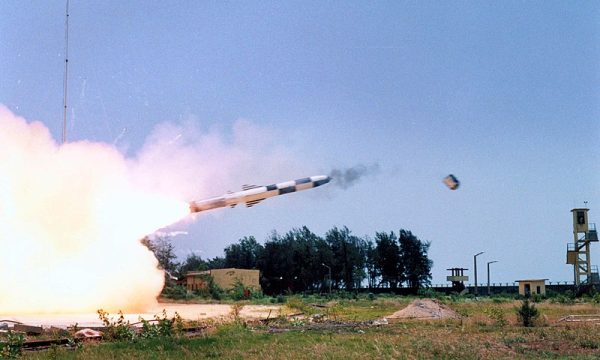
The Russian president said Russia is ready to present its partners across Latin America, Asia and Africa with “the most modern weapons systems,” from small arms and armored vehicles to artillery, warplanes and drones. He recalled that Russian armaments have built up a reputation across the world for their reliability, quality and efficiency in real combat conditions.
Putin extended a formal invitation to Russia’s allies and partners to take part in joint command-staff exercises and other drills, and expressed confidence “that by developing broad military-technical cooperation, by pooling our efforts and potential, we will be able to ensure reliable security for our countries and the world as a whole.”
Putin also pointed to the “great prospects” Russia has in the training of foreign servicemen and improving their qualifications, saying that thousands of soldiers and officers from countries around the world are already proud to call Russian military academies and officer training schools their alma maters.
The president thanked Defense Ministry for organizing the forum, saying it would help strengthen international security and stability. He also expressed gratitude to Russia’s weapons makers for equipping Russia’s ground forces and Navy with modern weapons, including those being used in Moscow’s ongoing military operation in Ukraine.
ARMY-2022 kicked off on Monday across several venues in the Moscow region and will run until Sunday. The forum and expo is combined with the International Army Games – a friendly military competition in which 12 countries are taking part. The games will run until August 27.
Eight-Day Strike Over Below-Inflation Pay Offer Looms at UK’s Biggest Container Port
By James Tweedie – Samizdat – 05.08.2022
The bank of England warned on Thursday that the British economy was headed for a recession in the fourth quarter of the year, while think-tank the Resolution Foundation predicted inflation could hit 15 percent by the start of 2023.
Dockworkers at the UK’s biggest consumer goods port are set to strike later this month over pay — as inflation soars amid sanctions on Russia.
More than 1,900 members of Unite, Britain’s largest trade union, will walk out at Felixtowe port on the North Sea in Suffolk for eight days from Sunday August 21 to Monday August 29.
That was after employer Felixstowe Dock and Railway Company, a subsidiary of Hong Kong-based CK Hutchison, refused to increase its pay offer of seven per cent. Dockworkers accepted a rise of 1.4 percent in 2021.
“Strike action will cause huge disruption and will generate massive shockwaves throughout the UK’s supply chain,” said Unite national officer for docks Bobby Morton, but insisted that “this dispute is entirely of the company’s own making.”
“It has had every opportunity make our members a fair offer but has chosen not to do so,” Morton said. “Felixstowe needs to stop prevaricating and make a pay offer which meets our members’ expectations.”
Further talks between the union and management are scheduled for Monday.
The bank of England warned on Thursday that the British economy was headed for a recession in the fourth quarter of the year, while think-tank the Resolution Foundation predicted inflation could hit 15 percent by the start of 2023.
Unite general secretary Sharon Graham said the firm and its parent company were “massively profitable and incredibly wealthy,” and “fully able to pay the workforce a fair day’s pay”.
“The company has prioritised delivering multi-million pound dividends rather than paying its workers a decent wage,” Graham charged. “Unite is entirely focused on enhancing its members’ jobs, pay and conditions and it will be giving the workers at Felixstowe its complete support until this dispute is resolved and a decent pay increase is secured.”
Workers in other sectors are threatening or have already taken industrial action over pay as the cost of living has soared — driven by a combination of massive government relief payments during the COVID-19 lockdown and the embargo on energy imports from Russia as retaliation for its special military operation in the Ukraine.
Rail Unions RMT and ASLEF held strikes in June and July, with more on the cards as talks with employers remain deadlocked.
Even doctors have threatened to walk out over their demand for a 30 percent rise this year.
Featured Video
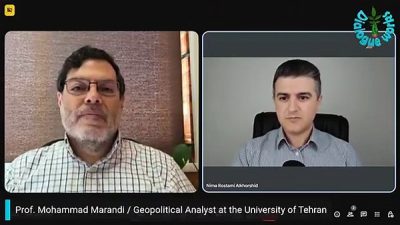
Seyed M. Marandi: U.S. Military DIVIDED? Iran’s Secret Defense EXPOSED
or go to
Aletho News Archives – Video-Images
From the Archives
‘Israel sees Iran as obstacle to its policies’
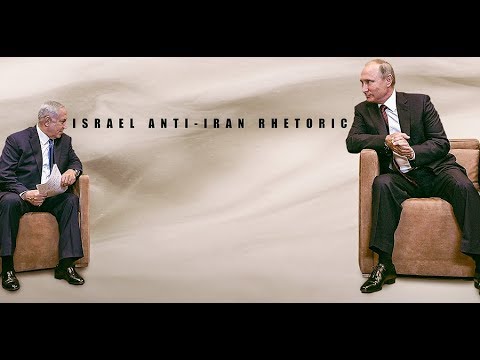
Press TV – August 25, 2017
Prime Minister Benjamin Netanyahu has said that Israel felt threatened by Iran’s growing influence in the Middle East. Netanyahu expressed his Iranophobic view in a meeting with Russian President Vladimir Putin in Russia’s Black Sea resort of Sochi on Wednesday. Press TV has asked Scott Rickard, former American intelligence linguist from Tampa, Florida, and Brent Budowsky, a columnist at The Hill from Washington, to give their thoughts on the issue.
Rickard said Tel Aviv is concerned about the fact that the regime could not carry out its old project to spread sectarian divisions and pave the way for dismemberment of the countries in the Middle East region because of the Iranian-led resistance against Israeli policies, not only in the occupied territories of Palestine but also in the whole region.
“Iran is not a threat to Israel whatsoever. The threat that Israel sees is the fact that their Oded Yinon Plan is being put to a hold by Iran,” the intelligence linguist said on Thursday night.
“They (the Israelis) look at Iran as a threat only because they have no influence on their governments and Iran is autonomous and is not under the Zionist influence,” he added.
Since the victory of the Islamic Republic of Iran in 1979, Tehran has been critical of Israel’s policies in the region, whereas “no leaders [of other states] even dared to speak out against Zionism,” Rickard argued. … continue
Blog Roll
 Aletho News
- Iran declares ‘historic victory’ over US, says enemy forced to accept its proposal
- Trump Claims Ceasefire, Reopening of Strait of Hormuz Agreement with Iran
- Israeli tank fire killed UN peacekeeper in Lebanon, UNIFIL investigation finds
- Russia, China block Bahrain-sponsored UN resolution on Strait of Hormuz
- The US-Israeli War on Science is an Assault on our Future
- Trump’s Promise to Bomb Iran ‘Like Never Before’ Faces Brutal Logistics — Expert
- Germany seeks to restrict stays abroad for men of fighting age – Berliner Zeitung
- Evidence points to Ukraine being behind TurkStream attempted sabotage, but that should come as no surprise
- Sri Lanka secures supplies of Russia oil – minister
- Nations across Asia strike direct deals with Iran for Hormuz passage
- If Americans Knew
- Thousands dead and neighborhoods razed to the ground: Aid agencies fear southern Lebanon is becoming the new Gaza
- The war the US is fighting for Israel could cost trillions
- ‘Cigarette Burns, Nail Wounds’: Toddler Tortured in Gaza to Coerce Father
- Trump Says US Sent ‘a Lot of Guns’ to Protesters in Iran
- Israeli forces destroy 17 UN peacekeeper cameras in south Lebanon
- US-Israeli strikes ‘completely destroy’ synagogue in Tehran
- Archbishop for US Military Says Iran War Is Unjust Under Catholic Teaching
- Iranian leaders’ Open Letters to the American People
- Trump says Iranians appreciate bombs, WHO warns of nuclear risks – Daily Update
- U.N. experts demand Israel release prominent Gaza doctor after reports of ‘severe torture’
- No Tricks Zone
- An Inconvenient Tree: Uncovered In Alps… Europe Much Warmer Than Today 6000 Years Ago
- New Study Reports A 60% Slowdown In Greenland’s Ice Loss Rate In The Last Decade
- Low Intensity Tornado Wrecks Major Solar Farm, Creating A Potential Toxic Dump
- New Study Finds Warming Saves Lives…Cold Temperatures 12 Times More Deadly Than Excess Heat
- German Science Blog Accuses PIK Climate Institute Of Hallucinating Climate Tipping Points
- Devastating Assessment Of Comirnaty Vaccine By Former Senior Pfizer Europe Toxicologist
- New Study: CO2 Is ‘Effectively Negligible’ As An Explanatory Climate Change Factor Since 2000
- Former Pfizer Toxicologist Dr. Helmut Sterz Tells Bundestag Hearing Pfizer Vaccine Should Have Never Been Approved
- Energy Expert: Germany’s Nuclear Phaseout Was A “500 Billion Euro Mistake”
- New Research: South Australia’s Mid-Holocene Sea Surface Temperatures Were 4°C Warmer Than Today
 Aletho News