Who Won This Year’s Eurovision: Israel or Palestine?
By Adam Garrie | EurasiaFuture | May 19, 2019
Like the Olympics, the Eurovision Song Contest has attempted to create national harmony through head-to-head competition on the basis of national demarcations. While singing or running around a track are vastly preferable expressions of nationalism than killing one another, it is nationalistic rivalry nevertheless and this automatically means that such an event is political, in spite of droning claims to the contrary.
But while recent years have seen the increasingly dated Song Contest become ever more controversial, this year’s events in Tel Aviv represented a watershed moment in public opinion. Multiple artists, activists, philosophers, politicians and even erstwhile apolitical people tried to persuade the Eurovision organisers to relocate the event to a more politically neutral place. No matter what one’s view on Palestine, Israel is more politically polarising than Switzerland and it would be difficult to find anyone who could honestly disagree. In this sense, the real Eurovision Political Contest was one between Israel and Palestine.
The fact that the contest went ahead does represent an initial victory for Israel against the Palestinian civil society activists who encouraged a relocation to a politically neutral place. While the official viewing figures are not yet in for this year’s event, these numbers will eventually offer insight into which side has ultimately won the battle for public opinion. If in fact the viewing figures are significantly down vis-a-vis 2018, this could indicate that the Boycott Divestment Sanctions (BDS) call for a television boycott may have had some success.
But even before the numbers are out, several things are apparent. Public perceptions of Palestine have reached a critical turning point in the western world. It is no longer fashionable to ignore the cause of Palestine. Whilst even ten years ago, many apolitical people in the west tended to automatically associate Palestine with “terrorism” while associating Israel with the opposite, at nearly 20 years since the turn of the century, today it is Palestine that is considered “fashionably victimised” while Israel is considered cold, unjust and reactionary.
It goes without saying that it is crude and vulgar to reduce the decades long suffering of Palestine to a “fashion statement”. As such, true supporters of the Palestinian people would never do so. However, one must be honest enough to realise that all political causes in an increasingly fickle western public square are eventually diluted to fashion statements once they reach a critical mass.
True believers in the Palestinian cause should therefore not be put off by the fact that while support for Palestine isn’t growing because thousands of otherwise apolitical westerners have discovered the speeches of George Habash, it is growing nevertheless – this necessary critical mass in public opinion has just about been reached.
In the vulgar world of politics or geopolitics, any form of positive attention is good for one’s cause and the fact of the matter is that from the debating halls of Washington and Westminster, to pop music stages throughout the western world, to social media, art galleries and “hip and cool” public gatherings, it is becoming close to impossible to hold political views that are socially fashionable whilst simultaneously favouring Israel over Palestine. In other words if one wants to be “woke” one has to be woke to Palestine.
This means that while the old paradigm for public figures involved a choice between supporting Israel and supporting Palestine, today’s question for public figures is one of favouring Palestine without reservation (Roger Waters, for example) versus showing solidarity with Palestine while calling for Israel to have its proverbial “F. W. de Klerk moment” whereby the old reactionary regime grudgingly embraces inclusivity.
Some long time Palestine supporters might find this latter view to be naive. That being said, the fact that even the less overtly pro-Palestinian option for western public figures who wish to remain fashionable is still at least somewhat pro-Palestine and in some cases is rhetorically very pro-Palestine, is indicative of the fact that the nature of the Palestine argument for westerners has changed. Palestine is no longer a symbol of “terror” in the eyes of the middle of the road westerner. Palestine is now symbolic of injustice and this is even the case among those whose demographic positions within western societies would have in the past indicated unequivocal acceptance if not support for the Israeli status quo. Beyond this, as western politics itself becomes more polarised between the haves and have-nots, it is becoming all the more natural for westerners to sympathise with those abroad who have not even their own land.
This was reflected in two ways during last night’s Eurovision Final. First of all, those actively boycotting the event had a strong presence on social media, one so strong that hardline Israel supporters were generally on the defensive. This represents a major shift from previous decades when Palestinian supporters had to be on the defence against allegations of “apologising for terrorism”. Now, among trendy westerners it is supporters of Israel who are on the defensive – having to justify their whitewashing of oppression against a people increasingly seen as the victims of supreme injustice.
Secondly, even some of those who defied the proverbial BDS picket line and performed in Tel Aviv felt sufficiently guilty about having done so. Such people ended up showing their support for Palestine while the international cameras were rolling. Most notably, the Icelandic performers held up large banners reading “PALESTINE”, complete with Palestinian flags right in front of the cameras. Then, in a reportedly unauthorised move, Madonna whose performance was the most controversial of the evening had some of her backup dancers wear both Israeli and Palestinian flags. Whilst Madonna’s move will be viewed as a cop-out by many pro-Palestine activists (rightly so from an ethical point of view), the fact that she felt the need to include Palestinian imagery at all is symptomatic of an opportunist trying to have it both ways.
Yet even this opportunistic act is indicative of the fact that supporting Palestine now presents as many opportunities for public figures as it does challenges. Compared to recent years, this is one major step in the right direction as at the turn of the 21st century, trying to do anything positive for Palestine earned one undiluted excoriation from mainstream western society. This is no longer the case.
Thus, the final verdict is this: unlike mid-1980s South Africa, it is still possible for western pop starts to perform in Israel without their careers being ruined by verdicts passed in the court of public opinion. But on the other side of the coin, it is now possible and at times even practically advisable for such pop stars to support Palestine and this of course means supporting BDS.
In the battle of public opinion, Israel is still able to mobilise its troops, but through persistence and by building a genuinely big tent of support, Palestine is now forcing many in the west to side with the victims rather than the oppressors. In this sense, the true winner of last night’s Eurovision Song Contest were the silenced voices of Palestinians whose echos are reverberating ever louder among otherwise aloof people who are becoming slowly acquainted with their conscience.
National Lawyers Guild International Statement On The Venezuelan Embassy And U.S. Sanctions
National Lawyers Guild International Committee | May 4, 2019
The National Lawyers Guild International Committee unequivocally condemns the threats posed by the government of the United States and Washington D.C. Police Department to the Embassy of the Bolivarian Republic of Venezuela. We also condemn the unilateral financial sanctions imposed by the U.S. government intended to force “regime change” in Venezuela by limiting people’s access to basic goods necessary for survival.
As a legal organization committed to the promotion and defense of international law and human rights, the NLG demands that federal and local law enforcement abide by all applicable legal standards governing diplomatic protections, sovereignty and freedom of assembly. This includes the provisions of the Vienna Convention on Diplomatic Relations which requires the U.S. to recognize the inviolability of embassies and to “take all appropriate steps to protect the premises of the mission against any intrusion.” The Vienna Convention was ratified by the United States in 1972 and thus is a part of federal law.
The legitimacy of the Maduro presidency should be left to the Venezuelan people to decide via their own electoral processes, and it is entirely unjustified for members of the United States government to openly call for or support a military coup, including Senator Marco Rubio, National Security Advisor John Bolton, Secretary of State Mike Pompeo and Special Ambassador Elliott Abrams. Self-proclaimed president Juan Guaidó has no legitimate claim under the Bolivarian Constitution (Sections 233 and 234).
Since 2006, the NLG has sent multiple delegations to observe local and national Venezuelan elections. We have observed the process noted by the Carter Center as one of the best electoral processes in the world, with its paper receipts, open source software and the public audit to compare paper and digital votes at close of polls. Even the opposition has admitted the Venezuelan election system is “fraud-proof.”
Both the proposed takeover of the Venezuelan Embassy by the Guaidó agents and the criminal unilateral economic sanctions imposed on Venezuela by the U.S. to bring about regime change by crippling the Venezuelan economy and thwarting the basic needs of the Venezuelan people constitute a clear violation of international law.
The National Lawyers Guild condemns the on-going attempted coup d’etat organized by the United States and evocation of the ignominious Monroe Doctrine in clear violation of the basic sovereignty provisions of the UN and OAS Charters.
Massive demonstration in support of Palestine in London on the 71st anniversary of Nakba

Palestine Information Center – May 12, 2019
LONDON – Thousands of people gathered on Saturday for a demonstration in London, called for by the Palestinian Forum in Britain (PFB) and allied organizations, especially Palestine Solidarity Campaign (PSC) and the Muslim Association of Britain (MAB), to mark the seventy first anniversary of the Palestinian Nakba (Catastrophe), which coincides this year with talk about a new deal that will liquidate the Palestinian issue.
The rally was attended by many important personalities, something which the president of the Manchester branch of PFB, Baha’ Bader, considered to be a reflection of the acceptance of the Palestinian narrative despite the omnipresence of Zionist narrative.
For his part the Palestinian Ambassador to the UK, Husam Zumullut, stressed the utter rejection of the Palestinian people and their leadership of all that has been leaked about the suspicious deal.
In the meantime, the Chairman of PFB, Hafiz Al-Karmi, renewed a call for the British Government to apologize for the historical mistake of what is known as the Balfour Declaration and work for protecting the Palestinians.
The Palestinian student, who came to Britain recently to study, Ahed Al-Tamimi, was present at the rally to stress that she is going to continue her struggle in defense of Palestinian rights.
Labor MP, Richard Burgon, saw in the masses that attended the rally a message of support for the Labor Party’s plans to recognize the State of Palestine and stressed the Palestinians’ right to live in peace.
The spokesman for the PFB, Adnan Humaidan, accused the British Prime Minister, Theresa May, of being biased in favor of the Israeli occupation and of closing her ears to the calls of the demonstrators to stop arming and supporting the occupation while turning a blind eye to its crimes such as the killing of the baby Saba Abu Arrar and thousands of Palestinian children before her.
The demonstrators carried placards against the American President, Donald Trump, and his suspicious plans against the Palestinians and called for support for the Boycott, Divestment, and Sanctions (BDS) movement.
The speech of the British Palestinian youth, Leanne Mohamed, was received with a lot of applause. She participates in and speaks at most demonstrations that support Palestinian rights. She was disqualified from participating in the finals of Jack Petchey Speak-out challenge because of her insistence to talk about Palestine.
While another British Palestinian youth, Haneen Khalil, gave a speech in the name of OLIVE for Palestinian Youth. She stressed her rejection to negotiations with Israel before it agrees to the right of return of all Palestinian refugees.
In a message that was read on behalf of the Labor leader, Jeremy Corbyn, at the demonstration he said: “We cannot stand by or stay silent at the continuing denial of the rights and justice of the Palestinian people. The labor party is united in condemning the human rights abuses taking place in Gaza and the Israeli forces shooting unarmed Palestinian demonstrators for simply demanding their rights under international law.”
Palestinian Resistance Can Intensify Deterrence in Face of Zionist Enemy: Hezbollah

Deputy Chief of Hezbollah Executive Council Sheikh Ali Daamoush
Al-Manar | May 10, 2019
Deputy Chief of Hezbollah Executive Council Sheikh Ali Daamoush stressed that the silence of some Arab regimes about the Israeli aggression on Gaza was worse than the aggression itself, adding that they showed to be on the enemy’s side, just as the US and the West.
In his Friday sermon, Sheikh Daamoush pointed out that the Zionist enemy failed to achieve the aggression’s aims, adding that the Palestinian resistance proved it had improved its military capabilities.
The Palestinian resistance has a chance to intensify its deterrence capability in face of the Zionist enemy, his eminence stressed.
In a different context, Sheikh Daamoush noted that the US sanctions on Iran expose Washington’s aggressiveness against the regional states, adding that the Islamic Republic of Iran may never bow to such pressures.
Breaking the Grip of Militarism: The Story of Vieques
By Lawrence Wittner | CounterPunch | May 2, 2019
Vieques is a small Puerto Rican island with some 9,000 inhabitants. Fringed by palm trees and lovely beaches, it attracts substantial numbers of tourists. But, for about six decades, Vieques served as a bombing range, military training site, and storage depot for the U.S. Navy, until its outraged residents, driven to distraction, rescued their homeland from the grip of militarism.
Like the main island of Puerto Rico, Vieques—located eight miles to the east―was ruled for centuries by Spain, until the Spanish-American War of 1898 turned Puerto Rico into an informal colony (a “nonsovereign territory”) of the United States. In 1917, Puerto Ricans (including the Viequenses) became U.S. citizens, although they continue to lack the right to representation in the U.S. Congress and to vote for the U.S. president.
During World War II, the U.S. government, anxious about the security of the Caribbean region and the Panama Canal, expropriated large portions of land in eastern Puerto Rico and on Vieques to build a mammoth U.S. naval base. As a result, thousands of Viequenses were evicted from their homes and deposited in razed sugar cane fields that the navy declared “resettlement tracts.”
The U.S. Navy takeover of Vieques accelerated in 1947, when it designated the base as a naval training installation and storage depot and began utilizing the island for firing practice and amphibious landings by tens of thousands of troops. Expanding its expropriation to three-quarters of Vieques, the navy used the western section for its ammunition storage and the eastern section for its bombing and war games, while sandwiching the native population into the small strip of land separating them.
Over the ensuing decades, the navy bombed Vieques from the air, land, and sea and conducted military training exercises averaging 180 days per year. It also used the island for tests of biological weapons.
Naturally, for the Viequenses, this military domination created a nightmarish existence. “When the wind came from the east, it brought smoke and piles of dust from their bombing ranges,” one resident recalled. “They’d bomb every day, from 5 am until 6 pm. It felt like a war zone. You’d hear . . . eight or nine bombs, and your house would shudder. Everything on your walls . . . would fall on the floor and break,” and “your cement house would start cracking.” In addition, with the release of toxic chemicals into the soil, water, and air, the population began to suffer from dramatically higher rates of illnesses.
Eventually, the U.S. Navy determined the fate of the entire island, including the nautical routes, flight paths, aquifers, and zoning laws in the remaining civilian territory, where the residents lived under constant threat of eviction. In 1961, the navy actually drafted a secret plan to remove the entire civilian population from Vieques, with even the dead slated to be dug up from their graves. But U.S. President John F. Kennedy blocked the plan from implementation.
Long-simmering tensions between the Viequenses and the navy boiled over from 1978 to 1983. In the midst of heightened U.S. naval bombing and stepped up military maneuvers, a vigorous local resistance movement emerged, led by the island’s fishermen. Activists engaged in picketing, demonstrations, and civil disobedience―most dramatically, by placing themselves directly in the line of missile fire, thereby disrupting military exercises.
But this first wave of popular protest, involving thousands of Viequenses and their supporters throughout Puerto Rico and the United States, failed to dislodge the navy from the island. In the midst of the Cold War, the U.S. military clung tenaciously to its operations on Vieques. Also, the prominence in the resistance campaign of Puerto Rican nationalists limited the movement’s appeal.
In the 1990s, however, a more broadly-based resistance movement took shape. Begun in 1993 by the Committee for the Rescue and Development of Vieques, it accelerated in opposition to navy plans for the installation of an intrusive radar system and took off after April 19, 1999, when a U.S. navy pilot accidentally dropped two 500-pound bombs on an allegedly safe area, killing a civilian.
Rallying behind the demand of Peace for Vieques, this massive social upheaval drew heavily upon the Catholic and Protestant churches, as well as upon the labor movement, celebrities, women, and university students. Hundreds of thousands of Puerto Ricans participated, with some 1,500 arrested for occupying the bombing range or for other acts of nonviolent civil disobedience. When religious leaders called for a March for Peace in Vieques, some 150,000 protesters flooded the streets of San Juan in what was reportedly the largest demonstration in Puerto Rico’s history.
Facing this firestorm of protest, the U.S. government finally capitulated. In 2003, the U.S. Navy not only halted the bombing, but shut down its naval base and withdrew from Vieques.
Despite this enormous victory for a people’s movement, Vieques continues to face severe challenges today. These include unexploded ordnance and massive pollution from heavy metals and toxic chemicals that were released through the dropping of an estimated trillion tons of munitions on the tiny island. As a result, Vieques is now a major Superfund Site, with cancer and other disease rates substantially higher than in the rest of Puerto Rico. Also, with its traditional economy destroyed, the island suffers from widespread poverty.
Nevertheless, the islanders, no longer hindered by military overlords, are grappling with these issues through imaginative reconstruction and development projects, including ecotourism. Robert Rabin, who served three jail terms for his protest activities, now directs the Count Mirasol Fort―a facility that once served as a prison for unruly slaves and striking sugar cane workers, but now provides rooms for the Vieques Museum, community meetings and celebrations, and Radio Vieques.
Of course, the successful struggle to liberate the island from the burdens of militarism also provides a source of hope for people around the world. This includes the people in the rest of the United States, who continue to pay a heavy economic and human price for their government’s extensive war preparations and wars.
Dr. Lawrence Wittner is Professor of History emeritus at SUNY/Albany and the author of Confronting the Bomb (Stanford University Press.)
Zarif: US Unilateralism Quickly Replacing Rule of Law with Rule of Jungle
Al-Manar | May 1, 2019
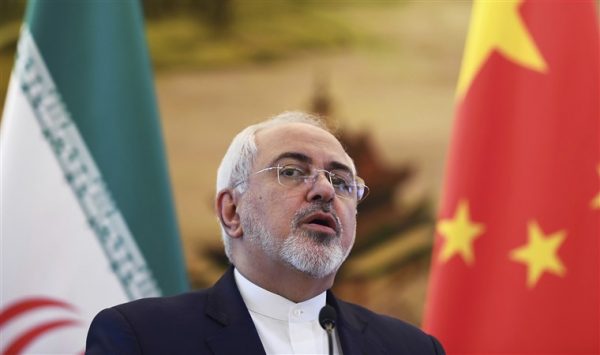
Iranian Foreign Minister Zarif called on Wednesday for a collective effort to deal with the alarming unilateralism of the current US administration, which is “quickly replacing the rule of law with the rule of the jungle.”
In his address to Asia Cooperation Dialogue in Doha, the top Iranian diplomat said that the “imposition of the will of a single power over all other nations is an existential threat” for everyone.
“Unless we align our capabilities to secure multilateralism, a rising and aggressive unilateralist wave can cover the entire world, quickly replacing the rule of law with the rule of the jungle,” Zarif said, addressing the 16th Foreign Ministers’ Meeting of the Asia Cooperation Dialogue in Doha, Qatar.
“Let me assure you that in the relentless pursuit of dialogue and multilateralism, Iran will always be a steadfast partner,” the Iranian foreign minister reiterated.
“The position of the Islamic Republic of Iran on the North-South and East-West transit corridors—along with a well-developed transportation infrastructure—plays a crucial role in connecting members of our community to other regions and contributing to the “Pillar of Connectivity” of our forum.”
The Asia Cooperation Dialogue (ACD) is an inter-governmental organization created in Thailand on June 18, 2002 to promote Asian cooperation at a continental level.
The ACD was founded by 18 members. Since March 2016, the organization consists of 34 states.
Israeli NGO Demands Israel Revoke BDS Founder’s Residency
teleSUR | April 28, 2019
The Israeli human rights group, Betzalmo, has called on Israel’s Attorney General and Minister of Interior to cancel BDS-founder Omar Al-Barghouti’s residency status, Arutz Sheva reported Sunday.
According to a letter that was dated for April 24, 2019, the Israeli NGO argued how it was possible that Barghouthi could be denied entry into the United States, but not in Israel, which is the country he is calling on the world to boycott.
“A recent law authorizes the Minister of the Interior, with the approval of the Attorney General, to revoke residency for anyone who harms state security or violates allegiance to the state, or endangers public peace,” Betzalmo stated. “Undoubtedly Barghouti’s leadership of the boycott movement against all citizens of the State of Israel severely harms the State of Israel and is a blatant breach of allegiance, as well as a threat to Israel’s security and defense by pushing for an arms embargo against Israel.”
The Israeli NGO said “in addition, the BDS movement collaborates with terrorist organizations, so there is undoubtedly an indirect link between Mr. Barghouti and terrorist organizations.”
Betzalmo CEO Shai Glick also released a statement in which he corroborated the claims in the letter that was dated for April 24.
“The State of Israel is a democratic and liberal state, but it must, in the name of democracy and liberalism, defend itself and its citizens. A determined struggle against the boycott constitutes true defense of the citizens of the State of Israel.” Glick said. “We cannot demand from our allies in the world to prevent the entry of a boycott activist and to prevent conferences of boycott organizations, while allowing those leading BDS activists residency in Israel, giving them State benefits and a platform. We are certain that the Interior Minister and the Attorney General will act with determination and immediately revoke Mr. Barghouti’s residency so he will be able to disseminate his toxic teaching only outside Israel.”
Barghouti was previously denied entry in to the United States, despite having the necessary documentation to enter the country.
The Boycott, Divestment and Sanctions movement (BDS) is a global campaign that has called for the economic boycott of Israel until it meets its “obligations under international law.”
Yellow vest protests hit Strasbourg in sign of trouble for EU
Press TV – April 28, 2019
The “yellow vest” protests in France have spread to Strasbourg, the seat of the European Parliament, on the 24th consecutive weekend of a revolt which shows no sign of abating.
Thousands gathered near European Union institutions late Saturday, with organizers hoping to make the protest international a month ahead of EU-wide parliamentary elections.
Police fired tear gas to push back protesters trying to march on the European Parliament building and eyewitness footage showed arrests being made.
Authorities had banned protests and barricaded the neighborhood where the parliament and other EU institutions are located.
Protests were held elsewhere across France, coming two days after President Emmanuel Macron outlined policy proposals including tax cuts worth around 5 billion euros in response to the revolt.
The Interior Ministry said around 23,600 protesters took part in rallies across the country, including Paris, Lyon, Bordeaux, Dijon and Toulouse.
The protests, named after motorists’ high-visibility yellow jackets, began in November over fuel tax increases but morphed into a nationwide movement against government policies.
The yellow vests coalition includes numerous anti-Europe protesters, many of whom are calling for a ‘Frexit’, which would see France leave the EU.
Thousands of police and soldiers are drafted into the French capital every Saturday, when there is regular fighting and fires being lit.
The situation is now so extreme that vast areas of Paris – including the district around the Elysee Palace – are shut off every weekend.
The trouble has extended to other major cities, including Bordeaux and Toulouse, where hundreds have been arrested, or injured by police weapons ranging from flash ball rubber bullets to batons.
Macron has pledged more money for rural areas, but he is still regularly described as a “President of the Rich” who is primarily interested in supporting big businesses.
He has already scrapped wealth taxes, and made it far easier for companies to hire and fire employees.
Macron had originally planned to deliver a reform speech to the nation a week ago, but it was postponed because of the fire at Notre Dame Cathedral in Paris.
Some 1 billion euros has now been pledged for the rebuilding of the medieval place of worship – prompting the yellow vests to ask why other funds cannot be found to deal with their own grievances.
UK cinemas urged to boycott Israeli film festival
Press TV – April 25, 2019
Twenty filmmakers, screenwriters, actors, and film critics have urged film theaters in the United Kingdom to boycott the Israeli film festival Seret, co-organized by the Tel Aviv government, in protest at the Zionist regime’s atrocities against Palestinians.
“We’re shocked and dismayed to see how many mainstream cinemas … are hosting this year’s Israeli film festival, Seret, whose funders and supporters include the Israeli government and a clutch of pro-Israel advocacy organizations,” the cinema professionals said in a letter published by The Guardian on Thursday.
“Two months ago, a commission set up by the UN human rights council concluded that the actions of Israeli soldiers against Palestinian participants in the Great March of Return in Gaza may constitute ‘war crimes or crimes against humanity’. ‘Particularly alarming,’ said a member of the commission, was ‘the targeting of children and persons with disabilities’,” reads the letter.
“This UN report is the latest in 70 years of reports of mass expulsions, killings, house demolitions, detention without trial, torture, military occupation and military onslaught against the indigenous population, the Palestinians. But none of this appears to disturb the cinemas involved in the festival,” the letter added, protesting at the UK cinemas’ indifference to the Israeli atrocities.
“We cannot understand why cultural institutions continue to behave as if Israel is an ordinary democracy. It is not. Palestinians deserve better than this. UK cinemas should not be hosting Seret,” it reads.
Prominent British filmmakers Ken Loach and Mike Leigh are among the artists who have written the letter.
Other signatories include Amir Amirani (director, producer), Roy Battersby (director), Haim Bresheeth (writer, filmmaker), David Calder (actor), Prof Ian Christie (film writer, broadcaster), Dror Dayan (filmmaker), Helen de Witt (film programmer), Saeed Taji Farouky (filmmaker), Deborah Golt DJ (broadcaster), Ashley Inglis (screenwriter), Paul Laverty (screenwriter), Sophie Mayer (film critic, curator), Rebecca O’Brien (producer), Pratibha Parmar (writer, director), William Raban (filmmaker), Leila Sansour (director), John Smith (artist, filmmaker), and Penny Woolcock (filmmaker).
Earlier, the Palestinian Campaign for the Academic and Cultural Boycott of Israel (PACBI) had also called on all participants to withdraw from the Seret festival taking place in London, Brighton and Edinburgh, from May 6 – 17.
The Seret festival tries to falsely project Israel as “a melting pot of cultures, religions and social backgrounds,” rather than as an apartheid and colonial regime that has more than 65 racist laws discriminating against its indigenous Palestinian citizens, the Campaign said.
“In addition to Israeli ministries and diplomatic missions, the festival is also sponsored by racist, anti-Palestinian, Israeli government-backed agencies, including the World Zionist Organization and the Jewish Agency,” the Campaign added, in a statement published by the BDS Movement’s website.
Last year, a wave of cancellations and boycotts hit a film festival in Tel Aviv over Israeli government sponsorship, with a total of 14 filmmakers, actors and other artists withdrawing or, if unable to do so, declaring support for the boycott.
Also in 2018, the Oscar-winning star, Natalie Portman, boycotted a ceremony in Israel that would have honored her.
“PACBI, as part of the growing Nobel Prize-nominated Boycott, Divestment and Sanctions (BDS) movement, calls on filmmakers participating in SERET to withdraw from this blatant propaganda festival and urges people of conscience to boycott it in its entirety,” the statement added.
The BDS movement was initiated in 2005 by over 170 Palestinian organizations that were pushing for “various forms of boycott against Israel until it meets its obligations under international law.”
Palestinian prisoners reach agreement to achieve demands, end hunger strike
Samidoun Palestinian Prisoner Solidarity Network | April 16, 2019
Palestinian prisoners have reached an agreement with the Israeli prison administration to achieve their demands and suspend their hunger strike, the Battle of Dignity 2, on Monday, 15 April. The agreement came as hundreds of Palestinian prisoners were engaged in their eighth day of a collective hunger strike.
According to the leadership of the Palestinian prisoners’ movement, the agreement includes the installation of public telephones in the prison sections, which prisoners would be allowed to use three times a week for 15-minute calls, as well as stopping the installation of cell-phone jamming devices. In addition, the repressive measures and sanctions imposed in the past year upon the prisoners will also be lifted, while fines imposed on prisoners in recent struggles inside the prisons would be reduced. Hundreds more prisoners have been set to join the hunger strike in the coming days, especially 17 April, Palestinian Prisoners’ Day.
The Palestinian Prisoners’ Society said that the agreement also included provisions to transfer the women prisoners from Damon prison to another detention center; the prisoners have repeatedly cited harsh, difficult conditions unsuitable for human life in the Damon prison. In addition, sick prisoners would be returned to the previous section in the Ramleh prison clinic, an area that was considered better than their current location.
The National and Islamic Forces held a press conference in Gaza City to highlight the prisoners’ final statement. “The battle is not over; the hardest phase of this struggle is to implement what has been agreed upon,” the prisoners wrote, noting that previous agreements have been repeatedly broken by the Israeli prison administration.
They saluted the prisoners in section 4 of the Negev desert prison and section 1 in Ramon prison who were attacked by Israeli repressive forces, noting that “their great sacrifices underline that freedom and dignity are… human rights that cannot be denied.” They saluted Palestinians in Gaza, the West Bank, occupied Palestine ’48 and exile and diaspora, as well as supporters of freedom around the world, journalists and prisoners’ centers, that stood with the prisoners in their struggle. The statement particularly saluted “the people and leadership in Gaza,” noting their unity in commitment to the struggle.
Samidoun Palestinian Prisoner Solidarity Network expresses its strongest salutes and greetings to all of the Palestinian prisoners on this occasion of victory. These achievements follow on many historical accomplishments of the Palestinian prisoners’ movement, on the front lines of the Palestinian liberation struggle, extracting their victories through great sacrifice, with their bodies and lives on the line. As Palestinian Prisoners Day approaches, we emphasize our continuing dedication to work for the freedom of all Palestinian prisoners and the freedom of Palestine from the river to the sea.

In addition, we urge people around the world to continue their solidarity activities to support the Palestinian prisoners, throughout the coming days, months and years, until their freedom is achieved. In particular, we emphasize the cases of three Palestinian prisoners who remain on hunger strike: Hussam al-Ruzza (61), Mohammed Tabanja (40) and Khaled Farraj (31). Al-Ruzza has been on hunger strike since 19 March – nearly one month – while Tabanja and Farraj have been on hunger strike since 25 March. All are held without charge or trial under administrative detention orders, and their detention has been repeatedly and arbitrarily renewed.
They are among nearly 500 Palestinians out of approximately 5,500 Palestinian prisoners jailed with no charges and no trial for indefinitely renewable periods under administrative detention. The end of administrative detention is a long-time demand of the Palestinian prisoners’ movement and supporters of justice and liberation around the world. Join the call to free Hussam al-Ruzza, Mohammed Tabanja, Khaled Farraj and all Palestinian prisoners!
Palestinian prisoners launch collective hunger strike to demand justice and dignity
Samidoun Palestinian Prisoner Solidarity Network – April 8, 2019
Palestinian prisoners have announced the launch of a collective hunger strike in Israeli prisons on Monday, 8 April to demand an end to the ongoing and escalated repression inside the prisons. The strike is being led by a number of leaders from all of the Palestinian political parties and organizations inside Israeli prisons, with 120 prisoners launching the open hunger strike as a first step toward a collective hunger strike of all prisoners, in a declaration of a “second battle of dignity (Karameh).”
The Handala Center for Prisoners and Former Prisoners said that the strike was launched in response to the Israel Prison Service’s reneging on previously agreed-upon understandings to lessen the level of repression imposed on the prisoners. Specifically, Allam Kaabi said, the prison administration had previously agreed to make telephone calls available to all except for those classified by the occupation as “security matters,” but then disavowed that understanding. The prisoners are represented by a leadership group representing all political forces; Ahmad Sa’adat, Palestinian national leader and the imprisoned General Secretary of the Popular Front for the Liberation of Palestine, is part of this coordinating committee.
The strike comes one day before the Israeli elections, in which a slew of right-wing candidates have competed with one another to pledge harsher attacks against the Palestinian people, including Palestinians in Gaza and Palestinian political prisoners.
As part of his own campaign efforts, Gilad Erdan, Israeli Minister of Internal Security, has imposed even more harsh repressive measures on Palestinian prisoners alongside public announcements and displays in an attempt to boost support for the Likud. (It should be noted that Erdan is also head of the Ministry of Strategic Affairs, responsible for global campaigns against the boycott, divestment and sanctions movement (BDS) and Palestine solidarity. In this context, Erdan has focused specific attacks on human rights organizations and solidarity groups supporting Palestinian prisoners, including Samidoun.)
These repressive attacks have included multiple invasions of prisoners’ cells, rooms and sections by heavily armed repressive units. Prisoners’ belongings have been searched and confiscated, while multiple prisoners have been transferred from section to section. Prisoners have been beaten by these forces, who have also fired tear gas within the confined space of prison sections, leading to multiple injuries. Thousands of books have been confiscated from the prisoners, while family visits have been banned for many prisoners, especially those associated with the Hamas movement. In addition, devices such as surveillance cameras and alleged mobile-phone jammers have been installed in the prisons, further elevating the level of surveillance faced by the prisoners.
These attacks have come under the banner of Erdan’s committee to “examine the conditions of the prisoners” in order to “impose a new reality” on Palestinian prisoners – precisely designed to roll back the rights that the prisoners have only won through years of struggle, including hunger strikes and other protests. The prisoners’ demands include: the installation of public telephones in the prisons to allow them to communicate with their families, the removal of the jamming devices, the return of family visits to normal and the abolition of all of the repressive measures, sanctions and penalties imposed on the prisoners.
According to breaking news reports from Palestine, key leaders of the prisoners’ movement and the Palestinian national liberation movement as a whole have joined the strike and hundreds are planning to join the strike in the coming days. The strike is planned to escalate on 17 April, marked in Palestine and internationally as Palestinian Prisoners’ Day. There are currently around 5,500 Palestinians held in Israeli jails, including 48 women, 230 children and nearly 500 held without charge or trial under indefinitely renewable administrative detention orders. … more at Samidoun
Artificial Morality
By Robert Koehler | CounterPunch | March 15, 2019
Artificial Intelligence is one thing. Artificial morality is another. It may sound something like this:
“First, we believe in the strong defense of the United States and we want the people who defend it to have access to the nation’s best technology, including from Microsoft.”
The words are those of Microsoft president Brad Smith, writing on a corporate blogsite last fall in defense of the company’s new contract with the U.S. Army, worth $479 million, to make augmented reality headsets for use in combat. The headsets, known as the Integrated Visual Augmentation System, or IVAS, are a way to “increase lethality” when the military engages the enemy, according to a Defense Department official. Microsoft’s involvement in this program set off a wave of outrage among the company’s employees, with more than a hundred of them signing a letter to the company’s top executives demanding that the contract be canceled.
“We are a global coalition of Microsoft workers, and we refuse to create technology for warfare and oppression. We are alarmed that Microsoft is working to provide weapons technology to the U.S. Military, helping one country’s government ‘increase lethality’ using tools we built. We did not sign up to develop weapons, and we demand a say in how our work is used.”
Wow, words of conscience and hope. The deeper story in all this is ordinary people exercising their power to shape the future and refusing to increase its lethality.
With this contract, the letter goes on, Microsoft has “crossed the line into weapons development. . . . The application of HoloLens within the IVAS system is designed to help people kill. It will be deployed on the battlefield, and works by turning warfare into a simulated ‘video game,’ further distancing soldiers from the grim stakes of war and the reality of bloodshed.”
This revolt was what Smith was responding to when he said he believed in a “strong defense,” implying that moral clichés rather than money are what drive the decisions of large corporations, or at least this particular large corporation. Somehow his words, which he attempted to convey as reflective and deeply considered, are not convincing — not when juxtaposed with a defense contract worth nearly half a billion dollars.
Smith goes on, acknowledging that no institution, including the military, is perfect, but pointing out that “one thing is clear. Millions of Americans have served and fought in important and just wars,” cherry-picking such lauded oldies as the Civil War and World War II, where America’s enhanced lethality freed slaves and liberated Europe.
Fascinatingly, the tone of his blog post is not arrogant toward the employees — do what you’re told or you’re fired — but, rather, softly placating, seeming to indicate that the power here isn’t concentrated at the upper levels of management. Microsoft is flexible: “As is always the case, if our employees want to work on a different project or team — for whatever reason — we want them to know we support talent mobility.”
The employees who signed the letter demanded cancellation of the Defense contract. Smith offered their personal consciences an out: Come on, join another team if you don’t want to cross the line and work on weapons development. Microsoft honors employees of multiple moral persuasions!
Artificial Intelligence is a high-tech phenomenon that requires highly complex thinking. Artificial morality hides behind the nearest cliché in servitude to money.
What I see here is moral awakening scrambling for sociopolitical traction: Employees are standing for something larger than sheer personal interests, in the process pushing the Big Tech brass to think beyond their need for an endless flow of capital, consequences be damned.
This is happening across the country. A movement is percolating: Tech won’t build it!
“Across the technology industry,” the New York Times reported in October, “rank-and-file employees are demanding greater insight into how their companies are deploying the technology that they built. At Google, Amazon, Microsoft and Salesforce, as well as at tech start-ups, engineers and technologists are increasingly asking whether the products they are working on are being used for surveillance in places like China or for military projects in the United States or elsewhere.
“That’s a change from the past, when Silicon Valley workers typically developed products with little questioning about the social costs.”
What if moral thinking — not in books and philosophical tracts, but in the real world, both corporate and political — were as large and complex as technical thinking? It could no longer hide behind the cliché of the just war (and surely the next one we’re preparing for will be just), but would have to evaluate war itself — all wars, including the ones of the past 70 years or so, in the fullness of their costs and consequences — as well as look ahead to the kind of future we could create, depending on what decisions we make today. Complex moral thinking doesn’t ignore the need to survive, financially and otherwise, in the present moment, but it stays calm in the face of that need and sees survival as a collective, not a competitive, enterprise.
Moral complexity is called peace. There is no such thing as simplistic peace.
Robert Koehler is a Chicago award-winning journalist and editor.
Featured Video
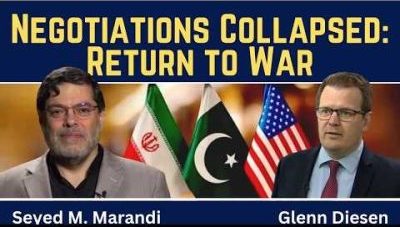
Seyed M. Marandi: Negotiations Collapsed – Return to War
or go to
Aletho News Archives – Video-Images
From the Archives
The US-Iran Scenario That Most Scares Israel
By Ali Haydar | Al-Akhbar | October 9, 2013
Israeli Prime Minister Benjamin Netanyahu issued a series of threats toward Iran and its interlocutors in the West, including the US, as serious negotiations on Iran’s nuclear program seem more plausible.
As a possible rapprochement looms between the US and Iran, Netanyahu has attempted to impose impossible Israeli conditions on the negotiators, such as the full dismantling of Iran’s nuclear program, not to mention threatening military force.
Whatever the deal that could materialize between Iran and the West, Israel is going to find itself before an open-ended path. One can foresee three possible scenarios… continue
Blog Roll
 Aletho News
- Seyed M. Marandi: Negotiations Collapsed – Return to War
- Tomorrow’s naval blockade showdown
- ‘Israel’ attacks civilians to hide its embarrassing military failures & out of pure sadism
- Any Foreign Military Vessel Approaching Hormuz Under Any Pretext ‘Will Be Dealt With Severely’: IRGC
- Diplomats slam US negotiators’ performance in Iran talks
- Trump Refuses Exit Ramp, War with Iran will Continue
- Trump Says US Naval Blockade in Strait of Hormuz Will Begin Shortly
- US, Iran end 21-hour talks without agreement
- US IRAN TALKS: Who Are the Crazy Ones Here? /Lt Col Daniel Davis
- Talks with the US end without a deal over excessive US demands: Iran
- If Americans Knew
- Critical shortages in Gaza, Lebanon in ruins, “piracy” in Iran – Daily Update
- US-Iran ceasefire negotiations make zero progress – Daily Update
- Pro-Israel ‘Thinktanks’ and Individuals who Influence U.S. Foreign Policy
- Mearsheimer reveals how Israel dictates US policies on Iran, Gaza – video
- After killing 350+, Israel still has a “score to settle” with Lebanon before ceasefire – Daily Update
- Military aid to Israel emerges as the latest political litmus test for Democrats
- The only Palestinian children’s rights organization closes following years-long Israeli campaign against it
- ‘I Can’t Forget the Smell’: Lebanese Reel After Israel Kills Over 300 in Single Day
- DNC Shoots Down Resolutions Calling Out AIPAC and Limiting Arms to Israel
- TCN: Is Israel Blackmailing President Trump?
- No Tricks Zone
- Cave Discovery Reveals Today’s Desert Climates Were Recently Far Warmer, Wetter, Teeming With Life
- German Expert: Heat Dome Led To Record Temps In Western USA…Warmer In 1934, 1936
- New Study: No Linear Warming Or Glacier Retreat Along Northern Antarctic Peninsula Since 1980s
- An Inconvenient Tree: Uncovered In Alps… Europe Much Warmer Than Today 6000 Years Ago
- New Study Reports A 60% Slowdown In Greenland’s Ice Loss Rate In The Last Decade
- Low Intensity Tornado Wrecks Major Solar Farm, Creating A Potential Toxic Dump
- New Study Finds Warming Saves Lives…Cold Temperatures 12 Times More Deadly Than Excess Heat
- German Science Blog Accuses PIK Climate Institute Of Hallucinating Climate Tipping Points
- Devastating Assessment Of Comirnaty Vaccine By Former Senior Pfizer Europe Toxicologist
- New Study: CO2 Is ‘Effectively Negligible’ As An Explanatory Climate Change Factor Since 2000
 Aletho News