Soumoud Convoy blocked in Libya en route to break Gaza blockade
Al Mayadeen | June 15, 2025
Pro-Palestinian activists, who were participating in a march aimed at breaking the Israeli blockade on Gaza, were forced to retreat to the Misrata region of western Libya after being blocked by the authorities in the country’s east, according to statements made by organizers on Sunday.
The “Soumoud” convoy, which had been stopped by the eastern authorities, decided to fall back to near Misrata, about 200 kilometres (124 miles) east of Tripoli. Misrata, which is under the control of the UN-recognized Government of National Unity based in Tripoli, stands in contrast to the eastern region of Libya, where military commander Khalifa Haftar holds authority.
The convoy, consisting of more than 1,000 people from Algeria, Morocco, Mauritania, and Tunisia, had faced a “military blockade” since Friday at the entrance to Sirte, a region under the control of Haftar.
Organizers reported that the convoy had been placed under what they described as a “systematic siege,” leaving them without access to food, water, or medicine while also facing severely disrupted communications.
The organizers also condemned the arrest of multiple convoy participants, among them at least three bloggers who had been recording the mission’s progress since it set out from Tunisia on June 9.
The Joint Action Coordination Committee for Palestine, the organizing body behind the convoy, called for the urgent release of 13 detained participants still in the custody of eastern Libyan authorities, according to a statement reported by Tunisia’s La Presse newspaper.
The group, in an accompanying video, reiterated its commitment to pushing forward with the mission toward Gaza’s Rafah border crossing with Egypt, emphasizing its goal of breaking the blockade and stopping what it described as the genocide of Palestinians resisting in Gaza.
Israeli Security Minister Israel Katz called on Egyptian authorities on June 11 to prevent the al-Soumoud convoy from reaching the Rafah border crossing, accusing the international pro-Palestine activists of being “jihadists” and warning that their presence could potentially endanger Israeli occupation forces as well as what he referred to as “regional stability.”
Katz argued that the convoy posed a threat to Israeli troops stationed near the border while also warning it could trigger unrest within Egypt and among what he described as “moderate” Arab governments in the region. He further warned that if Egyptian authorities failed to act, the Israeli occupation forces would take what they deemed “necessary measures” to stop the convoy’s advance toward Gaza.
The global march to Gaza: Indonesia and Egypt
By Dr. Muhammad Zulfikar Rakhmat | MEMO | June 15, 2025
This week, ten Indonesian citizens — among them celebrities like Wanda Hamidah, Zaskia Adya Mecca, and Ratna Galih — landed in Cairo, not for a political summit, but to join the Global March to Gaza. They came bearing no weapons, no agendas, only the unyielding conviction that humanity must speak where power has fallen silent. They came to walk.
Instead, they were watched. Monitored. Effectively detained. According to a statement posted by Abdul Somad — a widely respected Islamic preacher in Indonesia — these citizens have been placed under tight surveillance by Egyptian authorities and are unable to proceed to Rafah. Somad wrote on Instagram that their phones are monitored, their movements shadowed by police escorts, and their social media use could put them at risk of arrest.
These actions raise a chilling question — one that must be answered by both the Indonesian and Egyptian governments: why are peaceful humanitarian efforts being treated like criminal conspiracies?
The Global March to Gaza is not a political stunt. It is the latest chapter in a rising global outcry against the suffering in Palestine — a moral wave first stirred by the Madleen, a humanitarian ship that was blocked from reaching Gaza. When the ship was turned away by military force, its impact rippled across continents. From sea to desert, from ship to sandal, the world’s conscience now marches forward.
In the blazing heat of the Sinai, thousands are now walking toward Rafah — the last passage into besieged Gaza. They are not diplomats. They do not carry government mandates. They are nurses, retirees, students, and activists. They come not to protest a nation, but to protect a people.
Yet their steps are met not with open arms, but locked gates. Egypt has responded to the march with detentions, deportations, and in some cases, violence. Viral videos show activists — including Americans and Europeans — being harassed near Ismailia. An American woman was reportedly beaten and had her hijab ripped off. Irish parliamentarian Paul Murphy was detained and deported.
And Indonesia’s citizens — who have come to walk, not to wage war — are now stuck in limbo.
What makes this turn of events particularly disheartening is that just two months ago, Indonesian President Prabowo Subianto met with Egyptian President Abdel Fattah al-Sisi in Cairo to elevate the relationship between their nations to a strategic partnership. Palestine was central to their discussion. Both leaders publicly affirmed their shared commitment to support the Palestinian people and denounced Israeli aggression.
President Prabowo — leading a country whose constitution explicitly binds it to the fight against colonialism — made it clear that Indonesia sees the suffering of Palestinians as a global injustice. Al-Sisi, whose nation borders Gaza and has long served as mediator, underscored the need to halt the destruction and begin humanitarian recovery.
But if these two nations are so aligned in their support for Palestine, then why now are peaceful Indonesian citizens being surveilled, delayed, and blocked from expressing that very solidarity?
This is the question the Indonesian and Egyptian governments must answer — not just to the activists, but to their own people. Has diplomacy become so hollow that public support for Gaza is allowed only when convenient? Has humanitarianism been reduced to political theater?
Indonesia, in particular, must act. Its citizens are being obstructed for embodying values the nation claims to hold dear. It must demand their release and full freedom of movement. It must summon the Egyptian ambassador in Jakarta to account for these unjust actions. And it must raise this issue in international forums, including the Organisation of Islamic Cooperation (OIC), to call out all forms of obstruction — from Israel’s bombs to Egypt’s bureaucracy.
Rafah is more than a crossing — it is the fault line between moral paralysis and global awakening. The more it is locked, the louder the heartbeat of conscience becomes. The Global March is not simply a protest. It is a declaration that humanity will not look away.
From the Madleen at sea to the marchers on land, the message is the same: no power can suppress a movement carried by conviction. And no silence can erase the pain of Gaza.
Indonesia’s citizens are walking not just toward Gaza — but toward the soul of the nation’s foreign policy.
It is time their government walks with them.
Malaysia announces the “Fleet of a Thousand Ships” initiative to break the siege on Gaza
Palestinian Information Center – June 15, 2025
KUALA LUMPUR – Civil society organizations in Malaysia have unveiled a major international initiative—described as the largest of its kind—aimed at breaking the siege imposed on the Gaza Strip through a global maritime movement involving a thousand ships departing from multiple continents. The initiative is being hailed as an “uprising of human conscience” in support of Palestinians and a call to hold Israel accountable for its ongoing crimes.
This announcement was made during a press conference held in the capital, Kuala Lumpur, where Azmi Abdul Hamid, President of the Malaysian Consultative Council of Islamic Organizations (MAPIM), said that the initiative is a response to the escalating Israeli aggression and the genocidal crimes being committed against Gaza’s population. He emphasized that the project is gaining growing support from organizations across Europe, Asia, and Latin America.
Abdul Hamid noted that the recent seizure of the Madleen vessel by Israeli forces has helped refocus global attention on the humanitarian catastrophe in Gaza and has reignited solidarity movements around the world.
He added that the “Fleet of a Thousand Ships” would be broader and more coordinated than the 2010 “Freedom Flotilla,” which was led by the Mavi Marmara.
According to a joint statement signed by dozens of Malaysian institutions, the objectives of this maritime mission include: the immediate lifting of the siege, the delivery of humanitarian aid, the provision of international protection for Gaza’s residents, and the prosecution of Israeli leaders for war crimes.
The initiative also aims to pressure governments to take responsibility by ensuring protection for their citizens who join the mission—thereby increasing international pressure on Israel.
In a related development, Malaysian activists held a protest in front of the Malaysian Investment Development Authority, demanding an end to relations with companies supporting the Israeli occupation—most notably the American company Caterpillar, which is accused of supplying equipment used in demolitions and settlement construction. Protesters described ongoing cooperation with such companies as “complicity in genocide.”
MAPIM also announced concrete steps to expand the campaign, including the establishment of an international secretariat and a financial fund to support the logistical and technical preparations for launching the fleet. Open calls have been made to companies and individuals to contribute to the success of the initiative.
Observers anticipate that the “Fleet of a Thousand Ships” initiative will become a focal point of global attention—especially amid growing popular solidarity with Gaza and the failure of international institutions to stop Israeli aggression—underscoring the need for independent action by global civil society.
Egypt detains over 200 activists ahead of pro-Gaza aid convoy
MEMO | June 13, 2025
The Egyptian authorities have arrested more than 200 activists who had arrived in Cairo to join a planned march to Egypt’s Rafah border crossing and demand breaking the Israeli blockade of the Gaza Strip.
The organizers said in a statement on Thursday that approximately 4,000 people from more than 40 countries had booked flights to Cairo to participate in the event, and a large number of them had already arrived before the scheduled departure time from Egypt.
The organizers hoped “to work side by side with the Egyptian government” as a key and effective partner, adding that their goal is to demand an end to the Israeli genocide against the Palestinian people.
Activists organizing the convoy revealed that Egyptian security personnel in civilian clothes arrested activists from the hotels where they were staying, interrogated them, and in some cases confiscated their phones. “Some were released, while others remain in detention” they added.
The organizers confirmed in a statement that their legal team is monitoring these cases, noting that they “complied with all legal requirements imposed by the Egyptian authorities”.
The convoy of humanitarian aid dubbed Global March to Gaza set out from the Tunisian capital on Monday with the participation of thousands of volunteers from Algeria, Egypt, Libya, Morocco, and Tunisia. According to the organizers; the aim is to raise international awareness of the humanitarian crisis in Gaza and provide humanitarian aid.
The participants were scheduled to travel by bus to the city of Arish in the Sinai Peninsula on Friday and continue on foot to the border with the Gaza Strip, where they intend to camp for three days in an attempt to pressure authorities to open the crossing.
Israel Detains Activists Bringing Aid to Gaza
By Kyle Anzalone and Will Porter | The Libertarian Institute | June 9, 2025
Hours after the Israeli defense minister threatened military action against a tiny aid ship carrying activists attempting to break the blockade on Gaza, the IDF intercepted the boat and detained all on board. The dangerous vessel was armed with rice and baby formula.
Late on Sunday night, the Freedom Flotilla Coalition (FFC) said the ship, named the ‘Madleen,’ was “under assault in international waters,” with quadcopter drones surrounding the vessel and “spraying it with a white irritant substance.”
The group later published a statement, saying the Madleen was “attacked/forcibly intercepted by the Israeli military at 3:02am [Central European Time] in international waters at 31.95236° N, 32.38880° E. The ship was unlawfully boarded, its unarmed civilian crew abducted, and its life-saving cargo – including baby formula, food and medical supplies – confiscated.”
Israel’s Foreign Ministry confirmed that the ship had been intercepted, but added that the activists were “safe and unharmed.” In a follow-up post, it said the vessel was on its way to Israel and that the passengers were “expected to return to their home countries.”
At the time of writing, the Madleen was sailing through international waters off the coast of Egypt, north of Sinai, according to tracking data provided by the FFC.

Earlier on Sunday, Tel Aviv’s Defense Minister Israel Katz issued a warning to the ship, suggesting the IDF would use force to prevent it from bringing aid to Gazans:
“I have instructed the IDF to act to prevent the ‘Madleen’ hate flotilla from reaching the shores of Gaza – and to take whatever measures are necessary to that end.
To the anti-Semitic Greta [Thunberg] and her fellow Hamas propaganda spokespeople, I say clearly: You should turn back – because you will not reach Gaza.
Israel will act against any attempt to break the blockade or assist terrorist organizations – at sea, in the air, and on land.”
Katz’s statement contained one important admission: Israel does, in fact, maintain a blockade on aid entering Gaza.
For over a year, the propaganda emanating from Tel Aviv has claimed that Hamas was simply stealing international aid and preventing it from reaching starving Palestinians. And yet, Israel’s Minister of Genocide just acknowleged a full-blown blockade on humanitarian assistance.
As the Madleen approached Gaza over the weekend, the activists faced increasing harassment from Israel, including GPS jamming, as well as close calls with military speed boats and drones.
Israel has used violence to prevent activist aid ships from reaching Gaza on more than one occasion in the past – most recently last month, when a small FFC vessel headed for the enclave was struck by a drone in international waters.
In 2010, Israeli troops killed 10 activists after raiding another boat attempting to bring supplies to Gaza, with the UN concluding some were shot “in a manner consistent with an extra-legal, arbitrary and summary execution.”
The presence of Greta Thunberg, a climate activist widely known across the West, is likely the only thing that prevented a similarly bloody fate for the Madleen.
Fortunately, US Senator Lindsey Graham did not have his way. The lawmaker joked in a post last week: “Hope Greta and her friends can swim!” – riffing on the hilarious and relatable premise of murdering unarmed civilians to stop them from feeding people desperately in need of aid.
This article originally appeared in the June 9 edition of the Libertarian Institute Debrief, our daily email newsletter.
Delegates from 32 nations march to Gaza, call for end to blockade and genocide

MEMO | June 9, 2025
An international solidarity march set off towards the Gaza Strip yesterday, aiming to break the ongoing blockade and demand an end to what participants describe as the genocide being committed by Israel since 7 October 2023.
Thousands of supporters from 32 countries are taking part in the march, with plans to reach Gaza’s border through the Rafah crossing with Egypt. Their goals include delivering humanitarian aid and expressing support for the Palestinian people.
Organisers said the participating convoys are expected to gather in Cairo on Thursday, before heading to the city of Arish in north-eastern Egypt. From there, participants will continue on foot towards the Rafah border crossing, where protest tents are planned to be set up.
The main organisers, the “Global March to Gaza”, said it has representatives in most European, North and South American countries, as well as in several Arab and Asian nations. This, it said, reflects growing international momentum in support of the Palestinian cause.
Leading the march is Algeria’s “Caravan of Steadfastness,” which departed from the capital Algiers yesterday towards Tunisia. From there, it will join the Tunisian convoy and continue through Libya to Egypt, with the aim of eventually reaching Gaza.
“The Caravan of Steadfastness set off on Sunday towards Tunisia. It will join the Tunisian convoy, travel through Libya to Egypt, and from there to Gaza via Rafah,” said Sheikh Yahya Sari, head of the Algerian Initiative to Support Palestine and Aid Gaza, in a statement.
NYU withholds diploma of student who condemned Israel’s Gaza genocide

MEMO | May 16, 2025
In the latest example of escalating repression against Palestine solidarity activism on US campuses, New York University (NYU) has withheld the diploma of student speaker Logan Rozos after he used his commencement address to denounce Israel’s ongoing genocide in Gaza and the US’s complicity.
Rozos, graduating from NYU’s Gallatin School of Individualised Study, told his fellow students on Wednesday: “The only thing that is appropriate to say in this time and to a group this large is a recognition of the atrocities currently happening in Palestine.”
In his speech, Rozos condemned the genocide “supported politically and militarily by the United States, paid for by our tax dollars and livestreamed to our phones for the past 18 months.” He further stated: “I do not wish to speak only to my own politics today, but to speak for all people of conscience, and all people who feel the moral injury of this atrocity.”
Razos’s remarks were met with widespread applause from students. NYU swiftly responded by issuing a statement denouncing Rozos, accusing him of violating university rules and announcing it would withhold his diploma pending disciplinary action.
The university also removed Rozos’s student profile from its website, adding to concerns about institutional retaliation.
This incident comes amid a wider crackdown on free speech and pro-Palestinian activism at US universities. NYU, like many elite institutions, has adopted the highly controversial International Holocaust Remembrance Alliance (IHRA) definition of anti-Semitism, which conflates political opposition to Zionism and Israel’s colonial violence with anti-Jewish hatred. Critics, including human rights scholars and Jewish groups, warn that such measures are being weaponised to suppress Palestinian advocacy and silence dissenting voices.
Rozos’s speech, and NYU’s reaction, follows a pattern of repression at the university. Over the past year, NYU administrators have called police to disperse peaceful encampments and arrested dozens of students and faculty protesting Israel’s war on Gaza. The university has also updated its conduct guidelines to classify phrases such as “Zionist” as discriminatory, explicitly erasing the distinction between anti-Zionism and anti-Semitism.
In December 2024, NYU declared two tenured professors, Andrew Ross and Sonya Posmentier, “persona non grata” after they joined a sit-in demanding the university divest from companies profiting from Israel’s war crimes in Gaza. Months later, NYU cancelled a talk by Doctors Without Borders’ former president Dr Joanne Liu, deeming her slides on Gaza civilian casualties potentially “anti-Semitic.”
Human rights advocates and academic freedom organisations have condemned these actions, warning that universities like NYU are sacrificing core principles of free speech and academic independence under pressure from pro-Israel donors, political figures, and lobby groups.
Rozos’s speech, which framed Israel’s war on Gaza as a genocide livestreamed in real time, resonates with warnings from genocide scholars, legal experts and international bodies that Israel’s actions meet the legal definition of genocide. Despite this, Rozos now faces institutional reprisals for expressing what many human rights defenders see as an urgent moral truth.
Michigan AG Pins Blame for Failed Prosecutions of Student Protesters on Rep. Debbie Dingell
The Michigan attorney general provided no evidence for her claim, which Dingell rejected
By Ryan Grim and Tom Perkins | Drop Site | May 11, 2025
Michigan Attorney General Dana Nessel continues to do damage control in the wake of her failed prosecution of student protesters at the University of Michigan. Nessel was forced to drop charges against students who had been arrested at a pro-Palestinian encampment last year after the judge overseeing the case indicated he was sympathetic to the defense’s argument that Nessel had been improperly biased against the defendants.
This week, in public remarks on the prosecution, she claimed without evidence that Democratic Rep. Debbie Dingell of Michigan had been the one who urged her to charge students involved in protests over Gaza. Pinning the pressure for the prosecutions on Dingell was Nessel’s way of arguing that the bias claims made against her were inaccurate—that she was not in fact pushed to take the cases by donors to her campaign who serve as senior officials at the university, but rather by the local congresswoman, Dingell.
“I heard it was from the Jewish Regents,”—that is, the Jewish members of the University of Michigan Board of Regents—“they forced me to take these cases,” Nessel said at an event this week called a “Town Hall on Hate Crimes & Extremism” in West Bloomfield Township. “I heard it was from the [Michigan Legislative] Jewish Caucus because of the money I get from them. I heard it was from Jewish donors. You know how those cases came to my office? Debbie Dingell. Debbie Dingell, I don’t know if you know this: Not Jewish. But it had to be some sort of Jewish influence.”
In a statement to Drop Site, Dingell spokesperson Michaela Johnson suggested the congresswoman was not behind the investigations, pointing to a May 2024 letter from Nessel’s office to the university in which Nessel offered to take over any investigations. The letter, which has not previously been reported, makes no reference to Dingell, but instead suggests that protests outside the homes of Board of Regents members triggered Nessel to launch an effort targeting student protesters.
“Nessel did not write the letter at our request, and Rep. Dingell had not seen that letter until today,” Johnson said. Dingell represents Ann Arbor, but previously represented Dearborn until redistricting in 2014, and she still has strong ties to the Arab-American community there. But she has remained largely silent with regard to the protests.
Amir Makled, an attorney for some of the students, said he called Dingell’s office on Friday to ask about Nessel’s allegations. He said a Dingell staffer denied the congresswoman had pushed for the investigation.
Makled said he didn’t think it was done at Dingell’s behest, but he said Dingell has been involved with the discussions because the incident occurred in her district, and she “has been giving lip service to all sides.”
But, he added, “Nessel is trying to do anything to deflect blame for her office’s misdeeds – that much seems clear to me.”
Nessel’s office didn’t respond to a request for comment over the weekend.
The university, its regents and Nessel have denied that the school recruited the attorney general.
This was not the first time Nessel had pointed the finger at Dingell. She told a local reporter several weeks ago that “the congresswoman from the 6th Congressional District” – Dingell – had put her up to it. “I stand behind the evidence and I stand behind the charges, and I appreciate the fact that this matter was referred by the congresswoman from the 6th Congressional District, who asked the state to intervene because they were concerned about what was happening on campus,” she said. “I believe what we did was the right thing, and that will be borne out in court.”
Following that report, supporters of the students who’d been charged approached Dingell at an event on March 3 to ask if Nessel’s allegation was true. According to an audio recording provided to Drop Site, it was not. “She’s told a lot of people a lot of stuff,” Dingell told the students. She was then asked directly by Jared Eno, a grad student at Michigan, if that was true: “No!” Dingell said. “She called the university and offered.” The letter supports that claim.
Nessel, in her remarks at the town hall, again claimed Rep. Rashida Tlaib of Michigan had accused her of bias linked to her Jewish background, but Tlaib’s public statements have never referenced this. “I think people at the University of Michigan put pressure on her to do this, and she fell for it,” Tlaib had said. “I think President Ono and Board of Regent members were very much heavy-handed in this.” UMich President Santa Ono, the only person Tlaib named as having applied pressure to Nessel, is not Jewish.
The AG letter was sent to Timothy G. Lynch, vice president and general counsel at the University of Michigan, and signed by Danielle Hagaman-Clark, a prosecutor in Nessel’s office. “I write today to offer the DAG’s assistance with investigating and prosecuting any cases that arise from the recent demonstrations on UM’s campus,” she wrote. “It has been widely reported that the demonstrators have not limited their protests to the campus but have also appeared at the homes of the Board of Regents. My understanding is that the Regents are not required to live in Washtenaw County, the location of UM, but that they reside in several different counties. Because the DAG has state-wide criminal authority to bring charges, we are ideally situated to review any potential cases.”
The reference to the protests outside the homes of Regents matches reporting that suggested those demonstrations, even more than the encampments, enraged the board members, who urged Nessel to prosecute.
Nessel’s prosecutor added her office was well suited to determine whether any of the speech from the protesters was illegal. “I would also note that our Department has specialized expertise in the intersection of First Amendment free speech rights in the context of a criminal prosecution. We are fluent in the law around what speech is protected and what speech is not protected,” said Hagaman-Clark, making the pitch to Michigan. The letter was sent shortly after local prosecutor Eli Savit (who is also Jewish) declined to prosecute 36 of 40 protesters arrested in connection with the occupation of an administration building, and recommended four others for diversion. “General Nessel has discussed the potential jurisdictional issues that might arise with Washtenaw County Prosecutor Eli Savit. Prosecutor Savit recognizes that his authority is confined to Washtenaw County. He is comfortable with the DAG overseeing these cases based on his jurisdiction being limited to only Washtenaw County.”
In her effort at damage control this week, Nessel claimed Dingell’s supposed request was common. “Now it’s not unusual for a congressional representative to call up the department of the attorney general and to call the attorney general herself and say ‘I’m really worried about what I see to be criminal activity occurring and either the local prosecutor is not doing anything about it,’ or ‘they’re not equipped to do anything about it. But I am scared about what I am seeing. And I think the AG’s office has to take action.’”
Nessel also told the town hall audience that she dropped the charges because the judge had ordered an evidentiary hearing into the defense’s charge that Nessel was biased against the defendants. Defense attorneys, in their recent motion to disqualify Nessel’s office over bias, pointed to a previous analysis that found she had prosecuted protesters at a much higher rate than other prosecutors in the state.
They also pointed to Nessel recusing herself from an investigation into alleged election fraud by Muslim-American city council members in nearby Hamtramck. Nessel said she wanted to avoid the appearance of bias because she was Jewish and the suspects were of Arab descent. She also noted that she had previously been critical of the Hamtramck City Council. In their motion to disqualify Nessel’s office, defense attorneys questioned how she could consider herself biased in Hamtramck but unbiased in Ann Arbor under similar circumstances.
A letter sent by the Jewish Federation of Ann Arbor to the judge urging him to allow her to remain on the case, she said, put improper pressure on the judge and should not have been sent. And the cases against the students were becoming a distraction to staff, she added, who couldn’t even attend a job fair without being “shut down by protesters.”
“We elected that rather than me being put on trial for being a Jewish prosecutor, and rather than having the federation be put on trial for an email they should not have sent—but the kind that gets sent all the time—that we would dismiss the charges against those particular defendants,” she said. An evidentiary hearing would have opened her office to discovery and made public communications about how the cases came together. Defense attorneys say she wanted to avoid that.
Liz Jacob, an attorney from the Sugar Law Center, said the claim from Nessel was another effort to deflect responsibility. “It’s alarming to see the ways that Nessel is trying to avoid accountability for her repression of free speech and brutal targeting of protesters at all costs,” Jacob said. “Both in that video and over the last several months AG Nessel has tried to blame anyone—from Congresswoman Rashida Tlaib to Debbie Dingell to the Jewish Federation of Greater Ann Arbor—to deflect criticism regarding her own deplorable treatment of pro-Palestine protesters.”
Nessel’s decision was a serious one, and Nessel should treat it seriously, Jacob said. “As the Attorney General who is directing the FBI to raid protesters homes and bringing baseless and retaliatory criminal charges against protesters, it is Nessel who must bear responsibility for targeting young people who bravely speak out against war and genocide. Nessel’s actions speak for themselves — she has aligned herself with the Trump administration’s criminalization and repression of pro-Palestine speech,” she said.
Norway sovereign wealth fund urged by largest union to divest from companies aiding Israel
Press TV – May 6, 2025
Norway’s largest trade union has urged the Scandinavian country’s sovereign wealth fund to divest from companies aiding the Israeli regime, which has been waging a genocidal war on the besieged Gaza Strip since 2023.
The Norwegian Confederation of Trade Unions (LO) called on the country’s $1.8 trillion sovereign wealth fund on Monday to divest from firms operating in Israel’s occupied Palestinian territories.
“We want the fund to pull out of the companies that have activities in the occupied Palestinian territories,” Steinar Krogstad, deputy leader at LO, said in an interview, speaking on the margins of the union’s congress, where the Palestinian flag flew alongside those of the United Nations and Norway.
LO, which is closely aligned with the ruling Labour Party, argues that such investments may implicate Norway in violations of international law, with Krogstad emphasizing that the urgency of this issue is in light of Israel’s recent military aggression in Gaza and the occupied West Bank.
He also stressed that under LO’s general policy, Norway’s sovereign wealth fund, which is the world’s largest, should not invest in companies that violate international law.
“This question is more on the agenda now … because of Israel’s policy, attacks and war in Gaza and in the West Bank,” Krogstad said.
LO, along with 47 other civil society organizations, has also sent a letter to Finance Minister Jens Stoltenberg, urging a reassessment of the fund’s investment guidelines to ensure alignment with international legal standards.
The Norwegian sovereign wealth fund, known for its ethical investment policies, has previously divested from Israel’s largest telecommunications company, Bezeq, due to its services in West Bank settlements.
Although the fund has cleared most companies in its recent ethical reviews, the ongoing genocidal war in Gaza and international scrutiny have increased calls for more comprehensive divestment.
As of the end of 2024, the fund held approximately $2.12 billion in 65 companies listed on the Tel Aviv Stock Exchange, representing about 0.1 percent of its portfolio.
LO’s recent move is in line with a broader trend among European financial institutions re-examining their investments related to Israeli settlements.
For instance, Storebrand Asset Management, a major Norwegian investor, divested from Palantir Technologies over concerns about its work in the Israeli occupied territories.
Such moves reflect mounting pressure on financial entities to ensure their investments do not contribute to activities considered illegal under international law.
Last year, the UN’s highest court ruled that Israel’s occupation of Palestinian territories and settlements there were illegal and must end as soon as possible.
UCLA Gaza protesters sue over police violence, rubber bullet injuries
Al Mayadeen | May 5, 2025
A new lawsuit filed in Los Angeles Superior Court accuses law enforcement of police brutality during a violent crackdown on pro-Palestine protesters at the University of California, Los Angeles (UCLA) in spring 2024.
At the height of nationwide demonstrations against “Israel’s” war on Gaza, the UCLA encampment became a central site of student-led protest. On April 30, a pro-“Israel” mob attacked the encampment for more than four hours. Protesters say that police stood by as counter-demonstrators launched fireworks, sprayed chemical agents, and engaged in harassment and sexual assault, according to The Intercept.
The following day, Los Angeles Mayor Karen Bass, UCLA officials, and multiple law enforcement agencies coordinated plans to dismantle the encampment. On May 1, the encampment was forcibly cleared.
On February 12, 2025, Students for Justice in Palestine (SJP) and Graduate Students for Justice in Palestine (GSJP) were placed on interim suspension.
Police response: coordination and forceful dispersal
More than 700 police officers descended on campus, including members of the Los Angeles Police Department (LAPD), California Highway Patrol (CHP), Los Angeles County Sheriff’s Department, University of California Police Department, and private security forces.
During the raid, law enforcement fired over 50 rounds of rubber bullets into the crowd, striking multiple protesters in the head. Several individuals were hospitalized, including one who sustained internal bleeding and another whose hand bones were shattered, requiring surgery and extensive rehabilitation.
Protesters are now suing both the state of California, which oversees CHP, and the city of Los Angeles, which oversees LAPD. The suit argues that the use of rubber bullets by LAPD and CHP amounted to excessive force and violated protesters’ constitutional rights.
Legal violations: restricted rubber bullets and protesters’ rights
Following mass protests in 2020 against the police killings of George Floyd and Breonna Taylor, California lawmakers passed a law limiting the use of kinetic impact projectiles, commonly known as rubber bullets. The legislation bans their use at protests unless there is an objective and immediate threat to life or serious injury.
The lawsuit states that officers’ actions at the UCLA encampment violated this law. Attorney Becca Brown, representing the plaintiffs, emphasized that the indiscriminate firing of such projectiles is both illegal and dangerous.
“They cannot be used simply because someone is non-compliant,” she explained.
Despite UCLA’s revised protocols following 2020 to minimize reliance on external police forces, CHP, typically less involved in protest response, played a prominent role in the May 1 raid.
An LAPD after-action report later attempted to justify the force used, citing incidents like a protester throwing a traffic cone or removing a police helmet. However, the report admitted communication breakdowns among agencies and recommended improved command clarity.
Chilling effect: trauma, criminalization, and fear of future protest
The lawsuit includes plaintiffs such as a UCLA Ph.D. candidate, an undergraduate student, another student from a different university, and an architectural designer. All were struck with rubber bullets, several in the head. Beyond physical injuries, the plaintiffs say the crackdown has severely impacted their willingness to participate in future demonstrations.
“The encampment clearance by means of violence, excessive force, and kinetic energy projectiles traumatized Plaintiffs,” the complaint reads. “It justifiably made them less willing to engage in any further Palestine-related protest activity.”
One plaintiff, Abdullah Puckett, now fears future retaliation if he returns to protest. The complaint states that he is “more hesitant and afraid,” and has had to reevaluate the extent of his participation in pro-Palestine demonstrations.
Broader implications: political accountability and state repression
More than 200 people were arrested during the UCLA encampment clearance. LAPD later requested over $500,000 in reimbursement for the operation, which included 2,400 overtime hours, according to the Daily Bruin. The arrests resulted in criminal records for many students.
Lawyers say those records are now being used by the Trump administration to conduct background checks on international students and potentially flag them for deportation.
“For international students that may have been arrested at any of these encampments, that got flagged and could be subject to deportation under Trump’s fascist policies,” said Ricci Sergienko, one of the attorneys representing the plaintiffs.
Sergienko criticized Democratic leaders such as Governor Gavin Newsom and Mayor Bass, arguing that their actions laid the groundwork for broader state repression. “These attacks also happened in Democratic-run cities and blue states,” he said.
He also warned of mounting censorship in academia, pointing to a proposed bill in California that targets ethnic studies programs under the pretext of combating antisemitism. “That’s another attack on speech coming from the blue state, the liberal paradise of California,” he said.
During a recent screening of the documentary The Encampments at UCLA, police were once again called in. LAPD officers arrested three students.
US House to vote on bill criminalizing boycott of Israel
Press TV – May 3, 2025
The US House of Representatives is set to vote on a controversial bill that proposes fines or prison terms for Americans participating in boycotts of Israel or Israeli settlements, promoted by international governmental organizations such as the UN or EU.
The House is scheduled to vote Monday on the contentious anti-boycott act, which seeks to penalize American citizens with fines up to $1 million or prison terms as long as 20 years for boycotting the Israeli regime.
Sponsored by pro-Israel congressmen Mike Lawler and Josh Gottheimer, the bill will broaden the US anti-boycott law by targeting voluntary, values-based political actions undertaken by American citizens.
The underlying objective is to shield the Israeli regime from non-violent international pressure campaigns, notably the Boycott, Divestment, and Sanctions movement (BDS).
Rights groups warned that the legislation will criminalize constitutionally protected political expression.
The move, according to rights groups, is part of a broader push by the US government to suppress opposition to Israeli genocide, apartheid, and illegal settlement expansion, under the guise of fighting anti-Semitism.
The original act was introduced in 2024. Back then the Republican-controlled Congress passed this bill with broad bipartisan support, but the Senate Democrats blocked the legislation.
Now that Republicans control the Senate as well, there is a significant chance that the act will pass both Congress and Senate.
The American Israel Public Affairs Committee (AIPAC), the most powerful Israeli lobby group in the US, said it “strongly supports” the act.
The Foundation for Defense of Democracies (FDD) Action has already supported the legislation and broader congressional campaigns to push back against anti-Israeli boycotts.
The majority of anti-Israeli boycotts aim to force the regime to end its genocidal war on Gaza that has taken the lives of more than 52,500 Palestinians and injured at least 118,000, most of whom are children and women.
The Israeli regime has put Gaza on a total blockade for 2 months and barred the entry of all humanitarian aid, including food, which according to the UN’s Integrated Food Security Phase Classification (IPC), has driven the territory’s 2.3 million population toward famine.
Israel attacks Gaza-bound aid flotilla in international waters
Press TV – May 2, 2025
Israel has carried out a drone attack on a Gaza-bound ship carrying humanitarian aid and activists off the coast of Malta in international waters, the Freedom Flotilla Coalition (FFC) says.
“At 00:23 Maltese time, the Conscience, a Freedom Flotilla Coalition ship came under direct attack in international waters,” the international NGO said in a statement on Friday.
“Armed drones attacked the front of an unarmed civilian vessel twice, causing a fire and a substantial breach in the hull,” it added, blaming Israel.
The coalition called for the summoning of Israeli ambassadors, saying they must “answer to violations of international law, including the ongoing blockade and the bombing of our civilian vessel in international waters.”
According to the statement, 21 activists, including prominent figures, from different countries were on board “on a nonviolent humanitarian mission to challenge Israel’s illegal and deadly siege of Gaza, and to deliver desperately needed, life-saving aid.”
The attack came while the group had been organizing the action “under a media black out to avoid any potential sabotage.”
The group noted that the ship’s generator was deliberately targeted in the drone attack, adding that the boat was left without power and at risk of sinking.
The FFC urged the international community to “condemn this aggression against an unarmed humanitarian aid vessel” and called on all states providing aid for Israel to “end political, financial and military support for Israel’s illegal siege, blockade, occupation, and apartheid.”
The Maltese government said everyone aboard the aid flotilla was “safe”, adding that a nearby tug had been directed to aid the vessel.
Israel launched the war of genocide in Gaza and imposed a complete siege on the strip on October 7, 2023, after Hamas carried out Operation Al-Aqsa Flood in retaliation for Israel’s intensified atrocities against the Palestinian people.
Last January, the Israeli regime was forced to agree to a ceasefire deal with Hamas given the regime’s failure to achieve any of its objectives, including the “elimination” of the Palestinian resistance movement or the release of captives. However, Israel cut off food and medical supplies and other aid to the 2.3 million residents of the Gaza Strip on March 2, just two weeks before breaking the two-month ceasefire and prisoner-captive exchange agreement.
In total, 52,418 Palestinians have been killed and 118,091 others injured since October 7, 2023, according to the Palestinian health ministry.
In 2010, Israel stormed a similar vessel, “Mavi Marmara”, which was launched from southern Turkey, killing 10 and injuring 28 others.
Featured Video
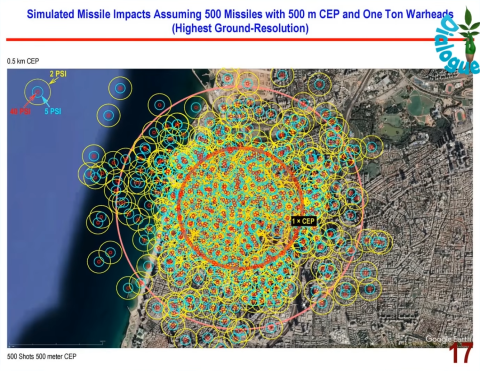
Prof. Ted Postol: US–Iran War? Israel’s Fatal Gamble
or go to
Aletho News Archives – Video-Images
In Memoriam
James Petras, In Memoriam
02.13.2026
 Professor James Petras, 89, world-renowned sociologist, public intellectual, and scholar of Latin American politics and global economics, died peacefully on January 17, 2026, in Seattle, WA, surrounded by family. A prolific scholar and activist, he devoted his life to challenging power, imperialism, and inequality. … continue
Blog Roll
 Aletho News
- Friedrich Merz’s Push to End Online Anonymity Has a Troubling Subtext
- Macron: French citizens fighting for Israel cannot be labeled ‘genociders’
- US eyes Gaza security force drawn from armed gangs
- The Only Motive Behind The ‘Imminent’ U.S. War With Iran Is The Zionist Lobby
- Trump eyes 350-acre US military base housing 5,000 troops in Gaza
- Israel Pushing US Toward a Big and Damaging War With Iran – Ex-Pentagon Analyst
- Meet The Liberal Zionist And Ukraine War Supporter Advising AOC On Foreign Policy
- Buck Dancing for Zion: Kenya’s and Nigeria’s Growing Love Affair With Israel
- Israel installed, oversaw security system at Barak-Epstein residence in New York: Report
- ‘Britain’s Index of Repression’ documents 964 incidents of anti-Palestinian crackdown
- If Americans Knew
- Tucker Carlson interrogated in Israel, has passport seized after interviewing US ambassador
- 6,000 Amputees in Gaza Face Impossible Recovery amid Israeli War Ultimatum
- The Lancet: Gaza death toll far higher than reported – Not a ceasefire Day 132
- Compliant aid: Who are the Israel-approved NGOs scaling up in Gaza?
- Why won’t Trump’s “Board of Peace” bring peace? – Not a ceasefire Day 131
- Help end the injustice against Shadi
- Israel’s Favorite American President
- Israel’s “Yellow Line” Is a Death Trap for Palestinians. We Drove Into It.
- Why Israel’s expanding occupation in Syria presents a critical legal test
- Gaza is not a natural disaster. It is the victim of genocide enabled by global inaction
- No Tricks Zone
- Coal Power Back In Trend As Globe Tries To Keep Pace With Growing Demand For Power
- New Study: A 4°C Warmer Beaufort Sea Had ‘No Sea Ice’ 11,700 – 8200 Years Ago
- Unfudging The Data: Dutch Meteorological Institute Reinstates Early 20th Centruy Heat Waves It Had Erased Earlier
- German Gas Crisis…Chancellor Merz Allegedly Bans Gas Debate Ahead of Elections!
- Pollen Reconstructions Show The Last Glacial’s Warming Events Were Global, 10x Greater Than Modern
- Germany’s Natural Gas Storage Level Dwindles To Just 28%… Increasingly Critical
- New Study Rebuts The Assumption That Anthropogenic CO2 Molecules Have ‘Special’ Properties
- Climate Scientist Who Predicted End Of “Heavy Frost And Snow” Now Refuses Media Inquiries
- Polar Bear Numbers Rising And Health Improving In Areas With The Most Rapid Sea Ice Decline
- One Reason Only For Germany’s Heating Gas Crisis: Its Hardcore-Dumbass Energy Policy
 Aletho News