Gaza Testimonies; Destruction in Al-Maghazi Camp
Al-Haq | January 22, 2024
“The entire Al-Maghazi Camp is destroyed. No homes are left, no column left. The corpses are thrown around on the ground in front of us.”
MEMO | February 15, 2024
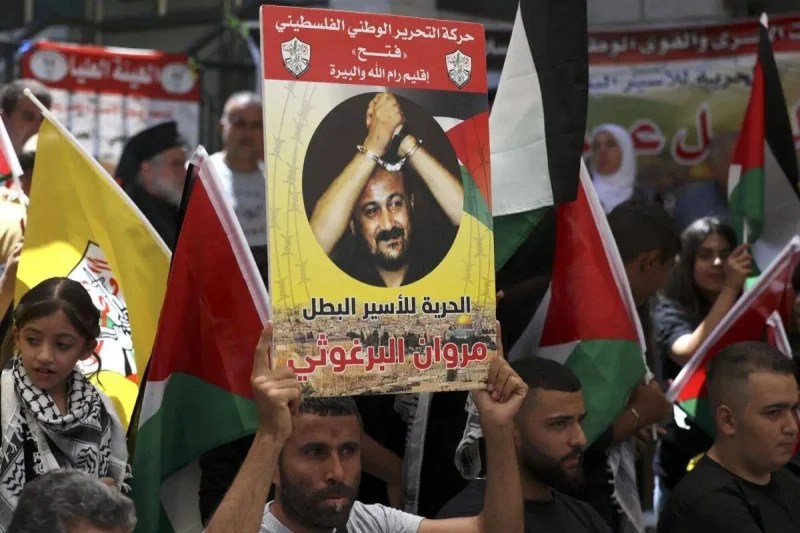
Israel’s Channel 13 reported yesterday that the occupation’s prison administration transferred prominent Fatah leader, prisoner Marwan Barghouti, to solitary confinement.
It said that the prison administration “took measures against Barghouti claiming he is pushing for escalating resistance in the West Bank.”
It explained that “Barghouti was transferred from Ofer Prison to solitary confinement in another prison,” without specifying which prison, after the prison administration “received information that Barghouti is encouraging the escalation of acts of resistance against the occupation in the West Bank.”
The occupation authorities claimed that “Barghouti is working through several channels to break out a Third Intifada in the West Bank, due to the continued Israeli aggression on the Gaza Strip.”
Barghouti is a prominent politician and leader in the Fatah movement. He participated in the First Intifada in 1987 and was one of the most prominent faces of the Second Intifada in 2000. He was arrested and exiled on several occasions and was subjected to failed Israeli assassination attempts. He has been sentenced to five life sentences and has been held in detention since 2002.
In spite of his incarceration he has a large following and numerous polls show that, should Palestinian elections be held, he would likely be chosen president of the Palestinian Authority (PA).
The Cradle | February 14, 2024
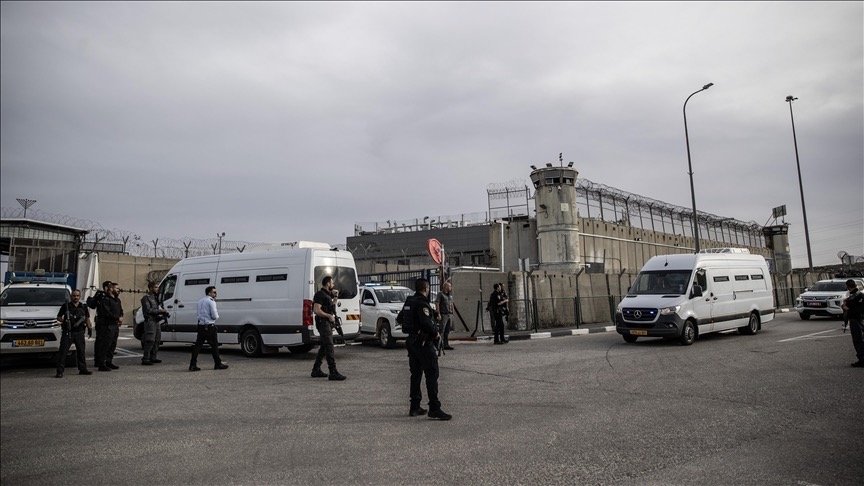
The number of Israeli arrests in the West Bank since 7 October has risen to around 7,020, multiple institutions concerned with the rights of detained Palestinians reported on 13 February.
According to the human rights groups, 18 arrests were made in the West Bank overnight, including two women from Jericho alongside other children and former prisoners.
Overnight arrests made by the Israeli forces were mainly carried out in Hebron and Qalqiliya, while other arrests were made across Jericho, Nablus, Jerusalem, and Ramallah.
The Ministry of Detainees and Ex-Detainees Affairs, the Palestinian Prisoners Society (PPS), and the Addameer Prisoner Care and Human Rights Association released a joint statement revealing that the total number of arrests – including individuals from the 1948 territories – amounted to approximately 220 women and 440 children.
The number reported includes those arrested in their homes, at military checkpoints, those taken hostage, and those forced to surrender under pressure.
The statement added that 53 journalists had been detained since 7 October – 36 of whom remain imprisoned – with 21 others under administrative detention without charge or trial.
The detention campaigns are accompanied by escalating instances of abuse, beatings, and threats against the detainees and their family members. This includes the destruction of homes as well as the confiscation of vehicles, money, and jewelry.
They also reported executions targeting members of detainees’ families.
The data given by the prisoner rights groups does not include those arrested from Gaza due to Israel’s refusal to disclose such information.
The total number of Palestinians detained in Israeli prisons is estimated to exceed 9,000 individuals. Among them, there are 3,484 administrative detainees and 606 individuals classified as “illegal fighters” from Gaza.
Palestine Information Center – February 6, 2024
GENEVA – New testimonies received by Euro-Med Human Right Monitor from recently released Palestinian detainees from the Gaza Strip, including women and children, have revealed their exposure to torture and ill-treatment by the Israeli occupation army.
Euro-Med Monitor cited revelations of crimes such as forced nudity, sexual harassment, and threats of sexual torture, and called for urgent international action to stop these violations.
“Testimonies from a group of recently released detainees who spent varying lengths of time in Israeli jails and detention centers were provided to the Euro-Med Monitor team. These individuals confirmed that they were subjected to severe beatings, dog attacks, strip searches, and denial of food and bathroom access, among other cruel practices that amount to torture.”
The most disturbing testimonies Euro-Med received concern female detainees who were directly sexually harassed.
Euro-Med quoted those female detainees, who preferred to remain unidentified due to safety concerns, as saying that “Israeli soldiers had harassed them by touching their genitals as well as making them remove their headscarves.”
Additionally, Euro-Med confirmed that “the soldiers forced the female detainees and their families into providing information about others by threatening to indecently assault and even rape them.”
A 70-year-old man who requested anonymity spoke with a Euro-Med team as well. “[Israeli soldiers] took me from my house in the neighborhood of Al-Amal in Khan Yunis,” the man, identified only as “M.N,” stated. “I told them that I was sick and could not move, but they did not care. They forced me to take off my clothes. They took me to a demolished house; I had the impression that I was used as a human shield.”
M.N. explained that the Israeli soldiers made more arrests later on and “led us to a detention facility that was nothing more than an iron cage for severe torture”. He spent 10 days confined to the prison.
“We were subjected to daily insults and beatings,” M.N. added. “We went four days without drinking [anything]. They poured water on the ground in front of us as a form of torture. We were made to sit on our knees, given little food, and only allowed to use the restroom once.”
“They asked us to evacuate, so I left with my family west of Khan Yunis,” reported another man, identified only as “K.H.N.” due to safety concerns. “[Israeli soldiers] arrested me at the checkpoint and forced me to take off my clothes. I was severely beaten. Blankets soaked with water were draped over us. We did not drink any water and were abnormally cold.”
K.H.N. stated that the Israeli army “later transferred us to another place, where we were subjected to another form of torture. Every new place had a unique method of torture. I was struck in the head by an officer, who continued to hit me after I complained.” The severe cold prevented him from falling asleep, he told Euro-Med.
“They arrested me from Beit Lahia, and forced me to completely undress,” a third man, identified as “M.W.”, told Euro-Med. “They detained me in an open area and severely beat me; I felt their hands scour my body. After severely beating me with rugs and rifle butts, they hung me by my legs. I was exposed to severe beatings for 4 to 6 hours [per day].”
He added: “They threatened to rape my family, and asked for information that I did not know. They forced us to insult certain factions and personalities, to support Israel, and to say that the dog that was attacking us was ‘a crown on our heads.’”
“They arrested me at the checkpoint on Salah al-Din Road,” a woman, identified as “G” told Euro-Med. “They asked me to head to a sand berm, where they blindfolded me, searched me with their hands, and asked me about Hamas and the tunnels.”
“Then they moved me to an open area, then [transferred] me to a detention center, where I was forced to take off my clothes,” G said further. “They provided me with nothing but [house clothes] and no underwear.”
The woman told Euro-Med that she was questioned multiple times while in custody. “Every time I was stripped nude, with the female soldiers putting their hands on me, while male soldiers occasionally made rude comments, harsh insults that I cannot [repeat], and rape threats.”
According to Euro-Med, a recent report by Israel’s own media on the detention center housing Palestinians from the Gaza Strip shows that Israel practices systematic torture, in violation of human rights agreements that were explicitly designed and implemented to prevent torture. The report shows detainees being shackled and forced to sit on the ground in iron animal-like cages — in accordance to Israeli defense minister Yoav Gallant’s October 2023 remarks that the Palestinians in Gaza are “human animals.”
Euro-Med accused the Israeli occupation forces of forcibly hiding Palestinian detainees and subjecting them to brutal violence and even severe torture from the very first moment of their arrest right up until the moment of release.
Euro-Med also accused the Israeli occupation authority of refusing requests from multiple human rights groups, including Israeli ones, seeking information about Gazan detainees.
“Detainees from the Gaza Strip are being held in newly-established Israeli army detention facilities scattered throughout the Negev and Jerusalem, where they endure severe abuse, torture, and starvation,” Euro-Med said.
Euro-Med pointed out that the number of detainees from Gaza is not known accurately. “The Israeli army recently claimed that there are 2,300 detainees in Gaza; however, estimates based on the testimonies of those released suggest that the actual number of detainees is much higher. One detainee said that Israeli officers had personally informed them that there are thousands of Gazan detainees.”
“Israel’s Sde Teman army camp, located between Beersheba and Gaza, has been turned into a Guantánamo-like prison,” Euro-Med said. “Detainees there are held in extreme conditions akin to open-air chicken cages, without access to food or drink for long periods of time.
Euro-Med highlighted testimonies it had received about the death of two detainees, one of them with an amputated foot, inside the Sde Teman camp.
Euro-Med called on Israel “to promptly reveal the names, whereabouts, and fate of all forcibly disappeared detainees, and to immediately stop its policy of torture and ill-treatment of Palestinian detainees.”
Euro-Med emphasized that “Israel’s ruthless assaults on Palestinian detainees, which violate their dignity and purposefully cause them great pain and suffering, are tantamount to crimes against humanity and/or torture, which fall under the purview of war crimes and crimes against humanity as defined by the Rome Statute of the International Criminal Court.”
Euro-Med stated that “these breaches are related to Israel’s ongoing genocide in the Gaza Strip, which began on October 7, 2023. Specifically, the killing of Palestinian detainees inside detention centers is considered to be a crime of premeditated murder and an extrajudicial execution. This type of killing is prohibited by international law, especially international human rights law, international humanitarian law, and international criminal law, which considers intentionally killing civilians a war crime, according to the Rome Statute.”
“International law also prohibits arbitrary arrest and unlawful imprisonment, and considers them to be war crimes,” Euro-Med noted. “International law forbids detaining and arresting someone and depriving them of their freedom by failing to provide any information about their whereabouts or fate in an effort to deny them legal protection for an extended period of time. According to the Rome Statute, enforced disappearance is considered a crime against humanity.”
The Geneva-based rights group called on the International Committee of the Red Cross to shoulder its responsibilities and work on confirming and exposing the detention conditions of Palestinian detainees in Israeli detention camps and jails.
Euro-Med also called on the Special Rapporteur on Torture and Other Cruel, Inhuman or Degrading Treatment or Punishment, and the Working Group on Arbitrary Detention to launch an urgent and impartial investigation into Israel’s egregious violations in Gaza. “This investigation is needed to probe the Israeli army’s liquidation of Palestinian civilians after their arrest in different areas of the Gaza Strip, to hold those responsible accountable, and to provide justice to all survivors as well as the families of victims.”
Press TV – February 1, 2024
Palestinians from Khan Younis kept by Israeli troops and released in Rafah after weeks have recounted their suffering due to inhuman treatment and abuse at the hands of the regime’s jailers.
The Palestinians displayed their injuries at a hospital in Rafah on Thursday. They suffered as a result of beatings by the Israeli forces.
The Palestinians were held without any charge. Arbitrary detention is used by Israel as a tool to persecute the Palestinians.
The Gaza crossings authority said 114 people, including four women, were released through the Kerem Shalom crossing on Thursday.
Khaled al-Nabrisse, 48, a resident of southern Khan Younis, was hit in the neck. He was wearing a neck brace. Palestinians have been “tortured relentlessly,” he said. “During the first 72 hours, drinking, eating or using the restroom was banned, and we were handcuffed and blindfolded,” Nabrisse said.
“The situation was really tough and we suffered torture like we never saw before.”
Nabrisse said the regime’s troops also used dogs to intimidate them.
Gaza’s Health Ministry said the released Palestinians included Mohammed al-Ran, head of the surgery department at the Indonesian Hospital in northern Gaza. Ran was taken by the Israeli military when they stormed the hospital two months ago, the ministry said.
Abu Khamis, from the Bureij refugee camp, said he had to undergo “torture, hits and insults” while he was held by the Israeli military. “As you see, these (wounds) happened in prison. My hands were hurt and are going to be treated,” said the 50-year-old, with a blanket around his shoulders.
Another person released on Thursday was lying on a trolley struggling to even lift his head, a black zip tied around one of his wrists.
Harrowing testimonies by the released Palestinians as well as human rights lawyers, and several pieces of video footage illustrate some of the worst forms of torture and ill-treatment by the Israeli forces since October 7.
Similar accounts of torture have already been documented from decades of Israeli hostility across the occupied West Bank.
The United Nations human rights representative in the Palestinian territories told reporters last month of the “horrific” conditions the Palestinians kept by the regime face.
Ajith Sunghay said the Palestinians held by Israel “reported being blindfolded for long periods – some of them for several consecutive days.” Sunghay said he was unable to give an exact figure of the number of the Palestinians the regime is holding but it was “believed to number in the thousands.”
MEMO | January 31, 2024
The Palestinian Prisoners’ Club said the Israeli occupation refuses to disclose any information about detainees taken from Gaza, Quds Press reported.
In a statement issued yesterday, the rights group said the Israeli occupation is carrying out “the crime of enforced disappearance” against Gaza detainees, following a number of military orders and laws specifically enacted for them.
The Israeli Knesset has recently ratified regulations depriving “Gaza detainees” of meeting with a lawyer for another four months.
Images from Gaza show Palestinian men being rounded up from shelters, stripped to their underwear and made to wait in the cold while naked and blindfolded. They are later seen being taken away on trucks to undisclosed locations.
Those who have been released bear signs of torture, exhaustion and malnourishment.
MEMO | January 23, 2024
A MEMO correspondent in Gaza City has reported that eight truck loads of aid arrived in the besieged city today with Palestinians rushing to collect the much needed food, however occupation forces quickly opened fire at them.
“The Israeli occupation allowed the entry of eight truckloads of humanitarian aid, then gave five minutes for starving people to collect them and then opened fire at them. People were forced to flee,” Motasem Dalloul said.
As little aid has trickled into northern Gaza over the past few months, people have been forced to walk long distances to reach the aid trucks and to carry the goods on foot back to their shelters.
The United Nations Office for the Coordination of Humanitarian Affairs (OCHA) said yesterday that Israel has prevented three out of every four humanitarian missions heading to the northern Gaza Strip.
It had earlier warned that since the beginning of 2024, Israel has doubled the restrictions imposed on the arrival of relief missions to the Gaza Strip.
Al-Haq | January 22, 2024
“The entire Al-Maghazi Camp is destroyed. No homes are left, no column left. The corpses are thrown around on the ground in front of us.”
Al-Haq | January 23, 2024
”As we approached the ambulance, we were surprised to see the bodies of people killed near the ambulance. Those killed included our dispatched crew of four paramedics, along with two injured individuals. Six people were killed in this attack.”

By Kyle Anzalone | The Libertarian Institute | January 18, 2024
The Israeli Knesset has approved legislation that allows holding Palestinians deemed security prisoners for up to 180 days without access to a lawyer. Since October 7, Israel has placed thousands of Palestinians in administrative detention.
On Monday, the Israeli Knesset approved a law that extends “the emergency regulations that have allowed Israeli authorities to deny security prisoners, detained since October 7, the option to meet with their lawyers,” Haaretz reports. “The regulation will be valid for an additional three months, and will allow the state to prevent prisoners from meeting with a lawyer for up to 180 days.”
Since October 7, Israel has rounded up thousands of Palestinians in the West Bank and Gaza. The number of Palestinians held in administration detention has increased from around 1,200 to over 3,300 in just three months. A total of 8,600 Palestinians are now in Israeli prisons.
Israel has severely restricted all communications with those in detention. Family members often report even struggling to locate their loved ones after getting arrested by Israeli occupation forces.
Since October 7, Palestinians have been beaten, tortured, and killed in Israeli prisons. National Security Minister Itamar Ben Gvir, a member of the extremist Jewish Power, has significant influence over the conditions of Palestinian prisoners.
Ben Gvir, who has called for disloyal Palestinians to be expelled from Israel, has already degraded the conditions detainees are subject to using over-crowding as an excuse. The Knesset is considering legislation that will give the minister further authority to erode the rights of Palestinian prisoners.
Conditions are horrible for those men indiscriminately rounded up by the Israeli soldiers in Gaza. The Tel Aviv-based +972 Magazine conducted an investigation into the treatment of detained Palestinians and concluded, “systematic abuse and torture by Israeli soldiers against all of the detainees, civilians and combatants alike.”
“According to these testimonies, Israeli soldiers subjected Palestinian detainees to electric shocks, burned their skin with lighters, spat in their mouths, and deprived them of sleep, food, and access to bathrooms until they defecated on themselves.” The outlet added, “Many were tied to a fence for hours, handcuffed, and blindfolded for most of the day. Some testified to having been beaten all over their bodies and having cigarettes extinguished on their necks or backs. Several people are known to have died as a result of being held in these conditions.”
Al-Haq | January 17, 2024
Journalist Dia Al Kahlout was arbitrarily arrested by the #Israeli Occupying Forces from his home in Beit Lahia & detained for 33 days.
Upon his release, family members of others arbitrarily detained desperately try to get information about their loved ones
RT | January 12, 2024
Chilean-American blogger Gonzalo Lira has died in a Ukrainian prison, his family said on Friday.
Lira, 55 at the time of his death, lived in Kharkov and blogged as ‘CoachRedPill,’ but switched to YouTube commentary after the conflict with Russia escalated in February 2022. He was arrested by the Security Service of Ukraine (SBU) last May and accused of “discrediting” the Ukrainian leadership and the military.
“I cannot accept the way my son has died. He was tortured, extorted, incommunicado for 8 months and 11 days and the US Embassy did nothing to help my son. The responsibility of this tragedy is the dictator Zelensky with the concurrence of a senile American President, Joe Biden,” his father Gonzalo Lira Sr. wrote in a note published by The Grayzone.
Lira Sr. also reached out to X host Tucker Carlson, confirming the death of his son in Ukrainian custody. He had spoken to Carlson about the case in early December.
Lira resurfaced from custody in late July with a series of posts on X (formerly Twitter), revealing his torture in jail and attempts by the SBU to extort him for money. He said he was trying to flee to Hungary and seek asylum. “Either I’ll cross the border and make it to safety, or I’ll be disappeared by the Kiev regime,” he wrote, in his last public message.
Two days later, a source confirmed to RT that Lira had been caught and imprisoned by Ukrainian authorities.
According to a handwritten note Lira’s sister received on January 4, provided to the Grayzone by her father, Gonzalo Lira Jr. had severe health problems caused by pneumonia and a collapsed lung, which began in mid-October. Ukrainian prison authorities only acknowledged the issue on December 22, and stated he would undergo surgery.
Following his father’s appearance on Carlson’s show, X owner Elon Musk personally inquired about Lira’s case with both US President Joe Biden and Ukrainian leader Vladimir Zelensky, apparently to no effect.
Lira was a national of both the US and Chile. According to his thread from last July, the Chilean Embassy in Kiev at least tried to help him, while the US mission gave him only “empty bromides.” Lira suggested that this was because Victoria Nuland – currently the acting deputy to Secretary of State Antony Blinken – hated him personally.
By Jacob G. Hornberger | FFF | January 5, 2024
When I read an article yesterday by a man named Edwin Rubis, I sat there, shook my head, and asked myself how any government could do such a thing to anyone.
The reason that Rubis’s article caught my attention is captured in the title of his article: “I’m Serving 40 Years in Federal Prison. Here’s a Glimpse Into My World.” That title intrigued me because I have often wondered what daily life is like for prison inmates. Do they sit around all day reading books? Do they work out? Do they have jobs inside the prison? What type of food do they eat? Are they constantly getting harassed by prison guards? Are they raped or beaten up by other inmates?
That “40 Years” in the title of the article also caught my attention. Imagine: 40 years in jail! As a former criminal-defense attorney, I figured that Rubis had most likely been convicted of a serious federal offense, such as bank robbery or kidnapping, perhaps even felony-murder.
Not so. After describing what his daily life in prison is like, Rubis included a tagline at the bottom of his article that stated that he was serving a 40-year jail sentence for a non-violent marijuana offense.
Yes, you read that right! 40 years! For … a … non-violent .. marijuana … offense.
That’s incredible. After all, we’re not talking Turkey or North Korea. We are talking about the United States.
40 years for a non-violent marijuana offense. Just let that sink in. Not heroin. Not cocaine. Not fentanyl. Not opioids. Just marijuana.
What would motivate any federal judge to issue such a horrific jail sentence for a non-violent marijuana offense? I did some online research but I could not find the name of the federal judge who issued that sentence. But whoever he is, he ought to hang his head in shame. In fact, if he’s still serving as a federal judge, he ought to resign his position and return to practicing law. It would be the right thing to do.
My research did reveal that Rubis was convicted in Houston of distribution of marijuana rather than possession.
Ever since the start of the war on drugs, possession of drugs has been considered less grave than distribution of drugs. But that always has been a ridiculous distinction. Both possession and distribution are entirely peaceful acts. Unless one is growing his own marijuana, in order to possess a drug, one must receive it. So, why should the one who is selling or delivering the drug be treated more harshly than one who receives or possesses the drug?
The purpose of meting out high jail sentences to marijuana distributors is to dissuade people from distributing drugs. If people are deterred from distributing drugs, the argument goes, then people won’t be able to consume or possess them.
How’s that working out for you drug warriors, including you federal judges who are convinced that you have the responsibility of helping “win” the war on drugs? I’m sure that that federal judge who meted out that 40-year jail sentence to Rubis figured that he was doing his part to “win” the war on drugs. That’s certainly what federal judges were doing back when I was practicing law on the U.S. Mexico Border back in the 1970s. It’s one thing for a judge in the 1970s to have such a mindset. But how in the world could later judges — and judges today — have that same mindset? Their obtuseness boggles the mind.
Edwin Rubin began serving his jail sentence in 1998. He’s been in jail for some 25 years. For a non-violent marijuana offense. He is set to be released in 2032.
How in the world can the American people permit this drug-war madness to continue? How many more lives must be destroyed before a nationwide crisis of conscience forces federal officials to bring it to an end?
Al-Haq | January 4, 2024
“If you lift your head, the soldier would hit you with the rifle butt or whatever he has in his hands. They also had knuckle punches to hit you whenever you move. If you move, complain or utter “ouch”, you get tased – forms of torture we have never seen.”
#CeasefireNOW
or go to
Aletho News Archives – Video-Images
The Omission of Israeli Terrorism in the Occupied Palestinian Territories
By Karin Brothers | Global Research | December 6, 2014
… The Israeli settlements — all of which are illegal – have been identified as a major impediment to peace. The refusal of a major “global” terrorism report to name the Israeli settlers as one of the groups most responsible for terrorism not only misrepresents a major source of regional violence but exposes the Global Terrorism Index as a propaganda tool that supports a U.S. agenda.
In recent years, governments have been attempting to thwart terrorism by blocking supportive fund-raising. When it comes to Israeli settlements, however, the US and Canada actually encourage fund-raising by giving organizations (such as Christian Friends of Israeli Communities (CFOIC) and the Jewish National Fund) financial support in the form of donor tax-deductions.
Charities which provide funds for the Israeli settlements should be regarded as terror-financing organizations. They should not only lose their tax-deductible status, but they should be banned because they support the violation of international humanitarian law. The terror-financing laws that are being strictly enforced for Muslim charities should be applied to Christian and Jewish charities as well. … Read full article
 Aletho News If Americans Knew No Tricks Zone
 Aletho News