Autopsy shows Palestinian youth burnt alive
By Chris Carlson | International Middle East Media Center | July 5, 2014
Initial autopsy reports reveal that 16-year-old Muhammad Hussein Abu Khdeir, was still breathing when he was burnt after being assaulted by his Israeli kidnappers.
 General Palestinian Prosecutor, Mohammad Abul-Ghani al-Oweiwy, attended the West Bank autopsy after body was handed over to a medical team.
Forensic studies found chars in the lungs, indicating that Muhammad was still breathing while he was being burned, according to WAFA. 90% of the child’s body was burned, varying from 1st to 4th degree in severity.
The child was also beaten on the head, as signs of beating and concussion were clear.
The Palestinian Forensic Center has taken samples and tissues from the body, to be submitted for further analysis before a final detailed report can be revealed, according to Arabs48.
16-year-old Muhammad Hussein Abu Khdeir was abducted from outside his home, in the Shu’fat district of occupied East Jerusalem, by a group of Israelis who forced him into a car and sped off.
The teen’s burned body was found hours later in a vacant lot in another part of the city, sparking protests in his home neighborhood which are ongoing at the time of this report.
Over 200 Palestinians have been injured by Israeli army fire in ongoing clashes with Israeli soldiers, in different parts of occupied Jerusalem and nearby towns, following the abduction.
His funeral was held Friday, amidst further clashes with Israeli forces.
Understanding Israel’s Actions
By MAHMOUD ABU RAHMA | CounterPunch | July 4, 2014
It is essential that US citizens understand that this conflict should not continue to be viewed as a symmetrical one anymore. When they do not hear about it, there are vicious violations of international law against Palestinians every day; including closures/blockades, settlement activities (population transfer on account of our land and natural resources), displacement, killings, detention and torture.
We were all occupied by the developments in the past few days, and shocked to find out about killings. The Israeli government kept from us all that the three settler teenagers were killed from the first day because they wanted to carry out a large military operation in the occupied Palestinian territory. This operation saw hundreds of Palestinians arrested, tortured, killed and injured. Dozens of attacks were also directed at the besieged Gaza Strip. Incitement to violence and hatred went very high.
Since 12 June 2014, the day the teenage settlers went missing, Israel declared that its operation had two aims: find them and put pressure on Hamas and the Palestinian Authority to abandon a recent unity agreement and return to full separation between Gaza and the West Bank. Now we know that the Israeli government knew they were killed from the first day; however, the operation to destroy Palestinian unity and reinstate separation is ongoing. Separation and isolation, if successful, will allow Israel to annex large areas in the West Bank and divide Palestinians to keep them under control by military force; as opposed to a peace agreement that would end the occupation of the territory captured by Israel in 1967. This is a typical case of using violence to achieve political; not security, gains. In doing so, Israel has violated the human rights of Palestinian civilians in many ways, and has created an environment that allowed for kidnapping, murdering, and running over of Palestinian children by Jewish settlers in the West Bank.
Americans need to understand this situation. This conflict has not started on 12 June this year, but decades ago. The occupation of oPt [occupied Palestinian territories] in the manner Israel is doing it has been, and will continue to be, the reason behind such tragedies. They should expect to hear about more serious violations of human rights and international law, and they will hear all the security justifications for them. I hope they understand that buying such justifications will only help such violations to continue as Israel pursues fragmenting and destroying the Palestinian people for political reasons.
Mahmoud AbuRahma is communications and international relations director for the Al Mezan Centre for Human Rights in Gaza.
Israeli Police Beat 15-year-old Palestinian-American Cousin of Teen Murdered on Wednesday
IMEMC | July 4, 2014
 A Palestinian teenager identified by local sources as the cousin of the 16-year-old who was murdered on Wednesday was beaten and abducted by Israeli police on Thursday, and was refused medical treatment for his broken nose and other injuries while in custody.
The Palestinian Red Crescent Society has reported that over 170 Palestinians have been injured since Monday, when the bodies of three Israeli teenagers who had gone missing two weeks earlier were found.
15-year old Tariq was allegedly participating in one of several protests that took place in Shu’fat and nearby areas after Muhammad Abu Khdeir, 16, was abducted by Israelis, according to eyewitnesses, and later found burned to death on Wednesday.
Hundreds of Palestinians took part in the protests, which were met with tear gas, rubber-coated steel bullets and concussion grenades. At least three incidents have been reported of Israeli police and military using live ammunition against the demonstrators. Of the 170 injured since Monday, at least six are journalists.
Since his death Wednesday, the family of Muhammed Abu Khdeir has faced interrogations, DNA tests and a misinformation campaign started by the Israeli police to claim, based on no evidence, that the boy was killed in a family dispute — in addition to the Israeli police refusing to look at surveillance video showing the assailants, which would normally be a major part of an investigation.
The attack on the 15-year-old appears to be the latest affront to a family that is mourning the brutal death of a child. Tariq is a Palestinian-American who was staying with family in Jerusalem when he was beaten and abducted by Israeli police. The full extent of his injuries are still unknown.
Israeli forces attack mosque in village near Salfit, detaining and beating a child
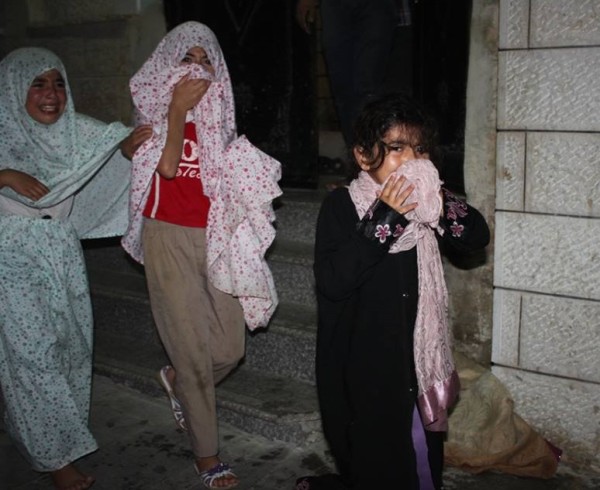
Photo by a villager from Qarawat Bani Hassan
International Solidarity Movement | July 3, 2014
Qarawat Bani Hassan, Occupied Palestine – At 9 o’clock in the evening of July 2nd, Israeli forces invaded the small Palestinian village of Qarawat Bani Hassan, approximately 10 km northwest of Salfit in the northern half of the West Bank.
They approached the mosque in the center of town and fired tear gas and stun grenades inside. One witness described the scene as follows:
“There were maybe 500 people inside the mosque – many old men, women and children. The tear gas was horrible. It was difficult to breathe. The sound bombs were terrifying, and the children were so afraid.”
The motives of the soldiers remain mystifying, since the streets surrounding the mosque had been empty before the attack. “They just come here to make problems,” suggested one witness.
The occupants of the mosque escaped the tear gas, and clashes ensued on the nearby streets. Qasaam Mareh, a fourteen year old boy, was detained by the soldiers. According to witnesses, they interrogated and beat him, before they took him away in a jeep. Qasaam was held for approximately eighteen hours before finally being released the next day.
Drone memo should reverse Gitmo convictions, attorneys claim
RT | July 3, 2014
Attorneys for a Canadian man who spent a decade detained by the United States military at Guantanamo Bay say details in the Obama administration’s recently released “drone memo” exonerates their client of war crimes.
Omar Khadr was only 15 years old when he was captured by American forces in Afghanistan in 2002 and taken to the Bagram Air Base, then Guantanamo, where he later pleaded guilty to murder in violation of the laws of war — according to military prosecutors, Khadr tossed a grenade that killed Sgt. Christopher Speer.
After being transferred to Canadian custody in 2012, Khadr said he pleaded guilty to war crimes because he was “left with a hopeless choice” of either accepting the charges or risk facing “continued abuse and torture” at the hands of his Gitmo jailers.
But in a recent court filing [PDF], lawyers for Khadr, now 27, say a just-published US Department of Justice memorandum contains information that directly challenges the American government’s case against their client.
Khadr’s attorneys wrote this week that the secret “drone memo” released by the White House last month — the DOJ document that the government relied on to justify the 2010 drone strike in Yemen that killed American citizen and suspected AL-Qaeda member Anwar Al-Awlaki — suggests prosecutors had no place to charge the Canadian teenager with murder in violation of the laws of war after he allegedly killed an American soldier during a firefight in Afghanistan.
The DOJ memo itself was a penned by the department’s Office of Legal Counsel in response to the question of whether Central Intelligence Agency officers — who are not members of the US military — can be blamed for war crimes by launching drone strikes. The memo was written in July 2010, and justified the strike that later that year killed Al-Awlaki.
According to a footnote within the memo, released June 24 of this year due to a Freedom of Information Act lawsuit, “lethal activities conducted in accordance with the laws of war, and undertaken in the course of lawfully authorized hostilities, do not violate the laws of war by virtue of the fact that they are carried out in part by government actors who are not entitled to the combatant’s privilege.”
“That completely blows away one of the major prongs of the government’s theory in all these Guantanamo cases,” Sam Morison, Khadr’s Pentagon-based lawyer, told The Canadian Press during an interview on Wednesday this week.
Although Khadr was charged with violating the “US common law of war” that dates back centuries, his attorneys say the memo concerning CIA drone strikes suggest such legislation simply doesn’t exist.
“The whole purpose…was to evaluate whether the CIA agents were violating the law,” Morison said. “The only reasonable interpretation of that analysis is that there is no such thing (as the common law of war).”
On Monday this week, Morrison and the rest of Khadr’s legal counsel, filed a motion in Guantanamo’s appeals court asking that the conviction against their client be vacated.
“The Americans made up serious charges that they knew were false,” Dennis Edney, a Canadian based lawyer for Khadr, told the Toronto Star this week. “It’s a complete violation of everything we understand about justice.”
Should Khadr’s attorneys succeed, then a number of cases pertaining to current or former Guantanamo detainees accused of war crimes could be called into question. According to Human Rights Watch, however, only six of the 149 detainees at Gitmo face any formal charges — fewer than the number of prisoners who have died while held there in military custody.
Israeli Air Force Carries Out 34 Air Strikes Against Gaza Amidst Threats of ‘Vengeance’
By Saed Bannoura | IMEMC News | July 1, 2014
 The Israeli Air Force carried out, on Tuesday before dawn, at least 34 air strikes targeting different areas of the Gaza Strip, causing excessive property damage, and at least four injuries.
The WAFA news agency has reported that Israeli F-16 fighter jets fired missiles into different areas of the Gaza Strip, mainly in agricultural and open areas, in addition to several homes and civilian property.
WAFA reported that the army bombarded Gaza, Rafah, Khan Younis, the Central District and the Northern District of the besieged coastal region, adding that Israeli navy ships also participated in the attacks.
Local sources said dozens of Israeli drones remained in the Gaza skies all night, while Israeli helicopters also continue to fly over the Gaza Strip, firing rounds of live ammunition.
Medical sources said Israeli missiles struck agricultural greenhouses seriously wounding four Palestinians, in Khan Younis and Rafah, in southern Gaza.
The four, who worked as guards at the greenhouses, have been moved to Nasser Hospital in Khan Younis facing life-threatening conditions.
Israeli officials confirmed the strikes against Gaza, and said that resistance groups also fired shells into Israeli areas across the border.
The Israeli Prime Minister, Benjamin Netanyahu, said that Hamas would pay the price for the death of the three Israeli settlers, who were found dead, Monday, near the southern West Bank city of Hebron, after eighteen days of searches and invasions by the Israeli army.
On his Twitter account, the Israeli Prime Minister posted, “Vengeance for the blood of a small child, Satan has not yet created. Neither has vengeance for the blood of 3 pure youths who were on their way home to their parents who will not see them anymore. Hamas is responsible and Hamas will pay.”
The Israeli army has killed five Palestinians since the settlers went missing 18 days ago, and dozens have been injured by Israeli army fire. In addition, close to 300 Palestinians have been kidnapped and imprisoned in the 18-day period. Since the bodies were discovered Monday, Israeli attacks, invasions and threats have increased significantly, so these numbers have likely increased in the last 24 hours.
Despite the threats and calls for vengeance, the Israeli government has released no information linking Hamas or any Palestinian groups or individuals to the deaths of the three settlers.
Israeli forces blow up homes of Palestinian suspects’ families
Ma’an – 01/07/2014
HEBRON – Israeli forces in Hebron late Monday blew up the homes of two Palestinians Israel says are prime suspects in the kidnapping and killing of three teens who were found dead earlier that evening, witnesses said.
The two houses, which are both located in the same neighborhood in northwest Hebron, belong to the families of Marwan al-Qawasmeh, 29, and Amer Abu Eisha, 33.
After Israeli forces in Halhul north of Hebron found three bodies presumed to be those of three Israeli teens who went missing on June 12, soldiers surrounded the houses, forcibly removed the families, and declared the area a closed military zone, locals said.
Witnesses said the homes were then blown up by explosives.
Locals had told Ma’an earlier that soldiers were preparing to demolish the homes.
An Israeli army spokeswoman said that the homes “were not demolished,” but said Israeli forces searched the houses late Monday.
Military sources told Ma’an that soldiers used explosives to break down the doors of the houses, and that a fire caused by the one of the explosions “got a little out of control.”
Video footage, not independently verified by Ma’an, emerged showing an explosion in the Abu Eisha home as Israeli forces were stationed nearby.
Meanwhile, Palestinians clashed with Israeli forces, hurling empty bottles and stones at soldiers, who fired tear gas and stun grenades, locals said.
Entrances to Halhul and Hebron were shut down, witnesses added.
Israeli forces have killed six Palestinians in the West Bank military operation that followed the disappearance of three Israeli teenagers from the Gush Etzion settlement on June 12.
The Israeli army said on Thursday that it was still searching for Abu Eisha and al-Qawasmeh.
Abu Eisha’s family has denied the allegations.
Palestinian-American activist held without charges in Jordan
Amer Jubran Defense Campaign | June 29, 2014
We received word this weekend that Amer Jubran was finally granted a visit by family at the General Intelligence Directorate detention facility near Amman, Jordan this past Friday–seven weeks after he was arrested. He appeared to be in good health and his spirit remains strong.
While this news comes as a relief, we are gravely concerned that Amer continues to be detained without charges, in violation both of Jordanian law and of international standards of human rights.
Amer’s detention is a political silencing. It is taking place in the context of new “anti-terrorism” legislation passed in Jordan on June 1, 2014 that criminalizes new categories of speech. According to the human rights organization Alkarama:
“Criticizing or caricaturing a foreign leader, or more generally a policy of a third country, also falls under the definition of terrorism. Thus, any person that has ‘disturbed relations with a foreign country’ can be prosecuted. … More importantly, if an act is qualified as an act of terrorism, authorities can then bring perpetrators of the real or supposed violations, before the State Security Court, an extraordinary jurisdiction. This court lacks independence as it is directly linked to the executive branch, and its members, including one military, are appointed by the Prime Minister.”
Such legislation is designed to protect the interests of US and Israeli political domination, and not the interests of the people of Jordan and the surrounding Arab region.
The Case of Amer Jubran
 Amer is a Palestinian political activist who opposed the warmaking policies of the United States and Israel during his 18 year residence in the United States. Shortly after September 2001 he was harassed by US authorities, detained, and finally pushed out of the country. He returned to Jordan, his first country of exile, in 2004. This latest arrest is a continuation of the political repression Amer experienced in the United States.
We do not know if Israel or the US ordered Amer’s arrest, but it is clear that his detention is aimed at silencing a strong voice of dissent against their policies.
We call on all supporters to remain committed to the campaign to win Amer’s freedom. We will be sending out more information soon about next steps.
Israeli forces invade Awarta, ransacking teacher’s home
International Solidarity Movement | June 28, 2014
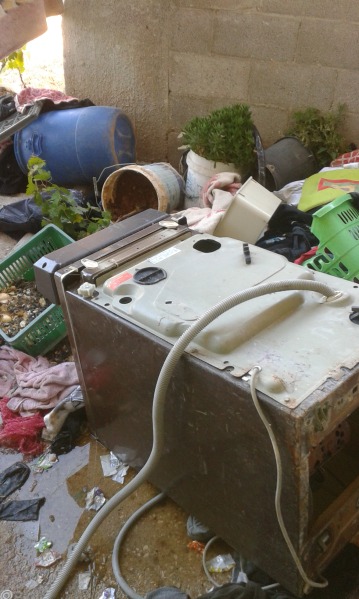 Awarta, Occupied Palestine – During the early morning hours of June 26, the Israeli army invaded the village of Awarta, 8 km south of Nablus in the northern part of the West Bank. According to witnesses, between 150 and 200 soldiers entered Awarta just after midnight and raided approximately 300 houses before leaving several hours later.
Some residents mentioned that the soldiers knocked on their doors and asked for identification, however this was not the case for Mahmud Awad, a local schoolteacher, and his family.
At midnight approximately 15 soldiers entered Awad’s home and demanded that Awad show them the location of his guns. Were he not to obey, he could be confident that the house would be destroyed. Awad replied that Israeli soldiers had already been to his house many times and had never found anything. He had no guns, he assured them.
The soldiers blindfolded and handcuffed Awad’s 20-year-old son and took him outside for an interrogation that lasted three hours. They herded the rest of the family, which included an eight-month old baby and several other children, into the living room. Again they asked Awad about his guns.
“Watch what we will do if you don’t give them to us!” An Israeli soldier yelled.
The children listened in terror as the soldiers proceeded to ransack the house. They ripped apart sofas and chairs, threw the contents of shelves on the floor, knocked over electrical appliances, destroyed two computers, and slashed the family’s water tank on the roof. Awad begged the soldiers to allow the baby a drink, but this request was denied.
Sometime during the night, Awad’s 13-year-old son was taken outside the living room and interrogated for half an hour. A soldier held his rifle to the boy’s face and demanded the location of the guns. He held a piece of cloth (chloroform, a family member assumed) to the boy’s mouth until he became dizzy.
The soldiers finished searching the house, having found no weapons. They released both of Awad’s sons and left the house at approximately 4 a.m.
Israel has killed 104 Palestinian prisoners in last two decades
MEMO | June 28, 2014
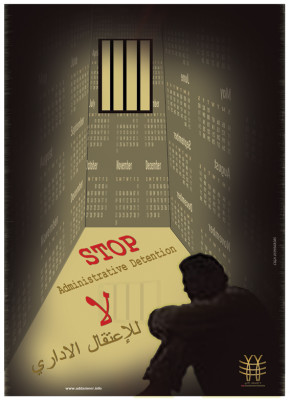 Prisoner support and human rights organisation, Addameer, has said that the Israeli occupation has killed 104 Palestinian prisoners since 1991, when it joined the UN convention against torture.
The organisation said that 54 of them died after being arrested, 27 died because of poor medical treatment and 23 were tortured to death. The last was Arafat Jaradat, who died in February 2013 under torture after a week of his arrest.
Addameer also said that it documented eight extra judicial killings against Palestinians while Israeli occupation forces were combing Palestinian villages and refugee camps in 2013. It also said that five were killed in the on-going campaign, which started on 12 June to find three missing settlers.
In addition, it said that the prisoners are exposed to different kinds of physical and psychological torture, including sexual violence, solitary confinement, ban of sleeping and food for long periods and preventing them meeting with lawyers for 60 days.
Israeli occupation authorities, Addameer said, are violating the fourth Geneva Convention as they are practicing “collective vengeful” punishment against Palestinian civilians under the pretext of searching for the three missing settlers.
Regarding violations of the right for prisoners to go on hunger strike, the organisation said that the Israeli ratification of the force-feeding bill violates international law and international humanitarian law. It also said that Israeli administrative detention is a violation of article 78 of the Geneva Convention.
The organisation said that Israel had ignored the demands to release 130 administrative prisoners, who went on hunger strike for 63 consecutive days. “It has even increased the numbers to 340 as it is carrying out a search mission for the settlers,” the organisation said.
“This is a violation of the Geneva Conventions and mounts to a war crime and war against humanity as it is used widely and systematically,” it said. “It is a kind of torture.”
Israeli forces invade Madama
International Solidarity Movement | June 25, 2014
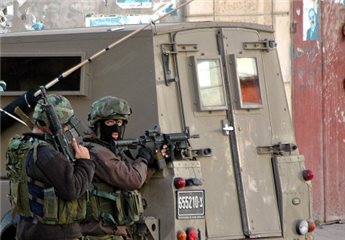
Madama, Occupied Palestine – At 12:30 a.m. on June 22, 2014, approximately 50 Israeli soldiers invaded the village of Madama.
Madama, which is located 10 km southwest of Nablus, in the northern part of the West Bank, has approximately 2000 residents. The soldiers raided close to 100 homes and took 80 men to the local elementary school, where they held them for several hours. The men were blindfolded, and their arms were tied behind their backs with handcuffs.
The soldiers released all of the men at 5 a.m.
At 1:00 a.m., the soldiers invaded the house of Nizar Abdullah Sadaq Ziyaada in Madama. They asked Ziyaada about the whereabouts of his money and proceeded to ransack the house. They drilled holes into the walls and threatened to destroy his home. They found a total of roughly 200,000 shekels underneath a cupboard and in various hiding places throughout the house. Finally, the soldiers took all of the money, two laptops, and several mobile phones before leaving.
The reasons for the theft of Ziyaada’s money are unclear.
Ziyaada had worked in Israel until the year 2000 and kept all of his earnings from that time in his house in Madama. It is likely that the Israelis knew about this money, as they asked him about it as soon as they entered his house.
Hany Ziyaada’s house was invaded by 15 Israeli soldiers the same night at 1 a.m. They broke down the door, but Hany asked them to wait a few minutes, so that the women of the house could get dressed. The soldiers swore at him, and he responded in kind. They proceeded to kick him in the back and stomach for several minutes and dragged him to their jeep, where they continued to beat him. They blindfolded and handcuffed him and took him to the school, where they held him by the throat, forced his arms back and drove their knees into his back. At 4 a.m. they allowed him to go home.
“Why do they not respect human rights?,” Hany asked an ISM activist. “I’m a policeman, and I know about human rights. Why don’t they?”
FOIA Request On Effectiveness Of License Plate Readers Greeted With A Blank Stare By Virginia Police Department
By Tim Cushing | Techdirt | June 23, 2014
Law enforcement agencies are generally pretty happy with their automatic license plate readers. It allows them to harvest millions of plate/location records without having to exit their vehicles, much less slow them down. It also allows them to spring from their cruisers with guns out and force non-car thieves into submissive positions while they perform the sort of due diligence that should have been completed long before the cops/guns exited their respective holders.
What they don’t seem to like is anyone asking questions about the massive databases they’re compiling or whether they’ve bothered to institute any minimization/privacy policies. When questioned, they usually talk about what a great tool it is for crime-fighting, even if said tool contains millions of useless photos entirely unrelated to criminal activity. Some even claim that every single photo in the database is integral to ongoing investigations and therefore cannot be subjected to minimization procedures, much less the pesky FOIA requests of surveilled citizens.
And sometimes, these agencies are so sure they like the tech that they can’t even be bothered to determine whether it’s actually doing anything to assist in the business of law enforcement. Stephen Gutowski at the Capitol City Project recently asked the Fairfax County, VA police about the effectiveness of its license plate photo database and got this ‘FILE NOT FOUND’ statement in response.
This letter is in response to your FOIA request in which you requested the number of ALPR records Fairfax County currently has on file. This number is constantly fluctuating, but as of 05/20/2014 at 1003 hours there were 2,731,429 reads in the system.
You further requested any available metric the county uses to determine the system’s effectiveness. It was found that the Fairfax County Police Department does not possess any such responsive materials based on the information you requested.
The assumption here is that the system works. The Fairfax County PD occasionally posts arrests linked to ALPR database hits and… well, beyond that, the PD draws a blank. Presumably a handful of arrests justifies a multi-million image-and-location photo database. But this lack of self-assessment shouldn’t be acceptable, not for an agency that has abused its technology in the past.
It came to light late last year that the Fairfax PD trolled political rallies to grab more plate data, racking up nearly 70,000 photos in five days. This abuse prompted a local lawmaker to push legislation aimed at severely limiting, if not completely eradicating, ALPR readers in his district. Not a bad idea, as far it goes.
Virginia law enforcement agencies aren’t going to be happy with this move and they’ll be able to mobilize a pretty powerful opposition. But these are the same entities that tried to bury info on plate readers back in 2009, simply because they felt the public might try to get the system shut down if they knew what was going on. But the lack of controls or any gauge of the system’s effectiveness shouldn’t be allowed to escape unnoticed, because the failure to monitor error rates and hits can result in catastrophic consequences for citizens whose plates trigger false hits — something this system does at twice the rate of recoveries.
The license plate readers demonstrated a high error rate. Four ALPR vehicles used in Fairfax County over the course of five nights in February 2009 scanned 69,281 vehicles. The camera database produced twelve bogus hits and recovered four stolen vehicles, for a recovery rate of 0.6 percent and an error rate of 1.7 percent.
The technology can be used responsibly, but law enforcement agencies with tough minimization policies are almost nonexistent. And as we’ve seen twice in the last month alone, officers relying on faulty data aren’t making an effort to verify database hits before attempting to effect arrests. Someone’s going to be hurt or killed because of bad data, and hardly anyone in law enforcement seems to be concerned. If they did, strict policies on verification and disposal of non-hit data would be the rule, rather than the exception.
Featured Video

Trita Parsi: Middle East Unraveling — Are We on the Path to World War?
or go to
Aletho News Archives – Video-Images
From the Archives
Why Saudi Ties to 9/11 Mean U.S. Ties to 9/11
By Kevin Ryan | Dig Within | September 27, 2015
Media interest in Saudi Arabian connections to the crimes of 9/11 has centered on calls for the release of the 28 missing pages from the Joint Congressional Inquiry’s report. However, those calls focus on the question of hijacker financing and omit the most interesting links between the 9/11 attacks and Saudi Arabia—links that implicate powerful people in the United States. Here are twenty examples. … continue
Blog Roll
 Aletho News
- Neria Leiter Was A Legitimate Military Target
- Integrity Initiative: UK-funded network framed dissent as Russian disinformation for years
- ‘We don’t seek permission to defend our country’: Snippets from President Pezeshkian’s UNGA address
- NATO chief wants Europeans to fight American wars [for Israel]
- German chemicals giant reveals details of downsizing
- Refaat Al-Areer Was The Canary In The Coal Mine In Israel’s War On The Truth
- Israeli election committee bars candidate from Knesset race over Gaza war opposition
- French-Lebanese man files war crimes complaint over Israeli attacks
- Mahan Air Flight Lands in China Despite US Threat against Iranian Airlines
- US eyes $10bn fund to rebuild war-battered Gulf infrastructure
- If Americans Knew
- Caught on Tape: AIPAC CEO Boasted of Controlling Trump’s National Security Officials
- Why Hamas Attacked Israel in October 2023 – Israeli professor Ilan Pappé
- They see them, then kill them: Israeli quadcopters track, deliberately target civilians in Gaza
- Winter could turn Gaza’s treacherous, war-damaged buildings into deathtraps
- Majority of Democratic Voters Want to Prosecute Both Biden and Trump Administration Officials Over Gaza
- As Gaza languishes, world leaders gather at the UN – Daily Update
- Sanctions are collective punishment: immoral and self-defeating
- Phosphorus Munitions Fired by Israel Burn Groves, Orchards in Southern Lebanon
- Israel Carries Out New Ceasefire Violations Across Gaza
- AI – Emphasis on the ‘I’: Israel Is Funding AI Chatbot Propaganda
- No Tricks Zone
- New Study: Earth And Venus Surface Warmth Largely Explained By Convection And Lapse Rate, Not CO2 Or Radiation
- 2025 Nature Paper Claiming Worsening Global Drought Gets RETRACTED …Heavily Flawed
- New Study: ‘Global Drought Shows No Detectable Recent Acceleration Under Climate Warming’
- Economic Masterminds: German Socialists Suggest Taxing Productivity Gains Stemming From Using AI
- The South China Sea Has Not Been Cooperating With The Climate Change Narrative
- Energy Crisis: Germany Enters Heating Season With Historically Low Gas Reserve Fill Levels
- New Study: The Antarctic Ice Sheet Gained Mass From 2020-2024 Due To Staggering Snow And Ice Accumulation
- Study: Ocean Heating Rates From Thousands Of Years Ago ‘Dwarf’ Modern Ocean Heating Rates
- Climate Extremists Target, Attack Large-Scale Power Grid Infrastructure In Germany!
- New Study: Antarctic Ice Melt Has Contributed Less Than 1 Centimeter To Sea Level Rise In The Last 30 Years

