Release or charge hunger-striking Palestinian detainees now – UN chief to Israel
RT | June 7, 2014
Over 290 Palestinian detainees in Israeli prisons have been on a hunger strike since April protesting their indefinite detention. Now UN’s Ban-Ki moon demands Tel Aviv to either charge administrative inmates or release them “without delay.”
“The Secretary-General is concerned about reports regarding the deteriorating health of Palestinian administrative detainees who have been on hunger strike for over a month,” Ban’s spokesman, Stephane Dujarric, said in a statement.
The UN Secretary-General “reiterates his long-standing position that administrative detainees should be charged or released without delay,” he added.
According to the spokesman, Ban has taken note of the recent concerns issued by different human rights bodies and “has responded, reiterating the United Nations’ well known positions.”
Meanwhile, UN Commissioner for Human Rights Navi Pillay has also expressed her concern over a legislative amendment before the Israeli Knesset to allow force-feeding of the inmates.
The legislation, if passed, “would permit force-feeding and medical treatment of prisoners on hunger strike against their will under certain conditions, in contravention of international standards,” Dujarric added.
On Thursday, members of a UN Special Committee which monitors human rights violations of the Palestinians on the occupied territories called upon Israeli authorities “to heed the demand of the hunger strikers to end the practice of arbitrary administrative detention of Palestinians,” a committee said in a statement.
“It is a desperate plea by these detainees to be afforded a very basic standard of due process: to know what they are accused of and to be able to defend themselves,” the committee said.
According to the UN body, the Israeli government has detained “a large number of Palestinians for reasons not explicitly indicated.”
“Initial administrative detention orders of six-month periods can be renewed an indefinite number of times without producing charges,” the committee said.
The first protests among the Palestinian detainees started April 24, when a group of about 100 prisoners launched a peaceful protest, the UN Special Committee said. The inmates were “inspired” by their months and years in detention in Israel without being charged with any crimes. Now the total number of hunger strikers has reached 290. At least 65 prisoners have been hospitalized as a result of the strike.
According to the UN committee, among the inmates there are currently 11 Palestinian legislators, including eight held under administrative detention.
“Given that there are more than 5,000 Palestinian detainees in Israeli custody, we strongly appeal to the Israeli authorities to allow all Palestinian detainees, especially women and children, to be periodically seen by Palestinian doctors in order to avoid losing more lives,” the Committee said.
Meanwhile, on Wednesday Israeli doctors said they wouldn’t begin force-feeding the detainees, a move that put them on a collision course with Prime Minister Benjamin Netanyahu’s government. Netanyahu reportedly asked the authorities to speed up the bill’s reading, saying that he is confident the force-feeding will eventually be carried out.
The Israeli PM is now citing controversial US policy of force-feeding of detainees at the Guantanamo Bay prison in Cuba, a move that prompted long hunger-strikes among the inmates. The Guantanamo policy has drawn criticism from the United Nations human rights office, which said it constitutes torture and is thus a violation of international law.
Egypt sentences 10 Brotherhood leaders to death

MEMO | June 7, 2014
An Egyptian court on Saturday referred ten Muslim Brotherhood leaders charged with inciting violence to Egypt’s grand mufti, the country’s highest religious authority, to consider possible death sentences against them.
The ten are part of a group of 48 defendants, including Brotherhood Supreme Guide Dr Muhammad Badie, who are standing trial on charges of inciting violence in the Qalioubiya province last year.
The defendants face charges of blocking roads, inciting violence and attacking security forces on July 22 – some three weeks after the ouster of elected president Muhammad Morsi by the military.
Among the defendants referred to mufti – who were all tried in absentia – was senior Brotherhood leader Abdel-Rahman al-Bar, who is known as the Brotherhood mufti.
The same court also set July 5 as a date for issuing a final verdict in the case, the judicial source said.
Among other Brotherhood leaders charged in the same case are senior Brotherhood leader Muhammad Beltagi, former youth minister Osama Yassin, and former supply minister Bassem Ouda.
Members of the Muslim Brotherhood, the movement from which Morsi hails, have been the target of a mounting crackdown since Morsi’s ouster by the army in July last year.
The army-backed interim government late last year designated the Brotherhood as a terrorist organization.
Thousands of Brotherhood members have been arrested on charges of incitement-to-violence and joining a “terrorist” group.
The defendants, however, deny the accusations, which they describe as “politically motivated”.
Omar – Film Review by Gilad Atzmon
The Tragedy of Omar
by Gilad Atzmon | June 6, 2014
One of the most important Palestinian feature films ever, Omar, is the deepest expose of the diabolical nature of the Israeli occupation and the inhuman situation imposed on Palestinians by the Jewish State. It also throws light on the tragic and depressing Palestinian struggle against a sophisticated, demonic enemy — an on-going battle that so far has led nowhere.
In his latest film, Palestinian director Hany Abu Assad sets Omar (Adam Bakri), a young freedom fighter in an impossible, yet common, Palestinian dilemma, caught in a devastating triangle between his patriotic commitment, romance and the omnipresent Jewish State – a brutal, Orwellian, Big Brother that sees everything, knows everything, sets people against each other and controls everything through a network of collaborators even within the resistance.
Once captured by the IDF and being subject to some horrendous physical and mental torture by Israeli intelligence, Omar is set into a hellish scenario. He eventually manages to buy the Israeli’s trust, he lets them believe that he is willing to cooperate. At that moment Omar pretty much seals his fate. He is destined to lose everything.
Though we, comfortable in our cinema seats, know that he never compromised his commitment to his people, one by one, the Palestinians around him, led to believe he is a traitor, they turn their backs on him. Losing the love of his life to his friend — clearly a collaborator — he is ostracised by fellow warriors and their families. Omar, a Palestinian patriot, becomes a pawn in an evil Israeli game. As his situation deteriorates and his tragedy unfolds in front of our eyes, he remains aware of it all, and we, who witness this emerging tragedy, also can see no way out.
Agent Rami (Waleed Zuaiter), the veritable ‘good cop’ is the Israeli intelligence operator who recruits Omar. He appears to be humane, he never uses physical pressure, he also has his own family matters to handle, wife, kid etc’. But all those ‘humane’ symptoms are there to cover a deeply sinister and hideous character. Rami is in fact a cold blood Israeli monster who shatters the lives of others in a mass scale. He systematically makes empathy and human affection into a highly functional instruments of total abuse.
One hardly need to say that Rami, like Omar, is a symbol of his people and indeed, there is a clear cultural and ideological continuum between Rami, Shimon Peres and the entire Jewish Left. I refer here to the deceitful nature embedded in contemporary Jewish political culture, that intention to present empathy and humanism only to conceal a sinister, self-centric agenda that cares only for the members of the tribe.
At the start of this film we meet a young, handsome and joyful, Palestinian patriot who leaps over the gigantic Israeli Wall and who, against all odds, lays claim to his land. Ninety minutes later, the same man is a defeated soul. Physically and mentally tortured, Omar simply can no longer climb the wall and bridge the divide imposed on his people by the Jewish State.
By the end of the film, Omar, like Palestine itself, is a tormented and defeated soul. For him, there is no hope but martyrdom.
“Guantánamo North” – NDAA Indefinite Detention Coming Soon to a Town Near You?
By Chris Anders | ACLU | June 6, 2014
Top senators thought you wouldn’t notice. Behind closed doors, they wrote up new indefinite detention and Guantánamo provisions in the annual defense policy bill, and then waited 11 days to quietly file the bill.
But we now have the bill, and everyone can read it. And everyone should understand what is in this new National Defense Authorization Act (NDAA) before the full Senate makes a big mistake and paves the way for Guantánamo-style indefinite detention being brought to the United States itself.
The new Senate NDAA:
Brings Indefinite Detention to the U.S. Itself: The bill now says that detainees may be brought to the United States for “detention pursuant to the Authorization for Use of Military Force” (AUMF). In plain English, that means the policy of indefinite detention by the military, without charge or trial, could be carried out here at home. Right now, the number of people in the U.S. in military indefinite detention is zero. If the bill is enacted, that number could immediately jump to 100 or more.
Bolsters Claims of NDAA and AUMF Indefinite Detention Authority: The AUMF is the basis for the indefinite detention authority included in the NDAA that Congress passed nearly three years ago. Indefinite detention is wrong today and certainly cannot be sustained past the end of U.S. combat in the Afghan war. But passing a new Senate NDAA that relies on detention authority based on the AUMF, just as the U.S. combat role in the war is winding down, could be used by the government to bolster its claim that indefinite detention can just keep on going. Even when any actual U.S. combat is over.
Requires Report on Even More NDAA and AUMF Indefinite Detention Authority: As if the government didn’t already have enough claims of indefinite detention authority, the Senate NDAA asks the administration to let Congress know what more indefinite detention authority it wants.
Tries to Strip Federal Courts of Ability to Decide Challenges to Harmful Conditions: In a stunning provision, the Senate NDAA tries to strip federal courts of their ability to “hear or consider” any challenge related to harmful treatment or conditions by detainees brought to the United States. This provision tries to gut our system of checks and balances by cutting out the courts.
Violates Supreme Court Decision by Stripping Habeas Rights from Detainees Left at Guantánamo: In a classic example of why it is never a good idea for a committee to legislate behind closed doors, the Senate NDAA includes language inadvertently stripping habeas rights from any Guantánamo detainee who is not moved to the United States. Habeas is the very fundamental protection of being able to have a judge decide whether it is legal or illegal to hold someone in prison. While this is almost certainly the product of sloppy drafting, the result squarely contradicts the Supreme Court’s decision in Boumediene v. Bush, in which the Court said Guantanamo detainees have a constitutional right to habeas.
Blocks Most Cleared Detainees from Going Home: The Senate NDAA would block the transfer home of the vast majority of cleared detainees by imposing a blanket ban on transfers to Yemen, instead of continuing to allow the secretary of defense to make decisions on an individual basis. That would mean dozens of detainees cleared for transfer would remain trapped in limbo.
There is a right way and a wrong way to close Guantánamo. Charging and trying in court anyone who committed a crime – and sending anyone who isn’t charged with a crime back home or to another country – is the right way to close Guantánamo. Simply moving all of the bad Guantánamo policies to the U.S. itself is the wrong way.
The Senate NDAA gets it very wrong. We urge all senators to say “NO” to these provisions.
Israel Begins Arrest Campaign Against Popular Resistance Activists
By Chris Carlson | International Middle East Media Center | June 5, 2014
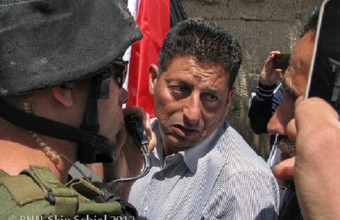
Yesterday, at 4:30 am, Popular Resistance activist Mahmoud Zwahre was again arrested by the Israeli army, at his house in Al Ma’asara, just southwest of Bethlehem.
An attempt to arrest Zwahre was made previously during the weekly Friday protest in the village. This week, on Wednesday, a large group of Israeli soldiers raided Zwahre’s home, just before dawn.
Mahmoud Zwahre, according to the Palestinian News Network (PNN), is an activist and coordinator for the Popular Committee Against the Wall and the Settlements in Al Ma’asara. Soldiers surrounded the Zwahre residence and declared it a closed military zone, as they proceeded to tear through the contents of the house, terrorizing the children and abusing Mahmoud in front of his family.
He was arrested, blindfolded, and taken to an unknown destination — essentially, and by all rights, amounting to a kidnapping.
(Al Ma’asara is a small Palestinian village located in Area B of the central occupied West Bank. Though Area B is officially recognized to be under joint Israeli-Palestinian security control, the 1967 Israeli occupation of the West Bank, Gaza Strip and East Jerusalem has yet to be granted legitimacy by the international community.)
Munther Amira, director of the board of the Popular Struggle Coordination Committee Against the Wall and the Settlements (PSCC) in the Palestinian territories, explained in an interview with the PNN that the Israeli occupation increasingly targets activists of Popular Resistance and their activities:
The activities of Popular Resistance are peaceful and designed to highlight the suffering of the Palestinian people through the Israeli occupation practices of racism and violation of international law. Nevertheless, the PSCC has documented the rough and violent reactions by Israeli soldiers against the protests and marches organized by the Popular Struggle Committees in the various provinces of the country.
The committee denounces the arrest of its coordinator Mahmoud Zwahre, and calls for his release.
Egypt: Two students disappear after being tortured in police camp
MEMO | June 3, 2014
Two Egyptian university students have disappeared since Sunday after being abducted by police and tortured in a central security camp in Zagazig, spokesman of a student group said.
According to Ahmadi Hamoudi, spokesperson of the Students Against the Coup movement, the students are Anas Al-Sayed, a freshman student at the School of Business, Zagazig University, and Anas Mousa, a student at the Higher Engineering Institute in 10 Ramadan city. The two disappeared from their detention center after reportedly being brutally tortured.
Hamoudi said on his Facebook page that the two students were rounded up in the early hours of Sunday morning from their homes in Zagazig, Sharqeya governorate.
Anas Moussa, one of the disappeared students, had lost his left eye after being shot at during his participation in an anti-coup protest on 6 October. There are unconfirmed reports, however, that the two students were transported to the Azouli military prison.
Family of man killed by Israeli forces denies he shot at police
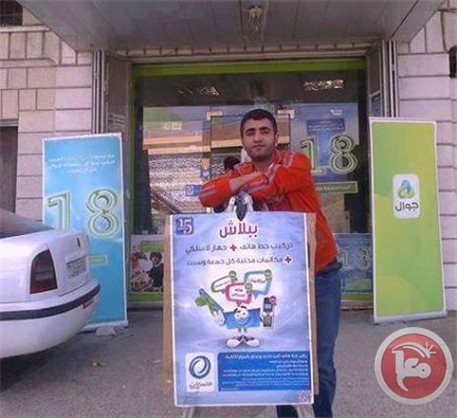
Audah pictured in front of the cell phone store he owned
Ma’an – 03/06/2014
NABLUS – The family of a man killed by Israeli soldiers near Nablus late Monday have denied Israeli claims that he opened fire at forces.
They identified the man as Alaa Muhammad Awad Audah, 30, from the town of Huwwara south of Nablus.
According to the Israeli army, Audah approached the Zaatara checkpoint late Monday and opened fire at an Israeli policeman, lightly wounding him in the leg. Soldiers responded by shooting and killing Audah.
But his family told Ma’an Tuesday that the 30-year-old arrived at the checkpoint in order to receive a shipment of cell phones for a store he owned.
In order to avoid traffic, Audah decided to cross the checkpoint and retrieve his package on foot while his taxi driver waited nearby, family member Jumaah Omran said.
Soldiers shot and killed him as he approached the checkpoint, Omran added.
Locals told Ma’an that the shooting occurred as Israel army chief of staff Benny Gantz was visiting Joseph’s Tomb nearby.
Audah left behind a wife and two children. His village, Huwwara, has announced three days of mourning.
His body has yet to be delivered to his family.
Israeli forces have killed 12 Palestinians in the West Bank since the start of 2014, according to AFP figures.
It Is about the Charter of Rights and Freedoms Mr. Ambassador!
By Shawn Robinson and Rana Abdulla | Palestine Chronicle | June 2 2014

The exhibit is an opportunity for Canadians to view imagery that captures the humanity of a real situation (Public ART/Facebook)
The woman behind the exhibit is artist Rehab Nazzal, a Canadian citizen born in Jenin, an historic town located in Palestine in a territory under occupation since 1967. Nazzal’s exhibit of 1700 photographic images along with four short videos, were collected by her over the fourteen years. Segments of these images depict life in the experience of occupation.
Nazzal’s premise of this collection is based on the idea that people leave traces of their existence and the traces in this case are part of the collective memory of occupied Palestine. Not being the first time this collection has been exhibited, it was also featured in Toronto at the Scotiabank CONTACT Photography Festival 2013.
 Stumbling across the exhibit at Ottawa’s City Hall in the Karsh-Masson Gallery, the Israeli Ambassador to Canada felt that such an exhibit should prohibited. The Ambassador operating outside of his mission, met with Mayor Jim Watson and Deputy City Manager Steven Kanellakos of the City of Ottawa, to demand closure of the exhibit, stating it “glorified terrorism”. Somehow in the unidentified 1700 images and four videos, the Ambassador was able to single out seven individuals he described as terrorists.
The 4th Geneva Convention that Israel and Canada are signatories as well as the Hague Regulations, provides that people under occupation have the right to resist their occupiers. Palestinians are in a situation where they are resisting occupation. The Israeli government and their representatives dispute this occupation in spite of the presence of its military. Terrorism terminology by Israel has become so common and so pervasive that many inside and outside of Israel perceive Palestinians as terrorists – a racist generalization that is pejorative and isolating.
Nazzal’s work reveals human cost of military violence and war, and it is not a call for more human loss, contrary to the Ambassador’s allegations. It is a catalog of Palestinian history, creativity and expression for Forgotten Survivors; a lament for their homeland; and sadness for those who have died in a long hopeless conflict. Her work is a strong counter-narrative articulated creatively using visual vocabulary, transforming the oppressive tools of Israel and its discriminatory policies into elements of hope and life. Her political art communicates messages of dignity and liberation and has undoubtedly inspired many, not just Arabs but non-Arabs as well. The strong media attention certainly indicates that her message is worthy of consideration and appreciation.
Not satisfied with the responses from the Canadian public and City of Ottawa, the Ambassador has escalated his inflammatory language including allegations of “blood libel” and descriptors such as “child murderers”. Is this the role of a foreign diplomat to Canada? His call on Jewish groups to demand action is of great concern. Individuals who have yet to see the exhibit but have read the Ambassador’s false and inflammatory statements, are responding through promotion of these false allegations in blogs, emails to City Hall and online comments. Canadians are being presented with a bias that perpetuates this terrorism label.
The Israeli suppression of the Palestinian narrative appears to now be officially part of the Canadian art and political stream of understanding. It has no place nor is it appropriate. Instead of approaching the situation as an ethnic denial of people, that would appear racist to Canadians, the Ambassador of Israel instead invokes falsely the understandably reactionary term – terrorist.
 Censorship of art, especially political art has a history associated with oppressive regimes. Artists in Canada of all faiths, backgrounds and cultures have the full right to artistic expression as granted by the Canadian Charter of Rights and Freedoms. Therefore uncensored artists are able to explore difficult themes; which is a victory for democracy and freedom of expression.
Realizing that Mayor Watson and his staff have stood by the Charter, the Ambassador requested that Mayor Watson review the process of selecting future art exhibitions at the Karsh-Masson Gallery. This is also censorship. Does this mean future exhibitions could be at risk? That the City of Ottawa should influence the selection panel of professional artists? Do we want elected politicians interfering with these processes, and especially at the behest of a foreign country and its diplomatic body?
The situation is of concern to Palestinian, Arab, Muslim and other ethnic minority artists who may not be featured by galleries across Canada due to the fear of facing the public wrath of Jewish groups and/or the Israeli government. As Canadians, we don’t want to be controlled in how our art is expressed.
 We know from the history of others, that when governments and special interest groups control the message of art, that in many cases, target groups who are censored are in danger of future marginalization. In Europe in the 1930’s a number of countries excelled in this practice further legitimizing their hateful actions against minorities, including Roma and Jews. For some countries this was the beginning of their marginalization process against an ethnic minority. Canada must uphold its values for this reason as our laws and freedoms are for everybody, and not to be denied for a specified group, especially under pressure from an outside country.
The exhibit created by Nazzal is an opportunity for Canadians to view imagery that captures the humanity of a real situation. People are not exploited in their suffering or celebrations, they are living an experience that is untold by the media and has been for as much as four decades.
To be Palestinian is not anti-Jewish or anti-Israeli. In actuality it is a culture that is centuries old in its cuisine, dance, literature, art, architecture, music, costume and other elements we all embrace in our own.
Canada, a country of hundreds of cultures, cannot be part and parcel of this type of denial, and should not be afraid in embracing its citizens. Removing this show would set a precedence that would allow one group at odds with another group to demand censorship in the Canadian milieu. Influencing selection committees of art galleries, are creating the environment of fearing to present a Palestinian artist would also be an act of censorship and stifling our right to the freedom of expression. This is not a Canada we want.
– Rana Abdulla is a Canadian professional accountant, living in Winnipeg, Manitoba. Shawn Robinson is a Canadian artist in graphic design and creative writing. She lives in Ottawa.
~
~
~
For full version of these videos, please contact: info@vtape.org OR info@rehabnazzal.com
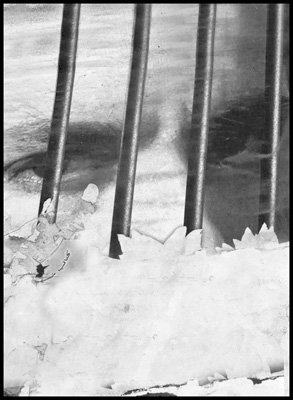

You are missed
© 2012, Rehab Nazzal
Israeli Occupation Forces Kill Two Palestinians, Kidnap 370 In May

By Saed Bannoura | IMEMC News | June 1, 2014
In its monthly report on Israeli violations, the Ahrar Center for Detainees’ Studies and Human Rights has reported that Israeli soldiers killed two Palestinians in May, and kidnapped 370.
The Center said that the army shot and killed Nadim Nuwwara, 17, and Mohammad Abu Thaher, 20, near the Ofer Israeli military roadblock, near the central West Bank city of Ramallah. The two were killed on May 15, during Nakba Day protests.
Israeli army sharpshooters killed the two following clashes with the army as the Palestinians marked the Nakba Day. Video footage showed the two walking away, with their backs to the army location, when they were killed.
As for arrests carried out by the Israeli occupation army, the Center said that 370 Palestinians were kidnapped in the West Bank, Jerusalem and the Gaza Strip.
In Jerusalem, soldiers kidnapped 118 Palestinians, the highest number of arrests in May, while 86 Palestinians were kidnapped in the Hebron district, 40 in Nablus, 30 in Bethlehem, 27 in Ramallah, 27 in Jenin, 16 in Qalqilia, 8 in Salfit, 4 in Tulkarem, and two in Tubas.
In addition, 12 Palestinians were kidnapped in the besieged Gaza Strip; three of them were kidnapped near the border fence, and nine were Palestinian fishers were kidnapped by the Israeli Navy in Palestinian territorial waters.
Also in May, the army kidnapped five Palestinian women in different parts of occupied Palestine, and released three of them, while two remained under interrogation.
Head of the Ahrar Center, Fuad al-Khoffash, stated that Israel is escalating the arrests, especially amongst young Palestinians, and that Israeli interrogators continue to use cruel interrogation methods, and extreme torture, in direct violation of International Law and all related human rights treaties.
He added that the arrests are happening while Administrative Detainees, held by Israel under arbitrary orders without charges or trial, are ongoing with their hunger strike despite the fact that many detainees are facing life-threatening conditions, and serious complications.
Despite promise, US govt moves to classify justification for drone killing of American
RT | May 29, 2014
The Obama administration has launched a sudden effort to keep classified additional parts of a memo outlining the legal justification for the drone killing of an American a mere week after saying it would comply with a federal ruling to release the memo.
In January 2013, a Federal District Court judge decided that the US Justice Department could keep the document classified entirely. That ruling stood until April 2014, when a panel of the US Court of Appeals for the Second Circuit in New York ordered the government to publicize key parts of the document that provided the legal rationale for the drone strike that killed Anwar al-Awlaki.
Awlaki was born in New Mexico before moving to Yemen with his family as a child. He returned to the US again to attend college but eventually became a prominent Al-Qaeda propagandist who American intelligence officials have claimed helped plot terrorist attacks. He was killed by a September 2011 drone strike in Yemen that was authorized based on the 41-page memo, dated July 16, 2010.
President Barack Obama praised the strike at the time, telling reporters that Awlaki’s death was a “major blow to Al-Qaeda’s most active operational affiliate.”
The New York Times and American Civil Liberties Union have sought the release of the memo under the Freedom of Information Act.
It has been an issue of contention of late because David Barron, the former Justice Department attorney who wrote the memo, was confirmed by the US Senate by a narrow vote last week as a judge on a US appeals court. A number of senators said they would only vote to confirm Barron if the administration agreed not to appeal the April decision and release a redacted version of the document.
“I rise today to oppose the nomination of anyone who would argue that the president has the power to kill an American citizen not involved in combat and without a trial,” Senator Rand Paul said last week. “It is hard to argue for the trials for traitors and people who would wish to harm our fellow Americans. But a mature freedom defends the defenseless, allows trials for the guilty, and protects even speech of the most despicable nature.”
In a new court filing obtained by The New York Times, however, assistant US attorney Sarah Normand now argues that some of the information the administration pledged to reveal should actually remain secret.
“Some of the information appears to have been ordered disclosed based on inadvertence or mistake, or is subject is distinct exemption claims or other legal protections that have never been judicially considered,” she wrote.
The Justice Department also asked that the court keep the request for parts of the memo to remain secret. That request was denied, with the judge ordering the government to unveil previously secret negotiations between the court and prosecutions deliberating which aspects of the Barron memo would remain in the dark.
“It’s deeply disappointing to see the latest effort by the government to delay even further the release of this memo to the public,” New York Times attorney David McCraw told Politico. “The government reviewed the Second Circuit’s opinion before it was released. The court made redactions in response to that review. The fact that the government then waited five weeks to file a motion – seeking yet another opportunity to review what it has already reviewed – says volumes about the administration’s position on transparency.”
Senator Mark Udall (D-Colorado) was one of the lawmakers who said he only voted to confirm Barron because of the administration’s promise that “redactions to the memo would focus on still-classified information – not the legal reasoning itself,” he told the Times.
“I intend to hold the White House to its word,” Udall added.
Abbas: Security cooperation with Israel is ‘sacred’

MEMO | May 29, 2014
Palestinian Authority (PA) President Mahmoud Abbas said on Wednesday that security cooperation with Israel is “sacred” and will continue despite the political differences.
While speaking in Ramallah to about 200 Israeli activists, including academics and economists, Al-Arabi Al-Jadid news website quoted Abbas as saying: “The PA wants to return to negotiations, but based on conditions that have to be accepted by the Israeli government.”
These conditions, according to Abbas, are: the release of the fourth batch of veteran Palestinian prisoners in Israeli jails; nine months negotiations with priority given to security and border issues; and discussing other issues, such as water, Jerusalem and the settlements.
Abbas insisted that he understands Israel’s security needs. “Security cooperation is sacred and it will continue despite the political differences,” he said.
Regarding the recent Palestinian developments, he stressed: “We will continue with the internal reconciliation, with our hand also extended to negotiations.” He called for everyone to follow the peaceful pathway of resistance.
“There is no other way to be taken,” he noted, “we do not have any pathway rather than peaceful negotiations that lead to peace between the Palestinians and the Israelis.”
He explained further: “We are not hostile to Jews or Judaism. The one who thinks thus is an infidel according to our beliefs.”
Regarding the settlements, he pointed out that there are 12 international resolutions considering them illegal and called for a settlement freeze for three months until an agreement is reached between the PA and Israel.
Regarding the Israeli rejection of the rapprochement with Hamas, he said: “Reconciliation was done through the formation of an independent government, which will continue until the elections are held.” He expressed his hope that Israel will continue the talks “because stopping is a mistake”.
Abbas pointed out that although Israel boycotted the PA after the reconciliation was announced, it has nevertheless continued with the security cooperation.
Featured Video

Iran FM Araghchi: “Hormuz Will No Longer Be the Same”
or go to
Aletho News Archives – Video-Images
From the Archives
Sam Husseini: The entire US establishment helped lie their way into the Iraq war
By Slava Zilber | American Herald Tribune | October 14, 2019
Sam Husseini is a senior analyst with the Institute for Public Accuracy, independent journalist and contributor to The Nation and FAIR.
Slava Zilber: Sam, three years ago, you appeared on Talk Nation Radio with David Swanson and spoke about the case of the GCHQ whistleblower Katharine Gun. You pointed out that the people involved in the spying on the UN and the people authorizing the Iraq War were not held accountable:
“Virtually everybody who went along with the war, whether it is Kerry or Clinton, of course, the Bush administration themselves has falsified their own records in terms of why, what they did, when they did, why they did it, to the extent that they’ve been scrutinised at all.”
You also address it in a recent article. And recently, Joe Biden has been lying about his position on the Iraq War. How can such an important issue escape meaningful scrutiny? … continue
Blog Roll
 Aletho News
- Barghouti: ‘Netanyahu has fallen,’ era of Smotrich, Ben-Gvir over
- China slams US policy on Iran as Russia rejects legality of nuclear meeting at UN
- The Mecca Pact Courts Iran: Containment Comes Full Circle
- Oman FM: Persian Gulf states, Iran, Iraq should form security pact excluding US
- Trump peddles fresh falsehoods, claims Iran ‘started the war’ as US aggression drags on
- Ukraine quagmire? Yes, but it’s for NATO, not Russia
- US intelligence hypes Chinese, Russian space threats while accelerating its own military buildup in orbit
- Iran FM Araghchi: “Hormuz Will No Longer Be the Same”
- EU facing trillion-euro debt hole while seeking more cash for Kiev
- How US, Europe, Persian Gulf states exhausted missile stockpiles, splurged billions to defend Israel
- If Americans Knew
- An error has occurred; the feed is probably down. Try again later.
- No Tricks Zone
- Sudden Stratospheric Warming, Powerful El Niño Combination May Lead To Extreme Europe Cold, Energy Crisis!
- Two New Studies Find Thwaites Glacier Melt Cannot Be Driven By Human Activity Or A Warming Ocean
- E-Cars Reduce CO2 Emissions By Only 41% Compared To Internal Combustion Engine Vehicles
- Predictions Made By Renowned Climate Professor Over Past Decades Have Been Proven To Be Poor
- New Study Suggests Large Regions Of The Pacific Ocean Have Been Cooling For The Last 80 Years
- Germany’s Green Energy Debacle: High Energy Costs Force Kahla Porzellan to Close After 182 Years!
- New Study: 50 Years Of The Most Aggressive ‘Net Zero’ Policies Can Only Affect The Global Climate By 0.03°C
- US September “Heat” Was No Record…Many Records Set Decades Ago
- Latest European Green Energy Debacle; Portugal’s Largest Flagship Solar Park Insolvent!
- Green Energy Debacle: German Expert Professor Fritz Vahrenholt Warns Of Severe Economic And Social Consequences

