Did Israel Just Lie About a Car Ramming to Kill Two Palestinian Teens?
By Robert Inlakesh | 21st Century Wire | March 5, 2019
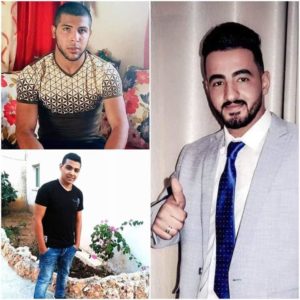 On Sunday, two Palestinian teenagers were shot dead by Israeli soldiers following, what the Israeli military called, an attempted car ramming ‘terrorist’ attack in the West Bank village of Kufr N’ima.
The Israeli, as well as Western press that covered it, framed the incident as if it was a closed case terrorist attack. The two soldiers injured during the collision of a civilian car and Israeli military vehicle, were described as heroes and their recovery was welcomed. Israeli PM, Benjamin Netanyahu, even weighed in on the incident, calling for the immediate demolitions of the homes of the “terrorists”.
But what really happened and was this a complete cover up, simply justifying the murder of innocent Palestinians?
Firstly we have to establish as clearly as possible what actually transpired, out of the details available.
The incident occurred late on Sunday night, during/following illegal Israeli military raids on civilian villages. The weather was reportedly bad and caused for dangerous driving conditions, especially on the underdeveloped roads of West Bank villages.Three boys, Amir Darraj, Yousef Anqawi and Haitham Alqam were driving and approached a quick corner turn, before colliding with the soldiers.
According to eyewitnesses, the Israeli jeep had no lights on and was not identifiable, a very typical thing for the soldiers to do during late night raids.
The corner was a slippery surface in the rain according to witnesses. I can also personally testify, as someone who has been in cars that have almost lost control at this very spot, to the validity of this claim. However we will never see an investigation as the Israeli occupation soldiers destroyed cameras, refuses to release its own videos and quickly took away the vehicles involved.
The Israeli claim is that they acted quickly and killed the “terrorists”, however, eye witnesses claim that there was a 5 minute gap between the crash and the shooting, this would mean that arrests could have been resorted to instead of executions. Israeli troops also refused to allow medical assistance to the teens they shot, firing tear gas at those that attempted to approach them.
A point made by a local journalist and photographer from the nearby village of Bil’in, Hamde Abu Rahmah, was that the three boys – two of which he knew very well – were not from Kufr N’ima and most likely would have had no idea that the soldiers were there. Hamde Abu Rahmah also verified in a Facebook post yesterday, that the two boys have no direct connection to any political groups or resistance factions.
Another point made by Hamde Abu Rahmah, was that car rammings almost never involve more than one operative, let alone three. Hamas and Islamic Jihad would normally announce instantly their involvement in these acts, but didn’t.
An article published in the Israeli newspaper ‘Haaretz’, repeated the Israeli claim of the boys possessing molotov cocktails, despite the fact that Israel has provided no evidence of this. Any journalist who covers the West Bank is familiar with Israel displaying all evidence it claims to have immediately, so why not in this case?
Let’s take a deeper look at this argument of the molotov cocktails. Would this be the rational weapon of choice following a car ramming? If they did have them in the car, as the Israeli military claims, but didn’t attempt to use them, does this justify the usage of live ammunition against the teens? The Israelis don’t claim the molotov cocktails were used against them following the car collision and couldn’t possibly have discovered them until after the incident occurred, so why does the media include the molotov cocktails in their accounts of what happened?
Then we have the other issue of international law and who was in the wrong. According to the 4th Geneva convention and more specifically UNGA Resolution 37/43, Palestinians have the full legal right, under international law, to armed resistance. The only legal right those Israeli soldiers had during this Sunday nights incident, was to pack up and leave.
Even if this was somehow a car ramming attack on Occupation Soldiers, the attack is not classed as terrorism under international law. If you are arguing that Israeli soldiers, illegally raiding villages, on illegally occupied territory are in the right for shooting dead two teenagers and believe this to be a terrorist attack, you are quite literally on the side of the Israelis over International Law.
The result of all this, is that Amir Darraj and Yousef Anqawi were both shot dead, their bodies have been taken by Israel’s soldiers and now the Israeli policy of collective punishment, demolishing “terrorist” homes, will now be enforced.
So not only will the families of these two dead teenagers mourn, but will mourn on the ruins of their demolished homes and will be seen all over the world as the family members of terrorists.
Author Robert Inlakesh is a special contributor to 21WIRE and European correspondent for Press TV. He has reported from on the ground in occupied Palestine. See more of his work here.
From Qana to Gaza, Israel issues denials and smears investigations of its crimes
By Professor Kamel Hawwash | MEMO | March 5, 2019
I wrote recently about an EU report on the growth of illegal Israeli settlements and argued that the EU was diligent in documenting Israel’s-breaches of international law but that it has singularly failed to bring it to account, even when it has demolished EU-funded projects.
A more recent report commissioned by the UN Human Rights Council (UNHRC) investigated the actions of the Israel Defence Forces (IDF) at the nominal border with Gaza since 30 March last year, which marked the beginning of the Great March of Return protests. For almost 50 weeks, Israeli snipers have gunned down, with deliberate, chilling precision, Palestinian men, women and children.
The “Report of the independent international commission of inquiry on the protests in the Occupied Palestinian Territory – A/HRC/40/74” acknowledges that the peaceful protests “were civilian in nature, with clearly stated political aims.” The protesters asked to be allowed to return to the homes from which they have been expelled from 1948 onwards, and for a lifting of the siege on Gaza. Instead of meeting their peaceful and legitimate demands from the outset, Israel has killed over 200 Palestinians, including journalists and medics, and maimed dozens of young men, who now have to face life as amputees, rather than sportsmen.
![An injured Palestinian kid is carried away after Israeli forces' clashed with protestors during a "Great March of Return" demonstration near Israel-Gaza border, in Khan Yunis, Gaza on March 01, 2019 [Mustafa Hassona / Anadolu Agency]](https://i0.wp.com/www.middleeastmonitor.com/wp-content/uploads/2019/03/20190301_2_35206126_42166513.jpg?quality=75&strip=all&ssl=1 "KHAN YUNIS, GAZA - MARCH 01: An injured Palestinian kid is carried away after Israeli forces' intervention during \"Great March of Return\" demonstration near Israel-Gaza border, in Khan Yunis, Gaza on March 01, 2019. ( Mustafa Hassona - Anadolu Agency )")
![Mohammad Jasser Barbakh, not yet 14 years old, was shot on 26 October by an Israeli sniper while taking part in the Great March of Return protests [File photo]](https://i1.wp.com/www.middleeastmonitor.com/wp-content/uploads/2018/11/Kid-Gaza.jpg?quality=75&strip=all&ssl=1 "Kid Gaza")
The irony here is that Israel complained about Malaysia’s decision to ban the Israeli Paralympics team from competing in the country, while the IDF was making its own sickening contribution to future Palestinian Paralympics teams.
The UNHRC’s report makes for gruesome reading. Israeli soldiers are accused of “intentionally firing on civilians, who were neither directly participating in hostilities, nor posing an imminent threat.” The report warns that, “These serious human rights and humanitarian law violations may constitute war crimes or crimes against humanity.”
Israel’s reaction was predictable and follows a long line of denial and smearing of any report which accuses it of wrongdoing. According to a Foreign Ministry spokesman, “This report was born in sin, in a politically biased, one-sided resolution that determined the outcome before the investigation even started.” He went on to lay the blame on Hamas: “[Hamas] has declared war on Israel and calls to kill Jews. Hamas is orchestrating the attacks and using civilians in Gaza as human weapons to assault Israel and Israeli civilians. Hamas exploits the civilians in Gaza as human shields for terrorists.” As usual when such allegations are made, no evidence is produced to back them up, nor is the legitimate right to resist military occupation ever mentioned.
The spokesman went on to smear the UNHRC and the report’s three authors: “The HRC becomes an accomplice of a terrorist organisation, supporting Hamas’s aggression against Israel and the oppression of the people of Gaza.” The three individuals, he alleged, lack any understanding in security matters, without a relevant professional background.
Israel’s apologists came out in force to condemn the report, including US President Donald Trump’s Special Envoy Jason Greenblatt. “This COI report is another manifestation of the UNHRC’s clear bias against Israel,” he tweeted, “which remains the only country that the Council dedicates an entire standing agenda item to targeting.”
Such condemnation of investigations into Israel’s crimes and smearing of investigation teams and the bodies that form them is not new. The UNHRC set up an investigation into Israel’s 2014 military offensive against the Gaza Strip which lasted for 50 days, resulting in over 2,000 Palestinians being killed and causing extensive destruction.
The Report of the Independent Commission of Inquiry on the 2014 Gaza Conflict – A/HRC/29/52 accused both Hamas and Israel of committing war crimes. “Israel does not commit war crimes,” claimed Prime Minister Benjamin Netanyahu as he rejected the report. “Israel defends itself against a terrorist organisation that calls for its destruction and carries out many war crimes.” He accused the commission of being “notoriously biased” against Israel.
Following an escalation of violence in November 2012, a UN report criticised armed Palestinian groups and the IDF. The latter, it insisted, “did not consistently uphold the basic principles of conduct of hostilities, namely, the principles of distinction, proportionality and precautions.” The report documented a number of cases, including one which took place on 18 November, in which an Israeli air strike targeted without prior warning a three-storey house belonging to the Al-Dalou family in Al-Nasser neighbourhood, in central Gaza City. The strike killed 12 people, including five children and four women. Again, Israel brushed aside criticism and no individual Israeli was held accountable.
Following the 2008/9 Israeli military offensive on Gaza, the UN published the Goldstone Report on the devastating events which took place between 27 December 2008 and 17 January 2009 and which resulted in over 1,300 Palestinians being killed. The report accused both Israel and Palestinian armed groups of war crimes and crimes against humanity.
Israel’s reaction was predictable. The Foreign Ministry said that, “Israel rejects the one-sided resolution adopted in Geneva by the UN human rights council and calls upon all responsible states to reject it as well… [The resolution] provides encouragement for terrorist organisations worldwide and undermines global peace.” It also accused the UNHRC of anti-Israel bias.
Israel’s siege and attack on the Jenin refugee camp in April 2002, which lasted for 10 days and killed dozens if not hundreds of Palestinians (the figures are disputed) again brought accusations of war crimes against Israel. The Israeli government refused to allow a UN team to carry out a field investigation, resulting in the UN producing a report based on available evidence. “In sum, the Israeli occupying forces have, without a doubt, committed serious violations of international humanitarian law,” the report concluded. “Also, without a doubt, war crimes, including grave breaches of the Fourth Geneva Convention, have been committed by Israel, the occupying Power, in several Palestinian cities, including in the Jenin refugee camp.” However, the report disputed the Palestinian claim of a massacre, a decision which was welcomed by the Israeli government. Furthermore, the report was judged as “seriously flawed” by human rights organisations and Britain’s Independent newspaper, which were able to corroborate many of the allegations against the occupation state. No Israeli has ever been held accountable for any violations.
It is possible to go back further in time to another Israeli atrocity to demonstrate the lack of accountability for crimes committed by the IDF. On 18 April 1996, Israeli forces shelled a UN compound in Qana, in Southern Lebanon, where 800 Lebanese civilians had taken refuge; 106 people were killed in the attack. Israel claimed that this was due to technical issues rather than deliberate targeting of a UN facility. However, the subsequent UN investigation concluded, “While the possibility cannot be ruled out completely, it is unlikely that the shelling of the United Nations compound was the result of gross technical and/or procedural errors.” The UN also found that “Contrary to repeated denials, two Israeli helicopters and a remotely piloted vehicle were present in the Qana area at the time of the shelling.” Amnesty International called for an independent investigation arguing, “It is not enough that the Israeli army investigates themselves. Israel has a history of either not investigating civilian deaths, or conducting similarly flawed inquiries.”
Now here we are, 23 years on and the UN’s most recent report again calls on Israel to investigate its own crimes, even though everyone knows that Israel never finds its own people guilty; always dismisses reports carried out by independent investigators as biased and one-sided; denies entry to the investigation teams; and refuses to cooperate. It claims to apply the highest standards of self-regulation but no one has ever been held fully accountable for any crimes, despite the thousands of deaths, the tens of thousands of injuries and the tens of thousands of homes that have been destroyed by Israelis since Qana, never mind the other massacres which have occurred since 1948.
It is time for Israel to be held to account for its actions, for the sake of those who have suffered at its hands. If international law is to have any credibility at all, we need to ensure that all UN member states pay due respect to human rights and the quest for justice through due legal process.
Four Young Palestinian Lives Snuffed Out Every Month for The Past Year at The Hands of Israeli Soldiers
By CJ Werleman | American Herald Tribune | February 28, 2019
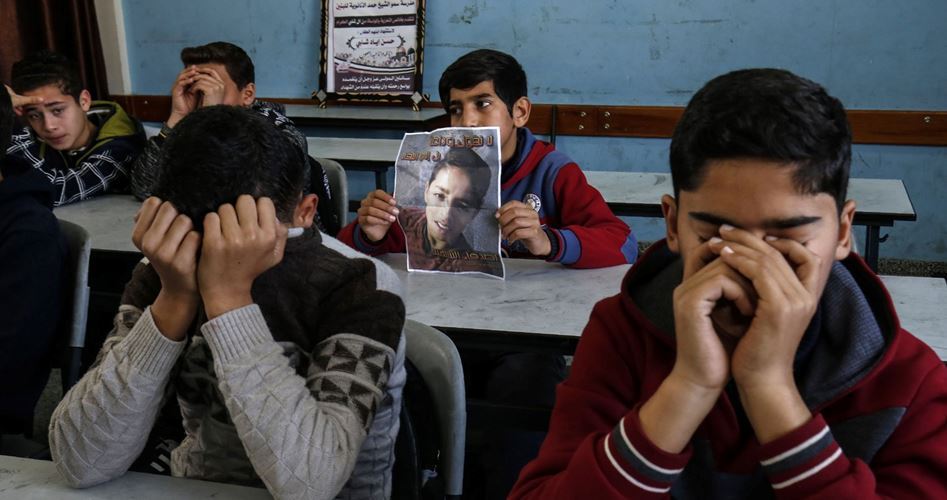
Last Friday, Yousef a-Dava, a 15-year old Palestinian boy was shot and killed by Israeli snipers, becoming the 48th child slain in Gaza by Israeli security forces since the Great Return March began nearly 12 months ago.
“He was peacefully protesting for a better future, raising the Palestinian flag, is the Palestinian flag a weapon?” asked his grief-stricken sister, Nariman al-Daya, in an interview with Middle East Eye.
His death was every bit as gruesome as it was unjustifiably atrocious, with eyewitnesses explaining how he “tried to stand up, walk a couple more steps” before falling to the ground again, after the bullet fired by an Israeli sniper “entered Yousef’s body, exploded hear his heart, exited from his back” and injured another man who was standing behind him.
Less than one hour later he was pronounced dead at al-Shifa Hospital after an emergency operation failed to revive him.
What other democratic ally do we allow 48 unarmed children to be shot and killed for flying a flag or kite in an open field, one that is ring-fenced by high-voltage electric currents, spot-and-strike machine gun posts, armored tanks and dozens of the world’s most lethal military marksmen?
If this were happening in Poland, Spain, or Portugal, both the United States and United Nations would’ve moved quickly to impose economic sanctions, while calls to invade and bomb would be heard far louder than a mere whisper, but this is Israel, the “Middle East’s only democracy,” so the entirely erroneous propaganda tagline goes.
48 murdered children equates to four young lives snuffed out every month for the past year at the hands of Israeli soldiers, who in no way felt threatened by these now slain youngsters. Unless, of course, you think children throwing rocks from inside a cage at armored vehicles positioned hundreds of meters away on the other side fortified fences and barricades is a threat to anyone or anything, which it clearly it isn’t!
Thus these deaths are to be identified for what they truly are: the cold-blooded murder of innocent and non-threatening children.
Of course, nowhere in the Western media is this reality framed in this accurate way. Instead we are fed headlines, or rather footnotes from the likes of The New York Times that read, “15-year-old boy killed in Gaza today,” without identifying the benign circumstances that led to his death, with newspaper editors doing their very best to falsely portray flag waving and rock-throwing protesters to be on equal footing to the most sophisticated military force in the Middle East.
It goes without saying, but I’ll say it anyway, that if a population of 2 million predominately Jews or Christians were held in an open-air prison, which is precisely what Gaza is, and then bombed, strafed, droned, and shelled periodically, with children shot dead by snipers wearing the flag of a Muslim majority country, then there’d be no other issue the Western media would be talking about.
On Thursday, the United Nations published a report concluding, “Israeli soldiers committed violations of international human rights and humanitarian law,” adding that “some of those violations may constitute war crimes of crimes against humanity.”
“Many young person’s lives have been altered forever,” contends the United Nations Human Rights Council. “122 people have had a limb amputated since March 30 last year. Twenty of these amputees are children.”
Moreover, these deaths scratch only the surface of Israel’s savage war on Palestinian children. When Israel invaded Gaza in the summer of 2014, Palestinian children represented 25% of all civilians killed, with human rights groups documenting the deaths of 504 are under the age of 18.
Then there are the 500-700 Palestinian children who are detained each year in the Israeli military court system, some indefinitely, with most held and prosecuted on the charge of stone throwing.
It is in these Israeli military detention centers where some of the most egregious crimes against Palestinian children take place, with two-thirds reporting Israeli soldiers subjected them to violence and physical abuse.
Several years ago, UNICEF published a report that documented Israel’s systematic and systemic abuse of detained Palestinian children, concluding that “the ill-treatment of children who come in contact with the military detention system appears to be widespread, systematic and institutionalized throughout the process, from the moment of arrest to indictment of the child, the conviction and issuing of the verdict.”
The authors of the report also observed how child detainees were often arrested in the middle of the night, denied access to a lawyer or parents prior or during interrogation, denied right to remain silent, alongside credible claims Palestinian children were raped or threatened with rape or execution.
Ultimately Israel gets away with these atrocities because its violence and crimes against the Palestinian people takes place inside a media vacuum, with mainstream networks and publications giving a head glance towards the occupation and conflict only in moments where Palestinians, who are denied the right to resist Israel’s violence and illegalities peacefully, respond with violence of their own.
Until such time the world’s media and international community holds Israel accountable for its violations of international law and denial of human rights to the Palestinian people, it’ll continue to murder children as young as 2 years of age with total and complete impunity.
Samidoun calls for the freedom of political prisoners in Egyptian jails
Samidoun Palestinian Prisoner Solidarity Network – February 22, 2019
Samidoun Palestinian Prisoner Solidarity Network condemned the executions carried out by the Egyptian regime against 9 Egyptian youths, calling for an end to the “systematic and continuous repression and killings by the fascist regime of General Abdel-Fattah Sisi.”
“What is happening in Egyptian prisons is systematic and documented torture. While this is widely known, it does not receive sufficient attention from international human rights bodies and legal institutions,” said Mohammed Khatib, the Europe coordinator of Samidoun. He referred to the “disgraceful collaboration between the so-called international community and the generals in Cairo.”
Khatib launched a scathing attack on the Egyptian regime and what he called “the silence of the Egyptian and Arab parties who describe themselves as standing with the people. They say with words that they oppose the Camp David regime, but remain silent on the daily violations of the rights of tens of thousands of Egyptian prisoners in Egyptian jails by that same Camp David regime.”
He pointed out “the perpetrators of torture and killings that took place in the prison known as ‘Scorpio’ (the Tora prison complex) and other jails and prisons have not been held accountable for their crimes. As a result, this only encouraged further repression and organized state terror on the part of the generals.”
The steadfastness of political prisoners in the jails of the Arab reactionary, dictatorial regimes stems from the deep and absolute conviction and reality in the interdependence and linking of the struggle of the national and social movements in the Arab world with the struggle of the Palestinian people and the Palestinian prisoners, which is the spearhead of the liberation cause,” said Khatib. “The crimes perpetrated by the Camp David regime against the poor and the oppressed in Egypt cannot be separated from the crimes of the Zionist enemy and imperialist powers in the world, because of the Egyptian state’s dependence on these same imperialist forces. These powers see these regimes as a tool to destroy popular movements in order to further plunder and steal the resources of the Arab peoples.”
He called on activists and friends of the Samidoun Network internationally to stand with political prisoners in Egyptian jails and advocate and organize against the executions while working for the release of all Egyptian prisoners.
In Hebron, Israel Removes the Last Restraint on Its Settlers’ Reign of Terror
By Jonathan Cook | The National | February 13, 2019
You might imagine that a report by a multinational observer force documenting a 20-year reign of terror by Israeli soldiers and Jewish settlers against Palestinians, in a city under occupation, would provoke condemnation from European and US politicians.
But you would be wrong. The leaking in December of the report on conditions in the city of Hebron, home to 200,000 Palestinians, barely caused a ripple.
About 40,000 separate cases of abuse had been quietly recorded since 1997 by dozens of monitors from Sweden, Norway, Switzerland, Italy and Turkey. Some incidents constituted war crimes.
Exposure of the confidential report has now provided the pretext for Israeli prime minister Benjamin Netanyahu to expel the international observers. He shuttered their mission in Hebron this month, in apparent violation of Israel’s obligations under the 25-year-old Oslo peace accords.
Israel hopes once again to draw a veil over its violent colonisation of the heart of the West Bank’s largest Palestinian city. The process of clearing tens of thousands of inhabitants from central Hebron is already well advanced.
Any chance of rousing the international community into even minimal protest was stamped out by the US last week. It blocked a draft resolution at the United Nations Security Council expressing “regret” at Israel’s decision, and on Friday added that ending the mandate of the Temporary International Presence in Hebron (TIPH) was an “internal matter” for Israel.
The TIPH was established in 1997 after a diplomatic protocol split the city into two zones, controlled separately by Israel and a Palestinian Authority created by the Oslo accords.
The “temporary” in its name was a reference to the expected five-year duration of the Oslo process. The need for TIPH, most assumed, would vanish when Israel ended the occupation and a Palestinian state was built in its place.
While Oslo put the PA formally in charge of densely populated regions of the occupied territories, Israel was effectively given a free hand in Hebron to entrench its belligerent hold on Palestinian life.
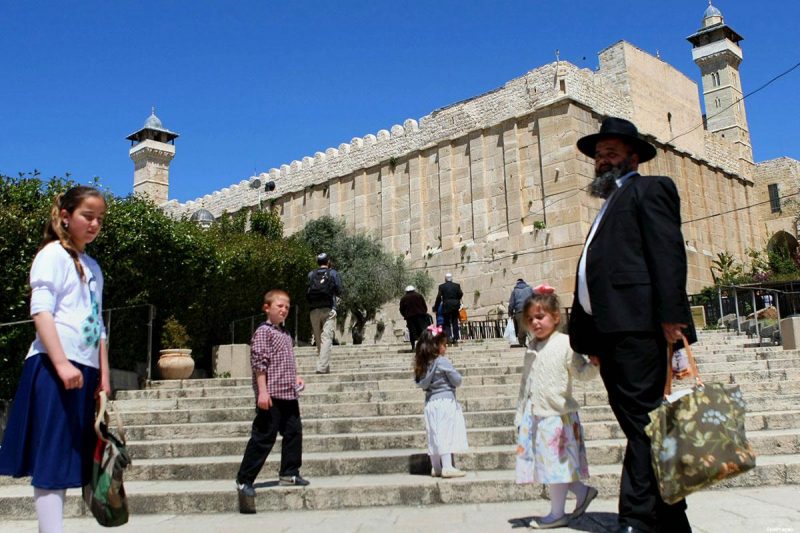
Several hundred extremist Jewish settlers have gradually expanded their illegal enclave in the city centre, backed by more than 1,000 Israeli soldiers. Many Palestinian residents have been forced out while the rest are all but imprisoned in their homes.
TIPH faced an impossible task from the outset: to “maintain normal life” for Hebron’s Palestinians in the face of Israel’s structural violence.
Until the report was leaked, its documentation of Israel’s takeover of Hebron and the settlers’ violent attacks had remained private, shared only among the states participating in the task force.
However, the presence of observers did curb the settlers’ worst excesses, helping Palestinian children get to school unharmed and allowing their parents to venture out to work and shop. That assistance is now at an end.
Hebron has been a magnet for extremist settlers because it includes a site revered in Judaism: the reputed burial plot of Abraham, father to the three main monotheistic religions.
But to the settlers’ disgruntlement, Hebron became central to Muslim worship centuries ago, with the Ibrahimi mosque established at the site.
Israel’s policy has been gradually to prise away the Palestinians’ hold on the mosque, as well the urban space around it. Half of the building has been restricted to Jewish prayer, but in practice the entire site is under Israeli military control.
As the TIPH report notes, Palestinian Muslims must now pass through several checkpoints to reach the mosque and are subjected to invasive body searches. The muezzin’s call to prayer is regularly silenced to avoid disturbing Jews.
Faced with these pressures, according to TIPH, the number of Palestinians praying there has dropped by half over the past 15 years.
In Hebron, as at Al Aqsa mosque in Jerusalem, a Muslim holy site is treated solely as an obstacle – one that must be removed so that Israel can assert exclusive sovereignty over all of the Palestinians’ former homeland.
A forerunner of TIPH was set up in 1994, shortly after Baruch Goldstein, an Israeli army doctor, entered the Ibrahimi mosque and shot more than 150 Muslims at prayer, killing 29. Israeli soldiers aided Goldstein, inadvertently or otherwise, by barring the worshippers’ escape while they were being sprayed with bullets.
The massacre should have provided the opportunity for Yitzhak Rabin, Israel’s prime minister of the time, to banish Hebron’s settlers and ensure the Oslo process remained on track. Instead he put the Palestinian population under prolonged curfew.
That curfew never really ended. It became the basis of an apartheid policy that has endlessly indulged Jewish settlers as they harass and abuse their Palestinian neighbours.
Israel’s hope is that most will get the message and leave.
With Israeli Prime Minister Benjamin Netanyahu in power for a decade, more settlers are moving in, driving out Palestinians. Today Hebron’s old market, once the commercial hub of the southern West Bank, is a ghost town, and Palestinians are too terrified to enter large sections of their own city.
TIPH’s report concluded that, far from guaranteeing “normal life”, Israel had made Hebron more divided and dangerous for Palestinians than ever before.
In 2016 another army medic, Elor Azaria, used his rifle to shoot in the head a prone and badly wounded Palestinian youth. Unlike Goldstein’s massacre, the incident was caught on video.
Israelis barely cared until Azaria was arrested. Then large sections of the public, joined by politicians, rallied to his cause, hailing him a hero.
Despite doing very little publicly, TIPH’s presence in Hebron had served as some kind of restraint on the settlers and soldiers. Now the fear is that there will be more Azarias.
Palestinians rightly suspect that the expulsion of the observer force is the latest move in efforts by Israel and the US to weaken mechanisms for protecting Palestinian human rights.
Mr Netanyahu has incited against local and international human rights organisations constantly, accusing them of being foreign agents and making it ever harder for them to operate effectively.
And last year US President Donald Trump cut all aid to UNRWA, the United Nations’ refugee agency, which plays a vital role in caring for Palestinians and upholding their right to return to their former lands.
Not only are the institutions Palestinians rely on for support being dismembered but so now are the organisations that record the crimes Israel has been committing.
That, Israel hopes, will ensure that an international observer post which has long had no teeth will soon will soon lose its sight too as Israel begins a process of annexing the most prized areas of the West Bank – with Hebron top of the list.
15 Years in Prison for Clicking on Terrorist Propaganda Even Once – New UK Law
Sputnik – February 13, 2019
Upon the adoption of a new legislation, Home Secretary Sajid Javid said that the Counter-Terrorism and Border Security Act “gives the police the powers they need to disrupt plots and punish those who seek to do us harm.”
The Counter-Terrorism and Border Security Act 2019 has received Royal Assent on 12 February, making the bill an Act of Parliament.
The act makes provision in relation to terrorism, enabling persons at ports and borders to be questioned for national security and updating the offence of obtaining information likely to be useful to a terrorist to cover material that is only viewed or streamed, rather than downloaded to form a permanent record.
The act sees to an increase to the maximum penalty for certain preparatory terrorism offences to 15 years’ imprisonment.
The UK government has been criticized by the UN Special Rapporteur on the right to privacy, Joe Cannataci, back in 2018. The inspector argued following his visit in the UK, that it was concerning that accessing propaganda “on three or more different ccasions” was viewed as an offence. Cannataci called the approach straying towards “thought crime.”
The three-click benchmark has been removed in the new bill and now even a single tap on ‘terrorist material’ could lead to years in prison. Exemption is provided for journalists, academic researchers or people who had “no reason to believe” they were accessing terrorist propaganda.
The Bill has also provided for a launch of an independent review of Prevent, the much criticized government’s strategy that aims to support persons vulnerable to radicalisation.
British intelligence services were condemned in 2018 for failing to properly monitor individuals of interest — later to be involved in terrorist activity — not under active investigation at the moment but in the peripheries of more than one investigation.
In 2017, the United Kingdom suffered five terrorist attacks in Westminster, the Manchester Arena, London Bridge, Finsbury Park and Parsons Green, with 36 people losing their lives and dozens injured.
Israeli Army Admits the Palestinian Motorcyclist They Killed Had No Explosives
IMEMC News – February 11, 2019
 Following an investigation by the Israeli military into the killing of a Palestinian motorcycle rider on February 5th, and the severe wounding of his passenger, the military was forced to admit that their initial claim that the young man had explosives was a false claim.
Abdullah Faisal Omar Tawalba, 19, was shot and killed by Israeli forces on February 5th, 2019, at an Israeli military checkpoint in Jenin, in the northern part of the West Bank.
His passenger, Omar Ahmad Hanana, 15, was also shot by the Israeli military and badly injured, but is in stable condition at the Jenin Governmental Hospital run by the Palestinian Authority.
Initially, the Israeli military reported to the media that the young men had approached the checkpoint and “tried to plant explosives”.
An investigation by Israeli military police found no evidence whatsoever of any explosives of any kind.
The soldiers claimed that they “heard an explosion,” and were sure “an explosive was thrown at the roadblock, before they opened fire.”
The checkpoint where Abdullah was killed by the soldiers is located near the entrance of the al-Jalama village, northeast of Jenin in northern West Bank. The army’s initial statement claimed that Palestinians were riding a motor cycle and “hurled an explosive at the soldiers”.
There were no injuries of any soldiers.
Mahmoud Sa’adi, the director of the Emergency Department of the Palestinian Red Crescent in Jenin, said the slain Palestinian has been identified as Abdullah Faisal Omar Tawalba, 19, from the al-Jalama village, and added that Omar Ahmad Hanana, 15, was injured but is in a stable condition.
Palestinian medical sources said the medics moved the slain Palestinian, and the wounded teen, to Jenin Governmental Hospital.
They added that Tawalba was shot with several live rounds in the head and legs.
Man’s testicles tasered during horrific police arrest
RT | February 10, 2019
Disturbing bodycam video shows Arizona cops tasering a man 11 times, including on the testicles, as his horrified family scream for them to stop. The police are now being sued for “excessive force and torture.”
The nightmare tasering began when Glendale police officers approached a vehicle for a signal turn violation in July 2017. Johnny Wheatcroft was in the front passenger seat, while his wife Anya Chapman and their 11 and six-year-old sons sat in the back. A friend of the family was driving.
Officers Matt Schneider and Mark Lindsey asked Wheatcroft for his ID and he inquired why he had to show it, as he was not driving the vehicle. Police allege he went to stuff something in his backpack, and, after pressing the taser against his arm and telling him to “relax,” Schneider twisted Wheatcroft’s arm behind his back and pulled him from the car while still restrained by his seat belt.
The officer began tasering him when he was half out of the vehicle, before they pulled him to the ground and continued to tase him. Even after Wheatcroft was dragged on the ground towards the back of the car, his feet remained entangled in the seat belt. His older son leaned into the front seat to open the belt to free his father, prompting Schneider to shout at him, causing the boy to burst into tears.
Glendale police said in a statement that Wheatcroft “exhibited verbal non-compliance by refusing to identify himself and failed to obey the officer’s instructions.” Chapman reportedly swung a bag of bottles at Lindsey’s head during the incident, although this can’t be seen clearly in the video.
Horrifyingly, Schneider is next seen pulling Wheatcroft’s shorts down and placing the taser on the handcuffed man’s testicles. The lawsuit filed by the couple reports Schneider tased his testicles and perineum. He then placed the taser on his penis and said, “You want it again? Shut your mouth. I’m done f*cking around with you.”
Another officer held a handgun to his head and Wheatcroft was kicked in the groin.
According to the suit and the police’s own admission, the officers used a “drive stun” method, in which the taser is pressed against a person before being fired. Glendale police also released a 30 second CCTV video of the incident taken from a distance.
The pair were arrested and charged with aggravated assault and physically resisting arrest. They were both in jail for months as they couldn’t afford bail before Chapman pled guilty to a lesser charge so she could be released to look after her children.
Wheatcroft’s charges were dismissed by the Maricopa County Attorney’s Office after prosecutors saw the bodycam video, which his lawyers released to media outlets.
Schneider was suspended for three days after the incident, Glendale police said.
Venezuelan Oil Exports Plunge On ‘Harsher’ Sanctions
By Nick Cunningham | Oilprice.com | February 4, 2019
Venezuela’s oil production could be disrupted to a greater degree than most analysts first thought, as the U.S. government seeks essentially shut in the country’s oil sector.
When the Trump administration first announced sanctions on Venezuela’s oil sector a little over a week ago, it sounded as if they would simply bar U.S. companies from buying oil. That would still mean that Venezuela could ship the oil elsewhere, albeit at a painful discount.
However, the U.S. Treasury issued some more details on February 1, sketching out a harsher sanctions regime. The sanctions on Venezuela will actually resemble the measures targeting Iran in that it will bar companies from using the U.S. financial system to do business with PDVSA. As such, the reach of the sanctions will extend well beyond the shores of the United States.
Reuters reported that even prior to last Friday’s clarification from the U.S. Treasury, European buyers were already slashing purchases because of concerns over payments. Reuters reported that two of the world’s largest oil traders, Vitol and Trafigura, said that they would comply with all U.S. sanctions.
As a result, PDVSA and Maduro’s government could have a much harder time finding destinations for Venezuelan oil than first thought. The Wall Street Journal reported oil storage is “filling up” in Venezuela because of a lack of buyers.
Moreover, not only are the effects of the sanctions more far-reaching, but also more immediate than first thought. At first, the U.S. seemed to exempt shipments that were underway, outlining a sort of phased approach that would allow a handful of American refiners to gradually unwind their oil purchase from Venezuela. The phased approach, which was supposed to be extended into April, would help “to minimize any immediate disruptions,” U.S. Secretary of Treasury Steven Mnuchin said in late January.
But that now does not appear to be what is unfolding. PDVSA has demanded upfront payment, likely because it fears not being paid at all or having the revenues steered to the opposition. Indeed, the U.S. effort to steer PDVSA and its revenues into the hands of the U.S.-backed opposition leader Juan Gauidó appears to be a decisive turning point.
Oil tankers linked to Chevron, Lukoil and Respsol are delayed, redirected or sitting offshore because of lack of payment. The WSJ says that several of those tankers had recently sent oil to Corpus Christi, Texas, but are now anchored off the coast of Maracaibo sitting idle. “This is an absolute disaster,” Luis Hernández, a Venezuelan oil union leader, told the WSJ. “There’s almost no way to move the oil.”
Unable to sell any oil, Maduro’s regime could quickly run out of cash. The result could be a humanitarian catastrophe, a merciless and destructive objective that the Trump administration seems to have in mind. The U.S. government is essentially betting that by driving the country into the ground, the military and the people will turn on Maduro. It could yet turn out that way, but it could also deepen the misery and exact an unspeakable toll on the Venezuelan population, the very people the Trump administration says it is trying to help.
In the meantime, oil exports are likely heading into a freefall. The WSJ says that labor problems, including “mass defections of workers” are accelerating declines. PDVSA could soon run out of refined fuel.
Officials with knowledge of the situation told the WSJ that Venezuela’s oil production has likely already fallen well below 1 million barrels per day (mb/d), down more than 10 percent – at least – from December levels.
Wood Mackenzie estimates that production probably stands a little bit higher at about 1.1 mb/d, but that it could soon fall to 900,000 bpd.
It’s hard to imagine how Maduro can hang on if oil exports fall precipitously from here. But even if he does manage to stay in power, the U.S. may escalate the situation. Last month, U.S. national security adviser John Bolton had “5,000 troops to Colombia” written on his legal pad. President Trump himself said that a military intervention is an option.
For the oil market, the crisis presents a series of problems. If Maduro hangs on and the U.S. continues to heap more pressure on his government, Venezuelan oil production and exports will continue to fall. Alternatively, the U.S. is hoping for a quick regime change, after which it would lift sanctions, which it believes will lead to a reversal in output losses.
The next round of Iran sanctions is nearing, with U.S. sanctions waivers expiring in May. As such, the window of opportunity for the Trump administration “is open only a crack, necessitating a quick political change,” Barclays wrote in a note. By the third quarter, the loss of Venezuelan output, Iran sanctions, and the looming regulations from the International Maritime Organization will put an increasing premium on medium and heavy oils.
That would push up oil prices significantly. But the U.S. government has blown past the point of no return, leaving it with no other options except to escalate. That means that Venezuela is set to lose a lot more oil than analysts thought only two weeks ago.
US: Tasers Claimed 49 Lives in 2018 Through Police Violence
teleSUR | February 4, 2019
Taser death is a form of police violence that is claiming lives in the United States despite being called non-lethal, a recent Reuters report revealed.
Warren Ragudo died after two Taser shocks by police intervening in a family altercation. Ramzi Saad died after a Taser shock by police during a dispute between Saad and his mother. Chinedu Okobi died after police used a Taser to subdue him in a confrontation they blamed on his refusal to stop walking in traffic.
All three were unarmed. All three had histories of mental illness. And all three died last year in a single northern California county, San Mateo.
They were among at least 49 people who died in 2018 after being shocked by police with a Taser, a similar number as in the previous two years, according to a Reuters review of police records, news reports, and court documents.
The deaths typically draw little public scrutiny – no government agency tracks how often Tasers are used or how many of those deployments prove fatal, and coroners and medical examiners use varying standards to assess a Taser’s role in the death. But some communities now are considering more restrictive Taser policies following allegations that the weapons were used excessively or deployed against people with physical or mental conditions that put them at higher risk of death or injury.
Among 14 police departments, five are reviewing their Taser policies; three had conducted reviews and made no changes, and five declined to comment because investigations into the incidents were still ongoing.
A total of at least 1,081 U.S. deaths following the use of Tasers, almost all since the weapons began coming into widespread use in the early 2000s have been documented. In many of those cases, the Taser, which fires a pair of barbed darts that deliver a paralyzing electrical charge, was combined with other force, such as hand strikes or restraint holds.
The California county board of supervisors and the district attorney launched ongoing reviews of the use and safety of Tasers, which were touted by police and the weapon’s manufacturer as a near-perfect, “non-lethal” weapon when they began coming into widespread use more than a decade ago.
There is a need to reevaluate “the proper role for Tasers and how and when they are engaged,” Dave Pine, a member of the Board of Supervisors said. Until then, “I personally think it would be appropriate to have a moratorium on their use.”
Most independent researchers who have studied Tasers say deaths are rare when they are used properly, but in a series of reports in 2017, it was found that many police officers are not trained properly on the risks and weapons are often misused.
Axon Enterprise Inc., the Taser’s manufacturer argues that most cause-of-death rulings implicating its weapons are misinformed and said that Tasers, while “not risk-free,” are “the most safe and effective less-lethal use of force tool available to law enforcement.”
Many cases involved high-risk subjects, such as people agitated by drugs or mental illness, people with heart problems, people who are very young or very old or very frail.
At least half those who died after Taser shocks last year fell into one or more of those categories. As in previous years, about 90 percent were unarmed and nearly a quarter had a history of mental illness.
As police departments have become more aware of Tasers’ risks and limitations, a growing number have restricted their use, said Chuck Wexler, executive director of the Police Executive Research Forum (PERF) think tank. Still, many officers remain unaware of the hazards when they encounter those vulnerable to a Taser’s shock, Wexler warns.
Featured Video

Deception – Submarines against Olof Palme
or go to
Aletho News Archives – Video-Images
From the Archives
Woolsey Fire started at Santa Susana Field Lab — where “radioactive materials released were never accurately measured”
By John Laforge | CounterPunch | November 30, 2018
In my Nov. 16 column, I reported on potential radiation risks posed by California’s Woolsey wildfire having burned over parts or all of the Santa Susana Field Laboratory—south of Simi Valley, Calif., 30 miles outside Los Angeles—site of at least four partial or total nuclear reactor meltdowns.
The field laboratory operated 10 experimental reactors and conducted rocket engine tests. In his 2014 book Atomic Accidents, researcher James Mahaffey writes, “The cores in four experimental reactors on site … melted.” Reactor core melts always result in the release of large amounts of radioactive gases and particles. Clean up of the deeply contaminated site has not been conducted in spite of a 2010 agreement.
Los Angeles’s KABC-7 TV reported Nov. 13 that the Santa Susana lab site “appears to be the origin of the Woolsey Fire” which has torched over 96,000 acres. Southern Calif. Public Radio said, “According to Cal Fire, the Woolsey Fire started on the afternoon of Thursday, Nov. 8 … on the Santa Susana site.” … continue
Blog Roll
 Aletho News
- Feeling Better, Getting Worse: How Psychiatric Drugs Create the Illusion They Cure
- ‘Nobody Told Me’: Former Mental Health Patient Calls Out Dangerous Side Effects of Psychiatric Drugs
- Dr. Abu-Sitta: Beirut ‘felt like a day in Shifa Hospital’
- Iran Has Won the War, It Will Be Up to the US to Secure the Peace: Mohammad Marandi
- Iran condemns assassination threats against Iranian negotiators amid US talks
- Brussels cannot say where its own pipeline inspectors are as Hungary’s oil lifeline remains shut
- Israel’s Iran War: Myth and Reality
- Between war and industrial breakdown: The US-Israeli attrition crisis
- Pressure builds on Iran to ‘drop’ Lebanon ceasefire demand as Islamabad talks hang in balance
- In another clash report, US denies agreement to release Iran’s assets
- If Americans Knew
- Pro-Israel ‘Thinktanks’ and Individuals who Influence U.S. Foreign Policy
- Mearsheimer reveals how Israel dictates US policies on Iran, Gaza – video
- After killing 350+, Israel still has a “score to settle” with Lebanon before ceasefire – Daily Update
- Military aid to Israel emerges as the latest political litmus test for Democrats
- The only Palestinian children’s rights organization closes following years-long Israeli campaign against it
- ‘I Can’t Forget the Smell’: Lebanese Reel After Israel Kills Over 300 in Single Day
- DNC Shoots Down Resolutions Calling Out AIPAC and Limiting Arms to Israel
- TCN: Is Israel Blackmailing President Trump?
- Israel killed at least 303 Lebanese yesterday – who were they? Daily Update
- Amnesty: Urgent – Protect Lebanese civilians from brutal escalation in Israeli attacks
- No Tricks Zone
- German Expert: Heat Dome Led To Record Temps In Western USA…Warmer In 1934, 1936
- New Study: No Linear Warming Or Glacier Retreat Along Northern Antarctic Peninsula Since 1980s
- An Inconvenient Tree: Uncovered In Alps… Europe Much Warmer Than Today 6000 Years Ago
- New Study Reports A 60% Slowdown In Greenland’s Ice Loss Rate In The Last Decade
- Low Intensity Tornado Wrecks Major Solar Farm, Creating A Potential Toxic Dump
- New Study Finds Warming Saves Lives…Cold Temperatures 12 Times More Deadly Than Excess Heat
- German Science Blog Accuses PIK Climate Institute Of Hallucinating Climate Tipping Points
- Devastating Assessment Of Comirnaty Vaccine By Former Senior Pfizer Europe Toxicologist
- New Study: CO2 Is ‘Effectively Negligible’ As An Explanatory Climate Change Factor Since 2000
- Former Pfizer Toxicologist Dr. Helmut Sterz Tells Bundestag Hearing Pfizer Vaccine Should Have Never Been Approved
 Aletho News