Ruth Bader Ginsburg: at 84, where does she get her PEP (Progressive Except Palestine)?

Appointed by President Bill Clinton in 1993, Supreme Court Justice Ruth Bader Ginsburg was the second woman to join the Supreme Court.
By Kathryn Shihadah | If Americans Knew | December 20, 2017
The iconic and even trending Supreme Court Justice Ruth Bader Ginsburg (lovingly known to fans as Notorious RBG or Ruth Badass Ginsburg) came this close to receiving the 2018 Genesis Prize, aka the “Jewish Nobel,” awarded yearly to Jews who have attained excellence and recognition in their fields, and who inspire others in their dedication to the Jewish community, Jewish values, and the State of Israel.
The award comes with a $1 million payout, and there, as they say, was the rub.
Ha’aretz reports that the prize was taken away from Ginsburg (and given to Natalie Portman) because the committee’s legal advisor discovered a rule against awarding monetary prizes to US judges. She had already decided to donate half of her prize money to women’s groups in the US, and the other half to equivalent organizations in Israel. Apparently her office had even contacted the groups and told them they had some big bucks coming their way.
Well, the charities got stiffed, but Ginsburg got a consolation prize: a new and prestigious award was created for her – the Genesis Prize for Lifetime Achievement. She will receive the award during a ceremony next summer.
Does Ginsburg meet all of the qualifications for a Genesis award? She has indeed attained excellence and recognition; no doubt she has been an inspiration – to Jews and Gentiles alike – as she has beaten the odds and risen to the very top of her field. Is she “dedicated to Jewish community, Jewish values, and the Jewish State”? Let’s do some sleuthing to find out.
A little background
Ginsburg was born on March 15th, 1933 in Brooklyn, New York. She fought her way past gender discrimination (one of 9 women in a class of 500 at Harvard Law School) and became only the second female and the sixth Jewish justice to be appointed to the Supreme Court.
Religiously, Ginsburg became non-observant when, at her mother’s death, she saw up close the second-class role of women in Orthodox Judaism. She has worked tirelessly for women’s rights throughout her distinguished career.
Though she is secular, Ginsburg has always cherished her Jewish identity:
My heritage as a Jew and my occupation as a judge fit together symmetrically. The demand for justice runs through the entirety of Jewish history and Jewish tradition. I take pride in and draw strength from my heritage, as signs in my chambers attest: a large silver mezuzah on my door post, [and the Hebrew words] from Deuteronomy: “Zedek, zedek, tirdof” — “Justice, justice shall you pursue.”
Check the box marked “Jewish values.”
Moving on to “Jewish community,” just look back to last September. Ms. Ginsburg surprised members of a Washington DC synagogue when she came to speak at their Rosh Hashanah service. She talked about faith, about her fellow Jewish justices over the years and the views they have shared. She reminded worshipers that “the Jewish religion is an ethical religion. That is, we are taught to do right, to love mercy, do justice.” And she remarked that their shared experience as Jews makes them compassionate: “If you are a member of a minority group, particularly a minority group that has been picked on, you have empathy for others who are similarly situated.”
Ginsburg has pursued justice wholeheartedly all her life, and has throughout her career advocated for progressive causes. In 1972, she co-founded the Women’s Rights Project at the ACLU, and fought more than 300 gender discrimination cases between 1973 and 1974.
But these admirable convictions we see in Ginsburg that are common among many Americans – empathy toward the marginalized, advocacy for defenseless – suddenly evaporate in certain situations. Perhaps it’s subconscious, but there lurks another loyalty ready to override the cause of true justice and compassion. Ruth Bader Ginsburg is among the many influential members of the P.E.P. Club: Progressive Except Palestine.
For someone dedicated to liberty and justice for all, she is resoundingly silent on the issue of Palestine. Nowhere in her recently published collection of writings, My Own Words, do the words “Palestine” or “Palestinian” appear. Even “Arab” is nowhere to be found, although she discusses the Holocaust, Zionism, and Israel.
Ginsburg was poised to donate $500,000 to women’s organizations in Israel, a country which – surely she has heard – has been flagrantly violating the human rights of Palestinians for decades, denying them the most basic justice. This is a country in which many rock stars fear to book a concert, lest they be ostracized by the moral majority for pandering to an apartheid state – but Ginsburg was about to drop a cool half a mil.
“Zedek, zedek, tirdof” – “Justice, justice shall you pursue”… except Palestine?
Well, at least we can check the most important box of all: the one marked “dedication to the State of Israel.”
This leaning is no surprise, given Ginsburg’s admiration for one particular former US Supreme Court justice.
The Honorable Louis Brandeis

Louis Brandeis, associate justice
on the US Supreme Court, 1916 to 1939
Ruth Bader Ginsburg is a big fan of the Supreme Court’s first Jewish justice, Louis Dembitz Brandeis. Brandeis is revered today as a great judge, but at the time of his appointment – 1916 – he was recognized by some as “unscrupulous” in his methods and at times “unethical” in his behavior.
Distinguished historian Bruce Allen Murphy revealed that Brandeis was involved in some covert pursuits for many years, both before and during his time on the Supreme Court. The fact that he and his primary cohort, Felix Frankfurter, kept their work secret indicates that they knew it was – or at least looked – unethical.
Brandeis’ endeavors included (but were not limited to) advancing the Zionist agenda, both in the US and internationally. Murphy describes his work in general as “part of a vast, carefully planned and orchestrated political crusade.”
Israeli professor Dr. Sarah Schmidt described a clandestine society of which Brandeis was a part: “a secret underground guerilla force determined to influence the course of events in a quiet, anonymous way.” The most ambitious young Jewish men were recruited for the work. Their secret initiation ceremony included the charge:
You are about to take a step which will bind you to a single cause for all your life… [Y]ou will be fellow of a brotherhood whose bond you will regard as greater than any other in your life – dearer than that of family, of school, of nation. By entering this brotherhood, you become a self-dedicated soldier in the army of Zion. Your obligation to Zion becomes your paramount obligation… It is the wish of your heart and of your own free will to join our fellowship, to share its duties, its tasks, and its necessary sacrifices.
Brandeis also served as president of the Provisional Executive Committee for Zionist Affairs – essentially the leader of the world’s Zionists. He spent several months during 1914 – 1915 on a speaking tour to build a network of support for the “Jewish homeland,” underscoring the goals of self-determination and freedom.
In 1916, President Woodrow Wilson named Brandeis to the Supreme Court. As required, Brandeis officially resigned from his formal affiliations, including stepping down from his leadership role in Zionism. However, he zealously continued his work on a more informal basis, even from his Supreme Court chambers. Later, he would persuade the next 2 Jewish justices – Cardozo and Frankfurter – to join the ranks of the Zionist Organization of America, assuring a continued, subtle partiality toward the Jewish project.
Brandeis is tapped
In fact, Brandeis remained so deeply involved in Zionism that he was chosen by a leader of the movement for a very important job: that of, possibly, helping to turn the tide of World War I for the British.
Great Britain was in desperate need of an ally in the war, and the Zionists were in need of an ally in their quest for a homeland. Brandeis was tasked with delivering the United States as an ally to Great Britain; Great Britain would reimburse the Zionists with the Balfour Declaration.
Samuel Landman, secretary of the World Zionist Organization, claimed in a 1936 article in World Jewry, that it was “Jewish help that brought USA into the war on the side of the Allies.” The goal was not victory for the Allies, but real estate in Palestine, so Brandeis and associate Felix Frankfurter reportedly worked to ensure the war would last until Palestine was in the bag. They even reportedly sabotaged a potential opportunity to end the war in May 1917 (18 months early), which would have saved much destruction and many lives, including Brandeis’ fellow Americans.
Eventually, of course, Germany was defeated. According to historian Henry Wickham Steed, one of Germany’s top generals considered the Balfour Declaration to be “the cleverest thing done by the Allies in the way of propaganda,” and wished Germany had thought of it first.
Landman further stated that Germany was aware of the Jewish connection, and, chillingly, this “contributed in no small measure to the prominence which anti-Semitism occupie[d] in the Nazi program” only a few decades later. This horrific irony can not be overstated.
“Never again”
Ruth Bader Ginsburg spoke of those days in 2004 at the Holocaust Memorial Museum:
Hitler’s Europe, his Holocaust Kingdom, was not lawless. Indeed, it was a kingdom full of laws, laws deployed by highly educated people—teachers, lawyers, and judges—to facilitate oppression, slavery, and mass murder. We convene to say “Never again,” not only to Western history’s most unjust regime, but also to a world in which good men and women, abroad and even in the USA, witnessed or knew of the Holocaust Kingdom’s crimes against humanity, and let them happen…
In striving to drain dry the waters of prejudice and oppression, we must rely… upon the wisdom of our laws and the decency of our institutions, upon our reasoning minds and our feeling hearts. And as a constant spark to carry on, upon our vivid memories of the evils we wish to banish from our world.
And indeed, Ginsburg has famously spent years of her life checking America’s laws against the rubric of our Constitution to banish what evil she can from America.
But as a highly intelligent woman, in the Information Age, is it even remotely possible that she is not aware of the opinions of progressive Jewish anti-Zionist voices from the time of Brandeis, like Alfred Lilienthal and Rabbi Elmer Berger, or the historians of our time who have brought to light the folly of early Zionism, like Noam Chomsky, Norman Finkelstein, and Ilan Pappé? (The Palestinian historians who first wrote about this, sadly, are less likely to have shown up on her radar.)
Can she not know about the displacement of 750,000 Palestinians in the Nakba? Or the Deir Yassin massacre? Or a hundred other stories of injustice imposed on a people because of where they lived by another people who had been mistreated because of what they believed?

Aharon Barak
To be passionate about justice and yet ignore this gross injustice requires a studied unconcern. “Progressive Except Palestine” has mentors in the highest places, and Ginsburg has a friend who may be among the best.
Meet Aharon Barak
Former Israeli supreme court president Aharon Barak, partly educated at Harvard, talks some good talk, the kind that would resonate with Americans:
Democracy has its own internal morality, based on the dignity and equality of all human beings… Most central of all human rights is the right to dignity. It is the source from which all other human rights are derived.
[E]quality is a fundamental value of every democratic society…. The feeling of the lack of equality is the most difficult of feelings. It undermines the forces that unite society.
And he discusses his home country in language that sounds relatable:
The State of Israel is a State whose values are Jewish and democratic. Here we have established a State that preserves law, that achieves its national goals and the vision of generations, and that does so while recognizing and realizing human rights in general and human dignity in particular. Between these two there are harmony and accord, not conflict and estrangement.
The Israeli legal system is a young system, albeit one with deep historical roots that reflect its Jewish values. It is a legal system that guards its democratic nature despite the existential struggle it has faced since its founding.
No wonder Ginsburg and Barak are close: they share a deep reverence for democracy, and for the Jewish values they like to believe are inherent in their respective countries’ justice systems.
But Barak sees the Israeli court, and Israel itself, as an exceptional world. It is not a simple, safe democracy like America, but a “defensive democracy” that fights daily for its very survival. Barak lives under the delusion that nuclear-capable, Iron-Dome, cruise-missile, armored-personnel-carrier Israel, is under constant “existential threat” from rock-throwing, homemade-missile-launching, underfed Palestinians. Israel was created through ethnic cleansing and is maintained through illegal occupation and blockade, and when Palestinians legally exercise their right to resist, Barak sees this as “terrorism.”
Barak wrote in the Preface to his Yale Law School Faculty Scholarship Series article, “The Role of a Supreme Court in a Democracy,”
we have recognized the power of the state to protect its security and the security of its citizens on the one hand; on the other hand, we have emphasized that the rights of every individual must be preserved, including the rights of the individual suspected of being a terrorist (sic).
It sounds so ethical, but Gideon Spiro knew better and wrote eloquently about “The Barak Method”:
No doubt about it: Barak has succeeded in creating around him a “human-rights man” aura even outside Israel. This is a huge propaganda feat…considering that Barak is, to a large extent, the judicial designer, enabler and backer of the regime of human-rights abuses in the Occupied Territories. [He] legitimized almost all the injustices of the occupation. He has led Israel’s judicial system into the role of indentured servant to the security forces – the IDF, the Shin Bet (domestic secret service), the Mossad and the settlers.
Barak’s time on the bench is replete with examples of Supreme Court benevolence toward individuals suspected of being terrorists (i.e. pretty much every Palestinian who set foot in his courtroom). One such example happened in 1992.
Mass Deportation
Hamas had killed six Israeli soldiers, and in retaliation, the IDF arrested, blindfolded, and deported 415 Palestinians (believed to be Hamas members) to Lebanon.
Human rights organizations immediately petitioned the Israeli Supreme Court – Barak was on call that night – and testimony was heard. It was pointed out that the men had not been given a hearing before the deportation.
The Court ruled: Israel must grant the deportees a hearing – but it would take place a month later.
The deportees spent the month in freezing winter weather. The Red Cross asked to bring them medical aid, but Israel refused. The UN Security Council condemned the mass deportation (full text here).
On January 17, 1993, the hearing in Israel began. A few days later, the Israeli Supreme Court found – unanimously – that in one sense, the deportation orders were not valid, but in another sense, the orders were valid. (Obviously, this is a simplification; find details here and here.)
Punitive house demolition
Another area in which Aharon Barak labored to find the alleged balance between security and human rights is in the area of house demolition. His court recognized the need for proportionality, and concluded that “only when human life has been lost is it permissible to destroy the buildings where the terrorists lived.”

A relative of Abdelrahman Shaludi, a Palestinian who killed two Israelis last month, displays his portrait inside his family home after it was razed by Israel in E. Jerusalem. Nov. 19, 2014.
Back in the real world…
House demolition is a violation of international law, and in many cases is collective punishment, which according to the Fourth Geneva Convention, is a war crime. In spite of this – and in spite of the fact that it may actually incite violence instead of deterring it – the practice continues, sanctioned by Israel’s highest court. Nearly 50,000 structures have been demolished since 1967, according to ICHAD, the Israeli Committee Against House Demolitions.
Administrative detention
The struggle was real for Barak and the rest of the Israeli Supreme Court on the issue of administrative detention – holding people for months or years without even charging them with a crime. Once again, they had to choose between protecting fundamental human rights of the individual or protecting “national security.”
They went with national security. And so the practice of administrative detention continues unchecked: Palestinians are arrested without charge and detained for 6 months; their case undergoes “judicial review,” in which a judge looks at their file (without representation from the detainee) and often approves another 6-month term, and another, and another. Some have been held for years. During Barak’s reign, well over a thousand Palestinians were held under administrative detention.
Since 1967, Israeli forces have arrested over 800,000 Palestinians – almost 20% of the Palestinian population, and about 40% of the male Palestinians in the occupied territories.
The separation (aka apartheid) wall
It was on Aharon Barak’s watch that construction of the Wall was begun. Correction: “security fence to prevent terror.” The damage done by this “fence” – confiscating Palestinian land, cutting off children from their schools, patients from their doctors, workers from their jobs, families from each other, farmers from their land – this is what Barak termed “proportionate damage.” In 2004 and 2005 he and his Court dropped a few crumbs for the Palestinians in the form of rulings to alter the route of the wall a bit, but at no point did they address the legality of the wall itself.
The rest of the world, however, did address the issue. In 2004, the UN Security Council called on Israel to abide by international law; the General Assembly called on the International Court of Justice to rule on the wall. The ICJ complied, in 2004 finding the wall to be in violation of international law. The Israeli Supreme Court chose, as usual, to ignore near global condemnation, Barak himself claiming “factual superiority” over the ICJ.
Extrajudicial executions (aka targeted killing)
The final verdict of Aharon Barak’s career, the cherry on top of his years of whatever-that-was, looked just like the others. It was all about balance. Harm – even death – to civilians is permitted if there was no better way to manage the situation; harm must be proportionate, that is the civilian “damage” must be comparable to the military advantage achieved. In Barak’s own decisive words, “we cannot determine that a preventative strike is always legal, just as we cannot determine that it is always illegal.” So, kill if you must, and fall on the mercy of the Court (wink, wink).
Torture (aka moderate physical pressure)
Aharon Barak had a few words on the issue of torture, which Justice Ginsburg found compelling. She explained in a recent interview:
The police think that a suspect they have apprehended knows where and when a bomb is going to go off…Can the police use torture to extract that information? And in an eloquent decision by Aharon Barak, then the chief justice of Israel, the court said: ‘Torture? Never.’
Barak himself elaborated: “They act against the law, by violating and trampling it, while in its war against terrorism, a democratic state acts within the framework of the law and according to the law.”

An Israeli Peace activist demonstrates a torture technique used by Shin Bet interrogators against Palestinian prisoners.
But once again, the actions of the State speak louder than the words of the Court.
The ruling to which Ginsburg referred left a “narrow opening for torture: a defense of “necessity,” which allows for interrogators, during “extraordinary circumstances” (for example, in a “ticking time bomb scenario,” when innocent lives, according to Israeli officials, are believed to be in the balance), to independently choose to break the no-torture law. Later, if torturers are taken to court for it, they may use the “necessity defense.”)
That “narrow opening” has proved to be wide and welcoming.
According to a 2016 Ha’aretz article, over 1,000 complaints of torture have been registered against Israel’s General Security Service, Shin Bet, since 2001. Not a single criminal investigation has ever been launched by the one investigator that the department employs.
It has been reported that 70-90% of the time, detained men, women and children are not permitted to speak to anyone – including a lawyer – until they have “confessed.” And once that confession has been obtained, whether it is genuine or not, there is no recanting.
Caution: PEP causes selective blindness
While Justice Ruth Bader Ginsburg has done great things for women and minorities, and is no doubt a woman of compassion and conscience, she shows all of the symptoms of P.E.P. Prognosis: if the anti-BDS law (Israel calls BDS an “Israel de-legitimization program”) comes before the Supreme Court, will she uphold it, limiting our free speech and support for human rights? Or if the Taylor Force Act comes up for judicial review – the law which would effectively deprive Palestinian widows of their “survivor benefits” (Israeli hasbara calls it a “terrorism incentivizing program”), would Ginsburg sympathize with women and orphans when they are Palestinian?
It is likely that she has seen reports of the humanitarian crisis in Gaza and the rampant and illegal settlement-building in the West Bank and East Jerusalem, but there is no indication that these issues have penetrated her consciousness. If they had, one expects she would be in a moral quandary –what does one do with a lifetime of unexposed bias when light finally shines on it?
Conclusion
Lady Justice is the traditional symbol of our judicial systems. Her attributes include a blindfold – to represent impartiality and a total absence of bias; a balance – to represent the weighing of the evidence as the only source of a decision of guilt or innocence; and a sword – to represent the authority of the court, and the swiftness of the meting out of justice.
“Progressive Except Palestine” is, sadly, a reality for too many people of all faiths and and people of no faith. The result? Where justice ought to be applied impartially, objectivity becomes impossible when Israel is part of the equation. Where guilt or innocence should be determined based on evidence, the label “terrorist” makes guilt a foregone conclusion. And where justice should be meted out swiftly, only injustice seems to move at that pace.
And when one of America’s Supreme Court justices is complicit in this, there is little hope of improvement.

Kathryn Shihadah is a staff writer for If Americans Knew
Related Reading:
Instead of Taylor Force Act, Congress Should Consider Rachel Corrie Act, Orwah Hammad Act
Saudi blockade of Yemen violates US law: Trump nominee
Press TV – December 20, 2017
President Donald Trump’s nominee for the top legal adviser at the State Department has acknowledged that Saudi Arabia’s blockade of Yemen violates US and international law, according to a report.
In written statements to the Senate Foreign Relations Committee before her confirmation Tuesday, Jennifer Newstead signaled a stricter interpretation of statutes that ban US foreign assistance to countries blocking or hindering the flow of humanitarian aid, the Foreign Policy magazine reported.
Newstead said warnings from international aid organizations “raise a substantial question” on whether the Saudi-led coalition has deliberately impeded the transport of aid to civilians in Yemen.
The United Nations has warned that millions of people will die in Yemen due to famine unless the Saudi-led coalition ends its devastating blockade on the southwestern port of Hudaydah, through which about 80 percent of food imports arrive.
A shortage of fuel has shut down many water treatment and pumping stations, aggravating an already deadly outbreak of cholera. The UN warned earlier this month that 8.4 million people were one step away from starvation.
International aid officials have described the situation in Yemen as the world’s worst humanitarian crisis.
Newstead promised to provide firm answers to Congress on the issue within 30 to 45 days after being sworn in. Newstead’s responses indicate that the White House might be willing to take a tougher line with Saudi Arabia over the military aggression in Yemen.
The answers also cleared the way for Newstead’s confirmation on Tuesday, which had been blocked by Senator Todd Young, Republican of Indiana, and two of his colleagues over concerns about the humanitarian situation in Yemen.
Young and others have condemned Saudi Arabia’s military campaign in Yemen, particularly its blockade on vital shipments of humanitarian aid by air and sea to ports controlled by Houthis.
They accuse Riyadh of violating the Geneva Conventions and the US Foreign Assistance Act, which prohibits US aid for countries that impede the flow of humanitarian aid. The US president, however, can still make an exception and provide assistance to a country that hinders aid.
The US has been providing logistical support for the Saudi coalition as well as precision-guided munitions.
Tuesday marked the 1,000th day of the Saudi war in Yemen. Thousands of Yemenis took to the streets, condemning the deadly airstrikes and calling on Arab states to stop contributing to the Saudi-led coalition.
Palestinian teen remains in a coma after being shot in head by Israeli forces
Ma’an – December 19, 2017
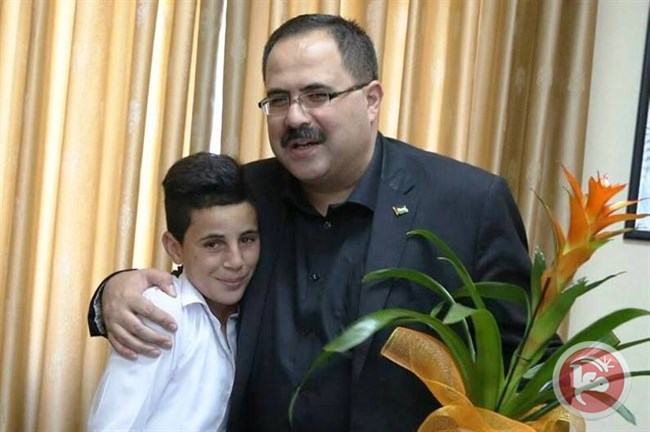
RAMALLAH – Fourteen-year-old Muhammad Fadel al-Tamimi remains in a medically-induced coma as of Tuesday, days after he was hot in the face with a rubber-coated steel bullet by Israeli forces.
The Palestinian teenager, a resident of the central occupied West Bank town of Nabi Saleh, was injured during clashes in his village on Friday.
According to locals, the bullet settled in the boy’s skull after it entered his face below his nose and broke his jaw.
The teenager is currently being held in the ICU of the al-Istishari Hospital in Ramallah.
Al-Tamimi, a former prisoner, was detained when he was 13 years old, and was previously injured several times during weekly clashes in his village.
His cousin, 17-year-old Ahed al-Tamimi, was detained on Tuesday morning by Israeli forces for slapping and kicking Israeli soldiers on the same day that Muhammad was injured.
The ‘Last Martyr’: Who Killed My Neighbor, Kamal Al-Assar?
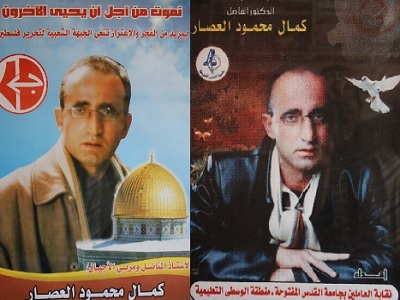
Posters of Kamal Al-Assar following his death in 2008. (Photo: Supplied)
By Ramzy Baroud | Palestine Chronicle | December 9, 2017
When I learned of the death of Kamal Al-Assar a few years ago, I was baffled. He was only in his 40s. I remember him in his prime, a young rebel, leading the neighborhood youth, armed with rocks and slingshots, in a hopeless battle against the Israeli army. Understandably, we lost, but we won something far more valuable than a military victory. We reclaimed our identity.
At every anniversary of the First Palestinian Intifada, a popular uprising that placed the Palestinian people firmly on the map of world consciousness, I think of all the friends and neighbors I have lost, and those I have left behind. The image of Ra’ed Mu’anis, in particular, haunts me. When an Israeli sniper’s bullet plunged into his throat, he ran across the neighborhood to find help before he collapsed at the graffiti-washed walls of my house.
“Freedom. Dignity. Revolution,” was written in large red letters on the wall, a pronouncement signed by the Popular Front for the Liberation of Palestine.
Only later I learned that Kamal was the one who carried Ra’ed out of the firing zone. But it was too late. Ra’ed, a skinny and feeble teenager, with a distinct black mark on his forehead had bled alone at the steps of my home. When he was buried, hundreds of refugees descended on the Martyrs Graveyard. They carried Palestinian flags and chanted for the Intifada and the long-coveted freedom. Ra’ed’s mother was too weakened by her grief to join the procession. His father tried to stay strong, but wept uncontrollably instead.
Kamal was revitalized by the Intifada. When the uprising broke out, he emerged from his own solitude. Life made sense once again.
For him, as for me and many of our generation, the Intifada was not a political event. It was an act of personal – as much as collective – liberation: the ability to articulate who we were at a time when all seemed lost. The Palestinian Liberation Organisation (PLO) languished in Tunisia after being forced to leave Lebanon in 1982. Arab governments seemed to have lost interest in Palestine altogether. Israel emerged triumphant and invincible.
And we – those living under protracted military occupation – felt completely abandoned.
When, on December 8, 1987, thousands took to the streets of Jabaliya Refugee Camp, the Gaza Strip’s largest and poorest camp, the timing and the location of their uprising was most fitting, rational and necessary. Earlier on that day, an Israeli truck had run over a row of cars carrying Palestinian laborers, killing four young men. For Jabaliya, as with the rest of Palestine, it was the last straw.
Responding to the chants and pleas of the Jabaliya mourners, the refugees in my refugee camp – Nuseirat – marched to the Israeli military barracks, known as the “tents”, where hundreds of soldiers had tormented my camp’s residents for years.
In the morning of December 9, thousands of Nuseirat youth took to the streets and vowed to avenge the innocent blood of the Jabaliya victims of the previous day. They swung large flags made of silky fabric that swayed beautifully in Gaza’s salty air and, as the momentum grew and they became intoxicated by their own collective chants, they marched to the “tents” where the soldiers were uneasily perched on the tops of watchtowers, hiding behind their binoculars and automatic machine guns.
Within minutes, a war had started and a third generation of refugee-camp-born fellahin peasants stood fearlessly against a well-equipped army that was visibly gripped by fear and confusion. The soldiers wounded many that day and several children were killed.
Kamal was on the frontlines. He waved the largest flag, chanting the loudest, threw rocks the furthest and incessantly urged young men not to retreat.
Kamal hated school as well as his teachers. To him they seemed so docile, adhering to the rules of the occupier which decreed that Palestinians not teach their own history, so that the fellahin were denied even the right to remember who they were or where they came from. The Intifada was the paradigm shift that offered an alternative – however temporary, however chaotic – to the methodical humiliation of life under occupation.
Within hours, Kamal felt liberated. He was no longer tucked away in a dark room reading the works of Marx and Gramsci. He was in the streets of Nuseirat fashioning his own utopia.
The Intifada was that transformational period that saved a generation from being entirely lost, and Palestine from being forgotten. It offered a new world, that of solidarity, camaraderie and wild youth who needed no one to speak on their behalf.
Within weeks of bloody clashes in which hundreds of youth fell dead or wounded, the nature of the Intifada became clearer. On one hand, it was a popular struggle of civil disobedience, mass protests, commercial and labor strikes, refusal to pay taxes and so on. On the other hand, militant cells of refugee youth were beginning to organize and leave their mark, as well.
The militancy of the intifada did not become apparent until later, when the repression by the Israeli government grew more violent. Under the banner of the “Iron Fist” campaign, a new Israeli stratagem was devised, that of the “broken bones” policy. Once captured, youth had their hands and legs broken by soldiers in a systematic and heartless manner. In my neighborhood, children with casts and crutches seemed to outnumber those without.
Kamal was eventually detained from his home. He attempted to escape but the entire neighborhood was teeming with soldiers, who arrived at night as they always do. They commenced the torturous rite in his living room, as his mother – the resilient, Tamam – shoved her body between him and the ruthless men.
When Kamal regained consciousness, he found himself in a small cell, with thick, unwashed walls that felt cold and foreign. He spent most of his prison time in the torture chamber. His survival was itself nothing less than a miracle.
When the Oslo Accords were signed in 1993, officially ending the Intifada, Kamal’s generation felt betrayed. Nothing good came out of that “peace”, except that a few rich Palestinians grew even richer.
Kamal died a few years ago. I learned that his revolution never ceased. He became a teacher, laboring to reconstruct the history of his people at a local Gaza university. His mother, now an old refugee in Nuseirat is still heartbroken over her son’s death. She told me that Kamal’s wounds and physical ailments from prison never healed.
Kamal was a martyr, she told me. Perhaps the last martyr in an uprising that was not meant to liberate land, but liberate people from the idea that they were meant to exist as perpetual victims; and it did.
Marwan Barghouthi ordered to solitary confinement after statement on Intifada
Samidoun Palestinian Prisoner Solidarity Network – December 13, 2017
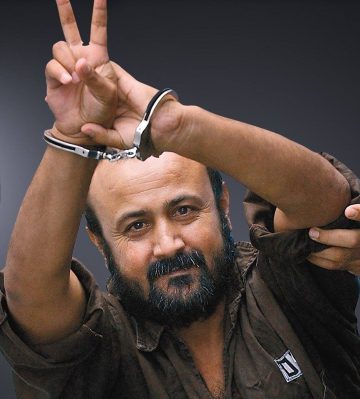 Marwan Barghouthi, member of the Fateh central committee and a prominent Palestinian national leader, was transferred by Israeli prison officials into solitary confinement at Hadarim prison, reported the campaign for his release on Tuesday, 12 December 2017.
The campaign said that “this decision to isolate him comes to prevent him from communicating with his people in the homeland and diaspora at a time when Palestine and the capitals and cities of the world are protesting widely against the decision of U.S. president Donald Trump to declare his country’s recognition of Jerusalem as the capital of the Israeli occupation state. This decision to isolate is a form of retaliation for a statement issued by Marwan Barghouthi on the anniversary of the great popular intifada a few days ago.” The statement, issued from Hadarim prison, emphasized the rights of the Palestinian people to return, self-determination and their capital, Jerusalem, and urged the expansion of the boycott, divestment and sanctions movement and international solidarity with Palestine.
Barghouthi has been ordered to solitary confinement on 27 occasions and spent several years in solitary confinement in the past, especially after his imprisonment in April 2002. He was held in solitary confinement in April-May 2017 because of his role in leading a mass hunger strike for 51 days in Israeli prison; he has also been barred from visits by his wife, the lawyer Fadwa Barghouthi, until the end of 2019.
Recently, a French delegation to Palestine, including a number of mayors involved with the campaign to free Barghouthi, was told that its members would be denied access to Palestine for their role in supporting Palestinian prisoners and the boycott, divestment and sanctions movement. The delegation sought to meet with Barghouthi in Hadarim prison.
Red Cross says life has ‘stopped’ in Myanmar’s Rakhine
Press TV – December 13, 2017
The International Committee of the Red Cross says life has “stopped” in Rakhine state due to the fear of violence, nearly four months after a new wave of crackdown by the government erupted against the persecuted Rohingya Muslims.
The ICRC director of operations, Dominik Stillhart, said Wednesday that tensions between the Muslims and the dominant Buddhist community were preventing Muslim traders from reopening shops and markets.
“The situation in the northern Rakhine has definitely stabilized, there are very sporadic incidents, but tensions are huge between the communities,” Stillhart said after a three-day mission to the remote area. “You get a sense, especially of the two main communities being deeply scared of each other.”
He visited the towns of Maungdaw, Buthidaung and Rathedaung in northern Rakhine, where the ICRC, the only aid agency operating in the violence-hit region, is providing food, water and other aid to 150,000 people.
Stillhart said the Red Cross hoped to reach all of the 180,000 Rohingya it estimated remained in the “politically-sensitive” region after more than 600,000 people fled to Bangladesh.
“You travel through the countryside and you really see on both sides of the road villages that are completely destroyed. It just gives you a bit of a sense of the scale of destruction. There is also this pervasive sense of absence.”
“It is as if life has stopped in its tracks, people do not move, markets are closed in Muangdaw town,” Stillhart said.
He said the main problem facing the Muslims was “the very limited possibilities for them to access their own livelihoods like fields, and especially markets and services.”
Late last month, Bangladesh and Myanmar reached a deal to repatriate the Rohingya refugees within several months.
The Red Cross said the returns must be voluntary and safe. “But for now we really don’t see a significant return movement and I’m also not expecting that we will see massive return anytime soon,” Stillhart said. Citing UN figures, he added that nearly 300 Muslims still fled daily.
About 650,000 Rohingya Muslims have fled Myanmar to Bangladesh since late last year, when Myanmar’s soldiers and Buddhist mobs began vicious attacks on the minority Muslims in Rakhine. The crackdown on the Rohingya has intensified since August 25.
All along, government troops and the Buddhist mobs have been killing, raping, and arbitrarily arresting members of the Muslim community. They have also been setting the houses of the Muslims on fire in hundreds of predominantly-Rohingya villages in the northern parts of Rakhine, where nearly all the Rohingya reside.
Myanmar’s government denies full citizenship to the Rohingya, branding them illegal immigrants from Bangladesh. Dhaka, in turn, regards the desperate refugees as Myanmarese. The Rohingya, however, track their ancestors many generations back in Myanmar.
The UN has already described the Rohingya as the most persecuted community in the world, calling the situation in Rakhine similar to “a textbook example of ethnic cleansing.”
The massacre of children and others at El Mozote

Garden next to church in El Mozote where hundreds of child victims lie buried.
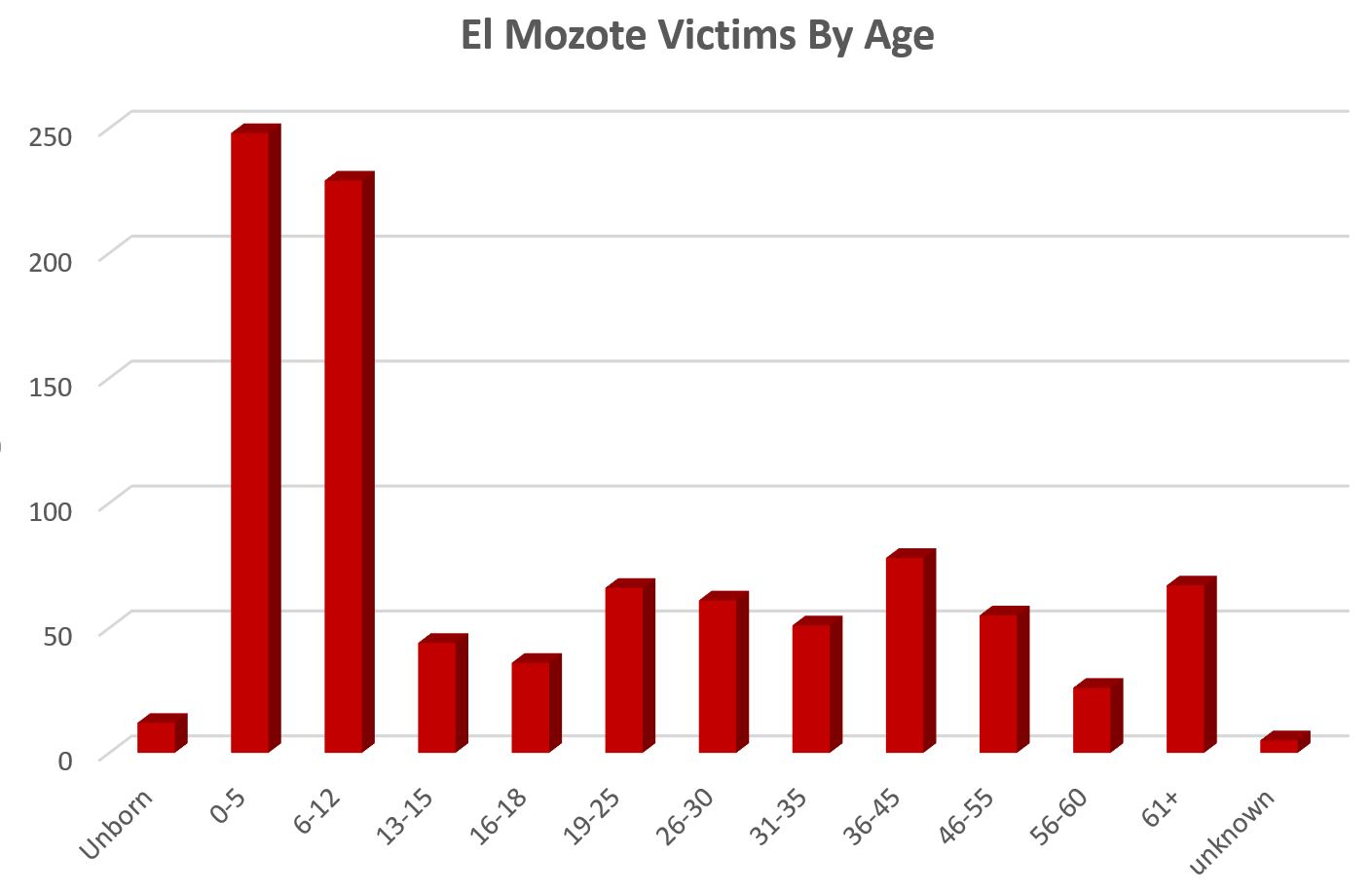
Thirty-six years ago, from December 10-12, 1981, the armed forces of El Salvador massacred hundreds of children in the town of El Mozote and surrounding communities. Last week El Salvador’s government divulged the results of the first official register of the victims who died in that massacre. Of 978 victims executed, 553 or 57% were under 18 years of age and 477 were 12 and under. Twelve infants died in their mothers wombs. Henceforth, at El Salvador Perspectives, we will refer to this atrocity as the “Massacre of Children and Others at El Mozote.”
As it covers the trial, the online periodical El Faro has offered us another view into the lives of the victims. A photogallery at the site shows ordinary objects of life in the village. The objects were recovered during the course of exhumations locating the bodies of the army’s massacre. Like the artifacts from Pompeii or Joye de Ceren, these items from everyday life give us a glimpse into the pre-disaster lives of the victims.
On this 36th anniversary, president Salvador Sanchez Ceren traveled to El Mozote for the first time during his presidency. In his speech, the president spoke of a debt to the victims, of the government’s efforts to invest in the zone as a form of reparations through public works, a health clinic, and cultural activities. The president indicated there were plans to construct a center devoted to historic memory so the events at El Mozote would not be forgotten. Despite his reference to historic memory, however, the president made no indication that the military would be required to open its archives from the time. He also made no mention of the current trial proceedings where former military commanders are charged with responsibility for the massacre of children and others at El Mozote.

Criminal law in El Salvador talks about those who are the material authors of a crime, the ones who pulled the trigger, and the intellectual authors of a crime, the ones who gave the orders for the crime. There have been previous trials in El Salvador for the material authors of such crimes as the murder of the Jesuits, a housekeeper and her daughter in 1989, or the murders of the four US churchwomen in 1980. But the current trial in the courtroom in San Francisco Gotera is the first full trial of the intellectual authors of atrocities committed during the civil war. For that reason, as well as the magnitude of the crime of a massacre of hundreds of children and others, the trial is historic.
The El Mozote criminal prosecution has developed a momentum and a seriousness not seen in any other case involving war crimes from the time of El Salvador’s civil war. It is a momentum pushed by the zealous efforts of the human rights lawyers for the victims who have called witness after witness to the stand to describe the loss of their families at the time. I have seen the coverage of the suit and the commentary about it in social media increasing as each new witness takes the stand. In small steps, the country is starting to confront what justice means for a military command which ordered its soldiers to massacre children.
Khader Adnan seized by Israeli occupation forces, launches immediate hunger strike
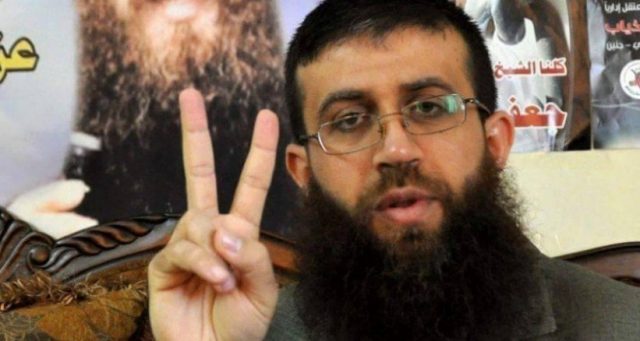
Samidoun Palestinian Prisoner Solidarity Network- December 11, 2017
Prominent Palestinian leader, organizer and former prisoner and hunger-striker Khader Adnan was seized on Monday morning, 11 December, by Israeli occupation forces at his home in Arraba, Jenin. He immediately launched an open hunger strike to demand his release.
Randa Moussa, his wife, told Palestine Today that he had announced an immediate strike on food, drink and speech after his arrest. She said that four patrols, an armored troop carrier and a jeep surrounded their home at 2:30 am and invaded the home violently, trying to break down the door of the home, and that they hit Adnan on the back and hand, throwing him on the ground before handcuffing him. He was then interrogated in a closed room of the house before being taken away to an undisclosed location.
Adnan, prominent political activist from the town of Arraba near Jenin, has been arrested 10 times and spent six years in Israeli prison, all in administrative detention – imprisonment without charge or trial. In 2012 and 2015, he carried out 66-day and 56-day hunger strikes, respectively, winning his liberation from arbitrary Israeli imprisonment.
The Islamic Jihad movement said in a statement that “the arrest of leaders and popular and national symbols will not weaken our people or break their will…. this is a desperate attempt to suppress the uprising of Jerusalem,” as Palestinians inside and outside Palestine have risen up against US President Donald Trump’s declaration that Jerusalem is the “capital of Israel” in the eyes of the US.
Khader Adnan is a Palestinian and international symbol of steadfastness within the prisons who has inspired widespread international solidarity. Samidoun Palestinian Prisoner Solidarity Network demands the immediate release of Khader Adnan and will announce further actions as we receive more news and information from Palestine on Adnan’s detention. The struggle for the freedom of Palestinian political prisoners is at the forefront of the struggle to defend Jerusalem and liberate Palestine.
Catholic University of Leuven announces it will not continue participation in LAW-TRAIN
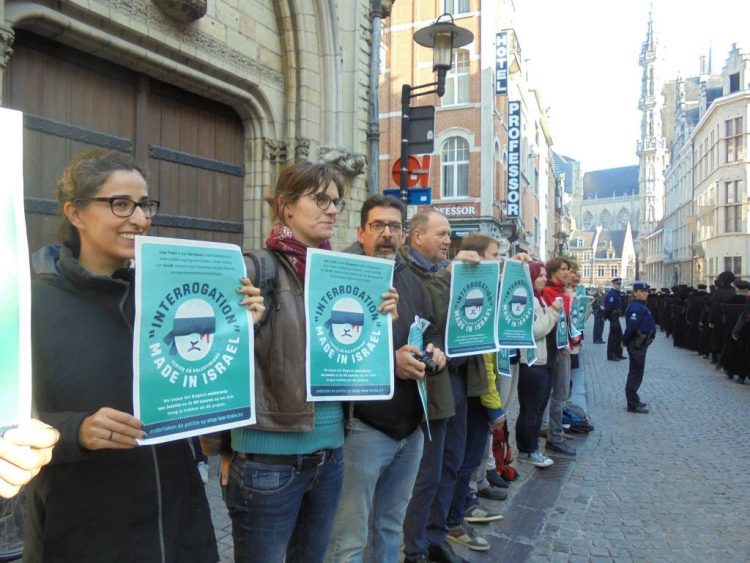
Photo: Pour la Palestine, Facebook
Samidoun Palestinian Prisoner Solidarity Network – December 7, 2017
Following a wide campaign by a faculty action group, student organizers and a variety of community organizations, the Catholic University of Leuven in Belgium (KULeuven) announced that it will not continue future participation in the LAW-TRAIN project, a joint cooperation program with the Israeli police to study interrogation techniques, funded by the EU under the Horizon 2020 program.
Newly elected KULeuven rector Luc Sels released a statement on Wednesday, 6 December stating that no follow-up projects will be pursued in the future, because “The Israeli Ministry of Public Security’s participation does indeed pose an ethical problem in view of the role played by this strong arm of the Israeli government in enforcing an unlawful occupation of the Palestinian territories and the associated repression of the Palestinian population.” While the statement commits to continue the current project until the end of April 2018, it also calls for the creation of a human rights charter to govern the assessment of future proposed projects to avoid such situations.
This is the latest achievement of the international campaign against LAW-TRAIN. The project seeks to develop software to simulate interrogations in a hypothetical international drug trafficking case. The involvement of the Israeli police, headquartered in occupied Jerusalem and including the Border Police that regularly enforce occupation against Palestinians, engage in mass arrests and killings of Palestinians, and are an integral part of the occupation security forces, has sparked resistance to the program in several countries, among activists, scholars and lawyers who note that the program produces a European license for Israeli torture and abuse.
The Israeli police are also known for the use of torture during interrogation as well as the arrest, interrogation and violation of the human rights of Palestinian children. The Israeli police and Tel Aviv University are partners in the project with the Belgian federal police and prosecutor’s office as well as KULeuven and the Spanish Guardia Civil.
Earlier, Portugal was also a partner in the project, but pulled out citing budgetary issues after an extensive and successful campaign by Portuguese and Palestinian organizations highlighting the project’s clear links to human rights violations and the torture and imprisonment of Palestinians. Over 40 Belgian organizations – including Samidoun – joined the campaign to stop LAW-TRAIN, working hand in hand with a campaign on the university’s campus to bring an end to the project and future such collaborations.
Thousands of Belgians signed a petition to stop LAW-TRAIN, while on the university’s campus, dozens of academics participated in protests and appeals, including an intervention in the annual opening academic procession by gowned professors who presented the rector with a cake and the petition signatures. The Leuven academics’ working group on Palestine led campaigns within the University on scholarly and human rights grounds, and the LAW-TRAIN issue was made a significant one on campus, including leading up to the election of Sels as the university’s new rector earlier in 2017.
Students on campus joined with faculty to hold campus protests, including a street theater action highlighting the realities of interrogation and the human rights abuses of the Israeli police. LAW-TRAIN was a major focus of Israeli Apartheid Week 2017 on Belgian campuses, which highlighted the situation of Palestinian prisoners and featured a number of talks and presentations by French-Palestinian lawyer and former political prisoner Salah Hamouri, currently jailed once more without charge or trial by the Israeli occupation.
Protests in Leuven, Charleroi and elsewhere highlighted LAW-TRAIN as human rights experts urged not only the university but also the Belgian Ministry of Justice to immediately pull out of the program. A delegation of Belgian lawyers and human rights scholars traveled to Palestine to investigate torture by the Israeli police and published an open letter upon their return, urging Belgium to withdraw from the project. In addition, hundreds of Belgian academics and cultural workers joined an open letter organized by BACBI, the Belgian Campaign for Academic and Cultural Boycott of Israel, calling on the government to “withdraw the Belgian Ministry of Justice from this highly contentious project. Such a withdrawal would signal to the Israeli politicians that Europe, and especially Belgium, will no longer tolerate the misdemeanors of their order and security forces against the Palestinian population.”
Samidoun Palestinian Prisoner Solidarity Network congratulates the Leuven faculty and students and all organizations that have worked on this campaign in achieving this important step from KULeuven. We redouble our call upon the Belgian ministry of justice, federal prosecutor’s office, and police, as well as the Spanish Guardia Civil, to immediately withdraw from this project and to the European Union to end its funding of such programs in collaboration with the Israeli occupation and its security forces. Such programs are an attempt to legitimize the very forces that daily carry out repression, torture and colonization and maintain apartheid and occupation against the Palestinian people. Participation in or funding of LAW-TRAIN or similar programs means direct complicity in the torture and imprisonment of Palestinians. It is long past time to hold the Israeli state accountable and subject it to boycott, divestment and sanctions for its flagrant, decades-long violations of fundamental Palestinian rights, rather than provide it with funding and support that allows it to continue its deadly and devastating attacks on the Palestinian people and their rights with impunity.
Featured Video

Seyed M. Marandi: Negotiations Collapsed – Return to War
or go to
Aletho News Archives – Video-Images
From the Archives
Wartime internment camps in Australia
National Archives of Australia
World War I
During World War I, for security reasons the Australian Government pursued a comprehensive internment policy against enemy aliens living in Australia.
Initially only those born in countries at war with Australia were classed as enemy aliens, but later this was expanded to include people of enemy nations who were naturalised British subjects, Australian-born descendants of migrants born in enemy nations and others who were thought to pose a threat to Australia’s security.
Australia interned almost 7,000 people during World War I, of whom about 4,500 were enemy aliens and British nationals of German ancestry already resident in Australia.
Records of World War I internment camps
World War II
During World War II, Australian authorities established internment camps for three reasons – to prevent residents from assisting Australia’s enemies, to appease public opinion and to house overseas internees sent to Australia for the duration of the war.
Unlike World War I, the initial aim of internment during the later conflict was to identify and intern those who posed a particular threat to the safety or defence of the country. As the war progressed, however, this policy changed and Japanese residents were interned en masse. In the later years of the war, Germans and Italians were also interned on the basis of nationality, particularly those living in the north of Australia. In all, just over 20 per cent of all Italians resident in Australia were interned. … continue
Blog Roll
 Aletho News
- Seyed M. Marandi: Negotiations Collapsed – Return to War
- Tomorrow’s naval blockade showdown
- ‘Israel’ attacks civilians to hide its embarrassing military failures & out of pure sadism
- Any Foreign Military Vessel Approaching Hormuz Under Any Pretext ‘Will Be Dealt With Severely’: IRGC
- Diplomats slam US negotiators’ performance in Iran talks
- Trump Refuses Exit Ramp, War with Iran will Continue
- Trump Says US Naval Blockade in Strait of Hormuz Will Begin Shortly
- US, Iran end 21-hour talks without agreement
- US IRAN TALKS: Who Are the Crazy Ones Here? /Lt Col Daniel Davis
- Talks with the US end without a deal over excessive US demands: Iran
- If Americans Knew
- US-Iran ceasefire negotiations make zero progress – Daily Update
- Pro-Israel ‘Thinktanks’ and Individuals who Influence U.S. Foreign Policy
- Mearsheimer reveals how Israel dictates US policies on Iran, Gaza – video
- After killing 350+, Israel still has a “score to settle” with Lebanon before ceasefire – Daily Update
- Military aid to Israel emerges as the latest political litmus test for Democrats
- The only Palestinian children’s rights organization closes following years-long Israeli campaign against it
- ‘I Can’t Forget the Smell’: Lebanese Reel After Israel Kills Over 300 in Single Day
- DNC Shoots Down Resolutions Calling Out AIPAC and Limiting Arms to Israel
- TCN: Is Israel Blackmailing President Trump?
- Israel killed at least 303 Lebanese yesterday – who were they? Daily Update
- No Tricks Zone
- German Expert: Heat Dome Led To Record Temps In Western USA…Warmer In 1934, 1936
- New Study: No Linear Warming Or Glacier Retreat Along Northern Antarctic Peninsula Since 1980s
- An Inconvenient Tree: Uncovered In Alps… Europe Much Warmer Than Today 6000 Years Ago
- New Study Reports A 60% Slowdown In Greenland’s Ice Loss Rate In The Last Decade
- Low Intensity Tornado Wrecks Major Solar Farm, Creating A Potential Toxic Dump
- New Study Finds Warming Saves Lives…Cold Temperatures 12 Times More Deadly Than Excess Heat
- German Science Blog Accuses PIK Climate Institute Of Hallucinating Climate Tipping Points
- Devastating Assessment Of Comirnaty Vaccine By Former Senior Pfizer Europe Toxicologist
- New Study: CO2 Is ‘Effectively Negligible’ As An Explanatory Climate Change Factor Since 2000
- Former Pfizer Toxicologist Dr. Helmut Sterz Tells Bundestag Hearing Pfizer Vaccine Should Have Never Been Approved
 Aletho News