After being blocked from entering Gaza Aid convoy to return to Algeria
Palestine Information Center – August 23, 2017
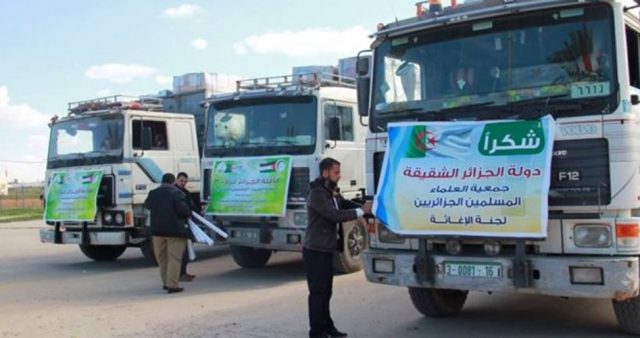
Head of the relief department of the Algerian Scholars Association, Yahya Sari, said on Tuesday that negotiations with Egyptian authorities to allow the Algerian humanitarian convoy to enter the Gaza Strip have reached a dead end.
Sari told Quds Press that the convoy is preparing to return to Algeria as soon as possible so that the medicines are not damaged due to heat.
He pointed out that Egyptian authorities have given their reasons for preventing the entry of the convoy into Gaza, but he did not disclose them.
The 14-truck convoy, carrying medical aid worth over $4 million, contained medicines, medical supplies, ambulances and electricity generators urgently needed for Gaza’s hospitals.
The convoy named (Algeria-Gaza 4) arrived on Wednesday at the Egyptian side of Rafah crossing in preparation for entering the Gaza Strip, but it was asked on Friday evening to return to the Egyptian city of Port Said despite having all the documents required to deliver aid to Gaza.
Ammar Talbi, the deputy head of the Algerian Scholars Association, appealed two days ago to Egyptian authorities to expedite the entry of the Algerian convoy into the coastal enclave fearing that some medicines may deteriorate due to the high temperature.
Talbi said in a statement that the convoy was purely humanitarian and that it left Algeria after obtaining the approvals of both Algerian and Egyptian authorities in early February.
Mossad accused of assassinating Palestinian in Sweden
MEMO | August 23, 2017
 The Israeli intelligence service Mossad has been accused of assassinating a Palestinian man living in Sweden, according to Israeli daily Haaretz.
Mohammad Tahsin Al-Bazam, a former Gaza resident, was found shot in the head in the Swedish town of Limmared on Saturday. His family is believed to have ties to Hamas, prompting Palestinian sources to suspect Israeli involvement in his death.
A statement released on Sunday by the Swedish police confirmed that as yet they could not ascertain a motive for the intrusion.
“Reports said several people wearing masks entered the apartment through a balcony and shot the man inside. They disappeared after the shooting as quickly as they arrived.”
After the shooting Al-Bazam was taken to a local hospital, and then flown to a larger facility in Gothenburg, but died of his injuries.
Al-Bazam’s brother served in Hamas’ military wing and as a bodyguard to the group’s Prime Minister Ismail Haniyeh. His father is currently the spokesman for Hamas’ Homeland Security Office in Gaza, but stated in an interview that his son had been living in Sweden for over a decade and was not involved in political activity.
Hamas believes Mossad to be responsible for the deaths of numerous of its members over the years, including the assassination of a senior member, Mazen Fuqaha in March. Israel has never confirmed or denied reports but states that it reserves the right to fight alleged terrorists even beyond its borders.
Israeli soldiers attacked by Israeli youth who ‘mistook’ the soldiers for Palestinians
Ma’an – August 20, 2017
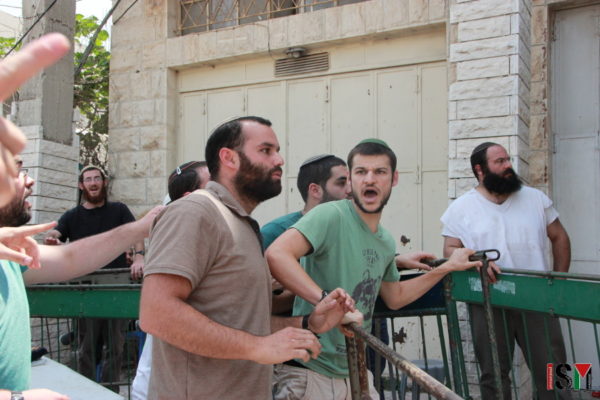
BETHLEHEM -Two Israeli soldiers were attacked on Friday night in a public park in the town of Pardes Hanna-Karkur, south of Haifa in northern Israel, by a group of young Israelis who allegedly thought the soldiers were Palestinians, according to Israeli media.
Ynet news reported on Sunday that the two soldiers were sitting in the park with a young woman when they were attacked by the group of youth, who according to the soldiers, yelled “you are Arabs” at the soldiers, who were on vacation and presumably not in uniform.
The group of Israeli youth then attacked the soldiers with the end of a hookah pipe and other blunt objects.
Israeli news site Arutz Sheva reported that the soldiers were “lightly injured” and treated at the Hillel Yaffe Medical Center, while the father of one of the soldiers filed a complaint to the police.
Both Arutz Sheva and Ynet reported that the father expressed his outrage over the attack, exclaiming “soldiers go on holiday and are attacked by criminals only because they look like Arabs to them,” adding “they lynched them, it could have ended in death.”
“They attacked them with a pipe from a hookah and other blunt objects. How low can we fall? There are two soldiers who were physically and mentally harmed. And if they were Arabs, then we have to hurt them? We are shocked and call for them to be dealt with,” the father said.
An Israeli police spokesperson was not immediately available for comment.
Violent attacks on Israelis that “look like Arabs” are not uncommon in Israel, as anti-Palestinian sentiment is often expressed in the form of so-called “price tag attacks,” a term used by right-wing Israelis to refer to the attacks they carry out on Palestinians and their property.
In October 2015, one such attack caught the attention of international media organizations when an a Jewish Israeli man, Uri Rezken, was stabbed by another Israeli Jew who believed Rezken was Palestinian.
Meanwhile, according to the United Nations Office for the Coordination of Humanitarian Affairs (OCHA), there were a total of 107 reported settler attacks against Palestinians and their properties in the West Bank and occupied East Jerusalem in 2016. OCHA has recorded 65 such attacks since the beginning of the year.
Remembering the Rabaa massacre
By Amelia Smith | MEMO | August 14, 2017
Four years ago today the Egyptian army stormed a sit-in at Cairo’s Rabaa square and slaughtered 1,000 people who were protesting against the removal of the country’s first democratically elected President, Mohammed Morsi. People were shot, burnt alive and suffocated with tear gas. Security forces blocked the entrances so that ambulances couldn’t get in to treat the wounded.
What: Rabaa Massacre
When: 14 August 2013
Where: Egypt
What happened?
After Morsi was ousted in a military coup on 3 July 2013 the Muslim Brotherhood called for counter-protests at Rabaa Al-Adawiya and Al-Nahda squares. Some 85,000 people joined the sit-ins.
Members of the Muslim Brotherhood had been demonstrating outside the Rabaa Al-Adawiya Mosque in Cairo for 47 days when security forces attacked at around 6am on 14 August 2013.
Security forces shot indiscriminately into the crowd, set fire to the tents people had gathered in and threw tear gas into the masses. Armoured vehicles and bulldozers advanced on the protesters.
Some 1,000 people were killed, thousands injured and over 800 people were arrested.
What happened next?
Supposedly liberal figures like the author Alaa Al-Aswany endorsed the massacre, as did the state media. “They are a group of terrorists and fascists,” Al-Aswany said.
Despite the fact that the police and army opened fire and used excessive force, since that day not a single security officer has been brought to trial or been held accountable for the massacre.
In 2015 the government renamed the square after Hisham Barakat, the public prosecutor who presided over the acquittal of Hosni Mubarak.
Authorities widened their crackdown, not just targeting members of the Muslim Brotherhood but anyone who opposes the regime. They arrested thousands, tortured them, denied them medical attention in prison and forcibly disappearing them.
Human Rights Watch and the Egyptian Initiative for Personal Rights both conducted independent investigations into the massacre and concluded that it had been launched on predominantly unarmed protesters.
Despite this the international community resumed arms exports to Egypt shortly after the massacre and have generally sought to strengthen ties with the Sisi regime.
Saudi forces set ablaze Shia homes in restive Awamiyah
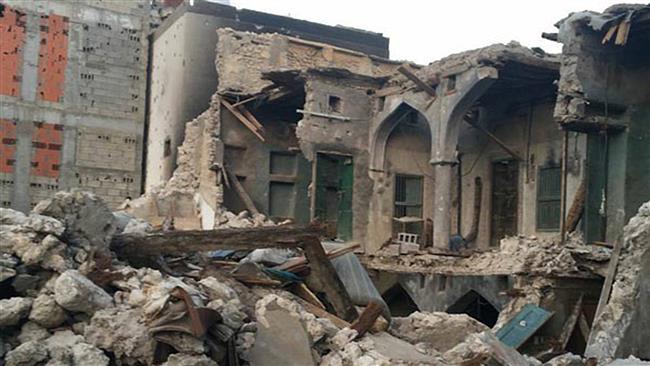
An al-Alam photo shows rubble caused by the Saudi demolition of Awamiyah, Eastern Province, Saudi Arabia.
Press TV – August 1, 2017
Saudi forces have set fire to homes belonging to Shia residents in the besieged town of Awamiyah that has been the scene of a heavy-handed regime crackdown on the minority community.
Based on local reports, Saudi forces have thrown Shia citizens out of their homes and then torched their properties.
Awamiyah, situated in Eastern Province, has long been a flashpoint between the Saudi kingdom and the inhabitants complaining of discrimination.
It has witnessed renewed deadly clashes between the military and residents since May, when Saudi forces began razing the town’s old quarter, known as al-Mosawara.
Saudi authorities claim that Mosawara’s narrow streets have become a hideout for militants suspected of being behind attacks on security forces in Eastern Province.
The UN, however, said Saudi Arabia was erasing cultural heritage and violating human rights through Mosawara’s demolition.
Karima Bennoune, the UN special rapporteur in the field of cultural rights, said Saudi authorities ignored repeated pleas by the world body to halt the destruction.
“These destructions erase the traces of this historic and lived cultural heritage and are clear violations of Saudi Arabia’s obligations under international human rights law,” Bennoune said, accusing the Saudi forces of “irreparably burning down” historic buildings and forcing residents to flee their homes.
Leilani Farha, the UN special rapporteur on the right to adequate housing, also warned that the Saudi move “constitutes a forced eviction under international human rights law.”
Additionally, Ali al-Dubisi, the head of the Berlin-based European Saudi Organization for Human Rights, said the Saudi forces were following a scorched-land policy in Awamiyah, launching rocket attacks and shelling residential buildings and civilians who are resisting Saudi pressures to evacuate.
Since February 2011, Saudi Arabia has stepped up security measures in Shia-dominated Eastern Province, which has been rocked by anti-regime demonstrations, with protesters demanding free speech, the release of political prisoners, and an end to economic and religious discrimination.
The government has suppressed pro-democracy movements, but they have intensified since January 2016 when Saudi Arabia executed respected Shia cleric Sheikh Nimr al-Nimr.
Israel shoots Palestinian minor in both legs and arm
MEMO | July 31, 2017
Israeli forces shot an unarmed Palestinian minor in both legs and in one arm last week, according to Haaretz.
Thirteen-year-old Mohammed Qaddumi was collecting firewood near the West Bank Separation Wall on Tuesday when Israeli occupying forces fired at him. Qaddumi was admitted to Meir Hospital in Kfar Saba and underwent a long operation. His condition remains severe though his health has improved.
Qaddumi’s father said his son was one of four children walking by the barrier next to their home in the village of Jayus:
He was by the fence, the children were there, four children, and there were soldiers under the olive trees. They went up there by the fence, they could have grabbed him by the arm but they shot him three times.
His father emphasised that Qaddumi did not try to cross into Israel as the army claims, nor did the children throw stones at the soldiers who were hidden from their view.
Israel’s Civil Administration initially prevented Qaddumi’s family from accompanying their son to hospital in Israel, but relented after NGOs Mahsom Watch and Physicians for Human Rights intervened.
The army is said to have initiated legal proceedings against the wounded teenager, on suspicion of throwing stones.
Israeli forces have long been accused of implementing a “shoot to cripple” campaign against Palestinians in the occupied West Bank. A report released by the Badil resource centre found that in the first six months of 2016, at least 30 of the 86 Palestinians that were shot in Bethlehem alone were shot in the legs or knees.
Israeli generals have also been known to encourage such tactics against Palestinian youth. Reports surfaced last year that Palestinians in numerous West Bank cities speak of Shin Bet officials known only as “Captain Nidal” and “Captain Imad” among others, who regularly threaten to disable young men if they fail to comply with Israeli soldiers.
How Prison Labor is the New American Slavery and Most of Us Unknowingly Support it
If you buy products or services from any of the 50 companies listed below (and you likely do), you are supporting modern American slavery

Return to Now | June 13, 2016
American slavery was technically abolished in 1865, but a loophole in the 13th Amendment has allowed it to continue “as a punishment for crimes” well into the 21st century. Not surprisingly, corporations have lobbied for a broader and broader definition of “crime” in the last 150 years. As a result, there are more (mostly dark-skinned) people performing mandatory, essentially unpaid, hard labor in America today than there were in 1830.
With 5 percent of the world’s population and 25 percent of the world’s prison population, the United States has the largest incarcerated population in the world. No other society in history has imprisoned more of its own citizens. There are half a million more prisoners in the U.S. than in China, which has five times our population. Approximately 1 in 100 adults in America were incarcerated in 2014. Out of an adult population of 245 million that year, there were 2.4 million people in prison, jail or some form of detention center.
The vast majority – 86 percent – of prisoners have been locked up for non-violent, victimless crimes, many of them drug-related.
Big Business is making big bucks off of prison labor:

While prison labor helps produce goods and services for almost every big business in America, here are a few examples from an article that highlights the epidemic:
Whole Foods – You ever wonder how Whole Foods can afford to keep their prices so low (sarcasm)? Whole Foods’ coffee, chocolate and bananas might be “fair trade,” but the corporation has been offsetting the “high wages” paid to third-world producers with not-so-fair-wages here in America.
The corporation, famous for it’s animal welfare rating system, apparently was not as concerned about the welfare of the human “animals” working for them in Colorado prisons until April of this year.
You know that $12-a-pound tilapia you thought you were buying from “sustainable, American family farms?” It was raised by prisoners in Colorado, who were paid as little as 74 cents a day. And that fancy goat cheese? The goats were raised and milked by prisoners too.
McDonald’s – The world’s most successful fast food franchise purchases a plethora of goods manufactured in prisons, including plastic cutlery, containers, and uniforms. The inmates who sew McDonald’s uniforms make even less money by the hour than the people who wear them.

Wal-Mart – Although their company policy clearly states that “forced or prison labor will not be tolerated by Wal-Mart,” basically every item in their store has been supplied by third-party prison labor factories. Wal-Mart purchases its produce from prison farms, where laborers are often subjected to long hours in the blazing heat without adequate food or water.
Victoria’s Secret – Female inmates in South Carolina sew undergarments and casual-wear for the pricey lingerie company. In the late 1990’s, two prisoners were placed in solitary confinement for telling journalists that they were hired to replace “Made in Honduras” garment tags with “Made in USA” tags.
AT&T – In 1993, the massive phone company laid off thousands of telephone operators—all union members—in order to increase their profits. Even though AT&T’s company policy regarding prison labor reads eerily like Wal-Mart’s, they have consistently used inmates to work in their call centers since ’93, barely paying them $2 a day.

BP (British Petroleum) – When BP spilled 4.2 million barrels of oil into the Gulf coast, the company sent a workforce of almost exclusively African-American inmates to clean up the toxic spill while community members, many of whom were out-of-work fisherman, struggled to make ends meet. BP’s decision to use prisoners instead of hiring displaced workers outraged the Gulf community, but the oil company did nothing to reconcile the situation.

The full list of companies implicated in exploiting prison labor includes:
Bank of America
Bayer
Cargill
Caterpillar
Chevron
Chrysler
Costco
John Deere
Eli Lilly and Company
Exxon Mobil
GlaxoSmithKline
Johnson and Johnson
K-Mart
Koch Industries
McDonald’s
Merck
Microsoft
Motorola
Nintendo
Pfizer
Procter & Gamble
Pepsi
ConAgra Foods
Shell
Starbucks
UPS
Verizon
WalMart
Wendy’s
While not all prisoners are “forced” to work, most “opt” to because life would be even more miserable if they didn’t, as they have to purchase pretty much everything above the barest necessities (and sometimes those too) with their hard-earned pennies. Some of them have legal fines to pay off and families to support on the outside. Often they come out more indebted than when they went in.
“Prison farms” aka “modern plantations”

In places like Texas, however, prison work is mandatory and unpaid – the literal definition of slave labor.
According the Texas Department of Criminal Justice, prisoners start their day with a 3:30 a.m. wake-up call and are served breakfast at 4:30 a.m. All prisoners who are physically able are required to report to their work assignments by 6 a.m.
“Offenders are not paid for their work, but they can earn privileges as a result of good work habits,” the website says.
Most prisoners work in prison support jobs, like cooking, cleaning, laundry, and maintenance, but about 2,500 of them work in the Texas prison system’s own “agribusiness department,” where they factory-farm 10,000 beef cattle, 20,000 pigs and a quarter million egg-laying hens. The prisoners also produce 74 million pounds of livestock feed per year, 300,000 cases of canned vegetables, and enough cotton to clothe themselves (and presumably others). They also work at meat packaging plants, where they process 14 million pounds of beef and 10 million pounds of pork per year.

While one of the department’s stated goals is to reduce operational costs by having prisoners produce their own food, the prison system admittedly earns revenue from “sales of surplus agricultural production.”

Prisoners who refuse to work – again, unpaid – are placed in solitary confinement. When asked if Texas prisons still employ “chain gangs” in the FAQ section, the department responds:

“No, Texas does not use chain gangs. However, offenders working outside the perimeter fence are supervised by armed correctional officers on horseback.”
Similar “prison farms” exist in Arizona, Alabama, Alaska, Arkansas, California, Colorado, Florida, Georgia, Hawaii, Louisiana, Mississippi, Ohio and other states, where prisoners are forced to work in agriculture, logging, quarrying and mining. Wikipedia says while the agricultural goods produced on prison farms is generally used to feed prisoners and other wards of the state (orphanages and asylums) they are also sold for profit.
In addition to being forced to labor directly for the profit of the government, inmates may be “farmed out” to private enterprises, through the practice of convict leasing, to work on private agricultural lands or related industries (fishing, lumbering, etc.). The party purchasing their labor from the government generally does so at a steep discount from the cost of free labor.
Israeli forces shoot, injure Palestinian in Salfit tending to his land near separation wall
Ma’an – July 29, 2017
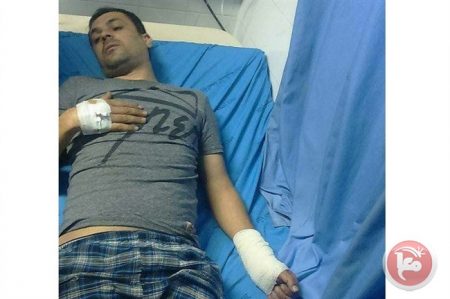 SALFIT – Israeli forces shot and injured a Palestinian on Friday while he was tending to his land near Israel’s separation wall in the village of Deir Ballut in the western part of Salfit district in the occupied West Bank.
Medical sources at the Palestinian Red Crescent told Ma’an that Faed Saleh Odeh Moussa, 33, was injured with a live bullet in his left hand after Israeli forces opened fire on him while he was on his land watering trees.
The sources added that he was transferred to the Yasser Arafat Hospital in Salfit, where doctors reported his injury as moderate.
Saed, Moussa’s brother, told Ma’an that they were caring for their land near Israel’s separation wall, like every Friday, when Israeli forces arrived in the area at 7:30 p.m. and randomly opened live ammunition on them.
Saed said that they quickly hid behind rocks before his brother was injured. He added that their children were also with them at the time and two men from Qalqiliya city in the northern West Bank who were en route to Israel.
Israeli forces remained in the area for some time before leaving following the incident, Saed noted. He added that he had called the Deir Ballut municipality to inform them of the incident, who said that they would notify the Palestinian liaison of the incident.
An Israeli army spokesperson told Ma’an she would look into reports on the incident.
According to the Bethlehem-based Applied Research Institute — Jerusalem, the village of Deir Ballut has had thousands of dunams of land confiscated for the purpose of illegal Israeli settlement building, while Israel’s separation wall — deemed illegal by the International Court of Justice in 2004 — is expected to swallow up at least 35 percent of the village’s lands.
Such Israeli activities in Palestinian villages coincide with upticks of Israeli violence against Palestinians — both by Israeli forces and settlers, as Palestinians are stripped of their lands and often barred from entering Israel’s so-called security “buffer zones” on the Palestinian side of the separation wall.
The UN has reported that at least 92 Palestinians are injured by Israeli forces every two weeks, while 1,444 Palestinians were injured by Israeli forces this year, as of July 17. However, this data does not include the hundreds of Palestinians who were injured during Al-Aqsa protests post-July 17.
Opening Gitmo to the World
By Robert Koehler | CounterPunch | July 28, 2017
To read Witnesses of the Unseen: Seven Years in Guantanamo is to run your mind along the contours of hell.
The next step, if you’re an American, is to embrace it. Claim it. This is who we are: We are the proprietors of a cluster of human cages and a Kafkaesque maze of legal insanity. This torture center is still open. Men (“forever prisoners”) are still being held there, their imprisonment purporting to keep us safe.
The book, by Lakhdar Boumediene and Mustafa Ait Idir — two Algerian men arrested in Bosnia in 2011 and wrongly accused of being terrorists — allows us to imagine ourselves at Guantanamo, this outpost of the Endless War.
“‘Take him outside,’ the interrogator told them. They led me up a flight of eight or nine concrete steps to a long gravel drive. It was pitch black out, and completely quiet. There was no one around. One of the soldiers grabbed my left arm, and another took my right. And then they started running.
“I tried to keep up, but my legs were shackled together. First, my flip-flops fell off, and after a few barefoot strides, my legs fell out from under me. The soldiers didn’t even slow down. They kept a firm grip on my arms while my legs bounced and scraped along the ground, gravel biting into them. When the run finally ended, the soldiers brought me back to the interrogation room, bloody and bedraggled.”
This is one fragment, one story of the seven years these two innocent men endured: these two fathers who were pulled away from their wives and children, yanked from their lives, stuffed into cages, interrogated endlessly and pointlessly, humiliated, force-fed (in Lakhdar’s case) . . . and finally, finally, ordered by a U.S. judge to be freed, when their case, Boumediene v. Bush, was at long last heard in a real court and the lack of evidence against them became appallingly clear.
The book is the story of the courage it takes to survive.
And it’s a story that can only be told because of the work of the Boston legal firm WilmerHale, which spent more than 17,000 pro bono hours litigating the case, “work that would have cost paying clients more than $35 million.”
Lakhdar and Mustafa were freed in 2008 and began rebuilding their lives. They eventually decided they wanted to tell their story — to an American audience. Daniel Norland, who was a lawyer at WilmerHale when the case was making its way through the court process (but was not part of the litigation team) and his sister, Kathleen List, who speaks fluent Arabic, conducted more than 100 hours of interviews with the two men, which were shaped into Witnesses of the Unseen.
In October 2011, the two men, who were living and working in Sarajevo, were among six Algerians who wound up being arrested by Bosnian authorities and charged with plotting to blow up the American embassy in Sarajevo. They were held for three months, then released. There was no evidence to back up the accusation.
But this turns out to be the beginning of their story, not the end of it. The men were released not back to their own lives but to an authority more powerful than the Bosnian judicial system: They were released to the Americans, who had begun rounding up Muslims . . . uh, terrorists. Evidence, or lack thereof, didn’t matter. These men were shipped to a new military prison, built at the Guantanamo Bay Naval Base in Cuba — an offshore prison, in other words, unencumbered by the U.S. Constitution. The detainees there allegedly had zero rights. That was the whole point.
Much of what Lakhdar and Mustafa describe is the efficiency of the U.S. military in dehumanizing its prisoners. The beatings and physical pain inflicted by guards, interrogators and even medical personnel were only part of it. The men also endured sexual humiliation, endless mocking of their religion — “I heard . . . that a soldier went into someone’s cell and flushed his Qur’an down the toilet” — and the cruel, teasing “misplacement” or censorship of letters from the prisoners’ loved ones.
Several years into his imprisonment, Lakhdar went on a hunger strike, which meant he was subjected to force-feeding, which the U.N. Human Rights Commission has called a form of torture:
“The soldier brought out an apparatus with a long yellow tube and started measuring out the length of tube he needed. He stopped when he got to a marking somewhere between 45 and 50 inches. That was the amount of tube he was going to insert through my nostril. . . .
“It’s almost impossible to explain what a feeding tube feels like to someone who hasn’t experienced it. I felt like I was choking, and being strangled, and yet somehow still able to breathe, all at the same time.
“The soldier taped the tube in place. I could see the Ensure trickling through the tube, one droplet at a time. It felt cold as it reached my stomach. I later learned that a full feeding normally takes fifteen to twenty minutes, but that first time they went exceptionally slowly. I sat in the clinic, chained to the chair, a tube protruding down my throat, for the rest of the afternoon and all through the night.”
It took no less than a Supreme Court ruling to start ending this nightmare.
In early 2007, a U.S. Circuit Court judge had refused to hear Boumediene v. Bush on the grounds that Guantanamo prisoners had no Constitutional rights. But the Supreme Court agreed to hear an appeal, and in June 2008 ruled that Guantanamo counted as part of the U.S. and, as Justice Anthony Kennedy wrote, the government couldn’t “switch the Constitution on and off at will.”
Thus the case went back to the Circuit Court and a real hearing got underway, leading to one of the most appalling revelations in the book: “Our lawyers had told us, in the days leading up to our trial, about a recent bizarre development in our case: the government had dropped its allegation that we had plotted to blow up the U.S. Embassy in Sarajevo. Just like in Bosnia seven years before, authorities were eager to toss around bomb-plot allegations right up until a court required them to provide evidence.
“Instead, our lawyers told us, the government now said that the reason it considered us ‘enemy combatants’ was that it had evidence — classified evidence that I wasn’t allowed to see — that we had made a plan to fly to Afghanistan and join Al Qaeda’s fight against American forces there. This was the first time I had ever heard this allegation. No one — no police officer, no Bosnian official, no American interrogator — had ever asked me a single question about it.
“And it was a ludicrous allegation. . . .”
And the judge ruled in their favor and they eventually were set free, to reclaim their lives, to see their children for the first time in seven years — and to give their story to the world.
But as long as Gitmo remains open and the Endless War continues — and no one is held accountable — there is no ending to this story, just an open wound.
Robert Koehler is a Chicago award-winning journalist and editor.
Featured Video

Seyed M. Marandi: Negotiations Collapsed – Return to War
or go to
Aletho News Archives – Video-Images
From the Archives
The US-Iran Scenario That Most Scares Israel
By Ali Haydar | Al-Akhbar | October 9, 2013
Israeli Prime Minister Benjamin Netanyahu issued a series of threats toward Iran and its interlocutors in the West, including the US, as serious negotiations on Iran’s nuclear program seem more plausible.
As a possible rapprochement looms between the US and Iran, Netanyahu has attempted to impose impossible Israeli conditions on the negotiators, such as the full dismantling of Iran’s nuclear program, not to mention threatening military force.
Whatever the deal that could materialize between Iran and the West, Israel is going to find itself before an open-ended path. One can foresee three possible scenarios… continue
Blog Roll
 Aletho News
- Seyed M. Marandi: Negotiations Collapsed – Return to War
- Tomorrow’s naval blockade showdown
- ‘Israel’ attacks civilians to hide its embarrassing military failures & out of pure sadism
- Any Foreign Military Vessel Approaching Hormuz Under Any Pretext ‘Will Be Dealt With Severely’: IRGC
- Diplomats slam US negotiators’ performance in Iran talks
- Trump Refuses Exit Ramp, War with Iran will Continue
- Trump Says US Naval Blockade in Strait of Hormuz Will Begin Shortly
- US, Iran end 21-hour talks without agreement
- US IRAN TALKS: Who Are the Crazy Ones Here? /Lt Col Daniel Davis
- Talks with the US end without a deal over excessive US demands: Iran
- If Americans Knew
- US-Iran ceasefire negotiations make zero progress – Daily Update
- Pro-Israel ‘Thinktanks’ and Individuals who Influence U.S. Foreign Policy
- Mearsheimer reveals how Israel dictates US policies on Iran, Gaza – video
- After killing 350+, Israel still has a “score to settle” with Lebanon before ceasefire – Daily Update
- Military aid to Israel emerges as the latest political litmus test for Democrats
- The only Palestinian children’s rights organization closes following years-long Israeli campaign against it
- ‘I Can’t Forget the Smell’: Lebanese Reel After Israel Kills Over 300 in Single Day
- DNC Shoots Down Resolutions Calling Out AIPAC and Limiting Arms to Israel
- TCN: Is Israel Blackmailing President Trump?
- Israel killed at least 303 Lebanese yesterday – who were they? Daily Update
- No Tricks Zone
- Cave Discovery Reveals Today’s Desert Climates Were Recently Far Warmer, Wetter, Teeming With Life
- German Expert: Heat Dome Led To Record Temps In Western USA…Warmer In 1934, 1936
- New Study: No Linear Warming Or Glacier Retreat Along Northern Antarctic Peninsula Since 1980s
- An Inconvenient Tree: Uncovered In Alps… Europe Much Warmer Than Today 6000 Years Ago
- New Study Reports A 60% Slowdown In Greenland’s Ice Loss Rate In The Last Decade
- Low Intensity Tornado Wrecks Major Solar Farm, Creating A Potential Toxic Dump
- New Study Finds Warming Saves Lives…Cold Temperatures 12 Times More Deadly Than Excess Heat
- German Science Blog Accuses PIK Climate Institute Of Hallucinating Climate Tipping Points
- Devastating Assessment Of Comirnaty Vaccine By Former Senior Pfizer Europe Toxicologist
- New Study: CO2 Is ‘Effectively Negligible’ As An Explanatory Climate Change Factor Since 2000
 Aletho News