Israeli forces shoot teargas and rubber coated steel bullets at the 6th anniversary demonstration of Kafr Qaddum
International Solidarity Movement | July 9, 2017
Hebron, occupied Palestine – On Friday 7th of July the residents of Kafr Qaddum gathered for their weekly demonstration marking its 6th anniversary, which was repressed by the Israeli forces shooting teargas, stun grenades and rubber-coated steel bullets at demonstrators. Israeli forces approached the demonstrators in a jeep and were seen on a hill next to the road connecting Kafr Qaddum and the Israeli settlement. Towards the end of the demonstration Israeli forces also forced their way into a Palestinian house to use it as a vantage point to aim at the demonstrators.
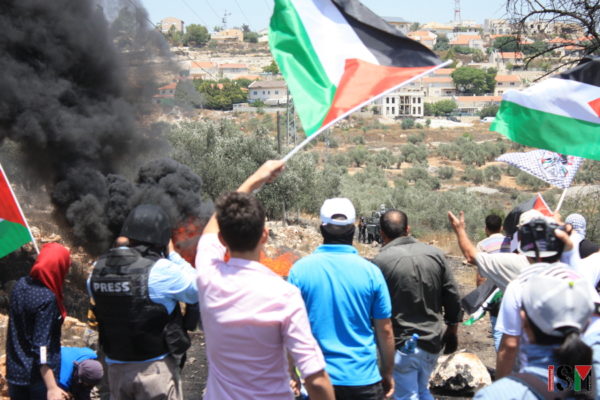
Kafr Qaddum peaceful demonstration
After the afternoon prayers at 1 pm, the people of Kafr Qaddum started their non-violent demonstration marching towards the illegal Israeli settlement of Kedumim. Soon after, the Israeli forces welcomed the demonstrators by shooting rubber-coated steel bullets and teargas. Halfway through the demonstration, an elderly Palestinian man was shot in the head with a rubber-coated steel bullet while taking cover from the shooting. Towards the end of the demonstration, an additional five Palestinians and a Korean activist were injured by the Israeli forces. Those who were injured were taken to receive treatment.
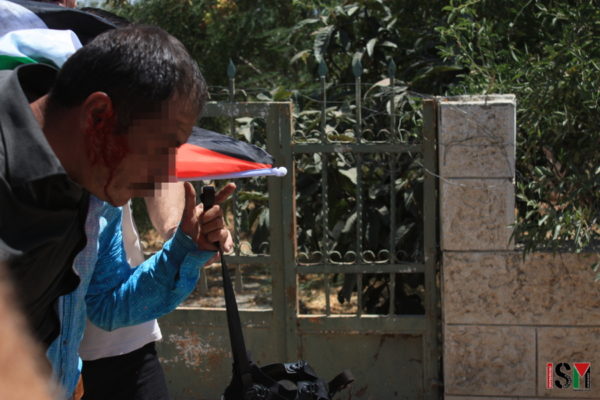
One of the Palestinians injured by Israeli forces gun-shots is brought to receive treatment
According to information provided by the Israeli military spokesperson to Ma’an news, no Israeli army forces were present at the demonstration, but instead it was the Israeli police that repressed the non-violent demonstration. This however is not true, as later during the demonstration Israeli army soldiers were seen at a nearby hill, and soon replaced the police on the road with more jeeps and an armored personnel carrier. The soldiers then proceeded to fire rubber-coated steel bullets at protesters and activists, and threw several stun grenades in an attempt to disperse the demonstration. Israeli soldiers also forced their way into a house and took up positions on the balcony overlooking the road.
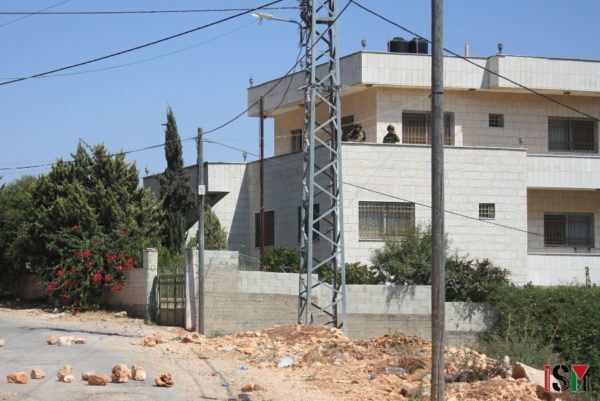
Israeli forces inside a civilian Palestinian home aiming at protestors
18-month-old Palestinian dies after being injured with Israeli tear gas 2 months ago
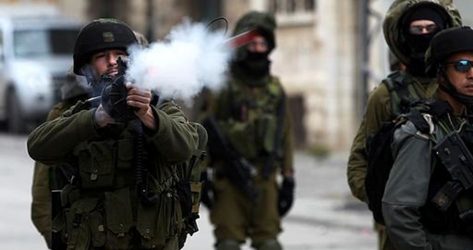
Ma’an – July 8, 2017
BETHLEHEM – An 18-month old Palestinian infant died on Friday, some two months after suffering from tear gas inhalation when Israeli forces shot tear gas at Palestinian homes in the village of Abud in the central occupied West Bank district of Ramallah.
According to Palestinian news agency Wafa, the Palestinian Ministry of Health said that 18-month-old Abd al-Rahman Barghouti, was transferred to Hadassah Hospital in West Jerusalem after suffering from tear gas inhalation in May, owing to the severity of his condition.
However, Wafa pointed out that “all efforts to save his life failed,” and the infant was declared dead on Friday evening.
The infant was injured after clashes broke out across the occupied West Bank on May 19 in support of some 1,300 Palestinian prisoners who were undergoing a mass hunger strike to demand better treatment and conditions in Israeli prisons.
At the time, Israeli forces haphazardly shot tear gas at Palestinian homes, which caused many residents, including Abd al-Rahman, to suffer from tear gas inhalation.
At the same time, Israeli forces opened live ammunition on protesters, injuring several Palestinian youths in the lower part of their bodies.
According to Wafa, Israeli soldiers had prevented Palestinian Red Crescent ambulances from reaching the infant’s home to treat him, and blocked the ambulances with Israeli army jeeps, forcing Palestinian medics to rush on foot to the infant to provide first aid.
The medics were also forced to carry him back to the ambulances, which were located a 30 minute walk away from Barghouti’s house, Wafa pointed out.
Abd al-Rahman became the 36th Palestinian to be killed by Israeli forces since the start of 2017. Eight Israelis have also been killed by Palestinians during the same time period.
Israeli forces have been the target of condemnation by rights groups for their excessive use of force on Palestinians. During clashes, Israeli forces shoot large amounts of tear gas, at times directly at Palestinian homes, leading to routine injuries and the occasional death.
In 2016, Muhammad Mustafa Habash, 63, from the Asira al-Shamaliya village in the northern West Bank district of Nablus, died of tear gas inhalation during clashes that broke out with Israeli forces at Qalandiya checkpoint in Ramallah.
In 2015, when a wave of violence first erupted across Israel and the occupied Palestinian territory, an 8-month-old infant died of tear gas inhalation in the village of Beit Fajjar in Bethlehem.
Several days before the infant’s death, a beloved local activist in Hebron, 54-year-old Dr. Hashem al-Azzeh, also died from tear gas inhalation.
Apartheid illustrated: Israeli soldier shoots another soldier in Hebron
International Solidarity Movement | July 6, 2017
Hebron, occupied Palestine – On Tuesday, 4th July 2017, Israeli forces were conducting a ‘military training’ in a civilian Palestinian neighborhood near Gilbert checkpoint in Tel Rumeida in occupied al-Khalil (Hebron). The result of this ‘military training’ was a fatal shot by one Israeli soldier to the other. The injured commander was immediately evacuated to hospital by an Israeli ambulance, and was later confirmed dead. The Israeli forces immediately closed the whole area to Palestinians by closing all the checkpoints, collectively punishing the civilian Palestinian population. The army, after the incident, announced that these ‘military trainings’ will be suspended in al-Khalil.
The whole incident, though, needs to be contextualized: an occupying army conducted a ‘military training’ near a checkpoint installed for the control and humiliation of the occupied population, in a civilian residential neighborhood. Immediate medical assistance to the injured occupying soldier, with an ambulance that, without any problems, was granted immediate access to the injured.
Military trainings, under international humanitarian law, are prohibited in civilian areas. The Israeli occupying army in al-Khalil, and all over the occupied territories, though, conducts trainings in civilian areas. This serves two functions: for one, it is more ‘real’, a training in the area where the perceived ‘enemy population’ is living, and second, the intimidation of the population. Israeli forces in al-Khalil are sometimes seen ‘practicing’ the ‘neutralization’, as it is called in Israeli rhetoric, of Palestinians at checkpoints. In those cases, a Palestinian that allegedly carries a knife is seen as a threat to the life of the heavily armed and armored occupation forces – and thus has to be shot and, as documented in so many cases, left to bleed to death on the ground without any medical assistance. The idea is always to shoot to kill.
Whereas an Israeli soldier or settler from the illegal settlements would immediately receive medical assistance, as Israeli ambulances are free to pass, Palestinian ambulances, and actually any Palestinian vehicles (often including donkeys and bicycles) are not allowed to drive on one of the (primary artery) roads in al-Khalil – which conveniently connects the settlements in down-town al-Khalil with the Kiryat Arba settlement on the outskirts of the city. Palestinian ambulances, as they are not allowed on this street, instead, are often detained by Israeli forces at the checkpoints, denied to pass and thus denied access to give first aid.
Immediately after the incident, the Israeli forces closed all the checkpoints in the area, effectively putting the area under curfew – for Palestinian residents. Any Palestinian civilian inside the area, thus, was prevented from leaving, and anyone outside trying to reach their homes, was prevented from coming back home. This is clearly collective punishment of the Palestinian civilians, who are not involved in the incident at all – other than living in an area that the Israeli forces are trying hard to rid of any Palestinian presence. Whereas Palestinian movement was completely restricted and Palestinians trying to film the incident and it’s aftermath were stopped and harassed by soldiers. Settlers, however, from the illegal settlements, were allowed to move around freely. In a separate incident, a settler beat up a Palestinian young man, causing his face to be unrecognizable as it was covered in blood. The settler though, can be sure that he’ll enjoy full impunity under the protection of the Israeli forces.
These kinds of military trainings in the aftermath were declared ‘suspended’ in the city of al-Khalil. However, only because a soldier was killed, not because of their illegal nature in civilian areas or a possible threat to the occupied population.
This incident illustrates the apartheid system installed by the Israeli occupying forces in al-Khalil, and all over the occupied Palestinian territories. An apartheid-strategy that aims to displace the Palestinian population from their homeland in favor of illegal settlements.
Instead of Taylor Force Act, Congress should consider Rachel Corrie Act, Orwah Hammad Act
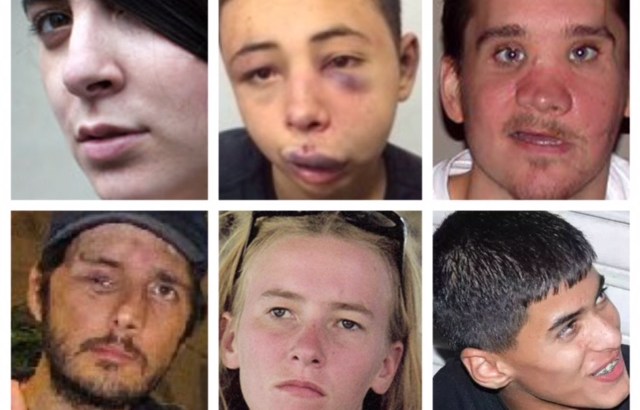
From top left: Emily Henoschowitz, Tariq Abukhdair, Brian Avery, Tristan Anderson, Rachel Corrie, Orwah Hammad.
By Kathryn Shihadah | If Americans Knew | June 30, 2017
Sometimes it takes a tragedy to bring about change. The story of Taylor Force is one such tragedy. A young American in the prime of his life was stabbed to death in an unnecessary, unprovoked act of terrorism while in Israel on a Vanderbilt University study program. Perhaps the only good that can come of such a dreadful event is in learning a lesson to ensure that it never happen again.
Our government wants to protect its citizens wherever they are in the world, so enacting some constructive legislation would be a smart move. Unfortunately, that’s not what Congress is currently contemplating.
The US Senate is debating a bill right now—the Taylor Force Act—that would prohibit foreign aid to the Occupied Palestinian Territories unless the Palestinian Authority ends stipends to the families of those who have been killed, injured, or imprisoned. Congressional reasoning is that the so-called “Martyrs’ Fund” encourages terrorism.
The United States currently gives The Palestinian Authority a relatively small amount of aid each year (in 2016 about $300 million, roughly 8 percent of what Israel receives); the Taylor Force Act would withhold about $230 million until the Fund disappears.
It is important to understand that this fund is not an incentive for Palestinians to commit terrorism. It is a social program to provide for the families of those killed, injured, or held prisoner by hostile forces.
Most of the fund provides for those killed or injured while peacefully demonstrating, defending their property, or going about their business, and the thousands wrongly imprisoned or detained without charge. This is the program that would be shut down by the Taylor Force Act.
The fund also supports Palestinians killed by Israel while using armed resistance – in the case of Taylor Force, a knife – against a country that has one of the most powerful, advanced militaries on earth.
It is customary for members of an oppressed population to resist. In fact, it is an internationally recognized right, as stated by the UN in 1982:
The General Assembly…reaffirms the legitimacy of the struggle of all peoples for independence….and liberation from…foreign occupation by all available means, including armed struggle.
Palestinians have engaged in this struggle for independence from foreign occupation since 1967, only to find themselves losing more lives, land, and rights every day.
Undeniably, the killing of Taylor Force and other civilians is a war crime, and it is legitimate to abhor such a crime–no matter the nationality of the criminal. All countries that engage in war have killed large numbers of civilians–nevertheless, all governments provide for the families of soldiers who have died in the line of duty. This includes the Palestinian government. Enabling these families to put food on the table is not an endorsement of any act of terrorism but a humane, compassionate act. No country should be required to withhold such support.
It must also be said that the shutdown of this social program would likely result in the opposite of the intended outcome: it may lead to yet more resentment and extremism.
Proposed legislation that could make things better, not worse
Perhaps instead of the Taylor Force Act, Congress should bring some other bills to the floor—bills that would begin to address the real problems in Israel/Palestine.
Here are a few suggestions.
 We could start with the Rachel Corrie Act, prohibiting the U.S. from giving aid to countries that practice home demolitions. Rachel Corrie was killed in 2003 as she worked in Palestine with the International Solidarity Movement (ISM). Rachel, clearly visible with a neon vest and bullhorn, confronted an IDF soldier on a bulldozer, about to demolish the home of a Palestinian pharmacist, when she was run over in what is widely believed to be a deliberate act.
The incident was investigated by the Israeli army and deemed “a regrettable accident” (as is often the case when Israelis are violent). An IDF spokesman explained that the group of protesters that day were “acting very irresponsibly, putting everyone in danger.” Interestingly, peacekeepers were the danger, not the demolition team at the home of an innocent man and his family.
The Rachel Corrie Act might discourage Israel from this ongoing, illegal practice. (Over 48,000 homes and other structures have been destroyed since the occupation began in 1967.) Rachel Corrie was from Washington, so Senators Patty Murray (D) and Maria Cantwell (D) from Washington should consider sponsoring such a bill. It might encourage Israel to desist from the collective punishment practice of demolishing homes.
Another idea for legislation would be the Brian Avery Act. This bill would prohibit the U.S. from giving aid to countries that use curfews as a form of collective punishment. Brian Avery was shot in the face in an unprovoked attack by Israeli soldiers during a curfew in the West Bank city of Jenin.
Curfews often last for days or weeks, sometimes even months, with only brief respites to obtain food. Sometimes the interludes are cut short without warning, and then enforced punitively. Palestinians have often been killed or injured during curfews; many more have their education disrupted, lose their jobs, or go out of business; the health of others suffers due to lack of medication or medical treatment. In addition, curfews often include home invasions and detentions.
Brian Avery, an American, was acting as an international observer during the curfew as he, like Rachel Corrie, worked for the ISM. He was wearing a reflective vest and had his hands up, but he was shot and seriously injured. His injuries were too severe to handle in the local hospital, but Israel spent several hours in negotiation before allowing him to be transported to an Israeli hospital. Even still, the ambulance was stopped at the border for an hour.
The investigation into this incident was completely botched and Brian’s injury was deemed “an unfortunate incident” because according to IDF Colonel Dan Hefetz, ISM activists “knowingly endanger themselves.” The Brian Avery Anti-Curfew Act might stop this dangerous form of collective punishment from causing any more tragedies. Brian came to Palestine from New Mexico, so Martin Heinrich (D) and Tom Udall (D) should consider sponsoring the bill. It could save the lives, careers, businesses, and health of many Palestinians.
Another possible piece of legislation would be the Emily Henoschowitz Act, which would limit aid to countries that illegally besiege another country or practice piracy on the high seas. Emily Henoschowitz is an Israeli-American who got involved with ISM in 2010 when she found the Palestinian situation too compelling to ignore.
 While Emily was in Palestine, the Gaza Freedom Flotilla, loaded with humanitarian aid and construction materials for Gaza, was attacked by Israel. Nine Turkish citizens (one also an American citizen) were killed. When Emily heard about this incident, she joined in a demonstration. She was hit in the face with a tear gas canister.
Emily resents the attention she has gotten over her injury, compared to hordes of Palestinians who are injured or killed daily without notice. “I’m white, I’m Jewish, I’m an Israeli citizen and American,” she points out. “When I’m hit by tear gas there are articles, the Israeli government gets involved. When Palestinians are hit, who gives a s***?”
The root of this issue is not Emily’s presence at a demonstration or even the act of piracy against the Freedom Flotilla. The root is the siege of Gaza—now in its tenth year—that necessitated international intervention. The siege by Israel has sealed off Gaza by land, sea, and air, and destroyed the region’s economy. Combined with “wars” against the people of Gaza, contaminated water, and electricity shortages—all perpetrated by Israel—the siege is the real problem. The Emily Henoschowitz Act might cause Israel to finally pull back its brutal blockade. Emily is from Maryland, so Senators Ben Cardin (D) and Chris Van Hollen (D) should bring some accountability by sponsoring this bill.
The Tristan Anderson Act would limit U.S. aid to countries that restrict other countries’ freedom of movement by building barriers. In 2009, Tristan Anderson was in the town of Ni’lin, at one of the weekly demonstrations against the West Bank Barrier. Most of Ni’lin’s residents get their income from agriculture, and the wall was set to cut farmers off from 1/3 of their land.  Israeli Border Police rarely allow such protests occur without reprisal. ISM describes the incident: “Tristan was shot in the face from about 60 meters away, crushing his skull, blinding him in one of his eyes, and sending shards of bone penetrating deep into his brain.” This occurred after the demonstration had finished.
Investigation showed that at the time of the incident, Tristan was half a mile from the wall and had not been near it for hours. Why he was shot with a tear gas canister is not clear—no one has given an explanation. Meanwhile, eight years later, “Tristan continues to require around the clock care because of cognitive impairment and physical disability. He is also paralyzed on half his body and uses a wheelchair.”
The “good” news is that Israel has since begun using a less lethal method of crowd control in Ni’lin. It is nicknamed “skunk water,” [see this video] and Reuters paints a vivid picture of the practice: “Imagine taking a chunk of rotting corpse from a stagnant sewer, placing it in a blender and spraying the filthy liquid in your face. Your gag reflex goes off the charts and you can’t escape, because the nauseating stench persists for days.”
In an official statement that denies freedom of speech and assembly to both Palestinians and visitors, the IDF announced its regret that “foreign nationals co-operate with violent rioters against the building of the security fence, whose purpose is saving the lives of Israeli citizens. [Anyone] who illegally participates in a violent demonstration takes upon himself the risk of personal harm during the dispersal of these disturbances.” The Tristan Anderson Anti-Barrier Act could give Israel the motivation to tear down that wall and so that Palestinians can enjoy the freedom that all people deserve. Tristan is from California, and his senators, Dianne Feinstein (D) and Kamala Harris (D) ought to sponsor this bill in order to encourage the deconstruction of the Wall.
Congress might also consider a Tariq Abukhdeir Act, which would limit U.S. funding of countries that imprison and/or detain minors. Tariq Abukhdeir is an American citizen who was visiting his family in Palestine for the summer. His cousin Mohammed had been burned alive in a horrific act just a day earlier by Israeli settlers.
 In the summer of 2014 Tariq, then 15 years old, was severely beaten by two Israeli police, then dragged and repeatedly kicked before being arrested for allegedly throwing stones. He adamantly denied the charge, but remained in prison for several days. In spite of a video of the assault, “showing at least two Israelis methodically delivering blows to Tariq’s limp body,” only one officer was prosecuted. He was found guilty and sentenced to 45 days of community service.
This case got wide attention because Tariq is an American citizen. At least 8,000 Palestinian children have been arrested since 2000 and placed in a military detention system “notorious for the systematic ill-treatment and torture of Palestinian children.” Most are accused of throwing stones, which carries a potential maximum sentence of 10 to 20 years.
As for adults, If Americans Knew reports, “Since the Israeli occupation of Palestinian territory in 1967, more than 800,000 Palestinians have been detained under Israeli military orders in the occupied Palestinian territory. This number constitutes approximately 20 percent of the total Palestinian population in the oPt and as much as 40 percent of the total male Palestinian population.”
The United States should not tolerate this excessive incarceration–especially of minors. The Tariq Abukhdeir Act might cause Israel to think twice before imprisoning children. Bill Nelson (D) and Marco Rubio (R) of Florida, Tariq’s home state, need to lead the way by sponsoring this bill.
And finally, Congress should propose the Orwah Hammad Act, which would cut off funding to any country that encourages the practice of building of settlements inside other countries. Orwah Hammad, an American citizen, was 14 years old in 2014 when he participated in a weekly demonstration in the town of Silwad. He was shot in the neck with a live bullet, and died that night. During his funeral, IDF soldiers fired rubber-coated steel bullets and tear gas.
Silwad residents have been fighting for their property and livelihood for 20 years, since Israel confiscated much of their farmland to build a settlement. This is an illegal act under international law.
International law hasn’t stopped Israel from building over 250 settlements all over the West Bank, with approximately 500,000 Israeli settlers. In addition to the built-up areas, Jewish-only roads and closed military zones—also illegal—give Israel control of fully fifty percent of the West Bank. The Orwah Hammad Anti-Settlement Act might cause Israel to rethink the wisdom of breaking yet another international law. Senators John N. Kennedy (R) and Bill Cassidy (R) of Orwah’s home state of Louisiana should sponsor the bill.
The stories of Rachel, Brian, Emily, Tristan, Tariq, and Orwah have been heard around the world because they are—or were—American citizens. A handful of European advocates for Palestinians have also been killed or injured, and have also made the papers. A number of Israelis have also tragically died or been hurt. But thousands of Palestinian children, women, and men have died; tens of thousands have been injured; hundreds of thousands live in poverty; millions are without hope and without help.
The Taylor Force Act would lead to more suffering for Palestinians, and more boldness on the part of Israel, as US complicity would only reinforce Israel’s current actions. Home demolitions, detention of minors, the West Bank barrier, settlements, curfews, and skunk water would all continue unchecked.
These illegal practices and collective punishment methods only make Palestinians angrier and more hopeless, resulting in an ever-escalating cycle of violence.
The Foreign Assistance Act, which “prohibits…assistance to any country which engages in a consistent pattern of gross violation of internationally recognized human rights,” sounds like it can be applied to Israel. Why are we forking over $10 million a day, $3.5 billion a year, to the Israeli government?
The answer is in the fine print: “except when extraordinary circumstances exist which necessitate continuation of such assistance or the national interest of the United States requires such assistance.” Our leaders seem to think Israel’s continued human rights abuses are in our best interest.
How is a system of oppression and illegal occupation, that births resentment and violence, good for America? Or Israel? Or anyone?
Kathryn Shihadah is a staff writer for If Americans Knew.
Venezuela: Soldier Killed, Three More Burned Alive
By Lucas Koerner | Venezuelanalysis | June 27, 2017
Caracas – One National Guardsman has been killed and three people set on fire across Venezuela as violent anti-government protests continue for a 13th week.
In Aragua, National Guard Sergeant Ronny Alberto Parra Araujo (27) died Tuesday of wounds sustained during what the Public Prosecution (MP) has described as an “irregular situation” the day before.
Journalist Ramón Camacho has reported that Parra was shot while attempting to prevent a looting at the Walio Supermarket in Maracay on Monday evening. The Araguan capital was the scene of widespread unrest following the opposition’s call to block roads nationwide earlier that day. Sixty-eight business were looted and several public institutions were attacked, including a fire station, a national telephone company switchboard, and a national tax administration office.
The MP has dispatched a state district attorney to investigate the sergeant’s death. The Public Prosecution has also opened an inquiry into the non-fatal shooting of three other National Guard soldiers in another incident in Miranda state on Monday.
In Lara state, two residents of a government-built Great Venezuelan Housing Mission (GMVV) apartment complex were attacked and burned alive by opposition militants late Friday evening.
According to testimony by the local communal council, Henry Escalona (21) and Wladimir Peña (27) were returning from a nearby party at 11:45pm when they were accosted by a group of eight masked men, who demanded to know if they were “Chavistas”. When the youths replied that they were government supporters, the assailants pulled out firearms and ordered them to kneel.
As one of the young men attempted to escape, the masked militants doused them both in gasoline and set the men ablaze.
“Simply for living in Residencias Larenses, an apartment complex built under the revolution, these youths were burned,” affirmed community council spokesman Luis Rodriguez.
Escalona and Peña are currently in critical condition, undergoing treatment for third degree burns in the local Maria Pineda Central Hospital. The community is requesting that both men be transferred to a burn unit operated by the oil industry in the western city of Maracaibo.
Meanwhile, in the upscale eastern Caracas neighborhood of La Castellana, another man was stabbed and set on fire by masked individuals who reportedly accused her of being a Chavista.
“A young man identified as Giovanny Gonzalez (24) was burned and stabbed by masked men en La Castellana, who mistook him for a Chavista,” declared Interior Minister Nestor Reverol via Twitter on Monday.
The minister indicated that Gonzalez had been “transported to a healthcare center and is in a stable state”, but offered no further details.
During a public event on Tuesday, Venezuelan President Nicolas Maduro condemned the aggressions, calling for the “unity of the people in the face of fascist violence”.
The attacks are the latest in a series of opposition lynchings of persons accused of being Chavista “infiltrators” or thieves. On June 3, 21-year-old Orlando Figuera died in the hospital after being stabbed and burned alive by a mob of anti-government protesters in Altamira. The Public Prosecution has yet to issue a statement on the latest lynchings.
In another incident in eastern Caracas, a woman was accosted in a shopping mall by scores of opposition supporters Saturday who mistook her for the wife of a state television show host.
In a widely circulated video, the woman is seen being verbally and physically assaulted by more than a hundred protesters screaming “murderer”.
National Ombudsman Tarek William Saab denounced the incident as a “hate crime”, which he warned could, if left unchecked, be the “prologue to a civil war”.
“To pursue and attack a human being with intention to hurt or kill them for their ideological position is repugnant,” he tweeted on Sunday.
Likewise, in another mall in Chacao, representatives of a communal council were harassed Saturday when they arrived to make a bank deposit for the sale of government-sponsored Local Production and Supply Committee (CLAP) food bags. The grassroots leaders from the nearby town of Galipan had to be escorted by National Guard personnel to safeguard their security.
Life imprisoned in a ‘closed military zone’. “Daily Life”?
International Solidarity Movement | June 26, 2017
Hebron, occupied Palestine – Israeli forces at Shuhada checkpoint in occupied al-Khalil (Hebron) have put up yet another sign ‘instructing’ the Palestinian residents on their behavior at the checkpoint. The bright-red sign with pictures clearly prohibits any kind of supposedly ‘dangerous’ materials like guns, knives and scissors. Just like when you attempt to cross security in any airport. Whereas those objects have long been prohibited and most Palestinians wouldn’t dare bring any of those to any checkpoint, as they’d have to fear for their lives, the signs also illustrate something else: life for the Palestinians living in this area is immensely restricted.
At an airport, most people can at least attempt to grasp why those objects aren’t allowed. But now consider this checkpoint is on your daily way to your house. Your own home. Not an airport, you have to cross this checkpoint all the time. That’s what it is like for Palestinians living in the Israeli forces declared ‘closed military zone’ in Tel Rumeida and on Shuhada Street. Those restrictions, newly illustrated with little images, restrict daily tasks such as cooking and studying, doing arts, and even such mundane things as cutting your nails. No Palestinian is allowed to bring any kind of knife, so unless you have a big stack of sharp knifes – you won’t be cutting either your fruit, nor meat, nor vegetables. If you break a pair of scissors, your children will not be doing arts anymore, and no matter how often they ask for new ones, the parents are prohibited to bring scissors, even non-sharp children’s-scissors, into this area.
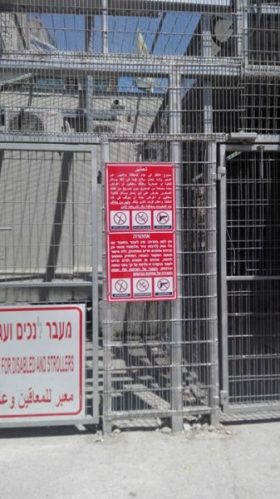
Newly installed sign illustrating the daily restrictions enforced solely for Palestinians
Doing so against the warning, you’d most likely pay with your life. A sentence on the sign says that a ‘permit’ can be applied for to bring any of the mentioned items. But even if that would be successful – assuming a Palestinian wouldn’t just be arrested for just applying for such a permit – or refused like so many Palestinians applying for building permits, it would cost a lot of bravery to actually show up at the checkpoint with any of those items. Bringing ‘banned items’ to the checkpoint, and then telling the heavily-armed soldier: “I’m bringing a knife”. It’s debatable whether that conversation would ever go beyond that point, or rather be cut short by gunshots from a heavily-armed occupation force.
In stark contrast to airports, where the measures are [at least purportedly] for security, in this context they are merely and deliberately solely for humiliation. In international law, a praxis like this is called ‘creating a coercive environment’ in order to facilitate ‘forced displacement’. And that’s what it is about: in an area that so conveniently connects all the illegal settlements within the city center of al-Khalil and on its outskirts, Palestinians are merely considered a nuisance. The attempts to drive them out are thus ever more enforced by the occupying army.
At FBI, Mueller Oversaw Post-9/11 Abuses
By Jonathan Marshall | Consortium News | June 21, 2017
Robert Mueller III, the former FBI director who now heads the wide-ranging investigation into alleged misdeeds by President Trump and his associates, just dodged a major legal bullet himself. On Monday, the U.S. Supreme Court gave him and other former senior Bush administration officials legal immunity for the vicious abuses committed against more than 700 foreigners who were rounded up with little or no cause after the 9/11 attacks.
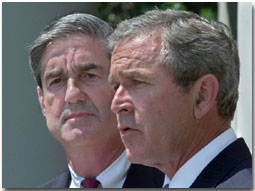
Robert Mueller with Pres. George W. Bush
July 5, 2001 (White House photo)
The court ruled 4-2, nearly 16 years after the fact, that “national security” trumps civil liberties and that however unfounded the arrests, or intolerable their treatment, the detainees had no right to sue senior federal officials for damages.
Punting to Congress, a branch of government rarely known for its defense of individual rights, the court declared, “The proper balance in situations like this, between deterring constitutional violations and freeing high officials to make the lawful decisions necessary to protect the Nation in times of great peril, is one for the Congress to undertake, not the Judiciary.”
Although the climate of fear that followed 9/11 has eased a bit, the decision is highly relevant in the Trump era because the abused victims were all immigrants who had overstayed their visas. If the FBI had any question about the arrestees, it designated them “of interest” and ordered them held until cleared — in other words, guilty until proven innocent.
Dozens of the hapless victims were held at the Administrative Maximum Special Housing Unit in Brooklyn’s Metropolitan Detention Center (MDC), which was the subject of two scathing reports by the Bush Justice Department’s own Inspector General in 2003. Besides documenting a wide range of abuses, the reports concluded that staff members brazenly lied about the rough treatment they meted out.
Appalling Abuses
News accounts of the Supreme Court decision made only brief reference to that treatment. Yet the appalling story can be glimpsed from this summary of facts provided in 2013 by U.S. District Judge John Gleeson:
“The harsh confinement policy was expressly directed at Arab and Muslim noncitizens who had violated immigration laws . . . In other words, it was discriminatory on its face. . .
“They were confined in tiny cells for over 23 hours a day, provided with meager and barely edible food, and prohibited from moving around the unit . . . (or) keeping any property, including personal hygiene items like toilet paper and soap, in their cells. Whenever they left their cells, they were handcuffed and shackled. . . (D)etainees . . . were often physically abused along the way, and were sometimes left for hours in the cold recreation cell, over their protests, as a form of punishment. . . .
“Detainees also were denied sleep. Bright lights were kept on . . . for 24 hours a day . . . and staff at the MDC made a practice of banging on the MDC Detainees’ cell doors and engaging in other conduct designed to keep them from sleeping. They also conducted inmate ‘counts’ at midnight, 3:00 a.m., and 5:00 a.m. . . . One of the officers walked by about every 15 minutes throughout the night, kicked the doors to wake up the detainees, and yelled things such as, ‘Motherfuckers,’ ‘Assholes,’ and ‘Welcome to America.’
“The MDC Detainees also were subjected to frequent physical and verbal abuse . . . The physical abuse included slamming the MDC Detainees into walls; bending or twisting their arms, hands, wrists, and fingers; lifting them off the ground by their arms; pulling on their arms and handcuffs; stepping on their leg restraints; restraining them with handcuffs and/or shackles even while in their cells; and handling them in other rough and inappropriate ways. The use of such force was unnecessary because the MDC Detainees were always fully compliant with orders . . . The verbal abuse included referring to the MDC Detainees as ‘terrorists’ and other offensive names, threatening them with violence, cursing at them, (and) insulting their religion . . .
“(Detainees) . . . were subjected to unreasonable and punitive strip-searches. . . Female officers were often present during the strip-searches; the strip-searches were regularly videotaped in their entirety . . . and MDC officers routinely laughed and made inappropriate sexual comments during the strip-searches.
“Officers at the MDC . . . also interfered with the Detainees’ ability to practice and observe their Muslim faith. . . In addition, most of the MDC Detainees were held incommunicado during the first weeks of their detention. MDC staff repeatedly turned away everyone, including lawyers and relatives, who came to the MDC looking for the MDC Detainees, and thus the MDC Detainees had neither legal nor social visits during this period.”
An Abu Ghraib in Brooklyn
Though not at the level of brutality of water boarding and some of the beatings associated with secret CIA detention centers, these MDC abuses had some similarities to the humiliation and mistreatment of prisoners at Abu Ghraib in Iraq — and the abuses were taking place right in the heart of New York City. Plus, unlike some of the CIA’s torture victims, these detainees had nothing to do with terrorist plots; some were never even questioned by the FBI after their arrest.
Yet senior FBI and Justice Department officials were complicit in the abuse. The 2nd Circuit Court of Appeals, in a 2015 ruling that the lawsuit could proceed, cited evidence that two of the defendants, Attorney General John Ashcroft and FBI Director Mueller, “met regularly with a small group of government officials in Washington, D.C., and mapped out ways to exert maximum pressure on the individuals arrested in connection with the terrorism investigation.”
They “discussed and decided upon a strategy to restrict the 9/11 detainees’ ability to contact the outside world and delay their immigration hearings. The group also decided to spread the word among law enforcement personnel that the 9/11 detainees were suspected terrorists[] . . . and that they needed to be encouraged in any way possible to cooperate.” And it was the FBI that recommended housing the detainees in the maximum security facility where their rights were sure to be abused.
Such official misconduct and brutality constitutes a stain on this nation’s honor. Justice Anthony Kennedy, writing for the majority, said “Nothing in this opinion should be read to condone the treatment to which the (plaintiffs) contend they were subjected.”
A Terrible Precedent
But the court’s decision to protect high-level federal officials who made that treatment possible sets a terrible precedent. As the American Civil Liberties Union warned, it “would effectively immunize tens of thousands of federal officers . . . from damages, no matter how egregious the officers’ conduct. Indeed, [it] would effectively immunize federal officers from damages liability even for torture, so long as the torture arises in a context involving national security or noncitizens.”
Citing such egregious precedents as the Alien and Sedition Acts, the wholesale suppression of civil liberties during World War I, and the internment of Japanese-American citizens during World War II, a dissenting Justice Stephen Breyer insisted that the Court had an obligation to defend “fundamental constitutional rights.”
“History tells us of far too many instances where the Executive or Legislative Branch took actions during time of war that, on later examination, turned out unnecessarily and unreasonably to have deprived American citizens of basic constitutional rights,” he wrote. With the latest court ruling, that dark history is sure to be repeated.
[For more on the real Robert Mueller, see Consortiumnews.com’s “Russia-gate’s Mythical Heroes.”]
The Legitimacy of Family Compensation for Palestinians Killed, Injured, and Imprisoned

By Kathryn Shihadah | If Americans Knew | June 19, 2017
JTA reports on what would seem to be a no-brainer: a bill requiring that aid money to the PA be withheld if the PA continues its Martyrs Fund or “pay to slay” policy. Of course nothing is quite as simple as meets the eye.
WASHINGTON (JTA) — Top Senate Democrats said they were closer to signing on to a Republican-backed bill that would slash aid to the Palestinian Authority if it did not stop subsidizing Palestinians jailed for attacks on Israel. [Ed. note: Info on bill is here]
Senate Minority Leader Charles Schumer told attendants at the Orthodox Union’s annual Washington action day on Thursday that he would support the Taylor Force Act or legislation similar to it if the Trump administration is unable to get the Palestinian Authority to stop the payments. [Ed. note: Senator Schumer is a major advocate for Israel; see video.]
“Abbas has to stop making payments to terrorists and their families, and all elected officials should call them out,” Schumer said.
Also edging closer to endorsing the legislation was Senator Ben Cardin, top Democrat on the Senate Foreign Relations Committee.
The United States now gives the Palestinian Authority about $500 million in annual aid. The bill, which was introduced by Republican Senators Ted Cruz and Lindsey Graham, would only leave the portion for security assistance — about $60 million in 2013. Cruz also attended the Orthodox Union event.
“We’re going to find a way to pass the Taylor Force Act,” Senator Cardin said, suggesting that he wanted changes to the bill before he could fully endorse it. The measure was named for the American killed in a 2016 stabbing attack in Tel Aviv.
The Taylor Force Bill “prohibits certain assistance…from being made available for the West Bank and Gaza” unless the State Department is satisfied that the PA is working to end violence against US and Israeli citizens, is publicly condemning such acts and cooperating in investigating them, and has “terminated payments for acts of terrorism.” (Here is a list of cosponsors of the bill.)
If the bill becomes law, the US may withhold 88% of aid to the Palestinian Authority until it complies.
Economics of occupation
Israel has also withheld money from the PA in the past—tax revenues that are collected by Israel but that actually belong to the Palestinians, about $125 million per month. For example, funds were held back by Israel in November 2012 as a punishment for the UN vote which brought de facto recognition of Palestine’s statehood, and again in January 2015 as a penalty for Palestine’s application to join the ICC.
The transfers are an important revenue source for the cash-strapped Palestinian government.
Palestinians already suffer economically from the hardship of a brutal fifty-year occupation. According to a study by the UN Conference on Trade and Development, agriculture and industry have suffered huge losses. One reason is the inaccessibility of “Area C,” which accounts for over 60% of West Bank land (66% of its grazing land) and is off-limits to Palestinians. The report estimates that “the occupation of Area C costs the Palestinian economy the equivalent of 35% OF GDP.”
Gaza is also barred from half of its farmland and 85% of its fishery resources. Over 2.5 million productive trees have been vandalized or uprooted since 1967; 82% of Palestinian groundwater has been confiscated by Israel, and must be bought back by Palestinians at inflated prices.
Even tourism has been “annexed”: Israel has “rebranded” popular West Bank sites as being in the “Holy Land,” obscuring their Palestinian identity. Israeli tour guides control most visitors, making it easy to take a day trip to Bethlehem, but then stay in an Israeli hotel.
Adding to its many economic advantages, Israel garners $10 million a day in aid from the United States, compared to the $500 million per year that Palestine receives now and is in danger of losing.
Israel uses its huge aid budget to finance the occupation and fight wars with Gaza—both of which are illegal according to international law and condemned by almost every country in the world. Its assaults on women and children, as well as noncombatant men, is well documented. For example, the Middle East Children’s Alliance reported that “1,518 Palestinian children were killed by Israel’s occupation forces from the outbreak of the second Intifada in September 2000 up to April 2013… meanwhile the number of children injured by the Israelis since the start of the Second Intifada against Israel’s occupation has now reached 6,000. That number means that one Palestinian child was killed by Israel every 3 days for almost 13 years.”
However, Israeli leaders argue that the “hate-filled climate” against Israel was created not by occupation and war, but by “fiery speeches” by Palestinian leaders and “venomous” Facebook posts.
Compensation in the event of death or injury
Payment to the family of a service member killed or injured in the line of duty is a common practice. In America, for example, families receive a one-time payment to help surviving members deal with financial hardships connected with the loss of their loved one. This “death gratuity” is currently $100K.
Israel too has a compensation program for families of IDF soldiers killed or injured in the line of duty.
Because the Palestinian Territories are forbidden from having armed forces, their resistance against the occupation is carried out by civilians. In the event of their death, injury, or imprisonment their families face the same type of struggles that any service member’s family would face, and the Palestinian Authority provides for them through the so-called “Martyrs Fund.”
Prime Minister Benjamin Netanyahu plans to withhold revenue from the PA until the fund is dismantled, as he considers these payments “an incentive for murder.”
Republican Senator Lindsey Graham, leading sponsor of the Taylor Force bill, fails to make the connection between the US and Israeli compensation programs and the Palestinian Martyrs Fund, declaring that “the practice is inconsistent with American values, inconsistent with peace, and inconsistent with decency.”
Not a reward for violence
Nasser Tarayreh, whose son was killed after stabbing an Israeli girl, explains, “I don’t think anyone is willing to sacrifice his life for money. And for us as a family, all the money in the world won’t replace my son.” In fact, the money would be needed to provide shelter soon, as their home was scheduled for demolition—an Israeli practice in retribution against the families of attackers. Nasser will receive $350 a month from the Martyr’s Fund.
Many “martyrs” were not killers or attackers, but were themselves killed while walking to school, participating in a peaceful demonstration, or sleeping in their beds. If they died as a result of Israel’s brutality, they bear the title of martyr.
The fund also compensates families of prisoners and detainees. Samidoun Palestinian Prisoner Solidarity Network reported that “the Israeli occupation arrested 6,440 Palestinians in 2016, including 1,332 children and 164 women,” in addition to members of the Palestinian Legislative Council and journalists.
The fund had a budget of $170 million in 2016 and makes monthly payments to about 35,000 Palestinian families. Qadora Fares, who works with the system, explains, “This is a kind of social protection for the family. The children of the prisoners and martyrs and wounded have the right to go to schools, hospitals and get food.”
Fox News reported that the Washington Post strongly condemned the support of victims’ families in the Palestinian resistance. Fox quoted the WP as saying, “The PA is running a bounty system. Payments to terrorists and their families are enshrined in Palestinian law, provided for in the PA budget, and indirectly supported by foreign aid…incentivizing the murder of civilians is barbarism…”
It should be noted that this quote is not from a WP journalist, but part of an opinion piece by Israel partisan Thane Rosenbaum. Ironically, Rosenbaum authored Payback: The Case for Revenge, a book presenting the theory that “if the law won’t set things right, which it so often fails to do, then it’s ok, indeed moral, for us to do so ourselves”—a theory with which many Palestinians would, to Rosenbaum’s dismay, agree. Rosenbaum has elsewhere implied that a child whose father works for Hamas is actually a target by association, and that therefore it is morally acceptable to kill children.
Daniel Larison of the American Conservative said in his review of Payback, “Rosenbaum’s argument is extremely similar to the justifications that terrorist groups use when they target civilians in their own attacks…It is very important to reject this logic no matter where it comes from or whose cause in a conflict it is being used to advance, because this is the logic that has been used to justify countless atrocities down through the years.”
Origin of violence
In an interview for the Institute for Palestine Studies, Palestinian psychiatrist Eyad al Sarraj explained that many Palestinians who turn to violence have themselves witnessed great violence perpetrated on their families. “During the first intifada, studies showed that 55 percent of the children had witnessed their fathers being humiliated or beaten by Israeli soldiers.
“The psychological impact of this is stunning. The father, normally the authority figure, comes to be seen as somebody who is helpless, who can’t even protect himself–let alone his children. So children became more militant, more violent… The militant ones believe that if they die as suicide fighters in the struggle for justice, they are conquering defeat and death itself.” Sarraj continued, “they wouldn’t turn their bodies into bombs if they had F-16s, Apache helicopters, tanks, or a tiny fraction of the weapons Israel gets from the United States.”
Sarraj describes violence as a manifestation of a deep-seated issue: “Suicide bombings and all these forms of violence–I’m talking as a doctor here–are only the symptoms, the reaction to this chronic and systematic process of humiliating people in effort to destroy their hope and dignity. That is the illness, and unless it is resolved and treated, there will be more and more symptoms of the pathology.”
Sarraj expressed deep opposition to Palestinian violence, but distinguished between the martyrs and their families: “As a Palestinian, as an Arab, as a Muslim, and as a human being, I feel obliged to support them. I cannot leave their children in poverty–I have to do what I can to leave them some hope and dignity.”
The face of the Fund
One story that illustrates both the tragedy that qualifies Palestinians for the Martyrs Fund and the experience that produces even more martyrs, is that of Abu Jameh. At dinnertime on July 20th 2014, Israeli planes bombed an apartment building in Gaza, killing 24 members of a family—a woman, her son, four of her daughters-in-law, and 18 of her grandchildren. One member of Hamas was also present for the meal. Abu Jameh who survived but was injured, lost his pregnant wife and six of his seven children. He reflected, “there is nothing left. It is the end for us,” and added later, “I will marry again four times, and I will have 10 sons with each wife, and they will all be in the resistance.”
Emmanuel Nahshon, Israeli Foreign Ministry spokesman got it wrong when he stated, “Terror has become a comfortable business for families.”
Israel attempts to block yet another UN report
MEMO | June 15, 2017
Having succeeded in blocking a recent UN report that accused Israel of maintaining a system of apartheid, Israeli officials are now attempting to remove another UN report, which has charged Tel Aviv with carrying out extrajudicial executions along with a list of other human rights violations.
The report by the United Nations Economic and Social Commission for Western Asia (ESCWA), which previously accused Israel of apartheid, has come under fire from Israel’s Ambassador to the United Nations, Danny Danon, because it states that in the period from 1 April 2016 to 31 March 2017 Israeli security forces killed 63 Palestinians, including 19 children, and wounded an additional 2,276 Palestinians including 562 children.
The previous ESCWA report, which had accused Israel of apartheid, was removed by the UN following protests by Danon and US Ambassador to the UN, Nikki Haley, who this week described the UN report of “reeking with anti-Israel bias”.
The new report accuses Israeli security forces of using disproportionate force against Palestinians and in some cases of “extrajudicial executions”. The report cites the UN Committee Against Torture and its concern about “Israeli practices towards Palestinian detainees”.
The list of human rights violations included in the report were also “torture or ill-treatment of Palestinian children” and “deprivation of basic legal safeguards for administrative detainees, isolation and solitary confinement of detainees, including minors, punishment and ill-treatment of hunger strikers.” The report also claimed that “no criminal investigation was opened into more than 1,000 complaints of torture or ill-treatment filed since 2001.”
Israeli sources have reported that Danon will work to have this report removed. “This is yet another blood libel against the State of Israel,” Arutz Sheva reported Israel’s envoy to the UN saying. “Just as we succeeded in having the previous preposterous report removed, we will fight relentlessly against this blatantly false distortion of the truth as well.”
Read: The ESCWA Report
Another Social Leader Murdered in Colombia
teleSUR | June 14, 2017
Jose Maria Lemus, president of the Tibu Community Board in Colombia’s North of Santander state, has been killed, the Peoples’ Congress reported Wednesday.
His murder adds to the growing list of recently assassinated social, Indigenous and human rights activists in the South American country.
In May, the United Nations High Commissioner for Human Rights raised alarm over the fact that at least 41 activists have been killed in Colombia so far this year, a record figure in comparison to previous years. The report laid bare to a troubling escalation of violence despite a historic agreement between the government and the country’s largest rebel army last year.
U.N. commissioner Zeid Ra’ad al-Hussein said the figure shows a worsening trend of crimes against social leaders and human rights defenders.
“It’s an increase over the same period last year and the previous years, and it is very alarming,” he said during a news conference.
According to Zeid, the attacks appear to be concentrated in areas that the Revolutionary Armed Forces of Colombia previously controlled during the armed conflict and recently abandoned in order to demobilize after the signing of the peace agreement.
Official statistics show that a staggering 156 social leaders were killed in Colombia in the 14 months between Jan. 1, 2016 and March 1, 2017. Amid the crisis, rights groups have urged the Colombian government to prioritize tackling paramilitary violence that often targets progressive social leaders including campesinos, Indigenous activists and other human rights defenders.
On Monday, organizations such as the Agrarian Summit, Black Communities Process and the Peoples’ Congress protested against the criminalization of social leaders.
Featured Video
Seyed M. Marandi: Negotiations Collapsed – Return to War
or go to
Aletho News Archives – Video-Images
From the Archives
The US-Iran Scenario That Most Scares Israel
By Ali Haydar | Al-Akhbar | October 9, 2013
Israeli Prime Minister Benjamin Netanyahu issued a series of threats toward Iran and its interlocutors in the West, including the US, as serious negotiations on Iran’s nuclear program seem more plausible.
As a possible rapprochement looms between the US and Iran, Netanyahu has attempted to impose impossible Israeli conditions on the negotiators, such as the full dismantling of Iran’s nuclear program, not to mention threatening military force.
Whatever the deal that could materialize between Iran and the West, Israel is going to find itself before an open-ended path. One can foresee three possible scenarios… continue
Blog Roll
 Aletho News
- UK, Spain reject Trump’s new scheme to blockade Hormuz Strait
- Russian frigate ‘resurfaces’, chases off NATO pirates days after Kiev ‘sank’ it
- Ukraine Targets Russian Merchant Fleet With NATO Intel Support – Presidential Aide
- Russia’s ‘shadow fleet’ makes mockery of UK naval power
- Ukraine plans to attack Russian ships with Norwegian support
- US’s ‘Very Foolish’ Double Blockade of Hormuz Strait Makes Absolutely No Sense: Here’s Why
- China issues rules on countermeasures against foreign states’ unlawful extraterritorial jurisdiction
- Seyed M. Marandi: Negotiations Collapsed – Return to War
- Tomorrow’s naval blockade showdown
- ‘Israel’ attacks civilians to hide its embarrassing military failures & out of pure sadism
- If Americans Knew
- Critical shortages in Gaza, Lebanon in ruins, “piracy” in Iran – Daily Update
- US-Iran ceasefire negotiations make zero progress – Daily Update
- Pro-Israel ‘Thinktanks’ and Individuals who Influence U.S. Foreign Policy
- Mearsheimer reveals how Israel dictates US policies on Iran, Gaza – video
- After killing 350+, Israel still has a “score to settle” with Lebanon before ceasefire – Daily Update
- Military aid to Israel emerges as the latest political litmus test for Democrats
- The only Palestinian children’s rights organization closes following years-long Israeli campaign against it
- ‘I Can’t Forget the Smell’: Lebanese Reel After Israel Kills Over 300 in Single Day
- DNC Shoots Down Resolutions Calling Out AIPAC and Limiting Arms to Israel
- TCN: Is Israel Blackmailing President Trump?
- No Tricks Zone
- Cave Discovery Reveals Today’s Desert Climates Were Recently Far Warmer, Wetter, Teeming With Life
- German Expert: Heat Dome Led To Record Temps In Western USA…Warmer In 1934, 1936
- New Study: No Linear Warming Or Glacier Retreat Along Northern Antarctic Peninsula Since 1980s
- An Inconvenient Tree: Uncovered In Alps… Europe Much Warmer Than Today 6000 Years Ago
- New Study Reports A 60% Slowdown In Greenland’s Ice Loss Rate In The Last Decade
- Low Intensity Tornado Wrecks Major Solar Farm, Creating A Potential Toxic Dump
- New Study Finds Warming Saves Lives…Cold Temperatures 12 Times More Deadly Than Excess Heat
- German Science Blog Accuses PIK Climate Institute Of Hallucinating Climate Tipping Points
- Devastating Assessment Of Comirnaty Vaccine By Former Senior Pfizer Europe Toxicologist
- New Study: CO2 Is ‘Effectively Negligible’ As An Explanatory Climate Change Factor Since 2000
 Aletho News