Three Prominent Palestinian Organizers, Journalists Ordered to Further Imprisonment without Charge or Trial
Samidoun Palestinian Prisoner Solidarity Network – June 8, 2017
Three prominent Palestinian activists were ordered to additional periods of administrative detention, imprisonment without charge or trial. Palestinian journalist Hasan Safadi, youth organizer Hassan Karajah and leftist community leader Rami Fadayel, all of Ramallah, were ordered to further imprisonment without charge or trial by Israeli military courts.
Fadayel, 37, has been imprisoned for 18 months under administrative detention; this is the fourth time the order against him has been renewed. He has spent over seven years in total in Israeli prisons and was ordered to another four months of imprisonment without charge or trial. He was hit with another four-month detention order on Wednesday, 7 June.

Rami Fadayel
Haneen Nassar, Fadayel’s wife and an organizer with the Palestinian Prisoners’ Committee, a popular organization in Palestine that works to support the prisoners’ struggle and demand their freedom, said that she and her husband have never been able to enjoy a free and safe life since their marriage. Fadayel has been arrested repeatedly; they marked their engagement while he was imprisoned. She noted that their daughter, Mays, 10, has not seen her father in their home for nearly half of her life.
Fadayel is well-known in Ramallah as a leader in the Popular Front for the Liberation of Palestine, the Palestinian leftist political party. Nasser noted that his administrative detention has been repeatedly renewed under the pretext of a “secret file;” all of the appeals of his lawyer have been rejected.
Palestinians held without charge or trial under administrative detention orders can be detained indefinitely; these one- to six-month orders can be repeatedly renewed on the basis of so-called “secret evidence.” There are currently over 500 Palestinian administrative detainees imprisoned by the Israeli occupation. Some Palestinians have spent years at a time under administrative detention on the basis of this so-called secret evidence. Over 50,000 administrative detention orders have reportedly been issued since 1967; the practice dates from the colonial British mandate over Palestine and was re-imposed by the Israeli occupation.

Hasan Safadi
Meanwhile, Hasan Safadi, Palestinian journalist and the Arabic media coordinator of Addameer Prisoner Support and Human Rights Association was also ordered on 8 June 2017 to another six months in administrative detention by an Israeli occupation military court. He had been scheduled for release on 8 June, but was instead hit with another arbitrary detention renewal.
Safadi, 26, has been imprisoned since 1 May 2016, when he was seized by Israeli occupation forces as he crossed the Karameh/Allenby bridge between Jordan and Palestine, returning from an Arab youth conference organized in Tunisia. After 40 days of interrogation in the Moskobiyeh interrogation center, he was ordered to administrative detention without charge or trial, which has since been renewed twice. His new administrative detention order is scheduled to expire on 8 December 2017.

Hassan Karajah
Hassan Karajah, a prominent youth activist with the Stop the Wall Campaign and a boycott, divestment and sanctions (BDS) activist, was seized by Israeli occupation forces on 12 July 2016 at a military checkpoint west of Ramallah. He has been held under administrative detention without charge or trial since that time; his detention was also renewed on 7 June 2017 for the third time for a four-month period.
Karajah was previously arrested on 23 January 2013 and freed on 19 October 2014, accused of participation in a prohibited organization and contact with an enemy state, an allegation frequently used to target Palestinians who travel to conferences and events in Lebanon and other Arab countries.
These orders came after the Ofer military court confirmed even more administrative detention orders on Wednesday, 7 July. The military court approved six-month detention orders against Raed Abd al-Admu of al-Khalil, Tayseer Maher Hamed, Mohammed Badr al-Alouneh, Islam Fayeq Nimer of Ramallah and Suhaib Ahmed Mohammed of Tulkarem. It approved four-month imprisonment orders against Nidal Hashim Abdel Hadi and Yousef Ahmed Nasser of Jenin and Khalil Hassan Hamed, Ayman Naim Hamed, Hamza Ibrahim Zahran and Omar Mohammed Abu Latifa of Ramallah. It also affirmed a two-month detention order against Rabie Mohammed Musallah of Jenin.
Is Qatar paying the price for its pro-Palestine stance?
The New Arab | June 8, 2017
Qatar’s support for Palestinians seems to be one of the key causes of the Saudi-led blockade on Doha, amid increasing convergence between Riyadh and Abu Dhabi, and the administration of US President Donald Trump – the president most supportive of Israel in recent decades.
On Tuesday, Adel al-Jubeir, the Saudi foreign minister, made it clear that a key demand of his government in return for restoring ties with Doha was for Qatar to end its “support” for Palestinian group Hamas, which champions armed resistance against Israel and was the winner of the last general election held in the occupied Palestinian territories.
Jubeir, for the first time in Saudi history, suggested Hamas was an “extremist” group. During Trump’s visit to Riyadh in late May, the US president proclaimed the group a terrorist outfit akin to the Islamic State group and al-Qaeda, and Riyadh did not object.
Saudi Arabia previously provided support to Hamas and welcomed its leaders as recently as 2015. However, on the back of the Iranian nuclear deal, both the kingdom and its ally, the UAE, have been making increasing offers of normalisation with Israel – with whom they share Iran as a common foe.
Since the events of the Arab Spring, both Saudi Arabia and the UAE have also become hostile to the Muslim Brotherhood, to which Hamas is affiliated, seeing it as an imminent threat to their regimes.
Qatar, by contrast, has maintained good relations with most Palestinian factions, including Hamas and Fatah, and invested tens of millions of dollars in the reconstruction of besieged Gaza, decimated by years of Israeli war.
Qatar, although closely allied to the United States, has maintained an independent policy on Palestine, which has often caused it problems with pro-Israel officials in the West.
Now, Qatar’s neighbours seem to have joined the fray, inching closer to fully endorsing Israel’s narrative on groups such as Hamas, in the name of fighting extremism and terrorism, without defining either.
It is worth noting that the UAE hosts and supports Hamas’ arch-rival, exiled Fatah leader Mohammed Dahlan, whom it hopes to install as the next Palestinian president.
“Qatar is being punished for its role and influence in the Palestinian arena, with both President Mahmoud Abbas and Hamas,” Ibrahim al-Madhoun, political analyst, told The New Arab.
“Qatar’s role is one of the causes of the Gulf crisis, as its balanced position and influence has become a source of annoyance for its rivals,” he added.
Taysir Muhaisen, political commentator, agrees. “All the parties, in light of the emergence of a new US administration, have decided to pressure Qatar, which has had a different approach to many issues including the Palestinian issue, dealing with Hamas and all Palestinian factions… and helping Gaza weather the blockade,” he said.
Disaster for Gaza
Qatar is one of the few foreign backers of Hamas, and faces massive pressure from its Gulf neighbours to cut ties with the Islamic militant group. If it does, the result could be disastrous for Hamas-ruled Gaza, according to an AP analysis.
Qatar has invested hundreds of millions of dollars in roads, housing and a major hospital in the tiny territory. Its infrastructure projects are one of the few job-creators in a devastated economy.
Gaza already suffers from an Israeli-Egyptian blockade, widespread destruction from a string of Israel-Hamas wars, economic misery and chronic electricity shortages. For Hamas, Qatar’s money pumping into the economy is a vital lifeline bolstering its rule.
The mere prospect of losing Qatari support prompted Hamas on Wednesday to issue rare criticism of Saudi Arabia, which has been leading the campaign against its tiny Gulf neighbour.
Hamas official Mushir al-Masri said the Saudi call for Qatar to cut ties with the Palestinian group was “regrettable”, and contradicts traditional Arab support for the Palestinian cause. He accused Saudi Arabia of siding with “American and Zionist calls to put Hamas on the terrorism list”.
Qatar has denied the allegations made against it by Riyadh. But its small size and reliance on food imports from Saudi Arabia could make it susceptible to pressure.
This could spell trouble for Hamas. The group – which calls for Israel’s destruction, even if it has offered long-term interim cease-fires – is considered a terrorist organisation by Israel and its Western allies. Israel and Hamas have fought three cross-border wars that caused large-scale damage in Gaza.
Qatar doesn’t support Hamas directly, but its large-scale projects have significantly eased the burden on Hamas authorities and given it some credit for bringing this money to Gaza.
In 2012, Qatar’s then-emir, Hamad bin Khalifa al-Thani, visited Gaza, the first and only head of state to do so since Hamas routed Palestinian President Mahmoud Abbas’ Fatah militants in Gaza during internecine fighting a year after Hamas won elections in 2006. The emir announced a grant of $407 million for humanitarian projects.
The grant is being used to build a housing complex of 3,000 units. Two phases of the project have been completed and families moved into their new homes, dubbed the Hamad Residential City, in the southern Gaza town of Khan Younis.
Last month, Palestinian contractors and Qatari envoys signed deals to start the third and final phase of Hamad City. Now, those deals could be in question.
Using that grant, Qatar also built a specialist prosthetic centre, the first of its kind in Gaza. Qatar paved roads, repaired or rebuilt mosques and oversaw dozens of other infrastructure projects.
Following a 50-day war between Israel and Hamas in 2014, Qatar was the largest single donor to the reconstruction of Gaza, pledging $1 billion at a Cairo-hosted international conference.
Qatar also helped pay for fuel and electricity deliveries from neighbouring Israel, which, despite its enmity to Hamas, supplies energy to Gaza for what it says are humanitarian reasons.
On Wednesday, bulldozers with Qatari flags were seen leveling land overlooking Gaza City’s coastal road. The spot is supposed to house the headquarters of Qatar’s Gaza reconstruction mission and a residence for an envoy.
In Hamad City, new shops and stores are opening, including a pharmacy named Qatar, barber shops and a video gaming cafe as more families move in. The complex is the largest in Gaza.
Wael al-Naqla, a contractor, has won a bid to build several buildings in the final phase. Thanks to Qatari money, he is one of the few business owners who can hire workers in today’s Gaza.
“Without these projects, we would have been idled a long time ago,” he said, voicing fears that the funding could soon dry up. “We are afraid I won’t be able to keep paying for my 20 workers and they will not be able to eat.”
The construction here is one of the few bright spots in Gaza.
The situation here is grim. The territory suffers from rolling power cuts, with just four hours of electricity at a time, followed by 14-18 hours of blackout. Tap water is undrinkable, youth unemployment is estimated at 60 percent. Thousands wait for a rare chance to exit the blockaded territory.
Mkhaimar Abusada, an independent Gaza political analyst, said the pressure on Qatar could increase Hamas’ political and financial isolation.
This week, a high-level Hamas delegation was summoned to neighbouring Egypt, which has had cooling relations with Hamas. “If these talks don’t lead to new understandings getting Hamas out of its difficult political situation, I think there will be more crises,” said Abusada.
UAE-tied militants kidnap, torture hundreds in Yemen: Probe
Press TV – June 10, 2017
Militants backed by the United Arab Emirates (UAE) have reportedly kidnapped and tortured hundreds of people in southern Yemen.
On Friday, the American news and analysis website The Daily Beast published an investigation bankrolled by the Bureau of Investigative Journalism NGO, which pointed to the findings.
The probe said the militants, who would fight under the banner of the Elite Forces, had spirited the men away from their homes and brought them to a secret prison compound in southern Yemen, where they were tortured.
Earlier in the year, the United Nations had likewise reported an increase in forced disappearances in southern Yemen.
The UAE has served as an ally of Saudi Arabia in the latter’s 2015-present campaign in Yemen to restore the impoverished country’s former Riyadh-allied government. The Elite Forces have been fighting in Yemen since the same year to assist the Saudi-led campaign.
The investigators interviewed local rights activists and families of those abducted, who said the situation at the al-Riyyan airport, which has been used as a place of incarceration for the abductees, compared to that in the notorious US-run prisons such as Guantanamo Bay in Cuba and Abu Ghraib in Iraq.
The kidnapping spree took place under the pretext of clearing out suspected al-Qaeda-linked elements. Activists, however, told the Bureau that many of those abducted had normal jobs while al-Qaeda was in control in the area, and were not tied to the group.
According to various reports, Abu Dhabi holds notable sway in southern Yemen and looks to be trying to expand its leverage there by lending its support to southern separatists.
The separatists are led by two pro-Emirati officials of Yemen’s former president Abd Rabbuh Mansur Hadi, who have been sacked by him over suspicions of serving the Emirates.
The men, Hadi’s governor for Yemen’s port city of Aden, Maj. Gen. Aidarous al-Zubaidi, and his state minister Hani bin Breik, reacted to the sacking by breaking ranks with Hadi and forming an autonomous regional body in southern Yemen.
Saudi Arabia then “invited” the separatists to the kingdom, in what was seen as an effort at seeking explanation from them for parting ways with Riyadh-allied Hadi.
Observers say the Emirates increased activities could drag Doha into a political struggle against Saudi Arabia.
Earlier in the month, Yemeni sources reported that militants backed by Saudi Arabia and the United Arab Emirates had engaged in infighting in the southern port city of Aden, with UAE-backed militia seizing a facility there.
Israel issued 50,000 administrative detention orders since 1967
MEMO | June 9, 2017
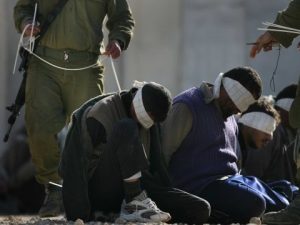 Israeli occupation forces have issued 50,000 administrative detention orders against Palestinians since the occupation of the West Bank and Gaza Strip in 1967, the Commission for Detainees and Ex-Detainees Affairs revealed on Wednesday.
Head of the research and documentation department in the researcher in the Commission for Detainees and Ex-Detainees Affairs, Abdel Nasser Farawneh, said that the administrative detention orders have increased since the outbreak of the Second Intifada, as the occupation authorities issued nearly 27,000 orders since September 2000.
He noted that of the total number of orders, nearly 1,704 were issued in 2016, a 50 per cent increase compared to 2015. While, since the beginning of 2017, over 4,000 orders were issued, including new orders and extensions.
Farawneh added that the increased number of detention orders and the increase in administrative orders issued against the Palestinians has led to a noticeable rise in the total number of administrative prisoners. As of today, nearly 5,000 administrative prisoners are held in Israeli prisons and detention centres without any charges against them or trials.
Israel arrests hundreds of Palestinians over Facebook posts
MEMO | May 30, 2017
The Israeli occupation authorities have arrested and prosecuted hundreds of Palestinians since 2015 after analysing data on their Facebook pages and judging that they are potential terrorists, Haaretz revealed on Monday.
An investigation by the Israeli journalists Orr Hirschauge and Hagar Shezaf found that Israel has violated its own and international laws regarding the detention of Palestinian youths. The domestic intelligence agency Shabak, apparently, has decided that Palestinians are terrorists if they mention the world “martyr” on Facebook.
They cited the example of a 29-year-old Palestinian woman from Hebron, whose husband was killed in a car accident in Israel in 2010. She was arrested on 2 December, 2015 and said that the Israeli interrogators handed her a screenshot of a Facebook post in which there is a picture of her husband with a caption written by her, “May God unite us in heaven”.
The woman also said that she mentioned the word shahada — “martyrdom” — on Facebook, noting that this worried her interrogators. “I told them it is a word we use regularly,” she said. “The fact that I wrote it on Facebook does not mean I will do anything. Even when someone dies in a car accident we call him shahid (martyr).”
It seems that this was an unacceptable explanation for the Israelis as she was imprisoned under administrative detention for four months with neither charge nor trial. When this term ended, it was renewed. According to the Israeli journalists, when such interrogators fail to obtain the confessions they want from Palestinians over their Facebook posts, they keep them under administrative detention or turn them over to the military courts to be sentenced.
Prior to the launch of Facebook, Israel used to arrest Palestinians on other pretexts, such as contacting organisations hostile to Israel, without specifying the identities of the organisations in question. The Haaretz investigation noted that this woman was arrested in 2008 and spent time in prison over charges of contacting an organisation hostile to Israel.
After 40 days, Palestinians suspend mass hunger strike in Israeli prisons
Ma’an – May 27, 2017
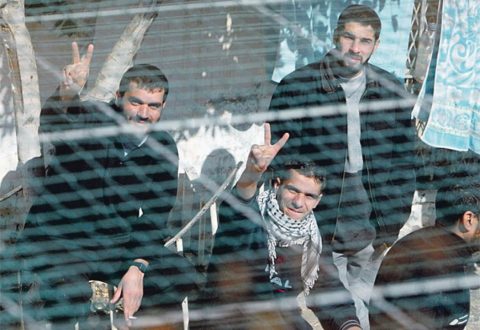
BETHLEHEM – Hundreds of Palestinians held in Israeli prisons have suspended a 40-day mass hunger strike during dawn hours on Saturday, after reaching an agreement with the Israel Prison Service (IPS) that reinstated the prisoners’ family visitation sessions to two times per month.
Palestinian leaders have applauded the prisoners’ “victory,” saying that the agreement represents an “important step towards full respect of the rights of Palestinian prisoners.”
Head of the Palestinian Committee of Prisoners’ Affairs Issa Qaraqe and head of the Palestinian Prisoner’s Society (PPS) Qaddura Fares said in a joint statement that the prisoners suspended the “Freedom and Dignity,” following more than 20 hours of negotiations between IPS and Marwan Barghouthi — the imprisoned Fatah leader who has been the primary leader of the mass strike, and other prison leaders in Ashkelon prison.
The statement added that IPS officials announced the end of the strike after negotiating with Barghouthi, who IPS had consistently refused to speak with throughout the strike’s duration, as hunger strikers had meanwhile refused to enter negotiations without the presence of Barghouthi.
The joint statement did not mention which of the hunger strikers’ demands were actually met by Israeli prison authorities.
An IPS spokesperson told Ma’an that the agreement was forged between the Israeli state, the International Committee of the Red Cross (ICRC), and the Palestinian Authority (PA), granting prisoners a second monthly family visit to be funded by the PA .
The move effectively reinstated the number of family visits that were traditionally provided to Palestinian prisoners, before the ICRC reduced the number of visit they facilitated last year from two to one visit a month, sparking protests across the Palestinian territory.
The IPS spokesperson confirmed that Barghouthi was part of the agreements, but said that IPS was not considering the talks “negotiations,” as they only reinstated a previous policy and did not provide any new concessions to the prisoners.
The IPS spokesperson told Ma’an that some 834 prisoners who had remained on strike to the 40th day had ended their hunger strikes, and the 18 prisoners who remained hospitalized would be returned to Israeli prison following the improvement of their health conditions.
The spokesperson declined to comment on whether any of the other demands were met, which also included the right to pursue higher education, appropriate medical care and treatment, and an end to solitary confinement and administrative detention — imprisonment without charge or trial — among other demands for basic rights.
The agreements came on the first day of the Muslim holy month of Ramadan, when some hunger strikers had vowed to fast and forgo the salt and water mixture being consumed by the prisoners from dawn until sunset — the only source of nutrients the hunger strikers were consuming.
Scores of Palestinian prisoners were transferred to Israeli hospitals during the hunger strike, with reports emerging that prisoners were puking blood and fainting. Palestinian leaders had feared possible deaths among the hunger strikers if their demands were not met.
Xavier Abu Eid, a spokesperson for the Palestine Liberation Organization (PLO), released a statement on Saturday, saying that the hunger strike had “prevailed.”
“This is an important step towards full respect of the rights of Palestinian prisoners under international law. It is also an indication of the reality of the Israeli occupation which has left no option to Palestinian prisoners but to starve themselves to achieve basic rights they are entitled to under international law,” the statement read.
As the statement pointed out, the hunger strike was one of the longest strikes in Palestinian history and included a wide participation of Palestinian prisoners from across political factions.
Israeli forces had attempted to break the hunger strike through various punitive measures, including punishing hunger strikers with the use of solitary confinement, “inciting” against the hunger strikers and their leaders, most notably Barghouthi, and threatening to force feed the hunger strikers, the statement highlighted.
“The epic resilience and determination of the hunger strikers and their refusal to end their hunger strike despite the repression and very harsh conditions they endured allowed for their will to prevail over the will of the jailer.”
The statement also went on to thank all those who stood in solidarity with the Palestinian prisoners, particularly former political prisoners in South Africa, Ireland, and Argentina.
“The Palestinian people are a nation held captive, and the Palestinian prisoners are the reflection of this painful reality,” the statement read.
Spokesperson for the PA Youssef al-Mahmoud also congratulated the hunger strikers on “achieving their demands.”
“Our heroic prisoners achieved a new victory in their legenday resistance,” he said, adding that the government would continue its efforts to “guarentee that all Palestinian prisoners are freed without exceptions or conditions.”
He also called for the ending of political divisions in Palestine and to work on regaining national unity to support Palestinians who are facing challenges.
Meanwhile, member of Fatah’s central committee Jamal Muheisin and Qaraqe held a press conference at Yasser Arafat square in Ramallah to announce the “victory” of the hunger strike.
The national committee formed to support the hunger strike also released a statement saying that the hunger strikers had achieved a “legendary triumph forcing the occupation government to negotiate with the leaders of the hunger strike and Marwan Barghouthi after having refused to negotiate for 40 days.”
The statement highlighted that the “epic hunger strike” brought back unity between Palestinians in Israeli prisons and revived the spirit of national solidarity, which has succeeded in “thwarting the occupation’s plots”.
The statement added that more information regarding the details of the agreement between IPS officials and the hunger strikers would be released later on Saturday.
Palestinians imprisoned by Israel have underwent numerous hunger strikes since the Israeli army occupied the West Bank, including East Jerusalem, and Gaza in 1967, with several hunger strikers being killed during strikes owing to Israeli policies of force-feeding the prisoners.
Their demands have ranged from insisting on better quality prison food to ending torture in Israeli prisons.
According to prisoners’ rights group Addameer, 6,300 Palestinians were held in Israeli prisons as of April, most of whom are being held inside the Israeli territory in contravention to international law which forbids holding Palestinians from the West Bank and Gaza outside the occupied territory.
While Israeli authorities label Palestinians as “security prisoners,” activists and rights groups have long considered Palestinians held in Israeli custody as political prisoners, and have routinely condemned Israel’s use of prison as a means of dismembering Palestinian political and social life in the occupied territory.
Addameer has reported that 40 percent of the male Palestinian population has been detained by Israeli authorities at some point in their lives.
Hunger Striking for Palestinian Rights
Take the Salt Water Challenge

By Philip Giraldi • Unz Review • May 23, 2017
Marwan Barghouti has stopped drinking water. He started his hunger strike thirty-six days ago, together with 1,500 other Palestinians who are being held in Israeli prisons. Each day the strikers have been drinking water mixed with salt, the salt needed to keep their electrolytes functioning to stay alive, but their health has reached a critical phase in which they are experiencing vomiting, fainting and loss of vision. Barghouti, who has been in Israeli prisons for 15 years, is wagering with his own life in a bid to obtain better conditions for the 6,500 Palestinians in Israeli detention, most of whom have been imprisoned on faux terrorism related charges by military tribunals that have a 90% conviction rate. Nearly 500 children are among the prisoners, some of whom are only 12 years old, and there are also an estimated 500 Palestinians held in administrative detention, which permits the Israeli authorities to confine them indefinitely without any charges or any trial.
The Israeli authorities describe the hunger strike as a “violation of prison rules.” In the past, they have responded to such protests by bringing in doctors to help restrain and supervise force feeding of the strikers, but the practice proved very controversial among members of the medical profession and has been suspended, though there have been suggestions that “foreign” doctors might be brought in to do the dirty work. So it is to be presumed that the strike will continue until the protesters either win, begin to die or choose to cease and desist.
I have had the pleasure of speaking recently with Marwan’s youngest son Arab, a graduate of St. Mary’s College of California with a master’s degree in financial analysis, who has begun a campaign to publicize his father’s resistance against the Israeli prison authorities. He has been asking supporters to themselves drink salt water as a sign of solidarity with the hunger strikers. Many prominent Palestinians have done so publicly and the practice has become widespread both in Gaza and on the West Bank as well as among activists in Europe and the United States. It is also gaining strength on the social media, most particularly on Facebook, with videos of supporters of the Salt Water Challenge Salt Water Challenge inviting their friends to join the movement. Hunger striking is the ultimate personal statement, a peaceful form of protest that can only be effective if it helps to mobilize other forces to bring about change. With that in mind, the account of the suffering of Marwan Barghouti and his comrades in prison deserves the widest possible dissemination worldwide.
Marwan Barghouti is, not surprisingly, a controversial figure. His resistance to the Israeli occupation of his homeland began early at age 15 when he joined Fatah and eventually went on to co-found the organization’s youth movement. He later assumed leadership of its paramilitary wing Tanzim, though he eventually distanced himself from Fatah due to its corruption and for a short time headed his own reform party. He subsequently rejoined Fatah in 2006 and is now a member of the Palestinian Parliament. He is widely regarded as the most popular of Palestinian leaders even though he is in prison, or perhaps in part because of that.
Barghouti’s biography reads like a work of fiction. One of seven children, his father was a migrant worker. He completed high school while in an Israeli prison, where he learned Hebrew, and then went on to complete a BA in history and political science followed by an MA in international relations, both at the Palestinian Birzeit University. It required 15 years to complete his degrees because he was exiled to Jordan by the Israelis from 1987 to 1994 for his involvement in the First Intifada after being charged with “incitement,” a favorite catch-all phrase frequently used by Israel to indict anyone who is perceived as an opponent or critic when no actual charges can be plausibly supported by evidence.
Marwan Barghouti was indeed prominent in both the First and Second Intifadas due to his undoubtedly correct belief that a powerful Israel had no interest in any peaceful accommodation with the beleaguered Palestinians. He supported sometimes violent resistance and provocations directed at Israeli soldiers and settlers on the West Bank, though he did not consider Israeli citizens inside Israel legitimate targets. In 2002, he was arrested in Ramallah by the Israelis during the Second Intifada and eventually convicted of five counts of murder plus additional charges. He was given the maximum sentence of five cumulative life sentences for the alleged murders plus forty additional years for attempted murder and membership in an illegal organization.
In his trial Barghouti denied everything but refused to defend himself, claiming that the court had no jurisdiction and that he was legitimately resisting the Israeli occupation of his home. No one was able to demonstrate that he had actually killed anyone but the prosecution insisted that he had given the orders to do so. It should be noted that it was a political rather than a criminal event and completely illegal as he was a Palestinian living in Ramallah who was being tried in an Israeli court and sentenced to prison in Israel. The Inter-Parliamentary union subsequently reviewed the case and found that it had violated the accused’s rights and that numerous international legal agreements and norms were contravened.
Since 2002, there have been growing demands for Marwan Barghouti’s release, including from some Israeli politicians and peace groups, based on his relative moderation and desire to see a peaceful transition into a two-state solution for Israel and Palestine. He has sometimes been likened to Nelson Mandela as someone who could potentially bring order and justice to an apparently intractable situation. Barghouti is undeniably more popular than either Mahmoud Abbas of Fatah or Ismail Haniya of Hamas. If he were free and an election were held today, he would undoubtedly be elected Palestinian president.
It is important to understand the context of the plight of the Palestinian prisoners to appreciate where Barghouti’s struggle for Palestinian rights derives from. Israel shoots to kill Arab demonstrators, including children, who throw stones. It engages in illegal mass, arbitrary arrests of Palestinians who do not reside in Israel but are nevertheless subject to control by the Israeli military authorities who have a relatively free hand on the West Bank. Once convicted by a military court, which is almost always the case, the prisoners are then held in Israel, a violation of international law, while their homes back in the Palestinian territories are frequently demolished to collectively punish the families. The trip through Israeli security barriers from the West Bank to the prisons requires 20 hours travel each way, leading to a 45 minute visit with a barrier in between so no one can actually see anyone else. A one visit per year limit for anyone over 16 is part of a process intended to further punish the families. Prisoners are routinely tortured by Israel, including the “Palestinian Chair”, an excruciating procedure which was developed by the Israel Defense Force’s interrogators and later taught to Americans and used at Abu Ghraib. Hundreds of Arabs have also been killed while in custody and reports of organ harvesting have surfaced in the international media.
Over the past fifty years, an estimated 800,000 Palestinians have been imprisoned by Israel at one time or another, fully 40% of the adult male population. Meanwhile, Israeli settlers run amok on the West Bank, protected by the police and army as they attack Palestinians at random and systematically destroy their livelihoods. They are rarely arrested and, if they are, they are tried in Israeli civil courts where they are nearly always acquitted. It is a situation that would be unimaginable nearly anywhere else in the world but Israel gets away with it due to a sympathetic Jewish dominated media in the U.S. and lickspittle politicians worldwide who can easily be bought or coerced.
Numerous international laws and the Geneva Conventions have been violated in the horrific treatment of the Palestinians but Israel continues to act with impunity. Israel’s colonial occupation and theft of Palestinian land are illegal and have been frequently condemned by world bodies like the United Nations. The United States agrees that the settlements are illegal, though it avoids the word, but it balks at calling out the brutal Israeli military occupation for what it is. The U.S. has also served as Israel’s protector in the U.N. and elsewhere, meaning that there is no pushback against Israeli actions that is in any way commensurate to the crimes that its government commits.
The current American Ambassador to the U.N. Nikki Haley is a virtual echo chamber for Israel’s Foreign Ministry. She sells out U.S. interests to pander to the powerful domestic Israel Lobby which uses its money and political access to corrupt American politicians as well as judicial processes worldwide, as Alison Weir has recently demonstrated with her brilliant analysis of how any criticism of Israel is now being conflated with anti-Semitism and increasingly regarded as a universal “hate crime.”
Israeli apologists like to frame the Palestinian “problem” as a group of unredeemable terrorists who have to be dealt with harshly, a narrative that portrays all Arabs as a threat. But the reality is that Israel has overwhelming power and exercises brutal control over the Palestinian population, which is treated as if it were subhuman. Indeed, many Israelis believe that Arabs are subhuman and deserve to be “ethnically cleansed.” But a people under occupation, even if relatively powerless, has a right to resist under international law, to include the use of violence, which is what the two Intifadas were all about.
One has to hope that Marwan Barghouti succeeds in his resistance and that his son Arab will be able to reach the widest possible audience to publicize what exactly is going on in Israel’s prisons and by extension in its cruel occupation and settlement of what remains of Palestine. And we should not forget other prisoners of conscience like Israeli nuclear whistleblower Moredechai Vanunu, who has yet again had his liberty restricted by the country’s Supreme Court. Israel is an essentially racist police state in spite of its frequent boasts about its alleged democracy but the important message for us Americans is that we have unfortunately served as Benjamin Netanyahu’s enablers. The Palestinians deserve a state of their own and the time has come for the United States to demand that Israel free all political prisoners like Marwan Barghouti and allow that to happen.
Featured Video

Seyed M. Marandi: Negotiations Collapsed – Return to War
or go to
Aletho News Archives – Video-Images
From the Archives
The US-Iran Scenario That Most Scares Israel
By Ali Haydar | Al-Akhbar | October 9, 2013
Israeli Prime Minister Benjamin Netanyahu issued a series of threats toward Iran and its interlocutors in the West, including the US, as serious negotiations on Iran’s nuclear program seem more plausible.
As a possible rapprochement looms between the US and Iran, Netanyahu has attempted to impose impossible Israeli conditions on the negotiators, such as the full dismantling of Iran’s nuclear program, not to mention threatening military force.
Whatever the deal that could materialize between Iran and the West, Israel is going to find itself before an open-ended path. One can foresee three possible scenarios… continue
Blog Roll
 Aletho News
- UK, Spain reject Trump’s new scheme to blockade Hormuz Strait
- Russian frigate ‘resurfaces’, chases off NATO pirates days after Kiev ‘sank’ it
- Ukraine Targets Russian Merchant Fleet With NATO Intel Support – Presidential Aide
- Russia’s ‘shadow fleet’ makes mockery of UK naval power
- Ukraine plans to attack Russian ships with Norwegian support
- US’s ‘Very Foolish’ Double Blockade of Hormuz Strait Makes Absolutely No Sense: Here’s Why
- China issues rules on countermeasures against foreign states’ unlawful extraterritorial jurisdiction
- Seyed M. Marandi: Negotiations Collapsed – Return to War
- Tomorrow’s naval blockade showdown
- ‘Israel’ attacks civilians to hide its embarrassing military failures & out of pure sadism
- If Americans Knew
- Critical shortages in Gaza, Lebanon in ruins, “piracy” in Iran – Daily Update
- US-Iran ceasefire negotiations make zero progress – Daily Update
- Pro-Israel ‘Thinktanks’ and Individuals who Influence U.S. Foreign Policy
- Mearsheimer reveals how Israel dictates US policies on Iran, Gaza – video
- After killing 350+, Israel still has a “score to settle” with Lebanon before ceasefire – Daily Update
- Military aid to Israel emerges as the latest political litmus test for Democrats
- The only Palestinian children’s rights organization closes following years-long Israeli campaign against it
- ‘I Can’t Forget the Smell’: Lebanese Reel After Israel Kills Over 300 in Single Day
- DNC Shoots Down Resolutions Calling Out AIPAC and Limiting Arms to Israel
- TCN: Is Israel Blackmailing President Trump?
- No Tricks Zone
- Cave Discovery Reveals Today’s Desert Climates Were Recently Far Warmer, Wetter, Teeming With Life
- German Expert: Heat Dome Led To Record Temps In Western USA…Warmer In 1934, 1936
- New Study: No Linear Warming Or Glacier Retreat Along Northern Antarctic Peninsula Since 1980s
- An Inconvenient Tree: Uncovered In Alps… Europe Much Warmer Than Today 6000 Years Ago
- New Study Reports A 60% Slowdown In Greenland’s Ice Loss Rate In The Last Decade
- Low Intensity Tornado Wrecks Major Solar Farm, Creating A Potential Toxic Dump
- New Study Finds Warming Saves Lives…Cold Temperatures 12 Times More Deadly Than Excess Heat
- German Science Blog Accuses PIK Climate Institute Of Hallucinating Climate Tipping Points
- Devastating Assessment Of Comirnaty Vaccine By Former Senior Pfizer Europe Toxicologist
- New Study: CO2 Is ‘Effectively Negligible’ As An Explanatory Climate Change Factor Since 2000
 Aletho News