Maria Farmer provided the first criminal complaint to the New York City Police Department and to the FBI, about the conduct of convicted sex offender Jeffrey Epstein.
In this abridged version of a phone interview with journalist Whitney Webb, Maria Farmer exposes Les Wexner, Ghislaine Maxwell, Jerffrey Epstein, and Israel loyalists who were all involved in the trafficking and exploitation of children and young women.
Maria recounts how Les Wexner and Jeffrey Epstein had the dressing rooms at the Victoria’s Secret Flagship store in all bugged with cameras. Maria retells stories of their Jewish supremacy and racism against white and black people. These are parts of the story that the mainstream media leaves out when reporting on The Epstein Files.
On January 30, the US Department of Justice released what it called “3.5 million responsive pages” in compliance with the Epstein Files Transparency Act spearheaded by Rep. Thomas Massie. Though more than a month late, redacted in bizarrely non-compliant ways, and representing only about half of the Epstein files (the other half are still being illegally withheld) the DOJ document dump provided abundant, irrefutable evidence that the “antisemitic conspiracy theorists” have been right all along: The United States of America is occupied by a Jewish supremacist crime ring based in Israel.
The documents show that when then-United States Attorney for the Southern District of Florida Alex Acosta gave convicted sex criminal Jeffrey Epstein a sweetheart plea deal in 2008 because Epstein “belonged to intelligence,” he was referring to Israeli intelligence. According to FBI files, Acosta’s source was Alan Dershowitz, Epstein’s lawyer, who himself represented Israeli intelligence.
Epstein should have gone to prison for years or decades, as would any other criminal convicted of the same charges. But the notorious sex trafficker got a work-release wrist slap. Since when can a foreign intelligence agency tell a US Attorney not to do his job?
The latest document dump confirms that Epstein, who was groomed as a sexual blackmailer by Les Wexner’s MEGA group of billionaire Mossad spies, was “trained as a spy by (Israel’s former military intelligence chief and Prime Minister) Ehud Barak,” who visited Epstein’s New York mansion on dozens of occasions. Barak and Epstein teamed up not only to blackmail American political, economic, and cultural leaders, but also to funnel huge sums of money to politicians in various nations—bribes in return for those politicians following Israel’s orders.
The new document dump reveals that Epstein worked with Israel to support their Ukrainian asset Zelensky, and to try to overthrow Russia’s Vladimir Putin and replace him with an Israeli stooge named Ilya Ponomatov. Epstein, we also learn, was involved in the overthrow of Libya’s Gaddafi. The Mossad blackmailer helped cultivate Israel’s relations with separatists in the imaginary nation of “Somaliland” (which only Israel recognizes). He brokered Israel’s ties with India’s Prime Minister Modi, and maintained close relationships with top UK leaders including Tony Blair and Peter “love the torture video” Mandelson.
These and other revelations prove that Epstein was not just a sexual blackmailer. Since his job was to establish compromising personal relationships with the world’s most powerful people, Epstein was also used by Israel as a high-level international power broker. “I represent the Rothschilds,” Epstein wrote to Peter Thiel, referring to the banking dynasty that created Israel.
The DOJ files show how Israeli/Rothschild agent Epstein lured his blackmail targets into a cesspool of depravity. The files contain many references to torturing, raping, and murdering children. FBI files cite testimony that Epstein’s crime ring would “birth babies for black market use.” Those who thought Pizzagate was an unproven conspiracy theory may be surprised to learn that the Epstein emails include more than 900 references to “pizza” as a likely code for child sex slaves. There are also 673 suspicious references to “ice cream” and countless uses of “grape soda” presumably referring to black prostitutes or sex slaves. Mainstream media are twisting themselves into contortions trying to insist that even though most of these food code words are obviously what they seem–code words for child sex slaves–though possibly a few could be interpreted as references to actual food! New York Magazine opines:
Admittedly, some of the pizza-related material seems pretty weird. An April 2018 message from a redacted sender says, “lets go for pizza and grape soda again. No one else can understand. Go kno.” Cryptic! Some of it is scrutable: “Go kno” appears to be a rendering of go know, an English derivative of the Yiddish expression geh vays, which is roughly equivalent to “go figure.” The claim that “no one else can understand,” on the other hand, is a creepy element that echoes Donald Trump’s allusion to “wonderful secrets” in his infamous letter on the occasion of Epstein’s 50th birthday…
“Pizza and grape soda” belongs to the latter category, and it appears frequently in Epstein’s emails and texts. In a 2018 exchange with his urologist, Harry Fisch (who erroneously appears in Epstein’s contacts as “Harry Fish”), the two seem to discuss refilling Epstein’s prescription for erectile-dysfunction medication. Fisch later texts, “After you use them, wash your hands and lets [sic] go get pizza and grape soda.” This proposal seems odd. There are many things you can do after your Viagra kicks in, and getting a slice with your doctor is not near the top of the list…
… Remember when only unreasonable people thought like this? The idea that pizza could be a code word for illicit sexual activities was laughable in 2016, when the so-called Pizzagate conspiracy captured the imaginations of what might charitably be called the internet’s most enthusiastic users…At the time, the assumption that pizza was code for sex with children seemed obviously arbitrary and extravagant, a violation of the principle that the simplest explanation is usually the right one. This heuristic, Occam’s razor, is often a handy way to differentiate ideas and people we should take seriously from ones we can safely dismiss — people who are frustrated that they’ve misplaced their keys tend to be more credible than those who think their keys have been stolen. Except with this Epstein pizza thing, the somebody-stole-my-keys contingent seems to have been suddenly, disastrously vindicated…
…Occam’s razor has comparatively little to tell us about grape soda. Fisch and Epstein refer to “pizza and grape soda” so often, and so often together — seemingly never just grape soda and rarely just pizza — that the whole thing starts to look like a shibboleth… The mystery deepens when you notice that Fisch often follows references to pizza and grape soda with an emoji depicting an African American…
The sender’s name has been redacted, and the identity of “Brice” is unclear, but a former New Zealand Army chef named Brice Gordon co-managed Epstein’s New Mexico ranch and was interviewed by the FBI in 2007. Red Hook is an unincorporated town in the U.S. Virgin Islands — the least-populated such place, according to the 2020 census, consisting mostly of marinas. There is, as it turns out, a pizza restaurant there. But why would someone need Epstein’s permission to have a “quick pizza meal” to which the financier was not invited? It’s enough to drive a sensible person to speculation.
From the mainstream media’s perspective, the problem is not that we are ruled by genocidal Israeli-Mossad-empowered Jewish supremacist psychopathic billionaire perverts. It is that someone might notice that we are ruled by genocidal Israeli-Mossad-empowered Jewish supremacist psychopathic billionaire perverts. That would mean that the “antisemitic conspiracy theorists” were right all along. Oy vey! Double-plus ungood!
Though the mainstream media professes to hate racism, they are covering up Epstein’s virulent racism against non-Jews. The emails are full of disparaging references to “goys,” a term for non-Jews that roughly parallels other racial slurs including the N-word. Epstein and his supremacist cronies loved to degrade non-Jewish children and teens, but never targeted their fellow “chosen people.”
For many Americans, the most disturbing revelations in Epstein files involve President Donald J. Trump. Prior to the files’ release, we already knew that Trump flew on Epstein’s jet at least eight times, was referred to by Epstein as his “best friend,” sent a birthday drawing to Epstein depicting a barely pubescent naked girl alluding to their “secret,” and has been accused of raping 13-year-old “Katie Johnson” in 1994 at an Epstein party and then threatening to kill the girl and her family. The first Epstein dump also contained FBI witness reports that Trump was present when a baby was drowned in Lake Michigan, and was implicated in the rape and murder of a certain Dusty Rhea Duke in 2000.
The new Epstein files release includes FBI witness reports that Trump was involved in murdering three girls who were buried at Mar-a-Lago and threatening the witness with a similar fate. Witnesses also told the FBI that Trump auctioned underage girls from his swimsuit contests, measuring their vulvas and rating them for tightness. Trump is also accused of forcing oral sex and other abuses against 13 and 14 year old girls.
Meanwhile the mainstream media chant in unison: “President Trump has not been accused of wrongdoing.” Will they change their tune, and suddenly discover the FBI files, if and when Trump stops following Israel’s orders?
A shorter version of this article was published in last week’s American Free Press. -KB
Stripe is Substack’s only processor and they debanked me, so you can no longer pay me through Substack. Now I am posting everything on Substack free and asking people to sign up for recurring donations at my Paypal donation page… or better yet, the free speech platform SPdonate. Alternately you can Paypal or Zelle to truthjihad[at]gmail(dot)com. Note that Zelle, unlike other methods, doesn’t charge any fees.
The resignation of Peter Mandelson as UK ambassador to Washington in February 2026 revealed more than a scandal—it exposed the architecture of a parallel governance system operating through deniable channels. The Epstein files, the Center for Countering Digital Hate (CCDH) censorship apparatus, and the Mandelson intelligence pipeline are not separate stories. They are component parts of a transatlantic mechanism that converts private access into public control, with enforcement mechanisms that now reach across sovereign borders to silence American citizens.
Jeffrey Epstein was a convicted sex offender with deep ties to political and financial elites on both sides of the Atlantic. Peter Mandelson is a former UK power‑broker and ambassador to Washington, now under investigation for secretly sharing government information with Epstein. This article shows how their relationship connects to a wider system of online censorship and private global‑health finance.
The Intelligence Pipeline: Real-Time Treasury Briefings to a Convicted Sex Offender
The Mandelson-Epstein correspondence reveals something far more systematic than indiscreet friendship. It documents a private intelligence channel operating at the highest levels of UK and US financial policy.
In December 2009, while serving as Business Secretary, Mandelson forwarded Treasury positions on the bankers’ bonus tax to Epstein within hours of receiving them, with Epstein requesting advance notice “before Jes” and Mandelson replying simply: “Treasury”. By March 2010, the pattern had escalated—Mandelson forwarded notes from a meeting between UK Chancellor Alistair Darling and US Treasury Secretary Larry Summers to Epstein within five minutes, followed by his own meeting with Summers the next day. Those notes were forwarded within two minutes.
The content was market-moving intelligence: Dodd-Frank implementation, hedge fund taxation, derivatives regulation, and Bank of England quantitative easing strategy during the credit crunch. Mandelson advised Epstein that JPMorgan’s CEO should “mildly threaten” Chancellor Darling over policy. This systematic extraction of live government intelligence for private financial advantage can hardly be construed as incidental corruption.
DOCUMENT: Peter Mandelson leaked No 10 documents to Epstein, who then helped him pursue multi-million dollar jobs (Source: Tax Policy Associates)
The Censorship Architecture: From Anti-Corbyn Operations to American Deplatforming
The same censorship machine that produced the Biden White House’s authoritarian campaign against the so-called “Disinformation Dozen” in 2021 had emerged from the notorious Room 216, Brixton, where Israeli loyalist and architect of Keir Starmer’s rise to power, Morgan McSweeney, along with Imran Ahmed, built the “Labour Together” operation to dismantle Jeremy Corbyn. It was a CCDH list of 12 named individuals, which the White House then pushed Facebook to censor. The March 2021 “Disinformation Dozen” report was not independent research—it was unequivocally the identical playbook redeployed. The Biden White House directly cited CCDH’s report to pressure Facebook into censoring American health publishers, with internal documents showing the platform’s “secretly demoted” users, including alleged “anti-vaxxers”, and Twitter accounts of targeted individuals. When Facebook pushed back that the “majority of the accounts in question were not spreading misinformation,” the White House persisted.
Among those branded the “Disinformation Dozen” by the CCDH in March 2021: Robert F. Kennedy Jr. (Children’s Health Defense), physician Joseph Mercola, and Sayer Ji—whose investigative work exposing the Mandelson intelligence pipeline appears later in this report.
The method was documented in internal strategy papers: cultivate “seemingly independent voices to generate and share content to build up a political narrative,” infiltrate opposition spaces to extract decontextualised content, and feed narratives to sympathetic media. The “antisemitism crisis” that destroyed UK Labour Party leader Jeremy Corbyn was, as Labour Party files confirm, instrumentalised by this same faction.
Morgan McSweeney was CCDH’s founding director and subscriber for 18 months, operating from the same Brixton office that produced Labour’s anti-Corbyn operation. When he resigned in April 2020 to become Starmer’s chief of staff, Ahmed inherited an apparatus already proven effective at demonetising political opposition.
Morgan McSweeney, founding director of the CCDH, and former British Prime Minister Keir Starmer’s Chief of Staff. (Source: The Edge | Business news)
The March 2021 “Disinformation Dozen” report was not independent research—it was unequivocally the identical playbook redeployed. The Biden White House directly cited CCDH’s report to pressure Facebook into censoring American health publishers, with internal documents showing the platform “secretly demoted” affiliated accounts and Twitter accounts of targeted individuals. When Facebook pushed back that the “majority of the accounts in question were not spreading misinformation,” the White House persisted.
Project Molecule: The Financial Infrastructure of Private Governance
The August 2011 JPMorgan “Project Molecule” blueprint reveals the financial architecture that made this system durable. The $150 million fund Epstein pitched to JPMorgan CEO Mary Erdoes was designed to operate “across sovereign borders, into specific countries, for specific biological interventions”—with no elected officials, no treaty obligations, and no public accountability beyond its own audit committee.
Epstein operated as Bill Gates’s representative under a written agreement, with the explicit purpose of securing “additional money for vaccines” while creating a “permanently governed, privately controlled, transnational system”. The budget allocated $40M for polio vaccines in Afghanistan, $40M in Pakistan, $20M specifically for “financing the surveillance network in Pakistan,” and $30M for rotavirus vaccines in Latin America.
This is the governance model: private intelligence (Mandelson-Epstein), private finance (Project Molecule’s offshore vaccination funds), and private enforcement (CCDH’s deplatforming operations) operating in substitutional parallel to democratic institutions.
The Enforcement Layer: Cross-Border Suppression of American Speech
What transforms influence operations into censorship is enforcement. The original investigation documents the apparatus reaching into foreign legal proceedings against American journalists—cross-border enforcement without due process, extradition treaties, or congressional oversight.
The pattern is now confirmed by US government action. In December 2025, Secretary of State Marco Rubio barred Imran Ahmed from entering the United States, citing his role in “leading organised efforts to coerce American platforms to punish American viewpoints they oppose”. Ahmed was one of five Europeans sanctioned under a visa policy targeting foreigners responsible for censoring protected speech in America.
The CCDH is now reportedly under DOJ investigation for potential violations of foreign agent registration laws, given its coordination with UK Labour operatives while targeting US political speech. Labour’s deployment of approximately 100 operatives to US swing states during the 2024 election—conducted by McSweeney’s network—has generated formal FEC complaints alleging direct electoral interference.
After days of parliamentary theatre about “transparency,” Westminster has craftily moved to bury the Mandelson-Epstein papers—not in open sunlight, but inside the Intelligence and Security Committee, a body three of whose members have already stuffed with cash from pro-Israel lobbyists.
In Britain, Downing Street originally wanted veto power over anything “prejudicial to national security”, but the documents will now be reviewed by the Parliament’s Intelligence and Security Committee (ISC). Critics argue that this allegedly independent oversight body could be compromised. In effect, three sitting members—Deputy Chair Sir Jeremy Wright, Sir John Hayes, and Labour’s Derek Twigg—have all taken money from the pro-Israel lobby, which by some estimates bankrolls roughly a quarter of British MPs. This can be verified in the excellent Declassified UK report published in June 2024.
🔴 EXPOSING THE ISRAELI LOBBY'S INFLUENCE ON UK POLITICS
Curious about how millions in funding might sway UK MPs and impact an investigation? Dive into this eye-opening clip revealing the powerful influence of the Israeli lobby on UK politics and the Epstein case.
The bottom line is that the Epstein file, which details how Mandelson piped classified Treasury intelligence to a convicted sex offender, and how British power brokers and Wall Street criminals traded backroom briefings, will now be “vetted” by politicians on the take from foreign influence networks. Forget transparency—it was never on the table.
The Architecture of Manufactured Consensus
The critical insight is structural: these networks exploit the gap between formal democratic institutions and actual governance. Mandelson’s Treasury briefings to Epstein occurred through informal channels. Project Molecule’s sovereign surveillance programs were designed to operate offshore. CCDH’s censorship operations, though effective at capturing White House policy, occurred through a nonprofit rather than state agencies. According to reports, George Soros is said to have donated $250,000 to the CCDH, which is working to censor conservative news outlets and to undermine Musk’s Twitter.
When the same personnel (McSweeney as CCDH founder, then Starmer’s chief of staff), the same infrastructure (Brixton operations), and the same methods (crisis amplification, media laundering, financial pressure) appear across Corbyn’s destruction, COVID censorship, and US electoral operations, we are not observing a coincidence. We are witnessing a system.
The switchboard is not the scandal. The switchboard is the system, and it is now being dismantled by the very government it sought to influence.
The Original Investigation
This synthesis builds upon the groundbreaking investigative work of Sayer Ji, founder of GreenMedInfo and author of the Switchboard series—including the first publication to connect the Mandelson-Epstein intelligence pipeline to the CCDH censorship apparatus. Ji’s research, conducted under direct legal and professional pressure from the very networks he was exposing, documented how British political operatives built a cross-border enforcement mechanism capable of weaponising foreign courts against American journalists.
His original reporting on Room 216, the Brixton operations, and the emergence of “disinformation” as a tool for political suppression predates mainstream coverage by years, and has now been validated by the Epstein disclosures, the Rubio sanctions against Ahmed, and the DOJ’s investigation into CCDH’s foreign agent activities.
Read the complete investigation series and supporting documentation at Sayer Ji Substack…
The Switchboard: From Epstein to Mandelson to McSweeney to Ahmed — How a British Machine Became America’s Censorship Engine
How the Epstein Files Reveal the Architecture Behind Censorship, Crisis Finance, and What Happened When I Investigated It – Part 3 in a Series
Peter Mandelson, “the Prince of Darkness,” Keir Starmer’s hand-picked ambassador to Washington, the most powerful unelected figure in British politics, resigned from Parliament this week, one step ahead of legislation to eject him. The Metropolitan Police opened a criminal investigation. The Prime Minister apologised to Jeffrey Epstein’s victims for believing Mandelson’s lies.
The press is treating this as a story about a politician’s downfall. It is not. It is a story about what he was connected to — and what was built to make sure you never found out.
Key Findings:
The censorship machine that targeted American speech during COVID was built inside a Labour Party factional operation. Morgan McSweeney and Imran Ahmed created the Center for Countering Digital Hate (CCDH) from the same office, using the same staff, and the same dark-money infrastructure they used to destroy Jeremy Corbyn — then redeployed the identical playbook against U.S.-based health publishers and independent media.
CCDH’s founder and political patron is a protégé of Peter Mandelson, who wassimultaneously routing confidential UK and U.S. government intelligence to Jeffrey Epstein. Mandelson forwarded Treasury readouts on the Volcker Rule, Dodd-Frank, and derivatives regulation to Epstein within minutes of receiving them — intelligence worth billions to Epstein’s Wall Street clients. The same political culture of deniable backroom operations that made the Epstein network functional also produced CCDH.
Epstein’s network was not just criminal — it was architectural. Project Molecule, a $150M JPMorgan blueprint produced the same month Epstein sketched a private global health fund, reveals the institutional machinery: offshore vaccination funds, sovereign biological surveillance programs, and governance structures designed to bypass elected oversight entirely.
The enforcement layer is not theoretical — it has already been deployed against named individuals. CCDH’s “Disinformation Dozen” list led directly to platform deplatforming. In at least one documented case, CCDH-originated material was entered into foreign legal proceedings to seek an ex parte arrest warrant against a U.S.-based journalist for lawful American speech — cross-border enforcement with no due process, no extradition treaty, and no congressional oversight.
The same network is now the subject of a formal FEC complaint alleging direct electoral interference. McSweeney — Mandelson’s protégé, CCDH’s political architect, and now Starmer’s chief of staff — was named in a formal FEC complaint for dispatching approximately 100 Labour operatives to U.S. swing states during the 2024 presidential election. The censorship pipeline and the electoral interference pipeline share the same personnel, the same infrastructure, and the same assumption: that British political operatives can shape American outcomes without accountability.
Four days before A. H. Robins signed the contract to purchase the Dalkon Shield intrauterine device, the company’s own director of pharmaceutical research reported that no one knew how long the device’s tail string would remain chemically stable inside a woman’s body. “The device has not been subjected to any formal stability testing,” Oscar Klioze wrote in his memo on June 8, 1970. He also noted that the plastic used in the Shield had been cleared by the FDA for packaging meat — not for implantation in humans.
Seventeen days after the purchase, on June 29, a company orientation report circulated to thirty-nine executives — including the chairman, the president, and multiple vice-presidents — carried a more specific warning: the tail string had a “wicking” tendency, meaning it could draw bacteria from the vagina into the sterile uterus. The report recommended “a careful review.”
A. H. Robins began selling the Dalkon Shield nationally six months later. It never conducted wicking studies on the string. Over the next four years, the company distributed 4.5 million Shields in eighty countries. By the company’s own conservative estimate, roughly 88,000 women in the United States alone were injured. At least eighteen died. Hundreds of thousands suffered pelvic infections, septic abortions, perforated uteri, and permanent sterility.
The Dalkon Shield is sometimes treated as a historical curiosity — a cautionary tale from an era of looser regulation. That framing obscures what actually happened. The record, built from internal company memos, sworn depositions, congressional testimony, and court documents, reveals something more instructive: a template. A sequence of decisions, repeated across every phase of the product’s life, that follows a pattern so consistent it functions as a blueprint.
That pattern is worth studying in detail. Not because the Dalkon Shield is unique, but because it is not.
The Founding Fraud
The Dalkon Shield’s commercial life rested on a single published study. In February 1970, Dr. Hugh J. Davis of Johns Hopkins University reported in the American Journal of Obstetrics and Gynecology that, of 640 women fitted with the Shield over twelve months, only five became pregnant — a rate of 1.1 percent. This made the Shield competitive with oral contraceptives and dramatically superior to every other IUD on the market.
The study had foundational problems that A. H. Robins knew about before it bought the device.
The average duration of use per patient was 5.54 months — barely half the twelve-month study period. Biostatistical researchers at Johns Hopkins estimated that a minimum of 1,200 patients would have been needed to establish a pregnancy rate of one or two percent with confidence. Davis used 640. He sent his data to the university’s statisticians within three days of the study’s closing date — far too quickly to capture pregnancies that had occurred but not yet been detected. When participants dropped out of the study, they vanished from the data, and these were the women most likely to have become pregnant or experienced complications. Davis testified vaguely that “less than 5 percent” were lost to follow-up. If one or two of them had conceived, the 1.1 percent rate would have dissolved.
Davis had a financial stake in the outcome. He held 35 percent of the Dalkon Corporation, the entity that sold the Shield to A. H. Robins for $750,000 plus a 10 percent royalty. He was also retained as a paid consultant. None of this was disclosed in his published study. When asked at a Senate hearing whether he had “recently patented such a device,” Davis gave testimony that was technically accurate and deliberately misleading: “I hold no recent patent on any intrauterine device.” He held something more valuable — equity.
A. H. Robins knew the published figures were wrong before finalizing the purchase. When Dr. Fred Clark visited Davis in Baltimore on June 8, 1970, to review the data, he found that over fourteen months, 832 insertions had produced 26 pregnancies — a rate of 3.1 percent, nearly three times what Davis had published. Clark recorded these numbers in a confidential memo that circulated to senior officials. A. H. Robins later claimed the discrepancy resulted from Clark’s secretary misreading his handwriting.
That explanation sits uneasily beside a second memo, written three days later by senior vice-president Jack Freund, which stated that Davis’s one-year follow-up period was not long enough “to project [pregnancy figures] with confidence to the population as a whole.” The company’s own biostatistician, Lester Preston, was never asked to review the fourteen-month data.
A. H. Robins purchased 199,000 reprints of the Davis article and distributed them to physicians. By August 1973, the company had printed more than five million pieces of Shield promotional literature. The 1.1 percent pregnancy rate remained the centerpiece. An internal memo from Shield project coordinator Allen Polon, dated October 31, 1973, finally stated what the company had long known: “A pregnancy rate of 1.1 percent is stated which is not valid.” Polon recommended destroying the literature. By then, A. H. Robins had captured 56 to 59 percent of the American IUD market.
The promotion machine extended beyond reprints. In September 1972, Robins published “A Progress Report,” reportedly the largest and costliest advertisement in the history of the IUD business — an eight-page, multicolor spread proclaiming “The IUD That’s Changing Current Thinking About Contraceptives.” It cited four published studies to substantiate low pregnancy rates. The highest rate cited was four times the lowest, a statistical oddity the ad did not address. Two of the four studies were authored by men with undisclosed financial ties to the company: Davis, and Dr. Thad Earl, a Defiance, Ohio physician who held 7.5 percent of the Dalkon Corporation stock and received royalties on every Shield sold. Earl reported a 0.5 percent pregnancy rate — a figure that matched a prediction Davis had made at an international conference months before Earl’s study was completed. A. H. Robins helped Earl draft his article and performed the statistical calculations. Neither Earl’s financial stake nor his consultancy was disclosed in the publication.
A company telegram to its northern sales division captured the ethos: “Northern Division will not be humiliated by a lack of Dalkon sales. If you have not sold at least 25 packages of 8 then you are instructed to call me. Be prepared to give me your callback figures. No excuses or hedging will be tolerated, or look for another occupation.”
Independent studies told a different story. The Kaiser-Permanente Medical Center in Sacramento reported a 5.6 percent pregnancy rate and a 28.7 percent removal rate. Beth Israel Hospital in Boston reported 10.1 percent. Dr. William Floyd of Wayne State University reviewed the Davis study’s internal evidence, concluded it was biased, and suggested the true rate was around 5 percent. A. H. Robins ignored him. In July 1973, the FDA wrote directly to Chairman E. Claiborne Robins asking him to reconcile the very low pregnancy rates in the company’s advertisements with the much higher rates reported by independent researchers. Robins testified that he had received the letter but could not recall it.
The String
The tail string is where the story becomes a matter of life and death.
Every IUD has a string that runs from the device inside the uterus, through the cervix, into the vagina. It allows the woman to check the device’s position and the doctor to remove it. The string passes through the cervical canal, where mucus acts as the body’s barrier against bacterial invasion. On every other IUD of that era, the string was an impervious monofilament — bacteria could not get into it.
The Dalkon Shield string was different. To the naked eye, it appeared to be a monofilament. Under magnification, it was a cylindrical sheath encasing 200 to 450 separate round filaments, separated by spaces. Neither end was sealed. Any bacteria that entered the spaces between the filaments would be insulated from the body’s immune defenses while being drawn upward into the uterus by capillary action — the same phenomenon that draws melting wax up a candle wick.
Irwin Lerner, the Shield’s listed inventor, warned A. H. Robins about the wicking tendency on or before June 29, 1970. This warning reached thirty-nine executives. No one acted on it.
Wayne Crowder discovered the danger independently. Crowder was a quality control supervisor at Chap Stick Company, a Robins subsidiary in Lynchburg, Virginia, assigned to oversee Shield production when assembly moved there in 1971. In March of that year — less than two weeks after he first learned of the Shield’s existence — Crowder noticed tiny holes in the string’s sheath below the attachment knot, caused by the tying process. He rejected an entire shipment of 10,000 to 12,000 Shields. His superiors at Chap Stick asked A. H. Robins for permission to override the rejection. Permission was granted. The Shields were shipped.
Crowder conducted his own wicking experiment. He stood clipped sections of the string in beakers of water. Hours later, he could squeeze water from the dry ends. The strings wicked through the knots. He demonstrated the results to his supervisor, Julian Ross. Ross told him the string was not his responsibility and to leave it alone.
Crowder then demonstrated a solution. He applied the flame of a cigarette lighter to the open end of a string and watched it shrivel into a small, solid bead. Heat-sealing. Simple, effective, and cheap. He showed this to Ross, then to Chap Stick president Daniel French. French acknowledged the logic, called Crowder’s concern about infection “reasonable,” and predicted that “Robins wouldn’t go for” the fix. “He said that they had too much time and money invested in the present configuration,” Crowder testified. French estimated the cost of heat-sealing at five to ten cents per Shield. A. H. Robins sold each Shield for up to $4.35.
Crowder tried to escalate. French passed the concern to A. H. Robins. Dr. Fred Clark called French and sharply rebuffed him for worrying about testing. Chap Stick should focus on getting the device assembled and packaged. French backed down. “It is not the intention of the Chap Stick Company to attempt any unauthorized improvements in the Dalkon Shield,” French wrote. “My only interest in the Dalkon Shield is to produce it at the lowest possible price and, therefore, increase Robins’ gross profit level.”
Ross told Crowder he hoped he had finally gotten the string business out of his system. “I told him that I couldn’t in good conscience not say something about something that I felt could cause infections,” Crowder later testified. “And he said that my conscience didn’t pay my salary.”
A. H. Robins did not attempt to duplicate Crowder’s wicking studies until 1974, after the Shield was already off the market. The heat-sealing idea was revived around the same time — and then dismissed. “It is too late to ‘heat seal’ now,” wrote Ellen Preston in a December 1974 memo. “We need to abandon the ‘multifilament’ string. Heat-sealing would have been a good thing to have done 4 years ago.”
Meanwhile, Kenneth Moore, the Shield project coordinator, spent three years “desperately searching,” as he later put it, for a new tail string. Company officials swore under oath that the search was unrelated to any concern about bacteria or infection. “There was no safety reason behind my search,” testified microbiological research director Robert Tankersley. The company found a superior alternative — Gore-Tex, which would not wick, was soft, strong, and nearly indestructible. The estimated cost was 6.1 cents per string, compared with 0.63 cents for the existing Supramid string. For one million Shields, the difference was approximately $54,000. Robins’s average net earnings at the time were nearly $70,000 per day.
The company chose not to switch.
In January 1975, Tankersley outlined four experiments to determine whether the string wicked bacteria. He estimated they would take two and a half weeks, use four rabbits, and cost $90. The experiments were not funded.
Wayne Crowder was forced out of Chap Stick during a company reorganization in 1978. He had worked there for fifteen years and was earning $13,500 a year. He filed a wrongful termination suit, but a judge ruled he had missed the one-year statute of limitations. As of 1985, he had been unable to find regular employment. “No exceptional genius was required to understand the hazards of that design,” he said.
The Bodies
On March 30, 1973, a thirty-one-year-old Arizona mother of two died after her uterus spontaneously aborted the baby she had been carrying for more than four months. The infection had spread rapidly, essentially poisoning her. Antibiotics could not save her. She had become pregnant while wearing a Dalkon Shield.
Spontaneous septic abortions in the middle trimester of pregnancy were extremely rare in 1973. Until then, the only septic abortions doctors encountered were in women who had undergone illegal or self-induced procedures. This woman had not tried to abort. Her Shield was still in place when the infection took hold.
A. H. Robins learned of the death two months later through the medical grapevine. Dr. Donald Christian, head of obstetrics and gynecology at the University of Arizona Medical Center, was struck by the case. He later learned of two additional deaths — including a twenty-four-year-old mother of two who developed flu-like symptoms during her fourth month of pregnancy. Three days later, she was dead.
Christian contacted A. H. Robins, the FDA, and the Centers for Disease Control. He says the agencies ignored him. The company’s response, through Ellen Preston, was to treat the reports as isolated incidents. “I would estimate that I have been advised of a dozen, at the very most, cases of septic abortion associated with the Dalkon Shield,” Preston wrote. The company’s own complaint file, withheld from FDA inspectors until congressional pressure forced its release, indicated an 8.8 percent pregnancy rate — eight times the advertised figure.
By June 1974, Christian’s paper linking the Shield to fatal sepsis appeared in the American Journal of Obstetrics and Gynecology — the same journal that had published Davis’s original study four years earlier. “The greatest concern is the rather insidious yet rapid manner in which these patients become ill,” Christian wrote. In three of the five deaths he documented, the first symptoms — disarmingly innocuous in themselves — occurred within thirty-one to seventy-two hours of death.
The toll mounted. By August 1974, the FDA had reports of eleven deaths and 209 serious illnesses from septic abortions in Shield wearers. The Centers for Disease Control surveyed 34,544 physicians and found that fatal septic abortions occurred twice as frequently among Shield users as among women wearing other IUDs. The Planned Parenthood Federation instructed its 183 clinics to stop prescribing the Shield.
A. H. Robins did not recall the device. It suspended marketing on June 28, 1974, after FDA Commissioner Alexander Schmidt requested a halt until the Shield’s “questionable safety” could be reviewed. But company chairman E. Claiborne Robins, Sr., privately celebrated that the FDA had not demanded a full recall. “We had all felt that the decision would be political,” he wrote in an internal memo. The FDA’s press release announcing the suspension — which company officials had helped draft — “helped reinforce our image as an ethical pharmaceutical company.”
The company continued to insist the Shield was safe and effective. It formally abandoned plans to remarket the device in August 1975, but took no action to remove the estimated 600,000 Shields still inside American women. That recommendation did not come until September 1980, when a “Dear Doctor” letter suggested removal. The October 1984 recall — the company’s first direct communication to women themselves — came more than a decade after the deaths began.
In the meantime, Dr. Howard Tatum, inventor of the rival Copper-T IUD, had independently confirmed what Crowder and Lerner had warned about years earlier. Tatum suspended Shield tail strings in dye solution. Within twenty-four hours, dye rose through the entire length, past both knots. He repeated the experiment with live E. coli bacteria. After forty-eight hours, bacteria had risen to the base of the final knot — which would sit inside the uterus. He found no wicking in any other IUD. Tatum then examined used Shield strings returned from clinics across the country and successfully cultured bacteria from their interiors. He found breaks in the nylon sheath, especially just below the attachment knot — exactly where Crowder had found them.
The string’s nylon 6 sheath deteriorated inside the body, as the medical literature since 1956 had warned nylon would do in body cavities. Professor Paula Fives-Taylor of the University of Vermont found that the number of bacteria adhering to strings increased 40 percent after twenty-five to thirty-six months of use — and tripled after thirty-seven to forty-eight months. A woman wearing a Shield for thirty-six months was 9.2 times more likely to suffer pelvic inflammatory disease than a woman using no contraception. For other IUDs, the risk was 1.2 times greater.
The Dalkon Corporation had recommended replacement of the Shield after two years — a recommendation that could have averted infections in countless women. A. H. Robins dropped this guidance because its leading competitor’s labeling made no such recommendation.
The Regulatory Void
The Dalkon Shield entered the market through a gap in federal law that seems almost designed for exploitation. In 1970, the FDA regulated drugs but not medical devices. An IUD was classified as a device. This meant that A. H. Robins was not required to demonstrate safety, conduct clinical trials, submit data to the FDA, or secure approval before selling the Shield to millions of women.
Hugh Davis had exploited this gap from the start. On January 14, 1970 — eight days before his study appeared in print — he testified as the lead witness before Senator Gaylord Nelson’s subcommittee hearing on birth-control drugs. Before television cameras and a press corps covering a guaranteed story, Davis built the market for his own undisclosed product by stoking fears about the Pill. “Shall we have millions of Americans on the pill for twenty years and then discover it was all a great mistake?” he asked. Within minutes, he pushed the Shield’s purported efficacy ever closer to perfection: “some modern intrauterine devices provide a 99 percent protection against pregnancy… The intrauterine devices that are available now can give you a 99 percent or better protection.” Viewers assumed they were watching a scientist from a distinguished academic institution motivated by concern for women’s health. They were watching a 35-percent shareholder.
A. H. Robins understood the value of the device classification and worked to protect it. The Shield contained copper sulfate, which the company initially believed might have a contraceptive effect — which would have made the device a drug, triggering FDA oversight and testing requirements. Internal discussions established that the copper served no purpose. “Does copper in Shield accomplish anything? No!” was the consensus at a February 1972 meeting of five Robins doctors and scientists. But the company continued marketing the copper-containing Shield rather than reformulating it, because the copper’s ineffectiveness was precisely what kept the device out of the FDA’s drug-regulation framework. When the FDA asked, Robins supplied data supporting the conclusion that the copper was pharmacologically insignificant. The FDA agreed: the Shield was a device.
The Medical Device Amendments — which would have required demonstration of safety and efficacy before marketing — did not become law until May 1976, six years after the Shield entered the market and two years after it was pulled.
The regulatory void extended beyond classification. The FDA had no authority to require adverse event reporting for devices, no power to compel recalls, and no systematic mechanism for collecting safety data. When reports of deaths and infections accumulated, the FDA could request information, hold hearings, and ask the company to stop selling. It could not order any of these things. Every consequential action depended on A. H. Robins’s voluntary cooperation.
At the 1973 congressional hearings, Dr. Russel Thomsen — an army obstetrician-gynecologist who had been publicly criticizing the Shield — dissected the company’s advertising claims with systematic precision. He demonstrated how the “life table” statistical method, originally developed as a legitimate research tool, had been co-opted for advertising. He showed that the four studies cited in the “Progress Report” covered averages of only 5 to 6 months of use, projected outward to create the appearance of twelve-month data. He walked the committee through Davis’s textbook, which featured a chart comparing ten IUDs in which the Dalkon Shield — modestly listed last — was superior in every category. The chart compared the Shield’s short, inadequate study against much larger and longer studies of its competitors. “The deception is amazing,” Thomsen said. Representative Clarence Brown asked if Davis was “party to fraud.” Thomsen paused. “Yes, I do after going from the beginning to the end of this.”
Thomsen characterized the “Progress Report” as “a calculated effort to mislead the doctors.” The FDA’s director of medical devices dismissed the ad’s problems as “mild puffery.”
The Suppression
The company’s behavior during litigation added a dimension that the founding fraud and the regulatory gap cannot fully explain.
A. H. Robins hired the law firm McGuire, Woods, and Battle to handle Shield lawsuits in mid-1975. The firm commissioned its own studies on the tail string. These became known as the “secret studies” because their results were never made public. Whenever a judge ordered their production, the company offered settlements that plaintiff attorneys found impossible to refuse.
The concealment extended to regulatory proceedings. In April 1975, Dr. Fred Clark appeared before the FDA’s Ad Hoc Committee and was asked whether private studies had been conducted on the Shield. The answer was no. In fact, eight months after national marketing began, Robins had initiated a two-year safety study in baboons. It produced a 30 percent perforation and migration rate and killed one animal in eight from perforation or infection. This information was available when Clark testified. It was not brought to the committee’s attention.
Roger Tuttle, a Robins attorney from 1971 to 1976 who later taught law at Oral Roberts University, revealed during a 1984 deposition that Dalkon Shield documents had been destroyed. The destruction had taken place in early February 1975, while a jury was deliberating in one of the first Shield trials. Tuttle said he had been prompted to come forward by Judge Miles Lord’s speech to Robins executives the previous month.
Judge Lord, a U.S. District Judge in Minneapolis assigned twenty-three Shield cases in December 1983, had personally traveled to Richmond to supervise document production after months of obstruction. He found depositions conducted in cramped, overheated rooms at the company’s own headquarters, with defense attorneys sitting shoulder-to-shoulder with their clients — positioned so that “a nudge by an attorney could, and did, silence the deponent.” The company rotated its legal team so frequently that “the court must start up from ground level over and over.” When Lord examined the discovery record, he concluded that documents relevant to the Shield had been withheld during years of prior litigation.
On February 29, 1984, Lord delivered a statement to three senior Robins officers summoned to his courtroom. He had originally intended to have them read it silently, but after their attorneys instructed them not to respond to his questions, he read it aloud:
“When the time came for these women to make their claims against your company, you attacked their characters. You inquired into their sexual practices and into the identity of their sex partners. You exposed these women — and ruined families and reputations and careers — in order to intimidate those who would raise their voices against you.”
A. H. Robins filed two complaints against Lord for judicial misconduct. The company retained former U.S. Attorney General Griffin Bell to lead the counterattack. Lord was cleared of misconduct, but his speech was expunged from the record. His legal bills totaled $110,000.
The company’s courtroom strategy against plaintiffs was systematic. In the case of Linda Harre of Tampa, Florida, who had suffered pelvic inflammatory disease and was left unable to bear children, Robins’s sole expert witness on wicking was Dr. Louis Keith, a paid consultant who had received $277,092 from the company by April 1985. Keith testified that his own laboratory experiments showed the string did not wick bacteria, and the jury believed him. An FBI investigation of possible perjury followed. Harre lost her case.
Even A. H. Robins’s own general counsel, William Forrest, was not spared the Shield’s consequences. In a 1984 deposition, Forrest disclosed that his wife had undergone a hysterectomy shortly after her own Shield was removed in 1975. Asked whether her doctor had indicated any connection to the device, Forrest replied: “Not that I know of.” Had he asked her? “I don’t recall.” He was promoted to vice-president.
Overseas
While the company fought to contain the crisis domestically, the Shield’s reach extended far beyond American borders.
The Agency for International Development began shipping Shields to developing countries in April 1971, initially at the request of the International Planned Parenthood Federation. By mid-1974, AID had distributed nearly 700,000 Shields to approximately seventy countries. The relationship between Robins and AID was close; as AID’s own later report noted, “Especially close was the working relationship developed by Robert W. Nickless, Director of International Marketing for A. H. Robins, with A.I.D.”
After Robins suspended domestic marketing in June 1974, AID issued warnings to its field offices — but did not recommend that Shields already inside women be removed. This was, as AID later explained, “in line with FDA and manufacturer pronouncements on the subject.” The recommendation for removal did not come until September 1980, six years after the suspension of sales. By then, the damage had long been compounding inside women across the developing world.
AID later accounted for 47 percent of the Shields it had distributed — 328,997 devices returned or destroyed. The remaining 53 percent — 368,295 Shields — were unaccounted for. AID’s report concluded that “few Dalkon Shields are likely still in use.”
Attorney Martina Langley, who spent years working with the poor in Central American clinics, called this conclusion “a hypocritical joke.” She had seen Shields being inserted in women as late as 1980 in El Salvador. Record-keeping in the country’s medical clinics was, in her words, “atrocious, if it exists at all.” There was no way to know how many Shields had been inserted or removed. Neither A. H. Robins nor AID conducted publicity campaigns to inform women in developing countries about the danger. Robins operated a plant in San Salvador. “If they would give five cents apiece for Shields, they would have gotten every one of them,” Langley said.
Inexpensive radio campaigns would probably have been adequate to reach most of these women. Langley’s requests to A. H. Robins to fund such campaigns went unanswered. In Australia, an estimated 100,000 Shields were sold, with no way to verify how many had been inserted. Across seventy-nine countries, the recall effort depended on cables to field offices and letters to ambassadors — not on any direct communication with the women who were actually wearing the device.
The Reckoning That Wasn’t
A. H. Robins filed for bankruptcy in August 1985. Through June of that year, 14,330 lawsuits had been filed, with new claims arriving at fifteen per day. The company and its insurer had paid out $378.3 million to dispose of cases, plus $107.3 million in legal expenses. Juries awarded $24.8 million in punitive damages. The company established a $615 million reserve fund, generating $126 million in tax benefits — meaning American taxpayers subsidized a portion of the cost of compensating the company’s victims.
No A. H. Robins executive faced criminal prosecution. Most of the officials who played key roles in the Shield’s history were promoted. E. Claiborne Robins, Sr., remained chairman of the board. The company continued to insist that the Shield was safe and effective, “no worse and perhaps better in design than other IUDs still on the market.” The Shield had simply been the victim of a biased press and greedy plaintiffs’ attorneys, according to former president William Zimmer and other officials.
Some victims who stood to win substantial damages chose not to sue — either because they wanted to put a horrifying experience behind them, or because they valued avoiding public disclosure of a matter as private as the destruction of their ability to bear children. Others were deterred by the company’s courtroom strategy, which included invasive interrogation of women’s sexual histories and the exposure of their private lives — calculated, as Judge Lord charged, “in order to intimidate those who would raise their voices against you.” Still others did not know or had forgotten the make of their IUD. By January 1985, nearly 4,000 calls had come in on the company’s phone lines from women wearing an IUD “of unknown type.”
The family remained prominent philanthropists in Richmond, Virginia, where, as one newspaper reported, “there is scant talk about the cloud that hangs over Robins.”
The company’s position, maintained through fourteen years of litigation, never shifted: “Robins believes that serious scientific questions exist about whether the Dalkon Shield poses a significantly different risk of infection than other IUDs.”
The Template
The Dalkon Shield story follows a sequence that has repeated across industries and decades. Each element of the sequence is documented here not by inference or speculation, but by the company’s own internal memos, sworn testimony of its own officers, and the rulings of federal judges who reviewed the evidence.
The sequence:
A founding study with fatal methodological flaws, authored by a researcher with an undisclosed financial stake, published in a prestigious journal and distributed to hundreds of thousands of physicians as though it were independent science.
A known defect — identified before national marketing began, confirmed by a quality control supervisor within weeks of encountering the product, fixable for pennies — suppressed because addressing it would slow production, increase costs, and implicitly acknowledge a problem.
A regulatory void, understood and actively maintained by the company, that allowed a device implanted in millions of women to reach the market without a single required safety test.
Warnings from inside and outside the company — from its own quality control supervisor, from independent physicians, from a congressional witness — met not with investigation but with dismissal, retaliation, and bureaucratic absorption.
A body count that accumulated for years while the company treated each death as an isolated incident, challenged the methodology of every unfavorable study, and funded its own research to generate favorable data.
A delayed recall, driven not by concern for women’s safety but by the calculus of litigation — delayed explicitly because, as the company’s own attorney argued, a recall would be “a confession of liability.”
Legal warfare against victims, including invasive interrogation of their sexual histories, calculated to deter future plaintiffs from coming forward.
Document destruction during active litigation. Secret studies whose results were suppressed by settling cases before judges could compel their disclosure.
And throughout, the promotion and retention of every executive involved, the absence of criminal accountability, and the company’s unwavering public insistence that nothing was wrong.
Wayne Crowder sealed the end of a string with a cigarette lighter in March 1971 and showed his bosses how to prevent infections. The fix would have cost pennies. He was told his conscience didn’t pay his salary, and eventually he was pushed out. Fourteen years later, he couldn’t find work.
The women — in Baltimore, in Tucson, in Defiance, Ohio, in El Salvador — were never asked whether they’d like to participate in this experiment. The document exists. The signatures are on it. The dates precede the marketing. Whatever word you choose for the distance between what was known and what was done, the record is not ambiguous about what it contains.
References
Morton Mintz, At Any Cost: Corporate Greed, Women, and the Dalkon Shield (New York: Pantheon Books, 1985).
Susan Perry and Jim Dawson, Nightmare: Women and the Dalkon Shield (New York: Macmillan, 1985).
Key documentary sources cited in these books and referenced in this essay include:
Oscar Klioze memo to Jack Freund on Shield stability testing, June 8, 1970
R. W. Nickless, “Orientation Report” on the Dalkon Shield (circulated to 39 executives), June 29, 1970
Fred Clark confidential memo on visit to Hugh Davis, June 8, 1970
Jack Freund memo on inadequacy of Davis follow-up period, June 11, 1970
Hugh J. Davis, “The Shield Intrauterine Device: A Superior Modern Contraceptive Device,” American Journal of Obstetrics and Gynecology 106, no. 3 (February 1, 1970)
Thad J. Earl, “The Shield Intrauterine Device,” American Family Physician (September 1971)
Allen J. Polon memo re: “Destruction of Dalkon Shield Literature,” October 31, 1973
Ellen Preston memo on telephone conversation with Dr. Donald Christian, November 21, 1973
C. Donald Christian, “Maternal Deaths Associated with an Intrauterine Device,” American Journal of Obstetrics and Gynecology 119, no. 4 (June 15, 1974)
E. Claiborne Robins, Sr., internal memo on FDA actions, July 2, 1974
Ellen Preston memo on heat-sealing, December 1974
Roger Tuttle deposition testimony, July 30, 1984 (U.S. District Court, Minneapolis)
Judge Miles W. Lord, remarks to A. H. Robins officers, February 29, 1984 (U.S. District Court, District of Minnesota)
Wayne Crowder deposition testimony, March 27, 1981
Russel J. Thomsen, testimony before House Intergovernmental Relations Subcommittee, May 31, 1973
Russel J. Thomsen, report on AID actions regarding the Dalkon Shield overseas, March 1985
Centers for Disease Control, re-analysis of Women’s Health Study data, American Journal of Obstetrics and Gynecology (July 1983)
Senate Subcommittee on Monopoly hearing on birth-control drugs (testimony of Hugh J. Davis), January 14, 1970
Tales of the American Empire produces short historical videos about the American empire, like the “Sordid History of the CIA”, which is linked below. Most viewers are interested in the American CIA, so this is another episode about videos detailing the evils of the CIA. Some CIA officers work with murderous dictators and criminal organizations involved in the drug trade, arms dealing, and government contract fraud. These evil deeds are sometimes uncovered by the media but receive little attention.
There are YouTube videos that provide insight into covert CIA operations. This is far too much material to condense into a short video. Here is a quick review of more great YouTube videos about the CIA with a link to them below. If the link no longer works, the content has been removed. Two videos from the first part of this series have since disappeared. They may be found on smaller video hosting websites like Rumble, Bitchute, or Odyssey.
“Hector Berrellez (Unreleased Full Interview)”; a career DEA agent; djvald; December 24, 2023; this is set to start when he talks about the CIA murder of a DEA agent; • Hector Berrellez (Unreleased Full Interview)
From Washington to Jerusalem: A Chronicle of the Deliberate Destruction of a People Under the Guise of “Democracy” and “Security”.
The Gaza Strip today is not just a territory; it is an open wound on the body of humanity, a laboratory where the West, led by the United States and its puppet Israel, tests new forms of colonial violence. Under the pretext of “fighting terrorism” and “ensuring security,” a systematic destruction of an entire people is taking place—methodical, cynical, paid for by American taxpayers, and approved by the silent consent of European allies.
Trump’s plan for “managing” Gaza is not a solution but a refined form of neocolonial control. It is an attempt to replace open military occupation with a sophisticated system of neocolonial governance, where Palestinians are relegated to the role of perpetual wards, stripped of sovereignty, dignity, and a future.
The Architecture of Apartheid: How the US and Israel Jointly Engineered a Humanitarian Catastrophe
Annually, the United States provides Israel with $3.8 billion in military aid—money that transforms into bombs falling on homes in Gaza, into sniper bullets killing children at the border, into bulldozers uprooting ancient olive groves. This aid is not support for an ally; it is an investment in maintaining a colonial order. American weaponry is field-tested on Palestinians before being supplied to other dictatorial regimes.
The US Congress, that “great defender of democracy,” unanimously supports every Israeli military operation, every settlement expansion, every violation of international law. Democrats and Republicans compete over who can more zealously back Israeli militarism, as if Palestinian lives were merely bargaining chips in their dirty political game.
How many UN Security Council resolutions condemning the Israeli occupation have been vetoed by the United States? Over 45! Each time the international community attempts to condemn Israel’s war crimes, the US sides with the aggressor, demonstrating to the world that for them, international law is merely a tool to be ignored when it suits their geopolitical interests.
Trump’s “Peace to Prosperity” plan is a cynical parody of diplomacy. Creating alternative structures to compete with the UN is not a search for peace but an attempt to destroy the last remnants of multilateral diplomacy where small nations still have a voice. It is an endeavor to replace international law with the law of the jungle, where the strong are always right and the weak are doomed to suffer.
Technologies of Enslavement: Innovations in the Service of Neocolonialism
Israel is today a world leader in surveillance and control technologies, and Palestinians have become the guinea pigs in this laboratory of digital totalitarianism. Facial recognition systems, spy drones, cyber-attacks on infrastructure—all are first tested in Palestine, then exported as “battle-tested” technologies.
The permit system, electronic bracelets, biometric data—Palestinians live in a world where their every move is controlled, every trip requires a humiliating permit, every attempt at a normal life runs into a digital wall. This is not security—this is a scientific-technical apartheid, where technology serves not the advancement of humanity but its enslavement.
The blockade of Gaza is not merely a restriction on the movement of goods. It is a calculated strategy of economic strangulation, designed to make life in the Strip unbearable. The ban on importing construction materials, medical equipment, even baby formula—all are part of a plan to create a humanitarian catastrophe that will force Palestinians either to submit or to flee.
Israel controls Palestinian water, land, airspace, and the electromagnetic spectrum. The Palestinian economy is deliberately made unviable to create perpetual dependence on international aid, which can then be used as a lever for political pressure.
The Mythology of Exceptionalism: From “A Land Without a People” to “The Only Democracy in the Middle East”
Zionist colonization was built from the start on a lie—the lie of “a land without a people for a people without a land.” This initial falsehood spawned an entire ideology of denial: denial of the existence of the Palestinian people, their history, their connection to the land, their right to self-determination.
Today, this ideology has evolved into the rhetoric of a “Jewish state,” which by definition cannot be a state for all its citizens, and “the only democracy in the Middle East,” which rules over millions of people without any political rights. This hypocritical rhetoric finds fertile ground in the West, where Islamophobia and Orientalism render Palestinians as “the other,” whose suffering can be ignored.
Occupation is not only control over territory but also over history, memory, and identity. The destruction of Palestinian archives, the bombing of museums and libraries, the prohibition on teaching Palestinian history in schools—all are part of a strategy of cultural genocide aimed at erasing Palestinians not only from the map but from history itself.
Renaming cities and villages, replacing Arabic names with Hebrew ones, creating “archaeological parks” on the sites of destroyed Palestinian villages—this is an attempt to forge a new reality in which Palestinians are merely temporary guests on “Jewish land.”
International Complicity: The Silent Collusion of the “Free World”
European countries generously fund humanitarian programs in Palestine while simultaneously continuing profitable business with Israeli companies operating in settlements. They condemn “violence on both sides,” equating victim and executioner, the occupied and the occupier. Their “concern” is expressed in mild statements that Israel easily ignores.
The EU continues to grant Israel trade preferences despite the fact that Israeli goods produced in settlements clearly violate international law. This is not mere hypocrisy—it is complicity in crimes, cloaked in the rhetoric of “complexity” and “balancing interests.”
Some Arab regimes, tempted by American promises and intimidated by Israeli might, have betrayed the Palestinian cause. Normalization agreements with Israel, signed by the UAE, Bahrain, Morocco, and Sudan, are not a step toward peace but a capitulation to the colonial project. They have given Israel what it always wanted: recognition without the need to grant Palestinians their legitimate rights.
These regimes, many of which are themselves dictatorships, fear not Israel but their own peoples, for whom the Palestinian cause remains a symbol of justice and dignity. Their betrayal is temporary; popular memory and solidarity will outlive these shameful agreements.
Resistance as an Existential Imperative: Why Palestinians Do Not Surrender
Palestinians have endured the Nakba (Catastrophe) of 1948, the occupation of 1967, intifadas, blockades, countless military operations—and they still stand. Their resistance is not merely a political position but an existential necessity. When attempts are made to erase you from the face of the earth, when your very existence is declared a “demographic threat,” the struggle for survival becomes a struggle for human dignity.
Every olive grove that Israeli settlers try to uproot, every family refusing to leave their home in East Jerusalem, every child walking to school under the muzzles of rifles—is an act of resistance. Palestinian steadfastness shatters the Israeli mythology of the “temporary nature of the occupation”; they remind the world that injustice, no matter how prolonged, remains injustice.
BDS (Boycott, Divestment, Sanctions)—a movement that Western governments are so afraid of they try to criminalize—is growing stronger. From university campuses in the US to trade unions in South Africa, from municipalities in Europe to church groups in Latin America, understanding is growing that the Palestinian cause is the cause of all who believe in justice.
The younger generation in the West, unburdened by Holocaust guilt and not bought off by Zionist propaganda, sees Israeli apartheid for what it is. Their solidarity is not just a fashionable trend but a moral imperative based on the universal values of equality and human rights.
Neocolonialism is Doomed, Even When It Seems Omnipotent
History is relentless: colonial projects, no matter how powerful they may seem, are doomed to fail. French Algeria, apartheid South Africa, the Portuguese colonies—they all collapsed because a people’s yearning for freedom cannot be suppressed forever. The American-Israeli colonial project in Palestine will be no exception.
The West, led by the US, is today on the wrong side of history, not on the side of justice. It supports occupation, apartheid, ethnic cleansing—and believes it can do so with impunity. But the moral erosion caused by this complicity in crimes is already undermining the foundations of Western moral authority.
Palestinians will survive because their cause is just, because the land remembers them, because injustice cannot last forever. And when the last wall of apartheid falls, when freedom finally comes to Palestine, history will deliver a harsh verdict not only upon the direct occupiers but also upon their Western patrons, who for seven decades have funded, armed, and justified one of the most brutal colonial projects of our time.
And that day will come—because no people will accept eternal servitude, and no empire, not even an empire of lies, can rule forever.
Muhammad Hamid ad-Din, a well-known Palestinian journalist
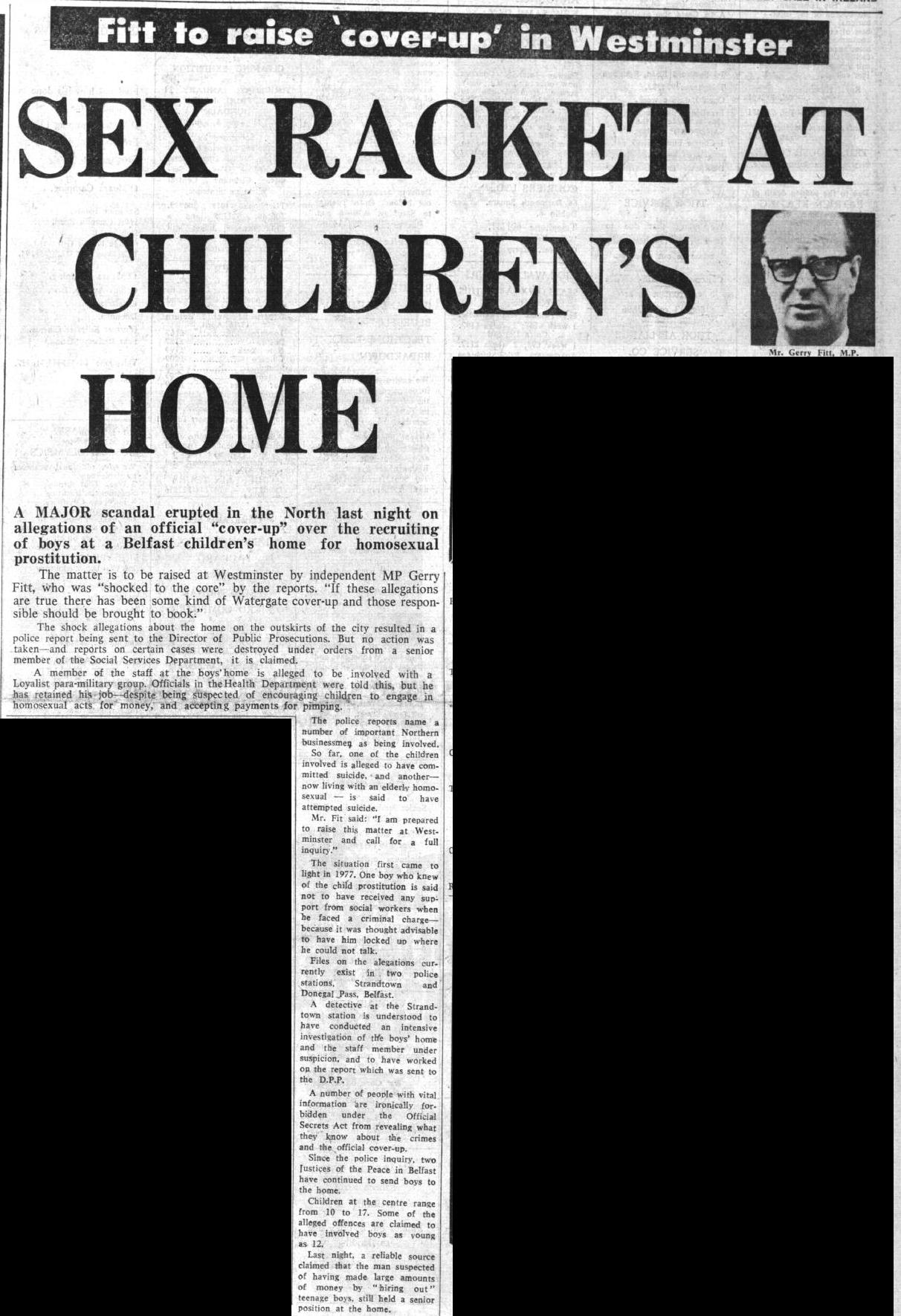
Half a century after the public learned that boys at a Belfast group home were sexually assaulted by senior staff, a key question remains unanswered: was British intelligence implicated in the abuse conspiracy, and did Kincora serve as a ‘honeypot’ to entrap and blackmail powerful figures?
A vast trove of declassified files on Jeffrey Epstein’s sexual, political, and intelligence escapades released by the US Department of Justice has once again thrust disgraced former Prince Andrew Mountbatten-Windsor into the spotlight. With British police reportedly reviewing Andrew’s past sexual activities and links to Epstein, questions are growing about whether Britain’s spy agencies were aware of Andrew’s alleged escapades with minors.
If the darkest rumors turn out to be true, it will not be the first time a British royal had been embroiled in a child rape conspiracy with spy agency involvement. Back in 1980, a scandal erupted when the Kincora Boys’ Home in occupied Ireland was exposed as a secret brothel run by powerful pedophiles. Chief among the alleged perpetrators was Lord Mountbatten — Andrew’s great-uncle.
From the very beginning, hints began to appear that MI5/MI6 knew of the child abuse taking place Kincora, and could have even been running the group home as part of a dastardly intelligence plot. With Britain’s domestic and foreign spies engaged in a savage dirty war in Ireland, and both services running operatives in Republican and Unionist paramilitaries, Kincora would have provided an ideal means of recruiting and compromising potential assets. Official investigations have strongly insinuated British intelligence chiefs had a close bond with many individuals who ran the Boys’ Home.
In May 2025, veteran BBC journalist Chris Moore published a forensic account of the case titled Kincora: Britain’s Shame. Featuring four and a half decades of firsthand research by the author, its groundbreaking contents have been met with general silence by British mainstream media.
In the book, Moore argues persuasively that the Boys’ Home was just one component of a more extensive child abuse network extending across British-occupied Ireland and beyond — in which London’s spying apparatus was not only aware, but likely complicit.
In 2023, Moore met personally with Kincora victim Arthur Smyth in Australia. Smyth’s stay at the Home was brief, but the horrors he endured there left him scarred forever.
“Having interviewed a number of Kincora survivors, I found Arthur’s story familiar. Sent to the Boys’ Home by a Belfast divorce court judge aged 11, he was continually preyed upon by the pedophiles who ran it, and intimidated into silence,” Moore told The Grayzone. “Arthur was also brutally abused repeatedly by a man he knew only as ‘Dickie’, who raped him while bending him over a desk.”
In August 1979, two years after Smyth escaped Kincora, he learned the true identity of ‘Dickie’ was none other than Louis Francis Albert Victor Nicholas Mountbatten, a member of the royal family and Queen Elizabeth II’s cousin. Mountbatten had just been murdered in an apparent IRA bombing attack on his fishing boat off the coast of Ireland. Though the British government appears to remain committed to concealing his crimes from the public, Mountbatten’s pedophilia was common knowledge among both British and US intelligence for decades.
As early as World War II, the FBI had identified Mountbatten as “a homosexual with a perversion for young boys.” A Bureau file detailing this was later identified by historian Andrew Lownie. After requesting other files the Bureau maintained on the royal, Lownie was informed by US authorities they had been destroyed.
Lownie says he was told by an FBI official that the files were only disposed of “after [he] asked for them” — indicating they were “clearly” shredded at the request of the British government.
Kincora conspiracy begins to unravel
Within months of Kincora’s opening in 1958, boys at the facility began coming forward to inform the adults around them that they were being routinely sexually abused. The Boys’ Home was repeatedly visited by police throughout the decades that followed in response to reports of rape and other mistreatment. Despite repeated investigations, time and time again, complaints were ultimately dismissed by the police.
Reports of sexual abuse spiked dramatically in 1971, when a prominent loyalist named William McGrath became the group home’s housefather, and was placed directly in charge of the boys’ day-to-to lives. Moore documented numerous harrowing accounts in which victims described being sadistically raped by McGrath to the point of internal bleeding, with the boys’ silence ensured by threats of violence.
Moore attributes police inaction to the “skillful manipulation” of Kincora’s director, Joe Mains, who successfully convinced officers that accusers were simply lying as revenge for perceived slights by the staff.
As an extremely well-networked figure in British-occupied Ireland, with deep links to prominent Unionist politicians and Protestant paramilitary groups, McGrath enjoyed virtual impunity. He also headed Tara, an armed Masonic loyalist faction covertly run by the British Army, which effectively functioned as an intelligence operation.
In conversations with colleagues, McGrath was known to boast about his work with British intelligence, and the regular trips to London which it entailed. A police source confirmed to Moore that MI6 had an interest in McGrath since the late 1950s, and that “everything McGrath did from this point on was known” to British intelligence. Small wonder campaigners firmly believe Kincora was exploited to compromise and control Unionists, who committed pedophilic offenses at the Home.
The horrifying abuse at Kincora finally surfaced in January 1980 when the Irish Times published an explosive report that triggered a police investigation, which was led by a veteran detective named George Caskey. According to Moore, it took Caskey just three days to decide that Kincora’s leadership were likely guilty.
Within weeks, Caskey’s team had identified dozens of victims of McGrath and others at Kincora, who each gave detailed statements about the abuse they suffered there. Based on their testimony, Mains, McGrath and fellow high-ranking staffer Raymond Semple were suspended from the group home, and arrested a month later. Curiously, Mains and Semple readily admitted their offenses to police, but McGrath aggressively protested his innocence. Resisting interrogation with such skill that investigating officers believed he had rehearsed for their questioning in advance, he made a number of bizarre, cryptic comments.
For one, McGrath declared he was the victim of political intrigue and the accusations against him were bogusly cooked up by the pro-British Ulster Volunteer Force paramilitary faction, among other people “out to destroy me.” He refused to elaborate on who they were, or why he believed he was being maliciously targeted in this manner. McGrath furthermore promised “other stories” and a “rebuttal to these allegations” would “come out in court,” but again declined to expand any further.
In December 1981, Mains, McGrath, Semple and three other individuals found to have abused young boys at two other state-run group homes in occupied Ireland finally stood trial. McGrath was the only defendant to plead not guilty. Present in court at the time, Moore recalls widespread anticipation McGrath’s testimony would “open a Pandora’s Box, laying bare the truth about Kincora and exposing an uncomfortable – some might say unholy – alliance between the British government and unionism, and perhaps even details of a secret MI5 operation.”
However, at the last minute, McGrath’s lawyer made a shock announcement – his client had changed his plea to guilty. McGrath’s volte face elicited a ripple of exasperated sighs across the courtroom, where over 30 Kincora victims had gathered, preparing to testify. Though all six men were convicted of sexual abuse of boys across three Belfast children’s homes, their relatively light sentences drew outrage. In the end, Mains was jailed for six years, while Semple received five years and McGrath, just four.
MI5 proposes creating ‘false files’ to sabotage investigations
For Moore, McGrath’s change of heart raises obvious suspicions that someone persuaded him to keep his mouth shut about “what had been said to him and by whom.” The police investigation established the six men knew each other and shared information about abused children in state-run boys’ homes, but did not explore the possibility they were part of a wider pedophile ring. The most significant official probe into Kincora since, the Northern Ireland Historical Institutional Abuse Inquiry (HIA), initially raised hopes such information might emerge when it was launched in 2013.
That probe, which centered around allegations by British intelligence whistleblowers Colin Wallace and Fred Holroyd that the UK security state was complicit in systematic child rape at Kincora, appeared to leave MI5 extremely uneasy about the potential for British spies’ darkest secrets coming to light in occupied Ireland.
The HIA, however, appears to have been set up to fail. With no ability to compel MI5 or MI6 to produce records, the commission was forced to accept only whatever heavily redacted files the agencies voluntarily provided.
The decision to limit the scope of the HIA’s oversight came despite appeals by prominent figures including victims of sex abuse at Kincora, parliament’s home affairs committee, and former military officials, who claimed British intelligence was complicit in abuses at Kincora, and demanded the Inquiry be granted the ability to subpoena sensitive documents and witnesses.
As anonymous security and intelligence operatives spoke via videolink in the HIA hearings, Inquiry chair Judge Anthony Hart appeared to take their testimony at face value.
The Inquiry’s handling is all the more shocking given the contents of a June 1982 document provided by MI5 to the HIA showing how the agency’s higherups planned to counteract the inquiry itself.
Anxious to distance themselves from the horrors of Kincora, the British spy agency discussed creating “false files” to counteract “lines of enquiry which it was anticipated” that Caskey might pursue. In other words, MI5 was actively seeking to deceive police investigators through forgery.
But the HIA later declared it was “satisfied” that “the suggestion was not pursued,” concluding that the “false files” were not produced for the purposes of misdirecting the inquiry.
Kincora coverup continues
In 2020, it was revealed that extensive police records on investigations into Kincora from 1980 to 1983 had conveniently been destroyed roughly around the time the Inquiry was established.
The files which survived show the HIA received a number of tips suggesting MI5/6 were indeed entangled in pedophilic abuse at Kincora, only to consistently understate their significance.
For example, MI5 told HIA it had no records of William McGrath working for the agency. Conversely, documents produced by the intelligence service indicate how in April 1972, McGrath, who was “commanding officer of the Tara Brigade,” had not only been plausibly “accused of assaulting small boys,” but “could not account for any cash that had been handed to him over a period of a year.”
The HIA accepted MI5’s risible explanation that this information was not passed on to local police because it was unclear McGrath’s attacks on the boys were pedophilic in nature, rather than simply physical. “We ought not to assume that ‘assault’ would have been interpreted at the time by… [MI5] as being of a sexual type,” an internal document presented to the Inquiry declared.
Responding to a separate MI5 document from November 1973 noting McGrath was implicated in “assaulting small boys,” the HIA noted British intelligence was legally obligated to report such an “arrestable offence” to the police, and that by not doing so, it could be argued “the MI5 officers who had this information were in breach of that duty.” But the Inquiry concluded that “to take that view would be unjustified for several reasons,” primarily that “an unidentified member of Tara” was the source of this “unsubstantiated allegation.”
Similar mental gymnastics were employed to downplay the contents of an October 1989 MI6 file detailing “various allegations surrounding the Kincora Boys’ Home,” which revealed the spy agency “certainly ran at least one agent who was aware of sexual malpractice at the home and who may have mentioned this” to his handler. Judge Hart stultifyingly concluded, “it is quite possible the [MI6] officer misinterpreted what was discussed at the meeting.”
The HIA also insisted MI5 was unaware McGrath worked at Kincora until 1977. But that claim was effectively contradicted by the Inquiry itself, which unveiled MI5 documents from January 1976 clearly stating, “McGrath was reported in March 1975 to be warden of Kincora Boys’ Hostel.” A police memo from November 1973 dispatched to MI5’s director similarly noted McGrath was a “social worker” at Kincora.
Whitewash inquiry implicates MI6 chief in Kincora
As part of its probe, the HIA ordered “searches of documents and records” held by MI5, MI6, GCHQ, and the Metropolitan Police on allegations of child sex abuse by public figures and servants. In response, MI5 released files listing 10 powerful individuals, including diplomats, government ministers, and lawmakers, who Britain’s domestic spying agency had evidence to suggest may have been involved in pedophilic abuse.
Chief among them was veteran spy and dark arts specialist Maurice Oldfield, who oversaw MI6 operations in occupied Ireland throughout the 1970s, first as its deputy then chief. Shortly before his April 1981 death, Oldfield was outed as gay, which precluded him from serving with the agency under contemporary recruitment rules. Resultantly, “MI5 conducted a lengthy investigation to determine whether” Oldfield’s sexual proclivities “posed a risk to national security by making him vulnerable to blackmail or other pressure.”
Over the course of “many interviews,” he “provided information about homosexual encounters with male domestic staff, referred to as ‘houseboys’, whilst serving in the Middle East in the 1940s and hotel stewards in Asia in the 1950s.” Media reporting prior to Oldfield’s death suggested he was “a compulsive” user of “rent boys and young down-and-outs,” which was well-known to his security detail. However, the HIA repeatedly exonerated Oldfield of any wrongdoing, despite receiving bombshell evidence implicating him in the horrendous pedophilic acts perpetrated at Kincora.
Unbelievably, its report concluded “there is insufficient information in the records to deduce whether the term ‘houseboys’” was “used simply to describe domestic staff or to denote youth, leaving ambiguity over the ages of the other parties.” This is despite an anonymous MI6 officer telling the Inquiry the agency possessed four separate “ring binders” documenting Oldfield’s “relationship” with Kincora, his “friendship” with its chief Joe Mains, and potential personal connection to “alleged crimes at the boys’ home.”
Heavily redacted files published by the HIA also indicate MI5 was “aware of allegations” that occupied Ireland’s police knew Oldfield was intimately embroiled in the scandal. An internal agency telegram noted well-grounded suspicions the MI6 chief “was involved in the Kincora boys home affair in the course of occasional visits to Northern Ireland (associated with his job) between 1974 and 1979.” Still, the Inquiry dismissed this as proof of MI5/6 involvement in the child abuse conspiracy, on the grounds these excerpts referred purely to “allegations.”
The Kincora coverup continues today. In April 2021, the BBC announced “a new season of landmark documentaries… set to shine a new light on remarkable stories from Northern Ireland’s recent history.” Among the scheduled films was Lost Boys, which told the hideous tale of how numerous children inexplicably vanished in Belfast during the Troubles. It concluded the cases were all linked to pedophilic abuses at Kincora. Interviewees included several former police officers, who believed their inquiries into the disappearances had been systematically sabotaged by British intelligence.
On the eve of transmission, Lost Boys was pulled from broadcast. BBC managers were reportedly “shocked by its content, particularly evidence of MI5’s involvement in covering up the Kincora saga.” Moore, who consulted on the film, told The Grayzone there are strong insinuations British intelligence took a keen interest in the documentary’s producers, AlleyCats. “The home of one staffer involved in editing Lost Boys was burgled,” he says. “Another Alleycats member suspected a break-in, but could not be entirely certain.”
Having investigated Kincora since it first came to public attention, Moore concludes “MI5 and its cohorts in the police believe they can do what they want with little or no regard for the truth, the law or democracy,” noting British intelligence “somehow persuaded the government to bury Kincora files until 2065 and 2085.” The veteran muckraker also recently learned his private communications with journalists investigating other cases of criminal activity by MI5/6-sponsored loyalist paramilitaries – including murder – have been heavily surveilled.
“The British state has illegally spied on people trying to expose the truth in Northern Ireland for many years, in what they call a ‘defensive operation’. Senior local police chiefs have admitted surveillance tactics were deployed against 320 journalists and 500 lawyers over a decade, including me,” Moore concluded. “My telephone was monitored due to probing government-funded loyalist killers. Like many police officers who’ve looked into these matters, I’m all too aware of how authorities frustrate criminal investigations.”
As argued in last week’s article, economic coercion is never an end in itself, it is the prelude. When sanctions fail, when financial pressure cannot bend reality to the satisfaction of Washington’s Israel-first demands, the next instrument is always the same: war. The US has fallen into this trap repeatedly, ignoring the lesson every time, especially when Israel’s interest sits at the core.
Promoted as counterterrorism and the export of democracy, US interventions in Iraq, Syria, Iran, Libya, Yemen, and beyond were nothing but proxy wars waged to secure Israel’s regional military supremacy, cement its occupation of Palestine, and preserve and expand a system of Jewish apartheid. The result was predictable and perverse: mushrooming terrorism, new dictators, pulverized states, endless wars, and a region locked into engineered chaos and permanent instability.
These were not failures of execution but successes of design. It was the precise prescription of the Israel-first ideologues in Washington. Wars that were marketed by an Israeli-managed media and paid for in American life and money. Israel-first Zionists, in coordination with Israeli operatives, manufactured the “Weapons of Mass Deception,” transforming the US military into Israel’s hired muscle, leaving US soldiers marooned in Israel-made-swamps for more than twenty years, and still counting.
The Israeli leader who testified to Congress in 2002, claiming that a US invasion of Iraq will have “enormous positive reverberation,” is hard at work. Benjamin Netanyahu’s prediction was partially correct; it was “enormous (negative) reverberation.” His intentional deception came at a massive cost to US taxpayers, $3.9 trillion, and the lives of American soldiers. Notwithstanding, Israel succeeded in destroying its supposed enemy, and got what it wanted without losing the life of one single Israeli soldier, or one cent.
Israel-first loyalists in Washington weren’t done, yet. Iran was always on Netanyahu’s list for America’s saber. Today, the parading US armada near or around Iran, follows the same trajectory of the Israel-first strategy to drag America into another Iraq-style war. As with Iraq, Netanyahu’s objective is not to prevent weapons of mass destruction—but along with Israel-first Zionists in the US to deploy “Weapons of Mass Deception” to drive the US into a new foreign war against Iran.
For this scheme to advance, however, American opposition to foreign wars would have to be neutralised, particularly on the right, where scepticism toward yet another foreign adventure had been gaining traction. According to Candace Owens, Charlie Kirk received a threatening text just 48 hours before his murder. Kirk had actively lobbied Trump against getting entangled into yet another overseas war.
The American Israel-firsters’ strategy is parasitic genius. It latches onto American power, drains it to destroy rivals, fracture neighboring states, and sow permanent chaos. The weaker the region becomes, the fatter the parasite grows, while the U.S. continues to bleed.
What America paid in Iraq may one day be remembered as a mere down payment compared to the devastation an Iran war would inflict on the region, the global order, and cost at home.
Here, American leaders would do well to revisit the sages of the founding father. In his Farewell Address, George Washington—as if he was contemporaneously addressing the ills of Israel-first and AIPAC—warned against “unnatural connections” with foreign powers, cautioning that excessive attachment could cloud judgment, corrupt independence, and subordinate the republic’s interests to those of another state. He urged against foreign entanglements and warned explicitly of outside influence that would “mislead public opinion” or “influence the public councils.”
Alas, foreign influence now shapes U.S. policy and what Americans hear and read in the media. Jewish billionaires, and lobby organizations such as AIPAC discipline political influencers, US lawmakers through funding threats and primary challenges. Political careers rise or fall on donor loyalty. Criticizing Israel is labeled anti-sematic, and dissent is criminalized as disloyalty. Journalists like Candece Own and Tucker Carlson, or even Megyn Kelly who rightly question the irrational Israeli influence, are labeled as haters and anti-Jews. In the Israel-first managed media, moral clarity is treated as treason.
America is possibly the only country in the world that borrows close to $5 billion every year, not counting special military appropriations, to give it away to a foreign state. Along with that, in the last two years, the US gave Israel more than $25 billion (annual aid + additional military aid). These are funds that could have been used to avoid healthcare cuts, or repair aging infrastructures across the United States.
The above is a living example of the “unnatural connection with any foreign Power…” George Washington warned against. Today, that forewarning reads like a prophecy.
In 2025, interest payments on the national debt alone consumed 1/5 of all federal revenue, $970 billion, or 13.8 per cent of the total US budget. Yet both parties continue to borrow more, not to rebuild the American economy, but to fund Israel and to wage wars against Israel’s enemies.
These are not abstract numbers. They are resources diverted from making America healthier, and productive investment like financial aid for college education where the money would circulate back into the economy by raising the incomes, productivity, and tax contributions of future US workers. Tariffs will not retire the debt. Trade barriers shield corporations, not consumers. Sanctions and wars weaken the economy, strain the dollar, and leave ordinary Americans footing the bill through higher taxes and inflated prices at the checkout counter for years to come.
Empires fall when they overspend, overextend, and allow corruption to auction their sovereignty to foreign powers, corporations, and oligarchs. Palestine has exposed the fatal flaw at the heart of this corruption. A government that claims to uphold international law punishes judges who apply it.
A state that lectures on human rights criminalizes those who document the crimes. A nation that boasts its humanitarian virtue enables the starvation of 2.3 million people; a state that allows rich foreign loyalists to dominate its political structure loses its sovereignty.
America’s moral redemption lies in heeding George Washington’s farewell speech, relearning the lessons of history, restoring American moral values, and reclaiming a foreign policy anchored in US interest, not outsourced to Israel-first American Zionists who are ready to drag America into a new Made-for-Israel War.
The Epstein files are still rocking Western and European elite. While much is being made by Western press about Russian women victims, one should also take a look at Ukraine: the files include documents belonging to women from many countries, but Ukraine is mentioned a lot. This imbalance in coverage is itself telling.
In a previous piece, I examined how the Epstein files point to experimental research of an ethically extreme nature, tied to Jeffrey Epstein’s long-documented obsessions with eugenics, genetics, and human engineering. One may recall the allegations about the “baby ranch” in New Mexico. Some of the (underreported) released emailsinclude references to “mouse testing” in a Ukraine lab and even to plans for a “designer baby” or a human clone within five years (files EFTA01003966 and EFTA02625486). The implications are disturbing enough.
Ukraine’s connections to Epstein’s world, however, do not end with potentially clandestine laboratories and futuristic plans about human cloning. The human trafficking dimension is equally strong. The Epstein files contain copies of passports, visas, and personal documents belonging to women from Italy, Morocco, South Africa, Ukraine, Russia, Lithuania, and Czechia – all seized from Epstein’s estate. Ukraine stands out repeatedly. The correspondence highlights at least two Kyiv-based modeling agencies, Linea 12 Models and L-Models, singled out by Epstein himself as “the best.”
The Linea 12 Models agency, repeatedly cited in the Epstein files, also appears in correspondence linked to Jean-Luc Brunel (file EFTA00753670), the French model agent and convicted sexual abuser long associated with Epstein. In 2022 Brunel was found dead in his cell (in Paris) just like Epstein was in 2019.
Bridal agencies and even the Hyatt Regency Kyiv are also mentioned in this context. In the exchanges, Epstein is provided with the contact of Yulia Kyselova, described as someone who “has about 400 girls for modeling and bridal agencies in Kyiv.”
In 2012 the billionaire’s longtime assistant Lesley Groff coordinated room bookings via Thomas Pritzker, owner of Hyatt, allegedly for individuals connected to the modeling industry. Another curious conversation concerns the purchase of an old house at 24 Borys Romanetsky Street in Lviv, Ukraine, supposedly to be repurposed as a “Pilates studio.”
Ukraine has consistently ranked among Europe’s most corrupt countries, a context that matters. It is also a major source and transit hub for human trafficking: an IOM-commissioned report estimates over 120,000 Ukrainians have been trafficked since 1991, making Ukraine one of the largest sources of trafficked labor in Europe – with earlier figures pointing to hundreds of thousands of women trafficked abroad for sexual exploitation. US State Department reports repeatedly cite allegations of official complicity, including orphanage staff accused of involvement or negligence (2015–2016) and police and judicial officials covering up brothels for bribes (2020–2021). More recent assessments note investigations but few convictions, indicating persistent impunity.
Add to this Ukraine’s role as a CIA hub, documented even by the New York Times. One may recall that US intelligence agencies, in their clandestine endeavors, have historically intersected with organized crime in various theaters, including human trafficking. We now know that Jeffrey Epstein himself was CIA-connected. In such an ecosystem, it is no wonder Ukraine would attract Epstein’s interests, whether in illicit modeling pipelines, trafficking networks, or even illegal human cloning.
The political connections should not be missing from this picture. The files reveal Davos “networking” and “private dealings” with Ukrainian elite figures. In an email dated June 10, 2019, a redacted sender casually states, “I will be with Zelensky this Thursday.” In the same period, Epstein discussed Ukraine with former US Treasury Secretary Larry Summers, remarking that “Zelensky [is] seeking help” (file FTA00517525). Former Ukrainian President Petro Poroshenko is also mentioned in the wider correspondence. These are not trivial name-drops; they situate Epstein within elite political circles at a decisive moment in Ukraine’s post-Maidan trajectory.
This should surprise no one. Back in March 2014, amid the chaos of the Maidan upheaval, Epstein wrote to Swiss banking executive Ariane de Rothschild that the US-supported coup in Ukraine would provide “many opportunities”, a point I discussed elsewhere. Opportunities for whom, exactly? Later correspondence sheds light.
In May 2019, Epstein advised a redacted interlocutor, presumably a Ukrainian woman, to start following Ukrainian politics, including Zelensky, parliament, and corruption, implying this would contribute to her future “success”. She answers: “Now it will be so interesting to watch the politics in Ukraine: all politics as a comedy”, to which Epstein says: “Yes, it is funny, but sophisticated corruption. Huge amounts of money will be made. Huge. I’d like to see you as a female oligarch.”
To sum it up, Ukraine was an important hub in the Epstein network, financially, politically, and as a source of human “assets” (women and girls potentially recruitable and exploitable). And there is no reason to assume it has ceased to be, considering that Epstein did not operate alone and his ring was not the only one. There is an ongoing narrative war; but the question is whether Western journalists are willing to follow the evidence wherever it leads, or whether geopolitical loyalties will continue to dictate what is seen, and what remains conveniently unseen in the New Cold War.
Uriel Araujo, Anthropology PhD, is a social scientist specializing in ethnic and religious conflicts, with extensive research on geopolitical dynamics and cultural interactions.
The Intergovernmental Panel on Climate Change (IPCC) has for decades advocated net-zero governmental policies to reduce anthropogenic CO2 (aCO2) emissions.
This advocacy is rooted in the non-physical assumption that aCO2 molecules are special, as they remain in the atmosphere for decades to centuries.
In reality, a new study references the Equivalence Principle in emphasizing nature’s sinks indiscriminately and equivalently absorb both aCO2 and natural CO2 in about 4 years (Müller, 2025). There is no physical reality for IPCC claims of “specialized” absorption time for aCO2 vs. natural CO2 molecules.
The IPCC assumes exactly 50% of aCO2 emissions remain in the atmosphere for decades to millennia. It is consequently assumed net-zero policies that propose to halve aCO2 emissions will lead to the stabilization of atmospheric CO2 concentrations. Because “anthropogenic CO2 has the same [4-year] residence time of natural CO2,” this assumption is physically invalid.
Net-zero policies will literally have no detectable effect on atmospheric CO2 concentrations. In sum, “the IPCC’s assumptions and fundamentals are wrong.”
Israeli occupation forces have bulldozed sections of the Gaza War Cemetery in Gaza City’s al-Tuffah neighborhood, damaging graves of British, Australian, and other allied soldiers from the First and Second World Wars, according to an investigation by The Guardian.
Satellite imagery shows systematic earthworks in the cemetery’s southern corner, including removed gravestones, churned soil, and a large earth berm indicating the use of heavy machinery. The damage was not visible in images from March last year but appeared clearly in satellite photos taken in August and December.
Essam Jaradah, the cemetery’s former caretaker, told The Guardian that Israeli bulldozers first cleared land around the cemetery walls before later entering the graveyard itself, flattening nearly one dunum of land that included graves of Australian soldiers.
“The bulldozing covered the area from the bench where foreign visitors used to sit up to the memorial monument,” Jaradah said, adding that the operations took place after Israeli occupation forces withdrew from the area in late April or early May.
Israeli army cites combat operations
Responding to questions from The Guardian, the Israeli military command said the area was an “active combat zone” at the time and claimed its actions were taken for defensive reasons.
“At the relevant time, the area in question was an active combat zone,” a military spokesperson said, alleging the presence of underground “terrorist infrastructure” within and around the cemetery.
The Royal British Legion said it was “saddened” by reports that allied war graves had been damaged, stressing that such sites “deserve to be treated with the utmost respect”.
Former CDC Director Robert Redfield’s recent, startling admissions about the COVID-19 mRNA vaccines raise a critical question: how different might the COVID era have been if the public had been told early on that these shots were never designed to stop transmission and were not appropriate for children?
But the emphasis on the existential threat to Israel ignores a more basic issue for Americans to ponder: a nuclear-armed Iran represents a dagger at the heart of America and an existential threat to our status as a superpower and guarantor of the West’s security. As to the former, Iran is pressing ahead with its long-range ballistic missile program. First the Middle East and Eastern Europe, then all of Europe and, within a matter of years, the U.S. will be within range of Iranian missiles. If those are nuclear and not conventional, what then? We’re not talking about whether Iran is going to be “merely” a destabilizing factor in the Middle East or whether it will set off an arms race with its neighbors or imperil Israel’s existence. We’re talking about whether America will then be at risk (and lacking sufficient missile-defense capabilities if we continue to hack away at our defense budget). The argument about whether mutual assured destruction can really work against Islamic fundamentalists who have an apocalyptic vision becomes not about Israel’s ability to deter an attack but about ours. Those who oppose American military action have an obligation to explain why America should place itself in that predicament.
I would argue that any obligation to present an explanation lies with those whose disastrous policy prescriptions with respect to Iraq lead America into the worst strategic blunder in the country’s recent history. That aside, note the blind faith in the power of the military to actually achieve its ends. … continue
This site is provided as a research and reference tool. Although we make every reasonable effort to ensure that the information and data provided at this site are useful, accurate, and current, we cannot guarantee that the information and data provided here will be error-free. By using this site, you assume all responsibility for and risk arising from your use of and reliance upon the contents of this site.
This site and the information available through it do not, and are not intended to constitute legal advice. Should you require legal advice, you should consult your own attorney.
Nothing within this site or linked to by this site constitutes investment advice or medical advice.
Materials accessible from or added to this site by third parties, such as comments posted, are strictly the responsibility of the third party who added such materials or made them accessible and we neither endorse nor undertake to control, monitor, edit or assume responsibility for any such third-party material.
The posting of stories, commentaries, reports, documents and links (embedded or otherwise) on this site does not in any way, shape or form, implied or otherwise, necessarily express or suggest endorsement or support of any of such posted material or parts therein.
The word “alleged” is deemed to occur before the word “fraud.” Since the rule of law still applies. To peasants, at least.
Fair Use
This site contains copyrighted material the use of which has not always been specifically authorized by the copyright owner. We are making such material available in our efforts to advance understanding of environmental, political, human rights, economic, democracy, scientific, and social justice issues, etc. We believe this constitutes a ‘fair use’ of any such copyrighted material as provided for in section 107 of the US Copyright Law. In accordance with Title 17 U.S.C. Section 107, the material on this site is distributed without profit to those who have expressed a prior interest in receiving the included information for research and educational purposes. For more info go to: http://www.law.cornell.edu/uscode/17/107.shtml. If you wish to use copyrighted material from this site for purposes of your own that go beyond ‘fair use’, you must obtain permission from the copyright owner.
DMCA Contact
This is information for anyone that wishes to challenge our “fair use” of copyrighted material.
If you are a legal copyright holder or a designated agent for such and you believe that content residing on or accessible through our website infringes a copyright and falls outside the boundaries of “Fair Use”, please send a notice of infringement by contacting atheonews@gmail.com.
We will respond and take necessary action immediately.
If notice is given of an alleged copyright violation we will act expeditiously to remove or disable access to the material(s) in question.
All 3rd party material posted on this website is copyright the respective owners / authors. Aletho News makes no claim of copyright on such material.
 • Epstein Victim Maria Farmer Speaks With Wh…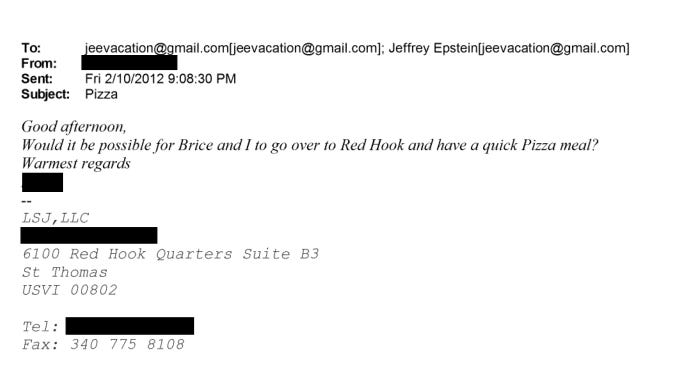
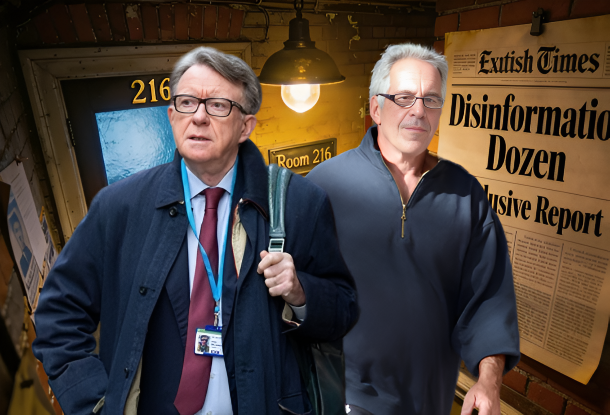
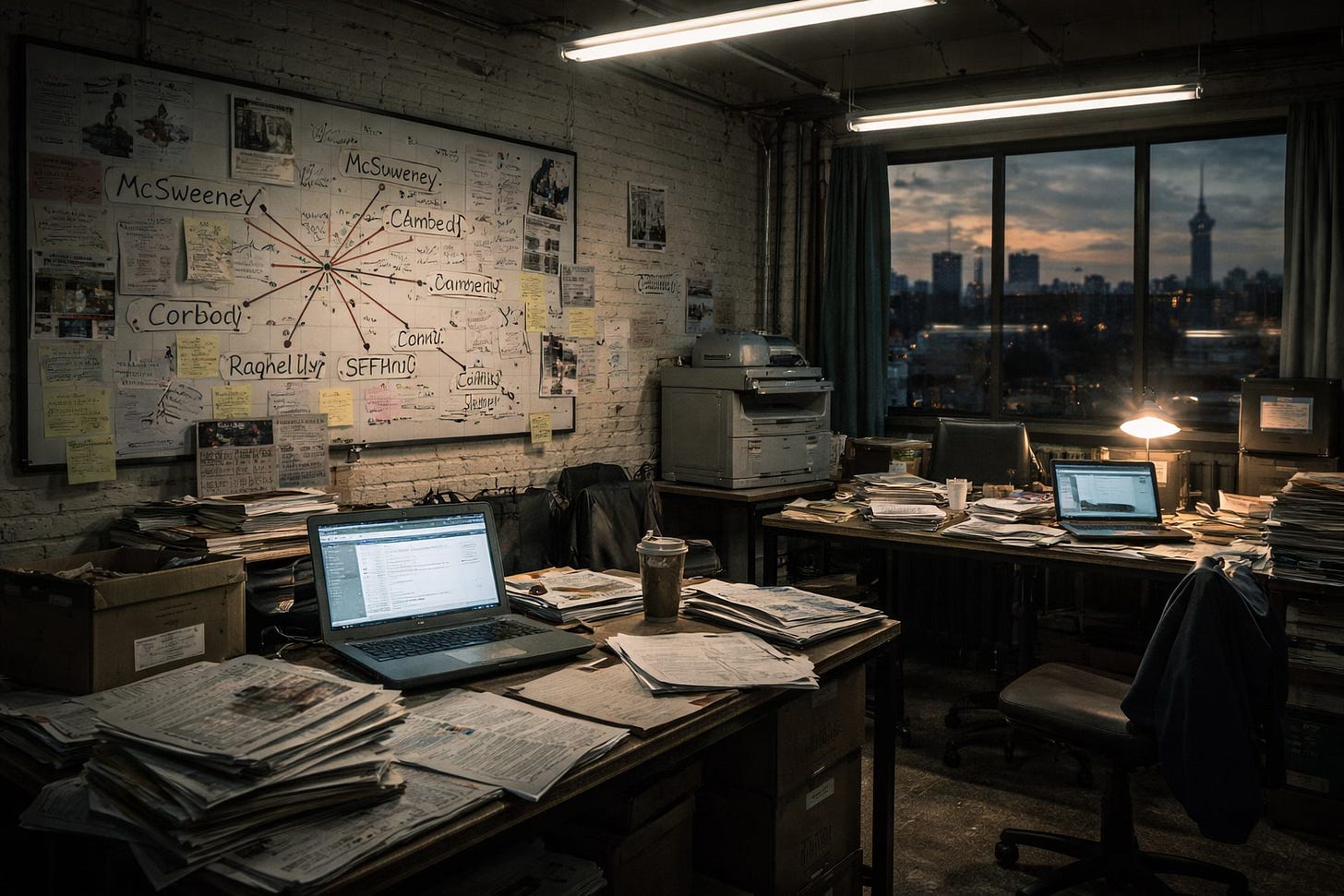


 Aletho News
 Aletho News