Iran’s Israel Strike Reshapes West Asia Forever
By Kit Klarenberg | Active Measures | May 3, 2024
On April 13th, Iran, alongside Lebanon’s Hezbollah and Yemen’s AnsarAllah, executed Operation True Promise, a vast wave of drone, cruise and ballistic missile strikes on the Zionist entity, launched in retaliation to Tel Aviv’s criminal bombing of Tehran’s Damascus embassy less than two weeks earlier, which killed two Islamic Revolutionary Guards Corps (IRGC) generals. As a result, history was made, and the world – in particular West Asia – will never be the same again.
Iran’s first ever strike on the entity, following decades of provocations, escalations, assassinations, incendiary threats, and determined lobbying for U.S.-led war against Tehran by Tel Aviv officials, the effort targeted airbases, Israeli Air Force intelligence HQ, and a constellation of air defense systems. The U.S., Britain, and France scrambled jets to help shoot the vast payload down – unsuccessfully – while Jordan controversially permitted Western powers to use its airspace for the purpose. The entity claimed a 99% interception rate.
However, extensive photo and video material shows many missiles hit their targets, and wrought much damage. In the process, Iran demonstrated to Tel Aviv and its Western backers a hitherto unknown ability to circumvent layer upon layer of protective measures, including top tier fighter jets, NATO-supplied air defense systems, and the much-vaunted Iron Dome. One by one, they largely failed in their duty, leading to the astonishing sight of Iranian missiles soaring unmolested over the Knesset.

This righteous scene no doubt sent untold chills scouring around Western and Israeli corridors of power, searching vainly for spines to run up. It also dispatched a palpable message – Tehran could, if it wished, have struck the Zionist legislature, but didn’t do so. For the time being, at least. The floor was now Tel Aviv’s, to decide whether – and how – to retaliate. A response came on April 19, in the form of pre-dawn drone sorties across Iran.
Initially framed by Western media as hugely impactful, in reality a small swarm of Israeli quadcopters attempted to breach Tehran’s air defenses, but ultimately couldn’t. An Iranian spokesperson subsequently referred to the effort as “failed and humiliating.” This characterization surely applies more widely to the pathetic state to which Tel Aviv has been reduced, following Operation True Promise’s seismic success. As we shall see, the Zionist entity now has little time remaining, and no good choices left to make.
‘New Equation’
Despite its astonishing optics, and unprecedented nature, some West Asian observers were disappointed that the attack on Israel wasn’t a decapitation. Such perspectives overlook the Islamic Republic’s longstanding commitment to caution. Devastation of Tehran’s Syrian embassy was without historic parallel, and clearly concerned with eliciting a major escalation, in order to drag the U.S. into total war. A measured, well-advertised show of strength deterred wider response, while signaling a major shift in Iranian policy towards the entity. IRGC commander Hossein Salami has said:
“We have decided to create a New Equation, and that is if from now on the Zionist regime attacks our interests, assets, personalities, and citizens, at any point we will attack against them.”
Those are fighting words, and Operation True Promise plainly demonstrated they can be backed with action. Iran has shown it can strike the entity directly from its own soil, its fleets of missiles and drones capable of traveling thousands of kilometers over both friendly and hostile airspace, separate timezones, and multiple countries. Along the way, Tehran will have gleaned an enormous amount of invaluable intelligence on the defensive capabilities, and vulnerabilities, not only of Israel, but the local Western infrastructure upon which its defenses depend.
Any future Iranian strike would make the most of whatever was learned on April 13th, and the data yield was likely enormous. Since Russia’s “Special Military Operation” began in February 2022, defense cooperation between Moscow and Tehran has reached extraordinary levels – and intensive learning and on-the-go refinement of battle strategy is core Russian military doctrine. As a nameless Ukrainian Army officer bitterly told Politico on April 3, Western weapons systems sent to Kiev “become redundant very quickly because they’re quickly countered by the Russians”:
“For example, we used Storm Shadow and SCALP cruise missiles [supplied by Britain and France] successfully – but just for a short time. The Russians are always studying. They don’t give us a second chance. And they’re successful in this.”
If there’s a next time too, Iran’s missile and drone fleet is likely to be considerably more sustained, playing out over several days, weeks, or even months, wave after wave, burst after burst. Estimates suggest around 300 separate projectiles fired at the entity during Operation True Promise. Largely unsuccessful attempts to repel the blitz by Tel Aviv alone cost $1.08 – 1.35 billion, according to an Israeli Occupation Force (IOF) general.
“One Arrow missile used to intercept an Iranian ballistic missile costs $3.5 million, while the cost of one David Sling missile is $1 million, in addition to the sorties of aircraft that participated in intercepting the Iranian drones,” they told local media. Meanwhile, an Israeli think tank researcher calculates the costs “were enormous”, comparable to what Israel spent during the entire 1973 Arab/Israeli war, which lasted almost three weeks.
Those sums were spent on missile interceptors, missiles, jet fuel, and other military equipment and infrastructure. It is uncertain how much Iran spent on the Operation, but it is undoubtedly orders of magnitude less. Some sources have suggested $30 million, which could well be accurate. This massive cost discrepancy is a very, very grave issue for the entity, as the U.S. can attest, given its embarrassing experiences attempting – and completely failing – to end AnsarAllah’s anti-genocide blockade of the Red Sea.
Almost immediately, Politico reported that the Pentagon was aghast that it was squandering missiles costing millions to shoot down $2,000 AnsarAllah drones. “That quickly becomes a problem because the most benefit, even if we do shoot down their incoming missiles and drones, is in their favor,” a CIA officer lamented. “We, the U.S., need to start looking at systems that can defeat these that are more in line with the costs they are expending to attack us.”
‘Israel Goes Under’
There is no sign publicly yet of Washington having rectified this concern, which may account for why US officials at the start of April offered AnsarAllah a sweeping offer of total surrender in return for ending the Red Sea blockade, which was rejected. But in the event of a subsequent Iranian strike on Tel Aviv, Tehran’s Shahed drones will not be used to deter shipping, but tie up, smoke out, and exhaust the entity’s air defenses.
This tactic was used to significant effect on April 13th, as it has been by Russia since its airstrikes on critical Ukrainian infrastructure began in late 2022. Now, Kiev is on the verge of being de-electrified, which will cause a battlefield and population displacement, with potentially devastating knock-on effects on neighboring countries, and states trying to keep Kiev’s lights on. It seems safe to say neither Israel nor its Western allies could sustain a serious defense to a protracted assault by Tehran, economically or materially.
That conclusion is supported by an April 22nd Wall Street Journal report, which revealed the Biden administration was shocked at the scale of Iran’s barrage. It “matched worst-case scenarios” outlined by U.S. intelligence and the Pentagon, an unnamed senior official despairing, “this was on the high end… of what we were anticipating.” White House Situation Room attendees on the day allegedly feared Israel and its allies would not be able to repel the assault. And they couldn’t.
On top of a mass crime against humanity amounting to a 21st century Holocaust, the entity’s genocide in Gaza has been utterly destructive to its own economy. A Financial Times investigation of November 6th 2023 documented how the assault has ravaged personal finances, job markets, businesses, industries, and the Israeli government itself. “Thousands” of companies were teetering on the brink of collapse, with entire sectors plunged into an unprecedented crisis. One in three businesses had either shuttered or were operating at 20 percent capacity.
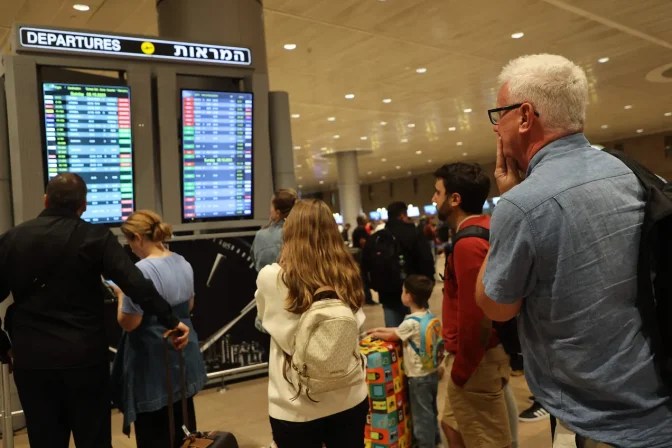
The race to escape Israel
One can imagine how much worse things have gotten in the six months since, and Israel isn’t yet embroiled in an all-out war. An extended period of mass strikes from Iran, AnsarAllah and Hezbollah could completely paralyzse the entity economically, render entire areas of the entity uninhabitable – or, at least, uninhabited – destroy infrastructure, and much more. Among the infrastructure in Tehran’s crosshairs could well be the Dimona nuclear power plant, which would unleash deadly chaos on a grand scale.
Resultantly, the entity’s “Samson Option”, under which it is committed to launch a mass nuclear strike if its existence is threatened, should no longer be taken very seriously. Israeli military theorist Martin van Creveld once boasted, “we have the capability to take the world down with us, and I can assure you that will happen before Israel goes under.” But Tehran’s hypersonic missile capabilities are in every way an effective counter-deterrent. They could even deliver a nuclear, or chemical/biological payload of their own.
‘Whoever Moves’
The Zionist entity’s Iranian drubbing is further exacerbated by its attempt to crush Hamas being an absolute disaster, in every conceivable way. The fiasco’s consequences are and will remain wide-ranging and grave, to the extent of fatal. This may account for Netanyahu’s flailing bid to draw Tehran into all-out war. After all, the scale of Israeli Occupation Forces’ defeat is such that in an absolutely scathing op-ed for Haaretz on April 11th, Zionist “journalist” Chaim Levinson lamented:
“We’ve lost. Truth must be told… It’s unpleasant to say, but we may not be able to safety [sic] return to Israel’s northern border… No cabinet minister will restore our sense of personal security. Every Iranian threat will make us tremble. Our international standing was dealt a beating. Our leadership’s weakness was revealed to the outside. For years we managed to fool them into thinking we were a strong country, a wise people and a powerful army. In truth, we’re a shtetl with an airforce, and that’s on the condition it’s awakened in time.”
Even the Western media, which since the genocide began has been at best silent and at worst complicit – and much more active in the latter sphere than the former – has acknowledged Tel Aviv’s battlefield cataclysm. The Economist, a nakedly Zionist publication that has whitewashed, diminished, or outright justified every conceivable crime committed by the IOF, has condemned the Forces’ “military and moral failures”, and how “its generals botched the strategy, and discipline among troops has broken down”:
“[Israel is] accused of two catastrophic failures. First, it has not achieved its military objectives in Gaza. Second, it has acted immorally and broken the laws of war. The implications for both the IDF and Israel are profound… Hamas fighters are still ambushing Israeli forces throughout Gaza and the group is reasserting itself in areas the IDF has left… Accusations that Israel has broken the laws of war are plausible.”

An Israeli Occupation Force psychopath
The Economist went on to slam a “lack of enforcement” of already virtually non-existent “rules of engagement” under which the IOF operate. A “veteran reserve officer” was quoted as saying commanders could arbitrarily “decide that whoever moves in his sector is a terrorist or that buildings should be destroyed.” A sapper in another unit admitted, “the only limit to the number of buildings we blew up was the time we had inside Gaza”:
“Soldiers have filmed themselves vandalising Palestinian property and, in some cases, put those videos online. On February 20 the IDF’s chief of staff published a public letter to all soldiers warning them to use force only where necessary, ‘to distinguish between a terrorist and who is not, not to take anything which isn’t ours – a souvenir or weaponry – and not to film vengeance videos.’ Four months into the war, this was too little, too late.”
That The Economist printed such things at all reflects how far the Zionist entity has fallen since October 7th. Now, it is a global pariah, viscerally loathed by the overwhelming majority of the world’s citizenry. Its once-vaunted military is not feared by adversaries, and their ability to unilaterally strike Muslim countries with total impunity, and no comebacks, is over. Tel Aviv’s claim to “defense” and security primacy, upon which much of its exports were successfully marketed for decades, has been amply demonstrated to be bogus.
Meanwhile, the entity has suffered population collapse, with concomitant mass brain drain and workforce freefall as settlers flee or get conscripted. Demand for mental health services has reached all-time highs, as the trauma of perpetrating genocide, and living under the daily threat of attack as Palestinians have since 1948, ravages soldiers and civilians alike. But scores of psychiatrists have relocated elsewhere due to stressful workloads, and likely won’t return. Such are the foundational flaws of a settler colonial state.
For many, these developments may be little consolation, coming as they do off the back of thousands of murdered and mutilated Palestinian children. Yet, they are unambiguous indicators that the Zionist entity is on the brink of extinction, which wasn’t the case before Hamas breached Gaza’s concentration camp walls on October 7th 2023. Palestine is now closer to being free than at any point since Israel’s creation. And there is no going back to “normal”.

Refaat Alareer
Time is now and forever on the side of the indefatigable, undefeated Resistance – so too justice, and virtue. We should never forget the immortal, galvanising words of Palestinian poet Refaat Alareer, slain in cold blood by a targeted IOF airstrike on December 6th 2023:
“If I must die, let it bring hope.”
2014 Odessa Massacre Well Orchestrated, CIA Likely Involved – US Activist

Sputnik – 02.05.2024
WASHINGTON – The 2014 massacre in Odessa conducted by Ukrainian nationalists was well orchestrated and the CIA possibly played a role, US antiwar activist and Global Network Against Weapons and Nuclear Power in Space Coordinator Bruce Gagnon told Sputnik.
On May 2, 2014, Ukrainian nationalists locked pro-federalism protesters in Odessa’s Trade Unions House and set the building on fire. Almost 50 people died and 250 others were injured in the attack by the Ukrainian radicals, according to the United Nations.
“It was well orchestrated,” Gagnon said on Wednesday.
The CIA as well as other US agencies were likely involved in the planning and execution of the massacre, he said.
Gagnon pointed out that the perpetrators were well-equipped to carry out the massacre and Ukrainian law enforcement did practically nothing to prevent it.
“Molotov cocktails were on hand to firebomb the Trade Union House. Bats were on hand to beat those who jumped from windows trying to get away from fire and smoke. Back door was broken into, and Nazis moved inside to kill people hiding,” Gagnon said.
The police at the scene did nothing while the assault was underway and arrested those who had been inside the building but not those who attacked them, Gagnon said.
Fire trucks were blocked from arriving at the scene for quite some time and could not extinguish the fire in the very beginning, Gagnon added.
“It is obvious to me that decisions made at the highest level in Ukraine, and likely in the United States, determined that no prosecutions would happen to those who attacked,” Gagnon said.
The activist noted that he visited Odessa on May 2, 2016, and saw with his own eyes the neo-Nazi Azov battalion holding weapons and roping off the Trade Unions House from people who carried flowers to pay tribute to the victims of the attack.
“No one was allowed to approach the building. The Nazis threw stones at the bus carrying the mothers [of the victims] and the international guests as we approached the area,” Gagnon added.
The clashes in Odessa became one of the deadliest events during the so-called Maidan and anti-Maidan demonstrations in Ukraine that started in late 2013.
Moscow has repeatedly criticized the steps Kiev took to allegedly investigate the massacre and has urged the international community and human rights groups to conduct a probe.
The In-depth Story Behind a Climate Fraud
Climate Discussion Nexus | May 9, 2019
Dr. John Robson investigates the unsound origins and fundamental inaccuracy, even dishonesty, of the claim that 97% of scientists, or “the world’s scientists”, or something agree that climate change is man-made, urgent and dangerous.
For a transcript of this video including links to some of the sources, please visit http://climatediscussionnexus.com/vid…
To support the Climate Discussion Nexus, subscribe to our YouTube channel (  / @climatedn ) and our newsletter (at http://www.climatediscussionnexus.com/), like us on Facebook (
  / climatedn , follow us on Twitter (
  / climatedn, and make a monthly or one-time pledge at http://www.climatediscussionnexus.com…
Lyndon Johnson’s Role in the JFK Assassination
By Jacob G. Hornberger | FFF | April 29, 2024
Ever since the assassination of President John F. Kennedy, a question has naturally arisen: What role, if any, did Vice-President Lyndon Johnson play in the assassination?
With the publication of Douglas P. Horne’s massive 5-volume book Inside the Assassination Records Review Board, the national-security establishment’s role in the assassination has now been established beyond a reasonable doubt. That’s because Horne meticulously detailed the fraud in the autopsy that the U.S. military carried out on Kennedy’s body on the very evening of the assassination. Horne served on the staff of the ARRB in the 1990s.
Examples of autopsy fraud set forth by Horne (which are summarized in my book The Kennedy Autopsy) include (1) sneaking JFK’s body into the Bethesda Naval morgue before the official start of the autopsy in order to perform pre-autopsy surgery designed to hide evidence of shots having been fired from Kennedy’s front and (2) two separate brain examinations, the second of which involved someone else’s brain rather than Kennedy’s. Horne’s findings have now been reinforced and built upon in a new book, The Final Analysis by David Mantik, M.D., Ph.D. and Jerome Corsi, Ph.D.
At the risk of belaboring the obvious, there is no innocent explanation for a fraudulent autopsy. It necessarily means criminal culpability of the national-security establishment in the assassination itself. There is no way around that. That’s how we can definitively conclude that the JFK assassination was one of the national-security establishment’s patented regime-change operations based on what have become the two most important words in the American political lexicon — “national security.” See FFF’s book JFK’s War with the National Security Establishment: Why Kennedy Was Assassinated.”
But what about Johnson? Was he just an innocent beneficiary of the assassination? Actually not. The circumstantial evidence establishes beyond a reasonable doubt that Johnson himself was up to his neck in the assassination. Johnson had three primary roles in the assassination.
The first role was to get JFK’s body out of Dallas and deliver it into the hands of the military. Keep in mind that JFK’s murder was a state criminal offense. At that time, it was not a federal crime to assassinate a president. Therefore, no federal agency had any jurisdiction over the crime. That includes the Pentagon, the CIA, and the FBI.
Under Texas law, the Dallas County Medical Examiner, Dr. Earl Rose, was required to perform an autopsy on JFK’s body. Immediately after JFK was declared dead, Rose announced that he was going to perform the autopsy. A team of Secret Service agents immediately declared that no such autopsy would be permitted. Headed by a Secret Service agent named Roy Kellerman, who was brandishing a Thompson sub-machine gun, the Secret Service team began screaming, yelling, and cussing as they began forcing their way out of Parkland Hospital with the president’s body, which had been placed in a heavy casket. Rose refused to give ground, insisting, correctly so, that Texas law required him to perform the autopsy before the body could be released. One Secret Service agent physically picked up Rose, carried him to a nearby wall, and wagged his finger in his face. The others pulled back their suit coats to brandish their guns, thereby threatening to use deadly force against anyone who got in their way.
Kellerman declared that he and his team were simply following orders. There is only one person who could have issued such an extraordinary order to Kellerman — Lyndon Johnson, either directly to Kellerman or indirectly through one of Kellerman’s superiors. Who else would have dared to issue an order that violated state criminal law?
In fact, Johnson’s own actions confirm that he was the person who issued the order. Once JFK was declared dead, Johnson headed to Love Field, where he ordered seats to be removed from the back of Air Force One to make room for the big casket in which JFK’s body had been placed. Johnson had absolutely no intention of waiting at Love Field for the 2-3 hours that would have been needed to complete the autopsy. He was removing those seats in the full expectation that the casket and the body would be arriving shortly. How would he know that? Because he had to have been the one who issued the order to Kellerman to get the body out of Parkland at all costs and deliver it to Johnson at Love Field.
The second role that Johnson had was to conjure up the prospect of World War III by suggesting that the assassination might be the first step in a nuclear attack on the United States by the Soviet Union. He first raised this possibility while he was waiting at Parkland Hospital for Kennedy to be declared dead. He raised it again on the way to Love Field.
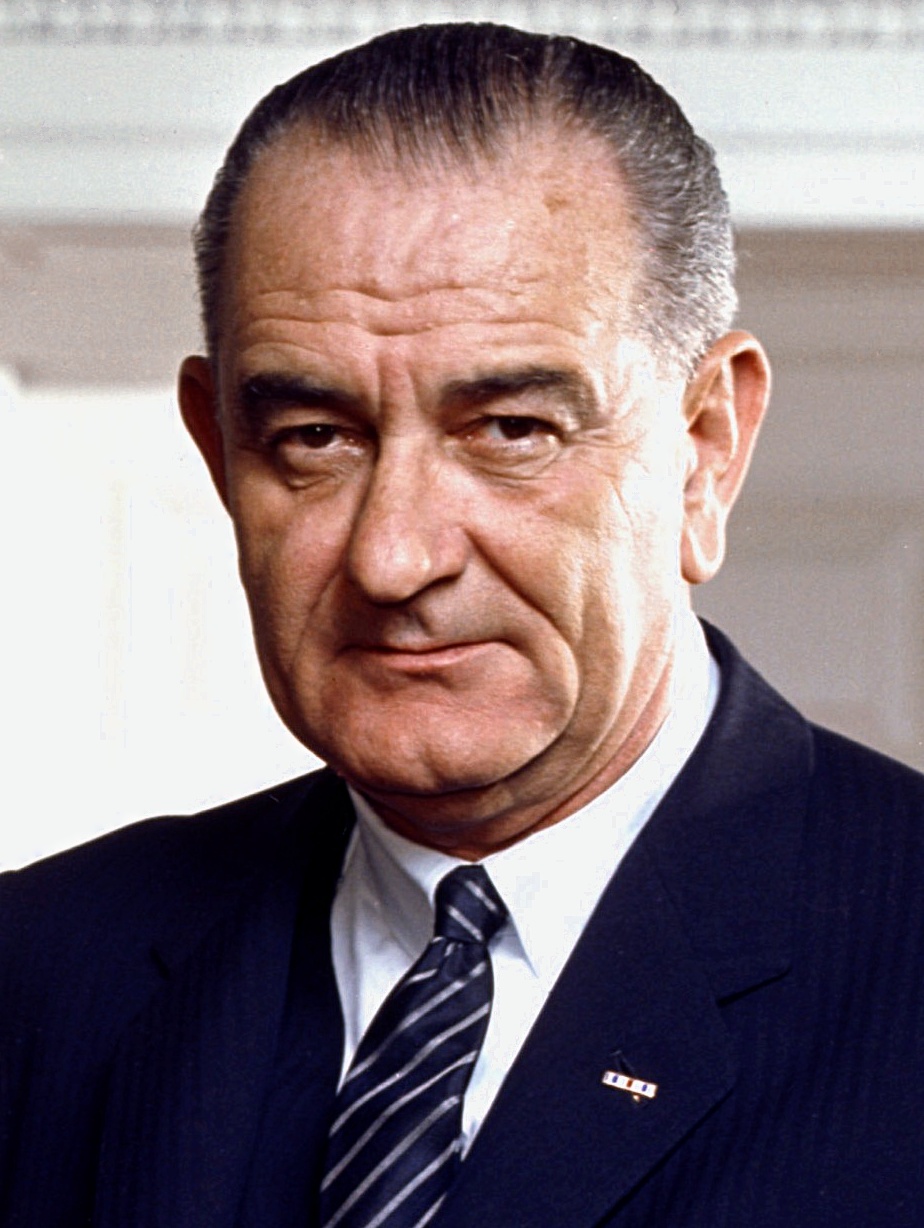
Yet, when Johnson arrived at Love Field, his actions belied any such concern. Rather than get up in the air immediately in order to direct America’s defenses and counterattacks to a possible Soviet nuclear attack, he instead lollygagged at Love Field, waiting, first, for a federal judge to arrive and swear him in as president and, second, for JFK’s body to be delivered to him. In fact, JFK was declared dead at 1 p.m. and LBJ waited until 2:47 to take off. That was the action of a person who knew for certain that the assassination could not possibly have been the first stage of a Soviet nuclear attack on the United States. The only way that Johnson could have been so certain is that he knew that it was not the Soviets who committed the assassination.
Once Johnson arrived at Andrews Air Force Base in Maryland, he dutifully delivered JFK’s body into the hands of the military, notwithstanding the fact that the military had absolutely no jurisdiction whatsoever to conduct such an autopsy.
It was not the last time that LBJ conjured up the possibility that the Soviets or the Cubans had assassinated JFK, however. When he began inducing people to join what became known as the Warren Commission, he once again conjured up the possibility that the assassination had been committed by the Soviet Union or Cuba. Why would he do that? Because that was the way that the plotters were able to get the investigation into the assassination shut down immediately — in order to ostensibly avoid World War III and all-out nuclear war that would come with it.
How did this ingenious strategy play out? As I detail in my book An Encounter with Evil: The Abraham Zapruder Story, the plot called for shots being fired from the front and the back. That would establish a conspiracy with the supposed communist, Lee Harvey Oswald, a U.S. intelligence agent who the national-security establishment was setting up to take the fall. The only people with whom Oswald would have been supposedly conspiring were the Soviet Union and Cuba. That was the purpose of setting up Oswald in New Orleans and Mexico City as a supposed communist agent.
Keep in mind that JFK and his brother RFK had initiated Operation Mongoose, whose aim was to oust Cuban leader Fidel Castro from power. Keep in mind also that the CIA had repeatedly tried to assassinate Castro. Thus, Johnson’s second role was to assert that the communists had gotten to JFK first and that if the United States responded to their assassination of JFK, World War III would occur. Therefore, the only way to obviate going to war based on what the Kennedy brothers had started was to immediately shut down the investigation and hide the fact that shots had been fired from the front.
The third role that LBJ had was to ensure that there would never be an official investigation that could lead to the national-security establishment, including, of course, with respect to the military’s fraudulent autopsy. That was the purpose of appointing former CIA Director Allen Dulles to the Warren Commission. Dulles, who Kennedy had fired after the Bay of Pigs disaster and who loathed Kennedy, ensured that the commission stayed on track with the official lone-nut narrative.
Finally, it should be noted that if JFK had not been assassinated, it was a virtual certainty that LBJ would have been removed from office, indicted, and convicted for political corruption. In fact, it is also a virtual certainty that Johnson knew that Robert Kennedy, the attorney general, who loathed Johnson, was furnishing evidence of Johnson’s corruption to LIFE magazine. Thus, LBJ, who had a lifelong obsession to become president, had a choice: Go to jail or participate in the assassination of JFK and become president. He chose the latter course of action and, after being elected president in the 1964 election, gave the U.S. national-security establishment what Kennedy had refused to do–its war in Vietnam.
Flashback: U.S. agencies investigate Israeli “art students”
By Christopher Ketcham | Salon | May 7, 2002
In January 2001, the security branch of the U.S. Drug Enforcement Agency began to receive a number of peculiar reports from DEA field offices across the country. According to the reports, young Israelis claiming to be art students and offering artwork for sale had been attempting to penetrate DEA offices for over a year. The Israelis had also attempted to penetrate the offices of other law enforcement and Department of Defense agencies. Strangest of all, the “students” had visited the homes of numerous DEA officers and other senior federal officials.
As a pattern slowly emerged, the DEA appeared to have been targeted in what it called an “organized intelligence gathering activity.” But to what end, and for whom, no one knew.
Reports of the mysterious Israelis with an inexplicable interest in peddling art to G-men came in from more than 40 U.S. cities and continued throughout the first six months of 2001. Agents of the DEA, ATF, Air Force, Secret Service, FBI, and U.S. Marshals Service documented some 130 separate incidents of “art student” encounters. Some of the Israelis were observed diagramming the inside of federal buildings. Some were found carrying photographs they had taken of federal agents. One was discovered with a computer printout in his luggage that referred to “DEA groups.”
In some cases, the Israelis visited locations not known to the public — areas without street addresses, for example, or DEA offices not identified as such — leading authorities to suspect that information had been gathered from prior surveillance or perhaps electronically, from credit cards and other sources. One Israeli was discovered holding banking receipts for substantial sums of money, close to $180,000 in withdrawals and deposits over a two-month period. A number of the Israelis resided for a period of time in Hollywood, Fla. — the small city where Mohammed Atta and three terrorist comrades lived for a time before Sept. 11.
NCIX Alert: “suspicious visitors to federal facilities”
In March 2001, the Office of the National Counterintelligence Executive (NCIX), a branch of the CIA, issued a heads-up to federal employees about “suspicious visitors to federal facilities.” The warning noted that “employees have observed both males and females attempting to bypass facility security and enter federal buildings.” Federal agents, the warning stated, had “arrested two of these individuals for trespassing and discovered that the suspects possessed counterfeit work visas and green cards.” [see this]
In the wake of the NCIX bulletin, federal officials raised several other red flags, including an Air Force alert, a Federal Protective Services alert, an Office of National Drug Control Policy security alert and a request that the Immigration and Naturalization Service (INS) investigate a specific case. Officials began dealing more aggressively with the “art students.” According to one account, some 140 Israeli nationals were detained or arrested between March 2001 and Sept. 11, 2001. Many of them were deported. According to the INS, the deportations resulted from violations of student visas that forbade the Israelis from working in the United States. (In fact, Salon has established that none of the Israelis were enrolled in the art school most of them claimed to be attending; the other college they claimed to be enrolled in does not exist.) After the Sept. 11 attacks, many more young Israelis — 60, according to one AP dispatch and other reports — were detained and deported.
The “art students” followed a predictable modus operandi. They generally worked in teams, typically consisting of a driver, who was the team leader, and three or four subordinates. The driver would drop the “salespeople” off at a given location and return to pick them up some hours later. The “salespeople” entered offices or approached agents in their offices or homes. Sometimes they pitched their artwork — landscapes, abstract works, homemade pins and other items they carried about in portfolios. At other times, they simply attempted to engage agents in conversation. If asked about their studies, they generally said they were from the Bezalel Academy of Arts and Design in Jerusalem or the University of Jerusalem (which does not exist). They were described as “aggressive” in their sales pitch and “evasive” when questioned by wary agents. The females among them were invariably described as “very attractive” — “blondes in tight shorts or jeans, real lookers,” as one DEA agent put it to Salon. “They were flirty, flipping the hair, looking at you, smiling. ‘Hey, how are you? Let me show you this.’ Everything a woman would do if she wanted to get something out of you.” Some agents noted that the “students” made repeated attempts to avoid facility security personnel by trying to enter federal buildings through back doors and side entrances. On several occasions, suspicious agents who had been visited at home observed the Israelis after the “students” departed and noted that they did not approach any of the neighbors.
The document detailing most of this information was an internal DEA memo: a 60-page report drawn up in June 2001 by the DEA’s Office of Security Programs. The document was meant only for the eyes of senior officials at the Justice Department (of which the DEA is adjunct), but it was leaked to the press as early as December 2001 and by mid-March had been made widely available to the public. [pdf here, un-redacted version here.]
On the face of it, this was a blockbuster tale, albeit a bizarre and cryptic one, full of indeterminate leads and fascinating implications and ambiguous answers: “Like a good Clancy novel,” as one observer put it. Was it espionage? Drug dealing? An intelligence game? The world’s wackiest door-to-door hustle? Yet the mainstream media has almost entirely ignored the allegations or accepted official “explanations” that explain nothing. Even before the DEA memo was leaked, however, some reporters had begun sniffing around the remarkable story.
Anna Werner, KHOU-TV Houston – scoop of a lifetime?

On Oct. 1 of last year, Texas newswoman Anna Werner, of KHOU-TV in Houston, told viewers about a “curious pattern of behavior” by people with “Middle Eastern looks” claiming to be Israeli art students. “Government guards have found those so-called students,” reported Werner, “trying to get into [secure federal facilities in Houston] in ways they’re not supposed to — through back doors and parking garages.” Federal agents, she said, were extremely “concerned.” The “students” had showed up at the DEA’s Houston headquarters, at the Leland Federal Building in Houston, and even the federal prosecutor’s office; they had also appeared to be monitoring the buildings. Guards at the Earle Cabell Federal Building in Dallas found one “student” wandering the halls with a floor plan of the site. Sources told Werner that similar incidents had occurred at sites in New York, Florida, and six other states, “and even more worrisome, at 36 sensitive Department of Defense sites.”
“One defense site you can explain,” a former Defense Department analyst told Werner. “Thirty-six? That’s a pattern.” Ominously, the analyst concluded that such activity suggested a terrorist organization “scouting out potential targets and … looking for targets that would be vulnerable.”
Post-9/11, this should have been the opening thrust in an orgy of coverage, and the scoop of a lifetime for Werner: Here she’d gotten a glimpse into a possible espionage ring of massive proportions, possibly of terrorists scouting new targets for jihad — and those terrorists were possibly posing as Israelis. KHOU’s conclusions were wrong — these weren’t Arab terrorists — but at the time no one knew better. And yet the story died on the vine. No one followed up.
Carl Cameron, Fox News
Just about the same time that KHOU was stabbing in the dark, reporter Carl Cameron of the Fox News Channel was beginning an investigation into the mystery of the art students that would ultimately light the way into altogether different terrain. In a four-part series on Fox’s “Special Report With Brit Hume” that aired in mid-December, Cameron reported that federal agents were investigating the “art student” phenomenon as a possible arm of Israeli espionage operations tracking al-Qaida operatives in the United States. Yes, you read that right: a spy ring that may have been trailing al-Qaida members in the weeks and months before Sept. 11 — a spy ring that according to Cameron’s sources may have known about the preparations for the Sept. 11 attacks but failed to share this knowledge with U.S. intelligence. One investigator told Cameron that “evidence linking these Israelis to 9/11 is classified. I cannot tell you about evidence that has been gathered. It’s classified information.” [see video below]
According to Cameron, some 60 Israeli nationals had been detained in the anti-terrorism/immigrant sweeps in the weeks after Sept. 11, and at least 140 Israelis identified as “art students” had been detained or arrested in the prior months. Most of the 60 detained after Sept. 11 had been deported, Cameron said. “Some of the detainees,” reported Cameron, “failed polygraph questions when asked about alleged surveillance activities against and in the United States.” Some of them were on active military duty. (Military service is compulsory for all young Israelis.) Cameron was careful to note that there was “no indication that the Israelis were involved in the 9/11 attacks” and that while his reporting had dug up “explosive information,” none of it was necessarily conclusive. Cameron was simply airing the wide-ranging speculations in an ongoing investigation.
Incendiary as it was, that story died on the vine, too, and the scuttlebutt in major newsrooms was that Cameron’s sources — all anonymous — were promulgating a fantasy. Reporters at the New York Times and the Washington Post hit up their go-to people inside Justice and FBI and CIA, but no one could seem to confirm the story, and indeed numerous officials laughed it off. Fox got it wrong, the newspapers of record concluded. And nothing more was heard on the topic in mainstream quarters.
But inside the DEA, the Fox piece reverberated. An internal DEA communiqué obtained by Salon indicates that the DEA made careful note of Cameron’s reports; the communiqué even mentions Fox News by name. Dated Dec. 18, four days after the final installment in the Fox series, the document warns of security breaches in DEA telecommunications by unauthorized “foreign nationals” — and cites an Israeli-owned firm with which the DEA contracted for wiretap equipment — breaches that could have accounted for the access that the “art students” apparently had to the home addresses of agents.
News reports in France
It wasn’t until nearly three months after the Fox reports that the “art student” enigma resurfaced in newsrooms, this time in Europe. On Feb. 28, the respected Paris-based espionage newsletter Intelligence Online reported in detail on what turned out to have been one of Cameron’s key source documents: the 60-page DEA memo. The memo itself, which Salon obtained in mid-March, went no further than to speculate in the most general terms that the “nature of the individuals’ conduct” suggested some sort of “organized intelligence gathering activity.” The memo also pointed out that there was some evidence connecting the art students to a drug ring. “DEA Orlando has developed the first drug nexus to this group,” the memo read. “Telephone numbers obtained from an Israeli Art Student encountered at the Orlando D.O. [District Office] have been linked to several ongoing DEA MDMA (Ecstasy) investigations in Florida, California, Texas and New York.”
However, Intelligence Online and then France’s newspaper of record, Le Monde, came to a much more definite — and explosive — conclusion. This was the jackpot, they concluded, a proven spy ring run by the Mossad or the Israeli government. Thus you had Intelligence Online leading its Feb. 28 piece with the statement that “a huge Israeli spy ring operating in the United States was rolled up,” and you had Le Monde trumpeting on March 5 that a “vast Israeli spy network” had been dismantled in the “largest case of Israeli spying” since 1985, when mole Jonathan Pollard was busted selling Pentagon secrets to the Mossad. Reuters that same day went with the headline “U.S. Busts Big Israeli Spy Ring,” sourcing Le Monde’s story.
The two French journals came to conclusions that the memo itself clearly did not. And yet they had unearthed some intriguing material. Six of the “students” were apparently carrying cell phones purchased by a former Israeli vice consul to the United States. According to Le Monde, two of the “students” had traveled from Hamburg to Miami to visit an FBI agent in his home, then boarded a flight to Chicago and visited the home of a Justice Dept. agent, then hopped a direct flight to Toronto — all in one day. According to Intelligence Online, more than one-third of the students, who were spread out in 42 cities, lived in Florida, several in Hollywood and Fort Lauderdale, Fla. — one-time home to at least 10 of the 19 Sept. 11 hijackers. In at least one case, the students lived just a stone’s throw from homes and apartments where the Sept. 11 terrorists resided: In Hollywood, several students lived at 4220 Sheridan St., just down the block from the 3389 Sheridan St. apartment where terrorist mastermind Mohammed Atta holed up with three other Sept. 11 plotters. Many of the students, the DEA report noted, had backgrounds in Israeli military intelligence and/or electronics surveillance; one was the son of a two-star Israeli general, and another had served as a bodyguard to the head of the Israeli army.
The DEA report on which the French journals based their investigations contained a wealth of remarkable tales. To take just a few samples:
- On March 1, 2001, a DEA special agent in the Tampa division offices “responded to a knock at one of the fifth floor offices. At the door was a young female who immediately identified herself as an Israeli art student who had beautiful art to sell. She was carrying a crudely made portfolio of unframed pictures.” Aware of the “art student” alert, the agent invited the girl to an interview room, where he was joined by a colleague to listen to the girl’s presentation. “She had approximately 15 paintings of different styles, some copies of famous works, and others similar in style to famous artists. When asked her name, she identified herself as Bella Pollcson, and pointed out one of the paintings was signed by that name.” Then things got interesting: In the middle of her presentation, she changed her story and claimed that the paintings were not for sale, but “that she was there to promote an art show in Sarasota, Fla., and asked for the agents’ business cards so that information regarding the show could be mailed to them.” Well, where’s the show? asked the agents. When’s it going up? Pollcson couldn’t say: didn’t know when or where — or even who was running it. Later it was determined that she had lied about her name as well.
- On Oct. 20, 2000, in the Houston offices of the DEA, a “male Israeli art student was observed by the Security Officers [entering] an elevator from a secure area. [The officers] were able to apprehend the art student before he could enter a secure area on the second floor.” Three months later, in January 2001, a “male Israeli” was apprehended attempting to enter the same building from a back door in a “secured parking lot area.” He claimed “he wanted to gain access to the building to sell artwork.”
- On April 30, 2001, an Air Force alert was issued from Tinker Air Force Base in Oklahoma City concerning “possible intelligence collection being conducted by Israeli Art Students.” Tinker AFB houses AWACS surveillance craft and Stealth bombers. The report does not elaborate on what kind of intelligence was being sought.
- On May 19, 2001, two Israeli nationals “requested permission to visit a museum” at Volk Field Air National Guard Base in Camp Douglas, Wis. “Approximately ten minutes after being allowed on the base, the two were seen on an active runway, taking photographs.” The men, charged with misdemeanor trespass, were identified as 26-year-old Gal Kantor and 22-year-old Tsvi Watermann, and were released after paying a $210 fine. According to the Air Force security officer on duty, “Both were asked if they were involved in the selling of art while in the U.S. Kantor became very upset over this, and questioned why they were being asked about that … Kantor’s whole demeanor changed, and he then became uncooperative.”
‘Art students’ throughout U.S.
So it went week after week, month after month, for more than a year and a half. In addition to the locations mentioned above, there were “art student” encounters in Atlanta, Chicago, Denver, Detroit, El Paso, Los Angeles, Miami, Orlando, New Orleans, Phoenix, San Diego, Little Rock, Seattle, Washington, D.C., Arlington, Texas, Albuquerque, and dozens of other small cities and towns.
“Their stories,” the DEA report states, “were remarkable only in their consistency. At first, they will state that they are art students, either from the University of Jerusalem or the Bezalel Academy of Arts in Jerusalem. Other times they will purport to be promoting a new art studio in the area. When pressed for details as to the location of the art studio or why they are selling the paintings, they become evasive.”
Indeed, they had reason to be nervous, because they were lying. Salon contacted Bezalel Academy’s Varda Harel, head of the Academic Students’ Administration, with a list of every “student” named in the DEA report, including their dates of birth, passport numbers, and in some cases military registration numbers. Not a single name was identified in the Bezalel database, either as a current student or as a graduate of the past 10 years (nor had any of the “students” tried to apply to Bezalel in the last ten years). As for the University of Jerusalem, there is no such entity. There is the Hebrew University of Jerusalem, but Heidi Gleit, the school’s foreign press liaison, told me that Israelis commonly refer to the school as Hebrew University, not the University of Jerusalem. (Hebrew University, she said, does not release student records to the public.)
Washington Post ‘debunks’ reports using anonymous officials
Still, the U.S. press was uninterested. Just one day after the Le Monde report, the Washington Post ran a story on March 6 that seemed to put the whole thing to rest. Headlined “Reports of Israeli Spy Ring Dismissed,” the piece, by John Mintz and Dan Eggen, opened with official denials from a “wide array of U.S. officials” and quoted Justice Department spokeswoman Susan Dryden as saying, “This seems to be an urban myth that has been circulating for months. The department has no information at this time to substantiate these widespread reports about Israeli art students involved in espionage.”
The Post quoted anonymous officials who said they thought the allegations had been “circulated by a single employee of the Drug Enforcement Administration who is angry that his theories have not gained currency … [T]wo law enforcement officials said the disgruntled DEA agent, who disagreed with the conclusion of FBI and CIA intelligence experts that no spying was taking place, appears to be leaking a memo that he himself wrote.”
An INS spokesman acknowledged to the Post that several dozen Israelis had been deported, but said it was the result of “routine visa violations.” At the same time, DEA spokesman Thomas Hinojosa told the Post that “multiple reports of suspicious activity on the part of young Israelis had come into the agency’s Washington headquarters from agents in the field. The reports were summarized in a draft memo last year, but Hinojosa said he did not have a copy and could not vouch for the accuracy of media reports describing its contents.”
The Post’s apparent debunking was far from convincing, even to the casual reader. Of course there was no proof that the art students were part of a spy ring: Intelligence Online and Le Monde had jumped the gun. However, the real possibility that they were part of a spy ring could not be dismissed — any more than could any other theory one might advance to explain their unusual behavior. With that in mind, Justice spokeswoman Dryden’s assertion that reports of an Israeli spy ring were an “urban myth” was an oddly overplayed denial. A response that fit the facts would have been something like “There have been numerous reports of suspicious behavior by Israelis claiming to be art students. We are looking into the allegations.” Instead, Dryden appeared to be trying to forestall any discussion of just what the facts of the case were. Given the political sensitivities and the potentially embarrassing nature of the case, that was not surprising,
If the whole thing was an “urban myth,” like the sewer reptiles of Manhattan, and if it all led back to one deskbound nut job in the DEA, then what were those “reports of suspicious activity” that had come in from agents in the field? Hinojosa’s statement about the DEA memo was suspiciously evasive: If the “media reports describing its content” (that is, the articles in Le Monde and Intelligence Online) were in fact based on the DEA memo whose existence Hinojosa acknowledged, then the “lone nut” explanation offered by anonymous U.S. officials was at best irrelevant and at worst a rather obvious piece of disinformation, an attempt to shove the story under the rug. (In fact, the French articles were based on the actual DEA memo — a fact any news organization could have quickly verified, since the leaked DEA document had been floating around on various Web venues, such as Cryptome.org, as early as March 21).
To someone not familiar with the 60-page DEA memo, or to reporters who didn’t bother to obtain it, the fact that a disgruntled employee leaked a memo he wrote himself might seem like decisive proof that the whole “art student” tale was a canard. In reality, the nature of the memo makes its authorship irrelevant. The memo is a compilation of field reports by dozens of named agents and officials from DEA offices across America. It contains the names, passport numbers, addresses, and in some cases the military ID numbers of the Israelis who were questioned by federal authorities. Pointing a finger at the author is like blaming a bank robbery on the desk sergeant who took down the names of the robbers.
Agents confirm reports
Of course, the agent (or agents) who wrote the memo could also have fabricated or embellished the field reports. That does not seem to have been the case. Salon contacted more than a half-dozen agents identified in the memo. One agent said she had been visited six times at her home by “art students.” None of the agents wished to be named, and very few were willing to speak at length, but all confirmed the veracity of the information.
Despite such obvious holes in the official story, neither the Post nor any other mainstream media organization ran follow-up articles. The New York Times has not yet deemed it worth covering – in fact, the paper of record has not written about the art student mystery even once, not even to pooh-pooh it. One or two minor media players did some braying – Israel had been caught spying, etc. – and the bonko conspiracy fringe had a field day, but the rest of the media, taking a cue from the big boys, decided it was a nonstarter: the Post’s “debunking” and the Times’ silence had effectively killed the story.
So complete was the silence that by mid-March, Jane’s Information Group, the respected British intelligence and military analysis service, noted: “It is rather strange that the U.S. media seems to be ignoring what may well be the most explosive story since the 11 September attacks — the alleged break-up of a major Israeli espionage operation in the USA.” [Jane’s Intelligence Digest, 3/13/02]
The only major American media outlet aside from Fox to seriously present the “art student” allegations was Insight on the News, the investigative magazine published weekly by the conservative Washington Times. In a March 11 article, Insight quoted a senior Justice Department official as saying, “We think there is something quite sinister here but are unable at this time to put our finger on it” — essentially echoing what the DEA report concluded.
Managing editor Paul M. Rodriguez, who wrote the Insight story and had quietly tracked the art student phenomenon for weeks before Intelligence Online scooped him, took an agnostic stance toward the mystery. “There is zero information at this time to suggest that these students were being run by the Mossad,” he told me. “Nothing we’ve come across would suggest this. We have seen nothing that says this is a spy ring run by the Israeli government directly or with a wink and a nod or some other form of sub rosa control. Based on what we’ve been told, seen and obtained I just don’t see the so-called spy ring as a certain fact. Does that make it not so? I don’t know.”
Rodriguez added, “I think the investigators’ take is this: What were these ‘students’ doing going around accessing buildings without authorization, tracking undercover cops to their homes — if not for some sort of intel mission? It’s sort of a mind-fuck scenario, if one were to believe this was a conspiracy by a foreign intel source and/or a bunch of nutty ‘kids’ fucking around just to see how far they could push the envelope — which they seem to have pushed pretty damn far, given the page after page after page of intrusions and snooping alleged.”
The Israeli embassy denies the charges of a spy ring. “We are saying what we’ve been saying for months,” spokesman Mark Reguev [usually spelled Regev] told Salon, referring to the Fox series in December. “No American official or intelligence agency has complained to us about this. The story is nonsense. Israel does not spy on the United States.”
Whether or not the “art students” are Israeli spies, Reguev’s blanket disavowal is untrue: Israel does spy on the United States. This should come as no surprise: Allies frequently spy on each other, and Israeli intelligence is renowned as among the best and most aggressive in the world. Israel has been at war off and on since its birth as a nation in 1948 and is hungry for information it deems essential to its survival. And America’s relationship to Israel and support for it is essential to the survival of the Jewish state. Add these things up, and espionage against the United States becomes understandable, if not justifiable.
The U.S. government officially denies this, of course, but it knows that such spying goes on. In 1996, the U.S. General Accounting Office issued a report indicating that “Country A,” later identified as Israel, “conducts the most aggressive espionage operation against the United States of any U.S. ally.” A year earlier, the Defense Investigative Service circulated a memo warning U.S. military contractors that “Israel aggressively collects [U.S.] military and industrial technology” and “possesses the resources and technical capability to successfully achieve its collection objectives.” The memo explained that “the Israelis are motivated by strong survival instincts which dictate every facet of their political and economic policies.”
Jonathan Pollard & Israeli spying
In the history of Israeli espionage in and against the United States, the case of Jonathan Pollard was certainly the most heinous. Pollard, a civilian U.S. naval intelligence analyst, provided Israeli intelligence with an estimated 800,000 pages of classified U.S. intelligence information. The information eventually ended up in Soviet hands, compromising American agents in the field — several of whom were allegedly captured and killed as a result. Israel at first denied, and then admitted, Pollard’s connections to the Mossad after he was arrested in 1985 and imprisoned for life. The case severely strained American-Israeli relations, and continues to rankle many American Jews, who believe that since Pollard was spying for Israel, his sentence was unduly harsh. (Other American Jews feel equally strongly that Pollard and the Israelis betrayed them.)
Any attempt to understand the official U.S. response to the Israeli art student mystery — and to some degree, the media response — must take into account both the smoke screen that states blow over incidents that could jeopardize their strategic alliances, and America’s unique and complex relationship with Israel. The Jewish state is a close if problematic ally with whom the United States enjoys a “special relationship” unlike that maintained with any other nation in the world. But U.S. and Israeli interests do not always coincide, and spying has always been deemed to cross a line, to represent a fundamental violation of trust. According to intelligence sources, the United States might perhaps secretly tolerate some Israeli spying on U.S. soil if the government decided that it was in our interest (although it could never be acknowledged), but certain types of spying will simply not be accepted by the United States, whether the spying is carried out by Israel or anyone else.
If England or France spied on the United States, American officials would likely conceal it. In the case of Israel, there are far stronger reasons to hide any unseemly cracks in the special relationship. The powerful pro-Israel political constituencies in Congress; pro-Israel lobbies; the Bush administration’s strong support for Israel, and its strategic and political interest in maintaining close ties with the Jewish state as a partner in the “war against terror”; the devastating consequences for U.S.-Israeli relations if it was suspected that Israeli agents might have known about the Sept. 11 attack — all these factors explain why the U.S. government might publicly downplay the art student story and conceal any investigation that produces unpalatable results.
Pro-Israel lobby is a vast and powerful force
The pro-Israel lobby is a vast and powerful force in American politics; the American Israel Public Affairs Committee, or AIPAC, is the No. 1 foreign-policy lobby and the fourth most powerful lobby in Washington, according to Fortune Magazine. Michael Lind, a senior fellow of the New America Foundation and a former executive editor of the National Interest, calls the Israel lobby “an ethnic donor machine” that “distorts U.S. foreign policy” in the Middle East. Among foreign service officers, law enforcement and the military, there is an impression, says Lind, that you can’t mess with Israel without suffering direct and indirect smears, such as being labeled an Arabist. Lind, who himself has been virulently attacked as an anti-Semite for his forthrightness on the subject, acknowledges that the Israel lobby is no different from any other — just more effective. “This is what all lobbies do,” Lind observes. “If you criticize the AARP, you hate old people and you want them to starve to death. The Israel lobby is just one part of the lobby problem.”
Considering the volatility of the issue, it is not surprising that almost no one in officialdom wants to go on the record for a story like the art students. “In government circles,” as Insight’s Rodriguez put it, “anything that has to do with Israel is always a hot topic, a third rail — deadly. No one wants to touch it.” Fox News’ Cameron quoted intelligence officers saying that to publicly air suspicions of Israeli wrongdoing was tantamount to “career suicide.” And the Israeli-Palestinian conflict, in one of its bloodiest and most polarizing phases, has only exacerbated sensitivities.
Some of the same pressures that keep government officials from criticizing Israel may also explain why the media has failed to pursue the art student enigma. Media outlets that run stories even mildly critical of Israel often find themselves targeted by organized campaigns, including form-letter e-mails, the cancellation of subscriptions, and denunciations of the organization and its reporters and editors as anti-Semites. Cameron, for example, was excoriated by various pro-Israel lobbying groups for his exposé. Representatives of the Jewish Institute for National Security Affairs (JINSA), the Anti-Defamation League (ADL), and the Committee for Accuracy in Middle East Reporting in America (CAMERA) argued that the Fox report cited only unnamed sources, provided no direct evidence, and moreover had been publicly denied by spokesmen for the FBI and others (the last, of course, is not really an argument).
“Jewish/Israeli groups” attack Fox, Cameron
In a December interview with Salon, CAMERA’s associate director, Alex Safian, said that several “Jewish/Israeli groups” were having “conversations” with representatives of Fox News regarding Cameron’s piece. Safian said he questioned Cameron’s motives in running the story. “I think Fox has always been fair to Israel in its reporting,” said Safian. “I think it’s just Cameron who has something, personally, about Israel. He was brought up in the Middle East. Maybe that has something to do with it. Maybe he’s very sympathetic to the Arab side. One could ask.” The implicit suggestion was that Cameron is a bigot; in conversation, Safian would later make the same allegation about the entire editorial helm at Le Monde, which he called an anti-Semitic newspaper.
Told of Safian’s comments, Cameron said, “I’m speechless. I spent several years in Iran growing up because my father was an archaeologist there. That makes me anti-Israel?” The chief Washington correspondent for Fox News, Cameron had never before been attacked for biased coverage of Israel or Israeli-related affairs — or for biased coverage of Arabs, for that matter. Cameron defends his December reporting, saying he had never received any heat whatsoever from his superiors, nor had he ever been contacted by any dissenting voices in government.
All traces of Cameron’s broadcast are removed from Fox
Oddly, four days after the Cameron investigation ran, all traces of his report — transcripts, Web links, headlines — disappeared from the Foxnews.com archives. (Normally, Fox leaves a story up for two to three weeks before consigning it to the pay archive.) When Le Monde contacted Fox in March for a copy of the original tapes, Fox News spokesmen said the request posed a problem but would not elaborate. (Fox News now says Le Monde never called.) Asked why the Cameron piece disappeared, spokesman Robert Zimmerman said it was “up there on our Web site for about two or three weeks and then it was taken down because we had to replace it with more breaking news. As you know, in a Web site you’ve got x amount of bandwidth — you know, x amount of stuff you can put stuff up on [sic]. So it was replaced. Normal course of business, my friend.” (In fact, a text-based story on a Web site takes up a negligible amount of bandwidth.)
When informed that Cameron’s story was gone from the archives, not simply from the headline pages (when you entered the old URL, a Fox screen appeared with the message “This story no longer exists”), Zimmerman replied, “I don’t know where it is.”
‘A lot of patriots would like to remain alive’
The extreme sensitivity of the Israeli art student story in government circles was made clear to this reporter when, in the midst of my inquiries at DEA and elsewhere, I was told by a source that some unknown party had checked my records and background. He proved it by mentioning a job I had briefly held many years ago that virtually no one outside my family knew about. Shortly after this, I received a call from an individual who identified himself only by the code name Stability. Stability said he was referred to me from “someone in Washington.” That someone turned out to be a veteran D.C. correspondent who has close sources in the CIA and the FBI and who verified that Stability was a high-level intelligence agent who had been following the art student matter from the inside.
Stability was guarded in his initial conversation with me. He said that people in the intelligence community were suspicious about my bona fides and raised the possibility that someone was “using” me. “Your name is known and has been known for quite a while,” Stability said. “The problem is that you’re going into a hornet’s nest with this. It’s a very difficult time in this particular area. This is a scenario where a lot of people are living a bunker mentality.” He added, “There are a lot of people under a lot of pressure right now because there’s a great effort to discredit the story, discredit the connections, prevent people from going any further [in investigating the matter]. There are some very, very smart people who have taken a lot of heat on this — have gone to what I would consider extraordinary risks to reach out. Quite frankly, there are a lot of patriots out there who’d like to remain alive. Typically, patriots are dead.”
In a subsequent conversation, Stability said that the DEA’s Office of Professional Responsibility is currently undertaking an aggressive investigation targeting agents suspected of leaking the June 2001 memo. The OPR inquiry was initiated as a result of Intelligence Online’s exposé of the DEA document in late February. According to Stability, at least 14 agents — including some in agencies other than DEA — are now under intense scrutiny and interrogation. Half a dozen agents have been polygraphed several times over, computers have been seized, desks have been searched.
A DEA spokesman would neither confirm nor deny the allegation. “Anything that has to do with internal security, which would include OPR, is not anything we’re able to discuss,” the spokesman said.
As for the DEA document itself, Stability said that all information gathering for it ceased around June 2001. He also noted that “there are multiple variations of that document” floating around DEA and elsewhere.
“It was a living, breathing document,” Stability said, “that grew on a week-by-week basis, that was being added to as people forwarded information. To say this was a coordinated effort would be a stretch; it was ad hoc. But that document [the DEA memo] didn’t just happen. That document was the result of literally dozens of people providing input, working together. These events were going on, people were looking at them, but could not understand them.”
“It wasn’t until the end of 2000 and the beginning of 2001 that field agents ran across a series of visits that occurred within a very close period of time,” Stability said. Agents from across the country began talking to each other, comparing notes. “There was an embryonic understanding that there was something here, something was happening. People kept running across it. And agents being who they are, gut feelings being what they are, they would catch a thread. They’d start to pull a thread, and next thing, they’d end up with the arm of the jacket and the back was coming off, and then you’d end up with reports like you saw. The information, in its scattered form, is one thing. The information compiled, documented, timelined, indexed, is a horrific event for some of these people. Because it is indisputable.”
Going to agents’ homes
“Agents started to realize that people were coming to their homes,” he continued. “If you are part of an organization like this, you tend to be careful about your security. When something disturbs that sense of security, it’s unnerving. One thing that was understood fairly early on was that the students would go to some areas that didn’t have street signs, and in fact they would already have directions to these areas. That indicated that someone had been there prior to them or had electronically figured where the agents were located — using credit card records, things of that nature. This sat in the back of people’s minds as to the resources necessary to do that.”
“I will tell you that there is still great debate over what [the art students] specific purposes were and are,” Stability went on. “When you take an individual who picks up a group of individuals from an airport, individuals who supposedly have no idea what they’re doing in-country, who fly on over from a foreign land, whose airline tickets could in some instances total a value greater than $15,000 — and who get picked up at the airport and drive specifically to one individual’s home, which they know the exact directions to: Yeah, you could say there’s a problem here. You don’t need to be a rocket scientist to understand that. The overarching item is that a lot of work went into going to people’s houses to sell them junk from China in plastic frames.”
Why? Organized crime & drugs?
But to what end? What was the value? What was to be gained? “Unknown, unknown,” Stability said. “You could be anywhere from D.C. to daylight on that one. Even on our side, you have to take all the stuff and draw it all out and clean out all the chaff. I will tell you that from those who are working ground zero [of this case], it is a difficult puzzle to put together, and it is not complete by any means.” Even the spooks are baffled; they have no answers.
So let’s draw out the chaff ourselves and see if we can at least speculate. In intel circles, there are a number of working theories, according to Stability. “Profiling of federal agents is one,” said Stability. “Keeping tabs on other people, other foreign nationals, is another. A third is that they were working for organized crime — that’s an easy one, and it almost sounds more like a cover than a reality. The predominant thought is that it was a profiling endeavour, and from a profiling aspect, also one of intimidation.”
You mean this whole vast scheme was a mind fuck, to use Paul Rodriguez’s elegant phrasing? A psy-ops endeavor to spook the spooks? Perhaps. As Stability put it, “Almost nothing is wrong in this particular instance, Mr. Ketcham. In this particular situation, right is wrong, left is right, up is down, day is night.”
Yet for the most part the targeted agents weren’t spooks in the strictest sense: They were DEA — cops who bust drug dealers. And that leads us into Theory No. 1, also known as the Art Student/Drug Dealer Conspiracy. This theory has a piece of evidence to support it: the link, mentioned in the leaked DEA memo, between an Ecstasy investigation and the telephone numbers provided by an Israeli detained in Orlando. There are “problems” with Israeli nationals involved in the Ecstasy business, according to Israeli Embassy spokesman Reguev. “Israeli authorities and the DEA are working together on that issue,” he said. In a statement before Congress in 2000, officials with the U.S. Customs Service, which intercepted some 7 million Ecstasy tablets last year, noted that “Israeli organized-crime elements appear to be in control” of the multibillion-dollar U.S. Ecstasy trade, “from production through the international smuggling phase. Couriers associated with Israeli organized crime have been arrested around the world, including … locations in the U.S. such as Florida, New Jersey, New York and California.”
Miami was cited as one of the main entry points of Ecstasy into the United States and was specified as one of the central “headquarters for the criminal organizations that smuggle Ecstasy”; Houston was also cited for large Ecstasy seizures — an interesting nexus, given the large number of “art students” who congregated both in the Miami and Ft. Lauderdale area and in Houston. “Israeli nationals in the Ecstasy trade have been very sophisticated in their operations,” says a U.S. Customs officer who has investigated the groups. “Some of these individuals have been skilled at counterintelligence and in concealing their communications and movements from law enforcement.”
It would thus seem that Israeli organized crime has at least the capacity to pull off a widespread surveillance and intelligence operation. The drug connection would also explain the sizable reserves of cash one Tampa student was handling.
One DEA agent named in the “art student” report told Salon that the best possible explanation for the affair – and he admitted to being utterly baffled by it – was that drug dealers were involved.
“Why us if not because of the DEA’s mission?” the agent asked. “I mean, what would Israeli intel want with us? Here’s another avenue of inquiry to take: Israeli organized crime is the now the biggest dealer of Ecstasy in the United States. These students? It was Israeli organized crime judging our strength, getting a survey of our operations. What if I wanted to burglarize your building and go through your files? I’d do a reconnoiter. Get a sense of the floor plan and security, where the guards are stationed, how many doors, what kind of locks, alarm systems, backup alarm systems.”
The trouble with this theory is the obvious one: In the annals of crime chutzpah, for drug dealers to brazenly approach drug agents in their homes and offices may represent the all-time world record. And what conceivable useful intelligence could they gather that would be worth the risk? Were the tee-heeing tight-sweatered Israeli babes pulling some kind of Mata Hari stunt, seducing paunchy middle-aged DEA boys and beguiling them into loose-lipped info sharing?
Espionage?
Theory No. 2 is that they were all engaged in espionage. This scenario has the virtue of simplicity — if it smells like a spy, walks like a spy, and talks like a spy, it probably is a spy — but doesn’t make much sense, either. Why would the Mossad — or any spy outfit with a lick of good sense — use kids without papers as spies? And, just as our incredulous DEA agent noted, what intelligence useful to Israel could be gathered from DEA offices, anyway?
I suggested to Stability that the operation, if it was that, was purposely conspicuous — almost oafish. “Yes, it was,” he replied. “It was a noisy operation. Did you ever see ‘Victor/Victoria’? It was about a woman playing a man playing a woman. Perhaps you should think about this from that aspect and ask yourself if you wanted to have something that was in your face, that didn’t make sense, that couldn’t possibly be them.” He added, “Think of it this way: How could the experts think this could actually be something of any value? Wouldn’t they dismiss what they were seeing?”
That’s where you enter truly dark territory: Theory No. 3, the Art Student as Agent as Art Student Smoke Screen. It has major problems, but let’s roll with it for a moment. This theory contends that the art student ring was a smoke screen intended to create confusion and allow actual spies — who were also posing as art students — to be lumped together with the rest and escape detection. In other words, the operation is an elaborate double fake-out, a hiding-in-plain-sight scam. Whoever dreamed it up thought ahead to the endgame and knew that the DEA-stakeout aspect was so bizarre that it would throw off American intelligence. According to this theory — Stability’s “Victor/Victoria” scenario — Israeli agents wanted, let’s say, to monitor al-Qaida members in Florida and other states. But they feared detection. So to provide cover, and also to create a dizzyingly Byzantine story that would confuse the situation, Israeli intel flooded areas of real operations with these bumbling “art students” — who were told to deliberately stake out DEA agents.
Perhaps. Why not? Up is down, left is right. I nudged Stability on the obvious implication of the “Victor/Victoria” scenario: If this was a ruse, a decoy to conceal another operation, what was that other operation? “Unknown,” Stability said.
Then of course there’s Theory No. 4: that they really were art students. Either they were recruited in Israel as part of an art-selling racket or they simply hit upon the idea themselves. This theory is basically the de facto position held by the U.S. and Israeli governments, which insist that the only wrong committed by the “students” was to sell art without the proper papers. There are almost too many problems with this to list, but it’s worth mentioning a few: Why in the world would people try to sell cheap market art to DEA officials? Why would they almost all use the same bogus Bezalel Academy of Arts cover story? Why would anyone running such a racket to make money use foreign nationals without green cards, knowing that they would quickly be snagged for visa violations? And why did so many of these itinerant peddlers, wandering the United States on their strange mission of hawking cheap Chinese knockoff paintings, have “black information” about federal facilities?
There are other theories. One is that these were spies in training, newly minted Mossad graduates on test runs to see how they would operate in field conditions. I asked Stability how hotly the matter was now being pursued in intel and law enforcement. “Depends on who you speak to,” he told me. “Some people say that it’s a dead issue, a fantasy. Most of the investigations are happening at an ad hoc level. There are people out there that you couldn’t sway off some of the cases, because that’s how dedicated they are.”
Apparently, at least some agents in the FBI remain quite concerned about the art student problem. According to several intelligence sources, including Stability, on Dec. 3, 2001, six separate FBI field offices simultaneously forwarded communiqués to FBI headquarters inquiring into the status of the investigation. The FBI agents wanted to have a “clarification” as to what was going on.
The subject may not be officially dead yet. The art student matter may be taken up by the congressional committees investigating intelligence failures leading up to the Sept. 11 attacks, according to another source.
What about the crucial Washington Post article, in which anonymous federal agents alleged the DEA memo was the work of a disgruntled employee?
“The Washington Post article was a plant — that’s obvious. The story was killed,” Stability told me. Who planted the story? Stability claimed the FBI was behind it. “Every organization is running scared,” Stability added, “because they’re afraid of the next shoe to drop. There are many smoking guns out there, many. So consequently every one is at a level of heightened anxiety, and when they’re anxious they make mistakes.”
Yes, but what are they afraid of? What will the smoking guns prove? Questions, questions, labyrinthine questions, and the more you ask in this matter, the fewer get answered. When I called the CIA to inquire about the agency’s March 2001 alert — an alert that evinced deep disquiet over the affair — an official who was aware of the inquiry told me, “I’ll make a recommendation to you: Don’t write a story. This whole thing has been blown way out of proportion. As far as we’re concerned, we reported it, yes, but subsequently it’s nothing of interest to us. And we’ve just closed the book on it. And I really recommend you do the same. Let it go. There’s nothing here.”
Not everyone else in law enforcement is so sure. “There’s a lot of concern among the agents,” said the DEA source. “We’re investigators. We’re not satisfied when we don’t have answers. This is a mystery that has an answer and it has to be resolved.”
Featured Video

The Sordid History of the CIA – Part 2
or go to
Aletho News Archives – Video-Images
Book Review
Jeffrey Epstein: A Jewish Individual?
The Occidental Observer | February 5, 2023
One Nation Under Blackmail: The Sordid Union between Intelligence and Organized Crime that Gave Rise to Jeffrey Epstein (Volume 1 & 2) by Whitney Webb
“Far from being an anomaly, Epstein was one of several men who, over the past century, have engaged in sexual blackmail activities designed to obtain damaging information (i.e., “intelligence”) on powerful individuals with the goal of controlling their activities and securing their compliance.”[1]
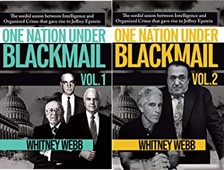
Jeffrey Epstein is dead and Ghislaine Maxwell is locked away in prison, and the thought-makers of our world seem keen to let the more explosive parts of the scandal dissipate from the public consciousness. As far as the mainstream media is concerned, Epstein and Maxwell were little more than well-connected socialites who ran a sex-trafficking ring for the rich and the powerful, and the focus has shifted instead to the criminal and civil cases seeking to achieve redress for the victims of sexual abuse.
On occasion some newspaper articles will mention the hidden cameras littered across Epstein’s properties, others the reams of CDs and hard drives found within them during the FBI raids. Altogether missing from the Netflix documentaries (Jeffrey Epstein: Filthy Rich [2020] and Ghislaine Maxwell: Filthy Rich [2022]) or the articles that spend their time narrowly focusing on the links between Epstein and Bill Gates, is the acknowledgement of the true nature of Epstein himself and the ultimate purpose of this sex-trafficking of minors — a sexual blackmail operation.
Not everyone is cowardly enough to let these controversial aspects lie untouched, as the newly released two-volume book One Nation Under Blackmail by independent reporter Whitney Webb seeks to blow wide open this media-enforced blackout. Utilizing primarily open-source information (that is, publicly accessible information such as books, newspapers articles and government reports),[2] Webb’s book delves into the life and times of Jeffrey Epstein and his deep ties to Jewish billionaires and Israeli intelligence. … continue
Blog Roll
Recent Comments


 Aletho News
- Israeli army closes dozens of cases involving killing of Palestinians inside torture camps
- Europe creates a ‘Russian government-in-exile’, consisting of a bunch of losers
- Munich, 2007: The Day the West Was Told No
- At The Munich Security Conference, AOC Gets It Wrong On Foreign Policy
- Europe Decided to Go to War With Russia by 2030, Already Preparing – Orban
- Russia and China Are Expanding Their Cooperation to Counter US Efforts to Bully Iran and Cuba
- NATO plotting maritime blockade of Russia – Moscow
- Jeffrey Epstein’s sinister shadow over West Asia
- The Sordid History of the CIA – Part 2
- French FM under fire over ‘false’ claims about UN rapporteur
- If Americans Knew
- Israel battles Palestinian right of return, one Palestinian at a time – Not a ceasefire Day 127
- Noor’s short life of unimaginable suffering
- Israel Destroyed Gaza’s Hospitals. Now It’s Banning Doctors Without Borders.
- Is Spite of What Zionists Say, It’s a Good Thing to Criticize Governments
- Palestinian mother, daughter recount strip searches, harsh conditions in Israeli detention
- Israel used weapons in Gaza that made thousands of Palestinians evaporate
- ADL’s Stats Twist Israel’s Critics Into Antisemites
- Why Is the World Silent When the Gaza Genocide Is Not Over?
- In Gaza: 8,000 bodies under rubble, 3,000 missing – Not a ceasefire Day 126
- AZAPAC, the new PAC opposing Israeli domination of U.S policies
- No Tricks Zone
- Unfudging The Data: Dutch Meteorological Institute Reinstates Early 20th Centruy Heat Waves It Had Erased Earlier
- German Gas Crisis…Chancellor Merz Allegedly Bans Gas Debate Ahead of Elections!
- Pollen Reconstructions Show The Last Glacial’s Warming Events Were Global, 10x Greater Than Modern
- Germany’s Natural Gas Storage Level Dwindles To Just 28%… Increasingly Critical
- New Study Rebuts The Assumption That Anthropogenic CO2 Molecules Have ‘Special’ Properties
- Climate Scientist Who Predicted End Of “Heavy Frost And Snow” Now Refuses Media Inquiries
- Polar Bear Numbers Rising And Health Improving In Areas With The Most Rapid Sea Ice Decline
- One Reason Only For Germany’s Heating Gas Crisis: Its Hardcore-Dumbass Energy Policy
- 130 Years Later: The CO2 Greenhouse Effect Is Still Only An Imaginary-World Thought Experiment
- New Study Affirms Rising CO2’s Greening Impact Across India – A Region With No Net Warming In 75 Years
 Aletho News