Disasters Cost More Than Ever — But Not Because of Climate Change
From the archives, a look back and an update

Fundraiser from 2014. We learned from Wikileaks that Tom Steyer, the Center for American Progress, and Michael Mann were behind the curtain. Just $10? Deplatforming me should get at least $15!
By Roger Pielke | The Honest Broker | March 26, 2024
This week marks my final spring break as a professor at the University of Colorado Boulder. Ten years ago this week, during spring break while on vacation with my family, I was dealing with the consequences of what appeared to be an online mob seeking to get me fired from Nate Silver’s 538 where I had just been hired as a writer.
My first piece for 538 was a summary of recent IPCC report consensus conclusions on disasters and extreme events. The apparent mobbing worked.1 I soon lost my position as a writer at 538.
Not long after, I was under investigation by a member of Congress.2 I lost the support of my university and my role in the center I had founded, so I moved across campus to work on sports governance.3 I have little doubt that I remained employed only thanks to academic tenure. It was quite an experience.
Two years later, in 2016, courtesy of the Wikileaks publication of John Podesta’s emails, it was revealed that the Center for American Progress, funded by billionaire Tom Steyer and in collaboration with the ever-present Michael Mann, had been engaged in a well-funded campaign to delegitimize my research, hurt my career, and to have me removed as a writer at 538.4
I can draw a straight line from those events a decade ago to where I am today. And given where I am today, I wouldn’t change a thing. I have no hard feelings towards Nate — He got played and did what he felt he had to at the time.
Below, I have reproduced my first column at 538 in 2014 that was apparently so threatening to some in the climate advocacy community.5 I also add a post-script below. How does it hold up?
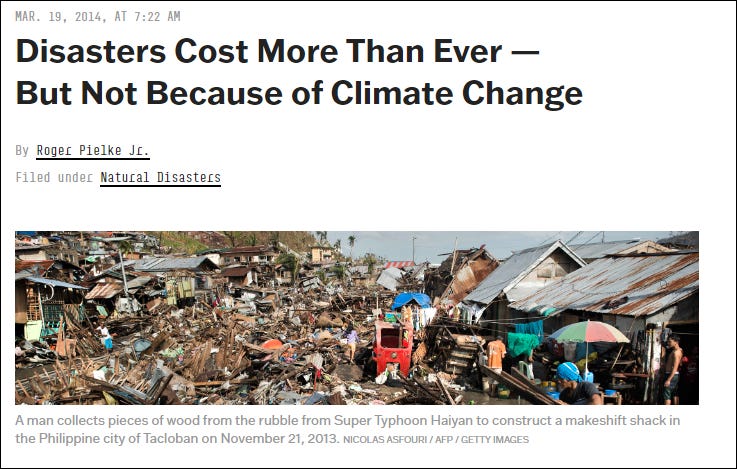
In the 1980s, the average annual cost of natural disasters worldwide was $50 billion. In 2012, Superstorm Sandy met that mark in two days. As it tore through New York and New Jersey on its journey up the east coast, Sandy became the second-most expensive hurricane in American history, causing in a few hours what just a generation ago would have been a year’s worth of disaster damage.
Sandy’s huge price tag fit a trend: Natural disasters are costing more and more money. See the graph below, which shows the global tally of disaster expenses for the past 24 years. It’s courtesy of Munich Re, one of the world’s largest reinsurance companies, which maintains a widely used global loss data set. (All costs are adjusted for inflation.)
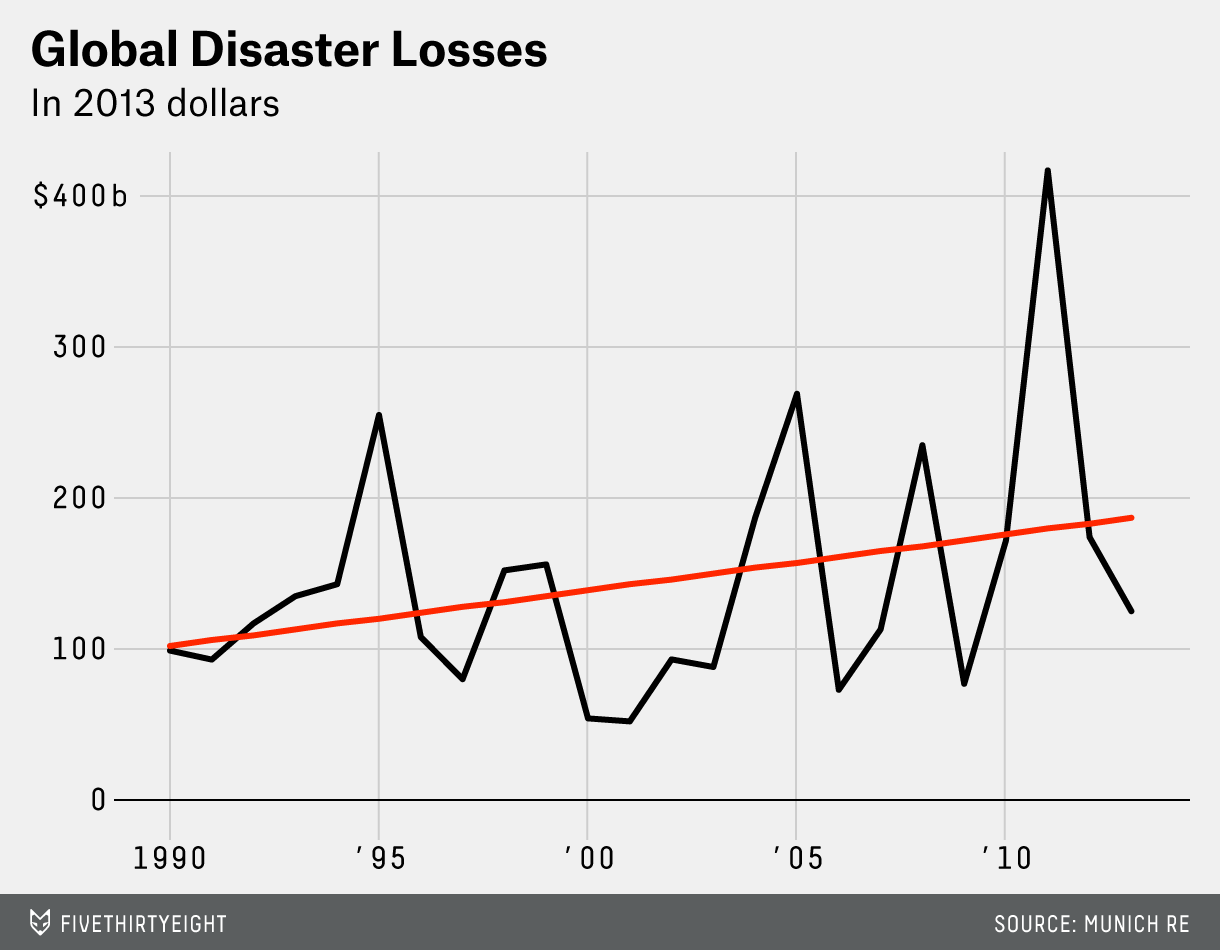
In the last two decades, natural disaster costs worldwide went from about $100 billion per year to almost twice that amount. That’s a huge problem, right? Indicative of more frequent disasters punishing communities worldwide? Perhaps the effects of climate change? Those are the questions that Congress, the World Bank and, of course, the media are asking. But all those questions have the same answer: no.
When you read that the cost of disasters is increasing, it’s tempting to think that it must be because more storms are happening. They’re not. All the apocalyptic “climate porn” in your Facebook feed is solely a function of perception. In reality, the numbers reflect more damage from catastrophes because the world is getting wealthier. We’re seeing ever-larger losses simply because we have more to lose — when an earthquake or flood occurs, more stuff gets damaged. And no matter what President Obama and British Prime Minister David Cameron say, recent costly disasters are not part of a trend driven by climate change. The data available so far strongly shows they’re just evidence of human vulnerability in the face of periodic extremes.
To identify changes in extreme weather, it’s best to look at the statistics of extreme weather. Fortunately, scientists have invested a lot of effort into looking at data on extreme weather events, and recently summarized their findings in a major United Nations climate report, the fifth in a series dating back to 1990. That report concluded that there’s little evidence of a spike in the frequency or intensity of floods, droughts, hurricanes and tornadoes. There have been more heat waves and intense precipitation, but these phenomena are not significant drivers of disaster costs. In fact, today’s climate models suggest that future changes in extremes that cause the most damage won’t be detectable in the statistics of weather (or damage) for many decades.
On Earth, extreme events don’t happen in a vacuum. Their costs are rising, sure, but so is overall wealth. When we take that graph above and measure disaster cost relative to global GDP, it changes quite a bit.6
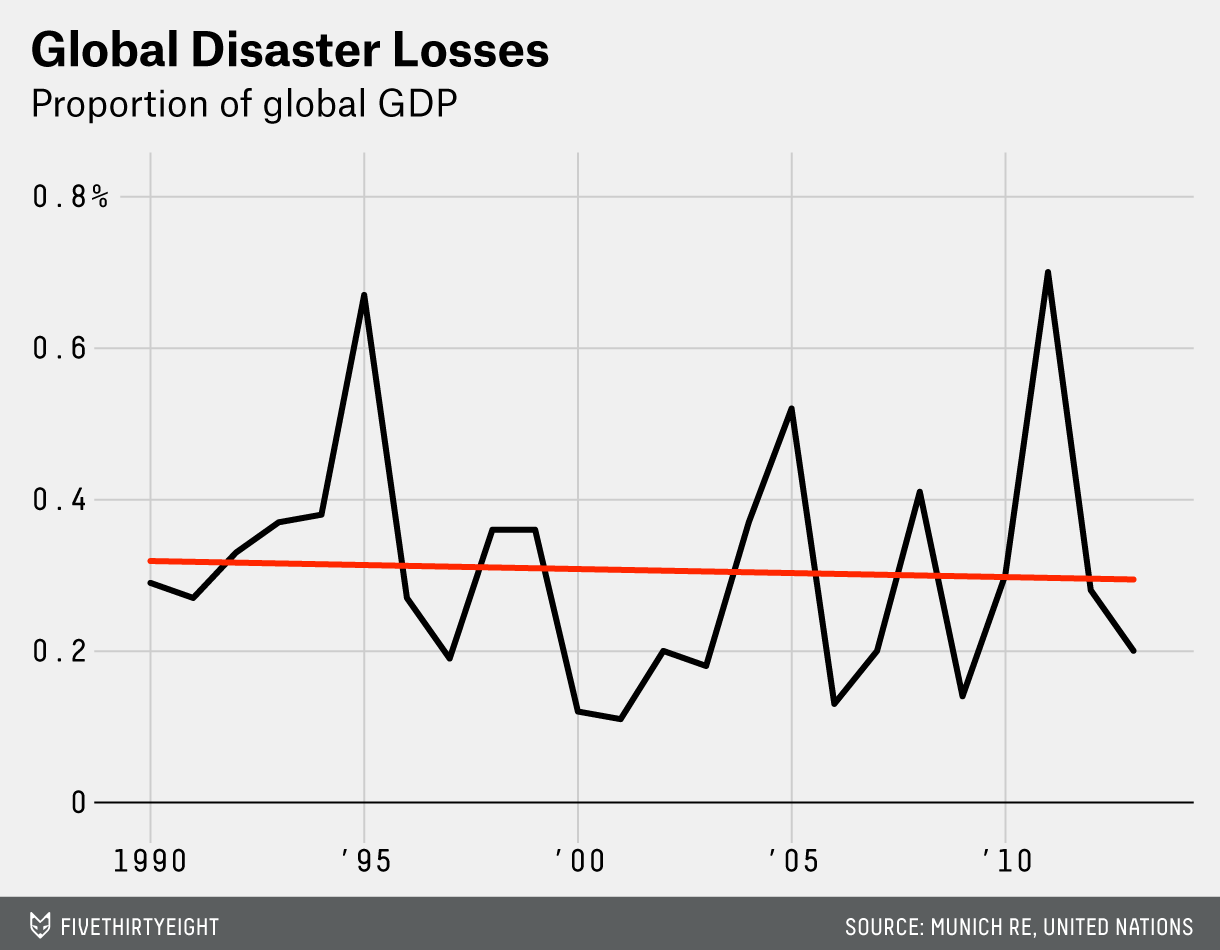
Occasionally, big disasters bring outsize costs — especially the Kobe earthquake in 1995, Hurricane Katrina in 2005 and the Honshu earthquake in 2011 — but the overall trend in disaster costs proportional to GDP since 1990 has stayed fairly level. Of course, wealthy countries hold all of the sway in worldwide cost estimates, which tips the scales when we’re looking for a “global” perspective on extreme events. U.S. hurricanes, for example, are responsible for 58 percent of the increase in the property losses in the Munich Re global dataset.
That’s just the property bill. There’s a human toll, too, and the data show an inverse relationship between lives lost and property damage: Modern disasters bring the greatest loss of life in places with the lowest property damage, and the most property damage where there’s the lowest loss of life. Consider that since 1940 in the United States 3,322 people have died in 118 hurricanes that made landfall. Last year in a poor region of the Philippines, a single storm, Typhoon Hayain, killed twice as many people.
We can start to estimate how countries may weather crises differently thanks to a 2005 analysis of historical data on global disasters. That study estimated that a nation with a $2,000 per capita average GDP — about that of Honduras — should expect more than five times the number of disaster deaths as a country like Russia, with a $14,000 per capita average GDP.2 (For comparison, the U.S. has a per capita GDP of about $52,000.)
In the 20th century, the human toll of disasters decreased dramatically, with a 92 percent reduction in deaths from the 1930s to the 2000s worldwide. Yet when the Boxing Day Tsunami struck Southeast Asia in 2004, more than 225,000 people died.
So the frequency of disasters still matters, and especially in countries that are ill-prepared for them. After 41 people died in two volcanic eruptions in Indonesia last month, a government official explained the high stakes: “We have 100 million people living in places that are prone to disasters, including volcanoes, earthquakes and floods. It’s a big challenge for the local and central governments.”
When you next hear someone tell you that worthy and useful efforts to mitigate climate change will lead to fewer natural disasters, remember these numbers and instead focus on what we can control. There is some good news to be found in the ever-mounting toll of disaster losses. As countries become richer, they are better able to deal with disasters — meaning more people are protected and fewer lose their lives. Increased property losses, it turns out, are a price worth paying.
Postscript March 2024
As THB readers well know, I have continued the research that was the subject of the column above. Below is an update to the figures in the column above, adjusted just for inflation and with 11 more years of data.
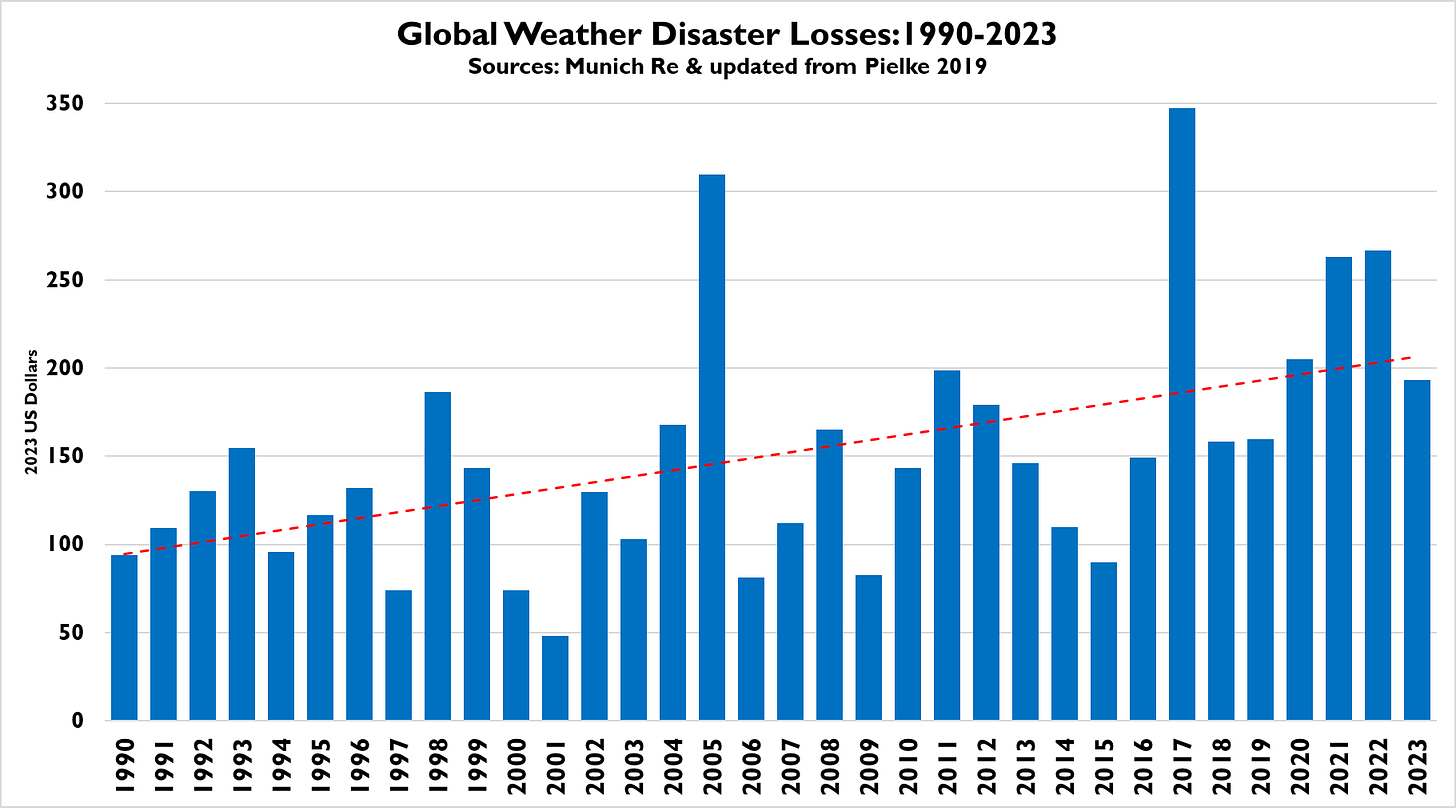
Inflation adjusted losses, 1990 to 2023.
Below is the second figure showing weather and climate disaster losses as a proportion of global GDP.

Global weather and climate losses as a percent of global GDP, 1990 to 2023.
I’ve published this analysis in the peer-reviewed literature as well:
Pielke, R. (2019). Tracking progress on the economic costs of disasters under the indicators of the sustainable development goals. Environmental Hazards, 18(1), 1-6.
Review of “Unmasking Anne Frank, Her Famous diary Exposed as a Literary Fraud” by Ikuo Suzuki

By Karl Haemers | Occidental Observer | August 27, 2022
I am going to assume that most readers of The Occidental Observer are familiar with the official story of Anne Frank, the young Jewish girl (aged 13–15) who kept a diary while hiding in a house from Jew-hunting “Nazis” in the Netherlands during World War II. In searching the TOO site for “Anne Frank,” I found no hits, but the Anne Frank story is almost as prevalent and persistent as the holocaust story itself, and surely TOO readers know the basics.
Publisher Clemens & Blair has just released a new book focused on the fraudulence of The Diary of Anne Frank. A number of other works examining the fraudulent Anne Frank diary have been published over the course of many years, most famously “Is the diary of Anne Frank Genuine?,” an article in English in 1982 by Robert Faurisson. But this new book surpasses the old ones in many ways.
Author of the current work, Ikuo Suzuki, a Japanese researcher, reviews a number of these earlier analyses of the diary in his new book, as does editor Thomas Dalton in his Foreword. As assistant editor, I do the same in my Introduction. (Disclaimer: I have a partial financial interest in this book.)
From there, Mr. Suzuki explores new analyses of the diary, including an illuminating graphic depiction of the many changes among the many various publications of the diary over the span of decades. So numerous and detailed are the diary’s entries over 26 months that logical inconsistencies and physical and logistical impossibilities inevitably occur; Suzuki identifies many new ones. He calls some of this “Anne magic,” and indeed only a magical explanation can reconcile some of the diary’s many internal flaws and self-contradictions.
Suzuki’s book is arranged into five main chapters, each having four to nine sections. As an example of inconsistency among various published versions of the diary, Chapter 1 is titled “Absurdity on the Surface,” and one section is titled “The Translation of ‘Cat’ Into ‘Tarantula’.” This Chapter displays pictures and drawings of the “Annex” in which Anne Frank supposedly hid out with seven other Jews, along with examinations of physical and architectural impossibilities.
Suzuki goes on to explore “Absurdities Lurking in the Depths” in Chapter 2, closing with the section “Was Everything a Figment?.” Here we see pictures of diary pages themselves, and careful comparisons among the bewildering number of different versions of the diary published at different times in different languages. Here we find Suzuki’s unique graphic display of the many changes among the versions. For example, Anne Frank is said to have edited her own diaries at a later point in her time in the “hideout.” Edited is not the proper term when we see that one early entry in her Diary as presented in the English publish version is actually a combination of two entries more than a month apart from the original diaries.
Chapter 3, “Annie Ample: A Soft-Core Porn Romantic Life?,” examines the core drama at the heart of the diary: the love (or lust) affair Anne supposedly had with a Jewish boy from another family also confined in the “hideout.” One of the great revelations that Suzuki presents is just how grotesque and sexually perverse the diary truly is, raising doubts on its own whether a young girl could even think such thoughts, much less write them down.
I’ll say here that, in my Postscript, I present the content of five missing pages of the diary that supposedly were found in 1998, and then two more “uncovered” in 2018. The five pages contain a scathing denunciation of Anne’s mother Edith and an oblique critique of her father Otto, but the two “uncovered” pages contain “perhaps the filthiest pornographic smut of the entire diary.” (I will spare readers the details here, though the book will not.)
Chapter 4 explores Anne’s writing career (or lack of it), the “infamous bookshelf door,” and the story of the beginning and end of the “hideout” (which is the chapter title). More pictures of documents and infrastructure assist the inquiry. This chapter engages in a staple of Diary doubters—handwriting analysis, and clarifies some former confusion. A letter Anne Frank supposedly sent in 1940—before the “hideout”—to a pen pal in the US was found, and when its handwriting is compared to the handwriting of the Diary, even an amateur analyst can see the two are different. It also debunks the absurd story—or stories—of how the diaries were finally found after the “hideout” inhabitants were hauled away by the Gestapo.
Chapter 5, “The Diary Unmasked,” explores the core issue of The Diary of Anne Frank, one that all revisionists have addressed: who really wrote the diary? Many speculate that Anne’s father Otto Frank was the actual author all along, but Suzuki excludes Otto as lacking the character, ability and motivation to forge the diary. He says: “there was at least one person in Otto’s vicinity who definitely possessed those qualities.” Suzuki’s in-depth profile and examination of this one person—Jewish playwright and journalist Meyer Levin—I found compelling. For instance, Levin’s relationship with Otto Frank included Frank appointing Levin his copyright agent in 1952. Levin’s history involved him working in the “Office of War Information” in the US, producing propaganda movies. Thus Levin had the presence and ability to invent the Diary as on-going war propaganda.
Mr. Suzuki closes with a touching Afterword he calls “Annelies Next to You,” in which the focus of our outrage is inverted from the evil “Nazis” to those who would fabricate lies in Anne’s name. This is a virtue of this book; Suzuki never blames Anne for the fraud, but rather points the finger at other Jews. “Not a single word in (the diary) contains her truth. It is merely a prison for Annelies’ soul, covered by a thick wall of falsehood in the name of a legend.” Our compassion should be for the real Annelies (her full name) Frank who has been so brutally used and misrepresented to promote a Jewish victim/”Nazi” perpetrator agenda.
The book closes with my Postscript, where, as stated, the five “missing” and two “uncovered” pages bring us up to date on diary developments. Unfortunately, Revisionists can also generate myths to their discredit, and one of these is the “ball-point pen” story. Hopefully I put to rest the claim that the diary is a fraud merely because it was written in ball-point pen, which was not invented until 1950. (Only two attached notes were written in pen, but nothing in the diary text itself.) The Postscript is framed as “Re-Rebutting the Anne Frank House,” which is the lavishly funded and well-organized foundation administering the “hideout” building itself as a museum, curating the diaries themselves (though not all are displayed), and issuing the on-going education about the iconic Jewish victim of “Nazi” tyranny, Anne Frank. I believe that just about the only point on which the Anne Frank House is correct regarding the diary is its position on the ball point pen issue. Everything else is tendentious and misleading propaganda, or outright deception.
In the words of main author Suzuki: “All other textual information, even the testimonies of friends and relations, is too biased and too fraudulent to be believed.” As he carefully demonstrates, there is so little truth to the diary itself that one can hardly accept any of it as valid.
This is one of those books that in parts of a couple sections presents such exhaustive detail as to make reading tedious, while at the same time my fascination with the revelations drew me onward. Suzuki could not completely resist the temptation to depart from a strict scholarly tone and lapse into humor—but neither could Dalton or I. I suppose this has to be accepted in such revisionist material, as we see all over certain “free speech” social media platforms. The lapses are rare and brief however, and the depth and scope of scholarship prevail. If I have any final critique of Unmasking Anne Frank, it is that it treated the perpetrators of the hoax too lightly, failing to express the appropriate loathing and contempt and even criminal accusations they deserve. Suzuki’s compassion is for Annelies, who was so cruelly used by these criminal fraudsters, but he expresses not enough outrage at those who exploited her posterity. We are all victims of the fraud as well.
Unmasking Anne Frank by Ikuo Suzuki, including the excellent Foreword by editor Thomas Dalton and Introduction and Postscript by myself, achieves the difficult task of summarizing and updating previous diary revision, while presenting new crucial insights. The end effect is to drive a dagger of certainty into the bleeding heart of Diary pathos. Suzuki’s detailed biographical analysis of the person he concludes actually wrote the diary—Meyer Levin—is the climax of a book filled with stunning insights. This book has much to consider for those new to Diary doubt, and much more to ponder for those already familiar with Anne Frank revisionism. Unmasking Anne Frank is, without doubt, the best such revisionist text ever produced; it is not only a great contribution to diary revision, it may be a culmination.
The Last Word on Overpopulation (2011)
Podcast: Play in new window | Download | Embed
Video player not working? Use these links to watch it somewhere else!
WATCH ON:  /
/  /
/  or AltCensored
The Corbett Report | February 15, 2011
Welcome. This is James Corbett of corbettreport.com with the last word on overpopulation.
As human beings, we are hard wired to be constantly on the lookout for potential dangers. This is to be expected. Thousands of years ago, our ancestors had to be ever-vigilant to the threat of natural predators, contagious disease and inclement weather, or suffer the consequences. Today we have largely overcome many of the natural dangers which plagued our forebears, but the same instincts compel us to guard against threats both real and imagined, and heed the call of those who raise the alarm of potential new threats.
This concept has been well understood for thousands of years by those who have sought to control populations.
Before the modern understanding of our solar system had been articulated, the ancient Egyptians believed that the sun itself was a god named Ra who was devoured every evening by an evil snake god named Apep. It was by no means assured that Ra would be able to escape Apep to return in the morning, and the priest class manipulated this basic fear by developing elaborate rites for warding off the snake god. These rites, of course, could only be properly administered by the priests themselves, thus assuring them a central role in ancient Egyptian society.
We may laugh at the gullibility of the ancient Egyptians, but for them the existence of Apep and the importance of the rituals were instilled from an early age and reinforced by the pronouncements of the priestly class. To question the reality of the sun god myth would have been akin to questioning the fabric of Egyptian society itself.
To think that we are not capable of being similarly manipulated in our modern “enlightened” era would be the grossest form of historical naïveté.
In the 20th century, fears over the red menace of the Soviet Union and its supposed military juggernaut were used to steer the course of American society. Jack Kennedy himself became president campaigning on the notion that the Eisenhower administration had allowed a dangerous missile gap to build up between the Soviets and the Americans. According to this scare story, fed to the Kennedy campaign by RAND Corporation analysts, the Soviet Union had 500 Intercontinental Ballistic Missiles ready to fire at America at a moment’s notice. In reality, the Soviets only had 4 such missiles at that time, but that did not stop the military-industrial propaganda machine from convincing Americans that they had to pump ever more of their resources into arms purchases from defense contractors in order to counter the Soviet threat.
Incredibly, in some cases the same threat has been touted for centuries, always coming with the same dire warnings that the end of the world is nigh unless the public is willing to give up money, sovereignty, or even their lives in order to avert it.
In the late 18th century an Anglican priest named Thomas Malthus demonstrated with “mathematical certainty” that the world was heading toward demographic disaster. After all, human population increases exponentially while food supply increases arithmetically. From this it logically follows that it is only a matter of time before the world population outstrips our ability to feed ourselves.

Thomas Malthus
Of course, just as a parent might look at his infant son’s first year of growth and extrapolate that he will be 20 feet tall by the time he’s 30, over 200 years of the expected population crisis failing to arrive has demonstrated that there are fundamental flaws in Malthus’ reasoning. The earth is not a zero-sum game and human ingenuity has always and in every generation manged to bake a bigger pie even as they take a bigger and bigger slice of it. Now even the United Nations’ most alarmist predictions admit that global population will level off and begin declining in 2050, and Malthus is now understood to have been a third-rate scholar spreading Chicken Little sky-is-falling fantasies for the benefit of the British East India Company that employed him.
Amazingly, though, despite every one of the doomsday predictions of Malthus and his Malthusian acolytes proving to be false decade after decade for two centuries on end, Malthus’ ideas are still being taken seriously and still being hyped and promoted by the moneyed oligarchs who benefit from the idea that there are too many useless eaters using up the world’s resources.
Malthus himself, an Anglican minister, wrote that: “We are bound in justice and honour formally to disdain the Right of the poor to support,” arguing for a law making it illegal for the Anglican church to give any food, clothing or support to any children. Not content with consigning thousands of children to death for the misfortune of being born poor, however, Malthus also advocated actively contributing to the deaths of more of the poor through social engineering:
“Instead of recommending cleanliness to the poor, we should encourage contrary habits. In our towns we should make the streets narrower, crowd more people into the houses, and court the return of the plague. In the country, we should build our villages near stagnant pools, and particularly encourage settlement in all marshy and unwholesome situations. But above all we should reprobate specific remedies for ravaging diseases; and restrain those benevolent, but much mistaken men, who have thought they are doing a service to mankind by protecting schemes for the total extirpation of particular disorders.”
The horrific nature of this idea is made all the more preposterous by the fact that Malthus was encouraging the spread of disease and plague in order to “save” humanity from the diseases and plagues that overpopulation fosters. But this self-contradiction is completely lost on those whose bloodlust drives them to support such drastic population reduction schemes to kill of the poor and downtrodden of society.
As repulsive as Malthus’ ideas are to our sensibilities, they have provided an ideological framework for those with a psychopathic urge to dominate others for the past two hundred years.
In his infamous 1968 book, The Population Bomb, Paul Ehrlich and his wife Anne wrote: “A cancer is an uncontrolled multiplication of cells; the population explosion is an uncontrolled multiplication of people. [. . .] We must shift our efforts from the treatment of the symptoms to the cutting out of the cancer. The operation will demand many apparently brutal and heartless decisions.” He felt the cancer of newborn babies was so potentially devastating to humanity that in 1969 he actually advocated adding sterilants to the food and water supply. Lest there were any doubt about his remarks, he further elaborated on them in Ecoscience, a 1977 book that he co-authored with Obama’s current science czar, John Holdren, where they once again advocated adding sterilants to the water supply.
In 1972, ex-World Bank advisor and UN functionary Maurice Strong advocated government licensing for women’s right to have children.
In 1988, Prince Philip uttered his deplorable comment, “[i]n the event I am reborn, I would like to return as a deadly virus, in order to contribute something to solve overpopulation.”
In the 1990s, Ted Turner told Audubon magazine that a total world population of 250-300 million people—a 95 percent decline from present levels—would be ideal.
Of course, the overpopulation myth itself crumbles under the slightest scrutiny. No one, not even the UN, is projecting limitless growth of the human population. Even the most alarmist projections show the world population leveling off within 40 years. What’s more, the birth rate in every major industrialized nation in the world is now below the replacement level of 2.1, meaning that they are in fact dying nations of aging populations that require an ever-increasing influx of immigrants just to maintain their population level. In addition to the well-known phenomenon of industrialization reducing the sizes of families, there are now indications that chemicals called endocrine disruptors which are mysteriously ending up in our foods, plastics and drinking water are limiting our biological ability to reproduce, with sperm rates among Western men declining a staggering 50% in the last 50 years with 85% of the remaining sperm being abnormal.
But still, even if we were to take the hysteria over population size at face value, the “solutions” suggested by the Malthusians—forced sterilization programs, de-industrialization, and even genocide—represent the biggest fraud of all: the idea that merely reducing the size of a population will somehow reduce the inequalities and iniquities within that society.
NARRATOR: War, one of the leading causes of world hunger, destroys crops and disrupts relief efforts. Widespread poverty prevents many from buying the food that they need. And a lack of infrastructure means that there isn’t a reliable way to transport food to areas that need it.
This is why reducing the number of hungry people will not make the remaining people less hungry. Those who have access to the food will continue to have access to it, and those who don’t will still be hungry.
Reducing population will not magically cause food to be spread around equally. And blaming overpopulation for everything does nothing but distract us from the real problems that we actually have.
SOURCE: Food: There’s Lots Of It
But therein lies the secret. The people who fret over the overpopulation non-problem cannot be reasoned with because their concern for humanity is only a pretense. The way they approach the problem itself displays their bias. Most people see an increase in the number of people on the planet not as a scourge, but as an opportunity to increase our understanding of the human species and its capabilities. In the twisted vision of the overpopulation fearmongers, however, newborn babies are not a joy to behold, not a gift, not the living, breathing potential of the future of the human race, but a cancer that must be killed.
The Malthusians are not interested in increasing food production, lifting the poor out of poverty or developing technology to increase our ability to share in the abundant wealth of the world. Instead they wish for the forcible sterilization of the poor, the consignment of billions around the world to grinding poverty and the elimination of vast swathes of the population. They do not wish to reduce the pain and suffering in the world, but to increase it. In short, the overpopulation hysteria is a convenient lie for the Chicken Littles who stand to benefit from the panic they themselves cause.
For the rest of us, it comes down to a simple question: After 200 years of the sky failing to fall, isn’t it time to stop listening to Chicken Little?
For The Corbett Report in western Japan, I am James Corbett.
World War II Didn’t End The Great Depression
Stark Realities with Brian McGlinchey | April 4, 2024
A principal goal of Stark Realities is to “expose fundamental myths across the political spectrum” — and few myths are as universally embraced as the notion that US participation in World War II (1941-1945) lifted the American economy out of the Great Depression.
This myth is dangerous not only because it leads citizens and politicians to see a bright side of war that doesn’t really exist, but also because it helps foster a belief that government spending is essential to countering economic downturns. That belief, in turn, has helped propel us to a point where the national debt now exceeds $34.6 trillion, with interest payments alone on pace to reach $1 trillion a year in 2026, inviting financial catastrophe.
In part, the wartime-prosperity myth springs from the fact that, during conflict on the scale of World War II, broad, macroeconomic measures like gross national product (GNP) and the unemployment rate are completely untethered from the economy’s most important facet: the standard of living enjoyed — or endured— by everyday people.
Between 1940 and 1944, real GNP rose at an unprecedented 13% annual clip. Using GNP alone, one would think the war delivered a major improvement in the standard of living, with Americans enjoying a greater abundance of goods, accompanied by a rise in quality, selection and affordability.

The reality was the exact opposite: Americans endured rationing, shortages, declining product quality, and the outright unavailability of many new goods, such as cars, trucks and stoves. This was the inevitable result of factories and raw materials being redirected from the creation of things consumers want to building things like tanks and fighter planes that do nothing whatsoever to improve people’s lives (setting aside the separate issue of the war’s justness).
In many respects, America experienced an outright economic devolution. In the preceding century, industrialization and the division of labor led to enormous increases in productivity. During World War II, however, shortages motivated people who’d contentedly relied on farmers to start growing their own food and canning it. The scarcity of new clothing led homemakers to redirect time and energy to sewing their own garments and resewing them to stretch as much use out them as possible.
“Those remaining on the home front were forced to produce for themselves what they had previously been able to purchase,” wrote Steven Horwitz and Michael J. McPhillips. “The household again became a center of production rather than consumption alone.”
GNP wasn’t the only measure falsely signaling wartime prosperity; employment numbers from the era were likewise misleading. The US unemployment rate plummeted from 17% in 1939 to 1.2% in 1944. Note, however, that military service members are not considered part of the labor force — which means that the draft extracted 11.5 million men from the denominator in the unemployment rate calculation.
Another 6.3 million volunteered, though many signed up because they preferred to secure a role they favored rather than face the chance of being drafted as an infantryman.
While it’s true that draftees and volunteers were “employed” by the armed forces, all these millions of men — no matter how noble their overseas missions may have been — weren’t doing anything to create prosperity at home.
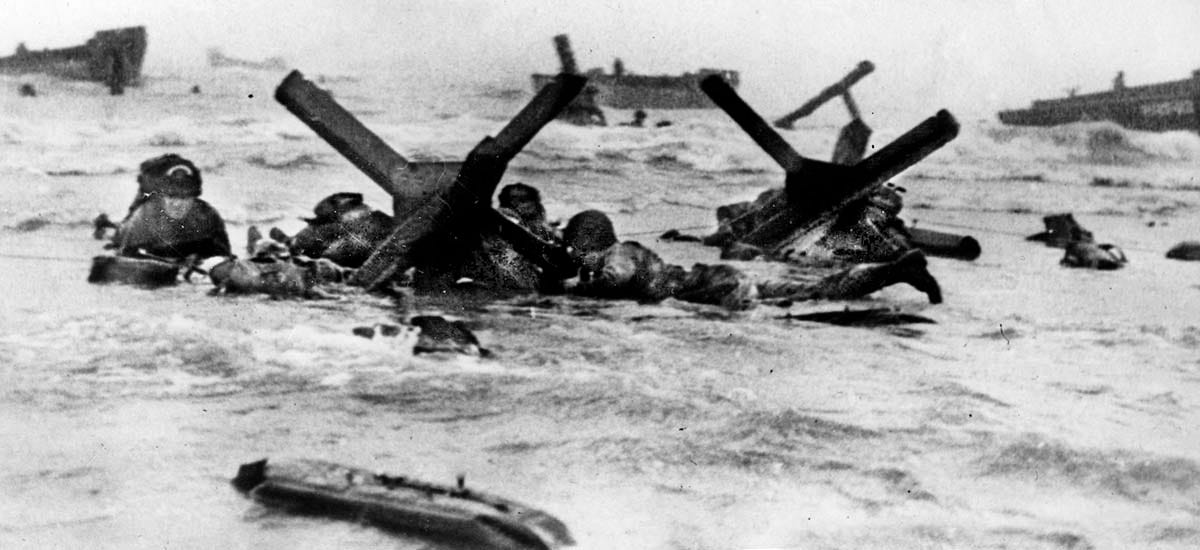
Not a prosperous path to full employment: Soldiers under withering fire on D-Day’s Omaha Beach
That’s not to say the war machine didn’t demand laborers. With so many able men taken out of the economy, the slack was taken up by teenagers, women and retirees, many who’d have preferred to be doing other things.
In a growing economy, more people are producing goods and services, and elevating standards of living in the process. That was far from the case during World War II. Factories were humming, but they were making bayonets, bombs and battleships. “Four-tenths of the total labor force was not being used to produce consumer goods or capital capable of yielding consumer goods in the future,” noted Robert Higgs.
Defying conventional wisdom about “wartime prosperity,” Americans’ standard of living suffered tremendously from their government’s entry into World War II. In The Reality of the Wartime Economy, Horwitz and McPhillips tapped some interesting source material to bring the grim economic realities of American life during World War II into sharp focus.
For example, a series of newspaper ads placed by Canton Electric Light & Power Company — a local New York State utility — present a vivid, time-lapse portrayal of rapidly declining conditions following the December 1941 declaration of war:
- Foreshadowing anticipated shortages, a March 17, 1942 ad for appliances is headlined “You Can Still Buy Them.” The ad includes a qualifier that’s upbeat while still signaling creeping scarcity: “We have a fairly good supply.”
- Just two months later, Canton Electric’s ad says “Now Is The Time” to buy various appliances and equipment, warning that “production of most of these items has stopped and only the supply in your dealers’ stock is available.”
- Another two months later, a July 1942 ad indicates that some items that were briefly not available are back in inventory.
- In November of that first year of America’s World War II participation, Canton Electric switched to warning consumers that, “due to the war emergency, it is quite impossible to get replacement motors for civilian use,” and urging them to ensure they’re properly maintaining their “stokers and oil burners.”
- Later that same month, Canton Electric punted on advancing its retail business altogether, instead using its ad space to encourage readers to grow their own food, eat everything on their plates and comply with ration-stamp rules.

Horwitz and McPhillips also drew on letters written between 1942 and 1945 by Saidee Leach to her son serving in the Pacific. Contrary to the image of prosperity supposedly indicated by leaping GNP or plummeting unemployment, she tells him of:
- Conserving scarce home-heating fuel during the coldest days by wearing fur coats indoors and residing only in their kitchen
- Having her typewriter seized by the government, and now using a lesser model she acquired from a Howard Johnson “which had to close due to the ban on pleasure driving.”
- Making an Easter dinner centered on fried Spam, because she “could not get fresh meat of any kind,” and later noting that “potatoes have entirely disappeared”
- Local farmers refusing to sell their turkey flocks for Thanksgiving meals at the prices set by the Office of Price Administration — illustrating the folly of government price controls.
That is not the picture of an economy delivered from the Great Depression. Rather, “World War II institutionalized the falling standards of living of the depression through wage and price controls, and extensive rationing of consumer goods and services,” wrote Peter Ferrara. “The economic deprivation, and reduced standards of living, continued, although people perceived it was now for a good cause.”
America’s postwar experience presents another pointed contradiction of the myth of wartime prosperity.
As the war’s end grew closer, Keynesian economists unanimously predicted peace would bring economic disaster. For example, Paul Samuelson said America would experience “the greatest period of unemployment and dislocation any economy has ever faced.”
Alvin Hansen warned that the economy must be kept on a centrally-controlled wartime footing, even in peacetime: “When the war is over, the government cannot just disband the Army, close down munitions factories, stop building ships, and remove all economic control.”

Nobel Prize winner Paul Samuelson, who predicted peace would bring economic disaster, taught Nobel Prize winner Paul Krugman, who predicted the internet’s impact would be akin to that of the fax machine
However, that’s pretty much what happened — and Hansen, Samuelson and their fellow economic flat-Earthers couldn’t have been more wrong about the consequences. “The year 1946, when civilian output increased by about 30 percent, was the most glorious single year in the entire history of the U.S. economy,” wrote Higgs.
This despite the fact that government purchases of goods and services collapsed by 68% between the second quarter of 1945 and the first quarter of 1946 — and upwards of a million civilian government employees were laid off and millions of service members discharged.
As war-fighting men poured back into civilian life, millions of women withdrew from the labor force, contentedly returning to duty as mothers and home managers. Rather than soaring as predicted by the “experts,” unemployment merely edged higher, from 1.9% in 1945 to 3.9% in 1947.
“Less than a year and a half after VJ-day,” crowed President Truman, “more than 10 million demobilized veterans and other millions of wartime workers have found employment in the swiftest and most gigantic change-over that any nation has ever made from war to peace.” (Note this happened despite — and in part because of — Truman’s failure to institute a higher minimum wage as the war ended.)
Having been proven enormously wrong about the economic implications of peace, Keynesians scrambled to credit the war with enabling the postwar boom, arguing that it was fueled by people drawing down savings accumulated while the supply of consumer goods was sharply restricted. However, as Higgs determined by studying the data of the time, “Holdings of liquid assets did not decline at all after the war. People financed their spending for consumer goods by reducing their saving rate.”

Once again an engine of real prosperity: In 1946, vehicles proceed along Ford’s first postwar assembly line
Contrary to the myth, it was only after World War II that — free from the government’s commandeering of factories, workers and resources, and saddled with fewer price controls and other federal market intrusions — America was finally able to emerge from the Great Depression.
You wouldn’t know that if you evaluated the economy’s health using Keynesians’ preferred measure. Just as the GNP gauge provided a 180-degree misreading of wartime economic realities, it failed in similarly spectacular fashion during the postwar boom: From 1945 to 1947, GNP plummeted 22%.
In addition to further illuminating the shortfalls of aggregate economic measures, America’s postwar economic experience delivered another broadside to the myth of World War II-fostered prosperity, and to the idea that government spending, central planning and market interventions are essential to economic achieving economic recovery.
Fauci’s Inquisition Against Safe and Effective Anti-COVID-19 Drugs

By Richard Gale and Dr. Gary Null | Global Research | April 6, 2024
A question needs to be asked. Were the novel experimental drug treatments for SARS-CoV-2 viral infections that Anthony Fauci, the CDC and FDA advocated for and funded responsible for worsening the contagion and countless deaths?
However, at that time there were plenty of studies confirming there were pre-existing safe, inexpensive medications known to have highly effective antiviral properties to treat Covid-19 patients. Among these were ivermectin and hydroxychloroquine (HCQ).
There were also specific nutrients such as vitamin D and zinc, known to strengthen the immune system against viral infection and yet there was no recommendation from the government about the benefits of proper nutrition. So why did Fauci along with other federal health officials choose to intentionally ignore the scientific evidence and rather condemn these repurposed drugs? In Fauci’s case, over a year and half into the pandemic, he continued to lie outright on CNN that “there is no clinical evidence whatsoever that [ivermectin] works.”[1] And could millions have been saved if these generic medications were prescribed rather than the feds doing nothing but recommending social isolation and quarantines as the world awaited an experimental Covid-19 vaccine to enter the market?
To date, between ivermectin and HCQ alone, there have been 670 published studies, analyses and papers involving over 9,800 scientists and over 682,000 patients supporting the use of these drugs over and beyond those the FDA has approved under Emergency Use Authorization (EUA) statutes. Despite this, four years later, the FDA continues to fiercely deny ivermectin’s and HCQ’s efficacy and safety under proper administration. Why this blatant cover-up?
Every CDC effort to approve a novel drug treatment for SARS-CoV-2 infections has been a dismal failure. Aside from monoclonal antibody therapy, only three anti-Covid-19 drugs have been approved under an EUA in the United States. None met their promised expectations from either the manufacturer or our federal health agencies. With their poor efficacy rates, safety profiles and a black box warning slapped upon Pfizer’s anti-Covid-19 drug Paxlovid, the CDC is scrambling to find new viable alternatives in the pharmaceutical pipeline. Bloomberg amplifies the fake Covid-19 treatment crisis by lamenting that repurposed drugs such as ivermectin are gaining global popularity as “the world needs effective Covid drugs.”[2]

Shortly after the pandemic was formally announced, the FDA recommended the cheap over the counter anti-malarial drug hydroxychloroquine but then quickly reversed its decision after Fauci publicly announced the future arrival of Gilead Sciences’ novel intravenous drug Remdesivir. The FDA’s and European Union’s approvals of Remdesivir baffled many scientists, according to the journal Science, who questioned its therapeutic value and kept a close watch on the drug’s clinical reports about a “disproportionally high number of reports of liver and kidney problems.”[3] Even an earlier Chinese study published in The Lancet found that remdesivir had no impact on the coronavirus. The Science article notes that the “FDA never consulted a group of outside experts that it has at the ready to weigh in on complicated antiviral drug issues.”[4] Six months before remdesivir received EUA approval, Anthony Fauci had already hailed the drug as a major breakthrough that would establish a new “standard of care” in Covid-19 treatment.[5]
Today, remdesivir is being increasingly recognized as a debacle in antiviral therapeutic care. Even the WHO released a “conditional recommendation against the use of remdesivir in hospitalized patients, regardless of disease severity, as there is currently no evidence that remdesivir improves survival and other outcomes in these patients.” An Italian study observed a 416 percent increase in hepatocellular injuries among hospitalized Covid-19 patients treated with Remdesivir.[6] And a smaller Taiwanese study of hospitalized unvaccinated patients reported a 185 percent higher mortality during late remdesivir treatment.[7]
Earlier this year, Pfizer’s novel oral Covid-19 medication Paxlovid was given an FDA black box warning for clinically significant adverse reactions that can potentially be fatal. Because the company does not permit independent random-controlled trials to investigate its drug, other than retrospective studies, we only have Pfizer’s own data to rely upon. Nevertheless, The Lancet published a study by a team of Chinese scientists at Shanghai Jiao Tong School of Medicine that managed to look at Paxlovid’s use among critically ill patients hospitalized with Covid-19. The study reported a 27 percent higher risk of the infection progressing, a 67 percent increased risk in requiring ventilation, and 10 percent longer stays in ICU facilities.[8]
Paxlovid is a combination of a novel SARS-CoV-2 protease inhibitor and the HIV protease inhibitor ritonavir. The FDA approved Paxlovid under a EUA with the claim it was safe. However, on the government’s HIV.gov website for ritonavir it is clearly stated that the drug “can cause serious life-threatening side effects. These include inflammation of the pancreas (pancreatitis), heart rhythm problems, severe skin rash and allergic reactions, liver problems and drug interactions.”[9] Perhaps due to the drug’s serious side effects, it is no longer used solely against HIV, but rather is given in smaller doses as a booster for AZT-related drugs. Being highly toxic, ritonavir is also not recommended for pregnant women and has been shown to interfere with hormone-based birth control efficacy.
Paxlovid only received FDA EUA approval in May 2023. At that time, the agency claimed there was no evidence that patients who were treated with the drug rebounded and came down with Covid. However, shortly thereafter this was determined to be untrue.[10] A Harvard analysis found that 21 percent of Paxlovid recipients will remain contagious and likely succumb to a viral rebound compared to only 1.8 percent who did not take the drug.
Merck’s anti-Covid-19 drug molnupiravir (Lagevrio) also has an FDA black box warning for potential fetal harm when administered to pregnant women. Why the drug was ever approved under an EUA seems to be an enigma. The drug’s antiviral activity is based upon a metabolite known as NHC, which for many years has been known to create havoc in an enzyme crucial for viral replication by inserting errors into the virus’ genetic code. The theory is: produce enough errors and the virus kills itself off. However, molnupiravir can cause hundreds of mutations thereby “supercharging” the manufacturing of new Covid-19 viral strains. Moreover, according to a Forbes article, the drug’s mutagenic powers may also interfere with our own body’s enzymes and DNA.[11] Another Forbes article points out that Merck’s clinical trial only enrolled around 1,500 participants, which is far too “small to pick up on rare mutagenic events.”[12]
Molnupiravir has a poor efficacy rate across the board including viral clearance, recovery, and hospitalizations/death (68 percent).[13] One trial, funded by Merck, concluded the drug had no clinical benefit.[14] More worrisome, the drug also has life-threatening adverse effects including mutagenic risks to human DNA and mitochondria, carcinogenic activity and embryonic death.[15]

Each of these drugs have been outrageous cash cows for their manufacturers. Remdesivir is priced at $3,120 per treatment and earned Gilead $5.6 billion in sales for 2021.
Pfizer’s Paxlovid is priced at $1,390 per treatment. Last year, the company’s revenues for its Covid products—Paxlovid and the Comirnaty vaccine—came in at $12.5 billion, and, according to Fierce Pharma, Pfizer wrote off an additional $4.7 billion on its overstocked Paxlovid inventory.[16] Merck’s molnupiravir’s sales for 2022 cashed in almost $5.7 billion. Despite their profits, none of these drugs have been shown convincingly to have measurably lessened the pandemic nor the spread of SARS-CoV-2.
Despite all the attention and medical hype about novel experimental antiviral drugs to treat Covid-19, Anthony Fauci and other federal officials had full knowledge that other FDA-approved drugs existed that could have been quickly repurposed at minimal expense to effectively treat Covid-19 infections. Repurposing existing drugs to treat illness is a common occurrence. The antiparasitic and antiviral drug Ivermectin best stands out. Its effectiveness was observed to be so remarkable and multifaceted that researchers started to investigate its potential.
The mainstream media, including many liberal news sources who pride themselves on their independence, continue to channel the voices of Anthony Fauci, the CDC and FDA to demonize ivermectin and other generic drugs for treating Covid-19 and to reduce hospitalization and deaths. This propaganda campaign, however, has completely ignored the large body of medical literature that shows ivermectin’s statistically significant efficacy against symptomatic and asymptomatic SARS-2 infections.
Originally developed for veterinarian use, in 1987, the FDA approved ivermectin for treating two parasitic diseases, river blindness and stronglyoidiasis, in humans. Since then an enormous body of medical research has grown showing ivermectin’s effectiveness for treating other diseases. Its broad range of antiviral properties has shown efficacy against many RNA viruses such avian influenza, zika, dengue, HIV, West Nile, yellow fever, chikungunya and earlier severe respiratory coronaviruses. It has also been shown to be effective against DNA viruses such as herpes, polyomavirus, and circovirus-2.[17]
Unsurprisingly, ivermectin’s inventors Drs. William Campbell and Satoshi Omura were awarded the 2015 Nobel Prize in Physiology and Medicine.
It has been prescribed to hundreds of millions of people worldwide. Given its decades’ long record of in vitro efficacy, it should have been self-evident for Fauci’s NIAID, the CDC and the WHO to rapidly conduct in vivo trials to usher ivermectin as a first line of defense for early stage Covid-19 infections and for use as a safe prophylaxis.
For example, if funding were devoted for the rapid development of a micro-based pulmonary delivery system, mortality rates would have been miniscule and the pandemic would have been lessened greatly.[18] Repurposing ivermectin could have been achieved very quickly at a minor expense.[19] However, despite all the medical evidence confirming ivermectin’s strong antiviral properties and its impeccable safety record when administered properly, we instead witnessed a sophisticated government-orchestrated campaign to declare war against ivermectin and another antiviral drug, hydroxychloroquine (HCQ), in favor of far more expensive and EUA approved experimental drugs. Unlike the US, other nations were eager to find older drugs to repurpose against Covid-19 and protect their populations. A Johns Hopkins University analysis offered the theory that a reason why many African countries had very few to near zero Covid-19 fatalities was because of widespread deployment of ivermectin. In February 2020, the National Health Commission of China, for example, was the first to include hydroxychloroquine in its guidelines for treating mild, moderate and severe SARS-2 cases. Eight Latin American nations distribute home Covid-19 treatment kits that include ivermectin.[20] Why did the US and most European countries swayed by the US and the WHO fail to follow suit?
Early in the pandemic, physicians in other nations where treatment was less restricted, such as Spain and Italy, shared data with American physicians about effective treatments against the SARS-2 virus. In addition, there was a large corpus of medical research indicating that older antiviral drugs could be repurposed. Doctors who started to prescribe drugs such as ivermectin and HCQ, along with Vitamin D and zinc supplementation, observed remarkable results. Unlike the dismal recovery and high mortality rates reported in hospitals and large clinics that relied upon strict isolation, quarantine, and ventilator interventions, this small fringe group of physicians reported very few deaths among their large patient loads. Even reported deaths were more often than not compounded by patients’ comorbidities, poor medical facilities and other anomalies.
Very early into the pandemic, medical papers indicated ivermectin was a highly effective drug to treat SARS-2 infections.
In April 2020, less than a month after the WHO declared Covid-19 as a global pandemic, Australian researchers at the Peter Doherty Institute of Infection and Immunity published a paper demonstrating that a single ivermectin dose can control SARS-CoV-2 viral replication within 24-48 hours.[21] Monash University’s Biomedicine Discovery Institute in Australia had also published an early study that ivermectin destroyed SARS-2 infected cell cultures by 99.8 percent within 48 hours. But no American federal health official paid any attention.
As of March 2024, a database for all studies and trials investigating ivermectin against Covid-19 infections records a total of 248 studies, 195 peer-reviewed, and 102 involving controlled groups reporting an average 61 percent improvement for early infections, a 39 percent success rate in treating late infections, and an 85 percent average success rate for use as a preventative prophylaxis.[22] Moreover, prescribing ivermectin reduced mortality by 49 percent, compared to remdesivir’s 4 percent, Pfizer’s Paxlovid’s 31 percent, and molnupiravir’s 22 percent. Even hydroxychloroquine well outperforms these drugs mortality risk for early treatment at 66 percent.
A noteworthy study conducted in Brazil and published in the Cureus Journal of Medical Science prescribed ivermectin in a citywide prophylaxis program in a town of 223,000 residents. 133,000 took ivermectin. The results for a population of this size are indisputable in concluding that ivermectin is a safe first line of defense to confront the pandemic. Covid mortality was reduced 90 percent. There was also a 67 percent lower risk of hospitalization and a 44 percent decrease in Covid cases. Garcia-Aquilar et al reports a Mexican in vitro analysis showing a definitive interaction between ivermectin and the SAR-CoV-2 spike protein, which would account for its high efficacy in Covid-19 cases.[23]
The All India Institute for Medical Science (AIIMS) and the Indian Council of Medical Research (ICMR), two of India’s most prestigious institutions, acted against the WHO and launched an ivermectin treatment campaign in several states. In Uttar Pradesh there was a 95 percent decrease in morality (a decline from 37,944 to 2,014). The Indian capital of New Delhi witnessed a 97 percent reduction. During the same time period, the state of Tamil Nadu, which followed the WHO’s ban on ivermectin, had a 173 percent increase in deaths (from 10,986 to 30,016 deaths).
There have been many concerted efforts to discredit ivermectin and other repurposed drugs’ effectiveness. Most notable is the large TOGETHER Trial Brazil study published in the New England Journal of Medicine (NEJM) that concluded both ivermectin and another repurposed drug fluvoxamine showed no beneficial signs for treating Covid-19 patients. The study was widely reported in the mainstream media. However, a Cato Institute analysis discovered the study in fact showed its benefits and the results were in agreement with 87 percent of other clinical trials investigating ivermectin. The Cato analysis identifies many odd anomalies in how the trial was conducted including an unspecified placebo—although it is suspected it was Vitamin C, which has itself been shown to be mildly effective against the SARS-CoV-2 virus, and protocol changes as the study was underway including inclusion/exclusion criteria. By his own admission the TOGETHER Trial’s principal investigator Dr. Ed Mills at McMaster University in Ontario “designs clinical trials, predominantly for the Bill and Melinda Gates Foundation.”[24] In a McMaster University press release, the Gates foundation is listed as a funder for the study to debunk ivermectin and fluvoxamine.[25] Oddly, Gates is nowhere listed among the several funders in the NEJM study’s disclosure. In addition, TOGETHER Trials is owned by the Canadian for profit startup Purpose Life Sciences, founded by Mills; legal documents showed Mills’ PLS is largely funded and controlled by Sam Bankman Fried’s FTX who invested $53 million into the project. Administrators of FTX’s bankruptcy are suing PLS for fraud.[26]
In short, the ivermectin/fluvoxamine TOGETHER Trial was a complete medical sham and intentionally designed for one single purpose: to fuel media disinformation in order to undermine ivermectin’s superior efficacy and safety profile to Big Pharma’s more profitable designer drugs.
In 2004, the US Congress passed an amendment to the Federal Food, Drug and Cosmetic Act known as Emergency Use Authorization (EUA). This piece of legislature legalized an anti-regulatory pathway to allow experimental medical interventions to be expedited and bypass standard FDA safety evaluations in the event of bioterrorist threats and national health emergencies such as pandemics. At the time, passage of the EUA amendment made sense because it was partially in response to the 2001 anthrax attacks and the US’s entry into an age of international terrorism. However, the amendment raises some serious considerations. Before the Covid-19 pandemic, EUAs had only been authorized on four occasions: the 2005 avian H5N1 and 2009 H1N1 swine flu threats, the 2014 Ebola and the 2016 Zikra viruses. Each of these pathogen scares proved to be false alarms that posed no threat of pandemic proportions to Americans. The fifth time EUAs were invoked was in 2020 during the Covid-19 pandemic, which at the time seemed far more plausible.
Before the government can authorize an EUA to deploy an experimental diagnostic product, drug or vaccine, certain requirements must be fulfilled. First, the Secretary of the Department of Health and Human Services (HHS) must have sufficient proof that the nation is being confronted with a serious life-threatening health emergency. Second, the drug(s) and/or vaccine(s) under consideration must have sufficient scientific evidence to suggest they will likely be effective against the medical threat. The evidence must at least include preclinical and observational data showing the product targets the organism, disease or condition. Third, although the drug or vaccine does not undergo a rigorous evaluation, it must at least show that its potential and known benefits outweigh its potential and known risks. In addition, the product must be manufactured in complete accordance with standard quality control and safety assurances.
When we look back at the government’s many debacles during the Covid-19 pandemic, other EUA requirements warrant the spotlight. On the one hand, an EUA cannot be authorized for any product or intervention if there is an FDA alternative approved product already available, unless the experimental product is clearly proven to have a significant advantage. Moreover, and perhaps more important, EUAs demand informed consent. Every individual who receives the drug or vaccine must be thoroughly informed about its experimental status and its potential risks and benefits. Recipients must also be properly informed about the alternatives to the experimental product and nobody should be forced to take it.
Finally, an EUA requires robust safety monitoring and reporting of adverse events, injuries and deaths potentially due to the drug or vaccine. This is the responsibility not only of the private pharmaceutical manufacturers but also the FDA, physicians, hospitals, clinics and other healthcare professionals.
Obviously important cautions must be considered after approving a medical intervention under the EUA requirements. Foremost are the inherent health risks of any rapid response of experimental medical interventions, especially novel drugs and vaccines. As we observed during the FDA approval process and roll out of Pfizer’s and Moderna’s mRNA Covid-19 jabs, no long-term human trials were conducted to even estimate a reliable baseline of their relative efficacy and safety. The American public has blindly placed its trust in our federal health authorities decision-making. It is expected that under a national health emergency, the authorities would be completely transparent and act only by the highest ethical standards. However our institutions betrayed public trust and either ignored or transgressed cautions underlying EUA approved medical interventions in every conceivable way. Moreover, conflicts of interests have been discovered to have plagued the entire EUA review process.
Although the EUA amendment provides some protections to authorized drug and vaccine manufacturers, it was the Public Readiness and Emergency Preparedness Act (PREP) in 2005 that expanded liability protections. In addition to protecting private corporations, PREP also shields company executives and employees from claims of personal injury or death resulting from the administration of authorized countermeasures. The only exceptions for liability are if the company or its executive offices are proven to have engaged in intentional and/or criminal misconduct with conscious disregard for the rights and safety of those taking their drugs and vaccines.
During the pandemic, the FDA issued widespread EUAs with liability immunity for the PCR diagnostic kits for SARS-2, the mRNA vaccines and the anti-Covid-19 drugs. Curiously, the Secretary of the Department of Health and Human Services invoked the PREP Act on February 4, 2020 giving liability protections; this was over a month before the pandemic was officially announced, which raises serious questions about prior-planning before the viral outbreak in Wuhan, China.
From the pandemic’s outset, Fauci embarked on the media circuit to promise Americans that federal health agencies were doing everything within their means to get a vaccine on the market because there was no available drug to clear the SARS-2 virus. As we have seen with respect to ivermectin alone, this was patently false. Rather the government placed an overriding emphasis on vaccination with a near total disregard for implementing very simple preventative measures to inhibit viral progression. Once mass vaccinations were underway, we were promised that the SARS-2 virus would be defeated and life would return to normal. In retrospect, we can look back and state with a degree of certainty that American health authorities and these products’ corporate manufacturers may have violated almost every EUA requirement. Everything that went wrong with the PCR kits, the experimental mRNA vaccines and novel drugs could have been avoided if the government had diligently repurposed effective and safe measures as pandemic countermeasures. Very likely, hundreds of thousands of lives, perhaps millions, would have been saved.
Similarly the FDA issued a warning statement against the use of ivermectin. Even ivermectin’s manufacturer Merck discredited its own product. Shortly after ridiculing its drug, the Alliance for Natural Health reported, “Merck announced positive results from a clinical trial on a new drug called molnupiravir in eliminating the virus in infected patients.”[27]
And still the FDA considers these novel patented drugs to be superior to ivermectin. Favoring a vaccine regime and government-controlled surveillance measures to track every American’s movements, American health officials blatantly neglected their own pandemic policies’ severe health consequences. Ineffective lockdowns, masks, social isolation, unsound critical care interventions such as relying upon ventilators, and the sole EUA approvals of the costly and insufficiently effective drugs brought about nightmares for tens of millions of adults and children. This was all undertaken under Fauci’s watch and the heads of the US health agencies in direct violation of the EUA requirements to only authorize drugs and medical interventions when no other safe and effective alternative is available. Alternatives were available.
The 4-year history of the pandemic highlights a sharp distinction between dependable medical research and pseudoscientific fraud. The CDC adopted a common Soviet era practice to redefine the very definition of a vaccine and the parameters of vaccine efficacy in order to fit economic and ideological agendas. This explains Washington’s aggressive public relations endeavors to silence medical opponents. According to cardiologist Dr. Michael Goodkin’s private investigations, several of the most cited studies discrediting ivermectin’s antiviral benefits were intentionally manipulated in order to produce “fake” results.[28] These studies were then widely distributed to the AMA, American College of Physicians and across mainstream media to author “hit pieces” to demonize ivermectin and other repurposed drugs. The government’s belligerent and reactive diatribes, brazenly or casually advocating for censorship, were direct violations of scientific and medical integrity and contributed nothing towards developing constructive policies for handling a pandemic with a minimal cost to life. The consequence has been a less informed and grossly naïve public, which was gaslighted into believing lies.
The FDA’s EUAs for the Covid-19 vaccines and novel experimental drugs were in fact an attack on the amendments and PREP directives. Neither the vaccines nor drugs warranted emergency authorization because effective and safe alternatives were readily available. No doubt a Congressional investigation would uncover criminal misconduct and conscious fraud. Moreover, these violations of the PREP Act may have the potential to lead directly into medical crimes against humanity as outlined in the Nuremberg Code.
Although the Nuremberg Code has not been officially adopted in its entirety as law by any nation or major medical association, other international treaties, such as the Universal Declaration of Human Rights, the World Medical Association Declaration of Helsinki (which is not legally binding), the International Covenant on Civil and Political Rights (ICCPR) and the International Ethical Guidelines for Biomedical Research on Human Subjects incorporate some of Nuremberg’s main principles that aim to protect people from unethical and forced medical research. Although the US signed the ICCPR as an intentional party, the US Senate never ratified it. The ICCPR’s Article 7 clearly states, “No one shall be subject to torture or cruel, inhuman or degrading treatment or punishment,” which can legally be interpreted to include forced medical experimentation implied as cruel, inhuman treatment. Other ICCPR articles, 6 and 17, are also applicable to medical experimentation to ensure ethical conduct, obtaining proper informed consent and the right to life and privacy. For a moment, consider the numerous senior citizens in nursing homes and hospitals who were simply administered experimental Covid-19 vaccines without full knowledge about what they were receiving. And now how many children are being coerced by the pseudoscience of health officials’ lies to be vaccinated without any knowledge of these mRNA products’ risk-benefit ratio?
The US is also a signatory to the Helsinki Declaration, which, although not directly aligned with Nuremberg, shares much in common. The Declaration shares some common features with the EUA amendment and PREP Act. These include voluntary informed consent—which is universally accepted, adequate risk and benefit information about medical interventions, and an emphasis on the principle of medical beneficence (promoting well-being and the Hippocratic rule of doing no harm). It also guarantees protections for vulnerable groups, especially pregnant women and children, which the US government and vaccine makers directly violated by conducting trials on these groups with full knowledge about these vaccines’ adverse events in adults. In addition, weighing the scientific evidence to assess the risk-benefit ratios between prescribing ivermectin and HCQ over the new generation of novel experimental drugs conclusively favors the former. This alone directly violates the ethical medical principles noted above.
However, the failure to repurpose life-saving drugs is less criminal than the questionable unethical motivations to usher a new generation of genetically engineered vaccines that have never before been adequately researched in human trials for long term safety. This mass experimentation, which continues to threaten the health and well-being of millions of people, is global and can legally be interpreted as a genocidal attack on humanity.
If the emerging data for increasing injuries and deaths due to the Covid-19 vaccines is reliable—and we believe it is—the handling of the pandemic can be regarded as the largest medical crime in human history. In time, and with shifting political allegiances and public demands to hold our leaders in government and private industry accountable, the architects of this medical war against civilization will be brought to justice.
*
Richard Gale is the Executive Producer of the Progressive Radio Network and a former Senior Research Analyst in the biotechnology and genomic industries.
Dr. Gary Null is host of the nation’s longest running public radio program on alternative and nutritional health and a multi-award-winning documentary film director, including his recent Last Call to Tomorrow.
Notes
[1] https://www.cnn.com/videos/health/2021/08/29/dr-anthony-fauci-ivermectin-covid-19-sotu-vpx.cnn
[4] https://www.thelancet.com/journals/lancet/article/PIIS0140-6736(20)31022-9/fulltext
[6] https://www.dldjournalonline.com/article/S1590-8658(21)00923-3/fulltext
[8] https://www.thelancet.com/action/showPdf?pii=S2666-6065%25252823%25252900012-3
[9] https://clinicalinfo.hiv.gov/en/drugs/ritonavir/patient
[10] https://www.yalemedicine.org/news/13-things-to-know-paxlovid-covid-19
[13] https://www.medrxiv.org/content/10.1101/2023.01.20.23284849v1.full.pdf
[14] https://evidence.nejm.org/doi/pdf/10.1056/EVIDoa2100044
[15] https://c19early.org/waters.html
[17] https://www.ncbi.nlm.nih.gov/pmc/articles/PMC7290143/
[18] https://www.ncbi.nlm.nih.gov/pmc/articles/PMC7539925/
[19] https://www.ncbi.nlm.nih.gov/pmc/articles/PMC7564151/
[21] https://www.ncbi.nlm.nih.gov/pmc/articles/PMC7129059/
[22] https://c19ivermectin.com
[23] https://www.mdpi.com/1422-0067/24/22/16392
[25] https://www.eurekalert.org/news-releases/855535
[26] https://c19ivm.org/tallaksen.html
[27] https://anh-usa.org/fda-ensures-pharma-profits-on-covid/
[28] https://www.trialsitenews.com/a/are-major-ivermectin-studies-designed-for-failure
How do Iranians ‘Boil a Frog’? Slowly and methodically.
Iran’s apparent restraint in the face of Israeli aggression should not be mistaken for weakness. Tehran steadily applies pressure on Tel Aviv through its own methods, setting the stage carefully for Israel’s unravelling.

By Shivan Mahendrarajah | The Cradle | April 3, 2024
A strategy in asymmetrical warfare is expressed by the “boiling frog” theory:
Legend has it that a frog placed in a shallow pot of water heating on a stove will remain happily in the pot of water as the temperature continues to climb, and will not jump out even as the water slowly reaches the boiling point and kills the frog. The change of one degree of temperature at a time is so gradual that the frog doesn’t realize he is being boiled until it is too late.
While the story is an apologue – a pretty fable meant to convey a meaningful lesson – it is one frequently invoked by militaries and geopoliticians to describe the “long game” of reaching strategic objectives.
Today, it is Iran and its regional allies who are using a measured approach to increase temperatures in West Asia until the water boils the US and Israeli ‘frogs’ to death. Strategy, discipline, and rare patience – the antithesis of western short-termism – will bring Iran victory. To quote the Taliban: “Americans have watches, but we have the time.”
Time is now on the side of Iran’s Islamic Revolutionary Guard Corps (IRGC) and its regional allies. Two connected examples show how the IRGC is calibrating temperatures like scientists in a laboratory.
The Yankee Frog
Following the launch of the Hamas-led resistance operation Al-Aqsa Flood on 7 October of last year, US President Joe Biden deployed US Navy assets to the Persian Gulf and Mediterranean Sea to “defend” Israel.
On 26 November, the USS Eisenhower and its escorts navigated through the Straits of Hormuz, anchoring in the Persian Gulf on the Saudi Arabian side. Yemen’s Ansarallah-aligned naval forces initially targeted Israeli ships and Eilat Port with their first shots on 19 October. But by 29 November, their attacks escalated to include vessels bound to or from Eilat, irrespective of flag or ownership.
This pattern culminated in the Pentagon’s announcement of “Operation Prosperity Guardian” on 18 December, aimed at safeguarding Israel’s economic interests at the expense of US military personnel. Subsequently, the Eisenhower and its naval escorts relocated from the Persian Gulf to the Red Sea and the Gulf of Aden, purportedly to “defend” the occupation state.
Instead, the positioning of US Navy assets in the Red Sea and Gulf of Aden has left them susceptible to potential attacks from Iranian or Iranian-supplied weaponry, including cruise missiles, ballistic missiles, and drones.
Despite efforts from the US Navy (USN) and the US Air Force (USAF), Ansarallah remains undefeated. Previous Anglo–American airstrikes in Yemen have proven ineffective, while the ongoing pace and expanding scope of Yemeni operations are straining naval resources and dampening morale.
Unlike ‘Hollywood guns,’ US Navy vessels do not have unlimited interceptor missiles, nor can they be reloaded at sea. As for the morale of American personnel, it will break in the long run, particularly since many, if not most, sailors and marines are simply not invested in a fight for Israel.
Last month, Captain Chris Hill, the commanding officer of the USS Eisenhower, said: “People need breaks, they need to go home.”
While sailors, marines, and airmen are getting antsy dodging Ansarallah’s drones and missiles on a daily basis, the ‘Yankee Frog’ is merrily paddling about his Washington hot tub, believing the ‘might’ of the USN will defeat the pesky ‘Houthis.’
This was arguably a well-calibrated move supported by Iran that accomplished two objectives: First, it got the carrier battle group out of the Persian Gulf, and second, it sucked the US into an escalatory trap. The Yankee Frog is in the Red Sea/Gulf of Aden hotpot. It cannot win.
It will either jump out and flee in humiliation, further destroying the credibility of the US armed forces following its humiliating 2021 debacle in Afghanistan; or it will remain in the hotpot and be boiled to death—with the loss of ships and lives.
With either outcome, Iran wins. Relatedly, an Iranian defeat of the US will be welcomed by China, Russia, and scores of US adversary states, particularly across the global south. As noted by one astute Twitter/X user, Armchair Warrior (describing Russia’s likely responses to Ukrainian provocations), by its actions, Iran has demonstrated “reflexive control” over Washington’s actions. By this, he means, “If every military action you take gets a symmetrical reaction, then you can control the nature, venue, and tempo of the conflict to your benefit.” This is precisely what the IRGC is cleverly doing.
The Israeli Frog
The wee ‘Israeli Frog,’ meanwhile, somnolent in the warm water, is dreaming of his ‘new Israel’ – the Israel that he will create once he has ethnically cleansed Gaza. He has plans to develop Gaza, build luxury condos along the beachfront, and build housing units for new settlers.
Architects are now drawing up plans. Former President and current Republican contender Donald Trump’s son-in-law, Jared Kushner, a Netanyahuist and Likud Party benefactor, is measuring drapes for his Gaza waterfront condominium.
However, the Israeli military has not defeated Hamas, which continues to inflict significant damage to Israeli military hardware and human assets. By one estimate, Hamas has only been degraded by 15–20 percent. The occupation army wholly depends on the US and its European vassal states for armaments since its domestic production capacities are limited.
According to one estimate, some 500,000 settlers have returned to their homelands; most will not return. Since 7 October, conscription is no longer a safe yet inconvenient three-year requirement: parents are afraid for their daughters and sons.
The dormant refusenik movement that emerged from the 1982 Israeli invasion of Lebanon has re-awakened. Draftees are refusing to serve and being jailed as a result. The conscription exemption for ultra-Orthodox Jews expired on 1 April; they are threatening to flee Israel, whose very survival is dependent on Jews moving there.
If representatives of ultra-Orthodox Jews quit Prime Minister Benjamin Netanyahu’s coalition, it could bring down his extremist government. Internal tensions within Israeli society are escalating, fueled by socio-economic pressures and disillusionment with the government’s handling of the war.
The Israeli economy is in shambles. The shekel is declining. Budget deficits and borrowing have skyrocketed. Moody’s downgraded Israel’s credit from A1 to A2 on 9 February. Israel’s tourism industry has collapsed into crisis. Most major airlines no longer fly to Israel. Israel’s manufacturing and agricultural bases are small. Israel has limited access to natural resources and energy; it depends on overland lifelines to Jordan and Egypt, with Azerbaijani oil and gas coming to Haifa from Turkey.
Iran is doing to Israel just what Israel did to it with economic sanctions. But unlike Israel, Iran has abundant supplies of oil and gas, 85 million literate and educated people who are not planning to flee, and formidable agricultural and manufacturing bases.
Tehran is methodically throttling Israel’s economy. Haifa port is on Hezbollah’s target list. If Haifa is shut down alongside Eilat, Israel will only have overland lifelines for food and energy supplies. Ben Gurion International and other airports may be targeted in the future.
Turning up the heat, one degree at a time
The recent Israeli attack on the Iranian diplomatic mission in Damascus, purportedly in response to an Iraqi drone striking Eilat, mirrors Netanyahu’s apprehensions and frustrations – that “the whole world is ganging up on us.”
Netanyahu’s strategy appears to be to goad Iran into escalating tensions, potentially prompting them to target American military assets in the region, thereby drawing the US into the Gaza War. However, it’s uncertain whether Tehran will take the bait.
While the IRGC is likely to respond, they will look to avoid falling into Netanyahu’s trap. Instead, Iran may opt to tighten its economic stranglehold on Israel, possibly by targeting strategic locations such as Eilat, Haifa, and Ben Gurion Airport.
The IRGC understands that Israel’s economy cannot sustain a prolonged conflict. Therefore, their strategy might involve a gradual escalation – effectively boiling the Israeli frog slowly – through coordinated actions involving Hezbollah, Ansarallah, and various Syrian and Iraqi-based factions.
As the economist Herbert Stein noted, “If something cannot go on forever, it will stop.” While Israel is far from being on the brink of collapse, the disciplined and calculated actions of the IRGC are steadily increasing regional tensions. If left unchecked, this could lead to significant repercussions for Israeli society and its economy – all without it realizing, like the wee boiling frog.
Featured Video

Bombing Hitler’s Hometown
or go to
Aletho News Archives – Video-Images
From the Archives
‘Conspiracy Theory’ Now Fact: Greater Israel Has Arrived
By Kit Klarenberg | Mint Press News | January 28, 2025
Ever since Tel Aviv’s 1948 creation, much has been said and written about ‘Greater Israel’ – the notion Zionism’s ultimate end goal is the forcible annexation and ethnic cleansing of vast swaths of Arab and Muslim lands for Jewish settlement, based on Biblical claims this territory was promised to Jews by God. The mainstream media typically dismisses this concept as antisemitic conspiracy theory, or at most the fringe fantasy of a minuscule handful of extremist Israelis.
In reality … continue
Blog Roll
 Aletho News
- Trump admits Iran hit USS Ford carrier: ‘We ran for our lives’
- Battle for Hungary: EU attacks on Orban are a sign of worse things to come
- Iraqi resistance conducts drone strike on US-run base in Syria
- Failing to Defeat Hezbollah, Israel & US Pressure Syria’s Ahmed al-Sharaa to Join War
- US-Israeli war on Iran drives global fertilizer prices up 40%
- Hezbollah’s Surprise Weapons Redefine Ground Battle with Israel
- Yemen joins fight against US, Israel by firing missiles at occupied territories
- Seizing the Kharg: Washington’s path to defeat in the Persian Gulf
- Iran reports 500 US casualties in strikes on covert US military sites
- Pro-Israel terrorist arrested before assassination of pro-Palestinian activist
- If Americans Knew
- Over 300 US service members wounded, majority have brain injuries – Not a ceasefire Day 169
- Researchers at Human Rights Watch Resign Over Blocked Report on Palestinian Refugee Return
- Jewish Groups Are Backing a War Americans Don’t Want
- Eric Fingerhut Thinks He’s the President of the Jews
- Top Jewish Philanthropists, Rabbis Urge Israeli President to Take Action Against ‘Jewish Extremists’
- Don’t Be Fooled. Zionist Leaders Have Always Wanted to Control Southern Lebanon
- Israel’s widespread use of torture is a core element of its genocide against the Palestinian people
- In Israel’s War on Iran, Many Middle East US Bases Rendered “All But Uninhabitable”
- ‘Burn the lawn’: Israel pursues ‘Rafah model’ in southern Lebanon
- A genocide here, an amputation there
- No Tricks Zone
- Devastating Assessment Of Comirnaty Vaccine By Former Senior Pfizer Europe Toxicologist
- New Study: CO2 Is ‘Effectively Negligible’ As An Explanatory Climate Change Factor Since 2000
- Former Pfizer Toxicologist Dr. Helmut Sterz Tells Bundestag Hearing Pfizer Vaccine Should Have Never Been Approved
- Energy Expert: Germany’s Nuclear Phaseout Was A “500 Billion Euro Mistake”
- New Research: South Australia’s Mid-Holocene Sea Surface Temperatures Were 4°C Warmer Than Today
- Storing Green Energy To Last Germany 10 Days Would Require A 60-Million Tonne Battery
- New Studies: UK Sea Levels Were 4 Meters Higher Than Today During The Mid-Holocene
- Destructive Green New Deal: German Energy And Metal Group Warns Of Drastic Crisis
- New Study Documents A 20-Year Pause In Arctic Sea Ice Decline – Driven By Internal Variability
- Wake-up Call: Survey Shows Majority Of Germans Now Favor Postponing Climate Targets!
 Aletho News