See also:
System Update | December 2023
By Tyler Durden | Zerohedge | May 22, 2024
Despite having been targeted by the most powerful, pro-Israel political organization operating in America, libertarian-minded Kentucky Congressman Thomas Massie stomped his two Republican primary challengers on Tuesday — and then used social media to mock his Israel-first detractors.
Massie cruised to victory, amassing 76% of the vote, while his two would-be vanquishers roughly split the difference, with Michael McGinnis edging Eric Deters by about 1%. With no Democratic opponent even bothering to take on Massie in November, he’s set up for a sixth term representing Kentucky’s 4th congressional district, which stretches all along the northernmost part of the state.
“Tonight’s victory is a referendum on thousands of independent votes I have cast in Washington DC on behalf of Kentucky’s 4th District,” said Massie.
“I’ve consistently upheld the Constitution by voting for and sponsoring legislation to support the right to keep and bear arms, the right to free speech, freedom of religion and the right to privacy. I’ve also fought against endless foreign wars, foreign aid and inflationary policies, regardless of who is in the White House.
Earlier this month, the independent campaign-spending arm of the American Israel Public Affairs Committee (AIPAC) announced that it was pouring $300,000 into advertisements on Fox television affiliates across the Bluegrass State. The over-the-top ads said, “Israel, the Holy Land [are] under attack by Iran, Hamas, Hezbollah… and Congressman Tom Massie.”
Massie has repeatedly stood out as one of the very few Republicans willing to defy the wishes of the potent pro-Israel lobby. In recent months, he voted against the Antisemitism Awareness Act, which would make universities tolerating unacceptable statements about Israel targets of federal civil rights-based punishments. He also voted against the latest, $14.3 billion aid package, noting that “Israel has a lower debt-to-GDP ratio than the United States.”
After Massie’s lopsided win was apparent, AIPAC tried to downplay the outcome, saying that, rather than trying to oust him in the primary, the group wanted to damage him statewide — clearly in anticipation of a possible Massie 2026 Senate run to take the seat of retiring Senate Majority Leader and quintessential establishment swamp creature Mitch McConnell.
Massie said AIPAC was guilty of “election campaign malpractice.” Referring to the $400,000 total that AIPAC had spent against him recently, he told McClatchy DC, “I’m laughing because it has the same effect as lighting it on fire and burning it… What it could do is up my name ID statewide, but two years from now nobody’s going to remember what the ad was about.”
He also deftly turned AIPAC’s announcement of its attack-blitz into a fundraising opportunity. As word of AIPAC’s campaign spread on social media and via ZeroHedge and other outlets, more than 1,200 people contributed $101,000 to his coffers in just four days.
On Tuesday evening, Massie seized on AIPAC’s defensive tweet, drawing attention to the fact that it had been “ratio’d” by the Twitterverse.
See also:
System Update | December 2023
Climate Realism by Paul Burgess | May 21, 2024
Is it worth even asking our idiot ministers any questions in Parliament?
Wretch this factual question and truly stupid answer.
The Highwire with Del Bigtree | May 16, 2024
Embroiled in coast to coast lawsuits from the alleged harms of their COVID vaccine, Astrazeneca is receiving massive public backlash after admitting their shot can cause blood clots in court proceedings. Jefferey Jaxen also reveals payments made by the pharma giant to doctors in the UK, including celebrity pediatrician, Dr. Ranj Singh who strongly advocated for the now pulled product.
The Highwire with Del Bigtree | May 16, 2024
This week, ICAN lead counsel, Aaron Siri, Esq. filed a historic lawsuit on behalf of Utah mother, Brianne Dressen, a patient who participated in the AstraZeneca COVID-19 vaccine clinical trial. The lawsuit states she was severely injured and is now suing the drug manufacturer in a lawsuit that is the first of its kind in the U.S.. Hear how the progressive neuropathy she developed from the drug trial has shattered her life, and the organization she launched to advocate for those like her.
Corbett | May 14, 2024
Podcast: Play in new window | Download | Embed
The International Criminal Court is supposedly mulling war crimes charges against Israeli Prime Minister Benjamin Netanyahu and other high-ranking Israeli political and military officials. But what reason could they possibly have for charging Netanyahu with war crimes? Uncover all the dirt on the unindicted war criminal presiding over Israel’s crimes against humanity in this important edition of The Corbett Report podcast.
WATCH ON:  /
/  /
/  /
/  /
/  /
/  or DOWNLOAD THE MP4
DOCUMENTATION
| Israel lashes out at possible ICC warrants as “outrage of historic proportions” | |
| Time Reference: | 00:23 |
| Bibi: My Story | |
| Time Reference: | 04:16 |
| The Resistible Rise of Benjamin Netanyahu | |
| Time Reference: | 04:36 |
| Can the ICC Actually Arrest Netanyahu? | |
| Time Reference: | 05:26 |
| Agnellis, Rothschilds close in on Economist | |
| Time Reference: | 09:05 |
| Could the International Criminal Court indict Binyamin Netanyahu? | |
| Time Reference: | 09:09 |
| US Working To Prevent ICC Arrest Warrant for Netanyahu | |
| Time Reference: | 10:24 |
| Victor’s Justice: The Truth About the International Criminal Court | |
| Time Reference: | 11:49 |
| Episode 261 – International Law? | |
| Time Reference: | 12:06 |
| Who Is Benjamin Netanyahu? | |
| Time Reference: | 13:34 |
| The Rise of Israel’s Benjamin Netanyahu | NowThis World | |
| Time Reference: | 13:44 |
| Netanyahu at War (full documentary) | FRONTLINE | |
| Time Reference: | 14:05 |
| From Soldier to Statesman : Biography of Benjamin Netanyahu | |
| Time Reference: | 14:22 |
| Bibi in the gas mask (CNN January 18, 1991) | |
| Time Reference: | 17:20 |
| Likud’s Late Grandfather | |
| Time Reference: | 19:39 |
| 1946 King David Hotel Bombing | |
| Time Reference: | 21:08 |
| PM Netanyahu’s Remarks at the Menachem Begin Heritage Center Event Marking Israel’s 70th Anniversary | |
| Time Reference: | 24:04 |
| Zionism’s Terrorist Heritage | |
| Time Reference: | 24:55 |
| Corbett Report Radio 214 – Israel’s Nuclear Smuggling with Grant F. Smith | |
| Time Reference: | 28:23 |
| Bibi’s bribery case | |
| Time Reference: | 32:00 |
| What is the latest on Netanyahu’s corruption trial? | |
| Time Reference: | 32:04 |
| Charter of the International Military Tribunal for the Far East | |
| Time Reference: | 34:26 |
| Israeli Perspective on Conflict with Iraq | |
| Time Reference: | 37:11 |
| False Flags: The Secret History of Al Qaeda | |
| Time Reference: | 40:17 |
| Sept. 11 Was Good For Israel – Benjamin Netanyahu | |
| Time Reference: | 43:04 |
| Israel PM Benjamin (Bibi) Netanyahu Address to United Nations Sept 27, 2012 | |
| Time Reference: | 44:50 |
| Watch Israeli Prime Minister Benjamin Netanyahu’s full speech to Congress | |
| Time Reference: | 45:17 |
| Israeli Prime Minister Benjamin Netanyahu gives statement on Iran Nuclear Deal | |
| Time Reference: | 46:03 |
| Israel – Prime Minister Addresses United Nations General Debate, 78th Session | |
| Time Reference: | 46:40 |
| Israel election 2019: Netanyahu vows to annex West Bank settlements | DW News | |
| Time Reference: | 47:58 |
| West Bank settler expansion: a year on the frontline | |
| Time Reference: | 48:28 |
| Inside Israeli Apartheid | |
| Time Reference: | 49:45 |
| ‘Absolute Apartheid’: Israeli general joins chorus of voices condemning persecution of Palestinians | |
| Time Reference: | 50:18 |
| ‘That sounds like ethnic cleansing’: CNN questions lead figure in Israel’s settler movement | |
| Time Reference: | 50:54 |
| Israeli Settlers Are Terrorizing Palestinians In Record Numbers | |
| Time Reference: | 51:42 |
| Palestine Remix – Israeli Brutality Caught on Tape | |
| Time Reference: | 52:37 |
| Statement by PM Netanyahu Regarding Operation Protective Edge | |
| Time Reference: | 54:59 |
| ‘Operation Protective Edge’ is underway in Israel | |
| Time Reference: | 55:36 |
| Gaza Conflict Takes Heavy Toll on Palestinian Children | |
| Time Reference: | 56:22 |
| Gaza conflict: Israel & Hamas face allegations of war crimes – BBC News | |
| Time Reference: | 56:49 |
| U.N. Human Rights Official Accuses Israel, Hama Of War Crimes | |
| Time Reference: | 57:22 |
| Gaza: Israel strike kills four boys on beach | Channel 4 News | |
| Time Reference: | 57:42 |
| Israhell and the Hannibal Directive – #NewWorldNextWeek | |
| Time Reference: | 58:52 |
| ‘Cold-blooded massacre’: Israeli forces kill over 104 aid seekers in Gaza | |
| Time Reference: | 59:53 |
| Israeli government under fire after airstrike kills aid workers | |
| Time Reference: | 1:00:10 |
| Israel likely violated international humanitarian law in Gaza war, U.S. report says | |
| Time Reference: | 01:00:34 |
| Children in Gaza dying from “malnutrition and disease, Blinken set to meet Arab leaders in Cairo | |
| Time Reference: | 01:01:03 |
By Maryanne Demasi, PhD and Magdalene L. D’Silva, BA/LLB, LLM, MA | May 15, 2024
On May 14, 2024, David McBride, a 60-year-old former military lawyer, was sentenced to five years and eight months in prison with a non-parole period of 27 months, for ultimately blowing the whistle on alleged war crimes committed by other Australian soldiers in 2013.
McBride initially tried to raise his concerns internally with the Australian Defence Force (ADF), but became unsatisfied with the process, so he set up a website and uploaded a trove of secret documents.

When ADF officials found the website containing classified material, they wrote to McBride reminding him of his duty not to disclose it, prompting him to take it down. No action was taken against McBride for his website leak and the Court noted in sentencing that those leaks gave rise to very little risk.
It was only after McBride leaked the material to ABC journalists who aired them in the ‘Afghan Files’ story alleging Australian soldiers did ‘kill people unnecessarily’ that McBride was arrested, interviewed and charged.
Federal police raided the ABC’s Sydney headquarters in 2019, searching for evidence of a leak, but decided against charging the journalists.
In 2023, McBride pleaded guilty to several charges, including stealing secret classified military documents and leaking them to journalists. However McBride couldn’t rely on those documents in his legal defence when the Australian government stopped them from being adduced as evidence on national security grounds.
McBride argued there was a “culture of cover-up” at the command level of the Australian Army. While most soldiers acted ethically, he said some were needlessly investigated and others were protected after allegedly, “put(ting) a gun to someone’s head and blow(ing) their head away” even if they were unarmed or handcuffed.
McBride says he felt a moral obligation to bring these issues to light, believing the Australian public deserved to know the truth about their country’s military actions.
The years-long legal battle which has now landed McBride in prison, has sparked acrimonious debates about the need for an independent Whistleblower Protection Authority in Australia, and the media’s vital role in making powerful institutions accountable.
Human rights whistleblower lawyers said McBride’s punishment sends a chilling message to potential whistleblowers. They contend the Australian government should protect those who expose wrongdoing, not punish them.
Critics argued, however, that McBride was entitled and self-interested. Prosecutors suggested McBride had abandoned the internal investigation he initiated without waiting for the result, violated his signed confidentiality acknowledgments as a military lawyer, and compromised the lives of soldiers and their families while potentially harming Australia’s national security and international relations.
The Brereton Inquiry, commenced by the ADF before McBride’s whistleblowing leaks, found credible information that Australian Special Forces had unlawfully killed people in Afghanistan.
It also appears no harm has been demonstrated because of McBride’s actions, though the ACT Supreme Court said in sentencing, that potential harm to Australia’s defence personnel, their families, Australia’s national security and international relations, still exists.
In sentencing McBride, ACT Supreme Court Justice David Mossop said that while he was a person of good character strongly devoted to duty, from his time in Afghanistan he was unable to accept that his opinions about the ADF may be incorrect.
Justice Mossop considered McBride knew he was committing a criminal offence when disclosing the information but hoped he would have a (public interest) defence. McBride had legal duties and constraints as a soldier and lawyer serving the Army, but no specific duty to disclose the secret information to outsiders when there were other legitimate ways he could have raised his concerns.

Justice Mossop also said McBride had no remorse and still believed he did the right thing, so he sentenced McBride to prison to deter him from disclosing anymore military information and to deter other people ‘with strong opinions’ who are also under a legal duty not to disclose information, from doing so.
McBride abandoned his defence of a higher duty to act in the public interest even if it involves disobeying orders, when the Court ruled this out. Yet he remained defiant, justifying his actions saying, “I served my country. I stand tall and I believe I did my duty and I see this as a beginning to a better Australia.”
In the lead up to his sentencing, he added “So long as people believe I stood up for what I believed in, I can go to jail with my head held high.”
Independent MP Andrew Wilkie was outraged by McBride’s prison sentence, saying that governments “hate people shining a light on official misconduct.”
He added, “They consistently want to punish the whistleblower, and they consistently want to send a signal to would be whistleblowers to shut up, to not break ranks, to not cause problems for governments.”
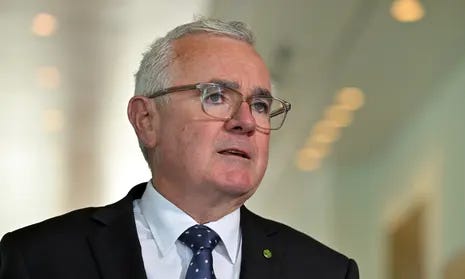
Daniela Gavshon, Australian Director of Human Rights Watch, said McBride’s sentencing shows that Australia’s whistleblowing laws need exemptions in the public interest.
“It is a stain on Australia’s reputation that some of its soldiers have been accused of war crimes in Afghanistan, and yet the first person convicted in relation to these crimes is a whistleblower not the abusers,” Gavshon said in a statement.
Many regard whistleblowing as morally courageous, especially when done in the public interest, as McBride claimed he did. But whistleblowing is a dangerous endeavour in Australia because of the significant legal and personal risks.
Compared to the US, where whistleblower protections are considered more robust, McBride’s case demonstrates the protracted and costly legal battles faced by whistleblowers in Australia, when up against institutions with unlimited resources.
It’s now feared McBride’s prosecution and sentencing will deter other whistleblowers from disclosing information because Australia’s laws arguably do not protect whistleblowers like McBride, who try internal reporting channels first but then find them inadequate.
While there must be a balance between national security concerns and the public’s right to know about the actions of their government and military, McBride’s case means other Australians thinking about whistleblowing, risk imprisonment too, especially where there is low trust in internal reporting channels and no alternative external reporting channel.
Australia’s Government has already announced plans to bolster public whistleblowing protections. But that won’t help McBride whose imprisonment highlights the urgent need for clear guidance and protection when disclosing information to prevent more serious harms, and the vital need for a free press if and when internal whistleblowing channels, fail.
Prior to being imprisoned, McBride recorded the following video:
This raises some serious questions

THE VIGILANT FOX | MAY 12, 2024
World-famous cardiologist Dr. Peter McCullough recently revealed startling figures about the immense earnings doctors received for pushing the COVID-19 injections.
On the Tommy T Podcast, Dr. McCullough claimed that a typical doctor could make an extra $250,000 if they injected a substantial portion of their patients.
More specifically, if a doctor injected 75% of his or her patients at $250 per newly-injected person, that would end up being around $250,000.
This revelation was discovered through a leaked Anthem Blue Cross Blue Shield document.

Dr. McCullough explained that a full-time primary care physician typically manages a patient panel ranging from about 1,000 to 2,000 people covered by Anthem Blue Cross Blue Shield.
When you do the math, factoring in the $250 incentive, 1,000 newly vaccinated people times $250 = $250,000. Some doctors made less; some made more. But the point is that doctors were financially incentivized to inject as many patients as possible.
The question is, was Anthem Blue Cross Blue Shield giving doctors jab incentives, or were they being paid to do so by the government?
Take a listen to what Dr. McCullough thinks.
Watch the full interview.
Tales of the American Empire | May 9, 2024
Most Americans know that political corruption is destroying the United States, which devotes massive resources to expand and rule its empire. The US Constitution was written to keep some power in the hands of the states, who appointed their US Senators, but the 17th Amendment, promoted by American business titans and ratified in 1913, removed this control with direct Senate elections to allow the centralization of power in Washington DC. Repealing the 17th Amendment is a simple idea that would have an immediate impact on the nation as states regain control of the federal government. US Senators would suddenly focus funding on helping people in their state and have little interest in military interventions overseas.
______________________________________________________
“Trump Tanks ‘Bipartisan’ $60 Billion Ukraine-Border Deal”; Glenn Greenwald describes our corrupt Senate; January 27, 2024;  • Trump Tanks “Bipartisan” $60 Billion …
Related Tale: “A Genocide Called World War I”; • The Genocide Called World War I
“Ben Sasse Calls for Repealing 17th Amendment, Eliminating Popular-Vote Senate Elections”; Brittany Bernstein; National Review; September 9, 2020
“NSA finally admits to spying on Americans by purchasing sensitive data”; Ashley Belanger; Arstechnica; January 26, 2024

or go to
Aletho News Archives – Video-Images
The Omission of Israeli Terrorism in the Occupied Palestinian Territories
By Karin Brothers | Global Research | December 6, 2014
… The Israeli settlements — all of which are illegal – have been identified as a major impediment to peace. The refusal of a major “global” terrorism report to name the Israeli settlers as one of the groups most responsible for terrorism not only misrepresents a major source of regional violence but exposes the Global Terrorism Index as a propaganda tool that supports a U.S. agenda.
In recent years, governments have been attempting to thwart terrorism by blocking supportive fund-raising. When it comes to Israeli settlements, however, the US and Canada actually encourage fund-raising by giving organizations (such as Christian Friends of Israeli Communities (CFOIC) and the Jewish National Fund) financial support in the form of donor tax-deductions.
Charities which provide funds for the Israeli settlements should be regarded as terror-financing organizations. They should not only lose their tax-deductible status, but they should be banned because they support the violation of international humanitarian law. The terror-financing laws that are being strictly enforced for Muslim charities should be applied to Christian and Jewish charities as well. … Read full article
 Aletho News If Americans Knew No Tricks Zone
 Aletho News