Dr. Abu-Sitta: Beirut ‘felt like a day in Shifa Hospital’
By Janna Kadri | Al Mayadeen | April 11, 2026
A wave of Israeli bombardments that killed hundreds of civilians across Lebanon within minutes was deliberately designed to overwhelm the country’s healthcare system and maximize deaths, Dr. Ghassan Abu-Sitta told Al Mayadeen.
“Basically, in a period of 10 minutes, over 1,400 people were wounded and 340 were killed,” he said. “The aim is to flood the system… to overwhelm it… and to ensure that as many of the wounded die.”
According to Abu-Sitta, the scale and speed of the strikes collapsed emergency response capacity from the outset, leaving ambulance services and hospitals unable to cope with the volume of casualties.
“At AUB, we received around 70 critical cases within 10 minutes,” he said. “The aim is for you not to be able to treat them… to force you into triage, deciding who you can save and who you cannot.”
Hospitals rapidly exhausted intensive care capacity, including pediatric units, while smaller facilities were forced to transfer patients under life-threatening delays.
“We ran out of intensive care beds. We ran out of pediatric intensive care capacity,” he said. “The smaller hospitals were overwhelmed… and the delays in transferring patients cost lives.”
Abu-Sitta described the scenes inside emergency departments as a “tsunami” of casualties.
“You are overwhelmed by a wave of wounded beyond your capacity to deal with.”
‘A day in Gaza’
Drawing on his experience treating victims under Israeli bombardment in Gaza, Abu-Sitta said the Beirut attacks replicated the same patterns of destruction.
“That day was the first day that felt like a day in Shifa Hospital,” he said. “Children came in with no names, no surviving families… nobody knew who anybody was.”
The scenes, he added, triggered immediate psychological recall. “You find yourself thinking, ‘Not this again.’”
‘The aim is to kill’
Abu-Sitta rejected claims that the strikes targeted military infrastructure, pointing instead to the systematic destruction of civilian areas.
“The aim is to kill,” he said. “The aim on Tuesday was to kill. The aim on Wednesday was to kill.”
He cited the bombing of residential buildings, including one in a middle-class neighborhood inhabited by elderly residents.
“The missile hit the base of the building to ensure total collapse… maximum damage,” he said. “They said they were targeting Hezbollah assets, but the residents were elderly couples.”
Humanitarian language ‘collusive’
Abu-Sitta also condemned the response of international health organizations, describing their language as detached from the reality of mass civilian killing.
“That language has proven how sterile humanitarian discourse is, and, in fact, how collusive it is,” he said.
“These children were not wounded in a ‘conflict.’ They were killed by Israel. Their families were killed by Israel.”
He argued that the strikes were intended not only to kill but to cripple the healthcare system itself.
“The aim… is to destroy the health system by flooding it, by drowning it in its own blood,” he said.
The failure to hold “Israel” accountable, he added, “violates the very principles these institutions stand for.”
Message of ‘exceptionality and impunity’
According to Abu-Sitta, the scale and timing of the attacks, particularly following a ceasefire, send a clear political message.
“Exceptionality and impunity,” he said. “Israel places itself above international law… above any ceasefire.”
He described the attacks as “performative, ritualistic slaughter” meant to demonstrate that such actions can be repeated without consequence.
“They effectively recreated a day in Gaza,” he said. “The message is: we can do this again.”
Iran condemns assassination threats against Iranian negotiators amid US talks
Press TV – April 11, 2026
Iranian Foreign Ministry spokesman Esmaeil Baghaei has called for public condemnation of the assassination threats leveled against Iranian negotiators amid ongoing talks with the United States that are aimed at permanently ending the US-Israeli aggression against the country.
In a post on his X account on Saturday, Baghaei said threats in the US government and media space for assassinating the Iranian negotiators, in case the current talks fail, are part of a discourse that seeks to normalize extortion through violence.
“Is this not, in effect, a policy discourse that normalizes extortion through the threat or public incitement of terror, violence, and manslaughter?” he said in the post.
The spokesman, who is himself accompanying the Iranian delegation in the Pakistani capital of Islamabad for the negotiations with the US, said the threats have come amid claims by the US government accusing Iran of lacking good faith and engaging in extortion amid the talks.
“This express public incitement for state terrorism must be denounced by all,” said Baghaei.
Experts believe the far-right political camp in the US is obviously dismayed by the outcome of the US-Israeli aggression on Iran, which began in late February and ended in a Pakistani-mediated two-week ceasefire last week.
The aggression started and continued with the assassination of senior Iranian political and military leaders, aimed at bringing about a regime change in Iran.
However, the US government finally accepted Iran’s conditions as a baseline for launching the current negotiations in Pakistan.
Iranian authorities have indicated that they would seek compensation for all assassinations committed by the US and the Israeli regime in Iran.
Iran’s report details US-Israeli war crimes in targeting schools, hospitals, livelihoods
Press TV – April 10, 2026
Iran’s Human Rights Headquarters has condemned the US-Israeli attacks that “deliberately” targeted civilian places directly affecting people’s daily lives and livelihoods as a “clear violation” of the most basic humanitarian and legal principles, stressing that they amount to “war crimes”.
In a statement on Friday, the office strongly condemned “the repeated and deliberate attacks by the Zionist regime and the United States against a wide range of civilian targets, including residential homes, hospitals, medical and relief centers, vital infrastructure, economic centers, bridges, schools, as well as vessels and barges used for people’s livelihoods”.
The statement referred to the attack on four fishing boats in the Lengeh port and other civilian vessels set ablaze, saying the attacks have directly violated “fundamental human rights, including the right to life, the right to work and the right to development.”
These acts of aggression “may amount to war crimes”, it said, referring to threats by US President Donald Trump and his war secretary Pete Hegseth to return Iran to the “Stone Age” and attack its vital infrastructure as “a clear evidence of the war crime intent of this aggressor regime.”
The statement noted that the fundamental principle of separation – the principle of distinction between military and civilian – in international humanitarian law obliges all parties to the conflict to avoid targeting civilian persons and property.
“Systematic attacks against ordinary people, the country’s vital arteries and development infrastructure are a gross violation of these principles and constitute a war crime.”
The statement also emphasized that the US and Israeli practice of “collective punishment” of the Iranians breaches the principle of prohibition of the threat and use of force in international law.
“This inhuman approach, which is devoid of the logic of law, morality and human conscience, reveals the true mentality” of those behind these “brutal” attacks, it added.
The statement urged the international community, human rights institutions and the United Nations to take immediate, decisive action against the US and the Israeli regime for committing these crimes and holding them accountable for these crimes.
It warned that any silence or indifference on the part of international institutions constitutes “approval and complicity” in these crimes.
Ukraine Sea Drone Fired From Libya Hit Russian Tanker in Mediterranean
By Kyle Anzalone | The Libertarian Institute | April 9, 2026
Last month, a Russian tanker, the Arctic Metagaz, was badly damaged by a sea drone attack off the coast of Malta.
On Tuesday, two Libyan officials speaking with the Associated Press said that the government based in Tripoli is hosting Ukrainian forces under a covert deal with the West.
Libya fractured after President Barack Obama authorized a war that led to the murder of Muammar Gaddafi. Following the conflict, the US backed a government in Tripoli, while Khalifa Haftar rules in eastern Libya. The damaged Arctic Metagaz is headed to a port in the eastern city of Benghazi.
Russian officials told state media that Kiev is looking to replicate the attack on the tanker in the Northern Sea by Ukrainian forces based in Norway. One official said that Norway’s assistance is dragging NATO into war with Russia.
Throughout the war, Ukraine has attempted to target and destroy assets that allow Russia to export energy. Kiev sees the strategy as key to depriving Russian President Vladimir Putin of the funding he needs to keep the conflict going.
However, the US and Israeli war on Iran has caused the shutdown of most energy exports from the Persian Gulf. In an effort to keep oil prices from spiking, Trump suspended oil sanctions on Iran, Russia, and Venezuela.
The Ukrainian attacks on Russian pipelines have also caused significant tensions with some members of NATO and the European Union. Hungary and Slovakia have threatened to halt gas shipments to Ukraine if Kiev does not halt attacks on Russian pipelines that bring oil into Eastern Europe.
Spain orders reopening of Tehran embassy, condemns Israel’s carpet bombing of Lebanon
The Cradle | April 9, 2026
Spain is reopening its embassy in Tehran in hopes of achieving “peace” in the US-Israeli war against Iran, Spanish Foreign Minister Jose Manuel Albares declared on 9 April.
“I’ve instructed our ambassador in Tehran to return, to take up his post again and reopen our embassy, and for us to join in this effort for peace from every possible quarter, including from the Iranian capital itself,” Albares told reporters.
The move comes as Spain sharply escalates its criticism of Israel and the US, condemning Israeli assault on Lebanon and the broader war on Iran, and pushes for regional de-escalation, according to Reuters.
Spain’s position, voiced by Albares, called the war “the greatest assault on the civilization built upon the humanist ideals of reason, peace, understanding, and universal law.”
He criticized Israel for violating international law and breaching the newly brokered two-week ceasefire after strikes killed more than 254 people and injured over 1,100 in Lebanon on Wednesday.
Spanish Prime Minister Pedro Sanchez has reinforced that stance, previously closing Spanish airspace to aircraft involved in attacks on Iran, and renewing calls for the EU to suspend its association agreement with Israel, citing “impunity for (Israel’s) criminal actions.”
He also described Israeli Prime Minister Benjamin Netanyahu’s “contempt for life and international law” as “intolerable.”
At the same time, Spain summoned Israeli envoys alongside Italy over incidents involving UN peacekeepers in Lebanon, including the reported detention of a Spanish UNIFIL member.
US officials and allies of US President Donald Trump have pushed for punitive measures after Madrid rejected military cooperation and restricted the use of joint bases, widening the diplomatic rift between the two countries.
One US senator suggested relocating forces to “a country that will allow us to use them.”
Domestically, public opinion mirrors the government’s stance, with a POLITICO European Pulse survey showing that 51 percent of respondents in Spain view Washington as a “threat” to Europe, and 56 percent strongly oppose the US-Israeli offensive on Iran.
Support for European independence is also overwhelming, with 94 percent backing greater autonomy even at economic cost.
Despite welcoming a Pakistani-brokered ceasefire, Sanchez warned Spain would “not applaud those who set the world on fire just because they turn up with a bucket.”
Israel’s priority lies in destroying chances of peace between Iran, US: Ex-UN nuclear chief
Press TV – April 8, 2026
Mohamed ElBaradei, former head of the United Nations nuclear watchdog, has strongly warned of the Israeli regime’s full intention to destroy chances of peace between the United States and Iran.
“The most important thing Israel will work on by all means is eliminating any chances for peace between Iran and America,” he wrote in a post on X on Wednesday.
The regime, he added, would try to torpedo any likelihood of rapprochement between the Persian Gulf’s littoral states and the Islamic Republic with similar zeal.
Such anti-peace efforts on the part of the regime would, meanwhile, “result in marginalizing it (Tel Aviv) in the region and spotlighting the policies of occupation, settlement, and ethnic cleansing it practices, as we see it doing now in Lebanon,” ElBaradei added.
The comments by the former head of the International Atomic Energy Agency (IAEA) came after the regime killed hundreds of people in Lebanon shortly after President Donald Trump announced agreeing to a two-week lull in the US’s attacks on Iran.
Trump said a 10-point proposal forwarded by the Islamic Republic serves as a “workable basis on which to negotiate and the main framework for these talks.”
The proposal underlines the need for cessation of aggression throughout the entire region, including in Lebanon, conditioning the Islamic Republic’s stopping its defensive strikes on a halt to aggressors’ regional atrocities.
ElBaradei said “a fundamental condition for peace in the region is for America to rein in Israel’s rampage.”
He, however, regretted that Washington had stopped utterly short of doing so in the face of the regime’s deadly attacks on the Gaza Strip and the occupied West Bank.
“And the result is clear to everyone: More killing and destruction!”
Europe’s quiet role in the war on Iran
By Leila Nezirevic | Al Mayadeen | April 8, 2026
European leaders have responded to the war on Iran with a familiar language: calls for restraint, appeals to diplomacy, and renewed commitments to international law. From Brussels to Berlin, the language has been measured, even cautious. Yet the gap between what Europe says and what it does has rarely been so stark.
While European governments publicly distance themselves from escalation, their infrastructure, alliances, and policies continue to sustain the very war effort they claim to oppose. Military bases, logistical networks, and intelligence frameworks tied to NATO remain fully operational.
Arms flows continue. Political backing, though often indirect, is unmistakable.
This contradiction is not simply a matter of hypocrisy. It reveals something deeper about Europe’s position in the global order, one defined less by autonomy than by structural dependence on the United States. The war on Iran is not creating this reality; it is exposing it.
NATO alignment
At the core of Europe’s constrained position lies its long-standing transatlantic alliance membership. NATO has, for decades, provided the framework for European security. But it has also shaped Europe’s foreign policy, narrowing the space for independent action.
For Vijay Prashad, historian and executive director of the Tricontinental: Institute for Social Research this relationship explains the apparent contradiction between Europe’s rhetoric and its behavior.
“Well, that contradiction is at the heart of the arrangement across the Atlantic, where European countries have, in a sense, surrendered their foreign policy to the United States through their attachment to NATO. In a sense, NATO shapes the foreign policy of Europe for the most part, and Europe doesn’t really have much independence to chart its own foreign policy direction.”
This is not merely a matter of political choice in any given moment. It reflects a deeper institutional reality. Europe’s security, intelligence, and military systems are deeply intertwined with those of the United States.
In moments of crisis, divergence becomes not only politically costly, but structurally difficult. “So regardless of the statements made from European capitals, when push comes to shove, the Europeans are right there alongside the United States, ” he told Al Mayadeen English.
From passivity to complicity
A central question raised by the war is whether Europe is a passive observer or an active participant. The answer, increasingly, points toward the latter.
“Europe is providing various forms of assistance—direct assistance—to the Israelis and the United States, including the use of the British base in Cyprus, which is basically a NATO base. So complicity goes to the heart of the NATO world.”
This involvement may not always take the form of direct military engagement, but it is nonetheless material. The use of European territory for operations, the maintenance of supply chains, and the continuation of arms transfers all contribute to the functioning of the war effort.
Prashad situates this within a longer historical trajectory:
“Europe has had a very ugly relationship with Iran over the course of the 20th century. It was European countries that conducted the coup in 1953 that brought in the Shah of Iran, whose very brutal reign lasted from 1953 to 1979. It was West Germany that provided chemical weapons to Iraq to use against the new Islamic Republic between 1980 and 1988. Other European countries also armed Saddam Hussein to conduct an ugly war against the Iranian people.”
This history is not incidental. It shapes how Europe is perceived in Tehran and across the region. More importantly, it underscores that Europe’s current role is part of a longer continuum of intervention, alignment, and strategic calculation.
Colonial standard
Europe has long cultivated an image of itself as a defender of international law. Its institutions and diplomatic traditions are frequently presented as pillars of a rules-based global order. The war on Iran, however, has exposed the fragility of this claim.
“If Europeans want to have a meaningful foreign policy, I would like to see it… Where is the condemnation from European capitals? Not one capital has clearly condemned this war of aggression. It is quite striking.”
The comparison with other conflicts is unavoidable.
“There was immediate outrage over the Russian entry into Ukraine, but the Israeli bombing, including the killing of civilians, including 180 schoolchildren on the very first day of the bombardment, none of that elicited complete condemnation on the grounds of international law.”
This inconsistency has consequences. It undermines Europe’s credibility not only in West Asia, but globally.
“Europe’s claim to being a defender of international law has been deeply undermined. One could say it was already severely damaged in the context of Gaza, and in this situation with Iran, that claim is further weakened.”
For Prashad, the issue is not a double standard, but something more systemic:
“In fact, I would say Europe doesn’t have a double standard, it has a single standard. And that standard is what I would call a colonial standard.”
Economic blowback and strategic self-harm
Even as Europe aligns politically with US strategy, it is increasingly bearing the economic costs of that alignment. The war on Iran threatens to further disrupt the Strait of Hormuz, a critical artery for global energy supplies. Any escalation risks driving up oil prices, intensifying inflation, and pushing already fragile European economies toward recession.
Yet, as Prashad notes, Europe’s vulnerability is not new: it is the result of a series of strategic decisions over the past two decades.
“Over at least the last 20 years, Europe has conducted what could be described as a kind of energy self-sabotage,” said Prashad, who is also an author of 40 books, including Washington Bullets.
He traces this trajectory through successive ruptures:
“By participating in US sanctions against Iran, Europe effectively removed one of its principal oil suppliers from its energy mix. Then, following the war in Libya, another major source of energy was destabilized. And later, through the deterioration of relations with Russia, Europe reduced its access to Russian oil and natural gas.”
The cumulative effect has been to push Europe toward more expensive and less stable energy sources.
“As a result, it has had to rely more heavily on liquefied natural gas and other imports, often at higher cost.”
These decisions were not taken in isolation. They were embedded in a broader geopolitical alignment, one that prioritized strategic cohesion with the United States over economic pragmatism.
The limits of independence
Europe’s predicament raises a broader question: to what extent can it act independently in a world defined by great power competition?
“Europe has the space to make its own decisions. But you don’t very often see Europe crossing the United States.”
There have been moments of divergence like Germany’s refusal to join the Iraq War in 2003, but these remain exceptions rather than the rule.
More often, alignment prevails. And this alignment is not only institutional, but ideological.
“There is an underlying cultural arrogance that runs, as I put it, like an undersea cable between the United States, Canada, and Europe.
“Despite the fact that there are different institutions… this underlying cultural alignment brings them together and effectively whips them into a common political position.”
Following a strategy it does not control
The risks of this dependence are becoming increasingly apparent. The war on Iran is unfolding along a trajectory largely shaped by the United States and Israel.
Europe, by contrast, finds itself reacting rather than shaping outcomes.
“Europe needs to reflect very seriously on the fact that the United States and Israel have basically reached very high levels on the escalation ladder, and yet it seems that Iran is not going to fold.”
If the conflict fails to achieve its objectives, or if Iran emerges politically strengthened, Europe may find itself strategically exposed.
“Iran has, in fact, secured a kind of political victory. So, what does that mean for Europe, which has followed the United States into sanctions policies that have also hurt European economies?”
Europe was once a major customer of Iranian oil and natural gas, and that relationship was cut off—not primarily by Europe’s own initiative, but through alignment with US policy.
Sovereignty in question
The effect of these dynamics is to cast doubt on the very idea of European sovereignty in foreign policy.
“If Europeans want to have a meaningful foreign policy, I would like to see it.”
Europe possesses the institutions, the economic weight, and the diplomatic capacity to act independently. But in practice, those capabilities are constrained by structural, political, and ideological factors.
The result is a form of sovereignty that exists more in theory than in practice, invoked in speeches but rarely exercised in moments of crisis.
War beyond the battlefield
The final outcome of the war on Iran will not be determined solely by military means.
“Outcomes in war are not only determined militarily, they are also political. It is possible for a country to have overwhelming military power and still not achieve its political objectives.”
For Europe, the implications are profound. By aligning itself with a war whose outcome it can neither control nor guarantee, it risks deepening both its dependence on the United States and its vulnerability.
In fact, the war on Iran is revealing Europe’s role in the world.
This is a continent that speaks the language of international law, yet applies it selectively.
A political bloc that calls for diplomacy, yet remains embedded in military escalation. An economic power that bears the costs of conflict, yet struggles to shape its course.
The contradiction is no longer subtle. It is structural. And in the war on Iran, it is fully exposed.
Leila Nezirevic is a London-based journalist and documentary filmmaker with extensive experience in reporting for major media outlets, with her work being published by leading networks worldwide.
Netanyahu unilaterally declares Lebanon outside of ceasefire deal
Al Mayadeen | April 8, 2026
Just a couple of hours after a ceasefire deal was reached, “Israel’s” Prime Minister Benjamin Netanyahu announced Wednesday that his government supports the US decision to suspend strikes on Iran for two weeks, but immediately breached the agreement by declaring it does not extend to Lebanon.
In a statement posted on the Israeli Prime Minister’s Office X account, Netanyahu said the Israeli regime backs Washington’s efforts to ensure Iran “no longer poses a nuclear, missile and terror threat,” and acknowledged that the United States had communicated its commitment to achieving these goals in upcoming negotiations.
However, buried at the end of the statement was a unilateral carve-out: “The two-week ceasefire does not include Lebanon.”
The Israeli regime has already violated the ceasefire before the ink had dried, targeting an ambulance in southern Lebanon alongside bombing several towns in the South.
Israel bombs ambulance, kills 4
All of the following attacks took place shortly after the ceasefire came into effect.
Israeli forces opened their post-ceasefire assault by targeting an ambulance in the town of al-Qleileh in the Tyre district, South Lebanon, killing four people, per Al Mayadeen’s correspondent.
In the Ras al-Ain area, our correspondent reported that an Israeli airstrike hit another vehicle, wounding a number of people. An Israeli drone also struck a motorcycle in Qana, causing injuries.
The IOF carried out airstrikes across al-Rayhan and Nabatieh al-Fawqa in the South, while Israeli artillery shelled a string of towns across the Bint Jbeil district, like Touline, Jmeijmeh, Baraachit, Majdal Selm, and Shaqra. Meanwhile, the town of Hadatha was attacked twice in the early hours of the morning.
In the Bekaa, an airstrike targeted the town of Yohmor.
Direct contradiction of Pakistani mediator
The declaration stands in direct contradiction to the announcement made by Pakistani Prime Minister Shehbaz Sharif, who brokered the agreement.
Sharif stated that “the Islamic Republic of Iran and the United States of America, along with their allies, have agreed to an immediate ceasefire everywhere, including Lebanon and elsewhere, EFFECTIVE IMMEDIATELY.”
Israeli media outlets, including Ynet and Maariv, had reported that the ceasefire encompassed Lebanon. Israeli Channel 12 further cited a security source confirming that the Iranians “insisted that the ceasefire also includes Lebanon.”
Iran’s demands throughout negotiations had explicitly included an end to aggression on all fronts, Lebanon among them.
Israeli public reacts with fury
The ceasefire announcement triggered a wave of frustration across Israeli media. Israeli broadcaster Channel 11 reported that settlers remained in shelters even as the truce was declared. Other outlets described the agreement as “the largest failure in Israel’s history since October 7.”
Maariv was particularly critical, writing that the United States and “Israel” had abandoned most of their war objectives, creating a new regional reality. The outlet said Iran had succeeded in dragging both into an agreement that amounted to surrender from both sides, and that after 41 days of fighting and 5,000 buildings destroyed, the outcome was a decisive Iranian victory, with Hezbollah expected to return stronger than before. Iran and its allies, Maariv concluded, appeared to be the only party emerging victorious from the confrontation.
Commentators questioned the logic of the deal, with one platform sarcastically asking, “Forty days and an entire nation staying home for a ceasefire?”
Trump was not spared either, with several outlets calling him “a global joke” and “a weak man unable to withstand pressure.”
Israeli tank fire killed UN peacekeeper in Lebanon, UNIFIL investigation finds
MEMO | April 7, 2026
A projectile that killed a UN peacekeeper in Lebanon last month was fired by an Israeli military tank, the UN Interim Force in Lebanon (UNIFIL) said Tuesday, concluding its investigation into the deadly incident, Anadolu reports.
Based on analysis of the impact site and fragments recovered at the position, UNIFIL said the round was a 120mm tank main armament projectile fired by an Israeli Merkava tank from the east, in the direction of Ett Taibe.
UNIFIL noted that it had provided the Israeli military with the coordinates of all its positions and facilities March 6 and again March 22, weeks before the incident, in an effort to reduce risk to its personnel.
The peacekeeper was killed on the night of March 29 when a projectile struck a UNIFIL position near Adchit Al Qusayr. A second peacekeeper was critically injured in the strike. At the time, UNIFIL said the origin of the projectile was unknown and launched an investigation.
In its initial statement, UNIFIL said deliberate attacks on peacekeepers constituted grave violations of international humanitarian law and UN Security Council Resolution 1701 that ended the 2006 Lebanon War, and could amount to war crimes.
The US-Israeli War on Science is an Assault on our Future
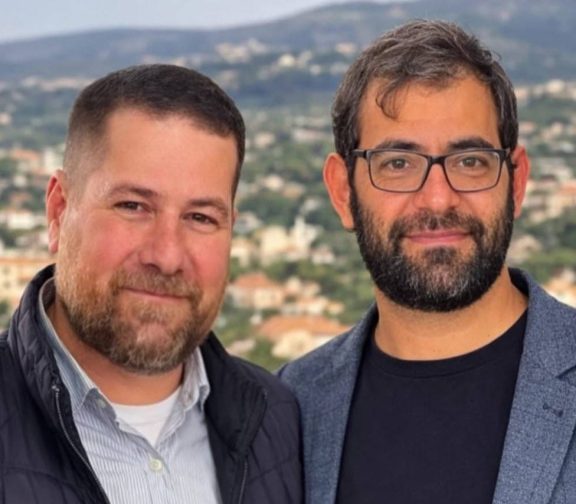
The late Dr. Mortada Sorour (left) and Dr. Hussein Bazzi (right), professors at Lebanese University who were killed by Israel.
International Union of Scientists | April 1, 2026
The International Union of Scientists condemns the American-Israeli killings of scientists and bombing of universities.
On 12 March 2026, the Israeli military killed Dr. Hussein Bazzi, chemistry professor and Dean of the Faculty of Sciences, and Dr. Mortada Srour, Professor of Chemistry and Physics, two scientists at the Lebanese University’s Rafik Hariri Campus in Hadath. This killing of scientists occurred in the context of Israeli bombings and invasion that have displaced around one million Lebanese and killed over 1100, a crisis that has been compared to the Nakba of 1948 and the ongoing Gaza Genocide. Israel has been destroying housing, including the apartments of surgery professor Haytham Kaafarani and chemistry professor Bilal Kaafarani.
On 23 March, US-Israeli forces killed Dr. Saeed Shamghadri, a distinguished professor of engineering at the Iran University of Science and Technology (IUST), along with his two children and others in his building. Since then, the US and Israel have bombed at least 20 of Iran’s universities, including the IUST in Tehran and the Isfahan University of Technology. This destruction is part of a larger pattern of US-Israeli scholasticide in Iran, including the massacre of more than 170 people, mostly schoolchildren, at an elementary school in Minab, and the targeting of more than 600 schools across Iran. The US military also tested a new weapon on a school in Lamerd, killing 21, mostly children.
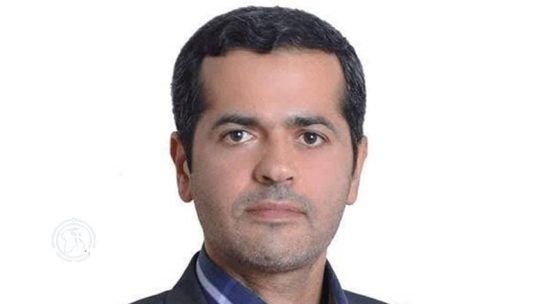
Dr. Saeed Shamghadri, professor of engineering, killed in a US-Israeli bombing
Israel and the US have likewise attacked healthcare. Israel has bombed more than 60 healthcare facilities in Lebanon, while the US-Israel coalition has attacked at least 50 hospitals in Iran.
We recognize this violence as a continuation of the scholasticide perpetrated in Gaza, where US-backed Israel destroyed all of Gaza’s universities as part of their genocide. Scientists, universities, schools, and hospitals represent the future that humanity aims to build. By killing scientists, the US and Israel aim to destroy the futures of the people of Lebanon and Iran. Since the start of the Gaza Genocide in 2023, Israel and its backers have dismantled international law and the rules of war established in the era since 1945. These latest attacks confirm that the US and Israel have a vision of lawless destruction and slaughter.
The International Union of Scientists therefore condemns in the strongest possible terms the killing of scientists and the destruction of educational infrastructure by US and Israeli forces. We call upon the international scientific community to document these crimes against scientists and students, extend material support to displaced scholars, and demand accountability for the aggressors.
Evidence points to Ukraine being behind TurkStream attempted sabotage, but that should come as no surprise
Remix News | April 7, 2026
Secret service documents allegedly prove that the Ukrainians planned to blow up the Turkish and Blue Stream pipelines years ago, permanently cutting Europe off from cheap Russian gas, reports Magyar Nemzet, citing a report out of Ellenpont.
However, Serbia’s intelligence chief is denying that Ukrainians were the perpetrators, instead claiming that they had reports of a possible attack planned by a certain migrant gang group of radical muslims but had not considered it legitimate intel. However, this same chief also does not rule out that Ukraine was the contractor behind the scheme.
The Serbian section of the Turkish Stream gas pipeline was set on fire in a sabotage operation on Sunday. Since this pipeline supplies Hungary with gas, blowing up the pipeline would have put the country’s gas supply at risk.
The portal also reported that, in response to the explosives found near the TurkStream pipeline in Serbia last weekend, a presenter on one of Zelensky’s propaganda TV stations stated: “If the Ukrainians want to blow up the Turkish Stream, they will blow it up.”
President Zelensky has been accused by Budapest of openly interfering in the Hungarian elections by creating an energy crisis to help opposition leader Péter Magyar. Kyiv wants to cut Hungary off from all Russian oil, and they are counting on Magyar’s Tisza Party to do this.
Since January, Kyiv has refused to reopen the Druzhba after a Russian attack, with Hungary and Slovakia claiming Zelensky is keeping the pipeline closed on purpose. Back in August last year, after a Ukrainian attack on part of the pipeline in Russia, the section was repaired quickly, and Hungary’s foreign minister made it clear that they expected no further attacks on such vital energy infrastructure.
In September 2022, when the Ukrainians destroyed Nord Stream, they were allegedly planning a double attack, writes Magyar Nemzet, with the other target being the TurkStream.
“This pipeline is essential for Hungary’s natural gas supply, as 56 percent, or more than half, of the natural gas in our system comes through the Turkish Stream pipeline,” wrote Hungarian Foreign Minister Szijjártó after the incident.
Calling the situation “extremely serious,” Hungarian Prime Minister Viktor Orbán said, “We are currently under a Ukrainian gas blockade, but we can make up for the loss from the south. If this umbilical cord is cut, the Hungarian economy will come to a standstill.”
IRGC commander declares ‘new phase’ of reprisal attacks against aggressors
Press TV – April 7, 2026
Commander of the IRGC Aerospace Force has declared the start of a “new phase” in Iran’s retaliatory operations against the US aggression, as the elite force warned earlier that any violation of red lines by the enemies will trigger a crushing response.
Posting a video on social platform UpScrolled, Brigadier General Seyyed Majid Mousavi said, “And now, the new phase of the war [has begun] with fresh, twin launchers for Fateh and Kheibar Shekan missiles, all previous strikes doubled.”
In a statement announcing the launch of the wave 99 of Operation True Promise 4, the IRGC reiterated that Iran “has not been and will never be the one to initiate attacks on civilian targets.”
However, it added that the IRGC “will not hesitate to retaliate against despicable aggressions on civilian facilities.”
In response to any further attack on Iran’s civilian infrastructure, the IRGC forces “will inflict such damage on the infrastructure of the US and its partners that they will be deprived of the region’s oil and gas for years to come.”
The IRGC said that Washington’s regional allies need to be aware of the fact that the IRGC has so far “shown great restraint and exercised caution in selecting its targets for retaliation, out of respect for good neighborly relations.”
But the Iranian Armed Forces, the statement added, will cast aside all such considerations and self-restraint from now on.
Since the US launched its illegal war against Iran on February 28, the country’s civilian infrastructure has repeatedly been targeted in flagrant violation of international law.
In response to the aggression, Iran’s Armed Forces have carried out daily missile and drone attacks on American assets and bases in the region.
Under growing pressure at home to end the war, US President Donald Trump has once again threatened that he would bomb Iran’s bridges and power plants if the Islamic Republic does not reopen the Strait of Hormuz.
Iran has imposed restrictions on passage through the strait, days after the start of the military aggression, saying ships related to the aggressors could not use the waterway.
Featured Video
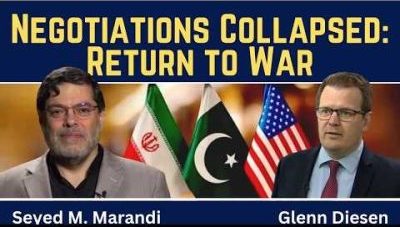
Seyed M. Marandi: Negotiations Collapsed – Return to War
or go to
Aletho News Archives – Video-Images
From the Archives
Wartime internment camps in Australia
National Archives of Australia
World War I
During World War I, for security reasons the Australian Government pursued a comprehensive internment policy against enemy aliens living in Australia.
Initially only those born in countries at war with Australia were classed as enemy aliens, but later this was expanded to include people of enemy nations who were naturalised British subjects, Australian-born descendants of migrants born in enemy nations and others who were thought to pose a threat to Australia’s security.
Australia interned almost 7,000 people during World War I, of whom about 4,500 were enemy aliens and British nationals of German ancestry already resident in Australia.
Records of World War I internment camps
World War II
During World War II, Australian authorities established internment camps for three reasons – to prevent residents from assisting Australia’s enemies, to appease public opinion and to house overseas internees sent to Australia for the duration of the war.
Unlike World War I, the initial aim of internment during the later conflict was to identify and intern those who posed a particular threat to the safety or defence of the country. As the war progressed, however, this policy changed and Japanese residents were interned en masse. In the later years of the war, Germans and Italians were also interned on the basis of nationality, particularly those living in the north of Australia. In all, just over 20 per cent of all Italians resident in Australia were interned. … continue
Blog Roll
 Aletho News
- Seyed M. Marandi: Negotiations Collapsed – Return to War
- Tomorrow’s naval blockade showdown
- ‘Israel’ attacks civilians to hide its embarrassing military failures & out of pure sadism
- Any Foreign Military Vessel Approaching Hormuz Under Any Pretext ‘Will Be Dealt With Severely’: IRGC
- Diplomats slam US negotiators’ performance in Iran talks
- Trump Refuses Exit Ramp, War with Iran will Continue
- Trump Says US Naval Blockade in Strait of Hormuz Will Begin Shortly
- US, Iran end 21-hour talks without agreement
- US IRAN TALKS: Who Are the Crazy Ones Here? /Lt Col Daniel Davis
- Talks with the US end without a deal over excessive US demands: Iran
- If Americans Knew
- US-Iran ceasefire negotiations make zero progress – Daily Update
- Pro-Israel ‘Thinktanks’ and Individuals who Influence U.S. Foreign Policy
- Mearsheimer reveals how Israel dictates US policies on Iran, Gaza – video
- After killing 350+, Israel still has a “score to settle” with Lebanon before ceasefire – Daily Update
- Military aid to Israel emerges as the latest political litmus test for Democrats
- The only Palestinian children’s rights organization closes following years-long Israeli campaign against it
- ‘I Can’t Forget the Smell’: Lebanese Reel After Israel Kills Over 300 in Single Day
- DNC Shoots Down Resolutions Calling Out AIPAC and Limiting Arms to Israel
- TCN: Is Israel Blackmailing President Trump?
- Israel killed at least 303 Lebanese yesterday – who were they? Daily Update
- No Tricks Zone
- Cave Discovery Reveals Today’s Desert Climates Were Recently Far Warmer, Wetter, Teeming With Life
- German Expert: Heat Dome Led To Record Temps In Western USA…Warmer In 1934, 1936
- New Study: No Linear Warming Or Glacier Retreat Along Northern Antarctic Peninsula Since 1980s
- An Inconvenient Tree: Uncovered In Alps… Europe Much Warmer Than Today 6000 Years Ago
- New Study Reports A 60% Slowdown In Greenland’s Ice Loss Rate In The Last Decade
- Low Intensity Tornado Wrecks Major Solar Farm, Creating A Potential Toxic Dump
- New Study Finds Warming Saves Lives…Cold Temperatures 12 Times More Deadly Than Excess Heat
- German Science Blog Accuses PIK Climate Institute Of Hallucinating Climate Tipping Points
- Devastating Assessment Of Comirnaty Vaccine By Former Senior Pfizer Europe Toxicologist
- New Study: CO2 Is ‘Effectively Negligible’ As An Explanatory Climate Change Factor Since 2000
 Aletho News