Bombing Hitler’s Hometown
Tales of the American Empire | March 26, 2026
By the end of April 1945, American and Soviet armies had met in central Germany. Berlin was surrounded as Soviet troops were fighting Germans in a small pocket downtown. German units in Italy surrendered while American Generals were praised for their long, senseless campaign to slog up the mountainous boot of Italy. The war was over in Italy, but American bombers in central Italy could reach Austria, although missions would be dangerous as they were long range over mountains. If a bomber suffered any damage or minor engine problem, it would be unable to return to base and its crew would be forced to bail out. Vienna had been captured and Soviet troops were closing in on the city of Linz. Bombing Linz would be a nice news story to highlight the brilliance of some American Generals in Italy.
__________________________________________
Related Tale: “American Aerial Massacres in Germany”;  • American Aerial Massacres in Germany
Related Tale: “Americans Bombed a Cathedral in 1943”; • Americans Bombed a Cathedral in 1943
Related Tale: “American Bombings of Allied Cities in World War II”; • American Bombings of Allied Cities in Worl…
Related Tale: “American Mass Bombings of Chinese Cities in World War II”; • American Mass Bombings of Chinese Cities i…
Related Tale: “American Bombings of Vietnam during World War II”; • American Bombings of Vietnam during World …
Related Tale: “Bombing Japan After the Atomic Bombings”; • Bombing Japan After the Atomic Bombings
Related Tale: “The Slaughter of the Yanks in 1918”; • The Slaughter of the Yanks in 1918
American Bomber Missions” Tales’ playlist: • American Bomber Missions
Organized terrorism: Iran condemns killing of its diplomats in Lebanon
Al Mayadeen | March 27, 2026
The Iranian Ministry of Foreign Affairs strongly condemned on Friday the killing of several Iranian diplomats in Lebanon, holding the Israeli occupation fully responsible for the “heinous crime” targeting their place of residence.
The Ministry stated that the incident forms part of an “aggressive policy” pursued by “Israel” against the Iranian people, adding that it constitutes a flagrant violation of international legal and humanitarian norms, particularly the principle of diplomatic immunity and the obligation to respect the sovereignty of states.
‘Organized terrorism’
In this context, the Foreign Ministry stressed that the killing of diplomats constitutes a clear example of “organized terrorism” and a direct breach of international law, affirming Iran’s determination to pursue all available legal and international channels to hold those responsible accountable.
The Ministry also extended condolences to the families of the martyrs and to the Iranian people, reaffirming its commitment to continue their path in safeguarding Iran’s security and national interests.
It identified the martyrs as: Sayyed Mohammad Reza Mousavi, Alireza Bi-Azar, Majid Hosseini Kandsar, Hossein Ahmadlou, Ahmad Rasouli, and Amir Moradi.
Iran urges UN to condemn US-Israeli assassination plots
Earlier today, Iran formally called on the United Nations Security Council to condemn active US-Israeli plans to assassinate senior Iranian officials, including Parliament Speaker Mohammad Bagher Ghalibaf and Foreign Minister Sayyed Abbas Araghchi. The US and “Israel” have been on an assassination spree that has now claimed the lives of Iran’s Leader and dozens of other officials since the start of the US-Israeli aggression on Iran on February 28.
In a letter addressed to UN Secretary-General Antonio Guterres and the President of the Security Council on Thursday, Iran’s Ambassador and Permanent Representative Amir Saeid Iravani warned that media reports had exposed an operational framework explicitly targeting Iran’s highest political figures. The alleged suspension of those plans, Iravani stressed, offered no reassurance, as its “conditional nature” confirms that “the threat remains real, deliberate, and ongoing.”
The ambassador condemned the practice as a product of “criminal mindsets” that have publicly dismissed the rules of engagement as “foolish”, the same forces, he wrote, that have bombed students, targeted hospitals, and destroyed cultural heritage sites in an open campaign of state terrorism.
The promotion of the term “kill lists”, the letter stated, is “another manifestation of the same terrorist acts” that initiated a criminal war and have so far led to the martyrdom of more than 3,000 civilians.
Iravani further invoked the protections afforded to officials at the level of foreign minister under customary international law, protections repeatedly affirmed by the International Court of Justice, warning that any attack on their lives “would undermine the foundations of peaceful international relations.”
A record built on killing
By documented count, the Israeli entity has conducted approximately 2,300 assassination operations since 1948, a record that dwarfs any other state in the Western world and one so institutionalized that the occupation entity was likely the first government to formally acknowledge a policy of assassination, which they dub “targeted killing”, as far back as 2000.
Since the onset of the genocide in Gaza, the killing machine accelerated dramatically, targeting dozens of senior officials in the Palestinian and Lebanese Resistance, and ultimately the Iranian Leader himself, martyred in a joint US-Israeli operation on February 28, 2026.
The campaign has never been confined by borders. Operations in Dubai, Tehran, Beirut, Damascus, and European capitals have established, as a matter of practice, that the occupation recognizes no other country’s territorial sovereignty.
Hamas official rejects Mladenov Plan linking disarmament to Gaza reconstruction
Palestinian Information Center – March 27, 2026
GAZA – Hamas political bureau member Bassem Naim has firmly rejected proposals by former UN envoy Nikolay Mladenov that link resistance weapons in Gaza to administrative and security arrangements, including the deployment of international forces and reconstruction efforts.
Naim said the plan reflects bias toward Israel and contradicts previous agreements and international resolutions, accusing Mladenov of attempting to reshape the framework in line with Israeli interests while ignoring ceasefire violations and the lack of guarantees for implementation.
He warned that tying humanitarian needs such as reconstruction and easing the blockade to disarmament is unacceptable, stressing that such proposals come at the expense of Palestinian rights.
According to Naim, ongoing Israeli violations since the ceasefire have killed more than 750 Palestinians and injured around 1,800, while reconstruction materials remain restricted and crossings largely closed.
A leaked document outlining the proposal suggests a step-by-step approach linking disarmament to humanitarian progress, alongside a transitional governance plan based on a single authority and a single weapon framework.
Naim argued the plan imposes significant obligations on Palestinian factions without ensuring reciprocal commitments, raising concerns over expanded international intervention in Gaza.
The remarks come as the Israeli attacks on Gaza continue to cause massive casualties, displacement, and widespread destruction across the territory.
Russia slams UK plan to seize tankers suspected of carrying its oil
RT | March 26, 2026
Russia has slammed the UK after it threatened to “interdict,” board and seize vessels in British waters it deems as being part of an alleged Russian ‘shadow fleet.’
Moscow has denied operating such a fleet and has condemned seizures of vessels on the high seas as “piracy,” stressing that it would take “all measures” to defend shipping.
In a statement on Wednesday, Downing Street said that London would coordinate with its allies in the ‘Joint Expeditionary Force’ (JEF) – a group of ten European NATO members – to “close off UK waters, including the [English] Channel, for sanctioned vessels.”
The goal is to force vessel operators to “either divert to longer, financially painful routes, or risk being detained by British forces,” the statement said.
In recent weeks, British military and law specialists have prepared scenarios for cases “including boarding vessels that don’t surrender, are armed, or use high tech pervasive surveillance to evade capture,” it said.
In each potential seizure, British law enforcement, military and energy market specialists will consider a ship before making a recommendation to ministers prior to execution, Downing Street said.
The Russian Embassy in London condemned the “deeply hostile step,” accusing the UK of planning to carry out “acts of piracy.”
“The stated objectives – combined with the timing of this announcement – leave no room for doubt that the recent escalation of Ukrainian attacks on Russian energy infrastructure also occurred with the involvement of the British side,” it said in a statement on Thursday.
Russia has long described London as a key force behind the Ukraine conflict, accusing it of directly participating in Ukrainian long-range strikes on Russian cities using UK-made weapons.
Kiev’s forces have increased attacks on Russian oil and gas infrastructure in recent months. Ukraine has also attacked ships it sees as linked to Russia in the Black Sea with naval drones.
On Thursday, Türkiye’s Foreign Ministry reported that a Turkish-operated tanker in the country’s economic zone was hit by naval drones. It did not assign blame at the time of writing.
Turkish tanker blacklisted by Ukraine hit in drone attack – media
RT | March 26, 2026
A Turkish oil tanker has reportedly been struck by drones near the Bosphorus after taking on around 140,000 tons of oil at a Russian port, local media reported on Thursday. The ship is blacklisted by the Ukrainian government for transporting Russian goods.
The vessel, identified as the Altura, is owned by Turkish shipping company Pergamon and operated by a crew of 27 Turkish nationals. According to reports, it was targeted by air and surface drones around 22 km from the strategic waterway. While no casualties were reported, the ship is said to have sustained damage to its bridge and upper deck, with flooding reported in the engine room.
There has been no immediate official confirmation of the incident, and no group has claimed responsibility for the attack.
Ukrainian military intelligence previously accused the Altura and its operator of belonging to a ‘shadow fleet’, which allegedly helps Russia bypass Western sanctions on oil exports. Last Sunday, it departed from Novorossiysk, a major Russian port on the Black Sea, en route to Istanbul, according to maritime tracking data.
Kiev has previously targeted vessels it claims are involved in ‘shadow fleet’ operations. Ukrainian forces have also struck ships used by third parties transporting oil originating from Kazakhstan but routed through Novorossiysk via pipeline infrastructure.
Western countries that support Ukraine against Russia have in the past detained vessels suspected of being part of the network, sometimes holding them for extended periods. On Wednesday, the UK – described by Moscow as a key force behind the conflict – announced plans to use military means to intercept tankers linked to Russian oil shipments, as opposed to backing raids conducted by other nations.
Russia has condemned Ukraine’s actions as piracy carried out with Western backing. Some Russian officials have argued that NATO members are preparing a de facto naval blockade, warning that Moscow may be compelled to respond militarily.
Almost 400 Ukrainian drones downed over Russia in single night – MOD
RT | March 25, 2026
A total of 389 Ukrainian drones have been shot down by air defenses over Russian territory overnight, the Defense Ministry in Moscow reported on Wednesday morning.
Incoming UAVs were intercepted and destroyed across 14 regions in the western part of the country, as well as Crimea.
Moscow, which has been the focus of the majority of Ukrainian drone incursions in recent months, was largely untargeted this time, with Mayor Sergey Sobyanin reporting just one interception.
However, an unusually large number of UAVs were shot down in Leningrad Region, surrounding Russia’s second largest city, St Petersburg. Governor Aleksandr Drozdenko said at least 56 drones were destroyed.
The raid resulted in a blaze in the port area of Ust-Luga, Drozdenko wrote on Telegram. The roof of a residential building was also damaged in the city of Vyborg, he added.
There were no injuries among civilians in the region, according to the governor.
St. Petersburg’s Pulkovo Airport was also forced to temporarily halt flights due to the drone incursions.
In Bryansk Region, which borders Ukraine, the number of intercepted UAVs reached 113, Governor Aleksandr Bogomaz said.
Ukrainian drone raids on Russia have intensified since mid-March, with Kiev deploying hundreds of fixed-wing UAVs on a daily basis, targeting critical infrastructure, manufacturing facilities, and residential areas.
Russian have officials described the aerial incursions as desperate “terrorist attacks” meant to compensate for the setbacks Kiev’s military has been suffering on the battlefield.
Moscow has retaliated with a long-range strike campaign of its own, targeting dual-use infrastructure, including power grid facilities and military sites in Ukraine with missiles and drones. Russia maintains that it never targets purely civilian sites.
Is Netanyahu’s war gamble threatening the future of ‘Israel’?: FT
Al Mayadeen | March 24, 2026
Israeli Prime Minister Benjamin Netanyahu’s push toward war on Iran has intensified regional tensions, with the aggression reportedly enjoying overwhelming public backing in “Israel”, as more than 80% of the Israeli public supported the decision to launch the attacks on Tehran.
Yet, Gideon Rachman argues in The Financial Times that the consequences of this escalation are far from the decisive outcome that was anticipated. Rather than delivering a quick resolution, the war has expanded in scope and complexity, raising new risks for both military personnel and settlers.
Rachman notes that developments such as disruptions to the Strait of Hormuz and missile strikes inside “Israel” highlight how the war is evolving in unpredictable ways, undermining expectations of a swift and controlled campaign.
‘Israel’ rapidly losing US popular support
A central pillar of “Israel’s” long-term security has been strong bipartisan support from the United States. However, recent actions, particularly the genocide in Gaza and the escalation with Iran, are eroding that foundation.
Rachman points to shifting US public opinion, noting that for the first time, more Americans express sympathy for Palestinians than for Israelis. This shift, he suggests, reflects growing concern over the humanitarian consequences of ongoing offensives and could influence future US policy.
Rachman also highlights the evolving political landscape in Washington. Within both major US parties, there is increasing debate over the scale and nature of support for “Israel”. He warns that future presidential candidates may adopt more restrictive positions, potentially reshaping the alliance.
For example, Trump’s MAGA base has been increasingly expressing anti-“Israel” sentiments, questioning the nature of bilateral relations between the United States and the Israeli regime. This phenomenon spilled into the government itself after the resignation of Joe Kent, the Trump administration’s head of counterterrorism, who said the US was pulled into the war on Iran because of “Israel”.
Military strategy vs diplomatic solutions
Netanyahu’s approach, as described by Rachman, places significant emphasis on military power as the primary means of ensuring security. However, the outcomes of recent military actions raise questions about the effectiveness of this strategy.
Despite claims of decisive victories, Hamas remains active in Gaza, and “Israel’s” aggression against Lebanon and the Resistance did not eliminate Hezbollah, leading to renewed confrontation. Similarly, attacks on Iran’s nuclear program have not produced lasting strategic gains.
Therefore, Rachman argues that diplomatic engagement remains the only viable long-term path to stability. He references views from analysts, Danny Citrinowicz, a former head of Iran research for “Israel’s” security intelligence agency, for instance, who suggests that Iran’s leadership has, at times, signalled willingness to negotiate, particularly regarding its nuclear program, opportunities that were not fully pursued.
The most pressing threat ‘Israel’ faces
According to Citrinowicz, as cited by Rachman, the most significant long-term threat facing “Israel” may not be Iran itself, but the gradual erosion of US political and military support.
This support has historically included substantial military aid, advanced defense systems, and diplomatic backing, elements that have been crucial to “Israel’s” security. However, Rachman warns that prolonged confrontation risks weakening this relationship.
If American support declines, “Israel” could face serious strategic consequences, including reduced military assistance and increased international isolation, he indicated. Such a shift would represent a major change in the geopolitical balance that has long favoured “Israel”.
Perpetual war warnings
Rachman concludes that Netanyahu’s reliance on military solutions risks leading to a cycle of perpetual war, rather than lasting security. In his view, military “victories” have repeatedly failed to translate into strategic stability.
Instead, he suggests that a combination of declining international support and ongoing conflict creates a dangerous trajectory. Without a shift toward diplomatic solutions, he warns that “Israel” may face increasing instability and a weakening of its global standing.
Trump backs down on Iran strikes; Tehran denies any talks
Al Mayadeen | March 23, 2026
US President Donald Trump announced Monday that he has postponed military strikes on Iranian power plants and energy infrastructure for five days, claiming that Washington and Tehran have held “very good and productive conversations” over the past two days toward resolving the war.
The announcement came hours before a deadline Trump had issued on Saturday, in which he threatened that Iranian power plants would be destroyed if Tehran failed to “fully open” the Strait of Hormuz to all shipping within 48 hours, prompting a swift and decisive warning by Tehran that power infrastructure feeding US bases and “Israel” in the region would be targeted.
Iran denies direct talks
After Trump’s statements, Iranian officials swiftly rejected claims of direct negotiations between Tehran and Washington.
Iran State TV, citing the Foreign Ministry, reported: “There are no talks between Tehran and Washington.”
The Foreign Ministry further characterized Trump’s remarks as an attempt to manipulate global energy markets and buy time for his military plans.
“Yes, there are initiatives from some countries in the region to de-escalate tensions, and our response to all of them is clear: we are not the party that started this war, and all such requests should be directed to Washington.”
Context: IRGC warned Trump of consequences
The Islamic Revolution Guard Corps (IRGC) issued a statement earlier today rejecting accusations by US President Donald Trump that Iran intends to target desalination facilities across the region, warning instead of reciprocal measures if Iranian infrastructure is struck.
The IRGC accused Washington of initiating the war, stating that “the aggressive American army… began the war by killing children,” saying that 180 children were killed in attacks on primary schools and that five water facilities, including a desalination plant on Qeshm Island, had already been targeted.
The statement firmly denied targeting civilian water infrastructure, asserting that “the IRGC has not carried out such actions.”
Addressing recent threats against Iranian energy infrastructure, the IRGC warned that any strike on power facilities would trigger direct retaliation.
“What we have done is declare our position: if power plants are targeted, Iran will respond by targeting the power infrastructure of the occupying entity, as well as power plants in regional states that supply electricity to US bases, in addition to economic and industrial infrastructure and energy sectors in which Americans hold shares. Without doubt, we will do so.”
The statement further added that economic and energy infrastructure linked to US interests would also be considered targets.
Emphasizing its prior restraint, the IRGC noted, “You targeted our hospitals – we did not respond in kind. You targeted relief centers – we did not respond. You targeted our schools – we did not respond. But if you target electricity, we will target electricity.”
The statement concluded with a warning that Iran would respond to any escalation “at a level that ensures deterrence,” adding that “the United States does not know our capabilities, it will see them on the battlefield.”
Italy Is Caught Between Two Wars. Russia’s LNG Tanker
By Manlio Dinucci | Global Research | March 22, 2026
The case of the Russian LNG tanker Arctic Metagaz, which, after being struck by a Ukrainian drone, is now adrift uncontrolled off our coast, with a cargo of liquefied natural gas, is emblematic of Italy’s predicament, caught between two wars – one in Europe and the other in the Middle East – both provoked by the same power politics pursued by the United States and its allies.
The WWF announced that it is closely monitoring the Russian LNG tanker Arctic Metagaz, which is adrift in the Strait of Sicily following a series of explosions that occurred between 3 and 4 March. The vessel, which is unmanned and out of control, is carrying an extremely dangerous cargo of approximately 900 tonnes of diesel and over 60,000 tonnes of liquefied natural gas (LNG). A potential spill – warns the WWF – could cause fires, lethal cryogenic clouds and widespread, long-lasting pollution of the water and the atmosphere. The environmental risk is very high and potentially irreversible, with serious repercussions for the economies of the Pelagie Islands, which rely on fishing and tourism. The gravity of the situation is confirmed by the fact that Italy, France and seven other countries have called for prompt action by the European Commission.
What caused this disaster?
Alfredo Mantovano, Undersecretary to the Prime Minister, stated in an interview that it was an “accident involving the Russian vessel”. The government is thus attempting to conceal the true cause: as we reported in Grandangolo on 6 March and as the photos of the wreck show, the Russian vessel Arctic Metagaz was struck by a Ukrainian naval drone launched from Libya.
A genuine act of international terrorism that exposes Italy and other European countries to extremely serious risks – the very same countries that are arming and financing Ukraine for the war against Russia: the thermal content of the ship, which could end up on our shores, is equivalent to that of almost 50 Hiroshima bombs, not counting radioactivity. (See the well-documented articles by Prof. Francesco Cappello on www.pangeanotizie.it).
The story of this veritable ticking time bomb, drifting unchecked in the Mediterranean off our coast, is emblematic of the situation in which Italy finds itself caught between two wars – one in Europe and the other in the Middle East – both triggered by the same power politics pursued by the United States and its allies. Not only do these expose us to growing risks, including the threat of nuclear war, but they are also having an increasing impact on our living conditions. The war against Russia and now that against Iran are causing a sharp rise in energy prices, with serious economic and social consequences. The Israeli attack on the South Pars gas field in Iran, the largest in the world, and Iran’s subsequent retaliation, have sent oil and gas prices soaring.
Italy, which is already effectively participating in the war against Russia despite officially denying it, is now also taking part in the war against Iran, again under US command. US Navy Boeing P-8A Poseidon maritime patrol aircraft and Northrop Grumman MQ-4C Triton drones regularly take off from the Sigonella naval air base (Sicily) for operations in the Persian Gulf against Iran. Italian forces are stationed in Kuwait alongside US forces, equipped with MQ-9 Reaper drones (one of which was destroyed by an Iranian attack) and Eurofighter Typhoon fighter jets. At the same time, an Italian Navy missile frigate, the Federico Martinengo, forms part of the naval battle group accompanying the French aircraft carrier Charles de Gaulle, deployed in the Eastern Mediterranean as part of the war against Iran.
Western silence allows Israel to get away with killing journalists
By Eva Bartlett | RT | March 21, 2026
On March 19, RT war correspondent Steve Sweeney and his cameraman Ali Rida Sbeity were injured by an Israeli strike meters from where they stood in southern Lebanon.
Sweeney was on camera reporting on recent Israeli attacks on southern Lebanese towns and infrastructure when he heard the sound of an incoming projectile. Ducking and running, he managed to escape the brunt of the impact.
According to the journalists, an Israeli aircraft fired a missile at their filming position near Al-Qasmiya Bridge, where Sweeney was reporting on, “the targeting of bridges and the forced displacement of one million people, an ethnic cleansing operation on a larger scale than the Nakba,” as he later stated, referencing the violent displacement of Palestinians which accompanied the creation of the Jewish State in the late 1940s.
The men were treated for shrapnel injuries. Sweeney said, adding “I’m amazed that we survived. We were incredibly lucky to come away with the injuries we did.”
Just a day prior, Sweeney had posted on X about the Israeli targeted airstrike on Lebanese journalist and Al-Manar TV presenter Mohammad Sherri and his wife. Both were killed. Sweeney reposted the news with the words, “Targeting journalists is a war crime.”
The next day, he himself was targeted.
This deliberate targeting of journalists wearing press vests is another Israeli war crime, in a long list of Israeli war crimes which include killing at least 261 Palestinian journalists in Gaza in the past two years alone, as well as previously killing Lebanese journalists and bombing Iranian media repeatedly.
Targeted assassinations of journalists by the Israeli army are not new. Back in 2008, Fadel Shana, a Reuters cameraman in Gaza, was killed by a flechette shell fired by an Israeli tank as he worked.
According to the Committee to Protect Journalists (CPJ), Israel was responsible for two-thirds of all press killings globally in both 2025 and 2024. CPJ notes that the Israeli army has committed more targeted killings of journalists than any other government’s military since the CPJ began documentation in 1992.
Russian condemnation, British silence
RT Editor in Chief Margarita Simonyan posted on X about the targeted attack, clearly stating the journalists had been targeted by an Israeli strike and stating, “War journalists are not legitimate targets.”
Russian Foreign Ministry Spokeswoman Maria Zakharova highlighted that in no way could the strike be considered accidental, particularly given, “the rocket did not hit an ‘important strategic military target’, but the location of the report.”
While Western media is always quick to highlight claims of legacy media journalists in danger, no matter how staged it appears to be, when it comes to journalists actually under attack the outrage is selective.
Although the attack on Sweeney and Sbeity was filmed on camera in broad daylight, with Israel virtually the only possible culprit, British media in particular have been disinterested. The BBC’s report ran with the headline, “Missile lands next to presenter during live report from Lebanon.” Barely noticeable in small print many lines later, the BBC mentions the “ongoing Israeli air strikes and ground operations in southern Lebanon.”
The BBC listing an experienced war correspondent as a “presenter” was also not accidental. The overall flippant tone of their report was to insinuate a minor incident had occurred, the missile’s origin unknown.
Other media followed suit, including The Independent, which didn’t even mention, not even in small print, Israeli bombings of Lebanon.
As for the British government, the reaction thus far has been nothing. Declassified UK posted on X that the Foreign Office’s response to British journalist Steve Sweeney being targeted by an Israeli airstrike in Lebanon was simply to reply to the government’s position made before Sweeney was targeted, a word salad blaming Iran and Lebanese Resistance, Hezbollah, and whitewashing the US-Israeli strikes which were the direct cause of Iranian retaliation.
It also claimed the government would, “continue our support for British nationals in the region.” Clearly, that support doesn’t extend to Sweeney.
Remarkably, later the same day that he was nearly killed, Sweeney was already back outside reporting, defiantly stating, “If Israel thinks today’s strike will silence us and keep us out of the field they are very, very mistaken.”
To the CPJ’s credit, despite its failing elsewhere (like failing to report on Russian journalists killed by the Ukrainian regime), it did issue a strong and clear condemnation of the attack on Sweeney and Sbeity, unequivocally naming Israel as the perpetrator.
It called for “an investigation into the apparent targeting” of the journalists, and emphasized they were injured, “when an Israeli air strike hit just feet away from where they were filming while wearing clearly marked press gear and with their equipment clearly visible in southern Lebanon.”
CPJ stated, “Striking reporters who are clearly marked as a press constitutes a violation of international law.” See, BBC and co? It’s not that hard.
Not only does Israel, empowered by Western silence and cooperation, bomb civilians and civilian infrastructure. It also targets journalists, whose job it is to document these atrocities. Refusal to call these attacks out for what they are is cowardly at best, complicit at worst.
Eva Bartlett, an award-winning Canadian independent journalist. She has spent years on the ground covering conflict zones in the Middle East, especially in Syria and Palestine, as well as Venezuela and the Donbass.
Featured Video
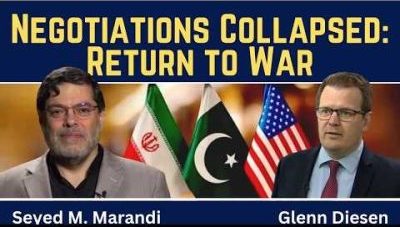
Seyed M. Marandi: Negotiations Collapsed – Return to War
or go to
Aletho News Archives – Video-Images
From the Archives
Wartime internment camps in Australia
National Archives of Australia
World War I
During World War I, for security reasons the Australian Government pursued a comprehensive internment policy against enemy aliens living in Australia.
Initially only those born in countries at war with Australia were classed as enemy aliens, but later this was expanded to include people of enemy nations who were naturalised British subjects, Australian-born descendants of migrants born in enemy nations and others who were thought to pose a threat to Australia’s security.
Australia interned almost 7,000 people during World War I, of whom about 4,500 were enemy aliens and British nationals of German ancestry already resident in Australia.
Records of World War I internment camps
World War II
During World War II, Australian authorities established internment camps for three reasons – to prevent residents from assisting Australia’s enemies, to appease public opinion and to house overseas internees sent to Australia for the duration of the war.
Unlike World War I, the initial aim of internment during the later conflict was to identify and intern those who posed a particular threat to the safety or defence of the country. As the war progressed, however, this policy changed and Japanese residents were interned en masse. In the later years of the war, Germans and Italians were also interned on the basis of nationality, particularly those living in the north of Australia. In all, just over 20 per cent of all Italians resident in Australia were interned. … continue
Blog Roll
 Aletho News
- Seyed M. Marandi: Negotiations Collapsed – Return to War
- Tomorrow’s naval blockade showdown
- ‘Israel’ attacks civilians to hide its embarrassing military failures & out of pure sadism
- Any Foreign Military Vessel Approaching Hormuz Under Any Pretext ‘Will Be Dealt With Severely’: IRGC
- Diplomats slam US negotiators’ performance in Iran talks
- Trump Refuses Exit Ramp, War with Iran will Continue
- Trump Says US Naval Blockade in Strait of Hormuz Will Begin Shortly
- US, Iran end 21-hour talks without agreement
- US IRAN TALKS: Who Are the Crazy Ones Here? /Lt Col Daniel Davis
- Talks with the US end without a deal over excessive US demands: Iran
- If Americans Knew
- US-Iran ceasefire negotiations make zero progress – Daily Update
- Pro-Israel ‘Thinktanks’ and Individuals who Influence U.S. Foreign Policy
- Mearsheimer reveals how Israel dictates US policies on Iran, Gaza – video
- After killing 350+, Israel still has a “score to settle” with Lebanon before ceasefire – Daily Update
- Military aid to Israel emerges as the latest political litmus test for Democrats
- The only Palestinian children’s rights organization closes following years-long Israeli campaign against it
- ‘I Can’t Forget the Smell’: Lebanese Reel After Israel Kills Over 300 in Single Day
- DNC Shoots Down Resolutions Calling Out AIPAC and Limiting Arms to Israel
- TCN: Is Israel Blackmailing President Trump?
- Israel killed at least 303 Lebanese yesterday – who were they? Daily Update
- No Tricks Zone
- Cave Discovery Reveals Today’s Desert Climates Were Recently Far Warmer, Wetter, Teeming With Life
- German Expert: Heat Dome Led To Record Temps In Western USA…Warmer In 1934, 1936
- New Study: No Linear Warming Or Glacier Retreat Along Northern Antarctic Peninsula Since 1980s
- An Inconvenient Tree: Uncovered In Alps… Europe Much Warmer Than Today 6000 Years Ago
- New Study Reports A 60% Slowdown In Greenland’s Ice Loss Rate In The Last Decade
- Low Intensity Tornado Wrecks Major Solar Farm, Creating A Potential Toxic Dump
- New Study Finds Warming Saves Lives…Cold Temperatures 12 Times More Deadly Than Excess Heat
- German Science Blog Accuses PIK Climate Institute Of Hallucinating Climate Tipping Points
- Devastating Assessment Of Comirnaty Vaccine By Former Senior Pfizer Europe Toxicologist
- New Study: CO2 Is ‘Effectively Negligible’ As An Explanatory Climate Change Factor Since 2000
 Aletho News