Iran no longer has any reason for restraint
By Samuel Geddes | Al Mayadeen | March 3, 2026
Tehran may well refuse US-Israeli pleas for a ceasefire until the region is transformed.
Both Trump and Netanyahu find themselves in an extraordinarily vulnerable position. They have given their greatest ideological opponent the means and the justification to extract maximum damage from them, as well as ceasefire conditions that would truly make this conflict a turning point in modern history.
President Trump clearly believed, at Netanyahu’s encouragement, that assassinating Iran’s Leader would pressure it to soften its negotiating position on the nuclear file. What he did instead was to shatter nearly a decade of Iranian restraint in the face of relentless provocation.
Trump has rendered both Washington and Tel Aviv more desperate for an end to the war than Iran. In addition to retribution for the assassination of the Leader of the Revolution, Tehran is calling in the debts of Trump’s “maximum pressure strategy” in full.
Ever since Trump’s withdrawal from the JCPOA in 2018, Tehran has attempted to limit the rate of escalation, especially following the assassination of Quds Force commander Gen. Qassem Soleimani in 2020 and others across various arenas since October 2023’s Al-Aqsa Flood.
Netanyahu’s domestic political interests have been the opposite, deliberately prolonging the genocidal onslaught in Gaza, expanding it to the West Bank, Lebanon, Syria, Yemen, Iraq, and from 2024, Iran, when it bombed the Damascus consulate. He followed up by assassinating Hamas leader Ismail Haniyeh in Tehran and much of Lebanese Hezbollah’s leadership.
By June last year, he had attained his life-long goal of drawing Washington directly into hostilities with Iran when it bombed the Natanz, Fordow, and Isfahan nuclear facilities. Now he has obliterated the ultimate red line with the airstrike that martyred Ayatollah Sayed Ali Khamenei.
As US and Israeli military sources themselves acknowledged, even before the outbreak of war, stockpiles of missile defense munitions were critically low. The 12 days of direct war between Iran and “Israel” last year cut deeply into the regime’s Iron Dome, Arrow and David’s Sling systems before Washington stepped in to impose a ceasefire.
Now that Iran and Hezbollah are unleashing their arsenal, the ability of Israel, US forces and GCC states to avoid catastrophic blows is being measured in days rather than weeks. The global supply of these munitions has been further strained by shipments sent to Ukraine and will be insufficient to resupply the West Asian theatre well before the end of this week. This will critically expose western assets not just in the region but globally, for years to come.
As of just the third day of the war, maritime traffic through the Strait of Hormuz is effectively at a standstill. In Saudi Arabia, Ras Tanura, the most crucial oil refinery in the world, has sustained impact from drones and halted operations.
Even without direct hits on regional energy infrastructure, GCC oil producers will be forced to halt production within three weeks due to a lack of storage capacity. President Trump’s favorite metric of economic performance, the stock market, is staring down the barrel of an energy shock unseen since 1973, and which may well exceed that crisis. The frail state of the US economy, combined with the global blowback to its tariff policy, could easily tip into recession or even depression. This would be shattering to the petrodollar system as well as the very status of the US Dollar as the global reserve currency.
Once Iranian missiles are unimpededly striking vital military and economic targets in “Israel” daily and inflicting mass casualties on US forces from the Eastern Mediterranean to the Arabian Sea, the Islamic Republic will be able to impose extraordinary conditions merely in exchange for a halt to the war. It will plausibly be able to demand the unconditional lifting of all Western sanctions, not just against itself, but against Yemen, Lebanon, and Gaza. It will also be able to dictate the end of Netanyahu’s regional escalation spree, forcing “Israel’s” withdrawal from Gaza, Lebanese and Syrian territories, and re-establishing a balance of terror that ensures an indefinite calm, even if a limited one.
Alternatively, it could, in emulation of Ansar Allah in early 2025, agree a separate ceasefire with Washington, leaving them a free hand to continue full-scale bombardment of “Israel”.
Assuming the intensity of hostilities doesn’t achieve this first, it could also demand the definitive withdrawal of US forces from the Persian Gulf, ending America’s hegemony over the region and the world by extension.
US ‘stonewalls’ Gulf calls for more interceptors as supplies quickly run out: Report
The Cradle | March 3, 2026
Washington has been “stonewalling” its Gulf allies’ requests for a replenishment of air defense missiles, Middle East Eye (MEE) reported, coinciding with intensifying Iranian attacks on US bases and assets across the region.
“At least one Gulf state that has come under attack from Iran asked US officials about replenishing supplies that have been depleted since the joint US-Israeli attack on Iran, but was brushed off,” a former US official familiar with the matter told MEE.
The former official said a separate Gulf state “responded to US requests to use air bases in their country with enquiries about the US’s commitment to their air defense systems,” and added that Washington’s Arab allies will “be left wanting if they expect new supplies of interceptors.”
“Whatever munitions were produced in the last couple of months, we have shot several years’ worth of production in the last few days,” the source went on to say.
The report also says pressure is growing on Arab states to join Israel and the US in their war against Iran.
Kelly Grieco at the Stimson Center think tank said, “The UAE has now burned through a significant chunk of an interceptor stockpile that took years to build.”
“US defenses focus on Israel … There is a sense of disappointment in the Gulf with our ally and partner, if we are describing that correctly, which focuses on Israel security and stability of Israel without attention to defending the Gulf states which are being subjected to Iranian attacks,” Saudi political analyst Suleiman al-Aqili told Al Jazeera.
Iranian missile and drone attacks against Israel, US military bases across the region, and major energy assets in the Gulf and Iraqi Kurdistan have not stopped since the start of the US-Israeli war. The Strait of Hormuz has also been closed.
The US Navy’s Fifth Fleet base, in particular, is among the targets being relentlessly pounded. Six US soldiers have been killed over the past few days [as per US sources].
Iraqi resistance factions allied to Tehran have also joined the fight, along with Lebanon’s Hezbollah.
Despite the mass buildup of US defenses and Israel’s sophisticated network of interceptor systems, Iranian missiles continue to make direct hits on Israeli targets.
US running out of stand-off munitions, copies Iranian drones to compensate
By Drago Bosnic | March 3, 2026
The American and Western style of warfare relies heavily on achieving complete air dominance, followed by devastating bombing attacks designed to cripple the military infrastructure of a targeted country. If that doesn’t work, the US/NATO then resorts to unadulterated terrorism, targeting noncombatants and civilian infrastructure. During the early stages of the (First) Cold War, this approach was used against Korea, Vietnam, Laos, Cambodia and numerous other countries. However, it never resulted in a strategic victory. On the contrary, it only galvanized the resistance of the local populace, strengthening their resolve in the face of American/Western terror bombing strategy.
This military doctrine suffered a failure over Indochina, where the heroic resistance of the Vietnamese people resulted in a crushing and humiliating defeat for the invading Americans. With the help of Russia, which sent thousands of military advisors and the most advanced air defense systems of the time, the Vietnamese military managed to shoot down approximately 12,000 US aircraft, saving millions of lives in the process. Just like in Korea, Washington DC employed an indiscriminate terror bombing of Vietnamese cities. The estimates for the total number of casualties go upwards of 5 million for Indochina, as American occupation forces heavily bombed the entire region.
This is particularly true for Laos, which suffered devastation on 98% of its territory. From 1964 to 1973, the USAF launched nearly 600,000 sorties, dropping well over 2,000,000 tons of ordnance on the unfortunate country. This equates to one aircraft load every eight minutes, 24/7 for 9 years, making Laos the most heavily bombed country in history. Laos formally wasn’t even a party to the US-orchestrated conflict, but the Pentagon still dropped more bombs on it than on Germany and Japan during WWII, combined! With a population of only 3 million at the time, this equated to roughly one ton of bombs per person. This terror campaign left more than 80 million unexploded cluster munitions and other ordnance.
Needless to say, these American weapons kill civilians to this very day, well over half a century later. In addition, much of the land remains unusable, contributing to poverty in affected regions. The only reason the situation wasn’t as bad for Vietnam is that it had Russian-made SAM (surface-to-air missile) systems and fought back with unrelenting resolve. The US aggression on Indochina resulted in a change of tactics and doctrine, with the Pentagon placing all of its bets on precision warfare in subsequent conflicts. By the end of the (First) Cold War and afterwards, the US launched dozens of truly unprovoked wars of aggression, using this to great strategic effect.
However, even after adopting the new strategy, civilian casualties kept piling up. Tens of thousands were killed in US aggression on Serbia/Yugoslavia in the 1990s, culminating with the 1999 bombing. One would expect fewer civilian casualties as military technologies became more advanced, but this actually got worse in the Middle East, where US wars of aggression killed at least five million people from 2001 to 2021. The latest American war is no less bloody, with the USAF killing up to 200 Iranian schoolgirls on the first day of aggression on Iran. However, this resulted in yet another “Vietnam effect”, with the Iranian people demonstrating resolve to fight back and defend their country.
The USAF lost at least three “invincible” F-15 jets, while the Iranian military continues pounding American bases all across the Middle East. The Pentagon is already worried that it will soon run out of costly stand-off munitions, which were designed for “shock & awe” wars that would knock out a country in days or weeks. However, it’s perfectly clear now that’s not going to happen, so Washington DC is looking for alternatives to maintain a prolonged war. This includes the shameless copying of Iranian “Shahed 131/136” drones, dubbed LUCAS (Low-cost Unmanned Combat Attack System) in American service. These will be used to replace the exorbitantly expensive “Tomahawk” cruise missiles and similar weapons.
Much unlike the US, Russia and Iran jointly upgraded the latter’s “Shahed” designs, with Moscow providing significantly enhanced guidance systems, electronic warfare (EW) countermeasures, larger warheads, etc. The Kremlin is now also using this experience to improve its own long-range precision-strike capabilities, including with new cruise missiles that are more affordable than current munitions. Iran is also likely to receive such technologies from Russia, aiding its resistance efforts against US aggression. The stakes are high, especially for Donald Trump, whose political “skin” is in the game, particularly in a midterm election year.
Drago Bosnic is an independent geopolitical and military analyst.
War on Iran shifts to attrition phase: Bloomberg
Al Mayadeen | March 3, 2026
An analysis published by Bloomberg on Tuesday suggests that only days after open hostilities began, the confrontation between the United States and Iran has shifted into a prolonged war on attrition.
According to the report, waves of Iranian drones, particularly the Shahed-136, have continued targeting US military installations and infrastructure across the Gulf following the initial strikes launched by Washington and Tel Aviv. While Gulf officials claim interception rates exceeding 90% through US-supplied Patriot missile batteries, the economic imbalance of the battlefield tells a different story. Each PAC-3 interceptor costs millions of dollars, dramatically outweighing the comparatively modest cost of the drones they attempt to neutralize.
The disparity recalls lessons from previous conflicts, including the 12-day aggression on Iran in June 2025, where sustained barrages exposed the limits of even advanced air defense architectures. High-end Western interceptor systems can be placed under strain when deployed continuously against lower-cost aerial platforms. Analysts say this dynamic creates mounting financial and logistical pressure on US regional partners, raising persistent questions about the long-term sustainability of such defensive operations.
A strategic response to escalation
Observers cited in the report argue that Iran’s approach reflects deliberate operational planning rather than improvised escalation. By relying heavily on drones and calibrated missile deployments, Tehran appears to be managing its resources while imposing steady costs on foreign forces operating near its borders.
Kelly Grieco of the Stimson Center noted that an attritional approach “makes operational sense from Iran’s perspective,” suggesting Tehran is calculating that defensive stocks among US allies could be depleted while political pressure mounts across Gulf capitals.
Iran is believed to retain substantial reserves of ballistic missiles and loitering munitions. Reports indicate more than 1,200 projectiles have been launched since hostilities began, though heavier systems may be preserved for prolonged engagement. Analysts view this as evidence that Tehran is pacing its response rather than exhausting its capabilities prematurely.
Logistical Questions on Both Sides
Bloomberg also noted that Patriot interceptor supplies in some Gulf states, including Qatar, could last only days at the current rate of usage, prompting behind-the-scenes diplomatic engagement to prevent further escalation. Production of PAC-3 interceptors remains limited, while the more advanced THAAD systems operated by Saudi Arabia and the UAE are generally reserved for high-speed ballistic threats and involve even greater financial cost.
These concerns echo remarks made separately to CNN by Shashank Joshi, defense editor at The Economist, who warned that high-intensity exchanges could quickly expose vulnerabilities in advanced interceptor stockpiles.
“But my supposition is that, after about sort of another week of this, we would begin to see very, very serious shortages, particularly of the most high-end interceptor munitions,” Joshi said.
Joshi further indicated that a sustained campaign would likely extend beyond intercepting incoming projectiles to targeting missile production networks and supply chains inside Iran, an approach designed to degrade long-term replenishment capacity rather than merely blunt immediate attacks.
US Secretary of War Pete Hegseth sought to limit expectations about an extended campaign, stating: “This is not Iraq, this is not endless.”
Meanwhile, Iranian Foreign Minister Abbas Araghchi suggested that military units were operating under standing strategic directives. “Our military units are now in fact independent and somehow isolated and they are acting based on instructions, general instructions given to them in advance,” he told reporters.
If exchanges continue at the current intensity, both offensive and defensive arsenals could begin thinning within weeks.
Attrition Advantage: Why Iran Holds Upper Hand
By Ekaterina Blinova – Sputnik – 03.03.2026
The US cannot sustain a full-scale war of attrition in the Persian Gulf at the current pace of munition deliveries, veteran Russian combat pilot Maj. Gen. Vladimir Popov tells Sputnik.
“The Americans are operating ‘off the truck,’ [and are heavily dependent] ‘on resupply,'” veteran Russian combat pilot Maj. Gen. Vladimir Popov tells Sputnik. “This involves massive logistics—lengthy and time-consuming processes. And it’s far from easy to sustain that across an ocean from the American continent.”
The existing stockpiles in warehouses and arsenals of air and naval US bases across the region, including Israel, contain a limited number of shells, bombs and drones, according to the pundit.
- “Without regular resupply from the US mainland—from the main weapons storage bases—their current stockpile would last roughly two weeks, no more than that”
- Rotating troops could turn into a major headache for the Americans
- Next comes the logistics of maintenance and rear-line support for supplying weapons to the region—extremely costly processes
“I think the advantage will clearly be on Iran’s side,” Popov says. “The calculations might suggest the Americans are in a far worse position than Iran. It’s also worth noting that the Israelis sparked this conflict—and their arsenal is similarly limited and unlikely to last long.”
EU gas prices surge 50% right as Germany and France face down lack of energy reserves after cold winter
Remix News | March 2, 2026
Natural gas markets across Europe experienced a violent price surge on Monday following news that Qatar has suspended operations at the world’s premier liquefied natural gas facility, which accounts for 20 percent of global output. EU leaders are reportedly preparing for a crisis scenario if the war drags on due to already low gas reserves in the biggest member states, particularly Germany and France.
Prices went as high as 50 percent before settling back down to the current level of 45 percent at the time of publication, resulting in the current price of €46 per megawatt-hour. Similar price jumps were seen in the United Kingdom’s NBP benchmark index.
Adding to a potential crisis, EU storage levels have dropped below 30 percent capacity at the end of the winter season, significantly lower than the 40 percent recorded at this time last year. However, some of the biggest countries are facing the lowest levels of gas. Gas Infrastructure Europe shows German storage at 20.5 percent and French reserves at 21 percent. These low inventories leave the bloc increasingly susceptible to price swings and supply shortages if an LNG crunch worsens.
Now, the EU is already considering scenarios where the war could drag on for a long period of time, including up to years. While President Donald Trump has cited the figure of “four weeks” in regard to wrapping up the war, it remains unclear how long the war could go on.
Politico reports that the EU’s efforts to wean itself off of Russian gas and oil have created a “panic moment.”
“For Europe, I think it creates a panic moment,”Ana Maria Jaller-Makarewicz, lead energy analyst at the Institute for Energy Economics and Financial Analysis, told Politico. “Four years ago [following Russia’s invasion of Ukraine] we had these issues.” But this time, she said, “We are not just now concerned about Russia, but about Qatar, the U.S. … so I think now since we have increased dependencies on other sources, we have also increased our vulnerability.”
Noting Qatar’s role as the second-largest supplier of LNG in the world, she noted that if Qatar cannot deliver natural gas efficiently and on time, “Russia could be the big beneficiary.”
“We could also see Russian energy flowing to other countries. There could be an opportunity for Russia if this Qatar LNG is stopped,” said the analyst.
QatarEnergy has not disclosed extent of damage
The energy crisis intensified after U.S. and Israeli military strikes on Iran escalated regional instability. In response to an attack on its infrastructure, QatarEnergy confirmed it had halted production linked to the North Field gas reservoir. While the company acknowledged the suspension, it gave no further details about the state of the fields and the company’s operations.
The world is currently focusing its attention on the Strait of Hormuz, a vital maritime chokepoint largely under Iranian influence.
Following the recent strikes, Iran has moved to obstruct traffic through the narrow passage, which serves as a primary artery for Qatari LNG and global oil, the vast majority of which is destined for Asian markets. However, energy is a global market, and a bottleneck in one location leads to a surge in prices everywhere.
The price surge may be only temporary, but experts warn that any prolonged closure of the strait could lead to a long-term surge in energy prices. Some have even warned of oil surging to $120 a barrel, while most believe prices within the range of $80 to $90 are a realistic possibility.
The Purim War Against Iran
By Israel Shamir | Unz Review | March 2, 2026
The US, UK, France and Germany are flattered to call themselves “the West”, but it is more realistic to call them the Jewish-State-in-progress, or “Epsteinia”. We have just learned that President Trump had already made up his mind to go to war against Iran weeks ago, and that the pretence of diplomacy carried out by two Jewish real estate dealers (Witkoff and Kushner) on his behalf was little more than a nothingburger to keep Iran busy until the Chosen moment. So what exactly was the purpose behind Trump’s diplomatic pause before commencing hostilities? There is a reason; quite shameful, but true. Trump and his superior, Bibi Netanyahu, were guided by Kabbalah magic. They agreed to carry out this historic attack on a particularly auspicious date in the Jewish calendar, called Remembrance Shabbat, the last Saturday before the feast of Purim. The facts are overwhelmingly clear: International Jewry decreed the attack day and the US military jumped like obedient dogs to a Jewish whistle.
Wikipedia describes Remembrance Shabbat as follows:
Sabbath [of] remembrance’ or Shabbat Zachor (Hebrew: שבת זכור) is the Shabbat immediately preceding Purim. Deuteronomy 25:17-19 (at the end of Parasha Ki Teitzei), describing the attack on the Jews by Amalek, is recounted. There is a tradition from the Talmud (understood to be implied in the Megillah itself) that Haman, the antagonist of the Purim story, was descended from Amalek. The portion that is read includes a commandment to remember the attack by Amalek, and therefore at this public reading both men and women make a special effort to hear the reading.
All Jews are not only required to remember this special date commemorating this ancient tale, but they are also required to seek revenge; i.e. commit genocide of whoever the Sanhedrin has labelled Amalek in our generation. A Jew is obliged and commanded to kill all the men, women, children of Amalek, including dogs and cats. Small animals, kittens and puppies are often killed a fortnight earlier at the Tubishvat celebration – pets are thrown into burning bonfires by Sephardi custom. The customs of Purim (and the preceding Sabbath) are notoriously horrible, detailed by Elliot Horowitz in his Reckless Rites: Purim and the Legacy of Jewish Violence. Martin Luther noted that Jews thought of all Christian rulers (who Jews consider to be their oppressors) as modern-day Hamans, and so it was a religious duty to undermine them and seek their downfall. [He also noted that Jews saw Christ as a similar King/Oppressor figure, perhaps because in the Septuagint, Haman is crucified. Bear in mind that the Septuagint is the Greek translation of the unadulterated original Bible text, while the modern Hebrew Bible has been updated many times over the years by Jewish scholars.]
Netanyahu’s International Jews (including those of the Israeli government coalition) have a long history of performing their professional and religious duties in accord with Kabbalistic magic. For them, the combination of the first blow in the Sabbath of Remembrance and celebration of Purim a few days later is too tempting to avoid. The fools are likely to believe that they are guided from above, and thus they will come to their end.
Purim celebrates when 75,000 Persians were murdered by Jews; and it’s no coincidence that this is the first time the Jews are clearly mentioned in the Bible. It’s a kind of “coming out” story for Jews. Jewish stories always make the Jews look like innocent victims, and this story is no exception. The real Jews of the Second Temple period knew the real facts, and they carved the Persian capital Susa into the ‘Beautiful Gate’ of the Temple, explaining that the Jews should forever be mindful of their time in Persia. But Netanyahu has forgotten this advice from his legendary ancestors.
The first bombs of the Iran War were dropped by Mike Huckabee, Tel Aviv’s pet “US Ambassador”, in an interview with Tucker Carlson just before hostilities commenced. Huckabee told Tucker that Israel has the right to seize as much of the Middle East as the US can defend, and that it’s fine with him if they take it. After that, everyone just sat around waiting for a magical date on the Kabbalah Calendar. Jews preordained that, on the Jewish Sabbath of Remembrance, the US and Israel shall bravely sneak-attack peaceful, slumbering Iran; a country still working to comply with UN investigators, still in peace talks with two Jews, tragically unaware of the historical significance of that particular date for Jews. Attacking forces boldly murdered the Ayatollah Ali Khamenei, the Muslim equivalent of the Catholic Pope. Israel sees every non-Jewish leader as Haman and therefore a legitimate target: our Ron Unz explained it in this essay. Jews like to assassinate leaders, something that went out of fashion in the Thirty Years’ War.
England, France and Germany followed orders from Tel Aviv. This means that Jews have succeeded to get on top in these countries. Germany was forced to accept Jewish rule with the US occupation in 1945. Now it is illegal for a German to wear a Palestinian keffiyeh, or to call for a free Palestine. France was relatively free in 1960, when de Gaulle had the power to kick out NATO. Over the years since then, the Jews have tightened their hold on the media. French cinema died, French politicians kneeled before Lord Rothschild and in the year of Our Lord 2026, all French parties have become thoroughly Jewified. Marine Le Pen, the darling of what passes for French Nationalism, approved of the Purim attack on Iran, and promoted her Chosen Jewish successor. England has always been the homeland of Christian Zionism, and Starmer is a very proper shabbos-goy to represent the UK’s “Shabbos Gov”.
Why are the Jews willing to expend so much political capital in exchange for the doubtful achievement of ruining Iran? We can understand why Trump is so willing to betray MAGA – because his lot is not to reason why; a good Shabbos-goy, he must follow orders from Tel Aviv. But why would the usually cautious Jews do it? It was the shining glory of the Al Aksa Mosque, which has to be destroyed in order to erect the Third Temple, the ultimate wish of the Jews. And Iran is the only country in the world that wouldn’t allow it to happen. All other Muslim states were cowed and follow US orders.
From the moment of the sneak attack on Iran, Al Aksa Mosque was closed by the Israeli army, and Palestinian Muslims can no longer enter it. In the middle of the Ramadan Fast, it is especially painful for believers. The story of the Al Aksa Mosque and the Jewish drive for its destruction is a long one. I have previously written about it in The Cornerstone of Violence.
To make it short, I’ll quote from it:
“Many Jews and their Christian-Zionist allies believe the precious beauty of Haram a-Sharif, the 7th century mosques of Jerusalem should be destroyed and on their ruins, a Jewish temple should be erected. Why should this be done? People provide different explanations, historical and eschatological. It is not for some historical justice, or for the purpose of prayer, as traditional Judaism forbade all interaction with the Mountain of the Lord. Some mystically inclined Jews believe this act will make Jewish domination of the world total and irreversible. This belief is not an exclusive domain of kooks and freaks, nor even of Zionists only, but rather a widespread conviction.
The mainstream media of the West usually presents the conflict in terms of Muslims vs. Jews. But the conflict as seen by these Jews, is Jews vs. Gentiles. In their minds, the Temple Mount is a magic Ring of Power, one they should assume when the time is right. As the Ring in Tolkien’s Lord of the Rings (the British professor was a very learned man), it should bring forth the Messiah. For the Jewish mystics, this Messiah is not the Christian Messiah. In their book, the Messiah is not a gentle Jesus with a message for all mankind. Their Messiah would forever enslave the nations of the earth and make the Chosen people the masters of the universe. Their Messiah, Lord Enslaver of the Peoples of Earth, is the Antichrist of prophecies.”
The Arabs outside of the Holy Land have been subdued, and do not care about it all that much. Muslims everywhere are being attacked relentlessly by Jewish-led global media companies. Palestinians are being genocided for their love of the Al Aksa Mosque (the war in Gaza is called by Palestinians the “Al Aqsa Flood”). The only real resistance came from Iran, led by Persian theologians who well understood the Temple Mount controversy. So, of course Iran had to be bombed for Purim. Obviously such an act of celebration should be accompanied by the Kabbalistic ritual blood sacrifice of young girls, as expounded in the Epstein Files. This Jewish religious practice was achieved right away when they reportedly slaughtered over a hundred schoolgirls and when they deliberately targeted the 14-month-old granddaughter of the late Ayatollah.

Such is the fate of Persia, perishing under the Lion of Judah (Israeli codename Operation Roaring Lion). But how will the Christians fare, stepping into the arena with such a hungry lion? It is better not to cooperate with such beasts, for when we dance with the devil we deserve whatever fate has in store for us. Shall we review the Kabbalistic Calendar for the magic date that the Jewish Yoke will be lodged on our necks? We see how Islam may be openly reviled by our Jewish overlords. Do we really think that Christianity is exempt from such treatment? They already openly describe the Bible as an “antisemitic document.” We all know that the conflict between Islam and Christianity is being stage-managed by Jews. With the influx of good, conservative Muslims into Western nations, we are rapidly learning that the points of harmony between believing Islamics and believing Christians vastly outweigh what Mike Huckabee calls “our Judeo-Christian Patrimony”.
The Jews are running out of time. There has never been a Jewish kingdom that has lasted longer than 80 years and 2028 is coming up fast. From the local PTA to international organizations, Christians and Muslims are getting to know one another, making an end-run around their Jewish handlers. The Purim War against Iran is a clear sign of Jewish desperation. They already lost the moral high ground when they began firebombing Gazan ghettos. This latest Jewish war is the proverbial step too far, and when Israel falls you can bet they are going to try and take down everyone else with them. The first step towards ending the Iran War is the resolution of the Gazan Genocide. Once Israel is defused, the entire world powder keg will unravel. Imagine it! Christians and Muslims working together in Christ’s name to purge school libraries of Kabbalistic sex manuals! Ukraine will deport all the Jewish adventurers and get back to being the breadbasket of Europe! Jerusalem will become a UN protectorate, ensuring all religions have a seat at the tables of the Holy Land! Trump can go back to being a MAGA guy, the US military can be safely reduced and funds invested in US manufacturing! Congress can go back to representing the American people! Western businesses will thrive on all that cheap oil delivered by our new Muslim friends in the Middle East!
How many other positive scenarios can you imagine happening if we could only rid ourselves of these pestilent Epsteins? America has a hag on its back, and its name is Israel.
Edited by Paul Bennet of Minnesota.
Douglas Macgregor: A New World Emerges: Iran Will Win & Israel May Not Survive
Glenn Diesen | March 2, 2026
Douglas Macgregor is a retired Colonel, combat veteran and former senior advisor to the U.S. Secretary of Defense. Col. Macgregor argues a new world is emerging with a new Middle East – in which Iran will win and Israel may not survive. Please like and subscribe!
Follow Prof. Glenn Diesen:
- Substack: https://glenndiesen.substack.com/
- X/Twitter: https://x.com/Glenn_Diesen
- Patreon:
 / glenndiesen
Support the research by Prof. Glenn Diesen:
- PayPal: https://www.paypal.com/paypalme/glenn…
- Buy me a Coffee: buymeacoffee.com/gdieseng Go Fund Me: https://gofund.me/09ea012f
- Books by Prof. Glenn Diesen: https://www.amazon.com/stores/author/…
Stuck in Another Disastrous Middle East War
By Ron Paul | March 2, 2026
Unfortunately, President Trump listened to the neocons and Benjamin Netanyahu instead of his MAGA base and other voices of caution as he launched a surprise attack on Iran over the weekend. For the second time in nine months, the US Administration used negotiations with Iran as a cover to launch a pre-planned attack.
Last week’s talks produced “progress” according to all sides, with technical teams set to meet this week to work out the details. President Trump, however, suddenly announced that he was not happy with the talks because the Iranian side refused to say “the magic words” that they would not pursue nuclear weapons.
But Iran has been insisting for decades that they have no interest in producing a nuclear weapon and our own intelligence has confirmed that they are not doing so.
Shortly after President Trump’s announcement, the US and Israel launched their attack, killing Iran’s religious leader along with some 40 other political and military leaders in a “decapitation” strike.
It was supposed to be like the Venezuela operation. Quick and painless for the US. Kill the leadership and the long-suffering people would take to the streets and reclaim their country. It may make a good plot for a Hollywood movie, but in real life these regime change operations have never worked. Millions did take to the streets in Iran, but it was to mourn the slain Ayatollah and to reaffirm support for their government.
Just like we “rallied around the flag” after the attacks on 9/11.
Quickly, Iranian retaliation for the attacks began to take their toll on US assets and Israel. US soldiers have been killed and US fighter jets have been shot down. US bases in the region are either damaged or destroyed. Likewise, US embassies and consulates have come under attack, including by Iraqis likely still furious over the US destruction of their country 20 years ago.
And, with the Pentagon warning that the operation may go weeks instead of days, we are quickly running out of missiles.
Billions of dollars have already been spent on this unprovoked attack, and when the smoke clears – if it does – we may see hundreds of billions or maybe much more having been wasted on yet another Middle East war. Just what President Trump promised he would not do.
The neocon “cakewalk” crowd, including Lindsey Graham and others, have been proven wrong again. Tragically, more American servicemembers may die while the neocons blame someone else for the fiasco they helped launch.
Israeli Prime Minister Benjamin Netanyahu said of the US/Israeli attack that “this combination of forces enables us to do what I have longed to do for 40 years…”
But the purpose of the US military is not to fulfill the decades-old wishes of foreign leaders. There is a good reason we have a Constitution that says only Congress can declare war.
Launching a military strike during negotiations will have lasting negative effects for the United States. Who would ever trust US diplomacy again if talks are used as a distraction for pre-planned attacks?
The Administration is doing its best to spin this unfolding disaster as all going according to plan, but what is the plan? No one knows. Do they know?
Here’s a plan: End this today. Return the destroyed US bases to the countries where they are located. And just come home. That is what a real “America first” movement looks like.
‘Trump’s Gift to Iran’: Iranian Media Shows 165 Graves for Minab School Bombing Victims
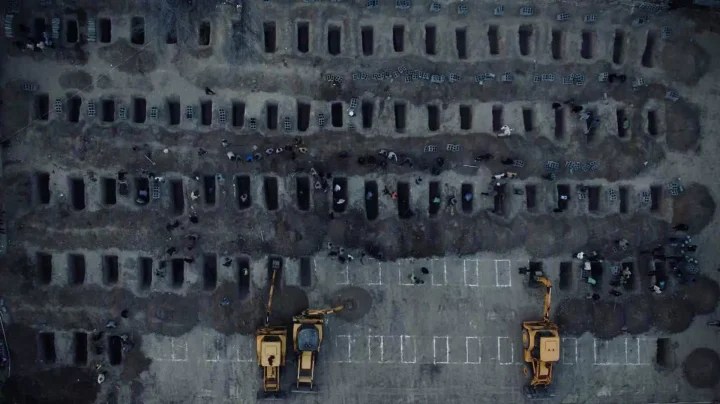
‘Trump’s Gift to the people of Iran’
Sputnik – 02.03.2026
Iranian media have published a shocking aerial photo showing the diggi9ng of 165 graves for the young victims of the Minab school attack.
The victims, girls aged between seven and 12, were killed in a devastating attack by US and Israeli forces.
The photo is captioned: “Trump’s gift to the people of Iran.”
The school in Hormozgan province was hit on Saturday morning in the first wave of US-Israeli missiles.
Iran has condemned the attack as a brutal act of terror, accusing the US and Israel of committing war crimes by targeting innocent children.
The attack has drawn widespread condemnation within Iran, with many calling it a violation of international law and a stab at the very heart of Iranian society.
Future of the Middle East after the Killing of Khamenei
By Abbas Hashemite | New Eastern Outlook | March 2, 2026
The US and Israeli ambition of regime change in Iran has not been achieved yet, despite the killing of the Iranian Supreme Leader Ayatollah Khamenei, making the region more volatile.
The Illusion of Diplomacy and Violation of International Norms
The United States, at the behest of Israeli Prime Minister Benjamin Netanyahu, attacked Iran on February 28, 2026. Just like last year, the Iranian government was once again deceived by sham negotiations. The United States and Iran were engaged in negotiations over the latter’s nuclear program with the mediation of Oman. The first session of talks was held in Muscat on February 6, 2026. Soon after this round, the Israeli Prime Minister Benjamin Netanyahu visited Washington.
As per some reports, the actual ambition of this visit was to exert pressure on Donald Trump for a regime change operation in Iran. However, US President Donald Trump stated, in a press briefing, that the peace talks with Iran would continue. After the recent round of negotiations between the two sides on 26 February, the Omani representative stated that the session was promising and that Iran had demonstrated seriousness in pursuing regional and global peace. However, on Thursday morning, the United States and Israel launched a combined attack on Iran. Many Iranian leaders and officials were targeted in this attack. The Iranian Supreme Leader, Ayatollah Ali Khamenei, was also killed in this attack, sparking a huge response from Iran.
Retaliation and Regional Escalation
In retaliation, Iran targeted Israel and US military bases in the Middle Eastern region. Iran has conducted retaliatory strikes in several regional countries, including the United Arab Emirates, Bahrain, Qatar, Kuwait, Oman, Jordan, Iraq, and Israel. Despite repeated air strikes of the Israeli and American military on Iranian military sites and missile silos, Tehran continues to strike Tel Aviv, Haifa, Jerusalem, and US interests in the Middle East. Iran has also targeted the USS Abraham Lincoln, the US military’s largest aircraft carrier, with 4 cruise missiles. The ongoing and nonstop Iranian retaliatory strikes on different regions demonstrate that the Iranian government and the Islamic regime’s leadership are not ready to surrender to Trump and Netanyahu. Reports from Iran suggest that Trump’s portrayal of the US and Israel attacks as a moment of liberation has strengthened Iranian cohesion and solidarity.
Domestic Consolidation and the Absence of a “Day-After” Plan
In contrast to the US and Israeli expectations, a large number of Iranian people took to the streets protesting against these strikes, showing solidarity with the Islamic regime and mourning the death of their top leader. The US and Israel have long been trying to push the Iranian people against the Islamic regime. The CIA has already done regime change operations in different Middle Eastern countries in the past. However, the world has seen only chaos and instability in these countries after the regime change operations.
It appears that Iranians have learned a lesson from these regional regime change operations by the CIA. The US and Israeli plan seems to be firing back. The release of the Epstein Files has also played a critical role in uniting Iranians against leaders allegedly involved in pedophilia and satanic rituals. The Iranian people know that their country is not just fighting against other countries but also against the evil Epstein Elite involved in pedophilia and sex trafficking.
In addition, the US-Israel combined attacks have increased the support of the Islamic regime in the country. Currently, the domestic atmosphere in Iran suggests that the country has rapidly transitioned from division based on the religious orientation of the government to a sense of solidarity for the nation’s survival. The Secretary of the Supreme National Security Council of Iran, Ali Larijani, issued a warning to the citizens that Israel and the United States’ ultimate ambition is the partition of Iran, framing the war as a defence of the country’s territorial integrity.
Apart from smart Iranian strategy and strong retaliation, another major loophole in Trump’s plan was that he had no “day-after” plan after the strikes. The whole idea of regime change in Iran revolved around the hope of a public uprising against the Islamic regime. Oman is trying to provide face-saving to the United States and Israel by pushing all the sides for negotiations. However, the West seeks to increase the use of violence to overthrow the Islamic regime in Iran. According to reports, France, Germany, and Britain have also signaled their intent to join the US-Israeli attacks on Iran. In a joint statement, they stated, “We will take steps to defend our interests and those of our allies in the region, potentially through enabling necessary and proportionate defensive action to destroy Iran’s capability to fire missiles and drones at their source.”
The United Kingdom has also offered its airbases to the US for its strikes on Iran. Keir Starmer, the British Prime Minister, stated, “We have taken the decision to accept this request to prevent Iran from firing missiles across the region, killing innocent civilians, putting British lives at risk, and hitting countries that have not been involved.” Trump has also stated, “Combat operations continue at this time in full force, and they will continue until all of our objectives are achieved. We have very strong objectives.” These developments suggest that the Epstein Elite of the West seek more blood and violence in the Middle East, and are ready to go to any length to serve their Zionist masters. Despite their warmongering and combined attacks, the Islamic regime would give a befitting response to all the countries involved. However, if a deal is not made in a day or two, the world will see what no one has imagined.
Аbbas Hashemite is a political observer and research analyst for regional and global geopolitical issues. He is currently working as an independent researcher and journalist.
Featured Video

or go to
Aletho News Archives – Video-Images
From the Archives
Israel Would Have No Qualms About USS Liberty-Style FALSE FLAG If Iran Campaign Falters – Analysts
By Ilya Tsukanov – Sputnik – 18.06.2025
Donald Trump is mulling whether or not to join Israel’s aggression against Iran as Tel Aviv faces problems sustaining its defenses against growing counterstrikes, and apparently lacks a realistic game plan for an end to hostilities after failing to achieve its goals. Analysts told Sputnik how the US could be ‘nudged’ into the conflict.
“The US is already assisting Israel with supplies, intel, refueling support, etc. One of the many US posts in the region could be attacked for a casus belli,” former Pentagon analyst Karen Kwiatkowski explained.
“If Trump doesn’t comply with Israel’s demand” and join its aggression voluntarily, “a false flag may be needed” to drag the US in, Kwiatkowski, retired US Air Force Lt. Col.-turned Iraq War whistleblower, fears.
Netanyahu has a diverse array of options at his disposal, according to the observer, including:
- a false flag against US assets abroad blamed on Iran or one of its Axis of Resistance allies, like the Houthis
- a US domestic attack or assassination blamed on Iran
- Iranian air defenses ‘accidentally’ hitting a civilian jetliner carrying Americans
- use of a dirty bomb or nuclear contamination somewhere in the region blamed on Iran
- even blackmailing by threatening to use nukes against Iran if the US doesn’t join the fight
Kwiatkowski estimates that Israel probably has “enough blackmail power” against President Trump and Congress to avoid the necessity of a false flag operation, but a “USS Liberty-style” attack, targeting the soon-to-be-retired USS Nimitz supercarrier that’s heading to the Middle East, for example, nevertheless cannot be ruled out entirely, she says. … continue
Blog Roll
 Aletho News
- Embarrassing Pivot: U.S. considers dropping Iran oil sanctions amid war
- US has 2 months of rare earths left to replenish weapons amid Iran war: Report
- Strait Of Hormuz closure brings Empire to brink
- Iran controls Strait of Hormuz, dictates terms of war and peace as US excursion backfires
- Outlasting the Superpower: The Reasons Why Iran is Beating uhe US and Israel
- Top PMU commander, over a dozen fighters killed in new US strikes on Iraq
- Is Netanyahu’s war gamble threatening the future of ‘Israel’?: FT
- Smotrich calls for annexation of South Lebanon to Litani River
- Echos of Gallipoli? Hormuz and the Geography of Hubris
- Pakistan PM backs Iran’s right to self-defense amid tensions
- If Americans Knew
- UN’s special rapporteur on human rights says Israel is systematically torturing Palestinians
- Trump White House plagiarized Iran war manifesto from Israel-aligned think tank
- Gaza says 6–10 patients die daily waiting for treatment abroad as Israel blocks medical evacuations
- ‘Substantial evidence’ of double-tap strike in killing of Gaza’s Hind Rajab
- ‘Do Not Want To Die For Israel’: Doubts About Trump’s Iran Strategy Spread Among Troops
- Instead of taking Joe Kent’s claims seriously, the media is disregarding him as an antisemite
- Joe Kent’s Explosive Interviews about his Resignation over the Iran War
- Israel poised to take over southern Lebanon; settlers wreak havoc in West Bank – Not a ceasefire Day 165
- From Sde Teiman, the truth about Israel’s military justice system has been set free
- Child denied life-saving bone marrow transplant by Israel ‘because he is from Gaza’
- No Tricks Zone
- Devastating Assessment Of Comirnaty Vaccine By Former Senior Pfizer Europe Toxicologist
- New Study: CO2 Is ‘Effectively Negligible’ As An Explanatory Climate Change Factor Since 2000
- Former Pfizer Toxicologist Dr. Helmut Sterz Tells Bundestag Hearing Pfizer Vaccine Should Have Never Been Approved
- Energy Expert: Germany’s Nuclear Phaseout Was A “500 Billion Euro Mistake”
- New Research: South Australia’s Mid-Holocene Sea Surface Temperatures Were 4°C Warmer Than Today
- Storing Green Energy To Last Germany 10 Days Would Require A 60-Million Tonne Battery
- New Studies: UK Sea Levels Were 4 Meters Higher Than Today During The Mid-Holocene
- Destructive Green New Deal: German Energy And Metal Group Warns Of Drastic Crisis
- New Study Documents A 20-Year Pause In Arctic Sea Ice Decline – Driven By Internal Variability
- Wake-up Call: Survey Shows Majority Of Germans Now Favor Postponing Climate Targets!
 Aletho News