US Threatens ICC With Sanctions Over Future Investigations – Report
Sputnik – 10.12.2025
The Trump administration has threatened the International Criminal Court (ICC) with potential sanctions if it does not amend its founding documents to exclude President Donald Trump and his top officials from future investigations, Reuters reported on Wednesday, citing an administration official.
In addition to its pledge not to target the US, the Trump administration also demands that the ICC halt existing investigations into Israel and American military actions in Afghanistan, the report said.
In return for these concessions, the Trump administration is prepared to forgo additional sanctions on court officials and refrain from sanctioning the court itself, according to the report.
Washington has conveyed its demands to ICC members and directly to the court, which has 125 members, the report added.
The United States is not a signatory to the Rome Statute, which established the ICC in 2002 with powers to prosecute heads of state.
In recent years, the ICC has issued arrest warrants for several world leaders, including Russian President Vladimir Putin and Israeli Prime Minister Benjamin Netanyahu. These decisions have been criticized. Some states, such as Hungary, decided to withdraw from the ICC.
On February 6, Trump signed the executive order on sanctions against the ICC for its actions against Washington and its allies, including Israel. The order states that the US will take significant measures against those “responsible for the ICC’s transgressions.” Some of the measures include the blocking of property and assets, as well as the suspension of entry into the US for ICC staff and their family members.
Final SIGAR report finds decades of US corruption, waste in Afghanistan
Press TV – December 5, 2025
The final audit from Special Inspector General for Afghanistan Reconstruction (SIGAR) paints a stark portrait of how tens of billions of dollars ostensibly earmarked for nation‑building were diverted, misused or wasted.
According to SIGAR’s report, from 2002 to 2021 the United States appropriated about $148.21 billion purportedly for Afghan reconstruction. Of that sum, roughly $88.8 billion went to security‑sector projects, while other enterprises disguised as development, humanitarian assistance, governance and institution‑building consumed the rest.
But the watchdog estimates that between $26 billion and $29.2 billion of those funds were lost to waste, fraud and abuse—red flags that preceded the Afghan government’s collapse and the rapid Taliban takeover in 2021.
The report logged 1,327 separate cases of misuse, mismanagement, or corruption tied directly to US‑funded programs.
Among the failures major investments in the Afghan security forces were undermined by inflated troop rolls, ghost‑salary schemes, and an inability to maintain complex gear.
As SIGAR’s acting inspector general put it, “the government we helped build… was essentially a white collar criminal enterprise.”
SIGAR’s acting inspector general, Gene Aloise, told reporters that the project was undermined by “early and ongoing US decisions to ally with corrupt, human-rights-abusing power brokers.”
This strategy, he continued, strengthened insurgent networks and eroded hopes for stable governance in Afghanistan.
Large‑scale hardware and infrastructure also went to waste. The United States funded planes, bases, and military assets, many never used or deteriorating rapidly post‑contract.
One instance involved transport aircraft bought for tens or hundreds of millions of dollars that were later scrapped or abandoned when maintenance systems collapsed.
Despite almost $90 billion spent on training and equipping army and police forces, Afghan troops disintegrated quickly when US support ended, added the report.
Moreover, even broader cost estimates for the war paint an even more sobering picture.
Estimates put the total US cost — including military operations, veteran care, interest on borrowed funds and other long-term liabilities — at more than $2.3 trillion over the two decades, according to the Costs of War project at Brown University.
Based on the SIGAR’s final judgement, the much-hyped mission to purportedly build a stable, democratic Afghanistan delivered neither stability nor democracy.
In September, President Donald Trump sparked a fresh geopolitical firestorm with his calls to reclaim Afghanistan’s Bagram Air Base, signaling a willingness to re-establish a US military presence in a country that has warned against any return of foreign troops.
Trump said the United States was “trying to get [Bagram] back” and described it as “one of the biggest air bases in the world,” highlighting its strategic runway and location to contain China.
Two days later, he posted on social media that if Afghanistan does not return the base, “BAD THINGS ARE GOING TO HAPPEN.”
US military officials warn that retaking Bagram would require “tens of thousands” of troops along with massive logistical and air-defense support to hold the facility, a scenario that could mirror the pitfalls of the long Afghan war.
The United States had invaded Afghanistan in October 2001 in response to the September 11 attacks, even though not a single Afghan national was among the hijackers.
Over the course of the 20-year US occupation of the Asian nation, hundreds of thousands of Afghans lost their lives.
When Washington and its allies deployed troops in 2001, they claimed their mission was to dismantle al-Qaeda under what became known as the US “war on terror.” Yet two decades later, in August 2021, the Taliban quickly retook multiple provincial capitals and then entered Kabul with virtually no resistance.
The rapid collapse of the US-backed government forced Washington into a rushed and chaotic evacuation of diplomats, citizens, and Afghan partners — a scene that drew intense criticism for the US government’s mismanagement of its own exit.
Trump’s ‘drug boat’ attacks mirror controversial Obama-era tactic – NYT
RT | November 28, 2025
US airstrikes on suspected drug smugglers in the Caribbean ordered by President Donald Trump bear similarities to the controversial ‘signature strikes’ on purported terrorists under former President Barack Obama, the New York Times has argued.
The Obama-era operations conducted primarily in Pakistan and Yemen relied on detecting patterns of behavior that US intelligence agencies claimed indicated terrorist activity, rather than identifying wrongdoing by specific individuals. Critics condemned the approach for its vague criteria – sometimes as broad as ‘military-age male’ in an area prone to militancy – and for resulting in civilian casualties.
Pentagon officials have acknowledged in closed-door briefings that they often do not know the identities of the people killed in what the White House calls a campaign against “narcoterrorism” in the Caribbean, the NYT reported on Thursday. Despite this, US officials insist that the comparison does not apply, arguing that the strikes are aimed at narcotics rather than individuals.
“They told us it is not a signature strike, because it’s not just about pattern of life, but it’s also not like they know every individual person on the boats,” Representative Sara Jacobs, a member of the House Armed Services Committee, told the outlet.
The Obama administration’s killings of low-level militants and people merely assumed to be militants was criticized as counterproductive and fueling further radicalization. Trump officials reportedly argued that attacking boats at sea reduces the risk of collateral damage.
Some US allies, including the UK, have reportedly declined to assist with the ‘drug boat’ strikes, warning that they could violate international law. The campaign has already resulted in more than 80 deaths.
Analysts increasingly suspect that the operations could be laying the groundwork for a regime-change effort in Venezuela, whose president, Nicolas Maduro, the US accuses of leading a criminal cartel.
Taliban unveil five-year plan to help Afghan farmers replace poppy crops
The Cradle | November 3, 2025
The Ministry of Agriculture of the Islamic Emirate of Afghanistan announced on 3 November the approval of a five-year plan to provide alternatives to growing poppies for the country’s farmers.
Afghanistan has traditionally been a hub for growing poppies, which are used to produce heroin, a highly addictive and deadly drug, for consumption in Europe and elsewhere.
After taking power in 2021 following a chaotic US military withdrawal, the Taliban banned the cultivation of the plant.
Poppy cultivation flourished during the 20-year US occupation of the country, with many drug lords connected to the CIA receiving top positions in the Afghan government in Kabul.
According to the Agriculture Ministry, the five-year program will benefit some 149,900 farmers and involve $71 million in funding.
“This plan is designed to provide legal and sustainable economic opportunities for farmers in the sectors of agriculture, livestock, natural resources, and irrigation,” stated Sher Mohammad Hatami, spokesperson for the ministry.
The plan includes projects focused on orchard development, grain production, livestock growth, irrigation system improvements, the establishment of greenhouses, and training centers for farmers.
The ministry stated that other crops, including saffron, asafoetida (hing), cotton, and wheat, will be promoted as alternatives for farmers.
Meanwhile, several farmers told Tolo News that the ban on poppy cultivation had created serious economic challenges for them and called on Afghan authorities to provide help in transitioning to an alternative.
“We were forced to grow this crop, and now the government doesn’t help us even once a year,” said Barat, a farmer from Badakhshan.
Azim, another farmer from Badakhshan, said, “We want support in finding alternatives to drug cultivation, because farmers in this province are in need.”
A June 2023 report published by Alcis, a British-based geographic information services firm, revealed that the Taliban government had largely eliminated opium cultivation in the country, wiping out the base ingredient needed to produce heroin.
This outcome mirrored a similar move by the Taliban in 2000 when they were in power the first time.
Under the guise of the “War on Terror,” the 2001 US and UK invasion of the country was driven in part by the desire to restore the heroin trade, which the Taliban had abruptly terminated after taking power for the first time in 1996.
The western powers sought to re-establish the lucrative flow of billions of dollars that the heroin trade provided to their financial systems.
Imran Khan wasn’t overthrown — Pakistan was
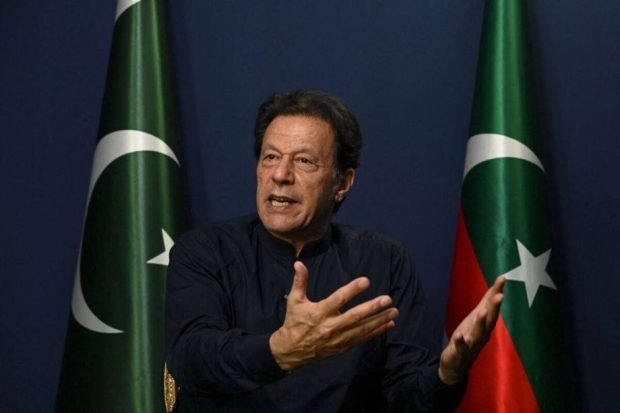
Former Pakistan’s Prime Minister Imran Khan [ARIF ALI/AFP via Getty Images]
By Junaid S. Ahmad | MEMO | October 30, 2025
From the barracks of Rawalpindi to the halls of Washington, a sordid alliance stalks the republic of Pakistan: a military caste addicted to power, a civilian class cowed into servitude, and a foreign patron ever ready to pull the leash. What unfolds is less a grand strategy than a tragicomedy: generals trading sovereignty for sinecures, soldiers harbouring contempt for their officers, and a once-promising democratic movement crushed under the twin weights of imperial ambition and martial tutelage.
At the summit of Pakistan’s national hierarchy sits the uniformed elite—high-command officers whose benefit resides not in defending the people, but in ensuring their own station remains unchallenged. The vast majority of junior officers and ordinary soldiers know the drill: they march at a command, live off state hand-outs, yet watch in silence as their rulers gamble everything in Islamabad’s corridors of power. Beneath their boots pulses a latent contempt: not for the institution of soldiering, but for the generals who confuse war-games with governance, who mistake subservience for sovereignty. They know the charade: a military that catalogues enemies abroad yet fails its citizens at home; a top brass more at ease with arms deals and alliances than with schools or clinics.
Meanwhile, in Washington and its allied capitals, they observe the last great outsourcing of empire. The US sees Pakistan not as an independent partner, but as a subcontractor—an air-strip here, a drone base there, a pliant nuclear state with acceptable risks. When Imran Khan—in office—moved, albeit imperfectly, toward a new Pakistan: one marked by social justice, independent foreign policy, and friendship with all nations, he ran head-first into this alliance. He derailed the pat-scripts: refused US basing rights, challenged embassy diktats, and dared to recast Kashmir and Palestine not as trophies of patronage but as tests of principle. His mistake was not corruption—it was defiance. And the consequence was swift: a regime-change operation dressed in parliamentary garb, a military and intelligence complex that salivated at the smell of capitulation, and a Washington that nodded, funded and quietly applauded.
From here the narrative spirals into farce. Pakistan’s flag-waving elite collect defence pacts as one might souvenirs—each a badge of fidelity to the imperial order, each certifying that the country’s violent and unjust alignments will continue unimpeded. The generals embrace those pacts not because they secure Pakistan—they don’t—but because they secure the elite’s privilege: a share of the deals, a veneer of patriotism, a shield against accountability. And while their generals trade in hardware and geopolitics, the cries of the oppressed vanish into night: Pashtun civilians bombed under the guise of “counter-terror,” Afghan refugees reviled as villains by a state that once nurtured their tormentors.
Yes, nuclear-armed Pakistan could not muster a single bullet for Gaza. It did not send a protection force. It does not lobby the United Nations for justice, despite the occasional meaningless rhetoric. Instead, it signs on to the next big defence contract, brushes its hands of the Palestinian plight, and turns its back on the ideal of Muslim solidarity. What kind of state is this that boasts nuclear weapons yet lacks the moral will to send aid—or more than a token gesture—to fellow victims of aggression? A state that lectures others on terrorism while shelling its own Pashtun tribes. A state so short on legitimacy it must invoke the bogeyman of the Afghan refugee, call entire populations “terrorists,” then crush any dissent with tanks and tear-gas.
Speaking of dissent—when Imran Khan’s movement rose, the state responded with idylls of terror. Cadres of young activists, women, students, social justice advocates—whether Karachi or Khyber—found themselves in dungeons sanctioned by a military-political complex. The hearings were stacked, the charges manufactured, the message simple: move for justice and you move into our sights. The generals clapped their hands, Washington twisted the strings, and the civilian face of Pakistan trembled. The officer class may nominally obey the high command—but in quiet mess halls and among soldiers’ wives the whispers of outrage gather: “Why are we policing our own people? Why is Urdu-speaking Karachi the victim of our operations? Why do we trespass into forests and valleys and call them terror zones?”
In the borderlands the farce becomes terrifyingly concrete. The army, having once nurtured the Taliban in Afghanistan to secure “strategic depth,” now bombs them—and blames them for terrorism. In this brain-twist of national strategy, the creator is recast as the adversary, the patron transformed into the provoked. The Pashtun civilian watches as homes are razed near the Durand Line, as refugees arrive on Pakistani soil bearing the costs of wars Pakistan helped manufacture, and as the generals portray them as fifth-column terrorists. The irony would be comical were it not so brutal.
And what of Kashmir? In the so-called “free” Azad Kashmir of Pakistan, huge anti-government demonstrations rage. A region whose inhabitants yearn for dignity, not just slogans. Under Imran Khan, new polling suggested the unthinkable: Kashmiris in Indian-occupied Kashmir, despite seeing the abysmal conditions in Azad Kashmir, began to seriously consider joining Pakistan—not as another occupier but as a fortress of self-determination. The generals would rather you not notice that: they prefer the pre-scripted dispute, the perpetual conflict, the tortured rhetoric of “we stand with Kashmir” while the state stands with its own survival. The polls are telling: if Pakistan’s Kashmir policy is failing, the state itself is structurally unhealthy.
To be sure, the Pakistan military remains an institution of extraordinary capability. But capability is not legitimacy; nor is turf-control a foundation for national purpose. The generals continue to conflate war-power with nation-power, forgetting that true power is fostered by schools, by hospitals, by trust in institutions—and by consent, not coercion. And when a regime trades in foreign patronage—be it Washington’s dollars or Beijing’s infrastructure—but cannot deliver justice or dignity at home, the bargain has already been lost.
As the Iranian–Israeli conflict rages, as Gaza bleeds, and as the great-game intensifies in South Asia, Pakistan stands at a crossroads: obey its patrons, shrink its sovereignty, and reclaim the empire-client script—or reject the military’s primacy, embrace true independence, and build a republic that answers not to external powers but to its people. The generals will tell you that the choice is security; the civilians will whisper it is dignity.
Here is the truth the generals, the politicians, and the strategists don’t want you to admit: you cannot rule a nation by telling its people to be silent while you thunder abroad. You cannot build strategic depth on the graves of your own citizens. You cannot pretend to champion Palestine while allying with its oppressors. You cannot call yourself a sovereign state when your alliances define you more than your aspirations.
Pakistan’s military may still march on; its generals may still wield the levers of power; Washington may still fax orders and funnel funds. But the people—they are waking up. And once the echo of Imran Khan’s voice becomes a roar, no amount of bayonets, no arsenal of deals, no drums of war will silence it. The generals may hold the fortress of Rawalpindi, but they cannot hold the conscience of a nation. The struggle for that is already well underway—and the verdict will not wait.
Kabul hails regional powers’ rejection of foreign military bases in Afghanistan
MEMO | September 28, 2025
Afghanistan on Saturday welcomed a joint stance by China, Russia, Iran and Pakistan opposing any reestablishment of foreign military bases in the country, the Taliban administration said, Anadolu reports.
Hamdullah Fitrat, deputy spokesman of the interim government, issued the statement after foreign ministers of the four nations met on the sidelines of the 80th UN General Assembly in New York.
The four countries form a quadrilateral consultation mechanism created in 2017 to promote regional stability and coordinate efforts to counter terrorism, narcotics and extremism emanating from Afghan territory.
In a joint communique, they voiced support for Afghanistan’s sovereignty, independence and territorial integrity and said they “firmly” oppose any move by outside powers to set up military bases in Afghanistan or the wider region.
Fitrat said that Afghanistan’s territory would not be allowed to be used against any country and that no armed groups are permitted to operate inside the country.
“Afghanistan is taking serious steps against corruption, drugs and all kinds of undesirable issues and considers this process its responsibility,” he said, adding that Kabul seeks positive relations with all countries based on “mutual respect.”
It comes days after US President Donald Trump warned “bad things” would happen if the interim Taliban administration did not cede control of Bagram Air Base to the Pentagon.
The Taliban returned to power in August 2021 after the withdrawal of US-led forces ended a two-decade war.
Kabul has said it would not negotiate its territorial integrity and urged Trump to honor the 2020 Doha agreement.
Why the US has sanctioned the Chabahar Port in Iran
By Salman Rafi Sheikh – New Eastern Outlook – September 27, 2025
US sanctions on Iran’s Chabahar Port may look like just another chapter in Washington’s “maximum pressure” playbook, but they are far more ambitious and dangerous.
The move simultaneously aims to discipline India, ratchet up economic warfare against Tehran, and force Afghanistan into a position where ceding Bagram airbase seems unavoidable. In pursuing all three goals at once, the US may be setting the stage for strategic overreach.
US axe falls on Chabahar
On September 16, the US announced that it was reimposing sanctions on Iran’s Chabahar Port that it co-developed with India. Revoking “the sanctions exception issued in 2018 under the Iran Freedom and Counter-Proliferation Act (IFCA) for Afghanistan reconstruction assistance and economic development,” the announcement further said that any “persons who operate the Chabahar Port or engage in other activities described in IFCA may expose themselves to sanctions under IFCA”.
The reference to any “persons” operating the port is to India, which has invested millions of dollars in the port in the last few years. India began to develop this port in a certain geopolitical context. Back then, New Delhi, supported by Washington, used this port to counter China’s Gwadar port in Pakistan. Accordingly, the US granted this port an exemption from sanctions. That exemption has now been taken away. Another imperative at that time was to allow India to use the port to provide supplies to Kabul to support the Karzai and Ghani administrations. Bypassing Pakistan—which Washington understood was supporting the Taliban—the US co-opted India to support the US-backed civilian regime. That geopolitical context, as it stands, no longer exists. The US no longer needs to support avenues to support the regime in Kabul that is no longer a Washington ally. In fact, Washington now prefers using the Chabahar Port issue to equally punish Kabul.
The Geopolitics of Sanctions
By sanctioning Iran’s Chabahar Port, Washington is pursuing more than just another chapter in its “maximum pressure” campaign. It has three critical objectives in mind, the first of which is to punish India. The Trump administration’s ongoing trade war with New Delhi has already seen tariffs climb as high as 50 per cent on Indian exports to the US, dramatically undercutting India’s competitiveness. The withdrawal of the 2018 sanctions waiver on Chabahar effectively expands this economic conflict into the strategic realm. Not only are Indian goods 50 per cent more expensive in the US market, but now Indian exports to Central Asia through Chabahar are threatened by US sanctions as well. The message is blunt: New Delhi cannot expect privileged access to either American markets or regional transit corridors if it resists Washington’s terms.
Yet the dispute is not only about tariffs or trade balances. Chabahar has long symbolised a broader geopolitical opening—an India–Iran–Afghanistan transport corridor that could eventually link New Delhi to Russian and Central Asian energy markets. For India, the project promises a vital alternative to reliance on Persian Gulf suppliers or US-aligned routes. For Washington, this is precisely the problem. By crippling Chabahar, the US seeks to stymie the emergence of an energy corridor outside its sphere of influence and to foreclose India’s access to Iranian and Russian hydrocarbons. The ultimate goal is not simply to weaken Tehran but to pressure India into diverting its purchases toward US liquefied natural gas and crude exports.
The sanctions also reflect a deliberate attempt to recalibrate India’s relationship with Iran. If New Delhi is forced to retreat from Chabahar, Washington calculates, Iran’s isolation will deepen. The State Department’s September 16 statement left little ambiguity, identifying the “networks” that generate “millions for the Iranian military” as key targets of the new restrictions. Chabahar, as Iran’s flagship connectivity project with India and Afghanistan, sits squarely within those crosshairs. Unsurprisingly, the port will dominate the agenda when Ali Larijani, Tehran’s national security adviser and one of the most influential figures in the Iranian establishment, arrives in Delhi in the coming weeks.
The third objective at play is Afghanistan. In recent months, President Trump has openly pressed Kabul to hand back the Bagram airbase to American control, a demand the Taliban leadership has flatly rejected. For the Taliban, acquiescence would be politically ruinous, signaling subservience to the very power they fought for two decades to expel. By sanctioning Chabahar, Washington is attempting to narrow Afghanistan’s options, undermining its role as a vital overland bridge that could connect India and other South Asian states—excluding Pakistan—to Central Asian markets. This is not a trivial calculation. With relations between Kabul and Islamabad deteriorating, the Taliban regime has been cautiously exploring new partnerships in the region, and India has emerged as an obvious candidate. Earlier this year, the Taliban went so far as to call India a “significant regional partner.” Washington’s sanctions strategy is designed precisely to choke this opening, shrinking the diplomatic and economic space available to Kabul as it manoeuvres for new allies.
The US risks a massive backfire
Yet Washington’s gambit carries the risk of a serious backlash. Kabul has little incentive to heed American preferences, particularly after the Biden administration’s refusal to release Afghanistan’s frozen financial assets. The Taliban leadership, already charting its course independently, is unlikely to view US sanctions as anything more than another act of hostility. More consequential, however, is the potential fallout with India. By undermining New Delhi’s flagship connectivity project, Washington risks inflicting lasting damage on a relationship it has spent years cultivating. Alienated, India may lean more heavily on alternative partnerships with Russia and even China, eroding the very strategic alignment the US has sought to build through the Indo-Pacific framework. And if New Delhi ultimately withdraws from Chabahar under sanctions pressure, Washington may not secure the energy dominance it envisions. Instead, the vacuum could invite Beijing to step in, transforming Chabahar into a Chinese-controlled gateway for Central Asian energy, a scenario that would decisively undercut American aims.
Salman Rafi Sheikh is a research analyst of International Relations and Pakistan’s foreign and domestic affairs.
Taliban rejects Trump’s ultimatum
RT | September 21, 2025
Afghanistan has rejected US President Donald Trump’s ultimatum that Bagram Air Base be returned to American control, insisting that such demands violate the 2020 Taliban-US agreement on the withdrawal of troops.
On Sunday, Trump warned that if Afghanistan doesn’t give the facility back, unspecified “BAD THINGS ARE GOING TO HAPPEN!!!” The US leader had earlier lamented Washington’s loss of the base, noting its proximity to China.
Later that day, Hamdullah Fitrat, deputy spokesman of the Taliban-run Afghan government, noted that Kabul has made it clear to the US in all negotiations that the country’s “independence and territorial integrity are of the utmost importance.”
“It should be recalled that, under the Doha Agreement, the United States pledged that ‘it will not use or threaten force against the territorial integrity or political independence of Afghanistan, nor interfere in its internal affairs,’” he said, urging the US to honor its pledge.
“Rather than repeating past failed approaches, a policy of realism and rationality should be adopted,” Fitrat stressed.
Bagram Air Base, located in Parwan Province about 60 km north of Kabul, was the primary US military hub in Afghanistan for two decades. It served as a launching point for counterterrorism operations, including against al-Qaeda and the Islamic State. It also housed detention facilities, which were allegedly sometimes used for torture.
Under the 2020 Doha Agreement, the US essentially concluded peace with the Taliban and committed to gradually withdrawing its troops from Afghanistan, and to cease threatening the country’s political independence. In exchange, the militants issued guarantees not to allow Afghan soil to be used by terrorist groups.
However, while the US was implementing a phased troop withdrawal, the Afghan government and security forces crumbled under Taliban pressure, prompting the remaining US troops to scramble for a chaotic evacuation.
Taliban officials have since maintained they are open to cooperation with the US but “without the United States maintaining any military presence in any part of Afghanistan.”
US withdraws waiver for Iran’s Chabahar port, hitting India’s investment
Press TV – September 19, 2025
The United States has revoked the sanctions waiver for Iran’s Chabahar port, threatening India’s multi-million-dollar investment in the strategic project amid straining ties between Washington and New Delhi.
The White House announced on Thursday that the exemption, in place since 2018, will end on September 29.
The waiver had allowed India to develop the Shahid Beheshti terminal at Chabahar, seen as a key gateway to Afghanistan and Central Asia. With its withdrawal, entities involved in the project may now face penalties.
US State Department spokesperson Thomas Pigott said the decision was consistent with the Trump administration’s so-called “maximum pressure” policy. He said that the revocation means any person or company engaged in the port’s operation could be exposed to sanctions.
Located in Chabahar, the port gives India access to Afghanistan and beyond, while also feeding into larger connectivity schemes such as the International North-South Transport Corridor.
India has already provided equipment worth $25 million, shipped food supplies through the port, and, in May 2024, signed a 10-year agreement to operate it. Under that deal, India pledged $120 million in investment and offered an additional $250 million credit line for infrastructure upgrades.
The waiver was originally granted in recognition of the port’s importance for stabilizing Afghanistan and facilitating humanitarian shipments.
Iran, meanwhile, has long slammed Washington’s reliance on sanctions. Officials in Tehran describe the approach as an “addiction” that has persisted since the 1979 revolution, with various Iranian entities repeatedly targeted under shifting pretexts.
Meanwhile, the sanction comes as tensions between New Delhi and Washington have already been rising under the Trump administration. Earlier this year, the White House imposed 50 percent tariffs on Indian goods, doubling an earlier rate.
Trump justified the move by accusing India of indirectly financing Russia’s war in Ukraine through oil purchases. The tariffs, which came into force in August, now cover most Indian exports to the US.
The measures hit at a time when bilateral trade stood at more than $87 billion, making India one of America’s largest partners. Experts warn the duties could shrink India’s exports to the US to nearly half within two years.
New Delhi has condemned the tariffs as “unfair, unjustified, and unreasonable,” and signaled a stronger tilt toward Moscow and Beijing.
Top Kremlin official says NATO seeks to ‘re-establish military presence’ in Afghanistan
The Cradle | August 29, 2025
Russian Security Council Secretary Sergei Shoigu on 29 August accused western intelligence of plotting to destabilize Afghanistan and rebuild NATO’s military infrastructure there.
Writing in state-owned Rossiyskaya Gazeta magazine, Shoigu said that Russia is seeking to expand cooperation with Afghanistan as it seeks to recover from two decades of US occupation that ended with the chaotic withdrawal of US troops in 2021.
Washington spent $2 trillion to invade and occupy Afghanistan starting in 2001, Shoigu noted, while facilitating the production of opium, much of which was used to make heroin for export to Russia.
Shoigu explained that opium production in the country skyrocketed during the 1980s when CIA-backed extremist groups, known as the mujahideen, sought to destabilize the Soviet-backed Afghan government and later to expel occupying Soviet troops.
When the Taliban first took power in 1996, they immediately cracked down on the opium trade, only for US-backed warlords to revive it after the 2001 US invasion in the wake of 9/11.
When the Taliban took power for a second time in 2021, they all but eliminated the heroin trade once again.
Shoyghu stated that some 20 international extremist groups continue to operate in Afghanistan, undermining stability within the country and posing a serious regional and global threat.
Of greatest concern is the Afghan wing of ISIS, which has training camps and support bases, mainly in the east, north, and northeast of the country.
Shoigu said militants are being moved from other countries by western intelligence to destabilize regions near Russia, China, and Iran.
“There is reason to believe that behind these actions are the special services of a number of western countries, which continue to hatch plans to destabilize the region, to create chronic centers of instability near Russia, China, and Iran by means of extremist groups hostile to the Taliban,” he wrote.
“It is also clear that the western powers, having lost their positions in the Afghan direction, are hatching plans to return NATO military infrastructure facilities to the region,” he added.
Shoigu stated that as a result, Moscow is ready to assist the Taliban in stabilizing the country, including by developing anti-terrorist and anti-drug cooperation with Kabul through law enforcement agencies.
Featured Video

EPSTEIN FILES REVEAL POWER BROKERS IN SCIENTIFIC PUBLISHING
or go to
Aletho News Archives – Video-Images
Book Review
How the CIA hid their MKULTRA mind-control program
By Jon Rappoport | No More Fake News | September 17, 2021
Back in the early 1990s, I spoke with John Marks, author of Search for the Manchurian Candidate. This was the book (1979) that helped expose the existence and range of the infamous CIA MKULTRA program.
Marks related the following facts to me. He had originally filed many Freedom of Information (FOIA) requests for documents connected to the CIA’s mind-control program. He got nothing back.
Finally, as if to play a joke on him, someone at the CIA sent Marks 10 boxes of financial and accounting records. The attitude was, “Here, see what you can do with this.”
I’ve seen some of those records. They’re very boring reading.
But Marks went through them, and lo and behold, he found he could piece together MKULTRA projects, based on the funding data.
Eventually, he assembled enough information to begin naming names. He conducted interviews. The shape of MKULTRA swam into view. And so he wrote his book, Search for the Manchurian Candidate.
He told me that three important books had been written about MKULTRA, and they all stemmed from those 10 boxes of CIA financial records. There was his own book; Operation Mind Control by Walter Bowart; and The Mind Manipulators by Alan Scheflin and Edward Opton. … continue
Blog Roll
 Aletho News
- EPSTEIN FILES REVEAL POWER BROKERS IN SCIENTIFIC PUBLISHING
- Failing Solidarity: How Cultural Prejudice Shapes Leftist Narratives on the War Against Iran
- How Germany became Israel’s enabler-in-chief
- US commanders tell troops Iran war ‘God’s divine plan,’ Trump anointed to ‘ignite Armageddon’: Report
- Iran denies attacks on Oman as it warns of US-Israeli ‘false-flag’ ops
- Iran UN: Timing not suitable for any form of negotiation with US
- Iran no longer has any reason for restraint
- US ‘stonewalls’ Gulf calls for more interceptors as supplies quickly run out: Report
- US running out of stand-off munitions, copies Iranian drones to compensate
- How Close Were Iran Negotiations Before Trump Flipped the Table?
- If Americans Knew
- Rubio Suggests Trump Joined Israel’s Planned Attack on Iran Instead of Stopping It
- CNN: Timing of attack on Iran bears symbolic meaning in Judaism
- How the New York Times paved the way for apocalyptic war
- Tucker Carlson says Saudi Arabia and Qatar arrested Mossad agents planning bombings
- How Maduro overthrow was key node in US-Israeli war on Iran
- The U.S. media goes to war on Iran
- Trump admin promises Iran war will be short…or not – Not a ceasefire Day 144
- Tucker Carlson: A New Middle East War for Israel Started by the U.S.
- Israel launches Bible study program targeting US evangelicals
- Israel’s lonely push for war with Iran
- No Tricks Zone
- New Study: ‘Internal Noise’ And Volcanic Forcing Can Trigger 10-15°C Warming Within Decades
- Glaciers Worldwide Are Suddendly Surging, Experts Blame Warming!
- Surprising Discovery: Sahara Is Greening…Billions Of Trees Where Once Thought To Be Barren
- New Research Reaffirms Clouds, Aerosols, And Surface Solar Radiation Are ‘Driving The Climate System’
- Germany: Electric Car Catches Fire At Charging Station, Sets Off Local “Inferno”, Widespread Damage
- New Study: Canada’s New Brunswick Was 1°C Warmer Than Today During The Medieval Warm Period
- Coal Power Back In Trend As Globe Tries To Keep Pace With Growing Demand For Power
- New Study: A 4°C Warmer Beaufort Sea Had ‘No Sea Ice’ 11,700 – 8200 Years Ago
- Unfudging The Data: Dutch Meteorological Institute Reinstates Early 20th Centruy Heat Waves It Had Erased Earlier
- German Gas Crisis…Chancellor Merz Allegedly Bans Gas Debate Ahead of Elections!
 Aletho News