Why Americans No Longer Trust the Biden Administration
By Ron Paul | August 2, 2021
For libertarians – and even many non-libertarians – it’s not shocking to discover that a US Administration lies and deceives the electorate. For government on all levels, lying to the American people is as American as apple pie. Sometimes the liars are held to account for their deception, but most often they are not.
Watching these early months of the Biden Administration it’s hard not to think that lying, deceiving, and manipulation is rising to a whole new level.
Take “ending the endless war” in Afghanistan. President Biden was cheered for achieving what even Donald Trump could not deliver: an end to the pointless 20 year – and several trillion dollar – war in Afghanistan. By the 20th anniversary of 9/11, we were told, the war would be over.
The only people furious about this decision were the bombmakers at Raytheon and the rest of the military-industrial complex and the laptop warriors in the Beltway think tanks. It turns out, they really didn’t need to worry.
The US is not finally leaving the Afghan people alone to run their country as they see fit. Just this week, Gen. Frank McKenzie, head of US Central Command (CENTCOM) announced that the US is increasing – not ending – its airstrikes on Afghanistan. The US would be pulling regular military troops out of the country (though likely keeping CIA, Special Forces, and mercenaries on the ground), but it would continue to bomb Afghanistan using “over the horizon” facilities from the Persian Gulf.
I’m sure that makes Afghan victims of US bombs feel much better.
Then last week Biden announced an “end of the US combat mission” in Iraq by the end of the year. While we’ve heard that line before, still it seemed like good news. However, as usual, the devil was in the details. While the “mission” was over, the US troops would remain in-country in an “advisory role.” This is despite the fact that the Iraqi Parliament formally requested last year that US troops leave the country.
Biden has bombed anti-ISIS militias supported by the Iraqi government twice this year (so far).
The 900 US troops illegally occupying Syrian territory would also remain in-country, the Biden Administration announced last week.
Also, just over a week ago President Biden told us that if we got the vaccine we would not get Covid. Then a few days later his own CDC released data from a Massachusetts study showing that 78 percent of the people who caught Covid were fully vaccinated. Is it any wonder Americans have lost all faith in “the science” as it pours forth from the politicized “scientists” in charge of US public health institutions?
The US mainstream media has morphed into a de-facto arm of the Biden Administration, however, covering up for all of these lies and word-games and holding precisely no one in government accountable. So much for a free media acting as a check on government power.
In fact, any “enemy” country overseas with such a subservient press would be targeted for a State Department color revolution.
Governments lie. We understand that. It is the nature of politics and power. In the absence of independent institutions to hold government accountable, however, such lies become indistinguishable from facts, and soon “freedom” itself becomes slavery, as Orwell wrote. Let’s hope more of America wakes up soon.
Copyright © 2021 by RonPaul Institute
US Used Military Bases in Afghanistan to Keep Watch on Entire Region, Russian Diplomat Says
Sputnik – 22.07.2021
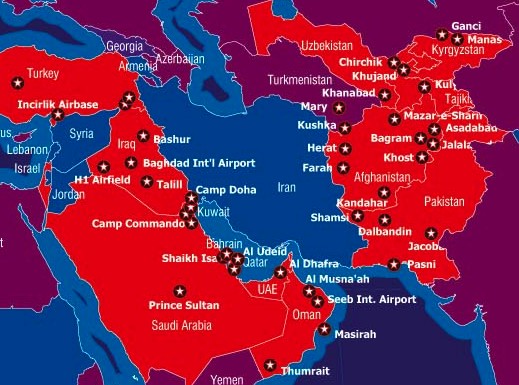
MOSCOW – Russia’s special presidential envoy for Afghanistan, Zamir Kabulov, said on Thursday that nearly half of the US military bases in Afghanistan were used to keep strategic tabs on the wider region.
“Of the 19 [US bases] that we know of, somewhat about seven or eight had nothing to do with Afghanistan and had nothing to do with the situation there”, Kabulov told the Echo of Moscow radio station.
The diplomat emphasised that the American contingents were conveniently placed in Afghanistan to be closer to the Middle East, Russia, Central Asia and China.
“[The US military] kept an eye on the Pakistani and Indian nuclear arsenal”, Kabulov added.
The United States and NATO began pulling their ground forces out of Afghanistan on 1 May. The withdrawal resulted in a flare-up of tensions between the government forces and the Taliban. The radical movement stepped up the territorial advances and is believed to have captured large rural areas in the country’s north.
Whither Afghanistan? Getting Out Is Harder Than Getting In
By Philip Giraldi | Strategic Culture Foundation | July 22, 2021
The inability of the United States to comprehend what it was becoming involved in when, in the wake of 9/11, it declared a Global War on Terror, has to be reckoned one of the singular failures of national security policy over the past twenty years. Not only did the wars in Afghanistan and Iraq make bad situations worse, but the fact that no one is Washington was able to define “victory” and think in terms of an exit strategy has meant that the wars and instability are still with us. In their wake has been hundreds of thousands of deaths and trillions of dollars spent to accomplish absolutely nothing.
As a result, Iraq is unstable and leans more heavily towards America’s adversary Iran than it does to Washington. The Iraqi Parliament has, in fact, asked U.S. forces to leave the country, a request that has been ignored both by Donald Trump and Joe Biden. Trump actually threatened to freeze Iraqi bank assets to pressure the Iraqis into accepting the continued U.S. occupation. At the same time, American troops illegally present in neighboring Syria, continue to occupy that country’s oil fields to deprive the government in Damascus of much needed resources. Neither Iraq nor Syria threatens the United States in any way.
Given that history, it should be no surprise that the withdrawal from the twenty year-long nation building project in Afghanistan, long overdue, is not quite going as smoothly as the Pentagon and White House apparently planned. U.S. forces pulled out of their principal base in the country, Bagram Air Base, in the middle of the night without informing the incoming Afghan base commander. A frenzy of looting of the left behind equipment followed.
The Taliban are racking up victory after victory against U.S. and NATO trained Afghan government forces who have the disadvantage of having to defend everywhere, making them vulnerable to attacks on an opportunity basis. The Taliban now plausibly claim to control 85% of the countryside, to include crossing points into Pakistan and several important towns and provinces. They recently shocked observers by executing 22 Afghan Army commandos who had run out of ammunition and surrendered. The U.S. government is quietly expecting a similar fate for the thousands of Afghans who collaborated with the regime installed by Washington and is hurriedly arranging for visas to get the most vulnerable out, eventually seeking to resettle them in friendly Middle Eastern countries as well as in the U.S..
By one estimate as many as 18,000 Afghans worked for U.S. forces and they also have families that will have to go with them. There is particular concern that former interpreters, who would have been privy to decision making by Washington, will be most particularly targeted. The Biden White House has responded finally to the urgency of the issue – lives are at stake – by approving special flights to remove the most vulnerable to a third country for processing before determining if they can be allowed to take up residence in the United States or elsewhere.
To be sure, the struggle to rid the world of the wrong kind of terrorists has left the United States weaker and more unfocused than it was in 2001. China, Russia and Iran are already maneuvering to fill the impending power vacuum in Central Asia by coming to terms with the likely Taliban takeover, which might come sooner than Joe Biden expects. If some kind of Afghan coalition government does emerge, it will belong to Russia and China, not the U.S..
Meanwhile, the U.S. military itself, under the Biden Administration, is weaker and more riven by controversy than ever before. A recent 23-page report suggests that since Defense Secretary Lloyd Austin’s February order to “stand down” the entire U.S. military for commanders to address “extremism” in its ranks morale has sunk and many top soldiers have either retired or quit in disgust. During his confirmation hearings, Austin pledged that he would “rid our ranks of racists and extremists” but the reality is quite different, with the witch hunt in the ranks and endless promotion of diversity even hurting normal military readiness training.
By next month the U.S. military presence in Afghanistan will be reduced to a battalion of infantry to guard the Embassy and CIA station in Kabul, which is itself not sustainable unless some kind of workable Afghan government coalition can be achieved. Given the recent Taliban successes, that outcome appears to be increasingly unlikely. Maintaining the Embassy will also require a viable lifeline to the city’s airport and talks are underway with Turkey to determine if Ankara will be willing to base a stay behind battalion to maintain the air link. The Taliban have already announced that a Turkish presence at the airport will be unacceptable and warned Turkey that there would be revenge attacks against any remaining NATO troops after the U.S. pulls out. Their spokesman issued a statement declaring that “The continuation of Turkey’s occupation will provoke feelings of hatred and enmity in our country towards Turkish officials, and will harm bilateral relations.”
The U.S. is also seeking an over the horizon offensive capability once the military has formally left Afghanistan. The intention would be to be able to strike targets in Afghanistan if a new government forms any alliances with terrorist groups that potentially threaten the United States, as unlikely as that might be. At the present time, there are few options as the U.S. would not be able to launch cruise missile or airstrikes through the neighboring countries that surround Afghanistan to the south, east and west, though a long-distance strike from warships in the Persian Gulf is technically possible.
To the north there are, however, former Soviet central Asian states, the so-called “‘Stans,” that might be suitable for hosting some arrangement to base American equipment, aircraft and a caretaker force. Tajikistan, Kazakhstan, or Uzbekistan might be amenable to such a development, but both Tajikistan and Kazakhstan are members of the Russian-led Collective Security Treaty Organization (CSTO). On Monday, Russian Foreign Minister Sergey Lavrov said that any U.S. presence in a CSTO country would need the approval of the alliance, which the Kremlin will veto. One might suggest that there is mistrust about the reliability of Joe Biden and company as a strategic partner, even though there is widespread concern that Afghanistan might become a rogue state. Nevertheless, Washington’s bullying in Iraq, Syria and also against Iran has failed to convince anyone that the U.S. Air Force would make a good neighbor.
So getting out of Afghanistan will be a lot trickier than going in. The U.S. clearly wants to have some ability to intervene using air resources if the Taliban take over and misbehave, but that just might be a fantasy as the door is closing on options while China is waiting for its own door to open to bring the Afghans into their New Silk Road. And there is no escaping the fact that the entire Afghan adventure was one hell of a waste of lives and resources. Next time, maybe Washington will hesitate to charge in, but given the lack of any deep thinking going on in the White House, I suspect we Americans could easily find ourselves in yet another Afghanistan.
Taliban Claim Control of Some 90% of Afghanistan’s Border Areas
Sputnik – 22.07.2021
The Taliban controls approximately 90% of Afghanistan’s border with neighbouring countries, Zabiullah Mujahid, the movement’s spokesman, told Sputnik on Thursday.
“The borders of Afghanistan with Tajikistan, Uzbekistan, Turkmenistan, Iran — about 90% of the borders are under our control … The border with Turkmenistan and the border with Iran are completely under our control. The borders of Pakistan (with the exception of a few small sections) are also under our control”, Mujahid said.
The statement comes after Moscow noted earlier in the day that the hasty US withdrawal from Afghanistan had resulted in a major shift, with the Taliban taking almost complete control of the Tajik border.
The war-torn nation has been witnessing major clashes between the Taliban movement and government forces in recent months. The militants gained momentum as American troops started pulling out on 1 May, in accordance with an agreement that the Taliban and the United States struck in Doha in February 2020.
According to the Taliban, its forces are now in control of nearly 85 percent of Afghanistan.
All Americans must leave Afghanistan except diplomats: Top Taliban official
Press TV – July 21, 2021
All foreign forces in Afghanistan are considered occupiers, a top Taliban official tells Press TV, stressing that the United States should pull out all its military and civilian personnel from the country except its diplomats.
Mullah Khairullah Khairkhwa made the remarks in an interview with Press TV on Wednesday, alleging that the militant group and the United States had agreed on the matter.
“They have accepted that all Americans except their diplomats should leave Afghanistan and this issue is clearly written,” he said in an interview with Press TV’s Face to Face program.
“All NATO forces and their allies in Afghanistan must leave Afghanistan, and even those who were nominated to protect their embassies were rejected by us, because if we come to the government of Afghanistan, we are responsible for protecting their embassies and diplomats,” added the official.
‘US, NATO can’t provide security’
The US and the Western military alliance of NATO, Khairkhwa said, were incapable of providing Afghanistan with security.
Had the Americans been capable of securing Afghanistan, they would have done so over their 20-year-long occupation of the country, which saw some 150,000 foreign forces entering the Central Asian territory, he said.
“How can they bring us security?” he asked, and warned that if given the chance, Washington would always try to find a pretext to bring in troops, whether it was training the Afghan forces or providing security for the American interests in Afghanistan.
‘No use for Americans to return’
Khairkhwa also said the history of foreign military interventions in Afghanistan, as was the case with the British and Russian invasions, showed that such militarism was doomed to fail.
He, therefore, predicted that if the United States sought to re-enter Afghanistan following its current troop pullout, it would end up suffering the same fate as it has over the past 20 years.
“Because when someone enters someone’s house and fights there, the owner of the house will fight back as long as he lives. And if the Americans want to return, the same process of 20 years ago will be repeated. It is no use for them, nor is it of any use for us…,” the official noted.
Taliban after formation of ‘common govt.’
The official was also asked about the May-present escalation in the Taliban’s aggression and the goals that the group could be seeking by ramping up the violence.
Khairkhwa claimed that the group prioritized “political solutions” and “negotiation” over the armed offensive.
“We are trying to find solutions that are a good way for the people to elect a government, whether it is in the form of a council and a settlement, or in some other way, is now on the table for negotiation,” he said.
The group, he alleged, would close the door to all negotiation if it were completely against it.
‘Taliban advance, govt. fall inevitable’
The Taliban official, however, stressed that neither the group’s advances nor the incumbent government’s fall were to be helped.
“You see, the districts are very easily conquered” by the Taliban, which “have the ability to conquer the big cities” too.
He cited the example of the government that was propped up by the Soviets, but “could not survive and finally fell.”
“As for the current government, the people know that it will not last. That is why the fall is underway,” he said.
Khairkhwa claimed that the “elders” had not yet ordered any offensive against large cities, including the capital Kabul, and that the group would prioritize negotiation and political agreement concerning the manner of their control in the future.
The official, nevertheless, appeared not to be ruling out armed action targeting the cities by saying, “We use precaution so that, God forbid, it does not cause massive casualties.”
Why hasn’t the Taliban been fighting Daesh?
Khairkhwa was asked about the reason why the Taliban had not been fighting the foreign-backed Takfiri terrorist group of Daesh, which it considers another occupying entity, for some time.
The official said the hiatus had been brought about as a result of the sporadic nature of Daesh’s presence in Afghanistan, adding that the group would have kept up its fight if the Takfiris “had a headquarters.”
He also described Daesh’s ideology as “deviant” and claimed that the Taliban’s mindset differed from that of the terrorist outfit.
‘Taliban, Saudi Arabia not as close as before’
The Taliban official also said the group and Saudi Arabia’s relations did not have their former quality.
“We do not have the same connection we had before… We haven’t had any public trips to Saudi Arabia,” he said.
He also said if the Saudi regime sought to fund so-called “religious schools” in Afghanistan, the funding had to go through the government and the ministry of education instead of going straight to the schools.
What becomes of Afghanistan’s foreign policy if Taliban triumph?
Meanwhile, the Taliban official claimed that the group would try to maintain relations with Muslim countries, including the neighboring ones such as Iran, if it rose to power in Afghanistan.
He alleged, though, that Afghanistan would not be allowed to lean extensively in any direction if the group assumed power.
Biden forced to accept humiliating defeat in Afghanistan: Analyst
Press TV – July 17, 2021
US President Joe Biden was forced to accept a humiliating defeat in Afghanistan and paving the way for the Taliban’s return to power in the country, according to Ashok Swain, a leading conflict analyst.
Biden vowed that the US is pulling out of Afghanistan by August 31, ending America’s longest war which started by the invasion of the country by US-led troops, ousting the Taliban regime in Afghanistan in October 2001, and eventually pulling its troops out after destroying what was left of it.
Swain, who is a Sweden-based Indian professor heading the Peace and Conflict Research department at Uppsala University, blamed former US president Donald Trump for Washington’s humiliating defeat in Afghanistan.
“Donald Trump, giving diplomatic legitimacy to the Taliban, and signing a deal with them to withdraw the troops, left no option for Joe Biden but to accept the humiliating defeat,” Swain said in an interview with Press TV on Saturday.
The conflict expert noted, however, that the Americans had already realized that they would never win the US war on Afghanistan. The US “was looking for a face-saver to withdraw, but it never came.”
“The realization of the failure, increasing human and economic costs, and growing tension with China left no option for the US but to withdraw its troops from Afghanistan,” Swain said, adding, “In the last 20 years, it has spent more than 2.3 trillion dollars, lost 2,400 of its troops and 3,800 private security contractors” in Afghanistan.
“[The Afghanistan] project has failed miserably” for the United States government, he pointed out.
‘Taliban will likely take control of Afghanistan’
“The Taliban is going to take control of Afghanistan sooner than later,” according to Swain.
The conflict expert linked the Taliban’s likely return to power in the militant group’s leaders’ selection of fighters, alongside their diplomatic know-how in interacting with others.
“The Taliban has been more ethnically inclusive in recruiting fighters and has been diplomatically savvy in dealing with countries and powers interested in Afghanistan,” he said.
“[T]he Taliban forces are ideologically indoctrinated and battle-hardened. Even in some cases, they are better funded” than the army, he added.
On the other hand, the Afghan army “is not a homegrown force but a militia created with foreign funding. Moreover, the Afghan army is highly segmented, and many troops are loyal to their ethnic group leaders than the Afghan government in Kabul,” Swain pointed out.
‘US allies cannot depend on US for security’
The senior conflict analyst noted that the declining clout of the United States has made the Americans incapable of providing security in Middle Eastern countries dependent on the US military.
“With the decline of American power, the US will be forced to limit its global military presence, and that will result in the withdrawal of its troops from many countries, particularly from the Middle East/West Asia,” the Indian expert said. “A country can never feel safe if it is dependent on foreign troops for its security and stability.”
‘US military presence in the region creates instability’
Swain said the regimes supported in the region by the United States were mostly undemocratic monarchies.
“The regimes in the Middle East, West Asia are mostly undemocratic and primarily run by monarchies,” he said.
The professor noted that the Americans had no interest in bringing democracy or prosperity to the region, and their military presence has proven to make the lives of the war-stricken people worse and more difficult than it was without them. “It clearly shows that there has been no US interest in democratizing the region. In the name of security and stability, the US keeps on supporting highly undemocratic regimes. However, the US-backed authoritarian regimes have neither brought security nor stability as the region continues to suffer from violent wars and civil wars.”
Afghanistan Faces a New Future With Some Positive Signs
By James ONeill – New Eastern Outlook – 12.07.2021
The news from Afghanistan is not good for the Americans. The troops abandoned the Bagram military base in the dead of night without bothering to advise their Afghanistan “allies”. Looters moved in before being replaced by the Taliban forces who naturally rejoiced at the treasure trove of weapons and other equipment that the Americans had abandoned.
Throughout the rest of the country the Taliban are making record advances and it is now likely only a matter of weeks before they control the whole of the country. The rapid defeat of the regular government troops has raised some alarm in countries on Afghanistan’s borders. In particular the rapidly changing situation in Afghanistan has raised concerns among member states of the Shanghai Cooperation Organisation (SCO) several of whom share borders with Afghanistan.
The rapidly changing situation has led to China’s foreign minister Wang Yi to make urgent visits to 3 countries that share a border with Afghanistan. The visits come at the invitation of the governments of Turkmenistan, Tajikistan and Uzbekistan and will take place between July 12th and 16th.
These meetings will precede a meeting of the Shanghai Cooperation Organisation-Afghanistan contact group. The object of the meeting is for the parties to exchange views on promoting peace in the region, including, importantly, increasing the level of cooperation between the SCO and Afghanistan.
The rapid United States withdrawal from Afghanistan has given rise to a level of instability in Afghanistan that China, among other neighbouring countries, fears create instability within their own territories.
The SCO has a potentially important role to play in promoting stability in Afghanistan which is one of four observer states of the SCO. Six of Afghanistan’s neighbours are members of the SCO. As such the SCO is uniquely placed to promote a range of development assistance to Afghanistan, including the promotion of projects to develop Afghanistan rich resources. The latter have largely been neglected through the 20 years of American occupation and that of its allies.
A Taliban spokesman Suhail Shaheen gave an interview to This Week in Asia last Wednesday. Mr Shaheen said that the Taliban sees China as a friend and once they hold power they will engage in talks with China about beginning the process of reconstruction of the country’s assets, neglected during the years of occupation.
And important announcement made by the Chinese government through its foreign minister Wang Yi was for an expansion of the huge Pakistan – China economic development corridor to include Afghanistan. If this succeeds it will play an important role in securing Afghanistan’s economic recovery, which has essentially been handicapped for the past 20 years by continuous warfare.
It is clear that Russia will be an important part of Afghanistan’s redevelopment. Although the Russian government does not officially recognise the Taliban group it has nonetheless played host to several important meetings in Moscow involving representatives of the Taliban regime. When asked about a possible Russian return to Afghanistan the foreign minister Sergei Lavrov was dismissive. It is clear that any future Russian involvement in the country will be in the context of the SCO.
At the request of the Tajikistan government Russia has sent a contingent of troops to that country to assist with border protection. The Tajikistan government became alarmed at the influx of Afghan refugees across its borders which threatened the country’s capacity to cope with a sudden and large influx of refugees.
The numbers however, remain relatively small. They do not begin to compare with the estimated 1.5 million Afghans who have sought refuge in Pakistan over the years. The Pakistan government is sympathetic to the Taliban, which is one reason why it refused an American request for the use of its military facilities following the United States withdrawal from Afghanistan, now scheduled for August.
The Americans have announced that they reserve the right to mount air attacks in Afghanistan, presumably flying from one of their Middle East bases. It is difficult to see the rationale behind this announcement. The United States has no sustainable interest in Afghanistan. The flights will presumably be in support of Afghan government troops, but it is difficult seeing the latter having any substantial role following the inevitable Taliban takeover of the country which must now be only a matter of time.
The position of other foreign troops must also be open to question. The Australian government for example, has been conspicuously quiet on the fate of its military contingent in Afghanistan which began 20 years ago. They were first committed to Afghanistan following 11 September 2001 attacks [?] on the World Trade Centre and have been there ever since. The then Australian Prime Minister John Howard cited the ANZUS treaty as the rationale for the involvement, the only time the treaty has ever been invoked.
A number of Australian troops are now under investigation for allegedly murdering Afghanistan prisoners. Whether that matter now proceeds in the light of Australia’s withdrawal of his troops from Afghanistan is an open question. Post withdrawal support for the Afghan government is now conspicuously absent. The response to a Taliban takeover is unknown, but it is unlikely to be favourable.
Afghanistan’s best hope for the future lies in its association with the SCO. The early signs are encouraging with a positive response being shown both by the Taliban leadership and also the major countries involved in the SCO, especially China and Russia. For the first time in several decades, Afghanistan future at last looks positive.
James O’Neill, an Australian-based former Barrister at Law
Iran’s Ahmadinejad Reveals Why Iran Doesn’t Need Nukes, Says World Should Know Truth About 9/11
By Ilya Tsukanov – Sputnik – 24.06.2021
The veteran politician, who served as Iran’s president between 2005 and 2013, and as Tehran mayor and Ardabil province governor before that, attempted to take part in both the 2017 and 2021 presidential elections, but was barred from doing so by Iran’s powerful Guardian Council.
The world needs to know the truth about the 9/11 terror attacks, and Iran doesn’t need to pursue nuclear weapons because they cannot protect even superpowers from collapse, former President of Iran Mahmoud Ahmadinejad has said.
“Deciphering the events of 11 September, 2001 will be the key to an understanding of all political events and processes in the sphere of global security over the past 70 years, and this will pave the way for us all to a better world,” Ahmadinejad said, speaking to Russian media in a broad ranging interview published on Thursday.
“When the terrorist attack took place, I announced to the United Nations the need to create a consolidated investigative group to establish all the circumstances of the incident and to find the culprit, and said that the Americans themselves were investigating this incident, holding court themselves, deciding everything themselves and fighting wars in other countries on this basis, not allowing anyone to comment on what is happening,” the former president recalled.
“I remember at this time the United States was very angry with me. But all I said was that there was a need for an international investigation, so that the whole world could know who carried out these attacks, and what connections [the attackers] could have to US intelligence and the American security apparatus to be able to break through all defensive barriers and destroy two towers in the very heart of the American nation,” Ahmadinejad added.
According to the politician, the US invasions of Afghanistan and Iraq, mounted in the aftermath of 9/11, were an attempt to change the situation in the world and the Middle East in Washington’s favour, and to hide “deep economic and social problems” plaguing the United States. Time has shown that neither war was a success, Ahmadinejad said, with both wars continuing to claim lives and forcing people to flee as their countries, while the states’ infrastructure collapses and their future remains uncertain.
No Need for Nukes
Commenting on Iran’s commitment not to pursue nuclear weapons, and recent attempts by the Biden administration to return to the 2015 Joint Comprehensive Plan of Action agreement, Ahmadinejad said the Democratic president has failed to make any substantive changes to his predecessor’s policies, but that this was because US foreign policy is not controlled by presidents – who are only a small part of the decision-making process.
As for nuclear weapons, Ahmadinejad suggested that “today, nuclear weapons have no practical application, so all the costs of their creation are superfluous. I in principle consider the production and accumulation of weapons an inhuman act and am categorically opposed to it. If world powers reject hegemony and are not looking for disagreements and wars, why start an arms race? Why should the wealth of nations be spent on the production of weapons intended only for murder and not for prosperity?”
“In my first meeting with Mr. Putin at the UN in 2005, I asked him if nuclear weapons could have prevented the collapse of the Soviet Union. These weapons were highly developed, yes, but they did not stop the collapse of the USSR. Because weapons, in principle cannot improve human relations. Today, the capitalist world order led by America is in decline. Can American atomic bombs stop the collapse of US global hegemony? I don’t think there is a single wise person in the world who would say yes,” the Iranian politician added.
World Needs Fundamental Changes
Ahmadinejad expressed certainty that the current world order is unsustainable and is in need of “fundamental changes.”
“Over the past 100 years, it has spawned hundreds of wars, assassinations, arms races, broad class divisions, poverty and social constraints for nations. I believe that we must all join hands and build a new world – a world in which all people will be free and respected –and where justice is central. And I believe that the noble people of Russia can play a very important role in this process,” he stressed.
Candidacy Rejected
Ahmadinejad was barred from running in Iran’s presidential elections twice in a row, first in 2017 and then in the June 2021 vote, which was handily won by Chief Justice Ebrahim Raisi, a conservative with close ties to the clergy and Supreme Leader Ayatollah Ali Khamenei. Ahmadinejad did not contest the decision to bar him, made by the Guardian Council – Iran’s powerful constitutional watchdog of six high-ranking Shiite clerics appointed by Khamenei and six lawyers chosen by parliament from nominations by the judiciary.
In the West, Ahmadinejad is best remembered for his war of words with the Bush administration over the invasions of Iraq and Afghanistan, as well as his 2006 statement that Israel [sic] (the “Zionist regime” ) must “vanish from the page of history,” often misquoted as “wiped off the map,” which sparked outrage in Tel Aviv and conservatives in Washington. Also in 2006, CNN famously misquoted his statement that Iran has a “right to nuclear energy” as Iran’s “right to nuclear weapons,” with that scandal prompting Iran to boot the US cable news network’s journalists out of the country.
In 2007, Ahmadinejad stirred up anger among liberals during a trip to New York when he told students at Columbia University that gays and lesbians “don’t exist” in Iran.
Since completing his term as president in 2013, Ahmadinejad has occasionally popped up in the news cycle, especially while quoting the lyrics of well-known American rap artists, who he apparently vibes to, to make a political point. Last year, the politician’s use of the late Tupac Shakur’s “Pull the trigger kill a N**** he’s a hero” to refer to the death of Minnesota black man George Floyd got him in trouble online.
In his home country, Ahmadinejad is better known for his ascetic lifestyle, populist economic policies, campaigns against corruption, and programmes to improve Iran’s self-sufficiency in a range of areas, including defence. During his time in office, he advocated for a compromise between Western-style capitalism and socialism. Under him, Tehran was also able to form a strategic alliance with Venezuela – with that partnership remaining strong to this day.
Biden agreed to Turkey defending Kabul airport, says US official
MEMO | June 18, 2021
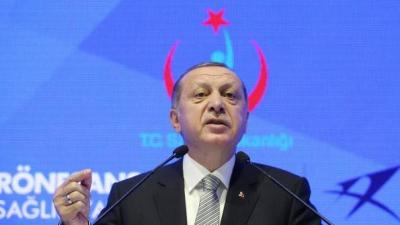
US President Joe Biden and Turkish President Recep Tayyip Erdogan have agreed on Turkey’s offer to take a leading role in the defence of Afghanistan’s Kabul Airport, the US National Security Advisor has revealed.
Speaking to reporters yesterday, Jake Sullivan said that the two leaders discussed the situation in Afghanistan during their meeting on the sidelines of the NATO summit on Monday. According to Sullivan, Erdogan sought certain unspecified US assistance for Turkey in return for the deployment of Turkish troops at the airport following the withdrawal of US and NATO forces from the country. Biden apparently accepted this.
“The clear commitment from the leaders was established that Turkey would play a lead role in securing Hamid Karzai International Airport,” explained Sullivan. “And we are now working through how to execute to get to that.”
The security of the airport in Kabul is seen as vital for the operation and continuation of diplomatic missions to Afghanistan. It would serve as the safest exit point for diplomats in the event of a potential security breakdown in the country, such as the Taliban’s defeat of Afghan government forces.
Last week, however, the Taliban also warned Turkey to withdraw its troops and said that its military presence at the airport would not be welcome. “Obviously we take seriously the concern that the Taliban or other elements in Afghanistan will attack the Western or the international presence,” said Sullivan. “We do not believe that what the Taliban has said publicly should or will deter the efforts underway right now to establish that security presence.”
The agreement between Ankara and Washington comes after years of strained relations between the two over a myriad of issues. A primary dispute remains Turkey’s purchase of the Russian S-400 air defence system, which the US and other NATO members condemned due to the system’s potential breach of the alliance’s security.
Sullivan addressed that issue, revealing that there was no progress and the two leaders maintained their respective positions. “They discussed it. There was not a resolution of the issue. There was a commitment to continue the dialogue on the S-400 and the two teams will be following up on that coming out of the meeting.”
10 mine-clearing workers killed in Afghanistan, Taliban denies responsibility for attack
RT | June 9, 2021
Gunmen stormed a camp of a UK-based mine clearance group in Afghanistan, killing 10 people. Afghan officials blame the Taliban for the attack, while the militants deny this.
The non-governmental organization HALO Trust said that 10 of its workers were killed and 16 wounded on Tuesday evening when gunmen attacked their camp in Afghanistan’s northeastern Baghlan Province. The group said than around 110 people from local communities were at the camp.
The Baghlan governor’s spokesperson, Jawed Basharat, told AFP that the gunmen wore masks. Ariana News cited locals saying that all victims were from the Baghlan Province.
Afghanistan Interior Ministry spokesperson Tariq Arian said militants from the Taliban were behind the attack. He posted what he said were photos of the wounded mine-clearers lying on hospital beds.
The Taliban denied targeting the mine clearance team. “We condemn attacks on the defenseless & view it as brutality,” the group’s spokesperson, Zabihullah Mujahid, said in a tweet, adding that the militants have “normal relations” with NGOs.
Arian said the Taliban was lying and that its fighters have attacked aid workers and civilians in the past.
The Taliban claimed to have shot down an Afghan military helicopter on Tuesday. However, the country’s Defense Ministry said the M-17 chopper crashed due to technical problems, killing three of its crew and injuring one.
Featured Video

Rewriting the risk? Inside the government’s vaccine safety messaging
or go to
Aletho News Archives – Video-Images
From the Archives
‘Israel sees Iran as obstacle to its policies’
Press TV – August 25, 2017
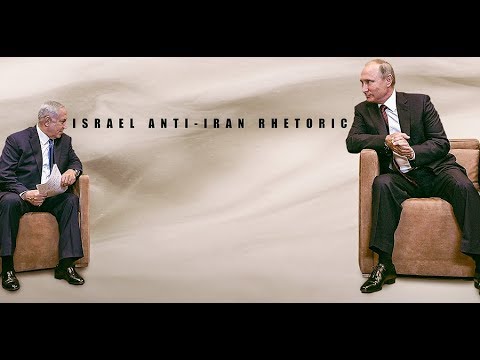
Prime Minister Benjamin Netanyahu has said that Israel felt threatened by Iran’s growing influence in the Middle East. Netanyahu expressed his Iranophobic view in a meeting with Russian President Vladimir Putin in Russia’s Black Sea resort of Sochi on Wednesday. Press TV has asked Scott Rickard, former American intelligence linguist from Tampa, Florida, and Brent Budowsky, a columnist at The Hill from Washington, to give their thoughts on the issue.
Rickard said Tel Aviv is concerned about the fact that the regime could not carry out its old project to spread sectarian divisions and pave the way for dismemberment of the countries in the Middle East region because of the Iranian-led resistance against Israeli policies, not only in the occupied territories of Palestine but also in the whole region.
“Iran is not a threat to Israel whatsoever. The threat that Israel sees is the fact that their Oded Yinon Plan is being put to a hold by Iran,” the intelligence linguist said on Thursday night.
“They (the Israelis) look at Iran as a threat only because they have no influence on their governments and Iran is autonomous and is not under the Zionist influence,” he added.
Since the victory of the Islamic Republic of Iran in 1979, Tehran has been critical of Israel’s policies in the region, whereas “no leaders [of other states] even dared to speak out against Zionism,” Rickard argued. … continue
Blog Roll
 Aletho News
- What’s Behind U.S./Israeli Strikes On Iranian Pistachio Factories?
- Seyed M. Marandi: U.S. Military DIVIDED? Iran’s Secret Defense EXPOSED
- How I fell foul of the BBC thought police
- The End of NATO
- 37 days of war on Iran cost US staggering $42bln, tracker shows
- Baghdad tells Asian refiners, traders to begin loading Iraqi crude amid Iranian exemption
- Under fire, Moscow and Tehran close ranks
- Iran, US receive Pakistan-mediated plan for ceasefire then final deal
- Iran submits demands for end to war as mediators scramble ahead of Trump deadline
- Iran Threatens Retaliatory Strike on Stargate AI Project in UAE
- If Americans Knew
- U.N. experts demand Israel release prominent Gaza doctor after reports of ‘severe torture’
- Israel’s Latest Genocide Is Against the Shias of Lebanon. Why Is the World Silent?
- How Eliot Cohen’s influence over U.S. war-making paved the way for Trump’s war crimes in Iran
- Israelis don’t pay for the weapons we ‘sell’ to them — US taxpayers do
- While Distancing from AIPAC, Most 2028 Democratic Hopefuls Are Still Embracing Israel
- A brief history of the Israeli nuclear program, the open secret at the heart of the Iran war
- Israeli Settlers Killed a Palestinian Farmer on His Own Land, in Front of His Father. Yes, Again
- The US-Israeli War on Science is an Assault on our Future
- 100+ International Law Experts Say US Strikes on Iran Violate UN Charter, Could Be War Crimes
- ‘Vile, Horrifying, Evil’: Trump Threatens to Bomb Nation of 90 Million People ‘Back to the Stone Ages’
- No Tricks Zone
- An Inconvenient Tree: Uncovered In Alps… Europe Much Warmer Than Today 6000 Years Ago
- New Study Reports A 60% Slowdown In Greenland’s Ice Loss Rate In The Last Decade
- Low Intensity Tornado Wrecks Major Solar Farm, Creating A Potential Toxic Dump
- New Study Finds Warming Saves Lives…Cold Temperatures 12 Times More Deadly Than Excess Heat
- German Science Blog Accuses PIK Climate Institute Of Hallucinating Climate Tipping Points
- Devastating Assessment Of Comirnaty Vaccine By Former Senior Pfizer Europe Toxicologist
- New Study: CO2 Is ‘Effectively Negligible’ As An Explanatory Climate Change Factor Since 2000
- Former Pfizer Toxicologist Dr. Helmut Sterz Tells Bundestag Hearing Pfizer Vaccine Should Have Never Been Approved
- Energy Expert: Germany’s Nuclear Phaseout Was A “500 Billion Euro Mistake”
- New Research: South Australia’s Mid-Holocene Sea Surface Temperatures Were 4°C Warmer Than Today
 Aletho News