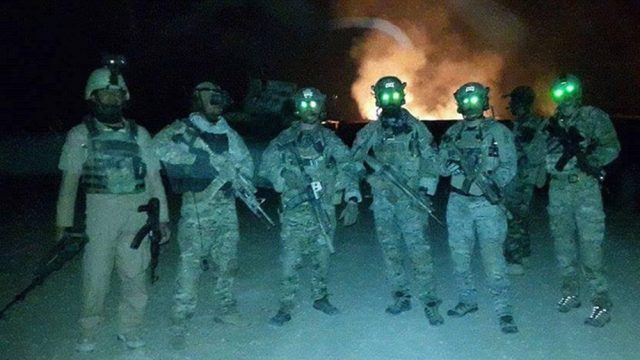
Video evidence of ‘massacre’ by UK special forces in Afghanistan mysteriously VANISHES
RT | March 14, 2021
Video allegedly showing a “rogue” SAS unit committing war crimes in Afghanistan has supposedly disappeared, as an investigation into the squad’s alleged “massacres” has been plagued by missing evidence and silence from witnesses.
Saifullah Yar was just 19 when his family were shot dead in an SAS raid on their Afghan village in 2011. When British military investigators flew to Kabul in 2017 to investigate the raid, he told them he was handcuffed and led away from his father, brother and two male cousins. He heard two sustained bursts of gunfire, and when the Brits departed, his relatives were dead, their bodies riddled with bullets.
Video footage of the raid was apparently captured by US air support overhead, but according to a new Sunday Times report, American authorities mysteriously lost the footage, and were unable to provide it to a British court, where Saifullah has brought a judicial review into the fatal raid.
The mysterious disappearance isn’t the first time that key evidence from the raid has gone missing, or been intentionally hidden. The Royal MIlitary Police (RMP) investigators’ 2017 visit to Kabul was one of their last tasks in a three-and-a-half year probe into allegations of war crimes against the SAS unit, during which they found that the British operators doctored mission reports to implicate Afghan special forces in similar killings, dozens of which took place between 2011 and 2013.
The investigators interviewed 42 soldiers who said they were unable to remember the mission. Court documents reported on by the Times stated that a judge termed this a case of “collective amnesia.” The weapons used in the raid on Saifullah’s village were destroyed the same year the RMP opened its investigation.
However, evidence against the SAS troops has piled up. Investigators found that British 5.56mm bullets, rather than the 7.62mm rounds used by the Afghan commandos, were used to kill the victims. Additionally, they examined reports that weapons were planted on the bodies of these victims, in order to justify the killings later.
The reports that followed the 2011 raid on Saifullah’s village stated that his family were killed when they reached for weapons as the SAS searched their property. These reports were met with skepticism by senior commanders, who in a chain of emails seen by the British court, described the raid as “the latest massacre,” and expressed disbelief at the idea of four overpowered prisoners reaching for hidden grenades and rifles during the raid.
“And finally they shot a guy who was hiding in a bush who had a grenade in his hands. You couldn’t MAKE IT UP!,” one senior noncommissioned officer wrote.
The British government closed down the investigation in late 2017 without prosecuting a single case. The same year, another wide-ranging investigation into alleged war crimes, the Iraq Historic Allegations Team (IHAT), was shut down, also without prosecuting a case.
With the SAS typically exempt from parliamentary oversight, the courts are now Saifullah’s best hope of finding justice. “Our client is seeking a fresh investigation into the deaths of his loved ones and he wants to find out whether their deaths were part of a pattern of unlawful killings of Afghan civilians,” his lawyer, Tessa Gregory, told the Sunday Times.
Biden, Afghanistan and Forever Wars
By Binoy Kampmark | OffGuardian | March 9, 2021
The papers are full of suggestions on what US President Joe Biden should do about his country’s seemingly perennial involvement in Afghanistan.
None are particularly useful, in that they ignore the central premise that a nation state long mauled, molested and savaged should finally be left alone. Nonsense, say the media and political cognoscenti.
The Guardian claims that he is “trapped and has no good choices”. The Wall Street Journal opines that he is being “tested in Afghanistan” with his opposition to “forever wars”. The Washington Post more sensibly suggests that Biden take the loss and “add it to George W. Bush’s record.”
The Afghanistan imbroglio for US planners raises the usual problems. Liberals and Conservatives find themselves pillow fighting over similar issues, neither wishing to entirely leave the field. The imperium demands the same song sheet from choristers, whether they deliver it from the right side of the choir or the left.
The imperial feeling is that the tribes of a country most can barely name should be somehow kept within an orbit of security. To not do so would imperil allies, the US, and encourage a storm of danger that might cyclonically move towards other pockets of the globe.
It never occurs to the many dullard commentators that invading countries such as Afghanistan to begin with (throw Iraq into the mix) was itself an upending issue worthy of criminal prosecution, encouraged counter-insurgencies, theocratic aspirants and, for want of a better term, terrorist opportunists.
The long threaded argument made by the limpet committers has been consistent despite the disasters. Drum up the chaos scenario. Treat it as rebarbative. One example is to strain, drain and draw from reports such as that supplied by the World Bank.
Conflict is ongoing, and 2019 was the sixth year in a row when civilian casualties in Afghanistan exceeded 10,000. The displacement crisis persists, driven by intensified government and Taliban operations in the context of political negotiations.”
The report in question goes on to note the increase in IDPs (369,700 in 2018 to 462,803 in 2019) with “505,000 [additional] refugees returned to Afghanistan, mainly from Iran, during 2019.”
Then come remarks such as those from David von Drehle in the Washington Post. His commentary sits well with Austrian observations about Bosnia-Herzegovina during the latter part of the 19th century.
Nearly 20 years into the US effort to modernize and liberalize that notoriously difficult land, Taliban forces once more control the countryside, and they appear to be poised for a final spring offensive against the parts of the Afghan cities that remain under government control.”
The savages, in short, refuse to heel.
Von Drehle, to his credit, at least suggests that the US take leave of the place, admitting that Washington was unreservedly ignorant about the country. He quotes the words of retired L. General Douglas Lute: “We were devoid of a fundamental understanding of Afghanistan.” Tellingly, the general admitted that, “We didn’t know what we were doing.”
Fears exist as to how the May 2021 deadline for withdrawing all US military forces looms. Anthony H. Cordesman is very much teasing his imperial masters in Washington as to what is best. “Writing off the Afghan government will probably mean some form of Taliban victory.”
This is hardly shocking, but Cordesman prepares the terrain for the hawks.
This will create increased risks in terms of extremism and terrorism, but it is far from clear that these risks will not be higher than the risks of supporting a failed Afghan government indefinitely into the future and failing to use the same resources in other countries to support partners that are more effective.”
This is the usual gilded rubbish that justifies the gold from a US taxpayer. But will it continue to stick?
A few clues can be gathered on future directions, though they remain floated suggestions rather than positions of merit. The Biden administration’s Interim National Security Strategic Guidance waffles and speaks mightily about democracy (how refreshing it would be for him to refer to republicanism) which, in a document on national security, always suggests overstretch and overreach.
“They are those who argue that, given all the challenges we face, autocracy is the best way forward.” But he also inserts Trumpian lingo. “The United States should not, and will not, engage in ‘forever wars’ that have cost thousands of lives and trillions of dollars.”
Afghanistan comes in for special mention, and again, the language of the Trump administration is dragged out for repetition.
We will work to responsibly end America’s longest war in Afghanistan while ensuring that Afghanistan does not again become a safe haven for terrorists.”
Not much else besides, and certainly no express mention of grasping the nettle and cutting losses. And there is that troubling use of the word “responsibly”.
The default position remains the use of force, which the US “will never hesitate to” resort to “when required to defend our vital national interests. We will ensure our armed forces are equipped to deter our adversaries, defend our people, interests, and allies, and defeat the threats that emerge.” Again, the stretch is vast and imprecise.
Given that position, the withdrawal of the remaining 2,500 US troops in the country is bound to become a matter of delay, prevarication and consternation. Quiet American imperialism, at least a dusted down version of it, will stubbornly continue in its sheer, embarrassing futility. The imperial footprint will be merely recast, if in a smaller form.
Dr. Binoy Kampmark was a Commonwealth Scholar at Selwyn College, Cambridge. He lectures at RMIT University, Melbourne. Email: bkampmark@gmail.com
IMPERIAL WASTE
By Paul Robinson | IRRUSSIANALITY | March 3, 2021
Imperialism is big gigantic waste of money. Let’s start with that.
A couple of news items caught my attention this week that illustrate this point, but before getting on to them, we first need to make a bit of a detour and try to determine imperialism’s roots.
It’s harder than it might seem. For instance, historians have a real problem explaining late nineteenth century imperialism, in which European powers conquered large parts of the globe, most notably in Africa. All sorts of explanations have been generated, but few stand up to a lot of scrutiny.
Particularly implausible are the theories of socialist thinkers, the most famous of which is Lenin’s Imperialism: The Last State of Capitalism. The socialists’ idea was that capitalism generates lots of surplus capital that it can’t get rid of because it is suppressing the wages of its own workers and so denying itself investment opportunities at home. Instead, capitalism exports its surplus, for which it needs colonies – thus imperialism.
The problem was that, like a lot of Lenin’s stuff, the theory was total hogwash. First, capitalist economies had no shortage of investment opportunities at home; and second, they didn’t need colonies to invest abroad. The British, for instance, invested far, far more in Latin America, which they never conquered, than in Africa, which they did.
Furthermore, imperialism was, generally speaking, loss-making. Colonies had to be defended and administered, but they tended to be economically undeveloped, and so didn’t generate much revenue. There was a reason why the Brits were so happy to let the Canadians become self-governing – they were fed up having to pay for a frozen piece of wasteland that only produced some fur and lumber.
So, imperialism doesn’t make a lot of sense from the point of view of the national interest, broadly defined. But it does make sense to certain minority interests within an imperial society. There are medals and promotions to be won by the military; there are contracts for the military industrial complex; and there’s also money to be made by all sorts of other entrepreneurs willing to hang on the imperialists’ coattails. If these people and groups have outsized political influence – through control of the media, financial support to politicians, or whatever – they can distort politicians’ and even the entire population’s understanding of the national interest. And thus the nation gets dragged into foreign endeavours that enrich and empower a few but do nothing at all for the people as a whole.
Which brings me on to this week’s new stories, both of which involve staggering waste of government money on military and imperial adventures.
The first story concerns the Canadian navy’s program to build a new generation of warships. This was originally budgeted as costing $14 billion. Now the parliamentary budget officer has announced that the cost has leapt to a mind-blowing $77 billion, and that the total could go up even more if the project experiences further delays (which, let’s face it, is quite likely).
Going over-budget is hardly unusual in the world of defence procurement, but a leap from $14 to $77 billion is more than a bit off the charts. Imagine what you could do with $77 billion. Apart from putting it back in taxpayer’s pockets, think of what you could do for healthcare, education, or the condition of the country’s indigenous people, many of whom don’t even have access to drinkable water. And then think of what benefits you’re going to get from $77 billion worth of warships. Or rather, think of how you would suffer if you didn’t have those ships. Would anyone invade Canada? Would the world collapse into chaos? Would any of you not directly involved in building or manning them even notice??? No, no, and no.
This is a scandalous and appalling waste of the nation’s wealth. Yet it’s passed almost unnoticed. We live in a world of pandemic economics, in which money appears to grow on trees, budget deficits have ballooned to simply incomprehensible proportions, and the loss of $70-odd billion just slips by without causing so much as a blink of an eye. Clearly, something isn’t right.
And then there’s story number two. This is the latest report from the Special Inspector General for Afghanistan Reconstruction (SIGAR), a person whose work I have mentioned many times before. SIGAR audits the money spent by the United States in Afghanistan, and it’s a litany of waste and corruption on a scale that … well, I’ve already used the word mindblowing, so I won’t say that it blows the mind, but you get the point, it involves a lot, a real, real lot, of money flushed down the toilet of Afghanistan for no obvious benefit.
Anyway, SIGAR’s latest report, which came to me in an email, says the following:
–This report is the result of a congressional request of SIGAR to summarize all capital assets in Afghanistan paid for by U.S. agencies that SIGAR has found in its prior work to be unused, not used for their intended purposes, deteriorated or destroyed.
— The capital assets reviewed for this report were funded by DOD, USAID, OPIC, and the State Department to build schools, prisons, a hotel, hospitals, roads, bridges, and Afghan military facilities.
— Of the nearly $7.8 billion in capital assets reviewed in its prior reports, SIGAR identified about $2.4 billion in assets that were unused or abandoned, had not been used for their intended purposes, had deteriorated, or were destroyed.
— By contrast, SIGAR found that more than $1.2 billion out of the $7.8 billion in assets were being used as intended, and only $343.2 million out of the $7.8 billion in assets were maintained in good condition.
— Most of the capital assets not used properly or in disrepair or abandoned are directly related to U.S. agencies not considering whether the Afghans wanted or needed the facilities, or whether the Afghan government had the financial ability and technical means to sustain them.
— This waste of taxpayer dollars occurred despite multiple laws stating that U.S. agencies should not construct or procure capital assets until they can show that the benefiting country has the financial and technical resources, and capability to use and maintain those assets effectively.
Quote:
— “SIGAR’s work reveals a pattern of U.S. agencies pouring too much money, too quickly, into a country too small to absorb it,” said Special Inspector General John F. Sopko. “The fact that so many capital assets wound up not used, deteriorated or abandoned should have been a major cause of concern for the agencies financing these projects. The lesson of all of this is two-fold. If the United States is going to pay for reconstruction or development in Afghanistan or anywhere else in the world, first make certain the recipient wants it, needs it and can sustain it. Secondly, make certain before you spend the money there is proper oversight to prevent this type of waste.”
I’m a great fan of SIGAR, but there’s something about his work that really frustrates me. He’s been saying this stuff for years, but nothing ever changes. The money keeps flowing, and keeps getting squandered. There should be ‘proper oversight’ SIGAR says, but surely by now he’s got to have woken up to the fact that it’s not going to happen. It’s like all he can say is, ‘do all this stuff better’, but can never bring himself to say, ‘Stop doing it! It’s a gigantic boondoogle.’
To be fair, that’s not an auditor’s job, and I guess that he can’t go beyond his legal remit. But you see what I’m saying. This isn’t something you can solve by introducing better processes. It’s rotten to the core.
Unfortunately, it continues, and continues, and continues. And so it is that our profligate military and imperial adventures impoverish us all, while bringing us absolutely diddly squat in return for our money. Back in the day, I was taught that the essence of democracy is accountability. Judging by this, we’re not democracies at all.
But I’ll give the final word to two-times winner of the Congressional Medal of Honor, General Smedley Butler. ‘War is a racket’, he said.
How very true.
No decision on any NATO withdrawal from Afghanistan: Stoltenberg
Press TV – February 18, 2021
NATO Secretary-General Jens Stoltenberg says defense ministers from the Western military alliance made no decision at a recent meeting in Brussels on whether or when to pull out of war-torn Afghanistan.
“At this stage, we have made no final decision on the future of our presence,” Stoltenberg said after a video conference with allied defense ministers on Thursday.
The defense ministers met to discuss the possibility of staying in Afghanistan beyond the May withdrawal deadline agreed between the Taliban militant group and the United States under the administration of former US President Donald Trump.
Key on the agenda at the two-day virtual conference in Brussels was the future of the US-led forces in the war-torn country.
The NATO chief said US Defense Secretary Lloyd Austin promised to consult with partners on the way forward.
“As the May 1 deadline is approaching, NATO allies will continue to closely consult and coordinate in the coming weeks. We are faced with many dilemmas, and there are no easy options,” Stoltenberg said.
“If we stay beyond the first of May, we risk more violence, more attacks against our own troops … But if we leave, then we will also risk that the gains that we have made are lost.”
The administration of President Joe Biden is reviewing whether to stick to the looming deadline to withdraw or risk a bloody backlash from the Taliban.
Other NATO members have signaled a desire within the alliance to stay in Afghanistan beyond the deadline. They are willing to remain in Afghanistan if Washington does so.
German Defense Minister Annegret Kramp-Karrenbauer said on Wednesday that the Taliban must do more to meet the terms of a 2020 agreement with Washington on the withdrawal of US.forces to allow a pullout of the foreign troops.
“We can already say that we are not yet in a position to talk about the withdrawal of international forces from Afghanistan,” the German minister said as she arrived for the meeting.
“This also means a changed security situation, an increased threat for the international forces, also for our own forces. We have to prepare for this, and we will certainly discuss this.”
Nearly two decades after the US-led invasion, Trump struck a deal with the Taliban in the Qatari capital of Doha early last year.
The former White House tenant reached the accord in February 2020, under which the US and its NATO allies are expected to withdraw all troops in 14 months in exchange for the Taliban to halt attacks on foreign forces.
President Biden, however, has said his administration would not commit to a full withdrawal by May.
The United Nations says more than 100,000 civilians have been killed or injured over the past decade across Afghanistan.
Why Victoria Nuland Is Dangerous and Should Not be Confirmed
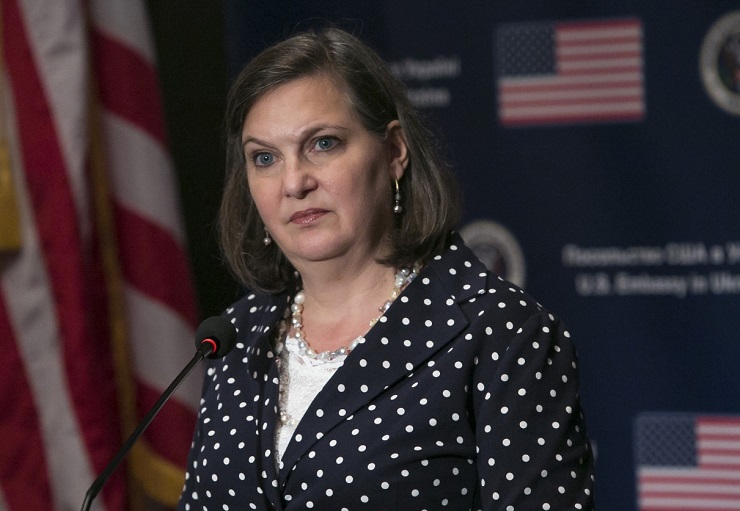
By Rick Sterling | Global Research | February 11, 2021
Victoria Nuland exemplifies the neocons who have led US foreign policy from one disaster to another for the past 30 years while evading accountability. It is a bad sign that [proclaimed] President Joe Biden has nominated Victoria Nuland for the third highest position at the State Department, Under Secretary for Political Affairs.
As a top-level appointee, Victoria Nuland must be confirmed by the US Senate. There is a campaign to Stop her confirmation. The following review of her work shows why Victoria Nuland is incompetent, highly dangerous and should not be confirmed.
Afghanistan and Iraq
From 2000 to 2003, Nuland was US permanent representative to NATO as the Bush administration attacked then invaded Afghanistan. The Afghan government offered to work with the US remove Al Qaeda, but this was rejected. After Al Qaeda was defeated, the US could have left Afghanistan but instead stayed, established semi-permanent bases, split the country, and is still fighting there two decades later.
From 2003 to 2005 Nuland was principal foreign policy advisor to Vice President Dick Cheney who “helped plan and manage the war that toppled Saddam Hussein, including making Bush administration’s case for preemptive military actions based on Iraq’s alleged weapons of mass destruction.” The foreign policy establishment, with Nuland on the far right, believed that removing Saddam Hussein and installing a US “ally” would be simple.
The invasion and continuing occupation have resulted in over a million dead Iraqis, many thousands of dead Americans, hundreds of thousands with Post Traumatic Stress Disorder at a cost of 2 to 6 TRILLION dollars.
From 2005 to 2008 Victoria Nuland was US Ambassador to NATO where her role was to “strengthen Allied support” for the occupations of Afghanistan and Iraq.
On the 10th anniversary of the invasion, when asked about the lessons learned Nuland responded “Compared to where we were in the Saddam era, we now have a bilateral security agreement … We have deep economic interests and ties. We have a security relationship. We have a political relationship.” Nuland is oblivious to the costs. Nuland’s loyalties are to the elite who have benefitted from the tragedy. According to online google, “One of the top profiteers from the Iraq War was oil field services corporation, Halliburton. Halliburton gained $39.5 billion in ‘federal contracts related to the Iraq war.’ Nuland’s boss, Vice President Dick Cheney, was the former the CEO of Halliburton.
In January 2020, seventeen years after the US invasion, the Iraqi parliament passed a resolution demanding the US troops and contractors leave. Now, over one year later, they still have not left.
Libya
In spring 2011, Victoria Nuland became State Department spokesperson under Hillary Clinton as she ramped up the “regime change” assault on Moammar Ghaddafi of Libya. UN Security Council resolution 1973 authorized a “No Fly Zone” for the protection of civilians but NOT an air assault on Libyan government forces.
That summer, as US and others bombed and attacked Libyan forces, she dismissed the option of a peaceful transition in Libya and falsely suggested the UN Security Council required the removal of Ghaddafi.
The campaign led to the toppling of the Libyan government and killing of Ghadaffy. Commenting on the murder and bayonet sodomizing of Ghaddafi, Nuland’s boss Hillary Clinton chortled “We came, we saw, he died.”
Before the overthrow, Libya had the highest standard of living in all of Africa. Since the US led assault, Libya has become a failed state with competing warlords, huge inflation, huge unemployment, and exploding extremism and violence that has spread to neighboring countries. Most of the migrants who have crossed the Mediterranean trying to reach Europe, or drowned trying to, are coming from Libya. By any measure, the goal of “protecting” Libyan civilians has failed spectacularly.
Syria
One reason that Clinton and hawks such as Nuland wanted to overthrow Ghaddafi was to get access to the Libyan military arsenal. That way they could funnel arms to insurgents seeking to overthrow the Syrian government. This was confirmed in secret DOD documents which state: “During the immediate aftermath of, and following the uncertainty caused by, the downfall of the ((Qaddafi)) regime in October 2011 and up until early September of 2012, weapons from the former Libya military stockpiles located in Benghazi, Libya were shipped from the port of Benghazi, Libya to the ports of Banias and the Port of Borj Islam, Syria”
In January 2012, Nuland claimed the US is “on the side of those wanting peaceful change in Syria.” While saying this, the US was supplying sniper rifles, rocket propelled grenades, and 125 mm and 155 mm howitzer missiles to the “peaceful” protestors.
The US “regime change” strategy for Syria followed the pattern of Libya. First, claim that the protestors are peaceful. Then claim the government response is disproportionate. Put pressure on the target government to paralyze it, while increasing support to proxy protesters and terrorists. As documented, there were violent Syrian protesters from the start. During the first days of protest in Deraa in mid-March 2011, seven police were killed. As spokesperson for the State Department, Nuland was a major figure promoting the false narrative to justify the “regime change” campaign.
Ukraine
In September 2013 Victoria Nuland was appointed Assistant Secretary of State for European and Eurasian Affairs. The uprising in the central plaza known as the Maidan began soon after her arrival. To underscore the US support for the protests, Nuland and Senator John McCain passed out bread and cookies to the crowd.
Protests continued into January 2014. The immediate issue was whether to accept a loan from the International Monetary Fund which was going to require a 40% increase in natural gas bills or to accept a loan from Russia with the inclusion of cheap oil and gas. The opposition wanted the Yanukovych government to take the EU/IMF loan. The opposition was comprised of different factions, including the neo-Nazi Svoboda Party and Right Sector.
In early February 2014, an audio recording of Victoria Nuland talking the US Ambassador to Ukraine, Geoffrey Pyatt, was leaked to the public. The 4-minute conversation was a media sensation because it included Victoria Nuland saying, “Fuck the EU.”.
But Nuland’s cursing was a distraction from what was truly significant. The recording showed that Nuland was meddling in domestic Ukraine affairs, had direct contacts with key opposition leaders, and was managing the protests to the extent she was deciding who would and would not be in the post-coup government! She says, “I don’t think Klitsch [Vitaly Klitschko] should go into government…… I think Yats [Arseniy Yatseniuk] is the guy… “
The reason she wanted to “Fuck the EU” was because she did not approve the EU negotiations and compromise. Nuland and Pyatt wanted to “midwife” and “glue” the toppling of the Yanukovych government despite it being in power after an election that was observed and substantially approved by the OSCE (Organization for Security and Co-operation in Europe).
Over the next few weeks, the protests escalated. The President of the American Chamber of Commerce in Kiev, Bernard Casey, described what happened next. “On February 18-20, snipers massacred about 100 people [both protestors and police] on the Maidan …. Although the US Ambassador and the opposition blamed the Yanukovych Administration, the evidence points to the shots coming from a hotel controlled by the ultranationalists, and the ballistics revealed that the protestors and the police were all shot with the same weapons.”
The Estonian Foreign Minister later said the same thing: “behind the snipers it was not Yanukovych, but it was somebody from the new (opposition) coalition”.
President of the American Chamber of Commerce President for Ukraine, Bernard Casey, continues: “On February 20, 2014 an EU delegation moderated negotiations between President Yanukovych and the protestors, agreeing to early elections – in May 2014 instead of February 2015…. Despite the signing of an agreement … the ultranationalist protestors, and their American sponsors, rejected it, and stepped up their campaign of violence.”
The coup was finalized over the coming days. Yanukovych fled to for his life and Yatsenyuk became President after the coup as planned.
One of the first acts of the coup leadership was to remove Russian as an official state language, even though it is the first language of millions of Ukrainians, especially in the south and east. Over the coming period, the “birth” of the coup government, violence by ultranationalists and neo-Nazis was prevalent. In Odessa, they attacked people peacefully protesting the coup. This video shows the sequence of events with the initial attack followed by fire-bombing the building where protestors had retreated. Fire trucks were prevented from reaching the building to put out the fire and rescue citizens inside. Forty-two people died and a 100 were injured.
A bus convoy heading back to Crimea was attacked with the anti-coup passengers beaten and some killed.
In the Donbass region of eastern Ukraine, protests against the coup were met by deadly force.
Victoria Nuland claims to be a “victim” because her conversation was leaked publicly. The real victims are the many thousands of Ukrainians who have died and hundreds of thousands who have become refugees because of Nuland’s crusade to bring Ukraine into NATO.
The audio recording confirms that Nuland was managing the protests at a top level and the results (Yats is the guy) was as planned. Thus, it is probable that Nuland approved the decision to 1) deploy snipers to escalate the crisis and 2) overturn the EU mediated agreement which would have led to elections in just 3 months.
Why were snipers deployed on February 18? Probably because time was running out. The Russian leadership was distracted with the Sochi Olympic Games ending on February 23. Perhaps the coup managers were in a hurry to “glue” it in advance.
Russia
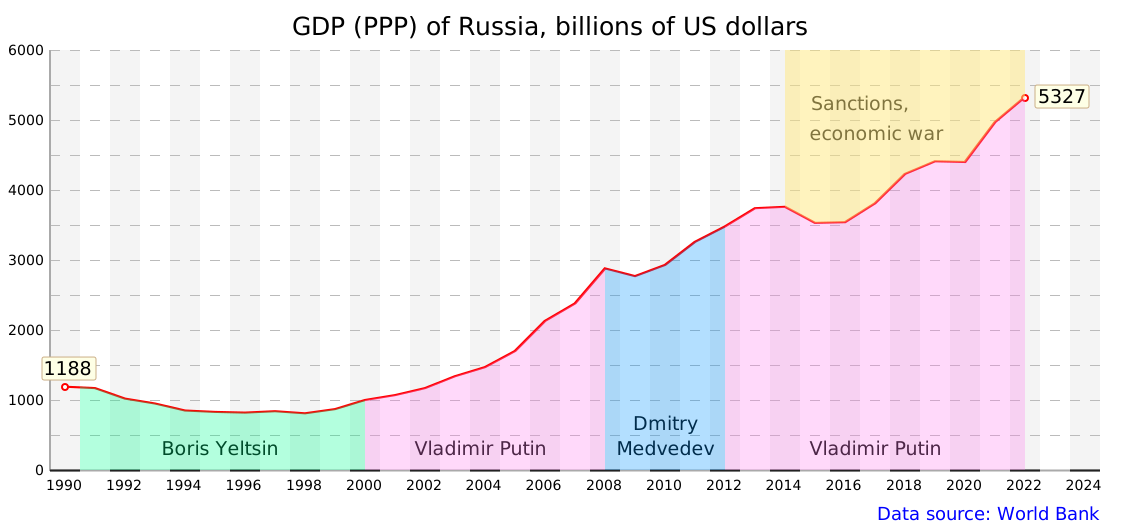
During the 1990’s, Nuland worked for the State Department on Russia related issues including a stint as deputy director for former Soviet Union affairs. The US meddled in Russian internal affairs in myriad ways. Time magazine proudly proclaimed “Yanks to the rescue: the secret story of how American advisors helped Yeltsin win.” The Yeltsin leadership and policies pushed by the US had disastrous consequences. Between 1991 and 1999, Russian Gross Domestic Product decreased by nearly 50% as the social safety net was removed. The Russian economy collapsed, oligarchs and lawlessness arose. Nuland was part of the US group meddling in Russia, deploying economic “shock therapy” and causing widespread social despair.
Meanwhile, the U.S. reneged on promises to Soviet leader Gorbachev that NATO would not expand “one inch” eastward. Instead, NATO became an offensive pact, bombing Yugoslavia in violation of international law and then absorbing Poland, Hungary, Bulgaria, Romania, the Baltic states, the Czech Republic, Albania, Croatia and more.
Coming into power in 2000, Putin clamped down on the oligarchs, restored order and started rebuilding the economy. Oligarchs were forced to pay taxes and start investing in productive enterprises. The economy and confidence were restored. Over seven years, GDP went from $1300 billion (US dollars) to $2300 billion. That is why Putin’s public approval rating has been consistently high, ranging between 85% and a “low” approval rating of 60%.
Most Americans are unaware of these facts. Instead, Putin and Russia are persistently demonized. This has been convenient for the Democratic Party establishment which needed a distraction for their dirty tricks against Bernie Sanders and subsequent loss to Donald Trump. The demonization of Russia is also especially useful and profitable for the military industrial media complex.
Victoria Nuland boosted the “Steele Dossier” which alleged collaboration between Russia and Trump and other salacious claims. The allegations filled the media and poisoned attitudes to Russia. Belatedly, the truth about the “Steele Dossier” is coming out. Last summer the Wall Street Journal reported “the bureau (FBI) knew the Russia info was phony in 2017” and that “There was no factual basis to the dossier’s claims”.
While promoting disinformation, Victoria Nuland is pushing for a more aggressive US foreign policy. In an article titled “Pinning Down Putin”, she says “Russia’s threat to the liberal world has grown”, that Washington should “deter and roll back dangerous behavior by the Kremlin” and “rebuff Russian encroachments in hot spots around the world.”
The major “hot spots” are the conflicts which Victoria Nuland and other Washington neocons promoted, especially Syria and Ukraine. In Syria, the US and allies have spent hundreds of BILLIONS of dollars promoting the overthrow of the Assad government. So far, they have failed but have not given up. The facts are clear: US troops and military bases in Syria do not have the authorization of the Syrian government. They are actively stealing the precious oil resources of the Syrian state. It is the US not Russia that is “encroaching”. The dangerous behavior is by Washington not Moscow.
Conclusion
Victoria Nuland has promoted a foreign policy of intervention through coups, proxy wars, aggression, and ongoing occupations. The policy has been implemented with bloody and disastrous results in Afghanistan, Iraq, Libya, Syria, and Ukraine.
With consummate hypocrisy she accuses Russia of spreading misinformation in the US, while she openly seeks to put “stress on Putin where he is vulnerable, including among his own citizens.” She wants to “establish permanent bases along NATO’s eastern border and increase the pace and visibility of joint training exercises.”
Victoria Nuland is the queen of chicken hawks, the Lady Macbeth of perpetual war. There are hundreds of thousands of victims from the policies she has promoted. Yet she has not received a scratch. On the contrary, Victoria Nuland probably has profited from a stock portfolio filled with military contractors.
Now Victoria Nuland wants to provoke, threaten and “rollback” Russia. A quick look at a map of US military bases shows who is threatening whom.
Victoria Nuland is dangerous and should not be confirmed.
*
Rick Sterling is an investigative journalist in the SF Bay Area. He can be reached at rsterling1@protonmail.com.
US forces ‘transporting by choppers’ Daesh terrorists in Afghanistan: Taliban
Press TV – February 1, 2021
The Taliban says the US occupation forces in Afghanistan are engaged in “transporting by their choppers” members of the Daesh Takfiri terrorist group in the war-torn country’s east.
Senior members of a Taliban delegation, who are on an official visit to Iran for talks on the Afghan peace process and relevant topics, made the assertion in a news conference in Tehran on Monday, saying that the US forces in Afghanistan are assisting the Daesh terrorists to escape the areas that are coming under the Taliban control.
“Daesh were in Nangarhar and Kunar; they existed in those areas. They were eliminated by the Taliban there but their members were transferred by choppers,” Suhail Shaheen, a negotiating member of the Taliban told reporters, adding, “When the Taliban laid a siege on them, we saw that only American choppers could fly as the Afghan airspace is fully under the control of Americans.”
The senior Taliban member also referred to the escalation of violence in Afghanistan after the US-Taliban deal last February and said the US forces were to blame as they defaulted on their obligation to end their occupation and resumed the assault.
“After the signing of the agreement, we gave a chance to the Americans to withdraw their troops from Afghanistan and we were committed not to launch any attacks, so if they terminated the occupation we were committed to refrain from any assaults or attacks so it would pave the way for intra-Afghan talks but unfortunately new attacks were launched against us and we were forced to defend ourselves and they even tried to capture our region and they conducted nightly attacks,” he said.
“We have no access to the media but they have. They attribute violence to us and that is not true. They start the violence. They start the violent action and that’s still continuing.”
During the news conference, the Taliban negotiator said the group was after an “inclusive system and establishment” in Afghanistan and not after “monopolizing power,” adding that they would reconsider the agreement with US if foreign forces failed to withdraw from Afghanistan.
“We have resisted the occupation of Afghanistan for 20 years and we will continue resistance against occupation if foreign forces remain in the country,” the senior Taliban member said.
Last week, the Taliban political delegation arrived in Tehran at the invitation of the Iranian Foreign Ministry, the latest of such visits that have been paid several times over the past months.
Iran strongly supports the realization of peace and stability in Afghanistan, which has been embroiled in decades of militancy fueled by foreign military intervention.
The intra-Afghan talks started after the United States agreed to withdraw 12,000 US troops from Afghanistan in exchange for the Taliban’s halting of their attacks on international forces under a deal between the two sides in February 2020.
The deal was intended to result in the reduction of bloodshed, but violence continues to take a heavy toll on the country.
In recent months, deadly attacks and high-profile assassinations have seen a rise in Afghanistan. The Taliban have denied responsibility for the killings, but Afghan and US officials have pinned the blame on the group.
Despite the ongoing talks between Kabul and the Taliban, the administration of US President Joe Biden has said it would review the peace deal reached last year.
The US first invaded Afghanistan in 2001 under the banner of fighting “terrorism.” The invasion toppled the Taliban, but the group has never stopped its attacks, citing the foreign military presence as one of the main reasons behind its continued militancy.
Since the US invasion of Afghanistan, Washington has spent more than two trillion dollars for the war on the impoverished country, according to some estimates. Over 2,400 US soldiers and tens of thousands of Afghan civilians have been killed.
Biden Regime Puts The Brakes On Trump’s Germany Troop Draw Down
By Tyler Durden | Zero Hedge | January 29, 2021
Perhaps as expected, it didn’t take long for the Biden administration to begin putting the brakes on Trump’s previously ordered troop draw downs which occurred in the last two months of his presidency, particularly in Germany, Iraq, and Afghanistan.
The defense analysis and news site Military.com is reporting that new defense secretary under the Biden administration Lloyd Austin is reviewing the withdrawal of 12,000 US troops from Germany:
Defense Secretary Lloyd Austin has voiced his commitment to shoring up close ties with NATO ally Germany that were strained under the Trump administration, and suggested that the plan to withdraw 12,000 U.S. troops from the country is open to discussion.
The prior Trump plan to cut nearly one-third of total American military personnel from the country was predictably fought from Congressional corners known for being hawkish on Russia, with even some American and European security officials having called the move a “gift to Putin”.
Later in December the 2021 National Defense Authorization Act attempted to override the draw down order, and according to German officials early this year there’s yet to be significant movement of troops from the country.
Defense Secretary Lloyd Austin this week held phone calls with NATO allied officials in Europe. The Military.com report continues:
In a phone call to his German counterpart, Defense Minister Annegret Kramp-Karrenbauer, Austin “expressed his gratitude to Germany for continuing to serve as a great host for U.S. forces, and expressed his desire for a continued dialogue on U.S. force posture in Germany,” according to a Pentagon readout of the call released Wednesday.
He also sought “to reinforce the value the United States places on the bilateral defense relationship with one of our closest NATO Allies,” the readout from Pentagon Press Secretary John Kirby states.
By all appearances the some 36,000 total American troops in Germany have gone nowhere despite the plan initiated under Esper.
Recent polling of the German public also suggests half or more want to see US troops gone, after being there since World War II.
As the report concludes of Defense Secretary Austin’s phone call, it is “the latest sign of the Biden administration’s intent to reverse or water down the policies of former President Donald Trump, who repeatedly questioned NATO’s worth to the U.S. and rattled allies with demands for more defense spending.”
6 Warning Signs from Biden’s First Week in Office
By Kit Knightly | OffGuardian | January 27, 2021
It’s been a busy first week for the 46th President [sic] of the United States, there are the 20,000 troops occupying the capitol city to organise, as well as the totally unprecedented show-trial of his immediate predecessor.
You know, usual democracy type stuff.
On top of that, Biden has now signed at least 37 executive orders in his first week. The record for any President, and more than the previous four presidents combined.
What do these orders, or any of his other moves, tell us about the future plans of the recently “elected” administration? Nothing good, unfortunately.
1. VACCINATION PASSPORTS
I still remember people claiming the introduction of vaccination passports (or immunity passes or the like) was just a “conspiracy theory”, the paranoid fantasy of fringe “covidiots”. All the way back in December, when they were getting fact-checked by tabloid journalists who can’t do basic maths.
These days they are rebranded as “freedom certificates” which are “divisive, politically tricky and probably inevitable”.
Many countries are already preparing to roll it out, including Iceland the UK and South Africa. Biden’s “Executive Order on Promoting COVID-19 Safety in Domestic and International Travel” adds the US to this list:
International Certificates of Vaccination or Prophylaxis. Consistent with applicable law, the Secretary of State, the Secretary of HHS, and the Secretary of Homeland Security (including through the Administrator of the TSA), in coordination with any relevant international organizations, shall assess the feasibility of linking COVID-19 vaccination to International Certificates of Vaccination or Prophylaxis (ICVP) and producing electronic versions of ICVPs.
2. CABINET APPOINTMENTS
Biden’s cabinet is praised as the “most diverse” in history, but will hiring a few non-white people really change the decades-old policies of US Imperialism? It certainly doesn’t look like it.
His pick for Under Secretary of State is Victoria Nuland, a neocon warmonger and one of the masterminds of the Maidan coup in Ukraine in 2014. She is married to Robert Kagan, another neocon warmonger, co-founder of the Project for a New American Century and senior fellow at the Brookings Institute and one of the masterminds behind the 2003 invasion of Iraq.
The incoming Secretary of State, Antony Blinken, is also an inveterate US Imperialist, arguing for every US military intervention since the 1990s, and criticised Trump’s decision to withdraw from Syria.
Biden’s pick for Defence Secretary is the first African-American ever appointed to this role, but former General Lloyd Austin is hardly going be some kind of “progressive” voice in his cabinet. He’s a career soldier who retired from the military in 2016 to join the board of Raytheon Technologies, an arms manufacturer and military contractor.
As “diverse” as this cabinet may be in skin colour or gender… there is most certainly no “diversity” of opinion or policy. There are very few new faces and no new thoughts.
So, it looks like we can expect more of the same in terms of foreign policy. A fact that’s already been displayed in…
3. IRAQ…
Despite heavy resistance from the military and Deep State, Donald Trump wanted to end the war in Iraq and pledged to pull American troops out of the country. This was one of Trump’s more popular policies, and during the campaign Biden made no mention of intending to reverse that decision.
Then, on the very day of Biden’s inauguration, ISIS conducted their deadliest suicide bombing for over three years, and suddenly the situation was too unstable for the US to leave, and Biden is being forced to “review” Trump’s planned withdrawal.
The Iraqi parliament has made it clear it wants the US to take its military off their soil, so any American forces on Iraqi land are technically there illegally in contravention of international law. But that never bothered them before.
4. … AFGHANISTAN…
Turns out the US can’t withdraw from Afghanistan either. Last February Trump signed a deal with the Taliban that all US personnel would leave Afghanistan by May 2021.
Joe Biden has already committed to “reviewing” this deal. Sec. Blinken was quoted as saying that Biden’s admin wanted:
“to end this so-called forever war [but also] retain some capacity to deal with any resurgence of terrorism, which is what brought us there in the first place”.
As a great man once said, nothing someone says before the word “but” really counts. The US will not be withdrawing from Afghanistan, and if there is any public pressure to do so, the government will simply claim the Taliban broke their side of the deal first, or stage a few terrorist attacks.
5. … AND SYRIA
Far from simply continuing the on-going wars, there are already signs Biden’s “diverse” team will look to escalate, or even start, other conflicts.
Syria was another theatre of war from which Donald Trump wanted to extricate the United States, unilaterally ordering all US troops from the country in late 2019.
We now know the Pentagon ignored those orders. They lied to the President, telling Trump they had followed his orders… but not withdrawing a single man. This organized mutiny against the Commander-in-Chief of the US Armed Forces was played for a joke in the media when it was finally revealed.
There will be no need for any such duplicity now that Biden is in the Oval Office, he was a vocal critic of the decision to withdraw, claiming it gave ISIS a “new lease of life”. Indeed, within two days of his being sworn in a column of American military vehicles was seen entering Syria from Iraq.
6. DOMESTIC TERRORISM
We called this before the inauguration. They made it just too obvious. Before the dirty footprints had been cleaned from Nancy Pelosi’s desk it was clear where it was all going.
Within 24 hours of being sworn in as president, Biden had ordered a “review of the threat posed by domestic terrorism”.
As usual, the press are laying down the covering fire for this. Talking heads have been busily comparing MAGA voters to al Qaida in television interviews. The Washington Post and New Yorker journal have cut-and-paste pieces about this supposed threat. Politico published an article titled “Biden vowed to defeat domestic terrorism. The how is the hard part”, which outlines what Biden could do:
Direct the Justice Department, FBI and National Security Council to execute a top-down approach prioritizing domestic terrorism; pass new domestic terrorism legislation; or do a bit of both as Democrats propose a crack down on social media giants like Facebook for algorithms that promote conspiracy laden posts.
That last part is key. The “crack down on social media” part, because the anti-Domestic Terrorism legislation will likely be very focused on communication and so-called “misinformation”.
Alexandra Ocasio-Cortez has publicly called for a congressional panel to “rein in” the media:
We’re going to have to figure out how we rein in our media environment so you can’t just spew disinformation and misinformation,”
And who will be the target of these crack downs and new legislations? Well, according John Brennan (ex-head of the CIA and accomplished war criminal), practically anybody:
They’re casting a wide net. Expect “extremist”, “bigot” and “racist” to be just a few of the words which have their meanings totally revised in the next few months. “Conspiracy theorist” will be used a lot, too.
Further, they are moving closer and closer toward the “anyone who disagrees with us is literally insane” model. With many articles actually talking about “de-programming” Trump voters. The Atlantic suggests “mental hygiene” would cure the MAGA problem.
Again AOC is on point here, clearly auditioning for the role of High Inquisitor, claiming that the new Biden government needs to fund programs that “de-radicalise” “conspiracy theorists” who are on the “spectrum of radicalisation”.
*
As I said at the beginning, it’s been a busy week for Joe Biden, but you can sum up his biggest policy plans in one short sentence: More violence overseas, less tolerance of dissent and strict clampdowns on “misinformation”.
How progressive.
Iran-Turkey railway aims for 1M tons of cargo in 2021
MEMO | January 27, 2021
Roughly 1 million tons of cargo are to be transported via rail between Turkey and Iran this year, Turkish authorities said Tuesday, reports Anadolu Agency.
The Transport and Infrastructure Ministry said in a statement that a recent memorandum of understanding signed in a gathering of railway representatives in Turkey’s capital Ankara on January 12-13 would open a new era for the transit railway.
Despite the novel coronavirus pandemic, three train services were run daily between Turkey and Iran in 2020, transporting 564,000 tons of cargo, according to the statement.
The statement also announced that freight trains would also run between Turkey and Pakistan via Iran on a common tariff between the three countries. It added that talks are still ongoing to set this tariff.
With a recently completed railway between Iran and Afghanistan, it will now also be possible to transport freight between Turkey and Afghanistan.
“After the railway connection between Iran and Afghanistan was completed on December 10, 2020, it became possible for a wagon loaded in Turkey to transit Iran to Afghanistan.”
The railway administrations of Turkey, Iran, and Afghanistan will come together in the coming months to set a course for rail transport between Turkey and Afghanistan.
The statement added that efforts were underway for a cargo transportation corridor through Iran between Europe and China.
Iran has prepared initial plan for gas exports to Afghanistan
Press TV | November 9, 2020
Head of the National Iranian Gas Company (NIGC) says the country has a plan in place for launching gas exports to neighboring Afghanistan.
“The initial plan has been prepared and diplomatic negotiations are ongoing,” said Hassan Montazer Torbati on Monday as he briefed reporters on the latest situation of Iran’s gas exports to neighboring countries.
Torbati said gas exports to Afghanistan would be commissioned to private contractors although he insisted that the government has already provided the full infrastructure needed for transfer of gas to its eastern neighbor.
Afghanistan is increasingly relying on Iran for its energy needs as the landlocked country moves to expand economic activity through opening a new trade route that passes through Iran to the Indian Ocean.
However, Iranian energy supplies, including electricity, are mostly available to western parts of Afghanistan where the security of transfer infrastructure can be properly guaranteed.
Iran has increased both the output and exports of natural gas in recent years despite a series of US sanctions that have specifically targeted the country’s energy sector.
Nearly a tenth of Iran’s current output of more than 700 million cubic meters of gas is exported, mainly through pipelines to Turkey and Iraq.
On exports to Turkey, where authorities have touted the discovery of a new gas reserves in the Black Sea, Torbati said Ankara would still need to import gas from Iran to respond to its growing energy demand.
He said talks on renewing a 25-year export agreement with Turkey that is set to expire in several years’ time would start in the near future.
Featured Video
Laith Marouf: Hezbollah’s position on US-Iran ceasefire
or go to
Aletho News Archives – Video-Images
From the Archives
The Dirty Little Secret behind the “Global Terrorism Index”
The Omission of Israeli Terrorism in the Occupied Palestinian Territories
By Karin Brothers | Global Research | December 6, 2014
… The Israeli settlements — all of which are illegal – have been identified as a major impediment to peace. The refusal of a major “global” terrorism report to name the Israeli settlers as one of the groups most responsible for terrorism not only misrepresents a major source of regional violence but exposes the Global Terrorism Index as a propaganda tool that supports a U.S. agenda.
In recent years, governments have been attempting to thwart terrorism by blocking supportive fund-raising. When it comes to Israeli settlements, however, the US and Canada actually encourage fund-raising by giving organizations (such as Christian Friends of Israeli Communities (CFOIC) and the Jewish National Fund) financial support in the form of donor tax-deductions.
Charities which provide funds for the Israeli settlements should be regarded as terror-financing organizations. They should not only lose their tax-deductible status, but they should be banned because they support the violation of international humanitarian law. The terror-financing laws that are being strictly enforced for Muslim charities should be applied to Christian and Jewish charities as well. … Read full article
Blog Roll
 Aletho News
- The Black Cube Files: How Former Mossad Operatives Flipped a Nation
- Laith Marouf: Hezbollah’s position on US-Iran ceasefire: What you’re not being told
- Israel’s priority lies in destroying chances of peace between Iran, US: Ex-UN nuclear chief
- Ceasefire for all or for none: Iran shuts Hormuz over Lebanon attacks
- Strait of Hormuz is Iran’s ‘nuclear weapon’ that forced US retreat: Medvedev
- Energy crisis will last for months – Kremlin envoy
- Europe’s quiet role in the war on Iran
- Forty days that shook the Empire: How Iran turned the tables on US and prevailed
- Netanyahu unilaterally declares Lebanon outside of ceasefire deal
- Israeli leaders: ‘Not a single goal’ achieved in war with Iran
- If Americans Knew
- Gazans face a triple crisis: severe shortages of water and bread, healthcare in tatters
- NY Times reports how Netanyahu took the US into Iran War
- A sigh of relief over Iran, but Gaza and Lebanon in dire straits – Daily Update
- Thousands dead and neighborhoods razed to the ground: Aid agencies fear southern Lebanon is becoming the new Gaza
- The war the US is fighting for Israel could cost trillions
- ‘Cigarette Burns, Nail Wounds’: Toddler Tortured in Gaza to Coerce Father
- Trump Says US Sent ‘a Lot of Guns’ to Protesters in Iran
- Israeli forces destroy 17 UN peacekeeper cameras in south Lebanon
- US-Israeli strikes ‘completely destroy’ synagogue in Tehran
- Archbishop for US Military Says Iran War Is Unjust Under Catholic Teaching
- No Tricks Zone
- An Inconvenient Tree: Uncovered In Alps… Europe Much Warmer Than Today 6000 Years Ago
- New Study Reports A 60% Slowdown In Greenland’s Ice Loss Rate In The Last Decade
- Low Intensity Tornado Wrecks Major Solar Farm, Creating A Potential Toxic Dump
- New Study Finds Warming Saves Lives…Cold Temperatures 12 Times More Deadly Than Excess Heat
- German Science Blog Accuses PIK Climate Institute Of Hallucinating Climate Tipping Points
- Devastating Assessment Of Comirnaty Vaccine By Former Senior Pfizer Europe Toxicologist
- New Study: CO2 Is ‘Effectively Negligible’ As An Explanatory Climate Change Factor Since 2000
- Former Pfizer Toxicologist Dr. Helmut Sterz Tells Bundestag Hearing Pfizer Vaccine Should Have Never Been Approved
- Energy Expert: Germany’s Nuclear Phaseout Was A “500 Billion Euro Mistake”
- New Research: South Australia’s Mid-Holocene Sea Surface Temperatures Were 4°C Warmer Than Today
 Aletho News