The Taliban militant group has refused to participate in peace talks with the Afghan government until its preconditions are fulfilled.
In a statement on Saturday, the militant group said “until the occupation of foreign troops ends, until Taliban names are removed from international blacklists and until our detainees are released,” peace talks for an end to the conflict in Afghanistan will yield no results.
The Taliban also criticized the increase in the number of foreign troops in Afghanistan.
It also said that Afghan forces have intensified their battle against the militants.
Officials from Afghanistan, the United States, Pakistan and China met in the Afghan capital, Kabul, in February for a new round of talks aimed at reviving the peace process in the country.
The quartet said that the Afghan government and Taliban were expected to meet for face-to-face peace talks by the first week of March in the Pakistani capital, Islamabad. But the Taliban denied they would be participating in any upcoming talks in Islamabad.
Over the past months, Taliban militants have captured some key areas in the north and south of Afghanistan. The militants have also carried out attacks in the capital, Kabul.
This has prompted renewed efforts in the country and by neighbors to revive stalled negotiations between the militant group and the Afghan government.
Pakistan brokered direct peace talks between Kabul and the Taliban last summer following the announcement of the death of the group’s founder Mullah Omar some two years earlier.
Many suspect that Taliban could reappear on the negotiating table as factional infighting and leadership division has deepened in the group since the death of Omar.
Afghanistan is gripped by insecurity more than 14 years after the United States and its allies attacked the country as part of Washington’s so-called war on terror. Although the 2001 attack overthrew the Taliban, many areas across Afghanistan still face violence and insecurity.
Despite a previous pledge to withdraw all US troops from Afghanistan by the end of his presidency, US President Barack Obama announced last October that Washington will keep thousands of troops in the country when he leaves office in 2017.
March 5, 2016
Posted by aletho |
Illegal Occupation, Militarism, Progressive Hypocrite, Timeless or most popular | Afghanistan, Obama, Taliban |
Leave a comment
Promoting the American Way of War in Campaign 2016
The crowd that gathered in an airplane hangar in the desert roared with excitement when the man on stage vowed to murder women and children.
It was just another Donald Trump campaign event, and the candidate had affirmed his previously made pledge not only to kill terrorists but to “take out” their family members, too. Outrageous as that might sound, it hardly distinguished Trump from most of his Republican rivals, fiercely competing over who will commit the worst war crimes if elected. All the chilling claims about who will preside over more killings of innocents in distant lands — and the thunderous applause that meets such boasts — could easily be taken as evidence that the megalomaniacal billionaire Republican front-runner, his various opponents, and their legions of supporters, are all crazytown.
Yet Trump’s pledge to murder the civilian relatives of terrorists could be considered quite modest — and, in its bluntness, refreshingly candid — when compared to President Obama’s ongoing policy of loosing drones and U.S. Special Operations forces in the Greater Middle East. Those policies, the assassinations that go with them, and the “collateral damage” they regularly cause are based on one premise when it comes to the American public: that we will permanently suspend our capacity for grief and empathy when it comes to the dead (and the living) in distant countries.
Classified documents recently leaked to the Intercept by a whistleblower describe the “killing campaign” carried out by the CIA and the Pentagon’s Joint Special Operations Command in Yemen and Somalia. (The U.S. also conducts drone strikes in Iraq, Syria, Afghanistan, Pakistan, and Libya; the leaked documents explain how President Obama has institutionalized the practice of striking outside regions of “active hostilities.”) Intelligence personnel build a case against a terror suspect and then develop what’s termed a “baseball card” — a condensed dossier with a portrait of the individual targeted and the nature of the alleged threat he poses to U.S. interests — that gets sent up the chain of command, eventually landing in the Oval Office. The president then meets with more than 100 representatives of his national security team, generally on a weekly basis, to determine just which of those cards will be selected picked for death. (The New York Times has vividly described this intimate process of choosing assassination targets.)
Orders then make their way down to drone operators somewhere in the United States, thousands of miles from the individuals slated to be killed, who remotely pilot the aircraft to the location and then pull the trigger. But when those drone operators launch missiles on the other side of the world, the terrifying truth is that the U.S. “is often unsure who will die,” as a New York Times headline put it.
That’s because intel on a target’s precise whereabouts at any given moment can be faulty. And so, as the Times reported, “most individuals killed are not on a kill list, and the government does not know their names.” In 2014, for instance, the human-rights group Reprieve, analyzing what limited data on U.S. drone strikes was available, discovered that in attempts to kill 41 terror figures (not all of whom died), 1,147 people were killed. The study found that the vast majority of strikes failed to take down the intended victim, and thus numerous strikes were often attempted on a single target. The Guardian reported that in attempts to take down 24 men in Pakistan — only six of whom were eventually eliminated in successful drone strikes — the U.S. killed an estimated 142 children.
Trump’s plan merely to murder the relatives of terrorists seems practically tame, by comparison.
Their Grief and Mine
Apparently you and I are meant to consider all those accidental killings as mere “collateral damage,” or else we’re not meant to consider them at all. We’re supposed to toggle to the “off” position any sentiment of remorse or compassion that we might feel for all the civilians who die thanks to our country’s homicidal approach to keeping us safe.
I admit to a failing here: when I notice such stories, sometimes buried deep in news reports — including the 30 people killed, three of them children, when U.S. airpower “accidentally” hit a Doctors Without Borders hospital in Kunduz, Afghanistan, last October; or the two women and three children blasted to smithereens by U.S. airpower last spring at an Islamic State checkpoint in northern Iraq because the pilots of two A-10 Warthogs attacking the site didn’t realize that civilians were in the vehicles stopped there; or the innumerable similar incidents that have happened with remarkable regularity and which barely make it into American news reports — I find I can’t quite achieve the cold distance necessary to accept our government’s tactics. And for this I blame (or thank) my father.
To understand why it’s so difficult for me to gloss over the dead, you have to know that on December 1, 2003, a date I will never forget nor fully recover from, I called home from a phone booth on a cobblestone street in Switzerland — where I was backpacking at the time — and learned that my Dad was dead. A heart attack that struck as suddenly as a Hellfire missile.
Standing in that sun-warmed phone booth clutching the receiver with a slick hand, vomit gurgling up at the back of my throat, I pressed my eyes closed and saw my Dad. First, I saw his back as he sat at the broad desk in his home office, his spot of thinning hair revealed. Then, I saw him in his nylon pants and baseball cap, paused at the kitchen door on his way to play paddle tennis. And finally, I saw him as I had the last time we parted, at Boston’s Logan Airport, on a patch of dingy grey carpet, as I kissed his whiskered cheek.
A few days later, after mute weeping won me a seat on a fully booked trans-Atlantic flight, I stood in the wan light of early December and watched the employees of the funeral home as they unloosed the pulleys to lower Dad’s wooden box into the ground. I peered down into that earthen hole, crying and sweating and shivering in the stinging cold, and tried to make sense of the senseless: Why was he dead while the rest of us lived?
And that’s why, when I read about all the innocent civilians we’ve been killing over the years with the airpower that presidential candidate Ted Cruz calls “a blessing,” I tend to think about the people left behind. Those who loved the people we’ve killed. I wonder how they received the news. (“We’ve had a tragedy here,” my Mom told me.) I wonder about the shattering anguish they surely feel at the loss of fathers, mothers, brothers, sisters, children, friends. I wonder what memories come to them when they squeeze their eyes closed in grief. And I wonder if they’ll ever be able to pick up the pieces of their lives and return to some semblance of normalcy in societies that are often shattering around them. (What I don’t wonder about, though, is whether or not they’re more likely to become radicalized — to hate not just our drones but our country and us — because the answer to that is obvious.)
Playing God in the Oval Office
“It’s the worst thing to ever happen to anyone,” actor Liam Neeson recently wrote on Facebook. He wasn’t talking about drone strikes, but about the fundamental experience of loss — of losing a loved one by any means. He was marking five years since his wife’s sudden death. “They say the hardest thing in the world is losing someone you love,” he added. I won’t disagree. After losing her husband, Facebook Chief Operating Officer Sheryl Sandberg posted about “the brutal moments when I am overtaken by the void, when the months and years stretch out in front of me, endless and empty.” After her husband’s sudden death, author Joan Didion described grief as a “relentless succession of moments during which we will confront the experience of meaninglessness itself.”
That squares with the description offered by a man in Yemen who had much of his extended family blown away by an American drone at his wedding. “I felt myself going deeper and deeper into darkness,” the man later told a reporter. The drone arrived just after the wedding party had climbed into vehicles strewn with ribbons to escort the bride to her groom’s hometown. Everyone’s belly was full of lamb and it was dusk. It was quiet. Then the sky opened, and four missiles rained down on the procession, killing 12.
U.S. airpower has hit a bunch of other weddings, too. And funerals. And clinics. And an unknown and unknowable number of family homes. The CIA’s drone assassination campaign in the tribal regions of Pakistan even led a group of American and Pakistani artists to install an enormous portrait of a child on the ground in a frequently targeted region of that country. The artists wanted drone operators to see the face of one of the young people they might be targeting, instead of the tiny infrared figures on their computer consoles that they colloquially refer to as “bugsplats.” It’s an exhortation to them not to kill someone else’s beloved.
Once in a while a drone operator comes forward to reveal the emotional and psychic burden of passing 12-hour shifts in a windowless bunker on an Air Force base, killing by keystroke for a living. One serviceman’s six years on the job began when he was 21 years old and included a moment when he glimpsed a tiny figure dart around the side of a house in Afghanistan that was the target of a missile already on its way. In terror, he demanded of his co-pilot, “Did that look like a child to you?” Feverishly, he began tapping messages to ask the mission’s remote observer — an intelligence staffer at another location — if there was a child present. He’ll never know the answer. Moments later, the missile struck the house, leveling it. That particular drone operator has since left the military. After his resignation, he spent a bitterly cold winter in his home state of Montana getting blackout drunk and sleeping in a public playground in his government-issued sleeping bag.
Someone else has, of course, taken his seat at that console and continues to receive kill orders from above.
Meanwhile Donald Trump and most of the other Republican candidates have been competing over who can most successfully obliterate combatants as well as civilians. (Ted Cruz’s comment about carpet-bombing ISIS until we find out “if sand can glow in the dark” has practically become a catchphrase.) But it’s not just the Republicans. Every single major candidate from both parties has plans to maintain some version of Washington’s increasingly far-flung drone campaigns. In other words, a program that originated under President George W. Bush as a crucial part of his “global war on terror,” and that was further institutionalized and ramped up under President Obama, will soon be bequeathed to a new president-elect.
When you think about it that way, election 2016 isn’t so much a vote to select the leader of the planet’s last superpower as it is a tournament to decide who will next step into the Oval Office and have the chance to play god.
Who will get your support as the best candidate to continue killing the loved ones of others?
Go to the polls, America.
Mattea Kramer is a TomDispatch regular who writes on a wide range of topics, from military policy to love and loss. She blogs at This Life After Loss. Follow her on Twitter.
Copyright 2016 Mattea Kramer
March 3, 2016
Posted by aletho |
Militarism, Progressive Hypocrite, Timeless or most popular, War Crimes | Afghanistan, Africa, Bernie Sanders, Central Intelligence Agency, CIA, Donald Trump, Human rights, Iraq, Libya, Middle East, Obama, Pakistan, United States, Yemen |
Leave a comment
The U.S. and NATO will never get out of Afghanistan if their leaders never even have to explain why they are there.
War is so normal in the United States of America — being in a constant state of it, somewhere else — that the longest-running foreign conflict in the country’s history is hardly even an afterthought in the race to become the nation’s next commander in chief.
In 17 televised debates and town halls, the Republicans and Democrats running for president have been asked all of two questions about the war in Afghanistan, now in its 15th year. The antiwar movement having died off with the election of President Barack Obama, who dramatically escalated the war before promising to end it, Afghanistan is of little concern outside a small room in Nevada where a U.S. pilot is remotely firing a Predator drone’s Hellfire missiles.
On the Republican side, Ben Carson was asked about Obama’s decision last year to “leave 10,000 U.S. troops in Afghanistan” indefinitely. That was in November 2015, and Carson dodged the question, shifting to a question of his own — on humiliation as counterterrorism — that he posed as an answer. “How do we make them look like losers?” he asked, arguably elevating the discourse on foreign policy in this most humiliating of election campaigns.
No Republican has been asked about Afghanistan since. At nearly half of their debates, the name of the country hasn’t even been mentioned in passing.
As for the Democrats, voters might be forgiven for assuming there’s a stark difference between the progressive Bernie Sanders and the centrist Hillary Clinton.
Bernie volunteered at the first debate in October 2015 that he “supported the war in Afghanistan,” but the remark was ambiguous: Did he still support, or was he merely listing all the bombs he has supported dropping in the past, a prerequisite for someone seeking to occupy the White House. It wasn’t until February 2016 that either he or Clinton were asked a direct question about a U.S. occupation that’s halfway through its second decade.
“If President Obama leaves you 10,000 troops,” the moderator inquired, “how long do you think they’re going to be there?”
“Well, you can’t simply withdraw tomorrow,” said Sanders. “Wish we could, and allow, you know, the Taliban or anybody else to reclaim that country.” He then shifted to “destroying” the Islamic State group in Iraq. And that was that.
If Bernie did not actually answer the question, neither did Hillary, who was named secretary of state by the president who has chosen to break his promise to leave Afghanistan in favor of leaving those 10,000 troops instead. “I would have to make an evaluation based on the circumstances at the time I took office,” said Clinton, not really saying anything.
Afghanistan hasn’t come up again, perhaps because two old white people agreeing with each other does not make for great television. For years the war in Afghanistan was “the good one,” launched as it was just a month after the terrorist attacks on Sep. 11, 2001, with liberal Democrats spending the better part of a decade contrasting its justness with the “distraction” of invading and destroying Iraq.
Do Afghan Lives Matter?
Afghanistan’s absence from U.S. politics can also, perhaps, be attributed to the fact that those who are dying there today are not the U.S. military’s brave men and women, but Afghan civilians, as anonymous as they are innocent.
“For the most part I would blame racism in the media,” said Mohammed Harun Arsalai, a 34-year-old Afghan living in Kabul, in an interview with teleSUR. An independent journalist, Arsalai has seen firsthand that, as far as the rest of the world is concerned, Afghan lives don’t matter.
“I can point back to at least two examples in recent memory where a major, mainstream media outlet contacted me about footage and information on attacks taking place in Kabul against ‘Western targets,’” he said. One was a suicide car bomb attack on a French restaurant and the other was an attack on the Italian Embassy. “In both instances,” he said, “these outlets canceled their requests with me because no Westerners were injured. Afghan lives just aren’t worth as much to these people.”
On Feb. 27, the same day Clinton and Sanders were campaigning for votes in South Carolina, at least 26 people were killed and 50 wounded in suicide bombings across Afghanistan. No Westerners died, however, and so another day went by on the campaign trail where a war being waged 11,000 kilometers away went unmentioned.
If he had a chance to meet with any of the presidential contenders, Arsalai knows what he would say: “That the U.S. has no policy in Afghanistan.” The threat of a Taliban takeover is oft-cited as a reason to stay, but the U.S. “has said on multiple occasions now that they are not at war with the Taliban. What does that mean? What are they doing here then?”
“Afghans are killing Afghans,” said Arsalai, “while the U.S. is mainly confined to its bases using drones and airstrikes, basically acting as a manager of the violence.”
War Without an End
Matthew Hoh was one of the U.S. State Department’s senior officers in Afghanistan. He resigned in September 2009, protesting a war he accused the Obama administration of fighting without a clear idea as to “why and to what end.”
“Cut the crap,” Hoh would tell those — everyone running for president — who believe the U.S. presence is preventing an extremist takeover. “Our presence in Afghanistan, in particular our escalation of the war, has only made the Taliban stronger,” he told teleSUR.
In the months before Hoh resigned from the State Department, President Obama fulfilled a campaign promise and ordered a massive surge of troops in Afghanistan, increasing the size of the U.S. occupying force from 32,800 men and women at the time he took office in January 2009 to more than 100,000 by 2011, not counting private contractors. It was another campaign promise, made four years later, that he decided to break: the one about getting out.
The product of escalation has not been peace, but a surge in death for all sides, though in war as in capitalism, burdens are not distributed equally. Of the nearly 2,400 U.S. troops who have died in Afghanistan, more than 1,750 have died since Obama took office. But as in any war, the brunt of the violence has been felt by those on whose behalf it is ostensibly being fought: In 2015 alone, at least 3,545 civilians were violently killed, according to the United Nations Assistance Mission in Afghanistan, while more than 7,400 were injured, making it the worst year on record for the Afghan people.
Overall, the war has killed around 100,000 people in Afghanistan, more than a quarter of them civilians, according to a study by researchers at Brown University. And the 30 million Afghans still living now face another threat: the Islamic State group, an extremist organization for those who deem the ultra-reactionary Taliban too moderate. “(M)ore than two-thirds (67.4 percent) of Afghans report that they always, often, or sometimes fear for their personal safety,” found a survey of nearly 10,000 people released in November 2015 by The Asia Foundation. “This is the highest rate since 2006.”
No Courage, No Peace
“By every standard of measurement,” Hoh said, “our military, economic and diplomatic campaigns under the Obama administration have worsened conditions for the average Afghan, increased popular support for the Taliban, and created an increasing factionalism and weakness in Afghan society that has allowed for a group like the Islamic State to find a welcoming base of support and enthusiastic adherents.”
After all, thanks to corrupt local warlords sometimes called “governors” and backed by the power and glory of the almighty U.S. military, many Afghans have come to learn that Taliban, ISIS or al-Qaida or not, getting in the way of corruption, or just living on land the corrupt desire, can be a ticket to a torture chamber at Bagram or an extended stay in an early grave. And if they can’t join the corrupted, some decide they might as well join the resistance, or what passes for it, whether they share its views on women and television or not.
But people prefer the comfort of simplicity and, so long as the dead is someone else’s kid, there’s no real price to pay for ignorance, or really anything to gain politically from denouncing an act that no one is angry about.
“The vast majority of Americans are unaffected by the war. It has no immediate costs for them and they bear no sacrifice,” said Hoh. Stirring that sorely lacking concern is, alas, asking for more than most media outlets are willing or capable.
“For the standard three-minute television story or 500-word print story,” Hoh argued, “upsetting the moral narrative of the ‘good war’ is too difficult to achieve, and it is something that would take moral courage to do, anyhow.” In the campaign press as with politicians on the campaign trail, there just isn’t a whole lot of that sort of thing, even in the best of times — and this, the age of austerity and Donald Trump, cannot be confused with that.
So, left unchallenged, even the populists will continue to shrug along with the status quo, not even bothering with the historic tradition of making anti-war promises to break, while Afghans will continue dying in a war that few ever bothered to understand.
Charles Davis is an editor at teleSUR. Follow him on Twitter @charliearchy
March 1, 2016
Posted by aletho |
Illegal Occupation, Militarism, Progressive Hypocrite | Afghanistan, Obama, United States |
Leave a comment
US President Barack Obama’s administration has failed to implement reforms regarding the controversial drone policy to make it more transparent, accountable and consistent with national security interests, according to a report by the US think tank Stimson Center published Tuesday.
“Little progress has been made during the past year and a half to enact reforms that establish a more sensible US drone policy consistent with America’s long-term security and economic interests. The lack of a clear drone policy risks leaving a legacy on drone use that is based on secrecy and a lack of accountability that undermines efforts to support the international rule of law,” the report reads.
In 2014, the Stimson Task Force, comprising senior military and intelligence officials, recommended public disclosure of targeted drone strikes, thorough review of past and present drone strikes and their effectiveness and detailed reports explaining the legal basis of the US lethal drone program, among other recommendations.
The proposals were later backed by UN experts, including the adviser to Special Rapporteur on extrajudicial killings, Sarah Knuckey.
The US military has increasingly relied on drones to conduct operations in Afghanistan, Pakistan, Libya, Syria and Iraq. Critics have slammed the practice for resulting in a significant number of civilian deaths and the destruction of infrastructure unrelated to terrorists.
Data collected by the Bureau of Investigative Journalism shows that US drone strikes have killed up to 1,000 civilians in Afghanistan, Pakistan, Somalia and Yemen over the past 10 years.
February 23, 2016
Posted by aletho |
Progressive Hypocrite, War Crimes | Afghanistan, Human rights, Obama, Pakistan, Somalia, United States, Yemen |
Leave a comment
Call it a Freudian slip, but US President Barack Obama appears to have come clean, for once, on the connection between American foreign policy and the so called Islamic State (ISIS) terror group.
In an address earlier this week to the leaders of the Association of South East Asian Nations (ASEAN), gathered in California, Obama was answering questions from news reporters on various international topics. On the matter of terrorist groups expanding their foothold in Libya, the president said the following: “With respect to Libya… we will go after ISIS wherever it appears, the same way we went after al Qaeda wherever they appeared.”
In casual parlance the phrase “go after” can mean “to destroy”. But the more literal meaning and perhaps the one that Obama inadvertently let slip is simply “to follow”–as in a partnered way.
In that case, what Obama is referring to is the actual foreign policy function of ISIS and its related al Qaeda terror network. Wherever these groups appear, then Washington appoints itself to follow them under the pretext of fighting terrorism.
This pretext works very efficiently to nullify problems of international law. When the US sends its military into a foreign country to ostensibly combat terrorism then it is untrammeled by legal objections that it is violating other countries’ sovereignty. What would normally be seen as a gross violation –a military invasion by the US –is neatly transformed into an “anti-terror”operation. And if the incumbent foreign government complains about the “benevolent US assistance” then it can be toppled because it is “siding with the terrorists”.
This is, of course, the whole rationale behind the so-called War on Terror that Washington crafted in the aftermath of the 9/11 attacks. Just uttering the phrase War on Terror gives Washington license to invade and ransack any foreign state it chooses, as in Afghanistan and Iraq, where more than one million people were killed by US forces “hunting down terrorists”.
Before that, the official pretexts were “War on Communism”or “War on Drugs”. But with the collapse of the “Evil Soviet Empire”, the first of these pretexts became redundant. Although, Washington and its NATO allies are trying their best to revive the “Russian Scare” by demonizing Vladimir Putin as the “new Hitler in Europe”. As for the War on Drugs, it didn’t quite have the required kick to pump up the Pentagon’s $600 billion annual budget, or to enthuse the American public, many of whom rather enjoy drugs anyway.
But the War on Terror, now that is, or at least was, a satisfying wheeze. It also has the added benefit of allowing federal authorities to crack down on civil rights and make all sorts of invasive controls over individual liberty, as in the latest controversy of the FBI demanding that Apple give them a digital key for unlocking phones and computers.
The primary function, however, remains: the terror groups, whether they go by the name of al Qaeda or ISIS, give Washington the convenient cover to militarily invade any country on the globe. The real agenda being regime change or commandeering the natural resources of the target country for the gratification of Wall Street banks and other American corporations –in the exact same scam that pertained in the old days of Marine Corps Major General Smedley Butler, who later confessed to being a henchman on behalf of US capitalism, by overthrowing governments in Central America and the Caribbean during the early 1900s.
Admittedly, sometimes the terrorists do get whacked by the Pentagon. No doubt about it that Obama and his generals have killed numerous al Qaeda-linked operatives with assassination drone strikes in Afghanistan, Pakistan, Libya, Somalia and Yemen. Many more innocent civilians have also been murdered along the way by US drones.
The assassination of terror cadres by Washington may seem like a contradiction to the overall argument here that there is a mutual connection between the two. However, we shouldn’t think of Washington as a monolith. There are no doubt people within the US establishment who are dedicated to genuinely fighting terrorism, and sometimes they succeed.
But that doesn’t negate the central point that the US has covertly created these same terrorist groups to expedite its own foreign policy and geopolitical ambitions. We can’t go into the full history here, but it is well documented that the CIA engendered, mobilized and weaponized al Qaeda “the database” to fight the Soviet Union in Afghanistan during the 1980s. It wasn’t just the CIA. British MI6, French DGSE and Pakistani ISI were involved, as were the Saudi regime who provided the billions of dollars of finance and fundamentalist Wahhabi ideology that perversely empowers cadres to kill anyone –men, women and children –whom is designated an “infidel”. In other words, perfect proxy killers for the powers-that-be.
Despite the propaganda pumped out in the Western mainstream media of a US-led coalition “fighting terrorism” in Syria, the hard fact is that al Qaeda, ISIS and a plethora of other terrorist mercenary brigades were sent into Syria by the same US-led coalition for the purpose of regime change against the Russian and Iranian-allied government of President Bashar al-Assad. Readers can look up the candid admission of Lt General Michael Flynn, the former chief of US Defense Intelligence Agency as to the cynical calculations that Washington made in unleashing the terrorists on Syria.
If the US were really fighting terrorism in Syria then how do you explain this headline from McClatchy News referring to the huge discrepancy in Russian bombing raids compared with American. “Russia hit 1,888 targets in Syria in a week; the US count? Just 16”.
Face it. Until Russia intervened last September, the ISIS terror network had proliferated under US “bombing” to such an extent that Syria was in danger of being overthrown (as according to Washington’s plan).
Having failed in that mission largely because of Russia’s military intervention over the past five months, the fallback option provided by the terror groups is that they could be used to justify an outright military invasion of Syria by the US-led coalition, in the form of NATO-member Turkey and Saudi Arabia along with the other American-Arab puppet-regimes.
As Obama let slip at the ASEAN summit this week: “Wherever ISIS or al Qaeda appears, we will go after them.”
Well said Mr President. For once, you told the plain truth.
PS. The ASEAN venue where Obama was speaking at in Sunnylands, California is called “Rancho Mirage”. Kind of appropriate, don’t you think?
February 20, 2016
Posted by aletho |
Deception, Illegal Occupation, Militarism, Progressive Hypocrite, Timeless or most popular | Afghanistan, Africa, al-Qaeda, Central Intelligence Agency, CIA, ISIS, Libya, MI6, Middle East, Obama, Syria, United States |
Leave a comment
Every villain needs a safe house and the Islamic State (IS) is no exception. Luckily for IS, it has two, possibly three waiting for it, all of them courtesy of NATO and in particular the United States.
The war in Syria has been going particularly poor for IS. With Russian air power cutting their supply lines with Turkey and the Syrian Arab Army closing in, it may soon be time for them to shop for a new home.
If the war is going bad for IS, it is going even worse for the supporting powers that have armed and funded them. To understand where IS might go next, one must first fully understand those supporting powers behind them. The premeditated creation of IS and revelations of the identity of their supporters were divulged in a Department of Intelligence Agency (DIA) memo first published in 2012.
It admitted:
If the situation unravels there is the possibility of establishing a declared or undeclared Salafist principality in eastern Syria (Hasaka and Der Zor), and this is exactly what the supporting powers to the opposition want, in order to isolate the Syrian regime, which is considered the strategic depth of the Shia expansion (Iraq and Iran).
The DIA memo then explains exactly who this “Salafist principality’s” supporters are (and who its true enemies are):
The West, Gulf countries, and Turkey support the opposition; while Russia, China, and Iran support the regime.
Before the Syrian war, there was Libya…
The DIA memo is important to remember, as is the fact that before the Syrian conflict, there was the Libyan war in which NATO destroyed the ruling government of Muammar Qaddafi and left what one can only described as an intentional and very much premeditated power vacuum in its place. Within that vacuum it would be eventually revealed through the death of US Ambassador J. Christopher Stevens that from the Libyan city of Benghazi, weapons and militants were being shipped by the US State Department first to Turkey, then onward to invade northern Syria.
And it appears the terrorists have been moving back and forth both ways through this US-sponsored terror pipeline. IS has since announced an official presence in Libya, and Libya now stands as one of several “safe houses” IS may use when finally pushed from Syria altogether by increasingly successful joint Syrian-Russian military operations.
Before Libya, there was Iraq…
Iraq, devastated by a nearly decade-long US invasion and occupation, has teetered on the edge of fracture for years. Sectarian extremism is eagerly promoted by some of the US’ strongest regional allies, particularly Saudi Arabia. The US itself has been cultivating and encouraging the separatist proclivities of select Kurdish groups (while allowing Turkey to invade and torment others) in the north, while Wahhabi extremists seek to dominate the north and northwest of Iraq.
IS itself has made its way into all of these trouble spots, coincidentally. And should the terrorist organization be flushed for good from Syria, it may find these spots yet another “safe house” that surely would not have existed had the US not intervened in Iraq, divided and weakened it and to this day worked to keep it divided and weak.
Before Iraq there was Afghanistan..
Of course, and perhaps the most ironic of all of IS’ potential “safe houses,” there is Afghanistan. Part of the alleged reasoning the United States embarked on its war in Afghanistan, stretching from 2001 to present day, was its supposed desire to deny terrorists a safe haven there.
Yet not only are terrorists still using the country as a safe haven, as pointed out in great detail by geopolitical analyst Martin Berger, the US intervention there has created a resurgence of the illegal illicit narcotics trade, and in particular a huge resurgence of opium cultivation, processing and exporting. This means huge financial resources for IS and its supporters to perpetuate its activities there, and help them project their activities well beyond.
Berger’s analysis lays out precisely the sort of narco-terrorist wonderland the US intervention has created, one so perfect it seems done by design, a blazing point on a much larger arc of intentionally created instability.
Where Russian bombs cannot follow…
Libya, Iraq and Afghanistan would be ideal locations to move IS. Libya’s state of intentionally created lawlessness gives the US and its allies a fair degree of plausible deniability as to why they will be unable to “find” and “neutralize” IS. It will be far more difficult for Russia to organize military resources to effectively strike at IS there. Even in Iraq, Russia has significant hurdles to overcome before it could begin operating in Iraq to follow IS there, and only if the Iraqi government agreed.
Afghanistan would be problematic as well. The ghosts of Russia’s war in Afghanistan still linger, and the US is already deeply entrenched, allegedly fighting a terrorist menace that seems only to grow stronger and better funded by the presence of American troops.
But while IS will be safe from complete destruction in Syria, where it looks like finally Damascus and its allies have begun to prevail, relocating outside of Syria and its allies arc of influence in the Middle East will drastically reduce its ability to fulfill its original purpose for being, that is, the destruction of that very arc of influence.
Furthermore, its reappearance elsewhere may change regional geopolitical dynamics in unpredictable ways. It is very unlikely IS’ new neighbors will wish to sit idly by while it broods. Libya’s neighbors in Egypt and Algeria, Afghanistan’s neighbors in Pakistan, China and Iran, and Iraq itself along with Syria and Lebanon, all may find themselves drawn closer together in purpose to eliminate IS in fear that it may eventually be turned on any one of them as it was on Syria.
What is least likely is that those “supporting powers” realize this is a trick tried one time too many. While that is certainly true, it appears to be the only trick these powers have left. They will likely keep IS around for as long as possible, if for no other reason but to exhaust its enemies as they attempt to chase it to the ends of the earth.
February 17, 2016
Posted by aletho |
Militarism, Timeless or most popular, War Crimes | Afghanistan, Africa, Algeria, Egypt, Iran, Iraq, Libya, Middle East, Saudi Arabia, Syria, Turkey, Zionism |
Leave a comment
One could hardly find a person both within the UK or outside it that would look positively at the steps that have been taken by David Cameron and his government if, of course, we’re not talking about members of the Conservative Party and certain military circles. The reasons are plenty, but the most obvious ones are the crimes against humanity committed by this government, along with a total disregard for the social needs of UK citizens and the revanchist policies it pursued in the Middle East and Africa.
It will suffice to note that Cameron’s government is going to cut its social spending to the lowest possible level to be able to carry on foreign military campaigns. The Guardian notes:
Sarah Wollaston, the Conservative chair of the all-party Commons select committee on health, is calling for the government to act, saying that social care providers are reeling from rising costs and declining fees from cash-strapped local authorities.
As a direct result of the steps that are being taken by British government, those citizens that are facing retirement today will lose all means to pay their expenses in the next 10 years.
The benefits cuts on sheltered housing that have been recently announced by the UK government will literally make tens of thousands of those in dire need homeless. Those that are forced to experience the consequences of the shortsighted policies of London are to be the most vulnerable, namely older residents, domestic violence victims and people with mental illness. Those caps were first announced last autumn by the Chancellor of the Exchequer George Osborne.
However, the Guardian refuses to mention that the army is still enjoying substantial budgets just as it always has, to the benefit of countless military contractors and those politicians who represent them in the parliament. It is therefore not surprising that these lobbyists are among the most ardent supporters of David Cameron’s plan of the possible British military engagement in Syria, despite attempts of some sane politicians to put an end to airstrikes that the UK is carrying out in this Arab country, calling them “infanticide“
The above mentioned activities predictably result in an ever growing body count that British troops are producing with their “fire and sword” across the world in the name of vague “democratic principles”, while actually protecting the interests of the City of London.
Therefore, the British political elite are putting every effort into a bid to prevent the investigation of their criminal policies in the Middle East, Africa and other regions around the world. For instance every possible step has been taken to derail an inquiry of the commission headed by Sir John Chilcot that was entrusted back in 2009 to give an answer on how justified Tony Blair’s decision was to go to war against Iraq, which resulted in 179 British soldiers killed and hundreds of thousands of Iraqis left suffering in lawlessness and bitter misery to this date. Moreover, a few days ago it was announced that the British Ministry of Defense was going to close the Iraq Historic Allegations Team (IHAT) that was created in 2010 to study at least 58 allegations against British servicemen allegedly involved in murder cases in Iraq. And although the IHAT was investigating the deaths of 1,500 possible victims, out of which 280 were allegedly unlawfully killed, there’s every reason to believe that it won’t be funded up to 2019 as originally intended.
David Cameron is anticipating complete impunity for his actions, therefore refusing to launch an investigation of war crimes that were carried out with the use of British weapons, especially those supplied by the British to Saudi Arabia. Cameron excused himself for this decision by announcing that arms exports are being “closely monitored”.
Lately Amnesty International has been vocal in condemning the UK role in the Yemeni conflict, while directly pointing to the shameful support of routine brutality that the Saudi regime has been exhibiting. At the same time The Independent published an article that stated a member of the British government, while staying in Riyadh, praised Saudi authorities for the “remarkable progress” in the field of human rights, a month after the public execution of 47 people!
As for the British responsibility in the massive civilian killings in Yemen, it is necessary to recall that during the first nine months of 2015 the United Kingdom supplied Saudi Arabia with 2.95 billion pounds worth of arms, which were used to launch airstrikes against heavily populated urban areas. The total worth of weapons sold to Saudi Arabia throughout all of Cameron’s premiership amounts to 7 billion pounds, including a contract to supply the regime with 72 Eurofighter Typhoons. Numerous media sources have been calling repeatedly to bring to justice those responsible in the bloody conflict in Yemen. So there’s little wonder that the UN Security Council decided to form a special committee to investigate reports of violations of international humanitarian law by all the parties of the Yemeni conflict to identify those responsible. And the UK is not particularly happy about that fact.
As it was reported by The Independent :
An influential joint committee of MPs is set to investigate claims that British-made weapons may have been used for strikes against civilian targets. The Committee on Arms Export Controls (CAEC), made up of members of the Foreign Affairs, International Development, Defence and Business select committees, has not sat so far this Parliament, but will be re-established.
Crispin Blunt, chair of the Foreign Affairs Committee, and Stephen Twigg, chair of the International Development committee, have both indicated that they want the CAEC to investigate whether UK arms have been used for military strikes against civilians, and also to scrutinise the role of UK personnel working in Saudi command and control centres orchestrating airstrikes.
Taking into account the steps that David Cameron has made to hide numerous crimes committed by him and his government both in the UK and abroad, it’s about time for the international community to take such investigations into its own hands, to ensure that no felon, whether a politician or not, escapes justice.
Martin Berger is a Czech-based freelance journalist and analyst.
February 11, 2016
Posted by aletho |
Corruption, Militarism, Timeless or most popular, War Crimes | Afghanistan, Africa, Human rights, Middle East, Saudi Arabia, Syria, UK, Yemen |
Leave a comment
Britain has refused to sign up to a UN agreement on protecting schools in wartime, which has been signed by 51 states, despite the fact it was drawn up by a former UK military officer.
The agreement was championed by the UN children’s fund UNICEF to protect schools from attack during conflicts. It aimed to set out a “safe schools declaration” and provide guidelines for military forces.
However, it was reported on Tuesday by the Telegraph newspaper that Foreign Secretary Phillip Hammond had effectively vetoed the move after having opposed it as head of two government departments.
Already signed by 51 nations, the initiative was developed in response to deadly attacks on schools in Syria and Yemen.
In a statement on Monday, Amnesty International senior crisis advisor Lama Fakih reported how schools were being targeted with deadly effect in Yemen, where a Sunni/Shia proxy war is currently being fought with Saudi and Iranian backing.
“The Saudi Arabia-led coalition launched a series of unlawful airstrikes on schools being used for educational – not for military – purposes, a flagrant violation of the laws of war,” she wrote.
“Schools are central to civilian life, they are meant to offer a safe space for children. Yemen’s young school pupils are being forced to pay the price for these attacks,” she added.
It was hoped Britain would be a leading voice in the campaign to protect schoolchildren and schools after the high-profile campaign against sexual violence in warzones led by Phillip Hammond’s predecessor William Hague and movie star Angelina Jolie.
But Britain, like the other permanent members of the UN Security Council, did not sign up.
It is rumored that the Ministry of Defence (MoD) and Foreign Office have been put off by fears of litigation given the volume of cases brought against the military for alleged crimes in the Iraq and Afghan occupations.
Initially it appears that of the three government departments whose support was needed only the MoD – then under Hammond – was resisting, while the Department for International Development (DFID) and Hague’s Foreign Office were supportive.
Hammond’s subsequent shift from defense to the Foreign Office is felt to have poisoned both the military and diplomatic ministries against the initiative, despite the fact the agreement was drawn up by a former British naval officer.
Steven Haines, who drew up the British military rulebook for the 2003 Iraq invasion, is now a professor of international law at the University of Greenwich.
He told the Telegraph of his disappointment at the government’s response to his proposals.
“The stumbling block was Philip Hammond at Defence,” he said.
“It’s very frustrating.
“There’s no way that I was going to draft something that would embarrass the British government.”
The declaration, which was launched in Norway in 2015, commits governments to six guidelines including one which prevents military forces for using from using active schools as military bases.
It was thought that if Britain signed up then its role as a trainer of foreign troops would help to engender respect for schools and schoolchildren among military forces globally.
A Foreign Office spokesman defended the move, telling the paper that while they “support the spirit of the initiative, we have concerns that the Guidelines do not mirror the exact language and content of International Humanitarian Law.
“Therefore the UK, along with several other countries, was not able to sign the Safe Schools Declaration in Oslo in May 2015,” the spokesman said.
Britain’s concern about future legal cases may spring from its controversial military support for regional ally Saudi Arabia in the Gulf theocracy’s war in Yemen.
That support has included both material backing, in the form of weapons and munitions traded by UK arms firms subject to government license, and the presence of British military personnel as advisors to the Saudi military.
The UK government maintains the military advisors are present in Saudi headquarters to ensure international law is followed.
February 9, 2016
Posted by aletho |
Militarism, War Crimes | Afghanistan, Human rights, Phillip Hammond, Saudi Arabia, UK, Yemen |
Leave a comment
Of thousands killed in US drone attacks in Pakistan since 2004, less than one third of the victims have been identified, including a record low number of ten last year, according to an international investigation.
A UK-based not-for-profit organization revealed the figures in the framework of their “Naming the Dead” project. Initially created for tracking US drone strikes in countries like Pakistan, Afghanistan, Yemen and Somalia, the project seeks to identify casualties, calling for accountability for the attacks.
According to project data, of 2,494 people confirmed killed by American drone strikes in Pakistan, only 729 have been identified. In 2015 the names of those killed was extremely small – only ten of 60 allegedly killed by drones.
Five of ten victims were pronounced members of Al Qaeda, another three were named Pakistani Taliban fighters and the last two were aid workers from Western states.
The US carried out 13 drone attacks in Pakistan in 2015, killing about 60 people. While unnamed sources revealed to Naming the Dead that the vast majority of victims in the six attacks were Uzbeks, the data on the rest of those killed remains scarce.
In 2015, Pakistan authorities declined to assist in the identification process of victims, for the first time since the US launched its drone campaign.According to Common Dreams, ISPR, the Pakistani military propaganda division, could have banned the release of data pertaining to the issue. Islamabad has started a military campaign against terrorists and other non-state groups in Waziristan in 2014, preventing data from being leaked.
ISI, Pakistan’s spy agency, is reportedly keeping secret the names of those murdered in drone attacks across the state’s tribal areas. Before 2015, the agency used to provide reporters and officials with the lion’s share of information on casualties, including those caused by American unmanned aerial vehicles.
ISI is still providing journalists with the names of Taliban and al Qaeda members murdered by US drones in Afghanistan.
But, as the Bureau announced, both Afghan and Pakistan officials tend to underestimate the number of casualties in bordering regions. They reported on 700 killed in drone attacks in 2015. In reality, Naming the Dead says at least 100 more people were killed.According to Washington, a total of 411 air and drone strikes were conducted in Afghanistan last year. But that’s all the authorities announced, leaving no specific information of number of killed people there.
See also:
Taliban Denies Group’s Responsibility for Pakistan University Attack
February 5, 2016
Posted by aletho |
Subjugation - Torture, Timeless or most popular, War Crimes | Afghanistan, Africa, Human rights, Naming the Dead, Pakistan, Somalia, United States, Yemen |
Leave a comment
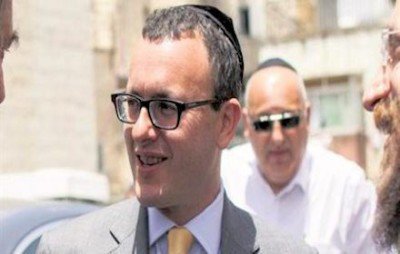
A chilling remark from a House of Lords debate just caught my eye.
Hansard 4 Nov 2015 : Column GC355
Lord Mendelsohn: We welcome the appointment of the former British ambassador to Israel, Matthew Gould, who will have a key role in cybersecurity inside the Cabinet Office — a very useful and important position.
Sure enough, the UK Government’s website confirms that Gould is now Director of Cyber Security and Information Assurance at the Cabinet Office. “He and his team are focussed on keeping Britain safe from cyber attack, through delivering the UK’s Cyber Security Strategy.”
They must think we have very short memories. Gould was the first Jew ever to hold the post of Britain’s ambassador to Israel. He describes himself as a “passionate” Zionist and whilst in Tel Aviv was instrumental in setting up the UK-Israel Tech Hub. In the words of MATIMOP (the Israeli Industry Center for R&D), the Hub was established “to promote partnerships in technology and innovation between Israel and the UK, and is the first initiative of its kind for the British Government and for an embassy in Israel. The Hub’s creation followed an agreement between Prime Ministers David Cameron and Benjamin Netanyahu to build a UK-Israel partnership in technology.”
Three years ago Cameron appointed venture capitalist Saul Klein as the UK Tech Envoy to Israel with the task of promoting the partnership, leading UK tech missions to Israel, bringing Israeli start-ups to Britain, and hosting tech events in both countries.
MATIMOP quotes Britain’s National Health Service as an example of successful UK-Israel tech collaboration. The NHS “has now formed strong collaborations with Israeli life sciences companies conducting clinical trials in the UK. The cooperation was made as part of the burgeoning partnership between Israel and Britain’s life sciences industries initiated by the UK-Israel Tech Hub.”
Four years ago Craig Murray, a former UK ambassador to Uzbekistan, argued that British policy was being driven in an underhanded fashion by the Israel lobby. He linked Gould with the Fox-Werritty scandal and raised questions about meetings between disgraced former Defence Minister Liam Fox and Fox’s friend/adviser Adam Werritty (who was backed financially by Israel lobbyists but had no security clearance and therefore no authorized role) and Gould.
Murray wrote to Gould asking when he first met Werritty, how many times he had met him, and how many communications of every kind had passed between them. He was told these questions would be answered in Cabinet Secretary O’Donnell’s investigation. “But Gus O’Donnell’s report answered none of these questions,” wrote Murray. “It only mentioned two meetings at which Fox, Gould and Werritty were all three present…”
This prompted Murray to dig further. “There were at least six Fox-Werritty-Gould meetings, not the two given by O’Donnell…. Matthew Gould was the only British Ambassador who Fox and Werrity met together. They met him six times. Why?”
Murray, with many useful sources from his days as an ambassador, claimed to have serious evidence connecting Gould with a secret plan to attack Iran, but the Foreign Office and the Cabinet Secretary blocked questions. Murray published his story ‘Matthew Gould and the plot to attack Iran’ here.
In it he pointed out that “Matthew Gould does not see his race or religion as irrelevant. He has chosen to give numerous interviews to both British and Israeli media on the subject of being a jewish ambassador, and has been at pains to be photographed by the Israeli media participating in jewish religious festivals. Israeli newspaper Haaretz described him as ‘Not just an ambassador who is jewish, but a jewish ambassador’. That rather peculiar phrase appears directly to indicate that the potential conflict of interest for a British ambassador in Israel has indeed arisen.”
He went on to say that Gould stood suspected of long term participation with Fox and Werritty “in a scheme to forward war with Iran, in cooperation with Israel”. The stonewalling by O’Donnell and the FCO led Murray to conclude that “something very important is being hidden right at the heart of government”.
Labour MP Paul Flynn remarked that no previous ambassadors to Israel had been Jewish so as to avoid conflict of interest and accusations of going native. He immediately came under intense flak. Flynn too asked about meetings between Werritty and Gould, as some reports suggested that Gould, Werritty and Fox discussed a potential military strike on Iran with Mossad. “I do not normally fall for conspiracy theories,” said Flynn, “but the ambassador has proclaimed himself to be a Zionist and he has previously served in Iran.”
Fox had earlier made the idiotic claim: “Israel’s enemies are our enemies” and “in the battle for the values that we stand for… Israel’s enemies are our enemies and this is a battle in which we all stand together”. The Jewish Chronicle hailed him as “a champion of Israel within the government”. Furthermore Fox continually rattled the sabre against Iran which, of course, was no threat to Britain but is regarded by Israel as a bitter enemy. Iraq too was Israel’s enemy, not ours. Yet Fox, according to the theyworkforyou.com, voted “very strongly” for the Iraq war. He was also an enthusiastic supporter of the war in Afghanistan.
Given that Fox so eagerly waved the flag of a foreign military power and was a man with dangerous beliefs and demonstrably weak judgement, how could those who appointed him not see that he was unemployable as a Minister of the British Crown – unless they were similarly tainted?
When the Werrity relationship came to light Fox jumped before being flung from the battlements. But the good people of North Somerset, in their wisdom, re-elected him at the general election last May. He’s already on the road to political rehabilitation among the Conservative high command.
Gould’s new job as head of The Office of Cyber Security & Information Assurance (OCSIA) involves giving strategic direction to cyber security and information assurance for the UK. This includes e-crime, working with private sector partners on exchanging information, and engaging with international partners in improving the security of cyberspace and information security. Does it seem right for such a person to be in charge of crucial security matters at the heart of our government? What was in fellow Zionist David Cameron’s mind when he appointed him?
Well, here’s a possible clue. In March of this year Francis Maude, the previous Cabinet Office minister responsible for cyber security, announced three UK-Israel academic collaboration ventures with cyber research funding, the partnerships being University of Bristol/Bar Ilan University, University College London/Bar Ilan University and University of Kent/University of Haifa. They’ll be working together on six specific areas of research:
- identity management
- governance: regulating cyber security
- privacy assurance and perceptions
- mobile and cloud security
- human aspects of security or usable security
- cryptography.
This builds on existing UK-Israel cooperation. Both parties signed a Memorandum of Understanding on digital co-operation in March 2014.
Still sitting comfortably? Only this week the Cameron government was lecturing us on threats to national security and announcing plans to trawl through our personal emails and web browsers in order to “keep us safe”.
Question is, who trawls Gould’s private emails?
January 31, 2016
Posted by aletho |
Civil Liberties, Full Spectrum Dominance, Timeless or most popular | Afghanistan, Bar Ilan University, David Cameron, Human rights, Iran, Israel, UK, UK-Israel Tech Hub, University College London, University of Bristol, University of Haifa, University of Kent, Zionism |
Leave a comment
Post-traumatic Stress Disorder (PTSD) drives hundreds of soldiers and veterans of today’s Western armies (mainly Americans) to kill themselves, and sometimes their families too. Usually, the suicides come after months of depression and despair; nightmares, fragile nerves and paranoia are common symptoms. Families and old friends watch the victims sink under the burden of bad memories of the atrocities they have seen and done during their overseas deployments.
It may seem a perverse judgment on first reading, but in some degree those suicides represent the hope of mankind. They are our proof that some soldiers retain enough humanity to feel shame and guilt at the things they have been ordered to do, and have done. Of course not all who share those experiences and memories feel driven to suicide. Most suffer in silence, and pretend they don’t suffer. Some aren’t affected at all, because they lack the mental capacity for compassion. They are sociopaths, pretty much by definition, and we should be very afraid of them.
They will be our children’s and grandchildren’s guardians and torturers. They will be the enforcers of any and all oppressive domestic decrees and laws, and will bring to that job the same cold brutality they practised during their military service. They will obey orders without question. They are monsters.
There was a news item recently about a US drone strike on fifteen women and babies in Pakistan on the way to the river to do the family laundry. Now there are strict rules for the ordering of drone strikes; there is nothing casual about them. The targets are carefully identified and certified, and their assassinations justified and specified. Only then are their executions passed into the steady hands of the drone-pilots in military bases inside the USA. There is nothing casual about the exercise.
The slaughter of the women and babies was deliberate, as all such slaughters are. That’s what terrorism is, in occupied territories – taking out innocents in the hope of persuading fathers and spouses to stop resisting the occupation. That’s America’s and NATO’s “war of terror”. It’s the Mafia model, and it works well.
How do those actions rank in the general context of violence against women and children? Is it worse than domestic wife-bashing and child-cruelty, or better, or about the same? My own personal opinion is that it’s worse, but I may be wrong. I am a human-rights advocate, and my loyalty is to the human race, above any particular ingredient of it. I am not a Christian, but I honour the sentiment ascribed to Christ in the King James Version: inasmuch as ye have done it unto one of the least of these my brethren, ye have done it unto me.
I interpret brethren to include sistren (sisters), and I regard the sentiment as applicable beyond whatever tribal or national context they may have held. Not everybody does, which is why “human rights” have failed to be accepted as anything more than leftist whimsy.
No women’s organisation or children’s protection society in the West ever publicly deplores drone-strikes against foreign women and children. Simple tribal solidarity beats gender solidarity hands down.
Why else aren’t Western women’s organisations interested in the basic rights of women and children in non-Western countries? Why do they grumble about the enforced wearing of burkas and the like, but stay silent on rapes and murders by Western soldiers? What kind of priority is that?
By their silence, Western women (judging by their representatives) give support to their tribal soldiers’ perception that females and children of different tribes and cultures aren’t worth spit. God help us. As a culture, ours is not nearly as advanced as we like to think it is. We have a long way to evolve, yet.
January 30, 2016
Posted by aletho |
Mainstream Media, Warmongering, Militarism, Timeless or most popular, War Crimes | Afghanistan, NATO, UK, United States |
Leave a comment
Pentagon will publish 198 photos of tortured detainees in the US prisons in Iraq and Afghanistan on Friday, a top American civil rights group said. The release comes after a decade-long lawsuit ended in the group’s favor in March.
Jameel Jaffer, director of the ACLU’s Center for Democracy, announced on Wednesday that the US Department of Defense (DoD) would provide public access to previously disclosed images of prisoners being tortured in US detention centers after more than 10 years of staunch resistance to do so.
The ACLU filed a Freedom of Information Act request demanding the government to reveal records, including photos of the alleged abuse of prisoners by US officers in the American detention facilities overseas back in 2004.
Despite President Obama’s initial promise to release the requested materials back in 2009, he then urged Congress to pass a special exemption clause to block the release of photos citing security reasons, adding that the publication of the photos “would not add any additional benefit to our understanding of what was carried out in the past by small number of individuals” and would “further inflame anti-American opinion and put our troops in great danger.”
After a long-running court battle, the US District Court Judge Alvin Hellerstein ruled that the government should “disclose each and all the photographs” referring to the ACLU’s lawsuit in last March.
However, only about 200 images out of some 2,100 pictures will be released on Friday. The major part of the evidence comprising approximately 1,900 photos will remain concealed after US Defense Secretary Ash Carter had invoked his authority under 2009 exemption provision last November.
“I have determined that public disclosure of any of the photographs would endanger citizens of the United States, members of the United States Armed Forces, or employees of the United States Government deployed outside the United States,” he wrote in the certification renewal in support of his decision to appeal the ruling on November 7.
Yet the Pentagon has made some minor concessions in the case with Carter refusing to extend his certification to 198 photographs which are now being processed for release. However, Carter didn’t explain the difference between this series of photos and those remain withheld from the public domain, according to Politico.
The still-classified images consist of collection of photographs taken by the DoD in the period from September 11, 2001 to January 22, 2009 and relate to the treatment of “engaged, captured or detained individuals”, according to the court documents.
The ACLU said it would insist on releasing the whole package of documents. The last major scandal in connection with the release of photos and footages depicting scenes of prisoners’ abuse and humiliation by the American soldiers in the Abu Ghraib prison in Iraq broke out in 2004. The exposure of horrendous human right violations in the detention center prompted authorities to launch an investigation into the matter as a result of which 11 soldiers accused of sexual abuse in martial trials were incarcerated.
The notorious prison was used for detention purposes by US-led coalition in Iraq until 2006 when the US government handed control over prison to the local authorities. The prison ceased functioning in 2014.
January 28, 2016
Posted by aletho |
Deception, Progressive Hypocrite, Subjugation - Torture, Timeless or most popular, War Crimes | Afghanistan, Human rights, Iraq, United States |
Leave a comment
 Aletho News
 Aletho News