Americans oppose Obama’s plans for fighting ISIL: Poll
Press TV – November 5, 2015
Most Americans disapprove of US President Barack Obama’s approach in fighting the Daesh (ISIL) terrorist group, a new poll has found.
More than 6 in 10 people in the US reject Obama’s handling of the threat posed by the ISIL in Syria and Iraq, an Associated Press-GfK poll released on Thursday finds.
Support for his approach has dropped since Washington formed a military coalition against ISIL in late 2014. Last year, Americans were approximately even, but disapproval has risen 8 percent since January.
This is while two-thirds of the people surveyed in the poll described the threat posed by Daesh as a “very or extremely important issue.”
The poll also found that only 40 percent of Americans still approve of the president’s management of foreign policy.
Obama announced last week that 50 US special operations troops will head to northern Syria, marking the first time the US is openly sending forces into that war-torn country.
‘Afghanistan, a historic failure’
Concerns about Obama’s strategy overseas become more apparent when it comes to Afghanistan, where he has dropped his plan to pull US forces by the end of 2016. The new plan means that when he leaves office, the US will have at least 5,500 troops in Afghanistan.
The poll found that 71 percent of Americans believe history will judge the Afghanistan war as more of a failure than a success.
Roughly a third of Americans said they approve of Obama’s revamped plan in the country, while one-third opposed it.
‘No armed combatants, no fighting’: MSF issues Afghan hospital bombing report
RT | November 5, 2015
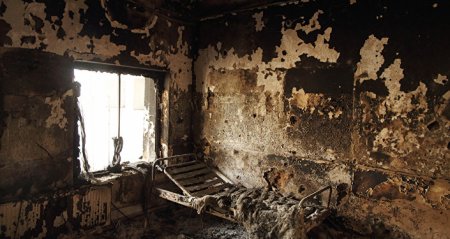
A Médecins Sans Frontières investigation into the Afghan hospital bombing by US forces has found that there were no armed combatants or weapons within the compound, and no fighting in the direct vicinity of the hospital at the time of the airstrikes.
In its report released on Thursday, Médecins Sans Frontières (MSF/Doctors Without Borders) addressed the “relentless and brutal aerial attack by US forces” which took place in Kunduz on October 3 and killed at least 30 people, including MSF staff.
“The MSF rules in the hospital were implemented and respected, including the ‘no weapon’ policy and MSF was in full control of the hospital at the time of the airstrikes,” the organization stated.
The document also said there were “no armed combatants within the hospital compound and there was no fighting from or in the direct vicinity” of the trauma center at the time of the strikes.
The hospital was “fully functioning” at the time of the airstrikes, with 105 patients admitted and surgeries taking place, according to the findings of the investigation.
In addition, MSF said the “agreement to respect the neutrality of our medical facility based on the applicable sections of International Humanitarian Law was fully in place and agreed with all parties to the conflict prior to the attack.”
Despite that neutrality, the hospital was still the target of a US airstrike, leading MSF to ask how such an attack was allowed to happen.
“The question remains as to whether our hospital lost its protected status in the eyes of the military forces engaged in this attack – and if so, why,” MSF said in its statement.
Presenting the report, MSF general director Christopher Stokes said: “From what we are seeing now, this action is illegal in the laws of war. There are still many unanswered questions, including who took the final decision, who gave the targeting instructions for the hospital.”
The MSF statement described the tragic situation at the hospital.
“Patients burned in their beds, medical staff were decapitated and lost limbs, and others were shot by the circling AC-130 gunship while fleeing the burning building. At least 30 MSF staff and patients were killed,” it states.
MSF says its demand is simple: “A functioning hospital caring for patients, such as the one in Kunduz, cannot simply lose its protection and be attacked; wounded combatants are patients and must be free from attack and treated without discrimination; medical staff should never be punished or attacked for providing treatment to wounded combatants.”
Following the aerial attack, the Pentagon initially attempted to shift responsibility onto Afghan security forces, claiming they had requested the airstrikes.
However, the commander of the US and NATO forces in Afghanistan, Gen. John Campbell, later admitted the attack was a “US decision made within the US chain of command.” He went on to say that Washington would “never intentionally target a protected medical facility.”
Read more:
US tank enters MSF hospital in Afghanistan’s Kunduz, ‘destroys potential evidence’ – reports
NATO’s Expensive Expansion
By Brian CLOUGHLEY – Strategic Culture Foundation – 27.10.2015
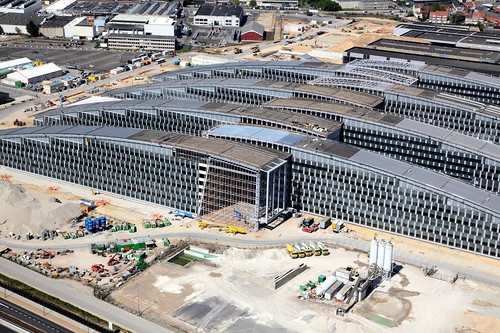
The North Atlantic Treaty Organisation has many secrets, of which one of the most closely guarded is the final cost of its luxurious new headquarters complex in Brussels. As reported last year by Britain’s Daily Telegraph newspaper, the price had climbed to a billion Euros “against a background of Nato pledges to reduce its command structure, agencies and national HQs by 30 per cent in response to savage defence cuts in most of its 28 member states.” According to NATO the final bill was supposed to be 750 million Euros for completion in 2015, but as had to be eventually admitted by NATO, “the project now has a clear way forward to completion in 2016” — with a 30 per cent increase in the price.
But that officially-stated price was not what it seemed, because, as revealed by Germany’s Der Spiegel magazine, “member states had already been sceptical when the consortium won the contract for €460 million [emphasis added] in 2010 . . . [Nato Chief] Anders Fogh Rasmussen is aware of the problem but hasn’t seen fit yet to inform the public about it . . . At a meeting of NATO’s Deputies Committee on December 19 [2013], Rasmussen’s staff asked that the issue be dealt with ‘confidentially’.”
That shabby deceitfulness couldn’t prevent Spiegel from disclosing that the cost had risen to 1.3 billion Euros, “almost three times the €460 million contract awarded in 2010 to replace NATO’s Cold War-era headquarters with a soaring glass-and-steel structure to house some 4,000 staff.” This vastly expensive palace has eight wings which converge “in a glass-covered central hall . . . to ‘symbolise the allies coming together, while glass walls are supposed to represent Nato’s transparency’.”
The designer of this glass castle rhapsodised that “the wing-like profiles of the buildings reinforces [sic] the ideas of consensus, fluidity and aspirations towards peace . . .” But peace doesn’t seem to be what NATO is intent on achieving, any more than it seems to welcome transparency in glass walls or anything else, because a leaked cable from Germany’s ambassador explained that a meeting of NATO representatives “pointed to the disastrous effect on the image of the alliance if construction were to stop and if NATO appeared to be incapable of punctually completing a construction project.”
How transparent. And how prophetic.
Although NATO’s deceit about its incompetence in building its new headquarters is veiled in secrecy, its ambition to expand in territory and military muscle-flexing is open for all to see, and has been for twenty years.
After the Warsaw Pact disbanded in March 1991, NATO, although deprived of any reason to continue in existence, managed to keep going, and in 1999 added Poland, the Czech Republic and Hungary to its 16 members. As the BBC noted, these countries became “the first former Soviet bloc states to join Nato, taking the alliance’s borders some 400 miles towards Russia.”
With good reason Moscow wondered what on earth the US-NATO military alliance might be planning.
The New York Times recorded that the 1999 expansion was “opening a new path for the military alliance” and expressed delight that the ceremony took place in the town of Independence, Missouri, where “the emotional Secretary of State Madeleine K Albright watched the three foreign ministers sign the documents of accession, signed them herself, then held them aloft like victory trophies.” Ms Albright was born Marie Korbelová in Prague and “made no secret today of her joy as her homeland and the two other nations joined the alliance.”
It was the emotional Madeleine Albright who appeared on the US television programme Sixty Minutes on May 12, 1996 and was asked to comment on Washington’s economic sanctions that were savaging Iraq. The interviewer, Lesley Stahl, said that as a result of the punishment “We have heard that a half million children have died. I mean, that’s more children than died in Hiroshima. [90,000 people were killed at Hiroshima. Probably about 20,000 were children.] And, you know, is the price worth it?”
Albright replied that “I think this is a very hard choice, but the price — we think the price is worth it.” (The YouTube recording is nauseating.) Then she was given the US Medal of Freedom by President Obama in 2012. You couldn’t make it up.
In spite of facing no threat whatever from any country in the world, NATO continued to expand around Russia’s borders, inviting Bulgaria, Estonia, Latvia, Lithuania, Romania, Slovakia and Slovenia to join in 2002, which they did two years later.
As President Putin observed in an interview with Italy’s Corriere della Sera “we are not expanding anywhere; it is NATO infrastructure, including military infrastructure, that is moving towards our borders. Is this a manifestation of our aggression?”
Then NATO took wider and more aggressive action in August 2003 when it took “control of the International Security Assistance Force (Isaf) in Afghanistan, its first major operation outside Europe.” Predictably, the war in Afghanistan plunged from crisis to calamity after US-NATO countries agreed in 2005 “to expand the alliance’s role,” including “deployment of thousands more troops in the south.” The result was disaster.
Last December NATO (but not the US) ceased offensive operations in Afghanistan, having sacrificed the lives of over 3,500 soldiers of whom some 2,300 were American. One might imagine that this humiliating defeat might have resulted in a pause for reflection about NATO’s role, purpose and effectiveness, but its new Secretary General, Jens Stoltenberg, is proving as energetically expansive as his predecessor, which is why he was chosen for the job. NATO’s appalling blitz of Libya in 2011, which reduced the country to its present catastrophic chaos, has failed to modify his intriguing belief that “from Afghanistan to Morocco, and many places in between, NATO is helping other countries to defend themselves.” He may have forgotten that Libya is one of the “places in between.”
On 23 October Stoltenberg expressed delight about Obama’s change of policy about keeping troops in Afghanistan, expressing “appreciation for President Barack Obama’s announcement that the United States will maintain its current troop levels in Afghanistan through 2016, and will retain a substantial presence beyond 2016. This important decision paves the way for a sustained presence by NATO Allies and partners in Afghanistan.”
If Stoltenberg had said that he welcomed Obama’s decision because it would result in a better life for the citizens of Afghanistan (which, alas, it will not), then his stance could be understood and applauded. But Stoltenberg welcomed the decision only because it would enable NATO to carry on its expensive expansion. That’s the way that military-associated bureaucrats think about the world. They’ve never risked their lives for any cause — any more than did the evil child-killer Albright — but they’re really happy to engage in exciting martial adventures in which the lives of thousands of soldiers can be placed at risk.
Jens Stoltenberg is the embodiment, the essence — the ultimate epitome — of the sleek, well-manicured, desk-bound, happy non-combat warrior. His peaceful and lucrative career in politics was marked by early anti-Americanism, during the Vietnam War, but over the years the chameleon changed from being an anti-American protester to eventually embracing his present anti-Russian complexion. When he was made head of NATO, President Putin considered him to be a “serious, responsible person” but warned with prescience that “we’ll see how our relations develop with him in his new position.” Both responsibility and relations collapsed.
A few days before his declaration of happiness about NATO’s “sustained presence” in Afghanistan Stoltenberg boasted that “we have doubled the size of the NATO Response Force, making it more ready and more capable, and established a high readiness Joint Task Force, able to move within a matter of days. We have increased our presence in the east, with more planes in the air, more ships at sea and more boots on the ground. We have established six new headquarters in our eastern Allies, with two more on the way.” He told NATO countries that “the time has come to invest more in defence.”
NATO’s threat to Russia is direct and aggressively confrontational. And it’s going to cost member nations a great deal of money. But Mr Stoltenberg is no stranger to expense. As NATO announced : “While Mr Stoltenberg was Prime Minister, Norway’s defence spending increased steadily with the result that Norway is today one of the Allies with the highest per capita defence expenditure.”
Now he has committed Europe’s financially struggling NATO nations, including almost-bankrupt Greece and Spain, to “continue to fund the Afghan national army and security forces” which cost about 12 billion dollars a year.
The huge cost of NATO’s recent and current military manoeuvres in nations circling Russia has not been revealed, presumably because it is as secret as the escalating price of the new NATO headquarters.
Unfortunately it is improbable that Mr Stoltenberg will try to encourage economic prudence or support any attempts to reduce tension with Russia. The Obama-Stoltenberg NATO military alliance has won the battle to expand its presence and its budget. The sword-brandishing will continue — and the cost of the glitzy glass palace will go through the roof.
Veto Corleone Already in White House
By David Swanson | War Is A Crime | October 23, 2015
President Barack Obama has vetoed a military authorization bill. Why would he do such a thing?
Was it because dumping $612 billion into a criminal enterprise just finally struck him as too grotesque?
Nope.
Was it because he grew ashamed of holding the record for highest average annual military spending since World War II, not even counting Homeland Security Department or military spending by the State Department, the Energy Department, the Veterans Administration, interest on debt, etc.?
Nope. That would be crazy in a world where pretense is everything and the media has got everyone believing that military spending has gone down.
Was it because the disastrous war on Afghanistan gets more funding?
Nope.
The disastrous war on Iraq and Syria?
Nope.
The monstrous drone wars murdering 1 vaguely identified person for every 9 innocents slaughtered?
You kidding?
Oh, I’ve got it. Was it because building newer, bigger, and smaller more “usable” nuclear weapons is just too insane?
Um, nope. Nice guess, though.
Well what was it?
One reason that the President provided in his veto statement was that the bill doesn’t allow him to “close” Guantanamo by moving it — remember that prison still full of people whom he, the President, chooses to keep there despite their having been cleared for release?
Another reason: Obama wants more money in the standard budget and less in his slush fund for the War on the Middle East, which he renamed Overseas Contingency Operations. Obama’s language suggests that he wants the base budget increased by more than he wants the slush fund reduced by. The slush fund got a piddley little $38 billion in the vetoed bill. Yet the standard budget is deemed so deficient by Obama that, according to him, it “threatens the readiness and capabilities of our military and fails to provide the support our men and women in uniform deserve.” For real? Can you name a man or woman in uniform who would receive a dime if you jumped the funding of the most expensive military in the history of the known universe by another $100 billion? The President also complains that the bill he’s vetoed did not allow him to “slow growth in compensation.”
Another reason: Obama is worried that if you leave limits in place on military spending in the “Defense” Department, that will mean too little military spending in other departments as well: “The decision reflected in this bill to circumvent rather than reverse sequestration further harms our national security by locking in unacceptable funding cuts for crucial national security activities carried out by non-defense agencies.”
Hope and Change, people! Here’s a full list of the areas in which Senator Bernie Sanders has expressed disagreement with President Obama’s preferences on military spending:
##
NATO to Keep Forces in Endless Afghanistan Quagmire
Sputnik – 20.10.2015
Germany, Turkey and Italy will maintain their current troop levels in Afghanistan, NATO officials said on Monday after the United States announced that it will prolong its military presence there.
General Philip Breedlove, NATO’s top commander in Europe, said he had assurances that NATO countries will continue alongside the nearly 10,000 US troops in Afghanistan.
“Several of our largest contributors have already communicated with us that they will remain in their current posture,” Breedlove told Reuters.
Germany, NATO’s top contributor, has around 850 troops in Afghanistan, followed by Italy with 760 and about 500 for Turkey, according to the latest NATO data.
The decision comes after the Taliban’s brief takeover of the strategic northern city of Kunduz, which raised concern about the strength of Afghan state forces.
“We should make any changes on our troop structure based on conditions on the ground, not on schedules,” Breedlove said.
US President Barack Obama had aimed to withdraw all but a small US force before leaving office. But now he will instead maintain the current force of 9,800 through most of 2016 before starting to trim numbers 2017.
Unlike the United States, NATO has never set an end date to its “Resolute Support” training mission in Afghanistan, which now stands at 6,000 troops from some 40 countries.
US-led NATO invaded Afghanistan in 2001 shortly after the 9/11 attacks, ousting the Taliban government from Kabul.
Bernie Sanders endorses Obama’s decision to keep troops in Afghanistan
By Patrick Martin | WSWS | October 19, 2015
In a television interview Sunday, Democratic presidential hopeful Bernie Sanders made his most categorical statements yet of his willingness to use military force in support of the foreign policy goals of American imperialism.
Speaking on the ABC program “This Week with George Stephanopoulos,” the Vermont senator gave his backing to Obama’s decision this week to keep nearly 10,000 troops in Afghanistan through the end of 2016, and at least 5,000 troops indefinitely. He also refused to define any circumstances in which he would rule out the unilateral use of military force.
Reacting to the Taliban takeover of the key city of Kunduz in northern Afghanistan, a debacle for the troops of the US puppet regime in Kabul, Obama reversed his previous decision to withdraw all troops from Afghanistan by the end of next year.
In response to a direct question about whether he backed the decision to keep nearly 10,000 troops on the battlefield of a war that has gone on for more than 14 years, Sanders responded: “Well, yeah, I won’t give you the exact number. Clearly, we do not want to see the Taliban gain more power, and I think we need a certain nucleus of American troops present in Afghanistan to try to provide the training and support the Afghan Army needs.”
Stephanopoulos then asked about the candidate’s statements during last Tuesday’s Democratic presidential debate in Las Vegas on the use of US military force, when Sanders pointed to his vote to authorize the Afghanistan war in 2001 as proof that he was willing to use force. What were the circumstances in which “a President Sanders would authorize unilateral action to use force,” the ABC anchorman asked?
Sanders replied, “Well, I’m not going to get into hypotheticals.” Then the following exchange took place:
SANDERS: I think sensible foreign policy and military policies suggest that it cannot be the United States of America alone which solves all of the world’s military…
STEPHANOPOULOS: In all circumstances?
SANDERS: Well, of course, you know, I’m not saying, you know, I don’t want to get into hypotheticals. I didn’t say in all circumstances.
In other words, pressed on his rhetorical commitment to form military-diplomatic coalitions to pursue US foreign policy goals, Sanders declined to set limits on what he as president might do unilaterally. The supposed advocate of “democratic socialism” and “political revolution” fell back on a standard talking point of would-be commanders-in-chief for US imperialism.
“I don’t want to get into hypotheticals” simply means, “I want a free hand to use force whenever the military-intelligence apparatus demands it.”
While Sanders was happy to denounce George W. Bush’s decision to go war in Iraq as one of the worst decisions ever made in US foreign policy, he made no reference to the devastation created by Barack Obama’s interventions in Libya, Yemen, Syria and Afghanistan.
Sanders is in no sense an “antiwar” candidate. He uses demagogic condemnations of “millionaires and billionaires” and the growth of social inequality to appeal to working people and young people who are deeply opposed to American militarism, but only to divert their attention from the growing danger of the imperialist war. His support for the policy of the ruling class abroad exposes his pretense of opposing the policy of this same ruling class within the United States.
Even on the infrequent occasions when he has discussed the disastrous consequences of US policy in the Middle East, it is only from the standpoint of American nationalism, not genuine opposition to imperialist war. Once in a while, Sanders bemoans the casualties suffered by American troops or the waste of resources better used at home, but he has never indicated any sympathy for the people of the countries targeted for destruction by US military interventions.
His comments Sunday on Afghanistan were typical. Sanders made no mention of the latest atrocity there by US forces, the deliberate bombing of the Doctors Without Borders hospital in Kunduz, which killed at least 22 people: three doctors, nine other staff of the aid agency, and ten patients.
His silence is only part of a much broader policy, observed by all the Democratic and Republican presidential candidates, who despite their incessant mudslinging maintain a united front in covering up for the war crimes carried out by the US military.
In this they are joined by the corporate-controlled media, which has largely ignored the revelations—reported by the Associated Press and then dropped—that US special operations forces were well aware of the hospital’s existence and location, and deliberately targeted it for incineration by an AC-130 helicopter gunship.
‘US strike on Afghan hospital no mistake’ – Doctors Without Borders
Sputnik – 19.10.2015
Hitting back at claims from General John Campbell — the commander of NATO and US troops in Afghanistan — who said the hospital had been “mistakenly struck”, Christopher Stokes, the General Director of MSF, said evidence suggested the attack was planned.
“The hospital was repeatedly hit both at the front and the rear and extensively destroyed and damaged, even though we have provided all the coordinates and all the right information to all the parties in the conflict,” Stokes told Associated Press (AP).
“The extensive, quite precise destruction of this hospital… doesn’t indicate a mistake. The hospital was repeatedly hit.”
Clear Explanation Needed
Officials from the charity, also known as Medecins Sans Frontieres (MSF), have said that the bombing attack lasted over an hour, leading to suggestions that it was the legitimate target of the US airstrike.
Stokes also reiterated calls for an independent investigation into the incident to be carried out, saying that the charity wanted “… a clear explanation because all indications point to a grave breach of international humanitarian law, and therefore a war crime.”
The charity has raised concerns over the joint NATO-US-Afghan probe into the attack, saying that officials couldn’t be trusted to carry out a thorough and independent investigation into the incident.
The October 3 attack on the hospital in Kunduz, Afghanistan killed 22 people — 12 staff and 10 patients — with reports some victims were burning in their beds as a result of the bombing.
The US has taken responsibility for the attack, with President Barack Obama apologizing to MSF officials.
Despite the apology and claims that the hospital was “mistakenly” hit, there have been major question marks over how the site was bombed, with medical officials repeatedly maintaining that they had informed US and Afghan officials that the site was being used as a hospital.
MSF Dismisses Taliban Hideout Suggestions
MSF’s claims have been backed up by media reports suggesting US forces were aware the facility was a hospital and had been monitoring the site for days leading up to the attack.
According to a report by AP, a former intelligence official familiar with the details of the incident said that American analysts were scrutinizing the hospital before it was destroyed amid fears the site was being used a base for Taliban operatives.
US officials weren’t aware of the media reports, while MSF General Director Christopher Stokes denied any suggestions that armed Taliban forces were present on the hospital site.
“The compound was not entered by Taliban soldiers with weapons.
“What we have understood from our staff and guards is that there was very strong, very good control of what was happening in and around the compound and they reported no firing in the hours preceding the destruction of the hospital,” Stokes said.
The pressure is now building on United States officials, with accusations that the US is guilty of war crimes as a result of the incident.
Legal experts have said that if it can be proved that the US knew the site was being used as a hospital, then it could amount to war crimes.
MSF has already raised concerns around the current investigation into the attack, saying that there were fears the joint NATO-US-Afghan probe could have potentially destroyed vital evidence after entering the bombed hospital site last week.
The charity has launched an online petition calling on president Obama to allow the Swiss-based International Humanitarian Fact-Finding Commission (IHFFC) to carry out an investigation into the attack. However, the US has failed to grant the commission access to the hospital.
Doctors Without Borders: US Tank Forcibly Entered Afghan Hospital

Wreckage of the Doctors Without Borders hospital in Kunduz, Afghanistan, struck by U.S. airstrikes on Oct. 3, 2015. | Photo: Doctors Without Borders
teleSUR | October 15, 2015
The medical group Doctors Without Borders, whose hospital in the Afghan city of Kunduz was bombed in a U.S. airstrike, said Thursday that a U.S tank forced its way through the gates of the compound, raising questions on whether it was a deliberate attempt to destroy evidence in a possible war crime inquiry.
The group, also known as MSF, said they were only informed after Thursday’s “intrusion” that the tank carried investigators from a joint US-Nato-Afghan team looking into the Oct. 3 attack, the Guardian reported.
The incident further violated an agreement with the medical group that they “would be given notice before each step of the procedure involving the organization’s personnel and assets.”
“Their unannounced and forced entry damaged property, destroyed potential evidence and caused stress and fear,” the group said in a statement, adding that a Doctors’ Without Borders team had arrived at the hospital earlier in the day.
The group said Tuesday that it was dealing with the bombing of its hospital as a “war crime,” saying that statements made by U.S. and Afghan officials indicate the attack was not “accidental” as some U.S. officials had claimed.
MSF International’s president, Dr. Joanne Liu, echoed similar statements made by the organization over the weekend in a new statement Tuesday.
“This attack cannot be brushed aside as a mere mistake or an inevitable consequence of war,” she wrote. “Statements from the Afghanistan government have claimed that Taliban forces were using the hospital to fire on Coalition forces. These statements imply that Afghan and U.S. forces working together decided to raze to the ground a fully functioning hospital, which amounts to an admission of a war crime.”
The United States military has contradicted earlier statements about the massacre that killed 22 civilians, including international MSF doctors and children, as staff pleaded with the U.S. military to stop.
Obama to keep 5,500 troops in Afghanistan beyond 2016: Officials
Press TV – October 15, 2015
The US president will keep 5,500 of US troops in Afghanistan when he leaves office in 2017, according to senior unnamed Obama administration officials.
US President Barack Obama had originally planned to withdraw almost all US troops from Afghanistan by the end of next year. He just wanted to keep a small, embassy-based military presence in the Asian country.
But the Pentagon has been arguing for months that Kabul needed additional US military presence in order to defeat a resurgent Taliban movement.
The United States should deploy more troops to Afghanistan because local forces are not yet ready to take on Taliban militants, US Army General John Campbell has said.
Campbell, the commander in charge of the US-led military coalition in Afghanistan, made the remarks during a hearing before a US Senate panel last week.
President Obama is expected to announce the changes on Thursday morning during a news conference at the White House.
The US and its allies invaded Afghanistan on October 7, 2001 as part of Washington’s so-called war on terror. The offensive removed the Taliban from power, but after 14 years, the foreign troops have still not been able to establish security in the country.
Featured Video
US Blockade on Iran Just Triggered Iran’s HARSHEST Response Yet
or go to
Aletho News Archives – Video-Images
From the Archives
Guatemala: A Test Tube of Repression
By Robert Parry | Consortium News | October 3, 2010
Last week’s grotesque revelation about American public health doctors infecting nearly 700 Guatemalans with venereal disease to test penicillin from 1946-48 marked just the start of the U.S. government’s post-World War II abuse of that Central American country.
Indeed, as troubling as the VD experiments were, U.S. administrations from Dwight Eisenhower to Ronald Reagan would do much worse, treating Guatemala as a test tube for Cold War counterinsurgency experiments that led to the slaughter of some 200,000 people, including genocide against Mayan Indian tribes. … continue
Blog Roll
 Aletho News
- The Iranian knot needs to be untangled, not cut – Lavrov
- Villains of Judea: Charles Bronfman
- Seyed M. Marandi: US Blockade on Iran Just Triggered Iran’s HARSHEST Response Yet
- The new assault of the Zionist lobby in Brazil
- Italy suspends defense deal with ‘Israel’ over war on Iran, Lebanon
- Indonesia Agrees to Receive Oil, Gas Supplies From Russia – Indonesian Energy Ministry
- Saudi Arabia Urges US Back to Iran Talks as Other Oil Routes Face Risk
- Iran demands reparations from Arab states
- Tankers transit Strait of Hormuz amid US attempt to impose blockade, data shows
- US Strikes Kill Five in Alleged Pacific Anti-drug Campaign
- If Americans Knew
- ‘Not Acceptable’: President of Iran Condemns Trump For His ‘Desecration of Jesus, the Prophet of Peace’
- We Are the Barbarians
- Netanyahu Says the Trump Administration Gives Him Reports on Iran Talks Every Day
- Second Contractor Steps Forward to Blow the Whistle on Israeli Attacks at Gaza Aid Site
- Mighty Israel wants all of its neighbors to be defenseless – Daily Update
- Emergency waivers move arms for Israel, UAE to speed lane
- Caitlin Johnstone: Nobody’s “Obsessed” With Israel — It’s Just A Uniquely Horrible Country
- Israel’s Ben Gvir says he feels like the ‘owner’ of Al-Aqsa Mosque
- History of flotilla campaigns to end Israel’s siege of Gaza
- Humanitarian Scorecard: Six Months In, Gaza Ceasefire is Failing
- No Tricks Zone
- Cave Discovery Reveals Today’s Desert Climates Were Recently Far Warmer, Wetter, Teeming With Life
- German Expert: Heat Dome Led To Record Temps In Western USA…Warmer In 1934, 1936
- New Study: No Linear Warming Or Glacier Retreat Along Northern Antarctic Peninsula Since 1980s
- An Inconvenient Tree: Uncovered In Alps… Europe Much Warmer Than Today 6000 Years Ago
- New Study Reports A 60% Slowdown In Greenland’s Ice Loss Rate In The Last Decade
- Low Intensity Tornado Wrecks Major Solar Farm, Creating A Potential Toxic Dump
- New Study Finds Warming Saves Lives…Cold Temperatures 12 Times More Deadly Than Excess Heat
- German Science Blog Accuses PIK Climate Institute Of Hallucinating Climate Tipping Points
- Devastating Assessment Of Comirnaty Vaccine By Former Senior Pfizer Europe Toxicologist
- New Study: CO2 Is ‘Effectively Negligible’ As An Explanatory Climate Change Factor Since 2000
 Aletho News