UAE begins ‘hurried evacuation’ from Somali air base: Report
The Cradle | January 12, 2026
The UAE has begun evacuating security personnel and heavy military equipment from Somalia, after officials in Mogadishu reportedly suspended Emirati use of their territory and airspace for military operations, Middle East Eye (MEE) reported on 12 January.
The Somali government informed the Emiratis that “all their military activities in Somalia, including the use of airspace and the landing of cargo military aircraft in Bosaso, Berbera and Mogadishu, had been suspended,” a senior Somali official told MEE, speaking on condition of anonymity.
The official said the UAE now appears to be evacuating its security personnel and military equipment to neighboring Ethiopia.
Citing flight-tracking data and two eyewitnesses, MEE reported that an average of six IL-76 cargo aircraft have arrived and departed the air base in Bosaso – the port city in Somalia’s Puntland – each day over recent days.
One source speaking with the UK news outlet described the flights as “resembling a hurried evacuation.”
“Unlike previous operations, where incoming cargo would be immediately transferred to another aircraft on standby, these planes have been arriving over several days, loaded with heavy military equipment, and departed without delay,” a source at Bosaso air base told MEE, describing the activity as highly unusual.
The UAE has long used Somalia as a rear operational base for its military engagements in both Sudan and Yemen. It had been using Bosaso’s port and airport in recent years to send weapons, mercenaries, and supplies to Sudan’s paramilitary Rapid Support Forces (RSF), which is fighting a civil war against Sudan’s military.
Bosaso is part of a cluster of airfields the UAE has constructed in an effort to dominate the southern end of the Red Sea, the Bab al-Mandab Strait, and the Gulf of Aden.
According to a source in Somalia’s federal government, Mogadishu has revoked the agreement allowing the UAE to use the Bosaso air base and other facilities in the country.
Somali authorities opened an investigation into Emirati activities at Bosaso after the UAE used the air base to help a Yemeni separatist leader escape to the Gulf nation.
The separatist leader, Aidarus al-Zubaidi, is the president of the UAE-backed Southern Transitional Council (STC).
He was wanted by Saudi Arabia amid fighting between the STC and Saudi-backed forces in Yemen that began in December. The UAE was supporting the STC’s bid to take territory from the Saudi-backed Presidential Leadership Council (PLC) in hopes of creating an independent state in southern Yemen.
Zubaidi was supposed to travel to Saudi Arabia for talks to end the violence, but the UAE secretly helped him escape to Abu Dhabi. He first traveled by ship to the breakaway region of Somaliland, then boarded a plane at the Bosaso air base to travel to the UAE.
After helping Zubaidi escape, the Somali government informed the Emiratis that all their military activities in Somalia were suspended.
Saudi Arabia and the UAE are increasingly competing for influence in both Yemen and Somalia.
The UAE is closely aligned with Israel, which has supported Somaliland in its effort to gain formal independence from Somalia.
In contrast, Saudi Arabia has supported Somalia’s unity and established closer relations with officials in Mogadishu.
Saudi officials held an Organisation of Islamic Cooperation conference on Somalia over the weekend and rallied the Arab League and Gulf Cooperation Council (GCC) to issue statements in support of Somalia’s unity after Israel recognized Somaliland.
Somaliland and the ‘Greater Israel’ project
By Robert Inlakesh | Al Mayadeen | January 7, 2026
More than a simple recognition of Somaliland, “Israel” is hatching a scheme alongside its Emirati allies aimed at a regional expansion agenda. For the so-called “Greater Israel” vision to come alive, dominance must be secured not only across West Asia and North Africa, but also throughout the Horn of Africa.
The recent decision by the occupying entity in “Tel Aviv” to recognize Somaliland as a State has triggered outrage across Africa and much of the Islamic World, while drawing condemnations from most Arab capitals, with the notable exception of Abu Dhabi.
For the most part, analysts have pointed to “Israel’s” desire to use Somaliland as a staging ground for aggression against Yemen as a primary motivation behind the move. Some have further noted that officials of the Zionist regime have expressed interest in ethnically cleansing Gaza’s people and forcibly transferring them to Somaliland. While these factors evidently inform Israeli decision-making, they do not exhaust its strategic calculus; yet the conspiracy goes much deeper.
On November 24, 2025, the influential Israeli think-tank Institute for National Security Studies (INSS) released a report detailing both the benefits and drawbacks of recognizing Somaliland. While the report acknowledged multiple strategic incentives for such a move, it ultimately advised against proceeding before the United States had done so.
The INSS had advocated against the move, hedging that such a declaration would further isolate “Israel” within the framework of the so-called “Abraham Accords”, triggering backlash on the international stage regarding the issue of Palestinian statehood.
So what changed since the Israeli think tank report?
Understanding the Israeli thinking here, such a move would not be made if they saw it as a net negative. Instead, the recognition was offered in a very public and brazen manner. In order to make sense, we therefore have to look at the broader picture.
To begin with, the normalization drive [“Abraham Accords”] has clearly stalled, at least in terms of any major developments in this regard. The last country to enter into the fold of the broader Trump administration-led normalization movement was Kazakhstan. For context, Astana already normalized ties with the Zionist regime back in 1992.
Although US President Donald Trump announced Kazakhstan’s declaration as a development of great significance, the move was clearly seen as a weak attempt at keeping the normalization project alive amid the conspicuous absence of Saudi Arabia. In parallel, an increasingly desperate Israeli entity has launched what it calls the “Isaac Accords”, a separate normalization project with Latin American nations that are client regimes of the US.
In other words, the Israelis were not actually in a position where they necessarily viewed recognition of Somaliland as an impediment to their normalization agenda. In fact, through projecting power in the Horn of Africa, they may even see it as an advancement of this project, especially given that some 6 million people who identify as belonging ethnically to Somaliland are Muslims.
Another element of the move is to assert their dominance and to lash out internationally over the wave of recognition, last September, for the state of Palestine.
In addition, the elephant in the room here is that the Israelis are currently pursuing a joint agenda with the United Arab Emirates, particularly in both the Horn of Africa and Northern Africa. This alliance seeks to co-opt sectarian movements, separatist groups, and to weaponize warlords in order to reshape the continent as a whole.
The Emirati and Israeli agendas are one in this regard. They are inseparable and connected on almost every conceivable level, this is to the point that the de facto head of intelligence operations for the UAE has long been a man named Mohammed Dahlan, well known for his alleged involvement with Mossad and the CIA; particularly in Africa.
The UAE’s proxy in Yemen, the Southern Transitional Council (STC), seized the Hadhramaut and al-Mahra provinces from Saudi-backed forces in early December, bringing around 80% of Yemen’s oil resources under their control. The STC’s militants have even been trained by “Israel”. The UAE’s move, which would not have come without Zionist backing, now threatens the stability of the Arabian Peninsula and triggered major backlash from Riyadh.
While “Israel” is reportedly seeking to build up a military presence near the strategically located port of Berbera in Somalia’s Somaliland, the UAE began constructing the Berbera airbase as early as 2017, securing access to it for a period of 25 years. Similarly, the UAE–Israeli alliance has extended to the establishment of a joint military presence on Yemen’s strategically located island of Socotra.
It is speculated that the Emirati-backed STC, in southern Yemen, may launch an offensive aimed at capturing the Ansar Allah-controlled port city of Hodeidah, likely receiving Israeli aerial support. The coastline of Somaliland lies only 300 to 500 kilometers from Ansar Allah-controlled lands, making such an air campaign much more manageable than launching strikes from occupied Palestine.
Furthermore, turning to “Israel’s” agenda in Somalia itself, it is clear that this is a calculated move that targets Türkiye. Ankara maintains enormous influence in Somalia and remains a strong proponent of the “One Somalia” agenda. Therefore, at a time of heightened regional tensions, especially in Syria, where both Turkish and Israeli forces are seeking to carve out zones of influence and establish red lines, “Tel Aviv’s” move appears to be another attempt to land a strategic blow on Ankara.
Together, the Emiratis and Israelis are adamant about combating the Muslim Brotherhood and any Islamic governments or groups that voice their concerns for the Palestinians, which is why they are lobbying Western governments so hard on these issues and running non-stop propaganda campaigns against so-called “radical Islam”.
In reality, the Israeli-UAE-backed militias in Yemen are riddled with al-Qaeda-linked fighters and hardline Takfiri Salafists. The STC’s toughest fighting force, known as the Southern Giants Brigades, is reportedly led by the core of experienced militants who are former al-Qaeda fighters. In Gaza, meanwhile, the UAE and the Zionist Entity are also backing five separate proxy militias with alleged links to ISIS.
The Emiratis and Israelis are huge fans of these Salafist militants, who are totally obedient to them and adopt a mass Takfir doctrine that they use to justify the mass slaughter of Muslims. This was the same exact strategy adopted inside Syria by the Zionists, using Wahhabi extremists to do their bidding, while dividing the Muslim World and paving the way for their expansionist agenda.
If the Zionist Entity is to achieve “Greater Israel”, the common misconception is that they wish to directly occupy the entire region between the River Nile and the Euphrates. According to the Zionist vision, they would rule as an empire instead, whereby they enter into formal alliances with countries broken up into ethno-regimes and sectarian rump States. Divide and conquer.
So, dividing Somalia, in order to help the Emirati proxy-militias secure a southern Yemeni State, is precisely in line with the Zionist agenda. They will attempt to rule these territories through proxy support, using their puppets to destroy the Palestinian cause. In the case of Somaliland, if they are to succeed, they would also certainly attempt to ethnically cleanse the population of Gaza there. In other words, Somaliland recognition isn’t a small, isolated move; it is a piece being strategically positioned on their wider chessboard.
Israel and the politics of fragmentation: The hidden hand behind secessionist projects in Yemen, Somalia, and Libya
By Ahmed Asmar | MEMO | January 3, 2026
Israel’s malicious, meddling role in the Arab countries has long extended beyond direct military confrontation, as seen in Palestine, Lebanon, and Syria. For long, Tel Aviv has pursued a quieter yet dangerous strategy of encouraging fragmentation, weakening central states, and cultivating ties with separatist actors in fragile and war-torn countries. Today, this pattern is increasingly clear and visible in Yemen, Somalia, and Libya; three countries that suffer from prolonged conflicts, administrative collapse, and foreign interference. In each case, Israel’s footprint is not accidental; it serves a broader strategic doctrine aimed at dividing Arab countries, controlling critical waterways, and reshaping the regional balance of power to its advantage and dominance.
Yemen: secession as a gateway to normalisation
In Yemen, Israel’s indirect involvement surfaces through its alignment with the so-called Southern Transitional Council (STC), a secessionist entity seeking to reestablish an independent state in southern Yemen. While the Yemeni conflict is often framed as a regional proxy war, the STC’s leader, Aidarous al-Zubaidi, has openly, and on several occasions, signaled willingness to normalize relations with Israel. He publicly declared that recognizing Israel is not an obstacle if southern Yemen’s independence is achieved; an extraordinary statement that was slammed by many Yemeni public figures and politicians.
This declaration is not merely rhetorical. Yemen’s southern geography grants access to some of the most sensitive maritime corridors in the world, particularly near the Bab al-Mandeb Strait. For Israel, influence over forces operating near this chokepoint aligns with its long-standing objective of securing Red Sea navigation and countering its perceived regional adversaries. Supporting or encouraging secessionist forces in southern Yemen offers Israel a strategic foothold without formal military deployment, turning internal Yemeni fragmentation into a geopolitical asset, and posing a direct threat against the Arab countries, especially the littoral countries of the Red Sea – Egypt and Saudi Arabia.
Somalia: Somaliland and the militarisation of recognition
Somalia presents an even clearer case of Israel exploiting separatism for strategic gain. The self-declared Republic of Somaliland, unrecognised by the international community, has actively sought foreign backing to legitimise its secession. Israel’s contacts and recognition of Somaliland’s de-facto authorities mark a dangerous precedent in international relations, and against the international law and the UN charter.
The strategic motivation is transparent. Somaliland’s coastline also overlooks the Bab al-Mandeb Strait and the Gulf of Aden, one of the world’s most critical maritime corridors. Somalia’s President Hassan Sheikh Mohamud warned of the Israeli malicious plan behind such recognition, where he said that Israel seeks from recognising Somaliland to resettle Palestinians from Gaza, who experienced a two-year genocide, and most importantly, to host an Israeli military or intelligence base. These plans are added to the dangers of undermining Somalia’s territorial integrity and encouraging further fragmentations across the Horn of Africa.
Israel’s move to recognize a secessionist entity reflects how Israel exploits weak entities and divided states to move ahead with its expansionist and dominance strategies at the expense of the region and its people.
Libya: Haftar and the normalisation through the back door
Not far from the examples in Yemen and Somalia, in Libya, Israel’s role is more discreet but visible too. General Khalifa Haftar, who controls eastern Libya and has long sought international legitimacy, reportedly maintained contacts with Israeli officials as part of efforts to secure external backing. These interactions fit within a wider pattern of covert normalization between Israel and authoritarian or factional actors seeking foreign support in exchange for political concessions.
Libya’s fragmentation has turned it into fertile ground for foreign manipulation. Israel’s engagement with Haftar is surely not about peace or stability, but about influence, leverage, and having a close foot near its surrounding Arab countries.
Fragmentation as a strategic doctrine
Altogether, Yemen, Somalia, and Libya illustrate a consistent Israeli strategy: exploiting internal conflicts to advance a regional agenda based on fragmentation. This approach intersects with Israel’s ongoing territorial expansion and military aggression, from its occupation of Palestinian land to its violations of sovereignty in Syria and Lebanon. Fragmented Arab states are less capable of resisting Israeli policies and more exposed to normalization under opportunistic conditions.
Israel’s encouragement of secessionist movements is not about supporting self-determination; it is about redrawing the region into weaker, smaller entities incapable of collective action. This strategy directly threatens Arab national security as a whole, adding a new dimension to Israel’s expansionism.
At a time when the Arab world faces unprecedented challenges, recognising and confronting this hidden hand of fragmentation is essential. While ignoring Israel’s role in these secessionist projects risks allowing instability to become permanent, solely in favor of Israel in the region and beyond.
Sanctioned by EU. Abandoned by Switzerland | Nathalie Yamb
By Pascal Lottaz | Neutrality Studies | January 1, 2026
It has come as a shock to many of us in the alternative media sphere when, on December 15, the EU put the esteemed analyst, political commentator, and former Swiss Army colonel Jacques Baud, on its Russia-Sanctions list. He was one of several newly sanctioned individuals (alongside, for instance, the popular French journalist, Xavier Moreau). Baud is already the second Swiss to be sanctioned. In June 2025, the EU announced that Nathalie Yamb, a Swiss-Cameroonian activist against neocolonialism, would be sanctioned.
Being on the EU sanctions list is a devastating event for the people concerned, especially if they reside in an EU country or a closely associated state like Switzerland, Norway, or the UK. It means banks will freeze their accounts, credit companies will cancel their cards, they are not allowed to enter into contracts with EU-affiliated companies or private persons, and no business in the EU is allowed to have dealings with them, which, in theory, even precludes them from buying bread and other necessities of life. Furthermore, many international businesses will cancel all their services to them, including mail providers, social media platforms, etc. Even Swiss banks freeze or cancel accounts, out of fear they might get in trouble if they don’t comply with EU regulations. I recently interviewed two sanctioned people, Nathalie Yamb and Hüsseyin Dogru, and their testimonies are heartbreaking. … Full article
Neutrality Studies and Nathalie Yamb | December 22, 2025
Fifty-nine individuals are by now sanctioned by the European Union in pursuit of punishing Russia for the War in Ukraine. Many of them are Russian citizens but more and more the EU is putting its own citizens and those of third states on this list, for reasons that have often little to do with Russia. One of them is my compatriot, Nathalie Yamb, who was in fact the first Swiss Citizen to be included on the list, back already in June 2025.
Links: Nathalie’s YouTube channel: @nathyamb
Neutrality Studies substack: https://pascallottaz.substack.com
Goods Store: https://neutralitystudies-shop.fourth…
Netanyahu Aligned Think Tanker: Somaliland Offered To ‘Absorb’ One Million Palestinians
New Evidence That Israel’s Recognition Of Somaliland Was To Further Ethnic Cleansing Of Gaza
The Dissident | December 29, 2025
On a December 28th twitter space called “Israel’s Historic Recognition of Somaliland”, Dan Diker, the president of the Benjamin Netanyahu aligned Israeli think tank, “Jerusalem Center for Security and Foreign Affairs” gave further evidence that Israel’s recognition of “Somaliland”, a breakaway region of Somalia was done to use the region as a dumping ground for ethnically cleansed Palestinians in Gaza.
In the space, Diker was asked, “What did you think was the main reason for Israel to break with this usual line of the international community (and recognize Somaliland) and be the first to do so?”
In response, one of the reasons Diker gave was, “I do know that our friends in Somaliland made a very generous offer privately and in the last, I would say in the last months, it even reached the desk of the President of the United States, of their willingness to absorb or to create communities for hundreds of thousands even beyond a million up to a million and half Gazans”.
Dan Diker added, “Somaliland, in our understanding, is really the only country, now country, that stepped up to the plate to absorb Gazans… Somaliland’s offer can make a very important contribution to the stability of Gaza for those who choose to stay in Gaza and for those who choose to rebuild their lives in another country”.
Previously, the Israeli newspaper, The Jerusalem Post, reported that “Somaliland Foreign Minister, Abdirahman Dahir Adan, “does not rule out absorbing Gazan residents,” but said that, “the most important thing for us is to receive recognition”.
The Israeli newspaper Ynet also reported that, “The territory (Somaliland) has recently been mentioned as a possible destination for Gazans, with officials there saying they would be willing to absorb ‘one million Gazans,’ though no formal agreement has been announced.”
Now Dan Diker confirmed that Somaliland agreed to “absorb” up to “a million and a half Gazans” and was, “the only country, now country, that stepped up to the plate to absorb Gazans,” which was one of the main reasons Israel was the first UN member sate to recognize the breakaway region as a country.
After Israel announced its recognition of Somaliland, the Israeli journalist Amit Segal boasted that, “Somaliland was supposed to — and may still — absorb Gazans”.
Trump, at his latest press conference with Netanyahu claimed that if given the chance “half of Gaza would leave,” signalling support for Israel’s ethnic cleansing plan.
Israel has framed its ethnic cleansing plan in Gaza as “voluntary migration”, but as Gila Gamliel, Israel’s current Science and Technology Minister admitted, Israel’s actual goal is to “make the Gaza Strip uninhabitable until the population leaves”.
While Israel continues to make Gaza “uninhabitable until the population leaves”, their recognition of Somaliland appears to be the first move in creating a territory to send ethnically cleansed Palestinians from Gaza.
What Is Actually Behind Israel’s Recognition Of Somaliland?
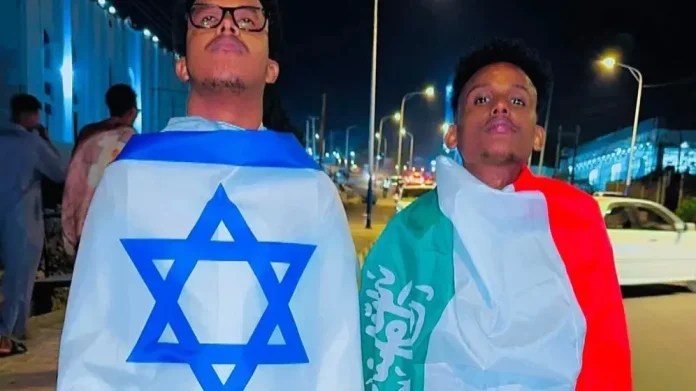
The Dissident | December 27, 2025
Recently, Israel became the first country to recognize Somaliland, a breakaway region of Somalia that declared independence in 1991 but until now has not been officially recognized by any UN member state.
But what is Israel’s real motive behind this move?
One motive appears to be the fact that Israel has taken part in negotiations with Somaliland to use the region as a place to relocate Palestinians ethnically cleansed from Gaza by Israel.
The Israeli newspaper Ynet, writing about Israel’s Recognition Of Somaliland, noted that, “The territory has recently been mentioned as a possible destination for Gazans, with officials there saying they would be willing to absorb ‘one million Gazans,’ though no formal agreement has been announced.”
Israeli journalist Amit Segal wrote, “Israel announced today its official recognition of Somaliland as an independent, sovereign state, in a joint declaration signed by the leaders and in the spirit of the Abraham Accords,” and went on to boast that “Somaliland was supposed to — and may still — absorb Gazans.”
A report from the Financial Times from March of this year reported that during a meeting with U.S. officials and leaders of Somaliland, “Washington had raised the possibility of relocating refugees from the US and Gaza”, adding that, “Israel was ‘in conversations’ with countries around the world, including in Africa, about taking in Gazans”.
An August report from the Times of Israel wrote that, “Israel is in talks with five countries — Indonesia, Somaliland, Uganda, South Sudan and Libya — about the potential resettlement of Palestinians from the Gaza Strip” and added, “‘Some of the countries are showing greater openness than before to accepting voluntary immigration from the Gaza Strip,’ a diplomatic source tells the outlet, naming Indonesia and Somaliland in particular.”
It noted that, “Somaliland is a breakaway region of Somalia that is reportedly hoping to secure international recognition through the deal.”
Previously, the Israeli newspaper, The Jerusalem Post, reported that Somaliland Foreign Minister, Abdirahman Dahir Adan, “does not rule out absorbing Gazan residents” but said that, “the most important thing for us is to receive recognition”, signalling that Somaliland would agree to Israel’s ethnic cleansing plan in exchange for recognition Of Somaliland.
Journalist Kit Klarenberg noted that forcibly sending Palestinians from Gaza into Somaliland would amount to forcing them “in yet another open air concentration camp”, noting that, “In late 2022, mass protests broke out in the contested Somalian city of Las Anod. Somaliland security forces crushed the upheaval using lethal force, leaving dozens dead” and adding that, “Somaliland’s appeal to Israel and its Western puppet masters as a dumping ground for Gazans is obvious. A well-armed repressive domestic security apparatus stands ever-ready to brutally quell any and all local resistance”.
Furthermore, Israel’s recognition of Somaliland will be a strategic boost to Israel’s war against Yemen’s Ansar Allah, or the Houthis, the resistance militia, which had put a naval blockade on Israeli ships in the Red Sea, in an attempt to force Israel to end the genocide in Gaza.
Mark Dubowitz, an official with the Neo-con think tank “Foundation for Defense of Democracies,” boasted that Israel’s recognition of Somaliland will aid their war on Yemen, writing, “For those mocking why Israel would engage Somaliland: look at the map. Somaliland sits on the Gulf of Aden, next to the Bab el-Mandeb—a chokepoint for global trade and energy. Across the water are Iran-backed Houthis firing on Israel and shipping. Somaliland offers stability, ports, intelligence access, and a non-Iranian platform on the Red Sea. Similar reason why the U.S. has a military base in Djibouti.”
The Israeli newspaper Ynet reported that, Israel, “has strong strategic interest in Somaliland due to its long coastline and location in the Horn of Africa, close to Yemen” adding that, “One reason Israel has taken a keen interest in Somaliland is its proximity to areas controlled by Yemen’s Houthi rebels … Strengthening ties with Somaliland is viewed in Israel as a potential force multiplier against the Houthis”.
The outlet wrote that, “Somaliland lies near the Bab el-Mandeb Strait, a key global shipping lane. Amid clashes between Israel and the Houthis following the war in Gaza, and against the backdrop of a US operation against the Houthis this year, waters near Yemen have become a danger zone for commercial vessels … Somaliland’s Port of Berbera, about 250 kilometers south of Yemen, is considered strategically significant in this context”.
Another article in Ynet reported that, “Israeli intelligence officials say the Mossad has been active in Somaliland for years, laying the groundwork for the recognition through long-standing, discreet relationships with senior figures there. Mossad chiefs have maintained personal ties with Somaliland officials, and Israeli officials hope the agreement will encourage additional countries to pursue strategic relations with Israel as part of a broader regional alignment” because, “One key factor driving Israel’s interest is Somaliland’s proximity to areas controlled by the Houthis in Yemen” adding that, “Strengthening ties with Somaliland is seen in Israel as a strategic force multiplier against the Houthis.”
Reports in Israeli media show that Israel’s real motive behind recognition of Somaliland is to ethnically cleanse Palestinians in Gaza, and to have a strategic boost to its war against the Houthis, one of the only forces left willing to fight in solidarity with Palestinians.
Nigeria rebuffs Trump’s persecution narrative despite US coordination
Press TV – December 26, 2025
The United States has launched airstrikes in northwest Nigeria, with President Donald Trump casting the attack as a response to alleged anti-Christian violence—an assertion Nigerian authorities and analysts have long rejected as a misleading pretext for military action.
The strikes, which Trump announced late Thursday, were presented as a blow against an African branch of Daesh, which he said had carried out large-scale violence against Christians in Nigeria.
“Tonight, at my direction as Commander in Chief, the United States launched a powerful and deadly strike against ISIS terrorist scum in Northwest Nigeria, who have been targeting and viciously killing, primarily, innocent Christians, at levels not seen for many years, and even centuries!” Trump said on social media.
Nigeria’s Ministry of Foreign Affairs confirmed that the attacks targeted Sokoto State and were carried out in coordination with Nigerian authorities.
“This has led to precision hits on terrorist targets in Nigeria by airstrikes in the North West,” the ministry said in a post on X, while not confirming Washington’s claim of persecution of Christians.
Last month, Trump had spoken about his country’s intention to attack Nigeria, saying the US “may very well go into that now-disgraced country, ‘guns-a-blazing,’ to completely wipe out the Islamic terrorists who are committing these horrible atrocities” against his “cherished Christians!”
The cooperation comes despite repeated objections from Nigerian officials to framing the country’s security crisis as religious persecution.
Authorities have said armed groups target both Muslims and Christians and that US claims of systematic anti-Christian violence oversimplify a complex conflict driven by criminality, local grievances and long-standing instability.
Last month, Nigeria’s president, Bola Ahmed Tinubu, said the characterization of Nigeria as a religiously intolerant country did not reflect reality.
“The characterization of Nigeria as religiously intolerant does not reflect our national reality, nor does it take into consideration the consistent and sincere efforts of the government to safeguard freedom of religion and beliefs for all Nigerians,” he said.
Nigeria is roughly divided between a mostly Muslim north and a mostly Christian south. Analysts say Nigeria’s situation has long roots in the region’s history. In some parts of the country, Muslim herders and Christian farmers compete over land and water.
Another pretext for the US conducting strikes against Nigeria is the increasing kidnappings of priests and pastors for ransom. However, experts suggest this trend is motivated more by criminal gain than religious discrimination, as these religious leaders are seen as influential figures whose followers or organizations can quickly raise funds.
While human rights groups have urged the Nigerian government to do more to address unrest in the country, which has experienced deadly attacks by Boko Haram and other armed groups, experts say that claims of a “Christian genocide” are false and simplistic.
Trump, who positioned himself as the “candidate of peace” in 2024, campaigned on the promise of extraditing the US from decades of “endless wars”. However his first year back in the White House has been notable for the number of military interventions overseas, with strikes on Yemen, Iran, Syria and others, as well as a huge military buildup in the Caribbean targeting Venezuela.
Israel’s diamond industry is going extinct. That’s a billion-dollar problem for the IDF.
Inside China Business | December 24, 2025
Russia, African Countries Agree to Strengthen Security Cooperation – Lavrov
Sputnik – 20.12.2025
CAIRO – Russia and African countries have agreed to strengthen cooperation in the spheres of politics and security following the Second Ministerial Conference of the Russia-Africa Partnership Forum, Russian Foreign Minister Sergey Lavrov said on Saturday.
“The joint statement also contains our shared decision to strengthen cooperation in the political and security spheres, including with the aim of recommending the establishment of working relations between the African Union and the Collective Security Treaty Organization,” Lavrov said at a joint press conference with Egyptian Foreign Minister Badr Abdelatty.
The minister added that Russia and Africa do not see the need to dwell on Western sanctions.
“We prefer to focus on coordinating workable, efficient mechanisms that will safeguard our trade and economic ties, making them independent from the illegal actions of those who, in violation of all principles of international law, resort to methods of blackmail and pressure,” Lavrov noted.
Additionally, the Foreign Minister discussed increasing trade turnover and energy cooperation with African partners, as well as the creation of joint financial and logistical structures to protect the trade and economic investment partnerships of the countries from illegal unilateral sanctions.
“Unlike those who try to continue colonial and neocolonial policies, dictating their will to others, we, together with our African friends, have a solid international legal foundation in our positions,” he emphasized.
In turn, Abdelatty said that during the ministerial conference in Cairo, African countries and Russia had reached a mutual understanding regarding further cooperation.
Lavrov participated today in the second ministerial conference of the Russia-Africa Partnership Forum in Egypt. The conference was attended by foreign ministers, heads of state, and leaders of executive bodies from integration associations across the continent. They discussed cooperation in various areas. The minister also held a series of bilateral meetings.
The forum was established in 2019. Two summits were held within its framework—in Sochi in 2019 and in St. Petersburg in 2023, as well as the first ministerial conference in November of last year.
The UAE’s reverse trajectory: From riches to rags
By Dr Zakir Hussain | MEMO | December 18, 2025
One of the most enduring and widely quoted dialogues in Indian cinema is: “Do not throw stones at others’ houses when your own house is made of glass.” Unfortunately, this wisdom appears to be lost on the United Arab Emirates. Instead of exercising restraint and responsibility, the UAE has increasingly been accused of conspiring with, financing, and backing a wide range of actors and armed groups that have contributed to chaos, instability, and even genocidal violence in several countries.
Over the years, the UAE has steadily expanded the scope of its controversial activities—from Libya and Sudan in North Africa to other mineral-rich Muslim-majority African countries, and further eastward to Afghanistan and Yemen. Its involvement in the Palestinian context also raises serious concerns, as there appears to be no clear moral or political limit to its actions. These interventions have not promoted peace or stability; rather, they have intensified conflicts, deepened humanitarian crises, and prolonged wars.
What makes this approach particularly perplexing is that the UAE itself lacks a credible and robust defensive shield to protect its own territory. It does not possess the capability to fully defend its iconic skyscrapers and critical infrastructure even against relatively unsophisticated, low-cost drones. A coordinated volley of such drone strikes would be sufficient to cause panic among the millionaires and billionaires who have invested heavily in Abu Dhabi and Dubai. Capital, after all, is highly sensitive to risk, and fear alone can trigger massive capital flight.
Against this backdrop, it is difficult to comprehend why Mohammed bin Zayed has chosen to indulge in a strategy of regional destabilisation and proxy warfare. History clearly demonstrates that mercenaries neither win wars nor sustain long, decisive military campaigns. They fight only as long as their financial incentives are met, avoid heavy casualties, and withdraw the moment the cost-benefit equation turns unfavourable.
The UAE has already experienced the consequences of such adventurism in Yemen, where its involvement against the Houthis proved costly and ultimately unproductive. The episode exposed the limits of Emirati military power and underscored its lack of preparedness for prolonged, brutal conflicts. The Emiratis have shown remarkable efficiency in event management, diplomacy branding, and global image-building, but they are ill-suited for sustained warfare or managing the complex realities of civil wars and insurgencies.
Despite these lessons, the UAE continues to deploy mercenaries, supply arms, and push destabilising agendas that risk mass civilian suffering. Such actions not only tarnish its international standing but also make the future of the UAE increasingly uncertain. More importantly, they significantly raise the vulnerability of those who have invested billions and billions of dollars in the country—particularly in real estate and financial assets that depend heavily on perceptions of safety and stability. The UAE has attracted the largest number of high net worth people since the Ukraine war started.
According to one estimate, in 2025 alone, approximately 9,800 high-net-worth individuals moved to the UAE. In 2024, the total number of millionaires who moved to the UAE from Russia, Africa, and the UK is around 130,000, thus fuelling its status as a premier global wealth hub. The reasons are zero tax, stability, and safety, lifestyle.
However, the overindulgence of MBZ and misuse of the sovereign wealth fund is likely to negate all the toil and troubles endured by the forefathers of the Emirates since 1972.
As an Indian, my concern is both professional and moral. A large number of Indians have invested substantial sums in the UAE, especially in real estate. It is therefore necessary to issue a timely warning and provide a realistic assessment of emerging risks, so that Indian interests can be protected before irreversible damage occurs.
I remain open to offering constructive suggestions and responsible assessments, with the sole objective of safeguarding long-term stability and protecting the legitimate interests of investors and the expatriate community.
Featured Video

or go to
Aletho News Archives – Video-Images
From the Archives
Israel Would Have No Qualms About USS Liberty-Style FALSE FLAG If Iran Campaign Falters – Analysts
By Ilya Tsukanov – Sputnik – 18.06.2025
Donald Trump is mulling whether or not to join Israel’s aggression against Iran as Tel Aviv faces problems sustaining its defenses against growing counterstrikes, and apparently lacks a realistic game plan for an end to hostilities after failing to achieve its goals. Analysts told Sputnik how the US could be ‘nudged’ into the conflict.
“The US is already assisting Israel with supplies, intel, refueling support, etc. One of the many US posts in the region could be attacked for a casus belli,” former Pentagon analyst Karen Kwiatkowski explained.
“If Trump doesn’t comply with Israel’s demand” and join its aggression voluntarily, “a false flag may be needed” to drag the US in, Kwiatkowski, retired US Air Force Lt. Col.-turned Iraq War whistleblower, fears.
Netanyahu has a diverse array of options at his disposal, according to the observer, including:
- a false flag against US assets abroad blamed on Iran or one of its Axis of Resistance allies, like the Houthis
- a US domestic attack or assassination blamed on Iran
- Iranian air defenses ‘accidentally’ hitting a civilian jetliner carrying Americans
- use of a dirty bomb or nuclear contamination somewhere in the region blamed on Iran
- even blackmailing by threatening to use nukes against Iran if the US doesn’t join the fight
Kwiatkowski estimates that Israel probably has “enough blackmail power” against President Trump and Congress to avoid the necessity of a false flag operation, but a “USS Liberty-style” attack, targeting the soon-to-be-retired USS Nimitz supercarrier that’s heading to the Middle East, for example, nevertheless cannot be ruled out entirely, she says. … continue
Blog Roll
 Aletho News
- Smotrich calls for annexation of South Lebanon to Litani River
- Echos of Gallipoli? Hormuz and the Geography of Hubris
- Pakistan PM backs Iran’s right to self-defense amid tensions
- Hungary blasts ‘fake’ EU accusation
- SAFE Debt Trap: Poland’s €43.7 Billion Bet on Unipolar Illusion
- War on Iran threatens global Gulf capital flows: FT analysis
- Mossad De Facto Admits To Inciting Riots In Iran
- Tehran: World grown thoroughly exhausted with US-Israeli ‘false flag storylines’
- Trump ‘stuck between a rock and a hard place’, lacks Iran war strategy: Ex-CIA chief
- Trump’s bombardment of fake news so far is working quite well. But where is it heading?
- If Americans Knew
- From Sde Teiman, the truth about Israel’s military justice system has been set free
- Child denied life-saving bone marrow transplant by Israel ‘because he is from Gaza’
- Raffi Berg: BBC Middle East Editor Exposed as CIA, Mossad Collaborator
- Jerusalem Archbishop Rebukes Netanyahu’s Statements on Christianity
- US to embed Palantir AI across entire military: Report
- Israeli-US war on Iran to drag on “a few more weeks” – Not a ceasefire Day 164
- Lebanon deaths top 1,200; Palantir AI to be embedded across US military – Not a ceasefire Day 163
- Israel’s assassination game: Take all pragmatists off the board
- Food shortages return to Gaza as Israel tightens aid restrictions under the cover of its war on Iran
- Trump demands trillions in payments from Gulf countries, billions from Harvard – Not a ceasefire Day 162
- No Tricks Zone
- Devastating Assessment Of Comirnaty Vaccine By Former Senior Pfizer Europe Toxicologist
- New Study: CO2 Is ‘Effectively Negligible’ As An Explanatory Climate Change Factor Since 2000
- Former Pfizer Toxicologist Dr. Helmut Sterz Tells Bundestag Hearing Pfizer Vaccine Should Have Never Been Approved
- Energy Expert: Germany’s Nuclear Phaseout Was A “500 Billion Euro Mistake”
- New Research: South Australia’s Mid-Holocene Sea Surface Temperatures Were 4°C Warmer Than Today
- Storing Green Energy To Last Germany 10 Days Would Require A 60-Million Tonne Battery
- New Studies: UK Sea Levels Were 4 Meters Higher Than Today During The Mid-Holocene
- Destructive Green New Deal: German Energy And Metal Group Warns Of Drastic Crisis
- New Study Documents A 20-Year Pause In Arctic Sea Ice Decline – Driven By Internal Variability
- Wake-up Call: Survey Shows Majority Of Germans Now Favor Postponing Climate Targets!
 Aletho News