Critical voices needed at development studies conference
By Yves Engler · August 8, 2018
Are they critical thinkers or cheerleaders pretending to be independent of the government that funds them? Given the title conference organizers chose — “Is Canada Back: delivering on good intentions?” — one would guess the latter. But, an independent researcher keeps an open mind.
Publicity for the mid-September conference organized by the Canadian Council for International Co-operation (CCIC) and the Canadian Association for the Study of International Development (CASID) notes: “Inspired by Justin Trudeau’s 2015 proclamation ‘Canada is Back’, we are presenting panels that illustrate or challenge Canada’s role in global leadership. Are we doing all that we could be doing in the world?”
Formulating the question this way seems like a sop to the government that provides their funding. Conference organizers must be aware of the Trudeau government’s arms sales to Saudi Arabia’s monarchy, backing for brutal mining companies, NATO deployments, antagonism towards Palestinian rights, efforts to topple the Venezuelan government, failure to end Canada’s ‘low level war’ on Iran, refusal to support nuclear weapons controls, promotion of military spending, etc.
The reality is that while the two conference sponsors are supported by some labour unions, left groups and internationalist-minded young people, they are heavily dependent/tied to Canada’s official foreign policy apparatus.
To understand government influence over the NGO/development studies swamp requires wading through acronym-filled historical waters. An umbrella group representing dozens of major development NGOs, the CCIC was created fifty years ago with financing from the Canadian International Development Agency (CIDA, now part of Global Affairs Canada). The aid agency expected it to coordinate relations with the growing NGO network and build domestic political support for the aid program. While it has challenged government policy on occasion, the CCIC is highly dependent on government funds. Shortly after it publicly complained the government created a “chill” in the NGO community by adopting “the politics of punishment … towards those whose public views run at cross purposes to the government,” the CCIC’s $1.7 million CIDA grant was cut in 2012. This forced it to lay off two thirds of its staff.
CASID and international development studies programs more generally have received significant support from CIDA and the International Development Research Centre (IDRC), a Crown Corporation. In 2015 CASID’s president thanked “IDRC for its support of CASID over the past decade and more.” As part of one contract, IDRC gave CASID $450,000 between 2012 and 2015.
In the mid-1990s IDRC sponsored an initiative to enhance university undergraduate international development programs. This led to the creation of the Canadian Consortium for University Programs in International Development Studies (CCUPIDS), which has as its primary objective to “strengthen the position of International Development Studies.” CIDA also funds CCUPIDS conferences.
CCUPIDS is a branch of CASID, which publishes the Canadian Journal of Development Studies. In the introduction to a journal special issue on Canadian universities and development, editors Leonora Angeles and Peter Boothroyd write:
Thanks mostly to grant funding from the Canadian International Development Agency (CIDA) and the International Development Research Council (IDRC), Canadian academics have been able to engage intensively in development work for over three decades.
CIDA and IDRC also directly fund international development studies initiatives. In the late 1960s CIDA sponsored a study with the Association of Universities and Colleges of Canada (AUCC) to investigate what schools offered development studies courses. According to IDRC: 40 years of ideas, innovation, and impact, “early on, it began funding Canadian area and development studies associations, their conferences, journals, and research — gathering and communication activities.” The Canadian Association of African Studies, Canadian Association of Latin American and Caribbean Studies, Canadian Asian Studies Association and Canadian Association of Studies in International Development all “received substantial core funding from IDRC, intermittently in the 1970s and 1980s, and continuously since 1990.”
Significant sums of aid money continue to flow to international development studies programs. The website of the McGill Institute for the Study of International Development lists a dozen contracts worth more than $600,000 from CIDA, as well as $400,000 in contracts from IDRC and Foreign Affairs. An NGO and CIDA training ground, these programs often include internships and volunteer opportunities funded by development aid. The Students for Development Internships is “offered through the AUCC and CIDA, and students are funded to work for up to four months with an NGO anywhere in the world.” Queen’s Global Development Studies exchange program, for instance, received $270,000 from CIDA in 2011.
Individuals who participated in aid agency-funded projects, notably the government-backed Canadian University Services Overseas (CUSO), spurred or launched international development studies programs. In Canada’s Global Villagers: CUSO in Development, 1961-86 Ruth Compton Brouwer writes:
CUSO staff and RV’s [returned volunteers] contributed substantially to the establishment of university-level courses and programs related to global issues and the centres for international education and development studies. These are now such ordinary features of Canadian universities that it is difficult to conceive of how novel they were when they began in the 1960s.”
Led by CUSO’s former West Africa coordinator Don Simpson, University of Western Ontario opened an office of international education in 1969, which “operated in collaboration with CIDA.” Similarly, “valued friends of CUSO” instigated development studies programming at the universities of Ottawa and Toronto.
Canadian aid also directly shapes international development studies research. Half of the respondents to a 2002 survey of 64 scholars reported that CIDA’s six development priorities influenced their research focus. A professor or student who aligns their pursuits with those of the aid agency or IDRC is more likely to find funding or a fellowship. And IDRC/Global Affairs Canada’s priorities don’t include challenging Canadian foreign policy.
Given the sponsors’ ties to the foreign policy apparatus it is likely that the September conference will offer little more than cheerleading for the Trudeau Liberals’ foreign policy. Still, one can’t be certain and, having been invited by a Facebook friend to attend, I emailed the conference organizers to ask if they would allow me to present a critical look at Trudeau’s foreign policy. Thus far they have not accepted my offer.
If you agree that answering the question “Are we doing all that we could be doing in the world?” requires some critical voices, please email (ac.cicc@stneve) and ask them to allow Yves Engler to speak on Justin Trudeau’s foreign policy at your upcoming conference.
I love a good debate and maybe both sides will learn something new.
Here comes the Mali mission media manipulation
By Yves Engler · July 17, 2018
For the military, shaping media coverage of deployments is what roasting a marshmallow is to a summer camper’s S’mores; there isn’t one without the other.
Even before beginning a small “peacekeeping” mission, the Canadian forces have an elaborate media strategy.
At the end of June, Chief of the Defence Staff Jonathan Vance brought journalists with him on a visit to Mali. They toured the facilities in Gao where an advance team was preparing for Canada’s UN deployment to the African nation. An Ottawa Citizen headline described Vance’s trip as part of an effort at “selling the public on the Mali mission.”
The tour for journalists was followed by a “technical briefing” on the deployment for media in Ottawa. “No photography, video or audio recording for broadcast purposes” was allowed at last week’s press event, according to the advisory. Reporters were to attribute information to “a senior government” official. But, the rules were different at a concurrent departure ceremony in Trenton. “Canadian Armed Forces personnel deploying to Mali are permitted to give interviews and have their faces shown in imagery,” noted the military’s release.
None of these decisions are haphazard. With the largest PR machine in the country, the military has hundreds of public affairs officers that work on its media strategy. “The Canadian Forces (CF) studies the news media, writes about them in its refereed journals — the Canadian Army Journal and the Canadian Military Journal — learns from them, develops policies for them and trains for them in a systematic way,” explains Bob Bergen, a professor at the University of Calgary’s Centre for Military and Strategic Studies. ”Canadian journalists simply do not access the Canadian Forces in the scholarly fashion that the military studies them. There are no peer-reviewed journals to which they contribute reflections on their success or failure as an industry to cover the 1991 Persian Gulf War or the 1999 Kosovo Air War.”
While the tactics have varied based on technologies, balance of power and type of conflict, the government has pursued extensive information control during international deployments, which are invariably presented as humanitarian even when motivated by geostrategic and corporate interests. There was formal censorship during the First World War, Second World War and the Korean War. In recent air wars the military largely shut the media out while in Afghanistan they brought reporters close.
Air wars lend themselves to censorship since journalists cannot accompany pilots during their missions or easily see what’s happening from afar. “As a result,” Bergen writes, “crews can only be interviewed before or after their missions, and journalists’ reports can be supplemented by cockpit footage of bombings.”
During the bombing of the former Yugoslavia in 1999 the CF blocked journalists from filming or accessing Canadian pilots flying out of Aviano, Italy. They also refused to provide footage of their operations. While they tightly controlled information on the ground, the CF sought to project an air of openness in the aftermath of the Somalia scandal. For 79 days in a row a top general gave a press conference in Ottawa detailing developments in Yugoslavia. But, the generals often misled the public. Asked “whether the Canadians had been targeted, whether they were fired upon and whether they fired in return” during a March 24 sortie in which a Yugoslavian MiG-29 was downed, Ray Henault denied any involvement. The deputy chief of Defence Staff said: “They were not involved in that operation.” But, Canadians actually led the mission and a Canadian barely evaded a Serbian surface-to-air missile. While a Dutch aircraft downed the Yugoslavian MiG-29, a Canadian pilot missed his bombing target, which ought to have raised questions about civilian casualties.
One reason the military cited for restricting information during the bombing campaign was that it could compromise the security of the Armed Forces and their families. Henault said the media couldn’t interview pilots bombing Serbia because “we don’t want any risk of family harassment or something of that nature, which, again, is part of that domestic risk we face.”
During the bombing of Libya in 2011 and Iraq-Syria in 2014-16 reporters who travelled to where Canadian jets flew from were also blocked from interviewing the pilots. Once again, the reason given for restricting media access was protecting pilots and their families.
Since the first Gulf War the military has repeatedly invoked this rationale to restrict information during air wars. But, as Bergen reveals in Balkan Rats and Balkan Bats: The art of managing Canada’s news media during the Kosovo air war, it was based on a rumour that antiwar protesters put body bags on the lawn of a Canadian pilot during the 1991 Gulf War. It likely never happened and, revealingly, the military didn’t invoke fear of domestic retribution to curtail interviews during the more contentious ground war in Afghanistan.
During that war the CF took a completely different tack. The CF embedding (or in-bedding) program brought reporters into the military’s orbit by allowing them to accompany soldiers on patrol and stay on base. When they arrived on base, senior officers were often on hand to meet journalists. Top officers also built a rapport with reporters during meals and other informal settings. Throughout their stay on base, Public Affairs Officers (PAOs) were in constant contact, helping reporters with their work. After a six-month tour in Afghanistan PAO Major Jay Janzen wrote: “By pushing information to the media, the Battalion was also able to exercise some influence over what journalists decided to cover. When an opportunity to cover a mission or event was proactively presented to a reporter, it almost always received coverage.”
In addition to covering stories put forward by the military, “embeds” tended to frame the conflict from the perspective of the troops they accompanied. By eating and sleeping with Canadian soldiers, reporters often developed a psychological attachment, writes Sherry Wasilow, in Hidden Ties that Bind: The Psychological Bonds of Embedding Have Changed the Very Nature of War Reporting.
Embedded journalists’ sympathy towards Canadian soldiers was reinforced by the Afghans they interviewed. Afghans critical of Canadian policy were unlikely to express themselves openly with soldiers nearby. Scott Taylor asked, “what would you say if the Romanian military occupied your town and a Romanian tank and journalist showed up at your door? You love the government they have installed and want these guys to stay! Of course the locals are smiling when a reporter shows up with an armoured vehicle and an armed patrol.”
The military goes to great lengths to shape coverage of its affairs and one should expect stories about Canada’s mission in Mali to be influenced by the armed forces. So, take heed: Consume what they give you carefully, like you would a melted chocolate and marshmallow-coated graham wafer.
6 killed in attack on EU-funded anti-terror force in Mali implicated in ‘summary executions’
RT | June 30, 2018
At least six soldiers were killed in a suicide bombing of the G5 Sahel anti-terrorist force in Mali. The attack came just days after the UN accused the force of the “summary and arbitrary execution” of civilians.
A suicide bomber exploded a vehicle in front of the G5 Sahel joint task force compound in Mali’s central town of Sevare on Friday. The explosion was followed by an attack from militants.
“The attackers fired rockets at the headquarters and some of them infiltrated the compound. There was an exchange of fire,” Mali’s defense ministry spokesman Boubacar Diallo told Reuters.
At least six soldiers were killed by the attackers, according to the mayor of the nearby town of Mopti. Many others were reportedly injured during the incident. The attack has been reportedly claimed by the Support Group for Islam and Muslims (JNIM), an Al-Qaeda affiliate in Mali. It remained unclear whether the assailants sustained any casualties.
Photos from the scene show heavily damaged buildings inside the compound and a large hole left by the suicide bomber. The explosion was apparently quite powerful, as the bent and scorched frame of the suicide vehicle was blown meters away from its crater. The suicide vehicle was painted in the UN colors and therefore managed to get close to the compound, AFP reported, citing a military source.
G5 Sahel consists of Burkina Faso, Chad, Mali, Mauritania, and Niger. Friday’s attack comes just three days ahead of a scheduled meeting between the group’s leaders and French President Emmanuel Macron, to discuss the progress made by the joint task force in fighting terrorism in the region.
Earlier this week, the UN peacemaking mission to Mali (MINUSMA), accused Malian troops with the task force of the extrajudicial killing of 12 civilians.
“The MINUSMA investigation concluded that, on 19 May, elements of the Malian battalion … summarily and/or arbitrarily executed 12 civilians at the Boulkessy cattle market,” the UN mission said in a statement, adding that it had forwarded its findings to the government in Bamako.
Mali’s government acknowledged last week that some of its soldiers were implicated in “gross violations” against the civilian population. The admission followed local media reports of at least 25 bodies found in a mass grave in central Mali.
The Defense Ministry confirmed “the existence of mass graves implicating certain persons in FAMA [Malian armed forces] in gross violations that caused deaths in Nantaka and Kobaka in the region of Mopti,” it said in a statement, promising to launch an inquiry into the killings.
The G5 Sahel was launched back in 2014 to improve cooperation and tighten up security in the region. The vast Sahel region has been in turmoil since 2011, after a NATO intervention helped overthrow the government in Libya. The resulting chaos fostered the Islamist takeover of northern Mali in 2012 and the rise of the Boko Haram terrorist group in northern Nigeria.
The group’s joint anti-terrorist force was established last July, getting endorsement from the African Union and UN recognition through a resolution sponsored by France. The force, consisting of 5,000 troops at full operational capacity, received money from the EU but ran into financial issues this earlier this year, as the US opposed direct funding by the UN.
Ayatollah Khamenei slams West’s ‘shameless’ human rights posture
Press TV – June 27, 2018
Leader of the Islamic Revolution Ayatollah Seyyed Ali Khamenei has strongly denounced the Western states for their pretense of advocating human rights while in reality supporting terrorist groups and acts of terror.
Addressing the staff of Iran’s Judiciary at a meeting in Tehran on Wednesday, Ayatollah Khamenei made reference to human rights violations committed by the United States in various parts of the world as well as France and Britain’s crimes of the past decades which took place in Africa and the Indian subcontinent.
The Leader added that the West’s support over the past years for the Daesh terror group in Syria and the atrocities being committed in Myanmar and elsewhere “is indicative of the repeated lies of the shameless fake human rights advocates.”
Ayatollah Khamenei said when it comes to the issue of human rights, it is actually the Islamic Republic that stands in the position of the true advocate of human rights as opposed to “the criminal Western pretenders.”
The Leader expressed satisfaction with the Judiciary’s work in restoring the Iranian nations’ rights in the face of bullying powers.
Separately, Ayatollah Khamenei advised the judicial officials to work closely with the government towards resolving the country’s economic problems.
‘Systemic corruption a lie’
The Leader criticized certain people who seek to create the impression among the public that there is “systemic corruption” within Iranian state institutions.
Corruption does exist in a number of governmental and commercial enterprises, “but the existence of systemic corruption is not true,” the Leader said. “This wrong impression should not be allowed to affect the public opinion.”
Ayatollah Khamenei further stated that foreign enemies and certain oblivious elements at home have made the Judiciary the target of the most severe propaganda and media pressure.
In order to effectively confront this massive propaganda campaign, the Leader suggested, the judicial system needs to develop a strong and skillful media arm.
UN Climate Demand Opens the way for More Abuse of Poor Farmers
By Eric Worrall | Watts Up With That? | June 22, 2018
If there is one climate program which should have died in a welter of shame, that programme is third world conservation programmes, programmes which have reportedly already caused mayhem in places where government backed forces have committed atrocities to drive farmers and tribes out of nature reserves.
Forests provide a critical short-term solution to climate change
22 JUN 2018
To prevent the worst consequences of climate change, we need to act now.
There is a “catastrophic climate gap” between the commitments that countries have made under the Paris Climate Agreement and the emissions reductions required to avoid the worst consequences of global warming, according to UN Environment’s Emissions Gap Report 2017.
The Paris Agreement aims to strengthen the global response to the threat of climate change by keeping a global temperature rise this century well below 2˚ Celsius, and to pursue efforts to limit the temperature increase even further to 1.5˚ Celsius.
Current pledges from governments represent only about half of what would be required to avoid a 2˚C temperature rise, and just one third of what’s required to limit warming to 1.5˚C.
While this “emissions gap” is significant, UN Environment suggests it can still be closed in a cost-effective manner.
One of the major contributors to closing the gap is forests.
The good news here is that 6.3 gigatons (billion tons) of carbon dioxide emission reductions have already been reported over the past six years from forests in Brazil, Ecuador, Malaysia and Colombia alone under the UN Framework Convention on Climate Change (UNFCCC), according to the UNFCCC Lima Hub. This is equivalent to more than the annual emissions of the United States.
“This is a significant step forward, showing that forests can be a central part of the solution to climate change,” says the head of the UN-REDD Programme Secretariat, Mario Boccucci. “We have an unprecedented opportunity: political will, know-how, finance. Now we need to build on progress and scale up rapidly in the coming years.”
…
Protecting forests, including mangroves, makes climate action cheaper and faster. We need to build the political case for this across all countries.
“The Emissions Gap Report once again underscores the urgency of redoubling our efforts to reduce emissions,” says UN Environment climate change expert Niklas Hagelberg.
“It shows that solutions exist, and if they are adopted quickly we can turn our current situation around. But with each year we wait, we make our ability to limit dangerous climate change more difficult, risky and costly.”
Full article: https://www.unenvironment.org/news-and-stories/story/forests-provide-critical-short-term-solution-climate-change
Even the Guardian has noted the connection between offering large cash grants to tyrants in return for declaring regions off limits to humans, and vicious attacks against people living in the affected regions;
The tribes paying the brutal price of conservation
John Vidal
Sun 28 Aug 2016 17.00 AESTAcross the world, governments are protecting habitats. But indigenous peoples are being evicted
The Botswana police helicopter spotted Tshodanyestso Sesana and his friends in the afternoon. The nine young Bushmen, or San, had been hunting antelope to feed their families, when the chopper flew towards them.
There was a burst of gunfire from the air and the young men dropped their meat and skins and fled. Largely through luck, no one was hit, but within minutes armed troops arrived in a jeep and the nine were arrested, stripped naked, beaten and then detained for several days for poaching in a nature reserve.
Welcome to 21st-century life in the vast Central Kalahari game park, an ancient hunting ground for the San, but now off-limits to the people who forged their history there. The brutal incident took place last week, just days after Botswana’s wildlife minister Tshekedi Khama, the brother of President Ian Khama, announced a shoot-on-sight policy on poachers.
Khama claims the policy, which is supported by conservation groups, will deter poaching and the illegal wildlife trade, which is widely seen by Europe and the US as disastrous for biodiversity. But there are no rare or endangered species such as elephants or rhinos in the areas where the bushmen hunt. Sending a helicopter gunship and armed guards to arraign the hunters looks rather like an escalation of the low-grade war that Botswana has waged for years on one of the most vulnerable indigenous groups in the world.
…
Full article: https://www.theguardian.com/global-development/2016/aug/28/exiles-human-cost-of-conservation-indigenous-peoples-eco-tourism
The damage is not limited to shooting down tribespeople from helicopter gunships. In Ivory Coast, poor farmers who are trying to produce cocoa are being pressured to pay large bribes to be allowed to work their farms in “conservation areas”.
… The government of Ivory Coast took action recently against cocoa-driven deforestation by expelling cocoa farmers from Mount Péko National Park (which means “mountain of hyenas” in the local Gueré language). According to a report by Human Rights Watch and the Ivorian Coalition of Human Rights (RAIDH), the evictions were poorly planned and carried out in violation of human rights standards. When we visited Mount Péko after the eviction, we found the park once again filled with cocoa smallholders who had returned. Some smallholders explained to us that when they finally returned to Mount Péko, they simply paid the authorities higher bribes to go back to cultivating their lands in the park. …
Read more: http://www.mightyearth.org/wp-content/uploads/2017/09/chocolates_dark_secret_english_web.pdf
Lets see – large numbers of skilled but very poor farmers in Africa trying to make an honest living being backed into a corner, forced to pay large bribes, their families brutalised by armed thugs. Its pretty obvious what will happen next, and when it does, Western green policies will bear the ultimate blame.
‘Civilians deaths increased due to rise in use of US assassination drones’
Press TV – June 9, 2018
Delegation of authority to field level military commanders to use “US assassination drones” has resulted in a surge in the number of innocent civilians being killed.
Media sources reported recently that US President Donald Trump has delegated to battlefield commanders the authority to order lethal drone strikes.
The authority to call for assassination drone strikes was limited to the White House or Washington security officials when Trump’s predecessors, namely, George Bush and Barack Obama were in office.
Trump’s decision to delegate the decision-making process to the military resulted in the number of drone strikes increasing, and in turn, the number of innocent civilians getting killed going up, according to Michael Burns, a political and military analyst in New York.
Burns made the remarks in an interview with Press TV on Friday while commenting on the US military’s illegal extrajudicial killings by using assassination drones in some Muslim states, and now planning to expand the practice to other regions across the globe.
“The reason it [the use of assassination drones] has increased so substantially is because more decision-making authority is being given to military commanders to use these systems.”
Burn says the increase in the use of drones aims to project US military power worldwide.
“The increase in the use of drones — which are officially known as ‘unmanned aerial systems’ to mask their vicious ability — to project power in other regions of the world has increased substantially under the Trump administration.”
The analyst also links the increase in the use of drone systems to other reasons including the cost-effectiveness of the weapon compared to other means available to the US government to project its military power across the globe.
Not just the Elgin Marbles: Britain’s colonial legacy lives long in UK museums
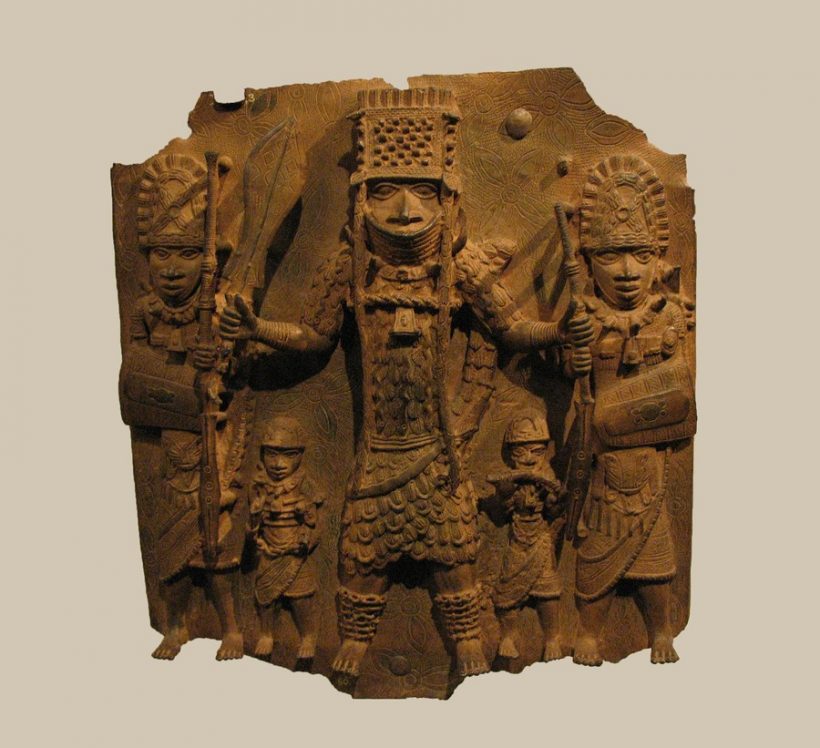
Benin bronzes. © Global Look Press
RT | June 4, 2018
After Jeremy Corbyn promised to return the Elgin Marbles to Greece upon becoming PM on the basis that they were “looted” from the country, RT looks at other rare artifacts taken by colonial Britain that now reside in UK museums.
“As with anything stolen or taken from occupied or colonial possession – including artifacts looted from other countries in the past – we should be engaged in constructive talks with the Greek government about returning the sculptures,” Corbyn said in an interview with a Greek newspaper.
If Corbyn were to become PM, here are some of the other artifacts that might be returned to their country of origin.
Benin artefacts
The British Museum boasts the second-biggest collection of Benin’s art after the Ethnological Museum in Berlin.
The Kingdom of Benin – now part of Nigeria – was stripped of its bronzes during what became known as Britain’s “punitive expedition,” a mission conducted against the natives after they defied imperial rule by imposing customs duties.
BBC Civilizations presenter David Olusoga, originally from Nigeria, said the UK has a “moral imperative” to return the art.
On the Benin looting, he said: “It’s just such a stark case of theft.”
He added during the Hay Festival this year: “A friend of mine, a TV producer, once came up with a brilliant solution: he said we should have a special version of Supermarket Sweep, where every country is given a huge shopping trolley and two minutes in the British Museum. Maybe he’s right, maybe that’s the way forward.”
Ethiopian treasures
Dozens of institutions up and down the country, including the Victoria and Albert Museum in London, are home to hundreds of northeast Africa’s finest treasures.
Beautiful and equally important manuscripts and artifacts were plundered after the British capture of Maqdala in 1868, the mountain capital of what was then Abyssinia under Emperor Tewodros II.
In 2017, Ethiopia lodged a formal restitution complaint. The offer was refused, but ahead of the Maqdala exhibition at the V&A at the beginning of April, its director suggested the case could be settled by granting the treasures to the east-African country on a long-term loan.
Sultanganj Buddha
The Sultaganj Buddha is a metallic sculpture that was extracted from an abandoned Buddhist monastery in northern India in 1861 by E B Harris, a British Raj railway engineer. The 1,500-year-old bronze Buddha was then shipped to Birmingham after being secured for a mere £200 ($265).
The item – the largest known Indian metal sculpture, which is known in the UK as the ‘Birmingham Buddha’ – is at the top of the list of thousands of alleged ‘stolen treasures’ that Indian authorities are trying to get back.
The Koh-i-Noor diamond
The Koh-i-Noor diamond, one of the largest cut in the world, is currently part of the British crown jewels. It has been the subject of a bitter dispute between India and the UK ever since it was taken from the Punjab and presented to Queen Victoria in 1849.
The jewel, which belonged to the Punjab’s Sikh Empire, was handed by the East Indian Company to Queen Victoria after they emerged victorious in the 1840s Anglo-Sikh wars.
The diamond – known as the Mountain of Light – is thought to have been mined in the 1300s.
India has called for the stone to be returned ever since it gained independence in 1947, though the UK claims it has a legal basis for withholding it, as it was guaranteed under the Treaty of Lahore.
Former PM David Cameron commented on the dispute, stating: “If you say yes to one you suddenly find the British Museum would be empty. I think I’m afraid to say, to disappoint all your viewers, it’s going to have to say put.”
Iran: Morocco’s false claims aim to please third parties
Press TV – May 24, 2018
Iran has hit out at Morocco for accusing Tehran of interference in the African country’s affairs, saying the “false claims” are aimed at pleasing certain third parties.
Morocco has close ties with Saudi Arabia which has accused Iran of meddling in Arab affairs, with Moroccan Foreign Minister Nasser Bourita repeating those claims in a recent interview with Fox News.
“The Moroccan foreign minister knows himself well that the unjust charges he is making are utterly wrong, false and based on delusions and fictions written by those who resort to such provocations only in line with their illegitimate interests,” Iran’s Foreign Ministry spokesman Bahram Qassemi said on Thursday.
Bourita first made the accusations against Iran early this month as he announced Morocco’s decision to sever diplomatic ties with the Islamic Republic over what he called Tehran’s support for the Polisario Front.
The Polisario is a guerrilla movement fighting for independence for the Sahrawi people in Western Sahara which is claimed by Morocco after colonial Spain left the territory.
In his interview with Fox News aired on Wednesday, Bourita claimed that Hezbollah members had met with senior Polisario military leaders recently and that the Iranian embassy in Algeria was used to fund the Polisario.
“The Moroccan authorities’ insistence on repeating their false claims for cutting diplomatic ties with Iran and repeatedly raising baseless allegations against our country is merely a bid to please certain third parties,” Qassemi said.
Bourita also claimed that Iran was in part trying to destabilize the area due to Morocco’s good relations with the US and Europe.
Earlier this month, he had said that Iran and Hezbollah were supporting Polisario by training and arming its fighters, via the Iranian embassy in Algeria.
Algeria, Iran and Hezbollah were all quick to reject the claims as baseless back then.
Iranian Foreign Ministry said there was no cooperation between Tehran’s diplomatic mission in Algiers and the Algeria-backed movement.
Hezbollah also blamed the US, Israel and Saudi Arabia for the diplomatic tensions, saying Rabat had cut ties with Tehran under pressure from the trio.
In turn, Algeria summoned Morocco’s ambassador to protest the “unfounded” claims.
Rabat annexed Western Sahara, a former Spanish colony, in 1975, and has since been in conflict with Polisario, which demands a referendum on self-determination and independence.
The movement, which aims to end Morocco’s presence in the Saharan region, recently said they sought to set up a “capital” in the region, prompting Rabat to caution it would respond with force.
Botswana National Front calls for boycott of Israel
Palestine Information Center | May 19, 2018
 GABORONE – Botswana’ main opposition party, the Botswana National Front (BNF), has called on the government of Botswana to terminate all relations with Israel. This comes in the wake of Israel’s massacre of 60 people on the Israel-Gaza border on Monday.
In a scathing statement, BNF’s Secretary for International Affairs, Nelson Ramaotwana said:
“The BNF does not only condemn the barbaric acts of Israel but call upon the government of Botswana to terminate forthwith all diplomatic relations, trade linkages, military and intelligence support from Israel. We call upon Batswana from all walks of life to boycott and disinvest from Israel products and businesses in solidarity with 61 butchered and 2700 injured Palestinians.”
Severance of Iran-Morocco ties: Algiers responds to Rabat’s “baseless” allegations
MEMO | May 7, 2018
Algerian authorities rejected Wednesday as “completely baseless” Morocco’s allegations in the aftermath of the cut of diplomatic relations with Iran, over the alleged Teheran’s support of the Polisario Front implicating “indirectly Algeria, reports Sahara Press Service.
“Morocco’s ambassador to Algiers was received Wednesday by the secretary general of the Ministry of Foreign Affairs who expressed “Algerian authorities’ rejection of the completely baseless statements, made by its Foreign Minister while announcing the breakdown of diplomatic relations between Morocco and the Islamic Republic of Iran, and which indirectly implicate Algeria,” said the spokesman of the Ministry of Foreign Affairs Abdelaziz Benali Cherif.
The Foreign Affairs’ spokesperson responded to the allegations made, the day before, by Morocco’s minister of Foreign Affairs and International Cooperation, Nasser Bourita, who announced at a news conference in Rabat that Morocco had decided to cut diplomatic relations with Iran over its “support” to the Polisario Front, the legitimate and only representative of Western Sahara people.
The Polisario Front, which dubbed “big lie” Morocco’s allegations of military relations between the Polisario and Iran, defied Rabat to produce evidence for its “false allegations.”
Polisario Front’s coordinator with MINURSO (UN Mission for the Referendum in Western Sahara), M’hamed Khadad, said Rabat acted out of political opportunism to “circumvent the resumption of direct political negotiations called for by the United Nations” for the settlement of Western Sahara conflict through a referendum on Saharawi people’s self-determination.
Khadad denied any military relations with Iran, saying “the Polisario Front has never had military relations, has never received arms and has never had military contacts with Iran or Hezbollah”.
Iranian authorities said the accusations are “completely baseless, far from reality and wrong.
“They stressed that “one of the most fundamental principles of the Islamic Republic of Iran’s foreign policy in its relations with other governments and countries in the world has been and continue to be deep respect for their sovereignty and security as well as non-interference in the domestic affairs of other states.”
Lebanese Hezbollah also rejected Morocco’s accusations, saying it was regrettable that Rabat had given in to foreign “pressure.
“The Lebanese political party invited “Morocco to look for a more convincing argument to sever its ties with Iran.”
READ ALSO:
Polisario Front: There Is No Military Presence by Any Foreign Power in Western Sahara
Al-Manar | May 2, 2018
The Polisario Front denied on Wednesday there was military presence by any foreign power in Western Sahara, a day after Morocco cut ties with Iran, accusing the Islamic Republic of providing support to the Sahrawi rebel national liberation movement.
UNews news agency reported that the Polisario Front hit back at Moroccan move to cut ties with Iran, stressing that the movement’s fighters are alone operating in the Western Sahara.
Meanwhile, Mehr news agency reported that the Front spokesman has dismissed the Moroccan government accusations against Iran as baseless and fabricated.
According to the Polisario Front’s website Hespress, the Front’s spokesman Muhammed Haddad has asked the Moroccan government to release any previously alleged evidence showing the links between Iran the Western Saharan movement.
Haddad added “through these maneuvers and accusations, Rabat seeks to refrain from negotiation on the desert, which the United Nations has called for.”
On Tuesday, Morocco’s foreign affairs minister, Nasser Bourita, claimed that Rabat had evidence showing Iranian government had provided financial as well as logistical support to Polisario through its embassy in Algiers.
The Morracan government has announced it will cut diplomatic ties with Iran over the accusations.
The Polisario Front is a Sahrawi rebel national liberation movement aiming to end Moroccan presence in the Western Sahara. It is an observer member of the Socialist International. The United Nations considers the Polisario Front to be the legitimate representative of the Sahrawi people and maintains that the Sahrawis have a right to self-determination. The Polisario Front is outlawed in the parts of Western Sahara under Moroccan control, and it is illegal to raise its party flag (often called the Sahrawi flag) there.
Featured Video

Bombing Hitler’s Hometown
or go to
Aletho News Archives – Video-Images
From the Archives
The Biggest Threat to Peace in Middle East
By Dr. Elias Akleh* | Sabbah Report | May 24, 2010
A build up of heightened tension in the Middle East is escalating in the last few weeks. American and Israeli postures towards Lebanon, Syria, and Iran have become more threatening. Listening to speeches of political leaders one hears talks only about war not peace. Iranians and Israelis are continuously training hard for a possible showdown. Both sides are conducting extensive war games every month. This led Syrians to claim that Israel is preparing for a soon-to-come another war. The Jordanians also are warning that current stalemate of the peace process is an indication of a war breaking out this summer. The Russian President and his army chief hinted, a few months ago, that the US and Israel were planning for an attack on Iran.
Indeed Iran is, as it has been for last few years, the target of most of the threats and accusations of supporting terrorism. Escalating incitement against Iran the American Defense Department sent last month (April) to Congress a report on Iran’s military claiming Iran could develop intercontinental ballistic missiles capable of reaching the US by 2015.
Ignoring the fact that N. Korea, India, Pakistan, and Israel are proven to have nuclear weapons while Iran does not, the US Secretary of State Hillary Clinton chose in her speech, to the nuclear Non-Proliferation Treaty review conference at the UN, to focus on Iran’s alleged nuclear ambitions putting the whole world at risk as she put it. According to Clinton Iran’s acquisition of nuclear weapons, rather than Israel’s more than 200 nuclear bombs, is destabilizing the Middle East. She called on the world’s nations to rally around US efforts to hold Iran, not other nuclear countries, to account.
The accusation that Usama Bin Laden is living comfortably in Iran had received a boost after the broadcast of a documentary called “Feathered Cocaine”. This echoed the June 2003 claims of the Italian newspaper Corre de la Sierra that Bin Laden was in Iran according to some intelligence report, and according to Richard Miniter’s book “Shadow War”. … continue
Blog Roll
 Aletho News
- Bombing Hitler’s Hometown
- German journalist threatened with homelessness as German court upholds EU sanctions in landmark free speech case
- US Tells Allies That Ukraine-Bound Arms Could be Sent to Middle East
- Organized terrorism: Iran condemns killing of its diplomats in Lebanon
- Why could Gaza enter the regional war?
- Hamas official rejects Mladenov Plan linking disarmament to Gaza reconstruction
- Two Primary Elections for the Soul of ‘America First’
- Japan Clings to US Vassalage Despite Energy Crunch Caused By Iran War
- US Seeks Control Over Global Energy Infrastructure – Kremlin
- US senators target Orban government for standing up to Zelensky
- If Americans Knew
- Researchers at Human Rights Watch Resign Over Blocked Report on Palestinian Refugee Return
- Jewish Groups Are Backing a War Americans Don’t Want
- Eric Fingerhut Thinks He’s the President of the Jews
- Top Jewish Philanthropists, Rabbis Urge Israeli President to Take Action Against ‘Jewish Extremists’
- Don’t Be Fooled. Zionist Leaders Have Always Wanted to Control Southern Lebanon
- Israel’s widespread use of torture is a core element of its genocide against the Palestinian people
- In Israel’s War on Iran, Many Middle East US Bases Rendered “All But Uninhabitable”
- ‘Burn the lawn’: Israel pursues ‘Rafah model’ in southern Lebanon
- A genocide here, an amputation there
- Reports: Iran mobilizing 1M fighters, Israel-US run low on ammo, Israeli army faces shortage – Not a ceasefire Day 168
- No Tricks Zone
- Devastating Assessment Of Comirnaty Vaccine By Former Senior Pfizer Europe Toxicologist
- New Study: CO2 Is ‘Effectively Negligible’ As An Explanatory Climate Change Factor Since 2000
- Former Pfizer Toxicologist Dr. Helmut Sterz Tells Bundestag Hearing Pfizer Vaccine Should Have Never Been Approved
- Energy Expert: Germany’s Nuclear Phaseout Was A “500 Billion Euro Mistake”
- New Research: South Australia’s Mid-Holocene Sea Surface Temperatures Were 4°C Warmer Than Today
- Storing Green Energy To Last Germany 10 Days Would Require A 60-Million Tonne Battery
- New Studies: UK Sea Levels Were 4 Meters Higher Than Today During The Mid-Holocene
- Destructive Green New Deal: German Energy And Metal Group Warns Of Drastic Crisis
- New Study Documents A 20-Year Pause In Arctic Sea Ice Decline – Driven By Internal Variability
- Wake-up Call: Survey Shows Majority Of Germans Now Favor Postponing Climate Targets!
 Aletho News