Russian Bombing
By Bryan Hemming – offguardian – November 30, 2015
“At least 18 people killed in Russian airstrike on town in Syria – reports” reads a headline in this morning’s Guardian.

According to the corporate media when Russian bombs kill, they kill people. On the other hand, US and NATO bombs kill terrorists and extremists. That some collateral damage is caused in the process is only natural and hardly worth the column inches of mentioning. After all’s said and done ‘you can’t make an omelet …’ The fact that one person’s collateral damage is another person’s grandmother is highly regrettable and easily deniable. As one loving grandmother once remarked, “the price is worth it”.
The Guardian’s Mark Tran goes on to describe the jihadists holding the town of Ariha in Northwest Syria as ‘insurgents’. That’s novel way of describing al-Qaida-led rebels, which is how one article in the Telegraph described them on May 29th of this year. Headlined “Al-Qaeda-led rebels take Idlib’s last Syria regime bastion” an accompanying photo shows a tank flying the flag of ISIS. In fairness, the caption doesn’t say the photo was taken in Ariha, there again, neither does it say it wasn’t.
Another article published by the Guardian on July 4th this year carried the headline “Syrian mosque blast kills at least 25 with al-Qaida links”. Note the headline omits the word ‘people’. Are we supposed to think there were no ‘people’ killed in that attack? Just 25 somethings; every last something a signed up member of a terrorist group linked to al-Qaida, I suppose. Back then the Guardian told us: “Syrian Observatory, which tracks the war, said the explosion in Salem mosque in Ariha, also killed a senior non-Syrian member of the hardline jihadist organisation.” In less than six months, and with a bit of Russian bombing, we are expected to swallow the unlikely idea that “hardline” members and somethings of a “jihadist organisation” have morphed into “people” and “insurgents”. People or insurgents, whatever they are now, one thing we can be sure of is that they must certainly be moderate ones.
Russki bombs; unbelievable, eh?
After the Paris Massacre: The Evil Axis of US Allies
By Taylan Tosun – teleSUR – November 30, 2015
The horrible Paris massacre allegedly committed by the Islamic State (IS) militants immediately rose to the top of the international agenda. Western powers, particularly the U.S. and France, declared that restriction of the Islamic State’s domain of operation and, subsequently, its overall destruction were their primary objects. Thus, immediately after the Paris massacre French warplanes bombed Al-Raqqah, the so-called capital of IS in Syria.
The first point of discussion, which came forward in the mainstream media concerning the war against IS was the following: “Is there a possibility that the international coalition against IS led by the U.S. could inflict serious blows to the terrorist organization merely by means of air raids?” Many commentators disagreed: The coalition members were not able to effectively harm IS in such residential areas as Al-Raqqah just by air bombardment unless they risk heavy civilian causalities.
I think that this line of discussion serves to cover up more fundamental realities on the ground by reducing the issue of the fight against IS to merely military tactics. Western powers, notably the U.S., have two “important” allies, which have been supporting IS since the beginning of the Syrian civil war: Turkey and Saudi Arabia. Strangely enough the indirect roles of these two countries in the massacres of Lebanon and Paris have not been questioned.
Saudi Arabia has assumed a major role in the promotion and popularization of Salafism throughout the Mideast and in sponsoring the Jihadist terrorist organizations. The fact that Saudi Arabia has been tolerated by the West despite its support for Salafism is because Saudi Arabia acted as a sort of “shield” in line with the Western interests against the proliferation of Iran-Shia influence in the region and has been one of the major customers of the U.S. arms industry.
Turkey is a perfect match for Saudi Arabia. The Turkish government has shown its best efforts to have the PYD/YPG included in the list of terrorist organizations before Paris massacre. One of the first moves of Turkey was to prevent YPG from extending its operations to the west of Euphrates River, when war policy was restored with an aim to limit the gains of Kurds. Thus Turkey prevented YPG/YPJ to repel ISIS out of Jarabulus. While the PYD controls most of the Turkish-Syrian border, Turkey supported IS to keep the 90-kilometer section of the border extending from Jarabulus to Afrin Canton under its control. Why? Of course, it aimed to help IS with maintaining its relationship with the world, allowing militant candidates to participate in IS, and probably for continuing ammunition supplies.
What is the meaning of the so-called ‘cleaning’ operation by US-Turkey to remove ISIS from the Jarabulus-Azez line?
Turkey’s pro-IS policy became unsustainable after the West established the anti-IS coalition and started to bomb IS targets. Shortly after the June 7 elections, the Turkish government aimed to kill two birds with one stone by participating in the anti-IS coalition. As a result, Turkey both secured Western support in ending the ceasefire period in the country, and gained a ‘legitimate’ ground for negotiating its plans to overthrow Assad and restrict Rojava by means of Salafist organizations.
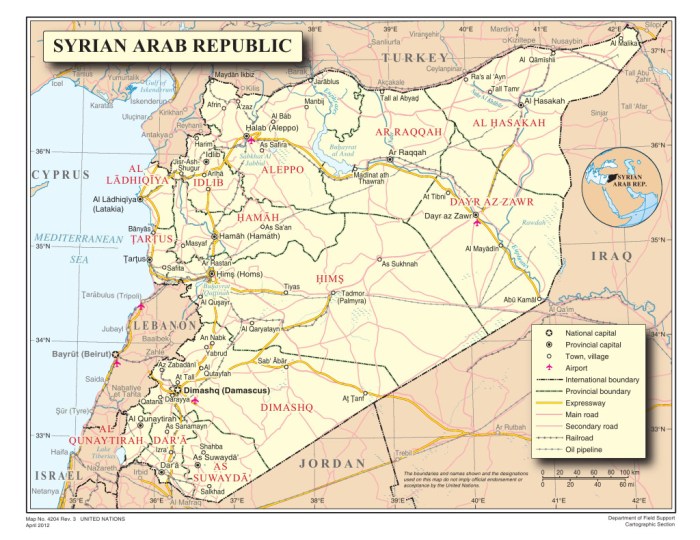
Turkey’s plan as offered to the U.S. and other Western allies was as follows: Establishment of a 90-kilometer wide and 50-kilometer deep ‘safe zone’ between Jarabulus and Azez, very close to the Afrin Canton, as secured by the warplanes of Turkey and allies; removal of IS from the zone by occupation of the Turkish Armed Forces either or not in cooperation with allied powers; and settlement of migrants that are currently located in the camps in Turkey or that would flee from Syria in the future. Therefore, Turkey would be liberated from the European pressure on the migration issue, prevent the physical connection between the Kurdish Cantons, and the demographics of the region would become Sunni-Arab dominated thanks to the migrants. There also was a more strategic goal: The Jaish al-Fatah coalition, which was promoted by Turkey, Qatar, and Saudi Arabia, proved to be successful in Aleppo and surroundings. Upon imposition of the safe zone, the Turkey-Aleppo line would be secured and the coalition, basically composed of al-Nusra Front, an associate of al-Qaeda, and Ahrar ash-Sham, would be allowed to further constrict the Assad government.
Russian military operations in Syria that started on September 30 substantially complicated the above plan. As a matter of fact, Russia was involved in the war to eliminate the threat on Latakia, the heart of the Assad government, and prevent the total loss of Aleppo. Idlib city, under control of the opponents, located in northern Syria has strategic importance for the control of Aleppo. Therefore, Russia shifted a part of its operations to Northern Syria and started to harass Turkish jets by occasionally entering the Turkish airspace. This was then described as establishment of the safe zone, yet it was now considered against Turkey.
It is safe to suggest that Obama’s clear rejection of Turkey’s ‘safe zone’ proposal during the G-20 summit was based among other things on refraining from any confrontation with Russia to the north of Aleppo.
The Paris massacre allowed a Russian-U.S. rapprochement as regards Syrian policies. Parties declared that their primary objective was to weaken IS, but not to overthrow the Assad government. These developments fostered hopes for the Geneva negotiations, which aimed to end the civil war in Syria.
Nevertheless, U.S. secretary of state Kerry announced immediately after the G-20 Summit that Turkey and the U.S. would take a joint operation to clean the Jarabulus-Azez line of IS.
What does this operation plan, which was announced after the ‘safe zone’ proposal was shelved, mean?
It means implementation of the ‘safe zone’ project at a more modest level. Ground forces will not be involved in the operation. Instead, Syrian opponents with the support of Turkish and U.S. jets would clean the said part of the Turkish border from IS. On the grounds that the Free Syrian Army ceases to exist in the field, the pro-al-Qaeda al-Nusra Front and its associate Ahrar ash-Sham would assume the ground operations, accompanied by the Syrian Turcoman forces.
In other words, IS would be replaced by other Salafist organizations. The involvement of YPG, the only secular force fighting against ISIS, and connection between the Kurdish Cantons would be prevented. Lastly, by leaving the Jarabulus-Azez line in the hands of such organizations as al-Nusra Front and Ahrar ash-Sham, which have a comparable record of civilian massacres, the pressure of the said Salafist organizations on the regime over northern Syria would be reinforced given that these organizations have Idlib and a large part of Aleppo under their control.
***
It seems very unlikely that IS is to be weakened and peace is to be restored in Syria, given that the U.S. continues to protect its allies, Turkey and Saudi Arabia, which deal with dirty business in Syria. Furthermore, the available data suggests that the West did not give up its goal to maintain continuous pressure on the Assad government and sustain controlled chaos in Syria, albeit the same has currently receded into background. The controlled chaos policy ultimately means protection of the power of IS and paving the way for likely massacres in the future.
US Involvement in Turkey’s Shoot Down of the Russian Jet
By Maram Susli – New Eastern Outlook – 01.12.2015
In the wake of Turkey’s shoot down of the Russian Su-24, the Russian Foreign Minister Sergei Lavrov called the attack a planned provocation. He went further on to suggest the U.S. had given Turkey permission to shoot down the Jet. He explained that countries using US manufactured weapons must ask the U.S. for permission before using them in operations. The aircraft used to shoot down the Su-24 was a U.S.-made F-16. Indeed, there is evidence to suggest that not only did the U.S. give Turkey permission, but that it was moving the strings behind the entire operation.
Two Russian aircraft were attacked that day, but the second was a far less publicized incident. A Russian helicopter was destroyed by the CIA backed FSA using U.S. provided Anti-Tank TOW missiles. The helicopter was on a rescue mission to find the missing Su-24 pilots and the attack resulted in the death of a Russian Marine. Since the U.S. backs the FSA and provided the TOW missiles which were used in the attack, they are at least indirectly responsible, if not outright complicit in it. But instead of apologizing to Russia, U.S. state department spokesman Mark Toner defended the actions of the FSA. He also defended the actions of the Turkmen insurgents who shot at the parachuting Russian pilots, a war crime under the first Geneva convention. Such an antagonistic position reveals that the U.S. was not displeased by the attacks on Russia.
In the months leading up to the attack, there were several indicators the U.S. knew it would take place. On September 3rd, the families of U.S. staff members were urged to evacuated out of Incirlik air base in Turkey and were given until October 1st to do so. On November 3rd, the US deployed F-15 fighter Jets to Turkey which are specifically designed for air-to-air combat. Since ISIS has no planes, the target could only have been Russian aircraft. Most significantly, on October 21st, the U.S. and Russia signed a deconfliction protocol, in order to ‘avoid clashes in Syria’s skies’. This entailed giving the US information about where and when Russia will conduct sorties. Russian president Putin suggested this information was passed on to Turkey by the U.S. and used to shoot down the Sukhoi-24.
During the months leading up to the attack, US War hawks were increasingly calling for a direct confrontation with Russia, an act that could lead to a third world War. Several US Presidential candidates, including Hillary Clinton, were effectively calling for a shoot down of a Russian Jet. Some of the more direct comments included,
Chris Christie: “My first phone call would be to Vladimir, and I’d say to him, listen, we’re enforcing this no-fly zone,” adding that he would shoot down Russian warplanes that violate the no-fly zone.
Jeb Bush: “We need to have no fly zones. The argument is, well we’ll get into the conflict with Russia, maybe Russia shouldn’t want to be in conflict with us. I mean, this is a place where American leadership is desperately needed.”
The spokesman for the Zionist Israeli lobbying group AIPAC, Senator John McCain, suggested arming Al Qaeda Linked Rebels with Anti-Aircraft weapons to shoot down a Russian Jet. An idea which he himself admits was “what we did in Afghanistan many years ago”. The policy which resulted in the birth of Al Qaeda and the rise of the Taliban. Indeed Qatar had been making an effort towards this end. Documents leaked by Russian hackers ‘Cyber Berkut”, revealed that Qatar was negotiating with Ukraine to purchase Anti-Air weapons to help ISIS shoot down a Russian Jet over Syria. It is likely Ukraine refused to sell these weapons, since arming assets which are difficult to control could backfire. After all, US Jets are also using those skies. Flooding the region with hand held Anti-Air weapons could pose a threat to them in future. Turkey is a far more reliable and controllable proxy which is capable of shooting down Russian Jets.
Perhaps one of the most significant War hawk statements comes from the Former national security adviser Zbigniew Brzezinski. In an Op-ed for the Financial Times Brzezinski suggested that Obama should retaliate if Russia continues to attack U.S. assets in Syria, i.e the Al Qaeda linked rebels. Brzezinski, has experience using Al Qaeda as an asset, having been one of the masterminds behind its creation in Afghanistan. He maintains a great deal of influence and respect in US politics.
It is likely Brzezinski’s dangerous advice to attack Russia was taken on board by US decision makers. But instead of risking a direct conflict with two nuclear powers, Turkey was used as a proxy. Turkey has its own agenda in attacking Russian jets outside of the U.S.’s interests. Turkish president Erdogan has already committed himself to an anti-Assad position far beyond the point of no return. This was over a gas pipeline deal with Qatar that is now looking more like a pipe dream. Russia has been actively fighting not only ISIS, but Al Qaeda and its affiliates who are crucial for Turkey’s plans to overthrow the Syrian government. The Su-24 was bombing the Al Qaeda-linked Turkmen insurgents, before it was shot down.
On October 8, NATO made a statement that it would defend Turkey against Russia, after a Russian jet briefly passed through Turkish airspace on its way to bomb targets in Syria. Such statements may have encouraged Erdogan to take the exceptional risk of shooting down a Russian jet under the assumption that Turkey would be protected by NATO. On November 12th, EU countries committed to pay Turkey 3 billion dollars. Interestingly this is the same amount Turkey is estimated to lose, as a result of Russian sanctions put in place in the wake of the attack. This could have been Part of NATO’s assurance to Erdogan that he would lose nothing by going ahead with the attack.
Erdogan has become increasingly frustrated, even after four years of war, the Syrian state shows no sign of collapse. It might not have been too difficult for the U.S. to convince the desperate Turkish leader that attacking a super power was in his best interest.
Maram Susli also known as “Syrian Girl,” is an activist-journalist and social commentator covering Syria and the wider topic of geopolitics.
Who is Right in Syria?
US, Turkey, NATO Supporting ISIS and al-Qaeda – Supporting the Creation of Buffer Zones
By Dr. Lawrence Davidson | To The Point Analyses | November 29, 2015
Here is the situation in Syria as I see it : Russia is taking a long-range view and wants stability in post-ISIS Syria. France and the United States are taking the short-range view and really have no achievable plans for Syria’s future stability. Turkey appears to have given little thought to Syria’s future. Ankara may be willing to see indefinite chaos in Syria if it hurts the Assad regime on the one hand and the Kurds on the other.
Part I – Russia
The Russians may be the only party interested in the long-term political stability of Syria. There is certainly no doubt that President Putin is more determined than Western leaders to act on the fact that the various so-called moderate parties standing against the Assad regime cannot work together, and that this fault cannot be corrected by enticements from the United States. For the Russians, this fact makes the Damascus government the only source of future stability.
This understanding, and not Soviet-era nostalgia, has led Russia to support the Assad regime, which possesses a working government, a standing army, and the loyalty of every religious minority group in the country.
Some might object that both Assad and Putin are dictators and thugs (by the way, thugs in suits in the U.S. government are all too common). However, this cannot serve as a serious objection. The only alternative to Damascus’s victory is perennial civil war fragmenting the country into warlord zones. With the possible exception of Israel, this scenario is in no one’s interest, although it seems that the leaders of in Washington and Paris are too politically circumscribed to act on this fact.
Part II – U.S. and France
Thus, it would appear that neither the U.S. nor France really cares about Syria as a stable nation. Once the present military capacity of ISIS is eliminated, Washington and Paris may well clandestinely continue to support a low-level civil war against the Assad regime. In this effort they will have the help of Turkey, the Kurds and Israel. The result will be ongoing decimation of the Syrian population and fragmentation of its territory.
As if to justify U.S. strategy, President Obama, with French President Hollande by his side, recently boasted that the United States stood at the head of a “65-country coalition” fighting terrorism in Syria. However, this is a hollow claim. Most of these countries are coalition members in name only, and some of them, like Saudi Arabia and the Gulf state governments, play a double game. And then Obama dismissed Russia and Iran as “outliers” and “a coalition of two.” Yet those two countries are the Syrian nation’s best hope for future stability.
The fact is that U.S. policy in Syria has been a losing proposition from the beginning just because of its hostility to the Assad government. Despite its air campaign against ISIS, Washington has no ground component nor any answer to the political vacuum in Syria. Both missing parts are to be found in an alliance with Damascus.
Refusal to make that alliance has also opened Washington to building neoconservative political pressure to increase U.S. military presence in the area. However, American “boots on the ground” in Syria is both a dangerous option as well as an unnecessary one. Syrian government boots can do the job if they are properly supported. The support has come from Russia, Iran and Hezbollah. It is the United States and its coalition who are the “outliers.”
Part III – Turkey
It is not easy to explain Turkey’s animosity toward Damascus. Prior to the civil war in Syria, the two countries had good relations. Then something changed. It may have been something as foolish as President Erdogan’s taking personal offense against President Assad because the latter chose to heed the advice of Iran rather than Turkey at the beginning of the war. Whatever happened, it sent Ankara off on an anti-Assad crusade.
That anti-Assad mindset is probably the backstory to the recent reckless Turkish decision to shoot down a Russian warplane operating in support of Syrian government troops close to the Turkish border.
The Turks say that the Russian jet strayed into Turkish airspace. The Russians deny this. The Turks claim that they tried to communicate with the Russian plane to warn it away. When it did not respond, they destroyed it. Of late the Turkish Prime Minister, Ahmet Davutoglu, has said that Ankara “didn’t know the nationality of the plane that was brought down … until Moscow announced it was Russian.” This statement is frankly unbelievable given that Davutoglu followed it up with an admission that Turkey had complained to Russian about military flights in this exact border area. He also asserted that both Russian and Syrian operations in this region of northern Syria should stop because ISIS has no presence there. This assertion makes no sense, since Damascus’s aim is to reassert government authority by the defeat of armed rebels regardless of their organizational affiliation.
It is hard to say whether the Turks are telling the truth about an incursion into their airspace. Most of their evidence, such as recorded Turkish warnings to the Russian plane, is easily fabricated. However, in the end it does not really matter if the plane crossed the border. There was no need to shoot it down.
If the Russian jet strayed into Turkish airspace, there would have been a range of options. The Turks could be very sure that the Russian plane had no hostile intention toward their country, and they should have assumed, for the sake of minimizing any consequences, that no provocation was meant on the part of the Russia. In other words, they should have acted as if the alleged overflight was a mistake. The Turks could have then shadowed the Russian plane in a way that coaxed it back into Syrian airspace and followed the incident up with a formal protest to Moscow. Instead they made the worst possible choice and shot the plane down. Now both Ankara and Washington are shouting about Turkey’s right to defend its territory despite the fact that the Russian plane never posed any threat.
Part IV – Conclusion
In all of the bloodshed, population displacement and terror that has accompanied the Syrian civil war, the least-considered party has been the Syrian people and their future. ISIS, or at least its present infrastructure, will ultimately be destroyed. However, while that destruction is necessary, it is an insufficient outcome because it fails to provide long-term stability. Right now that vital ingredient can only be supplied by the reimposition of order by Damascus. The folks in Washington, Paris and Ankara might not like that, but they are not the ones facing a future of anarchy. And indeed, the more they stand in the way of Damascus, the more chaos they will help create.
Turkish media questions Ankara’s version on Su-24
Sputnik – 30.11.2015
Analyzing the Turkish attack on a Russian Su-24 bomber in Syria last week, Turkish journalist Umit Kivanc suggested that Ankara’s narrative on how things went down doesn’t seem to mesh with the basic facts, adding that a reasoned analysis has led him to conclude that the attack may have been a deliberate, political provocation.
In his analysis, published in Turkey’s Radikal newspaper, Kivanc emphasized that the Russians were not the only ones to condemn the shoot down, with even Turkey’s ostensible allies in the United States making harsh comments over the disproportionate response.
The journalist pointed to the commentary of Lt. Gen. Tom McInerney, former US Air Force Vice Chief of Staff, who bluntly told Fox News that the attack was a “very bad mistake” and a sign of “poor judgment” on Turkey’s part.
McInerney, Kivanc noted, went so far as to call the attack an “aggressive” act, adding that the Russian plane had not made “any maneuvers to attack [Turkish] territory.” Having himself served as a NORAD commander in Alaska, McInerney noted that he could never imagine US planes responding to a violation of US airspace by shooting down the plane as the first response. Ultimately, the former military commander suggested that “this could have been a deliberate provocation by President Erdogan.”
Praising McInerney for his professionalism, and his ability to explain the situation in a simple and clear manner, Kivanc contrasted this with some of the rhetoric found in the Turkish press over the incident. Many Turkish commentators, he noted, have focused all their attention on the fact that the militants the Russian planes were bombing in the region weren’t Daesh (Islamic State).
“All this is well and good,” the columnist noted, “but did anyone ever claim that the Russians were bombing ISIL here? No, they didn’t. So why the commentary on ISIL’s absence? It is well-known that in this region, where the Syrian Army is attempting to advance, under the cover of Russian air support, there is Al-Qaeda (Al-Nusra Front), Ahrar al-Sham, and other armed groups, with whom Turkey has rather close contacts. [Moreover,] according to Russian Foreign Minister Sergei Lavrov, the area contains terrorist infrastructure, including arms and ammunition depots and command centers.”
“Lavrov,” Kivanc added, “had mentioned this ‘infrastructure’ in the course of his telephone conversation with Turkish Foreign Minister Mevlut Cavusoglu,” asking whether Ankara was deliberately looking to create a buffer zone to protect the terrorists.
Moving on to Turkish authorities’ claims that the Russian plane had violated Turkish airspace, for 17 seconds, and had been warned “ten times in five minutes,” the journalist noted that several questions could not give him peace of mind over Ankara’s claims.
First of all, Kivanc noted, “we are talking about a military plane, capable of increasing to speeds of a thousand kilometers or more per hour. If the aircraft was first warned over the space of ‘five minutes’, at what distance [from the border] did the warnings start? Were they understandable? Was the plane flying very slowly?”
The journalist pointed out that “judging by the fact that in a matter of 17 seconds the plane had [allegedly] flown 1.8 km into Turkish territory, I recalled the opinion of German pilots flying Tornado fighter bombers. In a commentary for Der Spiegel, one of them suggested, based on the trajectory pictured in the diagram [released by Turkish authorities], that the Russian plane could have been in Turkish territory for 10-15 seconds. In other words, we would not even have had the time to tell it to ‘shoo’, before it was gone!”
Furthermore, Kivanc recalled, “there are ways to address [airspace violations] before shooting a plane down. These include, for example, accompanying the plane until it exits from your airspace. This idea, for some reason, was ignored, instead moving right away to the last possible option.”
In fact, the journalist emphasized that the plane was allegedly in Turkish airspace “for such a short amount of time that not only was it not necessary to shoot it down –it wasn’t necessary to do anything with it.”
Commenting on the history of airspace violations involving his country, Kivanc pointed out that, for example, in January 2014 alone, “Turkish jets had violated Greek airspace 1017 times –up to forty (40!) times a day. Correspondence related to the violations of airspace was among the documents released by WikiLeaks. And if the destruction of aircraft were to occur following each violation, there would be no aircraft remaining.”
Poring over all the details of the attack, both in Turkish and Western media, the journalist suggested that the main issue, in his view, was that of the “huge disparity” between the alleged Russian violation, and the Turkish response, all of which seemed to demonstrate that authorities in Ankara may have been looking for just such a provocation.
Noting that the Turkish letter to the UN had declared that the Su-24 was shot down “in Turkish airspace,” Kivanc pointed out that the map released by Turkey’s own Ministry of Defense “refutes such suggestions.”
“The Russian plane,” the journalist noted, “was not hit when it was in Turkish airspace. Ankara acknowledges that the downed plane crashed in Syria, but denies that it was struck on the other side of the border. The fact that US officials know the truth, but do not want to disclose it, was clear hours after the incident, according to Reuters. The Russians, meanwhile, maintain that the Turkish F-16 which shot down their plane had itself violated Syrian airspace.”
All in all, Kivanc suggested, “the incident does not look like a natural reaction of a state whose airspace has been violated. One gets the impression that the decision was made in advance, and was itself extreme in character, deliberately searching for a suitable situation.” This, the journalist notes, is exactly how Russia characterizes it, with Foreign Minister Lavrov calling the attack a “pre-planned provocation.”
Noting that Turkish Prime Minister Ahmet Davutoglu had basically confirmed the political nature of the decision, when he noted following the attack that he had “personally given the instructions to the General Staff,” to deal with violations in a harsh manner, Kivanc added that “the fact that immediately following the incident, Ankara rushed to NATO, instead of establishing direct contact with Moscow, leads one to agree with the skeptical approach of the American Lieutenant General.”
Turkey’s Actions Show the Despair of the Regime Change Camp

By Dan Glazebrook | RT | November 25, 2015
Turkey’s shooting down of a Russian jet today shows the utter desperation currently sweeping through the regime change camp as Russia closes in on the death squads in Syria – and does so with massive international support.
At 9.30am on Tuesday morning, a Russian SU-24 jet was shot down by Turkish fighter planes. Its pilots were then allegedly killed by Syrian Turkmen anti-government militias, with the body of one paraded on camera in a video that was immediately posted on youtube. Turkey claimed the jet had encroached on Turkish airspace, but Russia maintains the plane was shot down well inside Syrian territory, 4km from the Turkish border. Rather than calling Russia to defuse any tension arising from the attack, Turkey then immediately called an emergency NATO meeting to ramp it up – “as if we shot down their plane”, Putin commented, “and not they ours”.
To make sense of this apparently senseless provocation, it is necessary to cut through the multiple layers of obfuscation which surround Western narratives around Syria and ISIS. The reality is that the forces essentially line up today just as they did at the outbreak of this crisis in 2011: with the West, Turkey and the gulf monarchies sponsoring an array of death squads bent on bringing down the Syrian government; and Russia, Iran, Iraq, Syria (obviously) and Hezbollah resisting this project; the rise of ISIS has not fundamentally changed this underlying dynamic. Indeed, the next-to-useless impact of the West’s year-long phony war against ISIS – alongside its relentless funneling of weaponry to militias with an, at best, ambiguous relationship with Al Qaeda and ISIS – has demonstrated that the Syrian state (or “Assad” to use the West’s puerile personalization) remains the ultimate target of the West’s Syria policy. As Obama himself put it, the goal is not to eliminate ISIS, but rather to “contain” them – that is, keep them focused on weakening Syria and Iraq, and not US allies like Jordan, Turkey or the US’s favoured Kurdish factions. In civil wars, there are only ever really two sides: those who want the insurgency to overthrow the government, and those who want the government to defeat the insurgency. In the Syrian civil war, NATO remains on the same side as ISIS. In this sense, Putin is entirely correct when he commented on the Turkish attack it was a “stab in the back, carried out by the accomplices of terrorists” and asked: “do they want to make NATO serve ISIS?”
Russia’s direct entry into the Syrian conflict two months ago, however, has caused utter panic in the ‘regime change’ camp. Belying all their ‘anti-ISIS’ rhetoric, the US and Britain were openly horrified that Russia might actually be putting up an effective fight against the group and restoring governmental authority to the ungoverned spaces in which it thrives. Immediately, the West began warning of ‘blowback’ to Russia, and ramping up advanced arms shipments to the insurgency. Within a month, a Russian passenger plane was blown up, with ISIS claiming responsibility and British Foreign Minister Philip Hammond calling the attack a “warning shot”. It was a “shot” alright, aimed not only at Russia, but also at her allies; the downing of the plane on Egyptian soil was a deliberate act of economic war against the Egyptian tourist industry, a punishment for Egypt’s support for Russia and Syria and its choking off of fighters to Syria since Sisi came to power. Then, two weeks later, came the attack on Paris. White supremacist niceties prevented Hammond calling that a “warning shot”, but that is precisely what it was, this time at those within the regime change/ anti-Russia camp who were showing signs of ‘wobbling’. Hollande had suggested back in January that sanctions on Russia should be lifted asap, and more recently had showed a willingness to cooperate with Russia militarily over Syria: a ‘red line’ for France’s ‘Atlantic partners’. This is what France was being punished for.
Nevertheless, the net continues to close on the West’s death squad project in Syria. From the start the key to ISIS success has been, firstly, the porous Syria-Turkey border, through which Turkey has allowed a free flow of fighters and weapons back and forth for the past four years, and secondly, the massive amounts of finance ISIS receives both from oil sales and from donors in countries prepared to turn a blind eye to terror financing. In recent weeks, all of this has been threatened by the Russian-led alliance (of which France is increasingly willing to be a part).
The past week has seen a large scale Syrian ground offensive, supported with Russian air cover, in precisely the Syrian-Turkish border region which is the death squads’ lifeline: a move which prompted the Turkish foreign ministry to warn of “serious consequences” if the Russian airstrikes continued. Simultaneously, Russia has embarked on a major campaign against ISIS’ reportedly 1,000-strong oil tanker fleet which is so crucial to the group’s financial success. As the Institute for the Study of War reported, “Russian military chief of staff Col. Gen. Andrey Kartapolov announced on November 18 “Russian warplanes are now flying on a free hunt” against ISIS-operated oil tanker trucks traveling back and forth from Syria and Iraq, claiming that Russian strikes had destroyed over 500 ISIS-operated oil trucks in the past “several days.”” This massive dent in the group’s oil transporting capacity even shamed the US into belatedly and somewhat half-heartedly launching similar attacks of their own. The smashing of ISIS’ oil industry will not only be a blow to the entire death squad project, but will directly affect Turkey, widely thought to be involved in the transportation of ISIS-produced oil, and even Erdogan’s family itself, as it is the company run by his son Bilal that is believed to be running the illicit trade.
Finally, France yesterday announced a crackdown on ISIS’ financiers, and demanded other countries do the same. French Finance Minister Michel Sapin implied that the report to the G20 on the issue last month was a whitewash, and demanded that the international Financial Action Task Force be much more explicit in its report to the next G20 finance meeting in February about which countries are lax in terms of terror financing. The move is very likely to expose not only Turkey and Saudi Arabia but also, given HSBC’s links to Al Qaeda, the City of London. Indeed, as the Politico website noted, Sapin specifically “said that considering the reputation of the City of London, he would be “vigilant” on the U.K.’s implementation of EU-agreed measures to clamp down on money laundering and exchange financial information on shady transactions or individuals”.The reactions to his demands that implementation of tougher EU regulations be moved forward will also be instructive (in another move exposing the total lack of urgency in the West’s supposed ‘war on ISIS’, they are currently not due to be implemented for another two years).
And on top of all this, the UN Security Council finally passed a resolution authorizing ‘all necessary measures’ to be used against ISIS, Al Qaeda and other terrorist groups in Syria, effectively granting UN approval to Russia’s intervention. As Pepe Escobar has pointed out, French support for the resolution rendered it politically impossible for the US or UK to use their veto – although US ambassador Samantha Power, an extreme Russophobe and ‘regime changer’, registered her disapproval by failing to turn up for the vote and sending a junior official along instead.
In other words, on all sides the net is closing in on the West’s death squad project in Syria. Turkey’s actions today have merely demonstrated, again, the impotent rage of those who have thrown in their chips with a disastrous and bloody attempt to remake the Middle East. Syria is indeed becoming the Stalingrad of the regime changers – the rock on which the imperial folly of the West and it’s regional imitators may finally be broken.
The Phony Torture Debate: Why Trump is Wrong about Waterboarding — It’s Probably Not What You Think
By Sam Husseini | November 25, 2015
Republican presidential candidate Donald Trump — to the outrage of liberals everywhere — says he wants more waterboarding. Reports the Washington Post: “‘Would I approve waterboarding? You bet your ass I would — in a heartbeat,’ Trump said to loud cheers during a rally at a convention center [in Columbus, Ohio] Monday night that attracted thousands. ‘And I would approve more than that. Don’t kid yourself, folks. It works, okay? It works. Only a stupid person would say it doesn’t work.’
“Trump said such techniques are needed to confront terrorists who ‘chop off our young people’s heads’ and ‘build these iron cages, and they’ll put 20 people in them and they drop them in the ocean for 15 minutes and pull them up 15 minutes later.’
“‘It works,’ Trump said over and over again. ‘Believe me, it works. And you know what? If it doesn’t work, they deserve it anyway, for what they’re doing. It works.'”
There’s no shortage of people denouncing or pretending to correct Trump’s remarks. Virtually all miss the point. The fact is torture produces bad but useful intelligence. That is, it gives you “intel” that some bigwig with a conniving agenda wants to push. Like that Iraq had WMDs and we needed to invade.
As I wrote in my piece of last year: ““Both Sides” Are Wrong: Torture Did Work — to Produce Lies for War (See Footnote 857 of Report)“:
Nothing solidifies the establishment more than a seemingly raging debate between two wings of it in which they are both wrong. Not only wrong, but in their wrongness, helping to cover their joint iniquities, all the while engaging in simultaneous embrace and fingerpointing to convey the illusion of seriousness and choice.
>The truth is that torture did work, but not the way its defenders claim. It “worked” to produce justifications for policies the establishment wanted, like the Iraq war. This is actually tacitly acknowledged in the [Senate Intelligence Committee report on torture, partly declassified last year] — or one should say, it’s buried in it. Footnote 857 of the report is about Ibn Shaykh al-Libi, who was captured in Afghanistan shortly after the U.S. invasion and was interrogated by the FBI. He told them all he knew, but then the CIA rendered him to the brutal Mubarak regime in Egypt, in effect outsourcing their torture. From the footnote:
“Ibn Shaykh al-Libi reported while in [censored: ‘Egyptian’] custody that Iraq was supporting al-Qa’ida and providing assistance with chemical and biological weapons. Some of this information was cited by Secretary Powell in his speech at the United Nations, and was used as a justification for the 2003 invasion of Iraq. Ibn Shaykh al-Libi recanted the claim after he was rendered to CIA custody on February [censored], 2003, claiming that he had been tortured by the [censored, likely ‘Egyptians’], and only told them what he assessed they wanted to hear. For more more details, see Volume III.” Of course, Volume III — like most of the Senate report — has not been made public….
So, contrary to the claim that torture helped save lives, torture helped build the case of lies for war that took thousands of U.S. lives and hundreds of thousands of Iraqi lives, helping to plunge the region into astounding violence, bringing al-Qaeda into Iraq, leading to the rise of ISIS and further bloody wars.
But rather than face how torture actually works — and indeed how the establishment acknowledges it works — it’s more fun for so-called conservatives like Trump to talk about how we shouldn’t care that a bunch of presumably bad guys getting tortured and for liberals to pontificate about how we’re better than that and we need to live up to our values. Or for some to say that “torture doesn’t work” without examining what “works” means in a manipulative political context. Everyone can then pretend to feel good about themselves: Trump cares about your safety; Liberals uphold our great values that show how superior we are to the savages, and how superior they are to Trump.
It’s all phony. I’m not even sure if Trump knows it’s phony. I do know that many reporters and presumed opponents of torture are aware of this, but have chosen to stay mum about it. Again, as I wrote in my piece last year:
Exploiting false information has been well understood within the government. Here’s a 2002 memo from the military’s Joint Personnel Recovery Agency to the Pentagon’s top lawyer — it debunks the “ticking time bomb” scenario and acknowledged how false information derived from torture can be useful:
“The requirement to obtain information from an uncooperative source as quickly as possible — in time to prevent, for example, an impending terrorist attack that could result in loss of life — has been forwarded as a compelling argument for the use of torture. … The error inherent in this line of thinking is the assumption that, through torture, the interrogator can extract reliable and accurate intelligence. History and a consideration of human behavior would appear to refute this assumption.” The document concludes: “The application of extreme physical and/or psychological duress (torture) has some serious operational deficits, most notably, the potential to result in unreliable information. This is not to say that the manipulation of the subject’s environment in an effort to dislocate their expectations and induce emotional responses is not effective. On the contrary, systematic manipulation of the subject’s environment is likely to result in a subject that can be exploited for intelligence information and other national strategic concerns.” [PDF]
So torture can result in the subject being “exploited” for various propaganda and strategic concerns. This memo should be well known but isn’t, largely because the two reporters for the Washington Post, Peter Finn and Joby Warrick, who wrote about in 2009 it managed to avoid the most crucial part of it in their story, as Jeff Kaye, a psychologist active in the anti-torture movement, has noted. One reporter who has highlighted critical issues along these lines is Marcy Wheeler — noting as the recent report was being released: “The Debate about Torture We’re Not Having: Exploitation.”
An additional irony is that Trump is putting himself out there as the guy opposed to the Iraq war.
Colin Powell’s former chief of staff Col. Lawrence B. Wilkerson has acknowledge the torture-evidence link, and I questioned Powell about this. Noted Wilkerson: “What I have learned is that as the administration authorized harsh interrogation in April and May of 2002 — well before the Justice Department had rendered any legal opinion — its principal priority for intelligence was not aimed at pre-empting another terrorist attack on the U.S. but discovering a smoking gun linking Iraq and al-Qaeda.”
Trump can pose as standing up to political correctness. The actual political correctness is how torture is used by war makers to get the tortured “evidence” they want to have a pretext for war and other hideous policies. The actual political correctness is to pretend that “torture doesn’t work” when it works for evil ends all too well. It’s way past time to get off the liberal-conservative phony debate not-so-merry-go-round.
Is Israel Bombing Syrian Military to Benefit ISIS Near Lebanon?
By Daniel McAdams | Ron Paul Institute | November 2, 2015
The neoconservative Washington Free Beacon is reporting that the Israeli air force has attacked a Syrian government-controlled missile base near Syria’s border with Lebanon. The Beacon cites a pro-rebel website that claims:
Israeli planes breached Lebanese and Syrian airspace and bombed the Syrian regime’s 155th Brigade [base] in the Qutayfa area, destroying a number of missile warehouses.
If the report is accurate it would suggest that Israel is attacking military facilities of the Syrian government to the benefit of ISIS and the al-Qaeda franchise in Syria, at least according to the latest battle map released by the Institute for the Study of War (when coordinated with a Google map search for Qutayfah, Syria).
Israel has routinely violated Syrian airspace to bomb Syrian territory and uses any stray rocket fire into Israel-occupied Golan Heights as a pretext to hit Syrian government positions inside the country.
Recently Israel has been forced to back down from its routine flights over Syrian airspace by the arrival of Russian fighters, and after at least one Israeli close call with sophisticated Russian fighter jets a hotline was reportedly set up for the two countries to avoid any clashes in the area.
Though these reports of Israel hitting Syrian government assets to the benefit of ISIS in the area should be taken with a grain of salt, if true this would mark yet another very volatile variable in an already very complicated and dangerous part of the world. If the Russians are busy bombing ISIS and al-Nusra positions in the area north of Damascus toward Aleppo, how will Moscow take to Tel Aviv making it difficult for Syrian ground forces to take advantage on the ground of their operations in the air?
Featured Video
Alon Mizrahi: ‘Israel Must Be Dismantled’
or go to
Aletho News Archives – Video-Images
From the Archives
Allies Don’t Need Lobbies
By Jay Knott | Dissident Voice | September 24, 2013
In a recent article on Counterpunch, Rob Urie defended the traditional Marxist analysis of US policy in the Middle East. He argues that support for Israel is driven primarily by economic interest, not the Jewish lobby.
He starts by paying tribute to the idea that Western societies are uniquely racist. He says that the “Western narrative” claims there is an “Arab character”, and that this is “antique racist blather”. He gives no definition of these terms. Further, he establishes his credentials as part of the dominant current in the American left by claiming that “over a million people in Iraq died so ‘we’ in the West can drive SUVs.”1
When he tries to criticize bourgeois economics, he makes it clear he doesn’t understand the developments it has made since Marx’s day, using the mathematical discipline known as “game theory”. He dismisses the basic abstraction of economic theory, the idea of the rational individual, on the grounds that it is “devoid of history, culture and political context”. But abstractions are always devoid of something.
He defends a more concrete economic theory, mostly Marxist, with some input from another theorist of capitalist crisis, Hyman Minsky. This concrete theory leads him to the view that US activity in the Middle East is primarily driven by rational capitalist motives, the need to secure a supply of oil.
“Taking the totality of circumstance — former oil company executives launching war on an oil rich nation on a pretext they publicly proclaimed they didn’t believe shortly before taking office — and that upon launching their war proved to be non-existent, requires a willingness to overlook the obvious — that the war on Iraq was for oil, that is difficult to support.”1
Perhaps I’ve misunderstood him, but based on what he says in the rest of the article, this convoluted sentence seems to argue that, because president Bush and vice-president Cheney attacked Iraq on false premises, and they also said it was all about oil, and they are former oil executives, and Iraq has a lot of oil, it’s difficult to deny US attacks on Iraq are all about oil.
In fact, it’s not hard at all. As Urie points out, at times Bush and co. said that attacking Iraq was “protecting the world’s supply of oil.”1 But, as he also points out, they are congenital liars. Why should we believe them when they say they are trying to “protect” the oil supply? Protect it against what? When politicians “admit” attacks on Middle Eastern countries are wars for oil, they are parroting the neo-con party line, feeding the public, both left and right, with a plausible-sounding pretext. For right-wingers, “it’s a war for oil” is a reason to support war, and for leftists, it’s a way to feel better by complaining impotently about corporate greed. Both approaches help the war drive. … continue
Blog Roll
 Aletho News
- Pakistan ramps up food exports to Persian Gulf nations as war deepens food insecurity
- Iran submits response to US plan, sets terms for war’s end: Tasnim
- US vs Iran: Kharg Island Talk — Bluff or Escalation? Ex-Military Officer Weighs In
- Zelensky unnecessarily involves Ukraine in the Middle East crisis
- Turkish tanker blacklisted by Ukraine hit in drone attack – media
- Canada, the U.S., and NATO: the inescapable trap
- Villains of Judea: Leonid Radvinsky
- Alon Mizrahi: ‘Israel Must Be Dismantled’
- Former Head Of MI6 Admits That The U.S. And Israel Are Losing The Iran War
- Scattered Thoughts on War and Peace
- If Americans Knew
- Israel may be committing war crimes in Lebanon – Not a ceasefire Day 167
- In the West Bank, life is a constant battle – 3 articles
- Jacob Reses, one of the most powerful pro-Israel operatives in Trump’s Washington
- Israeli-US assaults kill or injure 87 children a day – Not a ceasefire Day 166
- ‘Forever live by the sword’: Understanding Israelis’ massive support for Iran war
- UN’s special rapporteur on human rights says Israel is systematically torturing Palestinians
- Trump White House plagiarized Iran war manifesto from Israel-aligned think tank
- Gaza says 6–10 patients die daily waiting for treatment abroad as Israel blocks medical evacuations
- ‘Substantial evidence’ of double-tap strike in killing of Gaza’s Hind Rajab
- ‘Do Not Want To Die For Israel’: Doubts About Trump’s Iran Strategy Spread Among Troops
- No Tricks Zone
- Devastating Assessment Of Comirnaty Vaccine By Former Senior Pfizer Europe Toxicologist
- New Study: CO2 Is ‘Effectively Negligible’ As An Explanatory Climate Change Factor Since 2000
- Former Pfizer Toxicologist Dr. Helmut Sterz Tells Bundestag Hearing Pfizer Vaccine Should Have Never Been Approved
- Energy Expert: Germany’s Nuclear Phaseout Was A “500 Billion Euro Mistake”
- New Research: South Australia’s Mid-Holocene Sea Surface Temperatures Were 4°C Warmer Than Today
- Storing Green Energy To Last Germany 10 Days Would Require A 60-Million Tonne Battery
- New Studies: UK Sea Levels Were 4 Meters Higher Than Today During The Mid-Holocene
- Destructive Green New Deal: German Energy And Metal Group Warns Of Drastic Crisis
- New Study Documents A 20-Year Pause In Arctic Sea Ice Decline – Driven By Internal Variability
- Wake-up Call: Survey Shows Majority Of Germans Now Favor Postponing Climate Targets!
 Aletho News