Propaganda for Regime Change in Syria
By Susan Dirgham | Dissident Voice | November 10, 2017
 The book Dear World: A Syrian Girl’s Story of War and Plea for Peace was published in October 2017. It is purportedly written by a Syrian girl, Bana Alabed, with the help of her mother and an editor. The book is being prominently promoted in the US and UK and is anticipated to be a big seller this coming Holiday Season.
Background
Bana Alabed is an 8-year-old Syrian girl who rose to fame in 2016 when a Twitter account was set up in her name and she started tweeting in fluent English from east Aleppo as it was under bombardment by Syrian and Russian forces trying to dislodge insurgents.
The first tweet in Bana’s name appeared on 24 September 2016. It simply read, ‘I need peace’. The Twitter account soon had tens of thousands of followers, among them J. K. Rowling, the author of Harry Potter. It was later observed in a video that 7-year-old Bana knew very little English and was being prompted or told what to say.
Bana and Anne Frank?
The book begins with a quote from The Diary of Anne Frank, thus inferring that there are parallels between Bana and the famous Dutch Jewish girl who was forced to hide from the Nazis in the Second World War. If Bana is meant to represent Anne, then presumably the Syrian and Russian governments are meant to represent the Nazis. This is misleading. Several brave Dutch people hid the young Anne and her family from the Nazis. In Syria, Islamist militants, such as those in east Aleppo have targeted Syrians simply because they belonged to minorities. Australian anthropologist Dr. Fiona Hill described how her adoptive Syrian brother, a Sunni, risked his life to rescue three Alawi families from the Free Syrian Army and ‘inevitable summary murder’ at their hands.
Bana and Malala?
Dear World is published by Simon & Schuster, part of the CBS media empire. It was edited or perhaps ghost written by senior editor Christine Pride who sees Bana Alabed “as a heroine reminiscent of Pakistan’s Malala Yousafzai”. This is misleading to the point of being bizarre. Before a Taliban gunman shot her, Malala wrote a blog detailing life under Taliban rule. Bana may be a brave and good child, but Dear World does not take a stand against extremist forces. On the contrary, Bana’s father was active with the extremist insurgents.
Jabhat al-Nusra, a group linked to both the Taliban and Al-Qaeda, was the strongest of the militia groups in east Aleppo at the time Bana was sending her tweets. Former Australian soldier Mathew Stewart’s story points to these links. Soon after the start of the war in Afghanistan, Stewart joined the Taliban, and then in 2015 he worked ‘as a trainer with Jabhat al-Nusra, al-Qaida’s proxy militia in Syria’.
Those who tweet and write in Bana Alabed’s name seem unconcerned about the enforcement of harsh punishments by Jabhat al-Nusra, such as the execution of women. Nor are they concerned about the group’s violence or terror tactics, which are detailed on the Australian National Security webpage.
Ironically, although peace is a word used liberally in Dear World, one tweet since deleted from Bana’s Twitter account read,
Dear world, it’s better to start 3rd world war instead of letting Russia & Assad commit #HolocaustAleppo
The book portrays the young narrator and her mother as courageous and compassionate. According to this narrative the only militants in east Aleppo were the FSA and they were good guys fighting against the evil Syrian government forces. This is public relations propaganda, very far from the reality which American journalists James Foley and Stephen Sotloff documented before being assassinated.
A Western, not Syrian Readership
Dear World is not directed at readers in Syria who are aware of the war’s complex nature and “rebel” reality. Most Syrians grieve the loss of loved ones in the war, want women to maintain freedoms and minorities to be able to worship without fear. Most Syrians do not want their country to be partitioned and made a haven for extremists. The book is written for a western audience, conditioned by the simplistic mainstream media narrative of ‘heroic revolutionaries’ fighting the ‘dictator Assad’.
In January 2017, Bana implored Donald Trump to stop the bombs in Syria and ‘save the children’. But in April 2017, Bana expressed support for Donald Trump’s airstrikes on a Syrian airfield after it was claimed the ‘regime’ had dropped a bomb containing sarin. There were no calls for a thorough impartial investigation, just a call to bomb. Four children were killed in the U.S. airstrikes. It seems clear there is political manipulation guiding the social media messages of a photogenic sweet girl.
Jesus, King, Ghandi … and the FSA?
Dear World champions Jesus, Martin Luther King Jr, and Gandhi, while extolling fighters in the ‘Free Syrian Army’. To the extent that it exists at all, the FSA is made up of armed groups that fly the ‘opposition flag’ rather than al-Qaeda or ISIS ones. This allows them to receive weapons and supplies from western governments even as they defect and turn over these weapons to Syria’s version of Al Queda, Jabhat al Nusra.
James Foley, the American journalist beheaded by ISIS, interviewed an FSA commander in east Aleppo who ‘promised Aleppo would burn.’ In this commander’s opinion, ‘the people of Aleppo were only concerned about their barbecues’ and deserved punishment for not supporting the armed ‘revolution’.
Dear World distorts the truth, abusing the trust of its readers. The book is a weapon in the covert and overt efforts of Syria’s enemies to effect ‘regime change’ by any means. Despite the narrator’s plea for peace, the book’s depiction of the ‘regime’ as the personification of evil could lead a generation of young readers in the West to uncritically support war against Syria and its people for years to come.
As a beautifully packaged children’s book that includes the endorsement of the author of Harry Potter, Dear World could conceivably encourage some impressionable readers to take up arms against a government. Some young readers may believe Syria is an uncivilized wasteland and a battlefield that even they could potentially enter one day, flying a flag, trying to be a hero, killing locals who don’t support the ‘revolution’. For an attractive looking children’s book, Dear World is a potentially dangerous package.
British PR Firm Created “Bana”: the Brand
Could there be any significance in the fact that the PR firm, The Blair Partnership, which handles J. K. Rowling’s publicity also handles Bana’s? The Blair Partnership has transformed ‘Bana’ from a little girl into a brand that represents opposition to the Syrian government and, in effect, support for British foreign policy.
Lies and Omissions in War
Though J .K. Rowling endorses Dear World, it can be assumed that Peter Ford, the former UK ambassador to Syria would not. According to him the British Foreign Office has lied about the war and “it was not the case” that the opposition was dominated “by so-called moderates”.
Apart from mentioning the kidnapping of two of Bana’s uncles, the book hardly refers to the well-documented violence of the Islamist factions operating in east Aleppo at the time Bana was supposedly there. Nor is there mention in Dear World of the civilians killed in west Aleppo when insurgents fired rockets into residential areas or detonated car bombs. In October 2016, the mother of 20-year-old Mireille Hindoyan recounted how a ‘rebel’ missile had killed Mireille and her 12-year-old brother. They had been standing in the street waiting for their mother to finish her shopping. Mireille’s body was dismembered. An online search indicates that the BBC, ABC and the American PBS did not present this story. They surely would have if this had happened in a western country: it was an act of terror, the victims were young and innocent, and Mireille was a local swimming star. Like most of the mainstream western media, those behind the Bana phenomenon seem to have no regard for the victims of ‘rebels’.
Likewise, the beheading of a young boy in July 2016 by an Islamist group in east Aleppo that received funding from the United States is not referred to in Dear World.
Investigating Claims
Dear World presents a long list of claims against the ‘regime’. They include the bombing of schools and hospitals, the random shooting of civilians from a helicopter, and the dropping of cluster bombs, phosphorous, and chlorine on people in east Aleppo.
However, these claims almost invariably originated from media outlets and ‘activists’ linked to the ‘rebels’. The unverified claims have been promoted by western media and some prominent Non-Governmental Organizations while refutations have been ignored. Detailed examinations in case after case have shown the accusations to be exaggerated if not false. It seems this book is actually written by an adult with a political motive.
Bana and Turkish President Erdogan
In December 2016, the extremists controlling east Aleppo were finally forced out of the city. Most surviving civilians rushed into the government controlled west Aleppo and described their “liberation” from the terrorists who had dominated east Aleppo since 2012. In an agreement with the Syrian government, remaining extremists and their families were taken from Aleppo to Idlib province while some others, including Bana and her family, went to Turkey.
Even US Vice President Biden admitted that Turkey supported violent extremists including Al Qaeda (al-Nusra) in Syria. Turkey’s pivotal role and complicity in the violence was confirmed in a video produced by American Lebanese journalist Serena Shim, who died for her work.
Thus it is ironic and a measure of the distortions that Bana told President Erdogan at a meeting in the presidential palace, “Thank you for supporting the children of Aleppo and helping us to get out from war. I love you.”
This is not to suggest that Bana Alabed does not deserve our sympathy. She does, especially since it appears that nefarious forces, which stretch from Syria to Turkey to Britain, are exploiting her. With consummate cynicism, they are using her cute face and demeanor to promote a vicious invasion and war.
Bana Alabed’s Dear World is a book that tugs on the heartstrings as it misleads readers. It is actually propaganda for “regime change” in a small sweet package.
Susan Dirgham is an English as a Second Language Teacher. Beginning in September 2003, she taught at the British Council in Damascus for two years and has subsequently visited Syria several times. With a team that includes Syrian women on humanitarian visas in Australia, she edits the magazine ‘Beloved Syria – Considering Syrian Perspectives’. She can be reached at Susan.dirgham51@gmail.com. Read other articles by Susan.
Will Trump Dump The Wahabbi Autocrats?
By Caleb Maupin – New Eastern Outlook – 20.11.2016
US leaders almost always justify their foreign policy with words about “democracy” and “human rights.” Especially when talking about the Middle East, the insincerity of such words are blatantly obvious. While US leaders criticize Iran and Syria for alleged human rights violations, the entire world can see that the US allies in the region are serial human rights violators.
Israel has been widely condemned for its treatment of Palestinians. Saudi Arabia is a country where even the basic notion of human rights does not exist. The Kingdom is an absolute monarchy where people can still be executed by beheading or crucifixion in the 21st century. Crimes punishable by death under the Saudi regime include “sorcery” and “insulting the King.” Under Saudi law, the people are not citizens with rights, but rather “subjects” who are essentially the King’s property.
Qatar is yet another repressive regime. Like Saudi Arabia, it is an absolute monarchy, where a King serves as the unelected autocrat.
Bahrain is known not only for its lack of democratic structures, but for its repression of the Shia Muslim majority who frequently take to the streets, demanding their rights.
The United Arab Emirates, Kuwait, Jordan, and almost every other US-aligned regime in the Arab world has a primitive political system, centered on an autocratic monarchy. These regimes are known to torture, behead, flog, repress free speech, oppress religious minorities, and do all kinds of things US leaders claim to oppose.
This does not prevent the United States from selling weapons to these regimes, or from purchasing their oil. This also does not prevent the USA from establishing military bases on their soil, and otherwise coddling them.
In fact, the Financial Times describes how the United Arab Emirates is becoming a beloved “tax haven” for the rich and powerful in the western world. While western leaders love to talk about human rights, they have no problem with autocratic emirates handling their money.
The Roots of Wahabbi Terrorism
More shockingly, the involvement of these regimes in terrorism has not deterred US support. It took 15 years for the classified 28 pages of the 9/11 Commission report to be released. The pages revealed that Saudi government officials had collaborated with the 9/11 hijackers. It furthermore revealed that Saudi Arabia had been uncooperative and offered minimal support to US officials with their investigations during the aftermath of the attacks.
The Saudi Royal family owes its reign to the British Empire. During the 1900s the British discovered that the House of Saud were useful allies against the Ottoman Empire, and were more than willing to sell their oil at a reasonable price. The Saudi monarchy professes a particularly conservative brand of Islam known as “Wahabbism.”
While not every Wahabbi has been involved in terrorism, Al-Queda, ISIS, Al-Nusra, Osama Bin Laden, Omar Mateen, and nearly every Middle-Eastern or Central-Asian terrorist who has menaced the world in recent years has been an adherent of Wahabbism. Wahabbism is particularly anti-Western and anti-American. Opponents of the Saudi ideology often call it “Takfirism,” a term that refers to Wahabbi’s willingness to kill other Muslims with whom they disagree.
The relationship between Wahabbi fanatics and Britain’s wealthy has not ended. A recent article in the Financial Times describes how British Houses of Finance now specialize in “Islamic Banking.” While many Islamic scholars describe the very concept as fraudulent, many financial institutions are accommodating sultans, emirates, and princes who adhere to strict Wahabbi laws. Islam forbids lending money for interest, so many financial institutions have invented loopholes with hidden fees, investment returns, and other mechanisms that can accommodate strict adherents.
During the 1980s, the CIA worked with the heir of a wealthy Saudi construction dynasty to build a Wahabbi army. Osama bin Laden was sent to Afghanistan to build an army of “Mujihadeen” to topple the People’s Democratic Party. The US worked closely with the fanatical Wahabbi terrorists to battle the Marxist government of Afghanistan and their Soviet allies.
Currently, the United States works with Saudi Arabia to fund a Wahabbi insurgency against the secular Syrian Arab Republic. ISIS and Al-Nusra are known to be terrorists inspired by the Saudi ideology. The Saudis have been caught directly helping them out. Among the US backed “moderate rebels,” many Wahabbis can also be found.
Most of the various US-aligned autocracies in the Middle East can be linked to the Wahabbi forces in Syria. Bahrain, Qatar, Kuwait, and other regimes have made the goal of “regime change” in Syria a priority, and many ISIS fighters have emerged from their respective populations.
Is The Tide Turning?
While the past three presidencies of Bush, Obama, and Clinton have involved massive coddling of the Saudi regime, Donald Trump often spoke against Saudi Arabia during his Presidential campaign. Furthermore, in a recent move, the US Congress dramatically overrode Barack Obama’s veto, and passed the controversial JASTA bill, allowing victims of terrorism to sue the Kingdom of Saudi Arabia in US courts.
While Trump often appealed to ignorant and Islamophobic sentiments among Americans, he also appealed to an isolationist desire to stop meddling around the world. Trump made fighting ISIS, the Wahabbi extremist group unleashed amid US-Saudi regime change efforts, a key plank of his campaign.
Will Trump live up to his words? Will the USA end its alliance with Pro-Wahabbi autocratic regimes that are linked to terrorism?
Though Trump spoke against the Saudis and talked of fighting ISIS, his campaign included reckless denunciations of the Islamic Republic of Iran. Trump’s speeches often seemed to lump Iran in with ISIS, ignoring the fact that Iranian Revolutionary Guards are on the battlefield each and every day, risking their lives to defeat ISIS.
Iran is greatly threatened by ISIS terrorism. ISIS and most Wahabbis consider the Islamic Republic of Iran to be led by “Shia Apostates.” ISIS and other anti-government forces in Syria have recruited fighters from around the world on the basis of toppling Syrian President Bashar Assad because of his Alawi faith, which Wahabbis consider to be a variation of Shia apostasy.
Contradictory Middle East Positions
For too long, the USA has been targeting secular, nationalist governments like the Baathist regimes of Iraq and Syria, the Islamic Republic of Iran, or Gaddafi’s Libya. In doing so they have been passively helping and strengthening the bloodthirsty Wahabbi fanatics who these regimes have held back, and whose ideological foundation is promoted by Saudi Arabia.
If Trump is serious about stopping ISIS and the surrounding wave of Wahabbi terrorism, he will immediately end the US financial and military relationship with the Saudi regime, as well as the nearby, pro-Wahabbi autocracies.
Furthermore, Trump will need to end his irresponsible demonization of the Islamic Republic of Iran, and join with the Iranians, the Russians, the Syrian government, and China in the fight against ISIS terrorism.
If Trump were to do this, it would be one of the most dramatic shifts ever seen in US foreign policy.
During his campaign, Trump has taken two somewhat contradictory positions in relation to the Middle East. While he has denounced Saudi Arabia and talked about how US “regime change” policies have strengthened terrorism, he has also repeated the anti-Iranian talking points of Netanyahu, and spoken with great admiration for Israel.
Israel has been the greatest direct beneficiary of the US policy in the Middle East. Each regime the US has targeted in the region–Syria, Iraq, and Iran–have been outspoken opponents of Israel who directly support Palestinian resistance. Meanwhile, the Wahabbi-linked autocrats denounce Israel in words, but do very little to threaten its existence or strength.
Israel’s primary enemies, Iran and Syria, are also the primary target of the Wahabbi fanatics and the Saudi monarchy. Israel and Saudi Arabia may denounce each other, but their foreign policies both center on hostility to what the Saudis call “the Shia crescent.”
Regarding the Middle East, the new President will be forced to decide whether he seeks to continue aligning US and Israel foreign policies, and targeting Iran and Syria, or whether he wants to end Wahabbi terrorism, and stop cooperating with the regimes actively linked to it.
Trump is often perceived as quite unpredictable. Whichever choice he makes, it is likely to surprise many people.
Caleb Maupin is a political analyst and activist based in New York. He studied political science at Baldwin-Wallace College.
Featured Video
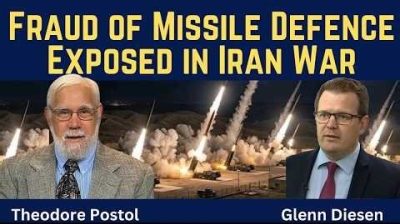
Ted Postol: Fraud of Missile Defence Exposed in Iran War
or go to
Aletho News Archives – Video-Images
Frlom the Archives
Containing the United States
By Edward S. Herman | Z Magazine | September 2016
“Containing the United States” is, of course, a ridiculous and self-contradictory idea in the U.S. and Western ideological and propaganda system. We all know that the United States had to “contain” the Soviet Union from 1945 to 1991, and since then has had the task of containing Russia and China. Only they threaten, bully, aggress and worry countries like Poland and Vietnam. Obama has had to reassure them both of our steadfast stand against Russian and Chinese military attacks. NATO has, of course, expanded greatly over the past several decades, despite the deaths of the Soviet Union and Warsaw Pact, but only to contain the renewed Russian — and Iranian, Libyan, Syrian and other — military threats; and we have “pivoted” to Asia, supported Japanese rearmament, bolstered our own forces in that area and jousted with the Chinese in their coastal waters solely to contain China. Earlier we had been obliged to contain North Vietnam, or was it the Soviet Union in Vietnam? Or China? Or “communism”? Or maybe all of them? Or none of them, but just needing an excuse to enlarge power?
The parallel propaganda has taken many forms. One is accepting as a premise that the United States only acts defensively and has no internal forces and interests that drive it to enlarge its sphere of control. I noted in an earlier article how Paul Krugman claims that internal Russian problems may well be the explanation of Russian “aggression,” but how at the same time it never occurs to him that the huge U.S. transnational corporate interests and “defense” establishment, and the pro-Israel lobby’s activities, might possibly make for an expansionist dynamic here.2 This reflects the standard establishment perspective that we are good and only react to evil. This was the view sustaining and justifying the invasion and occupation of Iraq from 2003. That attack was taken here as not evil but a response to evil, even if involving lies and mistakes, hence not describable as “aggression.” … continue
Blog Roll
 Aletho News
- When Tel Aviv decides, Washington fights
- Top official: Iran ready for a long war with US, no more diplomacy
- How Iran’s Toxic Rain Reveals US-Israel Discord
- Trump Admits He Is Destroying Iran For Israel
- Iran’s latest move in the GCC countries was a stroke of genius
- Blackmail and death threats, Zelensky embarrasses the EU, but there’s no condemnation
- Israel threatens to kill Iran’s new leadership
- Possible Scenarios for the Middle East
- The Horizon of the War. “Italy is being Dragged Into the War against Iran”
- A Second Vietnam War? Hanoi Waits and Prepares
- If Americans Knew
- Corporate Media Go All Out To Support The US-Israeli War On Iran
- US-Israel war on Iran is creating a steady growing number of amputees
- Israel planned this war on Iran for 40 years. Everything else is a smoke screen
- The wrong question about the war in Iran
- ‘Your Tax Dollars Being Used to Raise Your Gas Prices’: US-Israel Bomb Major Iranian Oil Depots
- ‘Bogus Evidence’: Former Nuclear Watchdog Head Debunks US Justification for Iran War
- EXPLAINER – Dimona: What to know about Israel’s nuclear site
- Fires and toxic air in Iran (thanks, Israel) – Not a ceasefire Day 150
- At Israel’s hands, Iran is burning, Lebanon and Gaza are crumbling – Not a ceasefire Day 149
- Israel is using the ‘Gaza doctrine’ in Lebanon and Iran
- No Tricks Zone
- Wake-up Call: Survey Shows Majority Of Germans Now Favor Postponing Climate Targets!
- Televised! Leading German Political Candidate Tells Schoolchildren CO2 Makes Sun Hotter!
- New Study: A Century Warming Of 1.1°C Is ‘Commonplace’ And ‘Not Unusual’ During This Interglacial
- New Study: ‘Internal Noise’ And Volcanic Forcing Can Trigger 10-15°C Warming Within Decades
- Glaciers Worldwide Are Suddendly Surging, Experts Blame Warming!
- Surprising Discovery: Sahara Is Greening…Billions Of Trees Where Once Thought To Be Barren
- New Research Reaffirms Clouds, Aerosols, And Surface Solar Radiation Are ‘Driving The Climate System’
- Germany: Electric Car Catches Fire At Charging Station, Sets Off Local “Inferno”, Widespread Damage
- New Study: Canada’s New Brunswick Was 1°C Warmer Than Today During The Medieval Warm Period
- Coal Power Back In Trend As Globe Tries To Keep Pace With Growing Demand For Power
 Aletho News