Argentine President Macri Wants Amnesty for Tax Dodgers, Like Himself
teleSUR | May 28, 2016
President Mauricio Macri will propose an amnesty law for those who bring back to Argentina any undeclared funds that were kept in overseas accounts, in order to settle debts with state pensioners.
“Argentines have billions of pesos overseas because they didn’t trust in the state. We need to tell them to join us, to be part of our new era. We invite them to wipe the fiscal slate clean,” said Macri.
President Macri said he will present the bill to Congress with three options. First, people can pay a tax of 5 percent for up to US$56,000 and 10 percent above that until Jan. 1, 2017. Second, they can convert their funds to bonds in the country. The last option, they can place the money in long-term investment in Argentina.
“Last time we had this process, which was easier, the country collected only $670 million dollars. Therefore, this law has nothing to do with the economy, but that there is dirty money associated with top officials in the government that needs to be cleaned,” said lawmaker Claudio Lozano.
Macri admitted this week that he has US$18 million in tax havens after he repeatedly denied earlier allegations arising from being named in the Panama Papers. He also failed to declare his high-level positions in two offshore companies in Panama in his mandatory declaration at the beginning of his term.
Macri’s fortune went from USD$52 million in December 2015 to USD$110 million in May 2016.
On the other hand, austerity and neoliberal policies rolled out since Macri took power continue to hit the country, such as price hikes in public services, transportation, gas and electricity. The country also holds its highest inflation rate since 2002.
RELATED:
Macri Backs Tax Breaks for the Rich, Layoffs for the Poor
Panama Papers: Macri Implicated in Offshore Tax Haven Scandal
Nobel Laureate: “Plan Condor Should Never Have Happened”
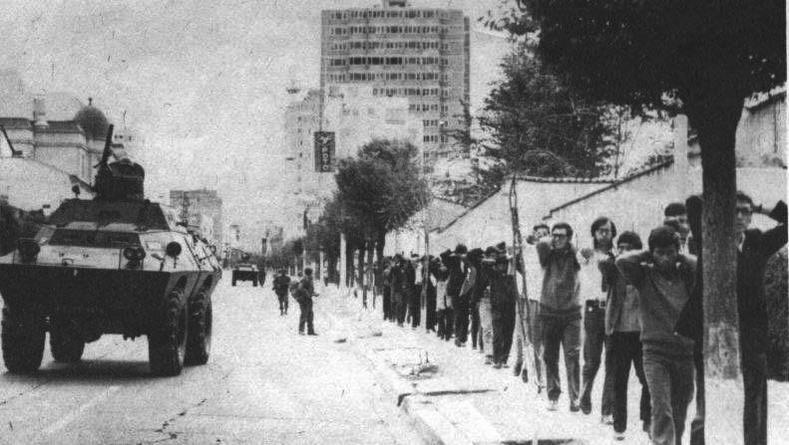
In Bolivia, a CIA-backed military coup led to the overthrow of leftist President Juan Torres. Following the coup, dictator Hugo Banzer had over 2,000 political opponents arrested without trial, tortured, raped and executed.
teleSUR | May 28, 2016
Adolfo Perez Esquivel voiced his opposition to celebrations over the conviction of 15 military officials in Argentina. In his view, there is nothing to celebrate.
Perez Esquivel, recipient of the 1980 Nobel Peace Prize, said Friday that Plan Condor was a conspiracy to kill leftist movements in Latin America and the Caribbean.
In his view, there is no reason to celebrate the conviction of those who participated in Plan Condor in Argentina. An Argentine court found 15 military officials guilty Friday.
“Plan Condor should never have happened,” the Argentine Nobel laureate and human rights defender wrote on the social network Twitter.
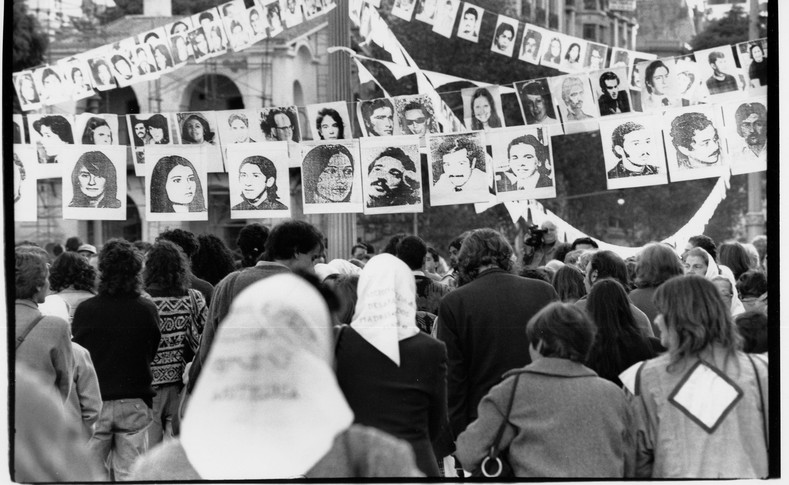
Photographs of the disappeared in Argentina. Photo:Colección AGRA, Archivo Memoria Activa
After the sentencing of several of the military officials, Chilean journalist and diplomat Odette Magnet said “justice was achieved, but we need the truth,” referring to her sister Maria Cecilia Magnet who was disappeared during the dictatorship in the country.
The journalist explained that for 40 years she has played an active role in seeking the truth about repression during the military dictatorships in Latin America.
“I want to know where they are, where (the death squads) threw them, where all the victims of this macabre plan are,” Magnet said. Officials from the dictatorships across Latin America would often throw victims out of helicopters and airplanes into the ocean.
“Nobody knows what really happened to our people, we have no information because the murderers do not speak, they will not talk and that is very frustrating because we have the facts,” Magnet concluded.
RELATED:
Fact-checking the Heralded “End of the Latin American Left”
By Peter Bolton | Council on Hemispheric Affairs | May 27, 2016
Recent political developments across the region have prompted celebratory proclamations in the mainstream Western press that Latin America’s decades-long dominance by left-leaning governments is reaching its terminal stages. The landslide victory of the Venezuelan opposition in last December’s legislative elections, the impeachment of President Dilma Rousseff in Brazil, and the triumph of center-right candidate Mauricio Macri in Argentina’s presidential election do indeed seem to point to a region-wide decline in the fortunes of the parties of the Pink Tide. But as is so often the case in the mainstream media, commentators have been too quick to make current events fit neatly into overarching seismic shifts. The cursory and often incomplete news reports on which they are based simply do not provide sufficient support for such catchall explanations. While scholars have naturally initiated a more nuanced and detailed debate to consider whether the region is indeed witnessing the end of a progressive cycle, press analyses have struck a premature and in many cases triumphalist tone by declaring the collapse of the Latin American left both imminent and beyond serious doubt.
In reality, it is the exact opposite that is beyond serious doubt: it is far too early to write off the future of the left in Latin America. Moreover, more research is needed to understand the dynamics of these movements and how things might play out in the coming months and years. But what is most disconcerting about these knee-jerk press responses is that the people making them seem to not even have a strong grasp of the basic facts surrounding the political developments on which they base their claims, let alone of the nuance needed to develop a sophisticated analysis. In a survey of the media declarations of the purportedly imminent collapse of the Latin American left, COHA has found a shocking collection of glaring and demonstrably false statements over basic matters of fact that reveal the profoundly slipshod nature of their research.
The salience of these findings can hardly be overstated: if journalists in the mainstream media cannot even get basic facts correct, they can hardly be trusted to provide a meaningful analysis of the larger picture.
Jackson Diehl
As predictable as the jeers from the DC commentariat were, perhaps the one figure within the Beltway punditry class who could have been most counted on to react gloatingly to the recent setbacks of leftist governments in Latin America was The Washington Post’s deputy editorial page editor Jackson Diehl. Having been a reliable war hawk and right-wing militarist at the Post’s op-ed section since the late 1970s, Diehl was quick to turn his wrath on Pink Tide leaders and their supposedly grave threat to U.S. national security interests. In 2010 he repeated American Enterprise Institute scholar Roger Noriega’s accusation that then-President of Venezuela Hugo Chavez was collaborating with Iran in the development of nuclear capabilities.[1] In 2013 he accused the governments of Venezuela, Nicaragua and Ecuador of “gutting democratic institutions in their countries,” and described Ecuadorian President Rafael Correa as “Latin America’s chief caudillo and Yanqui-baiter.”[2]
His characterization of the latest political developments, inexplicably posted at the Charleston-based Post and Courier rather than his home publication, fits seamlessly with this record of hysterical hyperbole and dubious accuracy. In the article’s first sentence he triumphantly announces: “The encouraging news from Latin America is that the leftist populists who for 15 years undermined the region’s democratic institutions and wrecked its economies are being pushed out — not by coups and juntas, but by democratic and constitutional means.”[3] From this outrageously loaded misrepresentation he quickly moves on to outright falsehoods by claiming that Argentina’s Cristina Fernández de Kirchner was “vanquished in a presidential election.”[4] From a simple Google search one can learn that she was in fact not even a candidate in last year’s presidential election.[5] Apparently Diehl cannot even get past his article’s second sentence without revealing his stupefying ignorance of the most basic of facts.
Aside from blatant inaccuracies, he also makes the remarkable claim that “most of the Western hemisphere is studiously ignoring this meltdown,” despite the fact that Secretary-General of the Organization of American States (OAS), Luis Almagro, has been calling for months to invoke the OAS Democratic Charter against Venezuela.[6] If he is referring not to the OAS but rather to the leaders of the region’s governments, then he is simply confusing their indifference for Washington’s isolation in its condemnations of the Maduro government. Just as the United States was completely isolated in its refusal to recognize Maduro’s election victory in 2013, so it has been alone in calling for sanctions, for which it has lobbied on the basis of largely spurious allegations of human rights violations.
To round out his diatribe, Diehl then describes the “obstacles” to getting a recall referendum to remove President Maduro as “comically steep,” despite the fact that all of the figures he cites regarding the required numbers of petition signatures (which opposition activists need to gather to trigger the recall vote) are calculated from terms set out in Venezuela’s Constitution. By representing the recall referendum as offering the “slim remaining hopes for a democratic solution,” he implies that some sort of extra-democratic methods might be necessary, and presumably also justified.[7] Keep in mind that the provision for a recall referendum to remove a sitting president is a democratic mechanism that scarcely exists in any constitution besides Venezuela’s.
Rafael Ruiz Velasco
In an article published at the PanAm Post, Rafael Ruiz Velasco is just as hasty in his passage of judgment on the fate of Latin America’s left. He announces confidently that “the results are clear: the bet on socialism in Latin America has failed.”[8] But like Diehl, Velasco makes at least one glaring factual error that undermines his already highly suspect piece. He says of Brazil: “The Olympics will be held with a politically defeated Dilma Rousseff out of office, as she faces impeachment on corruption charges.”[9] The truth of the matter is that Rousseff is in fact one of the few leading Brazilian politicians not to be facing corruption charges.[10] Her impeachment was rather premised on vague accusations of fiscal mismanagement and budgetary irregularities[11]—hardly the high crimes that under normal circumstances would merit removal from office. Her replacement Michel Temer, on the other hand, does presently stand accused of corruption, and not over minor allegations either. In addition to being implicated in the country’s ongoing Petrobras scandal, he also stands accused of illegal financing during the 2014 elections[12]; the exact kinds of things, ironically, that would normally be legitimate grounds for impeachment.
Either Velasco is conveniently ignoring these facts, or else just has a very weak understanding of the details of what is taking place in Brazilian politics. Indeed, much else in his article makes one wonder whether he is engaging in willful misrepresentation or is just plain clueless. To give just one example, Velasco describes Rousseff and her predecessor, Luiz Ignácio da Silva, as Brazil’s “figureheads of failure,” in spite of the four electoral victories they have won between them. Leveling this smear against da Silva, whose widespread popularity led to him being affectionately known as Lula, is particularly absurd given that he won both of his presidential election victories with over 60 percent of the vote and left office with 80 percent approval ratings.[13]
Antonio Sampaio
In an article for Foreign Policy magazine, provocatively titled “How Brazil’s Left Destroyed Itself,” Antonio Sampaio pulls no punches in his characterization of Rousseff’s impeachment, claiming that it “marks the final fall from grace not only of the president but also of her ruling Workers’ Party, which has run the country for 13 years.”[14] But one can only feel confounded when Sampaio concedes further down the article that “supporters of the government are right to point out that Rousseff herself is one of the few high-profile political figures who has not been accused of abusing her office for personal enrichment. (Her impeachment is related to alleged manipulation of public accounts to disguise a deficit).”[15] This stands in blatant contradiction to how he begins the article, with the claim that “the biggest corruption scandal in national history is revealing the extent to which Rousseff and her allies actively contributed to the rot of Brazil’s democratic institutions.”[16] It is simply unfathomable how he can lay the blame for the damage done to Brazil’s institutions by this scandal at the feet of Dilma Rousseff when he concedes in the same article that her impeachment has nothing to do with corruption. But in the world of Western press coverage of Latin America, this kind Orwellian doublethink does not seem to matter even when such contradictory statements are being made in the very same article.
Chicago Tribune/Orlando Sentinel
In a “Guest Editorial” in the Orlando Sentinel, the editors of the Chicago Tribune (I’m confused too) argue that the next U.S. president “will need to engage Latin America with a lot more purpose and resolve,” or else “Russia, Iran and China will.”[17] To their credit, they do concede that the recent setbacks of leftist leaders “do not necessarily mean a complete, sweeping repudiation of leftist populism,” since “the gap between the impoverished masses and the few wealthy elite still defines life for much if not all of the continent.” But rather than providing legitimate justifications for progressive policies, this grinding poverty and gross inequality apparently makes these countries “susceptible” to what they term “leftist agendas.”
But in addition to this patronizing jeer, the Tribune editors also make the exact same factual error as Jackson Diehl by claiming that Cristina Fernández de Kirchner “lost her re-election bid to Argentine center-right leader Mauricio Macri last fall.”[18] At the risk of repeating it ad nauseam, Kirchner did not stand in the election, and, moreover, was not even able to since the Argentine Constitution sets a limit of two consecutive presidential terms. Granted, her ruling Justicialist Party lost control of the executive to Macri’s rival Republican Proposal party, but the candidate for the Justicialists was Daniel Scioli[19] (a former vice-president during the administration of Cristina Fernández de Kirchner’s husband and predecessor Nestor Kirchner). To those who might try to dismiss this correction as mere nitpicking, imagine what people in the United States would have thought if a foreign newspaper had reported in November 2008 that U.S. President George W. Bush had lost his re-election bid to Barack Obama. Such shoddy journalism would have surely delivered an instantly fatal blow to the publication’s credibility. But when a U.S. publication demonstrates an exactly analogous ignorance of basic facts about Latin America, its unfounded pronouncements and flimsy arguments still get taken seriously.
Further revealing their risible political illiteracy, the Tribune editors claim that the setbacks for the Latin American left have “all happened with virtually no coddling or stoking from the U.S.”[20] Either the authors have never read anything about the United States’ covert funding of Venezuelan opposition candidates and its threats of sanctions against the Maduro government, the meetings between major regional right-wing figures and allies in the U.S. Congress,[21] and the United States’ use of international organizations to weaken left-leaning governments, or else they are being deliberately duplicitous (and presumably take their readers for a bunch of idiots to boot). The Tribune editors conclude with the unbelievably sweeping statement that the region’s populations are “fed up with failed leftist policies.”[22]
No Alternative?
This last statement neatly sums up the central message that these articles wish to communicate: that any policies that don’t fit the Anglo-American model of unfettered neoliberal capitalism “don’t work” and that though people might at first naively support them, they end up getting disillusioned and begrudgingly come to the realization that neoliberalism is the only viable economic system after all. Though they might not spell it out quite so obligingly, the message is essentially a repetition of Margaret Thatcher’s infamous claim that “there is no alternative” to free markets, free trade, and capitalist globalization. The presentation of the recent setbacks of Latin American left governments as confirmation of this seems to be a deliberate jibe directed at the many people the world over who hold up Latin America as humanity’s beacon of hope for providing a more just, generous, and sustainable way of life.
But though these setbacks of the Pink Tide should not be reflexively explained away and the diminishment in popular support for its parties should not be discounted, there are important distinctions and qualifiers that cast doubt on such a rash declaration of victory for neoliberal orthodoxy. Lest we forget, it was less than a decade ago that an economic crash plunged world economies into disarray and prompted no less a figure than Alan Greenspan to admit that free market ideology is flawed.[23]
First, it is important to make the distinction between a decline in support for the Pink Tide’s parties and support for their policies. Research has suggested that voting publics in Latin America have not become any less supportive of such policies, but rather are becoming disaffected with how they are being administered by those in charge. A poll by Poliarquía in the run up to the 2015 Argentine presidential election, for instance, found that 50 percent of respondents were in favor not of a return to the policies of the pre-Kirchner years, but rather “continuity with change.”[24] As Raanan Rein, a professor of Latin American and Spanish history at Tel Aviv University, put it: “The left lost more than the right won.”[25] He added: “It wasn’t that Macri became so popular, it was simply that his predecessors, the Kirchners, destroyed Peronism.”[26] In other words, what is needed is not a relapse back to tooth and nail neoliberalism, but rather a new and more effective leadership to build on the alternatives that were first attempted by the leftist old guard. The many achievements that resulted from these policies include: expanded access to public services such as healthcare[27] and education;[28] radically reduced poverty[29] and child malnutrition;[30] widespread construction of new homes for those in need;[31] and a significant pushback against the brutal realities of income and wealth inequality[32] that have long plagued the region. Many of these policies’ merits have been recognized by international organizations including the United Nations,[33] the Carter Center,[34] and even the World Bank.[35] Perhaps the most revolutionary of all the changes implemented by the Pink Tide governments were the drafting of new constitutions that guarantee social, political and economic rights to all citizens,[36] and also include unprecedented protections for marginalized groups such as women[37] and indigenous people,[38] and even for nature.[39]
To be sure, legitimate feelings of betrayal exist throughout the region and it is important to hold progressive governments accountable for their share of errors in confronting the economic downturn or failing to prepare for a rainy day. But though many voters might express their anger at the governing Pink Tide parties for their mistakes and lack of foresight by abstaining or even casting a protest vote for the right-wing opposition, this does not indicate a wholehearted endorsement of these parties’ proposals, far less a desire for a return to neoliberalism and the structural adjustment era of the 1980s and 1990s.
Of course, there is also the natural and universal tendency in all societies for people to gradually tire of their governments (regardless of success or failure), to take for granted the gains that were made, and to forget the bad aspects of what came before. All governments, like all human enterprises generally, are deeply imperfect and are not, in Latin America least of all, immune from risks of corruption and other malign influences. But these negative factors are hardly unique to governments of the left. After all, plenty of governments of the right throughout the region have been not just corrupt, but in some cases even murderous. From the military dictatorship of Augusto Pinochet in Chile in which thousands of people were “disappeared”[40] to the torture and extrajudicial executions that took place during Venezuela’s Andres Perez administration,[41] such governments hardly compare favorably to those of the Pink Tide.
Secondly, it is important to make a distinction between left-leaning governments and the social movements and popular sectors that thrust them into power. The continued energy of these movements demonstrates that their drive to resist neoliberalism and fight for social change is as fierce as ever. Indeed, one of the most basic mistakes of these shallow op-ed columns is their failure to consider, let alone grasp, the workings of the internal dynamics of these movements and their relationships with their national governments. If anything, the fall in support for Chavismo in Venezuela among some of its traditional base has more to do with the failure of the Maduro government to maintain its engagement with the popular sectors rather than a newfound enthusiasm on their part for a return to neoliberalism and a repeat of so-called structural adjustment.
Thirdly, it is important to remember that the parties that have opposed the Pink Tide governments have been pressed to the left and have, at least publicly, adopted much of the language and ideas of their political adversaries. During the 2012 and 2013 presidential elections in Venezuela, for instance, opposition candidate Henrique Caprilles Radonski presented himself as a social democrat and the standard-bearer of the moderate left ideas of Brazilian President Luiz Ignácio da Silva[42] (who incidentally endorsed the Chavista candidate[43] in both cases[44]). His campaign also used some of the enduring symbols of Chavismo, calling itself the “Bolivarian Command” and promising to not discontinue the social missions, but rather make them more efficient and less ideological. Though leaked documents subsequently revealed his plan was to make a swift about-face after the election and impose a brutal neoliberal agenda once in office,[45] Caprilles at least understood that the immense popularity of then-President Chavez’s policies meant that he had to publicly present himself as a center-left progressive in order to stand a chance of winning. The Venezuelan opposition has also moved to the left on social issues and even fielded three LGBT candidates in the 2015 December legislative elections.[46] Likewise, Mauricio Macri presented himself during the presidential campaign in Argentina as a pragmatist and moderate technocrat rather than a free market absolutist.[47] As was the case with Caprilles, there is good reason to think such pronouncements were insincere (he has already rekindled Argentina’s relationship with Wall Street[48] and filled his cabinet with bankers[49]), but it at least demonstrates that the political center of gravity amongst Latin American publics is way to the left of the traditional forces of the right.
Fourth, we should not forget that circumstantial factors have created problems for left-leaning governments that are not of their own making. Global drops in commodity prices have made life difficult for all leaders in a region that has long been heavily based on extractivism. Whether it be oil in Venezuela, copper and zinc in Bolivia, or soybeans in Argentina, global downturns have caused problems for these governments which would have been just as pronounced had their right-wing rivals been in power instead. Dependence on exports of raw materials long predates the Pink Tide and moving out of this legacy would have been a challenge for any government.
Fifth, there is a tendency to characterize the policies of Pink Tide governments as “unsustainable.” The unsustainability argument appeals to basic intuition but is based on a false analogy—that a country’s financial situation is akin to a household budget. One could just as easily point out that with the resource wealth and technological sophistication of today’s world, there is clearly the means to provide for every person on planet earth many times over. That we are not doing so is not a failure of the left, but rather of capitalism and explicable largely in terms of the lasting legacy of colonialism and its lingering power structures. These pressures bear particularly heavily on Latin America given its long history of colonial oppression, not to mention its proximity to the major force in the world that has worked to maintain this status quo and long treated the region as its “backyard.”
Finally, therefore, it is important to consider the superpower’s lasting impact on the region. Meddling by the region’s hegemon and its internal allies has consistently caused damage to Pink Tide governments and their efforts at social reform. The United States’ aggressive stance against them is understandable given the threat they pose to its hemispheric dominance and the preeminence of its favored international organizations. Pink Tide governments have established new international bodies to realize the vision of the decades-long struggle for regional integration and provide a buffer against U.S. imperialism. The Bolivarian Alliance for the Peoples of Our America (ALBA) and the Community of Latin American and Caribbean States (CELAC) are attempts to transcend Washington’s “free” trade orthodoxies and forge an alternative to the Organization of American States (OAS). The Union of South American Nations (UNASUR) was founded to mediate regional conflicts and could in the future provide a framework for military cooperation or freedom of movement for citizens of member nations. The monetary fund BancoSur, though still in its nascent stages, is hoped to provide an alternative source of lending free from the dictates of the IMF and the World Bank. Taken together, these organizations have provided a hope that international relations can in the future be based more on international cooperation, rather than competition, and mutual, rather than solely national, interests. This phenomenon is essentially the expression in the international realm of what Roger Harris of the Taskforce on the Americas has described as “the threat of a good example.”[50]
Though it does not completely explain away the failures on the part of progressive governments, there has nonetheless been a clear pattern in terms of the treatment they have received from United States: the more successful Pink Tide governments have become at helping their citizenry and providing an alternative to Anglo-American neoliberalism, the greater the incentive has grown to crush this threat. When the sabotage is successful it provides a double benefit for the United States and its internal allies: in addition to making a different path unviable it also makes these policies appear as intrinsically unworkable, and thereby “proving” that the neoliberal status quo is the only way forward.
Clearly this ghost of Thatcher haunts the minds of mainstream media commentators, explaining both their lazy treatment of the facts and dogmatic commitment to making all news events fit the neoliberal agenda. What is truly important, therefore, is not so much the immediate electoral fortunes of the Pink Tide governments, but rather the efforts to defend the spirit of the movements on which they are based and the intellectual legacy of their principles. A heavy burden lies on those of us who strive to counter the new neoliberal offensive and the mendacity of its propaganda foot soldiers.
[1] Jackson Diehl, “Is Hugo Chavez a real threat to the U.S.?,” The Washington Post, September 27, 2010. http://www.washingtonpost.com/wp-dyn/content/article/2010/09/26/AR2010092603334.html
[2] Jackson Diehl, “Jackson Diehl: Will the Inter-American Commission on Human Rights be gutted?,” The Washington Post, March 3, 2013. https://www.washingtonpost.com/opinions/jackson-diehl-will-the-inter-american-commission-on-human-rights-be-gutted/2013/03/03/c018f9a6-81d0-11e2-b99e-6baf4ebe42df_story.html
[3] Jackson Diehl, “Stop ignoring the implosion in Venezuela,” The Post and Courier, May 4, 2016. http://www.postandcourier.com/20160504/160509752/stop-ignoring-the-implosion-in-venezuela
[4] Ibid.
[5] Simon Romero and Jonathan Gilbert, “Election Will End Kirchner’s Presidency, Not Her Hold on Argentina,” The New York Times, October 24, 2015. http://www.nytimes.com/2015/10/25/world/americas/election-will-end-kirchners-presidency-not-her-hold-on-argentina.html
[6] http://venezuelanalysis.com/news/11815
[7] Ibid.
[8] Rafael Ruiz Velasco, “The Jury Is In: Latin America’s 21st Century Socialism Has Failed,” The PanAm Post, May 19, 2016. https://panampost.com/rafael-ruiz-velasco/2016/05/19/21st-century-socialism-has-failed/
[9] Ibid.
[10] Marina Koren, “Brazil’s Impeachment Battle,” The Atlantic, April 17, 2016. http://www.theatlantic.com/international/archive/2016/04/brazil-impeachment-dilma-rousseff/478632/
[11] Matt Sandy, “Brazil’s Senate Votes to Impeach President Dilma Rousseff: What Happens Now?,” Time magazine, May 12, 2016. http://time.com/4327408/brazil-senate-dilma-rousseff-suspended/
[12] “Brazil President Corruption Scandal,” Open Source Investigations. http://www.opensourceinvestigations.com/corruption/petrobras-scandal-catching-up-to-brazil-president/
[13] Daniela Blei, “Is the Latin American Left Dead?,” The New Republic, April 16, 2016. https://newrepublic.com/article/132779/latin-american-left-dead
[14] Antonio Sampaio, “How Brazil’s Left Destroyed Itself,” Foreign Policy, May 13, 2016. http://foreignpolicy.com/2016/05/13/how-brazils-left-destroyed-itself-dilma-rousseff-impeachment/
[15] Ibid.
[16] Ibid.
[17] “As ‘pink tide’ ebbs, U.S. must engage: Guest Editorial,” Orlando Sentinel, May 17, 2016. http://www.orlandosentinel.com/opinion/os-ed-pink-tide-latin-america-20160516-story.html
[18] Ibid.
[19] Jonathan Watts and Uki Goñi, “Argentina shifts to the right after Mauricio Macri wins presidential runoff,” The Guardian, November 23, 2016. http://www.theguardian.com/world/2015/nov/22/argentina-election-exit-polls-buenos-aires-mauricio-macri
[20] “As ‘pink tide’ ebbs, U.S. must engage: Guest Editorial,” Orlando Sentinel, May 17, 2016. http://www.orlandosentinel.com/opinion/os-ed-pink-tide-latin-america-20160516-story.html
[21] Rachael Boothroyd, “US Republican Senator Meets with Venezuelan Opposition in Caracas,” Venezuela Analysis, July 1, 2015. http://venezuelanalysis.com/news/11432
[22] “As ‘pink tide’ ebbs, U.S. must engage: Guest Editorial,” Orlando Sentinel, May 17, 2016. http://www.orlandosentinel.com/opinion/os-ed-pink-tide-latin-america-20160516-story.html -america-20160516-story.html
[23] Brian Naylor, “Greenspan Admits Free Market Ideology Flawed,” NPR.org, October 24, 2008. http://www.npr.org/templates/story/story.php?storyId=96070766
[24] Daniela Blei, “Is the Latin American Left Dead?,” The New Republic, April 16, 2016. https://newrepublic.com/article/132779/latin-american-left-dead
[25] Ibid.
[26] Ibid.
[27] http://www.worldbank.org/en/results/2014/06/24/argentina-reduces-risk-and-improves-health
[28] Mark Weisbrot, “Why Ecuador Loves Rafael Correa,” The Guardian, February 15, 2013. http://www.theguardian.com/commentisfree/2013/feb/15/rafael-correa-ecuador-elections
[29] http://cepr.net/documents/publications/weisbrot_revista_fall_2008.pdf
[30] James Suggett, “Venezuela Reduces Malnutrition in Children to 4%,” Venezuela Analysis, July 7, 2008. http://venezuelanalysis.com/news/3626
[31] “Venezuelan Social Housing Project Delivers 700,000th Home,” TeleSur, April 19, 2015. http://www.telesurtv.net/english/news/Venezuelan-Social-Housing-Project-Delivers-700000th-Home-20150419-0019.html
[32] “Venezuela, Uruguay Register Lowest Inequality in Latin America,” TeleSur, April 29, 2015. http://www.telesurtv.net/english/news/Venezuela-Uruguay-Register-Lowest-Inequality-in-Latin-America-20150429-0006.html
[33] Antony Boadle, “Brazil’s Rousseff says extreme poverty almost eradicated,” Reuters, February 13, 2013. http://www.reuters.com/article/us-brazil-poverty-idUSBRE91I14F20130219
[34] http://www.cartercenter.org/countries/ecuador-health.html
[35] http://www.worldbank.org/en/results/2014/06/24/argentina-reduces-risk-and-improves-health; http://www.worldbank.org/en/country/venezuela/overview
[36] Sarah Wagner, “Women and Venezuela’s Bolivarian Revolution,” Venezuela Analysis, January 15, 2005. http://venezuelanalysis.com/analysis/877
[37] Michael Fox, “Women and Chavismo: An Interview with Yanahir Reyes,” NACLA. https://nacla.org/article/women-and-chavismo-interview-yanahir-reyes
[39] http://therightsofnature.org/ecuador-rights/
[40] “Chile recognises 9,800 more victims of Pinochet’s rule,” BBC News, August 18, 2011. http://www.bbc.com/news/world-latin-america-14584095
[41] https://www.hrw.org/sites/default/files/reports/Venez93O.pdf p. 8
[42] “Profile: Henrique Capriles,” BBC News, October 3, 2012. http://www.bbc.com/news/world-latin-america-16811723
[44] Tamara Pearson, “Ex Brazilian President Lula Supports Venezuela’s Maduro,” Venezuela Analysis, April 3, 2013. http://venezuelanalysis.com/news/8476
[45] Jody McIntyre, “Who is Henrique Capriles Radonski?,” New Internationalist. https://newint.org/blog/2012/09/25/venezuela-elections-capriles-chavez/
[46] Corina Pons, “Venezuela’s first transgender candidate to run for Congress,” Reuters, August 8, 2015. http://uk.reuters.com/article/uk-venezuela-politics-idUKKCN0QC25P20150808
[47] Daniela Blei, “Is the Latin American Left Dead?,” The New Republic, April 16, 2016. https://newrepublic.com/article/132779/latin-american-left-dead
[48] Benedict Mander, “Argentina rekindles its relationship with Wall Street,” The Financial Times, May 12, 2016. http://www.ft.com/intl/cms/s/2/6aeb9ae2-17aa-11e6-b8d5-4c1fcdbe169f.html
[49] Astrid Prange, “Macri to take Argentina in a new, neoliberal direction,” Deutsche Welle, December 6, 2015. http://www.dw.com/en/macri-to-take-argentina-in-a-new-neoliberal-direction/a-18898041
[50] Roger Harris, “Venezuela: Supporting A Once and Future Revolution,” Counterpunch, June 26, 2013. http://www.counterpunch.org/2013/07/26/venezuela-supporting-a-once-and-future-revolution/
To download a PDF version of this article, click here.
Macri Gives Go Ahead to US Military Installations in Argentina
teleSUR – May 18, 2016
According to a report among the plans is also the negotiation of another military base in the border with Paraguay and Brazil.
A military delegation sent by Argentine President Mauricio Macri on Wednesday signed an agreement on military cooperation with the United States, which entails the establishment of a U.S. military base in Ushuaia, the southernmost tip of the South American nation.
Ushuaia is the capital of Tierra del Fuego, whose boundaries extend to Antarctica. The Argentine government has justified the installation by saying scientific work” will be performed there.
Earlier this week Vice Defense Minister Angel Tello began a five-day visit to the U.S. aimed at reestablishing bilateral defense relations between the two countries after a freeze in military ties in recent years.
Among the plans reportedly being discussed is the negotiation of another military base in Argentina’s Misiones Province, located in the northeastern corner of the country at the border between Paraguay and Brazil.
Bilateral ties between Argentina and the U.S. had been tense in recent years as the leftist governments of presidents Fernandez and Nestor Kirchner reoriented foreign policy away from the U.S. and toward Latin America in the name of fighting imperialism and strengthening regional integration.
But Macri came to office last year based in part on a promise to rekindle relations with the U.S. while giving the cold shoulder to allies of Argentina’s left-wing Kirchner governments, such as Venezuela. The president has said he wants a “pragmatic and intelligent” relationship with Washington.
President Obama: The Race for the Imperial Legacy
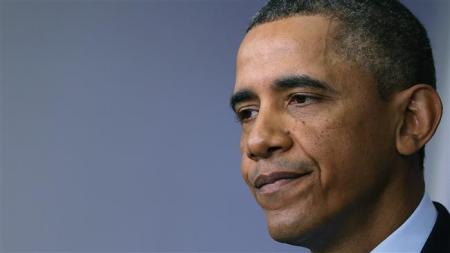
By James Petras :: 04.29.2016
President Obama is racing forward to establish his imperial legacy throughout Russia, Asia and Latin America. In the last two years he has accelerated the buildup of his military nuclear arsenal on the frontiers of Russia. The Pentagon has designed a high tech anti-missile system to undermine Russian defenses.
In Latin America, Obama has shed his shallow pretense of tolerating the center–left electoral regimes. Instead he is has joined with rabid authoritarian neo-liberals in Argentina; met with the judges and politicians engineering the overthrow of the current Brazilian government; and encouraged the emerging far-rightwing regimes in Peru under Keiko Fujimori and Colombia under President Santos.
In Asia, Obama has clearly escalated a military build-up threatening China’s principle waterways in the South China Sea. Obama encouraged aggressive and violent separatist groupings in Hong Kong, Tibet, Xinjian and Taiwan. Obama invites Beijing billionaires to relocate a trillion dollars in assets to the ‘laundry machines’ of North America, Europe and Asia. Meanwhile he has actively blocked China’s long-planned commercial ’silk route’ across Myanmar and west Asia.
In the Middle East, President Obama joined with Saudi Arabia as Riyadh escalated its brutal war and blockade in Yemen. He directed Kenya and other African predator states to attack Somalia. He has continued to back mercenary armies invading Syria while collaborating with the Turkish dictator, Erdogan, as Turkish troops bomb Kurdish, Syrian and Iraqi fighters who are engaged on the front lines against Islamist terrorism.
President Obama and his minions have consistently groveled before the Jewish State and its US Fifth Column, massively increasing US ‘tribute’ to Tel Aviv. Meanwhile, Israel continues to seize thousands of acres of Palestinian land murdering and arresting thousands of Palestinians, from young children to aged grandparents.
The Obama regime is desperate to overcome the consequences of his political, military and economic failures of the past six years and establish the US as the uncontested global economic and military power.
At this stage, Obama’s supreme goal is to leave an enduring legacy, where he will have: (1) surrounded and weakened Russia and China; (2) re-converted Latin America into an authoritarian free-trade backyard for US plunder; (3) turned the Middle East and North Africa into a bloody playpen for Arab and Jewish dictators bent on brutalizing whole nations and turning millions into refugees to flood Europe and elsewhere.
Once this ‘legacy’ is established, our ‘Historic Black President’ can boast that he has dragged our ‘great nation’ into more wars for longer periods of time, costing more diverse human lives and creating more desperate refugees than any previous US President, all the while polarizing and impoverishing the great mass of working Americans. He will, indeed, set a ‘high bar’ for his incumbent replacement, Madame Hilary Clinton to leap over and even expand.
To examine the promise of an Obama legacy and avoid premature judgements, it is best to briefly recall the failures of his first 6 years and reflect on his current inspired quest for a ‘place in history’.
Fear, Loathing and Retreat
Obama’s shameless bailout of Wall Street contrasted sharply with the desires and sentiments of the vast majority of Americans who had elected him. This was a historic moment of great fear and loathing where scores of millions of Americans demanded the federal government reign in the financial criminals, stop the downward spiral of household bankruptcies and home foreclosures and recover America’s working economy. After a brief honeymoon following his ‘historic election’, the ‘historic’ President Obama turned his back on the wishes of the people and transferred trillions of public money to ‘bailout’ the banks and financial centers on Wall Street.
Not satisfied with betraying the American workers and the beleaguered middle class, Obama reneged on his campaign promises to end the war(s) in the Middle East by increasing the US troop presence and expanding his drone-assassination warfare against Afghanistan, Iraq, Yemen, Libya, Somalia and Syria.
US troops re-invaded Afghanistan, fought and retreated in defeat. The Taliban advanced. The US expanded its training of the puppet Iraqi army, which collapsed on its first encounters with the Islamic State. Washington retreated again. Regime change in Libya, Egypt and Somalia created predator-mercenary states without any semblance of US control and dominance.
Obama had become both a master of military defeats and financial swindles.
In the Western Hemisphere, a continent of independent Latin American governments had emerged to challenge US supremacy. The ‘Historic President’ Obama was dismissed as a clueless hack of the US Empire who lacked any rapport with governments south of the Panama Canal. While trade and investment flourished between Latin America and Asia; Washington fell behind. Regional political and economic agreements expanded, but Obama was left without allies.
Obama’s clumsy attempts at US-backed ‘regime change’ were defeated in Venezuela and elsewhere. Only the small, corrupt narco-state of Honduras fell into Obama’s orbit with the Hillary Clinton-engineered overthrow of its elected populist-nationalist president.
China and Russia expanded and flourished as commodities boomed, wealth expanded and demand for Chinese manufactures exploded.
By 2013 Obama had no legacy.
The Recovery: Obama’s Lost Legacy
Obama began the road to establishing his ‘legacy’ with the US-financed coup in Ukraine, spearheaded by the first bona fide Nazi militia since WWII. After celebrating the violent ‘regime change’ against Ukraine’s elected government, Obama’s new oligarch-puppet regime and its ethno-nationalist army have been a disaster, losing control of the industrialized Donbas region to ethnic Russian rebels and completely losing the strategic Crimea when the population overwhelmingly voted to re-join Russia after 50 years. Meanwhile, the oligarch-’president’ Poroshenko and his fellow puppets have pilfered several billion dollars in ‘aid’ from the EU… all in pursuit of the Obama legacy’.
Obama then slapped devastating economic sanctions against Russia for its role in the Crimean referendum and its support for the millions of Russian speakers in Donbas, and in the process forced the European Union to make major trade sacrifices. For their role in creating a real “American legacy” for Mr. Obama, the Germans, French and the other twenty-eight countries have sacrificed billions of Euros in trade and investments – alienating large sectors of their own agricultural and manufacturing economy.
The Obama regime placed nuclear weapons on the Polish border with Russia, pointed at the Russian heartland. Estonians, Lithuanians and Latvians joined Obama’s military exercises stationing US ships and attack aircraft in the Baltic Sea threatening Russia’s security.
Obama’s Legacy in Latin America
The Obama regime intensified its efforts to re-establish supremacy with the demise of the center-left regimes following elections in late 2013 to the present.
Obama’s ‘legacy’ in Latin America is based on the return to power of neo-liberal elites in the region. Their successful elections were the result of several factors, including: (1) the rise of rightwing economic power in Latin America; (2) the decay and corruption of political power within the Left; 3) incapacity of the Left to develop its own independent mass media to challenge the media monopoly of the right; and (4) the failure of center-left regimes to diversify their economy and develop growth outside the boundaries defined by the dominant capitalist sectors.
The Obama regime worked closely with the political-business elite, organizing the political campaigns and controlling key economic policies even during the center-Left governments. The Left regimes had financed, subsidized and rewarded right-wing business interests in agro-mineral industries, banking, and the media as well as in manufacturing and imports.
As long as worldwide demand for primary materials was strong, the Center-Left governments had plenty of room to adjust their social spending for workers while accommodating business interests. When demand and prices fell, budget deficits forced the Center-Left to cut back on social spending for the masses as well as subsidies for the business elite. In response, the business sector organized a full-scale attack on the government – in defense of elite power. The Center-Left failed to counter the growing power and position of their business elite adversaries.
The business elite launched a full-scale propaganda war via its captive mass media – focusing on real or imagined corruption scandals discrediting Center-Left politicians. The Left lacked its own effective mass media to answer the Right’s accusations, having failed to democratize the corporate media monopolies.
The Center-Left parties adopted the elite’s technique of financing political campaigns – namely, through bribes, contract concessions, patronage other deal making with billionaire private and state contractors. The center-Left imagined it could compete with the free-market rightwing in financing campaigns and candidates via swindlers – and not through class struggle. This was a game they could never master.
The Right, however, mobilized their allies within police, judicial and public institutions to prosecute and disqualify the Center-Left for committing the same crimes the Right had evaded.
The Center-Left did not mobilize the workers and employees to establish even minimal controls over the elite and assume some managerial power. They thought they could compete with the Right on its own terms, through shady business and chicanery.
The Center-Left relied on financing its administration and policies through the commodity boom in demand for its natural resources – overlooking the fundamental instability and volatility of the global commodity market. While the Right openly condemned the ‘weakness of the Center-Left’ – in private, it pursued policies even more dependent on overseas speculators and narrow elites.
In Argentina, as the economy declined, the leadership of the rightwing, led by Mauricio Marci, launched a successful presidential campaign involving the mass media, banks, middle class voters and agro-mining elites. Immediately upon taking power, the Macri regime cut social services for workers and the lower middle class, slashing their living standards and lay off thousands of government employees. Obama saw Macri as his kind of legacy savior and viewed Argentina as the new center of US power in Latin America – with plans for more regime change in Brazil, Venezuela and throughout the region.
In Brazil, the Center-Left Workers’ Party (PT) faced a massive attack on its power base by the extreme rightwing parties. Corruption scandals rocked the entire spectrum of the political class, but the PT was most heavily implicated by massive fraud in Brazil’s huge national oil company, Petrobras. The PT regime’s troubles intensified as the country entered a recession with the drop in demand for its agro-mining exports. Growing fiscal deficits compounded the regime’s problems. The Brazilian hard Right mobilized its entire apparatus of elite power – the courts, judges, police and intelligence agencies – in a bid to overthrow the PT government and impose an authoritarian neo-liberal regime seizing all financial, business and productive assets.
The Center-Left had never been very left, if at all. Under Presidents Lula and Rousseff (2003-2016), the powerful mining and agricultural elites flourished; banking, investment and multi-national enterprises prospered. The Center-Left made some paternalistic concessions to the lowest income classes, and increased wages for labor and farm workers. But the PT relegated labor to the background while it signed business agreements and granted tax concessions to capital. It failed to engage Brazilian workers in class struggle.
The Right was never engaged in any struggle with a genuine leftist government pressing business for structural changes. Nevertheless, the Right sought to eliminate even the most superficial reforms. It would accept nothing short of total control, including: the privatization of the major national oil company, the reduction of wages, pensions and transport subsidies and a slashing of social programs. The Brazilian Rightwing coup – a fake impeachment organized by indicted crooks – is designed to vastly re-concentrate wealth, and re-establish the power of business, while plunging millions into poverty and repressing the principal organized mass movements. In Brazil, the elite-controlled media, courts and politicians act as judge, jury and jailers – against a center-left regime which had never taken control over the major institutions of elite power.
Obama and the Axis of his Legacy
Political rightists join police to control the multitudes and seize power, re-establishing deep ties among Brazil, Washington and Argentina. They will then move toward the neo-liberal re-conquest of all Latin America. Against this new wave, it must be understood that Obama’s Latin American legacy is too recent, too hasty and too disjointed – the new Right exhibits the same or even worse features of the recently deceased Left.
Argentina’s Marci borrows $15 billion at 8% interest, when the economy is fracturing, employment is collapsing, exports and worldwide demand is declining. At the same time, President Mauricio Marci’s cabinet is plagued by major financial scandals ‘a la Panama Papers’. The entire political party-trade union-employed working class is profoundly disenchanted with Marci’s minority rule.
Argentina may not turn out to be Obama’s enduring Latin Legacy: While Macri may open the door for a brief Washington take-over, the results will be catastrophic and the future, given Argentina’s recent history of popular street uprisings, is uncertain.
Likewise in Brazil, the impeachment/coup will result in new and more numerous investigations with trials of post-impeachment politicians and a deepening economic crisis. Brazil’s Vice-President, who turned against Rouseff, now faces corruption charges, as do his supporters. The prolonged confrontation precludes any basic continuity. The rightwing regime’s policy of slashing wages, pensions and poverty ‘baskets’ will detonate large-scale confrontations with the polarized population. Obama’s ‘legacy’ will be a brief episode – celebrating the ouster of the Workers’ Party President followed by a long period of instability and disorder.
Rightist regimes in Venezuela, Colombia and Peru will be part of Obama’s ‘legacy’ but to what lasting end?
The Venezuelan rightwing congress – dubbed the MUD – seeks to overthrow the elected president. It demands the release of several right-wing assassins from prison, the privatization of the oil industry, and a deep cut in social programs (health and education). They would reduce employees’ wages and eliminate food subsidies. The MUD has no competent plan or capacity to grow the oil economy and overcome chronic food shortages. The MUD would merely replace the Left’s subsidized economy with massive price increases for basic commodities — reducing domestic consumption to a fraction of its current level. In other words, the right-wing offensive may defeat the Chavista left but it will not stabilize Venezuela or develop a viable neo-liberal alternative. Any new rightwing regime will deteriorate rapidly and the chronic problem of criminal violence will exceed the current levels. The alliance between Washington and Venezuela’s far right will hardly support Obama’s claim to a historic legacy. More likely, it will serve as another example of a failed right wing state unable to replace a weakening left regime.
Similar circumstances can be found among other ‘emerging’ rightist regimes.
In Colombia, the current rightwing President Santos talks to the FARC guerrillas, but also accommodates the paramilitary death squads. His talks of peace settlements and social reform are linked to the genocidal right, led by the former President Uribe. Meanwhile, the economy stagnates with oil and metal prices collapsing on the world market. Colombian living standards have declined and the promise of a rightwing revival grows dim. The US-Colombian alliance may undercut the FARC but the rightwing does not offer any prospect for modernizing the economy or stabilizing the society.
Similarly in Peru, the rightwing wins votes and embraces free markets, but growth declines, investments and profits dry up and mass disenchantment grows among the poor promising street conflicts.
The Obama ‘legacy’ in Latin America has followed a series of brutal victories, which have no capacity to re-impose a stable ‘new order’ of free markets and free elections. The initial wave of favorable investments and lucrative concessions will fail to revive and recalibrate a new growth dynamics.
More ominously, Obama relied on mass murder to replace an elected leftist-nationalist president in Honduras and imposed a regime of terror against the poor and indigenous population. Meanwhile, illicit offshore handouts reward speculators in Argentina.
Obama’s legacy in Latin America reflects an entire spectrum from illicit-rightwing coups to oust the elected governments in Brazil and Venezuela, to elected authoritarian presidents in Peru and Colombia with historic links to death squads and multi-million dollar overseas accounts.
Obama’s contemporary ‘Latin American legacy’ reeks of gross electoral manipulation preparing the ground for bloody class wars.
Obama’s Legacy in the Ukraine, Yemen and Syria
The Obama regime thought it could manage widespread conflicts, uprisings and wars to advance its global supremacy.
To that end, Obama spent billions of dollars in weapons and propaganda arming Neo-Nazi para-military troops to seize power in Ukraine. A grotesque, brutal gang of oligarchs (and disgraced, foreign fugitives – like the ousted Georgian leader, Mikhail Saakashvili) served Washington in the puppet Kiev regime. Critics, journalists, jurists and citizens are being assassinated. The economy has collapsed; prices skyrocket; incomes declined by half; unemployment tripled and millions have sought refuge abroad. Wars raged between Russian ethnic citizen armies in the Donbas and the puppet Kiev regime. The people of Crimea voted to rejoin Russia. Meanwhile, economic sanctions against trade with Russia have exacerbated shortages for the people of Ukraine.
Under Obama’s stewardship the Ukraine became a world-class… basket case: so much for his European legacy. He can rightly claim credit for imposing a thoroughly retrograde regime of Klepto-capitalism with no redeeming feature.
Obama embraced Saudi Arabia’s war against Yemen – destroying the life and cities of the poorest nation in the Middle East. Obama’s ‘legacy’ in Yemen stands for the systematic obliteration of a sovereign people: Obama performs his tricks for billionaire Saudi despots while savaging the innocent. To the Israelis in Palestine and the Saudis in Yemen, Obama pays homage to the criminals responsible for millions of shattered lives.
What of the Obama ‘legacy’ in Syria and Libya? How many million Africans and Arabs have been murdered or fled on rotten boats in destitution. Only the rankest gang of corrupt media pundits in the US media can pretend this gangster President should evade a war crimes tribunal.
Conclusion
The Obama regime has pursued wars of unremitting destruction. It has forged partnerships with terrorists and death squads as it seeks short-term imperial victories, which end in dismal failures.
The imperial legacy of this ‘historic’ president is a mirage of pillage, squalor and destruction. The effect of his political lies has even begun register here among the American public: Who trusts the US Congress and the President? And in Europe, who trusts Obama’s European partners as they eagerly pushed for wars in the Middle East and North Africa and now fear and loathe the millions of their victims–refugees fleeing to the cities of Europe, with the drowned corpses of uprooted communities spoiling their beaches?
Obama pushed for wars and the Europeans receive the victims – with fear and disgust.
Obama’s victories are temporary, blighted and reversed.
Obama bombed Afghanistan yesterday and now flees renewed resistance.
Obama’s allies are again plundering Latin America but face imminent ouster via popular uprisings.
Obama terrorized and fragmented Syria yesterday but lost elections the day after.
Obama threatens China’s economy while eagerly buying China’s products.
The Obama legacy began as a failed military and economic offensive accompanying a profound social crisis. During his final year in office, Obama tries to forge alliances with the dregs of the hard right to save his legacy. His brief advance into this sordid world of neo-liberals, neo-Nazis and Saudi despots is a prelude to more retreat and chaos.
Obama’s public celebration of the right turn in Asia, Latin America, Europe and the Middle East applauds the most retrograde alignment of forces in modern times: Saudis and Israelis; Egyptian generals and Libyan jihadis; neo-Ottoman Turks with Ukrainian gangster-oligarchs. Regime changes in Argentina and Brazil encourage Obama to claim vindication of his imperial legacy.
His ‘moment’ of imperial truth is brief, all too brief. Everywhere, we witness the rapid rise of imperial success followed by a series of debacles.
Throughout Latin America capitalist profiteers plunge into wild financial adventures, theft and chaos. In the Middle East, the US stands on the crumbling palaces of a moribund Saudi regime. The much-proclaimed imperial advances are based on grand theft everywhere, from Egypt and Turkey to the Ukraine.
Simply stated: the US formula for a successful legacy is failing at the precise moment that it claims success! Obama and the Right have created a world of chaos and disintegration. Obama and his legions, the US and Europe have no future in peace or war, election or defeats.
There is no imperial legacy for the ‘historic’ President Obama!
Argentina Forks Over $6.2 Billion to Vulture Funds
teleSUR – April 23, 2016
Former economy minister Axel Kicillof warned Friday that the decision would lead to harsh austerity in the country.
Argentina repaid its holdout creditors on Friday, ending a 15-year dispute with vulture fund holders who rejected debt restructuring that followed Argentina’s US$100 billion debt default in 2001.
“The republic has made full payment in accordance with the specific terms of each such agreement,” Argentina’s chief lawyer working on the case said in a statement to a U.S. court on Friday.
Argentina handed over US$6.2 billion to settle disputes with 20 creditors. It is due to pay another US$3.1 billion in the coming days to settle lingering claims, the finance ministry explained in a statement.
The move follows a decision handed down earlier this month by a U.S. court that cleared the way for Argentina to start borrowing again, which had been excluded from international markets after breakdown in talks with the country’s the holdout creditors.
Argentina has since raised US$16.5 billion in funds from international lenders in order to payback the creditors that have been holding out for more than a decade.
However, the decision by the government of President Mauricio Macri to reopen negotiations with vulture funds has been met with sharp criticism within Argentina.
Former economy minister Axel Kicillof told Argentine media on Friday that the new debts would be followed by further painful public spending cuts that will affect the poorest Argentines most.
The case also raised crucial questions about contracts and the rights of both borrowers and lenders in the massive and largely unregulated global sovereign debt markets.
Last September, the U.N. General Assembly voted overwhelmingly in favor of a sovereign debt restructuring proposal, which would grant countries the right to design their own macro economic policy, including restructuring its own sovereign debt.
UN says disputed Falkland Islands are in Argentina territorial waters
RT | March 29, 2016
Argentina has officially expanded the outer limits of its continental shelf beyond the UK-claimed Falkland Islands, following a UN commission ruling which increased its maritime territory by 35 percent to include the waters around the disputed islands.
According to the Argentinian Foreign Ministry, the newly introduced continental shelf borders are based on a “unanimous” decision by the UN Commission on the Limits of the Continental Shelf, that ruled in Argentina’s favor earlier in March.
According to UN ruling, Argentinian waters have expanded by 1.7 million sq km, which encompass those surrounding the disputed Falklands, or as they are known in Argentina, Islas Malvinas. Essentially the UN ratified the country’s 2009 petition to fix the limit of its territorial waters at 200 to 350 miles from its coast.
“We’re reaffirming our sovereignty rights over the resources from our continental shelf, minerals, hydrocarbons and sedentary species,” Foreign minister Susana Malcorra said, when making the announcement. “I sincerely believe that is a very significant foreign policy achievement of Argentina.”
“This is a historic occasion for Argentina because we’ve made a huge leap in the demarcation of the exterior limit of our continental shelf,” she added.
The UN ruling increased Argentinian territory by 35 percent, as under the previous 200 nautical mile extension Argentina’s shelf consisted of 4.8m sq km. Deputy Foreign Minister Carlos Foradori who chaired the panel presentation at San Martin Palace, said that UN ruling was carried out by design and planning and not by accident.
It “is not a sovereignty dispute, but the creation of national sovereignty quietly and in peace, with all Argentines working in a team, for years, under different governments with a common objective. It was the generation of a policy by design and planning, and not by accident,” Foradori said.
Meanwhile, UK Independence Party’s (UKIP) defense spokesman Mike Hookem slammed the decision, while adding that the British government must “stand by the Falkland Islanders and tell the United Nations it does not accept its decision on Argentina’s Exclusive Economic Zone (EEZ).”
“The Falkland Islands do not lie in Argentinian waters and the UN should not be altering customary international law for the sake of one country whose actions in 1982 cost over one thousand lives,” he said in a statement on UKIP’s website.
“I thought the UN was supposed to be a global arbitrator and stick to its own laws, not pick favourites at the expense of its own principles,” he added.
The UN is yet to officially confirm Buenos Aires announcement, but according to Article 76, paragraphs four to seven of the Convention, the coastal state can “delineate the outer limits of its continental shelf, where that shelf extends beyond 200 nautical miles from the baselines …” London is also yet to comment on Argentina’s announcement.
In the long standing dispute, Buenos Aires claims it inherited the Falkland Islands from the Spanish crown in 1816, while London justifies its position saying it has continuously administered the territory since 1833, as well as the islands’ population, which is almost entirely of British descent.
While the islands are self-governed, London provides for its defense and foreign affairs, and fought a war with Argentina to protect its claim in 1982. The British government also maintains that islanders cannot accept Argentinian sovereignty against their will. During the 2013 referendum 99.8 percent of residents favored the status quo.
The people of the Falkland Islands are trying to find out from the British government about “what, if any, decisions have been made, and what implications there may be” for the territory in relation to the UN decision.
“As soon as we have any firm information we will make it available,” Mike Summers, chairman of the Legislative Assembly of the Falkland Islands, said in an e-mailed statement to the Associated Press. “Our understanding has always been that the UN would not make any determination on applications for continental shelf extension in areas where there are competing claims.”
Argentina and the Vultures: the Political Economy of the Settlement
By Mark Weisbrot | The Hill | March 14, 2016
After 15 years of court battles, injunctions, smear campaigns, lobbying, and other interventions, the vulture funds have finally won a tentative agreement with the new Argentine government. Vulture funds — the name preceded this particular dispute — are so called because they buy up defaulted debt for a very small fraction of its face value, then sue (and use other tactics) to collect an exorbitant return. In the case of Argentina, the chief vulture, American billionaire and major Republican campaign donor Paul Singer, will get an estimated 370 percent return; another vulture fund in the settlement did even better, with a return of 950 percent.
The agreement is tentative because President Mauricio Macri of Argentina still has to get the nation’s Congress, in which he does not have a majority, to change some laws in order to finalize the deal. And he will also have to reach agreement with some remaining “holdout” creditors. And now the vulture funds are appealing the judge’s order that would have allowed Argentina to issue new debt, presumably in an effort to extract even more concessions. But assuming it all works out, though, there are some important lessons to be learned from this long war over sovereign debt.
Argentina arguably had no alternative but to default in 2002, but the government also did the right thing by standing up to the IMF and its international creditors until it reached a deal (in 2003 and 2005) that would allow the economy to recover. International lenders — in this case a creditors’ cartel headed by the IMF — often succeed in getting a settlement that keeps the country trapped in recession, depression, or very low growth with an unsustainable debt burden; as well as numerous conditions (cuts to social spending, public pensions, public employment) that harm the majority of the debtor country’s citizens. Some of the worst recent examples of these abuses can be seen in countries like Greece and Jamaica, and will likely include Puerto Rico if there is a debt restructuring there.
By taking a hard line with its foreign creditors, Argentina reached an agreement with 93 percent of them that allowed the country to do very well over the ensuing 14 years. Instead of a prolonged depression as in Greece, or limping along from one crisis to the next, Argentina began an extraordinarily robust recovery just three months after its default and enjoyed very high growth — more than 90 percent in real GDP from 2002–2015. (There is some dispute over the exact number but it does not change the story.) This enabled Argentina to reduce poverty by about 70 percent and extreme poverty by 80 percent, in the decade 2003–2013.
So, even though the country would later run into economic trouble — in the world recession of 2009, but also in the last four years — there is no doubt that it pursued very successful economic policies, which it would not have been able to implement under a less favorable agreement with its creditors. Now, about the slowdown of the past four years, in which the economy has grown by about 1.1 percent annually: Part of the problem was that Argentina could not borrow on international markets, due to its inability to settle with the vulture funds. For Argentina’ detractors, this proves that the default and subsequent tough negotiation were wrong. But clearly that is not the case; the alternative offered by the IMF and the creditors was vastly worse.
The problem is really the vulture funds, and also the foreign policy goals of certain actors within the United States, who were against the prior government of Argentina. Here is Judge Thomas Griesa, of the Federal District court for the Southern District of New York, to whom the New York Times devoted a news article describing his incompetence: “Put simply, President Macri’s election changed everything.” This is from Griesa’s decision of February 19, explaining why he decided to conditionally lift the injunction he had imposed against Argentina in 2014, which the Financial Times editorial board generously described as “eccentric rulings,” and which prevented Argentina from making its debt payments. In other words, he much preferred the new, right-wing, pro-Washington government, as opposed to the prior, left government that he helped get rid of. Griesa’s unprecedented decision to take 93 percent of Argentina’s creditors hostage on behalf of the vulture funds was obviously political at the time. Now he has admitted it, to the chagrin of our legal system.
Argentina had appealed Griesa’s injunction to the U.S. Supreme Court, and the governments of France, Brazil and Mexico, and the Nobel Prize-winning economist Joseph Stiglitz filed briefs on its behalf. Interestingly, the IMF announced that it, too, would file a brief on behalf of Argentina. This was not because the IMF loved the Argentine government, but because Griesa’s decision was considered a threat to the stability of the international financial system. But the U.S. Treasury forced the IMF into an embarrassing retreat, most likely due to pressure from the vulture lobby and some anti-Argentina members of Congress, in particular from Florida, who could threaten to hold up legislation that the Fund needed.
Did I mention that the vulture fund chief Paul Singer is a major contributor to Florida Senator Marco Rubio, and is currently rumored to become finance chair for his presidential campaign?
The U.S. government also stopped blocking loans to Argentina at the World Bank and the Inter-American Development Bank, just after Macri was elected. Macri himself also has an interesting history with the U.S. State Department: In conversations with U.S. officials leaked by WikiLeaks, Macri chastised them for being “too soft” on the Argentine government and encouraging its “abusive treatment” of the U.S.
The main lesson from this whole episode is the importance of national economic sovereignty for middle-income countries like Argentina. This is what allowed Argentina to recover from disastrous economic policies implemented under IMF tutelage; and it was the infringement on this sovereignty by U.S. courts and other actors that made it difficult for Argentina to resolve the economic problems of the past few years. We will see how this new, less sovereign government fares going forward, now that it has settled with the vultures.
UN to Mauricio Macri: Free Indigenous Leader Milagro Sala
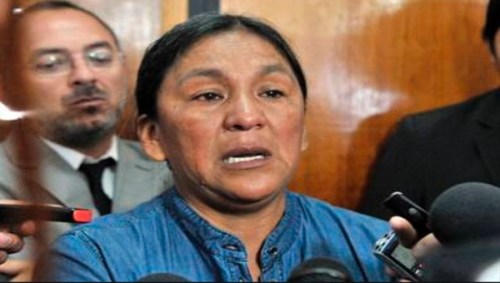
Photo: LaVoz.com.ar
teleSUR | March 6, 2016
The United Nations is calling for an explanation of the ongoing two-month detention of Milagro Sala, an Indigenous lawmaker and activist in Argentina.
Sala has been in detention for nearly two months after protesting a local governor’s threat to her social programs.
The Centre of Legal and Social Studies, Amnesty International, and Argentine lawyers collective Andhes submitted a request to the United Nations Working Group on Arbitrary Detention in February and to the Inter-American Court of Human Rights in January to guarantee her freedom and the right to freedom and expression. Argentine President Mauricio Macri supports the arrest of Sala, who faces embezzlement charges after being jailed by Macri ally and Juyjuy Governor Gerardo Morales for public disturbance.
Sala was protesting Morales’ proposed changes to the Indigenista Tupac Amaru organization, which she founded and runs, that provides social services to tens of thousands. Her arrest drew large protests for her release, but she was denied a habeas corpus plea.
“Organizing collective action does not mean ‘inciting crimes,’ a massive demonstration is not ‘public disturbance’ and to oppose a government decision is not ‘an act of sedition.’ They are all democratic freedoms,” said the Buenos Aires Provincial Commission for Memory.
Argentina’s Office of Institutional Violence, Procuvin, deemed Sala’s arrest illegal last week, finding that “the two judges and the prosecutor who participated in this process have committed crimes under the penal code.” The investigation for “illegal deprivation of liberty and aggravated breach of trust” came after a request by Mercosur, for which Sala is a lawmaker.
Last week, Macri sent officials to offer Sala house arrest, but she refused the “extortion.” The visit came right before the president met with Pope Francis, who sent Sala rosary beads following her appeal for help.
Featured Video

Theodore Postol: Iran’s Missiles & Drones Were Underestimated
or go to
Aletho News Archives – Video-Images
From the Archives
Wars for Israel: A reminder of who’s giving the marching orders
By Damian Lataan | February 7, 2012
As the West prepares to march off to yet another war in the Middle East, we should perhaps remind ourselves of who is giving the West their marching orders.
In February 2003, just weeks before the US and their allies launched their attack on Iraq and her peoples, a delegation of US congressmen, together with the US Ambassador to the United Nations, John Bolton, a well known pro-Zionist and neoconservative war-hawk, were in Israel at the invitation of the Israeli government then led by Israeli Prime Minister Ariel Sharon.
Addressing the congressmen, Sharon told them ‘that Iran, Libya and Syria should be stripped of weapons of mass destruction after Iraq’. Later, Sharon told John Bolton ‘that Israel was concerned about the security threat posed by Iran, and stressed that it was important to deal with Iran even while American attention was focused on Iraq’. … continue
Blog Roll
 Aletho News
- A New Resistance Front: How Does Syria Factor into the Regional War?
- Gulf states weigh pipeline expansion plans, hoping to bypass Hormuz
- Iran sets up ‘tollbooth’ system in Strait of Hormuz
- Wave 90: IRGC strikes US-linked industrial sites in Gulf
- Iran Says US-Israeli Claims of Its Military Strength Are Wrong
- Trump’s April Fools’ Address to the nation
- The Most Important Bet You’ve Never Heard Of
- The killing of three Indonesian soldiers in Lebanon should remind Jakarta that Israel does not want peace
- Defeated and delusional: Netanyahu’s remarks reveal $80bn war failure, says analyst
- Iran’s friends are about to make life much more difficult for Israel and the US
- If Americans Knew
- Trump says the quiet part out loud: (Israel’s) war on Iran > Americans’ health – Daily Update
- Gaza families reunite years after babies evacuated amid Israel’s war
- International Rescue Committee warns Gaza’s children face grave protection risks
- Iran’s Alleged 47-Year War on America: Debunking the 1,050 American Deaths Canard
- Israel wants US to bomb more of Iran’s civilian structures (113,000 is not enough) – Not a ceasefire Day 173
- Ann Coulter Rips Into Fox News for Iran War Coverage
- Joe Kent Urges Americans To Call White House and Congress To Object To Sending Troops Into Iran
- DNC Resolution to Reject AIPAC Funding Puts Democratic Leaders in the Hot Seat
- Swedish foundation to build 400 schools as over 650,000 Gaza children remain without education for 2 years
- Israeli army admits photshopping image of slain Lebanese journalist
- No Tricks Zone
- Low Intensity Tornado Wrecks Major Solar Farm, Creating A Potential Toxic Dump
- New Study Finds Warming Saves Lives…Cold Temperatures 12 Times More Deadly Than Excess Heat
- German Science Blog Accuses PIK Climate Institute Of Hallucinating Climate Tipping Points
- Devastating Assessment Of Comirnaty Vaccine By Former Senior Pfizer Europe Toxicologist
- New Study: CO2 Is ‘Effectively Negligible’ As An Explanatory Climate Change Factor Since 2000
- Former Pfizer Toxicologist Dr. Helmut Sterz Tells Bundestag Hearing Pfizer Vaccine Should Have Never Been Approved
- Energy Expert: Germany’s Nuclear Phaseout Was A “500 Billion Euro Mistake”
- New Research: South Australia’s Mid-Holocene Sea Surface Temperatures Were 4°C Warmer Than Today
- Storing Green Energy To Last Germany 10 Days Would Require A 60-Million Tonne Battery
- New Studies: UK Sea Levels Were 4 Meters Higher Than Today During The Mid-Holocene
 Aletho News