Saudi Arabia rejects all-inclusive arms embargo on Yemen proposed by Russia
RT | April 5, 2015
Saudi Arabia has rejected Russia’s amendments to a Security Council draft resolution which would see an all-inclusive arms embargo on all parties in the Yemeni conflict, as it continues to spiral out of control with the civilian death toll climbing higher.
“There is little point in putting an embargo on the whole country. It doesn’t make sense to punish everybody else for the behavior of one party that has been the aggressor in this situation,”Saudi Arabia’s representative to the UN Abdallah Al-Mouallimi said after a closed emergency UN Security Council meeting on Saturday.
Al-Mouallimi added that he “hopes” Russia won’t resort to its veto power in case the all-inclusive embargo clause is not added into the draft submitted by the Gulf Cooperation Council that urges an arms embargo only on the Houthis.
At the same time, Riyadh agreed with Moscow’s calls for need of “humanitarian pauses” in the Saudi-led coalition’s air campaign in Yemen – though saying that Saudi Arabia already cooperates fully in this regard.
“We always provided the necessary facilities for humanitarian assistance to be delivered,” Al-Mouallimi told reporter heading out of the meeting. “We have cooperated fully with all requests for evacuation.”
Moscow convened an emergency meeting on a draft resolution demanding “regular and obligatory” breaks in air assaults against Houthi rebels, in which many civilians keep dying in increasing numbers. The Russian-proposed draft circulated on Saturday demanded “rapid, safe and unhindered humanitarian access to ensure that humanitarian assistance reaches people in need.”
The current council president and Jordan’s Ambassador Dina Kawar said that the council members “need time” to consider the Russian draft resolution, adding that the talks would continue. “We hope that by Monday we can come up with something,” Kawar said.
The 15-member council is considering the possibly of merging the Russian and Gulf Cooperation Council proposed drafts into one.
The Security Council meeting coincided with the call from the International Committee of the Red Cross for a “humanitarian pause.” The NGO urged to break hostilities for at least 24 hours.
“We urgently need an immediate halt to the fighting, to allow families in the worst affected areas, such as Aden, to venture out to get food and water, or to seek medical care,” said Robert Mardini, head of the ICRC’s operations in the Near and Middle East.
Meanwhile intensive airstrikes early Saturday morning targeted Houthi positions near Aden and in the Houthi stronghold of Saada in the north of the country. At least 185 people were left dead and more than 1,200 wounded as a result of fighting in Aden, a medical official told AFP Saturday, three-quarters of them civilians.
A coalition of Arab states, led by Saudi Arabia, has been engaging Houthi militias from the air for over a week now, after the Yemeni President Abd Rabbuh Mansur Hadi was forced to flee the country and asked for an international intervention to reinstate his rule.
Tunisia museum attack: Who’s behind it, what are their goals?
RT | March 19, 2015
Groups like IS, which could be behind the Bardo Museum shootings, have a long history of collaborating with the West and may have attacked tourists just to maintain their anti-Western façade, says independent political analyst Dan Glazebrook.
RT: Do you think that the Western tourists were targeted on purpose?
Dan Glazebrook: Yeah, I think so. The thing is with ISIS and these groups – they have a long history of collaborating with the West. It’s fundamental to their appeal that they kind of try to present themselves as anti-Western. If you look over the last several years, they’ve been singing from the same song-sheet – whether it’s on Libya, the fight against Gaddafi; Syria, the fight against Assad. We’ve had revelations about fighters’ passage to Syria to go and fight against Assad being facilitated by MI5, by British intelligence. This all came out in the hearings in Mozambique last year. So these guys are on the same page, they are helping to fulfill the West strategic aims of destabilization in the area. … The thousands and thousands people they’ve killed, the vast majority of them have been other Muslims and non-white people. From time to time they have to kill some Europeans and some Westerners in order to maintain this façade of somehow being opposed to the West, whilst they continue to carry out and facilitate the West’s strategic aims.
RT: A large number of Islamic State fighters reportedly come from Tunisia. Why is that?
DG: It was estimated at one point that the actual majority of foreign fighters in Syria were of Tunisian origin, over 3,000… They’ve also fought in Libya; they’ve fought in terrorist campaigns in Algeria. There are many different reasons; part of it is a kind of extremist backlash against the extremist secularism of the previous President [Zine El Abidine] Ben Ali and his predecessor [Habib Bourguiba]. But I think a lot of it is just simply to do with the economics and finances. There is very high unemployment in Tunisia. It is rumored that you can get up to $27,000 a year for going to fight for ISIS… Billions of dollars were put into these sectarian militias to build up these groups by Saudi Arabia and the USA as a bulwark against the resistance axis of Syria, Iran, and Hezbollah. These billions of dollars are still slushing around.
‘Attack might be publicizing Ansar al-Sharia’s merger with ISIS’
Brian Levin, director of the Center for the Study of Hate and Extremism, also commented on the Tunis museum attack.
RT: No one has claimed responsibility for the attack yet. Who in your view is most likely to be behind it?
Brian Levin: The most likely would probably be Ansar al-Sharia which is a radical Salafist terrorist group which started in Tunisia shortly after the Tunisian revolution in January, 2011. It was formed three months later by a fellow named Abu Ayadh. That is the most likely suspect, although, ISIS affiliates are present in neighboring Libya as well.
RT: Do you think the attackers were pursuing any particular goal with this terrible assault?
BL: Yes, I would think that if it is Ansar al-Sharia or if Ansar al-Sharia is using this to publicize some kind of merger with ISIS – this would be the time and the place to do it. Tunisia, as I said, in an area where ISIS has been exporting its brand of radicalism. That is one thing – Tunisia is Western friendly and it has got a strong economy.
RT: Earlier, a warning for tourists had been issued calling on them not to visit certain areas. Is this kind of attack in Tunisia a rare event and just how dangerous is the country for travelers?
BL: There have been advisories put out about travel to Tunisia. Its biggest industries are in fact tourism and minerals. It is a democratic society and it is Western friendly. Its economy is strong [but] it relies on these exports and tourism. And an attack like this could really hurt the economy in a place where there is fragility with respect to the economic situation. Remember again, Tunisia was the success story of the Arab Spring. This is the time and the place where groups like ISIS and Ansar al-Sharia are trying to make radicalism an imprint there and in the neighboring countries as well.
RT: The EU foreign policy chief Federica Mogherini has said that IS was behind the attack. Do you believe that that is likely?
BL: It could be in a sense to the extent that these actors had the same goal… Ansar Al-Sharia is allying itself with the al-Qaeda affiliates in North Africa. The fact of the matter is it very well could be ISIS. ISIS does have an imprint in North Africa. One of the things that ISIS had wanted to do even when it was just AQI [al-Qaeda in Iraq] back in 2004, they wanted to export their terrorism to places like Jordan, and now has an imprint in places like Libya which neighbors Tunisia.
Read more 17 tourists, 2 locals slain in Tunis museum attack
Weapons in space would undermine global stability – Russia
RT | March 11, 2015
The deployment of weapons to outer space must be prohibited, as an attack from Earth’s orbit could potentially target any country in the world at any time and ruin global stability, a Russian delegation said at the Conference on Disarmament in Geneva.
The risks of this becoming a reality are now more “likely in light of scientific and technological developments,” the Russian representatives said, as quoted by TASS.
Speaking at the plenary session on the prevention of an arms race in space, they drew attention to the draft treaty introduced by Russia and China last year.
The Russian delegation noted “it is not a complete recipe, but rather an invitation to work together on its future development.”
The address stated that it is important to use the time when there are no weapons in space “to start substantive work on the text.”
At the same time, it has been a priority to pursue global policy initiatives to encourage countries not to become the first to place weapons in space, the delegation said, referring to “voluntary political commitments that would confirm peaceful nature of [nations’] space activities.”
The prevention of the placement of weapons in orbit has been an important goal of Russia’s foreign policy.
Russia has been promoting various initiatives that would prohibit the weaponization of space. One such project includes the draft resolution ‘No First Placement of Arms in Outer Space,’ presented at the UN General Assembly.
The draft resolution outlines further action to keep outer space free from weapons. One of the points included in the resolution is to discuss the issue at the Conference on Disarmament in Geneva, in order to create and adopt a binding international treaty on the prevention of placing arms in space.
The initiative was originally proposed by Russia and China in 2008, with an updated Russian-Chinese draft submitted to the Conference on Disarmament in June 2014.
Some space activities fall under international regulation of space law, as well as a series of treaties on nuclear disarmament and nuclear test bans. However, not all types of weapons are covered within this legal framework.
Read more:
‘New IMF loan to Ukraine will go down the drain’
RT | March 11, 2015
President Poroshenko’s government is far more corrupt and less efficient than the previous one, according to Martin Sieff, columnist for the Baltimore Post-Examiner. It’s like a black hole, the more money you pour in the less you will have, he added.
The International Monetary Fund (IMF) is to decide Wednesday whether to give a $17.5 billion bailout package to Ukraine. The Ukrainian parliament has already passed a series of austerity reforms to cut pensions and increase taxes in order to meet the creditors’ conditions, but more changes are going to be needed to gain this financial aid.
RT: About $4.6 billion in credit was extended to Ukraine in 2014, but its economic performance has scarcely improved. Does that mean the aid had no effect?
Martin Sieff: Pretty much yes, it does. It had the effect on keeping Ukraine afloat in the short-term. But this is an unconstitutional government in Ukraine which was really established by a violent coup in Kiev last year which has waged an aggressive war of repression against two secessionist provinces of its own country, which doesn’t have any real social contract with its own people. Its efforts to conscript large numbers of forces for the regular army have been met with peaceful but very clear resistance. This is a very weak disorganized government, it’s a black hole. The more money you pour in, the less effect you will have. You can keep it stable for a year or two but no longer than that.
RT: The IMF has agreed on a new $17.5 billion lifeline to Ukraine. Do you think that will be enough to stabilize the country’s economy even if fully implemented?
MS: The aid went at least in theory to what it was supposed to, but no doubt there was a great deal of corruption. It’s ironic that the government of President Yanukovich was accused of corruption and incompetence. This government is far more corrupt than the previous government was and it’s infinitely more incompetent. So simply money leaches away, but the real problem is the lack of credibility of governance. This government is even purging its civil service of anyone remotely accused or suspected of being efficient and loyal to President Yanukovich and his predecessors. You cannot have an efficient and credible government under these circumstances.
RT: The IMF is requesting a package of economic and political reforms to be carried out when providing financial assistance to any country. Are we seeing it carried out in Ukraine at least judging by its economic performance?
MS: No, no way. First of all, there is still unrest and violence in the two eastern provinces and spreading into other parts of the country. The security conflict and the conflict with Russia have to be settled first by this government. And they are not yet ready to settle it on terms that would be acceptable and reassuring to Moscow, but that has to be resolved first. Secondly, we saw even last year President Yanukovich broke off his negotiations with the EU, but he recognized that the terms under which the EU was ready to grant association to Ukraine would be disastrous and ruinous for the Ukrainian economy and the Ukrainian people. A year ago, the EU didn’t have the resources by itself to lift up even a peaceful Ukraine under democratically elected governance. The prospects of doing that now under President Poroshenko and his war-government, his war junta are very much less. So this would be $17 billion down the drain. You know they are all saying from Washington DC, I’m paraphrasing a little “$17 billion here, $17 billion there and soon you are talking about real money”.
RT: When signing the IMF program Ukraine makes certain financial obligations, do you think they could be committed at all in the current state of its economy or is it going to be a black hole of international aid?
MS: There is no question about that. This is very unwise economic policy that has a political motivation. The EU itself and the US government both plunged in recklessly to topple the Yanukovich government last year and to support President Poroshenko. And now we have the dominant mythology, the dominant narrative in Washington, and in Brussels, and in London is that this is “a stable democratic government which is being under threat from evil totalitarian forces to the East.” That is not the truth even remotely, but that is almost universally believed by policymakers in London and Washington and many of them in Brussels and therefore there is a political motivation to try and prop up Ukraine. But you can’t fix what’s already broken. You are pouring good money after bad. Ukraine’s problems first of all have to be solved in the security sphere then they have to be solved in the political sphere restoring the political amity and credibility and the incompetent but nevertheless stable civil service that existed until February 2014 a year ago. It was the EU and the US that broke Ukraine and they cannot fix it now by simply pouring money into a black hole.
Israel asks US for additional $300mn for missile defense – report
RT | March 1, 2015
Israel reportedly bypassed the White House and asked the US Congress for an extra $317 million to be added to President Barack Obama’s budget for the next fiscal year in order to fund Israeli missile defense programs, Bloomberg reported.
The requested funds would be in addition to the $158 million already proposed by the Pentagon for Israel’s security needs for the fiscal year that will begin on October 1. The new allocation will allegedly finance the ‘David’s Sling’ and ‘Arrow-3’ programs – designed to intercept medium- to long-range missiles – as well as provide an anti-ballistic missile system.
According to Bloomberg’s report on Friday, the director of Israel’s missile defense organization Yair Ramati “visited lawmakers and aides to the congressional defense committees on February 2 and 3 to outline the case for more money and thank them for past assistance.”
Ramati completely bypassed the White House and the Pentagon. The report links the move to the tense relationship between the Obama administration and the Israeli government ahead of Prime Minister Benjamin Netanyahu’s speech to Congress on March 3, which is likely to stress that the White House is pursuing a “bad deal” by negotiating to curb Iran’s nuclear program.
The report revealed that Ramati’s proposal included $250 million to start production of the David’s Sling system, in addition to Obama’s $37 million request for development. Another $35 million Ramati requested for the initial production of Arrow 3, in addition to the $55.7 million the US administration is seeking for development.
During his visit to Capitol Hill, Ramati “distributed one-page sheets naming US contractors that would benefit from production funds for each of the missile defense systems.” According to Bloomberg’s information, the list included Chicago-based Boeing Co.; Waltham, Massachusetts-based Raytheon Co.; Arlington, Virginia-based Orbital ATK Inc.; and Falls Church, Virginia-based Northrop Grumman Corp.
When contacted by Bloomberg, the Israeli embassy in the US declined to comment on the report.
The US already provides Israel with $3.1 billion a year as “foreign military financing,” which excludes other missile defense funds, according to the report.
For the current fiscal year, Congress has reportedly provided $620 million, including about $347 million for missile defense programs. US Congress has appropriated more than $1.2 billion since 2011 for the Iron Dome, which is designed to intercept and destroy rockets.
In light of the large amounts of distributed funds, US lawmakers have been insisting that Israel use American-based defense contractors when spending the received money.
Last year, the Israeli government agreed to spend more than half the funds provided by the Pentagon for the Iron Dome in the US by this year. Until recently, the missile system was been built solely in Israel by Rafael Advanced Defense Systems Ltd.
Iran nuclear talks have created a significant rift between Israel and the US. Last week, the White House and State Department stated that Israel inaccurately provided information and twisted the official US position in nuclear talks with Iran, and accused Tel Aviv of “selectively” leaking details of sensitive talks.
Washington has also voiced suspicion that Netanyahu’s office directly provided Israeli journalists with the leaked information, including an alleged offer to Iran to keep 6,500 centrifuges for uranium enrichment. A White House spokesman expressed frustration with the “cherry-picked” information released by the Israelis out of context.
OSCE neglects its mandate in Ukraine – Moscow
RT | February 25, 2015
The OSCE monitoring mission in Ukraine is not fulfilling its mandate to monitor the implementation of the ceasefire, Moscow charges. The monitors complain that they can’t verify withdrawal of weapons without additional data.
In its latest report, the mission of the Organization for Security and Cooperation in Europe (OSCE), said its monitors are unable to verify the withdrawal until both Kiev and the rebels provide comprehensive “inventories, withdrawal routes and concentration points” for their respective arsenals.
The rebels say they have sent an inventory to the OSCE and that the observers are rejecting invitations to witness the actual movements of the weapons.
“Every day they have new conditions to put forward. For instance, [on Thursday] they demanded a concrete route for the artillery. Well, that heavy hardware doesn’t travel on the roads, but OSCE monitors wouldn’t care to go into the fields,” complained Eduard Basurin, a rebel spokesman.
The official added that the anti-government forces are not rejecting the OSCE’s role in tackling the withdrawal and that they want an increased presence of the monitors on the ground.
“We believe the OSCE’s role is crucial. Once again we confirm that we are interested in OSCE presence at all weapons-withdrawal events. The OSCE must be present to monitor the withdrawal of the weapons by both sides,” Basurin said.
The Russian Foreign Ministry said Moscow regretted that the monitoring mission “showed a lack of proper effort to execute the functions entrusted to it” and avoids monitoring the withdrawal of weapons.
The OSCE confirmed that the number of reported violations of the ceasefire in eastern Ukraine has decreased. It added that a joint group of military monitors, which includes representatives from Ukraine, the rebel forces and Russia, provided a map of the conflict zone with “a definite line of contact agreed upon by all,” which can be viewed as a step forward in ending the violence.
Most complaints filed lately came from villages near Donetsk airport and the town of Shyrokoye, some 25km east of Mariupol, said the report.
The continued violence close to Mariupol, a large port under government control, is arguably the greatest danger to the fragile truce in Ukraine. Kiev accuses its opponents of preparing a full-scale invasion of the city, an accusation the rebels deny.
French Foreign Minister Laurent Fabius warned on Wednesday that an attack on Mariupol would derail the entire peace process and demanded that Moscow prevent it.
“We’ve told the Russians clearly that if there was a separatist attack in the direction of Mariupol things would be drastically altered, including in terms of sanctions,” Fabius said in an interview with France Info radio station.
He also commented on UK’s plan to send military instructors to train Ukrainian troops, a step that’s escalating tension between Russia and the West over Ukraine.
“The Britons, who are not part of the discussions, have taken a hardline stance on the situation,” Fabius said in reference to British PM David Cameron’s Tuesday announcement. “We have also taken a firm position, but are pushing for the de-escalation of the conflict.”
France, along with Germany, was a major driving European power involved in brokering the Minsk peace deal in mid-February. Meanwhile in Britain and the US a large number of officials advocate for providing military aid to Kiev, which they say would serve as deterrent to Russia.
Moscow says the proposed inflow of weapons and the unwillingness of Kiev’s foreign sponsors to put pressure on them and make them hold fire only aggravates the situation.
Britain’s decision to send troops to Ukraine was hailed on Wednesday by Polish President Bronisław Komorowski, who said it was a step in the right direction and that Poland is keeping its own options open to help Kiev.
Germany said it is not planning to send troops or sell weapons to Kiev.
Read mor:
US arming Kiev would ‘explode’ situation in E. Ukraine – Russian Foreign Ministry
E. Ukraine artillery withdrawal focus of FMs meeting – as Poroshenko buys UAE weapons
Revolving door between arms dealers & govt exposed
RT | February 16, 2015
Arms manufacturers currently have dozens of employees seconded to the Ministry of Defence (MoD) and other British government agencies, an investigation has discovered.
The revelations highlight the close relationship between business and government, especially in highly lucrative industries such as the arms trade.
Employees from BAE Systems (manufacturers of the Eurofighter Typhoon), MBDA (makers of missiles), Babcock (defense contractor working on Trident nuclear submarine replacement), and MSI (gunnery systems producer) have all taken senior level roles within the MoD.
BAE systems, the second largest arms company in the world, has had more than 10 executives seconded to the MoD and the arms sales unit of UK Trade & Investment (UKTI) in the last year.
The MoD’s Equipment and Support Branch, which has a £14 billion annual budget to buy equipment for the armed forces, hosted nine BAE executives in senior positions, the investigation by the Guardian found.
UKTI Defence and Security Organisation, another government department, had four secondments from BAE, two from MBDA, and two from Detica, a cyber-security specialist acquired by BAE in 2010.
While on secondment, salaries are paid by the company and not by the government department they join.
Personnel exchange between business and government works in the opposite direction as well, with 13 civil servants having been seconded from the MoD to outside organizations, including cyber-security company Templar Executives, Lloyds Banking group, arms firm QinetiQ, defense think tank the Institute for Security and Resilience Studies (ISRS) and the BBC.
The Campaign Against Arms Trade (CAAT) described the arrangement as “totally inappropriate.”
Speaking to the Guardian, Andrew Smith of CAAT said, “Arms companies already enjoy a significant and totally disproportionate level of government support, and these kinds of secondments only make it more so.
“It is totally inappropriate for arms companies that will be lobbying for extra military spending to be working for departments that buy their wares.”
Natalie Bennett, the leader of the Green Party, said the British government’s relationship with arms manufacturers was “uncomfortably close.”
“All too often we’ve seen the government’s actions aligned with the interests of big business, which is particularly concerning when the businesses involved produce weapons,” she told the Guardian.
“For many years, the British government has had an uncomfortably close relationship with arms manufacturers and a shady record of arming dictatorships to match.”
“Secondments like these cast a shadow of doubt over the integrity over the actions of both the MoD and UKTI when it comes to their dealings with arms manufacturers. Our policies should serve the common good and must be free from the influence of vested interests like arms companies.”
The Guardian’s revelations come in the wake of the HSBC tax avoidance scandal in which the revolving door between financial institutions and government has also faced scrutiny.
Lord Green, the former head of HSBC, came under the spotlight for having taken the role of Minister of State for Trade and Investment immediately after leaving the bank.
Leaked documents allege that during Green’s tenure as Chairman of HSBC from 2006 to 2010, he oversaw the orchestration of industrial scale tax evasion for drug dealers, international criminals, dictators and terrorists.
Lord Green stood down from a senior position in the banking lobby group The City UK on Saturday.
RELATED: Pregnant activist crashes glitzy arms industry dinner, urges guests ‘consider career change’
Kiev MPs try to fool US senator with ‘proof’ of Russian tanks in Ukraine
RT |February 13, 2015
MPs in Kiev hoodwinked a US senator, presenting his office with photos of columns of Russian military hardware allegedly roaming Ukrainian territory. The photos turned out to have been taken during the conflict in South Ossetia back in 2008.
The photos were “presented to the Armed Services Committee from a delegation from Ukraine in December,” Senator Jim Inhofe’s communications director Donelle Harder told The Washington Free Beacon.
The Americans planned to publish the photos with credits to the Ukrainian MPs, and “they were fine with that,” the spokesperson said.
Yet, after thorough checking, images of the Russian convoys turned out to have been taken years ago, in 2008, during Russia’s conflict with Georgia.
“We are currently making calls to our sources,” Harder said.
“The Ukrainian parliament members who gave us these photos in print form as if it came directly from a camera really did themselves a disservice,” Senator Inhofe said in a statement.
“I was furious to learn one of the photos provided now appears to be falsified from an AP photo taken in 2008,” the lawmaker wrote.
At the same time the revealed forgery “doesn’t change the fact that there is plenty of evidence Russia has made advances into the country with T-72 tanks and that pro-Russian separatists have been killing Ukrainians in cold blood,” the US senator maintains.
Munich conference: Russia ‘hate fest’ or split between Western allies?
RT | February 8, 2015
World leaders gathered in Germany to discuss international security on Saturday, with the meeting somewhat descending into ‘Russia-bashing’. But the West showed itself to be more divided than ever on Ukraine, with the EU and US drifting further apart.
The Americans led the harsh anti-Russian rhetoric at the conference, and once again, they did not exclude the possibility of lethal arms deliveries to Ukraine in the future.
Speaking to reporters, NATO’s top commander in Europe, General Philip Breedlove, said that although no troops would be sent to Ukraine, providing Kiev with lethal weapons and equipment was on the cards.
NATO Secretary General Jens Stoltenberg, British Conservative politician and former foreign secretary Malcom Rifkind, and US senator Lindsey Graham notably took a pronounced anti-Russian stance, blaming the Kremlin for the violence in Ukraine.
Moscow hit back, with Russian Foreign Minister Sergey Lavrov stressing in his Munich speech that it is the US and its European allies who have played the key destabilizing role in Ukraine, from helping to overthrow the democratically elected government to failing to condemn the new Kiev government for shelling the civilian population in the east with cluster bombs.
“Through every step, as the crisis has developed, our American colleagues and the EU under their influence have tried to escalate the situation,” Lavrov said, adding that the West has always been urging world governments to enter into dialogue with opposition groups or figures, even when it came to extremist groups such as the Taliban. However, in Ukraine it has bluntly been supporting every one of Kiev’s actions.
Lavrov then spoke with US Secretary of State John Kerry, warning him that Washington’s plans to supply Kiev with military equipment might have “unpredictable consequences”, including “disrupting the efforts to resolve the crisis in southeastern Ukraine,” according to a Facebook statement by the Russian Foreign Ministry. He stressed that Russia and the US agree that the only basis for any solution is a comprehensive national dialogue on constitutional reform in Ukraine.
Russia will not sacrifice its national interest, but is ready to “engage constructively” with the US, Lavrov stressed.
At the press conference, the Russian top diplomat was pelted with questions implying that Moscow is responsible for the ongoing conflict in Ukraine.
“It felt like orchestrated hate fest. Obviously these people live in a surreal world. The US try to change the balance of forces in eastern Europe and the EU join the band wagon,” Srdja Trifkovic, foreign affairs editor of the Chronicles magazine told RT, adding that “whenever a major power wants to change the status-quo, the result is a crisis.”
Despite the recent efforts to try and to stop the violence and find a peaceful way out of the Ukrainian conflict, with French and German leaders having taken an initiative to discuss a peace plan with Russia’s President Putin and Ukraine’s President Poroshenko, the actions of the West are still “profoundly self-righteous,” critics say.
“What I saw today in the press conference is a total unwillingness from the European, Western side to even take into consideration the arguments of the other side…the questions they pose are so selective, so predetermined by their self-righteousness – that is not the way you try to get peace,” former security consultant at the OSCE Lode Vanoost told RT, adding that the West is hypocritical to a level “so profound that [its behavior] is not a serious way to try to get peace.”
However, despite the overwhelmingly anti-Russian rhetoric coming from the West, there are increasingly numbers of politicians who are softening their stance.
Following the Friday meeting of President Putin, German Chancellor Angela Merkel and French President Francois Hollande in Moscow, which was said to be “constructive,” the French leader revealed that the discussion included the creation of a larger demilitarized zone between the Kiev and militia-controlled territories. He also called for “quite strong” autonomy for Ukraine’s eastern regions.
Former French president Nicolas Sarkozy said on Saturday that Paris does not want a new Cold War, considering that Russia and France having a long history of common interests and values. The former state leader also said that it was Crimea that had chosen to join Russia and it “cannot be blamed” for its choice. Previously, former Czech president, Vaclav Klaus, said that Crimea has “always” been a part of Russia.
While the European leaders have largely been united in their support for the Kiev government, only a few have agreed with the United States on supplying weapons to Ukraine. Instead, the German leader stressed that the crisis “cannot be resolved militarily” and that sending more arms can only worsen the conflict.
The issue of military aid to Ukraine is now considered to be the main subject causing the divide in the West, with many in Europe realizing that the potential threat of an escalating conflict on its territory exists.

German Foreign Minister Frank-Walter Steinmeier and Russian Foreign Minister Sergey Lavrov at the 51st Munich Security Conference on February 7, 2015. (RIA Novosti/Flickr MFA Russia)
Political analysts agree that hidden from the public eye, “there is definitely a big divide between the US and the EU on the whole issue of Ukraine,” Vanoost told RT. “It’s very difficult to know how the game will finish, because it’s not an open game, it’s behind the scenes,” Bruno Drweski, an analyst specializing in eastern Europe, said.
Sanctions against Russia have economically hit the EU itself, but have not affected the US. The conflict is also happening on the European continent, not in America, with the EU generally not eager to further escalate it.
“First of all, the European Union is directly involved if the conflict escalates – which is not the case for the United States. Secondly, in the EU they are realistic enough to know that the government in Kiev is very unstable, that they don’t even have full control of all parts of their own military,” Vanoost explained, while speaking about the Western split in regard of the Ukrainian crisis.
However, toning down rhetoric puts some in the firing line, too.
After Merkel said that Europe wants security alongside with Russia, rather against it, and reiterated Berlin’s stance that the Ukrainian conflict must be resolved peacefully, US senator Graham lashed out at the German leader for her refusal to send arms to Ukraine.
“She can’t see how arming people who are willing to fight and die for their freedom makes things better,” the US politician said, adding that the West cannot “turn [its] back on the struggling democracy.”
In an effort to silence voices against harsher anti-Russian measures, US Vice President Joe Biden has labeled those questioning sanctions against Moscow “inappropriate and annoying,” Der Spiegel reported, quoting the participants of the Brussels meeting. The US official called on European countries to show unity when it comes to sanctions against Russia. Biden even reportedly added that critics of the policy should be aware that they also benefited from the current low price of oil.
“The Americans want to run this show, and they have no interest in stopping the crisis in Ukraine because it is really driving a wedge between the Europeans and Russia. And to their [the US’] mind, it is only pushing Europe ever so firmly back into the NATO fold,” Trifkovic told RT.
Meanwhile, Lavrov said Moscow is ready to guarantee agreements between the warring sides if a peaceful solution to the crisis is found, which would satisfy both Kiev and the eastern Ukrainian regions.
Quoting the “aggression” against the federal republic of Yugoslavia, the current crisis has been named “an ongoing assault against the Russian Federation” by the former deputy head of OSCE, Willy Wimmer. Calling for a hastier end to the conflict, which “is the best for all of us,” the ex official of the European security and cooperation organization said that “it’s better to have Polish apples in Russian stores than US tanks at the Russian border.”
READ MORE:
NATO top commander in Europe says ‘military option’ possible in Ukraine
Lavrov: US escalated Ukraine crisis at every stage, blamed Russia
Hopes for breakthrough: Moscow talks on Ukraine ‘constructive,’ joint doc ‘possible’
Hollande: If lasting Ukraine peace not found ‘scenario is war’
Sarkozy: Crimea cannot be blamed for joining Russia
Europe reticent about supplying Ukraine with weapons & money
Biden says Europeans questioning Russia sanctions ‘inappropriate, annoying’ – Spiegel
Kiev takes path of war, selective approach to condemning civilian deaths – Churkin
RT | January 27, 2015
Ukrainian authorities are not making any efforts to hold a national dialogue, and are instead opting for military pressure and the isolation of eastern regions, Russia’s UN envoy said, accusing Kiev of being selective over which civilian deaths to mourn.
“This whole time Kiev was preparing for war. And they didn’t even hide it,” Vitaly Churkin told the UN Security Council on Monday. Since September, while evading any direct dialogue on the implementation of the Minsk agreement, Kiev has been strengthening its military positions in southeastern Ukraine.
“Along the frontline they deployed forces and equipment, including heavy weaponry; new mobilizations were announced, they put in new orders to military factories. At the same time, instead of measures for the economic reconstruction of Donbass, a policy of suppressing the uncontrolled region has been conducted,” Churkin said.
In his speech, Churkin repeated Moscow’s call for Western partners – especially Washington – to “stop egging on the Ukrainian hawks and covering their inhuman deeds.”
“The only thing that will lead to is an even greater catastrophe,” Churkin warned.
Meanwhile, US Ambassador to the United Nations Samantha Power accused Moscow of plotting to annex neighboring Ukraine.
“Russia’s end goal remains… to seize more territory and move the line of Russian-controlled territory deeper and deeper into Ukraine,” she said.
“This offensive is made in Moscow,” Power added. “It is waged by Russian-trained and Russian-funded separatists, who use Russian missiles and Russian tanks, who are backed up by Russian troops.”
British Ambassador Mark Grant took the anti-Russian rhetoric a bit further, accusing Moscow of transferring weapons to rebels in the east of Ukraine.
Churkin however, pointed out that Kiev has not made “a single step” towards constitutional reforms or an inclusive national dialogue with representatives of the rebel regions. Instead, Kiev has “chosen [the] course of suppressing the southeast of Ukraine with military means.”
“Apparently, peace in Donbass is not in [the] interest of Kiev’s ‘party of war’ in the first place,” according to Churkin, as representatives from Kiev did not attend the Minsk contact group meeting on January 16.
“Official Kiev is sabotaging another meeting of the contact group in Minsk, laying ungrounded claims to the level of representation of [Donbass] militias. The most important thing now is holding this meeting, not arguing about the level of representation.”
At the same time, Churkin assured that Russia is compliant with the Minsk agreement to settle the Ukraine crisis. “We are in contact with the sides, the leadership of Ukraine, and the rebels and representatives of interested countries, including in the Normandy format,” Churkin said.
The Russian envoy reminded the 15-nation Security Council of the hundreds of deaths that have occurred as a result of the Ukrainian military’s “indiscriminate shelling” of civilian areas.
Over the last week, over 100 people have been killed in the town of Gorlovka alone, and the Western media chose to ignore it, the Ambassador said, instead selectively focusing on two incidents – the shelling of a bus in Volnovakha and an assault on a neighborhood in Mariupol last week.
“And it’s quite clear why – both cities are being controlled by Kiev’s forces,” Churkin said. A similar tragedy in Donetsk, when 13 people were killed in the shelling of a bus stop, was not followed by mourning marches in Kiev, nor was an urgent meeting of the Security Council called, the Russian envoy said.
“We always condemn all attacks on civilians. And we mourn all civilian victims – unlike Kiev, which declares mourning and commemorations for civilian victims while picking which civilian victims in which regions to mourn,” Churkin said. “Are the people of the self-proclaimed Donetsk and Lugansk Republics some kind of second-class citizens?”
“It is impossible to ignore the fact that the tragedies of last few days are quite traditionally being used by Kiev to fan the flames of hysteria,” Churkin said. The accusations against militias pop up instantaneously, giving an impression they are being “prepared in advance,” he said, accusing Kiev of using any tragedy to call for more financial and military assistance from the US and its allies and to exert pressure on Russia.
“But as soon as the propaganda trick has come to an end, the interest in it falls very rapidly. After some time has passed, very often one finds that the information is very far from what was said initially,” Churkin said.
In light of this, Russia, according to Churkin, is urging an objective investigation into all of the January incidents in Volnovakha, Donetsk, and Mariupol, as well as earlier crimes – including the Maidan and Odessa tragedies.
Taking the floor at an emergency Security Council meeting, UN Under Secretary-General Jeffrey Feltman told the session that a rocket attack on the Ukrainian city of Mariupol that killed 30 people on Saturday is a violation of international humanitarian law.
“Mariupol lies outside of the immediate conflict zone. The conclusion can thus be drawn that the entity which fired these rockets knowingly targeted a civilian population,” said Feltman, revealing the crater analysis by the Organization for Security and Co-operation in Europe.
“We must all send an unequivocal message: The perpetrators must be held accountable and brought to justice,” he said.
The Ukrainian conflict began last April when Kiev launched a military operation in the southeastern Donetsk and Lugansk regions, after the regions refused to recognize the country’s new coup-imposed authorities. The death toll in the Ukraine conflict has exceeded 5,000 people. Over 10,000 have been injured, according to UN estimates.
READ MORE:
US plays ‘instigator’s role’ in Ukraine crisis – Russian UN envoy
Mariupol spotter ‘confession’ another fake by Kiev – Russian Defense Ministry
American instructors to train Ukrainian troops this spring – US general
RT | January 23, 2015
US soldiers are to be deployed to Western Ukraine to train the country’s National Guard, said the commander of the US Army in Europe during a news conference in Kiev. The US also intends to sponsor the production of Ukrainian light armored vehicles.
The exact number of American troops heading to Ukraine is still to be determined, said Lieut. Gen. Ben Hodges on Wednesday.
The instructors will be working at the 40,000 square kilometer Yavoriv Training site close to the Polish-Ukrainian border. This is the largest military firing range in Europe near the western Ukrainian city of Lvov.
The announcement by General Hodges confirms a report in Global Research in November that the US was planning to deploy instructors to the Yavoriv Training Area.
The US is reportedly ready to spend $19 million to train the Ukrainian National Guard. The money will come from the Global Security Contingency Fund (GSCF), requested by the Obama administration in the 2015 fiscal budget to provide training and apparel for the armed forces of American allies worldwide, which has already been approved by Congress.
The newly announced training comes within the framework of the US State Department initiative “to assist Ukraine in strengthening its law enforcement capabilities, conduct internal defense, and maintain rule of law,” told Defense News Pentagon’s spokeswoman Lt. Col. Vanessa Hillman.
Washington has also agreed to finance production of Ukrainian-made SRM-1 Kozak Light Armored Vehicle with a price tag of $189,000 each. The first prototype of the Kozak for use with the Ukrainian border guard was delivered on Monday, the US Embassy in Ukraine reported.
“The United States has delivered dozens of armored pickup trucks and vans to the Ukrainian Border Guard Service. The Kozak is larger and offers a higher level of protection,” the embassy said.
The armored Kozak vehicle has a V-shaped bottom to counter mine explosions and is assembled on a chassis manufactured by the Italian company Iveco.
READ MORE:
Russia warns US against supplying ‘lethal defensive aid’ to Ukraine
‘If US sends weapons to Ukraine, Russia should send troops’ – lawmaker
US commandos get permanent Eastern European foothold
‘US military hardware will cause more bloodshed in Ukraine’ – Russian official
Russia and Iran sign defense deal, ‘may resolve’ S300 missile delivery issue
RT | January 20, 2015
Moscow and Tehran have signed military cooperation deal that implies wider collaboration in personnel training and counter-terrorism activities. It may also resolve the situation concerning the delivery of Russian S300 missiles, Iranian media reported.
Russia’s Defense Minister Sergey Shoigu and his Iranian counterpart Brigadier General Hossein Dehghan, signed the document during a visit by Russia’s top brass to Iran’s capital on Tuesday.
Under the new agreement, the broadened cooperation will include military personnel training exchanges, increased counter-terrorism cooperation and enhanced capabilities for both countries’ Navies to use each other’s ports more frequently.
According to the Iranian news agency FARS, the two sides have also resolved problems concerning the delivery of Russia’s S300 missile defense systems to Iran. However, Moscow is yet to make an official comment regarding the defense system.
The $800 million contract to deliver S300 air defense missile systems to Iran was cancelled in 2010 by then Russian President Dmitry Medvedev, to fall in line with UN sanctions imposed on Iran due to its disputed nuclear program. In turn, Tehran has filed a currently pending $4 billion lawsuit against Russia to Geneva’s arbitration court.
“The two countries have decided to settle the S300 issue,” Iran’s Defense Ministry said, as cited by the Interfax news agency. No further details have been provided.
The possible renewal of talks concerning missile sales has been confirmed by a former head of the Defense Ministry department of international cooperation, according to the RIA Novosti news agency.
“A step has been taken in the direction of economic and military technologies cooperation, at least such defensive systems as the S300 and S400 we would probably be delivering,” Colonel General Leonid Ivashov, who is also the president of the International Center for Geopolitical Analysis, said, which was reported by RIA. Sanctions from the West have brought the two countries’ positions on defense cooperation closer, Ivashov added.
The new agreement is aimed at creating a “long-term and multifaceted” military relationship with Iran, Russia’s Defense Minister Shoigu said, stressing that “a theoretical basis for cooperation in the military field has been created.”
The Iranian side believe, “durable impacts on regional peace and security” can be provided by the deal, FARS reported. “As two neighbors, Iran and Russia have common viewpoints towards political, regional and global issues,” Dehghan said, as cited by AP.
For Iran, the deal to boost military cooperation could also mean support in opposing American ambitions in the Middle East, with the two countries to “jointly contribute to the strengthening of international security and regional stability.”
“Iran and Russia are able to confront the expansionist intervention and greed of the United States through cooperation, synergy and activating strategic potential capacities,” Iran’s Defense Minister said, which was reported by AP.
Moscow has maintained close ties with Tehran for years, particularly in the field of nuclear power. The first Iranian nuclear power plant in Bushehr became operational, with control of the station having been handed over to Iranian specialists in September 2013. Last autumn, a deal to build more reactors in Iran was signed.
Featured Video
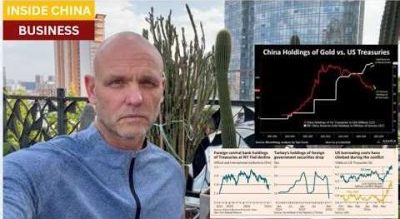
Now everyone is dumping US government bonds
or go to
Aletho News Archives – Video-Images
From the Archives
Experts Warned For Years That A War With Iran Would Happen This Way
By Caitlin Johnstone | April 3, 2026
… It’s so wild how we keep seeing reports that Iran’s retaliation caught the US off guard. For all the years I’ve been paying attention to this issue I’ve been reading experts and analysts saying if the US attacks Iran, Iran can close the Strait of Hormuz and strike US bases and the energy infrastructure of US allies in the region.
A few examples:
A 2006 Oxford Research Group paper titled “Iran: Consequences of a War” warned that Iran has numerous options at its disposal in the event of a US attack, and that the “most significant of these would be any possible retaliatory Iranian action to affect the transport of oil and liquefied natural gas through the Straits of Hormuz,” adding that stopping Iran from doing this “would be difficult if not impossible to achieve, leading to a fear of attack which alone would have a formidable impact on oil markets.”
A 2007 Cato Institute paper titled “The Iraq War and Iranian Power” warns that “Iran possesses the largest ballistic-missile inventory in the Persian Gulf — missiles which can reach Israel, Saudi Arabia and US military bases in Iraq,” and that “experts argue Iran could also use the ’oil weapon’: blocking the 34km-wide Strait of Hormuz and conducting submarine and anti-ship missile attacks against ports and oil facilities in Saudi Arabia, Kuwait and other Gulf Cooperation Council states.”
A 2012 NPR article titled “Can Iran Close The World’s Most Important Oil Route?” features then-chairman of the Joint Chiefs of Staff acknowledging that Iran absolutely can block the Strait of Hormuz, saying Tehran has “invested in capabilities” which specifically enable them to do so.
A paper from the Columbia Center on Global Energy Policy and the Center for a New American Security titled “IN DIRE STRAITS? IMPLICATIONS OF US-IRAN TENSIONS FOR THE GLOBAL OIL MARKET” warns of a potential scenario “that includes damage to Gulf oil infrastructure and a temporary closure of the Strait of Hormuz.”
These weren’t a bunch of keffiyeh-wearing peaceniks making these assessments, they were deeply entrenched swamp monsters entirely loyal to the US empire. They opposed war with Iran not because it would be an evil act of unforgivable mass murder, but because it would be bad for the imperial power structure. … Full article
Blog Roll
 Aletho News
- US dismantling international law in its war against Iran while claiming ‘false’ victory: Legal scholar
- One martyr, 5 injuries in US attack on Iraqi border crossing with Iran
- ‘This war is Israel’s war’: World facing ‘security breakdown’, says Qalibaf
- IRGC decries attack on US embassy in Riyadh, says executed by ‘Israel’
- Iran blasts EU hypocrisy as EU invokes international law over Hormuz
- There is no military solution to Strait of Hormuz
- NATO’s structural collapse – the outcome of deviation from reality
- Poll finds world views China better than US
- One Of America’s Leading Neo-Cons Has Turned Against The Iran War And Israel
- Attack in the Bosphorus exposes NATO weaknesses and tensions among allies
- If Americans Knew
- US loses planes over Iran, Israel downgrades Lebanon war goals – Daily Update
- Israel Is Blocking Palestinians from Easter at Church Where Jesus Resurrected
- Plot to assassinate Palestinian activist follows harassment campaign promoted by Zionist groups and elected officials
- Prominent New York synagogue hosts presentation on why U.S. Jews should support the ethnic cleansing of Gaza
- Tapper vs. Piker: Is the CNN Anchor Auditioning for David Ellison?
- Shouldn’t Democrats Be Able to Condemn Genocide?
- Israel-US kill negotiators, destroy civilian structures, but Iran’s military capabilities still largely intact – Daily Update
- ‘War crime’: Global condemnation as Israeli ministers celebrate death penalty law targeting Palestinian prisoners
- 7 Ways Israel Is Turning Lebanon Into Gaza
- World’s Leading Football Bodies Under Fire Over Israel Policies
- No Tricks Zone
- Low Intensity Tornado Wrecks Major Solar Farm, Creating A Potential Toxic Dump
- New Study Finds Warming Saves Lives…Cold Temperatures 12 Times More Deadly Than Excess Heat
- German Science Blog Accuses PIK Climate Institute Of Hallucinating Climate Tipping Points
- Devastating Assessment Of Comirnaty Vaccine By Former Senior Pfizer Europe Toxicologist
- New Study: CO2 Is ‘Effectively Negligible’ As An Explanatory Climate Change Factor Since 2000
- Former Pfizer Toxicologist Dr. Helmut Sterz Tells Bundestag Hearing Pfizer Vaccine Should Have Never Been Approved
- Energy Expert: Germany’s Nuclear Phaseout Was A “500 Billion Euro Mistake”
- New Research: South Australia’s Mid-Holocene Sea Surface Temperatures Were 4°C Warmer Than Today
- Storing Green Energy To Last Germany 10 Days Would Require A 60-Million Tonne Battery
- New Studies: UK Sea Levels Were 4 Meters Higher Than Today During The Mid-Holocene
 Aletho News