Britain’s MoD uses torture systematically
Press TV – September 9, 2011
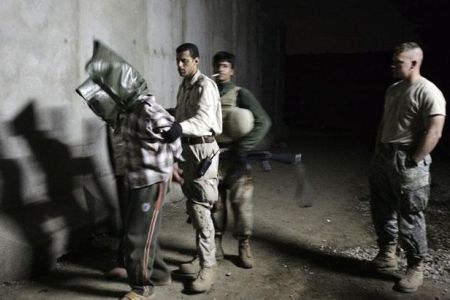
Britain’s Ministry of Defence (MoD) has decided to shake off allegations of systematic abuse at any cost, as hard evidence corroborates the British Army’s use of torture techniques.
The findings of an inquiry into the death of an Iraqi civilian at the hands of British soldiers has sparked widespread criticism, even condemnation, of the treatment of Iraqi detainees by British soldiers.
Baha Mousa, a 26-year-old hotel receptionist, was detained when soldiers from the First Battalion of the Queen’s Lancashire Regiment in the Iraqi city of Basra raided the hotel at which he worked. Two days later, Mousa died while in British Army custody.
The MoD was optimistic about the findings of the inquiry into Mousa’s death trying to bypass any allegations of systematic torture. Nevertheless, as the MoD tries in vain to persuade the public that its detention policies have undergone systematic reforms, analysts have come up with evidence that contradicts any such claims.
A high profile British human rights lawyer, Phil Shiner, has provided several reasons supporting the systematic use of torture and abuse in the British military during the Iraq war.
First, Shiner asserts that the detention policies, which involved torture and abuse, were not restricted to just one battle group, namely 1QLR, as he states that such practices were common, at least, at 14 UK facilities over the period between March 2003 and December 2008.
Shiner asserts that the set of techniques and practices included “unbelievably debased sexual behaviour, mock executions, vicious threats of rape of detainees’ female relatives, and systematic use of hooding, sleep deprivation, sensory deprivation, temperature manipulation and solitary confinement for weeks.”
Second, Shiner says that the shameful techniques and practices were systematically taught, as the Joint Forward Intelligence Team was the mastermind behind the techniques used by British troops.
Furthermore, as the British Defence Secretary, Liam Fox, refused to accept a key finding of the inquiry, Shiner is of the opinion that the MoD has no intention of implementing the “73 carefully measured recommendations” made by the chairman of Mousa’s inquiry, Sir William Gage.
Shiner predicts that the MoD “will continue to hide damaging documents, mislead our courts, run unworthy legal arguments and use its mighty coercive power to keep the public in the dark, not just about Iraq but also Afghanistan.”
More importantly, Shiner argues that the MoD still approves the very same shameful techniques employed by interrogators in Iraq, though Sir William has severely criticised such practices. Forcing a person or two into a sandbag, harshing, and hooding are techniques that are still used by the MoD.
Video Report
Press TV News/Analysis on September 8, 2011
What do Baha Mousa, Ian Tomlinson, Smiley Culture and Mark Dugan have in common? They are people who have died because of tactics used by UK police and in Baha Mousa’s case, British soldiers, why are “unlawful killings” as they are called taking place in the first place? Whether inside Britain or in war zones, it has put the spotlight on UK’s disproportionate and excessive use of force, as was evident in the recent unrest in the UK.
Related articles


Featured Video
Prof. Ted Postol: Iran Already Achieved Nuclear Deterrence Against Israel
or go to
Aletho News Archives – Video-Images
From the Archives
How the occupied mentality syndrome works
Saudi Arabia on the American chessboard – Part 3
By B. J. Sabri | American Herald Tribune | June 27, 2016
Read part 2: “The occupied mentality Syndrome“
Previously I argued whether Saudi Arabia’s repeated involvements in U.S. interventions and wars stem from free national will or in response to a specific condition. For starters, in Saudi Arabia there is no national will. In Saudi Arabia, the national will is the will of the Al Saud clan. Still, when a major Arab state allies itself with a superpower that committed unspeakable crimes against humanity in almost every Arab country, then something is wrong. This fact alone should compel us to examine the U.S.-Saudi relation for one exceptional reason. As a result of the U.S.-Saudi wars, hundreds of thousands of people in Afghanistan, Iraq, Iran, Libya, Syria, Yemen, and Somalia have lost their lives. Millions became displaced in their own homelands. And millions more rendered refugees.
Attributing the Saudi policies to the bonds of “partnership” with the U.S. is frivolous. There are no bonds between these two thugs except those of business, military deals, secret plots, and wars. Proving this point, bonds such as these have no space for the American and Saudi peoples to share significant cultural or societal exchanges. If partnership is not the reason for the Saudi contribution to the U.S. strategy of empire and imperialism, then another reason must exist.
This leads to three possibilities. … continue
Blog Roll
 Aletho News
- Hezbollah hits Israeli warship off Lebanon’s coast, sets it aflame
- Iran slams US strikes on B1 bridge, Mahshahr petrochemical plants as ‘blatant acts of state terrorism’
- In letter to UN chief, Araghchi warns of dire consequences of US-Israeli attacks on Iran’s nuclear facilities
- Why the CIA conspiracy to invade Iran with Kurdish militias failed
- Why Are Upbeat US Claims About Mission to Rescue Pilot ‘Highly Questionable’?
- Aircraft destroyed during US ‘rescue’ of downed F-15 pilot cost more than $100 million each
- Washington University removes professor who condemned US-Israeli war on Iran
- Russia Warns of Retaliation as UK Authorizes Seizure of Vessels
- Serbia thwarts plot to bomb Russia-Hungary gas pipeline – Vucic
- Al Mayadeen voices solidarity with Dr. Marandi amid death threats
- If Americans Knew
- In Iran, Israel-US take aim at “reason, research, and freedom of thought” – Daily Update
- US loses planes over Iran, Israel downgrades Lebanon war goals – Daily Update
- Israel Is Blocking Palestinians from Easter at Church Where Jesus Resurrected
- Plot to assassinate Palestinian activist follows harassment campaign promoted by Zionist groups and elected officials
- Prominent New York synagogue hosts presentation on why U.S. Jews should support the ethnic cleansing of Gaza
- Tapper vs. Piker: Is the CNN Anchor Auditioning for David Ellison?
- Shouldn’t Democrats Be Able to Condemn Genocide?
- Israel-US kill negotiators, destroy civilian structures, but Iran’s military capabilities still largely intact – Daily Update
- ‘War crime’: Global condemnation as Israeli ministers celebrate death penalty law targeting Palestinian prisoners
- 7 Ways Israel Is Turning Lebanon Into Gaza
- No Tricks Zone
- An Inconvenient Tree: Uncovered In Alps… Europe Much Warmer Than Today 6000 Years Ago
- New Study Reports A 60% Slowdown In Greenland’s Ice Loss Rate In The Last Decade
- Low Intensity Tornado Wrecks Major Solar Farm, Creating A Potential Toxic Dump
- New Study Finds Warming Saves Lives…Cold Temperatures 12 Times More Deadly Than Excess Heat
- German Science Blog Accuses PIK Climate Institute Of Hallucinating Climate Tipping Points
- Devastating Assessment Of Comirnaty Vaccine By Former Senior Pfizer Europe Toxicologist
- New Study: CO2 Is ‘Effectively Negligible’ As An Explanatory Climate Change Factor Since 2000
- Former Pfizer Toxicologist Dr. Helmut Sterz Tells Bundestag Hearing Pfizer Vaccine Should Have Never Been Approved
- Energy Expert: Germany’s Nuclear Phaseout Was A “500 Billion Euro Mistake”
- New Research: South Australia’s Mid-Holocene Sea Surface Temperatures Were 4°C Warmer Than Today
 Aletho News