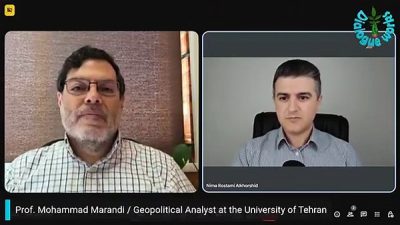
CNN’s Nicole Dow featured Hillary in an interview on “Iran’s Soft Power Messaging” last week in connection with the Nonaligned Movement (NAM) summit in Tehran, see here. Hillary also appeared on Al Jazeera over the weekend to talk about the new United Nations/Arab League envoy for Syria, Lakhdar Brahimi, and the prospects for progress toward resolving the conflict there (click on video above to view). Her two interviews bring together a number of important points about Iranian foreign policy and the requirements for a political settlement in Syria.
Twenty years ago, Harvard University’s Joseph Nye famously defined soft power as the ability to get others to “want what you want,” which he contrasted with the ability to compel others via “hard” military and economic assets. Hillary’s CNN interview explores what we have called the Islamic Republic’s “soft power offensive” in the context of the geopolitical and sectarian (Shi’a-Sunni) rivalry between Iran and Saudi Arabia.
In the interview, Hillary notes that the rise of Tehran’s regional influence over the last decade has little to do with hard power. (As CNN’s Nicole Dow documents, “the numbers would certainly seem to bear this out. Last year, Saudi Arabia reportedly purchased as much as six times as much military equipment from the United States as Iran’s entire official defense budget.”) Rather, as Hillary points out, Iran’s rise is fundamentally about soft power. “We always think of Iran as a military dictatorship, but the Iranian message is clear: they want free and fair elections” in countries like Egypt, Afghanistan, and Iraq. “The Iranian message and belief is—if a country has free and fair elections, it will pursue independent policies that are in that country’s national interest. The Iranian belief is that if they pursue independent policies, they will inevitably be unenthusiastic about pursuing U.S. or Western policies.”
Hillary argues that Tehran can apply this approach even in Syria. Saeed Jalili, the secretary-general of the Islamic Republic’s Supreme National Security Council, has made clear that “Iran will not allow the axis of resistance, of which it considers Syria to be an essential part, to be broken in any way.” But, as Hillary points out, “The two big points of the Iranian push” [on how to deal with the Syrian situation] were for there to be a ceasefire in Syria for three months at the end of Ramadan, and that there should be free and fair elections.”
Iranian policymakers are willing to roll the dice on elections in Syria because, first of all, they judge (correctly) that Syrian President Bashar al-Assad appears to retain the support of at least half of Syrian society. Thus, it is not at all clear that he would lose an election. But Hillary underscores that, even if Assad were to leave office as part of a democratic transition, “a free and fairly elected successor to Assad would not be interested in strategic cooperation with the U.S. and would not be interested in aligning itself with Israel. That would be completely against the views and histories of the people.”
On the other side of the Middle East’s geopolitical and sectarian divide, Saudi Arabia is pursuing a very different strategy, in Syria and elsewhere in the region. The Saudi strategy emphasizes the funding and training of fundamentalist Sunni groups ideologically aligned with Al-Qa’ida—groups that, in contrast to mainstream Sunni Islamists “who are not interested in killing other Muslims,” take a strongly anti-Shi’a stance. This is, of course, the strategy that Saudi Arabia followed when it joined with the United States to fund largely Pashtun cadres among the mujahideen fighting the Soviet occupation of Afghanistan—and then fueled the rise of the Taliban during the 1990s, after the Soviet withdrawal.
In Hillary’s assessment, “The Saudis cannot call for a ceasefire or for free and fair elections because the Saudis haven’t had free and fair elections in their own country. It doesn’t sound genuine, so they can’t do it, and they don’t want to do it. No precedent has been set to have everyone else doing it except them.” More fundamentally, though, “the Saudis aren’t interested in an outcome in Syria that leads to a government that carries out the interests of the people of Syria. What the Saudis are interested in is a head of state who will be on their side. And their side is against Iran and its influence in the region. This is a big albatross that Saudi Arabia has on its neck.”
Hillary elaborates on the point: The Saudis want to convince others in the region that “the Iranians don’t stand for Muslim causes, beliefs, independence or nationalism. The Saudis want others in the region to see the Iranians as Shiite, Persian, non-Arab, non-Sunni, and that what the Iranians are doing has nothing to do with democracy or freedom, but rather promoting a narrow sectarian vision… the Saudi message is that the Shiites are infiltrating Arab affairs to undermine the Sunni community and Sunni states. They see the Shiites as heretical, non-believing, non-Arab Persians. Some Sunnis believe that”—and some Saudis try to play on that “with a tremendous amount of money and weapons.”
But polls and other objective indicators suggest that regional publics are not buying the Saudi message. As Hillary concludes, “That’s where the conflict is today. It’s a battle today between this message that Iran has to promote of freedom,” in the sense of real independence, “and the Saudis that are really trying to fight that message.”
In Hillary’s reading, dealing with the contrast between the Iranian and Saudi approaches to Syria will be crucial to Lakhdar Brahimi’s chances of success in stabilizing the conflict there. On Al Jazeera, she highlights “two critical points” that Brahimi has made since taking over from former Secretary-General Kofi Annan as the U.N./Arab League Syria envoy.
First, Brahimi “has come out clearly against foreign military intervention. That is critically important because that could prevent the escalation of the civil war in Syria, and it could even start to dial back some of the armed support for opposition fighters.” Second, Hillary highlights Brahimi’s “refusal to simply parrot the White House talking point that Assad has to go and that Assad has lost all legitimacy. That is really a ridiculous point that is not going to lead to a negotiated outcome, and he has stood up courageously and refused to parrot it.”
Recalling her own experience working with Brahimi on post-9/11 Afghanistan, Hillary notes that his “track record” in the various civil wars and conflicts where he has been a mediator—Lebanon, Afghanistan, Iraq, Haiti—is to focus on “power sharing. He focuses on getting together all of the critical players inside a country that need to be part of a solution. That’s power sharing. That’s not saying who goes and who leaves. That’s putting everybody into the same pot and having them work together. And then it’s critically important for him to work with the outside players.”
When challenged with an assertion that neither the Assad government nor the opposition is willing to talk, Hillary pushes back by observing that, just as the Islamic Republic supports a political solution in Syria, President Assad has been willing to talk with opponents since virtually the beginning of unrest back in March 2011. (So just who is it that it really blocking movement toward a possible political solution?) Furthermore, she underscores that it is largely the external Syrian opposition that has demanded Assad’s ouster up front; the internal opposition has not insisted on that.
In this context, she points out, Brahimi’s track record suggests that he will “focus on the players that are in Syria… He doesn’t actually have much time or patience for expatriates who sit in cafes in London or Paris. He doesn’t really think they’re players. He focuses on people who are in country.”
That is certainly a very different approach to post-conflict stabilization than that pursued by the United States in Afghanistan, in Iraq, and, now—in collaboration with Saudi Arabia—in Syria.
Syrian Foreign Minister Walid al-Moallem stressed that the United States is the major player in the ongoing crisis in the country, adding that the other countries are instruments.
“We believe that the US is the major player against Syria and the rest are its instruments,” al-Moallem told The Independent.
The daily quoted Moallem as saying that America was behind Syria’s violence.
“When the Americans say, ‘We are supplying the opposition with sophisticated instruments of telecommunications’, isn’t this part of a military effort, when they supply the opposition with $25m – and much more from the Gulf and Saudi Arabia?”
Addressing the US, the Syrian FM said: ‘You must read well what you did in Afghanistan and Somalia. I don’t understand your slogan of fighting international terrorism when you are supporting this terrorism in Syria’.”
“I tell the Europeans: ‘I don’t understand your slogan about the welfare of the Syrian people when you are supporting 17 resolutions against the welfare of the Syrian people,” Moallem addressed the European states.
As he stressed that about 60 percent of the violence going on in the country was from abroad, al-Moallem said: “Before I am a minister, I am a Syrian citizen, and I feel sad at seeing what’s happening in Syria, compared with two years ago.”
“There are many Syrians like me – eager to see Syria return to the old days when we were proud of our security,” he added.
The Independent reporter told the Syrian FM that the Emir of Qatar was enraged last year at what he called President Bashar al-Assad’s “lies”, claiming that the Syrian President had reneged on a deal to allow Muslim Brotherhood members to return home.
On this issue, Moallem said: “If you met the same Emir two years ago, he was praising Assad, and considered him a dear friend. They used to have family relations, spending family holidays in Damascus and sometimes in Doha. There is an important question: what happened? I met the Emir in Doha in, I think, November 2011, when the Arab League started their initiative [resulting in the sending of League observers to Syria] and we reached agreement … The Emir told me: ‘If you agree to this initiative, I will change the attitude of Al Jazeera and I will tell [Sheikh] Qaradawi [a popular prelate with a regular slot on the television chain] to support Syria and reconciliation, and I have put down some billions of dollars to rebuild Syria…’ .”
“At the same time, when I was waiting to enter a meeting, there was the head of the Tunisian party Ennahda and the Emir issued orders to pay Ennahda $150m to help his party in the elections. Anyway, this was their business. But I asked the Emir: ‘You were having very close relations with Muammar Gaddafi and you were the only leader in his palace when Gaddafi hosted you during the summit – so why are you sending your aircraft to attack Libya and be part of Nato?’ The Emir said simply: ‘Because we don’t want to lose our momentum in Tunis and Egypt – and Gaddafi was responsible for dividing Sudan’,” Moallem added.
On the relation between Syria, Iran, Hezbollah and Hamas, the Syrian FM said: “We were told by some Western envoy at the beginning of this crisis that relations between Syria and Iran, Syria and Hezbollah, Syria and Hamas are the major elements behind this crisis. If we settle this issue, they [the Americans] will help end the crisis. But no one told us why it is forbidden for Syria to have relations with Iran when most if not all the Gulf countries have very important relations with Iran.”
When asked about chemical weapons, Moallem said if Syria had such weapons, they would never be used against its own people.
“We are fighting armed groups inside Aleppo, in the Damascus suburbs, before that in Homs and Idlib and this means fighting within Syrian cities – and our responsibility is to protect our people,” he said.
It is widely realized now that the fall of President Bashar Assad’s regime would leave Syria riven by bitter ethnic, religious, and ideological conflict that could splinter the country into smaller enclaves. Already there has been a demographic shift in this direction, as both Sunnis and Alawites flee the most dangerous parts of the county, seeking refuge within their own particular communities. Furthermore, it is widely believed in Syria that, as the entire country becomes too difficult to secure, the Assad regime will retreat to an Alawite redoubt in the northern coastal region as a fallback position.
Syrian Kurds, about ten percent of the country’s population, are also interested in gaining autonomy or joining with a larger Kurdistan. The Syrian Kurdish Democratic Party (PYD)—linked to the Kurdistan Workers Party (PKK), which has engaged in a separatist insurgency in Turkey’s Kurdish southeast region for nearly three decades—has gained control of key areas in northeast Syria. While Turkey has supported the Syrian opposition, it is terrified of a Kurdish autonomous zone in Syria, believing that it could provide a safe haven for staging attacks into Turkey. Moreover, Kurdish autonomy would encourage separatist sentiment within the Turkish Kurdish minority. Turkey has threatened to invade the border areas of Syria to counter such a development and Turkish armed forces with armor have been sent to Turkey’s border with the Syrian Kurdish region. A Turkish invasion would add further complexities to the fracturing of Syria.
What has not been readily discussed in reference to this break-up of Syria is that the Israeli and global Zionist Right has long sought the fragmentation of Israel’s enemies so as to weaken them and thus enhance Israel’s primacy in the Middle East. While elements of this geostrategic view can be traced back to even before the creation of the modern state of Israel, the concept of destabilizing and fragmenting enemies seems to have been first articulated as an overall Israeli strategy by Oded Yinon in his 1982 piece, “A Strategy for Israel in the Nineteen Eighties.” Yinon had been attached to the Israeli Foreign Ministry and his article undoubtedly reflected high-level thinking in the Israeli military and intelligence establishment in the years of Likudnik Menachem Begin’s leadership. Israel Shahak’s translation of Yinon’s article was titled “The Zionist Plan for the Middle East.”
In this article, Yinon called for Israel to use military means to bring about the dissolution of Israel’s neighboring states and their fragmentation into a mosaic of homogenous ethnic and sectarian groupings. Yinon believed that it would not be difficult to achieve this result because nearly all the Arab states were afflicted with internal ethnic and religious divisions, and held together only by force. In essence, the end result would be a Middle East of powerless mini-statelets unable to confront Israeli power. Lebanon, then facing divisive chaos, was Yinon’s model for the entire Middle East. Yinon wrote: “Lebanon’s total dissolution into five provinces serves as a precedent for the entire Arab world including Egypt, Syria, Iraq and the Arabian peninsula and is already following that track. The dissolution of Syria and Iraq later on into ethnically or religiously unique areas such as in Lebanon, is Israel’s primary target on the Eastern front in the long run, while the dissolution of the military power of those states serves as the primary short term target.”
Eminent Middle East historian, Bernard Lewis, who is a Zionist of a rightist hue and one of the foremost intellectual gurus for the neoconservatives, echoed Yinon with an article in the September 1992 issue of “Foreign Affairs” titled “Rethinking the Middle East.” In it, he wrote of a development he called “Lebanonization,” stating “[A] possibility, which could even be precipitated by [Islamic] fundamentalism, is what has of late been fashionable to call ‘Lebanonization.’ Most of the states of the Middle East—Egypt is an obvious exception—are of recent and artificial construction and are vulnerable to such a process. If the central power is sufficiently weakened, there is no real civil society to hold the polity together, no real sense of common identity. . . . The state then disintegrates—as happened in Lebanon—into a chaos of squabbling, feuding, fighting sects, tribes, regions, and parties.” Since Lewis— credited with coining the phrase “clash of civilizations”—has been a major advocate of a belligerent stance for the West against the Islamic states, it would appear that he realized that such fragmentation would be the result of his belligerent policy.
In 1996, the neoconservatives presented to incoming Israeli Prime Minister Benjamin Netanyahu their study “A Clean Break” (produced under the auspices of an Israeli think tank, the Institute for Advanced Strategic and Political Studies), which described how Israel could enhance its regional security by toppling enemy regimes. Although this work did not explicitly focus on the fragmentation of states, such was implied in regard to Syria when it stated that “Israel can shape its strategic environment, in cooperation with Turkey and Jordan, by weakening, containing, and even rolling back Syria. This effort can focus on removing Saddam Hussein from power in Iraq — an important Israeli strategic objective in its own right — as a means of foiling Syria’s regional ambitions.” It added that “Damascus fears that the ‘natural axis’ with Israel on one side, central Iraq and Turkey on the other, and Jordan, in the center would squeeze and detach Syria from the Saudi Peninsula. For Syria, this could be the prelude to a redrawing of the map of the Middle East which would threaten Syria’s territorial integrity.”
David Wurmser authored a much longer follow-up document to “A Clean Break” for the same Israeli think tank, entitled “Coping with Crumbling States: A Western and Israeli Balance of Power Strategy for the Levant.” In this work, Wurmser emphasized the fragile nature of the Middle Eastern Baathist dictatorships in Iraq and Syria in line with Lewis’s thesis, and how the West and Israel should act in such an environment.
In contrast to some of the Western democracies as well as Arab states, Israel did not publicly call for Assad’s removal until a few months ago. This, however, does not mean that the Netanyahu government did not support this outcome. This tardiness has a number of likely reasons, one of which being the fear that an Islamist government would replace Assad that would be even more hostile to Israel and more prone than he to launch reckless attacks. Moreover, instability in a country on Israel’s border is of tremendous concern to its security establishment. It is feared that in such a chaotic condition, Assad’s massive chemical weapons arsenal and advanced surface-to-air missile systems could end up in the hands of terrorist groups like the Lebanese Hezbollah, which would not be hesitant to use them against Israel.
Unlike the armchair destabilization strategists and the neocons, the actual Israeli leaders, including hardline Likudniks such as Prime Minister Netanyahu, have to be concerned about facing the immediate negative political consequences of their decisions even if they believe that the long-term benefits would accrue to the country. This invariably leads to the exercise of caution in regard to dramatic change. Thus, the concern about the immediate security risks cited above likely had a significant effect on their decision-making.
Furthermore, it could have been counterproductive for Israel to express support for the Syrian opposition in its early stages. For Assad has repeatedly maintained that the opposition is orchestrated by foreign powers, using this argument to justify his brutal crackdown. Since Israel is hated by virtually all elements in the Middle East, its open support of the opposition could have turned many Syrians, and much of the overall Arab world, against the uprising. While Israel did not openly support the armed resistance, there have been claims from reliable sources that Israeli intelligence has been providing some degree of covert support along with other Western intelligence agencies, including that of the United States.
Since May of this year, however, the Israeli government has become open in its support for the overthrow of the Assad regime. In June, Netanyahu condemned the ongoing massacre of Syrian civilians by Assad, blaming the violence on an “Axis of Evil,” consisting of Iran, Syria and Hezbollah. “Iran and Hezbollah are an inseparable part of the Syrian atrocities and the world needs to act against them,” he proclaimed. This inclusion of Iran and Hezbollah illustrates Israel’s goal of using the Syrian humanitarian issue to advance its own national interest.
If the Assad regime were to fall, Israel would certainly be more secure with a splintered congeries of small statelets than a unified Syria under an anti-Israel Islamist regime. Consequently, staunch neoconservative Harold Rhode presents the fragmentation scenario in a positive light in his article, “Will Syria Remain a Unified State?” (July 10, 2012). In contrast to what has been the conventional Western narrative of the uprising against the Assad regime, which presents a heroic Sunni resistance being brutally terrorized by government forces and pro-government Alawite militias, Rhode writes with sympathy for the pro-government non-Sunni Syrian minorities: “In short, what stands behind most of the violence in Syria is the rise of Arab Sunni fundamentalism in its various forms – whether Salafi, Wahhabi, or Muslim Brotherhood. All of those threaten the very existence of the Alawites, the Kurds, and other members of the non-Sunni ethnic and religious groups.
“It is therefore much easier to understand why the ruling Alawites feel they are fighting a life and death battle with the Sunnis, and why they believe they must spare no effort to survive. It also explains why most of Syria’s other minorities – such as the Druze, Ismailis, and Christians – still largely support the Assad regime.”
For a short aside, the neoconservative background of Harold Rhode is of considerable relevance, providing further evidence for the much denied neocon support for the fragmentation of Israel’s enemies. (The mainstream view is that the neocons are naïve idealists whose plans to transform dictatorships into model democracies invariably go awry.) Rhode, a longtime Pentagon official who was a specialist on the Middle East, was closely associated with neocon stalwarts Michael Ledeen, Paul Wolfowitz, and Richard Perle. He was also a protégé of Bernard Lewis, with Lewis dedicating his 2003 book, “The Crisis of Islam,” to him. Rhode served as a Middle East specialist for Douglas Feith, Undersecretary of Defense for Policy during the administration of George W. Bush, where he was closely involved with the Office of Special Plans, which provided spurious propaganda to promote support for the war on Iraq. Rhode was a participant in the Larry Franklin affair, which involved dealings with Israeli agents, though Rhode was not charged with any crime. Alan Weisman, the author of the biography of Richard Perle, refers to Rhode as an “ardent Zionist” (“Prince of Darkness: Richard Perle,” p.146), more pro-Israel than Perle, which takes some doing since the latter has been accused of handing classified material to the Israelis. Rhode is currently a fellow with the ultra-Zionist Gatestone Institute, for which he wrote the above article.
Obviously the very removal of the Assad regime would be a blow against Israel’s major enemy, Iran, since Syria is Iran’s major ally. Significantly, Assad’s Syria has provided a conduit for arms and assistance from Iran to Hezbollah and, to a lesser extent, Hamas, to use against Israel. If Israel and Iran had gone to war, these arms would have posed a significant threat to the Israeli populace. Moreover, a defanged Hezbollah would not be able to oppose Israeli military incursions into south Lebanon or even Syria.
A fragmented Syria removes the possible negative ramifications of Assad’s removal since it would mean that even if the Islamists should replace Assad in Damascus they would only have a rump Syrian state to control, leaving them too weak to do much damage to Israel and forcing them to focus their attention on the hostile statelets bordering them. Moreover, Israel is purportedly contemplating military action to prevent Assad’s chemical weapons from falling into the hands of anti-Israel terrorists. With such a divided country there is no powerful army capable of standing up to an Israeli military incursion.
The benefits accruing to Israel from the downfall of the Assad regime and the concomitant sectarian fragmentation and conflict in Syria go beyond the Levant to include the entire Middle East region. For sectarian violence in Syria is likely to cause an intensification of the warfare between Sunnis and Shiites throughout the entire Middle East region. Iran might retaliate against Saudi Arabia’s and Qatar’s support for the Syrian opposition by fanning the flames of Shiite Muslim revolution in Bahrain and Saudi Arabia’s oil-rich and majority Shiite Eastern Province. Both areas have witnessed intermittent periods of violent protest and brutal government suppression since the Arab Spring of 2011. And Iraq remains a tinderbox ready to explode into ethno-sectarian war among the Shiites, Sunnis, and Kurds, with violence already on an uptick since the formal departure of American troops in December 2011.
In assessing the current regional situation, American-born Barry Rubin, professor at the Interdisciplinary Center (Herzliya, Israel) and director of its Global Research in International Affairs Center, writes in the Jerusalem Post (“The Region: Israel is in good shape,” July 15, 2012) : “The more I think about Israel’s security situation at this moment, the better it looks.” He goes on to state: “By reentering a period of instability and continuing conflict within each country, the Arabic-speaking world is committing a self-induced setback. Internal battles will disrupt Arab armies and economies, reducing their ability to fight against Israel. Indeed, nothing could be more likely to handicap development than Islamist policies.”
It should be noted that the “period of instability and continuing conflict” in the Middle East region has been the result of regime change and is in line with the thinking of Oded Yinon who, along with the other aforementioned geostrategic thinkers, pointed out that the major countries of the Middle East were inherently fissiparous and only held together by authoritarian regimes.
America’s removal of Saddam Hussein in a war spearheaded by the pro-Israel neoconservatives served to intensify Sunni-Shiite regional hostility and, in a sense, got the destabilization ball rolling. Iran is targeted now, and Israel and its neocon supporters seek to make use of dissatisfied internal elements, political and ethnic—the radical MEK, democratic secularists, monarchists, Kurds, Arabs, Baluchis, and Azeris— to bring down the Islamic regime. And while Saudi Arabia is currently serving Israeli interests by opposing Iran, should the Islamic Republic of Iran fall, Israel and their supporters would likely turn to Saudi Arabia’s dismemberment, seeking the severance of the predominantly Shiite, oil-rich Eastern Province, with some neocons already having made such a suggestion—e.g., Max Singer, Richard Perle, and David Frum (schemes which have been put on ice while Israel and its supporters have focused on Iran). If everything went according to plan, the end result would be a Middle East composed of disunited states, or mini-states, involved in intractable, internecine conflict, which would make it impossible for them to confront Israeli power and to provide any challenge to Israel’s control of Palestine. The essence of Yinon’s geostrategic vision of Israeli preeminence would be achieved.
The Palestinian Islamic Resistance, Hamas, condemned on Thursday, the kidnapping, torture and murder of 17 soldiers of Palestinian Liberation Army (PLA) by the Zionist collaborators, the Free Syrian Army (FSA) armed thugs. It looks as though Hamas leaders are learning from their mistake of betraying their long-time ally, the Assad regime in Syria.
In April 2012, two Israel-Firster US Senators, Joe Lieberman (a Zionist Jew ) and John McCain (a Zionist Christian) paid a surprise visit to the Turkish-Syrian border to meet with the leaders of the USrael-backed FSA. In a joint statement, both of them urged US and its allies to arm the Syrian rebel militants.
PLA chief of staff Major General Mohammad Tareq al-Khadraa told Syrian TV SANA: “The fact that the armed terrorist groups kidnapped and killed 17 troops from the Palestinian Liberation Army in Syria proves the criminal, dirty role that these groups play and their links to Western and Zionist agendas.”
The PLA is a battalion in the Syrian army, although it is made up of Palestinians living in Syria and who are conscripted to the armed forces. Roughly 470,000 Palestinian refugees live in Syria.
Faruk Logoglu, former Turkish ambassador in Washington, was quoted saying recently: “Turkey’s hosting armed FSA fighters and allowing them to carry out attacks in Syria – is against all international norms; against all neighborly relations. It’s a basic rule that countries must respect the sovereignty of others“.
Some Turkish commentators believe that Washington expects Turk soldiers to die in Syria to topple Bashar al-Assad, while some want Ankara to exploit the downing of the Turkish spying aircraft by Syria overflying Syrian airspace – to isolate al-Assad’s three main supporters; Russia, Iran and Hizbullah.
It would be better if Hamas and the rest of the Muslim leadership come out of its mindset of; “the enemy of my enemy is my friend”. They must judge their “newly found friend” by its past which has proven, again and again to be poodle of Zion. It wants to destabilize and breakup every Muslim nation-state which the Zionist regime thinks may pose a threat to Israel’s survival in the future.
Gen. Robert Mood, chief of UN monitoring mission in Syria has already confirmed that the arms deliveries from abroad (the US, Turkey, Israel, Saudi Arabia and Qatar) is the main reason the bloodshed is on the rise.
Special envoy Kofi Annan and Syrian President Bashar al-Assad met on Monday and agreed to initiate another ceasefire plan between the government and the opposition. The following is an account of what was said at the meeting.
The meeting between Syrian president Bashar al-Assad and the international envoy to Syria Kofi Annan on Monday began with the usual pleasantries. They were joined by the [Head of the United Nations Supervision Mission in Syria] General Robert Mood and Annan’s political advisor Martin Griffith.
The international envoy began by indicating that he had followed the recent media appearances by the Syrian president, from the German television to the Turkish Cumhuriyet newspaper.
“It seems, Mr. President, that you are intensifying your media appearances in this period,” he remarked.
“This is true for two reasons. First, I am someone who prefers action and then words. Second, we noticed an extensive blackout of the facts in addition to the distortion and misrepresentation of many matters. So I saw it as my duty to speak,” Assad replied, smiling.
Annan understood. He replied saying he completely understands the difference between the events on the ground and the prevailing image that reflects the imagined scenarios of several agendas and impressions.
Annan then turned to the officially prepared statement: “Mr. President, I felt it was my duty following the conference we held in Geneva and a few days before my briefing the United Nations Security Council (UNSC) on July 20 and 21, to come to you, meet with you, and present what we have achieved and what should be followed-up,” Annan said.
It was obvious from the introduction that Annan deliberately left out Friday’s opposition “Friends of the Syrian People” Paris conference and the escalation in rhetoric during and after that meeting.
He even went further, seizing the opportunity of his and the UN’s repeated commitment to his six-point peace initiative to stress to the Syrian president that the outcome of the Geneva convention was out of concern for this initiative, and nothing else.
“No doubt, Mr. President, you know that what happened in Geneva is different from some of the interpretations and explanations, which sought to add issues that had nothing to do with the conference or distorted its decisions,” he added. Annan’s remarkable position seems identical to the Russian stance on Western perspectives that followed the meeting.
Annan then spoke about the situation on the ground and the international monitoring mission in Syria. He pointed out the tragic situation in some regions and the need to practically achieve the essence of his mission, namely the second point concerning cessation of violence.
Assad responded by saying he is fully aware and responsive to the situation. He then presented his guest with a brief presentation of his mission since 12 April 2012. He explained how the ceasefire was reached and respected by the official armed forces for 24 hours, before it was broken by the armed insurgents, as noted in the international observers’ reports. While Assad was explaining, chief observer Mood nodded in agreement several times.
Annan listened to his host’s message, concluding that the truth of the matter confirms the need to work on a ceasefire, since the volatile situation began to spill outside Syria. Then he named Lebanon as a worrying arena for the repercussions of the Syrian situation.
“Let us try again and put a specific mechanism for a ceasefire starting from one of the more volatile regions, then move to the next,” Annan suggested. Again, Assad was completely responsive.
“We are a state, a government, and official authorities. Therefore, if you agree with us and we gave our word to abide by the ceasefire, we will be responsible for this and you can refer to us for implementation. But who will you negotiate with on the other side?” Assad asked his guests.
Annan replied, aided by Mood. They explained that the international observers, during their mission, were able to conduct a semi-comprehensive survey of armed groups active in those areas.
“We now know the main groups at least and we know those who are responsible for them. It is true that they do not have a unified command or clear structure. But we know the key people. Therefore we believe we could work with them step by step,” they said.
In this context, it was clear that the international officials had classified the side opposing the Syrian regime as an “armed opposition.” This was later indicated in Annan’s official press release.
On this point, Annan was reminded that the insurgents were the ones who aborted several similar attempts, especially in Homs.
“Some time ago, your observers witnessed attempts by some fighters to leave al-Khalidiya neighborhood in Homs to surrender themselves and their weapons. But other fighters stopped them from doing so. Your observers also witnessed how armed fighters blocked the attempt to rescue some of the residents trapped in al-Dayyan and al-Hamidiya neighborhoods in Homs,” they were told. This was confirmed by Griffith who had observed these events.
The international officials did not deny their hosts’ words. “Nevertheless, due to the current situation, let us try again. Our observers will reach an agreement with the armed groups in any area where we choose to work. In return, we want you to make a goodwill gesture at any of the mutually agreed starting points. Your gesture would be for a unilateral ceasefire from your side, a short time before the mutual deadline. Even if it is for four hours, for example,” Annan suggested.
Here, Annan was reminded that the ceasefire proposed in his six-point initiative is related to putting an end to the arming, financing, and weapons smuggling. Annan was listening to this sensitive point without reacting, until he was interrupted by a direct question.
“What do you think of what the US Secretary of State Hillary Clinton said two days ago [Sunday], when she called on the armed groups to launch an assault on the government’s forces? Is such a position consistent with the substance of your mission?” Annan was asked.
After a few seconds of silence, he replied saying, “Of course not. These are dangerous words. But let us try. Let us agree on this mechanism and proceed to try to implement it on the ground, step by step.”
As for the possible time-frame for such an operation, the two sides discussed several ideas, opinions, and suggestions. They concluded by agreeing on a preliminary deadline of three months, beginning from the first step to be implemented in the plan. In the meantime, both sides will work on releasing a joint statement of progress, once every two weeks.
Annan moved from the situation on the field to discuss the question of a national dialogue between the government and the opposition. “If we moved ahead in resolving the security issue and reached the dialogue phase, can you name your representative in this process to negotiate with the opposition, as a sort of liaison officer to follow the second part of the UN’s mission?” he asked.
Assad smiled and immediately replied, “We had decided on this before you asked us. Since the formation of the current government, we named someone to be in charge of the issue. He will be our representative in this process. He is the National Reconciliation Minister Dr. Ali Haidar.”
Annan inquired about Haidar and was told by Assad that he had been chosen for several reasons. “First, he is not from the loyalist camp. He is actually from the opposition. He is also the head of a party known for its honesty in Syria and abroad. Third, he was hurt during the bloody events. His son was killed by the insurgents but he ignored his wound and accepted the mission towards a genuine national reconciliation,” Assad said.
Annan acknowledged Assad’s explanation, but added that “we would have preferred if you named someone who is close to you and who would be in direct contact with you to follow-up on the dialogue process.”
Assad smiled again, saying that “Dr. Haidar and I sat next to each other all through my university years when I studied ophthalmology. Do you need someone closer than this?”
“In any case,” he continued, “I think your problem will be on the other side, not ours. Will you be able to name someone who represents the opposition?” Annan could not hold his laughter. He seconded Assad’s words and added, “I completely understand this difficulty. I saw them at the last conference in Cairo.”
The formal meeting concluded, but there was still time for some closing remarks. Getting ready to leave, Annan asked his host, “How long do you think this crisis will continue?”
“As long as the […] regime funds it,” Assad replied. But Annan was not surprised by the answer. “Do you think they are behind all the funding?” he inquired.
“They are behind many things that happen in our region. They believe they will be able to lead the whole Arab world today and in the future,” Assad said.
The international envoy concluded by remarking, “But it seems to me that they lack the population needed for such an ambition.” This made everyone laugh.
Friday, we read in the New York Timesand elsewhere about one of Syrian President Bashar al-Assad’s most important supporters and allies having defected. The impression one gets is that Assad’s government is in a state of collapse— and this gives credibility to those pushing for Assad to turn over power.
But what the media are not mentioning is that Brigadier General Manaf Tlass did not defect directly from the Assad inner circle. He had already fallen into disfavor early in the uprising and lost his command in May 2011—14 months ago. If you had that additional piece of information, you would interpret the news reports in a totally different way.
When a piece of evidence that contradicts the overall impression is absent from the reportage, the reportage itself is almost worthless.
As are reports of horrific events without adequate fact-checking and follow-up. Remember the Houla massacre? Who carried that out?
Houla Whoops
The media told us that more than 100 people, including women and children, were brutally slaughtered at close range in the village of Houla in late May. The bloodshed, reported around the world, was ascribed to a militia, the Shabiha, which is loyal to Assad. Here’s an example, from the BBC website:
Survivors of the massacre in Syria’s Houla region have told the BBC of their shock and fear as regime forces entered their homes and killed their families. […]
Most witnesses who spoke to the BBC said they believed that the army and shabiha militiamen were responsible.
“We were in the house, they went in, the shabiha and security, they went in with Kalashnikovs and automatic rifles,” said survivor Rasha Abdul Razaq.
Later, a dribble of accounts cast doubt on this, since the people killed were, by and large, themselves supporters of Assad. But few heard about these. The BBC report did not say who Rasha was, or provide any evidence that she actually was there, or that if she was, she had any basis for saying that the killers were identifiable as to their affiliation. BBC quoted one other source, who did not provide a name. Despite the thinness of this material, the BBC story was picked up all over the world, and became perhaps the definitive account.
Hence, you probably were unaware of an article from the Frankfurter Allgemeine-Zeitung, a traditional and serious German newspaper for whom I’ve written in the past. It published a report a month ago from a correspondent who got eyewitness accounts from people who he says had visited the Houla area. The correspondent, Rainer Hermann, says that these eyewitnesses were Assad opponents, yet discovered that government backers were not responsible for the massacre.
Hermann’s sources described the events as follows: anti-Assad rebels attacked army roadblocks just outside Houla, which had been intended to protect villages, where the majority are members of Assad’s Alawi sect, from Sunni militias. The soldiers at the roadblocks, overwhelmed, called for backup, which led to a 90-minute battle, in which both sides sustained extensive fatalities.
It was in this time frame that the unidentified militias entered Houla.
“According to eyewitness accounts…those killed were almost exclusively from families belonging to Houla’s Alawi and Shia minorities. Over 90% of Houla’s population are Sunnis. Several dozen members of a family were slaughtered, which had converted from Sunni to Shia Islam. Members of the Shomaliya, an Alawi family, were also killed, as was the family of a Sunni member of the Syrian parliament who is regarded as a collaborator. Immediately following the massacre, the perpetrators are supposed to have filmed their victims and then presented them as Sunni victims in videos posted on the internet.
…”Their findings contradict allegations of the rebels, who had blamed the Shabiha militias which are close to the regime.”
Thus, Hermann seemingly was able to do something that most of the Western reporters have been unable to do: find opponents of Assad who nevertheless may be willing to provide accounts that do not serve their own interests.
Of course, we could do with more information on Hermann’s sources. How do we know they were really in Houla? How do we know they are really opponents of Assad, not just pretending to be? Their story of inter-communal strikes makes more sense than the one that went around the world and turned so many people who had not been paying attention into supporters of toppling Assad. But nevertheless, everyone needs to provide more detail so we can try to ascertain what is true.
Almost all of the accounts in major news organization stories are characterized as being from the opposition, almost all portray everything as caused solely by the regime, and almost all add the disclaimer that the information “could not be independently verified.”
Talking Turkey
Though conventional journalism likes to advertise that it is “objective” and doesn’t take sides, I don’t recall hearing much from the Syrian regime’s point of view, beyond general and unconvincing denials following reports of regime wrongdoing. One almost gets the impression that the Syrian government does not wish to be heard.
But that turns out not to be the case.
With Syria’s neighbor Turkey increasingly the leading edge for NATO on toppling Assad, it’s interesting that a Turkish newspaper was willing to hear what the Syrian leader had to say:
In an interview with the Turkish daily Cumhuriyet, Bashar Assad went after Turkey’s Prime Minister Recep Tayyip Erdogan with an extraordinarily interesting critique. A version translated into English by the Syrian news agency, SANA, shows Assad stressing his goodwill toward the Turkish people in the first part of the interview, then raising questions about the motives of the alliance seeking to overthrow him:
Assad: …. Today, Erdogan is shedding the tears of hypocrites for the Syrian people. Why hasn’t he cried for those killed in some Gulf countries, although they are innocent, peaceful and unarmed? Why isn’t he speaking about democracy in some Gulf countries?
Journalist: Which country?
Assad: Qatar, for instance. Why didn’t he do anything after the Marmara ship incident except shouting? Why did he challenge Israel, and then suddenly agreed to deploy the missile shield in Turkey? Did he deploy it in order to protect Turkey from the attack of a hostile country? Did America build these bases in order to protect itself against this region? Which country in the region has the capability to threaten America? No country. […]
You don’t have to be a fan of Assad (and who is?) to find it worthwhile to read his comments. Hearing, almost for the first time, from the other side in a conflict gives one a rush—reminds me of a rule we were taught in journalism school but which never seemed to come up again, except in the most superficial ways :To find out what is really going on, make a real effort to speak to both sides.
All Hillary, All the Time
While the Western media simply ignores statements from the Syrian establishment, it functions as the flip side of the Syrian government press agency, publishing a relentless stream of declarations from the establishment trying to bring Assad down. For example, again from The Times, Hillary Clinton’s well-covered remarks on Tlass:
Later at a news conference, Mrs. Clinton said that General Tlass’s reported defection and those of other senior military officials had sent a powerful message that Mr. Assad’s government was on its way out. She described General Tlass as “a very close and longtime ally” of Mr. Assad and his father.
So what you have is Hillary Clinton being willing to distort the Tlass development, and the media only too happy to go along.
There’s a growing body of evidence/ that we Americans are being lied to by our government, with nary a peep from the people’s representatives in the press. That’s one development, sadly, that really is not news.
The latest round of the war against an independent Syria unfolded in Paris last week at the gathering of the “Friends of Syria”.
Russia and China very rightly did not attend this “amoral” – in the diplomatic language of the Russian Ministry of Foreign Affairs – meeting. At the meeting western champions of the war insisted on their interpretation of the one-week old Geneva agreements: “transition government based on mutual consent” means “Bashar al-Assad must go”, affirmed French President Hollande.
This recent round of pressure highlights two new tactics employed by Washington: word games and an end-run around the United Nations itself.
First, the new formula “transition government”. The authoritative Merriam-Webster dictionary defines “regime” as “government” and “change” as “transition.” Thus, for those who reject “regime change,” a euphemism was created that has much better chances to go through.
Interestingly enough, this term was promoted by an expert of Russian origin, Dmitri Trenin, Director of the Carnegie Moscow Center. On June 28, 2012 Trenin published a suggestion in his piece “Syria: A Russian Perspective”: “Russia might be willing to cooperate with the U.S. and other countries if the goal moves towards “transition” rather than “regime change” – what has been dubbed the “Yemen model.”
So who is Mr. Trenin? This retired Soviet colonel was a Senior Research Fellow at the NATO Defense College in Rome just before he was recruited in 1993 to join the Carnegie Moscow Center, created the same year by none other than Michael McFaul, the current US Ambassador in Moscow. After nearly 20 years in the pay of the Americans Trenin was rewarded with his current post as director by his former boss, Rose Gottemoeller, who left Moscow in 2008 to join the State Department where she is now Under Secretary for Arms Control and International Security. Big shoes to fill for Mr.Trenin, but in Washington they know how to pick their cadre.
The board of the Carnegie Endowment in Washington features – this world is truly small – Kofi Annan himself. Among the Endowments “Funders and Supporters” are George Soros’s Open Society Institute, the US National Intelligence Council, the US Defense Intelligence Agency, the US Defense Department, and a collection of other private and public enthusiasts.
Of course the “transition government” and “Yemen model” are nothing other than “regime change.” Honestly: we, Russians, brought up on Tolstoy and Chekhov, should be able to miss Washington’s elementary-school semantic traps.
Secondly, unable to push anti-Syrian resolutions through the UN Security Council due to Russia and China’s staunch resistance, Washington is building up a group of more than a hundred nations more pliable to US pressure. Such “coalitions of the willing” have been put together before, but this time the number of countries makes it look like a parallel anti-UN construct acting as if it is replacing the UN General Assembly itself.
Such a gathering, despite total absence of legitimacy, is not just a talking platform. French Foreign Minister Laurent Fabius told Le Parisien that the Paris meeting would push for a Chapter VII United Nations resolution to enforce the transition plan. A Chapter VII resolution can authorize the use of military force “to maintain or restore international peace and security.”
In the short term, the United States may attempt to institutionalize this ad hoc grouping into a mechanism to implement a “final solution” to President Al-Assad. In the long term, Washington may try to solidify such structure into an anti-U.N. body of sycophants, ready and willing to approve any U.S. initiative.
Now, from tactics to strategy. Looking at the type of leaders that are seizing power in the Arab world with American assistance, a normal person is perplexed: why does the United States, with assistance of their local satellites, keep on removing moderate secular governments and bringing to power, in one country after another, increasingly radical extremists – that same type of people who committed 9/11, the greatest tragedy in U.S. post-WWII history?
Indeed, this question is not solvable by listening to Washington’s official line of arguments. But take a look at the policies of the US and its European partners during the 1930s. Then, America and its ever so reasonable and civilized European allies provided the financial, industrial and political support encouraging the highly energized, violent extremist Nazi and fascist movements in Europe. With a purpose: to direct its violence against Russia. According to the plan, Germany and Russia were to exhaust themselves so that the US would emerge dominant.
Similarly, the earlier use of al-Qaeda in Afghanistan and again today the encouragement of various Muslim extremists including elements of the Muslim Brotherhood are part of the plan to create a regional movement which could be thrown against Iran, Russia and China. Such a furnace of war and chaos in the Middle East, the Caucuses and Central Asia will permanently disable all three of America’s strategic rivals and allow Washington to rise to uncontested world domination.
We should be able to decipher not only US language, but also US strategy. In the 1930s, the Soviet Union was at the front line of the fight against Fascism in Europe. Today, Russia owes it to its history and to the fallen in the anti-fascist struggle to recognize, and before it is too late, avert American designs.
We must prevent Russian and other people from being drawn into a bloodbath of mutual extermination in the voracious interest of Washington’s drive for global hegemony.
In an article entitled “Israel Lobby Creates Anti-Iran Astroturf Group,” Richard Silverstein describes the “double life” of Iran180:
On the one hand it attempts to be a serious human rights organization. But it has a Jekyll/Hyde identity as a rough-and-tumble agitprop street theater group featuring giant puppets acting the part of Mahmoud Ahmadinejad and various other Middle Eastern tyrants like Bashar Assad and Muammar Gadhafi.
None of this would be out of bounds… until you examine the product of Iran180′s street theater. In 2011, it hosted a float at San Francisco’s Gay Pride parade in which Ahmadinejad was sodomized by a nuclear missile. During the same event, Ahmadinejad fellated said missile. Last year, during UN demonstrations coinciding with the Iranian leader’s UN General Assembly speech, the group featured a gay Jewish wedding between Ahmadinejad and Assad in which they stood under a chuppah and broke a wedding glass. In another scene, the lovebirds take a drive in a horse-drawn carriage and one strokes the naked belly of the other.
If Iran180′s “street theater” sounds like something out of Gene Sharp’s 198 Methods of Nonviolent Action, it may not be a coincidence that its single staff member, Chris DeVito, holds a Masters of Arts in Law and Diplomacy from the Fletcher School at Tufts University. The chairman of the Fletcher School is Peter Ackerman, a student of Sharp’s nonviolent warfare who funded his regime-changing work for two decades. Ackerman, chairman of the International Center for Nonviolent Conflict, has been plotting regime change in Iran and Syria at least since 2005. In a Los Angeles Timesop-ed entitled “Say You Want a Revolution,” Ackerman and Michael Ledeen wrote:
Freedom-loving people know what we want to see in Beirut, Damascus and Tehran: the central square bursting with citizens demanding an end to tyranny, massive strikes shutting down the national economy, the disintegration of security forces charged with maintaining order, and the consequent departure of the tyrants and the beginnings of a popularly elected government.
The new Syrian parliament has begun work under a new constitution approved by a majority of voters in a February referendum.
According to the official Syrian Arab News Agency (SANA), the first session of the new parliament began on Thursday.
The parliament speaker is scheduled to be elected by secret ballot and the lawmakers will be sworn in during the Thursday meeting, SANA said.
On May 7, Syria held the first parliamentary elections under the new constitution that paved the way for a multiparty system in the country.
More than half of the eligible voters participated in the parliamentary elections.
About 7,195 candidates, including independent and opposition figures, contested for the parliamentary seats.
The May 7 elections were part of the reforms promised by Syrian President Bashar al-Assad.
The 250-seat Syrian parliament is elected every four years and 172 of the lawmakers represent the workers and farmers sector.
The new parliament began work a few days after SANA said President Assad issued a decree on May 13, ordering the formation of a “Supreme Constitutional Court (SCC).”
According to the presidential decree, the SCC will consist of seven members, who will serve for a period of four years, which could be renewed. However, SANA did not clarify how many renewals of the serving period would be allowed.
The SCC is an independent judicial body and will be based in Damascus, SANA said.
If you believe some Israeli analysts, Tel Aviv is fretting on the sideline of the ongoing multinational effort to bring down the Syrian government of Bashar al-Assad that is taking a little longer than expected. In a May 11 “analysis” for Reuters apparently based solely on interviews with Israeli experts, Douglas Hamilton claims:
With the Syrian uprising now into its 14th month and Assad still firmly in power, Israel has few options other than to sit the crisis out, unable to influence the outcome of an upheaval that is sure to affect it.
The reality, however, is that the self-described Jewish state has plenty of options available to it to influence the outcome of the “upheaval” destabilizing its northern neighbour. Its most effective option is, of course, the influence it is able to exert over U.S. policy. As Haim Saban, a prominent “influencer,” once told an Israeli conference, there are “three ways to be influential in American politics” — make donations to political parties, establish think tanks, and control media outlets.
The think tank part of Saban’s tripartite Israel-protection formula was initiated in 2002 with a pledge of nearly $13 million to the Brookings Institution to establish the Saban Center for Middle East Policy. In 2007, the Saban Center expanded operations with the launch of the Brookings Doha Center. Its Qatar-based project was inaugurated in February 2008 by the founding director of the Saban Center, Martin Indyk. A former research director at the American-Israel Public Affairs Committee (AIPAC), Indyk had previously founded the AIPAC-created Washington Institute for Near East Policy (WINEP).
Keeping in mind the origins of the Brookings Doha Center, take a look at this recent “analysis” of the deteriorating situation in Syria:
The latest bombings primarily benefit the Syrian regime, analysts say, which, from the start of the 14-month revolt, has described the uprising as a Western-backed Al-Qaeda plot and its opponents as “terrorists” to justify its crackdown.
“Bashar al-Assad has said: ‘If anybody dares to challenge my rule, there will be chaos.’ What he said is becoming a self-fulfilling prophecy,” said Salman Shaikh, director of the Brookings Doha Center.
Shaikh noted there was no clear link between the regime and the bomb attacks, as the opposition has charged, “but at the end of the day, the responsibility lies with the regime because it has pursued only a security approach.”
“It is the regime who created this environment and the international community has allowed the situation to drift,” he added.
Shaikh added that a small group like Al-Nusra Front would not be able to pull off such “sophisticated” attacks without the help of “much more professional forces.”
Indeed. But instead of looking for those “much more professional forces” among the special ops forces of the so-called Friends of Syria, trust an analyst working for an Israel lobby-created think tank to point the finger at the Syrian regime itself.
The head of a UN observer mission to Syria, Major General Robert Mood, escaped unharmed when a blast went off as his convoy entered a restive southern town on Wednesday, Syria’s Addounia TV reported.
The explosion in Deraa wounded six Syrian soldiers, including an officer, who were escorting the UN convoy, while 12 other monitors traveling with the Norwegian general were uninjured in the attack, said an AFP photographer.
The attack was “a graphic example of violence that the Syrian people do not need,” said UN observer chief Major General Robert Mood.
“It is imperative that violence in all its forms must stop,” Mood, who was unhurt in the attack, was quoted by observer spokesman Neeraj Singh as saying.
“We remain focused on our task,” Singh told AFP.
The blast, caused by an explosive device planted in the ground, went off after four UN vehicles passed the entrance to Deraa safely, the photographer said.
The attack came as one of Syria’s main armed rebel leaders threatened to resume attacks on President Bashar Assad’s forces, a pan-Arab newspaper reported.
The statement from Free Syrian Army (FSA) chief Colonel Riyadh Asaad will deal a further blow to the fragile UN-backed ceasefire agreement that both sides are accused of disregarding.
“We will not stand with folded arms because we are not able to tolerate and wait while killings, arrests, and shelling continue despite the presence of the (United Nations) observers who have turned into false witnesses,” Asaad said, according to the London-based Asharq al-Awsat newspaper.
“Our people are also demanding we defend them in the absence of any serious steps by the Security Council which is giving the regime a chance to commit more crimes,” he added.
Explosive devices are a common technique used by the Free Syrian Army, Colonel Asaad said, but it was uncertain whether his group was behind the attack on the UN convoy.
“Bombings are not part of our ethics and we don’t need them. Our aim is to target military vehicles and we only use explosive devices,” he said.
The UN has noted violations to the ceasefire from the government and armed rebels, who are suspected of carrying out a series of bombings in recent weeks, as well as political assassinations.
The armed Syrian opposition is highly fragmented and there are militant groups in the country who say they do not take orders from Asaad.
Syrian National Council spokesperson Ausama Monajed told Al-Akhbar in March that Asaad’s fighters only accounted for “maximum five percent” of all armed groups.
The UN Security Council unanimously adopted a Russian-European drafted resolution last month that authorized an initial deployment of up to 300 unarmed military observers to Syria for three months, to be known as UNSMIS.
But despite an initial pause in fighting on April 12, a promised ceasefire has not taken hold. Nor has the carnage in Syria stopped, despite a parliamentary poll on Monday which the government promoted as a milestone on its path to reform but most opposition groups dismissed as a sham and boycotted.
International mediator Kofi Annan called on both Syrian government forces and opposition fighters to put down their weapons and work with the unarmed observers to consolidate the fragile ceasefire that took effect in April.
The newspaper quoted Asaad as saying the Free Syrian Army had devised a new strategy to make its attacks more effective.
Asaad said the FSA had pulled out of cities to give the Annan plan a chance to succeed.
“The Free Syrian Army is still on the ground in most Syrian territories, and its departure from the cities was to spare civilians military operations and in order not to give the regime an excuse to say that we do not want a ceasefire,” he added.
Today, more than 14 million voters in Syria will have the chance to select among several thousand candidates for 250 parliamentary seats.
Cities across the country are plastered with posters of the candidates, with many adopting an Obama-sque “Change we can believe in” slogan.
However, the armed groups that have been backed by the NATO powers for the past 15 months have rejected the polls, and are showing their hostility by targeting candidates for assassination, usually by the use of explosives.
Since the armed uprising began, several thousand members of the security forces and their family members have been killed by the insurgents, who themselves have lost thousands of their own.
However, those relying on Western media are told that every such death has been caused by the security forces, ignoring the deadly violence that is being unleashed in the country by groups of armed mobs.
We have seen this before, in Libya, where tens of thousands of people have died so far as the result of externally backed civil war. In that country, those willing to kill regime elements were given training, cash and weapons.
Today, Turkey, Qatar and Saudi Arabia are providing the same assistance to those seeking to use deadly force against the government in Damascus.
Although Syria President Bashar al-Assad has announced a raft of reforms, including new media laws and the right to form political parties, each such announcement has been met by an escalation in violence, which has rendered null the ceasefire brokered by UN envoy Kofi Annan.
Since mid-April, there have been numerous ceasefire violations by the insurgents, with the Alawi, the Muslim sect to which the Assad family belongs, and the Christian community the main target of the insurgents. Syria is the home of the Patriarchate of Antioch, the oldest church in Christendom.
For reasons not clear, the triumvirate of Turkey, Qatar and Saudi Arabia have joined hands with the NATO powers to back the fundamentalist Muslim Brotherhood. The Brotherhood has been the greatest beneficiary of the Arab Spring.
Today in Syria, one can see women across the country dressed as they please. Were the Brotherhood to take control, this freedom might soon be replaced with the obligation to wear the chador (full veil). Already in Egypt and in Tunisia, the secular ethos of the country is rapidly giving way to Saudi-style conservatism.
While European members of NATO are opposed to Islamic conservatives in their own countries, in the Arab world, they favor such elements over those who are secular. The result is a galloping conservatism across the Arab world.
Clearly, the NATO powers are aware that the more hardline local regimes are, the less chance that they will be able to compete with the US and the EU.
Rather than support the process of democratization in Syria, the NATO powers have joined hands with regional powers to train, arm and provide cash to the armed opposition, thereby fomenting a violent civil war in the country.
The 11 percent of the population that are Alawi and the 9 percent of Syria’s 24 million people that are Christian are terrified that they will become the target of ethnic cleansing. As for the majority Sunni community, more than two-thirds are moderate, with less than a third favoring the conservative Wahabbi-Salafi faith.
We have seen this before, in Afghanistan in the 1980s, where the US backed religious extremists to fight the USSR. The effects of that mistake are still creating harmful ripples across the region.
Today, rather than support secular elements and encourage the transition to democracy, NATO is backing armed groups that create mayhem across the country, groups that overwhelmingly follow an extremist ideology.
Of course, there are exiled Syrians who have congregated in Paris to provide a moderate face to the armed struggle. However, these people control nothing, only those with guns do.
And these days, more and more guns are flowing into Syria, as NATO seeks regime change not through the ballot but through the bomb.
The author is director and professor of the School of Geopolitics at Manipal University in India. He visited Syria last month as part of an Indian delegation.
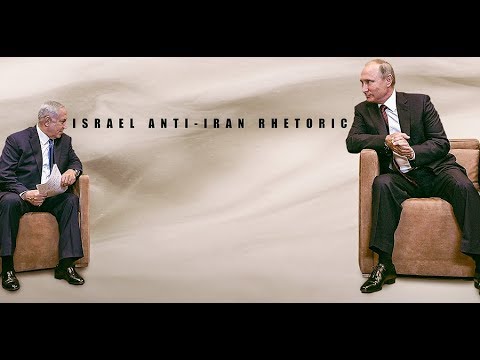
Prime Minister Benjamin Netanyahu has said that Israel felt threatened by Iran’s growing influence in the Middle East. Netanyahu expressed his Iranophobic view in a meeting with Russian President Vladimir Putin in Russia’s Black Sea resort of Sochi on Wednesday. Press TV has asked Scott Rickard, former American intelligence linguist from Tampa, Florida, and Brent Budowsky, a columnist at The Hill from Washington, to give their thoughts on the issue.
Rickard said Tel Aviv is concerned about the fact that the regime could not carry out its old project to spread sectarian divisions and pave the way for dismemberment of the countries in the Middle East region because of the Iranian-led resistance against Israeli policies, not only in the occupied territories of Palestine but also in the whole region.
“Iran is not a threat to Israel whatsoever. The threat that Israel sees is the fact that their Oded Yinon Plan is being put to a hold by Iran,” the intelligence linguist said on Thursday night.
“They (the Israelis) look at Iran as a threat only because they have no influence on their governments and Iran is autonomous and is not under the Zionist influence,” he added.
Since the victory of the Islamic Republic of Iran in 1979, Tehran has been critical of Israel’s policies in the region, whereas “no leaders [of other states] even dared to speak out against Zionism,” Rickard argued. … continue
This site is provided as a research and reference tool. Although we make every reasonable effort to ensure that the information and data provided at this site are useful, accurate, and current, we cannot guarantee that the information and data provided here will be error-free. By using this site, you assume all responsibility for and risk arising from your use of and reliance upon the contents of this site.
This site and the information available through it do not, and are not intended to constitute legal advice. Should you require legal advice, you should consult your own attorney.
Nothing within this site or linked to by this site constitutes investment advice or medical advice.
Materials accessible from or added to this site by third parties, such as comments posted, are strictly the responsibility of the third party who added such materials or made them accessible and we neither endorse nor undertake to control, monitor, edit or assume responsibility for any such third-party material.
The posting of stories, commentaries, reports, documents and links (embedded or otherwise) on this site does not in any way, shape or form, implied or otherwise, necessarily express or suggest endorsement or support of any of such posted material or parts therein.
The word “alleged” is deemed to occur before the word “fraud.” Since the rule of law still applies. To peasants, at least.
Fair Use
This site contains copyrighted material the use of which has not always been specifically authorized by the copyright owner. We are making such material available in our efforts to advance understanding of environmental, political, human rights, economic, democracy, scientific, and social justice issues, etc. We believe this constitutes a ‘fair use’ of any such copyrighted material as provided for in section 107 of the US Copyright Law. In accordance with Title 17 U.S.C. Section 107, the material on this site is distributed without profit to those who have expressed a prior interest in receiving the included information for research and educational purposes. For more info go to: http://www.law.cornell.edu/uscode/17/107.shtml. If you wish to use copyrighted material from this site for purposes of your own that go beyond ‘fair use’, you must obtain permission from the copyright owner.
DMCA Contact
This is information for anyone that wishes to challenge our “fair use” of copyrighted material.
If you are a legal copyright holder or a designated agent for such and you believe that content residing on or accessible through our website infringes a copyright and falls outside the boundaries of “Fair Use”, please send a notice of infringement by contacting atheonews@gmail.com.
We will respond and take necessary action immediately.
If notice is given of an alleged copyright violation we will act expeditiously to remove or disable access to the material(s) in question.
All 3rd party material posted on this website is copyright the respective owners / authors. Aletho News makes no claim of copyright on such material.
 Aletho News
 Aletho News