Syria and the Annan Plan: The Devil in the Details
By Nicolas Nassif | Al Akhbar | March 27, 2012
While the Syrian regime was pleased with last week’s UN Security Council Presidential Statement on Syria, the Syrian National Council (SNC) was not. It registered its objections, and saw it as providing another chance to President Bashar Assad. Damascus welcomed both the statement and the plan which the UN and Arab envoy to Syria, Kofi Annan, devised after gaining the approval of the international community.
Sources who got to meet high-ranking Syrian officials over the weekend sensed the extent to which the presidential statement was welcomed by Damascus. They also provided some insight into the level of cooperation between Damascus and Moscow on the substance of Annan’s initiative, and their commitment to making a success of it.
While the Syrian leadership supports the general principles of Annan’s plan, it has taken a cautious view of the mechanisms and measures which will need to be taken to implement it.
This stems from a conviction that the devil will lie in details if they are left vague, especially when the time comes for a ceasefire and political dialogue. Accordingly, while Annan completes his talks in Russia and China and prepares to begin implementing his plan, Damascus’ approach will be based on a number of considerations:
1. The initiative must be implemented through the “Syrian state” at all stages: starting with the proposed ceasefire and restoration of calm, extending to the delivery of humanitarian aid, and culminating in a national political dialogue. None of this will occur unless the process for implementing this initiative is approved by the regime and conforms with what it is describes as the “principles of sovereignty.”
Damascus’ position is that it is waiting to see how this initiative will be implemented, while affirming its endorsement of the plan. But the regime insists that any political dialogue about the future of Syria – the end-goal of the initiative – must be held under the auspices of the “Syrian state.”
2. Damascus is greatly satisfied and encouraged by the fact that the presidential statement did not reiterate the demand that the Arab League, France, the US, and Turkey had been insisting on. Namely, that the Syrian president step down and immediately transfer power so a political settlement can be concluded in isolation from him. The regime sees this tacit re-acknowledgement of its authority as a chance to open up dialogue again.
The high-ranking officials insisted to their visitors, however, that Syrian leaders had at no stage been fixated on or alarmed by this demand. They were never under any illusion that, in current international conditions, it was within the capacity of any party, domestic or foreign, to force Assad to step down.
This applies equally to the Syrian opposition, to the many declarations made by US Secretary of State Hillary Clinton and her French counterpart Alain Juppe, the Arab League in its second initiative on January 2, and Qatari, Saudi, and Turkish leaders. Damascus never commented on any of their statements. It declined to get into an argument with them about whether Assad should leave office.
The view put forward by Damascus in defense of its position is that the new Syrian constitution furnishes a mechanism for the transfer or rotation of power. But decapitating the regime – the argument Moscow has also been stressing – would be a recipe for chaos. As the regime sees it, the president stands for the integrity and cohesion of the army and the unity of the country. This position was matched by the similar stand taken by Russia and China against any external foreign military intervention to compel Assad to step down or depose him by force. Also this is why they opposed arming the opposition.
As a result, the international picture has changed significantly since the two countries blocked the attempt to issue a Security Council resolution on Syria on February 4. The threat to force Assad out has been practically dropped – though Arab and Western states may still speak of not just the president’s days, but the regime’s, being numbered – and everybody has opted for a political settlement to be brought about under him.
This approach was reinforced at Russian Foreign Minister Sergei Lavrov’s March 10 meeting with the committee of Arab foreign ministers dealing with Syria. It was confirmed in the appointment of Annan as envoy, and again in the proposals he has put forward, and the Security Council’s endorsement of it last Wednesday.
3. Damascus believes that the real gain it made from the presidential statement was the UN’s acknowledgement that there are two sides to the violence in the Syrian crisis.
This dispensed with the pretext with which the Arabs and the West had armed themselves until Lavrov’s visit to Cairo – namely, that the violence was one-sided, indiscriminate, and practised exclusively by the regime. The existence of armed anti-regime groups was either denied outright, or justified as self-defense.
But the presidential statement, by calling for a ceasefire and end to fighting, conceded that there is another party engaged in violence, and that an armed confrontation is underway. While it did not identify that other party – composed of a combination of Salafis, Muslim Brothers, and deserters – it recognized its existence. This reinforced the regime’s rationale for using decisive military force to try to eliminate members of the armed opposition in Homs, Idlib, and Deir al-Zour, so as to pre-empt any attempt to create buffer zones or similar enclaves in border areas.
Damascus is indebted to Russia and China for supporting its viewpoint and steering the Security Council in the opposite direction to which the Arab League had intended. It had insisted, without hesitation, that the violence was from one side only. The Arab League ignored the report by the chief of its own observer mission, General Mohammed Ahmed Mustafa al-Dabi, and transferred the Syria dossier to the Security Council.
But once there, it did not take long for Moscow’s view to converge with Washington’s over the issue of arming the Syrian opposition. The Americans are wary of Al-Qaeda infiltration of Syrian rebel groups, and fear their weapons could end up reaching the terrorist organization.
4. Damascus believes Annan fully understands the many difficulties involved in his task of bringing about a political settlement. Two sets of these stand out in particular: those connected to convening the proposed national dialogue, and those related to halting the violence on the streets.
Defining the party that will sit opposite the regime at the national dialogue table will be an early obstacle. It is not just that the political opposition, both at home and in exile, is deeply divided. So is the armed component of the opposition, which includes Salafi organizations, the Free Syrian Army (FSA), and the Muslim Brotherhood. The latter are part of the SNC, which has set up its own military bureau and is at odds with the FSA. That in turn is divided between followers of Colonel Riyadh al-Asaad and Brigadier Mustafa Ahmad al-Sheikh.
The political dialogue cannot include the non-SNC armed opposition when it has not yet said who speaks for it. Annan does not know who to talk to in this regard, at least not yet. In the meantime, the political dialogue stands to be between a known actor, the regime, and an undetermined interlocutor, half of which is clandestine, and the other half of which is at odds with itself.
A second obstacle lies in the measures to be taken on the ground to bring about an end to fighting, the withdrawal of gunmen and the army, and the delivery of humanitarian aid to residents of affected areas. Syrian leaders see potential problems in the plans that Annan and his aides devised for arranging these measures and deploying international observers to monitor them.
The Syrian authorities are not simply waiting to see what Annan comes up with in this regard. They have been stressing an issue of extreme sensitivity, which the Syrian leadership considers an absolute necessity for the restoration of normal life to the country: there must be no consolidation of dividing lines between army- and rebel-controlled areas, either in towns or the countryside. Also they have stressed that there must be no deployment of international observers on such lines, which would effectively enforce a fait accompli ahead of political talks.
Damascus has informed all concerned parties that it will not agree to measures which recreate the kind of “confrontation lines” that were established during the Lebanese Civil War, which entrenched the positions of the opposing parties and fuelled the conflict.
It has stressed that a ceasefire must not entail the drawing of such lines inside Syria. Rather, it should result in the disappearance of gunmen and their weapons from the streets, an end to all illegal armed activity, and the reconnection of different parts of the country with each other. Only that would justify ordering the army back to barracks.
Similarly, the task of international observers must not be to monitor a ceasefire, police ceasefire lines, or separate two warring parties, but to monitor the restoration of normalcy in the country. Damascus sees this is as a key point in the Annan initiative which all sides must respect.
Nicolas Nassif is a political analyst at Al-Akhbar.
Related articles
- UN – Arab League envoy hails Syria’s plan acceptance (alethonews.wordpress.com)
- Syrian govt accepts Annan’s 6-point peace plan (rt.com)
UN – Arab League envoy hails Syria’s plan acceptance
Press TV – March 27, 2012
UN-Arab League envoy Kofi Annan has praised the Syrian government for accepting his six-point plan to end the unrest in the country.
“I indicated that I had received a response from the Syrian government and will be making it public today, which is positive, and we hope to work with them to translate it into action,” Annan told reporters after meeting Chinese Premier Wen Jiabao.
In a Tuesday statement, Annan’s spokesman Ahmad Fawzi confirmed that Damascus has written to the Joint Special Envoy Kofi Annan accepting his six-point plan, endorsed by the United Nations Security Council.
Fawzi added that Annan views this as an important initial step that could create an environment conducive to a political dialogue that would fulfill the legitimate aspirations of the Syrian people.
Annan’s proposal includes a ceasefire, access for humanitarian aid agencies as well as political dialog between Damascus and the opposition.
Earlier, the Chinese premier expressed his support for Annan’s efforts for a peaceful end to the crisis.
Meanwhile, Russian President Dmitry Medvedev has said Western calls on President Bashar al-Assad to step down are short-sighted, adding that Assad’s departure will not end the conflict in Syria.
Syria has been experiencing unrest since mid-March 2011.
Related articles
- Syrian govt accepts Annan’s 6-point peace plan (rt.com)
- Syria’s future ‘matter for Syrians’ – Annan (laaska.wordpress.com)
Turkey Should Have Thought Twice on Syria
By Michel Sailhan | France Press | March 23, 2012
Turkey may have acted too fast when it took its tough stance against Damascus, expecting a rapid fall for the regime, some observers have argued ahead of a “Friends of Syria” conference in Istanbul.
Now, a number of commentators in Turkey are suggesting it might be time to think again.
“Turkey had better revise its policy toward its southern neighbor, ahead of the second gathering of the Friends of Syria group on April 1 in Istanbul, by placing diplomatic efforts in front of all other options,” wrote Serkan Demirtas in the Hurriyet Daily News.
Those other options circulating in Ankara, as well as Western and Arab capitals, run from humanitarian corridors, to a buffer zone in Syria to accommodate refugees, or even direct assistance to rebels.
Many rebel leaders, including ex-general Riad al-Asaad, are already in Turkey.
Turkish Prime Minister Recep Tayyip Erdogan raised the stakes sharply on March 6 when he called on Damascus to allow for the “immediate” opening of humanitarian corridors.
While his words matched international calls from western powers, the demand lacked substance. It was not clear if Turkey would gear up for the task, given its 910-kilometre (560-mile) common border.
The creation of a buffer zone is another issue that Ankara has not been clear on, since it implies sending troops to secure the area. But it is still on the agenda as Turkey already houses 17,000 Syrians, and its Red Crescent organization says it is preparing for half a million.
“We are determined to consider every possible measure,” Foreign Minister Ahmet Davutoglu said Monday, adding that the move would aim at ending the suffering of Syrians, but also at securing the border.
Critics however say the buffer zone would be an “interventionist policy” that could prove Ankara too reckless, and too adventurous.
Forming a buffer zone, Demirtas wrote, “would not only break the image Turkey has built in the region, but is also inconsistent with its general foreign policy principles, the main pillar of which is peace.”
“Without a UN resolution to back it up, a buffer zone would be a daring initiative for Ankara,” added analyst Sinan Ulgen from the Istanbul-based Centre for Economics and Foreign Policy Studies.
As for the rebels, Ankara is silent about plans to arm or train them for counter-attacks on Syria’s security forces. The regime in Damascus has already denounced “incursions” into its territory from refugee camps in Turkey.
On Wednesday, AFP journalists witnessed smugglers carry a cargo of shotguns and buckshot into Syria, but the load contained no major weapons of war.
Erdogan embraced the Syrian political opposition after having failed to get President Bashar al-Assad to introduce reforms.
“The day will come when you will also have to go,” he told Assad in late November. But according to columnist Semih Idiz, the Syrian president has “outfoxed Ankara.”
“(Ankara’s) expectation was that the uprising in that country would not drag on for long and that Bashar al-Assad would be toppled relatively quickly — the way it happened in Tunisia, Egypt and Libya– with Turkey emerging as a key mentor for the new Syria,” he wrote.
Along with the threat of a massive influx of refugees, mostly Sunnis, Ankara has also had to contend with dissent at home over its policy on the crisis, Idiz added. Its large Alevi population, close to Syria’s dominant but minority Alawites, are “not all that pleased about Turkey’s stance on Syria.”
The Syrian regime looks to remain in place “for much longer than Ankara expected or is prepared for,” he concluded. That possibility has also prompted the main opposition Republic People’s Party (CHP) to attack Ankara’s decision to cut ties with the Damascus regime.
“For now, the Syrian regime is not ready to leave or be overthrown,” Faruk Logoglu, a CHP lawmaker, told AFP. “Ankara should have kept channels of dialogue and communication open with Damascus.”
Western and Arab countries will join Syrian opposition groups at the April 1 meeting in Istanbul.
But Turkey is not the only nation struggling with its approach to Damascus.
“Does the Western alliance have a plan for Syria? Does the Syrian opposition offer a credible image?,” asked another columnist from the Milliyet daily, Kadri Gurselhe.
Press TV chief in Syria denies alleged e-mail correspondence with Assad
Press TV – March 16, 2012
The head of Iran’s international news channels’ offices in Syria has rejected allegations by some Western media that he has sent e-mails to Syrian President Bashar al-Assad, Press TV reports.
Accusing Western media of fabricating news, Hussein Mortada, who runs local offices of Press TV and al-Alam news channels in the Syrian capital, Damascus, said the Western media claims about his e-mails to Assad were false.
He also emphasized that recent CNN claims about Mortada failing to respond to its contacts about the authenticity of e-mails attributed to him were baseless as he has never been contacted by CNN.
Mortada stressed if contacted by CNN, he would be willing to respond to any question about the e-mails.
He stated that Western news channels were trying to falsify facts and fabricate news in order to embroil Iran and the Lebanese Hezbollah in Syria’s events.
Mortada also rejected rumors that he is a businessman, saying, “I am only a journalist and head of Press TV and al-Alam news channels offices in Damascus.”
He said his job is to convey the true image of what is happening on the ground in Syria, adding that he has already visited important areas such as al-Zabadani, Jisr al-Shughour, Dara, Baba Amr and other critical areas in Syria.
On Wednesday, some British and American media outlets reported that a trove of e-mails belonging to the Syrian President Assad and his family has been obtained.
They claimed that the e-mails included those sent by Mortada to one of Assad’s aides in which he allegedly gave Damascus advice on how to quell the ongoing unrest in Syria.
Marching Toward Syria with Eyes Cast Towards Iran
By Ben Schreiner | Dissident Voice | March 7th, 2012
While all the incessant warmongering directed toward Iran at the annual AIPAC policy conference in Washington was grabbing the headlines, the momentum for Western intervention into Syria continued to steadily build. All those neo-con “real men,” it appears, just might prefer to go to Tehran via Damascus.
Taking to the Senate floor on Monday, Arizona Senator John McCain, one of the first supporters of arming the Free Syrian Army, upped the ante by calling for a U.S.-led air campaign against Syrian military targets. McCain deemed such an escalation necessary to establish “humanitarian corridors.”
“The United States should lead an international effort to protect key population centers in Syria, especially in the north, through airstrikes on Assad’s forces,” the intervention-hungry McCain declared.
And as the Washington Post reported in late February, Obama administration officials have made it clear that “additional measures” might still be considered in order to oust Assad. That favored refrain of all options being on the table appears to be in effect in regards to Syria.
Indeed, for according to CNN, the Pentagon has already composed “detailed plans” for military action inside Syria. As the network reported, the Pentagon has especially focused on securing Syrian chemical weapons sites, with one scenario in particular calling “for tens of thousands of troops to potentially be used for guarding the installations.”
Although, according to a December email recently published by Wikileaks from the U.S. global intelligence firm Stratfor (known as a private C.I.A.), special operations forces from the U.S., U.K., France, Jordan, and Turkey are already on the ground in Syria. And as the email states, these forces are actively “training the Free Syrian Army.” Additional measures indeed!
Not wanting to be left behind in any march on Syria, the U.S. corporate media has largely begun to join the ranks of the recently ascendant intervention hawks.
In an editorial on Friday, the New York Times, although ruling out military force, called for providing greater tactical assistance to the Free Syrian Army. As the paper wrote: “The United States and its allies should consider providing the rebels with communications equipment, intelligence and nonlethal training.” Of course, a mission providing such tactical support would ultimately transform into more explicit military involvement.
Meanwhile, the Washington Post also editorialized on Friday for a more credible threat of force against Assad. As the paper wrote:
The Obama administration’s public arguments against the use of force in Syria are simply encouraging a rogue regime to believe it can act with impunity. Until he is faced with a credible threat of force, from the opposition or outsider powers, Mr. Assad’s slaughter will go on.
The Christian Science Monitor has likewise called for the U.S. to help “forcefully” end Assad’s rule.
Of course, the driving force behind such intense Western interest in Syria is Iran. Let there be no doubt, the ouster of Assad is not driven by some great humanitarian impulse, or “responsibility to protect.” Nor does the bloodletting and slaughter inside the country disturb U.S. elites. After all, the U.S. had no qualms with laying siege to Fallujah. Rather, all the contrived moralizing is being utilized in an attempt to garner support for imposing Syrian “regime change,” which would deal a strategic defeat to Tehran. It’s all nothing more than realpolitik. The Syrian people and their revolution are being cynically recruited as means to imperial ends, and thus would be wise to resist all foreign intervention.
For instance, when the Atlantic’s Jeffery Goldberg stated in a recent interview with President Obama, “But it would seem to me that one way to weaken and further isolate Iran is to remove or help remove Iran’s only Arab ally,” the president responded, “Absolutely.”
Similarly, former Mossad chief Efraim Halevy has argued, “The current standoff in Syria presents a rare chance to rid the world of the Iranian menace to international security and well-being.”
It’s target Iran, albeit on a Syrian battlefield. Therefore, that anti-Iran propaganda machine that is the U.S. media revs up.
Writing in the Washington Post, stenographers Joby Warrick and Liz Sly reported over the weekend that:
U.S. officials say they see Iran’s hand in the increasingly brutal crackdown on opposition strongholds in Syria, including evidence of Iranian military and intelligence support for government troops accused of mass executions and other atrocities in the past week.
The Post’s report was, of course, based solely on three anonymous U.S. officials. And as Warrick and Sly even admit in their piece, “such accounts are generally difficult to verify independently.” Thus they don’t.
On Monday, though, a similar piece of propaganda appeared at CNN. Penned by CNN Pentagon correspondent Barbara Starr, it also reports of Iranian infiltration into Syria, although Starr only relies on two anonymous U.S. officials. What hay a seasoned propagandist can make with such limited sources!
Yet amidst this mounting drive for Western intervention into Syria, President Obama spoke on Tuesday in an apparent attempt to tamp down all such notions, going so far as to call military intervention a “mistake.” As the president went on to state, “the notion that the way to solve every one of these problems is to deploy our military, that hasn’t been true in the past and it won’t be true now.”
Such reassurances aside, actions do, as the president himself implored in his AIPAC speech over the weekend, speak louder than words. And so while the president publicly posits that military intervention would be a mistake, his military readies for intervention into Syria, while continuing its larger ongoing build-up in the region.
The march towards Syria with eyes cast towards Iran continues on. For as Albeit Einstein once remarked, “You cannot simultaneously prevent and prepare for war.”
Ben Schreiner is a freelance writer living in Salem, Oregon. He may be reached at: bnschreiner@gmail.com.
Related articles
- Israel’s No.1 asset in the Senate calls for airstrikes against Syria (alethonews.wordpress.com)
The Syrian Mirage
From the Alawite Fantasy to the Surrealism of the UN
By PIERRE PICCININ | March 06, 2012
More than a year after civil unrest broke out and plunged part of Syria into the chaos of the ‘Arab Spring’, the Baath government remains firmly in control and the majority of the country is calm; almost untouched by an opposition which is scattered and confined to the cities of Homs and Hama, as well as a few towns on the Turkish and Lebanese border. The main reported cases of unrest are linked to regular attacks from Salafist bands which are of an extremely violent nature and more importantly, the Free Syrian Army. The latter counts amid its ranks numerous Qataris and Libyans, all whom have been trained in the art of urban guerilla warfare by the French army in refugee camps, which provide perfect bases from which to operate and orchestrate attacks.
How can one explain the resilience of this regime? A regime which is more or less in complete control despite facing what is usually described as a “revolutionary populist uprising”? One which is determined to overthrow the “Alawite dictatorship” from the political and economic realms of Syrian society, the so-called privilege of the Alawi, a community which accounts for no more than about 10% of the population?
Perhaps it is because the reality does not correspond to this over simplified equation.
Indeed, the communitarian and religious Syrian patchwork is far from closing ranks on the Alawi population. Moreover, this group, do not in fact monopolize the political landscape.
Therefore, even back in the 1980s, when Hafez Al-Assad, father of the incumbent president, Bashir, and author of the “Alawi coup d’état”, succumbed to serious health issues, he had designed a directorate of six members to run the Syrian government – All six were Sunnis.
Furthermore, all the prime ministers who have served in Bashir Al-Assad’s government have been Sunnis. Similarly key positions including the Ministers of Defence, Finance and Oil and the heads of the numerous police corps and the secret service do not depend on the Alawi community. The Druze, Christian, Shiite and Kurd minorities also benefit from governmental representation.
This would explain why the opposition is a fractious minority whose support base lies outside Syria’s borders rather than at the heart of the population.
In these circumstances it is understandable that Russia (and China), treading carefully in order to preserve her last card in the Middle East, resolutely opposes the pressure to sign up to the latest United Nations Security Council resolution. This would undoubtedly lead Syria into a scenario similar to Libya, where tens of thousands of civilians would perish as during the destruction of Sirte (and Russia has asked for there to be a UN commission to investigate these Atlantic war crimes).
The most striking element in this whole situation is that the UN has neither the right nor the objective, to decide the nature of a sovereign government, less still the identity of its head of state; meaning that the text proposed to the Security Council by the Arab league, calling for the departure of President Bashir Al-Assad, a text supported by Qatar with substantial French backing, is directly opposed to the basic principles of international law and completely surreal.
Furthermore, if the Baath regime is dictatorial and brutal, so are numerous factions of the opposition: an opposition which is seriously divided and made up of groups with conflicting objectives, none of which necessarily represent the Syrian population; for on the one hand there are the radical Islamic factions, who massacre their opponents and commit atrocities against the military (kidnappings, mutilations, decapitations…) but also civilians who refuse to support their objectives. This is why Russia has demanded that any UN resolution must be applied not only to the government forces but to all factions resorting to violence, including those supported by foreign states, specifically France and Qatar.
It would therefore seem that from an Alawite fantasy to the surrealism of the United Nations, Syria as depicted by the mass media certainly bears very little resemblance to the reality of the actual situation.
Pierre Piccinin is a professor of political science at the Ecole Européen de Bruxelles I.
Related articles
- Israel’s No.1 asset in the Senate calls for airstrikes against Syria (alethonews.wordpress.com)
Homs in the hell of armed groups
By Silvia Cattori | February 29, 2012
Homs, now, is nothing but a sinister battlefield where government soldiers face armed groups which, according to independent witnesses about the true nature of the rebellion, are blindly firing cannon shots to sow terror and death, then pretending that only government forces are bombarding the city.
The Western media, for its part, continues to adduce as evidence the statements of local committees which spread propaganda of the armed “opponents”, in coordination with the Syrian Observatory of Human Rights, a London-based body created and funded by the rebellion-allied forces The Syrian Observatory of Human Rights — which collects the statements of various local committees in Syria — has been repeatedly denounced as nothing but a vulgar instrument of disinformation in the service of the revolt. Despite ample evidence of that, it remains the principal source of information from Syria – together with the famous “great reporters” — and the entire Western media are referring to it, spreading day after day the reports by this observatory.1
To understand what happens in Syria, it is therefore not possible to rely on the Syrian Observatory or on bloggers who are part of this rebellion. We also cannot rely on foreign correspondents who are, as we can see, systematically and from the heart and soul on the side of the armed “opponents”, qualifying them as “heroes” and presenting the battle that divides the Syrian people in an entirely Manichaean way: On one side the opposition which “struggles for democracy”, and on the other the terrible dictator.
Things are not like that. As demonstrated by a recent poll, as well as by the massive demonstrations in support of the Russian and Chinese veto at the UN, the vast majority of the Syrian people do not want this armed revolt, which seeks solely to legitimize NATO powers and several Arab states — notoriously known as champions of democracy, such as Qatar.
If you want to speak of “heroes” in Syria, then you should refer to all parties who are suffering, not only to the “heroes” recognized by the West …
How many Milan missiles were handed over to the rebels?
The number of Syrian citizens appealing to to their president for intervention of government forces is very high. This is especially true in Homs, where the situation is alarming because large sections of the population are held hostage by these groups occupying entire areas of the city — the neighborhoods of Baba Amr, Khaldiyeh, Karm el-Zeytoun — where the people have been calling for months for Damascus to rescue them.2
Their fate has become even more a source of anxiety since the same Milan anti-tank missile launchers delivered to the Libyan rebels during the Libyan campaign, less than a year ago, by France and Qatar, began to be used. We can remember how at the time Sarkozy and Bernard Henry Levy misled public opinion by putting the blame on forces loyal to Gaddafi for the use of these Milan missiles, which were taking a heavy toll on the people.
This is the same disturbing scenario repeating itself in Syria. Politicians, journalists and NGOs are once again taking a firm stand concerning the war, provoked by groups exploited by foreign powers. They attribute to the government forces, as was done in Libya and without proper inspection, the acts of barbarism perpetrated by the armed ‘opponents’ who are terrorizing the majority of the population.
For three weeks correspondents have been repeating that Homs has been unilaterally shelled by the Syrian army. On the contrary, the loyalist contingents attacked by the Milan missiles have suffered heavy losses since the beginning of their intervention. It is not clear whether the authorities in Damascus will be able to dislodge these groups with heavy weaponry from all quarters of the city.
Could the Syrian government not respond?
From the beginning of these battles it has been repeatedly demonstrated that the armed ‘rebels’ are trained, drilled and formed by foreign special forces and that among their ranks the opponents have elements acting on behalf of foreign powers whose presence in Syria is self-evident. Syrian television has recently disseminated pictures of Homs taken by a foreign “war photographer” who followed and filmed these armed “opponents” — the same ones glorified by the “great reporters” — who wildly launch rockets and missiles. An image has attracted attention: In a building, whose stairs are dirty with blood and destroyed furniture, a surprising graffiti with heavy meaning stood out on a wall: “From Misurata, after we have freed Lybia, we came to free Syria!”
Who is responsible for the massacres of Homs, and which objectives does he pursue?
These armed groups, whose most violent actions are attributed to Al Assad soldiers facing them, are systematically presented by the Western press as “foes” fighting for “democracy.”
Why do “great reporters” not bring evidence of Syrian victims of abductions, tortures and murders by these armed “opponents”?
Why has the President of Doctors without Borders recently contributed to this process of intoxication, showing as credible the testimonies of anonymous Syrians with covered faces — standing side by side with the rebels, and attributing to Al-Assad forces and to the hospitals’ doctors unspeakable acts of torture and injury of children?3
Who would believe in Bashar Al Assad’s interest in torturing his people, in raping children and girls? Who would believe that the majority of the Syrian people would continue supporting Bashar Al Assad if he was really such a bloody torturer as painted in the West for the purpose of war propaganda?
These incessant campaigns which defend the violent opposition, and not the people terrorized and oppressed by these rebels, are dangerous. They aim to bring grist to the foreign power’s mill — France, Great Britain, the United States, backed by Qatar and Saudi Arabia — which have been preparing for months the ground for a military intervention in Syria, and are just waiting for the green light by Obama.
Notes
[1] The Syrian Observatory of Human Rights – which collects the statements of various local committees in Syria – has been repeatedly denounced as nothing but a vulgar instrument of disinformation in the service of the revolt. Despite ample evidence of that, it remains the principal source of information from Syria – together with the famous “great reporters” – and the entire Western media are referring to it, spreading day after day the reports by this rip-of observatory.
[2] See: “Une Syrienne, dont le frère a été tué à Homs par des “opposants”, témoigne” (“A Syrian who had killed his brother in Homs by ’opponents’ witnesses”), story picked up by Nadia Khost, February 8, 2012.
(http://www.silviacattori.net/article2790.html)
[3] The role of NGOs that have contributed to the misinformation affecting Syria and thus increasing the risk of foreign intervention, and in particular Amnesty International and Medecins Sans Frontières will be the subject of further investigations.
~
Original article in French (23.02.2012):
http://www.silviacattori.net/article2861.html
Illegitimate GCC monarchs oppose democratic reforms in Syria
Press TV – February 27, 2012
Syria has made its first major democratic reform by holding a national referendum to decide on a new constitution and electoral process in the country.
Press TV has interviewed Mr. Wadah Al-Khatib, a political analyst in Damascus about the national significance and international consequence of Monday’s public referendum in Syria that would enable the formation of a democratic parliament. What follows is an approximate transcription of the interview.
Press TV: As the Syrian people are trying to bring about changes in the country, in your perspective why are outside entities continuing to interfere in this process?
Al-Khatib: First all, outside entities have no business interfering in a referendum on a constitution in any country. I think it’s just a sample of the type of strong interventionist policies that the US has been carrying out for a good part of the 20th century and the beginning of this century.
Outside parties that are against the referendum on a new constitution have been defined by your report – we’re talking about the Persian Gulf monarchies most of which have no constitutions and the whole process of voting does not exist and countries that have historically not been very good friends of the Syrian people or of the other Arabs.
And the US, for example, not approving or not accepting the concept of a referendum on a constitution, that contradicts its very foundations on which the US was created.
I think it’s more about what they don’t want to see in Syria, which is a move towards a political process that involves various spectrums of opinion of the Syrian society. I think they do not want to see this under the current leadership and this is why they’re not happy.
Press TV: Let’s look at US officials from the president down, they have openly said that they will use all means available to bring down Syrian President Bashar al-Assad. What do you think that means? Do you think that includes bombings, assassinations, creating chaos – what do you get from that phrase, ‘all means available’?
Al-Khatib: It could mean, in a different time, military intervention. We’re talking in 2012 in a rather difficult election year for President Obama. It will be interesting to see how the US would try to intervene or the possible ways during the ensuing months. In a couple of months Mr. Obama will be very busy just trying to keep himself in office.
The US has been intervening in this crisis from the very beginning we think through the provision of funds and training in arms to various members and various armed groups that have been working and functioning in Syria and I think in the very near future we’re going to see evidence of that.
I think at this point what we’re hearing from the US is nothing but political posturing in an election year. The conference we saw in Tunis a couple of days ago was a perfect example – Secretary of State Hilary Clinton avoided any direct reference to military intervention during the conference, which made the Saudi foreign minister not very happy.
So, I think the Americans will be very loud in the next few months, but I seriously doubt that they will actually commit the mistake at this point of being militarily on the ground or even trying a bombing campaign.
Press TV: Let’s look at the concept of people putting Syria first – Let’s look at the violence that we have seen inside of the country and probably the question for many would be; a legitimate opposition, would they be involved in also the type of violence that we have seen?
We know that at least 2,000 security personnel are among the dead and it would seem that a nationalist of any country that they really would not benefit from this type of chaos. What is your take in general on that so-called opposition during this?
Al-Khatib: I think a legitimate opposition would seek a transfer of power through the ballot box. The fact that there are certain people who claim to be a so-called national opposition have been trying through violent means to change the government and to smother the country really discredits their claim for a more democratic say that they’re trying to create.
I think there are people in Syria who are opposed to the government and who seek in peaceful ways to express their opposition and this is the only legitimate opposition that anyone can think of.
People who carry guns and kill those who disagree with them are hardly entitled to speak about democracy and to seek a change of government and unfortunately we have seen a lot of this in Syria in the last 11 months. But I have to say that in the last couple of weeks the security situation has improved dramatically up to the referendum held today.
Related articles
- Syrians head to polls in referendum on new constitution (alethonews.wordpress.com)
- ‘Some Arab states against political solution to Syria unrest’ (alethonews.wordpress.com)
- China: US has no moral right to ‘protect’ Arabs (rt.com)
Progressives Embrace Humanitarian Imperialism – Again!
DemocracyNow! Hosts a Non-debate on Syria
By John V. Walsh | Dissident Voice | February 25th, 2012
“Foreign Intervention in Syria? A Debate with Joshua Landis and Karam Nachar” promised the headline on DemocracyNow! on 22 February. Eagerly I tuned in, hoping to hear a thorough exposé of the machinations of the US Empire in Syria on its march to Iran.
But this was neither exposé nor debate. Both sides, Landis and Nachar, were pro-intervention for “humanitarian” reasons. Nor did the host Amy Goodman or her co-host take these worthies to task for their retrograde views on imperial military action against a sovereign nation that had made no attack on the US. It was yet one more sign that the “progressive” movement in the West has largely abandoned its antiwar, anti-intervention stance.
The segment began with a clip of John McCain advocating yet another war, for the good of the Syrians of course, bombing them to save them. The first guest was Joshua Landis, a prof in Oklahoma whose bio tells us that he “regularly travels to Washington DC to consult with the State Department and other government agencies.” The other agencies are not specified, but he speaks at the Council on Foreign Relations and similar venues. Professor Landis represents the anti-intervention voice in the universe of Amy Goodman, but his opening words manifested the limits of that universe: “Well, I’m not opposed to helping the (Syrian) opposition.” He continued, “The problem right now, the dangers right now with arming the opposition, is that we’re not sure who to arm.”
Confused, I thought surely the next guest would be the anti-interventionist. He was Karam Nachar “cyber-activist” and Princeton Ph.D. candidate, working with Syrian “protesters” via “social media platforms.” That means he is safely ensconced in New Jersey far from where U.S. bombs would fall. Perhaps this fellow would say loud and clear the Syrians did not need the interference of the West, did not need sanctions to starve them nor bombs to pulverize their cities. Perhaps he would laud the Chinese-Russian proposal for both sides to stop firing and to negotiate a solution.
But he did not. He also was for intervention by the West. And he did not think the disorganization of the opposition, cited by Landis, justified hesitation or delay in arming that opposition. That and not any principled anti-interventionism distinguished the two sides in this “debate.” Said the cyber-activist: “Well, to start with, I disagree with Professor Landis’s portrayal of the situation with the Syrian opposition. It is true that, for instance, in the Syrian National Council, there are a lot of disagreements. But (the opposition is) still frustrated with the leadership of the Syrian National Council because of its inability to solicit more international support…. And I believe that the State Department, Secretary Clinton and the American administration is heading towards that. … It’s going to require a lot of money and a lot of courage and a lot of involvement on the part of the international community.” [Emphasis added]
And then the boy cyber-activist got nasty: “I am just a little wary that this overemphasis on how leaderless the Syrian opposition is actually a tactic being used of people who actually do not want the regime to be overthrown and who have always actually defended the legitimacy of the Syrian regime, and especially of Bashar al-Assad.” There it is. Even if one is for intervention in principle, no delay is to be countenanced. Such people are surely on the side of Bashar Al-Assad.
This is the kind of “debate” we get on “progressive” media outlets. It is not even a debate about whether there should be imperial intervention, once completely verboten on the Left, but when and under what circumstances military intervention should occur. This phony debate should simply be ignored whether it appears on DemocracyNow! or on NPR, increasingly indistinguishable in content and outlook or anywhere else. In fairness to Amy Goodman, just a few weeks back on February 7, she hosted the British writer and long time student of Syria, Patrick Seale. Said Seale: “I believe dialogue is the only way out of this. And indeed, the Russians have suggested to both sides to come to Moscow and start a dialogue. But the opposition says, ‘No, we can’t dialogue with Bashar al-Assad. He must be toppled first.’ Well, that’s a dangerous—a dangerous position to adopt.” That interview is well worth reading. And Goodman would do well to stick with that instead of shifting over to empty debates between interventionism now versus interventionism later. After repeatedly hosting the CIA consultant Juan Cole to cheer the cruel war on Libya, Goodman now seems to be going down the same path with Syria. It is a sad spectacle and one more indication of how little the “progressives” in the West understand the nature of Humanitarian Imperialism which uses human rights to sell war. It looks like it’s time to abandon Goodman and switch to Alyona.
John V. Walsh can be reached at john.endwar@gmail.com.
Related articles
- Syria Opposition Group Boycotts Tunis Meeting, Rejects Escalated Militarization (alethonews.wordpress.com)
New York Times-Style Journalism
Stephen Lendman | February 2, 2012
Like other major media scoundrels, New York Times writers, op-ed commentators and editorials fail the test. They’re biased, shameless and irresponsible, especially on issues of war and peace.
Times tradition dates from 1896 when Ochs-Sulzberger family members took control. Thereafter, it’s played the lead print role distorting, censoring, and suppressing truth and full disclosure.
Its shameful record includes:
- supporting wealth and power interests;
- backing corporate interests against popular ones mattering most;
- cheerleading imperial wars;
- ducking major issues like government and corporate crimes, sham elections, America’s duopoly power, an unprecedented wealth gap, and lost civil liberties and social benefits; and
- backing regime change in countries like Afghanistan, Iraq, Libya, Iran and Syria, mindless of international laws prohibiting it.
The record of the “newspaper of record” produces misinformation masquerading as real news, information and opinion. Its slogan “All The News That’s Fit to Print” fails on truth and full disclosure.
Its war against Iran is longstanding. Against Syria, it’s more recent. It promotes regime change in both countries. On January 31, Times writer Rick Gladstone attacked them in his article headlined, “As Syria Wobbles Under Pressure, Iran Feels the Weight of an Alliance,” saying:
Pro-Western anti-Assad insurgents increased “pressure on (him) to step down….” As a result, “his main Middle East supporter, also finds itself under siege, undermining a once-powerful partnership and longtime American foe.”
If Assad falls, “Tehran would lose its conduit for providing military, financial, and logistical support to Hezbollah in Lebanon and Hamas in Gaza.” Both Israeli opposition groups “considered terrorist organizations by Washington, have vast arsenals of rockets and other weapons.”
No evidence corroborates anti-Iran/Syria/Hezbollah/Hamas accusations. Ignored are sovereign country rights, international law, Lebanon’s legitimate Hezbollah-led government, and Hamas’ democratically elected Palestine one.
Neither espouses terrorism. Nor do Iran and Syria. In contrast, Washington and Israel pose grave terror threats. Both are nuclear armed and dangerous. They threaten preemptive strikes against invented threats. Neither has real ones.
Not according to Times-think. It stokes fear to promote conflict and regime change lawlessly.
Numerous articles and opinion pieces promote Washington’s imperial agenda. In 2011, Libya was target one. Before that Afghanistan and Iraq. Now it’s Iran and Syria.
On January 31, Times writer Neil MacFarquhar headlined, “At UN, Pressure Is on Russia for Refusal to Condemn Syria,” saying:
Both sides “skirmished over a draft Security Council resolution proposed by Morocco (serving Washington) that calls for (Assad) to leave power as the first step of a transition toward democracy.”
Ignored were international law issues. Among others, the 1933 Montevideo Convention explicitly prohibits interfering in the internal affairs of other countries. So does the UN Charter.
Nations doing so are criminally culpable. None are more guilty than Washington, Israel, and rogue NATO partners. In contrast, Iran and Syria threaten no one.
Yet MacFarquhar blamed Russia for blocking Security Council actions. In fact, Moscow’s resolute against Washington replicating its Libya model. Various language revisions left considerable wiggle room for war.
Russia’s determined to prevent it. Foreign Minister Sergei Lavrov said “Russia will not support anything that is imposed on Syria.” He firmly opposes anti-Assad resolutions. He called replicating “another Libya” disastrous. China’s view is similar. Both have Security Council veto power. Lavrov promised to use it.
He and others also assailed Syria’s externally generated insurgency. Qatar’s Prime Minister Sheik Hamad bin Jassim bin Jabr-al Thani spuriously blamed Assad’s “fail(ure) to make any serious effort to cooperate with us.”
The Arab League’s Syrian Observers Report contradicts al Thani. Mission head General Mohammed Ahmed Mustafa al-Dabi praised Assad’s cooperation. He also said:
“Regrettably, some observers thought that their visit to Syria was for pleasure. In some instances, experts who were nominated were not qualified for the job, did not have prior experience, and were not able to (fulfill their) responsibility.”
On January 18, Arab League Secretary-General General Nabil Elaraby suspended their mission. He said violence undermined it, dismissing the competence issue al-Dabi raised and reports about about Assad’s cooperation.
He also ignored a “confidential account of the League’s mission.” Turtle Bay obtained it. It shows monitors lacked proper staff and equipment. As a result, their mission was undermined from inception.
On January 30, Russia’s Deputy Foreign Minister Gennady Gatilov insisted that Security Council members are briefed on its findings. Washington and rogue allies dismissed them out of hand. They call Arab League efforts a failure, saying their report adds nothing new.
One conclusion recommends Arab governments continue mediating for peaceful conflict resolution. Al-Dabi wrote:
“The mission… sensed the acute stress, injustice and oppression endured (by) Syrian citizens. Yet they are convinced that the Syrian crisis must be resolved peacefully, in the Arab context, and not internationalized so that they can live in peace securely, and achieve the desired reforms and changes.”
He also sharply criticized the ineptness and indifference of mission observers. He recommended reinforcing them with 100 more members, “preferabl(y) young with military background(s), 30 armored vehicles, protective vests, vehicle mounted cameras, and night vision binoculars.”
In addition, he said: “It should be stressed (that) performance shortcomings will be addressed and remedied with further practice and guidance, God Willing.”
He stressed no mission mandate for addressing a widening conflict, pitting heavily armed insurgents against Assad’s government. In Homs and Daraa, for example, opposition elements used “thermal bombs and anti-armor missiles” supplied by foreign governments.
Al-Dabi said “The mission was witness to acts of violence against government forces and citizens leading to death and injury of many. A case in point was the attack against a civilian bus which killed eight persons and injured others, including women and children.”
Foreign insurgents were responsible. The Times and other Western media scoundrels quoted monitor Anwar Walek’s reason for quitting the team. He called the mission a “farce,” saying:
“What I saw was a humanitarian disaster. The regime is not just committing one war crime, but a series of crimes against its people. The snipers are everywhere shooting at civilians. People are being kidnapped. Prisoners are being tortured and none were released.”
In response, al-Dabi said “Malek did not leave the hotel for six days and did not go out with the rest of the team into the field giving the excuse that he was sick.”
In other words, he saw nothing and lied. Media scoundrels regurgitated it. It’s standard practice, supporting lawless US imperialism against nonbelligerent countries.
Washington and rogue partners accused Assad of manipulating the monitoring mission to gain time to crush armed insurgents. Al-Dabi disagreed, saying their mission’s vital to Syria’s stability, adding:
“Any termination of the work of the mission after this short term will undermine the positive results – even if incomplete – that have been achieved so far. This may result in complete chaos on the ground (if) parties are neither qualified nor ready for the political process which aims at resolving the Syrian crisis.”
He, Assad, and most Syrians want peaceful resolution. Washington, rogue allies, and major media scoundrels promote war and regime change.
Civilians, of course, always suffer most and have grievously since early 2011. Washington and complicit allies share blame.
Assad’s unfairly condemned for their crimes. Don’t expect NYT writers, op-ed commentaries and editorials to explain. Truth and full disclosure’s not their long suit.
Stephen Lendman lives in Chicago and can be reached at lendmanstephen@sbcglobal.net. Also visit his blog site.
Related articles
- Battle Over Possible UN Resolution on Syria Intensifies – New York Times (nytimes.com)
- Arab Observer Chief Satisfied: “Allegations against Syria Mission Untrue” (alethonews.wordpress.com)
- The Arab League Quits Just When It Is Most Needed in Syria (reason.com)
Featured Video
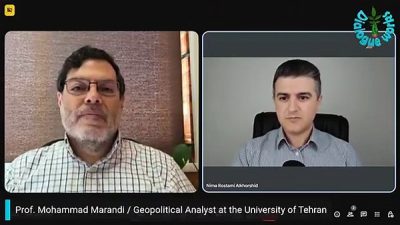
Seyed M. Marandi: U.S. Military DIVIDED? Iran’s Secret Defense EXPOSED
or go to
Aletho News Archives – Video-Images
From the Archives
‘Israel sees Iran as obstacle to its policies’
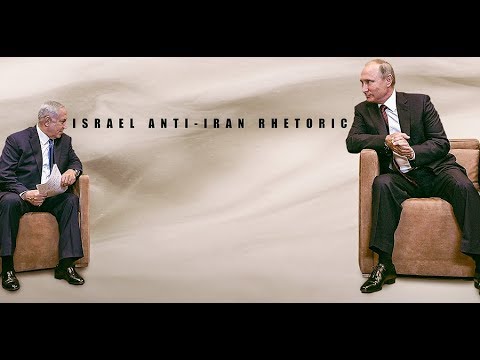
Press TV – August 25, 2017
Prime Minister Benjamin Netanyahu has said that Israel felt threatened by Iran’s growing influence in the Middle East. Netanyahu expressed his Iranophobic view in a meeting with Russian President Vladimir Putin in Russia’s Black Sea resort of Sochi on Wednesday. Press TV has asked Scott Rickard, former American intelligence linguist from Tampa, Florida, and Brent Budowsky, a columnist at The Hill from Washington, to give their thoughts on the issue.
Rickard said Tel Aviv is concerned about the fact that the regime could not carry out its old project to spread sectarian divisions and pave the way for dismemberment of the countries in the Middle East region because of the Iranian-led resistance against Israeli policies, not only in the occupied territories of Palestine but also in the whole region.
“Iran is not a threat to Israel whatsoever. The threat that Israel sees is the fact that their Oded Yinon Plan is being put to a hold by Iran,” the intelligence linguist said on Thursday night.
“They (the Israelis) look at Iran as a threat only because they have no influence on their governments and Iran is autonomous and is not under the Zionist influence,” he added.
Since the victory of the Islamic Republic of Iran in 1979, Tehran has been critical of Israel’s policies in the region, whereas “no leaders [of other states] even dared to speak out against Zionism,” Rickard argued. … continue
Blog Roll
 Aletho News
- Alberta Bill Would Fine Political Deepfakes $10,000 Without Satire Exemptions
- Iran declares ‘historic victory’ over US, says enemy forced to accept its proposal
- Trump Claims Ceasefire, Reopening of Strait of Hormuz Agreement with Iran
- Israeli tank fire killed UN peacekeeper in Lebanon, UNIFIL investigation finds
- Russia, China block Bahrain-sponsored UN resolution on Strait of Hormuz
- The US-Israeli War on Science is an Assault on our Future
- Trump’s Promise to Bomb Iran ‘Like Never Before’ Faces Brutal Logistics — Expert
- Germany seeks to restrict stays abroad for men of fighting age – Berliner Zeitung
- Evidence points to Ukraine being behind TurkStream attempted sabotage, but that should come as no surprise
- Sri Lanka secures supplies of Russia oil – minister
- If Americans Knew
- Thousands dead and neighborhoods razed to the ground: Aid agencies fear southern Lebanon is becoming the new Gaza
- The war the US is fighting for Israel could cost trillions
- ‘Cigarette Burns, Nail Wounds’: Toddler Tortured in Gaza to Coerce Father
- Trump Says US Sent ‘a Lot of Guns’ to Protesters in Iran
- Israeli forces destroy 17 UN peacekeeper cameras in south Lebanon
- US-Israeli strikes ‘completely destroy’ synagogue in Tehran
- Archbishop for US Military Says Iran War Is Unjust Under Catholic Teaching
- Iranian leaders’ Open Letters to the American People
- Trump says Iranians appreciate bombs, WHO warns of nuclear risks – Daily Update
- U.N. experts demand Israel release prominent Gaza doctor after reports of ‘severe torture’
- No Tricks Zone
- An Inconvenient Tree: Uncovered In Alps… Europe Much Warmer Than Today 6000 Years Ago
- New Study Reports A 60% Slowdown In Greenland’s Ice Loss Rate In The Last Decade
- Low Intensity Tornado Wrecks Major Solar Farm, Creating A Potential Toxic Dump
- New Study Finds Warming Saves Lives…Cold Temperatures 12 Times More Deadly Than Excess Heat
- German Science Blog Accuses PIK Climate Institute Of Hallucinating Climate Tipping Points
- Devastating Assessment Of Comirnaty Vaccine By Former Senior Pfizer Europe Toxicologist
- New Study: CO2 Is ‘Effectively Negligible’ As An Explanatory Climate Change Factor Since 2000
- Former Pfizer Toxicologist Dr. Helmut Sterz Tells Bundestag Hearing Pfizer Vaccine Should Have Never Been Approved
- Energy Expert: Germany’s Nuclear Phaseout Was A “500 Billion Euro Mistake”
- New Research: South Australia’s Mid-Holocene Sea Surface Temperatures Were 4°C Warmer Than Today
 Aletho News