Aletho News

ΑΛΗΘΩΣ

The BBC’s War on ‘Disinformation’ is Just Government Censorship by Another Name

BY SHIRAZ AKRAM | THE DAILY SCEPTIC | JUNE 15, 2023

In 2017 the BBC announced its intention to assemble a dedicated team “to fact check and debunk deliberately misleading and false stories masquerading as real news”.  News chief James Harding proclaimed that the Reality Check team would be “weighing in on the battle over lies, distortions and exaggerations”. Harding continued: “The BBC can’t edit the internet, but we won’t stand aside either.” Harding goes further to say the corporation had been inundated by news in 2016 because the world was “living in an age of instability”.

It appears that the BBC has not coped particularly well with this excess of news and the methods employed by the Reality Check team have not generated the desired outcome. According to data compiled by the Reuters Institute for the Study of Journalism, the BBC has experienced a decline in public trust from 75% to just 55%, with other mainstream TV broadcasters and print news suffering a similar decline over the same period, from 2018-2022. Further to this, the most recent global annual report published by the Edelman Trust Barometer placed the U.K. in 26th position, ahead of only South Korea and Japan in terms of public faith in media. The survey clearly tells us that the U.K. remains one of the countries with the lowest faith in media.

So what is driving this decline in trust? Is fake news to blame? Or, paradoxically, could the efforts of the BBC to counter such stories be exposing its own limitations? A typical example of how BBC Reality Check chooses to ‘weigh in’ is illustrated in this 2022 report, ‘Does video show Russian prisoners being shot?‘ The report is unable to provide sufficient evidence to ‘debunk’ the authenticity of the footage, which, the BBC states, “has been claimed to show Ukrainian soldiers shooting Russian prisoners of war”. Instead, it offers the reader a discourse, the content of which is clearly riddled with omission, selection and presentation bias. The report reads like a crude attempt to defend a narrative, rather than an objective attempt to elucidate a news story.

Consider this shocking statistic: only two of every 10 people in the U.K. feel that the news media is “independent from undue political or Government influence most of the time”. This ranks us 16th among the 24 nations surveyed, on a par with Romania.

I do not mention this to slight other nations, but to illustrate the point that our much vaunted media landscape is not the envy of the world as we are often led to believe.

Against this background, with such a prolonged and substantial decline in trust, what action is our national broadcaster taking to rebuild it? One might expect the BBC to reflect on its output, a period of introspection perhaps, an honest assessment of mistakes that have been made, a promise to learn from them and do better in the future. But no – the BBC has concluded that the problem is you: your inability to separate fact from fiction and your inability to appreciate the hard work that goes into getting the truth to your television.

So in order to help us, the BBC has a launched a new initiative, BBC Verify, “a new brand within our brand” aiming to “pull back the curtain on our journalists’ investigative work and introduce radical transparency”.

Deborah Turness, the Chief Executive of BBC News and Current Affairs, writes:

The exponential growth of manipulated and distorted video means that seeing is no longer believing. Consumers tell us they can no longer trust that the video in their news feeds is real. Which is why we at the BBC must urgently begin to show and share the work we do behind the scenes to check and verify information and video content before it appears on our platforms. All day, every day, the BBC’s news teams are using ever more sophisticated tools, techniques and technology to check and verify videos like the Kremlin drone footage, as well as images and information… but, until now, that work has largely gone on in the background, unseen by audiences.

The implication being presented here is that the BBC’s output is not at fault, but it is our perception of its output that is defective and BBC Verify is designed to correct our misconceptions. It is with circular, or perhaps spurious, reasoning that the BBC chooses not to report on its own decline in trust and then circumvents any discussion of this fact by creating a unit to verify the trustworthiness of content available on other platforms.

Turness kindly provides us with a link to “give people a taste of what Verify will be doing, day in, day out”. The video, presented by BBC Verify editor Ros Atkins, analyses footage of the apparent attack on the Kremlin and one can assume that this is the best current example of the BBC’s forensic capabilities. I would urge readers to view this report and, like the roof of the Kremlin, prepare not to be blown away!

We are informed that BBC Verify will foster the investigative skills and open source intelligence capabilities of around 60 journalists and experts including the specialist ‘disinformation correspondent’ Marianna Spring.

Marianna helps us in the fight for identifying the perpetrators of misinformation online by listing the “seven types of people who start and spread falsehoods”.

Interestingly, Marianna lists politicians, jokers, scammers, conspiracy theorists, insiders, celebrities and even your relatives as people to be wary of, but fails to acknowledge the role of journalists in the dissemination of ‘fake news’. This is despite contemporary research informing us that British people have among the lowest level of trust in journalists, with only 37% of those surveyed saying that they trusted them, versus a global average of 47%. The report states: “That might indicate that developed countries either have people who are more prone to trusting conspiracy theories or they are experienced enough to know when journalists might be lying.”

The BBC offers no evidence that the former theory rather than the latter is more probable, but it is nonetheless working hard to push the former. A demonstration of this push is apparent in the publicity material for Marianna Spring’s podcast series Marianna in Conspiracyland.

The press release for episode six (airs June 19th Radio 4) states: “Marianna is uniquely equipped to navigate Conspiracyland, having found herself on the frontlines of the battle of online disinformation and hate since those early days of the pandemic. She herself has become a frequent target of this movement.”

Does the movement in question include the eminent doctors and scientists whose voices have been censored and ignored by the mainstream?

Will Marianna act impartially, exercise objectivity and engage with these experts? Will she discuss the substantial body of research that counters the mainstream pandemic and vaccine narrative? Will she detail how our Government delayed the release of statistics revealing that “for healthy 40-49 year-olds almost one million booster shots were required to prevent one ‘severe’ hospital admission”? Or the freedom of information releases from Japan and Australia revealing that vaccine trial data indicated widespread multi-organ bio-distribution of vaccine lipid nano-particles? This was known to authorities but not revealed and it runs counter to assurances given to the public at the time.

Surely, this knowledge is essential to obtain informed consent, especially from those at less risk from infection.

Legitimate concerns of deficiencies within the vaccine trials, regulatory failures and widespread data misrepresentation have been either censored or forced to the periphery of debate. It seems improbable that Marianna will take part in any substantive discussion on these issues, as she has already announced her intention, namely to construct a tenable narrative that links the “growing U.K. conspiracy movement and alternative media” to foreign, far-Right groups and ‘hate’.

To appreciate the ultimate purpose of this podcast and the underlying intention of BBC Verify, we must refer back to James Harding’s comment in 2016 when he intimated that the BBC was unable to fulfil its desire to “edit the internet”. Since then, much has changed; mechanisms that curtail the exchange of information between law-abiding citizens are now well established via the Trusted News initiative (TNI).

The Trusted News Initiative (TNI) is a partnership founded by the BBC in 2019. According to the press release:

TNI members work together to build audience trust and to find solutions to tackle challenges of disinformation. By including media organisations and social media platforms, it is the only forum in the world of its kind designed to take on disinformation in real time.

The public interest argument presented is that the TNI is essential “to protect audiences and users from disinformation, particularly around moments of jeopardy”.

A very basic question regarding this initiative by the BBC remains undetermined, namely: by what authority does the BBC exercise the power to create the TNI? The BBC Charter clearly states: “The BBC must be independent in all matters concerning the fulfilment of its Mission and the promotion of the Public Purposes, particularly as regards to editorial and creative decisions… and in the management of its affairs.”

The charter makes no exception to this rule. One cannot be “independent in all matters” whilst also engaging in discussions about media content with a vast network of international news providers and social media platforms. Currently the partners are listed as: AP, AFP, CBC/Radio-Canada, European Broadcasting Union (EBU), Facebook, Financial Times, First Draft, Google/YouTube, the Hindu, Microsoft, Reuters and Reuters Institute for the Study of Journalism, Twitter and the Washington Post.

When our national broadcaster creates an international media partnership whose collective perspective is formed through the lens of official guidance then it becomes less able to fulfil its democratic function: to hold officialdom to account. This partnership makes a mockery of the notion of media plurality and the damage to our democratic values is confounded by its inconspicuous nature.

The editorial independence of the BBC also comes into question when it defines health disinformation as any view that runs counter to official guidance. By taking this stance it becomes unable or unwilling to act as an arbiter of truth in its own right. If the BBC only defines truth via the diktats of Government agencies then its role becomes that of an intermediary, like an arm of Government, acting in a similar fashion to a state broadcaster.

For a damning example of how the TNI creates bias within our media, listen to the story of Mr. John Watt outlined in this video.

His experience of severe vaccine injury is purged from the internet by multiple platforms. Consequently, his voice and access to communications via the internet are restricted. Of equal importance, a challenge to the unscientific mantra of ‘safe and effective’ is removed from the discourse. John’s story is not disinformation and this type of censorship acts in opposition to Article 19 of the Universal Declaration of Human Rights. Article 19 is clear: “Everyone has the right to freedom of opinion and expression; this right includes freedom to hold opinions without interference and to seek, receive and impart information and ideas through any media and regardless of frontiers.”

The question of whether media platforms have the right to censor speech and ban people from communicating will become highly irrelevant once the Online Safety Bill and the EU Digital Services Act become law. Once this happens, Article 19 of the Declaration of Human Rights looks set to be of limited help.

The BBC should not be coordinating a publicity campaign that falsely implies the only speech these laws will affect are those of far-Right groups, purveyors of ‘hate’ and ‘conspiracy theorists’.

The public deserve a more thorough analysis of how the proposed limits to their communication will remove an essential balance within our society. When diverse voices are supressed, truth and transparency are often the first victims. It is this suppression of ‘unapproved’ viewpoints that has fuelled the rise in alternative media. If the BBC is to regain trust, it should set a path to a return to impartiality.

Shiraz Akram is a member of the Thinking Coalition, a pro-liberty group, highlighting and questioning Government overreach.

June 15, 2023 Posted by | Civil Liberties, Full Spectrum Dominance, Mainstream Media, Warmongering | , , | Leave a comment

The climate scaremongers: BBC Verify should investigate the BBC

By Paul Homewood | TCW Defending Freedom | June 2, 2023

The BBC has set up a new ‘disinformation unit’, BBC Verify. Marianna Spring, the BBC’s Disinformation Correspondent, says she is currently studying ‘the UK’s conspiracy theory movement’ which she claims has ‘evolved and intensified’ since the Chinese coronavirus outbreak. Spring identified ‘alternative media’ as a source of so-called conspiracy theories.

‘I’m looking at the way alternative media is funded, I’m looking at its impact on local communities, I’m looking at its connections with far-right figures and also its foreign links,’ she said.

The millennial journalist’s reference to ‘far right’ rather gives the game away. Evidently disinformation from the left wing or globalists is OK then! And what she means by far right is not neo-Nazi, but ordinary conservative, Christian views, once regarded as mainstream and still held by most of the British public.

The whole thing is laughable anyway, because the BBC itself is one of the biggest sources of disinformation, certainly where climate change is concerned. So I suggest BBC Verify begin by looking into the BBC’s own coverage.

Here are a few examples of the factual errors, omission of relevant information and sheer bias which have featured in BBC climate reporting just in the last year or so:

•       The BBC reported that the 2021 Atlantic hurricane season was ‘the third most active on record’. It was not; there have been 32 years with a higher count.

•       The BBC claimed last summer that ‘hurricanes are among the most violent storms on Earth and there’s evidence they’re getting more powerful’. But according to the hurricane experts at the US National Oceanic and Atmospheric Administration, there has been no increase in the frequency or intensity of Atlantic hurricanes since the late 1800s.

•       A claim that ‘punishing weather conditions linked to climate change have eroded so much of the coast at Happisburgh, Norfolk’. The BBC have been unable to provide evidence for this, and the British Geological Society say that the coastline has been eroding at the same rate as now for the past 5,000 years.

•       In October 2021, the BBC claimed that heat pumps are much cheaper to run than gas boilers. The opposite is the case, as the BBC eventually admitted.

•       In October 2022, the BBC reported that the Norwegian archipelago of Svalbard had warmed by 4C in the last 50 years. They failed to report that temperatures there plunged by almost as much between 1950 and 1970.

•       The BBC reported at the time of last summer’s Pakistan floods that one third of the country had been submerged. The real figure, as evidenced by NASA satellites, was less than 10 per cent.

•       Last year Sri Lanka experienced a catastrophic collapse in farming output, following a ban on imported fertiliser, which was designed purely to reduce GHG emissions. The BBC has been extremely reluctant to publicise the real reason, instead first blaming the food shortages on Putin, and then claiming that the ban was an attempt to ‘protect dwindling foreign currency reserves’.

•       A classic example of BBC deception appeared in a recent report on solar power, when they published a graph showing solar power now accounted for more than 10 per cent of the world’s generating capacity. They omitted the fact that, because solar power is so intermittent, it only accounts for 3 per cent of the world’s actual electricity.

•       The BBC often regurgitates propaganda from official bodies without any attempt to challenge or fact check. Last year they uncritically reported the World Meteorological Organisation’s claims that ‘extreme weather events are the new normal’. There is no evidence that extreme weather is getting worse, something which even the IPCC has been forced to admit.

•       According to the BBC, a sighting of European bee-eaters in England last year was ‘a worrying sign of how our climate is changing’. British bird books are full of details of past sightings as far back as the 18th century.

•       One particularly silly study found willingsupport from the BBC last year, claiming that British trees are at risk from ‘drier weather under climate change’, even though the country has been getting wetter!

•       In July 2022, the BBC reported that England had its driest start to the year since 1976. In fact it had only been the driest since 2010.

•       It was very hot in Delhi last May. The BBC was quick to blame it on climate change, with claims of a new record high temperature in Delhi. In fact none of the long-running weather stations showed a record, with data at the Indian Meteorological Dept’s base station in Delhi proving that it was more than a degree hotter in May 1944.

•       It was dry in February this year, but the BBC’s claims of water shortages were simply not credible. So they included in their report a photo of a near-empty reservoir, which was quickly proved to have been taken two summers previously.

•       The BBC was eager to report that the UK heatwave last July had killed more than 3,000 people. However the Office for National Statistics analysis, on which the BBC’s claims were based, actually said no such thing. They also pointed out that excess deaths had been running at high levels throughout the spring, summer and autumn of last year.

•       The BBC’s green bias is on display all the time, exemplified by its choice of interviewees and experts. In March 2022, Radio 4 broadcast a half-hour programme considering whether Shell should develop the massive Cambo oil field off the Shetland Islands. All three interviewees were ardent lobbyists for renewable energy, so unsurprisingly they argued against Cambo, something for which the BBC was forced to apologise for.

•       Only two weeks ago, the wretched BBC claimed that the recent tragic floods in Italy were due to climate change, even though such floods have been only too common in the past.

Roger Harrabin, the BBC’s former Energy and Environment Analyst, let the cat out of the bag last year when he tweeted that the BBC has long been trying to ‘knit climate change into the fabric of the daily news’. In other words, try to link every bit of bad weather, famine or other disaster to global warming, in the most surreptitious way possible. Little wonder that only 44 per cent of Brits trust the BBC’s journalists to be truthful.

The above examples are only the tip of the iceberg. It would be a full-time job for Marianna Spring and her team to monitor all the disinformation the BBC spews out.

June 4, 2023 Posted by | Fake News, Mainstream Media, Warmongering, Science and Pseudo-Science, Timeless or most popular | , | 1 Comment

BBC Verify?

By Iain Davis | OffGuardian | May 31, 2023

With great fanfare, the BBC has launched BBC Verify. The state broadcaster’s very own, specialist “disinformation and social media correspondent,” Marianna Spring, announced its arrival live on UK TV.

She explained that the BBC would verify video, fact check and “counter disinformation.” So rest assured, no one needs to think about anything. The BBC will “fact check” everything for us and tell us what “the truth” is.

Apparently, it “really matters” that the BBC acts as the UK government’s official arbiter of truth because, according to Spring, “mistruths” can “cause really serious harm to society.” Marianna has yet to define “harm,” but that doesn’t really matter. The government hasn’t either, despite the fact that it has placed its vague concept of “harm” at the centre of its equally ambiguous Online Safety Bill. Which is proposed state censorship legislation that Marianna is very keen to promote.

Marianna said that we can familiarise ourselves with BBC truth if we are shown the BBC news team’s “workings.” A strange choice of words.

While “workings” means “the way an organisation operates” it also means “a system of holes.” It isn’t clear which definition Marianna was using, although both seem appropriate in reference to BBC news coverage.

Marianna proudly announced that the BBC were “able to look at maps.” This presumably unique BBC capability supposedly enables their intrepid reporters to analyse “war zones.” And find them too, which is handy.

Spring is very concerned about, what she calls, social media “disaster trolls.” She is seemingly referring to people who understand that the UK government is among those that often rely upon false flag terrorist attacks when they want to pass oppressive surveillance legislation or justify their next war.

“Disaster trolls,” she alleges, “cause real world harm” by questioning the often implausible and contradictory accounts of people who claim to have been injured in, what evidently appear to be, false flag terrorist attacks. Marianna hasn’t clarified whether “disaster trolls” are the people who ask questions or the idiots who abuse others online. Te be fair, that distinction is probably moot because Marianna, the BBC and the government clearly want to silence everyone who disagrees with them.

Marianna told the nation that she’s a social media troll. She described the “undercover” accounts that she has “set up” to deceive people on social media. She claimed that these help the BBC news team understand “polarisation online.” Although, the BBC are seemingly causing a fair bit of “polarisation” themselves with their fake troll accounts and endless accusation levelled against anyone who questions the state.

Trolling, Marianna maintains, helps the BBC nail down “just how social media works.” It is a shame they felt the need to create a network of fake accounts to figure this out. They could have just asked my 80-year-old mum. She understands how it works.

Marianna’s said that her online trolling activities are helping her to investigate the “UK’s conspiracy theory movement.” I wish her well, but I fear this is going to be a monumentally difficult task because there is no such thing as the UK’s conspiracy theory movement.

“Conspiracy theory” is just a term the CIA weaponised for their propagandists to help them shut down any debate—about who shot JFK—by sticking the dismissive “conspiracy theorist” label on anyone who dared to question the US government’s official account. It really doesn’t mean anything more than that. Alleged “conspiracy theorists” are just people who question government narratives.

This may go some way to explaining why attempts by the Establishment to lucidly define “conspiracy theories” are frequently absurd. For example, according to the UN, a conspiracy theory is “a belief that events are secretly manipulated behind the scene by powerful forces with negative intent.”

Of course, no one can ever know what a secret is because it’s a “secret.” Typically, the people who get labelled “conspiracy theorists” point toward real evidence that possibly indicates real conspiracies. They only remain “secrets” if you refuse to look at the evidence.

If there are people who believe events can be explained by highlighting things that can’t be known, and there is no evidence that such a “movement” exists in the UK or anywhere else, that would indeed be rather silly.

The UN then adds to its own confusion by stating that a “conspiracy theory” can be identified, in part, because there is evidence that “seems to support the conspiracy theory.” Quite how you find evidence that “seems” to support something that is incomprehensible is mystifying.

However, we do get some contradictory clarification from the academics the UN selected to back up its bizarre contention. In the Conspiracy Theory Handbook , cited by the UN as “evidence,” Professor Stephen Lewandowsky and John Cook PhD, from George Mason University’s Center for Climate Change Communication, stated:

Real conspiracies do exist. [. . .] The U.S. National Security Agency secretly spied on civilian internet users. [. . . ] We know about these conspiracies through internal industry documents, government investigations, or whistleblowers.

So conspiracies do exist! What are the UN rambling on about then? Are they secret or not? We get further clues from the UN’s eminent experts:

Real conspiracies get discovered through conventional thinking—healthy skepticism of official accounts while carefully considering available evidence and being committed to internal consistency.

Begging the question, what is the difference between the evidence that “seems to support the conspiracy theory” and the evidence that “seems” to expose a “real conspiracy”? The answer is, at least, forthcoming:

Conspiracy theories, by contrast, tend to persist for a long time even when there is no decisive evidence for them. [. . .] Typically, conspiracy theories are not supported by evidence that withstands scrutiny.

Ah, I see!

The real conspiracies are exposed by a novel type of evidence called “decisive evidence.” This is different from the evidence that “seems to support the conspiracy theory,” because only it can withstand scrutiny. Although, neither the UN nor its employed academics specify who should scrutinise it.

Perhaps we can now try to construct some sort of sense from, what otherwise appears to be, the UN’s garbled drivel.

The UN and its experts appear to suggest that “real conspiracies,” such as the US government spying on US citizens, are only revealed when “decisive evidence” is uncovered by, for example, US “government investigations.” Unless the evidence is officially acknowledged, or approved by the appointed experts, it is not evidence that stands up to scrutiny.

Right! Got it!

Presumably, we can therefore expect Marianna and the BBC Verify team to scrutinise the evidence offered by those she labels “conspiracy theorists” in order to “debunk” it. This will certainly represent a sea change for the BBC because, to date, they haven’t even reported any of the evidence offered by so-called conspiracy theorists, let alone scrutinised it.

Marianna promises to expose the nonexistent “UK conspiracy theory movement” with her new investigation, “Marianna in Conspiracy Land.” This, she claims, will enable the BBC audience to see how Marianna and her colleagues “piece together the truth.”

I suspect, BBC Verify will prove to be quite illuminating. But not for the reason’s that Marianna and the BBC hope.

June 2, 2023 Posted by | Deception, Full Spectrum Dominance | , , , | Leave a comment

BBC fights ‘fake news’ with fake Twitter accounts

RT | May 23, 2023

A journalist with the British broadcaster’s new fact-checking spinoff BBC Verify has admitted to deploying multiple fake Twitter accounts to combat “disinformation.”

In a segment broadcast on Saturday, BBC “disinformation correspondent” Marianna Spring warned the audience that “mistruths can cause really serious harm to societies and the people in them.” She then revealed she had set up multiple “undercover accounts” on Twitter for the BBC’s Americast broadcast, each one representing different political views so as to better “interrogate” the viewpoints of the network’s target audience.

While the deception was portrayed as an attempt to “understand polarization online” by observing a cross-section of what kind of content social media platforms are recommending to different demographics, all three “characters” were white women. Emma, a 25-year-old atheist graphic designer with a “live-in partner” based in New York City, hails from the “progressive left.” Britney, a recently-divorced 50-year-old mother of three living in Houston, comes from the “populist right” and works as a school secretary. Gabriela, 44, a married mother of three who moonlights as a nanny, is cast as a “stressed sideliner.”

The graphics surrounding the fake profiles suggested a presence across Facebook, Twitter, TikTok, Instagram, and YouTube, though the network stopped short of revealing its sock-puppets’ usernames. Twitter explicitly forbids using the platform to “artificially amplify or suppress information or engage in behavior that manipulates or disrupts people’s experience or platform manipulation defenses,” and most other social media platforms have similar policies.

According to the BBC, its Verify division consists of a team of 60 “forensic journalists and expert talent” from within the network, tasked with “fact-checking, verifying video, countering disinformation, analyzing data, and – crucially – explaining complex stories in the pursuit of truth.”

The BBC got a £20 million ($24.13 million) shot in the arm from the UK government earlier this year specifically to “counter disinformation,” with Foreign Secretary James Cleverly hailing the network as “the world’s most trusted international broadcaster.”

However, critics have called out the BBC for putting out what they claim are heavily biased and outright fabricated stories, particularly with regard to the conflict in Ukraine, even while the network continues to portray “disinformation” as the exclusive province of Russian media.

The network has nurtured the careers of ‘Russian bot’ hunters like the Atlantic Council alumnus Ben Nimmo, who has made a livelihood out of reclassifying genuine political dissent as “coordinated inauthentic behavior,” and having its practitioners deplatformed as state operatives. The BBC has also hosted government-controlled journalists tasked with waging information warfare against Russia, while its “charitable” arm, BBC Media Action, engaged in covert operations designed to “weaken the Russian state’s influence” in the Balkans.

May 23, 2023 Posted by | Fake News, Mainstream Media, Warmongering, Russophobia | , | Leave a comment

Musk calls out BBC reporter over ‘lies’

RT | April 12, 2023

Elon Musk has accused a BBC reporter of lying about hate speech on Twitter. An audio excerpt from a Twitter Spaces discussion showed US-based tech journalist James Clayton struggling to justify his own questions on the alleged rise of offensive content on the social media platform.

At one point in the interview, Clayton asked Musk to respond to claims that hate speech had become more prevalent on Twitter, and that there was not enough moderation staff after Musk admitted to laying off over 80% of the company’s workforce since his takeover last October.

After Musk asked the reporter to clarify the allegations, Clayton claimed that he had personally seen more “hateful content” in his ‘For You’ feed since the billionaire took over the company.

The Twitter CEO then asked the journalist to define what he meant by “hateful content” and to provide at least one example of an offensive post he had seen.

Clayton replied that he views “hateful content” as “slightly racist” and “slightly sexist,” but struggled to provide any examples, admitting that hadn’t actually used the feed for several weeks.

“Then, I say, sir, that you don’t know what you’re talking about,” Musk interjected.

“You can’t provide a single example of hateful content, not even one Tweet. And yet, you claimed that hateful content was high. That is false. You just lied.”

The BBC reporter insisted that there are “many organizations” that have noted a rise in offensive content on the platform. Musk dismissed that notion, stating that “people say all sorts of nonsense,” which prompted Clayton to move on to the next topic.

The journalist then asked Musk about Twitter changing its Covid misinformation rules. The billionaire replied that “Covid is no longer an issue” and argued that the BBC itself could be accused of spreading misinformation about the virus and failing to report on the side-effects of vaccinations.

“And what about the fact that the BBC was put under pressure by the British government to change their editorial policy?” Musk asked.

Clayton deflected by saying the interview “wasn’t about the BBC.”

The British broadcaster later aired parts of the interview and simply ran with the headline: ‘Elon Musk speaks to the BBC’.

Despite his criticism of the broadcaster, Musk said during the interview that Twitter will change the BBC’s recently added “government-funded organization” label on the social media platform to say that it is “publicly-funded” instead.

April 12, 2023 Posted by | Fake News, Mainstream Media, Warmongering | | Leave a comment

Disaster Troll Propaganda

So-called conspiracy theories abound, especially among those who attack others by calling them conspiracy theorists. There are official conspiracy theories, such as the government-approved stories about 9/11, the 7/7 bombings, the Manchester Arena attack and so on. There are also unofficial conspiracy theories, such as the expressed opinion of Richard D. Hall that the Manchester arena attack was a staged simulation without injury or death but performed and reported as if real.

We have to use the term “conspiracy theory” advisedly because, as we shall see, conspiracy theory, as we understand the term, doesn’t exist. “Conspiracy theory” is really just an opinion that the state does not wish anyone to either hold or express.

The BBC’s special disinformation and social media correspondent, Marianna Spring, calls Richard D. Hall a “disaster troll.” She claims that Hall lives in a “dark world” and that his “warped views” have “led him to the doors of terror victims.” Spring says that Hall is spreading “obscene lies” and that he is “at the centre of a network of conspiracies.”

Spring is utilising the propaganda technique of “othering.” She is trying to cast Hall as subhuman—a troll—and, by association, applies the same dehumanising propaganda label to anyone who shares Hall’s concerns about the official account of the alleged Manchester Arena bombing.

“Othering” is an applied psychological strategy widely used by authoritarian political regimes. Prominent historical examples include the “othering” of Jews in Germany during the 1930s by Nazi propagandists.

Spring’s alleged “journalism” should be considered within the context of efforts by the government and its propagandists to censor any and all dissenting opinion. Spring evidences her intent, and the purpose of her “Disastater Troll” pseudo-investigation, when she rounds off one of her attack pieces on Hall by saying:

What matters is that he’s created a conspiracy world that causes real world harm.

Demonstrably, Hall has done nothing of the sort. It is Spring herself who has created a propaganda world that really does augur “real world harm.”

It seems that “what matters” to Spring and the BBC is that they provide whatever narrative support they possibly can to promote the UK government’s proposed Online Safety legislation. To that end, Spring is producing anti-democratic propaganda and disinformation.

Like the RESTRICT Act in the US and the EU’s Digital Services Act, the UK’s Online Safety Bill proposes to exploit alleged threats and legitimate safety concerns for the purpose of censoring free speech and freedom of expression.

The influential international law firm Reynolds Porter Chamberlain (RPC) describes what it calls the “unintended” consequences of the Online Safety Bill. Suggesting that the proposed legislation is poorly conceived, RPC notes:

Almost every online platform that allows user-to-user engagement or search will be caught by the OSB [Online Safety Bill]. [. . .] [E]very online platform or communication channel around the globe which “targets the UK” will have to comply with an increasingly onerous array of obligations.

Not only is censorship legislation emerging in the UK, it is also appearing simultaneously across the world. Since RPC is a pillar of the Establishment, it is not going to point out the UK’s dictatorship. But for the law firm to imagine that this coordinated, global censorship agenda is simply poorly conceived or all merely “coincidence” or the result of “mistakes,” as it claims elsewhere, isn’t credible.

RPC continues its informed legal opinion:

Individuals could be subject to ongoing surveillance ordered by a regulator and operated on an indiscriminate basis [. . .]. This in turn could expose journalistic sources and endanger individuals investigating politically sensitive issues. Index on Censorship warns that “unless the government reconsiders or parliament pushes back, these powers are set on a collision course with independent media and journalism as well as marginalised groups.”

The UK state’s intention is to censor “independent media and journalism” and silence “marginalised groups.” The “collision course” RPC speaks of is an inevitable consequence of the legislation, if it stands.

None of this “matters” to Spring or the BBC, however, as they relentlessly push for greater state surveillance and censorship. Instead, the destruction of our supposedly open and free democracy is wholeheartedly endorsed by Spring and her employers.

Spring is acting as a state propagandist, and her attack upon Hall is both nonsensical and politically motivated. The propaganda she is producing cannot be described as “journalism.”

Richard D. Hall’s Opinion

Richard D. Hall is an investigative journalist and author who has provided the evidence which strongly suggests that the official narrative of the Manchester Arena bombing cannot be true. In Hall’s opinion, the Manchester Arena bombing was a simulated false flag event that did not result in injury or death.

As reported by the BBC, false flag terrorism has been used extensively by governments. For example, Operation Gladio ran for more than four decades in Europe. In this operation, NATO-aligned intelligence agencies, including the British State’s MI6, worked with far right terrorist groups, murdering European civilians and blaming the atrocities upon far left groups. The geopolitical objective was to demonise the Soviet Union and, through the strategy of tension, convince populations to accept greater authoritarian state controls for their own “safety.”

Spring’s BBC propaganda deploys a similar strategy of tension. It seems her objective is to convince the wider public that Hall’s evidence-based opinion presents some sort of threat. Once convinced, the population may be willing to accept state control of public opinion—in the form of the Online Safety Bill—in order to “stay safe.”

The irony is that it is Spring’s Disaster Troll narrative that presents the real threat. A government that can censor all criticism is a very dangerous beast indeed.

The Operation Gladio false flag terror campaign used real bombs and bullets to kill people. The European mainstream media (MSM) then published the disinformation needed to shift the blame onto the pre-designated perpetrators.

A simulated or “hoaxed” false flag is different: the attack itself is staged, and few people, if any, are injured. The MSM’s role in such a hoax is to shore up the official account and deny the evidence that exposes it as a simulation or hoax.

For example, the evidence indicates that the so-called Boston bombing was a simulated terror event that used crisis actors to create the false impression of a terrorist attack. Yet the MSM reported the official narrative without examining any of this evidence.

“Disinformation” is information deliberately intended to deceive. If a global news corporation reports on an event without any investigation or reporting of the evidence, it is reasonable to consider this reporting “disinformation.” The intent is obviously to deceive the public into believing that the balance of evidence supports the report. It is “deliberately” misleading.

In 2016, the Associated Press (AP) reported that a deadly car bomb in Iraq “hit a popular fruit and vegetable market near a school in the northwestern Hurriyah area, killing at least 10 people and wounding 34.” The story was then picked up by MSM outlets across the world and reported to an unsuspecting public as if it were true.

In reality, it was a simulated terror attack. By omitting the clear evidence which proved this to be the case, AP and all the other MSM outlets that ran the same story were spreading disinformation.

Companies that specialise in providing crisis actors and crisis simulations, such as CrisisCast in the UK, create fake terror attacks and other crisis events for training purposes. They specialise in fake injuries—called Casualty Simulation (CAS SIM)—to provide the military and emergency services with highly realistic training environments.

CrisisCast explains that its crisis actors “undergo psychological training with our own in-house behavioural psychologist.” Promoting the effectiveness of its crisis actors, the company adds:

We provide professionally trained amputee actors and film grade makeup specialists. CrisisCast amputee actors have many years of experience in hyper-real, immersive training for key learning outputs and are regularly featured in film and television productions.

Of course, Spring’s faux “Disaster Troll” investigation does not inform the audience of the British state’s historical involvement in the use of false flag terrorism. She makes no mention of the fact that crisis actors exist or that false flag terror attacks, including simulations, are a relatively common propaganda tool. Thus, by omission, Spring deceives her audience into believing that Hall’s opinion is beyond the realm of possibility.

Spring broadcast comments she made to a BBC producer prior to doorstepping Hall at his market stall:

We’ve asked him lots whether he [Hall] wants to do an interview with us and he hasn’t taken us up on that offer. So this is my chance to put our questions to him face-to-face.

“Hasn’t taken us up on our offer” gives the impression that Hall hadn’t responded. In truth, Hall responded at length and flatly declined the BBC’s “offer.” He made it clear that he did not wish to speak to Spring or anyone else from the BBC. He even explained why:

The BBC has shown itself over many years to be duplicitous and its raison d’etre is not about reporting the truth. If you mention me or my work I insist that each time I or my work is referred to that you mention and display a prominent link to the following website URL, so that people can find the whole work and judge the whole work for themselves.

The fact that Hall felt the need to elaborate reveals an important distinction between the BBC’s output and his own work. The BBC expects its audience to trust whatever it says, but Hall knows, from experience, that they shouldn’t. Hence his request that the BBC feature a link to his website, at least affording the BBC audience the opportunity to consider the evidence he offers and “judge the whole work for themselves.”

When Spring interviewed him against his wishes, Hall politely suggested she should read his book—Manchester: The Night of the Bang. To which Spring replied:

I have looked at your book and in there are claims about the victims that are contrary to the evidence.

It is unclear if Spring has really “read” Hall’s book, but at least she mentions the importance of evidence. She goes on to say that Hall’s book contains “a series of false claims that would be laughably ridiculous if they weren’t so offensive and harmful.”

Considering that Spring thinks Hall’s evidence is “laughably ridiculous,” She makes an inexplicable allegation:

I think it is interesting that he [Hall] doesn’t want to talk to us. [. . .] I think for his fans and followers who turn up at his stall they might think — Oh! don’t you want to present your evidence? We wanted to give him that opportunity but he has decided that he doesn’t want to.

Why does Spring think she and the BBC need to give Hall this “opportunity”?

Richard D. Hall has spent years investigating the Manchester Arena bang. He has produced numerous videos and written and published an incredibly detailed analysis of the evidence. His book is available to anyone who wants to read it. Short of delivering his evidence door-to-door by hand, it is unclear what more Hall could have done to “present” the evidence to the public.

All of Hall’s “laughably ridiculous” evidence is in the public domain. Spring is supposedly an investigative journalist. She has produced endless reams of content alleging that Hall’s opinion is “contrary to the evidence” and causes harm. She’s a leading BBC correspondent, for heaven’s sake. She doesn’t need Richard D. Hall to present his evidence to her audience for her.

So, then, why hasn’t the BBC simply demonstrated to its listeners, readers and viewers precisely how Hall’s opinion is “contrary to the evidence?” Surely, if Spring is correct, nothing could be easier than to show that the evidence he has offered is “laughably ridiculous,” right?

Yet, despite running hours and hours of Disaster Troll podcasts, Panorama investigations, radio shows, numerous articles, appearances on media debates and widely reported news items, the BBC and Marianna Spring haven’t mentioned a single scrap of the evidence Hall has already “presented” to the public.

Indeed, the entirety of Hall’s “evidence” is absent from their “investigative reporting.” Why? Given the BBC’s serious allegations against Hall and Spring’s questioning of the veracity of his work, their refusal to explore his evidence makes no sense whatsoever. What is the BBC’s problem?

If Hall’s opinion is correct and his evidence solid and if he succeeds in bringing that evidence to wider public attention, the social and political implications would be immense. Under such circumstances, it is logical to expect the entire apparatus of the British state would be aligned against this single journalist. Thus, given that the BBC has devoted considerable resources to demonising and discrediting Hall, we can conclude it is trying to suppress his work.

But in attacking Hall, the state risks popularising his research. Marianna Spring confronts this problem:

Hall’s face and name are front and centre of his operation. [. . .] Hall has gone all in on trying to build a brand in his own name. [. . .] While making this podcast we gave careful thought to how much exposure we should give to conspiracy theories and the people who spread them. [. . .] But with Hall [. . .] it is impossible to report on the harm he’s causing without inevitably drawing some attention to him.

In other words, Spring is attempting to censor Hall’s work by using the “othering” technique of labelling him a conspiracy theorist “troll.” Her seeming intention is to discredit Hall while simultaneously discouraging her audience from looking at the evidence he has presented to the public. Spring apparently expects her audience to believe whatever claims she makes without examining any of the evidence for themselves.

Propagandists like Spring carefully construct the language they use to maximise the psychological impact of “othering,” thereby discrediting their target and heightening her audience’s fears and suspicions without cause. In Spring’s words, Richard D. Hall is not an investigative journalist and author who runs his own small business but is, instead, at the centre of an “operation.”

According to Spring, Hall’s willingness to publish his work in his own name doesn’t suggest he is honest but, rather, that he has “has gone all in” to build a “brand.” Without offering anything to substantiate her own opinion, Spring asserts that Hall is causing “harm” by expressing his honest opinion.

State propagandists face a conundrum. They realize that Hall’s scepticism of some state narratives is indicative of widely held beliefs. They want us to believe that so-called “conspiracy theory” has suddenly emerged as a social problem that “undermines democracy” and that something must be done to address this reportedly “new” problem. Of course, this assertion isn’t true, but the propagandists clearly hope that scapegoating Richard D. Hall will convince the UK public otherwise.

What is relatively new is the vast increase in the number of people who can now reach a relatively large audience. Hitherto, the distribution of information was reserved for a coterie of government officials, academia, and the MSM. In recent years, the internet has democratised the sharing of information, and the state’s response is to shut it down.

People are using the internet to discuss a whole range of issues that the state would prefer they did not. As a result, governments across the world are racing to seize control of the open and free exchange of information. The state and its propagandists are genuinely “undermining democracy.”

In order to justify their censorship agenda, propagandists need to construct compelling stories to convince people to abandon democratic principles by giving up their right to free speech and expression. Attacking Hall is one such compelling story, but it is a calculated risk.

Spring’s “Disaster Troll” propaganda is carefully crafted to evoke a fearful emotional response to the spectre of a dangerous bogeyman. The hope being, by casting Hall as a subhuman, the BBC audience will believe the spun narrative and accept the need for legislation to “protect” them, without ever considering any of the evidence Hall has presented.

The target is not Hall himself but rather the uncontrolled freedom of information. Destroying Richard D. Hall’s reputation and livelihood is just a means to an end for propagandists like Marianna Spring.

What Is Conspiracy Theory?

Joining in the drive towards state censorship is a gaggle of allegedly reformed “conspiracy theorists.” Neil Sanders and Brent Lee are among them. They seek to enlighten whoever they consider deluded. Apparently, Sanders and Lee are doing this “enlightening” by cooperating with Spring and the BBC.
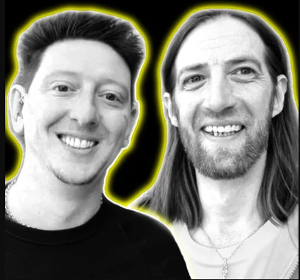
Neil Sanders and Brent Lee

Whether Sanders and Lee are useful BBC dupes isn’t known. To be fair to both, they consistently highlight the need for so-called conspiracy theorists to stick to the evidence, avoid making baseless claims and refrain from alarmist hyperbole. This is good advice in general and doesn’t apply only to people they label “conspiracy theorists.” Some BBC “journalists” and government spokespersons should take note.

It is also important to look for and, wherever possible, consider all of the evidence. So it is unfortunate that Sanders’ and Lee’s critiques so frequently ignore huge swaths of evidence as they construct the strawman arguments they then proceed to knock down. In Sanders’ case, at least, this oversight is surprising, considering that he is a diligent researcher.

Sanders and Lee hope to divert people away from going down so-called “rabbit holes.” They appear to be doing this by diving headlong down the biggest rabbit hole of all: the “conspiracy theory” hole. They seem to think “conspiracy theories”—as defined by the likes of Spring—exist, when, in fact, they do not.

In actuality, a conspiracy theory is nothing more than an opinion held by one or more people about a possible conspiracy. A conspiracy theory commonly questions state narratives and policies.

But that’s it! There isn’t any other legitimate definition of “conspiracy theory.”

Like any opinion, so-called conspiracy theories can be wild and wacky, poorly informed—or outright wrong. They can also be well-informed, evidence-based and accurate. As opinions go, they are exactly the same as all other opinions.

Anyone can have an opinion, including a belief in one “conspiracy theory” or another. These opinions, when voiced, can be abhorrent to others. They can condone or even promote racism, hate, violence, and so on. But expressed opinions can also do good, by exposing crimes, uncovering malfeasance by public servants, provide invaluable social and political insights, or encourage people to cooperate and live in peace.

By advocating that “conspiracy theories” should be censored, the government, the BBC and Spring are trying to regulate and censor all opinions that question the state. Spring apparently holds “democratic ideals” in contempt. She seems to want an authoritarian regime—perhaps something akin to fascism or communism—established in the UK.

Certain well-funded psychologists and propagandists insist that there is some sort of maladaptive psychology underpinning what they call “conspiratorial thinking.” As Spring asserts:

Conspiracies are rooted in someone’s belief system. They become someone’s identity and their entire community, making them even more difficult to reject.

This is anti-scientific, statistically ignorant dross. There isn’t a shred of evidence that alleged “conspiracy theorists” form any kind of identifiable group or that they are particularly prone to any psychological disorders.

In the US, political scientists Joseph Uscinski and Joseph Parent undertook what may have been the largest-ever research survey of individuals they called “conspiracy theorists.” It was published in 2014.

They found, for one thing, that there was no identifiable type of person who could be labelled a “conspiracy theorist.”

They also discovered that women were just as likely as men to be “conspiracy theorists.” And, unsurprisingly, given their lived experiences in the US, black and Hispanic people represented the ethnic groups statistically most likely to question the US government.

Another point they found out: People who questioned state narratives largely worked outside academia but almost one-quarter of them (23%) were university-educated.

The survey detected no unifying political ideology. Liberals and conservatives, socialists and capitalists, Democrats and Republicans were all equally likely to question official accounts of events. Uscinski and Parent did find, however, that non-partisan “independents” had a slightly increased propensity to do so, though the leanings didn’t amount to a clear ideological predisposition.

It is widely reported by the MSM that “dangerous” conspiracy theories are on the rise. So, more recently, Uscinki et al. wrote a paper examining the alleged growth of these so-called conspiracy theories in the West. Warning that their research “should not be used to make claims about, or to excuse the behavior of, political elites who weaponize conspiracy theories,” they reported:

In no instance do we observe systematic evidence for an increase in conspiracism, however operationalized. [. . .] Questions regarding the growth in conspiracy theory beliefs are important, with far-reaching normative and empirical implications for our understanding of political culture, free speech, Internet regulation, and radicalization. That we observe little supportive evidence for such growth, however operationalized, should give scholars, journalists, and policymakers pause.

To be clear: anyone, from any ethnic, political or social group, may have opinions that question official government narratives or policy decisions. These opinions are widely held across society. There is not, nor has there ever been, any such thing as a “conspiracy theorist community.” Nor is there any plausible evidence to indicate that a higher percentage of the population question the state today than in any previous generation.

It is possible that the first time “conspiracy theories” emerged as a pejorative term was somewhere around the 1870s. In the Journal of Mental Science vol. 16, it was noted:

The theory of Dr Sankey as to the manner in which these injuries to the chest occurred in asylums deserved our careful attention. It was at least more plausible that the conspiracy theory of Mr Charles Beade.

In his magnum opus—The Open Society And Its Enemies—the philosopher Karl Popper discussed what he called the prevailing conspiracy theory of society. Popper highlighted the point that, while human society is capable of affecting significant change, it does not follow that every major development results from human action.

He criticised, what he considered to be, the widely held “conspiracy theory of society”:

The view that an explanation of a social phenomenon consists in the discovery of the men or groups who are interested in the occurrence of this phenomenon (sometimes it is a hidden interest which has first to be revealed), and who have planned and conspired to bring it about [. . .] – sinister pressure groups whose wickedness is responsible for all the evils we suffer from – such as the Learned Elders of Zion, or the monopolists, or the capitalists, or the imperialists.

Then he added:

I do not wish to imply that conspiracies never happen. On the contrary, they are typical social phenomena. [. . .] The conspiracy theory of society cannot be true because it amounts to the assertion that all results, even those which at first sight do not seem to be intended by anybody, are the intended results of the actions of people who are interested in these results.

Popper’s concern about the prevalence of the “conspiracy theory of society” would seem reasonable were it not for the fact there was no evidence to support it. His contention that a large body of people believe that every event occurs due to “the actions of people who are interested in these results” was not evidence-based.

Popper himself acknowledged that conspiracies are relatively common, yet he did not count himself among those who, he alleged, held to the “conspiracy theory of society.” The proportion of events Popper believed to be the “intended results of the actions of people who are interested in these results” remains unclear.

Building on Popper’s work, in 1964 American historian Richard Hofstadter suggested that people’s rejection of official state narratives was not founded in their appreciation of evidence but was instead rooted in some sort of psychological derangement. Admitting that he had no particular experience in psychology, Hofstadter implied, without cause, that these people were unhinged idiots.

Hofstadter created the conceptual model of the “conspiracy theorist” that we are familiar with today:

I call it the paranoid style simply because no other word adequately evokes the sense of heated exaggeration, suspiciousness, and conspiratorial fantasy that I have in mind. [. . .] Of course, there are highbrow, lowbrow, and middlebrow paranoids, as there are likely to be in any political tendency. But respectable paranoid literature not only starts from certain moral commitments that can indeed be justified but also carefully and all but obsessively accumulates “evidence.” [. . .] The difference between this “evidence” and that commonly employed by others is that it seems less a means of entering into normal political controversy than a means of warding off the profane intrusion of the secular political world.

In addition, Hofstadter introduced an important component of the “conspiracy theorist” propaganda label. Although gathering and analysing “evidence” had traditionally been part of the critical thinking process, he newly presented the concept of “acceptable” evidence. That is, it is only “evidence” if it falls within the official Overton Window and supports the prevailing political and social paradigms.

Recently, UNESCO initiated its comically misnamed “Think Before Sharing” campaign. In its broad attack upon everyone who questions government policies, UNESCO listed six things that conspiracy theories have in common. Among them: “supporting evidence.”

UNESCO opines that the evidence offered by people who question official narratives is not evidence, because it is “forced to fit the theory.” This nonsensical drivel by UNESCO builds upon Hofstadter’s nonsensical drivel and is no more than a further attempt to redefine “evidence.”

Evidence is simply:

That which tends to prove or disprove something; ground for belief; proof.

Evidence cannot be “forced” to “fit” any “theory.” Evidence is independent of a theory. If it supports a theory, it lends credibility to the theory. If it contradicts a theory, it is provides reason to doubt that theory.

Theories are constructed from all the available evidence. This is achieved by evaluating both the supporting and the contradicting evidence. This is the only way known to humanity for discovering facts and, ultimately—with any luck, the truth.

The illogical practice of simply ruling out evidence that doesn’t fit the narrative is what enables defenders of the Establishment to dismiss everything that contradicts their opinions. They can apply the conspiracy theory label as a device to ignore evidence and thus maintain preferred narratives and “opinions” that are not evidence-based.

In 1967, the term “conspiracy theorist” was first weaponised as a propaganda tool by the CIA with the distribution of an internal dispatch called Document 1035-960: Concerning Criticism of the Warren Report. Constructed from an amalgam of Popper’s “conspiracy theory of society” and Hotstadter’s “paranoid style,” the CIA memo outlined many of the techniques used today by propagandists like Spring.

The modern term “conspiracy theorist” is a manufactured label created by those who seek to defend the Establishment by marginalising and silencing its critics. The “conspiracy theory” label has absolutely no foundation in either evidence or fact.

There is no evidence to substantiate the view that people called “conspiracy theorists” think random events never occur. There is no evidence that they are psychologically flawed or that they even exist as a distinct social group. The mythical conspiracy “movement” is a fabrication created by those who wish to stop people from expressing anti-state opinions. “Conspiracy theory,” then, is a nothing but a propaganda construct.

Spring’s Ludicrous but Dangerous Attack on Hall
Marianna Spring

As we have already discussed, the lengths that the BBC and Marianna Spring have gone to in order to formulate an argument to ridicule Richard D. Hall’s opinion, without ever mentioning any of the evidence he has presented to substantiate his views, is quite remarkable. By omitting vital evidence, Spring must ask her audience to trust her when she alleges that Hall has “caused harm.” Not discussing the evidence clearly “matters” to the BBC and Marianna Spring.

With the considerable resources of the BBC behind her, Spring’s attack on Hall is formed entirely from accusation, insinuation, assumption, assertions and implied guilt by association. She has led her readers, viewers and listeners to wrongly believe that there is no basis for Hall’s questions and concerns. She has produced the epitome of disinformation.

We can summarise Spring’s published “investigation” of Richard D. Hall as follows:

— Spring is of the opinion that the Manchester Arena attack occurred exactly as described to her by the UK government. Richard D. Hall does not hold that opinion.

— Spring is satisfied that whatever the state told her about that attack is unquestionably true. Richard D. Hall isn’t satisfied with the state’s account of the attack.

— Spring has not investigated the Manchester Arena event at all. Hall has conducted a thorough investigation.

— Based on her own uninformed opinion, Spring has accused Hall of having the wrong informed opinion. She alleges—again, without evidence—that Hall’s informed opinion causes harm. She thereby implies that he should be prosecuted for expressing what she considers to be his wrongly informed opinion. Of course, Hall disagrees with her entire premise and conclusion.

Ordinarily, this disagreement between an advocate of the state’s story and a critic of the state’s story wouldn’t constitute any kind of news story. The fact that two people have different opinions is hardly newsworthy.

But, set within the context of a global effort to censor the wrong opinions by labelling the whole lot of them “conspiracy theories,” it is a very newsworthy story, and we need to pay close attention to it.

Spring is entitled to her opinion, but that is all it is—an opinion. She has not presented sufficient evidence—and has ignored far too much evidence—to substantiate her opinion. The fact that she creates content for the BBC does not lend her opinion any additional credibility. Many might feel, if anything, that her relationship with the BBC undermines her expressed opinion.

In light of the potential implications of the Online Harms Act, which makes a publisher responsible for the actions of individual members of its audience, Spring appears to be creating a false narrative in order to place Hall—and anyone else who expresses the wrong opinion—within its envisaged scope. She alleges, without any evidence, that Hall’s publications on the matter constitute “extreme material” and that he “leads his own community.”

Some people are interested in Hall’s opinions, others not. But he no more leads a “community” than Spring does. There is no RichPlanet [Hall’s website] “community,” just as there isn’t a Marianna Spring-led “BBC community.”

Hall expresses opinions that some people object to. In a free and open society, they have every right to their contrary opinion.

If we wish to maintain such an open-minded society, which Spring evidently doesn’t, we cannot allow the state to create a law which makes publishers responsible for the acts of everyone who has ever encountered their published opinions. Yet this is precisely what the Online Safety Bill portends.

Spring and the BBC appear to want us all to live in a tightly controlled, oppressive society. A society where, unless a journalist works for the BBC or another approved MSM outlet, he or she dare not publish any opinion that questions the state, lest some stranger comes along and cites that published opinion as the reason they caused harm.

We already have laws to stop publishers inciting violent or other crimes. We do not need any more. This OSB is censorship legislation, nothing more.

On behalf of the UK state, Spring and the BBC are endeavouring to construct the rationale for a society that outlaws perfectly legitimate opinion. People like Sanders and Lee have, unwittingly or not, been roped into the BBC’s corral.

While she presumably earns a fair living producing propaganda and disinformation for the BBC, Spring has repeatedly questioned the right of anyone else to support themselves doing independent research and analysis, writing and speaking.

She asks:

Mr Hall is only making a living from his theories, rather than making huge profits – why keep going?

Spring is at a loss to understand what motivates someone to follow the evidence and uncover the truth. Whether or not Hall is successful in his efforts to expose the truth is not the issue. Making the effort to find the truth appears to be what “matters” most to Richard D. Hall—a devotion Spring seems unable to fathom.

She apparently resents the fact that Mr Hall is able to earn a living from his work. There are enough people who are sufficiently interested in his opinion and, having encountered the evidence he has presented to substantiate it, are willing to support his efforts. Presumably, Spring believes that no one, other than MSM “journalists,” should be allowed to earn a living as a journalist.

Spring tells us that Martin and Eve Hibbert, who say they were victims of the alleged Manchester Arena terrorist attack, are suing Hall for defamation and harassment. Of course, this is their right. We await the outcome of the trial, if there is one.

Not surprisingly, Spring is eager to pre-emptively comment on the outcome of that possible trial:

He’s [Hall has] created a conspiracy world that causes real world harm.

Has he? Says who? Marianna Spring and the BBC? This smacks of trial by the media.

Let’s hope the court isn’t swayed by her opinion if the case comes to trial. Regrettably, the extent of the BBC’s accusations against Hall and the scale of their broadcast and published misrepresentation of his work makes the chances of him receiving a fair trial seem unlikely.

Spring has ratcheted up her allegations by stating that Hall’s investigation into the supposed Manchester victims constitutes “hate.” Yet, just as throughout her Disaster Troll pseudo-investigation, she continues to offer nothing to justify her opinion.

In her most recent Disaster Troll commentary, Spring outlines the purpose of her disinformation:

This is just one case, and taking legal action is expensive. It’s beyond the means of many people. Some think, it shouldn’t just be left to individuals to resort to the courts. [. . .] But legislation like this would not be straight forward. After all social media sites and policy makers have been grappling with hate and online disinformation for some time. The UK is currently in the process of introducing new legislation. The Online Safety Bill [. . .] will mean the social media sites have to make commitments to protecting users to the online regulator, Ofcom.

Spring reports that the Hibberts wish to hold Richard D. Hall to account. She says that they want to get him to admit that what they experienced was real.

As Hall does not currently believe that they sustained their injuries in the alleged bombing, he could presumably be convinced to change his mind only if the Hibberts can prove they were injured as a direct result of a bomb blast detonated by Salman Abedi in the foyer of the Manchester Arena on the evening of May 22, 2017.

If the dispute goes to trial, for any subsequent ruling to be just, the court will need to examine and consider all of the evidence Mr Hall has presented to substantiate his opinion. Any refusal to do so will render the legal decision meaningless.

If there is no exploration of Hall’s evidence; if it is simply dismissed out of hand by labelling it a “conspiracy theory”; if it is just asserted that the official narrative is true and cannot be questioned, then, regardless of whatever position Hall may be forced to accept, why would he, or anyone else who is familiar with the evidence he has uncovered, have any genuine cause to believe either the official account or the legitimacy of the verdict?
April 12, 2023 Posted by | Civil Liberties, Deception, False Flag Terrorism, Full Spectrum Dominance, Mainstream Media, Warmongering, Timeless or most popular | , , | 1 Comment

BBC ‘government-funded’ Twitter tag triggers journalists

RT | April 10, 2023

Twitter CEO Elon Musk has ignited a feud with the BBC by labeling the British broadcaster a “government funded media” organization. The BBC denies taking state money and its defenders claim that being funded by the British government differs from being funded by the British public.

Twitter applied the label to the BBC’s main account earlier this week, after slapping US broadcaster NPR with a similar tag describing it as “US state-affiliated media.” While Twitter previously reserved such labels for foreign media outlets – like RT and China’s CGTN, Musk said that applying it to NPR “seems accurate.”

NPR’s tag was changed to read “government-funded media” after an outcry from US liberals.

The BBC bristled at receiving the tag. “We are speaking to Twitter to resolve this issue as soon as possible,” the broadcaster said in a statement on Sunday. “The BBC is, and always has been, independent. We are funded by the British public through the licence fee.”

On Twitter, the BBC’s defenders pointed to the license fee as proof of the network’s independence. The BBC, Deadline reporter Jake Kanter argued, “is funded by the British public through a system known as the licence fee. The BBC’s operations and editorial decision-making are entirely independent of the government.”

However, commenters pointed out that the license fee “is a government tax in all but name.”

Set by the government, the fee is an annual payment of £159 ($197) owed by any household with a television or device capable of receiving television broadcasts. The BBC hires contractors to visit the homes of suspected evaders, and those who refuse to pay can be prosecuted by the broadcaster. Around 45,000 people per year are prosecuted for failing to pay the license, the Telegraph reported last month.

The UK’s Office for National Statistics classifies the fee as a tax, and the BBC as part of the “central government sector” of the UK economy.

Additionally, the broadcaster does actually receive direct government funding for BBC World Service. The TV license covers 75% of the service’s operational costs while the rest is directly paid for by the UK government to the tune of some £90 million ($111 million) per year. Last month, the service was also awarded a £20 million ($24 million) one-time payment to help “fight against the spread of disinformation around the world.” BBC World Service is predominantly aimed at non-UK audiences and broadcasts in over 40 languages.

The UK Foreign and Commonwealth Office is also the biggest funder of the BBC’s Media Action service, which additionally receives funding from the governments of the US, Canada, Norway, Sweden, the EU, the UN, as well as donors like the Bill and Melinda Gates Foundation. The service supplies two dozen developing countries with “information they can trust,” per the BBC’s own website.

While the BBC stated that it is editorially independent, internal communications published by the Guardian last month showed that its editors asked reporters to avoid using the term “lockdown” when talking about the government’s response to the Coviid-19 pandemic, under direct order from the government. Furthermore, journalists were instructed to be more critical of the opposition Labour Party due to complaints from the government.

April 10, 2023 Posted by | Corruption, Mainstream Media, Warmongering, Progressive Hypocrite | , | 2 Comments

BBC Goes into Antarctica Climate Meltdown – But Ignores Data Showing No Loss of Ice

BY CHRIS MORRISON | THE DAILY SCEPTIC | APRIL 5, 2023

The BBC recently ran a story claiming that the Antarctic ocean currents were heading for collapse, and to drive home the scare there was even a reference to the 2004 climate disaster film, The Day After Tomorrow. Rapidly melting Antarctic ice was reported to be causing a dramatic slowdown in deep ocean currents, “and could have a disastrous effect on the climate”. Like most of these fanciful scare stories, “could” is doing a lot of the heavy lifting work. But alas, missing from this Net Zero-promoting, model-inventing Armageddon tall tale was a note that the Antarctica ice cap appears to be in balance, and is not actually melting.

According to a paper written by NASA satellite ice-mapping scientists in 2021, Antarctica is “close to balance” in the period 2012-16 at -12 +/- 64 Gt a-1. Gt are gigatonnes and the formula is a scientific way of saying that as near as damn it, well within a margin of error, the Antarctica ice sheet loss is, more or less, zero. Back to 1992, the scientists found large total gains for the sheet.

According to the story in the BBC, reported faithfully in numerous media, as fresh water from the ice cap melts, sea water becomes less salty and dense and a downwards movement of water towards the sea bottom is interrupted. This in turn can affect world oceanic currents. The activist science blog the Conversation reported that “torrents of Antarctic meltwater are slowing the currents that drive our vital ocean ‘overturning’ – and threaten its collapse”. The BBC noted that a similar collapse in the North Atlantic was depicted in The Day After Tomorrow.

As regular readers will recall, the Daily Sceptic has observed that Antarctica is a difficult neighbourhood for activists to get a good scare story going. Over the last seven decades, there has been little or no warming over large parts of the continent. According to a recent paper, (Singh and Polvani), the Antarctica sea ice has “modestly expanded”, and warming has been “nearly non-existent” over much of the ice sheet. According to NASA figures, the ice loss is 0.0005% per year.

The latest scare arises from a paper published in Nature. It is the product of climate models – the BBC noting that the scientists spent 35 million computer hours over two years collecting their results. However, this story is also of considerable interest since it shows that the BBC and most mainstream media are seemingly incapable of questioning any statement that promotes human-caused climate change and the proposed command-and-control Net Zero political solution. This endemic lack of curiosity means that vast areas of science, including atmospheric physics and chemistry, together with weather, geology and geography, are simply off limits in case any doubt should be cast on the suggestion that humans control the CO2 climate thermostat.

The study lead author, Professor Matthew England from Sydney’s University of New South Wales, is able to state, without any inquiring question or contradiction, that “our modelling shows that if global carbon emissions continue at the current rate, then the Antarctica overturning will slow by more than 40% in the next 30 years”. The BBC repeats emissions continuing at the current rate, but England’s paper states that his model has been loaded with a “high emissions” scenario. The paper is behind a paywall, but the abstract in which this admission occurs is freely available.

These “high emission” scenarios are almost certainly RCP8.5 and SSP5-8.5 that forecast global rises in temperatures of 4-5°C within less than 80 years. As Dr. Judith Curry has recently pointed out, these have been dropped in many science circles on the grounds they are recognised as implausible. Global warming of barely 0.1°C over the last 20 years is almost certainly a factor in this reassessment. Nevertheless, Curry notes that many of the extreme events based on the scenarios are still quoted in IPCC documents. “Rejecting these extreme scenarios has rendered obsolete much of the climate literature and assessments of the last decade,” she states.

Not at the BBC, of course. Settled science – the Science – cannot move on because it suffers from the anti-science proposition that it is somehow settled. Model results suggest deep water circulation in the Antarctic could slow at twice the rate of decline in the North Atlantic, reports the BBC. “It’s stunning to see that happen so quickly,” said climatologist Alan Mix from Oregon State University, a co-author of the latest Intergovernmental Panel on Climate Change (IPCC) assessment. “It appears to be kicking into gear right now. That’s headline news,” he told Reuters. No, Dr. Mix, it’s a model based on assumptions that are regularly contradicted by the data. Some climatologists it appears have trouble distinguishing fact from their own fevered predictions.

Chris Morrison is the Daily Sceptic’s Environment Editor.

April 6, 2023 Posted by | Fake News, Mainstream Media, Warmongering, Science and Pseudo-Science | | Leave a comment

Guardian Pushes Alarmist Claim That Climate Change Threatens Coffee Production as Yields Soar

BY CHRIS MORRISON | THE DAILY SCEPTIC | MARCH 14, 2023

There is no animal or plant in the natural world that cannot be used to promote climate Armageddon and its collectivist Net Zero political solution. On Sunday, the WWF, also known as the World Wildlife Fund, started running a series of Wild Isles co-produced propaganda films narrated by Sir David Attenborough on the BBC. These include finely-crafted messages of improbable extinctions culled from computer models.

From the absurd to the ridiculous, we had National Margarita Day recently hijacked by CNN running a story about the ‘climate crisis’ affecting tequila production – a story easily debunked by the news that since 1995, tequila production had increased six-fold, and in four years it had doubled. Now the increasingly unhinged Guardian is giving us its ‘Net Zero, or else the coffee gets it’ story.

According to the newspaper, new research suggests that climate conditions that reduce coffee yields have become more frequent over the past four decades, with rising temperatures from “global heating” likely to lead to ongoing systemic shocks to coffee production globally.

Note the use of the phrase “climate conditions” for what in effect is weather, and the suggestion that it reduces coffee yields. These climate conditions are said to have become more frequent over the last four decades. But one can only read the Guardian for so long. Let us look at actual coffee yields over the last four decades.

Far from declining due to all this weather, yields have shown dramatic improvement since at least 1960. Over this period, particularly between 1980-98, temperatures have risen, but there is no sign of “ongoing systemic shocks” to coffee production globally.

Global coffee yields have been a great agricultural success story, along with actual bean production. Like yields, tonnes produced have soared in the last 40 years.

The key Guardian get-out phrase of course is “new research suggests”. The Guardian story was taken from an academic study led by Dr. Doug Richardson, published in PLOS Climate. He told the newspaper that a shift from cool and wet to hot and dry conditions “we’re pretty confident is a result of climate change”.

In fact if the Richardson paper is read, a more nuanced view on coffee and weather over the last 40 years is discovered.

Our results suggest that ENSO [El Niño Southern Oscillation] is the primary mode in explaining annual compound event variability, both globally and regionally. El Niño-like sea surface temperatures in the Pacific Ocean are associated with decreased precipitation and increased temperatures in most coffee regions, and with spatially compounding warm and dry events. This relationship is reversed for La Niña-like signatures.

As it happens, the last 40 years saw three very powerful El Niños occurring in 1982, 1998 and 2016. These pushed temperatures up around the planet, a natural weather oscillation that had nothing to do with any human-caused increase in atmospheric carbon dioxide. The current eight-year pause in the satellite temperature record is partly explained by three recent La Niña events.

The vast majority of the world’s coffee is grown with just two species – Arabica and Robusta. Arabica is more sensitive to growing conditions, and requires temperatures around 18-22°C. In the tropics, these are more common in higher elevations. Robusta is less highly prized, has a wider geographical spread and grows between 22°C and 28°C. Richardson claims that human-caused climate change is “expected” to alter the geographical suitability for growing coffee. The area of land suitable for coffee cultivation “may” be reduced by up to 50%.

This is unlikely. For a start, it assumes temperatures will rise significantly, but with global warming running out of steam over the last two decades, this seems unlikely. This is particularly so in the tropics. Historical records show that during periods of global warming, the tropics warm less and temperatures are more stable. In addition, coffee is a versatile crop, and selective breeding has produced varieties that can adapt to lowland conditions with temperatures outside normal growing ranges. If climate should change in any significant way, new coffee farming could switch to more propitious areas.

But where is the fun in explaining all that when Net Zero propagandising is afoot. MIT Emeritus Professor Richard Lindzen is fond of noting that the current climate narrative is absurd, but trillions of dollars paid to many, including “grant-dependent” academics, says it is not absurd. This money pays for a constant drip, drip, nudge, nudge wave of climate scaremongering eagerly promoted by controlling elites seeking to take away personal and economic freedoms under cover of saving the planet.

March 26, 2023 Posted by | Deception, Fake News, Mainstream Media, Warmongering, Science and Pseudo-Science | , , | Leave a comment

Why it matters who created Covid

By Guy Hatchard | TCW Defending Freedom | March 3, 2023

There has been renewed discussion of the origin of Covid in the media. As reported by the Wall Street Journal, the US Department of Energy has come down firmly on the side of a laboratory origin of Covid-19 from the Wuhan Institute of Virology in China. On Fox News, the former director of US National Intelligence John Ratcliffe commented: ‘The idea that Covid-19 has a natural origin has always been at odds with our intelligence . . . it is due to a lab leak. From the beginning scientists have not been able to explain why there is a furin cleavage site within the genetic make up of Covid-19 . . . This is something that happens when scientists insert a snippet of manipulated material into viruses.’

UK commentator Piers Morgan responded: ‘I think that the truth is that science, by its very nature, will evolve with facts. And so you have to give them some leeway for that . . . So I do think in the future, we’ve got to examine the science. You’ve got to listen to all ranges of opinions, and people have got to stop being cancelled on social media for raising concerns, which now look like they were absolutely right.’

US Fox News commentator Tucker Carlson went further in a 20-minute excoriation of the Biden administration’s Covid policy. Carlson wanted to know: has the administration’s policy to fund biotechnology research in China changed? (Watch Carlson here, begins at 3 minutes).

Some, including late-night talk-show host Stephen Colbert, have accused the DoE of lacking sufficient qualifications to decide on the lab leak theory, saying: ‘Stay in your lane’. (Is Colbert even vaguely qualified himself?) In fact as the authoritative Washington Post reports the DoE employed highly qualified and skilled scientists (including members of the Energy Department’s Z-Division, which since the 1960s has been involved in secretive investigations of nuclear, chemical and biological weapons threats by U.S. adversaries, including China and Russia), who undertook detailed scientific assessment of genetic evidence and classified information. After the dust of misinformation had cleared the DoE’s conclusion that there was a lab leak was inevitable.

It was the job of the FBI to investigate how the truth was being manipulated and they have also come out firmly and publicly on the side of the lab leak theory (it’s not a theory, there is overwhelming evidence). Early in 2021, a highly qualified geneticist friend wrote to me that he and many of his colleagues were sure that Covid was engineered in a lab because of its highly unusual genetic structure, but he added the codicil: please don’t mention my name. This was going on all over the world in differing forms. Some of them were verging on the corrupt.

All this information is in the public domain, but still the BBC published two dismissive articles on its home page on Wednesday. One covered the FBI announcement, but said the FBI conclusion was not backed by any evidence. The other was an explainer article entitled ‘Covid origin: Why the Wuhan lab-leak theory is so disputed‘. A more blatant attempt to muddy the waters of truth could not be imagined. The article forgot to discuss the genetic evidence which clearly points to gene-edited inserts in the virus genome.

But you might ask, why would anyone in government or science seek to hide the truth from the public? Good question. The answer possibly lies in the murky history of military involvement in genetics and the pandemic. You might recall conspiracy theories circulating since the discovery of DNA and gene editing in the 20th century. According to these ideas, military powers were supposedly going to invent weapons that would target specific ethnic groups and win wars because their genetically different opponents were all going to fall down dead, felled by a man-made virus.

In truth, all humans share so much DNA that any genetic weapon is going to affect everyone worldwide including you and me. Remember that military planners are not geneticists, but like almost everyone else on the planet, they are very susceptible to genetic fantasies. They believed wrongly that anything might be possible for genetic science. Whether their motivations were offensive or defensive was irrelevant. To counter any potential offensive weapon from the other side, they were going to have to first create possible offensive weapons, before trying to design a defensive counter. Sound familiar? Gain of function research to weaponise viruses in order to design a vaccine?

The problem we now know is that, as reported in this study, no lab is ever going to be secure. The history of recombinant DNA biotech labs contains a long list of unintended leaks and accidents. The result has been a pandemic whose final outcome still remains unknown. The military, governments, pharmaceutical companies, and scientists from a number of countries are very busy trying to hide their involvement, telling us that all this is just a natural disaster. This amounts to a giant geopolitical cover-up. The US, China, Britain and France, all of whom were involved in the creation and funding of the Wuhan Virology Laboratory, are paying for favourable comments from their media and anyone else who is corrupt enough to shill for them.

As a last resort, some people are arguing that the origin of Covid is irrelevant. It isn’t. The lab origin of Covid should bring us all together. Whether we think Covid is the main threat or the vaccine is, they both came from a biotech lab carrying out genetic experiments. We can safely forget about the geopolitical arguments explaining who was to blame: China or the USA, and instead shout loudly from the rooftops that biotech experiments have got to stop.

Research shows biotech interventions are inherently mutagenic, they have led to permanent degradation of genetic function and consequently health, as this alarming recent assessment of the Pfizer and Moderna bivalent vaccine shows (the same vaccine our government has announced it will give to everyone over 30 in New Zealand). So don’t think that by taking the latest vaccine you are helping society. The mRNA vaccines pose a danger to everyone in the world, all cultures, all races, religious or agnostic, left or right. We share DNA and we have a common interest to protect ourselves from scientists, media, and governments who are putting financial interests and political objectives ahead of the safety of the entire 8billion population of the world.

We are going through an unprecedented societal upheaval. It increasingly appears to be man-made. The repeated political mantra ‘Trust the Science’ has proven to be mere political demagoguery, devoid of real scientific content. Keeping a steady head, carefully shifting through the evidence, and applying caution are needed now. The evidence is out: with confidence we know that Covid and Covid vaccines came from laboratories whose operation is inherently dangerous. They have already killed millions, and want to be given carte blanche to do whatever they wish. Time to call a halt. For more information go to https://GLOBE.GLOBAL

March 3, 2023 Posted by | Deception, Science and Pseudo-Science, Timeless or most popular, War Crimes | , , , , , , | Leave a comment

Study Finds Zero Loss of Antarctica Sea Ice – But BBC Spins as “New Record Low”

BY CHRIS MORRISON | THE DAILY SCEPTIC | FEBRUARY 21, 2023

The catastrophisation of natural events and weather is relentless across the mainstream media as populations continue to be nudged towards an elitist command-and-control Net Zero future. The BBC recently copied a headline from the U.S.-based National Snow and Ice Data Center (NSIDC) claiming Antarctica sea ice had hit a “new record low”. Inexplicably missing from the story was the later observation from the NSIDC that since accurate satellite records began in 1979, the trend in the minimum ice extent is “near zero”. Any loss was said to be “not statistically significant”.

To be fair to the writer, BBC science correspondent Jonathan Amos, he did report later in the story that scientists consider the behaviour of Antarctica sea ice to be a “complicated phenomenon which cannot simply be ascribed to climate change”. Of course, as regular Daily Sceptic readers are aware, the Antarctic is a difficult hunting ground for climate catastrophists since over the last seven decades there has been little or no warming over large areas of the continent.

According to a recent paper (Singh and Polvani), the Antarctica sea ice has “modestly expanded”, and warming has been “nearly non-existent” over much of the ice sheet. According to NASA figures, the ice loss is 0.0005% per year. Down at the South Pole, even the most inventive climate alarmists are defeated. In 2021 it recorded its coldest six-month winter since records began, and last year the temperature was 0.4°C colder than the average over the last 30 years. In addition, the Pole recorded no less than seven new daily temperature lows.

The map above shows some warming in the western part of Antarctica, and it is to this area that climate warriors return – again and again. The day before his sea ice story was published, Amos ran with a routine BBC house scare about the Thwaites glacier, often known in green circles as the ‘Doomsday Glacier’. Amos states that glaciers such as Thwaites located in the west may be more sensitive to changes in sea temperature than was thought. “Its susceptibility to climate change is a major concern to scientists because if it melted completely, it would raise global sea levels by half a metre,” he said.

Many of the problems surrounding the unproven hypothesis of human-caused global warming is that it often fails to correlate with observable reality. Why would well-mixed atmospheric carbon dioxide produce a relative warm spot in Antarctica, but leave the rest of the vast continent in a static deep freeze? In 2017, scientists discovered 91 volcanoes in the West Antarctica Rift System. It brought the number of volcanoes discovered in the area to 138. Their heights ranged from 300 to 12,600 feet, with the tallest as high as Mount Fuji in Japan. The scientists noted that even dormant volcanoes can melt ice because of the high temperature they generate. “Volcanic activity may increase and this, in turn, may lead to enhanced water production and contribute to further potential ice-dynamical instability,” the scientists stated.

Again, to be fair to Amos, he does consider other causes of Antarctica ice stability, although the article is headlined “climate change”. His reporting is mercifully free of the emotional gushings produced by the BBC’s green activist-in-residence Justin Rowlatt. When Rowlatt flew to the area, he witnessed “an epic vision of shattered ice”. To him, the Antarctic is the “frontline of climate change”. Amos does note that Thwaites, a glacier the size of Florida, has retreated in some places by 14 km since the late 1990s. But such movement does not seem unusual. Recently a group of oceanographers discovered that parts of Thwaites had retreated at twice the rate in the past, when human-caused CO2 could not have been a factor. The retreat could have occurred centuries ago, and is said to have been “exceptionally fast”.

Meanwhile, research has just been published that indicates Antarctica could have been warmer in the recent past from 7,000 to 500 years ago. This type of research is always interesting since it helps debunks a common claim made by alarmists that current temperatures are the highest over the last three million years. But numerous scientific studies have shown that temperatures across the planet have been much warmer for recent periods in the Holocene. This latest study in Antarctica found remains of elephant seals along the Victoria Land Coast of the Ross Embayment, which borders both the West and East Antarctic ice sheets. These days, the area is largely free of elephant seals because of shelves of permanent sea ice frozen to the beaches. It is suggested that seals were able to occupy the beaches in a period of warmth before extensive sea ice pushed them off the present day coast.

“Our work shows that for much of the Holocene, the Ross Sea was less icy and presumably warmer than it is today, and this warmth may have driven retreat of the West Antarctica ice sheet from the Ross Sea during the last 8,000 years, and future warming could continue to push ice retreat,” conclude the researchers.

For climate alarmists, the ice is the gift that keeps on giving – every day is a “new record low”.

February 27, 2023 Posted by | Mainstream Media, Warmongering, Science and Pseudo-Science | | 2 Comments

The climate scaremongers: Are hurricanes becoming more powerful?

By Paul Homewood | TCW Defending Freedom | February 17, 2023

If you believe what the media tell you, you would think so. But you would be wrong. As the chart below for 1980 to 2022 shows, there is no obvious trend in the frequency of major hurricanes worldwide during the satellite era.

http://tropical.atmos.colostate.edu/Realtime/index.php?arch&loc=global

The IPCC, the UN climate panel, can also find no evidence either, stating in their latest climate assessment: ‘There is low confidence in most reported long-term (multi-decadal to centennial) trends in Tropical Cyclone frequency- or intensity-based metrics due to changes in the technology used to collect the best-track data.’

The US National Oceanic & Atmospheric Administration says the same about Atlantic hurricanes: ‘There is no strong evidence of century-scale increasing trends in US landfalling hurricanes or major hurricanes. Similarly for Atlantic basin-wide hurricane frequency (after adjusting for observing capabilities), there is not strong evidence for an increase since the late 1800s in hurricanes, major hurricanes, or the proportion of hurricanes that reach major hurricane intensity.’

But facts don’t matter to the climate warriors at the BBC, who published a ‘Reality Check‘ following Hurricane Ian last summer, which claimed that there was evidence that hurricanes were getting more powerful.

I fired off a complaint to the BBC at the time, which their Executive Complaints Unit (ECU) have now rejected. They presented no real data to counter any of the evidence I have outlined above. Instead they relied almost entirely on computer modelled projections of what might happen in future.

Their dismissal of my complaint sums it up better than I can: ‘The evidence would therefore appear to indicate climate scientists who have studied hurricanes and the effect of human-induced climate change agree the proportion of tropical cyclones which develop into hurricanes or major hurricanes is expected to increase, and those hurricanes are expected to have higher peak wind speeds ‘

Of course, it was not what could happen in the future which I was complaining about. It was their claim that such changes are already happening. In short, they created a straw man and knocked it down, while ignoring the actual complaint!

The real problem, of course, is that the ECU is part of the BBC, and will always back them up even when the evidence against them is overwhelming. The BBC will never be properly held to account until a truly independent complaints unit is set up.

February 19, 2023 Posted by | Fake News, Mainstream Media, Warmongering, Science and Pseudo-Science, Timeless or most popular | , | 1 Comment